



Abstract
Background and Objectives
Parents of children with medical complexity (CMC) experience high levels of stress and adverse mental health outcomes. Pediatric medical traumatic stress (PMTS) could be an important contributor that has not yet been explored. PMTS describes parents' reactions to their child's illness and medical treatment and can lead to post‐traumatic stress symptoms. This is the first study to describe the experiences and impact of PMTS among parents of CMC.
Methods
We conducted semi‐structured interviews with 22 parents of CMC. Reflexive thematic analysis was used to generate themes that described the experiences of PMTS and potential contributing factors in the healthcare setting. Themes were validated by study participants.
Results
Parents experienced a spectrum of events and circumstances that impacted PMTS. These corresponded to three major themes: (a) the distinctive context of being the parent of a CMC, (b) interactions with healthcare providers that can hurt or heal and (c) system factors that set the stage for trauma. The consequences of repeated PMTS were a common point of emphasis among all the themes. Parents identified numerous changes that could mitigate PMTS such as acknowledgement of trauma and provision of proactive mental health support.
Conclusions
Our study highlights the issue of PMTS among parents of CMC and presents opportunities to mitigate their traumatic experiences. Supporting the integration of trauma‐informed care practices, increasing awareness of PMTS and advocating for parental mental health services could better support parents and families.
Keywords: children with medical complexity; complex, chronic conditions; medical traumatic stress; parent; post‐traumatic stress; trauma; trauma‐informed care
KEY MESSAGES.
Recurrent exposure to pediatric medical traumatic stress (PMTS) places parents of children with medical complexity at risk of adverse mental health outcomes and future negative experiences.
Systemic factors and their interaction in the healthcare setting contribute to parent feelings of powerlessness and vulnerability, which set the stage for PMTS to occur.
Interactions and events that seem innocuous to healthcare providers may be perceived as traumatic by parents, necessitating a trauma‐informed care approach.
Dedicated and proactive mental health supports would help parents to identify and address the PMTS they have experienced and equip them to deal with future events.
Abbreviations
- CMC
children with medical complexity
- MTE
medically traumatic experience
- PFCC
patient and family centered care
- PMTS
pediatric medical traumatic stress
- PTSD
post‐traumatic stress disorder
- PTSS
post‐traumatic stress symptoms
- TIC
trauma informed care
1. INTRODUCTION
Children with medical complexity (CMC) have high levels of healthcare utilization, complex, chronic diseases and neurodisability (Cohen et al., 2011). Due to their fragility and complexity, CMC require continual interactions with the healthcare system in the acute care, ambulatory, and community settings. Their care is fragmented between different providers and settings, particularly in the absence of comprehensive complex care programs. Parents are often compelled to coordinate care across complex systems (Dybwik et al., 2011; Kuo et al., 2011). These added tasks and stresses can negatively impact parental well‐being. Parents of CMC report poorer mental health outcomes, including higher rates of anxiety and depression, when compared to parents of typical children (Bayer et al., 2021; Cohn et al., 2020).
Pediatric medical traumatic stress (PMTS) may have important and, as yet unrecognized, impacts on parental well‐being. PMTS is the psychological and physiological reactions of children and their families to pain, serious illness, medical procedures, and invasive treatment experiences (Kazak et al., 2006). There are a spectrum of responses to PMTS including the development of post‐traumatic stress symptoms (PTSS) or post‐traumatic stress disorder (PTSD). Contrary to classic diagnostic criteria for PTSD, the triggering event need not be associated with threatened death or serious injury (Kazak et al., 2006; Price et al., 2016). Significant rates of PMTS‐related PTSD have been described in parents responding to a variety of pediatric conditions including cancer diagnoses and critical illnesses, as well as less acute scenarios such as moderate burn injuries, new‐onset diabetes, and disorders of sex differentiation (Balluffi et al., 2004; Carmassi et al., 2021; Dunn et al., 2012; Muscara et al., 2018; Nelson & Gold, 2012).
PMTS experienced by parents of CMC has unique aspects that warrant further consideration. Notably, PMTS will often include both an initial triggering event (such as a child's diagnosis) as well as ongoing exposure to stress and trauma as future illnesses are inevitable. This effect of recurrent exposure to PMTS is unknown (Price et al., 2016). Evidence suggests that chronic exposure to trauma and repeated reminders of past traumatic events increases the risk of PTSS/PTSD (Breslau et al., 1999; Brewin et al., 2000; Harvey et al., 2016; McFarlane, 2010). If parents of CMC are at increased risk of PTSS/PTSD, this could have far‐reaching and negative impacts to parents' mental health, caregiving capacity and adherence to treatment, all of which could seriously impact the child's well‐being. This study will be the first to explore experiences and perceptions of PMTS among parents of CMC and identify potential contributing factors in the healthcare environment.
2. METHODS
2.1. Study design
We conducted qualitative interviews with parents of CMC across Canada between December 2020 and March 2021. Institutional research ethics board approval was obtained.
2.2. Recruitment
Participants were recruited via parent organizations and social media networks using convenience sampling. Inclusion criteria adapted an established definition of CMC (Table 1) (Cohen et al., 2011). There were no exclusion criteria. A secondary screening step was instituted once potential participants expressed interest to ensure that all were not deriving from a specific group (e.g., a disease‐specific parent organization). Potential participants answered a short questionnaire reporting their child's age, diagnosis, and prior need for intensive care. These variables were chosen to target variability in duration of parent experience, child condition, and fragility. However, no participants needed to be excluded based on secondary screening. Consent was obtained prior to the interview. Recruitment was concluded when the analysis provided a rich understanding of the phenomenon under study (Vasileiou et al., 2018). This approach of assessing data adequacy instead of theoretical saturation acknowledges that further data collection would likely generate new insights on this complex topic. Data adequacy is an acceptable guide to determining sample size in our chosen methodology of reflexive thematic analysis (Braun & Clarke, 2006; O'Reilly & Parker, 2013).
TABLE 1.
Study inclusion criteria
| A. Identifies as the parent or primary caregiver of a child with medical complexity, as defined by all of the following: |
| a. At least two chronic conditions |
| b. High health care utilization (*defined as two or more hospital admissions) |
| c. Need for ongoing care by more than two healthcare professionals or teams (*in hospital, home or community settings) |
| d. High care needs in the home and community |
| B. Ability to communicate in English |
| C. Currently residing in Canada |
| D. Electronic device with internet access |
2.3. Data collection
Demographic data were collected through electronic surveys using REDCap (Harris et al., 2009, 2019). Semi‐structured interviews were conducted by an experienced interviewer virtually using Zoom (Zoom Video Communications Inc.). A standardized interview guide incorporated existing literature regarding PMTS, parental PTSS/PTSD and experiences of parenting CMC with extensive input from two parent–partners, both parents of CMC. Interviews explored medically traumatic experiences (MTEs) from the parent‐perspective, identifying factors in the healthcare system that could ameliorate or exacerbate the traumatic impact of these experiences. In keeping with the aim to describe experiences from the parents' perspective, no attempt was made to confirm the existence of PMTS with quantitative questionnaires or screening tools. PMTS is a subjective experience with the individual's perception of events as a main contributor (Price et al., 2016). Interviews (duration = 46–99 min; mean = 68 min) were audio‐recorded, transcribed verbatim, and de‐identified. Mental health support was available to participants during and after the interviews, with direct access to a counselor and a list of publicly available resources. Each participant was offered an opportunity to review a summary of their study data to ensure accuracy and completeness. Data collection and analysis occurred concurrently.
2.4. Data analysis
Data were analyzed using reflexive thematic analysis beginning with a thorough reading and re‐reading of the data for familiarization (Braun & Clarke, 2006). Transcripts were then reviewed in‐depth, and codes were developed in an iterative fashion by the lead author. Co‐authors with expertise in qualitative analysis, clinical psychology, ethics, pediatrics, and disability research contributed to analysis and generation of preliminary themes. Themes were further refined through discussion with the full study team, including parent‐partners. Themes were checked back against the entire dataset to ensure compatibility, and concise definitions were collaboratively constructed by all authors. Themes were then shared with all study participants for validation. Responses from 10 participants expressed agreement with the themes and sub‐themes.
Qualitative data analysis software (NVivo 10) was used for data coding and management (QSR International Pty Ltd, 2020). Quotations were intentionally extracted to represent a variety of participant perspectives. The consolidated criteria for reporting qualitative research (COREQ) guideline was employed to ensure rigor in the conduct and reporting of this study (Tong et al., 2007).
3. RESULTS
3.1. Participants
Twenty‐two parents (20 mothers and 2 fathers) were interviewed, each from separate families. Two parents expressed interest but did not sign consent or complete the interview. Nine parents expressed interest but did not meet inclusion criteria. See Table 2 for parent characteristics and Table 3 for child characteristics.
TABLE 2.
Parent characteristics (N = 22)
| n (%) | |
|---|---|
| Age | |
| 30–39 | 9 (41) |
| 40–49 | 10 (45) |
| ≥50 | 3 (14) |
| Marital status | |
| Married or common law | 20 (91) |
| Separated | 1 (5) |
| Single | 1 (5) |
| Household income | |
| $80,000+ | 15 (68) |
| $60,000–$79,999 | 2 (9) |
| $40,000–$59,999 | 1 (5) |
| $20,000–$39,000 | 1 (5) |
| <$20,000 | 1 (5) |
| Prefer not to say | 2 (9) |
| Race/ethnicity | |
| Caucasian | 19 (86) |
| Latino/Hispanic | 3 (14) |
| Indigenous | 1 (5) |
| Education | |
| Graduate degree | 6 (27) |
| Bachelor's degree | 12 (55) |
| Trade school | 3 (14) |
| Some high school | 1 (5) |
| Community | |
| Metropolitan (population >500, 000) | 13 (59) |
| Large urban (population 200,000–500,000) | 1 (5) |
| Small urban (population 50,000–200,000) | 5 (23) |
| Rural (population <50 000) | 3 (14) |
| Children with special needs | |
| Single | 16 (73) |
| Multiple | 6 (27) |
| Mental health diagnosis | |
| Depression | 9 (41) |
| Anxiety | 13 (59) |
| PTSD | 5 (23) |
| Other | 3 (14) |
| None | 8 (36) |
| Multiple mental health diagnosis | |
| Yes | 10 (45) |
| Medication for mental health condition | |
| Yes | 11 (50) |
| No | 9 (41) |
| Prefer not to say | 2 (9) |
| Counseling for mental health condition | |
| Yes | 15 (68) |
| No | 7 (32) |
TABLE 3.
Child characteristics
| n (%) | |
|---|---|
| Child age | |
| ≤23 months | 1 (5) |
| 2.5 years | 6 (27) |
| 6–9 years | 5 (23) |
| 10–13 years | 6 (27) |
| ≥14 | 4 (18) |
| Technology | |
| Yes | 17 (77) |
| No | 5 (23) |
| Number of technology devices | |
| Single | 9 (36) |
| Multiple | 8 (41) |
| None | 5 (23) |
| Technology type | |
| Feeding tube | 10 (45) |
| Home oxygen | 4 (18) |
| Non‐invasive ventilator | 4 (18) |
| Tracheostomy | 1 (5) |
| VP shunt | 2 (9) |
| Vascular access device | 3 (14) |
| Number of lifetime admissions | |
| 1–2 | 5 (23) |
| 3–5 | 1 (5) |
| 5–10 | 8 (36) |
| >10 | 8 (36) |
| Need for intensive care | |
| PICU | 12 (55) |
| NICU | 13 (59) |
3.2. Themes
Parents experienced a spectrum of MTEs that contributed to PMTS. Some of these traumatic events would meet the “classic” definition of trauma from the Diagnostic and Statistical Manual of Mental Disorders (such as a life‐threatening illness) but others were less conspicuous (American Psychiatric Association, 2013). Contributors to PMTS existed on three levels, corresponding to the three main themes: (1) the parent context; (2) interactions with healthcare providers (HCPs) that can hurt or heal; and (3) system factors that set the stage for trauma (Figure 1). The consequences of repeated traumatic experiences are an important thread that weaves through the themes and is best described by one parent (P005) as: “… it was no one great big thing, it was just little things over and over and over again.”
FIGURE 1.
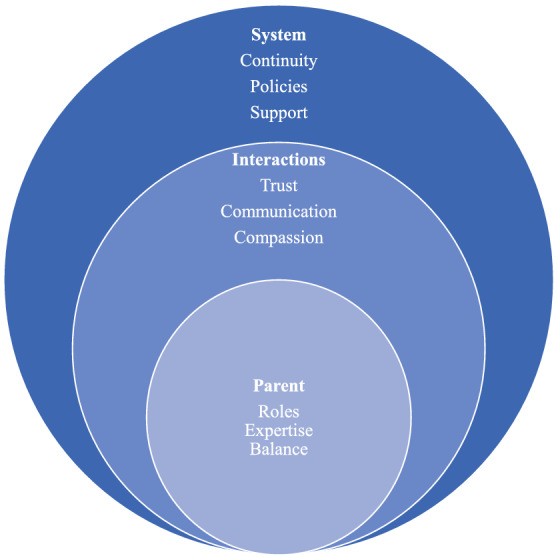
Overview of themes
3.2.1. Theme 1: Parent context—Balancing capacity and responsibility amidst complexity
Parenting a CMC came with unique roles that changed the dynamic in the healthcare setting. Understanding this context is integral to understanding the experience of PMTS.
Sub‐theme 1: Parent roles are numerous
All parents endorsed roles as expert, advocate, and care coordinator.
And really I'm a lot of things. I'm his medical case manager. I'm the expert on him. I know him better than anybody else. (P019)
Parents' skills and expertise developed through attunement with their child, research into their child's condition, and first‐hand knowledge of their child's medical history.
So I keep reading articles, getting myself abreast of the new medication out there, trying to get in contact with other patients. So yeah, a lot of my day goes into that, into filling myself with information. (P018)
Although these roles were universal, how they were enacted varied by individual, by context and over time.
I grew up in a home where you listened to your doctor, you did as you were told, you don't question. And, I think over time, with [child] and navigating the healthcare system, I've become more comfortable pushing back. (P003)
Sub‐theme 2: Parent expertise is dismissed or unrecognized
Parent expertise was an essential element guiding the safe medical care of their child. When their input was dismissed, parents experienced intense feelings of fear and helplessness which amplified PMTS, as one father (P007) described: “Not being believed, that's the biggest traumatic thing for me ….” The struggle to have their expertise recognized and utilized placed parents in conflict with HCPs, a position that was often incongruent with personal identity and societal expectations.
When you tell the story to people, they're like, “Oh good for you,” but again, I feel now I, mixed with all of the other stuff, it's something that was a bit traumatizing for me at the time. I just didn't allow myself to feel it. Having to question somebody who has all that education, you know has expertise and having to question that, and I did a lot. (P016)
Many parents expressed dread when anticipating similar encounters in the future, which were often unavoidable due to their child's ongoing need for medical care.
However, when HCPs validated and respected parent expertise, this was an empowering experience that ameliorated PMTS.
Every time I have a doctor say to me, or a nurse or any other healthcare professional, whenever they ask me for my opinion and then validate me by saying, “Well, you are the expert on your child, and that sounds like a reasonable plan to me,” that is how the healthcare profession causes the opposite of trauma. That is the antidote to the trauma for a lot of people. For me, it certainly is. (P003)
Sub‐theme 3: The balance of support and autonomy
PMTS was exacerbated by either inhibiting parental autonomy or, alternatively, by placing excessive responsibility on parents. Parents described fear and powerlessness when they were prevented from providing necessary care to their child in the hospital setting.
Simple things like that, and now that's what we do at home, and if we don't do that at home, he gets so much worse … How is that basic things like that we know and we can do ourselves but we have to fight the team, or they didn't even let us do it. (P022)
When support is lacking, parents felt overwhelmed and abandoned. The challenge of making difficult medical decisions on behalf of their child was sometimes compounded by inadequate support from HCPs. At times, parents were expected to direct their child's medical care. One mother (P001) described, “I realized sitting there in a pediatric hospital … that whether or not my son survived metabolic acidosis on a Saturday evening was on my shoulders.” Some parents who restrained their children for medical procedures or imposed medical directives experienced heightened PMTS. These actions conflicted with traditional parental roles and had a detrimental effect on the parent–child relationship. In some cases, this contributed to trauma to both parent and child.
I had to hold it [the anesthesia mask] on her face for about 30 seconds while she screamed at me not to do this to her. Then she slowly passed out. I had to keep the mask on her for another 20 seconds or something. My brain is screaming at me saying I've killed her. I will say it's the worst thing I've ever done in my life. It was just a horrible, horrible sensation. (P010)
3.2.2. Theme 2: Interactions with HCPs can hurt and heal
Parents frequently recounted HCPs interactions that impacted their experience of PMTS. These were intricately connected to parents' perceptions of trust, communication, and compassion.
Sub‐theme 1: Trust is not a given
Trust in the parent‐HCP relationship was not implicit due to distinct barriers. One mother (P005) describes this struggle: “… it's been a conscious effort for me actually to learn how to trust her doctors with this.” Previous negative experiences often influenced future healthcare encounters and impeded development of trust. In some cases, parents had experienced a medical error or early misdiagnosis that had a prolonged impact on capacity to trust.
“Why am I here? You're supposed to be helping me, but you just caused more problems.” So that was the big experience I think that I've had, but it really made me not trust people with my child. So I think that's really filtered into her other hospitalizations in the future. (P006)
These events contributed to PMTS and fueled parental hypervigilance or even led to avoidance of healthcare settings altogether.
But yes, there was a point where I was like I don't want to deal with any of this anymore. There was a time when I felt like I just want to take my child and go in the woods and take care of my child because I don't trust that anyone's going to take care of him properly. (P022)
Sub‐theme 2: Sensitivity in communication
Communication between HCPs and parents had significant potential to influence PMTS. On some occasions, an alarming diagnosis was disclosed in a casual manner or medical discussions took place at the bedside that incurred a strong reaction from parents.
And they were residents, so maybe they didn't know better. But they were talking over some symptoms that they were seeing with [child] right in front of me. Totally speculating. Horrible speculation. Core stem stroke, different things. I don't think there should be speculation in front of the parents. (P024)
The language employed was powerful as some parents found specific words triggered past PMTS. One mother (P016) described her reaction to a seemingly innocuous medical term: “They used to the term all the time in my presence … ‘She's failure to thrive’ So whether or not it had the word failure in it, and that was what was triggering to me ….”
Finally, the traditional parental expectation to provide a medical history was insensitive to the re‐experiencing of traumatic events for many parents.
And I feel like I shouldn't be the one to tell the doctor my whole kid's life story every time, is traumatizing as well. Like every new doctor we go to, “Okay. Tell us the rundown,” and it's exhausting. And it takes me about three days after to just be okay again, because I have to relive everything over and over again. (P015)
Even the physical setting of difficult conversations impacted parental PMTS. One parent (P020) described a serious conversation that occurred in a “… very cold, very impersonal … [room that]..wasn't very private” as one of her MTEs.
Subtheme 3: Perceptions of compassion
Parents were attuned to displays of compassion or disregard to themselves and their child. One mother (P001) describes how this relates to PMTS for her: “Think about the trauma that you impose on parents when you fail to recognize the humanity of their children ….” At times, parents interpreted HCPs as being indifferent to their child's suffering, often relating to a stigmatizing condition such as developmental disability.
They said that she didn't need them [pain medications]. I was so upset because she's just a baby that's got a disability and you're assuming that she doesn't need pain meds. I just couldn't wrap my head around all of that. (P006)
Alternatively, gestures of compassion had the potential to ameliorate PMTS even in difficult circumstances. Parents often recounted a meaningful gesture from a HCP with similar intensity as the negative experiences.
It was an NICU fellow. A really, really wonderful woman who shed a tear because it was the fifth or sixth day in a row that her and I needed to call [child's] dad and tell him the new developments. I said to her that day, “Can you tell him? I'm really tired of calling my man and breaking his heart all over again. I do not think I have it in me. I get that you think it's important that he knows this, but can you tell him?” And she shed a tear sitting there with me. Understanding what we were doing to [child's] dad as well. (P008)
3.2.3. Theme 3: System factors set the stage for trauma
Structures within the healthcare system were also identified by parents as contributing factors to PMTS.
Sub‐theme 1: Continuity as a mediator
Continuity of care, both relational continuity with individual HCPs and informational continuity through a coordinated care plan, could facilitate trust and ameliorate PMTS.
And there were about eight pediatricians in that practice and there was always one of them at Emerg at Children's. And so, we were kind of well taken care of there and I would say we're not nearly as well taken care of because we couldn't recreate that yet as she's become an adult. (P026)
When continuity was lacking and HCPs were not aware of important aspects of the child's history, parents felt that the environment was unsafe. Parents often noted this as a key issue impacting their experience.
Constantly fighting, constantly fighting for consistency, for consistency. This has been our fight. (P018)
The lack of continuity eroded trust, increased the parental burden of responsibility, and contributed to conflict and stress. One mother (P012) describes the experience in the context of nurse changeover in the NICU: “It feels like it's a constant battle with whoever comes in next to get the story across so that they understand what's happening, what you've been through ….”
Sub‐theme 2: Hospital policies and procedures
Hospital policies often failed to consider the unique contexts of CMC such as their prolonged and repeated hospitalizations, complex needs, and previous trauma. Enforcing policies in a rigid fashion was identified as a contributing factor to PMTS. One mother (P022) requested, “… just be compassionate to the family and please bend the rules so that we can survive this.” Other parents wanted recognition and accommodation in the system that respects their repeated trauma.
And that's one of the hard things is like, when is it going to end? And when will we have more support from the healthcare providers? We go in, they traumatize him with whatever tests or things they need to do, and there's trauma with me too. And then we're just supposed to go home and keep going until the next time. I don't know, it's a vicious cycle for parents like us, that we're just constantly in trauma and can't get out. (P015)
One mother of a child with an immunodeficiency described the hospital policy that removed her child's need for isolation as her most significant MTE:
That is my biggest fear, when people get close to me because I don't know what to do, I don't know where to run, I don't know where to go … So yeah, you can tell me that his numbers are 500, but when he was 700 long ago, he was completely isolated and no one had access to him. So you cannot tell me that now when he's 500, I can open the world for him in a pandemic, so that really stressed me out. That was really stressful. It made me really angry and I didn't know how to cope because in front of you …. (P011)
Further, procedures to address negative experiences with clinicians were often lacking or unsafe precluding meaningful reparation.
Maybe there's a better way for parents to feel that they can reconnect with doctors to share, okay, this didn't go over so well. We need to work on this kind of thing. (P002)
Sub‐theme 3: Parent supports and services
Many parents emphasized the integrated nature of their well‐being and that of their child.
All I want is that it's been recognized, that it's been recognized that the parents, we are a holistic part of our child's wellbeing and if you do these little tweaks and help us more, it's helping the child as well and other families. (P018)
All parents felt that mental health supports were lacking. One mother (P014) described this need for widespread awareness and support of trauma as follows: “… for every sick kid, there's at least one parent, if not two, plus other caregivers there who are coming in to help them who could have really negative mental health.”
Additional contributors to parent PMTS during hospitalizations included neglect of parents' basic needs including food, sleep, and respite.
I think for us to be good caregivers, we needed sleep and we needed a break, and at [Hospital], the expectation is you're there all the time. You don't leave, because the nurses can't care for your kid, and so we were there all the time and it drained us. (P014)
And those types of things were really hard. Because it's hard to have self‐care in the hospital at the best of times, and to have no opportunity to nourish yourself or get your own water … You don't want to bug the nurses. So that was a different kind of weird trauma in its own self. (P025)
3.3. Parent recommendations
Parents made specific recommendations about actions and changes to mitigate PMTS (see Table 4). At the level of individual interactions, open communication and meaningful partnership with parents would reduce their fear and build trust. Many parents felt similarly to P002: “I'm the type of person that I want to have a very good understanding of what you're thinking about doing to my child. And so, accepting that there's going to be parents out there that want that. Freely provide it.” Parents wanted individual HCPs to acknowledge their stress and trauma as P008 described, “Asking a mom, ‘How are you’, isn't enough. Eye contact, a sincere question, some time to listen, some validation, and some follow up … a little acknowledgement that what I'm trying to do is difficult would go a long, long way.”
TABLE 4.
Parent Suggestions to Mitigate Medical Traumatic Stress
| Individual level | ||
|---|---|---|
| Theme | Examples | Supporting Quotes |
| Foster compassionate communication |
Use language that is acceptable to the family. Allow opportunity for parents to process information and ask questions. |
P16: “They look at a chart, so why can't there be a spot on the chart that says, ‘This term is very triggering for this parent. So please refrain from using this term’.” P24: “Yeah. To allow space for questions. One physician leaned over [child]'s bed when she was little, and he … on a Saturday, I'll never forget … he told me something about [diagnosis], and then he waited. He waited. And then I thought, and I processed, and then I asked a question. And he answered it. And then he waited. Then I could ask another question. I mean, he was with me for, like, 45 minutes. And that was powerful. It's still in my brain. That was 10 years ago.” |
| Partner with parents and families |
Actively listen to the parent's concerns, ask clarifying questions. Empower parents to be active participants in all decision‐making. |
P1: “I keep thinking, if people could just listen and pause, read the charts, look at his history and just say, ‘What makes you say that? Tell me what you see. Why do you say that?’” P2: “I'm like, ‘But I'm the type of person that I want to have a very good understanding of what you're thinking about doing to my child’. And so, accepting that there's going to be parents out there that want that. Freely provide it. What does it hurt for a doctor to hand over a research paper that they've been just commenting from, or write out the terminology properly so that the parent can look it up. Yes, I get Dr. Google is a bad thing, but there's definitely some importance to that too, so that everybody's educated on making the best choices.” |
| Individualize care | Create care plans that are child‐centered to facilitate communication and standardize their care. |
P6: “For each child that goes to hospital to be treated like an individual and not be subjected to standardized routines that they're not necessary because those things are traumatic as well.”; “My kid's already been through a lot. They have been through a lot of experiences. It's not their first time here. It's for the same reason, so I just feel like we should have a more individualized care plan.” |
| System level | ||
|---|---|---|
| Theme | Example | Supporting Quote |
| Facilitate relational continuity with HCPs | Consistency in HCPs improves communication, decreases the burden on parents, makes care more personalized and smooths the transitions between HCPs and care environments. |
P18: “The only consistent medic in his team has been his surgeon and to be honest, she mainly works with [child] when he is under anesthesia. Had the anesthesiologist been a consistent part of the team for [child], I firmly believe they would have figured the pain issue out themselves earlier on.”; “However, the hospital should try to give chronically ill patients with ‘challenges’ more consistency in their care.” P22: “… having nurses that are more constant. In the NICU, we had three or four nurses that knew us really well that would rotate. So, that's great because I didn't have to explain to [nurse] how [child] reacted last time because she knew. She knew. So having the same people is important.” |
| Adapt policies to meet the needs of CMC | Consider the consequences of specific policies on the child and family, allow flexibility when necessary. |
P22: “At some point, we had to fight to get a third caregiver, my mother, to take care of [child] at the hospital because we couldn't be there 24 hours for 10 months. We can't do that, but because it was COVID, you were only allowed one person and it was so hard to get them to bend the rule. Don't get me wrong, I understand why the rules are there. I understand why with COVID things have to be a certain way, but at the same time, when we're there for 10 months, just be compassionate to the family and please bend the rules so that we can survive this.” |
| Delineate roles of parents and HCPs |
Clarify roles each will perform in the child's care. |
P6: “I just think that having really clear roles about what you are going to do as the medically‐trained parent and what I'm going to do as the hospital, I also think that would be really helpful and avoid mistakes from happening like that first mistake I was talking about.” |
| Develop processes that increase safety of parents reporting concerns and reparation of relationships | Support parents and HCPs to rebuild trust that has broken down. |
P2: “Maybe there's a better way for parents to feel that they can reconnect with doctors to share, okay, this didn't go over so well. We need to work on this kind of thing. When we feel that a physician isn't doing what they should be doing or what you're expecting them they should be doing, it's harder to overcome.” |
| Identify medical trauma and provide mental health support | Acknowledge the risk of medical traumatic stress to children and families. Support should be proactive, integrated into the care and provided to parents, families and the child. |
P15: “there should be like a flagging system or something. Be like, ‘Okay, this kid goes through a lot and he's autistic’. There should be some kind of a system to dial back the trauma for us.” P9: “One thing I would really like to see in the future is some sort of support for the parents, because there's a lot of supports for the kids, there's therapists that my kid works with. There's all of this, but honestly like the amount of trauma that my husband and I have gone through and my son with this, and there's very little support out there. And a lot of the supports that there are, have been cut and it really breaks my heart.” |
Modifications within the healthcare system were also identified that could ameliorate PMTS. One parent (P015) proposed identifying individuals who were at risk for repeated trauma. She likened this to the screening that occurs for domestic violence, suggesting that a “flagging system” could “dial back the trauma.” Nearly all parents felt that dedicated mental health support was needed and should be offered proactively since parents were often delayed in recognizing their own trauma. Additionally, policies, services, and physical spaces could be adjusted to better support CMC and their families, thereby reducing stress and improving ability to cope with PMTS.
4. DISCUSSION
The purpose of this study was to describe the experience of PMTS in parents of CMC. Parents identified contributing factors that exacerbated their PMTS at every level—the microlevel of the individual, the mesolevel of the HCP interaction, and the macrolevel of the healthcare system. These contributors were often related to parents' subjective experiences during stressful events, which heavily influence the development of PMTS (Price et al., 2016). A prominent thread throughout all themes was the significance of repeated parental experiences of PMTS and re‐traumatization. These results describe the impact of PMTS on parents and illuminate areas where PMTS could be lessened.
Parents of CMC are widely known to fill roles beyond those of a typical caregiver, negatively impacting on caregiving strain, employment opportunities, and parent quality of life (Bogetz et al., 2021; Currie & Szabo, 2018; Dybwik et al., 2011; Kirk et al., 2005; Kruithof et al., 2020; Woodgate et al., 2012). This study highlights the challenges of expert parents negotiating roles with HCPs (Balling & McCubbin, 2001; Dybwik et al., 2011; Hagvall et al., 2016). Our results build on existing literature by linking parent roles and PMTS; a connection seemingly mediated through parent reactions of helplessness when their contributions to their child's care are dismissed. Alternatively, parents could be overwhelmed with responsibility when compelled to perform tasks with which they are not comfortable. Both circumstances threaten the parent's own conceptualization of what it means to be a “good parent,” their own personal framework of beliefs that guide their coping and decision‐making, which often includes elements such as keeping their child safe, preventing pain, and advocating effectively (Hinds et al., 2009; Neumann et al., 2021; Weaver et al., 2020).
The second major theme relates to HCP relationships—a crucial aspect of healthcare. A prominent and novel finding was the emergence of trust as a mitigator of PMTS. Trust is the positive expectation of the good intentions and behaviors of another and is a cornerstone of relationships between patients, families, and HCPs (DeLemos et al., 2010; Hall et al., 2001; Janvier et al., 2020; Pellegrini, 2017). The general public, including parents, typically endorses high degrees of trust in HCPs (Byczkowski et al., 2020; Mack & Kang, 2020; Moseley et al., 2006). In contrast, many parents in this study expressed an active distrust of HCPs. When parent expectations are not met, this could lead to intense feelings of betrayal and impacted parents' ability to trust in the future (Hall et al., 2001). Another important variable was whether parents felt trusted by HCPs (such as whether the HCP endorsed parent expertise); if not, this further impeded parents' trust. This bidirectional flow of trust is described in adults with chronic disease and may also be relevant in pediatrics (Robinson, 2016; Thorne & Robinson, 1988). Trust and the other subthemes identified, communication and compassion, are inextricably linked (Sinclair et al., 2020) and are collectively essential components of quality healthcare (Chandra et al., 2018; Nobile & Drotar, 2003; Sinclair et al., 2020). The relationships that we have found between these constructs and parental PMTS further emphasize their vital role with parents of CMC.
Interventions to address PMTS exist on a spectrum of prevention, identification, mitigation, and treatment. Many of the contributors found in the healthcare setting could be prevented or mitigated by applying the principles of patient and family centered care (PFCC). PFCC underscores the need to honor and address past experiences, allow flexibility in organizational policies, and incorporate the patient/family voice into research and medical education (Eichner et al., 2012). The parent experiences in this study suggest inconsistency in the application of PFCC in the “real world,” which could be instigating or contributing to PMTS. Intentionally incorporating trauma‐informed care (TIC) would further mediate the effects of repeated PMTS upon families (Duffee et al., 2021). TIC is an approach to assess, recognize, and respond to the effects of traumatic stress on children and families (The National Child Traumatic Stress Network, n.d.). A recent AAP Policy Statement emphasized the need to identify PMTS and apply TIC practices in pediatrics (Duffee et al., 2021). The National Child Traumatic Stress Network (NCTSN) has suggested a simplified “D‐E‐F” approach to TIC: reduce Distress, promote Emotional support, and remember the Family (The National Child Traumatic Stress Network, n.d.) that could support HCP implementation. Although there is growing recognition of its value, TIC has yet to become fully adopted into pediatric training programs or healthcare institutions (Marsac et al., 2016). Increased awareness of PMTS, training in TIC, and focused intervention of PFCC principles would all support prevention and mitigation efforts.
Unfortunately, not all PMTS can be prevented. Targeted screening of patients and families would help to identify those at higher risk who would benefit from targeted interventions. Validated tools can assess acute and post‐traumatic stress symptoms (The National Child Traumatic Stress Network, n.d.; Winston et al., 2003; Bryant et al., 2000) in parents, children, and other family members. Future research will need to address the prevalence of PMTS in parents of CMC and identify risk factors for PTSS/PTSD. More data regarding the events themselves and the pattern and time course of symptoms could allow more precise definition of the triggering events. In turn, this would facilitate implementation and evaluation of screening protocols that will also need to incorporate patient/family preferences, privacy concerns, and the potential for adverse reactions with disclosure (Raja et al., 2021).
Finally, therapeutic, trauma‐focused interventions can improve symptoms of PMTS (Christian‐Brandt et al., 2019; Sabnis et al., 2019) and other forms of complex trauma (Choi et al., 2020). Interventions that are delivered to families in an acute setting, such as the NICU (Sabnis et al., 2019), or immediately following a medically traumatic event (Christian‐Brandt et al., 2019) show moderate effects on medium to long term PTSS. Exciting research is ongoing to evaluate the effectiveness of virtual interventions for parents of CMC who have PTSS/PTSD that could significantly improve access and feasibility (Kaltenbach et al., 2021). Reducing PTSS in parents of CMC could significantly improve their own well‐being as well as their ability to support their children (Creech & Misca, 2017).
We acknowledge limitations in this research. Our sampling strategy relied upon volunteer participants who were involved in parent organizations and often engaged in high levels of advocacy. Parents with barriers to this level of engagement, including language or recent immigration, may have very different experiences. Reasonable variability was achieved in terms of child‐related characteristics including diagnosis, age, and underlying fragility. Children with high need for acute care were specifically targeted, and, as such, these results may not apply to those with predominantly outpatient and community care needs. Transferability of these results is further impeded by a lack of ethnic, income, and gender diversity in our sample. In order to better understand PMTS and other risk factors, future studies should explore parental perspectives from diverse socioeconomic and cultural backgrounds including Indigenous populations who experience complex intergenerational and medical trauma.
5. CONCLUSION
This study suggests that PMTS is a significant issue among parents of CMC impacting their experience of care, mental health, and overall well‐being. We have shown how seemingly commonplace interactions with HCPs and in the healthcare system can be perceived as traumatic by parents. Repeated exposures to PMTS throughout their child's life and inability to avoid the healthcare setting may complicate these experiences. By increasing awareness of PMTS, and integrating TIC approaches into the care of CMC and their families, PMTS could be prevented or mitigated. Further, targeted screening could identify those at risk who could benefit from trauma‐focused interventions that could better support parent mental health.
CONFLICT OF INTEREST
None of the authors have any financial interest that would place them in conflict with this research. All authors approved the final manuscript as submitted and agree to be accountable for all aspects of the work.
ACKNOWLEDGEMENTS
We greatly appreciate the parents who participated in this study by sharing their experiences. This study was funded by a donation from the Rare Disease Foundation and support from the O'Brein Institute for Public Health and the Department of Pediatrics, University of Calgary.
Dewan, T. , Birnie, K. , Drury, J. , Jordan, I. , Miller, M. , Neville, A. , Noel, M. , Randhawa, A. , Zadunayski, A. , & Zwicker, J. (2023). Experiences of medical traumatic stress in parents of children with medical complexity. Child: Care, Health and Development, 49(2), 292–303. 10.1111/cch.13042
Funding information University of Calgary; Rare Disease Foundation
DATA AVAILABILITY STATEMENT
The data that support the findings of this study are available on request from the corresponding author. The data are not publicly available due to privacy or ethical restrictions.
REFERENCES
- American Psychiatric Association . (Ed.) (2013). Diagnostic and statistical manual of mental disorders (5th ed.). American Psychiatric Association. [Google Scholar]
- Balling, K. , & McCubbin, M. (2001). Hospitalized children with chronic illness: Parental caregiving needs and valuing parental expertise. Journal of Pediatric Nursing, 16(2), 110–119. 10.1053/jpdn.2001.23157 [DOI] [PubMed] [Google Scholar]
- Balluffi, A. , Kassam‐Adams, N. , Kazak, A. , Tucker, M. , Dominguez, T. , & Helfaer, M. (2004). Traumatic stress in parents of children admitted to the pediatric intensive care unit. Pediatric Critical Care Medicine, 5(6), 547–553. 10.1097/01.PCC.0000137354.19807.44 [DOI] [PubMed] [Google Scholar]
- Bayer, N. D. , Wang, H. , Yu, J. A. , Kuo, D. Z. , Halterman, J. S. , & Li, Y. (2021). A national mental health profile of parents of children with medical complexity. Pediatrics, 148(1), e2020023358. 10.1542/peds.2020-023358 [DOI] [PubMed] [Google Scholar]
- Bogetz, J. F. , Trowbridge, A. , Lewis, H. , Shipman, K. J. , Jonas, D. , Hauer, J. , & Rosenberg, A. R. (2021). Parents are the experts: A qualitative study of the experiences of parents of children with severe neurological impairment during decision‐making. Journal of Pain and Symptom Management, 62, 1117–1125. 10.1016/j.jpainsymman.2021.06.011 [DOI] [PMC free article] [PubMed] [Google Scholar]
- Braun, V. , & Clarke, V. (2006). Using thematic analysis in psychology. Qualitative Research in Psychology, 3(2), 77–101. 10.1191/1478088706qp063oa [DOI] [Google Scholar]
- Breslau, N. , Chilcoat, H. D. , Kessler, R. C. , & Davis, G. C. (1999). Previous exposure to trauma and PTSD effects of subsequent trauma: Results from the Detroit Area Survey of Trauma. American Journal of Psychiatry, 156(6), 902–907. [DOI] [PubMed] [Google Scholar]
- Brewin, C. R. , Andrews, B. , & Valentine, J. D. (2000). Meta‐analysis of risk factors for posttraumatic stress disorder in trauma‐exposed adults. Journal of Consulting and Clinical Psychology Psychological Association, Inc, 68(5), 748–766. 10.10371/0022-006X.68.5.748 [DOI] [PubMed] [Google Scholar]
- Bryant, R. A. , Moulds, M. L. , & Guthrie, R. M. (2000). Acute stress disorder scale: A self‐report measure of acute stress disorder. Psychological Assessment, 12(1), 61–68. 10.1037/1040-3590.12.1.61 [DOI] [PubMed] [Google Scholar]
- Byczkowski, T. L. , Kennebeck, S. S. , & Grupp‐Phelan, J. (2020). A pilot study of a measure of parental trust in pediatric emergency department care teams. Academic Pediatrics, 21, 504–512. 10.1016/j.acap.2020.09.005 [DOI] [PubMed] [Google Scholar]
- Carmassi, C. , Dell'Oste, V. , Foghi, C. , Bertelloni, C. A. , Conti, E. , Calderoni, S. , Battini, R. , & Dell'Osso, L. (2021). Post‐traumatic stress reactions in caregivers of children and adolescents/young adults with severe diseases: A systematic review of risk and protective factors. International Journal of Environmental Research and Public Health, 18(1), 1–20. 10.3390/ijerph18010189 [DOI] [PMC free article] [PubMed] [Google Scholar]
- Chandra, S. , Mohammadnezhad, M. , & Ward, P. (2018). Trust and communication in a doctor–patient relationship: A literature review. Journal of Health Communication, 03(03), 1–6. 10.4172/2472-1654.100146 [DOI] [Google Scholar]
- Choi, H. , Lee, W. , Heo, S. , & Kim, J. (2020). The efficacy of psychological interventions for complex trauma: A systematic review and meta‐analysis. Korean Journal of Clinical Psychology, 39(2), 164–199. 10.15842/kjcp.2020.39.2.007 [DOI] [Google Scholar]
- Christian‐Brandt, A. S. , Santacrose, D. E. , Farnsworth, H. R. , & MacDougall, K. A. (2019). When treatment is traumatic: An empirical review of interventions for pediatric medical traumatic stress. American Journal of Community Psychology, 64(3–4), 389–404. 10.1002/ajcp.12392 [DOI] [PubMed] [Google Scholar]
- Cohen, E. , Kuo, D. Z. , Agrawal, R. , Berry, J. G. , Bhagat, S. K. M. , Simon, T. D. , & Srivastava, R. (2011). Children with medical complexity: An emerging population for clinical and research initiatives. Pediatrics, 127(3), 529–538. 10.1542/peds.2010-0910 [DOI] [PMC free article] [PubMed] [Google Scholar]
- Cohn, L. N. , Pechlivanoglou, P. , Lee, Y. , Mahant, S. , Orkin, J. , Marson, A. , & Cohen, E. (2020). Health outcomes of parents of children with chronic illness: A systematic review and meta‐analysis. The Journal of Pediatrics, 218, 166–177.e2. 10.1016/j.jpeds.2019.10.068 [DOI] [PubMed] [Google Scholar]
- Creech, S. K. , & Misca, G. (2017). Parenting with PTSD: A review of research on the influence of PTSD on parent–child functioning in military and veteran families. Frontiers in Psychology, 8(JUN), 1–8. 10.3389/fpsyg.2017.01101 [DOI] [PMC free article] [PubMed] [Google Scholar]
- Currie, G. , & Szabo, J. (2018). “It is like a jungle gym, and everything is under construction”: The parent's perspective of caring for a child with a rare disease. Child: Care, Health and Development, 45, 96–103. 10.1111/cch.12628 [DOI] [PubMed] [Google Scholar]
- DeLemos, D. , Chen, M. , Romer, A. , Brydon, K. , Kastner, K. , Anthony, B. , & Hoehn, K. S. (2010). Building trust through communication in the intensive care unit: HICCC. Pediatric Critical Care Medicine, 11(3), 378–384. 10.1097/PCC.0b013e3181b8088b [DOI] [PubMed] [Google Scholar]
- Duffee, J. , Szilagyi, M. , Forkey, H. , & Kelly, E. T. (2021). Trauma‐informed care in child health systems. Pediatrics, 148(2), e2021052579. 10.1542/peds.2021-052579 [DOI] [PubMed] [Google Scholar]
- Dunn, M. J. , Rodriguez, E. M. , Barnwell, A. S. , Grossenbacher, J. C. , Vannatta, K. , Gerhardt, C. A. , & Compas, B. E. (2012). Posttraumatic stress symptoms in parents of children with cancer within six months of diagnosis. Health Psychology, 31(2), 176–185. 10.1037/a0025545 [DOI] [PMC free article] [PubMed] [Google Scholar]
- Dybwik, K. , Tollåli, T. , Nielsen, E. W. , & Brinchmann, B. S. (2011). “Fighting the system”: Families caring for ventilator‐dependent children and adults with complex health care needs at home. BMC Health Services Research, 11, 156. 10.1186/1472-6963-11-156 [DOI] [PMC free article] [PubMed] [Google Scholar]
- Eichner, J. M. , Johnson, B. H. , Betts, J. M. , Chitkara, M. B. (2012). Patient‐ and family‐centered care and the pediatrician's role. Pediatrics, 129(2), 394–404. 10.1542/peds.2011-3084 [DOI] [PubMed] [Google Scholar]
- Hagvall, M. , Ehnfors, M. , & Anderzen‐Carlsson, A. (2016). Experiences of parenting a child with medical complexity in need of acute hospital care. Journal of Child Health Care, 20(1), 68–76. 10.1177/1367493514551308 [DOI] [PubMed] [Google Scholar]
- Hall, M. , Dugan, E. , Zheng, B. , & Mishra, A. (2001). Trust in physicians and medical institutions: What is it, can it be measured, and does it matter? The Milbank Quarterly., 79(4), 613–639. 10.1111/1468-0009.00223 [DOI] [PMC free article] [PubMed] [Google Scholar]
- Harris, P. A. , Taylor, R. , Minor, B. L. , Elliott, V. , Fernandez, M. , O'Neal, L. , McLeod, L. , Delacqua, G. , Delacqua, F. , Kirby, J. , Duda, S. N. , & REDCap Consortium . (2019). The REDCap consortium: Building an international community of software platform partners. Journal of Biomedical Informatics, 95, 103208. 10.1016/j.jbi.2019.103208 [DOI] [PMC free article] [PubMed] [Google Scholar]
- Harris, P. A. , Taylor, R. , Thielke, R. , Payne, J. , Gonzalez, N. , & Conde, J. G. (2009). Research electronic data capture (REDCap)—A metadata‐driven methodology and workflow process for providing translational research informatics support. Journal of Biomedical Informatics, 42(2), 377–381. 10.1016/j.jbi.2008.08.010 [DOI] [PMC free article] [PubMed] [Google Scholar]
- Harvey, S. B. , Milligan‐Saville, J. S. , Paterson, H. M. , Harkness, E. L. , Marsh, A. M. , Dobson, M. , Kemp, R. , & Bryant, R. A. (2016). The mental health of fire‐fighters: An examination of the impact of repeated trauma exposure. The Australian and New Zealand Journal of Psychiatry, 50(7), 649–658. 10.1177/0004867415615217 [DOI] [PubMed] [Google Scholar]
- Hinds, P. S. , Oakes, L. L. , Hicks, J. , Powell, B. , Srivastava, D. K. , Spunt, S. L. , Harper, J. A. , Baker, J. N. , West, N. K. , & Furman, W. L. (2009). “Trying to be a good parent” as defined by interviews with parents who made phase I, terminal care, and resuscitation decisions for their children. Journal of Clinical Oncology, 27(35), 5979–5985. 10.1200/JCO.2008.20.0204 [DOI] [PMC free article] [PubMed] [Google Scholar]
- Janvier, A. , Farlow, B. , Barrington, K. J. , Bourque, C. J. , Brazg, T. , & Wilfond, B. (2020). Building trust and improving communication with parents of children with Trisomy 13 and 18: A mixed‐methods study. Palliative Medicine, 34(3), 262–271. 10.1177/0269216319860662 [DOI] [PubMed] [Google Scholar]
- Kaltenbach, E. , Chisholm, M. , Xiong, T. , Thomson, D. , Crombach, A. , & McGrath, P. J. (2021). Online narrative exposure therapy for parents of children with neurodevelopmental disabilities suffering from posttraumatic stress symptoms—Study protocol of a randomized controlled trial. European Journal of Psychotraumatology, 12(1), 1–12. 10.1080/20008198.2021.1991650 [DOI] [PMC free article] [PubMed] [Google Scholar]
- Kazak, A. E. , Kassam‐Adams, N. , Schneider, S. , Zelikovsky, N. , Alderfer, M. A. , & Rourke, M. (2006). An integrative model of pediatric medical traumatic stress. Journal of Pediatric Psychology, 31(4), 343–355. 10.1093/jpepsy/jsj054 [DOI] [PubMed] [Google Scholar]
- Kirk, S. , Glendinning, C. , & Callery, P. (2005). Parent or nurse? The experience of being the parent of a technology‐dependent child. Journal of Advanced Nursing, 51(5), 456–464. 10.1111/j.1365-2648.2005.03522.x [DOI] [PubMed] [Google Scholar]
- Kruithof, K. , Willems, D. , Etten‐Jamaludin, F. , & Olsman, E. (2020). Parents' knowledge of their child with profound intellectual and multiple disabilities: An interpretative synthesis. Journal of Applied Research in Intellectual Disabilities, 33, jar.12740. 10.1111/jar.12740 [DOI] [PMC free article] [PubMed] [Google Scholar]
- Kuo, D. Z. , Cohen, E. , Agrawal, R. , Berry, J. G. , & Casey, P. H. (2011). A national profile of caregiver challenges among more medically complex children with special health care needs. Archives of Pediatrics & Adolescent Medicine, 165(11), 1020–1026. 10.1001/archpediatrics.2011.172 [DOI] [PMC free article] [PubMed] [Google Scholar]
- Mack, J. W. , & Kang, T. I. (2020). Care experiences that foster trust between parents and physicians of children with cancer. Pediatric Blood & Cancer, 67(11), e28399. 10.1002/pbc.28399 [DOI] [PubMed] [Google Scholar]
- Marsac, M. L. , Kassam‐Adams, N. , Hildenbrand, A. K. , Nicholls, E. , Winston, F. K. , Leff, S. S. , & Fein, J. (2016). Implementing a trauma‐informed approach in pediatric health care networks. JAMA Pediatrics, 170(1), 70–77. 10.1001/jamapediatrics.2015.2206 [DOI] [PMC free article] [PubMed] [Google Scholar]
- McFarlane, A. (2010). The long‐term costs of traumatic stress: Intertwined physical and psychological consequences. World Psychiatry, 9, 3–10. 10.1002/j.2051-5545.2010.tb00254.x [DOI] [PMC free article] [PubMed] [Google Scholar]
- Moseley, K. L. , Clark, S. J. , Gebremariam, A. , Sternthal, M. J. , & Kemper, A. R. (2006). Parents' trust in their child's physician. Using an Adapted Trust in Physician Scale., 6, 58–61. 10.1016/j.ambp.2005.08.001 [DOI] [PubMed] [Google Scholar]
- Muscara, F. , McCarthy, M. C. , Hearps, S. J. C. , Nicholson, J. M. , Burke, K. , Dimovski, A. , Darling, S. , Rayner, M. , & Anderson, V. A. (2018). Featured article: Trajectories of posttraumatic stress symptoms in parents of children with a serious childhood illness or injury. Journal of Pediatric Psychology, 43(10), 1072–1082. 10.1093/jpepsy/jsy035 [DOI] [PubMed] [Google Scholar]
- Nelson, L. P. , & Gold, J. I. (2012). Posttraumatic stress disorder in children and their parents following admission to the pediatric intensive care unit: A review. Pediatric Critical Care Medicine, 13(3), 338–347. 10.1097/PCC.0b013e3182196a8f [DOI] [PubMed] [Google Scholar]
- Neumann, M. L. , Weaver, M. S. , Lord, B. , Wiener, L. , & Hinds, P. S. (2021). Care provider behaviors that shape parent identity as a “good parent” to their seriously ill child. Palliative Medicine Reports., 2(1), 113–121. 10.1089/pmr.2021.0005 [DOI] [PMC free article] [PubMed] [Google Scholar]
- Nobile, C. , & Drotar, D. (2003). Research on the quality of parent‐provider communication in pediatric care. Implications and Recommendations., 24, 279–290. 10.1097/00004703-200308000-00010 [DOI] [PubMed] [Google Scholar]
- O'Reilly, M. , & Parker, N. (2013). “Unsatisfactory saturation”: A critical exploration of the notion of saturated sample sizes in qualitative research. Qualitative Research, 13(2), 190–197. 10.1177/1468794112446106 [DOI] [Google Scholar]
- Pellegrini, C. A. (2017). Trust: The keystone of the patient‐physician relationship. Journal of the American College of Surgeons, 224, 95–102. 10.1016/j.jamcollsurg.2016.10.032 [DOI] [PubMed] [Google Scholar]
- Price, J. , Kassam‐Adams, N. , Alderfer, M. A. , Christofferson, J. , & Kazak, A. E. (2016). Systematic review: A reevaluation and update of the integrative (trajectory) model of pediatric medical traumatic stress. Journal of Pediatric Psychology, 41(1), 86–97. 10.1093/jpepsy/jsv074 [DOI] [PubMed] [Google Scholar]
- QSR International Pty Ltd . NVivo. Published online 2020.
- Raja, S. , Rabinowitz, E. , & Gray, M. (2021). Universal screening and trauma informed care: Current concerns and future directions. Families, Systems & Health, 39(3), 526–534. 10.1037/fsh0000585 [DOI] [PubMed] [Google Scholar]
- Robinson, C. A. (2016). Trust, Health care relationships, and chronic illness: A theoretical coalescence. Global qualitative Nursing Research, 3, 1–11. 10.1177/2333393616664823 [DOI] [PMC free article] [PubMed] [Google Scholar]
- Sabnis, A. , Fojo, S. , Nayak, S. S. , Lopez, E. , Tarn, D. M. , & Zeltzer, L. (2019). Reducing parental trauma and stress in neonatal intensive care: Systematic review and meta‐analysis of hospital interventions. Journal of Perinatology, 39(3), 375–386. 10.1038/s41372-018-0310-9 [DOI] [PMC free article] [PubMed] [Google Scholar]
- Sinclair, S. , Kondejewski, J. , Schulte, F. , Letourneau, N. , Kuhn, S. , Raffin‐Bouchal, S. , Guilcher, G. M. T. , & Strother, D. (2020). Compassion in pediatric healthcare: A scoping review. Journal of Pediatric Nursing, 51, 57–66. 10.1016/j.pedn.2019.12.009 [DOI] [PubMed] [Google Scholar]
- The National Child Traumatic Stress Network . (n.d.) Trauma‐informed care. https://www.nctsn.org/trauma-informed-care [DOI] [PubMed]
- Thorne, S. E. , & Robinson, C. A. (1988). Reciprocal trust in health care relationships. Journal of Advanced Nursing, 13, 782–789. 10.1111/j.1365-2648.1988.tb00570.x [DOI] [PubMed] [Google Scholar]
- Tong, A. , Sainsbury, P. , & Craig, J. (2007). Consolidated criteria for reporting qualitative research (COREQ): A 32‐item checklist for interviews and focus groups. International Journal for Quality in Health Care, 19(6), 349–357. 10.1093/intqhc/mzm042 [DOI] [PubMed] [Google Scholar]
- Vasileiou, K. , Barnett, J. , Thorpe, S. , & Young, T. (2018). Characterising and justifying sample size sufficiency in interview‐based studies: Systematic analysis of qualitative health research over a 15‐year period. BMC Medical Research Methodology, 18(1), 1–18. 10.1186/s12874-018-0594-7 [DOI] [PMC free article] [PubMed] [Google Scholar]
- Weaver, M. , October, T. , Feudtner, C. , & Hinds, P. (2020). “Good‐parent beliefs”: Research, concept and clinical practice. Pediatrics, 145(6), 39–47. 10.1542/peds.2019-4018 [DOI] [PMC free article] [PubMed] [Google Scholar]
- Winston, F. K. , Kassam‐Adams, N. , Garcia‐España, F. , Ittenbach, R. , & Cnaan, A. (2003). Screening for risk of persistent posttraumatic stress in injured children and their parents. Jama, 290(5), 643–649. PMID: https://jamanetwork.com/ [DOI] [PubMed] [Google Scholar]
- Woodgate, R. , Edwards, M. , & Ripat, J. (2012). How families of children with complex care needs participate in everyday life. Social Science & Medicine, 75, 1912–1920. Accessed January 9, 2013. 10.1016/j.socscimed.2012.07.037, http://www.sciencedirect.com/science/article/pii/S0277953612005916 [DOI] [PubMed] [Google Scholar]
Associated Data
This section collects any data citations, data availability statements, or supplementary materials included in this article.
Data Availability Statement
The data that support the findings of this study are available on request from the corresponding author. The data are not publicly available due to privacy or ethical restrictions.