


Figure 1.
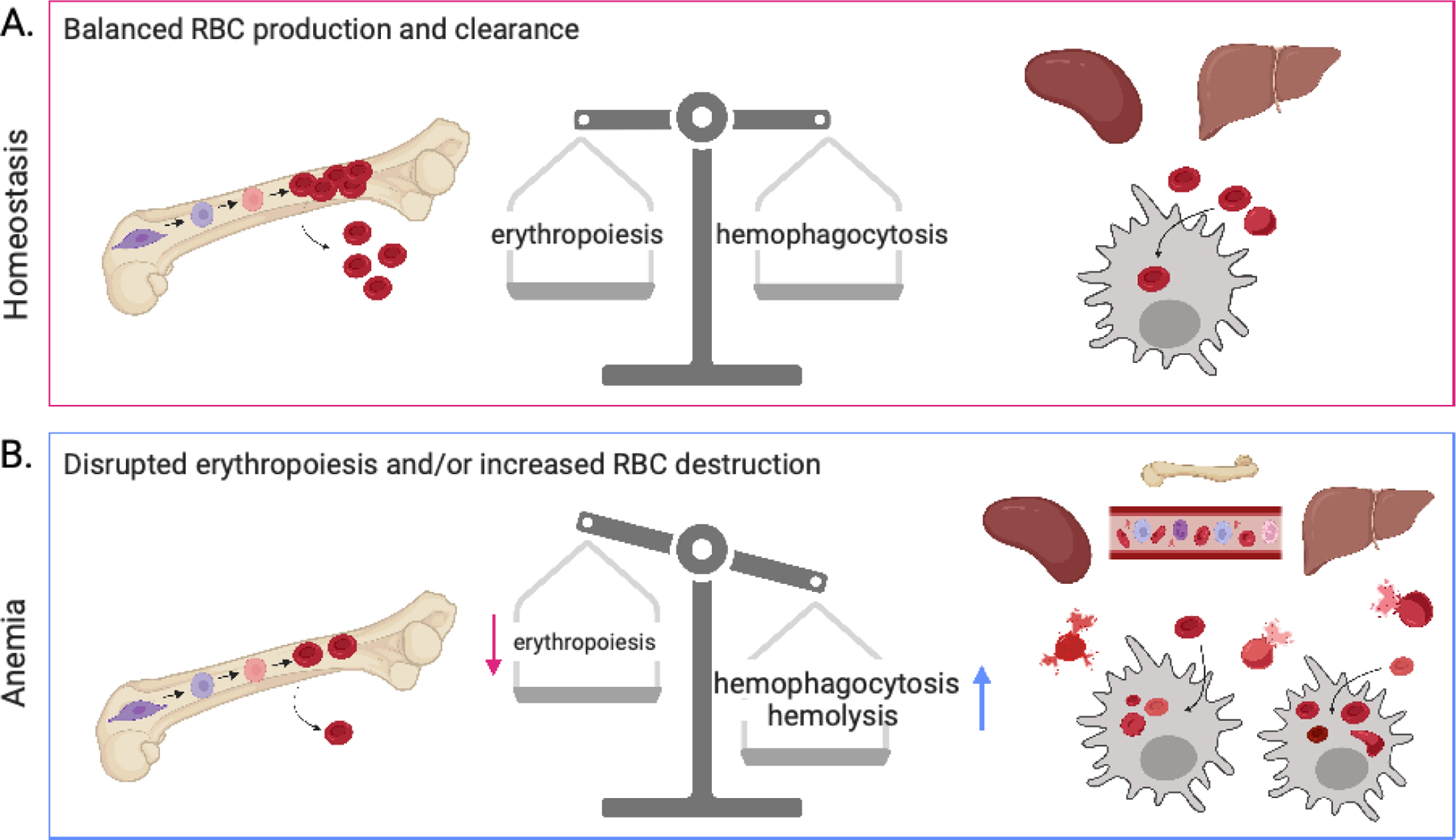
RBC homeostasis and anemia. The proper number of circulating, healthy red blood cells (RBCs) is sustained by a balance of RBC production and clearance. A disruption in either or both processes can lead to anemia. (a) At homeostasis, new RBCs are made in the bone marrow through erythropoiesis and subsequently released into circulation. Simultaneously, old and/or damaged RBCs are cleared from circulation through hemophagocytosis by resident phagocytes in the spleen and liver. (b) Anemia results when one or both sides of this RBC balance is disrupted. Suppressed or aberrant erythropoiesis leads to fewer new, healthy RBCs in circulation. Additionally, RBC destruction can result from infection- or immune-driven hemolysis as well as increased hemophagocytosis by phagocytes in the bone marrow, blood, spleen, and liver. Many immune mechanisms that contribute to anemia have been described and are discussed in this review; including inflammatory cytokines and interferons, autoantibodies to erythropoietin and its receptor, induction of monocyte-derived hemophagocytes, and regulation of positive and negative phagocytic receptors and ligands, among others. Figure adapted from images created with BioRender.com.