


Figure 2.
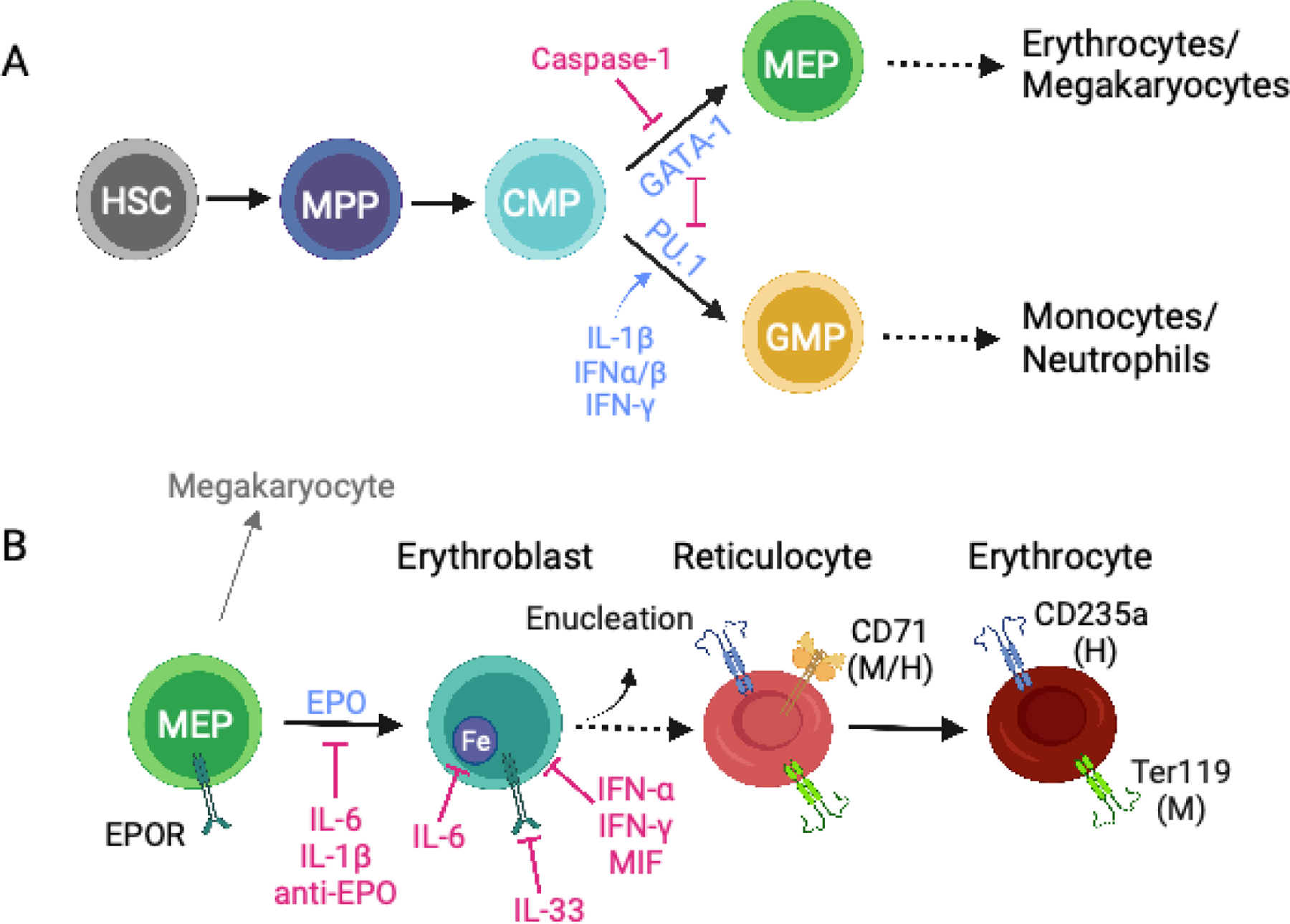
Erythropoiesis during inflammatory anemia. (a) Development of megakaryocyte-erythroid progenitors (MEPs) and granulocyte-macrophage progenitors (GMPs) in the bone marrow. Hematopoietic stem cells (HSCs) differentiate into multipotent progenitors (MPPs) and, subsequently, into common myeloid progenitors (CMPs) that make a lineage choice between generating myeloid cells via GMPs or erythrocytes and megakaryocytes via megakaryocyte-erythrocyte progenitors (MEPs). Cross antagonism between the lineage-specifying transcription factors GATA-1 (erythroid lineage) and PU.1 (myeloid lineage) contributes to the relative production of RBCs and myeloid cells. During inflammation, several cytokines, including IFN-α/β, IFN-γ and IL-1β, increase PU.1 expression in CMPs, whereas activation of caspase-1 can cause GATA-1 cleavage, reducing GATA-1-dependent erythropoiesis; both of these activities promote myelopoiesis over erythropoiesis. (b) Interaction between the kidney-derived hormone erythropoietin (EPO) and the EPO receptor (EPOR) on MEPs results in erythroblast differentiation. During terminal erythroblast differentiation erythroblasts acquire iron for hemoglobin synthesis and nuclear condensation occurs. Erythroblasts enucleate and become reticulocytes (immature RBCs), which then exit the bone marrow and differentiate into erythrocytes (mature RBCs) in circulation. During inflammatory anemia, erythropoiesis can be inhibited through the action of many cytokines, including IFN-α, IFN-γ, IL-1β, IL-6, IL-33, and MIF, as well as anti-EPO or anti-EPOR autoantibodies. CD71 is expressed on mouse and human reticulocytes. Ter119 is expressed on mouse reticulocytes and erythrocytes; CD235a is expressed on human reticulocytes and erythrocytes. Figure adapted from images created with BioRender.com.