


Figure 3.
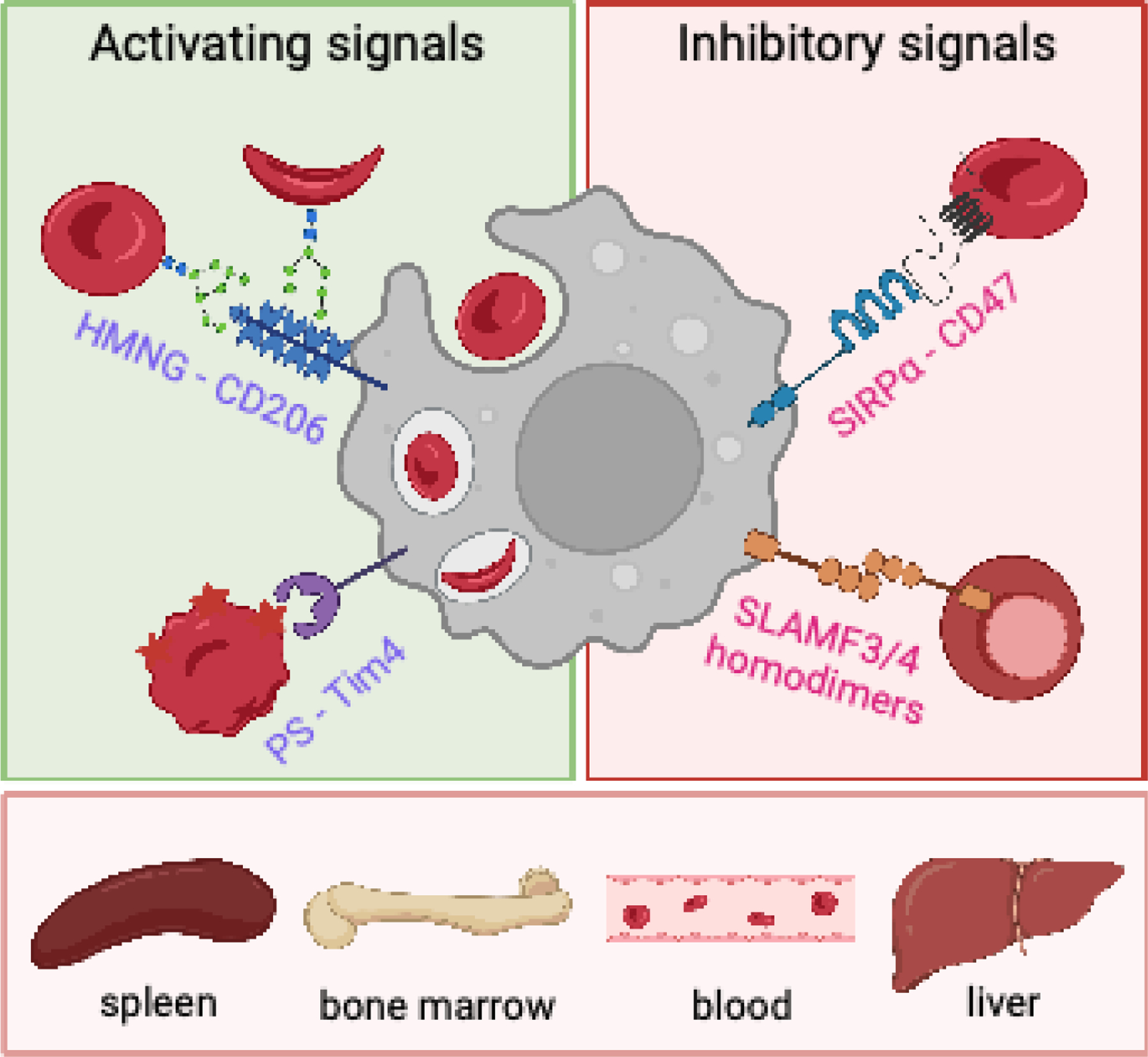
Signals regulating hemophagocytosis. During many inflammatory, infectious, and autoimmune diseases, increased phagocytic destruction of red blood cells (RBCs) in the spleen, liver, blood, and bone marrow can contribute to anemia. During inflammation, hemophagocytes are licensed by cytokines to phagocytose RBCs (not shown). Prophagocytic signals that promote RBC phagocytosis (left) include the mannose receptor (MR, CD206) binding to high-mannose N-glycans (HMNGs) on RBCs, and Tim-4 binding to surface-exposed phosphatidylserine (PS). Conversely, signals that normally inhibit hemophagocytosis (right) may be absent or decreased during inflammation. For example, disruptions to the SIRPα-CD47 inhibitory axis, such as decreased CD47 expression on RBCs, can lead to hemophagocytosis. Similarly, disruptions of the homotypic interactions of SLAMF3 or SLAMF4 on phagocytes and nucleated erythroblasts can cause hemophagocytosis.