


Figure 3. Mechanisms of FGFR signaling activation in breast cancer.
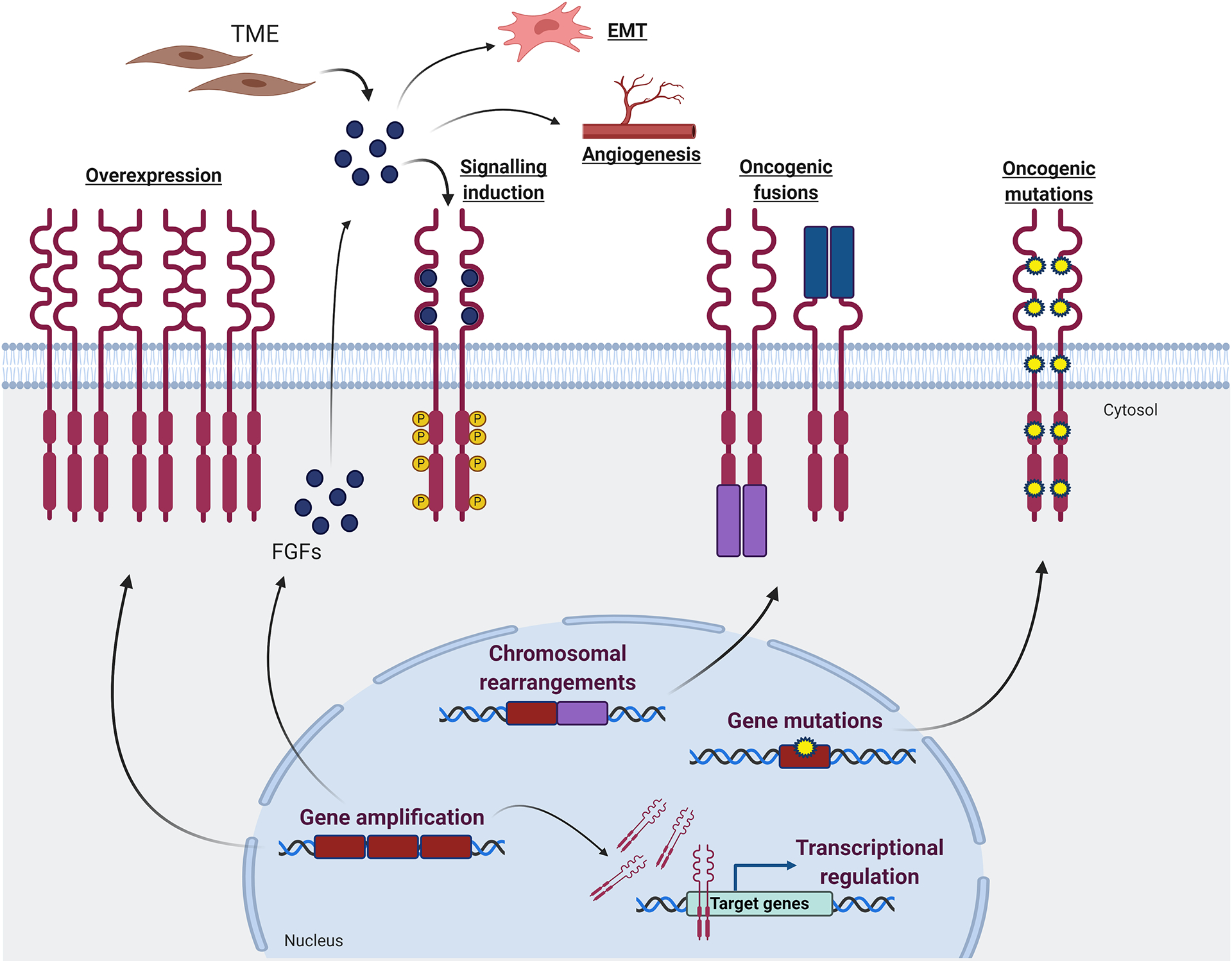
Various mechanisms contribute to enhanced oncogenic FGFR signaling in breast cancer. Gene amplification leads to overexpression of the membrane-bound receptors, ultimately enhancing the canonical signaling cascades induced by FGFRs activation. In addition, overexpression of nuclear FGFR1 contributes to transcriptional regulation. Gene amplification also leads to overexpression of FGF ligands, which in turn hyperactivate the FGFR signaling pathway. FGFs may also promote angiogenesis and epithelial-mesenchymal transition. Chromosomal rearrangements translate into oncogenic fusions, in which a protein partner can be fused at the FGFR C-terminal domain (violet fusion), promoting receptor dimerization and consequent activation of intracellular signaling cascades. In addition, FGFRs can be under the control of the promoter of a protein fused at the N-terminal domain (blue fusion), resulting in a ligand-independent activation. Point mutations can occur at both extra- and intracellular FGFRs domains, leading to ligand-independent receptor dimerization and/or constitutive activation of the C-terminal kinase domain. TME: tumor microenvironment; EMT: epithelial-mesenchymal transition; FGFs: fibroblast growth factors.