



Abstract
IMPORTANCE
An estimated 7.6% of children and 10.8% of adults have IgE-mediated food-protein allergies in the US. IgE-mediated food allergies may cause anaphylaxis and death. A delayed, IgE-mediated allergic response to the food-carbohydrate galactose-α-1,3-galactose (alpha-gal) in mammalian meat affects an estimated 96 000 to 450 000 individuals in the US and is currently a leading cause of food-related anaphylaxis in adults.
OBSERVATIONS
In the US, 9 foods account for more than 90% of IgE-mediated food allergies—crustacean shellfish, dairy, peanut, tree nuts, fin fish, egg, wheat, soy, and sesame. Peanut is the leading food-related cause of fatal and near-fatal anaphylaxis in the US, followed by tree nuts and shellfish. The fatality rate from anaphylaxis due to food in the US is estimated to be 0.04 per million per year. Alpha-gal syndrome, which is associated with tick bites, is a rising cause of IgE-mediated food anaphylaxis. The seroprevalence of sensitization to alpha-gal ranges from 20% to 31% in the southeastern US. Self-injectable epinephrine is the first-line treatment for food-related anaphylaxis. The cornerstone of IgE-food allergy management is avoidance of the culprit food allergen. There are emerging immunotherapies to desensitize to one or more foods, with one current US Food and Drug Administration–approved oral immunotherapy product for treatment of peanut allergy.
CONCLUSIONS AND RELEVANCE
IgE-mediated food allergies, including delayed IgE-mediated allergic responses to red meat in alpha-gal syndrome, are common in the US, and may cause anaphylaxis and rarely, death. IgE-mediated anaphylaxis to food requires prompt treatment with epinephrine injection. Both food-protein allergy and alpha-gal syndrome management require avoiding allergenic foods, whereas alpha-gal syndrome also requires avoiding tick bites.
In the US, IgE-mediated food allergies affect an estimated 7.6% of children and 10.8% of adults.1,2 (Box). Food-related, IgE-mediated allergic reactions can cause hives, red eyes, nasal congestion, oropharyngeal swelling, shortness of breath, even anaphylaxis within seconds of allergen exposure. Fatality due to food-related anaphylaxis is rare (0.04 deaths per million per year).3 This clinical review summarizes the epidemiology, pathophysiology, clinical presentation, prevention, diagnosis, and management of IgE-mediated food allergy and food allergy–related anaphylaxis due to food-proteins and food-glycans, specifically galactose-α-1,3-galactose (alpha-gal) in alpha-gal syndrome. Alpha-gal syndrome is a tick-associated allergic condition that frequently presents as a delayed reaction after mammalian meat ingestion.4,5
Box. Common Questions About IgE-Mediated Food Allergy.
What Are the Preferred Tests for the Evaluation of IgE-Mediated Food Allergies?
Both skin prick testing (percutaneous scratch testing) and serum food allergen–specific IgE testing in patients with clinical histories consistent with allergic hypersensitivity responses to the suspected food may be used to support a diagnosis of IgE-mediated food allergy.
What Is the Most Effective Treatment for Symptoms Triggered By Food Allergies?
Intramuscular injection of epinephrine should be administered for signs and symptoms suggestive of anaphylaxis such as hypotension, tachycardia, tongue or throat swelling, generalized hives, wheeze, hoarseness, stridor, dizziness, syncope, palpitations, nausea, vomiting, and diarrhea.
For mild allergic symptoms triggered by food allergies, an oral antihistamine such as cetirizine or diphenhydramine can decrease symptoms. Mild symptoms include itching, mild gastrointestinal upset, or small areas of isolated hives and swelling.
How Is Alpha-Gal Syndrome Different From the Top 9 Food-Protein Allergies in the US?
In contrast to food-protein allergy, allergic reactions to mammalian products (red meat) in alpha-gal syndrome are associated with IgE to the carbohydrate galactose-α-1,3-galactose (alpha-gal). Symptoms from alpha-gal syndrome frequently appear at least 2 hours after ingesting mammalian meat, although isolated gastrointestinal symptoms may occur sooner than 2 hours in some patients. Individuals with alpha-gal syndrome develop alpha-gal–specific IgE following tick bites.
Methods
We searched the PubMed database and the Cochrane Library for original English-language studies of the epidemiology, pathophysiology, clinical presentation, diagnosis, and treatment of IgE-mediated food allergy and food allergy–related anaphylaxis published between January 1, 2000, and November 30, 2023. We identified additional articles from a review of the references of relevant articles. We prioritized randomized clinical trials; meta-analyses and systematic reviews; evidence-based guidelines; and large, population-based, high-quality observational studies. We identified 126 reports: 8 randomized clinical trials, 7 meta-analyses, 3 systematic reviews, 60 observational studies (longitudinal, cross-sectional, case series, case reports), 8 evidence-based guidelines, 8 expert-consensus guidelines, 1 piece of legislation, 17 narrative reviews (5 with expert recommendations), 6 preclinical basic science reports, and 8 basic science reviews.
Pathophysiology
The development of food allergy begins with the sensitization phase, in which susceptible individuals develop food-specific IgE antibodies after food-protein antigen contacts, gut, respiratory tract, or skin (Figure 1). It is unclear why some become food-allergen sensitized and develop clinical allergies while others do not; possible explanations for this have been explored elsewhere.6–8
Figure 1. Sensitization and Effector Phases in Food-Protein Allergy.
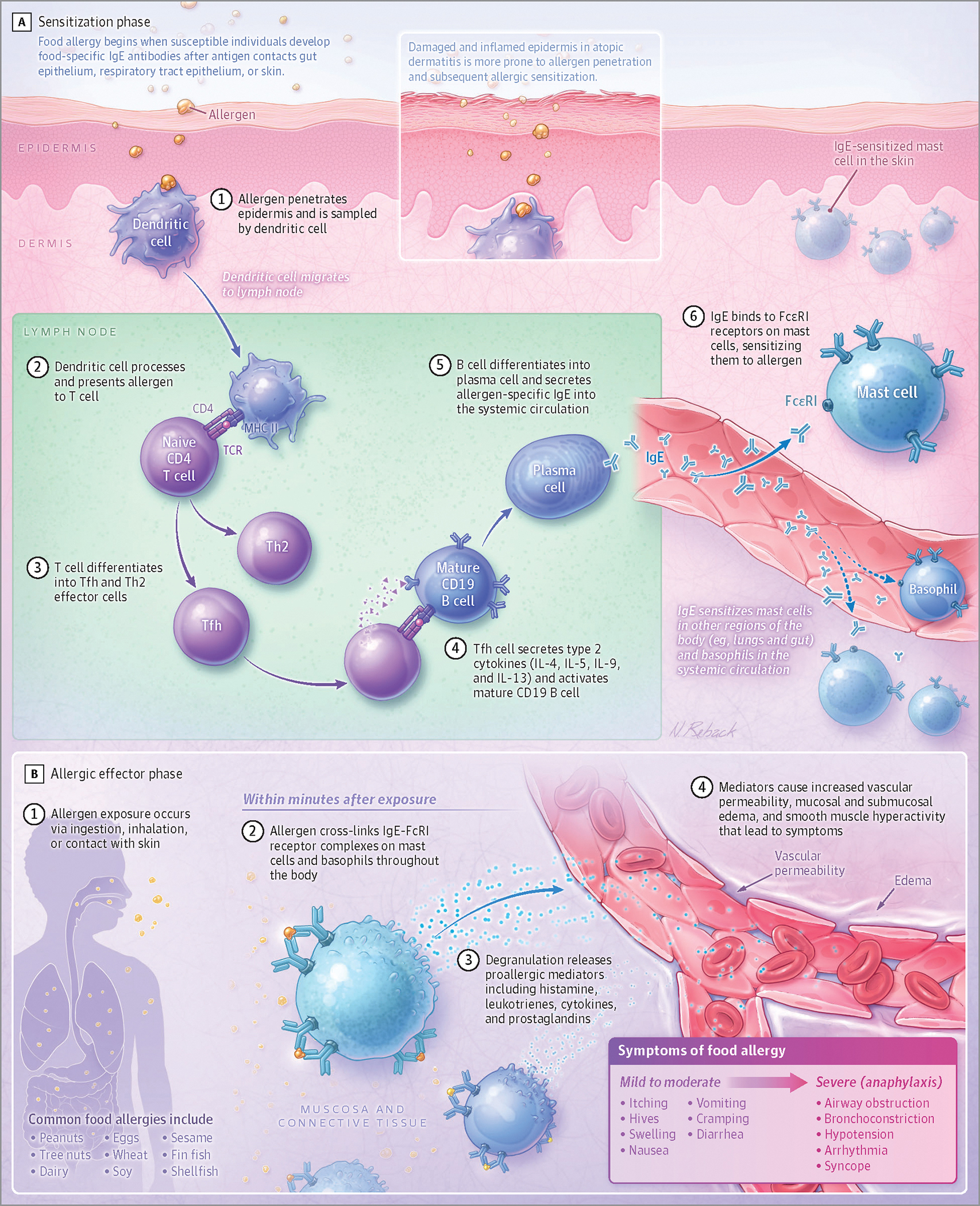
MHC II indicates major histocompatibility complex class II; Tfh, T-follicular helper; Th2, T-helper 2.
Thesecondphaseoffoodallergydevelopmentoccurswhensensitizedindividualsarereexposedtoafoodallergen.Theallergenbinds simultaneously to multiple food-specific IgE-IgE receptor complexes, cross-linking these complexes on basophils and mast cells (the allergic effector phase).9 This cross-linkage induces rapid release of inflammatory mediators (histamine and proteases, including tryptase10), allergic and inflammatory cytokines (IL-4, IL-6, and tumor necrosis factor10,11), platelet-activating factor,12 leukotrienes, and prostaglandins.13 These mediators lead to increased vascular permeability, mucosal and submucosal edema, and smooth muscle hyperreactivity, driving rapid development of urticaria, angioedema, wheezing, bronchoconstriction, nasal hyperreactivity, intestinal spasms, abdominal pain, and anaphylactic shock.10,14
In contrast to food-protein allergy, allergic reactions to mammalian products (red meat) in alpha-gal syndrome are associated with IgE to the carbohydrate, galactose-α-1,3-galactose (alpha-gal). Typically, humans generate alpha-gal–specific IgG, IgA, and IgM antibodies, but not alpha-gal IgE, following exposure to dietary mammalian meat and microbial alpha-gal in the gut.15 In the US, development of alpha-gal–specific IgE is associated with exposure to alpha-gal in tick saliva from lone star tick (Amblyomma americanum) bites (Figure 2).16–20 Other tick species associated with alpha-gal syndrome include Ixodes holocyclus, Amblyomma sculptum, Ixodes ricinus, and Haemaphysalis longicornis.21
Figure 2. Sensitization and Effector Phases in Alpha-Gal Syndrome.
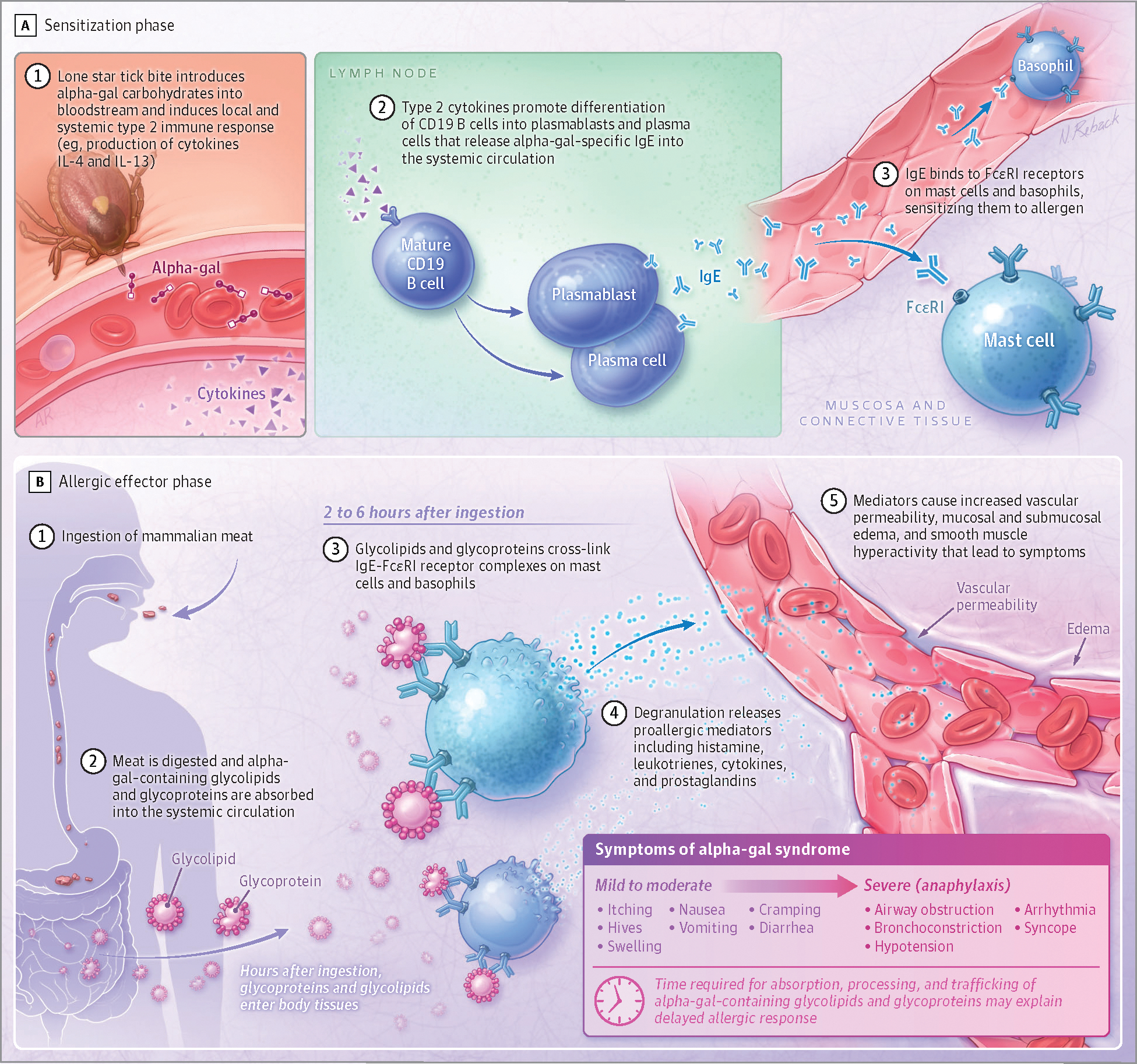
Other cells thought to be involved but not depicted include skin-resident dendritic cells, migrating dendritic cells, T-helper 2 cells, T-follicular helper cells, and invariant natural killer cells. Alpha-gal indicates galactose-α-1,3-galactose.
In contrast to the rapid onset of symptoms in food-protein allergy, symptoms from alpha-gal syndrome frequently appear 2 or more hours after ingesting mammalian meat (Figure 2),4,5,17 although isolated gastrointestinal symptoms may occur sooner than 2 hours in some patients.22,23 The reasons for delayed allergic symptom onset in alpha-gal syndrome are not completely understood.24–28
Epidemiology, Common Food Allergens, and Natural History
According to a 2015–2016 population-based survey in the US, 10.8% of adults and 7.6% of children have self-reported IgE-mediated food allergy.1,2 The most recent seroprevalence estimates for food-specific IgE antibodies in children were as high as 9% for peanut allergy (2005–2006 National Health and Nutrition Examination Survey data).29 Not all patients with food allergen–specific IgE antibodies have symptoms; thus, seroprevalence estimates are often higher than food allergy prevalence estimates from self-report or clinical confirmation.
Genetic susceptibility, microbiome alterations, skin exposure to detergents, and pollutant exposures can contribute to the risk of IgE-mediated food sensitization and allergy.8 Infantile eczema is the strongest risk factor for food allergies.30,31 In eczema, an impaired, inflamed skin barrier promotes allergic sensitization when exposed to ambient food proteins (Figure 1).31 In a population-based cohort where oral food challenges were the reference standard (5276 1-year-old infants in Australia), 20% of children with at least 3 family members who had an atopic condition (allergic rhinitis, asthma, eczema, or any food allergy) had IgE-mediated food allergy, compared with only 5.6% of those with fewer affected family members.32 Compared with children who were exposed to potentially allergenic food in infancy, children with later exposure were more likely to develop food allergies.6,33–48
In the US, 9 foods account for more than 90% of symptomatic IgE-mediated food-protein allergies. The prevalence in adults and children, respectively, for crustacean shellfish is 2.9% and 1.3%; for dairy, 1.9% and 1.9%; for peanut, 1.8% and 2.2%; for tree nuts, 1.2% and 1.2%; for fin fish, 0.9% and 0.6%; for egg, 0.8% and 0.9%; for wheat, 0.8% and 0.5%; for soy, 0.6% and 0.5%; and for sesame, 0.2% and 0.2%.1,2 Infants (<1 year) have higher rates of symptomatic egg allergy (8.9%),49 and rates of symptomatic cow’s milk protein allergy are approximately 2% to 3% in children 3 years or younger.50,51 Retrospective observational studies of 807 patients with cow’s milk protein allergy reported resolution in 19% by age 4 years and 79% by 16 years.50 Prospective studies suggest egg allergy resolves in 89% by age 6 years.52 Peanut and tree nut allergies are more durable than egg and milk allergies. Depending on the study population, peanut allergy resolved in 14.8% to 29% by ages 6 through 10 years,52,53 and tree nut allergy resolved in 9% by a median age of 10 years (range, 5.8–15.7 years).54
The leading food-related causes of fatal and near-fatal anaphylaxis are due to allergies to peanut, tree nuts, crustacean shellfish, and cow’s milk; however, there is regional variability.55,56 For example, peanut is the leading cause of anaphylaxis in the US, whereas cow’s milk is the most common cause of food-related fatal anaphylaxis in the UK.57 For children in the US, peanut and tree nut allergic reactions accounted for the highest annual rates of emergency department visits for food allergy in 2014 (peanut, 5.85 visits per 100 000 individuals; tree nuts, 4.62 visits per 100 000 individuals).58
Pollen-food allergy (oral allergy) syndrome occurs in individuals—sensitized to aerosolized environmental plant pollens via the respiratory tract—who ingest plant-based foods that cross-link the pollen-specific IgE. Adverse reactions are typically limited to immediate local oropharyngeal pruritus and angioedema, although anaphylaxis has been reported in 1.7% of patients with the syndrome.59 The prevalence and distribution is unknown in the US, but 20% to 43% of children and adults with allergic rhinitis in Asia and Europe reported pollen-food allergy symptoms.60
In the southeastern US, alpha-gal syndrome prevalence correlates with regional endemicity of the lone star tick, with this food allergy emerging as a leading cause of anaphylaxis in adults.61 Among individuals referred to the National Institutes of Health for a study of idiopathic anaphylaxis, 9% had detectable levels of alpha-gal–specific IgE antibodies (≥0.35 kU/L), described a tick bite history, and lived in endemic regions of the lone star tick (Missouri, Virginia, Tennessee, Alabama, and New Jersey).62 Surveillance maps published by the Centers for Disease Control and Prevention (CDC) show the lone star tick’s expanding reach across the southern and eastern US.63 A CDC review of 233 521 individuals undergoing serological testing for alpha-gal syndrome suggests that suspected cases occurred primarily in the southern, midwestern, and mid-Atlantic US Census Bureau regions.64 Seroprevalence estimates of alpha-gal sensitization in the southeastern US range from 20% to 31%.65–67 A study evaluating 122 068 sera samples from more than 100 000 patients in the US with suspected mammalian meat allergy reported an alpha-gal sensitization rate of 32.4%. Individuals 70 years or older were most likely to test positive, and those between 0 and 9 years, the least likely. From 2011 to 2018, there was a 6-fold increase in alpha-gal–specific IgE antibody tests,68 suggesting that alpha-gal sensitization rates in the US may be increasing and/or testing is increasing. One CDC report estimates that between 96 000 and 450 000 individuals in the US may have developed alpha-gal syndrome since 2010.64
Clinical Presentation and Diagnosis
Anaphylaxis
The World Allergy Organization 2020 guidelines includes 2 criteria for diagnosing anaphylaxis.69 First, an acute onset of an illness within minutes to hours that occurs at the same time as skin or mucosal tissue involvement or both, which could include generalized hives; pruritus or flushing; or swollen lips, tongue, or uvula, and at least 1 of the following: (1) respiratory signs or symptoms, including dyspnea, wheeze-bronchospasm, stridor, hypoxemia; (2) reduced blood pressure or end-organ dysfunction (eg, hypotonia [collapse], syncope, incontinence); and (3) gastrointestinal symptoms that include frequent vomiting and abdominal pain with severe cramping. Second, an acute and rapid onset—within minutes to hours—of hypotension or bronchospasm or laryngeal involvement after a patient is exposed to a known or highly probable allergen. Symptoms may not include skin involvement.
The differential diagnosis of anaphylaxis includes acute bronchospasm, syncope, and anxiety and/or panic attacks.70
When evaluating patients with suspected IgE-mediated food allergy, the exposure history (eg, foods, drugs, stinging insects) and possible cofactors should be identified. Cofactors are elements that lower the threshold to develop food-induced allergic symptoms and include concurrent illness, fever, exercise, alcohol consumption, menstruation, and aspirin and other nonsteroidal anti-inflammatory drugs. In food-dependent exercise-induced anaphylaxis, for example, affected patients may have anaphylaxis if they exercise within 4 to 6 hours of culprit food ingestion (commonly wheat).60
The results of a serum tryptase test obtained 90 minutes to 4 hours after a suspected food-induced anaphylaxis event that show an increase by at least 1.2 times the patient’s baseline value plus 2 ng/mL is highly suggestive of mast cell degranulation and can assist allergy specialists in confirming the diagnosis. The baseline tryptase value can be obtained at a follow-up visit when the patient has recovered and is well. In one study,71 in which serum tryptase levels were measured before and during an oral food challenge to induce anaphylaxis, serum tryptase levels increased above baseline in 100 of 160 cases and increased above the upper limit of normal (11.4 ng/mL) in 4 out of 160 cases.
IgE-Mediated Reactions, Recognition, and Identification
Hallmarks of IgE-mediated, food-protein allergy include generalized hives; pruritus; flushing; swelling of the lips, tongue, or uvula; paroxysmal sneezing; crampy abdominal pain; and vomiting that occur with repeated exposure to the causative food allergen.51 Early-symptom onset (minutes to 2 hours) following food exposure is a key feature, with the exception of alpha-gal syndrome for which delayed symptom onset of more than 2 hours is common. There is no uniform minimum dose across all food allergens that induces allergic symptoms. Some individuals may react to trace amounts of food allergens, whereas others may tolerate higher amounts of food allergen before experiencing symptoms.72–74 Symptom duration varies in susceptible individuals, depending on the severity of initial allergic symptoms, whether and when symptoms were treated, and medication used for treatment.75
Confirming the Diagnosis
IgE-mediated food allergy is confirmed by (1) a comprehensive clinical history compatible with an IgE-mediated reaction and (2) serological or skin prick testing demonstrating the presence of food allergen–specific IgE (ie, food-specific allergic sensitization) and/or observation of IgE-mediated signs and symptoms that are reproduced upon specific food exposure.76 Establishing the pretest probability of an IgE-mediated food reaction via a detailed clinical history guides the selection of diagnostic tests, including skin prick testing, specific IgE serological tests, and oral food challenges, all of which are typically performed by allergy specialists.76
The reference standard for the diagnosis of IgE-mediated food allergy is the oral food challenge.77,78 Observed symptoms compatible with IgE-mediated food allergy that manifest within 2 hours after food ingestion confirm the diagnosis. The absence of such findings following a serving of the suspected allergen, particularly in children, makes IgE-mediated food-protein allergy unlikely. In contrast, meat challenges for alpha-gal syndrome may not consistently induce allergic symptoms because allergic responses may depend on cofactors such as exercise after eating meat; in addition, symptoms may not occur for 6 hours or more after ingestion.79 In practice, oral food challenges require significant time and clinical resources and inherently incur the risk of inducing allergic reactions. Thus, a convincing clinical history along with positive skin prick testing and/or food allergen–specific IgE in serum confirming allergic sensitization make the probability of IgE-mediated food allergy high enough to obviate the need for diagnostic food challenges.76
Allergic sensitization to suspected foods can be assessed by measuring food-specific serum IgE levels or performing skin prick testing. These tests are typically requested by allergists as part of a comprehensive assessment for suspected food allergy. In skin prick testing, allergenic extracts, saline, and histamine are placed percutaneously and the resulting wheals are compared.80 Although allergic sensitization in an individual who has never ingested the allergen is insufficient to confirm the diagnosis of food allergy, the likelihood of a positive oral food challenge increases as serum-specific IgE levels or skin prick testing wheal size increase.81,82 Given imprecise, variable predictive values, both skin prick testing and allergen-specific IgE, whether for single foods or in multifood panels, have limited utility as screening tools for food-protein allergies when interpreted without a history of allergic symptoms to a specific suspected food.83 Allergy specialists typically engage in shared decision-making during discussions of screening for food allergies84 with patients and families. In general, comorbid allergic conditions such as allergic rhinitis, allergic asthma, and atopic dermatitis are not sole indications to test for food-specific allergic sensitization.85,86
The presence of serum alpha-gal–specific IgE supports a diagnosis of alpha-gal syndrome for patients with allergic symptoms after mammalian meat ingestion. An alpha-gal IgE concentration of 0.1 kU/L or more is suggestive of the diagnosis, whereas an alpha-gal–specific IgE concentration lower than 0.1 kU/L is considered a negative result.21,22,66,87–91 In populations with high alpha-gal sensitization rates, alpha-gal IgE levels of at least 2 kU/L or more than 2% of the total IgE concentration increases the likelihood of a positive mammalian meat challenge to greater than 50%,21,22,87 whereas values of at least 5.5 kU/L confer a 95% or more positive predictive value.22
Primary Prevention of Food Allergy
Randomized trials and meta-analyses have demonstrated that timely and consistent feeding of allergenic foods such as peanuts and eggs during infancy and into early childhood (Table) is an effective primary prevention strategy against the development of food allergy, especially in infants with eczema.33,34,37–39,92–94 Dietary introduction of peanuts in infancy reduces the risk of peanut allergy (relative risk reduction, 71%; 95% CI, 26%-89%; 18 cases of peanut allergy prevented per 1000 individuals in a population with 2.5% peanut allergy prevalence). Dietary introduction of hen’s egg in infancy reduces the risk of egg allergy (relative risk reduction, 44%; 95% CI, 13%-64%).39,95 In population modeling that used data from trials and cohort studies, the greatest reductions in peanut allergy are achieved when peanut ingestion occurs at an early age, providing insight into an early “critical window of opportunity” at 4 to 6 months of age to reduce the risk of peanut allergy.7
Table.
Prevention and Treatment Strategies for Food-Protein Allergy and Anaphylaxis
| Strategy | Goal | Patient education and support needs |
|---|---|---|
| Infant allergenic food consumption | Prevent the development of specific food allergies | • Education on timing, amount, and frequency of specific allergenic foods (eg, peanut, egg) • Awareness of infant-safe forms of allergenic foods (eg, thinned peanut butter, mashed boiled egg) Identification of food allergy risk factors (eg, eczema) • Shared decision-making regarding screening for sensitization Awareness of index allergic reactions |
| Dietary avoidance of culprit foods | Prevent and reduce severity of allergic reactions | • Reading and understanding of nutrition labels • Awareness of cross-contact and cross-contamination • Appropriate vigilance against potentially hidden ingredients • Developing food allergy-specific self-advocacy and communication skills (eg, for schools, restaurants, social event hosts, airlines) • Access to safe foods |
| Oral immunotherapy (food allergy desensitization) | • Prevent and reduce severity of allergic reactions | • Individualized shared decision-making to choose oral immunotherapy • Understanding the potential benefits, potential risks, and behavioral advisories while undergoing oral immunotherapy |
| Emergency medications, including intramuscular epinephrine | Treat severe allergic reactions (anaphylaxis); reduce severity of allergic symptoms | • Understanding of individualized emergency action plan • Education about when to use epinephrine and role for adjunctive medications (eg, antihistamines, inhalers) to treat symptoms of severe allergic reactions and anaphylaxis |
Treatment of Patients With Food Allergies
Emergency Care Plans and Medication
All patients with IgE-mediated food allergy should have an emergency care plan that details medications to use for mild and severe allergic reactions (Table). Injectable epinephrine is the first-line treatment of severe allergic reactions and/or anaphylaxis.75,96 Self-injectable epinephrine devices can be used to deliver doses in rapid succession (eg, 5 minutes apart), which may be required to slow symptom progression and reduce symptom severity. A 2021 meta-analysis of 86 studies, comprising datasets from 20 prospective and 68 retrospective observational studies (36 557 anaphylaxis events), showed that although 1 in 10 anaphylactic events were associated with the need for more than 1 epinephrine dose, only 2.2% (95% CI, 1.1%-4.1%) of reactions were associated with failure to respond to 2 doses of epinephrine.97 Arrhythmia and acute coronary syndrome after intramuscular epinephrine are rare with only 7 case reports described in the literature.98 Antihistamines, corticosteroids, and mast cell stabilizers such as cromolyn are commonly prescribed in the acute setting because they may mitigate certain symptoms of allergic reactions (eg, pruritus, urticaria, abdominal discomfort), and patients and clinicians express more comfort and familiarity with these medications than with epinephrine.75 However, unlike epinephrine, these medications do not interrupt acute mast cell degranulation and do not stop anaphylaxis. Thus, administering these medications should not interfere with early epinephrine administration to treat anaphylaxis.75
Corticosteroids are also commonly given in practice to reduce the risk of biphasic anaphylaxis. However, there are no studies to support a consensus on the appropriate dosing or duration of steroid treatment for anaphylaxis. In a systematic review of 26 observational studies addressing whether to use corticosteroids to prevent biphasic anaphylaxis, the effect sizes across the studies ranged from 67 fewer to 4 more episodes of biphasic anaphylaxis per 1000 with corticosteroid use. Study authors also noted that confounding factors in these studies likely affected the results. Thus, published studies provide “very low certainty evidence” suggesting that no benefit from corticosteroids in reducing the risk of biphasic anaphylaxis exists (OR, 0.8; 95% CI, 0.74–1.02).75
Avoidance and Related Behaviors for IgE-Mediated Food Allergies
The cornerstone of managing IgE-mediated food allergy is avoidance of the culprit food allergen (Table).29 Individuals and families managing food allergies require essential knowledge and skills to limit encounters with both known and hidden sources of culprit food allergens. These skills include food label literacy to identify major allergens in packaged foods; proactive communication skills to discuss food allergies with families, schools, restaurant workers, and food vendors; cognizance of cross-contact and cross-contamination in places where foods may be prepared and served; and an ability to recognize dishes and meals across cultural cuisines that traditionally contain specific food allergens.99–103 Federal statute mandates that the ”top 9” food allergens are disclosed on all food packaging labels. Because precautionary allergen labeling (ie, language such as “may contain,” “processed in a facility with”) is not federally mandated and does not have the same regulatory standards, avoidance of products with such labels should be based on shared decision-making between families and their allergists that incorporates food allergic reaction severity, personal risk tolerance, and quality of life.104,105 The vigilance needed to avoid food allergens is often associated with a significant impairment in the quality of life for both patients and caregiver.106 Patient and clinician resources beyond the generalist and specialist clinic include professional advocacy organizations, counselors and psychologists, and registered dieticians for nutritional support, both in correcting nutritional deficiencies and in providing coaching for practical alternatives for eliminated foods.
Desensitization via Immunotherapy
For food-protein allergies, allergen desensitization via immunotherapy is a therapeutic option (Table).107 Immunotherapy can increase the minimum amount of food allergen consumed that elicits a clinical allergic reaction.108 In oral immunotherapy, an individual consumes small, successively increasing doses of a food allergen and then is maintained on a daily target dose indefinitely for ongoing exposure.109 Currently, pharmaceutical grade peanut (Arachis hypogaea) allergen powder (PTAH, Palforzia, Aimummune Therapeutics) is the only food allergy immunotherapy approved by the US Food and Drug Administration (FDA) and is used for peanut allergy.110,111 In the Peanut Allergy Oral Immunotherapy Study of AR101 for Desensitization in Children and Adults (PALISADES)108 randomized trial, 250 of 372 participants being actively treated tolerated exposure to at least 600 mg of peanut protein (equivalent to approximately 2 peanut kernels) at the end of the trial compared with only 5 of 124 patients who received placebo. Subsequently, this peanut allergen powder became the first FDA-approved immunotherapy product for food allergy. Oral immunotherapy for multiple food allergens, including peanut, using readily available but nonstandardized dietary sources is an emerging clinical allergy practice initiated in the allergist’s office and continued at home. Allergic reaction associated with oral immunotherapy is the inherent risk of desensitization therapy. The risk of such reactions can increase after exercise, sleep deprivation, illness, and fever and with use of medications such as nonsteroidal anti-inflammatory drugs, but may decrease with use of biologics currently approved to treat atopic dermatitis and allergic asthma.108 Given the need to balance the benefit of protecting against accidental exposures with the risks of allergic reactions to the therapy itself, choosing to pursue oral immunotherapy remains an important decision to be shared between the treating specialist and family.84
Management of Alpha-Gal Syndrome
Allergic Reactions and Anaphylaxis
The management of acute allergic reactions and anaphylaxis in alpha-gal syndrome mirrors the approach used to manage allergic reactions in food-protein allergy, including prompt treatment of severe allergic reactions with epinephrine and use of antihistamines and corticosteroids as adjunctive treatments.96 For individuals with alpha-gal sensitization and mild, chronic symptoms that involve solely the gastrointestinal tract (gastroesophageal reflux or loose stools), or skin (pruritus and hives), H1 and H2 antihistamines and oral mast cell stabilizers (cromolyn sodium) may be used.89 Individuals with alpha-gal syndrome and a history of anaphylaxis with elevated serum tryptase concentration both during an acute reaction and at baseline should prompt suspicion for an underlying mast cell disorder, such as indolent systemic mastocytosis. Patients with both alpha-gal syndrome and indolent systemic mastocytosis experienced more severe allergic reactions than those with alpha-gal syndrome alone even though alpha-gal–specific IgE levels were 3-fold lower in patients with concurrent alpha-gal syndrome and indolent systemic mastocytosis.62
Avoidance and Related Behaviors
Bites from ticks associated with alpha-gal syndrome have been shown to increase alpha-gal–specific IgE levels and the likelihood of a reaction following alpha-gal consumption.16,19,21,89,112,113 Therefore, patients with alpha-gal syndrome should be counseled to avoid repeat tick bites. Patients who are outdoors in areas where ticks live should wear clothing that covers exposed skin, walk in the center of trails, and avoid grassy, brushy, and wooded areas if possible. The application of Environmental Protection Agency–registered insect repellant, and insecticide (permethrin) to clothing and gear is also recommended. Once indoors, patients should shower within 2 hours of being outdoors and check skin and clothing for ticks. If ticks are found on the body, they should be removed with fine-tipped tweezers.63
Expert opinion also recommends a tiered avoidance approach for specific foods and drugs (Figure 3). Avoiding the wide variety and sometimes surprising sources of alpha-gal requires careful planning by patients and clinicians. All symptomatic patients with alpha-gal syndrome should avoid mammalian meat, innards, and organs.21,87,89 They should also be counseled on other sources of dietary alpha-gal such as mammal-derived gelatin, lard in biscuits, pork encasings used for poultry-based sausages, gravy drippings, beef broth, and fatback or bacon in vegetable dishes. Avoidance of gelatin-containing foods, including powdered gelatin desserts, and some puddings and yogurts, is recommended.87,88 Most patients can continue to consume small to moderate amounts of dairy (skim or low-fat milk, hard cheeses). Symptoms resolve in approximately 80% of individuals who follow this food avoidance strategy.88 The estimated 20% of patients whose allergic symptoms persist despite following these guidelines should be counseled to also avoid dairy products, especially whole milk, ice cream, heavy cream, and soft cheeses. To date, there are no data on potential adverse or positive effects of consuming dairy products as tolerated in patients with alpha-gal syndrome, although dairy tolerance has been associated with syndrome resolution.89 Dietary alpha-gal does not always trigger allergic reactions, but certain cofactors such as exercise, alcohol ingestion, and/or nonsteroidal anti-inflammatory medication use may increase the likelihood of allergic symptoms.87,88
Figure 3. Tiered Avoidance Approach of Alpha-Gal–Containing Foods and Drugs.
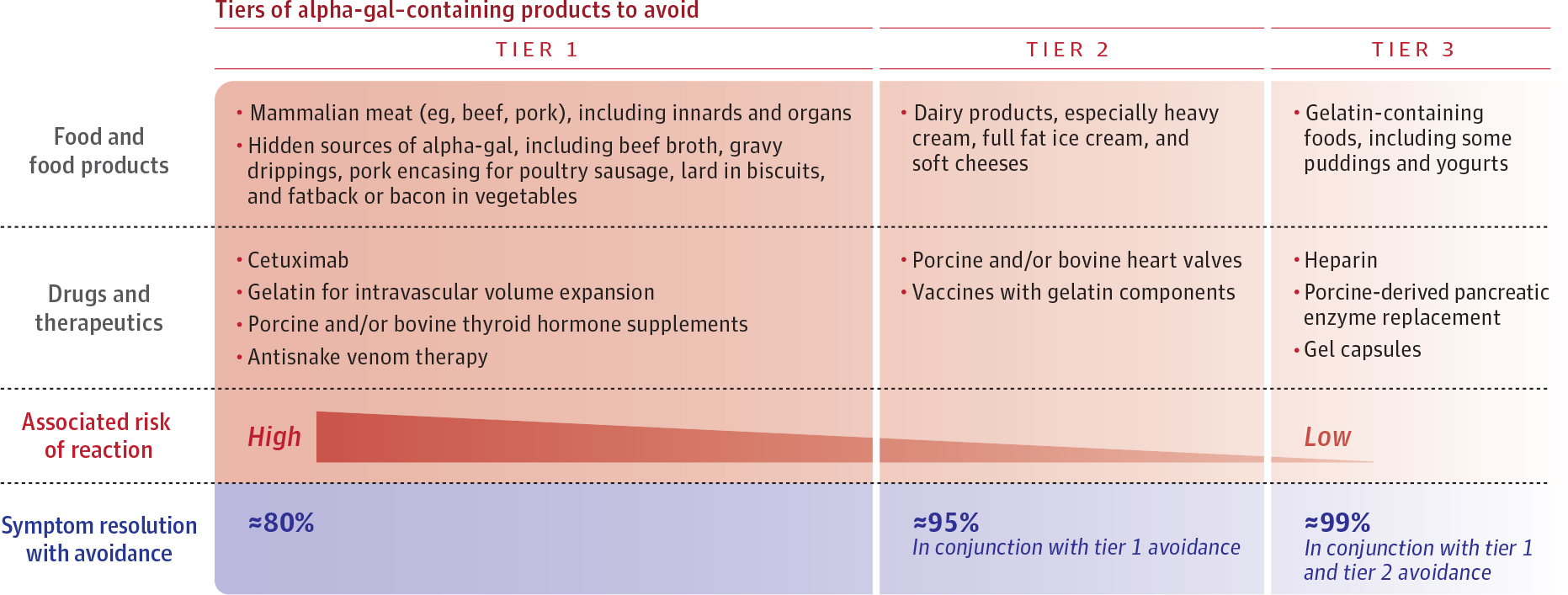
Alpha-gal indicates galactose-α-1,3-galactose.
Clinicians should be aware that individuals with alpha-gal syndrome should avoid injections of alpha-gal–containing medications such as cetuximab and intravenous gelatin (sometimes used for volume resuscitation outside the US). In general, patients with alpha-gal syndrome should also avoid oral medications and supplements of porcine and bovine origin such as commercially available non-FDA approved thyroid hormone supplements (Armour thyroid) and medications encased in mammal-derived gelatin capsules. However, there are case reports of patients with alpha-gal syndrome who have tolerated porcine-derived pancreatic enzyme replacement therapy.114,115 In addition, there are case reports describing both anaphylaxis116,117 and tolerance118 to vaccines with gelatin excipients. Thus, the general recommendation is to avoid alpha-gal–containing medications whenever possible, favoring preparations that come in tablet form rather than gelatin capsules. However, these case reports suggest that if an alpha-gal–containing medication or vaccine is absolutely required for treatment with no viable alternatives, these therapeutics may be able to be administered to patients under the supervision of allergy and immunology specialists.
Sensitization to alpha-gal may complicate surgical procedures, particularly bovine or porcine heart valve replacements and anticoagulation with high doses of porcine heparin.119–121 Via immunoblotting, sera from patients with alpha-gal syndrome were shown to bind mammalian-derived implants, including cardiac patches, vascular grafts, and heart valves similarly to a monoclonal anti–alpha-gal IgM antibody.119 Although the relationship between alpha-gal–specific IgE levels and strength of binding to these implants was not established in this study, this observation suggests that such implants may pose a long-term nidus for chronic inflammation in patients with alpha-gal syndrome.119 However, studies have not compared longevity of bioprosthetic heart valves and other mammalian-derived grafts in patients with and without alpha-gal syndrome.
Heparin produced from porcine mucosa and bovine lungs contains detectable alpha-gal.121 Single-center retrospective studies suggest that allergic reactions to heparin among patients with alpha-gal syndrome are more likely following intravenous (IV) unfractionated heparin than subcutaneous low-molecular-weight heparin. Four of 17 patients (24%) sensitized to alpha-gal and undergoing cardiac surgery had a documented allergic reaction after receiving IV unfractionated heparin122 compared with 1 of 39 (2.6%) administered subcutaneous unfractionated heparin123 and 0 of 22 (0%) sensitized patients receiving low-molecular-weight heparin.124 Thus, if high-dose IV unfractionated heparin cannot be avoided among patients with alpha-gal syndrome, expert opinion suggests pretreatment with steroids and antihistamines prior to administration.122 Although no data suggest that pretreatment will lower the risk of IgE-mediated hypersensitivity to heparin, the favorable side effect profiles of pretreatment medications and potential benefits of reducing risk or severity of IV heparin–induced allergic reactions have led some to adopt this practice.122
Among patients with alpha-gal syndrome, serum alpha-gal–specific IgE levels are typically monitored every 6 to 18 months. Alph-gal–specific IgE levels wane over time, so alpha-gal syndrome may resolve spontaneously, especially if additional tick bites are avoided.113 Oral mammalian meat challenge can be considered when alpha-gal specific IgE is either less than 2 kU/L or less than 2% of total IgE levels,89 although thresholds may vary depending on the population.22 Strategies for reincorporating mammal meat back into the diet if alpha-gal syndrome has resolved depend on patient and clinician comfort and include a supervised, in-office, oral food challenge with a serving of mammalian meat followed by several hours of observation or gradual reintroduction in the home setting with access to intramuscular epinephrine. Oral immunotherapy with cow’s milk or beef to treat alpha-gal syndrome remains investigational.21,124,125 Creation of an FDA-approved pig genetically engineered not to have alpha-galactosyl transferase enzymes may provide future avenues for hypoallergenic mammalian meat preparations and may allow use of mammalian products in therapeutics for patients with alpha-gal syndrome.126
Limitations
This review has several limitations. First, the quality of the evidence presented was not systematically evaluated with formal quality grade levels. Second, given the breadth of the field, all relevant references may not have been included. Third, emerging IgE-mediated food glycan-allergies, aside from alpha-galsyndrome, were not discussed.
Conclusion
IgE-mediated food allergies, including delayed IgE-mediated allergic responses to red meat in alpha-gal syndrome, are common in the US, and may cause anaphylaxis and rarely, death. IgE-mediated anaphylaxis to food requires prompt treatment with epinephrine injection. Both food-protein allergy and alpha-gal syndrome management require avoiding allergenic foods, whereas alpha-gal syndrome also requires avoiding tick bites.
Funding/Support:
This work was supported by grants 5K12HS026395-04 (Dr Iglesia) from the National Institutes of Health and the Agency for Healthcare Research and Quality; K23AI130408 (Dr Virkud) and K08AI141691 (Dr Iweala) from the National Institute of Allergy and Infectious Diseases; a 2020 American Association of Allergy, Asthma, and Immunology Foundation Faculty Development Award (Dr Iweala), and the UNC Food Allergy Initiative and the Thurston Arthritis Research Center at UNC-Chapel Hill (Dr Iweala).
Role of the Funder/Sponsor:
The funders had no role in the design and conduct of the study; collection, management, analysis, and interpretation of the data; preparation, review, or approval of the manuscript; and decision to submit the manuscript for publication.
Footnotes
Conflict of Interest Disclosures: Dr Iglesia reported receiving grants from the Robert Wood Johnson Foundation during the conduct of the study. Dr Kwan reported receiving grants from Pfizer QI outside the submitted work. Dr Iweala reported serving as on the advisory boards of Blueprint Medicines and Novartis and receiving consulting fees from Allakos Inc outside the submitted work; and was a coauthor of an article sponsored by Genentech. No other disclosures were reported.
Disclaimer: The content is solely the responsibility of the authors and does not necessarily represent the official views of the National Institutes of Health.
Submissions: We encourage authors to submit papers for consideration as a Review. Please contact Kristin Walter, MD, at kristin.walter@jamanetwork.org.
Contributor Information
Edward G. A. Iglesia, Division of Allergy, Pulmonary and Critical Care Medicine, Department of Medicine, Vanderbilt University Medical Center, Nashville, Tennessee.
Mildred Kwan, Thurston Arthritis Research Center, Division of Rheumatology, Allergy, and Immunology, Department of Medicine, University of North Carolina School of Medicine, Chapel Hill.
Yamini V. Virkud, University of North Carolina Food Allergy Initiative, Division of Allergy and Immunology, Department of Pediatrics, University of North Carolina School of Medicine, Chapel Hill.
Onyinye I. Iweala, Thurston Arthritis Research Center, Division of Rheumatology, Allergy, and Immunology, Department of Medicine, University of North Carolina School of Medicine, Chapel Hill; University of North Carolina Food Allergy Initiative, Division of Allergy and Immunology, Department of Pediatrics, University of North Carolina School of Medicine, Chapel Hill.
REFERENCES
- 1.Gupta RS, Warren CM, Smith BM, et al. Prevalence and severity of food allergies among US adults. JAMA Netw Open. 2019;2(1):e185630. doi: 10.1001/jamanetworkopen.2018.5630 [DOI] [PMC free article] [PubMed] [Google Scholar]
- 2.Gupta RS, Warren CM, Smith BM, et al. The public health impact of parent-reported childhood food allergies in the United States. Pediatrics. 2018;142(6):e20181235. doi: 10.1542/peds.2018-1235 [DOI] [PMC free article] [PubMed] [Google Scholar]
- 3.Ma L, Danoff TM, Borish L. Case fatality and population mortality associated with anaphylaxis in the United States. J Allergy Clin Immunol. 2014;133(4):1075–1083. doi: 10.1016/j.jaci.2013.10.029 [DOI] [PMC free article] [PubMed] [Google Scholar]
- 4.Commins SP, Satinover SM, Hosen J, et al. Delayed anaphylaxis, angioedema, or urticaria after consumption of red meat in patients with IgE antibodies specific for galactose-alpha-1,3-galactose. J Allergy Clin Immunol. 2009;123(2):426–433. doi: 10.1016/j.jaci.2008.10.052 [DOI] [PMC free article] [PubMed] [Google Scholar]
- 5.Van Nunen SA, O’Connor KS, Clarke LR, Boyle RX, Fernando SL. An association between tick bite reactions and red meat allergy in humans. Med J Aust. 2009;190(9):510–511. doi: 10.5694/j.1326-5377.2009.tb02533.x [DOI] [PubMed] [Google Scholar]
- 6.Skjerven HO, Lie A, Vettukattil R, et al. Early food intervention and skin emollients to prevent food allergy in young children (PreventADALL): a factorial, multicentre, cluster-randomised trial. Lancet. 2022;399(10344):2398–2411. doi: 10.1016/S0140-6736(22)00687–0 [DOI] [PubMed] [Google Scholar]
- 7.Roberts G, Bahnson HT, Du Toit G, et al. Defining the window of opportunity and target populations to prevent peanut allergy. J Allergy Clin Immunol. 2023;151(5):1329–1336. doi: 10.1016/j.jaci.2022.09.042 [DOI] [PMC free article] [PubMed] [Google Scholar]
- 8.Iweala OI, Nagler CR. The microbiome and food allergy. Annu Rev Immunol. 2019;37:377–403. doi: 10.1146/annurev-immunol-042718-041621 [DOI] [PMC free article] [PubMed] [Google Scholar]
- 9.Suber J, Iweala OI. Strategies for mast cell inhibition in food allergy. Yale J Biol Med. 2020;93(5):719–731. [PMC free article] [PubMed] [Google Scholar]
- 10.Hogan SP, Wang YH, Strait R, Finkelman FD. Food-induced anaphylaxis: mast cells as modulators of anaphylactic severity. Semin Immunopathol. 2012;34(5):643–653. doi: 10.1007/s00281-012-0320-1 [DOI] [PMC free article] [PubMed] [Google Scholar]
- 11.Kashiwakura JI, Ando T, Karasuyama H, et al. The basophil-IL-4-mast cell axis is required for food allergy. Allergy. 2019;74(10):1992–1996. doi: 10.1111/all.13834 [DOI] [PMC free article] [PubMed] [Google Scholar]
- 12.Vadas P, Perelman B, Liss G. Platelet-activating factor, histamine, and tryptase levels in human anaphylaxis. J Allergy Clin Immunol. 2013;131(1):144–149. doi: 10.1016/j.jaci.2012.08.016 [DOI] [PubMed] [Google Scholar]
- 13.Haeggström JZ. Leukotriene biosynthetic enzymes as therapeutic targets. J Clin Invest. 2018;128(7):2680–2690. doi: 10.1172/JCI97945 [DOI] [PMC free article] [PubMed] [Google Scholar]
- 14.Amin K The role of mast cells in allergic inflammation. Respir Med. 2012;106(1):9–14. doi: 10.1016/j.rmed.2011.09.007 [DOI] [PubMed] [Google Scholar]
- 15.Apostolovic D, Rodrigues R, Thomas P, Starkhammar M, Hamsten C, van Hage M. Immunoprofile of α-Gal- and B-antigen-specific responses differentiates red meat-allergic patients from healthy individuals. Allergy. 2018;73(7):1525–1531. doi: 10.1111/all.13400 [DOI] [PubMed] [Google Scholar]
- 16.Commins SP, James HR, Kelly LA, et al. The relevance of tick bites to the production of IgE antibodies to the mammalian oligosaccharide galactose-α-1,3-galactose. J Allergy Clin Immunol. 2011;127(5):1286–93.e6. doi: 10.1016/j.jaci.2011.02.019 [DOI] [PMC free article] [PubMed] [Google Scholar]
- 17.Kennedy JL, Stallings AP, Platts-Mills TA, et al. Galactose-α-1,3-galactose and delayed anaphylaxis, angioedema, and urticaria in children. Pediatrics. 2013;131(5):e1545–e1552. doi: 10.1542/peds.2012-2585 [DOI] [PMC free article] [PubMed] [Google Scholar]
- 18.Wilson JM, Schuyler AJ, Workman L, et al. Investigation into the α-Gal syndrome: characteristics of 261 children and adults reporting red meat allergy. J Allergy Clin Immunol Pract. 2019;7(7):2348–2358.e4. doi: 10.1016/j.jaip.2019.03.031 [DOI] [PMC free article] [PubMed] [Google Scholar]
- 19.Kersh GJ, Salzer J, Jones ES, et al. Tick bite as a risk factor for alpha-gal specific IgE antibodies and development of alpha-gal syndrome. Ann Allergy Asthma Immunol. 2023;130(4):472–478. doi: 10.1016/j.anai.2022.11.021 [DOI] [PMC free article] [PubMed] [Google Scholar]
- 20.Crispell G, Commins SP, Archer-Hartman SA, et al. Discovery of Alpha-Gal-containing antigens in North American tick species believed to induce red meat allergy. Front Immunol. 2019;10:1056. doi: 10.3389/fimmu.2019.01056 [DOI] [PMC free article] [PubMed] [Google Scholar]
- 21.Macdougall JD, Thomas KO, Iweala OI. The meat of the matter: understanding and managing alpha-gal syndrome. Immunotargets Ther. 2022;11:37–54. doi: 10.2147/ITT.S276872 [DOI] [PMC free article] [PubMed] [Google Scholar]
- 22.Mabelane T, Basera W, Botha M, Thomas HF, Ramjith J, Levin ME. Predictive values of alpha-gal IgE levels and alpha-gal IgE: total IgE ratio and oral food challenge-proven meat allergy in a population with a high prevalence of reported red meat allergy. Pediatr Allergy Immunol. 2018;29(8):841–849. doi: 10.1111/pai.12969 [DOI] [PubMed] [Google Scholar]
- 23.McGill SK, Levin ME, Shaheen NJ, Cotton CC, Platts-Mills TA, Commins SP. Gastrointestinal-isolated distress is common in alpha-gal allergic patients on mammalian meat challenge. J Clin Gastroenterol. 2023;58(1):80–84. doi: 10.1097/MCG.0000000000001827 [DOI] [PMC free article] [PubMed] [Google Scholar]
- 24.Iweala OI, Choudhary SK, Addison CT, et al. Glycolipid-mediated basophil activation in alpha-gal allergy. J Allergy Clin Immunol. 2020;146(2):450–452. doi: 10.1016/j.jaci.2020.02.006 [DOI] [PMC free article] [PubMed] [Google Scholar]
- 25.Chakrapani N, Fischer J, Swiontek K, et al. α-Gal present on both glycolipids and glycoproteins contributes to immune response in meat-allergic patients. J Allergy Clin Immunol. 2022;150(2):396–405.e11. doi: 10.1016/j.jaci.2022.02.030 [DOI] [PubMed] [Google Scholar]
- 26.Román-Carrasco P, Lieder B, Somoza V, et al. Only α-gal bound to lipids, but not to proteins, is transported across enterocytes as an IgE-reactive molecule that can induce effector cell activation. Allergy. 2019;74(10):1956–1968. doi: 10.1111/all.13873 [DOI] [PMC free article] [PubMed] [Google Scholar]
- 27.Steinke JW, Pochan SL, James HR, Platts-Mills TAE, Commins SP. Altered metabolic profile in patients with IgE to galactose-alpha-1,3-galactose following in vivo food challenge. J Allergy Clin Immunol. 2016;138(5):1465–1467.e8. doi: 10.1016/j.jaci.2016.05.021 [DOI] [PMC free article] [PubMed] [Google Scholar]
- 28.Carson AS, Gardner A, Iweala OI. Where’s the beef? understanding allergic responses to red meat in alpha-gal syndrome. J Immunol. 2022;208(2):267–277. doi: 10.4049/jimmunol.2100712 [DOI] [PMC free article] [PubMed] [Google Scholar]
- 29.Branum AM, Lukacs SL. Food allergy among children in the United States. Pediatrics. 2009;124(6):1549–1555. doi: 10.1542/peds.2009-1210 [DOI] [PubMed] [Google Scholar]
- 30.Lack G, Fox D, Northstone K, Golding J; Avon Longitudinal Study of Parents and Children Study Team. Factors associated with the development of peanut allergy in childhood. N Engl J Med. 2003;348(11):977–985. doi: 10.1056/NEJMoa013536 [DOI] [PubMed] [Google Scholar]
- 31.Lack G. Epidemiologic risks for food allergy.J Allergy Clin Immunol. 2008;121(6):1331–1336. doi: 10.1016/j.jaci.2008.04.032 [DOI] [PubMed] [Google Scholar]
- 32.Koplin JJ, Allen KJ, Gurrin LC, et al. ; HealthNuts Study Team. The impact of family history of allergy on risk of food allergy: a population-based study of infants. Int J Environ Res Public Health. 2013;10 (11):5364–5377. doi: 10.3390/ijerph10115364 [DOI] [PMC free article] [PubMed] [Google Scholar]
- 33.Du Toit G, Roberts G, Sayre PH, et al. ; LEAP Study Team. Randomized trial of peanut consumption in infants at risk for peanut allergy. N Engl J Med. 2015;372(9):803–813. doi: 10.1056/NEJMoa1414850 [DOI] [PMC free article] [PubMed] [Google Scholar]
- 34.Perkin MR, Logan K, Tseng A, et al. ; EAT Study Team. Randomized trial of introduction of allergenic foods in breast-fed infants. N Engl J Med. 2016;374(18):1733–1743. doi: 10.1056/NEJMoa1514210 [DOI] [PubMed] [Google Scholar]
- 35.Tran MM, Lefebvre DL, Dai D, et al. ; CHILD Study Investigators. Timing of food introduction and development of food sensitization in a prospective birth cohort. Pediatr Allergy Immunol. 2017;28(5):471–477. doi: 10.1111/pai.12739 [DOI] [PubMed] [Google Scholar]
- 36.Du Toit G, Sayre PH, Roberts G, et al. ; Immune Tolerance Network LEAP-On Study Team. Effect of avoidance on peanut allergy after early peanut consumption. N Engl J Med. 2016;374(15):1435–1443. doi: 10.1056/NEJMoa1514209 [DOI] [PMC free article] [PubMed] [Google Scholar]
- 37.Ierodiakonou D, Garcia-Larsen V, Logan A, et al. Timing of allergenic food introduction to the infant diet and risk of allergic or autoimmune disease: a systematic review and meta-analysis. JAMA. 2016;316(11):1181–1192. doi: 10.1001/jama.2016.12623 [DOI] [PubMed] [Google Scholar]
- 38.Burgess JA, Dharmage SC, Allen K, et al. Age at introduction to complementary solid food and food allergy and sensitization: a systematic review and meta-analysis. Clin Exp Allergy. 2019;49(6):754–769. doi: 10.1111/cea.13383 [DOI] [PubMed] [Google Scholar]
- 39.Scarpone R, Kimkool P, Ierodiakonou D, et al. Timing of allergenic food introduction and risk of immunoglobulin e-mediated food allergy: a systematic review and meta-analysis. JAMA Pediatr. 2023;177(5):489–497. doi: 10.1001/jamapediatrics.2023.0142 [DOI] [PMC free article] [PubMed] [Google Scholar]
- 40.Tham EH, Shek LP, Van Bever HP, et al. ; Asia Pacific Association of Pediatric Allergy, Respirology & Immunology (APAPARI). Early introduction of allergenic foods for the prevention of food allergy from an Asian perspective—an Asia Pacific Association of Pediatric Allergy, Respirology & Immunology (APAPARI) consensus statement. Pediatr Allergy Immunol. 2018;29(1):18–27. doi: 10.1111/pai.12820 [DOI] [PubMed] [Google Scholar]
- 41.Abrams EM, Hildebrand K, Blair B, Chan ES. Timing of introduction of allergenic solids for infants at high risk. Paediatr Child Health. 2019;24(1):56–57. doi: 10.1093/pch/pxy195 [DOI] [PMC free article] [PubMed] [Google Scholar]
- 42.Greer FR, Sicherer SH, Burks AW; Committee on Nutrition; Section on Allergy and Immunology. The effects of early nutritional interventions on the development of atopic disease in infants and children: the role of maternal dietary restriction, breastfeeding, hydrolyzed formulas, and timing of introduction of allergenic complementary foods. Pediatrics. 2019;143(4):e20190281. doi: 10.1542/peds.2019-0281 [DOI] [PubMed] [Google Scholar]
- 43.Joshi PA, Smith J, Vale S, Campbell DE. The Australasian Society of Clinical Immunology and Allergy infant feeding for allergy prevention guidelines. Med J Aust. 2019;210(2):89–93. doi: 10.5694/mja2.12102 [DOI] [PubMed] [Google Scholar]
- 44.Ebisawa M, Ito K, Fujisawa T; Committee for Japanese Pediatric Guideline for Food Allergy, the Japanese Society of Pediatric Allergy and Clinical Immunology; Japanese Society of Allergology. Japanese guidelines for food allergy 2020. Allergol Int. 2020;69(3):370–386. doi: 10.1016/j.alit.2020.03.004 [DOI] [PubMed] [Google Scholar]
- 45.Fleischer DM, Chan ES, Venter C, et al. A consensus approach to the primary prevention of food allergy through nutrition: guidance from the American Academy of Allergy, Asthma, and Immunology; American College of Allergy, Asthma, and Immunology; and the Canadian Society for Allergy and Clinical Immunology. J Allergy Clin Immunol Pract. 2021;9(1):22–43.e4. doi: 10.1016/j.jaip.2020.11.002 [DOI] [PubMed] [Google Scholar]
- 46.Halken S, Muraro A, de Silva D, et al. ; European Academy of Allergy and Clinical Immunology Food Allergy and Anaphylaxis Guidelines Group. EAACI guideline: preventing the development of food allergy in infants and young children (2020 update). Pediatr Allergy Immunol. 2021;32(5):843–858. doi: 10.1111/pai.13496 [DOI] [PubMed] [Google Scholar]
- 47.Scientific Advisory Committee on Nutrition. Feeding in the First Year of Life. Public Health England;2018. [Google Scholar]
- 48.British Dietetic Association and British Society for Allergy and Clinical Immunology. Preventing food allergy in higher risk infants: guidance for healthcare professionals. 2018. Accessed January 13, 2024. https://www.bsaci.org/wp-content/uploads/2020/02/pdf_Early-feeding-guidance-for-HCPs-2.pdf
- 49.Osborne NJ, Koplin JJ, Martin PE, et al. ; HealthNuts Investigators. Prevalence of challenge-proven IgE-mediated food allergy using population-based sampling and predetermined challenge criteria in infants. J Allergy Clin Immunol. 2011;127(3):668–76.e1, 2. doi: 10.1016/j.jaci.2011.01.039 [DOI] [PubMed] [Google Scholar]
- 50.Skripak JM, Matsui EC, Mudd K, Wood RA. The natural history of IgE-mediated cow’s milk allergy. J Allergy Clin Immunol. 2007;120(5):1172–1177. doi: 10.1016/j.jaci.2007.08.023 [DOI] [PubMed] [Google Scholar]
- 51.Boyce JA, Assa’ad A, Burks AW, et al. ; NIAID-Sponsored Expert Panel. Guidelines for the diagnosis and management of food allergy in the United States: report of the NIAID-sponsored expert panel. J Allergy Clin Immunol. 2010;126(6) (suppl):S1–S58. doi: 10.1016/j.jaci.2010.10.008 [DOI] [PMC free article] [PubMed] [Google Scholar]
- 52.Peters RL, Guarnieri I, Tang MLK, et al. The natural history of peanut and egg allergy in children up to age 6 years in the HealthNuts population-based longitudinal study. J Allergy Clin Immunol. 2022;150(3):657–665.e13. doi: 10.1016/j.jaci.2022.04.008 [DOI] [PubMed] [Google Scholar]
- 53.Jung M, Jeong HI, Kyung Y, et al. Natural course and prognostic factors of immediate-type peanut allergy in children. Int Arch Allergy Immunol. 2021;182(11):1072–1076. doi: 10.1159/000516811 [DOI] [PubMed] [Google Scholar]
- 54.Fleischer DM, Conover-Walker MK, Matsui EC, Wood RA. The natural history of tree nut allergy. J Allergy Clin Immunol. 2005;116(5):1087–1093. doi: 10.1016/j.jaci.2005.09.002 [DOI] [PubMed] [Google Scholar]
- 55.Bock SA, Muñoz-Furlong A, Sampson HA. Fatalities due to anaphylactic reactions to foods. J Allergy Clin Immunol. 2001;107(1):191–193. doi: 10.1067/mai.2001.112031 [DOI] [PubMed] [Google Scholar]
- 56.Bock SA, Muñoz-Furlong A, Sampson HA. Further fatalities caused by anaphylactic reactions to food, 2001–2006. J Allergy Clin Immunol. 2007;119(4):1016–1018. doi: 10.1016/j.jaci.2006.12.622 [DOI] [PubMed] [Google Scholar]
- 57.Baseggio Conrado A, Patel N, Turner PJ. Global patterns in anaphylaxis due to specific foods: a systematic review. J Allergy Clin Immunol. 2021;148(6):1515–1525.e3. doi: 10.1016/j.jaci.2021.03.048 [DOI] [PMC free article] [PubMed] [Google Scholar]
- 58.Motosue MS, Bellolio MF, Van Houten HK, Shah ND, Campbell RL. National trends in emergency department visits and hospitalizations for food-induced anaphylaxis in US children. Pediatr Allergy Immunol. 2018;29(5):538–544. doi: 10.1111/pai.12908 [DOI] [PubMed] [Google Scholar]
- 59.Ortolani C, Pastorello EA, Farioli L, et al. IgE-mediated allergy from vegetable allergens. Ann Allergy. 1993;71(5):470–476. [PubMed] [Google Scholar]
- 60.Warren C, Nimmagadda SR, Gupta R, Levin M. The epidemiology of food allergy in adults. Ann Allergy Asthma Immunol. 2023;130(3):276–287. doi: 10.1016/j.anai.2022.11.026 [DOI] [PubMed] [Google Scholar]
- 61.Pattanaik D, Lieberman P, Lieberman J, Pongdee T, Keene AT. The changing face of anaphylaxis in adults and adolescents. Ann Allergy Asthma Immunol. 2018;121(5):594–597. doi: 10.1016/j.anai.2018.07.017 [DOI] [PubMed] [Google Scholar]
- 62.Carter MC, Ruiz-Esteves KN, Workman L, Lieberman P, Platts-Mills TAE, Metcalfe DD. Identification of alpha-gal sensitivity in patients with a diagnosis of idiopathic anaphylaxis. Allergy. 2018;73(5):1131–1134. doi: 10.1111/all.13366 [DOI] [PMC free article] [PubMed] [Google Scholar]
- 63.Centers for Disease Control and Prevention. Guide to the Surveillance of Metastriate Ticks (Acari: Ixodidae) and their Pathogens in the United States. Centers for Disease Control and Prevention; April 2020. Accessed November 30, 2023. https://www.cdc.gov/ticks/pdfs/Tick_surveillance-P.pdf [Google Scholar]
- 64.Thompson JM, Carpenter A, Kersh GJ, Wachs T, Commins SP, Salzer JS. Geographic distribution of suspected alpha-gal syndrome cases—United States, January 2017-December 2022. MMWR Morb Mortal Wkly Rep 2023;72(30):815–820. doi: 10.15585/mmwr.mm7230a2 [DOI] [PMC free article] [PubMed] [Google Scholar]
- 65.Burk CM, Beitia R, Lund PK, Dellon ES. High rate of galactose-alpha-1,3-galactose sensitization in both eosinophilic esophagitis and patients undergoing upper endoscopy. Dis Esophagus. 2016;29(6):558–562. doi: 10.1111/dote.12356 [DOI] [PMC free article] [PubMed] [Google Scholar]
- 66.Chung CH, Mirakhur B, Chan E, et al. Cetuximab-induced anaphylaxis and IgE specific for galactose-alpha-1,3-galactose. N Engl J Med. 2008;358(11):1109–1117. doi: 10.1056/NEJMoa074943 [DOI] [PMC free article] [PubMed] [Google Scholar]
- 67.McGill SK, Commins SP, Peery AF, et al. Alpha-gal sensitization in a US screening population is not associated with a decreased meat intake or gastrointestinal symptoms. Am J Gastroenterol. 2023;118(7):1276–1281. doi: 10.14309/ajg.0000000000002219 [DOI] [PMC free article] [PubMed] [Google Scholar]
- 68.Binder AM, Commins SP, Altrich ML, et al. Diagnostic testing for galactose-alpha-1,3-galactose, United States, 2010 to 2018. Ann Allergy Asthma Immunol. 2021;126(4):411–416.e1. doi: 10.1016/j.anai.2020.12.019 [DOI] [PMC free article] [PubMed] [Google Scholar]
- 69.Cardona V, Ansotegui IJ, Ebisawa M, et al. World Allergy Organization anaphylaxis guidance 2020. World Allergy Organ J. 2020;13(10):100472. doi: 10.1016/j.waojou.2020.100472 [DOI] [PMC free article] [PubMed] [Google Scholar]
- 70.Turner PJ, Arasi S, Ballmer-Weber B, et al. ; Global Allergy, Asthma European Network (GA2LEN) Food Allergy Guideline Group. Risk factors for severe reactions in food allergy: rapid evidence review with meta-analysis. Allergy. 2022;77(9):2634–2652. doi: 10.1111/all.15318 [DOI] [PMC free article] [PubMed] [Google Scholar]
- 71.Dua S, Dowey J, Foley L, et al. Diagnostic value of tryptase in food allergic reactions: a prospective study of 160 adult peanut challenges. J Allergy Clin Immunol Pract. 2018;6(5):1692–1698.e1. doi: 10.1016/j.jaip.2018.01.006 [DOI] [PubMed] [Google Scholar]
- 72.Taylor SL, Hefle SL, Bindslev-Jensen C, et al. A consensus protocol for the determination of the threshold doses for allergenic foods: how much is too much? Clin Exp Allergy. 2004;34(5):689–695. doi: 10.1111/j.1365-2222.2004.1886.x [DOI] [PubMed] [Google Scholar]
- 73.Purington N, Chinthrajah RS, Long A, et al. Eliciting dose and safety outcomes from a large dataset of standardized multiple food challenges. Front Immunol. 2018;9:2057. doi: 10.3389/fimmu.2018.02057 [DOI] [PMC free article] [PubMed] [Google Scholar]
- 74.Katz Y, Melchior M, Elizur A, Nachshon L, Remington BC, Leshno M. Informing risk management for patients with cow’s milk allergy based on threshold dose distributions using low-dose food challenges. J Allergy Clin Immunol Pract. 2023;11(4):1116–1122. doi: 10.1016/j.jaip.2022.10.044 [DOI] [PubMed] [Google Scholar]
- 75.Shaker MS, Wallace DV, Golden DBK, et al. ; Collaborators; Chief Editors; Workgroup Contributors; Joint Task Force on Practice Parameters Reviewers. Anaphylaxis-a 2020 practice parameter update, systematic review, and Grading of Recommendations, Assessment, Development and Evaluation (GRADE) analysis. J Allergy Clin Immunol. 2020;145(4):1082–1123. doi: 10.1016/j.jaci.2020.01.017 [DOI] [PubMed] [Google Scholar]
- 76.Greenhawt M, Shaker M, Wang J, et al. Peanut allergy diagnosis: a 2020 practice parameter update, systematic review, and GRADE analysis. J Allergy Clin Immunol. 2020;146(6):1302–1334. doi: 10.1016/j.jaci.2020.07.031 [DOI] [PubMed] [Google Scholar]
- 77.Sampson HA, Gerth van Wijk R, Bindslev-Jensen C, et al. Standardizing double-blind, placebo-controlled oral food challenges: American Academy of Allergy, Asthma & Immunology-European Academy of Allergy and Clinical Immunology PRACTALL consensus report. J Allergy Clin Immunol. 2012;130(6):1260–1274. doi: 10.1016/j.jaci.2012.10.017 [DOI] [PubMed] [Google Scholar]
- 78.Cox AL, Nowak-Wegrzyn A. Innovation in food challenge tests for food allergy. Curr Allergy Asthma Rep. 2018;18(12):74. doi: 10.1007/s11882-018-0825-3 [DOI] [PubMed] [Google Scholar]
- 79.Commins SP, James HR, Stevens W, et al. Delayed clinical and ex vivo response to mammalian meat in patients with IgE to galactose-alpha-1,3-galactose. J Allergy Clin Immunol. 2014;134(1):108–115. doi: 10.1016/j.jaci.2014.01.024 [DOI] [PMC free article] [PubMed] [Google Scholar]
- 80.Oppenheimer J, Nelson HS. Skin testing. Ann Allergy Asthma Immunol. 2006;96(2)(suppl 1):S6–S12. doi: 10.1016/S1081-1206(10)60895-2 [DOI] [PubMed] [Google Scholar]
- 81.Peters RL, Allen KJ, Dharmage SC, et al. ; HealthNuts Study. Natural history of peanut allergy and predictors of resolution in the first 4 years of life: a population-based assessment. J Allergy Clin Immunol. 2015;135(5):1257–66.e1, 2. doi: 10.1016/j.jaci.2015.01.002 [DOI] [PubMed] [Google Scholar]
- 82.Peters RL, Allen KJ, Dharmage SC, et al. ; HealthNuts Study. Skin prick test responses and allergen-specific IgE levels as predictors of peanut, egg, and sesame allergy in infants. J Allergy Clin Immunol. 2013;132(4):874–880. doi: 10.1016/j.jaci.2013.05.038 [DOI] [PubMed] [Google Scholar]
- 83.Parrish CP. A review of food allergy panels and their consequences. Ann Allergy Asthma Immunol. 2023;131(4):421–426. doi: 10.1016/j.anai.2023.04.011 [DOI] [PubMed] [Google Scholar]
- 84.Anagnostou A, Hourihane JO, Greenhawt M. The role of shared decision making in pediatric food allergy management. J Allergy Clin Immunol Pract. 2020;8(1):46–51. doi: 10.1016/j.jaip.2019.09.004 [DOI] [PubMed] [Google Scholar]
- 85.Singh AM, Anvari S, Hauk P, et al. Atopic dermatitis and food allergy: best practices and knowledge gaps—a work group report from the AAAAI Allergic Skin Diseases Committee and Leadership Institute Project. J Allergy Clin Immunol Pract. 2022;10(3):697–706. doi: 10.1016/j.jaip.2021.12.037 [DOI] [PubMed] [Google Scholar]
- 86.Oykhman P, Dookie J, Al-Rammahy H, et al. Dietary elimination for the treatment of atopic dermatitis: a systematic review and meta-analysis. J Allergy Clin Immunol Pract. 2022;10(10):2657–2666.e8. doi: 10.1016/j.jaip.2022.06.044 [DOI] [PubMed] [Google Scholar]
- 87.Platts-Mills TAE, Li RC, Keshavarz B, Smith AR, Wilson JM. Diagnosis and management of patients with the α-gal syndrome. J Allergy Clin Immunol Pract. 2020;8(1):15–23.e1. doi: 10.1016/j.jaip.2019.09.017 [DOI] [PMC free article] [PubMed] [Google Scholar]
- 88.Patel C, Iweala OI. “Doc, will I ever eat steak again?”: diagnosis and management of alpha-gal syndrome. Curr Opin Pediatr. 2020;32(6):816–824. doi: 10.1097/MOP.0000000000000955 [DOI] [PMC free article] [PubMed] [Google Scholar]
- 89.Commins SP. Diagnosis & management of alpha-gal syndrome: lessons from 2500 patients. Expert Rev Clin Immunol. 2020;16(7):667–677. doi: 10.1080/1744666X.2020.1782745 [DOI] [PMC free article] [PubMed] [Google Scholar]
- 90.Bellamy P, Sanderson WT, Winter K, Stringer JW, Kussainov N, Commins SP. Prevalence of alpha-gal sensitization among Kentucky timber harvesters and forestry and wildlife practitioners. J Allergy Clin Immunol Pract. 2021;9(5):2113–2116. doi: 10.1016/j.jaip.2020.12.021 [DOI] [PMC free article] [PubMed] [Google Scholar]
- 91.Fischer J, Lupberger E, Hebsaker J, et al. Prevalence of type I sensitization to alpha-gal in forest service employees and hunters. Allergy. 2017;72(10):1540–1547. doi: 10.1111/all.13156 [DOI] [PubMed] [Google Scholar]
- 92.Natsume O, Kabashima S, Nakazato J, et al. ; PETIT Study Team. Two-step egg introduction for prevention of egg allergy in high-risk infants with eczema (PETIT): a randomised, double-blind, placebo-controlled trial. Lancet. 2017;389(10066):276–286. doi: 10.1016/S0140-6736(16)31418-0 [DOI] [PubMed] [Google Scholar]
- 93.Wei-Liang Tan J, Valerio C, Barnes EH, et al. ; Beating Egg Allergy Trial (BEAT) Study Group. A randomized trial of egg introduction from 4 months of age in infants at risk for egg allergy. J Allergy Clin Immunol. 2017;139(5):1621–1628.e8. doi: 10.1016/j.jaci.2016.08.035 [DOI] [PubMed] [Google Scholar]
- 94.Sakihara T, Otsuji K, Arakaki Y, Hamada K, Sugiura S, Ito K. Randomized trial of early infant formula introduction to prevent cow’s milk allergy. J Allergy Clin Immunol. 2021;147(1):224–232.e8. doi: 10.1016/j.jaci.2020.08.021 [DOI] [PubMed] [Google Scholar]
- 95.Al-Saud B, Sigurdardóttir ST. Early introduction of egg and the development of egg allergy in children: a systematic review and meta-analysis. Int Arch Allergy Immunol. 2018;177(4):350–359. doi: 10.1159/000492131 [DOI] [PubMed] [Google Scholar]
- 96.LoVerde D, Iweala OI, Eginli A, Krishnaswamy G. Anaphylaxis. Chest. 2018;153(2):528–543. doi: 10.1016/j.chest.2017.07.033 [DOI] [PMC free article] [PubMed] [Google Scholar]
- 97.Patel N, Chong KW, Yip AYG, et al. Use of multiple epinephrine doses in anaphylaxis: a systematic review and meta-analysis. J Allergy Clin Immunol. 2021;148(5):1307–1315. doi: 10.1016/j.jaci.2021.03.042 [DOI] [PMC free article] [PubMed] [Google Scholar]
- 98.Zakka K, Gadi S, Koshlelashvili N, Maleque NM. Acute myocardial injury after administration of intravenous epinephrine for allergic reaction. SAGE Open Med Case Rep. 2020;8:X20933104. doi: 10.1177/2050313X20933104 [DOI] [PMC free article] [PubMed] [Google Scholar]
- 99.Radke TJ, Brown LG, Faw B, et al. Restaurant food allergy practices—six selected sites, United States, 2014. MMWR Morb Mortal Wkly Rep. 2017;66(15):404–407. doi: 10.15585/mmwr.mm6615a2 [DOI] [PMC free article] [PubMed] [Google Scholar]
- 100.Radke TJ, Brown LG, Hoover ER, et al. Food allergy knowledge and attitudes of restaurant managers and staff: an EHS-net study. J Food Prot. 2016;79(9):1588–1598. doi: 10.4315/0362-028X.JFP-16-085 [DOI] [PMC free article] [PubMed] [Google Scholar]
- 101.Jianu C, Goleţ I. Food allergies: knowledge and practice among food service workers operating in western Romania. J Food Prot. 2019;82(2):207–216. doi: 10.4315/0362-028X.JFP-18-170 [DOI] [PubMed] [Google Scholar]
- 102.Pádua I, Moreira A, Moreira P, Barros R. Impact of a web-based program to improve food allergy management in schools and restaurants. Pediatr Allergy Immunol. 2020;31(7):851–857. doi: 10.1111/pai.13264 [DOI] [PubMed] [Google Scholar]
- 103.Begen FM, Barnett J, Barber M, Payne R, Gowland MH, Lucas JS. Parents’ and caregivers’ experiences and behaviours when eating out with children with a food hypersensitivity. BMC Public Health. 2017;18(1):38. doi: 10.1186/s12889-017-4594-z [DOI] [PMC free article] [PubMed] [Google Scholar]
- 104.Chang F, Eng L, Chang C. Food allergy labeling laws: international guidelines for residents and travelers. Clin Rev Allergy Immunol. 2023;65(2):148–165. doi: 10.1007/s12016-023-08960-6 [DOI] [PMC free article] [PubMed] [Google Scholar]
- 105.Food Allergen Labeling and Consumer Protection Act of 2004, 21 USC §301 (2004):108–282. [DOI] [PubMed] [Google Scholar]
- 106.Drakouli AE, Kontele I, Poulimeneas D, et al. Food allergies and quality of life among school-aged children and adolescents: a systematic review. Children (Basel). 2023;10(3):433. doi: 10.3390/children10030433 [DOI] [PMC free article] [PubMed] [Google Scholar]
- 107.Durham SR, Shamji MH. Allergen immunotherapy: past, present and future. Nat Rev Immunol. 2023;23(5):317–328. doi: 10.1038/s41577-022-00786-1 [DOI] [PMC free article] [PubMed] [Google Scholar]
- 108.Dantzer JA, Kim EH, Chinthrajah RS, Wood RA. Treatment for food allergy: current status and unmet needs. J Allergy Clin Immunol. 2023;151(1):1–14. doi: 10.1016/j.jaci.2022.08.008 [DOI] [PubMed] [Google Scholar]
- 109.Barshow SM, Kulis MD, Burks AW, Kim EH. Mechanisms of oral immunotherapy. Clin Exp Allergy. 2021;51(4):527–535. doi: 10.1111/cea.13824 [DOI] [PMC free article] [PubMed] [Google Scholar]
- 110.Vickery BP, Vereda A, Casale TB, et al. ; PALISADE Group of Clinical Investigators. AR101 oral immunotherapy for peanut allergy. N Engl J Med. 2018;379(21):1991–2001. doi: 10.1056/NEJMoa1812856 [DOI] [PubMed] [Google Scholar]
- 111.Casale TB, Irani AM. Peanut (Arachis hypogaea) allergen powder-dnfp for the mitigation of allergic reactions to peanuts in children and adolescents. Expert Rev Clin Immunol. 2023;19(3):253–265. doi: 10.1080/1744666X.2023.2159812 [DOI] [PubMed] [Google Scholar]
- 112.Young I, Prematunge C, Pussegoda K, Corrin T, Waddell L. Tick exposures and alpha-gal syndrome: a systematic review of the evidence. Ticks Tick Borne Dis. 2021;12(3):101674. doi: 10.1016/j.ttbdis.2021.101674 [DOI] [PubMed] [Google Scholar]
- 113.Kim MS, Straesser MD, Keshavarz B, et al. IgE to galactose-α-1,3-galactose wanes over time in patients who avoid tick bites. J Allergy Clin Immunol Pract. 2020;8(1):364–367.e2. doi: 10.1016/j.jaip.2019.08.045 [DOI] [PMC free article] [PubMed] [Google Scholar]
- 114.Stone CA Jr, Choudhary S, Patterson MF, et al. Tolerance of porcine pancreatic enzymes despite positive skin testing in alpha-gal allergy. J Allergy Clin Immunol Pract. 2020;8(5):1728–1732.e1. doi: 10.1016/j.jaip.2019.12.004 [DOI] [PMC free article] [PubMed] [Google Scholar]
- 115.Eberlein B, Mehlich J, Reidenbach K, et al. Negative oral provocation test with porcine pancreatic enzyme plus cofactors despite confirmed α-gal syndrome. J Investig Allergol Clin Immunol. 2020;30(6):468–469. doi: 10.18176/jiaci.0513 [DOI] [PubMed] [Google Scholar]
- 116.Stone CA Jr, Commins SP, Choudhary S, et al. Anaphylaxis after vaccination in a pediatric patient: further implicating alpha-gal allergy. J Allergy Clin Immunol Pract. 2019;7(1):322–324.e2. doi: 10.1016/j.jaip.2018.06.005 [DOI] [PMC free article] [PubMed] [Google Scholar]
- 117.Stone CA Jr, Hemler JA, Commins SP, et al. Anaphylaxis after zoster vaccine: implicating alpha-gal allergy as a possible mechanism. J Allergy Clin Immunol. 2017;139(5):1710–1713.e2. doi: 10.1016/j.jaci.2016.10.037 [DOI] [PMC free article] [PubMed] [Google Scholar]
- 118.Pinson ML, Waibel KH. Safe administration of a gelatin-containing vaccine in an adult with galactose-α-1,3-galactose allergy. Vaccine. 2015;33(10):1231–1232. doi: 10.1016/j.vaccine.2015.01.020 [DOI] [PubMed] [Google Scholar]
- 119.Kuravi KV, Sorrells LT, Nellis JR, et al. Allergic response to medical products in patients with alpha-gal syndrome. J Thorac Cardiovasc Surg. 2022;164(6):e411–e424. doi: 10.1016/j.jtcvs.2021.03.100 [DOI] [PMC free article] [PubMed] [Google Scholar]
- 120.Hawkins RB, Frischtak HL, Kron IL, Ghanta RK. Premature bioprosthetic aortic valve degeneration associated with allergy to galactose-alpha-1,3-galactose. J Card Surg. 2016;31(7):446–448. doi: 10.1111/jocs.12764 [DOI] [PMC free article] [PubMed] [Google Scholar]
- 121.Mozzicato SM, Tripathi A, Posthumus JB, Platts-Mills TAE, Commins SP. Porcine or bovine valve replacement in 3 patients with IgE antibodies to the mammalian oligosaccharide galactose-alpha-1,3-galactose. J Allergy Clin Immunol Pract. 2014;2(5):637–638. doi: 10.1016/j.jaip.2014.04.016 [DOI] [PMC free article] [PubMed] [Google Scholar]
- 122.Hawkins RB, Wilson JM, Mehaffey JH, Platts-Mills TAE, Ailawadi G. Safety of intravenous heparin for cardiac surgery in patients with alpha-gal syndrome. Ann Thorac Surg. 2021;111(6):1991–1997. doi: 10.1016/j.athoracsur.2020.07.050 [DOI] [PMC free article] [PubMed] [Google Scholar]
- 123.Nwamara U, Kaplan MC, Mason N, Ingemi AI. A retrospective evaluation of heparin product reactions in patients with alpha-gal allergies. Ticks Tick Borne Dis. 2022;13(1):101869. doi: 10.1016/j.ttbdis.2021.101869 [DOI] [PubMed] [Google Scholar]
- 124.Unal D, Coskun R, Demir S, Gelincik A, Colakoglu B, Buyukozturk S. Successful beef desensitization in 2 adult patients with a delayed-type reaction to red meat. J Allergy Clin Immunol Pract. 2017;5(2):502–503. doi: 10.1016/j.jaip.2016.12.008 [DOI] [PubMed] [Google Scholar]
- 125.Yucel E, Sipahi Cimen S, Varol S, Suleyman A, Ozdemir C, Tamay ZU. Red meat desensitization in a child with delayed anaphylaxis due to alpha-Gal allergy. Pediatr Allergy Immunol. 2019;30(7):771–773. doi: 10.1111/pai.13092 [DOI] [PubMed] [Google Scholar]
- 126.Whitworth KM, Green JA, Redel BK, et al. Improvements in pig agriculture through gene editing. CABI Agric Biosci. 2022;3(1):41. doi: 10.1186/s43170-022-00111-9 [DOI] [PMC free article] [PubMed] [Google Scholar]