


Abstract
Background
Knee osteoarthritis (OA) is a major public health issue causing chronic pain, impaired physical function, and reduced quality of life. As there is no cure, self‐management of symptoms via exercise is recommended by all current international clinical guidelines. This review updates one published in 2015.
Objectives
We aimed to assess the effects of land‐based exercise for people with knee osteoarthritis (OA) by comparing:
1) exercise versus attention control or placebo;
2) exercise versus no treatment, usual care, or limited education;
3) exercise added to another co‐intervention versus the co‐intervention alone.
Search methods
We searched the Cochrane Central Register of Controlled Trials (CENTRAL), MEDLINE, Embase, and two trial registries (ClinicalTrials.gov and World Health Organisation International Clinical Trials Registry Platform), together with reference lists, from the date of the last search (1st May 2013) until 4 January 2024, unrestricted by language.
Selection criteria
We included randomised controlled trials (RCTs) that evaluated exercise for knee OA versus a comparator listed above. Our outcomes of interest were pain severity, physical function, quality of life, participant‐reported treatment success, adverse events, and study withdrawals.
Data collection and analysis
We used the standard methodological procedures expected by Cochrane for systematic reviews of interventions.
Main results
We included 139 trials (12,468 participants): 30 (3065 participants) compared exercise to attention control or placebo; 60 (4834 participants) compared exercise with usual care, no intervention or limited education; and 49 (4569 participants) evaluated exercise added to another intervention (e.g. weight loss diet, physical therapy, detailed education) versus that intervention alone. Interventions varied substantially in duration, ranging from 2 to 104 weeks. Most of the trials were at unclear or high risk of bias, in particular, performance bias (94% of trials), detection bias (94%), selective reporting bias (68%), selection bias (57%), and attrition bias (48%).
Exercise versus attention control/placebo
Compared with attention control/placebo, low‐certainty evidence indicates exercise may result in a slight improvement in pain immediately post‐intervention (mean 8.70 points better (on a scale of 0 to 100), 95% confidence interval (CI) 5.70 to 11.70; 28 studies, 2873 participants). Moderate‐certainty evidence indicates exercise likely results in an improvement in physical function (mean 11.27 points better (on a scale of 0 to 100), 95% CI 7.64 to 15.09; 24 studies, 2536 participants), but little to no improvement in quality of life (mean 6.06 points better (on a scale of 0 to 100), 95% CI −0.13 to 12.26; 6 studies, 454 participants). There was moderate‐certainty evidence that exercise likely increases participant‐reported treatment success (risk ratio (RR) 1.46, 95% CI 1.11 to 1.92; 2 studies 364 participants), and likely does not increase study withdrawals (RR 1.08, 95% CI 0.92 to 1.26; 29 studies, 2907 participants). There was low‐certainty evidence that exercise may not increase adverse events (RR 2.02, 95% CI 0.62 to 6.58; 11 studies, 1684 participants).
Exercise versus no treatment/usual care/limited education
Compared with no treatment/usual care/limited education, low‐certainty evidence indicates exercise may result in an improvement in pain immediately post‐intervention (mean 13.14 points better (on a scale of 0 to 100), 95% CI 10.36 to 15.91; 56 studies, 4184 participants). Moderate‐certainty evidence indicates exercise likely results in an improvement in physical function (mean 12.53 points better (on a scale of 0 to 100), 95% CI 9.74 to 15.31; 54 studies, 4352 participants) and a slight improvement in quality of life (mean 5.37 points better (on a scale of to 100), 95% CI 3.19 to 7.54; 28 studies, 2328 participants). There was low‐certainty evidence that exercise may result in no difference in participant‐reported treatment success (RR 1.33, 95% CI 0.71 to 2.49; 3 studies, 405 participants). There was moderate‐certainty evidence that exercise likely results in no difference in study withdrawals (RR 1.03, 95% CI 0.88 to 1.20; 53 studies, 4408 participants). There was low‐certainty evidence that exercise may increase adverse events (RR 3.17, 95% CI 1.17 to 8.57; 18 studies, 1557 participants).
Exercise added to another co‐intervention versus the co‐intervention alone
Moderate‐certainty evidence indicates that exercise when added to a co‐intervention likely results in improvements in pain immediately post‐intervention compared to the co‐intervention alone (mean 10.43 points better (on a scale of 0 to 100), 95% CI 8.06 to 12.79; 47 studies, 4441 participants). It also likely results in a slight improvement in physical function (mean 9.66 points better, 95% CI 7.48 to 11.97 (on a 0 to 100 scale); 44 studies, 4381 participants) and quality of life (mean 4.22 points better (on a 0 to 100 scale), 95% CI 1.36 to 7.07; 12 studies, 1660 participants) immediately post‐intervention. There was moderate‐certainty evidence that exercise likely increases participant‐reported treatment success (RR 1.63, 95% CI 1.18 to 2.24; 6 studies, 1139 participants), slightly reduces study withdrawals (RR 0.82, 95% CI 0.70 to 0.97; 41 studies, 3502 participants), and slightly increases adverse events (RR 1.72, 95% CI 1.07 to 2.76; 19 studies, 2187 participants).
Subgroup analysis and meta‐regression
We did not find any differences in effects between different types of exercise, and we found no relationship between changes in pain or physical function and the total number of exercise sessions prescribed or the ratio (between exercise group and comparator) of real‐time consultations with a healthcare provider.
Clinical significance of the findings
To determine whether the results found would make a clinically meaningful difference to someone with knee OA, we compared our results to established 'minimal important difference' (MID) scores for pain (12 points on a 0 to 100 scale), physical function (13 points), and quality of life (15 points). We found that the confidence intervals of mean differences either did not reach these thresholds or included both a clinically important and clinically unimportant improvement.
Authors' conclusions
We found low‐ to moderate‐certainty evidence that exercise probably results in an improvement in pain, physical function, and quality of life in the short‐term. However, based on the thresholds for minimal important differences that we used, these benefits were of uncertain clinical importance. Participants in most trials were not blinded and were therefore aware of their treatment, and this may have contributed to reported improvements.
Keywords: Aged; Female; Humans; Male; Middle Aged; Bias; Exercise; Exercise Therapy; Exercise Therapy/methods; Osteoarthritis, Knee; Osteoarthritis, Knee/therapy; Pain Measurement; Quality of Life; Randomized Controlled Trials as Topic
Plain language summary
Is exercise an effective therapy to treat knee osteoarthritis?
Key messages
‐ Exercise may lead to improvement in pain and physical function when compared to 'attention' control (i.e. involving more than one interaction with study personnel or a care provider) or placebo, and improvement in pain, physical function, and quality of life when compared to no treatment, usual care (e.g. routine treatment offered by family doctor) or limited education (e.g. provision of a basic information pamphlet or link to information online). Exercise may also lead to improvements in pain, physical function, and quality of life when added to another treatment when compared to that treatment alone. However, the benefits were of uncertain clinical importance, meaning that they may not result in a change in symptoms that makes a noticeable difference to patients.
‐ Despite the large number of studies, many involved a small number of participants and were of poor quality (e.g. participants were aware of which treatment group they were in), which decreased our confidence in the conclusions.
How might exercise help people with knee osteoarthritis?
Knee osteoarthritis is a common cause of ongoing pain and disability. Exercise aims to increase muscle strength and improve joint function and range of motion, which may reduce osteoarthritis pain and joint dysfunction and help people return to their usual daily activities. Exercise programmes include a wide range of different exercise types, durations, and delivery methods.
What did we want to find out?
This review is an update of one last published in 2015. We wanted to know whether exercise improves pain, physical function, and quality of life for people with knee osteoarthritis.
What did we do?
We searched for studies of adults with knee osteoarthritis that assessed the effects of land‐based exercise on pain, physical function, and quality of life. The studies had to compare a group of people doing exercise to a group who received attention or a placebo (fake) intervention, or to a group receiving no treatment, usual care, or limited education. We also included studies comparing exercise plus another intervention versus that intervention on its own.
We compared and summarised the results of the studies and rated our confidence in the evidence, based on factors such as study methods and consistency of results.
What did we find?
We found 139 studies with a total of 12,468 people. Study participants were, on average, aged between 41 and 81 years. Exercise programs lasted between 2 and 104 weeks. Outcomes were measured right after the end of the exercise program, with some studies also collecting outcomes in the weeks and months after the end of the program.
Thirty trials (22%) compared exercise to attention control or placebo. Sixty trials (43%) compared exercise to no treatment, usual care, or limited education. Forty‐nine trials (35%) added exercise to another type of treatment and compared that to the other treatment on its own. To determine whether benefits would make a meaningful difference to someone with knee osteoarthritis, we compared our findings to established 'minimal important difference' scores for pain (12 points on a 0 to 100 point scale), physical function (13 points), and quality of life (15 points).
Exercise compared with attention control or placebo
‐ Exercise may result in a slight improvement in pain (8.7 points better on a 0 to 100 point scale).
‐ Exercise likely results in an improvement in physical function (11.3 points better on a 0 to 100 point scale).
‐ Exercise likely results in little to no improvement in quality of life (6.1 points better on a 0 to 100 point scale).
In terms of adverse events at final follow‐up, we found that exercise may not increase adverse events.
Exercise compared with no treatment, usual care, or limited education
‐ Exercise may result in an improvement in pain (13.1 points better on a 0 to 100 point scale).
‐ Exercise likely results in an improvement in physical function (12.5 points better on a 0 to 100 point scale).
‐ Exercise likely results in a slight improvement in quality of life (5.4 points better on a 0 to 100 point scale).
In terms of adverse events at final follow‐up, we found that exercise may increase adverse events.
Exercise added to another treatment compared to the other treatment alone
‐ Exercise likely results in an improvement in pain (10.4 points better on a 0 to 100 point scale).
‐ Exercise likely results in a slight improvement in physical function (9.7 points better on a 0 to 100 point scale).
‐ Exercise likely results in a slight improvement in quality of life (4.2 points better on a 0 to 100 point scale).
In terms of adverse events at final follow‐up, we found that exercise likely increases adverse events slightly.
What are the limitations of the evidence?
We have low to moderate confidence in our results. Many studies are of poor quality with small sample sizes. Therefore, some studies may have made the benefits of exercise seem greater than they are.
How up to date is this evidence?
We searched for studies up to 4 January 2024.
Summary of findings
Summary of findings 1. Summary of findings table ‐ Exercise compared to attention control/placebo for adults with knee osteoarthritis.
| Exercise compared to attention control/placebo for adults with knee osteoarthritis | ||||||
| Patient or population: adults with knee osteoarthritis Setting: any non‐perioperative setting in any country Intervention: exercise Comparison: attention control/placebo | ||||||
| Outcomes | Anticipated absolute effects* (95% CI) | Relative effect (95% CI) | № of participants (studies) | Certainty of the evidence (GRADE) | Comments | |
| Risk with attention control/placebo | Risk with exercise | |||||
| Pain (immediately post‐intervention) Scale from: 0 to 100 (0 represents no pain) follow‐up: range 4 weeks to 104 weeks | The mean pain was 44.40 points | mean 8.7 points lower (11.7 lower to 5.7 lower) | ‐ | 2873 (28 RCTs) | ⊕⊕⊝⊝ Lowa | Exercise may result in a slight improvement in pain. However, based on the minimal important differences that we used, the confidence interval of the mean difference does not meet the threshold for a clinically important improvement. b,c |
| Physical function (immediately post‐intervention) Scale from: 0 to 100 (0 represents no physical disability) follow‐up: range 4 weeks to 104 weeks | The mean physical function was 35.80 points | mean 11.27 points lower (15.09 lower to 7.64 lower) | ‐ | 2536 (24 RCTs) | ⊕⊕⊕⊝ Moderate | Exercise likely results in an improvement in physical function. However, the confidence interval of the mean difference includes both a clinically important and clinically unimportant improvement. b,d |
| Quality of life (immediately post‐intervention) Scale from: 0 to 100 (100 is maximum quality of life) follow‐up: range 4 weeks to 104 weeks | The mean quality of life was 48.40 points | mean 6.06 points higher (0.13 lower to 12.26 higher) | ‐ | 454 (6 RCTs) | ⊕⊕⊕⊝ Moderatee | Exercise likely results in little to no improvement in quality of life. Based on the minimal important differences that we used, the confidence interval of the mean difference does not meet the threshold for a clinically important difference. b,f |
| Participant‐reported treatment success (immediately post‐intervention) follow‐up: range 4 weeks to 104 weeks | 306 per 1000 | 446 per 1000 (339 to 587) | RR 1.46 (1.11 to 1.92) | 364 (2 RCTs) | ⊕⊕⊕⊝ Moderate | Exercise likely increases participant‐reported treatment success. |
| Study withdrawals (at final follow‐up) follow‐up: range 4 weeks to 104 weeks | 171 per 1000 | 185 per 1000 (158 to 216) | RR 1.08 (0.92 to 1.26) | 2907 (29 RCTs) | ⊕⊕⊕⊝ Moderatea | Exercise likely does not increase study withdrawals. |
| Adverse events (at final follow‐up) follow‐up: range 4 weeks to 104 weeks | 69 per 1000 | 140 per 1000 (43 to 457) | RR 2.02 (0.62 to 6.58) | 1684 (11 RCTs) | ⊕⊕⊝⊝ Lowa,g | Exercise may not increase adverse events. |
| *The risk in the intervention group (and its 95% confidence interval) is based on the assumed risk in the comparison group and the relative effect of the intervention (and its 95% CI). CI: confidence interval; RR: risk ratio | ||||||
| GRADE Working Group grades of evidence High certainty: we are very confident that the true effect lies close to that of the estimate of the effect. Moderate certainty: we are moderately confident in the effect estimate: the true effect is likely to be close to the estimate of the effect, but there is a possibility that it is substantially different. Low certainty: our confidence in the effect estimate is limited: the true effect may be substantially different from the estimate of the effect. Very low certainty: we have very little confidence in the effect estimate: the true effect is likely to be substantially different from the estimate of effect. | ||||||
| See interactive version of this table: https://gdt.gradepro.org/presentations/#/isof/isof_question_revman_web_445511163621360046. | ||||||
a Downgraded as > 50% of trials were at high risk of performance and detection bias. While recognising that blinding of participants and personnel is difficult to achieve in these types of trials, failure to blind is problematic as trials with unblinded assessment of subjective outcomes are estimated to exaggerate the treatment benefit. Correcting for these biases would likely drive the improvements seen with exercise towards null. b Standardised mean difference (SMD) back‐translated to 0 to 100 scale by multiplying by the weighted standard deviation (SD) of the comparison groups at baseline (using data from all studies that used a 0 to 100 scale). Mean (SD) baseline knee pain: 44.4 (15.0). Mean (SD) baseline physical function: 35.8 (19.1). Mean (SD) baseline quality of life: 48.4 (12.9). c The 95% confidence intervals do not include a clinically important change (pre‐defined as 12 points on a 0 to 100 point pain scale). d The 95% confidence intervals include a clinically important change (pre‐defined as 13 points on a 0 to 100 point pain scale). e Publication bias was not assessed due to the small number of studies (< 10 studies). f The 95% confidence intervals do not include a clinically important change (pre‐defined as 15 points on a 0 to 100 point pain scale). g Downgraded for imprecision as the ratio of the upper and lower 95% confidence intervals of the risk ratio is > 3.0.
Summary of findings 2. Summary of findings table ‐ Exercise compared to no treatment/usual care/limited education for adults with knee osteoarthritis.
| Exercise compared to no treatment/usual care/limited education for adults with knee osteoarthritis | ||||||
| Patient or population: adults with knee osteoarthritis Setting: any non‐perioperative setting in any country Intervention: exercise Comparison: no treatment/usual care/limited education | ||||||
| Outcomes | Anticipated absolute effects* (95% CI) | Relative effect (95% CI) | № of participants (studies) | Certainty of the evidence (GRADE) | Comments | |
| Risk with no treatment/usual care/limited education | Risk with exercise | |||||
| Pain (immediately post‐intervention) Scale from: 0 to 100 (0 represents no pain) follow‐up: range 2 weeks to 52 weeks | The mean pain was 51.10 points | mean 13.14 points lower (15.91 lower to 10.36 lower) | ‐ | 4184 (56 RCTs) | ⊕⊕⊝⊝ Low | Exercise may result in an improvement in pain. However, based on the minimal important differences that we used, the confidence interval of the mean difference includes both a clinically important and clinically unimportant improvement. a,b |
| Physical function (immediately post‐intervention) Scale from: 0 to 100 (0 represents no physical disability) follow‐up: range 2 weeks to 52 weeks | The mean physical function was 42.50 points | mean 12.53 points lower (15.31 lower to 9.74 lower) | ‐ | 4352 (54 RCTs) | ⊕⊕⊕⊝ Moderate | Exercise likely results in an improvement in physical function. However, based on the minimal important differences that we used, the confidence interval of the mean difference includes both a clinically important and clinically unimportant improvement. b,c |
| Quality of life (immediately post‐intervention) Scale from: 0 to 100 (100 is maximum quality of life) follow‐up: range 2 weeks to 52 weeks | The mean quality of life was 54.30 points | mean 5.37 points higher (3.19 higher to 7.54 higher) | ‐ | 2328 (28 RCTs) | ⊕⊕⊕⊝ Moderate | Exercise likely results in a slight improvement in quality of life. However, based on the minimal important differences that we used, the confidence interval of the mean difference does not meet the threshold for a clinically important difference. b,d |
| Participant‐reported treatment success (immediately post‐intervention) follow‐up: range 2 weeks to 52 weeks | 325 per 1000 | 432 per 1000 (231 to 810) | RR 1.33 (0.71 to 2.49) | 405 (3 RCTs) | ⊕⊕⊝⊝ Low | Exercise may result in no difference in participant‐reported treatment success. |
| Study withdrawals (at final follow‐up) follow‐up: range 2 weeks to 104 weeks | 119 per 1000 | 123 per 1000 (105 to 143) | RR 1.03 (0.88 to 1.20) | 4408 (53 RCTs) | ⊕⊕⊕⊝ Moderate | Exercise likely results in no difference in study withdrawals. |
| Adverse events (at final follow‐up) follow‐up: range 2 weeks to 104 weeks | 77 per 1000 | 244 per 1000 (90 to 659) | RR 3.17 (1.17 to 8.57) | 1557 (18 RCTs) | ⊕⊕⊝⊝ Lowe,f | Exercise may increase adverse events. |
| *The risk in the intervention group (and its 95% confidence interval) is based on the assumed risk in the comparison group and the relative effect of the intervention (and its 95% CI). CI: confidence interval; RR: risk ratio | ||||||
| GRADE Working Group grades of evidence High certainty: we are very confident that the true effect lies close to that of the estimate of the effect. Moderate certainty: we are moderately confident in the effect estimate: the true effect is likely to be close to the estimate of the effect, but there is a possibility that it is substantially different. Low certainty: our confidence in the effect estimate is limited: the true effect may be substantially different from the estimate of the effect. Very low certainty: we have very little confidence in the effect estimate: the true effect is likely to be substantially different from the estimate of effect. | ||||||
| See interactive version of this table: https://gdt.gradepro.org/presentations/#/isof/isof_question_revman_web_446127721125345136. | ||||||
a The 95% confidence intervals include a clinically important change (pre‐defined as 12 points on a 0 to 100 point pain scale). b Standardised mean difference (SMD) back‐translated to 0 to 100 scale by multiplying by the weighted standard deviation (SD) of the comparison groups at baseline (using data from all studies that used a 0 to 100 scale). Mean (SD) baseline knee pain: 51.1 (18.5). Mean (SD) baseline physical function: 42.2 (17.4). Mean (SD) baseline quality of life: 54.3 (14.5). c The 95% confidence intervals include a clinically important change (pre‐defined as 13 points on a 0 to 100 point pain scale). d The 95% confidence intervals do not include a clinically important change (pre‐defined as 15 points on a 0 to 100 point pain scale). e Downgraded as > 50% of trials were at high risk of performance and detection bias. While recognising that blinding of participants and personnel is difficult to achieve in these types of trials, failure to blind is problematic as trials with unblinded assessment of subjective outcomes are estimated to exaggerate the treatment benefit. Correcting for these biases would likely drive the improvements seen with exercise towards null. f Downgraded for imprecision as the ratio of the upper and lower 95% confidence intervals of the risk ratio is > 3.0.
Summary of findings 3. Summary of findings table ‐ Exercise when added to another co‐intervention compared to the co‐intervention alone for adults with knee osteoarthritis.
| Exercise when added to another co‐intervention compared to the co‐intervention alone for adults with knee osteoarthritis | ||||||
| Patient or population: adults with knee osteoarthritis Setting: any non‐perioperative setting in any country Intervention: exercise when added to another co‐intervention Comparison: the co‐intervention alone | ||||||
| Outcomes | Anticipated absolute effects* (95% CI) | Relative effect (95% CI) | № of participants (studies) | Certainty of the evidence (GRADE) | Comments | |
| Risk with the co‐intervention alone | Risk with exercise when added to another co‐intervention | |||||
| Pain (immediately post‐intervention) Scale from: 0 to 100 (0 represents no pain) follow‐up: range 2 weeks to 104 weeks | The mean pain was 57.90 points | mean 10.43 points lower (12.79 lower to 8.06 lower) | ‐ | 4441 (47 RCTs) | ⊕⊕⊕⊝ Moderate | Exercise likely results in an improvement in pain. However, based on the minimal important differences that we used, the confidence interval of the mean difference includes both a clinically important and clinically unimportant improvement. a,b |
| Physical function (immediately post‐intervention) Scale from: 0 to 100 (0 represents no physical disability) follow‐up: range 2 weeks to 104 weeks | The mean physical function was 50.60 points | mean 9.66 points lower (11.97 lower to 7.48 lower) | ‐ | 4381 (44 RCTs) | ⊕⊕⊕⊝ Moderate | Exercise likely results in a slight improvement in physical function. However, based on the minimal important differences that we used, the confidence interval of the mean difference does not meet the threshold for a clinically important difference. a,c |
| Quality of life (immediately post‐intervention) Scale from: 0 to 100 (100 is maximum quality of life) follow‐up: range 2 weeks to 104 weeks | The mean quality of life was 64.20 points | mean 4.22 points higher (1.36 higher to 7.07 higher) | ‐ | 1660 (12 RCTs) | ⊕⊕⊕⊝ Moderate | Exercise likely results a slight improvement in quality of life. However, based on the minimal important differences that we used, the confidence interval of the mean difference does not meet the threshold for a clinically important difference. a,d |
| Participant‐reported treatment success (immediately post‐intervention) follow‐up: range 2 weeks to 104 weeks | 400 per 1000 | 653 per 1000 (472 to 897) | RR 1.63 (1.18 to 2.24) | 1139 (6 RCTs) | ⊕⊕⊕⊝ Moderatee | Exercise likely increases participant‐reported treatment success. |
| Study withdrawals (at final follow‐up) follow‐up: range 2 weeks to 104 weeks | 139 per 1000 | 114 per 1000 (98 to 135) | RR 0.82 (0.70 to 0.97) | 3502 (41 RCTs) | ⊕⊕⊕⊝ Moderate | Exercise likely reduces study withdrawals slightly. |
| Adverse events (at final follow‐up) follow‐up: range 2 weeks to 104 weeks | 42 per 1000 | 73 per 1000 (45 to 117) | RR 1.72 (1.07 to 2.76) | 2187 (19 RCTs) | ⊕⊕⊕⊝ Moderatef | Exercise likely increases adverse events slightly. |
| *The risk in the intervention group (and its 95% confidence interval) is based on the assumed risk in the comparison group and the relative effect of the intervention (and its 95% CI). CI: confidence interval; RR: risk ratio | ||||||
| GRADE Working Group grades of evidence High certainty: we are very confident that the true effect lies close to that of the estimate of the effect. Moderate certainty: we are moderately confident in the effect estimate: the true effect is likely to be close to the estimate of the effect, but there is a possibility that it is substantially different. Low certainty: our confidence in the effect estimate is limited: the true effect may be substantially different from the estimate of the effect. Very low certainty: we have very little confidence in the effect estimate: the true effect is likely to be substantially different from the estimate of effect. | ||||||
| See interactive version of this table: https://gdt.gradepro.org/presentations/#/isof/isof_question_revman_web_446145842223879248. | ||||||
a Standardised mean difference (SMD) back‐translated to 0 to 100 scale by multiplying by the weighted standard deviation (SD) of the comparison groups at baseline (using data from all studies that used a 0 to 100 scale). Mean (SD) baseline knee pain: 57.9 (13.9). Mean (SD) baseline physical function: 50.6 (13.6). Mean (SD) baseline quality of life: 64.2 (13.6). b The 95% confidence intervals include a clinically important change (pre‐defined as 12 points on a 0 to 100 point pain scale). c The 95% confidence intervals include a clinically important change (pre‐defined as 13 points on a 0 to 100 point pain scale). d The 95% confidence intervals do not include a clinically important change (pre‐defined as 15 points on a 0 to 100 point pain scale). e Publication bias was not assessed due to the small number of studies (< 10 studies). f Downgraded as > 50% of trials were at high risk of performance and detection bias. While recognising that blinding of participants and personnel is difficult to achieve in these types of trials, failure to blind is problematic as trials with unblinded assessment of subjective outcomes are estimated to exaggerate the treatment benefit. Correcting for these biases would likely drive the improvements seen with exercise towards null.
Background
Description of the condition
Osteoarthritis is a condition that may affect all tissues within a synovial joint, with loss of articular cartilage, alteration to subchondral bone, degradation of the menisci, synovial inflammatory response, and bone and cartilage osteophytes, resulting in structural and functional failure of the joint (Hunter 2019). People with knee OA typically have joint pain, experience difficulties performing activities of daily living, and have reduced quality of life (Hunter 2019). In addition, OA is commonly associated with a number of comorbidities, such as obesity, cardiovascular disease, diabetes mellitus, and mental health impairments (Veronese 2016).
Knee osteoarthritis (OA) is common, affecting more than 654 million people worldwide (approximately 23% of people aged 40 years and over) (Cui 2020). Osteoarthritis is the 15th highest cause of years lived with disability (Steinmetz 2023) and caused a 63% increase in years lived with disability from 1990 to 2016 (GBD 2017).
Diagnosis and classification of OA may be based on radiographic findings, symptoms or clinical presentation, or self‐report. Radiographic classifications typically rely on features present on images of the joint (Dahaghin 2005; Kellgren 1957). However, there is considerable discordance between radiographic findings and symptoms (Finan 2013; Zhang 2010a). As such, contemporary clinical guidelines advocate diagnosis based on clinical presentation, including being 45 years or over, reporting joint pain during activity, and reporting no joint stiffness during the morning or stiffness that lasts for less than 30 minutes (NICE 2022).
Description of the intervention
Exercise is a subcategory of physical activity that is planned, structured, and repetitive (Caspersen 1985). Exercise covers a range of physical activities that aim to improve muscle strength and function, balance, joint range of motion, and/or aerobic fitness. Exercise interventions are typically heterogeneous in design, dose (e.g. duration, frequency, intensity), delivery format (e.g. clinician supervised or not, individual or group, in‐person or remote), specific exercise types (e.g. muscle strengthening, aerobic), and may be combined with other conservative treatments (e.g. education, physical therapy).
How the intervention might work
All current clinical guidelines advocate regular ongoing exercise as a cornerstone in the management of knee OA, irrespective of age, comorbidity, pain severity, or disability (Bannuru 2019; Kolasinski 2020; Moseng 2024; NICE 2022; RACGP 2018). Reviews and mediation analyses have identified potential physical and psychosocial mechanisms by which exercise affects clinical outcomes, including pain and physical function (Beckwée 2013; Lima 2022; Runhaar 2015).
Physical mechanisms of action
Exercise has been shown to potentially affect symptom improvement via various physical mechanisms (Lima 2022; Runhaar 2015; Runhaar 2023). Muscle weakness is common in people with OA, and often evident in muscles surrounding, and distal to, the local joint (Hinman 2010; Muraki 2015; Vårbakken 2019). Increased muscle strength may be one of the mechanisms by which exercise training can lead to improvements in pain and physical function (Bandak 2019; Hall 2018; Runhaar 2015; Ribeiro 2024). However, more recent evidence suggests that improvement in muscle strength mediates only a small proportion of the effect on pain and physical function (Runhaar 2023). Aerobic exercise is also important as it can reduce various inflammatory cytokines (Bricca 2019; Gleeson 2011; Zhang 2013), which can contribute to reduced pain (Paley 2016). Exercise can help maintain a healthy weight and reduce visceral adipose tissue, which is another potential mechanism for improved symptoms (Fantuzzi 2005; Klyne 2020). Exercise is also hypothesised to regulate various metabolic pathways in healthy cartilage (Blazek 2016) and has been shown to contribute to changes in systemic inflammation in those with overweight or obesity (Runhaar 2019), potentially contributing to improvement in symptoms.
Psychological mechanisms of action
Exercise has also been shown to affect symptoms via various psychosocial mechanisms (Lima 2022; Ribeiro 2024; Runhaar 2015). Previous research has demonstrated that increased self‐efficacy (belief in one's ability to complete a task or achieve a goal) regarding climbing stairs mediated stair climbing performance following exercise (Rejeski 1998) and that increased arthritis self‐efficacy and reduced fear of movement mediated improvements in pain and physical function (Lawford 2023). Exercise may also help reduce OA fatigue (Casilda‐López 2017; Park 2017; Power 2008; Wyatt 2014), which is a key component of disruptions to social, leisure, and daily activities in people with OA (Power 2008). Moreover, exercise may contribute to improvements in other psychosocial outcomes such as depression and social function (Hurley 2018).
Why it is important to do this review
Exercise is a common approach to the treatment of OA and is recommended as first‐line management by all current international guidelines for knee OA (Bannuru 2019; Kolasinski 2020; Moseng 2024; NICE 2022; RACGP 2018). This is the third update to this Cochrane review evaluating the effectiveness of exercise for knee OA (Fransen 2002; Fransen 2008; Fransen 2015). The previous update of this review included 54 trials with any active non‐specific exercise interventions or no treatment as comparator groups (Fransen 2015). Since that review, many new RCTs investigating the effectiveness of exercise for knee OA have been published. In addition, in the analyses in the prior version of this review, all comparator groups were considered together (exercise versus no exercise comparator group), rather than the analyses being stratified by comparator type. This is important as the effects of exercise have been shown to differ depending on the kind of comparator group used (Pedersen 2023). Given that there is increasing evidence that clinical improvements associated with exercise may be largely driven by contextual factors and a placebo response (Bandak 2022; Englund 2023; Henriksen 2024), it is important to evaluate the effectiveness of exercise when compared to placebo or attention control interventions (which are designed to account for contextual factors and placebo response). This updated review also examined the effects of exercise in some subgroups that were not included in the previous review, including number of exercise sessions prescribed and number of synchronous contact occasions (i.e. consultations that happen live/in real‐time) with a healthcare provider.
Objectives
We aimed to assess the effects of land‐based exercise for people with knee osteoarthritis (OA) by comparing:
1) exercise versus attention control or placebo;
2) exercise versus no treatment, usual care, or limited education;
3) exercise plus another co‐intervention versus the same co‐intervention alone.
Methods
Criteria for considering studies for this review
Types of studies
We conducted this review according to the guidelines recommended by the Cochrane Musculoskeletal Editorial Board (Ghogomu 2014). We included randomised controlled trials (RCTs). Studies reported as full‐text, those published as abstract only, and unpublished data were eligible for inclusion. There were no language restrictions.
In contrast to the previous review, we did not include quasi‐randomised controlled trials (defined as trials that use a group allocation method that is not truly random) due to the considerable volume of relevant RCTs.
Types of participants
We included male and female adults with an established diagnosis of knee OA, as defined in the study, which could have been according to accepted clinical criteria (Altman 1991a; NICE 2022; Zhang 2010b), or self‐report on the basis of chronic joint pain (with or without radiographic confirmation).
We also included trials that involved participants with OA in other joints, provided that the outcomes for people with OA of the knee were presented separately (or could be obtained from the trial authors) or if more than 80% of the participants in the trial had OA of the knee.
Types of interventions
We included any land‐based exercise regimens (defined as ‘planned, structured, and repetitive activity'). Exercise interventions eligible for inclusion could:
incorporate education or behaviour change strategies designed to help participants adhere to the exercise programme (e.g. information about the benefits of exercise, short‐message services [SMS] or mobile app to maximise adherence);
be supervised or unsupervised; and
include other non‐surgical co‐interventions alongside the exercise intervention, as long as these were permitted or provided in a similar way in any comparator groups.
Exercise interventions were ineligible if they:
were perioperative (i.e. specifically recruited all participants from surgical waiting lists and/or evaluated outcomes post‐surgery);
included whole‐body vibration, gait aid prescription, or gait retraining as the intervention (however, backward/retro walking prescribed as a therapeutic exercise program was eligible); and
included any co‐interventions (apart from education and behaviour change strategies) that were not equally included in any comparator groups (e.g. pain coping skills training).
Comparator (control) groups eligible for inclusion were:
placebo, sham, or attention control (any intervention that was designed to control for contextual/placebo effects and described by the authors as ‘placebo’ or ‘sham’, and/or an ‘attention control’ involving more than one bout of synchronous interaction with study personnel/care provider (excluding contact to obtain outcome measures));
no treatment (no defined allocated intervention), usual care (where the authors stated that participants could receive 'normal/usual care', but this was not controlled by the trial), or limited education (provided with a one‐off information resource); and
any non‐surgical intervention that was also offered or provided, equally, as a co‐intervention in the exercise group (e.g. weight loss, manual therapy, insoles or footwear, pain coping skills, physical therapy).
In contrast to the previous review, we amended comparator 3 to include non‐exercise (and non‐surgical) active intervention as the comparator only if it was also and equally provided in the exercise group. This allowed evaluation of the effect of exercise when added to another non‐surgical intervention or interventions.
Types of outcome measures
Major outcomes
In accordance with international consensus regarding the core set of outcome measures for phase III clinical trials in OA (Smith 2019), each RCT was required to include assessment of at least one of the following.
Knee pain severity
Self‐reported physical function
Quality of life
Time points
We assessed clinical outcomes (pain, physical function, quality of life) at three time points: immediately at the end of the treatment (post‐treatment), up to 12 months after cessation of the intervention, and more than 12 months after cessation of the intervention. Each included study was required to report measurement of outcomes for at least one of these time periods.
In contrast to the previous review, we did not assess outcomes at 2 to 6 months after treatment because of the volume of research we anticipated finding, as well as our interest in longer‐term outcomes.
Secondary outcomes
Participant‐reported treatment success, as defined by the trialists, at post‐intervention
Number of study dropouts/withdrawals at final follow‐up (for any reason, related or unrelated to the intervention)
Number and nature of adverse events (mild or serious in nature that were deemed by trial authors to be related to the intervention), as well as whether withdrawals from adverse events were reported, at final follow‐up
Search methods for identification of studies
Electronic searches
We searched the reference list of the previous review for relevant trials. We then conducted a new search from the search date of that review (May 2013) to 4 January 2024. No language restrictions were applied. We searched the following databases.
MEDLINE OvidSP
Embase OvidSP
Cochrane Central Register of Controlled Trials (CENTRAL) via the Cochrane Library
ClinicalTrials.gov (www.ClinicalTrials.gov) for unpublished completed trials
World Health Organization (WHO) trials portal (https://trialsearch.who.int/) for ongoing studies
The search strategies used are shown in Appendix 1. Since the last review, we have updated the search terms for Embase based on the most recent Cochrane Highly Sensitive Search Strategy (Lefebvre 2024). In addition, we did not include CINAHL in this review update as we expected the four databases above to sufficiently cover all publications.
Searching other resources
We searched the reference lists of the included studies. We did not search for grey literature.
Data collection and analysis
Selection of studies
Two review authors (who were paired at random into four teams, i.e. they were not consistently matched with the same other author) independently screened retrieved titles and abstracts to identify potentially relevant studies. All review authors were involved in this process. We retrieved the full‐text report or published record of any study that either of the two review authors considered potentially eligible. We translated studies published in languages other than English using Google Translate before we assessed them for inclusion. Two review authors independently screened the full texts, identified studies for inclusion, and recorded reasons for exclusion of ineligible studies. If agreement between the two authors about inclusion or exclusion was not achieved at any stage, a third review author adjudicated. Review authors were not involved in screening of any trials that they had authored.
We excluded duplicates and collated multiple reports of the same study under a single reference ID so that each study, rather than each report, is the unit of interest in the review. We recorded the selection process in sufficient detail to complete a Preferred Reporting Items for Systematic Reviews and Meta‐Analyses (PRISMA) flow diagram (Page 2021).
We managed the results of our search using Covidence software (Covidence).
Data extraction and management
We used a data collection form for study characteristics and outcome data, which we piloted on at least two eligible studies. We extracted the following study characteristics.
Methods: location, study setting, withdrawals, and date of study
Participants: N (number), mean age, sex, diagnostic criteria, body mass index (BMI), and baseline pain and physical function
Interventions: description of exercise intervention and comparison, including duration of intervention, setting, type and content of exercise, mode of treatment delivery (supervised or unsupervised, delivered in‐person or remotely, individual or group), number of contact occasions with healthcare provider, number of exercise sessions, frequency of exercise programme, individual session duration, and adherence. We extracted characteristics of exercise intervention based on Consensus on Exercise Reporting Template (CERT) criteria (Slade 2016)
Outcomes: major outcomes (as listed above), scales used, and time points reported (post‐intervention, up to 12 months, and more than 12 months)
Characteristics of the design of the trial as outlined below in the Assessment of risk of bias in included studies section
Notes: trial funding, notable declarations of interest of trial authors
Information needed to assess the certainty of the evidence using GRADE (e.g. baseline risk in the control group for key outcomes) and to formulate summary of findings tables
Teams of two review authors (who were paired at random, i.e. they were not consistently matched with the same other author) independently extracted outcome data from the included studies. All review authors were included in this process. Review authors were not involved in data extraction of any trials that they had authored. We extracted the means, standard deviations, and number of participants per group for continuous outcomes. We noted in the Characteristics of included studies table if outcome data were not reported in a usable way and when we transformed or estimated data from a figure. We resolved disagreements by consensus or by involving a third review author. One review author (BJL) transferred data to RevMan Web (Review Manager Web). We double‐checked that data were entered correctly by comparing the data presented in the systematic review with individual study reports, and a third author double‐checked that data from new additional studies were entered correctly.
If a trial provided data from more than one pain scale, we extracted data from the pain scale that was highest on the list below, according to the hierarchy of pain‐related outcomes used in the previous review (Fransen 2015).
Global pain (visual analogue scale [VAS] or numeric rating scale (NRS))
Pain on walking (VAS or NRS)
Western Ontario and McMaster Universities Osteoarthritis Index (WOMAC) pain subscale
Composite pain scores other than WOMAC
Pain on activities other than walking (VAS or NRS)
Pain at rest or pain during the night (VAS or NRS)
We considered the Knee Injury and Osteoarthritis Outcome Score (KOOS) pain subscale to be equivalent to the WOMAC pain subscale. Where pain subscales of composite scales were not presented, we did not use total scores and attempted to obtain the data from the authors. If the same scale was used with slightly different questions (e.g. participants being asked to use a VAS to rate their average pain over the past week or to rate their average pain over the past two weeks), we took the outcome that was closest to "over the past week".
When a trial reported more than one physical function scale, we extracted data for one scale according to the hierarchy presented below.
Global disability score
Walking disability
WOMAC function subscale
Composite disability scores other than WOMAC
Disability other than walking
WOMAC global scale
Lequesne Osteoarthritis Index global score
Other algofunctional scale
We considered the KOOS ADL subscale to be equivalent to the WOMAC function subscale. Where function subscales of composite scales were not presented, we used the overall scores for function.
If data on more than one quality of life scale were reported in a trial, we extracted data according to the hierarchy presented below.
Short Form (SF)‐36, Mental Component Summary (MCS)
SF‐12 MCS
EuroQol
Sickness Impact Profile (SIP)
Nottingham Health Profile (NHP)
Other quality of life scales
We also collected the following data from each trial.
Participant‐reported treatment success, as defined by the trialists (e.g. Osteoarthritis Research Society International (OARSI) Standing Committee for Clinical Trials Response Criteria Initiative and the Outcome Measures in Rheumatology (OMERACT); global rating of change), at post‐intervention
Number of study dropouts/withdrawals at final follow‐up
Number and nature of adverse events (non‐serious or serious in nature that were deemed by trial authors to be related to the intervention), as well as whether withdrawals due to adverse events were reported, at final follow‐up
To prevent selective inclusion of data based on the results, we used the following a priori defined decision rules to select data from trials.
Where trials reported outcomes at multiple time points, we extracted data from the time point furthest from randomisation within each of the time periods of interest.
Where trialists reported both end‐score and change‐from‐baseline values for the same outcome, we extracted the end‐score values.
Where trialists reported both unadjusted and adjusted values for the same outcome, we extracted adjusted values.
We extracted data analysed by intention‐to‐treat (ITT) for outcomes assessing benefits (pain, function, quality of life, participant‐reported treatment success), if reported. For outcomes assessing adverse events, we extracted data according to the group to which a participant was randomised.
Review authors who were named authors of the included studies did not extract data from their own studies or assess their risk of bias.
Assessment of risk of bias in included studies
Review authors BJL and MH independently assessed the risk of bias for each new study using the RoB 1 tool and the criteria outlined in the Cochrane Handbook for Systematic Reviews of Interventions (Higgins 2022). For trials authored by BJL, AD completed the risk of bias assessment. We resolved any disagreements by discussion or by involving another review author. We assessed the risk of bias according to the following domains.
-
Random sequence generation
Criteria for judgement of 'low' risk: a random (i.e. unpredictable) assignment sequence was used (e.g. coin toss, rolling a die, drawing of ballots with the study group labels from a dark bag, computer‐generated random sequence, pre‐ordered sealed envelopes, telephone call to a central office, or pre‐ordered list of treatment assignments).
-
Allocation concealment
Criteria for judgement of 'low' risk: the person responsible for randomising participants had no influence on the assignment sequence or on the decision about the eligibility of the patient. The randomisation schedule was concealed via sealed opaque envelope or stored on locked folder/server.
-
Blinding of participants and personnel
Criteria for judgement of 'low' risk: exercise and control groups were indistinguishable for participants. Limited disclosure was used to blind participants to group components and study hypotheses.
-
Blinding of outcome assessment
Criteria for judgement of 'low' risk: If participants were blinded, the blinding procedure was adequate for outcome assessment.
-
Incomplete outcome data
Criteria for judgement of 'low' risk: the study described and provided reasons for the number of participants who were included in the study but did not complete the observation period or were not included in the analysis. The percentage of withdrawals and dropouts did not exceed 20% (based on a threshold used in a prior Cochrane review (Hayden 2021)). All randomised participants were analysed and reported in the group to which they were allocated for outcome measurement, irrespective of non‐compliance.
-
Selective outcome reporting
Criteria for judgement of 'low' risk: all results from all prespecified outcomes were adequately reported in the published report of the trial. We obtained this information by comparing the protocol or trial registry record and the report.
We graded each potential source of bias as high, low, or unclear risk, and provided a justification for our judgement in the risk of bias table. We presented the figures generated by the RoB 1 tool to provide summary assessments of the risk of bias.
Measures of treatment effect
We used Cochrane statistical software, Review Manager (RevMan; Review Manager 2020), to perform data analysis. We analysed dichotomous data as risk ratio (RR), with 95% confidence intervals (CI). We analysed continuous data as standardised mean difference (SMD), with 95% CI. We entered data with a consistent direction of effect across studies (i.e. with higher scores indicating worse pain or physical function).
Where different scales were used to measure the same conceptual outcome, we calculated SMD, with corresponding 95% CIs. All SMDs were back‐translated to mean differences (0 to 100 scale). We did this for each comparator group by multiplying by the mean weighted standard deviation (SD) of the comparison group at baseline in all trials that used a 0 to 100 scale for each outcome (Higgins 2022).
To interpret the clinical importance of results, we compared our mean differences to established minimal important differences (MIDs) on 0 to 100 point scales for pain, function, and quality of life. These represent the magnitude of changes in symptoms that are meaningful for patients with OA, and they are frequently used to aid clinical interpretation of effects of OA exercise interventions. We used MIDs from a systematic review that established the most credible MIDs in people with knee pain for each of the outcome instruments (Devji 2017). The most credible MID was the median of all MIDs. For pain, we used an MID of 12 points on a 0 to 100 point scale (based on the MID for WOMAC pain instrument). For function, we used an MID of 13 on a 0 to 100 point scale (based on the MID for the WOMAC function instrument). For quality of life, we used an MID of 15 on a 0 to 100 point scale (based on the MID for the EQ‐5D quality of life scale).
For dichotomous outcomes, we calculated the absolute percentage change from the difference in the risks between the intervention and control groups using GRADEpro (GRADEpro GDT). For continuous outcomes, we calculated the absolute benefit as the improvement in the intervention group minus the improvement in the control group (mean difference), on a 0 to 100 scale.
Unit of analysis issues
We identified the level at which randomisation occurred (e.g. individuals, clusters) and addressed the following when they arose.
Where multiple arms were reported per participant in a single trial, we included only the relevant arms. If a three‐arm trial was relevant to the same meta‐analysis (e.g. exercise A versus exercise B versus no intervention), we pooled the exercise groups for that trial.
For cluster‐randomised trials, we used an intraclass correlation coefficient (Hurley 2007) to estimate the design effect and adjusted the sample size and mean variance accordingly (Higgins 2024).
Dealing with missing data
We contacted investigators as needed to verify key study characteristics and obtain missing numerical outcome data (e.g. when data were not available for all participants). If we received no response from investigators after two attempts (at least one month apart), we considered the data to be irretrievable, and we classified the study as "awaiting classification". For continuous outcomes, we calculated the SMD based on the number of participants randomised at baseline.
Where possible, we calculated missing SDs from other statistics, such as standard errors, confidence intervals, or P values, according to the methods recommended in Chapter 6 of the Cochrane Handbook for Systematic Reviews of Interventions (Deeks 2022). Where data were calculated or imputed, we reported this in the notes section of the Characteristics of included studies table.
Assessment of heterogeneity
To determine whether a meta‐analysis was appropriate, we assessed clinical and methodological diversity in the included studies in terms of participants, interventions, outcome measurement tools, and study characteristics. We assessed statistical heterogeneity by visually inspecting forest plots to check for obvious differences in results between studies, and when there were 10 or more studies in a meta‐analysis, we used the I2 and Chi2 tests to aid our interpretation.
As recommended in the Cochrane Handbook for Systematic Reviews of Interventions (Deeks 2022), we interpreted an I2 statistic for heterogeneity of 0 to 40% as ‘might not be important’; 30 to 60% may represent ‘moderate’ heterogeneity; 50 to 90% may represent ‘substantial’ heterogeneity; and 75 to100% may represent ‘considerable’ heterogeneity. We kept in mind that the observed value of I2 depends on the magnitude and direction of effects, and the strength of evidence for heterogeneity (e.g. P value from the Chi² test, or a CI for the I² statistic (uncertainty in the value of the I² statistic is substantial when the number of studies is small)).
For the Chi² test, we interpreted P (probability) equal to or greater than 0.10 as indicating evidence of statistical heterogeneity. Where we identified heterogeneity, we indicated it in the review, and we investigated possible causes by following the recommendations in Chapter 10 of the Cochrane Handbook for Systematic Reviews of Interventions (Deeks 2022). This included removing outliers with extreme results (defined as having an SMD greater than plus or minus two).
Assessment of reporting biases
We evaluated between‐study publication bias with Egger's test and inspection of funnel plots (Egger 1997). To assess outcome reporting bias, we checked trial protocols against published reports or registries. For studies published after 1 July 2005, we searched the Clinical Trial Register at the International Clinical Trials Registry Platform of the World Health Organization (www.who.int/clinical-trials-registry-platform) for the a priori trial protocol.
To assess small‐study effects, we generated funnel plots for meta‐analyses that included at least 10 trials of varying size. If we detected asymmetry in the funnel plot, we reviewed the characteristics of the trials to assess whether the asymmetry was likely due to publication bias or other factors, such as the methodological or clinical diversity of the trials.
Data synthesis
We pooled outcomes that assessed the benefits of exercise across studies with a similar comparator and stratified the primary analysis by follow‐up time point, as follows:
exercise versus attention control or placebo;
exercise versus no treatment, usual care, or limited education;
exercise plus another co‐intervention versus the same other co‐intervention alone.
As we expected some differences in the effect of the intervention across studies, we used the random‐effects model for meta‐analysis.
Subgroup analysis and investigation of heterogeneity
We performed the following subgroup analyses to assess if there were differences in pain and function immediately post‐intervention for our three comparisons.
-
Type of exercise
Strengthening (including neuromuscular)
Aerobic
Mind‐body (e.g. yoga, Tai Chi)
Stretching
Balance/proprioceptive
Mixed (programmes that included more than one type of exercise)
Total number of prescribed exercise sessions (number per week (as specified by authors) multiplied by programme duration in weeks)
Ratio of number of synchronous contact occasions (in‐person or via videoconferencing or telephone) with healthcare provider between exercise and comparison groups. Only studies with at least one synchronous contact occasion in exercise and comparator groups were included. For example, a ratio of 1 means an equal number of synchronous contact occasions was provided in the exercise and comparator group. A ratio greater than 1 means there was a greater number in the exercise group.
For subgroup 1, we used the formal test for subgroup interactions in RevMan. We also compared the magnitude of the effects between the subgroups by means of assessing the overlap of the confidence intervals of the summary estimates. Non‐overlap of the confidence intervals indicated statistical significance. For subgroups 2 and 3, we performed a meta‐regression in SPSS (IBM SPSS Statistics for Windows). We deemed meta‐regression to be most appropriate for these subgroups as they were measured on continuous scales. We used regression coefficients and corresponding P values for interpretation.
Sensitivity analysis
We performed sensitivity analyses for our three comparisons to investigate the robustness of the effect of potential selection, attrition, and detection bias on outcomes immediately post‐intervention. We decided to conduct these analyses for outcomes of pain and function only, given the number of analyses already included in the review, as well as the fact that we anticipated fewer studies to include quality of life outcomes.
We also examined estimates when only including trials that had a low risk of bias on three or more of the six risk‐of‐bias domains and were fully‐powered (i.e. for pain, a sample size of 33 or more per arm (which was calculated based on the pooled weighted SD of 15.0 and our predefined MID of 12)and for function, a sample size of 48 or more per arm (which was calculated based on the pooled weighted SD of 19.6 and our predefined MID of 13).
Summary of findings and assessment of the certainty of the evidence
We created summary of findings tables using GRADEpro software (GRADEpro GDT) for each comparison. We reported pain, function, quality of life, and participant‐reported treatment success immediately post‐intervention, and dropouts/withdrawals and adverse events at final follow‐up.
Two review authors (BJL and MH) assessed the certainty of the evidence across all studies contributing to the meta‐analysis for each outcome, using the five GRADE considerations (study limitations, consistency of effect, imprecision, indirectness, and publication bias), as outlined in the Cochrane Handbook for Systematic Reviews of Interventions (Schünemann 2022). Our GRADE assessment was based on our GRADE Quality Assessment Rubric (Table 4; adapted from OA clinical guidelines (Bannuru 2019)). We reported the certainty of evidence as high, moderate, low, or very low. We justified, documented, and incorporated judgements into our reporting of results for each outcome. For any findings involving trials authored by review author BJL, another review author, AD, assessed the certainty of the evidence.
1. GRADE certainty assessment rubric.
| Certainty assessment domain | Standard downgrade | A priori domain cut‐offs |
| Risk of bias |
Serious = ‐1 Very serious = ‐2 |
Serious: ≥ 50% of trials received “high” risk of bias ratings (≥ 1 out of 6 dimensions in the Cochrane risk of bias tool) (‐1); 33% to 100% of trials received “unclear” risk of bias ratings (≥ 3 out of 6 dimensions in the Cochrane risk of bias tool) (‐1) Very serious: > 25% of trials received multiple (≥ 2 out of 6 dimensions in the Cochrane risk of bias tool) “high” risk of bias ratings (‐2); > 50% of trials received overall (≥ 4 out of 6 dimensions in the Cochrane risk of bias tool) “unclear” risk of bias ratings (‐2) |
| Inconsistency |
Serious = ‐1 Very serious = ‐2 |
Serious: I2 > 50% and ≤ 75%, and judged to be unexplained heterogeneity (e.g. not due to differences in intensity/length/type of exercise intervention) (‐1) Very serious: I2 > 75%, and judged to be unexplained heterogeneity (‐2) |
| Indirectness |
Serious = ‐1 Very serious = ‐2 |
Serious: indirectness present in one of the four key extraction categories ‐ population, intervention, comparator, outcome (‐1) Very serious: indirectness present in more than one of the four key extraction categories ‐ population, intervention, comparator, outcome (‐2) |
| Imprecision |
Serious = ‐1 Very serious = ‐2 |
Serious: for continuous outcomes: optimal information size (N = 400) was not met, and 95% confidence interval of an SMD extends between > 0.2 to ≤ 0.5 points in either direction (Cohen 1988*) (‐1). For dichotomous outcomes: ratio of the upper and lower 95% confidence Intervals of the risk ratio is > 3.0$ (‐1) Very serious: for continuous outcomes: optimal information size (N = 400) was not met, and 95% confidence Interval of an SMD extends > 0.5 points in either direction (Cohen 1988*) (‐2) |
| Publication bias | Strongly suspected = ‐1 | Strongly suspected: Egger’s test P < 0.05 and asymmetric plot. We also considered the volume of trials that are unpublished (and ‘awaiting classification’). |
| I2 = measure of heterogeneity, with 100% being the maximum possible heterogeneity *Cohen 1998 $Based on GRADE Guidance (Zeng 2022) | ||
Created by the authors, adapted from Bannuru 2019
N = number; P: probability; SMD = standardised mean difference
Results
Description of studies
Results of the search
We updated the search for the current review on 4 January 2024, searching for studies published since the date of the search in the first version of the review (May 2013).
Using the PRISMA template, we present a flow diagram of the study selection process in Figure 1. The updated search strategy identified 10,314 new citations (10,254 after de‐duplication). Of these, we assessed 773 in full text and included 96 new trials in the review (Alghadir 2019; Allen 2018; Anadkat 2015; Anwer 2014; Assar 2020; Bandak 2022; Bennell 2016; Bennell 2022a; Bennell 2022b; Bhagat 2017; Braghin 2018; Chen 2014; Chen 2021; Cheung 2014; Cheung 2017; Chopp‐Hurley 2017; Christensen 2015; Da Silva 2015; De Almeida 2020; De Matos 2019; De Rooij 2017; DeVita 2018; Dincer 2016; Drummen 2023; Dwyer 2015; Gohir 2021; Gondhalekar 2013; Guo 2022; Henriksen 2014; Hernandez 2019; Hinman 2020; Holm 2020; Hsu 2021; Hu 2020; Imoto 2012; Janyacharoen 2018; Jorge 2015; Joshi 2019; Kang 2022; Karadag 2019; Kholvadia 2019; Kilic 2020; Kim 2013; Kim 2020; Knoop 2013; Krishnan 2021; Kumar 2013; Kuntz 2018; Lai 2021; Lee 2019; Lee 2023; Li 2020; Liu 2019; Lu 2017; Marconcin 2018; Mazloum 2018; Mehwish 2023; Messier 2013; Messier 2021; Mete 2022; Multanen 2014; Nahayatbin 2018; Nelligan 2021; Oh 2020; Øiestad 2023; Ozlu 2023; Pazit 2018; Qiu 2023; Rafiq 2021a; Rafiq 2021b; Rafiq 2021c; Rego 2023; Rakhshani 2022; Robbins 2022; Rosadi 2023; Rosedale 2014; Sadeghi 2023; Samuel 2014; Samut 2015; Santana 2022; Schlenk 2020; Sedaghatnezhad 2021; Shabbir 2022; Shahine 2020; Shen 2022; Shin 2017; Song 2020; Takacs 2017; Tsai 2013; Vassao 2021; Vincent 2020; Wallis 2017; Wortley 2013; Xiao 2021; Ye 2020). Of the 54 trials included in the previous version of this review, we excluded 11 as they no longer met the inclusion criteria, i.e. did not include an eligible comparator (Bennell 2005; Bezalel 2010; Deyle 2000; Doi 2008; Foroughi 2011; Hughes 2004; Kao 2012; Mikesky 2006; Minor 1989; Quilty 2003; Yip 2007a). Thus, in total, in this update we included 139 trials with 12,468 participants (Abbott 2013; Alghadir 2019; Allen 2018; An 2008; Anadkat 2015; Anwer 2014; Assar 2020; Baker 2001; Bandak 2022; Bautch 1997; Bennell 2010; Bennell 2016; Bennell 2022a; Bennell 2022b; Bhagat 2017; Braghin 2018; Brismée 2007; Bruce‐Brand 2012; Chang 2012; Chen 2014; Chen 2021; Cheung 2014; Cheung 2017; Chopp‐Hurley 2017; Christensen 2015; Da Silva 2015; De Almeida 2020; De Matos 2019; De Rooij 2017; DeVita 2018; Dincer 2016; Drummen 2023; Dwyer 2015; Ettinger 1997; Foley 2003; Fransen 2001; Fransen 2007; Gohir 2021; Gondhalekar 2013; Guo 2022; Gur 2002; Hay 2006; Henriksen 2014; Hernandez 2019; Hinman 2020; Holm 2020; Hopman‐Rock 2000; Hsu 2021; Hu 2020; Huang 2003; Huang 2005; Hurley 2007; Imoto 2012; Jan 2008; Jan 2009; Janyacharoen 2018; Jenkinson 2009; Jorge 2015; Joshi 2019; Kang 2022; Karadag 2019; Keefe 2004; Kholvadia 2019; Kilic 2020; Kim 2013; Kim 2020; Knoop 2013; Kovar 1992; Krishnan 2021; Kumar 2013; Kuntz 2018; Lai 2021; Lee 2009; Lee 2019; Lee 2023; Li 2020; Lim 2008; Lin 2009; Liu 2019; Lu 2017; Lund 2008; Marconcin 2018; Maurer 1999; Mazloum 2018; Mehwish 2023; Messier 2004; Messier 2013; Messier 2021; Mete 2022; Multanen 2014; Nahayatbin 2018; Nelligan 2021; O'Reilly 1999; Oh 2020; Øiestad 2023; Ozlu 2023; Pazit 2018; Peloquin 1999; Qiu 2023; Rafiq 2021a; Rafiq 2021b; Rafiq 2021c; Rakhshani 2022; Rego 2023; Robbins 2022; Rogind 1998; Rosadi 2023; Rosedale 2014; Sadeghi 2023; Salacinski 2012; Salli 2010; Samuel 2014; Samut 2015; Santana 2022; Schilke 1996; Schlenk 2020; Sedaghatnezhad 2021; Sekir 2005; Shabbir 2022; Shahine 2020; Shen 2022; Shin 2017; Simao 2012; Song 2003; Song 2020; Takacs 2017; Talbot 2003; Thomas 2002; Thorstensson 2005; Topp 2002; Tsai 2013; Van Baar 1998; Vassao 2021; Vincent 2020; Wallis 2017; Wang 2011; Wortley 2013; Xiao 2021; Ye 2020).
1.

Study selection process
We classified a further 64 studies as awaiting classification because they were either available only in abstract form (with insufficient information to include or exclude), were trial registry records (where the trial was marked as complete more than 24 months ago, and the publication could not be found), or we could not extract data (the authors did not respond to request for data, or the publication was in a language other than English and Google translation was insufficient to allow extraction). There are 133 ongoing studies (including abstracts reporting trial outcomes within the prior 24 months, registry records that were not marked as complete or were marked as complete in the prior 24 months, and published trial protocols).
Included studies
We provide a full description of all the included trials in the Characteristics of included studies table, and we provide a summary of trial and participant characteristics in Table 5. We contacted 43 trial authors to request or clarify data, with 21 (49%) responding.
2. Baseline demographic and clinical characteristics of the trial participants.
| Study ID (country) | Treatment groups | Sample size | Age (mean) years | Female (%) | Mean BMI (SD) | Osteoarthritis criteria | Mean pain at baseline (SD) | Mean function at baseline (SD) | Follow‐up |
| Exercise versus attention control/placebo (30 trials) | |||||||||
|
Baker 2001 (USA) |
Exercise | 23 | 69 (6.0) | 74 | 31 (4.0) | ACR criteria | 0 to 500 scale; higher worse 205 (87) |
0 to 1700 scale; higher worse 725 (291) |
16 weeks |
| Attention control | 23 | 68 (6.0) | 82 | 32 (5.0) | 204 (93) | 774 (318) | |||
|
Bandak 2022 (Denmark) |
Exercise | 102 | 70.1 (8.3) | 44 | 27.2 (3.7) | ACR criteria | 0 to 100 scale; higher better 56.3 (14.9) |
0 to 100 scale; higher better 65.7 (15.0) |
12 and 52 weeks |
| Saline injection | 104 | 66.7 (8.2) | 47 | 27.4 (3.6) | 57.6 (13.1) | 67.8 (14.7) | |||
|
Brismée 2007 (USA) |
Exercise | 22 | 70.8 (9.8) | 86 | 27.96 (5.92) | ACR criteria | 0 to 10 scale; higher worse 4.7 (2.6) |
17 to 85 scale; higher worse 42.7 (12.1) |
12 weeks |
| Attention control | 19 | 68.8 (8.9) | 79 | 27.7 (6.57) | 4.2 (1.8) | 37.6 (10.6) | |||
|
Cheung 2017 (USA) |
Exercise (yoga) | 32 | 68.9 (7.7) | Not reported | 29.8 (6.3) | Self‐reported medical diagnosis of OA | 0 to 10 scale; higher worse 6.2 (2.5) |
0 to 68 scale; higher worse 27.1 (13.2) |
8 weeks |
| Exercise (aerobic, strengthening) | 28 | 74.4 (7.5) | Not reported | 29.2 (7.1) | 4.9 (2.0) | 29.9 (15.9) | |||
| Attention control | 23 | 71.8 (8.0) | Not reported | 27.8 (7.9) | 5.0 (2.1) | 24.3 (11.3) | |||
|
De Almeida 2020 (Brazil) |
Exercise (circuit training) | 22 | 55.6 (5.3) | 75 | 26 (3.1) | ACR criteria | 0 to 10 scale; higher worse 6.77 (1.79) |
Not reported | 14 weeks |
| Exercise (conventional strength training) | 22 | 55.2 (7.4) | 76 | 26 (3.1) | 6.74 (1.79) | Not reported | |||
| Attention control | 22 | 53.8 (7.7) | 80 | 27 (2.7) | 6.72 (2.02) | Not reported | |||
|
Ettinger 1997 (USA) |
Exercise (aerobic walking) | 144 | 69 (6.0) | 69 | Not reported | ACR criteria | 1 to 6 scale; higher worse 2.1 (SE 0.1) |
Not reported | 12, 36, 72 weeks |
| Exercise (strengthening) | 146 | 68 (6.0) | 73 | Not reported | 2.2 (0.1) | Not reported | |||
| Attention control | 149 | 69 (6.0) | 69 | Not reported | 2.4 (0.1) | Not reported | |||
|
Foley 2003 (Australia) |
Exercise | 35 | 69.8 (9.2) | 49 | Not reported | Radiographic criteria | 0 to 20 scale; higher worse 8.0 (4.0) |
Not reported | 6 weeks |
| Attention control | 35 | 69.8 (9.0) | 57 | Not reported | 10.0 (4.0) | Not reported | |||
|
Imoto 2012 (Brazil) |
Exercise | 50 | 61.5 (6.9) | 90 | 29.72 (4.1) | ACR criteria | 0 to 10 scale; higher worse 7.4 (2.0) |
0 to 100 scale; higher worse 31.0 (19.6) |
8 weeks |
| Attention control | 50 | 58.8 (9.6) | 90 | 30.00 (5.1) | 6.9 (2.6) | 34.5 (24.8) | |||
|
Jenkinson 2009 (UK) |
Exercise | 82 | 61.1 (9.8) | 68 | 34.8 (6.6) | 45 years of age and older, BMI > 28, knee pain on most days past month | 0 to 20 scale; higher worse 7.6 (3.1) |
0 to 68 scale; higher worse 27.1 (11.2) |
24 months |
| Attention control | 76 | 61.5 (9.2) | 65 | 33.0 (6.5) | 7.3 (3.4) | 26.3 (12.3) | |||
|
Kang 2022 (China) |
Exercise | 15 | 63.4 (4.6) | 100 | 25.6 (4.4) | ACR criteria | 0 to 20 scale; higher worse 10.7 (4.0) |
0 to 68 scale; higher worse 36.6 (8.8) |
36 weeks |
| Attention control | 15 | 64.7 (6.1) | 100 | 24.3 (4.8) | 8.5 (3.7) | 26.3 (9.0) | |||
|
Kim 2013 (Japan) |
Exercise | 37 | 80.9 (2.3) | 100 | 23.7 (3.2) | Aged 75 years and older with knee pain | 0 to 100 scale; higher worse 39.6 (24.1) |
0 to 40 scale; higher worse 17.0 (4.9) |
12 weeks |
| Attention control | 37 | 80.5 (2.7) | 100 | 23.6 (3.1) | 32.8 (19.8) | 18.5 (6.8) | |||
|
Kovar 1992 (USA) |
Exercise | 52 | 70.38 (9.1) | 77 | Not reported | Diagnosis via pain and x‐ray | 0 to 10 scale; higher worse 5.25 (2.0) |
0 to 10 scale; higher worse 6.2 (2.3) |
8 weeks |
| Attention control | 51 | 68.5 (11.3) | 90 | Not reported | 4.9 (2.3) | 5.7 (2.5) | |||
|
Kuntz 2018 (Canada) |
Exercise (yoga) | 10 | 65.5 (5.6) | 100 | 30.1 (3.8) | ACR criteria | 0 to 100 scale; higher better 48.8 (12.4) |
0 to 100 scale; higher better 56.2 (16.7) |
12 weeks |
| Exercise (strengthening) | 11 | 63.7 (8.9) | 100 | 28.9 (6.4) | 57.3 (14.3) | 66.0 (17.6) | |||
| Attention control | 10 | 71.1 (9.3) | 100 | 32.3 (5.7) | 52.0 (17.9) | 56.3 (15.2) | |||
|
Lai 2021 (China) |
Exercise | 27 | 64.8 (4.0) | 93 | 23.1 (2.9) | Diagnosed by an orthopaedic surgeon based on patient's medical history, x‐ray findings and physical assessment | 0 to 10 scale; higher worse 3.3 (2.4) |
Not reported | 8 weeks |
| Attention control | 27 | 63.7 (4.8) | 85 | 23.5 (3.0) | 3.5 (2.3) | Not reported | |||
| Liu 2019(China) | Exercise 1 | 35 | 58.6 (7.6) | 79 | 22.8 (2.2) | ACR criteria | 0 to 100 scale; higher better 70.5 (9.3) |
0 to 100 scale; higher better 52.0 (13.4) |
12 weeks |
| Exercise 2 | 35 | 59.7 (7.4) | 83 | 23.1 (2.7) | 68.0 (10.3) | 53.3 (11.4) | |||
| Exercise 3 | 35 | 61.3 | 85 | 23.4 (2.6) | 72.0 (8.9) | 53.8 (12.8) | |||
| Attention control | 35 | 56.9 (6.5) | 58 | 23.4 (3.3) | 72.3 (7.6) | 56.8 (13.1) | |||
| Lu 2017(China) | Exercise | 23 | 64.6 (3.4) | 100 | 25.2 (3.5) | ACR criteria | 0 to 20 scale; higher worse 8.5 (4.9) |
0 to 68 scale; higher worse 24.7 (13.0) |
24 weeks |
| Education | 23 | 64.5 (3.4) | 100 | 25.1 (3.4) | 9.7 (5.6) | 25.4 (14.6) | |||
|
Maurer 1999 (USA) |
Exercise | 57 | 66.3 (8.8) | 47 | Not reported | ACR criteria | 0 to 200 scale; higher worse 191.3 (SD not reported) |
0 to 680 scale; higher worse 643.4 (SD not reported) |
8 weeks |
| Attention control | 56 | 64.5 (8.4) | 36 | Not reported | 191.9 | 679.9 | |||
| Messier 2004(USA) | Exercise | 80 | 69.0 (0.8) | 74 | 34.2 (0.6) | Knee pain on most days of month, pain with activity, KL Grade I to III | 0 to 20 scale; higher worse 6.6 (0.4) |
0 to 68 scale; higher worse 24.0 (1.3) |
6 and 18 months |
| Attention control | 78 | 69.0 (0.1) | 68 | 34.2 (0.6) | 7.3 (0.4) | 26.0 (1.3) | |||
| Messier 2021(USA) | Exercise (high intensity) | 127 | 67.0 (9.0) | 41 | 31.0 (6.0) | KL Grade II or III | 0 to 20 scale; higher worse 7.0 (2.7) |
0 to 68 scale; higher worse 25.5 (10.3) |
78 weeks |
| Exercise (low intensity) | 126 | 64.0 (8.0) | 41 | 31.0 (6.0) | 7.4 (2.6) | 26.6 (10.7) | |||
| Attention control | 124 | 64.0 (7.0) | 39 | 32.0 (5.0) | 7.2 (2.7) | 25.0 (10.3) | |||
|
Peloquin 1999 (Canada) |
Exercise | 69 | 65.6 (7.4) | 71 | 29.8 (4.5) | KL < Grade IV | 0 to 10 scale; higher worse 4.5 (2.0) |
0 to 10 scale; higher worse 3.1 (2.4) |
12 weeks |
| Attention control | 68 | 66.4 (8.3) | 69 | 29.8 (4.8) | 4.5 (2.2) | 3.4 (2.6) | |||
|
Rego 2023 (Brazil) |
Exercise | 9 | 65.8 (2.8) | 100 | 28.9 (1.4) | KL Grade II or III | 0 to 20 scale; higher worse 8.0 (2.6) |
0 to 68 scale; higher worse 29.8 (6.9) |
7 and 52 weeks |
| Attention control | 9 | 64.8 (2.2) | 100 | 32.0 (2.4) | 8.8 (2.7) | 33.3 (11.7) | |||
| Santana 2022(Brazil) | Exercise | 18 | 60 (10.8) | 100 | 35.3 (6.6) | Clinical diagnosis by orthopaedist | 0 to 100 scale; higher worse 43.4 (8.3) |
0 to 10 scale; higher worse 47.0 (5.6) |
6 weeks |
| Attention control | 16 | 61 (6.6) | 100 | 33.1 (7.3) | 65.6 (5.6) | 53.7 (4.8) | |||
| Schlenk 2020(USA) | Exercise | 91 | 64.5 (8.5) | 74 | 34.5 (7.5) | ACR criteria | 0 to 20 scale; higher worse 5.8 (3.9) |
0 to 68 scale; higher worse 22.5 (13.4) |
26 and 52 weeks |
| Attention control | 91 | 65.0 (7.8) | 73 | 33.6 (6.4) | 4.8 (3.0) | 19.3 (11.9) | |||
| Shen 2022(China) | Exercise | 18 | 65.3 (4.6) | 72 | 27.3 (2.7) | ACR criteria | 0 to 10 scale; higher worse 5.7 (2.1) |
Not reported | 6 weeks |
| Attention control | 18 | 66.6 (7.0) | 69 | 27.3 (2.7) | 7.0 (1.8) | Not reported | |||
|
Simao 2012 (Brazil) |
Exercise | 11 | 69 (3.7) | 90 | 29.8 (2.53) | ACR criteria, KL Grade II+ | 0 to 500 scale; higher worse 275.0 (150 to 350) median (IQR) |
0 to 1700 scale; higher worse 900 (737.5 to 1213) median (IQR) |
12 weeks |
| Attention control | 12 | 71 (5.3) | 91 | 26.7 (2.7) | 175.0 (125 to 350) median (IQR) | 625 (525 to 675) median (IQR) | |||
|
Song 2003 (South Korea) |
Exercise | 38 | 64.8 (6.0) | 100 | 24.9 (2.6) | OA (confirmed by email), clinical and radiographic criteria | 0 to 20 scale; higher worse 6.9 (4.1) |
0 to 68 scale; higher worse 37.6 (10.6) |
12 weeks |
| Attention control | 34 | 62.5 (5.6) | 100 | 26.4 (3.5) | 8.9 (5.1) | 38.0 (12.6) | |||
| Song 2020(China) | Exercise | 18 | 68.5 (4.3) | 44 | Not reported | Diagnosis of OA (unspecified) | 0 to 10 scale; higher worse 3.2 (1.5) |
Not reported | 12 weeks |
| Attention control | 18 | 67.4 (3.4) | 56 | Not reported | 3.2 (1.1) | Not reported | |||
| Tsai 2013(USA) | Exercise | 28 | 78.9 (6.9) | 79 | Not reported | Diagnosed by healthcare provider | 0 to 20 scale; higher worse 7.0 (3.3) |
0 to 68 scale; higher worse 26.4 (8.6) |
20 weeks |
| Attention control | 27 | 78.9 (8.3) | 67 | Not reported | 7.7 (3.2) | 26.7 (11.5) | |||
|
Vincent 2020 (USA) |
Exercise (concentric) | 28 | 69.5 (6.5) | 67 | 32.8 (7.3) | ACR criteria | 0 to 10 scale; higher worse 1.9 (2.3) |
Not reported | 16 weeks |
| Exercise (eccentric) | 30 | 66.8 (5.4) | 70 | 28.7 (6.6) | 1.4 (1.6) | Not reported | |||
| Attention control | 29 | 68.6 (7.1) | 66 | 32.8 (18.2) | 0.5 (1.0) | Not reported | |||
|
Ye 2020 (China) |
Exercise | 25 | 64.5 (7.8) | 52 | 24.2 (2.5) | ACR criteria | 0 to 20 scale; higher worse 6.6 (2.7) |
0 to 68 scale; higher worse 20.8 (11.0) |
12 weeks |
| Attention control | 25 | 63.1 (3.7) | 68 | 24.6 (2.3) | 7.7 (9.3) | 19.1 (8.4) | |||
| Exercise versus no treatment/usual care/limited education (60 trials) | |||||||||
|
Abbott 2013 (New Zealand) |
Exercise | 29 | 66.9 (8.2) | 63 | 29.5 (6.8) | ACR criteria | 0 to 20 scale; higher worse 3.5 (2.0) |
0 to 240 scale; higher worse 95.5 (57.3) |
52 and 104 weeks |
| Usual care | 28 | 66.1 (10.7) | 49 | 29.3 (6.0) | 3.1 (2.0) | 93.8 (52.8) | |||
|
Allen 2018 (USA) |
Exercise | 142 | 65.3 (11.5) | 69 | 31.5 (7.8) | ACR criteria | 0 to 20 scale; higher worse 6.0 (3.9) |
0 to 68 scale; higher worse 21.8 (12.7) |
17 and 52 weeks |
| Usual care | 68 | 64.3 (12.2) | 78 | 30.1 (7.3) | 6.2 (4.0) | 23.9 (13.8) | |||
| An 2008(China) | Exercise | 14 | 65.4 (8.2) | 100 | 25.7 (2.9) | ACR criteria | 0 to 200 scale; higher worse 153.0 (88.7) |
0 to 680 scale; higher worse 392.7 (296.5) |
8 weeks |
| No treatment | 14 | 64.6 (6.7) | 100 | 25.4 (2.9) | 118.0 (72.6) | 296.5 (179.4) | |||
|
Bennell 2010 (Australia) |
Exercise | 45 | 64.5 (9.1) | 51 | 27.5 (4.7) | ACR criteria, KL Grade II+, medial tibiofemoral compartment disease | 0 to 10 scale; higher worse 4.3 (2.0) |
0 to 68 scale; higher worse 24.8 (10.9) |
12 weeks |
| Wait list | 44 | 64.6 (7.6) | 46 | 28.4 (4.1) | 4.1 (2.5) | 23.7 (11.8) | |||
|
Braghin 2018 (Brazil) |
Exercise | 15 | 59.4 (8.1) | 67 | 30.2 (4.6) | Radiographic OA | 0 to 100 scale; higher worse 31.3 (21.4) |
0 to 100 scale; higher worse 25.8 (16.8) |
8 weeks |
| No treatment | 16 | 60.2 (9.3) | 88 | 31.1 (7.0) | 15.6 (28.4) | 14.4 (26.1) | |||
|
Bruce‐Brand 2012 (Ireland) |
Exercise (resistance training) | 14 | 63.4 (5.9) | 60 | 33.9 (8.3) | KL Grade III+ | 0 to 20 scale; higher worse 11.1 (3.0) |
0 to 68 scale; higher worse 31.7 (12.9) |
8 and 14 weeks |
| Standard care | 13 | 65.2 (3.1) | 50 | 31.7 (4.1) | 9.0 (3.4) | 31.7 (18.0) | |||
|
Chen 2014 (Taiwan) |
Exercise | 30 | Not reported | Not reported | Not reported | Altman III criteria | 0 to 10 scale; higher worse 5.5 (1.4) |
0 to 10 scale; higher worse 7.8 (1.2) |
8 and 26 weeks |
| No treatment | 30 | Not reported | Not reported | Not reported | 5.6 (1.4) | 8.0 (1.1) | |||
|
Cheung 2014 (USA) |
Exercise | 18 | 71.9 (5.7) | 100 | 29.1 (95% CI 26.7, 31.7) | ACR criteria | 0 to 20 scale; higher worse 9.3 (7.4, 11.3) mean (95% CI) |
0 to 68 scale; higher worse 35.0 (29.2, 40.9) mean (95% CI) |
8 weeks |
| Wait list | 18 | 71.9 (6.5) | 100 | 28.8 (95%CI 26.0 to 31.7) | 7.7 (5.6, 9.8) mean (95% CI) | 27.1 (19.6, 34.6) mean (95% CI) | |||
|
Chopp‐Hurley 2017 (Canada) |
Exercise | 7 | 52.8 (6.4) | 83 | 30.7 (6.8) | ACR criteria | Not reported for those with knee OA | Not reported for those with knee OA | 12 weeks |
| No treatment | 11 | 54.9 (6.7) | 75 | 27.6 (3.4) | Not reported for those with knee OA | Not reported for those with knee OA | |||
|
Christensen 2015 (Denmark) |
Exercise | 64 | 62.9 (5.8) | 81 | 36.5 (4.4) | ACR criteria | 0 to 100 scale; higher worse 43.6 (20.0) |
0 to 100 scale; higher worse 41.5 (21.8) |
52 weeks |
| No treatment | 64 | 61.7 (6.8) | 80 | 37.9 (5.3) | 46.7 (19.7) | 47.7 (21.9) | |||
|
Da Silva 2015 (Brazil) |
Exercise | 19 | 57.0 (6.0) | 87 | 29.4 (4.1) | ACR criteria | 0 to 10 scale; higher worse 4.9 (1.3) |
0 to 10 scale; higher worse 9.6 (1.9) |
8 weeks |
| Education | 22 | 60.0 (7.8) | 87 | 29.3 (5.0) | 4.5 (1.5) | 8.8 (3.2) | |||
|
De Matos 2019 (Brazil) |
Exercise | 28 | 58.6 (7.4) | 67 | 29.3 (4.7) | KL Grade I to III | 0 to 100 scale; higher worse 24.6 (26.2) |
0 to 100 scale; higher worse 19.2 (19.1) |
8 weeks |
| Education | 28 | 60.8 (9.2) | 80 | 31.5 (7.0) | 16.7 (29.1) | 15.49 (26.7) | |||
|
De Rooij 2017 (Netherlands) |
Exercise | 63 | 63.2 (8.4) | 78 | 36.0 (6.8) | ACR criteria | 0 to 10 scale; higher worse 6.4 (1.8) |
0 to 68 scale; higher worse 35.1 (11.9) |
20 weeks |
| No treatment | 63 | 63.9 (12.4) | 73 | 35.0 (7.6) | 5.9 (2.1) | 31.0 (12.3) | |||
|
DeVita 2018 (United States of America) |
Exercise | 16 | 58.1 (6.5) | 67 | 26.4 (4.0) | ACR criteria | 0 to 20 scale; higher worse 6.4 (3.2) |
0 to 68 scale; higher worse 17.7 (9.7) |
12 weeks |
| No treatment | 15 | 56.2 (8.9) | 53 | 27.9 (3.9) | 6.7 (3.3) | 22.9 (10.7) | |||
|
Drummen 2023 (Australia) |
Exercise | 24 | 65.1 (8.9) | 635 | 33.6 (4.9) | ACR criteria | 0 to 100 scale; higher worse 55.3 (17.3) |
0 to 1700 scale; higher worse 915.8 (232.9) |
24 weeks |
| Usual care | 16 | 67.4 (8.3) | 56 | 31.8 (5.8) | 52.2 (13.0) | 893.4 (185.9) | |||
|
Fransen 2001 (Australia) |
Exercise | 83 | 68.5 (8.7) | 74 | 30.0 (4.6) | ACR criteria | 0 to 100 scale; higher worse 59.5 (20.0) |
0 to 10 scale; higher worse 58.5 (18.8) |
8 weeks |
| Wait list | 43 | 66.1 (10.3) | 67 | 28.3 (4.5) | 65.8 (19.4) | 60.0 (20.5) | |||
|
Fransen 2007 (Australia) |
Exercise | 56 | 70.8 (6.3) | 68 | 29.6 (5.9) | ACR criteria | Not reported for those with knee OA | Not reported for those with knee OA | 12 weeks |
| Wait list | 41 | 69.6 (6.1) | 83 | 30.7 (5.0) | Not reported for those with knee OA | Not reported for those with knee OA | |||
|
Gohir 2021 (UK) |
Exercise | 67 | 65.2 (9.7) | 70.8 | 30.4 (5.5) | ACR criteria | 0 to 10 scale; higher worse 4.4 (2.0) |
0 to 68 scale; higher worse 26.8 (12.9) |
6 weeks |
| Education | 79 | 68.0 (8.6) | 65 | 31.9 (5.9) | 4.7 (2.1) | 28.3 (12.8) | |||
|
Guo 2022 (China) |
Exercise | 56 | 63.2 (8.0) | 54 | 27.4 (6.0) | ACR criteria | 0 to 10 scale; higher worse 5.8 (1.2) |
0 to 68 scale; higher worse 30.7 (7.3) |
16 weeks |
| Usual care | 55 | 61.5 (7.2) | 54 | 27.6 (5.4) | 5.8 (1.1) | 31.2 (7.7) | |||
|
Gur 2002 (Turkey) |
Exercise (concentric) | 9 | 56.0 (12.0) | Not reported | Not reported | Radiographic, bilateral KL Grade II‐III | 0 to 70 scale; higher worse 33.9 (7.7) |
0 to 50 scale; higher worse 33.0 (5.3) |
8 weeks |
| Exercise (eccentric and concentric) | 8 | 55.0 (12.0) | Not reported | Not reported | 35.8 (6.1) | 29.9 (6.1) | |||
| No treatment | 6 | 57.0 (9.0) | Not reported | Not reported | 27.3 (3.8) | 33.8 (3.4) | |||
|
Hay 2006 (UK) |
Exercise | 109 | 67.9 (8.5) | 65 | Not reported | Presenting with persistent knee pain | 0 to 12 scale; higher worse 9.1 (4.1) |
0 to 68 scale; higher worse 30.0 (14.1) |
12 and 26 weeks |
| Education | 108 | 68.2 (8.0) | 65 | Not reported | 9.2 (3.3) | 30.6 (12.0) | |||
|
Henriksen 2014 (Denmark) |
Exercise | 31 | 65.9 (8.5) | 87 | 28.7 (4.2) | Clinical diagnosis confirmed by radiography | 0 to 100 scale; higher better 56.5 (14.8) |
0 to 100 scale; higher better 65.0 (14.0) |
12 weeks |
| No treatment | 29 | 61.3 (7.1) | 72 | 28.1 (4.5) | 63.3 (12.4) | 74.2 (13.9) | |||
|
Hopman‐Rock 2000 (Netherlands) |
Exercise | 37 | 65.4 (5.3) | 78 | 28.4 (4.8) | ACR criteria | Not reported for those with knee OA | Not reported for those with knee OA | 6 weeks |
| Wait list | 34 | 65.2 (5.7) | 88 | 26.8 (3.5) | Not reported for those with knee OA | Not reported for those with knee OA | |||
|
Hu 2020 (China) |
Exercise | 52 | 66.3 (4.2) | 100 | 36.5 (9.0) | Clinical assessment ‐ KL Grade 1 or greater plus physical examination | 0 to 10 scale; higher worse 4.2 (3.3) |
0 to 68 scale; higher worse 38.4 (15.1) |
24 weeks |
| Education | 40 | 65.5 (3.6) | 100 | 26.4 (3.1) | 3.8 (2.1) | 34.2 (23.0) | |||
|
Hurley 2007 (United Kingdom) |
Exercise (individual) | 146 | 66.0 (range 50 to 91) | 71 | 30.0 (range 18 to 45) | > 50 years of age who consulted a primary care physician for knee pain of > 6 months' duration | 0 to 20 scale; higher worse 7.4 (4.0) |
0 to 68 scale; higher worse 26.4 (14.7) |
6 and 26 weeks |
| Exercise (group) | 132 | 68.0 (range 51 to 84) | 71 | 30.2 (range 20 to 50) | 7.69 (4.1) | 27.9 (14.7) | |||
| Usual care | 140 | 67.0 (range 51 to 89) | 69 | 30.3 (range 20 to 51) | 7.7 (4.0) | 27.2 (14.6) | |||
|
Jan 2009 (Taiwan) |
Exercise (strengthening – weight bearing) | 36 | 62.0 (6.7) | 67 | Not reported | ACR criteria, KL Grade < IV (most KL II) | Not reported | 0 to 68 scale; higher worse 22.6 (10.1) |
8 weeks |
| Exercise (strengthening – non weight bearing) | 35 | 63.2 (6.8) | 72 | Not reported | Not reported | 27.3 (9.5) | |||
| No treatment | 35 | 62.2 (6.7) | 69 | Not reported | Not reported | 24.8 (10.7) | |||
|
Janyacharoen 2018 (Thailand) |
Education | 20 | 59.0 (7.8) | 90 | Not reported | ACR criteria | 0 to 100 scale; higher better 43.0 (1.2) |
0 to 100 scale; higher better 58.0 (5.0) |
12 weeks |
| Exercise | 20 | 60.3 (6.8) | 90 | Not reported | 45.3 (1.6) | 63.4 (3.5) | |||
|
Jorge 2015 (Brazil) |
Exercise | 29 | 61.7 (6.4) | 100 | 30.6 (5.8) | ACR criteria | 0 to 10 scale; higher worse 7.0 (1.3) |
0 to 68 scale; higher worse 27.7 (9.3) |
12 weeks |
| Wait list | 31 | 59.9 (7.5) | 100 | 31.4 (4.42) | 7.0 (1.2) | 28.4 (10.6) | |||
|
Karadag 2019 (Turkey) |
Exercise | 17 | 58.7 (10.3) | 73 | 29.8 (5.7) | ACR criteria | 0 to 10 scale; higher worse 7.5 (0.6) |
0 to 68 scale; higher worse 42.1 (3.4) |
4 weeks |
| Usual care | 18 | 58.5 (11.0) | 88 | 33.7 (7.1) | 8.0 (0.4) | 40.7 (3.7) | |||
|
Keefe 2004 (United States of America) |
Exercise | 16 | 60.3 (8.7) | 38 | Not reported | Persistent knee pain | 0 to 10 scale; higher worse 3.9 (1.6) |
Not reported | 12 weeks |
| Standard care | 18 | 57.56 (14.27) | 64.7 | Not reported | 3.9 (1.7) | Not reported | |||
|
Kim 2020 (South Korea) |
Exercise | 40 | 76.15 (5.70) | 77.5 | 26.77 (2.38) | KL Grade II to IV | 0 to 100 scale; higher worse 41.7 (17.0) |
Not reported | 12 weeks |
| Usual care | 40 | 73.4 (5.0) | 91 | 27.0 (2.5) | 39.2 (16.7) | Not reported | |||
|
Krishnan 2021 (Malaysia) |
Exercise | 15 | 49.4 (5.1) | 50 | 34.4 (2.2) | KL Grade II | 0 to 100 scale; higher better 46.6 (4.2) |
0 to 100 scale; higher better 47.2 (5.1) |
8 weeks |
| No treatment | 15 | 50.3 (6.3) | 50 | 34.1 (53.0) | 46.5 (7.2) | 47.7 (7.6) | |||
|
Lee 2009 (Korea) |
Exercise | 29 | 70.2 (4.8) | 93 | 26.0 (3.8) | KL Grade II+ | 0 to 20 scale; higher worse 6.8 (4.2) |
0 to 68 scale; higher worse 24.2 (14.7) |
8 weeks |
| No treatment | 15 | 66.9 (6.0) | 93 | 26.0 (2.8) | 6.1 (3.4) | 23.5 (13.4) | |||
| Lee 2023(Korea) | Exercise | 18 | 65.6 (3.7) | 100 | 24.3 (SD not reported) | KL Grade II+ | 0 to 100 scale; higher worse 34.5 (21.7) |
Not reported | 8 weeks |
| Usual care | 18 | 68.3 (4.8) | 100 | 25.5 (SD not reported) | 43.9 (17.9) | Not reported | |||
|
Li 2020 (Canada) |
Exercise | 26 | 65.0 (8.0) | 89 | 29.8 (9.0) | Physician‐informed diagnosis | 0 to 100 scale; higher better 72.6 (13.5) |
0 to 100 scale; higher better 75.5 (14.7) |
12 weeks |
| Wait list | 25 | 64.8 (9.0) | 76 | 28.9 (6.2) | 65.1 (13.7) | 72.2 (15.8) | |||
|
Lim 2008 (Australia) |
Exercise (more malaligned) | 26 | 67.2 (6.7) | 50 | 28.2 (3.7) | ACR criteria | 0 to 100 scale; higher worse 33.1 (15.4) |
0 to 100 scale; higher worse 31.4 (17.4) |
13 weeks |
| Exercise (more neutrally aligned) | 27 | 64.1 (9.3) | 63 | 29.0 (5.2) | 35.7 (14.6) | 33.2 (15.4) | |||
| No intervention (more malaligned) | 26 | 66.6 (8.9) | 46 | 30.3 (5.3) | 39.2 (14.0) | 38.5 (14.5) | |||
| No intervention (more neutrally aligned) | 28 | 60.8 (7.8) | 61 | 28.4 (5.0) | 34.6 (16.2) | 36.1 (15.7) | |||
|
Lin 2009 (Taiwan) |
Exercise (strength training) | 36 | 61.6 (7.2) | 67 | Not reported | 50 years of age and older, KL Grade < IV, history of knee pain > 6 months | 0 to 20 scale; higher worse 8.8 (3.6) |
0 to 68 scale; higher worse 27.3 (9.5) |
8 weeks |
| No intervention | 36 | 62.2 (6.7) | 72 | Not reported | 8.5 (4.6) | 24.8 (10.7) | |||
|
Lund 2008 (Denmark) |
Exercise | 25 | 68.0 (9.4) | 88 | Not reported | ACR criteria | 0 to 100 scale; higher worse 53.0 (32.6) |
0 to 100 scale; higher better 39.6 (13.2) |
8 and 20 weeks |
| No intervention | 27 | 70.0 (9.9) | 66 | Not reported | 48.5 (31.9) | 39.6 (13.2) | |||
|
Mazloum 2018 (Iran) |
Exercise (conventional exercise) | 16 | 50.3 (8.3) | Not reported | 26.6 (SD not reported) | ACR criteria | 0 to 24 scale; higher worse 10.4 (1.9) |
Not reported | 8 weeks |
| Exercise (pilates) | 17 | 55.0 (8.2) | Not reported | 26.81 (SD not reported) | 10.4 (1.7) | Not reported | |||
| Usual care | 16 | 50.8 (9.9) | Not reported | 27.25 (SD not reported) | 10.3 (1.9) | Not reported | |||
|
Multanen 2014 (Finland) |
Exercise | 40 | 58.0 (4.0) | 100 | 27.1 (3.1) | Knee pain on most days and KL Grade I or II | 0 to 100 scale; higher worse 8 (8) |
0 to 100 scale; higher worse 5 (5) |
52 weeks |
| Social group meeting | 40 | 59.0 (4.0) | 100 | 26.7 (4.2) | 6 (6) | 4 (4) | |||
|
Øiestad 2023 (Norway) |
Exercise (strengthening) | 57 | 57.6 (6.6) | 56 | 28.9 (4.3) | KL Grade II or III | 0 to 10 scale; higher worse 4.9 (2.1) |
0 to 100 scale; higher better 66 (20) |
20 and 52 weeks |
| Exercise (aerobic) | 55 | 57.3 (7.1) | 53 | 29.4 (4.4) | 4.6 (1.9) | 64 (21) | |||
| Usual care | 56 | 57.8 (7.4) | 44 | 28.4 (4.1) | 5.3 (2.3) | 61 (21) | |||
|
O'Reilly 1999 (UK) |
Lifestyle advice + exercise | 78 | 61.9 (10.0) | 65 | Not reported | Knee pain past week | 0 to 20 scale; higher worse 6.5 (3.5) |
0 to 68 scale; higher worse 20.4 (12.5) |
26 weeks |
| Lifestyle advice | 113 | 62.2 (9.7) | 68 | Not reported | 6.8 (2.8) | 19.5 (11.5) | |||
|
Pazit 2018 (Australia) |
Exercise (strengthening) | 10 | 67.8 (6.2) | 44 | 28.2 (5.6) | ACR criteria | 0 to 500 scale; higher worse 181.6 (111.4) |
0 to 1700 scale; higher worse 105.7 (59.2) |
8 weeks |
| Exercise (strengthening + balance) | 10 | 65.1 (4.7) | 60 | 34.0 (8.7) | 127.3 (107.8) | 78.7 (60.3) | |||
| Usual care | 10 | 70.4 (7.8) | 56 | 28.4 (3.9) | 153.7 (91.1) | 81.0 (35.3) | |||
|
Robbins 2022 (Brazil) |
Exercise | 43 | 61.4 (7.8) | 63 | 29.6 (4.9) | KL Grade II or III | 0 to 100 scale; higher worse 61 (50 to 70) median (IQR) |
0 to 100 scale; higher worse 50 (39.7 to 58.8) median (IQR) |
8 weeks |
| Education | 43 | 62.4 (3.3) | 88 | 31.7 (3.8) | 61.5 (50 to 77.5) | 50 (39.0 to 60.3) | |||
|
Rogind 1998 (Denmark) |
Exercise | 12 | 69.3 (8.2) | 91 | 27.4 (4.0) | ACR criteria x‐ray (> KL Grade II) | 0 to 10 scale; higher worse 7.0 (4.5 to 7.5) median (IQR) |
0 to 24 scale; higher worse 13.5 (11.5 to 15.3) median (IQR) |
12 and 52 weeks |
| No treatment | 13 | 73.0 (6.5) | 92 | 26.8 (3.2) | 5.0 (5.0 to 6.5) | 13.5 (10.5 to 15.0) | |||
|
Rosedale 2014 (Canada) |
Exercise | 120 | 66.0 (10.0) | 56 | 31.4 (7.7) | Knee pain > 4 months and radiographically confirmed | 0 to 100 scale; higher better 51 (17) |
0 to 100 scale; higher better 56 (17) |
2 and 12 weeks |
| Wait list | 60 | 64.0 (11.0) | 60 | 30.7 (5.3) | 46 (17) | 51 (18) | |||
|
Sadeghi 2023 (Iran) |
Exercise (quadriceps strengthening) | 24 | 52.8 (9.6) | 83 | 29.2 (3.7) | KL Grade I to III | 0 to 100 scale; higher worse 54.6 (20.2) |
0 to 68 scale; higher worse 51.2 (22.6) |
8 weeks |
| Exercise (hamstring strengthening) | 24 | 49.6 (7.4) | 75 | 28.5 (4.1) | 50.2 (21.7) | 48.1 (25.4) | |||
| Exercise (quadriceps and hamstring strengthening) | 24 | 52.8 (9.7) | 88 | 28.6 (4.3) | 56.0 (19.8) | 52.8 (18.7) | |||
| No treatment | 24 | 55.7 (9.2) | 71 | 31.3 (5.0) | 55.0 (21.7) | 57.1 (23.6) | |||
|
Salacinski 2012 (USA) |
Exercise | 19 | 55.1 (10.5) | 79 | 22.4 (3.3) | KL Grades I to III | 0 to 100 scale; higher better 70.8 (13.0) |
0 to 100 scale; higher worse 72.3 (17.9) |
12 weeks |
| Wait list | 18 | 60.6 (8.4) | 67 | 25.7 (6.3) | 70.0 (16.7) | 70.3 (15.8) | |||
|
Samut 2015 (Turkey) |
Exercise (strengthening) | 15 | 62.5 (7.7) | 90 | 30.5 (4.5) | ACR criteria | 0 to 10 scale; higher worse 6.8 (6.8) |
0 to 68 scale; higher worse 33.9 (7.1) |
6 weeks |
| Exercise (walking) | 14 | 57.6 (5.8) | 90 | 33.9 (7.3) | 6.8 (2.2) | 26.3 (12.1) | |||
| No treatment | 13 | 60.9 (8.9) | 90 | 30.4 (5.7) | 6.6 (2.1) | 30.0 (10.7) | |||
|
Schilke 1996 (USA) |
Exercise | 10 | 64.5 (SD not reported) | Not reported | Not reported | Self‐reported OA | OASI; scale not reported 15.8 (4.9) |
OASI; scale not reported 11.3 (3.6) |
8 weeks |
| No treatment | 10 | 68.4 (SD not reported) | Not reported | Not reported | 9.7 (6.7) | 9.5 (4.0) | |||
|
Sekir 2005 (Turkey) |
Exercise | 12 | 59.0 (8.9) | 75 | Not reported | ACR criteria | 0 to 10 scale; higher worse 4.4 (2.4, 6.7) mean (IQR) |
Not reported | 6 weeks |
| No treatment | 10 | 62.0 (8.1) | 70 | Not reported | 4.8 (2.8, 6.7) mean (IQR) | Not reported | |||
|
Shahine 2020 (Egypt) |
Exercise | 33 | 65.6 (5.0) | 64 | Not reported | Diagnosis of OA (unspecified) | 0 to 100 scale; higher worse 74.8 (13.7) |
0 to 100 scale; higher worse 80 (12.9) |
12 weeks |
| Education | 33 | 66.9 (5.8) | 49 | Not reported | 75.9 (16.7) | 79 (15) | |||
|
Takacs 2017 (Canada) |
Exercise | 20 | 66.1 (8.7) | 95 | 28.5 (5.4) | KL Grade > 2 | 0 to 10 scale; higher worse 5.0 (1.8) |
0 to 68 scale; higher worse 30 (7) |
10 weeks |
| No treatment | 20 | 67.1 (5.4) | 65 | 28.9 (4.5) | 4.8 (2.2) | 30 (10) | |||
|
Thorstensson 2005 (Sweden) |
Exercise | 30 | 54.8 (7.1) | 50 | 29.6 (4.5) | Radiographic knee OA (KL Grade III or higher) and long‐standing knee pain | 0 to 100 scale; higher better 60 (18) |
0 to 100 scale; higher better 69 (18) |
6 and 26 weeks |
| Wait list | 31 | 57.3 (4.7) | 52 | 29.5 (5.1) | 64 (19) | 71 (21) | |||
|
Topp 2002 (USA) |
Exercise (dynamic) | 35 | 65.57 (1.82) | 71 | Not reported | ACR criteria | 0 to 20 scale; higher worse mean (SEM) 12.4 (0.5) |
0 to 68 scale; higher worse mean (SEM) 41.1 (1.9) |
16 weeks |
| Exercise (isometric) | 32 | 63.5 (1.9) | 66 | Not reported | 11.8 (0.6) | 38.1 (1.9) | |||
| No treatment | 35 | 60.9 (1.8) | 80 | Not reported | 10.8 (0.5) | 38.9 (1.8) | |||
|
Vassao 2021 (Brazil) |
Exercise | 14 | 62.3 (4.4) | 100 | 30.1 (3.6) | ACR criteria | 0 to 20 scale; higher worse 7.4 (3.5) |
0 to 68 scale; higher worse 23 (11.4) |
8 weeks |
| Wait list | 14 | 66.5 (4.1) | 100 | 27.2 (3.0) | 9.1 (4.3) | 21.3 (9.3) | |||
|
Wallis 2017 (Australia) |
Exercise | 23 | 68.0 (8.0) | 39 | 34.0 (5.0) | KL Grade II to IV | 0 to 10 scale; higher worse 6.1 (1.9) |
0 to 68 scale; higher worse 37 (10) |
12 weeks |
| Usual care | 23 | 61.0 (7.0) | 48 | 34.0 (7.0) | 5.3 (1.6) | 34 (9) | |||
|
Wang 2011 (Taiwan) |
Exercise | 28 | 68.3 (6.4) | 89 | 25.4 (2.4) | Physician diagnosis of OA | 0 to 100 scale; higher better 65 (14) |
0 to 100 scale; higher better 75 (16) |
12 weeks |
| No treatment | 28 | 67.9 (5.9) | 85 | 26.6 (2.1) | 66 (18) | 70 (19) | |||
|
Wortley 2013 (USA) |
Exercise (strengthening) | 15 | 69.5 (6.7) | 69 | 30.5 (6.0) | ACR criteria | WOMAC; scale range not reported; higher worse 155 (110) |
WOMAC; scale range not reported; higher worse 494 (265) |
10 weeks |
| Exercise (Tai Ji) | 15 | 68.1 (5.3) | 75 | 35.1 (5.9) | 169 (135) | 694 (361) | |||
| No treatment | 9 | 70.5 (5.0) | 67 | 30.0 (6.2) | 170 (86) | 547 (396) | |||
|
Xiao 2021 (China) |
Exercise | 142 | 71.0 (2.9) | 100 | 29.8 (7.1) | ACR criteria | WOMAC; scale range not reported 98.5 (36.0) |
Not measured | 24 weeks |
| No treatment | 142 | 69 (3.7) | 100 | 28.4 (3.7) | 98.0 (25.6) | ||||
| Exercise when added to another co‐intervention (compared to that co‐intervention alone) (49 trials) | |||||||||
|
Alghadir 2019 (Saudi Arabia) |
Exercise (retrowalking) | 23 | 54.6 (SD not reported) | 48 | 26.2 (SD not reported | ACR criteria | 0 to 10 scale; higher worse 5.7 (0.8) |
0 to 10 scale; higher worse 52.9 (3.3) |
6 weeks |
| Exercise (walking) | 23 | 55.3 (SD not reported | 61 | 26.1 (SD not reported | 6.1 (0.7) | 53.3 (3.1) | |||
| Routine physiotherapy | 22 | 56. 8 (SD not reported | 59 | 26.1 (SD not reported | 5.8 (0.8) | 53.8 (3.3) | |||
|
Anadkat 2015 (India) |
Conventional exercise + retrowalking | 20 | 51.3 (6.5) | 60 | Not reported | Diagnosed by clinician; KL Grade III | 0 to 10 scale; higher worse 8.4 (1.3) |
0 to 100 scale; higher worse 57.9 (7.5) |
3 weeks |
| Conventional exercise | 20 | 50.0 (6.9) | 45 | Not reported | 8.6 (1.1) | 54.6 (11.0) | |||
|
Anwer 2014 (Country not reported) |
Ultrasound + exercise | 21 | 54.9 (7.7) | Not reported | 26.5 (1.8) | ACR criteria | 0 to 10 scale; higher worse 6.1 (0.9) |
0 to 68 scale; higher worse 24.7 (3.4) |
5 weeks |
| Ultrasound | 21 | 56.0 (6.8) | Not reported | 27.1 (1.3) | 6.0 (1.1) | 24.5 (4.4) | |||
| Assar 2020(Iran) | Drug regimen + exercise | 12 | 55.9 (8.6) | 100 | 29.8 (7.2) | ACR criteria | 0 to 10 scale; higher worse 7.6 (2.4) |
Not reported | 8 weeks |
| Drug regimen | 12 | 63.8 (7.5) | 100 | 23.1 (11.6) | 7.5 (2.0) | Not reported | |||
|
Bautch 1997 (Country not reported) |
Education + exercise | 17 | 66.0 (2.4) | 67 | 32.6 (1.1) | ACR criteria | 0 to 10 scale; higher worse 4.2 (5.6) |
0 to 100 scale; higher worse 26.2 (2.0) |
12 weeks |
| Education | 17 | 70.0 (2.1) | 80 | 24.9 (1.4) | 2.1 (0.3) | 21.4 (2.1) | |||
|
Bennell 2016 (Australia) |
Pain coping skills training + exercise | 73 | 64.6 (8.3) | 60 | 31.0 (6.0) | ACR criteria | 0 to 100 scale; higher worse 58.4 (12.8) |
0 to 68 scale; higher worse 35.6 (7.3) |
12 weeks |
| Pain coping skills training | 74 | 63.0 (7.9) | 61 | 30.8 (6.4) | 58.7 (12.6) | 35.0 (7.4) | |||
|
Bennell 2022a (Australia) |
Education + exercise | 172 | 65.4 (8.2) | 54 | 33.1 (3.6) | NICE clinical criteria | 0 to 10 scale; higher worse 5.9 (1.3) |
0 to 68 scale; higher worse 22.8 (10.6) |
26 and 52 weeks |
| Education | 68 | 65.3 (8.7) | 67 | 33.8 (3.6) | 5.9 (1.3) | 22.7 (10.2) | |||
|
Bennell 2022b (Australia) |
Education + exercise | 107 | 62.8 (8.2) | 65 | 29.9 (4.8) | NICE clinical criteria | 0 to 10 scale; higher worse 6.3 (1.3) |
0 to 68 scale; higher worse 25.5 (9.1) |
12 and 24 weeks |
| Education | 105 | 61.8 (7.2) | 74 | 30.7 (6.1) | 6.3 (1.3) | 24.0 (9.9) | |||
|
Bhagat 2017 (India) |
Interferential therapy + exercise | 15 | 57.4 (2.4) | 47 | Not reported | ACR criteria | 0 to 10 scale; higher worse 6.2 (2.1) |
0 to 100 scale; higher worse 59.9 (19.0) |
4 weeks |
| Interferential therapy | 15 | 55.4 (3.5) | 33 | Not reported | 5.5 (1.7) | 55.7 (18.5) | |||
|
Chang 2012 (Taiwan) |
General physiotherapy + exercise | 30 | 65.0 (8.4) | 100 | 24.9 (3.3) | KL Grade II or III, knee flexion > 90 degrees | 0 to 20 scale; higher worse 4.3 (1.7) |
0 to 68 scale; higher worse 20.0 (8.9) |
8 weeks |
| General physiotherapy | 30 | 70.8 (8.4) | 100 | 25.7 (3.6) | 4.5 (1.7) | 22.0 (8.6) | |||
|
Chen 2021 (China) |
Conventional treatment + exercise | 16 | 60.3 (7.9) | 81 | 24.1 (2.2) | ACR criteria | 0 to 10 scale; higher worse 3.7 (0.8) |
0 to 68 scale; higher worse 14.6 (3.6) |
4 weeks |
| Conventional treatment | 16 | 60.9 (6.9) | 81 | 24.4 (2.3) | 3.6 (1.0) | 15.0 (3.3) | |||
|
Dincer 2016 (Turkey) |
TENS + exercise | 19 | 49.5 (7.0) | 81 | 28.0 (5.0) | ACR criteria | 0 to 10 scale; higher worse 6.6 (1.7) |
0 to 68 scale; higher worse 24.5 (14.0) |
12 weeks |
| TENS | 16 | 52.9 (3.7) | 79 | 29.2 (3.8) | 5.4 (1.5) | 27.7 (11.0) | |||
|
Dwyer 2015 (South Africa and USA) |
MMT + exercise | 28 | 62.2 (11.8) | 58 | 30.6 (7.6) | ACR criteria | WOMAC; scale range not reported 216.8 (17.0) mean (SE) |
WOMAC; scale range not reported 411.7 (52.0) mean (SE) |
4 weeks |
| MMT | 27 | 63.5 (10.9) | 73 | 28.6 (5.2) | 227.3 (17.2) | 759.0 (47.6) | |||
|
Gondhalekar 2013 (India) |
Conventional treatment + exercise | 15 | Not reported | 47 | Not reported | ACR criteria | 0 to 10 scale; higher worse 7.7 (1.0) |
0 to 100 scale; higher worse 62.8 (15.0) |
4 weeks |
| Conventional treatment | 15 | Not reported | 53 | Not reported | 7.5 (1.1) | 67.3 (14.7) | |||
|
Hernandez 2019 (Argentina) |
Conventional exercises + core stability exercises | 53 | 64.2 (11.0) | 68 | 28.6 (6.0) | Confirmed by clinician | 0 to 10 scale; higher worse 6.9 (2.6) |
Not reported | 12 and 24 weeks |
| Conventional exercises | 60 | 60.1 (9.8) | 73 | 27.6 (6.1) | 6.1 (2.1) | Not reported | |||
|
Hinman 2020 (Australia) |
Phone advice + exercise | 87 | 62.4 (9.1) | 63 | 31.1 (6.8) | NICE clinical criteria | 0 to 10 scale; higher worse 6.0 (1.5) |
0 to 68 scale; higher worse 29.3 (10.1) |
26 and 52 weeks |
| Phone advice | 88 | 62.5 (8.1) | 63 | 31.2 (7.6) | 6.0 (1.5) | 27.8 (12.0) | |||
|
Holm 2020 (Denmark) |
Education and neuromuscular exercise + strength training | 45 | 63.2 (10.7) | 56 | 32.2 (6.5) | Symptomatic and radiographic (KL II or more) knee OA | 0 to 100 scale; higher better 43.4 (16.3) |
0 to 100 scale; higher better 48.2 (14.5) |
12 weeks |
| Education and neuromuscular exercise | 45 | 66.4 (9.3) | 60 | 29.6 (5.4) | 49.1 (12.8) | 54.3 (11.8) | |||
|
Hsu 2021 (Taiwan) |
Diet + exercise | 22 | 65.6 (3.9) | 71 | 31.1 (2.6) | KL Grade III+ | 0 to 20 scale; higher worse 7.4 (2.0) |
0 to 68 scale; higher worse 28.6 (5.8) |
12 weeks |
| Diet | 22 | 66.0 (3.9) | 57 | 30.8 (2.6) | 6.5 (2.2) | 25.2 (5.6) | |||
|
Huang 2003 (Taiwan) |
Hotpack/ROM + exercise | 99 | Not reported | Not reported | Not reported | ACR criteria | 0 to 10 scale; higher worse 4.7 (1.5) |
1 to 26 scale; higher worse 6.9 (1.6) |
8 weeks |
| Hotpack/ROM | 33 | Not reported | Not reported | Not reported | 4.6 (1.3) | 7.2 (1.5) | |||
|
Huang 2005 (Taiwan) |
Hotpack/ROM + exercise | 35 | Not reported | Not reported | Not reported | ACR criteria | 0 to 10 scale; higher worse 5.3 (1.5) |
1 to 26 scale; higher worse 7.6 (1.2) |
8 and 52 weeks |
| Hotpack/ROM | 35 | Not reported | Not reported | Not reported | 5.4 (1.7) | 7.4 (1.1) | |||
|
Jan 2008 (Taiwan) |
Exercise (high resistance training) | 34 | 63.3 (6.6) | 79 | Not reported | ACR criteria, KL Grade < IV | 0 to 20 scale; higher worse 8.5 (3.8) |
0 to 68 scale; higher worse 26.4 (9.0) |
8 weeks |
| Exercise (low resistance training) | 34 | 61.8 (7.1) | 79 | Not reported | 7.8 (3.3) | 26.1 (8.1) | |||
| Education | 34 | 62.8 (6.3) | 83 | Not reported | 8.3 (4.6) | 25.4 (11.3) | |||
|
Joshi 2019 (India) |
Conventional exercise + retrowalking | 21 | 50.7 (7.3) | 43 | 28.6 (10.2) | Diagnosed by clinician | 0 to 10 scale; higher worse 7.8 (1.1) |
0 to 100 scale; higher worse 46.8 (6.4) |
6 weeks |
| Conventional exercise | 21 | 54.3 (10.2) | 62 | 28.1 (8.9) | 7.9 (1.0) | 51.7 (7.3) | |||
|
Kholvadia 2019 (South Africa) |
Low level laser therapy + exercise | 32 | Not reported | Not reported | 29.6 (4.7) | Diagnostic criteria unclear | Not reported | 0 to 100 scale; higher worse 56 (10.8) |
12 weeks and 24 months |
| Low level laser therapy | 40 | Not reported | Not reported | 31.6 (4.5) | Not reported | 59.1 (10.2) | |||
|
Kilic 2020 (Turkey) |
Physiotherapy + exercise | 25 | 59.5 (8.6) | 100 | 30.6 (2.9) | KL Grade II or III | 0 to 10 scale; higher worse 6.8 (1.1) |
0 to 68 scale; higher worse 3.0 (0.8) |
6 weeks |
| Physiotherapy | 25 | 60.5 (7.4) | 100 | 31.2 (3.3) | 6.9 (1.2) | 8.0 (12.7) | |||
|
Knoop 2013 (Netherlands) |
Exercise with feedback (neuromuscular/neuromotor exercise with personalised feedback from PT) + exercise for knee position | 80 | 62.1 (7.6) | 66 | 28.8 (4.8) | ACR criteria | 0 to 10 scale; higher worse 4.8 (2.2) |
0 to 68 scale; higher worse 25.2 (11.8) |
12 and 38 weeks |
| Exercise without feedback | 79 | 61.8 (6.6) | 56 | 28.3 (4.5) | 5.2 (2.0) | 27.1 (12.7) | |||
|
Kumar 2013 (India) |
Supervised exercise + ultrasound + proprioceptive/balance training | 22 | 53.2 (6.9) | Not reported | 25.7 (2.7) | Diagnostic criteria unclear | 0 to 10 scale; higher worse 4.9 (1.0) |
0 to 68 scale; higher worse 23.3 (1.7) |
4 weeks |
| Supervised exercise + ultrasound | 22 | 53.3 (5.4) | Not reported | 25.2 (3.1) | 5.1 (0.8) | 23.6 (2.6) | |||
|
Lee 2019 (South Korea) |
HA injection + exercise | 15 | 70.1 (3.9) | 20 | 24.6 (1.7) | ACR criteria | 0 to 10 scale; higher worse 5.5 (1.2) |
0 to 68 scale; higher worse 28.9 (5.9) |
4 weeks |
| HA injection | 15 | 71.0 (3.8) | 13 | 25 (3.6) | 5.4 (1.1) | 28.5 (7.4) | |||
|
Marconcin 2018 (Portugal) |
Education + exercise | 40 | 70.3 (6.1) | 80 | 32.3 (5.0) | ACR criteria | 0 to 100 scale; higher better 52.1 (18.9) |
0 to 100 scale; higher better 64.9 (19.7) |
12 weeks |
| Education | 40 | 67.8 (5.3) | 59 | 30.1 (5.3) | 61.4 (20.4) | 49.7 (18.5) | |||
|
Messier 2013 (USA) |
Diet + exercise | 152 | 65.0 (6.0) | 72 | 33.6 (3.7) | KL Grade II or III | 0 to 20 scale; higher worse 6.7 (3.4) |
0 to 68 scale; higher worse 24.6 (11.7) |
78 weeks |
| Diet | 152 | 66.0 (6.0) | 71 | 33.7 (3.8) | 6.6 (3.0) | 24.8 (10.4) | |||
|
Mete 2022 (Turkey) |
Physiotherapy + exercise | 32 | 59.5 (55 to 64) median (IQR) | 80 | 30.3 (24.96 to 33.16) median (IQR) | KL Grade II or III | 0 to 100 scale; higher worse 32.2 (IQR 20.8 to 40.0) |
0 to 10 scale; higher worse 6.74 (6.4 to 7.2) |
6 weeks |
| Physiotherapy | 32 | 57 (51/65) median (IQR) | 77 | 32.14 (31.8/32.42) median (IQR) | 36.6 (30.0 to 40.0) | 5.2 (5.7 to 6.4) | |||
|
Mehwish 2023 (Pakistan) |
Knee exercises + hip strengthening | 22 | 53.6 (4.7) | 77 | 29.1 (SD not reported) | KL Grade I, II or III | 0 to 10 scale; higher worse 6.8 (1.1) |
0 to 100 scale; higher better 34.7 (8.4) |
4 weeks |
| Knee exercises | 22 | 54.9 (4.3) | 71 | 28.1 (SD not reported) | 6.5 (1.0) | 36.5 (10.7) | |||
|
Nahayatbin 2018 (Iran) |
Routine physiotherapy + exercise (strengthening) | 16 | 56.1 (6.0) | Not reported | 29.0 (4.2) | KL Grade II or III | 0 to 100 scale; higher better 45.3 (11.5) |
0 to 100 scale; higher better 49.3 (10.7) |
4 and 8 weeks |
| Routine physiotherapy + exercise (Tai Chi) | 16 | 55.3 (5.7) | Not reported | 29.0 (4.7) | 46.1 (11.5) | 51.9 (12.2) | |||
| Routine physiotherapy | 16 | 56.1 (6.1) | Not reported | 29.0 (3.5) | 43.7 (9.1) | 52.4 (10.4) | |||
|
Nelligan 2021 (Australia) |
Education + exercise | 103 | 60.3 (8.2) | 58 | 31.1 (26.6 to 34.9) median (IQR) | NICE clinical criteria | 0 to 10 scale; higher worse 6.3 (1.5) |
0 to 68 scale; higher worse 26.7 (11.8) |
24 weeks |
| Education | 103 | 59.0 (8.5) | 64 | 31.6 (26.9 to 36.4) median (IQR) | 6.2 (1.5) | 25.0 (12.2) | |||
|
Oh 2020 (South Korea) |
Education + exercise | 40 | 72.4 (6.3) | Not reported | 24.8 (2.5) | KL Grade < III | 0 to 20 scale; higher worse 5.0 (4.5) |
0 to 68 scale; higher worse 15.1 (11.2) |
20 weeks |
| Education | 20 | 71.1 (5.4) | Not reported | 25.7 (3.8) | 6.7 (5.2) | 22.1 (19.3) | |||
|
Ozlu 2023 (Turkey) |
Conventional treatment + exercise | 41 | 53.3 (10.4) | 49 | 26.3 (4.1) | ACR criteria | 0 to 10 scale; higher worse 5.6 (0.9) |
0 to 100 scale; higher worse 31.7 (6.8) |
3 and 7 weeks |
| Conventional treatment | 41 | 53.7 (9.7) | 68 | 27.1 (5.6) | 5.8 (0.7) | 33.0 (7.9) | |||
|
Qiu 2023 (China) |
General treatment + exercise | 21 | 71.3 (7.8) | 72 | 24.5 (3.4) | ACR criteria | 0 to 10 scale; higher worse 3.5 (1.9) |
0 to 68 scale; higher worse 19.7 (12.4) |
6 weeks |
| General treatment | 21 | 74.4 (4.8) | 78 | 24.7 (3.1) | 4.8 (1.9) | 17.2 (9.9) | |||
|
Rafiq 2021a (Pakistan) |
Usual care + exercise | 28 | 54.2 (5.2) | 61 | 33.9 (5.7) | KL Grade II or III | Not reported | 0 to 100 scale; higher worse 41.0 (17.0) Median (IQR) |
12 weeks |
| Usual care | 28 | 55.0 (4.9) | 68 | 31.0 (2.8) | Not reported | 39.6 (13.6) | |||
|
Rafiq 2021b (Pakistan) |
Usual care + exercise (strengthening with mobile health) | 38 | 54.0 (4.4) | 55 | 33.1 (4.3) | KL Grade II or III diagnosed by an orthopaedic surgeon | 0 to 20 scale; higher worse 10.6 (2.5) |
0 to 10 scale; higher worse 4.7 (1.2) |
12 weeks |
| Usual care + exercise (strengthening without mobile health) | 38 | 51.7 (4.9) | 55 | 32.0 (3.6) | 9.1 (2.3) | 4.6 (0.9) | |||
| Usual care | 38 | 52.9 (4.6) | 58 | 32.0 (4.7) | 9.3 (2.6) | 4.4 (1.4) | |||
|
Rafiq 2021c (Pakistan) |
Education + exercise | 25 | 53.4 (5.2) | 56 | 32.2 (4.5) | KL Grade II or III | 0 to 20 scale; higher worse 9.8 (1.5) |
0 to 68 scale; higher worse 24.5 (12.8) |
4 weeks |
| Education | 25 | 52.8 (5.7) | 52 | 32.0 (3.9) | 10.0 (1.9) | 22.7 (11.7) | |||
|
Rakhshani 2022 (Iran) |
Routine physiotherapy + exercise | 18 | 53.6 (8.8) | 67 (across whole sample) | 26.3 (SD not reported) | ACR criteria | 0 to 10 scale; higher worse 6.3 (1.5) |
Not reported | 6 weeks |
| Routine physiotherapy | 18 | 53.1 (7.1) | 67 (across whole sample) | 25.8 (SD not reported) | 6.3 (1.5) | Not reported | |||
|
Rosadi 2023 (Indonesia) |
Exercise (12 weeks) | 12 | 63.3 (8.3) | 40 | 25.2 (3.6) | KL Grade I to IV and physician‐diagnosed | 0 to 10 scale; higher worse 6.2 (1.1) |
0 to 68 scale; higher worse 39.8 (5.7) |
6 and 12 weeks |
| Exercise (6 weeks) | 14 | 63.0 (6.9) | 60 | 28.5 (4.6) | 5.9 (0.9) | 37.2 (8.8) | |||
| Usual physiotherapy | 13 | 64.0 (7.4) | 90 | 25.4 (3.1) | 5.9 (0.9) | 38.2 (6.9) | |||
|
Salli 2010 (Turkey) |
Paracetamol + exercise (concentric‐eccentric) | 25 | 55.7 (8.2) | 83 | 31.5 (4.4) | ACR criteria, KL Grade I or II | 0 to 10 scale; higher worse 7.1 (1.2) |
0 to 68 scale; higher worse 29.4 (10.8) |
8 and 20 weeks |
| Paracetamol + exercise (isometric) | 25 | 57.1 (6.8) | 83 | 32.65 (4.3) | 7.5 (1.4) | 35.2 (8.5) | |||
| Paracetamol | 25 | 58.3 (6.7) | 79 | 32.8 (5.1) | 7.1 (1.3) | 33.5 (12.3) | |||
|
Samuel 2014 (India) |
Interferential + exercise | 37 | Reported separately for M and F | 65 | Reported separately for M and F | Chronic knee pain > 6 months and KL Grade I to III | 0 to 20 scale; higher worse 13.7 (2.5) |
0 to 68 scale; higher worse 40.0 (6.3) |
4 weeks |
| Interferential | 36 | Reported separately for M and F | 69 | Reported separately for M and F | 13.7 (2.8) | 41.8 (8.6) | |||
|
Sedaghatnezhad 2021 (Iran) |
Physiotherapy + exercise | 15 | 53.8 (7.4) | 93 | 26.6 (2.1) | ACR criteria | 0 to 100 scale; higher worse 42.7 (10.5) |
Not reported | 2 and 6 weeks |
| Physiotherapy | 15 | 59.6 (7.4) | 73 | 27.7 (1.9) | 39 (14.8) | Not reported | |||
|
Shabbir 2022 (Pakistan) |
Conventional therapy + exercise | 18 | 52.2 (7.4) | 78 | Not reported | KL Grade I to III | 0 to 10 scale; higher worse 7.4 (1.0) |
0 to 100 scale; higher worse 37.6 (8.0) |
6 weeks |
| Conventional therapy | 18 | 53.8 (7.4) | 83 | Not reported | 7.5 (0.9) | 37.3 (8.0) | |||
|
Shin 2017 (South Korea) |
Theracurmin + exercise | 12 | 40.6 (7.7) | Not reported | 25.3 (2.7) | KL Grade II or III | 0 to 10 scale; higher worse 5.0 (1.9) |
0 to 68 scale; higher worse 23.2 (13.1) |
4 weeks |
| Theracurmin | 13 | 44.8 (5.4) | Not reported | 25.6 (2.1) | 4.4 (1.2) | 17.4 (7.8) | |||
|
Talbot 2003 (USA) |
Education + exercise | 17 | 69.6 (6.7) | 77 | 31.0 (5.9) | ACR criteria | McGill pain questionnaire; score range not reported 1.47 (0.72) |
Not reported | 12 and 24 weeks |
| Education | 17 | 70.8 (4.7) | 77 | 32.6 (6.9) | 1.20 (1.13) | Not reported | |||
|
Thomas 2002 (UK) |
Exercise | 235 | 61.5 (9.6) | 64 | Not reported | Self‐reported persistent knee pain | 0 to 20 scale; higher worse 6.9 (3.6) |
Not reported by group. Combined into exercise (n = 466) 23.15 and non‐exercise (n = 316) 22.97 | 24 months |
| Exercise plus telephone | 121 | 62.6 (9.4) | 61 | Not reported | 7.0 (3.5) | ||||
| Exercise, telephone plus placebo | 114 | 62.5 (8.9) | 62 | Not reported | 7.8 (3.6) | ||||
| Telephone | 160 | 61.5 (9.0) | 66 | Not reported | 7.4 (3.5) | ||||
| Placebo | 78 | 61.9 (9.8) | 65 | Not reported | 7.5 (3.6) | ||||
| No intervention | 78 | 61.9 (9.4) | 65 | Not reported | 7.0 (3.7) | ||||
|
Van Baar 1998 (Netherlands) |
Education + exercise | 54 | 68.3 (8.4) | 78 | Not reported | ACR criteria | 0 to 100 scale; higher worse 46.9 (27.7) |
‐28 to ‐7 scale ‐20.0 (5.8) |
12 weeks |
| Education | 59 | 67.7 (9.2) | 79 | Not reported | 43.1 (26.8) | ‐20.6 (5.4) | |||
ACR: American College of Rheumatology; BMI: body mass index; F: female; IQR: interquartile range; KL: Kellgren and Lawrence system; M; male; MMT: manual and manipulative therapy; NICE: National Institute for Health and Care Excellence (UK); n: number; OA: osteoarthritis; OASI: Osteoarthritis Screening Index; ROM: range of motion; SD: standard deviation; SE: standard error; SEM: standard error of the mean; TENS: transcutaneous electrical nerve stimulation; WOMAC: Western Ontario and McMaster Universities Arthritis Index
Study design and setting
The 139 included studies were all randomised trials of parallel design; one trial was cluster‐randomised (Hurley 2007). One hundred and fourteen studies had two arms that were of relevance to this review, 21 had three (Alghadir 2019; Cheung 2017; De Almeida 2020; Ettinger 1997; Gur 2002; Hurley 2007; Jan 2008; Jan 2009; Kuntz 2018; Mazloum 2018; Messier 2021; Nahayatbin 2018; Pazit 2018; Rafiq 2021b; Rosadi 2023; Salli 2010; Samut 2015; Topp 2002; Vincent 2020; Wortley 2013; Øiestad 2023), and four had four (Huang 2003; Lim 2008; Liu 2019; Sadeghi 2023). When a study had more than one exercise group, we combined exercise groups into one group for our analysis.
The trials were conducted in the following countries.
Argentina (Hernandez 2019)
Australia (Bennell 2010; Bennell 2016; Bennell 2022a; Bennell 2022b; Drummen 2023; Foley 2003; Fransen 2001; Fransen 2007; Hinman 2020; Lim 2008; Nelligan 2021; Pazit 2018; Wallis 2017)
Brazil (Braghin 2018; Da Silva 2015; De Almeida 2020; De Matos 2019; Imoto 2012; Jorge 2015; Rego 2023; Robbins 2022; Santana 2022; Simao 2012; Vassao 2021)
Canada (Chopp‐Hurley 2017; Kuntz 2018; Peloquin 1999; Rosedale 2014; Takacs 2017)
China (An 2008; Chen 2021; Guo 2022; Hu 2020; Kang 2022; Lai 2021; Li 2020; Liu 2019; Lu 2017; Qiu 2023; Shen 2022; Song 2020; Xiao 2021; Ye 2020)
Denmark (Bandak 2022; Christensen 2015; Henriksen 2014; Holm 2020; Lund 2008; Rogind 1998)
Egypt (Shahine 2020)
Finland (Multanen 2014)
India (Anadkat 2015; Bhagat 2017; Gondhalekar 2013; Joshi 2019; Kumar 2013; Samuel 2014)
Indonesia (Rosadi 2023)
Iran (Assar 2020; Mazloum 2018; Nahayatbin 2018; Rakhshani 2022; Sadeghi 2023; Sedaghatnezhad 2021)
Ireland (Bruce‐Brand 2012)
Japan (Kim 2013)
Malaysia (Krishnan 2021)
Netherlands (De Rooij 2017; Hopman‐Rock 2000; Knoop 2013; Van Baar 1998)
New Zealand (Abbott 2013)
Norway (Øiestad 2023)
Pakistan (Mehwish 2023; Rafiq 2021a; Rafiq 2021b; Rafiq 2021c; Shabbir 2022)
Portugal (Marconcin 2018)
Saudi Arabia (Alghadir 2019; Anwer 2014)
South Africa (Kholvadia 2019)
South Korea (Kim 2020; Lee 2009; Lee 2019; Lee 2023; Oh 2020; Shin 2017; Song 2003)
Sweden (Thorstensson 2005)
Taiwan (Chang 2012; Chen 2014; Hsu 2021; Huang 2003; Huang 2005; Jan 2008; Jan 2009; Lin 2009; Wang 2011)
Thailand (Janyacharoen 2018)
Turkey (Dincer 2016; Gur 2002; Karadag 2019; Kilic 2020; Mete 2022; Ozlu 2023; Salli 2010; Samut 2015; Sekir 2005)
the UK (Gohir 2021; Hay 2006; Hurley 2007; Jenkinson 2009; O'Reilly 1999; Thomas 2002)
the USA (Allen 2018; Baker 2001; Bautch 1997; Brismée 2007; Cheung 2014; Cheung 2017; DeVita 2018; Ettinger 1997; Keefe 2004; Kovar 1992; Maurer 1999; Messier 2004; Messier 2013; Messier 2021; Salacinski 2012; Schilke 1996; Schlenk 2020; Talbot 2003; Topp 2002; Tsai 2013; Vincent 2020; Wortley 2013)
One study was multicentre, with centres across the USA and South Africa (Dwyer 2015).
Participants
We summarise pertinent characteristics of participants in Table 5.
Participants were aged between 41 and 81 years and had a mean BMI ranging from 22.4 to 37.9 kg/m2. Diagnosis of knee OA was made using American College of Rheumatology (ACR) criteria (Abbott 2013; Allen 2018; An 2008; Anwer 2014; Assar 2020; Baker 2001; Bandak 2022; Bautch 1997; Bennell 2010; Bennell 2016; Bhagat 2017; Brismée 2007; Chen 2021; Cheung 2014; Chopp‐Hurley 2017; Christensen 2015; Da Silva 2015; De Almeida 2020; De Rooij 2017; DeVita 2018; Dincer 2016; Drummen 2023; Dwyer 2015; Ettinger 1997; Fransen 2001; Fransen 2007; Gohir 2021; Gondhalekar 2013; Guo 2022; Hopman‐Rock 2000; Huang 2003; Huang 2005; Imoto 2012; Jan 2008; Jan 2009; Janyacharoen 2018; Jorge 2015; Kang 2022; Karadag 2019; Knoop 2013; Lee 2019; Lim 2008; Liu 2019; Lu 2017; Lund 2008; Marconcin 2018; Maurer 1999; Mazloum 2018; Ozlu 2023; Pazit 2018; Qiu 2023; Rakhshani 2022; Rogind 1998; Salli 2010; Samut 2015; Schlenk 2020; Sedaghatnezhad 2021; Sekir 2005; Shen 2022; Simao 2012; Talbot 2003; Topp 2002; Van Baar 1998; Vassao 2021; Vincent 2020; Wortley 2013; Xiao 2021; Ye 2020); National Institute for Health and Care Excellence clinical criteria (Bennell 2022a; Bennell 2022b; Hinman 2020; Nelligan 2021); self‐report (Cheung 2017; Hay 2006; Jenkinson 2009; O'Reilly 1999; Schilke 1996; Thomas 2002); radiographic classification (Anadkat 2015; Bennell 2010; Braghin 2018; Bruce‐Brand 2012; Chang 2012; De Matos 2019; Foley 2003; Gur 2002; Henriksen 2014; Holm 2020; Hsu 2021; Hu 2020; Jan 2008; Jan 2009; Kilic 2020; Kim 2020; Kovar 1992; Krishnan 2021; Lai 2021; Lee 2009; Lee 2023; Lin 2009; Mehwish 2023; Messier 2004; Messier 2013; Messier 2021; Mete 2022; Multanen 2014; Nahayatbin 2018; Oh 2020; Øiestad 2023; Peloquin 1999; Rafiq 2021a; Rafiq 2021b; Rafiq 2021c; Rego 2023; Robbins 2022; Rogind 1998; Rosadi 2023; Rosedale 2014; Sadeghi 2023; Salacinski 2012; Salli 2010; Samuel 2014; Shabbir 2022; Shin 2017; Simao 2012; Song 2003; Takacs 2017; Thorstensson 2005; Wallis 2017); or clinician diagnosis (Anadkat 2015; Henriksen 2014; Hernandez 2019; Hurley 2007; Hu 2020; Joshi 2019; Kovar 1992; Lai 2021; Li 2020; Santana 2022; Shahine 2020; Song 2020; Tsai 2013; Wang 2011).
Interventions
Characteristics of the exercise and comparison groups are summarised in Table 6. A CERT (consensus on exercise reporting template) checklist summary for each study can be found in a supplementary table (https://doi.org/10.6084/m9.figshare.27012928.v1).
3. Characteristics of interventions in included trials.
| Study ID | Treatment groups | Description of exercise | Description of comparison |
| Exercise versus attention control/placebo (30 trials) | |||
| Baker 2001 | Attention control Exercise |
Mix of clinic/home, mix of supervised/unsupervised individual setting, delivered entirely in‐person Strengthening 48 sessions (3 x per week over 16 weeks); 12 synchronous contact occasions |
Attention control; 7 synchronous contact occasions (home visits where received general nutrition education) |
| Bandak 2022 | Saline injection Exercise |
Clinic, supervised group setting, entirely in‐person Neuromuscular exercise 14 sessions (2 x 60 minutes per week over 12 weeks); 14 synchronous contact occasions |
Intra‐articular saline injections; 4 synchronous contact occasions |
| Brismée 2007 | Attention control Exercise |
Mix of home/clinic, mix of supervised/unsupervised mix of individual/group, entirely in‐person Tai Chi 36 sessions (3 x 40 minutes per week over 12 weeks); 18 synchronous contact occasions |
Attention control; education programme delivered via 18 synchronous contact occasions |
| Cheung 2017 | Attention control Exercise 1 (yoga) Exercise 2 (mixed) |
Mix of home/clinic, mix of supervised/unsupervised mix of group/individual setting, delivered entirely in‐person Group 1: yoga 40 sessions (5 x 30 to 45 minutes per week over 8 weeks); 8 synchronous contact occasions Group 2: aerobic, strengthening 64 sessions (8 x 45 minutes per week over 8 weeks); 8 synchronous contact occasions |
Attention control; education brochures + 8 synchronous contact occasions (telephone calls, asked about symptoms and general health) |
| De Almeida 2020 | Attention control Exercise 1 (circuit training) Exercise 2 (conventional strength training) |
Clinic, supervised group setting, delivered entirely in‐person Exercise 1: circuit training 42 sessions (3x per week over 14 weeks); 42 synchronous contact occasions Exercise 2: conventional strength training 42 sessions (3 x 60 minutes per week over 14 weeks); 42 synchronous contact occasions |
Attention control; education sessions, 6 synchronous contact occasions |
| Ettinger 1997 | Attention control Exercise 1 (aerobic walking) Exercise 2 (strengthening) |
Clinic, supervised group setting, delivered entirely in‐person Exercise 1: aerobic walking 36 sessions (3 x 60 minutes per week over 12 weeks); 36 synchronous contact occasions Exercise 2: strengthening 36 sessions (3 x 60 minutes per week over 12 weeks); 36 synchronous contact occasions |
Attention control; education, 3 synchronous contact occasions |
| Foley 2003 | Attention control Exercise |
Clinic, supervised group setting, delivered entirely in‐person Strengthening + range of motion 18 sessions (3x per week over 6 weeks); 18 synchronous contact occasions |
Attention control; fortnightly telephone calls to check condition, drug use, or injuries, 3 synchronous contact occasions |
| Imoto 2012 | Attention control Exercise |
Clinic, supervised group setting, delivered entirely in person Strengthening 16 sessions (2 x 30 to 40 minutes per week over 8 weeks); 16 synchronous contact occasions |
Attention control; biweekly phone calls to encourage health education; 3 synchronous contact occasions |
| Jenkinson 2009 | Attention control Exercise |
Home, unsupervised individual setting, delivered entirely in‐person Strengthening 728 sessions (7 x per week over 104 weeks); 6 synchronous contact occasions |
Attention control; home visits and support telephone calls, 6 synchronous contact occasions |
| Kang 2022 | Attention control Exercise |
Clinic, supervised group setting, delivered entirely in‐person Tai Chi 108 sessions (3 x 60 minutes per week over 36 weeks); 108 synchronous contact occasions |
Attention control; wellness education: 9 synchronous contact occasions |
| Kim 2013 | Attention control Exercise |
Clinic, supervised group setting, delivered entirely in‐person Strengthening, proprioceptive/balance training 24 sessions (2 x 60 minutes per week over 12 weeks); 24 synchronous contact occasions |
Attention control; education, 3 synchronous contact occasions |
| Kovar 1992 | Attention control Exercise |
Clinic, supervised group setting, delivered entirely in‐person Walking, stretching 24 sessions (3 x 60 minutes per week over 8 weeks); 24 synchronous contact occasions |
Attention control; weekly telephone call regarding activities of daily living, 8 synchronous contact occasions |
| Kuntz 2018 | Attention control Exercise 1 (yoga) Exercise 2 (strengthening) |
Clinic, supervised individual setting, delivered entirely in‐person Exercise 1: yoga 36 sessions (3 x 60 minutes per week over 12 weeks); 36 synchronous contact occasions Exercise 2: strengthening 36 sessions (3 x 60 minutes per week over 12 weeks); 36 synchronous contact occasions |
Attention control; meditation 12 synchronous contact occasions |
| Lai 2021 | Attention control Exercise |
Mix of home/clinic, entirely supervised group setting, delivered entirely in‐person Strengthening 24 sessions (3x per week over 8 weeks); 24 synchronous contact occasions |
Attention control; health education, 8 synchronous contact occasions |
| Liu 2019 | Attention control Exercise 1 (Tai Chi) Exercise 2 (Baduanjin) Exercise 3 (cycling) |
Clinic, supervised group setting, delivered entirely in‐person Exercise 1: Tai Chi 60 sessions (5 x 60 minutes per week over 12 weeks); 60 synchronous contact occasions Exercise 2: Baduanjin 60 sessions (5 x 60 minutes per week over 12 weeks); 60 synchronous contact occasions Exercise 3: cycling 60 sessions (5 x 60 minutes per week over 12 weeks); 60 synchronous contact occasions |
Attention control; health education, 12 synchronous contact occasions |
| Lu 2017 | Attention control Exercise |
Clinic, supervised group setting, delivered entirely in‐person Tai Ji Quan 72 sessions (3 x 60 minutes per week over 24 weeks); 72 synchronous contact occasions |
Attention control; health education, 12 synchronous contact occasions |
| Maurer 1999 | Attention control Exercise |
Clinic, supervised individual setting, delivered entirely in‐person Strengthening 24 sessions (3 x 30 minutes per week over 8 weeks); 24 synchronous contact occasions |
Attention control; health education, 4 synchronous contact occasions |
| Messier 2004 | Attention control Exercise |
Clinic, mix supervised/unsupervised mix group/individual setting, delivered entirely in‐person Strengthening, walking 78 sessions (3x per week for 26 weeks); 51 synchronous contact occasions |
Attention control; health education, 6 synchronous contact occasions |
| Messier 2021 | Attention control Exercise 1 (high intensity) Exercise 2 (low intensity) |
Clinic, supervised group setting, delivered entirely in‐person Exercise 1: high‐intensity strengthening 234 sessions (3 x 60 minutes per week over 78 weeks); 234 synchronous contact occasions Exercise 2: low‐intensity strengthening 234 sessions (3 x 60 minutes per week over 78 weeks); 234 synchronous contact occasions |
Attention control; health education, 24 synchronous contact occasions |
| Peloquin 1999 | Attention control Exercise |
Clinic, supervised group setting, delivered entirely in‐person Strengthening, mixed aerobic, stretching 36 sessions (3 x 60 minutes per week over 12 weeks); 36 synchronous contact occasions |
Attention control; health education, 6 synchronous contact occasions |
| Rego 2023 | Attention control Exercise |
Clinic, supervised group setting, delivered entirely in‐person Pilates 14 sessions (2 x 60 minutes per week over 7 weeks); 14 synchronous contact occasions |
Attention control; phone calls to check health status and activities of daily living, 14 synchronous contact occasions |
| Santana 2022 | Attention control Exercise |
Clinic, supervised group setting, delivered entirely in‐person Strengthening, proprioceptive/balance training 12 sessions (2 x 50 minutes per week over 6 weeks); 12 synchronous contact occasions |
Attention control; telephone calls to monitor symptoms and check not exercising, 12 synchronous contact occasions |
| Schlenk 2020 | Attention control Exercise |
Mix clinic/home, mix supervised/unsupervised individual setting, delivered mix of digital/in‐person Strengthening, proprioceptive/balance training, walking, stretching 78 sessions (2 to 3 x 60 to 65 minutes per week over 26 weeks); 15 synchronous contact occasions |
Attention control; health education, 15 synchronous contact occasions |
| Shen 2022 | Attention control Exercise |
Clinic, supervised individual setting, delivered entirely in‐person Stretching 18 sessions (3 x 60 minutes per week over 6 weeks); 18 synchronous contact occasions |
Attention control; health education; 18 synchronous contact occasions |
| Simao 2012 | Attention control Exercise |
Clinic, supervised group setting, delivered entirely in‐person Cycling 36 sessions (3 x 30 minutes per week over 12 weeks); 36 synchronous contact occasions |
Attention control; telephone calls to confirm adherence to daily activities, 12 synchronous contact occasions |
| Song 2003 | Attention control Exercise |
Clinic, mix supervised/unsupervised mix group/individual setting, delivered entirely in‐person Tai Chi 36 sessions (3 x 60 minutes per week over 12 weeks), 16 synchronous contact occasions |
Attention control; telephone calls to ensure not exercising and provide attention, 12 synchronous contact occasions |
| Song 2020 | Attention control Exercise |
Clinic, supervised group setting, delivered entirely in‐person PNF stretching 36 sessions (3 x 60 minutes per week over 12 weeks); 36 synchronous contact occasions |
Attention control; watched TV or read magazines together instead of exercising, 36 synchronous contact occasions |
| Tsai 2013 | Attention control Exercise |
Clinic, supervised group setting, delivered entirely in‐person Tai Chi 60 sessions (3 x 20 to 40 minutes per week over 20 weeks); 60 synchronous contact occasions |
Attention control; health education, 60 synchronous contact occasions |
| Vincent 2020 | Attention control Exercise 1 (concentric strengthening) Exercise 2 (eccentric strengthening) |
Clinic, supervised individual setting, delivered entirely in‐person Exercise 1: concentric strengthening 32 sessions (2x per week over 16 weeks); 32 synchronous contact occasions Exercise 2: eccentric strengthening 32 sessions (2x per week over 16 weeks); 32 synchronous contact occasions |
Attention control; telephone calls to encourage healthy behaviours, 16 synchronous contact occasions |
| Ye 2020 | Attention control Exercise |
Mix clinic/home, mix supervised/unsupervised mix of group/individual setting, delivered mix of in‐person/digital delivery Baduanjin Qigong 36 sessions (3 x 40 minutes per week over 12 weeks); 12 synchronous contact occasions |
Attention control; telephone calls to remind not to engage in exercise, 6 synchronous contact occasions |
| Exercise versus no treatment/usual care/limited education (60 trials) | |||
| Abbott 2013 | Exercise Usual care |
Mix of clinic/home, mix of supervised/unsupervised individual setting, delivered entirely in‐person Aerobic + strengthening + neuromuscular 156 sessions (3 x 50 minutes over 16 weeks); 9 synchronous contact occasions |
All participants continued to receive routine care offered by their own GP and other healthcare providers. No trial interventions were provided. |
| Allen 2018 | Wait list Exercise |
Home‐based, unsupervised individual setting, entirely digitally‐delivered Strengthening, mixed aerobic, stretching 48 sessions (3 x per week over 16 weeks); 0 synchronous contact occasions |
Wait list; 0 synchronous contact occasions |
| An 2008 | No intervention Exercise |
Clinic, supervised group setting, delivered entirely in‐person Baduanjin (type of Qigong, less physically demanding than Tai Chi) 40 sessions (5 x 30 minutes per week over 8 weeks); 40 synchronous contact occasions |
No intervention; 0 synchronous contact occasions |
| Bennell 2010 | Wait list Exercise |
Clinic, mix of supervised/unsupervised individual, entirely in‐person Strengthening 60 sessions (5 x 15 to 30 minutes per week over 12 weeks); 7 synchronous contact occasions |
Waiting list; 0 synchronous contact occasions |
| Braghin 2018 | No intervention Exercise |
Clinic, supervised group setting, entirely in‐person Strengthening, mixed aerobic, stretching 16 sessions (2 x 50 to 60 minutes per week over 8 weeks); 16 synchronous contact occasions |
No intervention; 0 synchronous contact occasions |
| Bruce‐Brand 2012 | Standard care Exercise |
Home, mixed supervised/unsupervised individual setting, delivered entirely in‐person Strengthening 18 sessions (2 x 30 minutes per week over 6 weeks); 12 synchronous contact occasions |
Standard care; unclear number synchronous contact occasions |
| Chen 2021 | No treatment Exercise |
Clinic, supervised individual setting, delivered entirely in‐person Strengthening 24 sessions (3 x per week over 8 weeks); 24 synchronous contact occasions |
No treatment; 0 synchronous contact occasions |
| Cheung 2014 | Wait list Exercise |
Mix of home/clinic, mix of supervised/unsupervised mix of group/individual setting, delivered entirely in‐person Yoga 40 sessions (5 x 30 to 60 minutes per week over 8 weeks); 8 synchronous contact occasions |
Wait list; 0 synchronous contact occasions |
| Chopp‐Hurley 2017 | No intervention Exercise |
Clinic, supervised group setting, delivered entirely in‐person Yoga 36 sessions (3 x 60 minutes per week over 12 weeks); 36 synchronous contact occasions |
No intervention; 0 synchronous contact occasions |
| Christensen 2015 | No intervention Exercise |
Mix of clinic/home, mix of supervised/unsupervised mix of individual/group setting, delivered entirely in‐person Neuromuscular 196 sessions (3 to 4x per week over 52 weeks); 52 synchronous contact occasions |
No intervention; 0 synchronous contact occasions |
| Da Silva 2015 | Education Exercise |
Clinic, supervised group setting, delivered entirely in‐person Strengthening, proprioceptive, body mobility 16 sessions (2 x 60 minutes per week over 8 weeks); 17 synchronous contact occasions |
Education; 1 synchronous contact occasions |
| De Matos 2019 | No intervention Exercise |
Clinic, supervised group setting, delivered entirely in‐person Strengthening, proprioceptive/balance, circuit training, cycling, stretching 15 sessions (2 x 50 minutes per week over 8 weeks); 15 synchronous contact occasions |
No intervention; 0 synchronous contact occasions |
| De Rooij 2017 | No intervention Exercise |
Mix of clinic/home, mix of supervised/unsupervised individual setting, delivered entirely in‐person Strengthening, proprioceptive/balance, mixed aerobic, stretching 140 sessions (7 x 30 to 60 minutes per week over 20 weeks); 40 synchronous contact occasions |
No intervention; 0 synchronous contact occasions |
| DeVita 2018 | No intervention Exercise |
Clinic, supervised individual setting, delivered entirely in‐person Strengthening 36 sessions (3 x 60 minutes per week over 12 weeks); 36 synchronous contact occasions |
No intervention; 0 synchronous contact occasions |
| Drummen 2023 | Usual care Exercise |
Mix of home/clinic, mix of supervised/unsupervised mix of individual/group setting, delivered entirely in‐person Walking 72 sessions (3 x 60 minutes per week over 24 weeks); 48 synchronous contact occasions |
Usual care; 0 synchronous contact occasions |
| Fransen 2001 | Wait list Exercise |
Mix of clinic/home, mix of supervised/unsupervised mix of group/individual setting, delivered entirely in‐person Strengthening + mixed aerobic 16 sessions (2x per week over 8 weeks); 16 synchronous contact occasions |
Wait list; 0 synchronous contact occasions |
| Fransen 2007 | Wait list Exercise |
Clinic, supervised group setting, delivered entirely in‐person Tai Chi 24 sessions (2 x 60 minutes per week for 12 weeks); 24 synchronous contact occasions |
Wait list; 0 synchronous contact occasions |
| Gohir 2021 | Education Exercise |
Home, unsupervised individual setting, delivered entirely digitally Strengthening, neuromuscular, proprioceptive/balance 42 sessions (7x per week over 6 weeks); 0 synchronous contact occasions |
Education; 0 synchronous contact occasions |
| Guo 2022 | Usual care Exercise |
Home, unsupervised individual setting, delivered entirely digitally‐delivered Strengthening, mixed aerobic 24 sessions (3x per week over 16 weeks); 24 synchronous contact occasions |
Usual care; 0 synchronous contact occasions |
| Gur 2002 | No treatment Exercise 1 (concentric strengthening) Exercise 2 (eccentric and concentric strengthening) |
Clinic, supervised individual setting, delivered entirely in‐person Strengthening 24 sessions (3x per week over 8 weeks); 24 synchronous contact occasions |
No treatment; 0 synchronous contact occasions |
| Hay 2006 | Education Exercise |
Clinic, supervised individual setting, delivered entirely in‐person Strengthening + mixed aerobic unclear number of sessions over 10 weeks; 3 to 6 synchronous contact occasions |
Education; 1 synchronous contact occasion |
| Henriksen 2014 | No intervention Exercise |
Clinic, supervised group setting, delivered entirely in‐person Strengthening, neuromuscular, circuit training 36 sessions (3 x 60 minutes per week over 12 weeks); 36 synchronous contact occasions |
No intervention; 0 synchronous contact occasions |
| Hopman‐Rock 2000 | Wait list Exercise |
Mix of clinic/home, mix of supervised/unsupervised mix of group/individual setting, delivered entirely in‐person Strengthening + mixed aerobic 24 sessions (4 x 60 minutes per week for 6 weeks); 6 synchronous contact occasions |
Wait list; 0 synchronous contact occasions |
| Hu 2020 | Education Exercise |
Clinic, supervised group setting, delivered entirely in‐person Tai Chi 72 sessions (3x per week over 24 weeks); 73 synchronous contact occasions |
Education; 1 synchronous contact occasion |
| Hurley 2007 | Usual care Exercise ‐ same intervention delivered two ways ‐ either on individual or class basis |
Clinic, supervised mix of individual/group setting, delivered entirely in‐person Strengthening, balance, aerobic, and motor control 12 sessions (2 x 45 minutes per week over 6 weeks); 12 synchronous contact occasions |
Usual care; 0 synchronous contact occasions |
| Jan 2009 | No intervention Exercise 1 (strengthening – weight bearing) Exercise 2 (strengthening – non‐weight bearing) |
Clinic, supervised individual setting, delivered entirely in‐person Exercise 1: strengthening ‐ weight bearing 24 sessions (3 x 30 minutes per week over 8 weeks); 24 synchronous contact occasions Exercise 2: strengthening ‐ non‐weight bearing 24 sessions (3 x 30 minutes per week over 8 weeks); 24 synchronous contact occasions |
No intervention; 0 synchronous contact occasions |
| Janyacharoen 2018 | Education Exercise |
Clinic, supervised group setting, delivered entirely in‐person Sakon Nakhom ancient boxing 36 sessions (3 x 60 minutes per week over 12 weeks); 36 synchronous contact occasions |
Education; 1 synchronous contact occasions |
| Jorge 2015 | Wait list Exercise |
Clinic, supervised individual setting, delivered entirely in‐person Strengthening 24 sessions (2x per week over 12 weeks); 24 synchronous contact occasions |
Wait list; 0 synchronous contact occasions |
| Karadag 2019 | Usual care Exercise |
Home, mix of supervised/unsupervised individual setting, delivered entirely in‐person Strengthening 40 sessions (10 x 10 minutes per week over 4 weeks); 13 synchronous contact occasions |
Usual care; 0 synchronous contact occasions |
| Keefe 2004 | Standard care Exercise |
Clinic, supervised group setting, delivered entirely in‐person Strengthening, mixed aerobic 36 sessions (3 x 60 minutes per week over 12 weeks); 36 synchronous contact occasions |
Standard care; 0 synchronous contact occasions |
| Kim 2020 | Usual care Exercise |
Mix of home/clinic, supervised/unsupervised individual/group setting, delivered via mix of in‐person and digital delivery Strengthening, stretching, dance 48 sessions (4 x 60 minutes per week over 12 weeks); 12 synchronous contact occasions |
Usual care; 0 synchronous contact occasions |
| Krishnan 2021 | No treatment Exercise |
Clinic, supervised group setting, delivered entirely in‐person Strengthening 16 sessions (2 x 60 minutes per week over 8 weeks); 16 synchronous contact occasions |
No treatment; 0 synchronous contact occasions |
| Lee 2009 | No intervention Exercise |
Clinic, supervised group setting, delivered entirely in‐person Tai Chi Qigong 16 sessions (2 x 45 minutes per week over 8 weeks); 16 synchronous contact occasions |
No intervention control; 0 synchronous contact occasions |
| Lee 2023 | Usual care Exercise |
Home, mix of supervised/unsupervised individual setting, delivered via mix of in‐person and remotely Strengthening 24 sessions (3x per week over 8 weeks); 5 synchronous contact occasions |
Usual care; 0 synchronous contact occasions |
| Li 2020 | Wait list Exercise |
Home, mix of supervised/unsupervised individual setting, delivered entirely digitally‐delivered Physical activity Variable number of sessions (variable frequency/duration over 12 weeks); 5 synchronous contact occasions |
Wait list; 0 synchronous contact occasions |
| Lim 2008 | No intervention (1 group malaligned and 1 group neutrally aligned) Exercise (1 group malaligned and 1 group neutrally aligned) |
Home, mix of supervised/unsupervised individual setting, delivered entirely in‐person Strengthening 60 sessions (5x per week over 12 weeks); 7 synchronous contact occasions |
No intervention; 0 synchronous contact occasions |
| Lin 2009 | No intervention Exercise |
Clinic, supervised individual setting, delivered entirely in‐person Strengthening 24 sessions (3 x 50 minutes per week over 8 weeks); 24 synchronous contact occasions |
No intervention; 0 synchronous contact occasions |
| Lund 2008 | No intervention Exercise |
Clinic, supervised group setting, delivered entirely in‐person Strengthening, balance, stretching 16 sessions (2 x 50 minutes per week over 8 weeks); 16 synchronous contact occasions |
No intervention; 0 synchronous contact occasions |
| Mazloum 2018 | Usual care Exercise 1 (conventional exercise) Exercise 2 (Pilates) |
Clinic, supervised group setting, delivered entirely in‐person Exercise 1: conventional therapeutic exercise 24 sessions (3x per week over 8 weeks); 24 synchronous contact occasions Exercise 2: Pilates 24 sessions (3x per week over 8 weeks); 24 synchronous contact occasions |
Usual care; 0 synchronous contact occasions |
| Multanen 2014 | Usual care Exercise |
Clinic, supervised group setting, delivered entirely in‐person Mixed aerobic 156 sessions (3 x 55 minutes per week over 52 weeks); 156 synchronous contact occasions |
Usual care; option to participate in social group meeting (4 synchronous contact occasions) |
| Øiestad 2023 | Usual care Exercise 1 (strengthening) Exercise 2 (cycling) |
Mix of clinic/home, mix supervised/unsupervised individual setting, delivered entirely in‐person Strengthening 36 sessions (3x per week over 12 weeks); 24 synchronous contact occasions Cycling 36 sessions (3x 45 minutes per week over 12 weeks); 24 synchronous contact occasions |
Usual care; 0 synchronous contact occasions |
| O'Reilly 1999 | Lifestyle advice Lifestyle advice + exercise |
Home, mix supervised/unsupervised individual setting, delivered entirely‐in‐person Strengthening 183 sessions (7x per week over 26 weeks); 4 synchronous contact occasions |
Lifestyle advice; 0 synchronous contact occasions |
| Pazit 2018 | Usual care Exercise 1 (strengthening) Exercise 2 (strengthening + balance) |
Clinic, supervised individual setting, delivered entirely in‐person Exercise 1: strengthening 16 sessions (2x per week over 8 weeks); 16 synchronous contact occasions Exercise 2: strengthening + balance 16 sessions (2x per week over 8 weeks); 16 synchronous contact occasions |
Usual care; 0 synchronous contact occasions |
| Robbins 2022 | Education Exercise |
Clinic, supervised group setting, delivered entirely in‐person Stretching 24 sessions (3 x 45 minutes per week over 8 weeks); 24 synchronous contact occasions |
Education; 0 synchronous contact occasions |
| Rogind 1998 | No intervention Exercise |
Mix clinic/home, mix supervised/unsupervised mix clinic/individual, delivered entirely in‐person Strengthening, balance 36 sessions (3 x 60 minutes per week over 12 weeks); 24 synchronous contact occasions |
No intervention; 0 synchronous contact occasions |
| Rosedale 2014 | Wait list Exercise |
Mix clinic/home, mix supervised/unsupervised individual setting, delivered entirely in‐person Strengthening + walking program + cycling Variable number of sessions (approx 3 to 4 x 20 to 60 minutes per week over 2 weeks, but varied widely); 4 to 6 synchronous contact occasions |
Wait list; 0 synchronous contact occasions |
| Sadeghi 2023 | No intervention Exercise 1 (quad strengthening) Exercise 2 (hamstring strengthening) Exercise 3 (quad and hamstring strengthening) |
Home, mix of supervised and unsupervised individual setting, delivered via mix of in‐person and remotely Quad strengthening exercise Hamstring strengthening exercise Quad and hamstring strengthening exercise 40 sessions (5x per week over 8 weeks); 8 synchronous contact occasions |
No intervention; 0 synchronous contact occasions |
| Salacinski 2012 | Wait list Exercise |
Clinic, supervised group setting, delivered entirely in‐person Cycling 24 sessions (2 x 60 minutes per week over 12 weeks); 24 synchronous contact occasions |
Wait list; 0 synchronous contact occasions |
| Samut 2015 | No treatment Exercise 1 (strengthening) Exercise 2 (walking) |
Clinic, supervised individual setting, delivered entirely in‐person Exercise 1: strengthening 18 sessions (3x per week over 6 weeks); 18 synchronous contact occasions Exercise 2: walking 18 sessions (3x per week over 6 weeks); 18 synchronous contact occasions |
No treatment; 0 synchronous contact occasions |
| Schilke 1996 | No intervention Exercise |
Clinic, supervised individual setting, delivered entirely in‐person Strengthening 24 sessions (3 x 60 minutes per week over 8 weeks); 24 synchronous contact occasions |
No intervention; 0 synchronous contact occasions |
| Sekir 2005 | No intervention Exercise |
Clinic, supervised individual setting, delivered entirely in‐person Proprioceptive/balance training 12 sessions (1 to 3x per week over 6 weeks); 12 synchronous contact occasions |
No intervention; 0 synchronous contact occasions |
| Shahine 2020 | Education Exercise |
Mix clinic/home, mix supervised/unsupervised individual setting, delivered via mix of in‐person/digital Walking variable number of sessions (unspecified frequency over 12 weeks); 16 synchronous contact occasions |
Education; 0 synchronous contact occasions |
| Takacs 2017 | No intervention Exercise |
Mix clinic/home, mix supervised/unsupervised individual setting, delivered entirely in‐person Strengthening, proprioceptive/balance training 40 sessions (4 x per week over 10 weeks); 6 synchronous contact occasions |
No intervention; 0 synchronous contact occasions |
| Thorstensson 2005 | Wait list Exercise |
Clinic, supervised group setting, delivered entirely in‐person Strengthening 12 sessions (2 x 60 minutes per week over 6 weeks); 12 synchronous contact occasions |
Wait list; 0 synchronous contact occasions |
| Topp 2002 | No intervention Exercise 1 strengthening ‐ dynamic Exercise 2 strengthening ‐ isometric |
Mix clinic/home, mix superviseds/unsupervised mix group/individual setting, delivered entirely in‐person Strengthening 48 sessions (3 x 60 minutes per week over 16 weeks); 16 synchronous contact occasions |
No intervention; 0 synchronous contact occasions |
| Vassao 2021 | Wait list Exercise |
Clinic, supervised individual setting, delivered entirely in‐person Strengthening, stretching + sham photobiomodulation 16 sessions (2x per week over 8 weeks); 16 synchronous contact occasions |
Wait list; 0 synchronous contact occasions |
| Wallis 2017 | Usual care Exercise |
Mix clinic/home, mix supervised/unsupervised individual setting, delivered via mix of in‐person/digital Walking Variable number of sessions (accumulation of 70 minutes walking per week over 12 weeks); 13 synchronous contact occasions |
Usual care; 0 synchronous contact occasions |
| Wang 2011 | No intervention Exercise |
Clinic, supervised group setting, delivered entirely in‐person Flexibility and aerobic 36 sessions (3 x 60 minutes per week over 12 weeks); 36 synchronous contact occasions |
No intervention; 0 synchronous contact occasions |
| Wortley 2013 | No treatment Exercise 1 (strengthening) Exercise 2 (Tai Ji) |
Clinic, supervised group setting, delivered entirely in‐person Both exercise groups: 20 sessions (2 x 60 minutes per week over 10 weeks); 20 synchronous contact occasions |
No treatment; 1 synchronous contact occasions |
| Xiao 2021 | No treatment Exercise |
Unclear setting, delivered entirely in‐person Wuqinxi‐Qigong 144 sessions (6 x 60 minutes per week over 24 weeks); unspecified number of synchronous contact occasions |
No treatment; 0 synchronous contact occasions |
| Exercise when added to another co‐intervention (compared to that co‐intervention alone) (49 trials) | |||
| Alghadir 2019 | Routine physiotherapy Routine physiotherapy + retrowalking Routine physiotherapy + forward walking |
Clinic, supervised group setting, delivered entirely in‐person Retrowalking and forward walking 18 sessions (3 x 10 to 30 minutes per week over 6 weeks); 18 synchronous contact occasions in both groups |
Routine physiotherapy; 18 synchronous contact occasions |
| Anadkat 2015 | Conventional exercises Conventional exercises + retrowalking |
Clinic, supervised individual setting, delivered entirely in‐person Retrowalking 51 sessions (5 x 10 minutes per week over 3 weeks); 15 synchronous contact occasions |
Conventional exercises: 15 synchronous contact occasions |
| Anwer 2014 | Ultrasound Ultrasound + exercise |
Clinic, supervised individual setting, delivered entirely in‐person Strengthening 50 sessions (10x per week over 5 weeks); 50 synchronous contact occasions |
Ultrasound: 6 synchronous contact occasions |
| Assar 2020 | Drug regimen Drug regimen + exercise |
Clinic, supervised group setting, entirely in‐person Total Resistance eXercises (TRX) 24 sessions (3 x 60 minutes per week over 8 weeks); 24 synchronous contact occasions |
Drug regimen: 0 synchronous contact occasions |
| Bautch 1997 | Education Education + exercise |
Clinic, supervised individual, entirely‐in‐person Range of motion + walking 36 sessions (3x per week over 12 weeks); 36 synchronous contact occasions |
Education; 12 synchronous contact occasions |
| Bennell 2016 | Pain coping skills training Pain coping skills training + exercise |
Mix of home/clinic, mix of supervised/unsupervised individual setting, entirely in‐person Neuromuscular exercise 48 sessions (4 x 25 minutes per week over 12 weeks); 10 synchronous contact occasions |
Pain coping skills training; 10 synchronous contact occasions |
| Bennell 2022a | Education Education + exercise |
Home, unsupervised individual setting, entirely digitally‐delivered Strengthening, physical activity plan 78 sessions (3 x per week over 26 weeks); 6 synchronous contact occasions |
Education website; 0 synchronous contact occasions |
| Bennell 2022b | Education Education + exercise |
Home, unsupervised individual setting, entirely digitally‐delivered Yoga 36 sessions (3 x 30 minutes per week over 12 weeks); 0 synchronous contact occasions |
Education website; 0 synchronous contact occasions |
| Bhagat 2017 | Interferential therapy Interferential therapy + exercise |
Clinic, supervised individual setting, delivered entirely in‐person Circuit training 12 sessions (3 x 20 minutes per week over 4 weeks); 12 synchronous contact occasions |
Interferential therapy; 12 synchronous contact occasions |
| Chang 2012 | General physiotherapy General physiotherapy + exercise |
Clinic, supervised individual setting, delivered entirely in‐person Strengthening 16 sessions (2 x 60 minutes per week over 8 weeks); 16 synchronous contact occasions |
General physiotherapy; 16 synchronous contact occasions |
| Chen 2021 | Conventional treatment Conventional treatment + exercise |
Mix of home/clinic, mix of supervised/unsupervised individual setting, delivered entirely in‐person Retrowalking 12 sessions (3 x 10 minutes per week over 4 weeks); 5 synchronous contact occasions |
Conventional treatment; 4 synchronous contact occasions |
| Dincer 2016 | TENS TENS + exercise |
Mix of clinic/home, mix of supervised/unsupervised mix of individual/group setting, delivered entirely in‐person Strengthening 60 sessions (5 x 30 minutes per week over 12 weeks); 15 synchronous contact occasions |
TENS; 15 synchronous contact occasions |
| Dwyer 2015 | MMT MMT + exercise |
Mix of home/clinic, mix of supervised/unsupervised mix of individual/group setting, entirely in‐person Strengthening + cycling + stretching 12 sessions (3 x 20 minutes per week over 4 weeks); 9 synchronous contact occasions |
MMT; 6 synchronous contact occasions |
| Gondhalekar 2013 | Conventional treatment Conventional treatment + exercise |
Mix of clinic/home, Mix of supervised/unsupervised setting, delivered entirely in‐person Retrowalking 63 sessions (10 minutes per session, 3x per day over 3 weeks); unknown number of synchronous contact occasions |
Conventional treatment; unknown number of synchronous contact occasions |
| Hernandez 2019 | Conventional exercises Conventional exercises + core stability exercises |
Mix of clinic/home, mix of supervised/unsupervised individual setting, delivered entirely in‐person Core stability exercises 36 sessions (3x per week over 12 weeks); 24 synchronous contact occasions |
Conventional exercises; 24 synchronous contact occasions |
| Hinman 2020 | Phone advice Phone advice + exercise |
Home, unsupervised individual setting, delivered entirely digitally‐delivered Strengthening, physical activity 78 sessions (3x per week over 26 weeks); 6 to 11 synchronous contact occasions |
Phone advice; 1 synchronous contact occasion |
| Holm 2020 | Education + neuromuscular exercise Education + neuromuscular exercise + strengthening exercise |
Clinic, supervised group setting, delivered entirely in‐person Strengthening 24 sessions (2 x 60 minutes per week over 12 weeks); 24 synchronous contact occasions |
Education + neuromuscular exercise; 24 synchronous contact occasions |
| Hsu 2021 | Diet Diet + exercise |
Mix of clinic/home, mix of supervised/unsupervised individual setting, delivered via mix of in‐person and digital Strengthening 36 sessions (3 x per week over 12 weeks); 24 synchronous contact occasions |
Diet; 12 synchronous contact occasions |
| Huang 2003 | Hotpack/ROM Hotpack/ROM + exercise 1 (isokinetic strengthening) Hotpack/ROM + exercise 2 (isometric strengthening) Hotpack/ROM + exercise 3 (isotonic strengthening) |
Clinic, supervised individual setting, delivered entirely in‐person Strengthening 24 sessions (3 x 60 minutes per week for 8 weeks); 24 synchronous contact occasions |
Hotpack/ROM; unclear number of contact occasions |
| Huang 2005 | Hotpack/ROM Hotpack/ROM + exercise |
Clinic, supervised individual setting, delivered entirely in‐person Strengthening 24 sessions (3 x 60 minutes per week for 8 weeks); 24 synchronous contact occasions |
Hotpack/ROM; unclear number of contact occasions |
| Jan 2008 | Education Exercise 1 (high resistance training) Exercise 2 (low resistance training) |
Clinic, supervised individual setting, delivered entirely in‐person Exercise 1: high resistance training 24 sessions (3 x 30 minutes per week over 8 weeks); 24 synchronous contact occasions Exercise 2: low resistance training 24 sessions (3 x 30 minutes per week over 8 weeks); 24 synchronous contact occasions |
Education; 0 synchronous contact occasions |
| Joshi 2019 | Conventional exercise Conventional exercise + retrowalking |
Clinic, supervised individual setting, delivered entirely in‐person Retrowalking 18 sessions (3 x 10 minutes per week over 6 weeks); 18 synchronous contact occasions |
Conventional exercise: 0 synchronous contact occasions |
| Kholvadia 2019 | Low level laser therapy Low level laser therapy + exercise |
Clinic, supervised group setting, delivered entirely in‐person Strengthening, neuromuscular, stretching 36 sessions (3 x per week over 12 weeks); 12 synchronous contact occasions |
Low level laser therapy; 12 synchronous contact occasions |
| Kilic 2020 | Physiotherapy Physiotherapy + exercise |
Clinic, supervised individual setting, delivered entirely in‐person Walking 40 sessions (5 x 40 minutes per week over 6 weeks); 30 synchronous contact occasions |
Physiotherapy: 30 synchronous contact occasions |
| Knoop 2013 | Exercise without feedback Exercise with feedback (neuromuscular/neuromotor exercise with personalised feedback from PT) + exercise for knee position |
Mix of home/clinic, mix of supervised/unsupervised group setting, delivered entirely in‐person Neuromuscular/neuromotor exercise with personalised feedback from PT) + exercise for knee position 84 sessions (7 x 420 minutes per week over 12 weeks); 24 synchronous contact occasions |
Exercise without feedback; 24 synchronous contact occasions |
| Kumar 2013 | Supervised exercise + ultrasound Supervised exercise + ultrasound + proprioceptive/balance training |
Clinic, supervised individual setting, delivered entirely in‐person Proprioceptive/balance training 12 sessions (3 x per week over 4 weeks); 24 synchronous contact occasions |
Supervised exercise + ultrasound; 12 synchronous contact occasions |
| Lee 2019 | HA injection HA injection + exercise |
Clinic, supervised individual setting, delivered entirely in‐person Strengthening, proprioceptive, core stability 20 sessions (5 x 30 minutes per week over 4 weeks); 20 synchronous contact occasions |
HA injection; 1 synchronous contact occasion |
| Marconcin 2018 | Education Education + exercise |
Clinic, supervised group setting, delivered entirely in‐person Strengthening, proprioceptive/balance 24 sessions (2 x 60 minutes per week over 12 weeks); 24 synchronous contact occasions |
Education; 6 synchronous contact occasions |
| Messier 2013 | Diet Diet + exercise |
Mix clinic/home, mix supervised/unsupervised mix individual/group setting, delivered entirely in‐person Strengthening + mixed aerobic 234 sessions (3 x 60 minutes per week over 78 weeks); 90 synchronous contact occasions |
Diet; 54 synchronous contact occasions |
| Mete 2022 | Physiotherapy Physiotherapy + exercise |
Clinic, supervised individual setting, delivered entirely in‐person Strengthening 30 sessions (5 x 20 minutes per week over 6 weeks); 30 synchronous contact occasions |
Physiotherapy; 30 synchronous contact occasions |
| Mehwish 2023 | Knee exercises Knee exercises + hip strengthening |
Clinic, supervised individual setting, delivered entirely in‐person Strengthening 18 sessions (5 x 30 to 40 minutes per week over 4 weeks); 18 synchronous contact occasions |
Knee exercises; 18 synchronous contact occasions |
| Nahayatbin 2018 | Routine physiotherapy Routine physiotherapy + exercise 1 Routine physiotherapy + exercise 2 |
Clinic, supervised setting, delivered entirely in‐person Exercise 1: strengthening 12 sessions (3 x 20 minutes per week over 4 weeks); 12 synchronous contact occasions Exercise 2: Tai Chi 12 sessions (3 x 20 minutes per week over 4 weeks); 12 synchronous contact occasions |
Routine physiotherapy; 1 synchronous contact occasion |
| Nelligan 2021 | Education Education + exercise |
Home, unsupervised individual setting, delivered entirely digitally Strengthening and general physical activity 72 sessions (3 x 20 to 30 minutes per week over 24 weeks); 0 synchronous contact occasions |
Education; 0 synchronous contact occasions |
| Oh 2020 | Education Education + exercise |
Mix clinic/home, mix supervised/unsupervised mix individual/group setting, delivered via mix of digital/in‐person Strengthening 40 to 60 sessions (2 to 3 x 60 to 80 minutes per week over 20 weeks); 6 synchronous contact occasions |
Education; 5 synchronous contact occasions |
| Ozlu 2023 | Conventional treatment Conventional treatment + exercise |
Clinic, supervised individual setting, delivered entirely in‐person Gamification of strengthening and proprioception exercise 15 sessions (5 x 15 minutes per week over 3 weeks); 15 synchronous contact occasions |
Conventional treatment; 15 synchronous contact occasions |
| Qiu 2023 | General treatment General treatment + exercise |
Clinic, supervised group setting, delivered entirely in‐person Hip muscle strengthening 90 sessions (3 x per day, 5x per week over 6 weeks); 90 synchronous contact occasions |
General treatment; 30 synchronous contact occasions |
| Rafiq 2021a | Usual care Usual care + exercise |
Home, unsupervised individual setting, delivered entirely in‐person Strengthening 36 sessions (3 x 60 to 85 minutes per week over 12 weeks); 0 synchronous contact occasions |
Usual care; 0 synchronous contact occasions |
| Rafiq 2021b | Usual care Usual care + exercise 1 Usual care + exercise 2 |
Home, unsupervised individual setting, delivered entirely in‐person Exercise 1: strengthening with mobile health 36 sessions (3 x 65 to 80 minutes per week over 12 weeks); 36 synchronous contact occasions Exercise 2: strengthening without mobile health 36 sessions (3 x 65 to 80 minutes per week over 12 weeks); 36 synchronous contact occasions |
Usual care; 0 synchronous contact occasions |
| Rafiq 2021c | Education Education + exercise |
Mix clinic/home, mix supervised/unsupervised individual setting, delivered entirely in‐person Strengthening 12 sessions (3 x 65 to 80 minutes per week over 4 weeks); 12 synchronous contact occasions |
Education; 0 synchronous contact occasions |
| Rakhshani 2022 | Routine physiotherapy Routine physiotherapy + hip strengthening exercise |
Clinic, supervised group setting, delivered entirely in‐person Hip strengthening exercises 18 sessions (3x per week over 6 weeks); 18 synchronous contact occasions |
Routine physiotherapy; 18 synchronous contact occasions |
| Rosadi 2023 | Usual physiotherapy Usual physiotherapy + exercise 1 Usual physiotherapy + exercise 2 |
Clinic, supervised individual setting, delivered entirely in‐person Exercise 1: strengthening + walking programme + cycling 24 sessions (3 x 60 minutes per week over 12 weeks); 36 synchronous contact occasions Exercise 2: strengthening + walking programme + cycling 18 sessions (3 x 60 minutes per week over 6 weeks); 18 synchronous contact occasions |
Usual physiotherapy; 18 synchronous contact occasions |
| Salli 2010 | Paracetamol Paracetamol + exercise 1 Paracetamol + exercise 2 |
Clinic, supervised individual setting, delivered entirely in‐person Exercise 1: strengthening, concentric‐eccentric 24 sessions (3 x 60 minutes per week over 8 weeks); 24 synchronous contact occasions Exercise 2: strengthening, isometric 24 sessions (3 x 60 minutes per week over 8 weeks); 24 synchronous contact occasions |
Paracetamol; 0 synchronous contact occasions |
| Samuel 2014 | Interferential Interferential + exercise |
Home, supervised individual setting, delivered entirely in‐person Strengthening 20 sessions (5 x per week over 4 weeks); 20 synchronous contact occasions |
Interferential; 10 synchronous contact occasions |
| Sedaghatnezhad 2021 | Physiotherapy Physiotherapy + exercise |
Clinic, supervised individual setting, delivered entirely in‐person Walking 10 sessions (5 x 30 minutes per week over 2 weeks); 10 synchronous contact occasions |
Physiotherapy; 15 synchronous contact occasions |
| Shabbir 2022 | Conventional therapy Conventional therapy + exercise |
Clinic, supervised individual setting, delivered entirely in‐person Retrowalking 18 sessions (3 x 30 minutes per week over 6 weeks); 18 synchronous contact occasions |
Conventional therapy; 18 synchronous contact occasions |
| Shin 2017 | Theracurmin Theracurmin + exercise |
Unknown whether clinic/home, supervised individual setting, delivered entirely in‐person Strengthening, walking, stretching 12 sessions (3 x 15 to 30 minutes per week over 4 weeks); 12 synchronous contact occasions |
Theracurmin; 0 synchronous contact occasions |
| Talbot 2003 | Education Education + exercise |
Home, mix supervised/unsupervised individual setting, delivered entirely in‐person Walking Variable frequency across 12 weeks; 12 synchronous contact occasions |
Education; 12 synchronous contact occasions |
| Thomas 2002 | Education Education + exercise |
Home, mix supervised/unsupervised individual setting, delivered entirely in‐person Strengthening 728 sessions (7x per week over 104 weeks); 7 synchronous contact occasions |
Education; 24 synchronous contact occasions via telephone |
| Van Baar 1998 | Education Education + exercise |
Mix clinic/home, mix supervised/unsupervised individual setting, delivered entirely in‐person Strengthening 36 sessions (12 over 3 weeks); 17 synchronous contact occasions |
Education; 2 synchronous contact occasions |
MMT: manual and manipulative therapy; PNF: proprioceptive neuromuscular facilitation; PT: personal trainer; TENS: transcutaneous electrical nerve stimulation; x: times
Synchronous contact occasions include live consultations with healthcare providers who delivered the intervention.
Exercise interventions varied substantially in terms of type of exercise used, frequency, intensity, and duration prescribed, how exercise was delivered (e.g. in a group or individual setting), and length of intervention (Table 6). Most exercise interventions were delivered in person, though 6% were delivered entirely via digital technology (Allen 2018; Bennell 2022a; Bennell 2022b; Gohir 2021; Guo 2022; Hinman 2020; Li 2020; Nelligan 2021).
Types of comparators varied widely across trials. Thirty studies compared intervention with an attention control or placebo group (e.g. home visits or telephone calls, regular health education sessions, or saline injection) (Baker 2001; Bandak 2022; Brismée 2007; Cheung 2017; De Almeida 2020; Ettinger 1997; Foley 2003; Imoto 2012; Jenkinson 2009; Kang 2022; Kim 2013; Kovar 1992; Kuntz 2018; Lai 2021; Liu 2019; Lu 2017; Maurer 1999; Messier 2004; Messier 2021; Peloquin 1999; Rego 2023; Santana 2022; Schlenk 2020; Shen 2022; Simao 2012; Song 2003; Song 2020; Tsai 2013; Vincent 2020; Ye 2020); 60 studies compared exercise with no treatment or usual care or limited education (e.g. routine care offered by family doctor, wait list, education pamphlet) (Abbott 2013; Allen 2018; An 2008; Bennell 2010; Braghin 2018; Bruce‐Brand 2012; Chen 2014; Cheung 2014; Chopp‐Hurley 2017; Christensen 2015; Da Silva 2015; De Matos 2019; De Rooij 2017; DeVita 2018; Drummen 2023; Fransen 2001; Fransen 2007; Gohir 2021; Guo 2022; Gur 2002; Hay 2006; Henriksen 2014; Hopman‐Rock 2000; Hu 2020; Hurley 2007; Jan 2009; Janyacharoen 2018; Jorge 2015; Karadag 2019; Keefe 2004; Kim 2020; Krishnan 2021; Lee 2009; Lee 2023; Li 2020; Lim 2008; Lin 2009; Lund 2008; Mazloum 2018; Multanen 2014; Øiestad 2023; O'Reilly 1999; Pazit 2018; Robbins 2022; Rogind 1998; Rosedale 2014; Sadeghi 2023; Salacinski 2012; Samut 2015; Schilke 1996; Sekir 2005; Shahine 2020; Takacs 2017; Thorstensson 2005; Topp 2002; Vassao 2021; Wallis 2017; Wang 2011; Wortley 2013; Xiao 2021); and 49 studies evaluated exercise when added to another co‐intervention compared to that co‐intervention alone (e.g. co‐interventions included weight loss diet, physical therapy, pain coping skills training, amongst others) (Alghadir 2019; Anadkat 2015; Anwer 2014; Assar 2020; Bautch 1997; Bennell 2016; Bennell 2022a; Bennell 2022b; Bhagat 2017; Chang 2012; Chen 2021; Dincer 2016; Dwyer 2015; Gondhalekar 2013; Hernandez 2019; Hinman 2020; Holm 2020; Hsu 2021; Huang 2003; Huang 2005; Jan 2008; Joshi 2019; Kholvadia 2019; Kilic 2020; Knoop 2013; Kumar 2013; Lee 2019; Marconcin 2018; Mehwish 2023; Messier 2013; Mete 2022; Nahayatbin 2018; Nelligan 2021; Oh 2020; Ozlu 2023; Qiu 2023; Rafiq 2021a; Rafiq 2021b; Rafiq 2021c; Rakhshani 2022; Rosadi 2023; Salli 2010; Samuel 2014; Sedaghatnezhad 2021; Shabbir 2022; Shin 2017; Talbot 2003; Thomas 2002; Van Baar 1998).
Outcomes
The outcome measures that were reported in each study are presented in Table 7. Follow‐up ranged from 2 weeks to 24 months post‐randomisation.
4. Outcome Reporting Bias In Trials (ORBIT) matrix.
| Study ID | Pain | Function | Quality of life | Participant‐reported treatment success | Adverse events |
| Exercise versus attention control/placebo (30 trials) | |||||
| Baker 2001 | WOMAC | WOMAC | No quality of life measure | No participant‐reported treatment success measure | Only reported for exercise group |
| Bandak 2022 | KOOS pain subscale | KOOS ADL subscale | KOOS QoL | OMERACT‐OARSI | Reported |
| Brismée 2007 | VAS/NRS | WOMAC | No quality of life measure | No participant‐reported treatment success measure | Only reported for exercise group |
| Cheung 2017 | VAS/NRS | WOMAC function subscale | SF‐12 MCS | No participant‐reported treatment success measure | Reported |
| De Almeida 2020 | VAS/NRS | WOMAC function subscale | No quality of life measure | No participant‐reported treatment success measure | Not reported |
| Ettinger 1997 | Score 1 to 6 | Score 1 to 6 | No quality of life measure | No participant‐reported treatment success measure | Reported |
| Foley 2003 | WOMAC pain | WOMAC function | SF‐12 MCS | No participant‐reported treatment success measure | Not reported |
| Imoto 2012 | VAS/NRS | SF‐36 functional capacity | No quality of life measure | No participant‐reported treatment success measure | Not reported |
| Jenkinson 2009 | WOMAC pain subscale | WOMAC function sub‐scale | No quality of life measure | 30% or greater pain relief | Not reported |
| Kang 2022 | VAS/NRS | WOMAC function subscale | SF‐36 MCS | No participant‐reported treatment success measure | Not reported |
| Kim 2013 | VAS/NRS | Global disability score | No quality of life measure | No participant‐reported treatment success measure | Not reported |
| Kovar 1992 | AIMS | AIMS | No quality of life measure | No participant‐reported treatment success measure | Reported |
| Kuntz 2018 | KOOS pain subscale | KOOS ADL | KOOS QoL | No participant‐reported treatment success measure | Not reported |
| Lai 2021 | VAS/NRS | No physical function measure | No quality of life measure | No participant‐reported treatment success measure | Not reported |
| Liu 2019 | KOOS pain subscale | KOOS ADL function subscale | KOOS QoL | No participant‐reported treatment success measure | Reported |
| Lu 2017 | WOMAC pain subscale | WOMAC function subscale | SF‐36 MCS | No participant‐reported treatment success measure | Not reported |
| Maurer 1999 | WOMAC pain subscale | WOMAC | No quality of life measure | No participant‐reported treatment success measure | Not reported |
| Messier 2004 | WOMAC pain subscale | WOMAC function subscale | No quality of life measure | No participant‐reported treatment success measure | Only reported for exercise group |
| Messier 2021 | WOMAC pain subscale | WOMAC function subscale | No quality of life measure | No participant‐reported treatment success measure | Reported |
| Peloquin 1999 | AIMS | AIMS | No quality of life measure | No participant‐reported treatment success measure | Not reported |
| Rego 2023 | WOMAC pain subscale | WOMAC function subscale | SF‐36 total | No participant‐reported treatment success measure | Reported |
| Santana 2022 | WOMAC pain subscale | WOMAC function subscale | No quality of life measure | No participant‐reported treatment success measure | Not reported |
| Schlenk 2020 | WOMAC pain subscale | WOMAC function subscale | No quality of life measure | No participant‐reported treatment success measure | Reported |
| Shen 2022 | VAS/NRS | No physical function measure | No quality of life measure | No participant‐reported treatment success measure | Not reported |
| Simao 2012 | WOMAC pain subscale | WOMAC | No quality of life measure | No participant‐reported treatment success measure | Not reported |
| Song 2003 | Korean WOMAC pain subscale | Korean WOMAC | No quality of life measure | No participant‐reported treatment success measure | Not reported |
| Song 2020 | KOOS/WOMAC pain subscale | No physical function measure | No quality of life measure | No participant‐reported treatment success measure | Not reported |
| Tsai 2013 | WOMAC pain subscale | WOMAC function subscale | No quality of life measure | No participant‐reported treatment success measure | Reported |
| Vincent 2020 | Pain on activities other than walking VAS/NRS | No physical function measure | No quality of life measure | No participant‐reported treatment success measure | Not reported |
| Ye 2020 | WOMAC pain subscale | WOMAC function subscale | No quality of life measure | No participant‐reported treatment success measure | Reported |
| Exercise versus no treatment/usual care/limited education (60 trials) | |||||
| Abbott 2013 | WOMAC pain subscale | WOMAC function subscale | No quality of life measure | No participant‐reported treatment success measure | Reported |
| Allen 2018 | WOMAC pain subscale | WOMAC function subscale | No quality of life measure | Global assessment of change | Reported |
| An 2008 | WOMAC | WOMAC | SF‐36 MCS | No participant‐reported treatment success measure | Reported |
| Bennell 2010 | NRS pain on walking | WOMAC | No quality of life measure | No participant‐reported treatment success measure | Not reported |
| Braghin 2018 | WOMAC pain subscale | WOMAC function subscale | No quality of life measure | No participant‐reported treatment success measure | Not reported |
| Bruce‐Brand 2012 | WOMAC pain subscale | WOMAC function subscale | SF‐36 MCS | No participant‐reported treatment success measure | Not reported |
| Chen 2014 | On activities other than walking VAS/NRS | Lequesne OA Index global score | No quality of life measure | No participant‐reported treatment success measure | Not reported |
| Cheung 2014 | WOMAC pain subscale | WOMAC function subscale | SF‐12 MCS | No participant‐reported treatment success measure | Reported |
| Chopp‐Hurley 2017 | KOOS pain subscale | KOOS ADL subscale | KOOS QoL | No participant‐reported treatment success measure | Not reported |
| Christensen 2015 | Global/overall pain VAS/NRS | Global disability score | SF‐36 MCS | OARSI OMERACT | Reported |
| Da Silva 2015 | Lequesne Index Pain subscale | Lequesne OA index global scale | SF‐36 MCS | No participant‐reported treatment success measure | Not reported |
| De Matos 2019 | WOMAC pain subscale | WOMAC function subscale | No quality of life measure | No participant‐reported treatment success measure | Not reported |
| De Rooij 2017 | Global/overall pain VAS/NRS | WOMAC function subscale | No quality of life measure | Global change | Not reported |
| DeVita 2018 | WOMAC pain subscale | WOMAC function subscale | No quality of life measure | No participant‐reported treatment success measure | Not reported |
| Drummen 2023 | Global pain VAS/NRS | WOMAC function subscale | EuroQoL | No participant‐reported treatment success measure | Reported |
| Fransen 2001 | WOMAC pain | WOMAC function | SF‐36 MCS | No participant‐reported treatment success measure | Not reported |
| Fransen 2007 | WOMAC pain | WOMAC function | SF‐12 MCS | No participant‐reported treatment success measure | Reported |
| Gohir 2021 | Global pain VAS/NRS | WOMAC function subscale | MSK‐HQ | No participant‐reported treatment success measure | Reported |
| Guo 2022 | Global pain VAS/NRS | WOMAC function subscale | No quality of life measure | No participant‐reported treatment success measure | Not reported |
| Gur 2002 | VAS | VAS | No quality of life measure | No participant‐reported treatment success measure | Not reported |
| Hay 2006 | WOMAC pain | WOMAC physical function | Hospital Anxiety and Depression Scale | OMERACT‐OARSI | Not reported |
| Henriksen 2014 | KOOS pain subscale | KOOS ADL subscale | KOOS QoL | No participant‐reported treatment success measure | Not reported |
| Hopman‐Rock 2000 | VAS | IRGL mobility | No quality of life measure | No participant‐reported treatment success measure | Not reported |
| Hu 2020 | Global/overall pain VAS/NRS | WOMAC function subscale | No quality of life measure | No participant‐reported treatment success measure | Not reported |
| Hurley 2007 | WOMAC pain subscale | WOMAC function subscale | EQ5D | No participant‐reported treatment success measure | Not reported |
| Jan 2009 | No pain measure | WOMAC function sub‐scale | No quality of life measure | No participant‐reported treatment success measure | Not reported |
| Janyacharoen 2018 | KOOS pain subscale | KOOS ADL subscale | KOOS QoL | No participant‐reported treatment success measure | Not reported |
| Jorge 2015 | Global/overall pain VAS/NRS | WOMAC function subscale | SF‐36 mental health domain | Global change | Not reported |
| Karadag 2019 | Global/overall pain VAS/NRS | WOMAC function subscale | No quality of life measure | No participant‐reported treatment success measure | Not reported |
| Keefe 2004 | AIMS pain subscales | No physical function measure | AIMS psychological | No participant‐reported treatment success measure | Not reported |
| Kim 2020 | No pain measure | WOMAC global scale | EQ‐5D Korean version | No participant‐reported treatment success measure | Not reported |
| Krishnan 2021 | KOOS pain subscale | KOOS ADL subscale | KOOS QoL | No participant‐reported treatment success measure | Not reported |
| Lee 2009 | WOMAC pain subscale | WOMAC function subscale | SF‐36 MCS | No participant‐reported treatment success measure | Not reported |
| Lee 2023 | Global/overall pain VAS/NRS | No physical function measure | No quality of life measure | No participant‐reported treatment success measure | Not reported |
| Li 2020 | KOOS pain subscale | KOOS ADL subscale | KOOS QoL | No participant‐reported treatment success measure | Reported |
| Lim 2008 | WOMAC pain subscale | WOMAC function subscale | No quality of life measure | No participant‐reported treatment success measure | Not reported |
| Lin 2009 | WOMAC pain subscale | WOMAC function subscale | No quality of life measure | No participant‐reported treatment success measure | Not reported |
| Lund 2008 | VAS/NRS | KOOS ADL | KOOS QoL | No participant‐reported treatment success measure | Not reported |
| Mazloum 2018 | Lequesne OA Index | No physical function measure | No quality of life measure | No participant‐reported treatment success measure | Not reported |
| Multanen 2014 | WOMAC pain subscale | WOMAC function subscale | No quality of life measure | No participant‐reported treatment success measure | Reported |
| Øiestad 2023 | Pain last week VAS/NRS | KOOS ADL subscale | EuroQoL | No participant‐reported treatment success measure | Reported |
| O'Reilly 1999 | WOMAC | WOMAC | SF‐36 MCS | No participant‐reported treatment success measure | Not reported |
| Pazit 2018 | WOMAC pain subscale | WOMAC function subscale | AQoL | No participant‐reported treatment success measure | Not reported |
| Robbins 2022 | Pain on walking VAS/NRS | Lequesne OA index global score | No quality of life measure | No participant‐reported treatment success measure | Not reported |
| Rogind 1998 | VAS | AFI | No quality of life measure | No participant‐reported treatment success measure | Not reported |
| Sadeghi 2023 | Global/overall pain VAS/NRS | WOMAC function subsccale | No quality of life measure | No participant‐reported treatment success measure | Not reported |
| Rosedale 2014 | Global/overall pain VAS/NRS | KOOS ADL subscale | KOOS QoL | No participant‐reported treatment success measure | Not reported |
| Salacinski 2012 | WOMAC | WOMAC | KOOS QoL | No participant‐reported treatment success measure | Not reported |
| Samut 2015 | Global/overall pain VAS/NRS | WOMAC function subscale | No quality of life measure | No participant‐reported treatment success measure | Not reported |
| Schilke 1996 | OASI | OASI | No quality of life measure | No participant‐reported treatment success measure | Not reported |
| Sekir 2005 | Global pain VAS/NRS | No physical function measure | No quality of life measure | No participant‐reported treatment success measure | Not reported |
| Shahine 2020 | WOMAC pain subscale | WOMAC function subscale | No quality of life measure | No participant‐reported treatment success measure | Not reported |
| Takacs 2017 | Global/overall pain VAS/NRS | WOMAC function subscale | No quality of life measure | No participant‐reported treatment success measure | Reported |
| Thorstensson 2005 | KOOS pain | KOOS ADL | SF‐36 MCS | No participant‐reported treatment success measure | Not reported |
| Topp 2002 | WOMAC | WOMAC | No quality of life measure | No participant‐reported treatment success measure | Not reported |
| Vassao 2021 | WOMAC pain subscale | WOMAC function subscale | No quality of life measure | No participant‐reported treatment success measure | Not reported |
| Wallis 2017 | Global/overall pain VAS/NRS | WOMAC function subscale | EuroQoL | No participant‐reported treatment success measure | Reported |
| Wang 2011 | KOOS pain | KOOS ADL | KOOS quality of life | No participant‐reported treatment success measure | Not reported |
| Wortley 2013 | WOMAC pain subscale | WOMAC function subscale | No quality of life measure | No participant‐reported treatment success measure | Not reported |
| Xiao 2021 | WOMAC pain subscale | No physical function measure | SF‐36 | No participant‐reported treatment success measure | Not reported |
| Exercise when added to another co‐intervention (compared to that co‐intervention alone) (49 trials) | |||||
| Alghadir 2019 | Global pain VAS/NRS | WOMAC global scale | No quality of life measure | No participant‐reported treatment success measure | Reported |
| Anadkat 2015 | Global pain VAS/NRS | WOMAC global scale | No quality of life measure | No participant‐reported treatment success measure | Not reported |
| Anwer 2014 | Global/overall pain VAS/NRS | Reduced WOMAC function scale | No quality of life measure | No participant‐reported treatment success measure | Not reported |
| Assar 2020 | Global pain VAS/NRS | No physical function measure | No quality of life measure | No participant‐reported treatment success measure | Not reported |
| Bautch 1997 | VAS | AIMS | No quality of life measure | No participant‐reported treatment success measure | Not reported |
| Bennell 2016 | Global pain VAS/NRS | WOMAC function subscale | AQoL‐6D | Global rating of change | Not reported |
| Bennell 2022a | Global pain VAS/NRS | WOMAC function subscale | AQoL‐8D | Global rating of change | Reported |
| Bennell 2022b | Global pain VAS/NRS | WOMAC function subscale | AQoL‐6D | Global rating of change | Reported |
| Bhagat 2017 | Global pain VAS/NRS | WOMAC global scale | No quality of life measure | No participant‐reported treatment success measure | Not reported |
| Chang 2012 | WOMAC pain subscale | WOMAC function subscale | No quality of life measure | No participant‐reported treatment success measure | Not reported |
| Chen 2021 | Global pain VAS/NRS | WOMAC function subscale | No quality of life measure | No participant‐reported treatment success measure | Reported |
| Dincer 2016 | Global/overall pain VAS/NRS | WOMAC function subscale | No quality of life measure | No participant‐reported treatment success measure | Not reported |
| Dwyer 2015 | WOMAC pain subscale | WOMAC function subscale | No quality of life measure | No participant‐reported treatment success measure | Reported |
| Gondhalekar 2013 | Global VAS/NRS | WOMAC global scale | No quality of life measure | No participant‐reported treatment success measure | Not reported |
| Hernandez 2019 | Global pain VAS/NRS | Short form WOMAC function subscale | No quality of life measure | No participant‐reported treatment success measure | Reported |
| Hinman 2020 | Global pain VAS/NRS | WOMAC function subscale | AQoL‐8D | Global improvement | Reported |
| Holm 2020 | KOOS pain subscale | KOOS ADL subscale | EuroQoL | No participant‐reported treatment success measure | Reported |
| Hsu 2021 | WOMAC pain subscale | WOMAC function subscale | No quality of life measure | No participant‐reported treatment success measure | Reported |
| Huang 2003 | VAS/NRS | Lequesne function | No quality of life measure | No participant‐reported treatment success measure | Not reported |
| Huang 2005 | VAS/NRS | Lequesne function | No quality of life measure | No participant‐reported treatment success measure | Not reported |
| Jan 2008 | WOMAC pain subscale | WOMAC function subscale | No quality of life assessment | No participant‐reported treatment success measure | Not reported |
| Joshi 2019 | Global/overall pain VAS/NRS | WOMAC global scale | No quality of life measure | No participant‐reported treatment success measure | Not reported |
| Kholvadia 2019 | No pain measure | WOMAC global scale | No quality of life measure | No participant‐reported treatment success measure | Not reported |
| Kilic 2020 | Global/overall pain VAS/NRS | WOMAC function subscale | No quality of life measure | No participant‐reported treatment success measure | Not reported |
| Knoop 2013 | Global pain NRS | WOMAC function subscale | No quality of life measure | Global perceived effect | Reported |
| Kumar 2013 | Global/overall pain VAS/NRS | Reduced WOMAC | No quality of life measure | No participant‐reported treatment success measure | Not reported |
| Lee 2019 | Global VAS/NRS | WOMAC function subscale | No quality of life measure | No participant‐reported treatment success measure | Not reported |
| Marconcin 2018 | KOOS pain subscale | KOOS ADL subscale | EuroQoL | No participant‐reported treatment success measure | Not reported |
| Messier 2013 | WOMAC pain subscale | WOMAC function subscale | SF‐36 MCS | No participant‐reported treatment success measure | Reported |
| Mete 2022 | Global/overall pain VAS/NRS | WOMAC function subscale | No quality of life measure | No participant‐reported treatment success measure | Not reported |
| Mehwish 2023 | Global/overall pain VAS/NRS | KOOS ADL subscale | KOOS QoL | No participant‐reported treatment success measure | Reported |
| Nahayatbin 2018 | KOOS pain subscale | KOOS ADL subscale | KOOS QoL | No participant‐reported treatment success measure | Not reported |
| Nelligan 2021 | Global/overall pain VAS/NRS | WOMAC function subscale | AQoL | Global improvement | Reported |
| Oh 2020 | WOMAC pain subscale | WOMAC function subscale | No quality of life measure | No participant‐reported treatment success measure | Not reported |
| Ozlu 2023 | Global/overall pain VAS/NRS | WOMAC global scale | No quality of life measure | No participant‐reported treatment success measure | Not reported |
| Qiu 2023 | Global/overall pain VAS/NRS | WOMAC function subscale | No quality of life measure | No participant‐reported treatment success measure | Reported |
| Rafiq 2021a | No pain measure | WOMAC global scale | No quality of life measure | No participant‐reported treatment success measure | Reported |
| Rafiq 2021b | WOMAC pain subscale | Patient‐specific functional scale | No quality of life measure | No participant‐reported treatment success measure | Reported |
| Rafiq 2021c | WOMAC pain subscale | WOMAC function subscale | No quality of life measure | Satisfaction 0‐10 NRS | Reported |
| Rakhshani 2022 | Global/overall pain VAS/NRS | No physical function measure | No quality of life measure | No participant‐reported treatment success measure | Not reported |
| Rosadi 2023 | Global/overall pain VAS/NRS | WOMAC function subscale | SF‐36 MCS | No participant‐reported treatment success measure | Not reported |
| Salli 2010 | VAS motion | WOMAC | SF‐36 MCS | No participant‐reported treatment success measure | Not reported |
| Samuel 2014 | WOMAC pain subscale | WOMAC function subscale | No quality of life measure | No participant‐reported treatment success meaure | Not reported |
| Sedaghatnezhad 2021 | Global/overall pain VAS/NRS | No physical function measure | No quality of life measure | No participant‐reported treatment success measure | Not reported |
| Shabbir 2022 | Global/overall pain VAS/NRS | WOMAC global scale | No quality of life measure | No participant‐reported treatment success measure | Reported |
| Shin 2017 | Global pain VAS/NRS | WOMAC function subscale | No quality of life measure | No participant‐reported treatment success measure | Not reported |
| Talbot 2003 | McGill Pain Questionnaire | No physical function measure | No quality of life measure | No participant‐reported treatment success measure | Not reported |
| Thomas 2002 | WOMAC pain subscale | WOMAC | No quality of life measure | No participant‐reported treatment success measure | Not reported |
| Van Baar 1998 | VAS | IRGL | No quality of life measure | No participant‐reported treatment success measure | Not reported |
AFI: Algofunctional Index; AIMS: Arthritis Impact Measurement Scales; AQoL: Assessment of Quality of Life; AQoL‐6D: Assessment of Quality of Life ‐ 6 Dimensions; AQoL‐8D: Assessment of Quality of Life ‐ 8 Dimensions; IRGL: Influence of Rheumatic Disease on General Health and Lifestyle questionnaire; KOOS ADL: Knee Injury and Osteoarthritis Outcome Score Funcion in Daily Living subscale; KOOS QoL: Knee Injury and Osteoarthritis Outcome Score knee‐related Quality of Life subscale; MSK‐HQ: Arthritis Research UK Musculoskeletal Health Questionnaire; NRS: numeric rating scale; OA: osteoarthritis; OASI: Osteoarthritis Screening Index; OMERACT‐OARSI: Outcome Measures in Rheumatology‐Osteoarthritis Research Society International; SF‐12 MCS: Short Form 12 Health Survey Mental Component Summary; SF‐36: Short Form 36 Health Survey; SF‐36 MCS: Short Form 36 Health Survey Mental Component Summary; VAS: visual analogue scale; WOMAC: Western Ontario and McMaster Universities Arthritis Index
Pain
Pain was measured by all but four studies (Jan 2009; Kholvadia 2019; Kim 2020; Rafiq 2021a). Pain was measured on a VAS or NRS in 65 studies (Alghadir 2019; Anadkat 2015; Anwer 2014; Assar 2020; Bautch 1997; Bennell 2010; Bennell 2016; Bennell 2022a; Bennell 2022b; Bhagat 2017; Brismée 2007; Chen 2014; Chen 2021; Cheung 2017; Christensen 2015; De Almeida 2020; De Rooij 2017; Dincer 2016; Drummen 2023; Gohir 2021; Gondhalekar 2013; Guo 2022; Gur 2002; Hernandez 2019; Hinman 2020; Hopman‐Rock 2000; Hu 2020; Huang 2003; Huang 2005; Imoto 2012; Jorge 2015; Joshi 2019; Kang 2022; Karadag 2019; Kilic 2020; Kim 2013; Knoop 2013; Kumar 2013; Lai 2021; Lee 2019; Lee 2023; Lund 2008; Mehwish 2023; Mete 2022; Nelligan 2021; Øiestad 2023; Ozlu 2023; Qiu 2023; Rakhshani 2022; Robbins 2022; Rogind 1998; Rosadi 2023; Rosedale 2014; Sadeghi 2023; Salli 2010; Samut 2015; Sedaghatnezhad 2021; Sekir 2005; Shabbir 2022; Shen 2022; Shin 2017; Takacs 2017; Van Baar 1998; Vincent 2020; Wallis 2017). Sixty‐two studies measured pain using the Knee Osteoarthritis Outcome Scale (KOOS) or Western Ontario and McMaster Universities Osteoarthritis Index (WOMAC) (Abbott 2013; Allen 2018; An 2008; Baker 2001; Bandak 2022; Braghin 2018; Bruce‐Brand 2012; Chang 2012; Cheung 2014; Chopp‐Hurley 2017; De Matos 2019; DeVita 2018; Dwyer 2015; Foley 2003; Fransen 2001; Fransen 2007; Hay 2006; Henriksen 2014; Holm 2020; Hsu 2021; Hurley 2007; Jan 2008; Janyacharoen 2018; Jenkinson 2009; Krishnan 2021; Kuntz 2018; Lee 2009; Li 2020; Lim 2008; Lin 2009; Liu 2019; Lu 2017; Marconcin 2018; Maurer 1999; Messier 2004; Messier 2013; Messier 2021; Multanen 2014; Nahayatbin 2018; O'Reilly 1999; Oh 2020; Pazit 2018; Rafiq 2021b; Rafiq 2021c; Rego 2023; Salacinski 2012; Samuel 2014; Santana 2022; Schlenk 2020; Shahine 2020; Simao 2012; Song 2003; Song 2020; Thomas 2002; Thorstensson 2005; Topp 2002; Tsai 2013; Vassao 2021; Wang 2011; Wortley 2013; Xiao 2021; Ye 2020). Three studies measured pain using the Arthritis Impact Measurement Scale (AIMS; Keefe 2004; Kovar 1992; Peloquin 1999). Two studies used the Lequesne Index (Da Silva 2015; Mazloum 2018). One study used a 1 to 6 scale (Ettinger 1997), one used the McGill Questionnaire (Talbot 2003), and one used the Osteoarthritis Screening Index (OASI; Schilke 1996).
Physical function
Physical function was measured by all but 13 studies (Assar 2020; Keefe 2004; Lai 2021; Lee 2023; Mazloum 2018; Rakhshani 2022; Sedaghatnezhad 2021; Sekir 2005; Shen 2022; Song 2020; Talbot 2003; Vincent 2020; Xiao 2021). One hundred and eight studies measured function using the KOOS ADL or WOMAC physical function subscale (Abbott 2013; Alghadir 2019; Allen 2018; An 2008; Anadkat 2015; Anwer 2014; Baker 2001; Bandak 2022; Bennell 2010; Bennell 2016; Bennell 2022a; Bennell 2022b; Bhagat 2017; Braghin 2018; Brismée 2007; Bruce‐Brand 2012; Chang 2012; Chen 2021; Cheung 2014; Cheung 2017; Chopp‐Hurley 2017; De Almeida 2020; De Matos 2019; De Rooij 2017; DeVita 2018; Dincer 2016; Drummen 2023; Dwyer 2015; Foley 2003; Fransen 2001; Fransen 2007; Gohir 2021; Gondhalekar 2013; Guo 2022; Hay 2006; Henriksen 2014; Hernandez 2019; Hinman 2020; Holm 2020; Hsu 2021; Hu 2020; Hurley 2007; Jan 2008; Jan 2009; Janyacharoen 2018; Jenkinson 2009; Jorge 2015; Joshi 2019; Kang 2022; Karadag 2019; Kholvadia 2019; Kilic 2020; Kim 2020; Knoop 2013; Krishnan 2021; Kumar 2013; Kuntz 2018; Lee 2009; Lee 2019; Li 2020; Lim 2008; Lin 2009; Liu 2019; Lu 2017; Lund 2008; Marconcin 2018; Maurer 1999; Mehwish 2023; Messier 2004; Messier 2013; Messier 2021; Mete 2022; Multanen 2014; Nahayatbin 2018; Nelligan 2021; Øiestad 2023; O'Reilly 1999; Oh 2020; Ozlu 2023; Pazit 2018; Qiu 2023; Rafiq 2021a; Rafiq 2021c; Rego 2023; Rosadi 2023; Rosedale 2014; Sadeghi 2023; Salacinski 2012; Salli 2010; Samuel 2014; Samut 2015; Santana 2022; Schlenk 2020; Shabbir 2022; Shahine 2020; Shin 2017; Simao 2012; Song 2003; Takacs 2017; Thomas 2002; Thorstensson 2005; Topp 2002; Tsai 2013; Vassao 2021; Wallis 2017; Wang 2011; Wortley 2013; Ye 2020). Five studies used the Lequesne Index (Chen 2014; Da Silva 2015; Huang 2003; Huang 2005; Robbins 2022). Three studies used the AIMS (Bautch 1997; Kovar 1992; Peloquin 1999). Two studies used global disability score (Christensen 2015; Kim 2013), and two used the Impact of Rheumatic Diseases on General Health and Lifestyle scale (IRGL; Hopman‐Rock 2000; Van Baar 1998). One study used the Algofunctional Index (AFI) (Rogind 1998), one used a 1 to 6 scale (Ettinger 1997), one used an NRS (Gur 2002), one used the OASI (Schilke 1996), one used a patient‐specific functional scale (Rafiq 2021b), and one used the Short Form‐36 (SF‐36) (Imoto 2012).
Quality of life
Quality of life was measured in 50 studies (An 2008; Bandak 2022; Bennell 2016; Bennell 2022a; Bennell 2022b; Bruce‐Brand 2012; Cheung 2014; Cheung 2017; Chopp‐Hurley 2017; Christensen 2015; Da Silva 2015; Drummen 2023; Foley 2003; Fransen 2001; Fransen 2007; Gohir 2021; Hay 2006; Henriksen 2014; Hinman 2020; Holm 2020; Hurley 2007; Janyacharoen 2018; Jorge 2015; Kang 2022; Keefe 2004; Kim 2020; Krishnan 2021; Kuntz 2018; Lee 2009; Li 2020; Liu 2019; Lu 2017; Lund 2008; Marconcin 2018; Mehwish 2023; Messier 2013; Nahayatbin 2018; Nelligan 2021; Øiestad 2023; O'Reilly 1999; Pazit 2018; Rego 2023; Rosadi 2023; Rosedale 2014; Salacinski 2012; Salli 2010; Thorstensson 2005; Wallis 2017; Wang 2011; Xiao 2021). Sixteen studies used the SF‐36 (An 2008; Bruce‐Brand 2012; Christensen 2015; Da Silva 2015; Fransen 2001; Jorge 2015; Kang 2022; Lee 2009; Lu 2017; Messier 2013; O'Reilly 1999; Rego 2023; Rosadi 2023; Salli 2010; Thorstensson 2005; Xiao 2021). Fourteen studies used the KOOS Quality of Life (QoL) scale (Bandak 2022; Chopp‐Hurley 2017; Henriksen 2014; Janyacharoen 2018; Krishnan 2021; Kuntz 2018; Li 2020; Liu 2019; Lund 2008; Mehwish 2023; Nahayatbin 2018; Rosedale 2014; Salacinski 2012; Wang 2011). Six studies measured quality of life using the Assessment of Quality of Life (AQoL) (Bennell 2016; Bennell 2022a; Bennell 2022b; Hinman 2020; Nelligan 2021; Pazit 2018). Five studies used the EuroQoL (Drummen 2023; Holm 2020; Marconcin 2018; Øiestad 2023; Wallis 2017). Four studies used the SF‐12 (Cheung 2014; Cheung 2017; Foley 2003; Fransen 2007). Two studies used the EuroQol‐5D (Hurley 2007; Kim 2020). One study used the AIMS (Keefe 2004), one used the Hospital Anxiety and Depression Scale (HADS) (Hay 2006), and one study used the Arthritis Research UK Musculoskeletal Health Questionnaire (MSK‐HQ) (Gohir 2021).
Participant‐reported treatment success
Participant‐reported treatment success was measured in 14 studies (Allen 2018; Bandak 2022; Bennell 2016; Bennell 2022a; Bennell 2022b; Christensen 2015; De Rooij 2017; Hay 2006; Hinman 2020; Jenkinson 2009; Jorge 2015; Knoop 2013; Nelligan 2021; Rafiq 2021c). Nine studies measured treatment success via global rating of change (Allen 2018; Bennell 2016; Bennell 2022a; Bennell 2022b; De Rooij 2017; Hinman 2020; Jorge 2015; Knoop 2013; Nelligan 2021); three studies used the Outcome Measures in Rheumatology ‐ Osteoarthritis Research Society International (OMERACT‐OARSI) criteria (Bandak 2022; Christensen 2015; Hay 2006); one study classified treatment success as achieving 30% or greater improvement in pain relief (Jenkinson 2009); and one study used satisfaction measured on NRS (Rafiq 2021c).
Adverse events
Adverse events were reported in 48 studies (Abbott 2013; Alghadir 2019; Allen 2018; An 2008; Bandak 2022; Bennell 2016; Bennell 2022a; Bennell 2022b; Chen 2021; Cheung 2014; Cheung 2017; Christensen 2015; De Rooij 2017; Drummen 2023; Dwyer 2015; Ettinger 1997; Fransen 2007; Gohir 2021; Hay 2006; Hernandez 2019; Hinman 2020; Holm 2020; Hsu 2021; Knoop 2013; Kovar 1992; Li 2020; Liu 2019; Mehwish 2023; Messier 2013; Messier 2021; Multanen 2014; Nelligan 2021; Øiestad 2023; Pazit 2018; Qiu 2023; Rafiq 2021a; Rafiq 2021b; Rafiq 2021c; Rego 2023; Rogind 1998; Schlenk 2020; Shabbir 2022; Takacs 2017; Tsai 2013; Wallis 2017; Ye 2020). Details of adverse events are described in Table 8.
5. Summary of adverse events.
| Study ID | Study arms | Withdrawals due to serious adverse events | Serious adverse events | Non‐serious adverse events |
| Exercise versus attention control/placebo (30 trials) | ||||
| Baker 2001 | Attention control | Reported | Not reported | Not reported |
| Exercise | Reported | None | None | |
| Bandak 2022 | Saline injection | Reported | 5 participants; 5 events: 3 not related to trial treatment, 2 probably not related to trial treatment | 40 participants (39%); 48 events: 6 general disorders and administrative site conditions, 38 musculoskeletal and connective tissue disorders, 3 skin and subcutaneous tissue disorders, 1 injury poisoning and procedural complications |
| Exercise | Reported | 5 participants; 9 events: 1 not related to trial treatment, 8 probably not related to trial treatment | 34 participants (34%); 49 events: 3 infections and infestations, 5 general disorders and administrative site conditions, 34 musculoskeletal and connective tissue disorders, 7 injury, poisoning, and procedural complications | |
| Brismée 2007 | Attention control | Reported | Not reported | Not reported |
| Exercise | Reported | None | Sporadic complaints of minor muscle soreness and foot and knee pain were made mainly during the first few days of the intervention. No other adverse effect associated with the practice of Tai Chi was reported by the participants. | |
| Cheung 2017 | Attention control | Reported | None | None |
| Exercise (Yoga) | Reported | None | None | |
| Exercise (aerobic, strengthening) | Reported | None | 3 participants. 3 events: 1 fell on ice and experienced back pain (non‐study), 1 participant with a history of herniated disk had recurring low back pain (non‐serious), 1 participant developed leg pain halfway through the programme, which may have been related to a pre‐existing condition of left patella femoral pain syndrome (non‐serious) | |
| De Almeida 2020 | Attention control | Reported | Not reported | Not reported |
| Exercise (circuit training) | Reported | Not reported | Not reported | |
| Exercise (conventional strength training) | Reported | Not reported | Not reported | |
| Ettinger 1997 | Attention control | Not reported | 1 person in the health education group had sudden death while walking from her car to an intervention session | Not reported |
| Exercise (Aerobic walking) | Not reported | 5 occurred in persons participating in the exercise intervention: 2 people in the aerobic group fell while walking (1 fall resulted in a fracture of the distal radius); | Not reported | |
| Exercise (Strengthening) | Not reported | 2 people fell during participation in the weight‐training program; and 1 dropped a dumbbell on her foot resulting in a fracture. | Not reported | |
| Foley 2003 | Attention control | Reported | Not reported | Not reported |
| Exercise | Reported | Not reported | Not reported | |
| Jenkinson 2009 | Attention control Exercise |
Reported Reported |
Not reported Not reported |
Not reported Not reported |
| Imoto 2012 | Attention control | Reported | Not reported | Not reported |
| Exercise | Reported | Not reported | Not reported | |
| Kang 2022 | Attention control | Reported | Not reported | Not reported |
| Exercise | Reported | Not reported | Not reported | |
| Kim 2013 | Attention control | Not reported | Not reported | Not reported |
| Exercise | Not reported | Not reported | Not reported | |
| Kovar 1992 | Attention control | Reported | One patient also suffered a fall‐related hip fracture during the study period | Not reported |
| Exercise | Reported | One patient fell and fractured a hip during one of the supervised sessions (requiring subsequent surgical repair) | Not reported | |
| Kuntz 2018 | Attention control | Reported | None | None |
| Exercise (yoga) | Reported | None | None | |
| Exercise (strengthening) | Reported | None | None | |
| Lai 2021 | Attention control | Reported | Not reported | Not reported |
| Exercise | Reported | Not reported | Not reported | |
| Liu 2019 | Attention control | Reported | None | None |
| Exercise 1 (Tai Chi) | Reported | None | None | |
| Exercise 2 (Baduanjin) | Reported | None | None | |
| Exercise 3 (cycling) | Reported | None | None | |
| Lu 2017 | Attention control | Reported | Not reported | Not reported |
| Exercise | Reported | Not reported | Not reported | |
| Maurer 1999 | Attention control | Reported | Not reported | Not reported |
| Exercise | Reported | Not reported | Not reported | |
| Messier 2004 | Attention control | Not reported | Not reported | Not reported |
| Exercise | Not reported | One serious adverse event related to participation in the trial occurred when a participant tripped while exercising and sustained a laceration to his head. | Not reported | |
| Messier 2021 | Attention control | Reported | 5 participants; 5 events: 1 cancer, 1 knee replacement, 2 hip replacement, 1 myocardial infarction (All unrelated to study) | 4 participants: 1 body pain, 2 fall, 1 fracture |
| Exercise 1 (high intensity) | Reported | 5 particpants; 5 events: 2 cancer, 1 knee replacement, 1 myocardial infarction, 1 TIA (all unrelated to study) | 31 participants: 12 body pain, 11 fall, 8 muscle strain | |
| Exercise 2 (low intensity) | Reported | 3 people; 3 events: 1 knee replacement,1 high/uncontrollable blood pressure, 1 stroke (All unrelated to study) | 15 people: 7 body pain, 6 fall, 2 muscle strain | |
| Peloquin 1999 | Attention control | Reported | Not reported | Not reported |
| Exercise | Reported | Not reported | Not reported | |
| Rego 2023 | Attention control | Reported | None | None |
| Exercise | Reported | None | None | |
| Santana 2022 | Attention control | Reported | Not reported | Not reported |
| Exercise | Reported | Not reported | Not reported | |
| Schlenk 2020 | Attention control | Reported | None | None |
| Exercise | Reported | None | None | |
| Shen 2022 | Attention control | Not reported | Not reported | Not reported |
| Exercise | Not reported | Not reported | Not reported | |
| Simao 2012 | Attention control | Not reported | Not reported | Not reported |
| Exercise | Not reported | Not reported | Not reported | |
| Song 2003 | Attention control | Not reported | Not reported | Not reported |
| Exercise | Not reported | Not reported | Not reported | |
| Song 2020 | Attention control | Not reported | Not reported | Not reported |
| Exercise | Not reported | Not reported | Not reported | |
| Tsai 2013 | Attention control | Reported | None | None |
| Exercise | Reported | None | None | |
| Vincent 2020 | Attention control | Reported | Not reported | Not reported |
| Exercise 1 (Concentric strengthening) | Reported | Not reported | Not reported | |
| Exercise 2 (Eccentric strengthening) | Reported | Not reported | Not reported | |
| Ye 2020 | Attention control | Reported | None | None |
| Exercise | Reported | None | None | |
| Exercise versus no treatment/usual care/limited education (60 trials) | ||||
| Abbott 2013 | Exercise | Reported | None | None |
| Usual care | Reported | 1 death (Non‐trial related) | None | |
| Allen 2018 | Wait list | Reported | None | None |
| Exercise | Reported | None | 4 events: 2 increased knee pain, 1 shoulder pain, 1 ankle pain | |
| An 2008 | No intervention | Reported | None | None |
| Exercise | Reported | None | None | |
| Bennell 2010 | Wait list | Reported | Not reported | Not reported |
| Exercise | Reported | Not reported | 5 participants (3 = back pain, 1 = back and hip pain, 1 = aggravated varicose veins and knee pain) | |
| Braghin 2018 | No intervention | Not reported | Not reported | Not reported |
| Exercise | Not reported | Not reported | Not reported | |
| Bruce‐Brand 2012 | Standard care | Reported | Not reported | Not reported |
| Exercise | Reported | Not reported | Not reported | |
| Chen 2014 | No treatment | Not reported | Not reported | Not reported |
| Exercise | Not reported | Not reported | Not reported | |
| Cheung 2014 | Wait list | Reported | None | None |
| Exercise | Reported | None | None | |
| Chopp‐Hurley 2017 | No intervention | Not reported | Not reported | Not reported |
| Exercise | Not reported | Not reported | Not reported | |
| Christensen 2015 | No intervention | Not reported | Not reported | 50 = musculoskeletal symptoms |
| Exercise | Not reported | Not reported | 42 = musculoskeletal symptoms | |
| Da Silva 2015 | Education | Not reported | Not reported | Not reported |
| Exercise | Not reported | Not reported | Not reported | |
| De Matos 2019 | No intervention | Not reported | Not reported | Not reported |
| Exercise | Not reported | Not reported | Not reported | |
| De Rooij 2017 | No intervention | Reported | None | Not reported |
| Exercise | Reported | None | Not reported | |
| DeVita 2018 | No intervention | Reported | None | None |
| Exercise | Reported | None | None | |
| Drummen 2023 | Usual care | Reported | 1 event (Non‐study related): angioplasty (n = 1) | Total number of adverse events: 8 Musculoskeletal = 2 (1 increased knee pain, 1 calf strain) Non‐musculoskeletal = 4 (1 knee VTE, 1 angioplasty, 1 PMR, 1 flu) |
| Exercise | Reported | 2 events (Non‐study related): pneumonia (n = 1); complications due to anaemia (n = 1) | Total number of adverse events: 26 Musculoskeletal = 11 (3 increased knee pain, 2 foot pain, 3 upper body pain, 1 plantar fasciitis, 2 acute knee injury, unrelated) Non‐musculoskeletal = 6 (1 anaemia, 1 pneumonia, 1 bronchi, 3 chest infection) |
|
| Fransen 2001 | Wait list | Not reported | Not reported | Not reported |
| Exercise | Not reported | Not reported | Not reported | |
| Fransen 2007 | Wait list | Not reported | None | None |
| Exercise | Reported | None | None | |
| Gohir 2021 | Education | Reported | None | None |
| Exercise | Reported | None | None | |
| Guo 2022 | Usual care | Not reported | Not reported | Not reported |
| Exercise | Not reported | Not reported | Not reported | |
| Gur 2002 | No treatment | Reported | Not reported | Not reported |
| Exercise | Reported | Not reported | Not reported | |
| Hay 2006 | Education | Reported | None | Not reported |
| Exercise | Reported | None | Not reported | |
| Henriksen 2014 | No intervention | Not reported | Not reported | Not reported |
| Exercise | Not reported | Not reported | Not reported | |
| Hopman‐Rock 2000 | Wait list | Not reported | Not reported | Not reported |
| Exercise | Not reported | Not reported | Not reported | |
| Hu 2020 | Education | Not reported | Not reported | Not reported |
| Exercise | Not reported | Not reported | Not reported | |
| Hurley 2007 | Usual care | Reported | Not reported | Not reported |
| Exercise | Reported | Not reported | Not reported | |
| Jan 2009 | No intervention | Not reported | Not reported | Not reported |
| Exercise (strengthening – weight bearing) | Reported | Not reported | Not reported | |
| Exercise (strengthening – non weight bearing) | Reported | Not reported | Not reported | |
| Janyacharoen 2018 | Education | Not reported | Not reported | Not reported |
| Exercise | Not reported | Not reported | Not reported | |
| Jorge 2015 | Wait list | Not reported | Not reported | Not reported |
| Exercise | Not reported | Not reported | 3 people ‐ increased pain in the knees following the intervention | |
| Karadag 2019 | Usual care | Not reported | Not reported | Not reported |
| Exercise | Not reported | Not reported | Not reported | |
| Keefe 2004 | Standard care | Not reported | Not reported | Not reported |
| Exercise | Not reported | Not reported | Not reported | |
| Kim 2020 | Usual care | Not reported | Not reported | Not reported |
| Exercise | Not reported | Not reported | Not reported | |
| Krishnan 2021 | No treatment | Not reported | Not reported | Not reported |
| Exercise | Not reported | Not reported | Not reported | |
| Lee 2009 | No intervention | Not reported | Not reported | Not reported |
| Exercise | Not reported | Not reported | Not reported | |
| Lee 2023 | Usual care | Not reported | Not reported | Not reported |
| Exercise | Not reported | Not reported | Not reported | |
| Li 2020 | Wait list | Not reported | Three participants from reported a fall (unrelated to intervention); 1 occurred while being physically active. Of the remaining 2 participants who had a fall, 1 sustained a vertebral compression fracture | Muscle pain (n=2) |
| Exercise | Not reported | Falls were reported by 3 in the IG; of those, 2 fell while being physically active (1 had an ankle sprain) | Muscle pain (n=5) | |
| Lim 2008 | No intervention | Reported | Not reported | Not reported |
| Exercise | Reported | Not reported | Amongst strengthening participants with more malaligned knees, 4 reported increased knee pain and 2 reported increased hip/groin pain that were attributed to the intervention. Amongst strengthening participants with more neutral alignment, 3 had increased knee pain and 1 reported neck pain due to awkward exercise positioning. |
|
| Lin 2009 | No intervention | Reported | Not reported | Not reported |
| Exercise | Reported | Not reported | Not reported | |
| Lund 2008 | No intervention | Reported | Not reported | Not reported |
| Exercise | Reported | Not reported | 11 patients reported adverse effects of the exercise (44%), 8 patients (32%) reported increased pain during and after exercise, 3 patients (12%) reported swollen knees | |
| Mazloum 2018 | Usual care | Not reported | Not reported | Not reported |
| Exercise 1 (conventional exercise) | Not reported | Not reported | Not reported | |
| Exercise 2 (pilates) | Not reported | Not reported | Not reported | |
| Multanen 2014 | Social group meeting | Not reported | Not reported | 2 visits to the attending physician due to previous meniscal tear injury and cardiac dysrhythmia (unrelated to intervention) |
| Exercise | Not reported | Not reported | 6 medical consultations due to musculoskeletal injuries or other symptoms: (1) knee swelling; (2) distension of the hamstring muscles; (3) ankle sprain; (4) low back pain; (5) Achilles tendon pain; and (6) asthma‐like symptoms during exercise classes | |
| Øiestad 2023 | Usual care | Reported | None | None |
| Exercise (Strengthening) | Reported | None | None | |
| Exercise (Aerobic) | Reported | None | 1 participant experienced swelling during cycling | |
| O'Reilly 1999 | Lifestyle advice | Reported | Not reported | Not reported |
| Lifestyle advice + exercise | Reported | Not reported | Not reported | |
| Pazit 2018 | Usual care | Reported | None | Not reported |
| Exercise 1 | Reported | None | Not reported | |
| Exercise 2 | Reported | None | Not reported | |
| Robbins 2022 | Education | Not reported | Not reported | Not reported |
| Exercise | Not reported | Not reported | Not reported | |
| Rogind 1998 | No intervention | Reported | None | None |
| Exercise | Reported | None | None | |
| Rosedale 2014 | Wait list | Not reported | Not reported | Not reported |
| Exercise | Not reported | Not reported | Not reported | |
| Sadeghi 2023 | No intervention | Not reported | Not reported | Not reported |
| Exercise 1 | Not reported | Not reported | Not reported | |
| Exercise 2 | Not reported | Not reported | Not reported | |
| Exercise 3 | Not reported | Not reported | Not reported | |
| Salacinski 2012 | Wait list | Reported | Not reported | Not reported |
| Exercise | Reported | None | None | |
| Samut 2015 | No treatment | Not reported | Not reported | Not reported |
| Exercise 1 | Not reported | Not reported | Not reported | |
| Exercise 2 | Not reported | Not reported | Not reported | |
| Schilke 1996 | No intervention | Not reported | Not reported | Not reported |
| Exercise | Not reported | Not reported | Not reported | |
| Sekir 2005 | No intervention | Not reported | Not reported | Not reported |
| Exercise | Not reported | Not reported | Not reported | |
| Shahine 2020 | Education | Not reported | Not reported | Not reported |
| Exercise | Not reported | Not reported | Not reported | |
| Takacs 2017 | No intervention | Not reported | Not reported | None |
| Exercise | Not reported | Not reported | 9 events: 5 postexercise soreness, 2 back pain, 1 hip soreness, 1 foot pain | |
| Thorstensson 2005 | Wait list | Reported | Not reported | Not reported |
| Exercise | Reported | Not reported | Not reported | |
| Topp 2002 | No intervention | Not reported | Not reported | Not reported |
| Exercise | Not reported | Not reported | Not reported | |
| Vassao 2021 | Wait list | Not reported | Not reported | Not reported |
| Exercise | Not reported | Not reported | Not reported | |
| Wallis 2017 | Usual care | Reported | None | None |
| Exercise | Reported | None | 3 events: 2 increased knee pain and were not able to continue the program after week 1, 1 tripped during a supervised walking session and had to seek medical management due to knee pain | |
| Wang 2011 | No intervention | Reported | Not reported | Not reported |
| Exercise | Reported | None | Two participants in the land group reported increased pain after exercise | |
| Wortley 2013 | No treatment | Not reported | Not reported | Not reported |
| Exercise 1 | Not reported | Not reported | Not reported | |
| Exercise 2 | Not reported | Not reported | Not reported | |
| Xiao 2021 | No treatment | Not reported | Not reported | Not reported |
| Exercise | Not reported | Not reported | Not reported | |
| Exercise when added to another co‐intervention (compared to that co‐intervention alone) (49 trials) | ||||
| Alghadir 2019 | Routine physiotherapy | Reported | None | None |
| Routine physiotherapy + retrowalking | Reported | None | None | |
| Routine physiotherapy + forward walking | Reported | None | 3 events: 3 mild increase of pain | |
| Anadkat 2015 | Conventional exercises | Not reported | Not reported | Not reported |
| Conventional exercises + Retrowalking | Not reported | Not reported | Not reported | |
| Anwer 2014 | Ultrasound | Not reported | Not reported | Not reported |
| Ultrasound + exercise | Not reported | Not reported | Not reported | |
| Assar 2020 | Drug regimen | Not reported | Not reported | Not reported |
| Drug regimen + exercise | Not reported | Not reported | Not reported | |
| Bautch 1997 | Education | Not reported | Not reported | Not reported |
| Education + exercise | Not reported | Not reported | Not reported | |
| Bennell 2016 | Pain coping skills training | Reported | None | Total number of participants reporting adverse events during follow up: 4 Total number of adverse events during follow up: 4 (4 increased knee pain) |
| Pain coping skills training + exercise | Reported | None | Total number of participants reporting adverse events during follow up: 7 Total number of adverse events during follow up: 8 (3 increased knee pain, 2 pain in other region, 2 swelling/inflammation, 1 increased stiffness) |
|
| Bennell 2022a | Education | Reported | Serious adverse event: 2 (Unrelated to study) | Non‐serious adverse event: n=24. (8 knee joint pain, 2 knee stiffness, 9 other lower‐limb musculoskeletal symptoms (non‐knee), 7 upper‐body musculoskeletal symptoms, 2 medical occurrence) |
| Education + exercise | Reported | Serious adverse event: 3 (Unrelated to study) | Non‐serious adverse event: n=69. (25 knee joint pain, 2 knee stiffness, 23 other lower‐limb musculoskeletal symptoms (non‐knee), 19 upper‐body musculoskeletal symptoms, 19 medical occurrence) | |
| Bennell 2022b | Education | Reported | None | Non‐serious related adverse event: n=1. (1 knee pain, 1 back pain, 1 foot pain) |
| Education + exercise | Reported | None | Non‐serious related adverse event: n=11. (3 knee pain, 4 upper‐limb pain, 2 back pain, 2 foot pain, 2 hip pain) | |
| Bhagat 2017 | Interferential therapy | Not reported | Not reported | Not reported |
| Interferential therapy + exercise | Not reported | Not reported | Not reported | |
| Chang 2012 | General physiotherapy | Not reported | Not reported | Not reported |
| General physiotherapy + exercise | Not reported | Not reported | Not reported | |
| Chen 2021 | Conventional treatment | Reported | None | None |
| Conventional treatment + exercise | Reported | None | None | |
| Dincer 2016 | TENS | Reported | Not reported | Not reported |
| TENS + exercise | Reported | Not reported | Not reported | |
| Dwyer 2015 | MMT | Reported | None | None |
| MMT + Exercise | Reported | None | None | |
| Gondhalekar 2013 | Conventional treatment | Not reported | Not reported | Not reported |
| Conventional treatment + exercise | Not reported | Not reported | Not reported | |
| Hernandez 2019 | Conventional exercises | Reported | None | None |
| Conventional exercises + Core stability exercises | Reported | None | None | |
| Hinman 2020 | Phone advice | Reported | None | None |
| Phone advice + exercise | Reported | None | N = 2 (1 ankle/foot pain, 1 knee pain) | |
| Holm 2020 | Education | Reported | 5 unrelated events (1 renal system, 1 deep venous thrombosis, 3 other “involving other sites”) | 8 events (“5 involving index knee”; “3 involving other sites”) |
| Education + exercise | Reported | 3 unrelated events (2 renal system, 1 other “involving other sites”) | 14 events (“3 involving index knee”; “11 involving other sites”) | |
| Hsu 2021 | Diet | Reported | None | None |
| Diet + exercise | Reported | None | None | |
| Huang 2003 | Hotpack/ROM | Not reported | Not reported | Not reported |
| Hotpack/ROM + exercise | Not reported | Not reported | Not reported | |
| Huang 2005 | Hotpack/ROM | Not reported | Not reported | Not reported |
| Hotpack/ROM + exercise | Not reported | Not reported | Not reported | |
| Jan 2008 | Education | Not reported | Not reported | Not reported |
| Exercise (high resistance training) | Not reported | Not reported | Not reported | |
| Exercise (low resistance training) | Not reported | Not reported | Not reported | |
| Joshi 2019 | Conventional exercise + retrowalking | Not reported | Not reported | Not reported |
| Conventional exercise | Not reported | Not reported | Not reported | |
| Kholvadia 2019 | Low level laser therapy | Not reported | Not reported | Not reported |
| Low level laser therapy + Exercise | Not reported | Not reported | Not reported | |
| Kilic 2020 | Physiotherapy | Not reported | Not reported | Not reported |
| Physiotherapy + exercise | Not reported | Not reported | Not reported | |
| Knoop 2013 | Exercise without feedback | Reported | None | None |
| Exercise with feedback (neuromuscular/neuromotor exercise with personalised feedback from PT) + Exercise for knee position | Reported | None | None | |
| Kumar 2013 | Supervised exercise + ultrasound | Not reported | Not reported | Not reported |
| Supervised exercise + ultrasound + Proprioceptive/balance training | Not reported | Not reported | Not reported | |
| Lee 2019 | HA injection | Not reported | Not reported | Not reported |
| HA injection + exercise | Not reported | Not reported | Not reported | |
| Marconcin 2018 | Education | Not reported | Not reported | Not reported |
| Education + exercise | Not reported | Not reported | Not reported | |
| Messier 2013 | Diet | Reported | 1 event: 1 cancer (Unrelated to study) | Not reported |
| Diet + exercise | Reported | 6 events: 1 ALS, 1 stroke, 1 lung infection, 2 cancer, 1 staph infection (Unrelated to study) | Not reported | |
| Mete 2022 | Physiotherapy | Not reported | Not reported | Not reported |
| Physiotherapy + exercise | Not reported | Not reported | Not reported | |
| Mehwish 2023 | Knee exercises | Reported | None | None |
| Knee exercises + hip strengthening | Reported | None | None | |
| Nahayatbin 2018 | Routine physiotherapy | Not reported | Not reported | Not reported |
| Routine physiotherapy + exercise 1 | Not reported | Not reported | Not reported | |
| Routine physiotherapy + exercise 2 | Not reported | Not reported | Not reported | |
| Nelligan 2021 | Education | Reported | None | N = 5 (1 knee pain, 4 pain in other areas) |
| Education + exercise | Reported | None | N = 13 (8 knee pain, 6 pain in other areas) | |
| Oh 2020 | Education | Not reported | Not reported | Not reported |
| Education + exercise | Not reported | Not reported | Not reported | |
| Ozlu 2023 | Conventional treatment | Not reported | Not reported | Not reported |
| Conventional treatment + exercise | Not reported | Not reported | 4 events: (3 mild nausea, 1 headache) | |
| Qiu 2023 | General treatment | Not reported | None | None |
| General treatment + hip strengthening exercise | Not reported | None | None | |
| Rafiq 2021a | Usual care | Reported | None | None |
| Usual care + exercise | Reported | None | None | |
| Rafiq 2021b | Usual care | Reported | None | 1 non‐serious adverse event of muscle spasm related to the study. |
| Usual care + exercise 1 | Reported | 2 serious adverse events (1 participant had appendix surgery, 1 underwent gallbladder surgery) (unrelated to study) | None | |
| Usual care + exercise 2 | Reported | None | None | |
| Rafiq 2021c | Education | Reported | None | None |
| Education + exercise | Reported | None | None | |
| Rakhshani 2022 | Routine physiotherapy | Not reported | Not reported | Not reported |
| Routine physiotherapy + exercise | Not reported | Not reported | Not reported | |
| Rosadi 2023 | Usual physiotherapy | Not reported | Not reported | Not reported |
| Exercise 1 | Not reported | Not reported | Not reported | |
| Exercise 2 | Not reported | Not reported | Not reported | |
| Salli 2010 | Paracetamol | Not reported | Not reported | Not reported |
| Paracetamol + exercise | Not reported | Not reported | Not reported | |
| Samuel 2014 | Interferential | Not reported | Not reported | Not reported |
| Interferential + exercise | Not reported | Not reported | Not reported | |
| Sedaghatnezhad 2021 | Physiotherapy | Not reported | Not reported | Not reported |
| Physiotherapy + exercise | Not reported | Not reported | Not reported | |
| Shabbir 2022 | Conventional therapy | Reported | None | Not reported |
| Conventional therapy + exercise | Reported | None | Not reported | |
| Shin 2017 | Theracurmin | Not reported | Not reported | Not reported |
| Theracurmin + exercise | Not reported | Not reported | Not reported | |
| Talbot 2003 | Education | Not reported | Not reported | Not reported |
| Education + exercise | Not reported | Not reported | Not reported | |
| Thomas 2002 | Attention control | Not reported | Not reported | Not reported |
| Exercise | Not reported | Not reported | 52 of those exercising reported side effects, but these were generally minor (for example, the exercise band was painful around their ankle) | |
| Van Baar 1998 | Education | Reported | Not reported | Not reported |
| Education + exercise | Reported | Not reported | Not reported | |
Excluded studies
We brought forward 135 excluded studies from the last version of the review and excluded 11 previously included studies. We excluded a further 334 studies (363 reports) from the updated searches after full‐text assessment (Figure 1). We excluded studies for the following reasons: did not include an eligible comparator intervention, did not include an eligible exercise intervention, did not measure self‐reported pain/function/quality of life, were not randomised, did not include people with knee OA, or were perioperative.
Sixty‐four studies (68 records) are awaiting classification (six of these were brought forward from the last version): 34 were conference abstracts from more than 24 months ago (with no apparent full‐text publication), 11 were records of a registry of trial marked as 'complete' more than 24 months ago (without a retrievable publication), three were trial protocols published more than eight years ago, four were trials with mixed populations (i.e. not just knee OA) where authors did not respond to our request for data or were unable to provide data, and four were trials without data (and authors did not respond to our request for data); one study was not in English (Turkish), and the Google Translate version was insufficient to allow data to be accurately extracted; and six studies were records from the previous review, where the publication was irretrievable, or the record was not in English (and the Google translated version was insufficient to allow data to be accurately extracted).
There were 135 records (i.e. trial registry records, published protocols, conference abstracts) of 133 ongoing trials.
Risk of bias in included studies
The risk of bias assessment for each study is reported in the Characteristics of included studies table and summarised in Figure 2.
2.

Risk of bias summary: review authors' judgements about each risk of bias item for each included study
Allocation
Fifty‐eight (42%) studies adequately generated a random sequence and concealed the sequence until allocation, thus we considered these studies at low risk of selection bias (Abbott 2013; Assar 2020; Baker 2001; Bandak 2022; Bennell 2010; Bennell 2016; Bennell 2022a; Bennell 2022b; Chen 2014; Chen 2021; Cheung 2017; Chopp‐Hurley 2017; Christensen 2015; Da Silva 2015; Dincer 2016; Dwyer 2015; Ettinger 1997; Foley 2003; Fransen 2001; Fransen 2007; Gohir 2021; Henriksen 2014; Hinman 2020; Holm 2020; Hsu 2021; Hurley 2007; Jenkinson 2009; Jorge 2015; Kilic 2020; Knoop 2013; Kuntz 2018; Lai 2021; Lee 2009; Li 2020; Lim 2008; Lin 2009; Lu 2017; Lund 2008; Mehwish 2023; Messier 2004; Multanen 2014; Nelligan 2021; Øiestad 2023; Pazit 2018; Qiu 2023; Rego 2023; Robbins 2022; Rosedale 2014; Sadeghi 2023; Shen 2022; Song 2003; Takacs 2017; Thomas 2002; Van Baar 1998; Vassao 2021; Vincent 2020; Wallis 2017; Wang 2011). Eighty (57%) studies did not report their method of randomisation, and we judged their risk of selection bias as unclear (Alghadir 2019; Allen 2018; An 2008; Anadkat 2015; Anwer 2014; Bautch 1997; Bhagat 2017; Braghin 2018; Brismée 2007; Bruce‐Brand 2012; Chang 2012; Cheung 2014; De Almeida 2020; De Matos 2019; De Rooij 2017; DeVita 2018; Drummen 2023; Gondhalekar 2013; Guo 2022; Gur 2002; Hay 2006; Hernandez 2019; Hopman‐Rock 2000; Hu 2020; Huang 2003; Huang 2005; Imoto 2012; Jan 2008; Jan 2009; Janyacharoen 2018; Joshi 2019; Kang 2022; Karadag 2019; Keefe 2004; Kholvadia 2019; Kim 2013; Kim 2020; Kovar 1992; Krishnan 2021; Kumar 2013; Lee 2019; Lee 2023; Liu 2019; Marconcin 2018; Maurer 1999; Mazloum 2018; Messier 2013; Messier 2021; Mete 2022; Nahayatbin 2018; O'Reilly 1999; Oh 2020; Ozlu 2023; Peloquin 1999; Rakhshani 2022; Rafiq 2021a; Rafiq 2021b; Rafiq 2021c; Rogind 1998; Rosadi 2023; Salacinski 2012; Salli 2010; Samuel 2014; Samut 2015; Santana 2022; Schilke 1996; Schlenk 2020; Sekir 2005; Shabbir 2022; Shahine 2020; Shin 2017; Simao 2012; Song 2020; Talbot 2003; Thorstensson 2005; Topp 2002; Tsai 2013; Wortley 2013; Xiao 2021; Ye 2020). One (< 1%) study reported inadequate methods, and we judged it to be at high risk of bias (Sedaghatnezhad 2021).
Blinding
Nine (6%) studies adequately blinded participants and investigators to their treatment by using limited disclosure or an adequate comparison intervention that enabled blinding (Baker 2001; Bennell 2016; Bennell 2022b; Chang 2012; Guo 2022; Hinman 2020; Holm 2020; Kuntz 2018; Nelligan 2021). Thus, we considered these studies at low risk of performance bias. The nature of the interventions in the remaining 131 (94%) studies precluded blinding of participants to treatment allocation, and therefore we judged them at high risk of performance bias.
All outcomes were self‐reported by participants, and only eight (6%) studies adequately blinded outcome assessors via limited disclosure (Baker 2001; Bennell 2016; Bennell 2022b; Chang 2012; Guo 2022; Hinman 2020; Holm 2020; Kuntz 2018; Nelligan 2021). We considered these studies to have a low risk of detection bias. As participants were unblinded in the remaining 131 (94%) studies, we considered them to be at unclear or high risk of detection bias.
Incomplete outcome data
We judged attrition bias to be low in 72 (52%) studies, as the number of dropouts was small (less than 20%) and consistent across interventions, or the trial authors used intention‐to‐treat analyses, or both (Abbott 2013; Alghadir 2019; Allen 2018; Anadkat 2015; Anwer 2014; Assar 2020; Baker 2001; Bandak 2022; Bennell 2010; Bennell 2016; Bennell 2022a; Bennell 2022b; Bhagat 2017; Braghin 2018; Brismée 2007; Chen 2021; Cheung 2014; Cheung 2017; Christensen 2015; De Rooij 2017; Dwyer 2015; Ettinger 1997; Foley 2003; Fransen 2001; Fransen 2007; Gur 2002; Hay 2006; Hinman 2020; Holm 2020; Jan 2009; Janyacharoen 2018; Jenkinson 2009; Jorge 2015; Kim 2020; Knoop 2013; Krishnan 2021; Kuntz 2018; Lai 2021; Lee 2009; Lee 2019; Lee 2023; Li 2020; Lim 2008; Lin 2009; Lu 2017; Lund 2008; Mehwish 2023; Messier 2004; Messier 2013; Messier 2021; Nelligan 2021; Øiestad 2023; O'Reilly 1999; Qiu 2023; Robbins 2022; Sadeghi 2023; Salli 2010; Samuel 2014; Schilke 1996; Sedaghatnezhad 2021; Sekir 2005; Shabbir 2022; Simao 2012; Thomas 2002; Thorstensson 2005; Tsai 2013; Van Baar 1998; Vassao 2021; Wallis 2017; Wang 2011; Xiao 2021; Ye 2020). There was an unclear or high risk of bias in 67 (48%) studies as the number of dropouts was large (more than 20%) or authors did not use intention‐to‐treat analyses, or both (An 2008; Bautch 1997; Bruce‐Brand 2012; Chang 2012; Chen 2014; Chopp‐Hurley 2017; Da Silva 2015; De Almeida 2020; De Matos 2019; DeVita 2018; Dincer 2016; Drummen 2023; Gohir 2021; Gondhalekar 2013; Guo 2022; Henriksen 2014; Hernandez 2019; Hopman‐Rock 2000; Hsu 2021; Hu 2020; Huang 2003; Huang 2005; Hurley 2007; Imoto 2012; Jan 2008; Joshi 2019; Kang 2022; Karadag 2019; Keefe 2004; Kholvadia 2019; Kilic 2020; Kim 2013; Kovar 1992; Kumar 2013; Liu 2019; Marconcin 2018; Maurer 1999; Mazloum 2018; Mete 2022; Multanen 2014; Nahayatbin 2018; Oh 2020; Ozlu 2023; Pazit 2018; Peloquin 1999; Rakhshani 2022; Rafiq 2021a; Rafiq 2021b; Rafiq 2021c; Rego 2023; Rogind 1998; Rosadi 2023; Rosedale 2014; Salacinski 2012; Samut 2015; Santana 2022; Schlenk 2020; Shahine 2020; Shen 2022; Shin 2017; Song 2003; Song 2020; Takacs 2017; Talbot 2003; Topp 2002; Vincent 2020; Wortley 2013).
Selective reporting
We judged reporting bias to be low in 45 (32%) studies, as these were prospectively registered and results for all outcomes in the trial registry were reported (Abbott 2013; Alghadir 2019; Bandak 2022; Bennell 2010; Bennell 2016; Bennell 2022a; Bennell 2022b; Bruce‐Brand 2012; Cheung 2014; Cheung 2017; Da Silva 2015; De Almeida 2020; DeVita 2018; Drummen 2023; Dwyer 2015; Fransen 2007; Gohir 2021; Hay 2006; Henriksen 2014; Hinman 2020; Holm 2020; Hurley 2007; Knoop 2013; Lai 2021; Li 2020; Lim 2008; Lu 2017; Marconcin 2018; Messier 2021; Mete 2022; Multanen 2014; Nelligan 2021; Øiestad 2023; Pazit 2018; Rafiq 2021a; Rafiq 2021c; Rego 2023; Rosadi 2023; Rosedale 2014; Salacinski 2012; Schlenk 2020; Simao 2012; Takacs 2017; Wallis 2017; Ye 2020). Reporting bias was unclear in 89 (64%) studies as they were either not registered or it was not possible to access the trial registry (An 2008; Anadkat 2015; Anwer 2014; Baker 2001; Bautch 1997; Bhagat 2017; Braghin 2018; Brismée 2007; Chang 2012; Chen 2014; Chopp‐Hurley 2017; Christensen 2015; De Matos 2019; Dincer 2016; Ettinger 1997; Foley 2003; Fransen 2001; Gondhalekar 2013; Guo 2022; Gur 2002; Hopman‐Rock 2000; Hsu 2021; Hu 2020; Huang 2003; Huang 2005; Imoto 2012; Jan 2008; Jan 2009; Janyacharoen 2018; Jenkinson 2009; Jorge 2015; Joshi 2019; Kang 2022; Karadag 2019; Keefe 2004; Kholvadia 2019; Kilic 2020; Kim 2013; Kim 2020; Kovar 1992; Krishnan 2021; Kumar 2013; Kuntz 2018; Lee 2009; Lee 2019; Lee 2023; Lin 2009; Liu 2019; Lund 2008; Maurer 1999; Mazloum 2018; Mehwish 2023; Messier 2004; Messier 2013; Nahayatbin 2018; O'Reilly 1999; Oh 2020; Ozlu 2023; Peloquin 1999; Qiu 2023; Rakhshani 2022; Rafiq 2021b; Robbins 2022; Rogind 1998; Sadeghi 2023; Salli 2010; Samuel 2014; Samut 2015; Santana 2022; Schilke 1996; Sedaghatnezhad 2021; Sekir 2005; Shabbir 2022; Shahine 2020; Shen 2022; Shin 2017; Song 2003; Song 2020; Talbot 2003; Thomas 2002; Thorstensson 2005; Topp 2002; Tsai 2013; Van Baar 1998; Vassao 2021; Vincent 2020; Wang 2011; Wortley 2013; Xiao 2021). Reporting bias was high in five (4%) studies as they were unregistered or did not report all outcomes listed in their registry (Allen 2018; Assar 2020; Chen 2014; De Rooij 2017; Hernandez 2019).
Other potential sources of bias
We did not assess any other potential sources of bias.
Effects of interventions
See: Table 1; Table 2; Table 3
Exercise versus placebo/attention control
Thirty studies with 3065 participants assessed exercise compared with placebo/attention control (Baker 2001; Bandak 2022; Brismée 2007; Cheung 2017; De Almeida 2020; Ettinger 1997; Foley 2003; Imoto 2012; Jenkinson 2009; Kang 2022; Kim 2013; Kovar 1992; Kuntz 2018; Lai 2021; Liu 2019; Lu 2017; Maurer 1999; Messier 2004; Messier 2021; Peloquin 1999; Rego 2023; Santana 2022; Schlenk 2020; Shen 2022; Simao 2012; Song 2003; Song 2020; Tsai 2013; Vincent 2020; Ye 2020). Findings are summarised in Table 1.
Pain
Twenty‐eight of 30 studies (2873 participants) reported pain immediately post‐intervention (Baker 2001; Bandak 2022; Brismée 2007; Cheung 2017; De Almeida 2020; Ettinger 1997; Foley 2003; Imoto 2012; Jenkinson 2009; Kang 2022; Kim 2013; Kovar 1992; Kuntz 2018; Lai 2021; Liu 2019; Lu 2017; Maurer 1999; Messier 2021; Peloquin 1999; Rego 2023; Schlenk 2020; Shen 2022; Simao 2012; Song 2003; Song 2020; Tsai 2013; Vincent 2020; Ye 2020). There was low‐certainty evidence that exercise may result in a slight improvement in pain immediately post‐intervention (Analysis 1.1). With attention control/placebo, the mean pain score was 44.4 points on a 0 to 100 point scale (where 0 represents no pain). With exercise, pain was 8.70 points better (95% CI 5.70 to 11.70). The confidence interval of the mean difference did not meet the threshold (12 points) for a clinically important effect. We downgraded the evidence as there was high risk of bias (more than 50% of trials were at high risk of performance and detection bias) and risk of publication bias (asymmetrical plot and Egger's test P < 0.05 (supplementary file https://doi.org/10.6084/m9.figshare.27012928.v1), in addition to the large volume of unpublished trials awaiting classification).
1.1. Analysis.

Comparison 1: Primary time point, Outcome 1: Knee pain severity immediately post‐intervention
We conducted a series of separate sensitivity analyses. After removing four outliers with extreme results (De Almeida 2020; Rego 2023; Shen 2022; Song 2020), the mean was 5.25 points better with exercise (95% CI 3.30 to 7.20). When including only the 13 trials at low risk of selection bias, the mean was 8.10 points better with exercise (95% CI 4.20 to 12.15; Analysis 3.1). When including only the 14 trials at low risk of attrition bias, the mean was 5.40 points better with exercise (95% CI 3.30 to 7.65; Analysis 3.3). As only two trials were at low risk of detection bias (Baker 2001; Kuntz 2018), we did not perform sensitivity analysis for this variable. When including only the six trials that were likely to be fully powered and had low risk of bias (Bandak 2022; Cheung 2017; Ettinger 1997; Foley 2003; Jenkinson 2009; Messier 2021), the mean was 4.20 points better with exercise (95% CI 1.65 to 6.75).
3.1. Analysis.

Comparison 3: Sensitivity analyses, Outcome 1: Selection bias: knee pain severity
3.3. Analysis.

Comparison 3: Sensitivity analyses, Outcome 3: Attrition bias: knee pain severity
Two of 28 studies (388 participants) reported pain at longer‐term follow‐up (from 36 to 52 weeks post‐intervention) (Bandak 2022; Schlenk 2020). The mean pain score was 1.80 points better with exercise (95% CI ‐1.20 to 4.80; Analysis 2.1).
2.1. Analysis.

Comparison 2: Sustainability up to and including 12 months post‐intervention, Outcome 1: Knee pain severity
As only one of 30 studies reported pain more than 12 months post‐intervention (Messier 2004), we did not perform meta‐analysis for this comparison group.
Subgroup analysis: type of exercise
Effects were similar across strengthening exercise (mean 3.45 points better with exercise, 95% CI ‐0.15 to 7.05; 9 studies, 1159 participants; Analysis 4.1), mind‐body exercise (mean 7.08 points better with exercise, 95% CI 3.45 to 12.15; 5 studies, 294 participants), and mixed exercise (mean 4.95 points better with exercise, 95% CI 1.95 to 7.95; 5 studies, 566 participants). We did not include stretching and aerobic exercise in the analysis due to the low number of studies in these subgroups (2 and 1, respectively). No studies used balance/proprioceptive exercise.
4.1. Analysis.

Comparison 4: Subgroup analysis: type of exercise, Outcome 1: Exercise vs attention control/placebo (pain severity)
Meta‐regression analysis: total number of prescribed exercise sessions
All 28 studies that reported pain were included in the meta‐regression (Baker 2001; Bandak 2022; Brismée 2007; Cheung 2017; De Almeida 2020; Ettinger 1997; Foley 2003; Imoto 2012; Jenkinson 2009; Kang 2022; Kim 2013; Kovar 1992; Kuntz 2018; Lai 2021; Liu 2019; Lu 2017; Maurer 1999; Messier 2021; Peloquin 1999; Rego 2023; Schlenk 2020; Shen 2022; Simao 2012; Song 2003; Song 2020; Tsai 2013; Vincent 2020; Ye 2020). The total number of prescribed exercise sessions within the intervention was not associated with change in pain immediately post‐intervention (regression coefficient = 0.08, 95% CI ‐0.05 to 0.18, points on a 0 to 100 scale; P = 0.235).
Meta‐regression analysis: ratio (between exercise and control) of synchronous (live) contact occasions with intervention provider
All 28 studies that reported pain were included in the meta‐regression (Baker 2001; Bandak 2022; Brismée 2007; Cheung 2017; De Almeida 2020; Ettinger 1997; Foley 2003; Imoto 2012; Jenkinson 2009; Kang 2022; Kim 2013; Kovar 1992; Kuntz 2018; Lai 2021; Liu 2019; Lu 2017; Maurer 1999; Messier 2021; Peloquin 1999; Rego 2023; Schlenk 2020; Shen 2022; Simao 2012; Song 2003; Song 2020; Tsai 2013; Vincent 2020; Ye 2020). The ratio of synchronous contact occasions between exercise and comparison was not associated with change in pain immediately post‐intervention (regression coefficient = 0.92, 95% CI ‐0.63 to 2.46, points on a 0 to 100 scale; P = 0.232).
Physical function
Twenty‐four of 30 studies (2536 participants) reported physical function immediately post‐intervention (Baker 2001; Bandak 2022; Brismée 2007; Cheung 2017; De Almeida 2020; Ettinger 1997; Foley 2003; Imoto 2012; Kang 2022; Kim 2013; Kovar 1992; Kuntz 2018; Liu 2019; Lu 2017; Maurer 1999; Messier 2021; Peloquin 1999; Rego 2023; Santana 2022; Schlenk 2020; Simao 2012; Song 2003; Tsai 2013; Ye 2020). There was moderate‐certainty evidence that exercise likely results in an improvement in physical function immediately post‐intervention (Analysis 1.2). With attention control/placebo, the mean physical function score was 35.8 points on a 0 to 100 point scale (where 0 represents no physical disability). With exercise, function was 11.27 points better (95% CI 7.64 to 15.09). The confidence interval of the mean difference includes both clinically important improvement (13 points) and clinically unimportant improvement. We downgraded the certainty of the evidence as there was a high risk of bias (more than 50% of trials were at high risk of performance and detection bias).
1.2. Analysis.

Comparison 1: Primary time point, Outcome 2: Self‐reported physical function immediately post‐intervention
We conducted a series of separate sensitivity analyses. When three outliers with extreme results were removed (De Almeida 2020; Rego 2023; Santana 2022), the mean was 8.40 points better with exercise (95% CI 5.54 to 11.27). When including only the nine trials at low risk of selection bias, the mean was 12.03 points better with exercise (95% CI 6.49 to 17.57; Analysis 3.2). When including only the 12 trials at low risk of attrition bias, the mean was 8.60 points better with exercise (95% CI 4.58 to 12.61; Analysis 3.4). As only two trials were at low risk of detection bias (Baker 2001; Kuntz 2018), sensitivity analysis for this variable was not performed. When only including four trials that were likely to be fully powered and had low risk of bias (Bandak 2022; Cheung 2017; Ettinger 1997; Messier 2021), the mean was 3.44 (95% CI ‐0.38 to 7.26).
3.2. Analysis.

Comparison 3: Sensitivity analyses, Outcome 2: Selection bias: self‐reported physical function
3.4. Analysis.

Comparison 3: Sensitivity analyses, Outcome 4: Attrition bias: self‐reported physical function
Two of 24 studies (388 participants) reported physical function up to 12‐months post‐intervention (Bandak 2022; Schlenk 2020). The mean was ‐0.19 points worse with exercise (95% CI ‐4.01 to 3.63; Analysis 2.2). Only one of 30 studies (Messier 2004) reported physical function more than 12 months post‐intervention, and thus meta‐analysis was not possible for this comparison group for long‐term follow‐up.
2.2. Analysis.
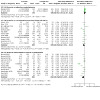
Comparison 2: Sustainability up to and including 12 months post‐intervention, Outcome 2: Self‐reported physical function
Subgroup analysis: type of exercise
Effects were similar across strengthening exercise (mean 4.97 points better with exercise, 95% CI ‐0.76 to 10.70; 6 studies, 860 participants; Analysis 4.2), mind‐body exercise (mean 12.80 points better with exercise, 95% CI 7.07 to 18.34; 6 studies, 294 participants), and mixed exercise (mean 15.28 points better with exercise, 95% CI 6.69 to 23.88; 6 studies, 600 participants). Aerobic exercise was not included in the analysis due to the low number of studies in this subgroup (1 study). No studies used stretching or balance/proprioceptive exercise.
4.2. Analysis.

Comparison 4: Subgroup analysis: type of exercise, Outcome 2: Exercise vs attention control/placebo (physical function)
Meta‐regression analysis: total number of prescribed exercise sessions
All 24 studies that reported physical function were included in the meta‐regression (Baker 2001; Bandak 2022; Brismée 2007; Cheung 2017; De Almeida 2020; Ettinger 1997; Foley 2003; Imoto 2012; Kang 2022; Kim 2013; Kovar 1992; Kuntz 2018; Liu 2019; Lu 2017; Maurer 1999; Messier 2021; Peloquin 1999; Rego 2023; Santana 2022; Schlenk 2020; Simao 2012; Song 2003; Tsai 2013; Ye 2020). The total number of prescribed exercise sessions within the intervention was not associated with change in function immediately post‐intervention (regression coefficient = 0.11, 95% CI ‐0.02 to 0.25, points on a 0 to 100 point scale; P = 0.067).
Meta‐regression analysis: ratio (between exercise and control) of synchronous (live) contact occasions with healthcare provider
All 24 studies that reported physical function were included in the meta‐regression (Baker 2001; Bandak 2022; Brismée 2007; Cheung 2017; De Almeida 2020; Ettinger 1997; Foley 2003; Imoto 2012; Kang 2022; Kim 2013; Kovar 1992; Kuntz 2018; Liu 2019; Lu 2017; Maurer 1999; Messier 2021; Peloquin 1999; Rego 2023; Santana 2022; Schlenk 2020; Simao 2012; Song 2003; Tsai 2013; Ye 2020). The ratio of synchronous contact occasions between exercise and comparison was not associated with change in function immediately post‐intervention (regression coefficient = 1.68, 95% CI ‐0.06 to 3.44, points on a 0 to 100 point scale; P = 0.057).
Quality of life
Six of 30 studies (454 participants) reported quality of life immediately post‐intervention (Bandak 2022; Cheung 2017; Foley 2003; Kuntz 2018; Lu 2017; Rego 2023). There was moderate‐certainty evidence that exercise likely results in little to no improvement in quality of life immediately post‐intervention (Analysis 1.3). With attention control/placebo, the mean quality of life score was 48.4 points on a 0 to 100 point scale (where 100 represents maximum quality of life). With exercise, quality of life was 6.06 points better (95% CI ‐0.13 to 12.26). The confidence interval of the mean difference does not meet the threshold (15 points) for a clinically important effect. We downgraded the certainty of the evidence as there was a high risk of bias (more than 50% of trials were at high risk of performance and detection bias). When we removed an outlier with extreme results (Rego 2023), the mean was 2.84 points better with exercise (95% CI ‐0.90 to 6.71).
1.3. Analysis.

Comparison 1: Primary time point, Outcome 3: Quality of life immediately post‐intervention
Only one of six studies reported quality of life up to 12 months post‐intervention (Bandak 2022), and thus meta‐analysis was not possible for this comparison group at follow‐up. No studies reported quality of life more than 12 months post‐intervention.
Participant‐reported treatment success
Two of 30 studies (364 participants) measured participant‐reported treatment success (Bandak 2022; Jenkinson 2009). There was moderate‐certainty evidence that exercise likely increases participant‐reported treatment success. With attention control/placebo, the risk was 306 per 1000. With exercise, the risk was 446 per 1000 (95% CI 339 to 587; RR 1.46, 95% CI 1.11 to 1.92; Analysis 1.4). We downgraded the certainty of the evidence as there was a high risk of bias (more than 50% of trials were at high risk of performance and detection bias).
1.4. Analysis.

Comparison 1: Primary time point, Outcome 4: Participant‐reported treatment success immediately post‐intervention
Study withdrawals
Twenty‐nine of 30 studies (2907 participants) reported study withdrawals (Baker 2001; Bandak 2022; Brismée 2007; Cheung 2017; De Almeida 2020; Ettinger 1997; Foley 2003; Imoto 2012; Jenkinson 2009; Kang 2022; Kim 2013; Kovar 1992; Kuntz 2018; Lai 2021; Liu 2019; Lu 2017; Maurer 1999; Messier 2021; Peloquin 1999; Rego 2023; Santana 2022; Schlenk 2020; Shen 2022; Simao 2012; Song 2003; Song 2020; Tsai 2013; Vincent 2020; Ye 2020). There was moderate‐certainty evidence that exercise likely does not increase study withdrawals. With attention control/placebo, the risk was 171 per 1000. With exercise, the risk was 185 per 1000 (95% CI 158 to 216; RR 1.08, 95% CI 0.92 to 1.26; Analysis 1.5). We downgraded the certainty of the evidence as there was a high risk of bias (more than 50% of trials were at high risk of performance and detection bias).
1.5. Analysis.

Comparison 1: Primary time point, Outcome 5: Study withdrawals at final follow‐up
Adverse events
Table 8 summarises the number and nature of reported adverse events in each study. Eleven of 30 studies (1684 participants) reported adverse events (Bandak 2022; Cheung 2017; Ettinger 1997; Kovar 1992; Kuntz 2018; Liu 2019; Messier 2021; Rego 2023; Schlenk 2020; Tsai 2013; Ye 2020). There was low‐certainty evidence that exercise may not increase adverse events. With attention control/placebo, the risk was 69 per 1000. With exercise, the risk was 140 per 1000 (95% CI 43 to 457; RR 2.02, 95% CI 0.62 to 6.58; Analysis 1.6). We downgraded the certainty of the evidence as there was high risk of bias (more than 50% of trials were at high risk of performance and detection bias) and imprecision (the ratio of the upper and lower 95% confidence intervals of the RR was > 3.0).
1.6. Analysis.

Comparison 1: Primary time point, Outcome 6: Adverse events at final follow‐up
Exercise versus no treatment/usual care/limited education
Sixty studies with 4834 participants assessed exercise compared with no treatment/usual care/limited education (Abbott 2013; Allen 2018; An 2008; Bennell 2010; Braghin 2018; Bruce‐Brand 2012; Chen 2014; Cheung 2014; Chopp‐Hurley 2017; Christensen 2015; Da Silva 2015; De Matos 2019; De Rooij 2017; DeVita 2018; Drummen 2023; Fransen 2001; Fransen 2007; Gohir 2021; Guo 2022; Gur 2002; Hay 2006; Henriksen 2014; Hopman‐Rock 2000; Hu 2020; Hurley 2007; Jan 2009; Janyacharoen 2018; Jorge 2015; Karadag 2019; Keefe 2004; Kim 2020; Krishnan 2021; Lee 2009; Lee 2023; Li 2020; Lim 2008; Lin 2009; Lund 2008; Mazloum 2018; Multanen 2014; Øiestad 2023; O'Reilly 1999; Pazit 2018; Robbins 2022; Rogind 1998; Rosedale 2014; Sadeghi 2023; Salacinski 2012; Samut 2015; Schilke 1996; Sekir 2005; Shahine 2020; Takacs 2017; Thorstensson 2005; Topp 2002; Vassao 2021; Wallis 2017; Wang 2011; Wortley 2013; Xiao 2021). Findings are summarised in Table 2.
Pain
Fifty‐six of 60 studies (4184 participants) reported pain immediately post‐intervention (Allen 2018; An 2008; Bennell 2010; Braghin 2018; Bruce‐Brand 2012; Chen 2014; Cheung 2014; Chopp‐Hurley 2017; Christensen 2015; Da Silva 2015; De Matos 2019; De Rooij 2017; DeVita 2018; Drummen 2023; Fransen 2001; Fransen 2007; Gohir 2021; Guo 2022; Gur 2002; Hay 2006; Henriksen 2014; Hopman‐Rock 2000; Hu 2020; Janyacharoen 2018; Jorge 2015; Karadag 2019; Keefe 2004; Krishnan 2021; Lee 2009; Lee 2023; Li 2020; Lim 2008; Lin 2009; Lund 2008; Mazloum 2018; Øiestad 2023; Pazit 2018; Robbins 2022; Rogind 1998; Rosedale 2014; Sadeghi 2023; Salacinski 2012; Samut 2015; Schilke 1996; Sekir 2005; Shahine 2020; Takacs 2017; Thorstensson 2005; Topp 2002; Vassao 2021; Wallis 2017; Wang 2011; Wortley 2013; Xiao 2021). There was low‐certainty evidence that exercise may result in an improvement in pain (Analysis 1.1). With no treatment/usual care/limited education, the mean pain score was 51.1 on a 0 to 100 point scale (where 0 represents no pain). With exercise, pain was 13.14 points better (95% CI 10.36 to 15.91). The confidence interval of the mean difference includes both clinically important (12 points) and clinically unimportant improvements. We downgraded the certainty of the evidence as there was high risk of bias (more than 50% of trials were at high risk of performance and detection bias) and some evidence of publication bias (asymmetrical plot and Egger's test P < 0.05 (supplementary file DOI: 10.6084/m9.figshare.27012928), plus a large volume of unpublished trials awaiting classification).
We conducted a series of separate sensitivity analyses. When we removed five outliers with extreme results (Drummen 2023; Gur 2002; Janyacharoen 2018; Karadag 2019; Shahine 2020), the mean was 10.18 points better with exercise (95% CI 8.33 to 12.03). When including only the 23 trials at low risk of selection bias, the mean was 9.99 points better with exercise (95% CI 7.22 to 12.77; Analysis 3.1). When including only the 28 trials at low risk of attrition bias, the mean was 10.92 points better with exercise (95% CI 7.40 to 14.25; Analysis 3.3). As only one trial was at low risk of detection bias (Guo 2022), we did not perform sensitivity analysis for this variable. When including only 14 trials that were likely to be fully powered and had low risk of bias (Bennell 2010; Christensen 2015; Fransen 2001; Fransen 2007; Gohir 2021; Guo 2022; Hay 2006; Lim 2008; Lin 2009; Multanen 2014; Øiestad 2023; Robbins 2022; Rosedale 2014; Sadeghi 2023), the mean was 9.99 points better with exercise (95% CI 6.66 to 13.51).
Thirteen of 56 studies (1652 participants) reported pain up to 12 months post‐intervention (Abbott 2013; Allen 2018; Bruce‐Brand 2012; Chen 2014; De Rooij 2017; Hay 2006; Hurley 2007; Lund 2008; Øiestad 2023; Rogind 1998; Rosedale 2014; Thorstensson 2005). The mean was 5.92 points better with exercise (95% CI 0.74 to 11.10; Analysis 2.1). No studies reported pain more than 12 months post‐intervention.
Subgroup analysis: type of exercise
Effects were similar across strengthening exercise (mean 14.06 points better with exercise, 95% CI 8.70 to 19.24; 19 studies, 1303 participants; Analysis 4.3), aerobic exercise (mean 20.35 points better with exercise, 95% CI 2.59 to 38.30; 6 studies, 320 participants), mind‐body exercise (19.43 points better with exercise, 95% CI 8.51 to 30.34; 7 studies, 621 participants), and mixed exercise (mean 9.44 points better with exercise, 95% CI 7.03 to 12.03; 18 studies, 1621 participants). We did not include stretching and balance/proprioceptive exercise in the analysis due to the low number of studies in these subgroups (1 study in each).
4.3. Analysis.

Comparison 4: Subgroup analysis: type of exercise, Outcome 3: Exercise vs no treatment/usual care/limited education (pain severity)
Meta‐regression analysis: total number of prescribed exercise sessions
Fifty‐two of 56 studies that reported pain were included in the meta‐regression (Allen 2018; An 2008; Bennell 2010; Braghin 2018; Bruce‐Brand 2012; Chen 2014; Cheung 2014; Chopp‐Hurley 2017; Christensen 2015; Da Silva 2015; De Matos 2019; De Rooij 2017; DeVita 2018; Drummen 2023; Fransen 2001; Fransen 2007; Gohir 2021; Guo 2022; Gur 2002; Henriksen 2014; Hopman‐Rock 2000; Hu 2020; Janyacharoen 2018; Jorge 2015; Karadag 2019; Keefe 2004; Krishnan 2021; Lee 2009; Lee 2023; Lim 2008; Lin 2009; Lund 2008; Mazloum 2018; Øiestad 2023; Pazit 2018; Robbins 2022; Rogind 1998; Rosedale 2014; Sadeghi 2023; Salacinski 2012; Samut 2015; Schilke 1996; Sekir 2005; Takacs 2017; Thorstensson 2005; Topp 2002; Vassao 2021; Wang 2011; Wortley 2013; Xiao 2021; we did not include the other four as the total number of exercise sessions was unclear or unspecified (Hay 2006; Li 2020; Shahine 2020; Wallis 2017). There was no relationship between the total number of prescribed exercise sessions within the intervention and change in pain immediately post‐intervention (regression coefficient = 0.04, 95% CI ‐0.11 to 0.17, points on a 0 to 100 point scale; P = 0.629).
Meta‐regression analysis: ratio (between exercise and control) of synchronous (live) contact occasions with healthcare provider
Six of 56 studies (509 participants) that reported pain were included in the meta‐regression (Da Silva 2015; Hay 2006; Hu 2020; Janyacharoen 2018; Multanen 2014; Wortley 2013); we did not include the other 50 as their exercise or comparison group involved no synchronous contact occasions. There was no relationship between the ratio of synchronous contact occasions between exercise and comparison and change in pain immediately post‐intervention (regression coefficient = ‐0.19, 95% CI ‐2.98 to 2.61, points on a 0 to 100 point scale; P = 0.858).
Physical function
Fifty‐four of 60 studies (4352 participants) reported physical function immediately post‐intervention (Allen 2018; An 2008; Bennell 2010; Braghin 2018; Bruce‐Brand 2012; Chen 2014; Cheung 2014; Chopp‐Hurley 2017; Christensen 2015; Da Silva 2015; De Matos 2019; De Rooij 2017; DeVita 2018; Drummen 2023; Fransen 2001; Fransen 2007; Gohir 2021; Guo 2022; Gur 2002; Hay 2006; Henriksen 2014; Hopman‐Rock 2000; Hu 2020; Hurley 2007; Jan 2009; Janyacharoen 2018; Jorge 2015; Karadag 2019; Kim 2020; Krishnan 2021; Lee 2009; Li 2020; Lim 2008; Lin 2009; Lund 2008; Multanen 2014; Øiestad 2023; Pazit 2018; Robbins 2022; Rogind 1998; Rosedale 2014; Sadeghi 2023; Salacinski 2012; Samut 2015; Schilke 1996; Shahine 2020; Takacs 2017; Thorstensson 2005; Topp 2002; Vassao 2021; Wallis 2017; Wang 2011; Wortley 2013). There was moderate‐certainty evidence that exercise likely results in an improvement in physical function (Analysis 1.2). With no treatment/usual care/limited education, the mean physical function score was 42.5 points on a 0 to 100 point scale (where 0 represents no physical disability). With exercise, function was 12.53 points better (95% CI 9.74 to 15.31). The confidence interval of the mean difference includes both clinically important (13 points) and clinically unimportant improvements. We downgraded the certainty of the evidence as there was a high risk of bias (more than 50% of trials were at high risk of performance and detection bias).
We conducted a series of separate sensitivity analyses. When we removed six outliers with extreme results (Chen 2014; Drummen 2023; Gur 2002; Janyacharoen 2018; Karadag 2019; Shahine 2020), the mean was 9.05 points better with exercise (95% CI 6.96 to 10.96). When including only the 25 trials that were at low risk of selection bias, the mean was 10.61 points better with exercise (95% CI 7.48 to 13.57; Analysis 3.2). When including only the 27 trials at low risk of attrition bias, the mean was 11.14 points better with exercise (95% CI 7.48 to 14.62; Analysis 3.4). As only one trial was at low risk of detection bias (Guo 2022), we did not perform sensitivity analysis for this variable. When we included only 11 trials that were likely to be fully powered and had low risk of bias (Christensen 2015; Fransen 2001; Fransen 2007; Gohir 2021; Guo 2022; Hay 2006; Hurley 2007; Lim 2008; Øiestad 2023; Rosedale 2014; Sadeghi 2023), the mean was 8.87 points better with exercise (95% CI 5.57 to 12.01).
Twelve of 54 studies (1604 participants) reported physical function up to 12 months post‐intervention (Abbott 2013; Allen 2018; Bruce‐Brand 2012; Chen 2014; De Rooij 2017; Hay 2006; Hurley 2007; Lund 2008; Øiestad 2023; Rogind 1998; Rosedale 2014; Thorstensson 2005). The mean was 5.67 points better with exercise (95% CI 2.44 to 8.70; Analysis 2.2). No studies reported physical function more than 12 months post‐intervention.
Subgroup analysis: type of exercise
Effects were similar across strengthening exercise (mean 15.49 points better with exercise, 95% CI 9.40 to 21.40; 18 studies, 1324 participants; Analysis 4.4), aerobic exercise (mean 17.92 points better with exercise, 95% CI 1.57 to 34.28; 6 studies, 320 participants), mind‐body exercise (20.18 points better with exercise, 95% CI 7.48 to 33.06; 6 studies, 337 participants), and mixed exercise (mean 7.48 points better with exercise, 95% CI 5.57 to 9.57, 19 studies, 2074 participants). We did not include stretching exercise in the analysis as only one study was in this subgroup. No studies used balance/proprioceptive exercise.
4.4. Analysis.

Comparison 4: Subgroup analysis: type of exercise, Outcome 4: Exercise vs no treatment/usual care/limited education (physical function)
Subgroup analysis: total number of prescribed exercise sessions
Fifty of 54 studies that reported physical function were included in the meta‐regression (Allen 2018; An 2008; Bennell 2010; Braghin 2018; Bruce‐Brand 2012; Chen 2014; Cheung 2014; Chopp‐Hurley 2017; Christensen 2015; Da Silva 2015; De Matos 2019; De Rooij 2017; DeVita 2018; Drummen 2023; Fransen 2001; Fransen 2007; Gohir 2021; Guo 2022; Gur 2002; Henriksen 2014; Hopman‐Rock 2000; Hu 2020; Hurley 2007; Jan 2009; Janyacharoen 2018; Jorge 2015; Karadag 2019; Kim 2020; Krishnan 2021; Lee 2009; Lim 2008; Lin 2009; Lund 2008; Multanen 2014; Øiestad 2023; Pazit 2018; Robbins 2022; Rogind 1998; Rosedale 2014; Sadeghi 2023; Salacinski 2012; Samut 2015; Schilke 1996; Takacs 2017; Thorstensson 2005; Topp 2002; Vassao 2021; Wang 2011; Wortley 2013). We did not include the other four studies as the total number of exercise sessions was unclear or unspecified (Hay 2006; Li 2020; Shahine 2020; Wallis 2017). There was no relationship between the total number of prescribed exercise sessions within the intervention and change in function immediately post‐intervention (regression coefficient = 0.03, 95% CI ‐0.07 to 0.16, points on a 0 to 100 point scale; P = 0.464).
Meta‐regression analysis: ratio (between exercise and control) of synchronous (live) contact occasions with healthcare provider
Six of 54 studies that reported physical function were included in the meta‐regression (Da Silva 2015; Hay 2006; Hu 2020; Janyacharoen 2018; Multanen 2014; Wortley 2013). We did not include the remaining 48 as their exercise and/or comparison group involved no synchronous contact occasions. There was no relationship between the ratio of synchronous contact occasions between exercise and comparison and change in function immediately post‐intervention (regression coefficient = ‐0.38, 95% CI ‐1.74 to 0.97, points on a 0 to 100 point scale; P = 0.481).
Quality of life
Twenty‐eight of 60 studies (2328 participants) reported quality of life immediately post‐intervention (Bruce‐Brand 2012; Cheung 2014; Chopp‐Hurley 2017; Christensen 2015; Da Silva 2015; Drummen 2023; Fransen 2001; Fransen 2007; Gohir 2021; Hay 2006; Henriksen 2014; Janyacharoen 2018; Jorge 2015; Keefe 2004; Krishnan 2021; Lee 2009; Li 2020; Lund 2008; Øiestad 2023; Pazit 2018; Rosedale 2014; Salacinski 2012; Thorstensson 2005; Wallis 2017; Wang 2011; Xiao 2021). There was moderate‐certainty evidence that exercise likely results in a slight improvement in quality of life (Analysis 1.3). With no treatment/usual care/limited education, the mean quality of life score was 54.3 on a 0 to 100 point scale (where 100 is maximum quality of life). With exercise, quality of life was 5.37 points better (95% CI 3.19 to 7.54). The confidence interval of the mean difference does not include the threshold (15 points) for a clinically important effect. We downgraded the certainty of the evidence as there was a high risk of bias (more than 50% of trials were at high risk of performance and detection bias).
Six of 28 studies (906 participants) reported quality of life up to 12 months post‐intervention (Bruce‐Brand 2012; Hurley 2007; Lund 2008; Øiestad 2023; Rosedale 2014; Thorstensson 2005). The mean was 0.73 points better with exercise (95% CI ‐2.90 to 1.31 Analysis 2.3). No studies reported quality of life more than 12 months post‐intervention.
2.3. Analysis.

Comparison 2: Sustainability up to and including 12 months post‐intervention, Outcome 3: Quality of life
Participant‐reported treatment success
Three of 60 studies (405 participants) measured participant‐reported treatment success (Christensen 2015; Hay 2006; Jorge 2015). There was low‐certainty evidence that exercise may result in no difference in participant‐reported treatment success. With no treatment/usual care/limited education, the risk was 325 per 1000. With exercise, the risk was 432 per 1000 (95% CI 231 to 810; RR 1.33, 95% CI 0.71 to 2.49; Analysis 1.4). We downgraded the certainty of the evidence as there was high risk of bias ( more than 50% of trials were at high risk of performance and detection bias) and imprecision (the ratio of the upper and lower 95% confidence intervals of the RR was > 3.0).
Study withdrawals
Fifty‐three of 60 studies (4408 participants) reported study withdrawals (Allen 2018; An 2008; Bennell 2010; Braghin 2018; Bruce‐Brand 2012; Chen 2014; Cheung 2014; Christensen 2015; Da Silva 2015; De Matos 2019; De Rooij 2017; DeVita 2018; Drummen 2023; Fransen 2001; Fransen 2007; Gohir 2021; Guo 2022; Gur 2002; Hay 2006; Henriksen 2014; Hu 2020; Hurley 2007; Jan 2009; Janyacharoen 2018; Jorge 2015; Karadag 2019; Keefe 2004; Kim 2020; Krishnan 2021; Lee 2009; Lee 2023; Li 2020; Lim 2008; Lin 2009; Lund 2008; Mazloum 2018; Multanen 2014; Øiestad 2023; O'Reilly 1999; Pazit 2018; Robbins 2022; Rogind 1998; Rosedale 2014; Sadeghi 2023; Salacinski 2012; Samut 2015; Sekir 2005; Takacs 2017; Thorstensson 2005; Vassao 2021; Wallis 2017; Wang 2011; Wortley 2013; Xiao 2021). There was moderate‐certainty evidence that exercise likely does not increase study withdrawals. With no treatment/usual care/limited education, the risk was 119 per 1000. With exercise, the risk was 123 per 1000 (95% CI 105 to 144; RR 1.03, 95% CI 0.88 to 1.20; Analysis 1.5). We downgraded the certainty of the evidence as there was a high risk of bias (more than 50% of trials were at high risk of performance and detection bias).
Adverse events
Table 8 summarises the number and nature of reported adverse events in each study. Eighteen of 60 studies (1557 participants) reported adverse events (Abbott 2013; Allen 2018; An 2008; Cheung 2014; Christensen 2015; De Rooij 2017; DeVita 2018; Drummen 2023; Fransen 2007; Gohir 2021; Hay 2006; Li 2020; Multanen 2014; Øiestad 2023; Pazit 2018; Rogind 1998; Takacs 2017; Wallis 2017). There was low‐certainty evidence that exercise may increase adverse events. With no treatment/usual care/limited education, the risk was 77 per 1000. With exercise, the risk was 244 per 1000 (95% CI 90 to 659; RR 3.17, 95% CI 1.17 to 8.57; Analysis 1.6). We downgraded the certainty of the evidence as there was high risk of bias (more than 50% of trials were at high risk of performance and detection bias) and imprecision (the ratio of the upper and lower 95% confidence intervals of the RR was > 3.0).
Exercise added to another co‐intervention compared to that co‐intervention alone
Forty‐nine studies (4569 participants) evaluated exercise when added to another co‐intervention (compared to that co‐intervention alone) (Alghadir 2019; Anadkat 2015; Anwer 2014; Assar 2020; Bautch 1997; Bennell 2016; Bennell 2022a; Bennell 2022b; Bhagat 2017; Chang 2012; Chen 2021; Dincer 2016; Dwyer 2015; Gondhalekar 2013; Hernandez 2019; Hinman 2020; Holm 2020; Hsu 2021; Huang 2003; Huang 2005; Jan 2008; Joshi 2019; Kholvadia 2019; Kilic 2020; Knoop 2013; Kumar 2013; Lee 2019; Marconcin 2018; Mehwish 2023; Messier 2013; Mete 2022; Nahayatbin 2018; Nelligan 2021; Oh 2020; Ozlu 2023; Qiu 2023; Rafiq 2021a; Rafiq 2021b; Rafiq 2021c; Rakhshani 2022; Rosadi 2023; Salli 2010; Samuel 2014; Sedaghatnezhad 2021; Shabbir 2022; Shin 2017; Talbot 2003; Thomas 2002; Van Baar 1998). Findings are summarised in Table 3.
Pain
Forty‐seven of 49 studies (4441 participants) reported pain immediately post‐intervention (Alghadir 2019; Anadkat 2015; Anwer 2014; Bautch 1997; Bennell 2016; Bennell 2022a; Bennell 2022b; Bhagat 2017; Chang 2012; Chen 2021; Dincer 2016; Dwyer 2015; Gondhalekar 2013; Hernandez 2019; Hinman 2020; Holm 2020; Hsu 2021; Jan 2008; Joshi 2019; Kilic 2020; Knoop 2013; Kumar 2013; Lee 2019; Marconcin 2018; Mehwish 2023; Messier 2013; Mete 2022; Nahayatbin 2018; Nelligan 2021; Oh 2020; Ozlu 2023; Qiu 2023; Rafiq 2021a; Rafiq 2021b; Rafiq 2021c; Rakhshani 2022; Rosadi 2023; Salli 2010; Samuel 2014; Sedaghatnezhad 2021; Shabbir 2022; Shin 2017; Talbot 2003; Van Baar 1998). There was moderate‐certainty evidence that exercise likely results in an improvement in pain immediately post‐intervention (Analysis 1.1). With the comparison group, the mean pain score was 57.9 points on a 0 to 100 point scale (where 0 represents no pain). With exercise, pain was 10.43 points better (95% CI 8.06 to 12.79). The confidence interval of the mean difference includes both clinically important (12 points) and clinically unimportant improvements. We downgraded the certainty of the evidence as there was a high risk of bias (more than 50% of trials were at high risk of performance and detection bias).
We conducted a series of separate sensitivity analyses. When we removed four outliers with extreme results (Anwer 2014; Joshi 2019; Mete 2022; Samuel 2014), the mean was 8.06 points better with exercise (95% CI 6.26 to 10.01). When including only the 17 trials at low risk of selection bias, the mean was 5.42 points better with exercise (95% CI 3.20 to 7.51; Analysis 3.1). When including only the seven trials at low risk of detection bias, the mean was 8.76 points better with exercise (95% CI 4.17 to 13.34; Analysis 3.5). When including only the 23 trials at low risk of attrition bias, the mean was 9.31 points better with exercise (95% CI 6.39 to 12.37; Analysis 3.3). When we included 10 trials that were likely to be fully powered and had low risk of bias (Alghadir 2019; Bennell 2016; Bennell 2022a; Bennell 2022b; Hinman 2020; Holm 2020; Knoop 2013; Nelligan 2021; Thomas 2002; Van Baar 1998), the mean was 4.73 points better with exercise (95% CI 3.48 to 6.12).
3.5. Analysis.

Comparison 3: Sensitivity analyses, Outcome 5: Detection bias: knee pain severity
Thirteen of 47 studies (1517 participants) reported pain up to 12‐months post‐intervention (Bennell 2016; Bennell 2022a; Bennell 2022b; Hernandez 2019; Hinman 2020; Huang 2003; Huang 2005; Knoop 2013; Nahayatbin 2018; Ozlu 2023; Salli 2010; Sedaghatnezhad 2021; Talbot 2003). The mean was 10.84 points better with exercise (95% CI 5.56 to 16.26; Analysis 2.1). No studies reported pain more than 12 months post‐intervention.
Subgroup analysis: type of exercise
Effects were similar across strengthening exercise (mean 12.09 points better with exercise, 95% CI 8.06 to 16.12; 23 studies, 2475 participants; Analysis 4.5), aerobic exercise (mean 12.51 points better with exercise, 95% CI 5.70 to 19.32; 9 studies, 362 participants), and mixed exercise (mean 5.84 points better with exercise, 95% CI 3.34 to 8.48; 12 studies, 1300 participants). We did not include mind‐body and balance/proprioceptive exercise in the analysis due to the low number of studies in these subgroups (1 in both). No studies used stretching exercise.
4.5. Analysis.

Comparison 4: Subgroup analysis: type of exercise, Outcome 5: Exercise when added to another co‐intervention (compared to that co‐intervention alone) (pain severity)
Meta‐regression analysis: total number of prescribed exercise sessions
All but one of the 47 studies that reported pain were included in the meta‐regression (Alghadir 2019; Anadkat 2015; Anwer 2014; Bautch 1997; Bennell 2016; Bennell 2022a; Bennell 2022b; Bhagat 2017; Chang 2012; Chen 2021; Dincer 2016; Dwyer 2015; Gondhalekar 2013; Hernandez 2019; Hinman 2020; Holm 2020; Hsu 2021; Jan 2008; Joshi 2019; Kilic 2020; Knoop 2013; Kumar 2013; Lee 2019; Marconcin 2018; Mehwish 2023; Messier 2013; Mete 2022; Nahayatbin 2018; Nelligan 2021; Oh 2020; Ozlu 2023; Qiu 2023; Rafiq 2021a; Rafiq 2021b; Rafiq 2021c; Rakhshani 2022; Rosadi 2023; Salli 2010; Samuel 2014; Sedaghatnezhad 2021; Shabbir 2022; Shin 2017; Van Baar 1998). We did not include the final study as the total number of exercise sessions was unclear or unspecified (Talbot 2003). There was no relationship between the total number of prescribed exercise sessions within the intervention and change in pain immediately post‐intervention (regression coefficient = 0.01, 95% CI ‐0.01 to 0.04, points on a 0 to 100 point scale; P = 0.348).
Meta‐regression analysis: ratio (between exercise and control) of synchronous (live) contact occasions with healthcare provider
Thirty‐four of 47 studies that reported pain were included in the meta‐regression (Alghadir 2019; Anadkat 2015; Anwer 2014; Bautch 1997; Bennell 2016; Bhagat 2017; Chang 2012; Chen 2021; Dincer 2016; Dwyer 2015; Hernandez 2019; Hinman 2020; Holm 2020; Hsu 2021; Kilic 2020; Knoop 2013; Kumar 2013; Lee 2019; Marconcin 2018; Mehwish 2023; Messier 2013; Mete 2022; Nahayatbin 2018; Oh 2020; Ozlu 2023; Qiu 2023; Rafiq 2021a; Rakhshani 2022; Rosadi 2023; Samuel 2014; Sedaghatnezhad 2021; Shabbir 2022; Van Baar 1998). We did not include the other 13 studies as their exercise or comparison group involved no synchronous occasions (Assar 2020; Bennell 2022a; Bennell 2022b; Gondhalekar 2013; Huang 2003; Huang 2005; Jan 2008; Joshi 2019; Nelligan 2021; Rafiq 2021b; Rafiq 2021c; Salli 2010; Shin 2017). There was no relationship between the ratio of synchronous contact occasions between exercise and comparison and change in pain immediately post‐intervention (regression coefficient = ‐0.19, 95% CI ‐1.32 to 0.92, points on a 0 to 100 point scale; P = 0.716).
Physical function
Forty‐four of 49 studies (4381 participants) reported physical function immediately post‐intervention (Alghadir 2019; Anadkat 2015; Anwer 2014; Bautch 1997; Bennell 2016; Bennell 2022a; Bennell 2022b; Bhagat 2017; Chang 2012; Chen 2021; Dincer 2016; Dwyer 2015; Gondhalekar 2013; Hernandez 2019; Hinman 2020; Holm 2020; Hsu 2021; Huang 2003; Huang 2005; Jan 2008; Joshi 2019; Kholvadia 2019; Kilic 2020; Knoop 2013; Kumar 2013; Lee 2019; Marconcin 2018; Mehwish 2023; Messier 2013; Mete 2022; Nahayatbin 2018; Nelligan 2021; Oh 2020; Ozlu 2023; Qiu 2023; Rafiq 2021a; Rafiq 2021b; Rafiq 2021c; Rosadi 2023; Salli 2010; Samuel 2014; Shabbir 2022; Shin 2017; Van Baar 1998). There was moderate‐certainty evidence that exercise likely results in a slight improvement in physical function immediately post‐intervention (Analysis 1.2). With the comparator, the mean physical function scale was 50.6 points on a 0 to 100 point scale (where 0 is no physical disability). With exercise, function was 9.66 points better (95% CI 7.48 to 11.97). The confidence interval of the estimate does not include the threshold (13 points) for a clinically important effect. We downgraded the certainty of the evidence as there was a high risk of bias (more than 50% of trials were at high risk of performance and detection bias).
We conducted a series of separate sensitivity analyses. When we removed three outliers with extreme results (Anwer 2014; Joshi 2019; Rosadi 2023), the mean was 8.16 points better with exercise (95% CI 6.26 to 10.20). When including only the 16 trials at low risk of selection bias, the mean was 4.90 points better with exercise (95% CI 2.72 to 7.21; Analysis 3.2). When including only the seven trials at low risk of detection bias, the mean was 8.57 points better with exercise (95% CI 3.81 to 13.46; Analysis 3.6). When including only the 22 trials at low risk of attrition bias, the mean was 7.48 points better with exercise (95% CI 4.09 to 9.93; Analysis 3.4). When only including nine trials that were likely to be fully powered and had low risk of bias (Bennell 2016; Bennell 2022a; Bennell 2022b; Hinman 2020; Holm 2020; Knoop 2013; Nelligan 2021; Thomas 2002; Van Baar 1998), the mean was 5.03 points better with exercise (95% CI 2.86 to 7.07).
3.6. Analysis.

Comparison 3: Sensitivity analyses, Outcome 6: Detection bias: self‐reported physical function
Twelve of 44 studies (1525 participants) reported physical function up to 12 months post‐intervention (Bennell 2016; Bennell 2022a; Bennell 2022b; Hernandez 2019; Hinman 2020; Huang 2003; Huang 2005; Kholvadia 2019; Knoop 2013; Nahayatbin 2018; Ozlu 2023; Salli 2010). The mean was 8.30 points better with exercise (95% CI 3.94 to 12.65; Analysis 2.2). No studies reported physical function more than 12 months post‐intervention.
Subgroup analysis: type of exercise
Effects were similar across strengthening exercise (mean 9.66 points better with exercise, 95% CI 6.26 to 13.19; 21 studies, 2407 participants; Analysis 4.6), aerobic exercise (mean 13.87 points better with exercise, 95% CI 8.43 to 19.45; 7 studies, 298 participants), and mixed exercise (mean 7.75 points better with exercise, 95% CI 3.67 to 11.83; 13 studies, 1372 participants). We did not include mind‐body and balance/proprioceptive exercise in the analysis due to the low number of studies in these subgroups (1 in each). No studies used stretching exercise.
4.6. Analysis.

Comparison 4: Subgroup analysis: type of exercise, Outcome 6: Exercise when added to another co‐intervention (compared to that co‐intervention alone) (physical function)
Meta‐regression analysis: total number of prescribed exercise sessions
All 44 studies that reported physical function were included in the meta‐regression (Alghadir 2019; Anadkat 2015; Anwer 2014; Bautch 1997; Bennell 2016; Bennell 2022a; Bennell 2022b; Bhagat 2017; Chang 2012; Chen 2021; Dincer 2016; Dwyer 2015; Gondhalekar 2013; Hernandez 2019; Hinman 2020; Holm 2020; Hsu 2021; Jan 2008; Joshi 2019; Kholvadia 2019; Kilic 2020; Knoop 2013; Kumar 2013; Lee 2019; Marconcin 2018; Mehwish 2023; Messier 2013; Mete 2022; Nahayatbin 2018; Nelligan 2021; Oh 2020; Ozlu 2023; Qiu 2023; Rafiq 2021a; Rafiq 2021b; Rafiq 2021c; Rosadi 2023; Salli 2010; Samuel 2014; Shabbir 2022; Shin 2017; Van Baar 1998). There was no relationship between the total number of prescribed exercise sessions within the intervention and change in physical function immediately post‐intervention (regression coefficient = 0.01, 95% CI ‐0.01 to 0.04, points on the 0 to 100 point scale; P = 0.348).
Meta‐regression analysis: ratio (between exercise and control) of synchronous (live) contact occasions with healthcare provider
Thiry‐two of 44 studies (2993 participants) that reported physical function were included in the meta‐regression (Alghadir 2019; Anadkat 2015; Anwer 2014; Bautch 1997; Bennell 2016; Bhagat 2017; Chang 2012; Chen 2021; Dincer 2016; Dwyer 2015; Hernandez 2019; Hinman 2020; Holm 2020; Hsu 2021; Kholvadia 2019; Kilic 2020; Knoop 2013; Kumar 2013; Lee 2019; Marconcin 2018; Mehwish 2023; Messier 2013; Mete 2022; Nahayatbin 2018; Oh 2020; Ozlu 2023; Qiu 2023; Rosadi 2023; Samuel 2014; Shabbir 2022; Van Baar 1998) ‐ 12 were not included as their exercise and/or comparison group involved 0 synchronous occasions (Bennell 2022a; Bennell 2022b; Gondhalekar 2013; Huang 2003; Huang 2005; Jan 2008; Joshi 2019; Nelligan 2021; Rafiq 2021a; Rafiq 2021b; Rafiq 2021c; Shin 2017). There was no relationship between the ratio of synchronous contact occasions between exercise and comparison and change in physical function immediately post‐intervention (regression coefficient = ‐0.03, 95% CI ‐1.1 to 1.03, points on a 0 to 100 point scale; P = 0.950).
Quality of life
Twelve of 49 studies (1660 participants) reported quality of life immediately post‐intervention (Bennell 2016; Bennell 2022a; Bennell 2022b; Hinman 2020; Holm 2020; Marconcin 2018; Mehwish 2023; Messier 2013; Nahayatbin 2018; Nelligan 2021; Rafiq 2021a; Rosadi 2023). There was moderate‐certainty evidence that exercise likely results in a slight improvement in quality of life immediately post‐intervention (Analysis 1.3). With the comparator, the mean quality of life score was 64.2 points on a 0 to 100 point scale (where 100 represents maximum quality of life). With exercise, the mean quality of life score was 4.22 points better (95% CI 1.36 to 7.07). The confidence interval of the estimate does not include the threshold (15 points) for a clinically important effect. We downgraded the certainty of the evidence as there was a high risk of bias (more than 50% of trials were at high risk of performance and detection bias).
Six of 12 studies (897 participants) reported quality of life up to 12 months post‐intervention (Bennell 2016; Bennell 2022a; Bennell 2022b; Hinman 2020; Nahayatbin 2018; Rosadi 2023). The mean was 5.30 points better with exercise (95% CI 1.36 to 9.25; Analysis 2.3). No studies reported quality of life > 12 months post‐intervention.
Participant‐reported treatment success
Six of 49 studies (1139 participants) measured participant‐reported treatment success (Bennell 2016; Bennell 2022a; Hinman 2020; Knoop 2013; Nelligan 2021). There was moderate‐certainty evidence that exercise likely increases participant‐reported treatment success. With the comparator, the risk was 400 per 1000. With exercise, the risk was 653 per 1000 (95% CI 472 to 897; RR 1.63, 95% CI 1.18 to 2.24; Analysis 1.4). We downgraded the certainty of the evidence as there was a high risk of bias (more than 50% of trials were at high risk of performance and detection bias).
Study withdrawals
Forty‐one of 49 studies (3502 participants) reported study withdrawals (Alghadir 2019; Anwer 2014; Assar 2020; Bautch 1997; Bennell 2016; Bennell 2022a; Bennell 2022b; Chang 2012; Chen 2021; Dincer 2016; Dwyer 2015; Hernandez 2019; Hinman 2020; Holm 2020; Hsu 2021; Jan 2008; Joshi 2019; Kilic 2020; Knoop 2013; Kumar 2013; Lee 2019; Marconcin 2018; Mehwish 2023; Messier 2013; Mete 2022; Nelligan 2021; Oh 2020; Ozlu 2023; Qiu 2023; Rafiq 2021a; Rafiq 2021b; Rafiq 2021c; Rosadi 2023; Salli 2010; Samuel 2014; Sedaghatnezhad 2021; Shabbir 2022; Talbot 2003; Van Baar 1998). There was moderate‐certainty evidence that exercise likely reduces study withdrawals slightly. With the comparator, the risk was 139 per 1000. With exercise, the risk was 114 per 1000 (95% CI 98 to 135; RR 0.82, 95% CI 0.70 to 0.97; Analysis 1.5). We downgraded the certainty of the evidence as there was a high risk of bias (more than 50% of trials were at high risk of performance and detection bias).
Adverse events
Table 8 summarises the number and nature of reported adverse events in each study. Nineteen of 49 trials (2187 participants) reported adverse events (Alghadir 2019; Bennell 2016; Bennell 2022a; Bennell 2022b; Chen 2021; Dwyer 2015; Hernandez 2019; Hinman 2020; Holm 2020; Hsu 2021; Knoop 2013; Mehwish 2023; Messier 2013; Nelligan 2021; Qiu 2023; Rafiq 2021a; Rafiq 2021b; Rafiq 2021c; Shabbir 2022). There was moderate‐certainty evidence that exercise likely increases adverse events slightly. With the comparator, the risk was 42 per 1000. With exercise, the risk was 73 per 1000 (95% CI 45 to 117; RR 1.72, 95% CI 1.07 to 2.76; Analysis 1.6). We downgraded the certainty of the evidence as there was a high risk of bias (more than 50% of trials were at high risk of performance and detection bias).
Discussion
Summary of main results
A large number of randomised controlled trials of land‐based exercise for people with knee osteoarthritis have been published since the previous version of this Cochrane review (Fransen 2015). The review now includes 139 trials (96 of which are new), with 12,468 participants. Thirty of the trials compared exercise to attention control/placebo; 60 compared exercise to no treatment/usual care/limited education; and 49 evaluated exercise when added to another co‐intervention (compared to that co‐intervention alone). Exercise interventions ranged from 2 to 104 weeks in duration.
Compared to attention control/placebo, our findings demonstrate that exercise may result in a slight improvement in pain, and likely results in an improvement in physical function, but likely results in little to no improvement in quality of life immediately post‐intervention (Table 1). However, based on the minimal important differences (MIDs) that we used, benefits for pain and function were of uncertain clinical importance. Further, when we removed trials with an unclear or high risk of bias and inadequate sample size, mean differences were smaller (and therefore clinically important thresholds were still not met). Benefits may not be sustained in the longer‐term (up to 12‐months post‐intervention), though only two trials evaluated longer‐term effects. We found that exercise likely increases participant‐reported treatment success immediately post‐intervention, likely does not increase study withdrawals at final follow‐up, and may not increase adverse events at final follow‐up. We have low to moderate confidence in these effect estimates. We downgraded the certainty of the evidence due to the number of trials that were at unclear or high risk of bias, some evidence of publication bias, and some imprecision.
Compared to no treatment, usual care or limited education, our findings demonstrate that exercise may result in an improvement in pain, likely results in an improvement in physical function, and likely results in a slight improvement in quality of life immediately post‐intervention (Table 2). However, based on the MIDs that we used, the benefits were of uncertain clinical importance. Benefits were sustained in the longer‐term, though the magnitude of the effects were smaller. We found that exercise may result in little to no difference in participant‐reported treatment success immediately post‐intervention, likely results in no difference in study withdrawals at final follow‐up, and may increase adverse events at final follow‐up. We have low to moderate confidence in these effect estimates. We downgraded the certainty of the evidence due to the number of trials that were at unclear or high risk of bias, some evidence of publication bias, and some imprecision.
When exercise was added to another co‐intervention (compared to that co‐intervention alone), our findings demonstrate that exercise likely results in an improvement in pain, a slight improvement in physical function, and a slight improvement in quality of life immediately post‐intervention (Table 3). However, based on the MIDs that we used, the benefits were of uncertain clinical importance. Effects were sustained in the longer‐term. We found that exercise likely increases participant‐reported treatment success immediately post‐intervention, reduces withdrawals slightly, and increases adverse events slightly. We have moderate confidence in the effect estimates. We downgraded the certainty of the evidence due to the number of trials that were at unclear or high risk of bias.
Subgroup analysis did not suggest any differences between different types of exercise, and there was no relationship between changes in pain or physical function and the total number of exercise sessions prescribed or ratio (between exercise group and comparator) of live/real‐time consultations with a healthcare provider.
Overall completeness and applicability of evidence
Overall, the trials included participants whose results are largely generalisable to people with knee OA across different countries and settings. Trials were conducted across 28 different countries, most frequently the USA, Australia, Canada, and the UK, as well as low‐middle income countries including Argentina, India, Iran, and Pakistan. Participants were, on average, aged between 41 and 81 years, and had a BMI ranging from an average of 22.4 to 37.9 kg/m2. Given that there is a poor association between radiographic changes and symptoms in knee OA (Kinds 2011), we did not extract data relating to the radiographic severity of OA amongst study participants. However, the range of samples included in our review, with varying symptomatic severity at baseline, suggests that our results can be broadly generalised.
The exercise interventions included in our review varied substantially in terms of type, dosage, delivery, and length. For example, more than 10 different types of exercise were prescribed, and interventions ranged from two to 78 weeks in length. Many exercise interventions included elements of behaviour change support to maximise adherence, though others did not, which may have contributed to inconsistency in results. This heterogeneity in exercise interventions likely explains the high I2 statistics we observed in many of our meta‐analyses.
There was also heterogeneity in the comparison groups. Around a quarter of the trials compared exercise to attention control/placebo, though only two of those were described by the authors as placebo/sham. Of those that used attention control as comparison, this most frequently involved education sessions, regular telephone contact, or home visits to provide attention, though the number and duration of contact sessions varied between studies. Just over 40% of trials compared exercise to no treatment/usual care/limited education. There was some variability in 'usual care' interventions, with some trials stating that participants received routine care offered by their family doctor, while others provided participants with information about community services and resources that were available to them. Around a third of the trials evaluated exercise when added to another co‐intervention (compared to that co‐intervention alone); there was substantial variability in type of comparison intervention, for example, ultrasound, routine physiotherapy, education, pain coping skills training, and weight loss diet. This heterogeneity in the comparison intervention likely also contributed to some inconsistency and imprecision in our effect estimates.
Most of the trials assessed the effects of exercise on pain and physical function. Fewer trials measured quality of life (32%) or participant‐reported treatment success (10%). In addition, two‐thirds of the studies (66%) failed to report adverse events. As such, we are less certain of the applicability of results for these outcomes.
Longer‐term outcomes, beyond the length of the intervention, were only measured in 20% of trials. In particular, only one trial (1%; Messier 2004) measured outcomes more than 12 months post‐intervention. We are therefore less certain about the sustainability of exercise effects in the longer‐term after the intervention has stopped.
A substantial number of included studies had small sample sizes (mean 40 participants per study; SD = 35.8). Only 21% of included trials had an overall low risk of bias and had a sample size large enough to provide at least 80% power to detect a clinically important difference in pain. We believe that additional small trials of exercise for knee OA may further inflate our effect estimates and uncertainty in the evidence.
Overall, we found that there is a crucial need for better reporting of the design and conduct of trials. The CONSORT statement provides a checklist for trial authors to use when presenting results of a clinical trial. Exercise intervention details were often poorly reported, including specific information relating to exercise dosage and delivery. The Consensus on Exercise Reporting Template and the TIDieR checklist provide trial authors with helpful tools to use when describing exercise interventions. There is also a need for journal editors to ensure trial manuscripts meet the recommendations of these tools.
Exercise versus attention control/placebo
We downgraded the evidence for all outcomes as more than 50% of the trials in this comparison were at high risk of performance and detection bias. While recognising that blinding of participants and personnel is difficult to achieve in these types of trials, failure to blind is problematic as trials with unblinded assessment of subjective outcomes are estimated to exaggerate the treatment benefit (Wood 2008). We hypothesise that correcting for these biases would likely drive improvements towards null. We further downgraded the evidence for pain as there was some evidence of publication bias (asymmetrical plot and Egger's test P < 0.05, as well as the fact that we identified a substantial number of records relating to unpublished trials). For pain, function, and quality of life, although there was considerable heterogeneity (I2 > 75%), this was likely explained by the significant variation in intervention and comparison types and length. Although the 95% CI of the SMD for quality of life was > 0.5, we did not downgrade for imprecision as the number of participants (N = 454) exceeded the suggested optimal information size (N = 400; as recommended by Zeng 2022). However, we did downgrade for imprecision for adverse events, as the ratio of the upper and lower 95% CI for the RR was > 3.0 (as recommended by Zeng 2022).
Exercise versus no intervention/usual care/limited education
We downgraded the evidence for all outcomes as more than 50% of the trials in this comparison were at high risk of performance and detection bias. We further downgraded the evidence for pain as there was some evidence of publication bias (asymmetrical plot and Eggers test P < 0.05, as well as the fact that we identified a substantial number of records relating to unpublished trials). For pain, function, and quality of life, although there was considerable heterogeneity (I2 > 50%), this was likely explained by the significant variation in intervention and comparison types and length. We downgraded for imprecision for participant‐reported treatment success and adverse events as the ratio of the upper and lower 95% CI of the RRs was > 3.0 (Zeng 2022).
Exercise (when added to another co‐intervention) compared to that co‐intervention alone
We downgraded the evidence for all outcomes as more than 50% of trials were at high risk of performance and detection bias. For pain, function, quality of life, and participant‐reported treatment success, there was considerable heterogeneity (I2 > 75%), but this was likely explained by the significant variation in intervention and comparison types and length. For quality of life, although the 95% CI of the SMD was > 0.2, we did not downgrade for imprecision as the number of participants (N = 1660) exceeded the optimal information size (Zeng 2022).
Potential biases in the review process
To minimise bias, we used up to nine independent assessors to screen and select studies. To ensure consistency in judgement and decisions, only two review authors independently performed risk of bias judgement for all trials and also independently performed GRADE assessment for all comparisons (other than for trials authored by BJL, for which AD conducted risk of bias and GRADE assessments).
To the best of our knowledge, we identified all relevant trials meeting the review's eligibility criteria through a comprehensive search of major electronic databases and trial registries without language restrictions. However, it is possible that we may have missed some trials that were published in journals that are not indexed in the databases that we searched. We were unable to obtain data from 14 trials (four were mixed samples and authors were unable to provide data for knee OA only; five authors did not respond to requests for data; five were not in English and the Google translated versions were inadequate to comprehend). In addition, we identified records of 50 other trials that were likely completed but unpublished. There were another 133 records of ongoing trials. If a significant volume of these trials are of a high‐quality (i.e. low risk of bias, appropriately powered), we expect that this would likely drive estimates for symptom improvements with exercise towards null.
Agreements and disagreements with other studies or reviews
The previous version of this Cochrane review, Fransen 2015, included 54 trials and concluded that there was high‐quality evidence that exercise provides small to moderate short‐term benefits for pain, function, and quality of life compared to any or no intervention. Our findings are largely similar for exercise compared to no intervention/usual care/limited education, and exercise compared to any other intervention, though the standardised mean differences (SMDs) we found in this review were larger than in the previous review (e.g. our SMD for pain was ‐0.71, 95% CI ‐0.86 to ‐0.56 (exercise versus no treatment/usual care/limited education), compared to ‐0.49, 95% CI ‐0.59 to ‐0.39 in the previous review (exercise versus no exercise (no intervention or any non‐exercise intervention)). This increase was likely driven by the substantial volume of new trials, which were small and often of poor quality. Indeed, our GRADE ratings were generally lower than those in the previous review due to the overall high risk of bias in the included studies, as well as the likelihood of publication bias. When we excluded trials that were at unclear or high risk of bias or were likely to be underpowered (or both), the SMDs were similar to the prior review (e.g. for pain in this review, ‐0.54, 95% CI ‐0.73 to ‐0.36 (exercise versus no treatment/usual care/limited education) compared to ‐0.49, 95% CI ‐0.59 to ‐0.39 in the previous review (exercise versus no exercise (no intervention or any non‐exercise intervention)).
A new addition to this updated review was that we analysed results according to the comparator, whereas the prior review combined results from all studies irrespective of the comparator. Compared to attention control/placebo, we found that exercise may lead to improvements in pain and physical function, but the benefits were of uncertain clinical importance. A recent systematic review of exercise with or without other physical therapy interventions compared to placebo for OA identified four trials in knee OA (Dean 2021). Their SMDs were larger than ours (they reported SMD of ‐0.9, 95% CI ‐1.8 to 0.0, for pain, in favour of exercise, and ‐2.2, 95% CI ‐5.0 to 0.6, for function), though their confidence intervals were wide and included our estimates. In addition, they included exercise trials that involved co‐interventions (e.g. knee taping, manual therapy), which we excluded.
Our findings can also be compared to other systematic reviews evaluating the effectiveness of exercise for knee OA (Holden 2023; Goh 2019; Sasaki 2022; Si 2023). Holden 2023 included 31 trials and an individual participant data (IPD) meta‐analysis, reporting evidence of small, positive effects of questionable clinical importance for pain and physical function. Mean differences reported within their review were marginally smaller than ours (e.g. they reported a 6.36‐point improvement (95% CI 4.27 to 8.45) in pain, compared to our finding of 8.7 (95% CI 5.7 to 11.7) when compared to attention control/placebo). This contrast in findings may be explained by the fact that they included both hip and knee OA and analysed only a small proportion of the studies included here, as well as their use of IPD meta‐analysis methods.
Other recent systematic reviews compared exercise to placebo or 'pure control' (Sasaki 2022), no intervention (Si 2023), or usual care (Goh 2019), collectively reporting small improvements in pain, physical function, and quality of life, which decreased in the longer term. Their SMDs were generally smaller than those found in our review (e.g. for pain: ‐0.25 (95% CI ‐0.36 to ‐0.14) in Sasaki 2022; ‐0.32 (95% CI ‐0.41 to ‐0.22) in Si 2023; and ‐0.56 (95% CI ‐0.68 to ‐0.44) in Goh 2019), which may be explained by the fact that those reviews included only a small proportion of the studies included here, some included both knee and hip OA (Sasaki 2022), and there were some differences in methods (e.g. narrower review questions and selection criteria).
We found that exercise may increase adverse events. However, the vast majority of reported adverse events were not serious. This reflects the findings of a recent systematic review and meta‐analysis examining adverse events of exercise therapy (not specifically in OA), which found that exercise increases the risk of non‐serious adverse events, but not serious adverse events (Niemeijer 2020).
We found that effects on pain and physical function were similar for different types of exercise. This reflects the subgroup analyses in the previous version of this review (Fransen 2015), which also found effects were similar between exercise types (including quadriceps strengthening programmes, lower limb strengthening programmes, combination strengthening and aerobic programmes, walking programmes, and 'other' programmes). A recent network meta‐analysis found no difference between exercise types in knee OA (Mo 2023), although another network meta‐analysis found that mixed‐exercise programmes were less effective than aerobic and mind‐body programmes for people with hip or knee OA (Goh 2019). Further work is warranted to discern if effects differ between types of exercise programmes.
We found that the number of prescribed exercise sessions was not associated with the magnitude of change in pain or physical function. A prior review evaluated whether a dose‐response relationship exists between resistance exercise and outcomes in people with knee OA (Turner 2020). It concluded that 20 to 36 exercise sessions were associated with large effect sizes (24 weeks was the commonest intervention length). However, they acknowledged that there was heterogeneity amongst the included studies, making it difficult to determine the optimal dosage with certainty. Furthermore, they only included a subset (12 trials) of the trials included in our review.
Finally, we found that the ratio (exercise versus comparator) of synchronous contact occasions with a healthcare provider was not associated with the magnitude of change in pain or physical function. To our knowledge, no other reviews have evaluated the ratio of contact occasions as we did. One review found that the number of supervised exercise sessions in trials for knee OA was not associated with change in outcomes (Juhl 2014), which reflects our findings. However, their method of analysis (i.e. counting the number of supervised sessions delivered, rather than the difference in contact between exercise and comparator groups) would not have fully accounted for the contextual factors associated with provider supervision or consultation.
Authors' conclusions
Implications for practice.
We found low‐ to moderate‐certainty evidence that exercise may provide a benefit for symptoms in the treatment of knee osteoarthritis (OA). However, when comparing our mean differences (on a 0 to 100 scale) to the established minimally important differences (MIDs) that we used, these benefits were of uncertain clinical importance. There are a number of important considerations relating to the use of MIDs to interpret the clinical importance of outcomes (Dekker 2023; Dworkin 2009). The MIDs we selected for our review were based on established MIDs for the WOMAC (Western Ontario and McMaster Universities Osteoarthritis Index) pain and function instrument, yet we applied them to pooled results from studies that also used other pain or function instruments (e.g. visual analogue scale (VAS), numerical rating scale (NRS), Knee Injury and Osteoarthritis Outcome Score (KOOS)). Further, MIDs are known to be context‐specific, depending on factors like the time between outcome assessments, severity of participant symptoms at baseline, as well as participant age and other baseline characteristics (Concoff 2019; King 2011). Indeed, in OA, a wide variety of different MID thresholds have been used for the same symptom or outcome (Concoff 2019). The clinical relevance of our findings may therefore vary depending on which MIDs are used. It has therefore been recommended that MIDs only be used as a supplementary tool when making treatment recommendations or treatment decisions (Bannuru 2014; Dekker 2023). Other factors including cost, convenience, and safety of exercise interventions for people with knee OA should also be considered (Bannuru 2014; Dekker 2023).
We focused on four measures of effectiveness ‐ pain, physical function, quality of life, and participant‐reported treatment success. However, exercise is known to be important for other more general health outcomes that are not OA‐specific (e.g. sedentary behaviour, cardiovascular health, mental health, and risk and impact of comorbidities) (Ruegsegger 2018). As such, this review potentially underestimates the broader benefits of exercise for people with knee OA.
We found that the benefits of exercise declined in the longer‐term, though only 20% of trials evaluated longer‐term effects. It is not clear whether participants in our included trials were encouraged to continue exercising beyond the intervention. Declining long‐term benefits may reflect cessation of exercise or declining adherence, which is a well‐established challenge in exercise interventions for OA (Pisters 2007; Holden 2021).
We found that all types of exercise included in our subgroup analysis were similarly effective, and there was no evidence of a relationship between the number of prescribed exercise sessions or the ratio (exercise versus comparator) of synchronous healthcare provider contact occasions and change in pain or function. In light of this, and the heterogeneity of exercise interventions included in this review, we are not able to draw any conclusions regarding the most effective type or dosage of exercise. Future publications by this author team will further address these topics.
Implications for research.
We identified a large number of randomised controlled trials on exercise for knee OA. However, most of these were of poor quality, did not report methods or interventions well, and had small sample sizes. We expect that these poor quality studies may have led to our results overestimating the effects of exercise, and our sensitivity analyses also reflected this. Future trials of exercise should use robust designs (including blinding of participants) and use large sample sizes that are sufficient to ensure adequate power to detect a minimal clinically important difference in outcome. Further, there is a need for improved reporting of exercise and comparator interventions, intervention protocols, and outcomes.
More trials comparing exercise to no treatment, usual care, or limited education are unlikely to change our conclusions (Verhagen 2019). However, given the paucity of placebo‐controlled trials evaluating the effectiveness of exercise for knee OA, there is a need for robust, high‐quality placebo‐controlled trials in this area. This recommendation is supported by recent work that attempted to better understand whether a causal relationship exists between exercise and change in pain, and concluded that the current evidence base is not sufficient to infer or rule out causality (Henriksen 2024). Designing a placebo intervention for exercise trials is challenging. A range of placebo interventions have been used ‐ including sham topical creams, saline injection, and inactive ultrasound. How to address the lack of blinding of participants is also an important issue.
Less than half of the trials in our review measured quality of life or adequately reported adverse events. Future trials should include these outcome measures, as well as other outcomes related to overall health, comorbidities, cardiovascular health, and sedentary behaviour. Very few trials in our review included longer‐term follow‐up of outcomes after intervention completion. Future trials should endeavour to collect outcomes beyond the end of the intervention.
There are a range of additional research questions that are important to evaluate in the future. Further work is needed to develop a better understanding of the differential response to exercise in order to identify who might benefit most, including studies of people with varying levels of disease severity. It is also important to determine the best type of exercise and the optimal dosage and delivery of exercise (e.g. type of exercise, group or individual exercise sessions, number of different exercises prescribed), as well as whether certain interventions combined with exercise are associated with greater benefits for symptom alleviation. Our team's future publications will address some of these questions.
Recommendations for future systematic review on this topic
The size of this review required a significant amount of time and resources for one team to complete. Given the number of different systematic reviews of exercise for OA that have been conducted in the last five years, better co‐ordination of efforts between review teams would help streamline the process; for example, by sharing extracted data and risk of bias assessments for exercise trials, potentially via a central accessible repository for any review authors to access.
Future updates of this review may be considered if further placebo‐controlled trials are published that are likely to increase the certainty of effect estimates of harms. Further trials comparing exercise with no intervention, usual care or limited education are likely to be of limited value, and we are unlikely to include such studies in future updates.
What's new
| Date | Event | Description |
|---|---|---|
| 3 December 2024 | New citation required and conclusions have changed | Authors changed; methods updated; 96 new studies included; certainty of evidence downgraded for some comparisons and outcomes (due to risk of publication bias, number of trials at unclear or high risk of bias, and imprecision); conclusion updated (to "We found low to moderate certainty evidence that exercise probably results in an improvement in pain, physical function, and quality of life in the short‐term. However, based on the thresholds for minimal important differences that we used, benefits were of uncertain clinical importance.") |
| 3 December 2024 | New search has been performed | New search run 4 January 2024; 10,314 new records identified; 96 new studies added to this update |
History
Review first published: Issue 3, 2003
| Date | Event | Description |
|---|---|---|
| 30 September 2014 | New search has been performed | Methods were updated in accordance with current recommendations of The Cochrane Collaboration: 'Risk of bias' assessment and 'Summary of findings' tables were added. Quality of life assessment and study withdrawal rates were added to the update. Pain and physical function outcomes were further disaggregated into immediate post‐treatment effects and sustainability (2 to 6 months and > 6 months post treatment). |
| 29 October 2013 | New search has been performed | Twenty‐three new studies were added to this update: Brismée 2007; Hurley 2007; Yip 2007; An 2008; Doi 2008; Jan 2008; Lim 2008; Lund 2008; Jan 2009; Jenkinson 2009; Lee 2009; Lin 2009; Bennell 2010; Bezalel 2010; Salli 2010; Foroughi 2011; Wang 2011; Bruce‐Brand 2012; Chang 2012; Kao 2012; Salacinski 2012; Simao 2012; Abbott 2013. One study that was included in the original review was excluded from this update: Petrella 2000. |
| 12 May 2009 | Amended | Minor amendment; see Published notes |
| 13 August 2008 | Amended | CMSG ID A007‐R |
| 11 August 2008 | Amended | Substantive amendment |
| 3 June 2008 | Amended | Converted to new review format |
| 3 June 2008 | New search has been performed | This updated review is 1 of 2 Cochrane reviews replacing an earlier review, 'Exercise for osteoarthritis of the hip or knee.' Since the time of the original review, the editors decided to subdivide the review into separate conditions. The Background section has been revised to provide information on the specific disorder only, and the search strategy has been revised accordingly. The Methods section has been updated to reflect current methods of the Cochrane Musculoskeletal Review Group. A total of 15 new studies were added to this updated review: Gur 2002; Foley 2003; Huang 2003; Quilty 2003; Song 2003; Talbot 2003; Hughes 2004; Keefe 2004; Messier 2004; Bennell 2005; Huang 2005a; Thorstensson 2005; Hay 2006; Mikesky 2006; Fransen 2007. |
Acknowledgements
Dr Renea Johnston, Managing Editor, Australian Editorial Base, Cochrane Musculoskeletal Review Group, for overall guidance and expert advice.
Diane Horrigan, Cochrane Musculoskeletal Review Group, for designing the updated search strategy and running the search.
Associate Professor Milena Simic for her input on the review protocol and her assistance screening titles and abstracts.
Ms Kathryn Oliver and Mr Jesse Pardo for assisting with data extraction.
For the purposes of open access, the author has applied a CC BY public copyright licence to any Author Accepted Manuscript version arising from this submission.
Editorial and peer reviewer contributions
Cochrane Back and Neck supported the review authors in the development of this Cochane review. The following people conducted the editorial process for this article.
Sign‐off Editor (final editorial decision): Walter R. Frontera, MD, PhD, FRCP Department of Physical Medicine, Rehabilitation, and Sports Medicine Department of Physiology University of Puerto Rico School of Medicine
Managing Editor (selected peer reviewers, provided editorial guidance to authors, edited the article): Hannah Payne, Cochrane Central Editorial Service
Editorial Assistant (conducted editorial policy checks, collated peer reviewer comments and supported editorial team): Lisa Wydrzynski, Cochrane Central Editorial Service
Copy Editor (copy editing and production): Laura MacDonald and Denise Mitchell, Cochrane Central Production service
Peer reviewers (provided comments and recommended an editorial decision): Professor Toby Smith, Warwick Medical School, University of Warwick, UK (clinical/content review); Hans Lund, Western Norway University of Applied Sciences, Bergen Campus, Norway (clinical/content review); Helen P French, School of Physiothrapy, RCSI University of Medicine and Health Sciences, Dublin, Ireland (clinical/content review); Brian Duncan (consumer review); Jennifer Hilgart, Cochrane Evidence Production and Methods Directorate (methods review); Ina Monsef, Cochrane Haematology, Institute of Public Health, Faculty of Medicine and University Hospital Cologne, University of Cologne, Germany (search review). One additional peer reviewer provided clinical peer review but chose not to be publicly acknowledged.
Appendices
Appendix 1. Search strategy
Cochrane Central Register of Controlled Trials (CENTRAL)
Search run by D Horrigan
EBM Reviews ‐ Cochrane Central Register of Controlled Trials <February 2023>
1 exp Osteoarthritis/ 9563
2 osteoarthr$.tw. 18520
3 (degenerative adj2 arthritis).tw. 124
4 arthrosis.tw. 669
5 or/1‐4 21029
6 exp knee/ 976
7 exp Knee Joint/ 4240
8 knee$.tw. 35383
9 or/6‐8 35793
10 exp exercise/ 32730
11 exercis*.tw,kf. 111639
12 exp Exercise Therapy/ 18361
13 exp Exercise Movement Techniques/ 2855
14 exp Physical Therapy Modalities/ 33335
15 exp Recreation/ 21027
16 exp Physical Fitness/ 4270
17 pilates.tw,kf. 963
18 (Tai Chi or Tai Ji or Taiji or Taijiquan).tw,kf. 1653
19 run$.tw,kf. 25082
20 jog$.tw,kf. 684
21 treadmill$.tw,kf. 9365
22 bicycl$.tw,kf. 3407
23 (cycle$ or cycling).tw,kf. 64152
24 walk$.tw,kf. 36548
25 or/10‐24 230786
26 5 and 9 and 25 4803
Embase
Search run by D Horrigan
Embase Classic+Embase <1947 to 2023 March 13>
1 exp osteoarthritis/ 167813
2 osteoarthr$.tw. 131996
3 (degenerative adj2 arthritis).tw. 2204
4 arthrosis.tw. 9597
5 or/1‐4 199917
6 Knee/ 89046
7 knee$.tw. 246105
8 or/6‐7 258083
9 exp EXERCISE/ 450047
10 exercis*.tw,kf. 508495
11 exp fitness/ 45208
12 exp physiotherapy/ 115766
13 physical therapy.tw,kf. 39985
14 exp pilates/ 1016
15 exp Tai Chi/ 3911
16 (Tai Chi or Tai Ji or Taiji or Taijiquan).tw,kf. 3544
17 jog$.tw,kf. 3545
18 treadmill$.tw,kf. 49538
19 bicycl$.tw,kf. 38314
20 (cycle$ or cycling).tw,kf. 1018983
21 walk$.tw,kf. 213063
22 or/9‐21 1948086
23 exp randomized controlled trial/ 780132
24 controlled clinical trial/ 469209
25 random$.ti,ab. 1956079
26 exp randomization/ 99082
27 intermethod comparison/ 295798
28 placebo.ti,ab. 367792
29 (compare or compared or comparison).ti. 630096
30 ((evaluated or evaluate or evaluating or assessed or assess) and (compare or compared or comparing or comparison)).ab. 2738746
31 (open adj label).ti,ab. 107471
32 ((double or single or doubly or singly) adj (blind or blinded or blindly)).ti,ab. 277744
33 double blind procedure/ 211094
34 parallel group$1.ti,ab. 31888
35 (crossover or cross over).ti,ab. 124850
36 ((assign$ or match or matched or allocation) adj5 (alternate or group$1 or intervention$1 or patient$1 or subject$1 or participant$1)).ti,ab. 412492
37 (assigned or allocated).ti,ab. 486213
38 (controlled adj7 (study or design or trial)).ti,ab. 449108
39 (volunteer or volunteers).ti,ab. 286817
40 human experiment/ 642731
41 trial.ti. 405511
42 or/23‐41 6318516
43 5 and 8 and 22 and 42 6494
MEDLINE
Search run by D Horrigan
Ovid MEDLINE(R) ALL <1946 to March 13, 2023>
1 exp Osteoarthritis/ 76014
2 osteoarthr$.tw. 76462
3 (degenerative adj2 arthritis).tw. 1350
4 arthrosis.tw. 5303
5 or/1‐4 103151
6 exp knee/ 15923
7 exp Knee Joint/ 71000
8 knee$.tw. 150866
9 or/6‐8 168724
10 exp exercise/ 242910
11 exercis*.tw,kf. 309840
12 exp Exercise Therapy/ 62382
13 exp Exercise Movement Techniques/ 10140
14 exp Physical Therapy Modalities/ 176607
15 exp Recreation/ 243165
16 exp Physical Fitness/ 36000
17 pilates.tw,kf. 598
18 (Tai Chi or Tai Ji or Taiji or Taijiquan).tw,kf. 1927
19 run$.tw,kf. 190135
20 jog$.tw,kf. 2331
21 treadmill$.tw,kf. 33006
22 bicycl$.tw,kf. 22247
23 (cycle$ or cycling).tw,kf. 624576
24 walk$.tw,kf. 121243
25 or/10‐24 1487005
26 randomized controlled trial.pt. 588993
27 controlled clinical trial.pt. 95202
28 randomized.ab. 522436
29 placebo.ab. 216698
30 drug therapy.fs. 2575003
31 randomly.ab. 342937
32 trial.ab. 560238
33 groups.ab. 2129412
34 or/19‐26 1991207
35 exp animals/ not humans.sh. 5105329
36 34 not 35 1733008
37 5 and 9 and 25 and 36 7019
ClinicalTrials.gov and WHO ICTRP portal
“knee osteoarthritis” and “exercise”
Data and analyses
Comparison 1. Primary time point.
| Outcome or subgroup title | No. of studies | No. of participants | Statistical method | Effect size |
|---|---|---|---|---|
| 1.1 Knee pain severity immediately post‐intervention | 131 | Std. Mean Difference (IV, Random, 95% CI) | Subtotals only | |
| 1.1.1 A) Exercise vs attention control/placebo | 28 | 2873 | Std. Mean Difference (IV, Random, 95% CI) | ‐0.58 [‐0.78, ‐0.38] |
| 1.1.2 B) Exercise vs no treatment/usual care/limited education | 56 | 4184 | Std. Mean Difference (IV, Random, 95% CI) | ‐0.71 [‐0.86, ‐0.56] |
| 1.1.3 C) Exercise when added to another co‐intervention | 47 | 4441 | Std. Mean Difference (IV, Random, 95% CI) | ‐0.75 [‐0.92, ‐0.58] |
| 1.2 Self‐reported physical function immediately post‐intervention | 122 | Std. Mean Difference (IV, Random, 95% CI) | Subtotals only | |
| 1.2.1 A) Exercise vs attention control/placebo | 24 | 2536 | Std. Mean Difference (IV, Random, 95% CI) | ‐0.59 [‐0.79, ‐0.40] |
| 1.2.2 B) Exercise vs no treatment/usual care/limited education | 54 | 4245 | Std. Mean Difference (IV, Random, 95% CI) | ‐0.72 [‐0.88, ‐0.56] |
| 1.2.3 C) Exercise when added to another co‐intervention | 44 | 4381 | Std. Mean Difference (IV, Random, 95% CI) | ‐0.71 [‐0.88, ‐0.55] |
| 1.3 Quality of life immediately post‐intervention | 46 | Std. Mean Difference (IV, Random, 95% CI) | Subtotals only | |
| 1.3.1 A) Exercise vs attention control/placebo | 6 | 454 | Std. Mean Difference (IV, Random, 95% CI) | 0.47 [‐0.01, 0.95] |
| 1.3.2 B) Exercise vs no treatment/usual care/limited education | 28 | 2328 | Std. Mean Difference (IV, Random, 95% CI) | 0.37 [0.22, 0.52] |
| 1.3.3 C) Exercise when added to another co‐intervention | 12 | 1660 | Std. Mean Difference (IV, Random, 95% CI) | 0.31 [0.10, 0.52] |
| 1.4 Participant‐reported treatment success immediately post‐intervention | 11 | Risk Ratio (IV, Random, 95% CI) | Subtotals only | |
| 1.4.1 A) Exercise vs attention control/placebo | 2 | 364 | Risk Ratio (IV, Random, 95% CI) | 1.46 [1.11, 1.92] |
| 1.4.2 B) Exercise vs no treatment/usual care/limited education | 3 | 405 | Risk Ratio (IV, Random, 95% CI) | 1.33 [0.71, 2.49] |
| 1.4.3 C) Exercise when added to another co‐intervention | 6 | 1139 | Risk Ratio (IV, Random, 95% CI) | 1.63 [1.18, 2.24] |
| 1.5 Study withdrawals at final follow‐up | 123 | Risk Ratio (IV, Random, 95% CI) | Subtotals only | |
| 1.5.1 A) Exercise vs attention control/placebo | 29 | 2907 | Risk Ratio (IV, Random, 95% CI) | 1.08 [0.92, 1.26] |
| 1.5.2 B) Exercise vs no treatment/usual care/limited education | 53 | 4301 | Risk Ratio (IV, Random, 95% CI) | 1.03 [0.88, 1.20] |
| 1.5.3 C) Exercise when added to another co‐intervention | 41 | 3502 | Risk Ratio (IV, Random, 95% CI) | 0.82 [0.70, 0.97] |
| 1.6 Adverse events at final follow‐up | 48 | Risk Ratio (IV, Random, 95% CI) | Subtotals only | |
| 1.6.1 A) Exercise vs attention control/placebo | 11 | 1684 | Risk Ratio (IV, Random, 95% CI) | 2.02 [0.62, 6.58] |
| 1.6.2 B) Exercise vs no treatment/usual care/limited education | 18 | 1557 | Risk Ratio (IV, Random, 95% CI) | 3.17 [1.17, 8.57] |
| 1.6.3 C) Exercise when added to another co‐intervention | 19 | 2187 | Risk Ratio (IV, Random, 95% CI) | 1.72 [1.07, 2.76] |
Comparison 2. Sustainability up to and including 12 months post‐intervention.
| Outcome or subgroup title | No. of studies | No. of participants | Statistical method | Effect size |
|---|---|---|---|---|
| 2.1 Knee pain severity | 27 | Std. Mean Difference (IV, Random, 95% CI) | Subtotals only | |
| 2.1.1 A) Exercise vs attention control/placebo | 2 | 388 | Std. Mean Difference (IV, Random, 95% CI) | ‐0.12 [‐0.32, 0.08] |
| 2.1.2 B) Exercise vs no treatment/usual care/limited education | 12 | 1494 | Std. Mean Difference (IV, Random, 95% CI) | ‐0.32 [‐0.60, ‐0.04] |
| 2.1.3 C) Exercise when added to another co‐intervention | 13 | 1517 | Std. Mean Difference (IV, Random, 95% CI) | ‐0.78 [‐1.17, ‐0.40] |
| 2.2 Self‐reported physical function | 26 | Std. Mean Difference (IV, Random, 95% CI) | Subtotals only | |
| 2.2.1 A) Exercise vs attention control/placebo | 2 | 388 | Std. Mean Difference (IV, Random, 95% CI) | 0.01 [‐0.19, 0.21] |
| 2.2.2 B) Exercise vs no treatment/usual care/limited education | 12 | 1494 | Std. Mean Difference (IV, Random, 95% CI) | ‐0.32 [‐0.51, ‐0.14] |
| 2.2.3 C) Exercise when added to another co‐intervention | 12 | 1525 | Std. Mean Difference (IV, Random, 95% CI) | ‐0.61 [‐0.93, ‐0.29] |
| 2.3 Quality of life | 13 | Std. Mean Difference (IV, Random, 95% CI) | Subtotals only | |
| 2.3.1 A) Exercise vs attention control/placebo | 1 | 206 | Std. Mean Difference (IV, Random, 95% CI) | ‐0.06 [‐0.33, 0.21] |
| 2.3.2 B) Exercise vs no treatment/usual care/limited education | 6 | 799 | Std. Mean Difference (IV, Random, 95% CI) | 0.05 [‐0.09, 0.20] |
| 2.3.3 C) Exercise when added to another co‐intervention | 6 | 897 | Std. Mean Difference (IV, Random, 95% CI) | 0.39 [0.10, 0.68] |
Comparison 3. Sensitivity analyses.
| Outcome or subgroup title | No. of studies | No. of participants | Statistical method | Effect size |
|---|---|---|---|---|
| 3.1 Selection bias: knee pain severity | 53 | Std. Mean Difference (IV, Random, 95% CI) | Subtotals only | |
| 3.1.1 A) Exercise vs attention control/placebo | 13 | 1346 | Std. Mean Difference (IV, Random, 95% CI) | ‐0.54 [‐0.81, ‐0.28] |
| 3.1.2 B) Exercise vs no treatment/usual care/limited education | 23 | 1814 | Std. Mean Difference (IV, Random, 95% CI) | ‐0.54 [‐0.69, ‐0.39] |
| 3.1.3 C) Exercise when added to another co‐intervention | 17 | 2454 | Std. Mean Difference (IV, Random, 95% CI) | ‐0.39 [‐0.54, ‐0.23] |
| 3.2 Selection bias: self‐reported physical function | 50 | Std. Mean Difference (IV, Random, 95% CI) | Subtotals only | |
| 3.2.1 A) Exercise vs attention control/placebo | 9 | 1011 | Std. Mean Difference (IV, Random, 95% CI) | ‐0.63 [‐0.92, ‐0.34] |
| 3.2.2 B) Exercise vs no treatment/usual care/limited education | 25 | 2205 | Std. Mean Difference (IV, Random, 95% CI) | ‐0.61 [‐0.78, ‐0.43] |
| 3.2.3 C) Exercise when added to another co‐intervention | 16 | 2430 | Std. Mean Difference (IV, Random, 95% CI) | ‐0.36 [‐0.53, ‐0.20] |
| 3.3 Attrition bias: knee pain severity | 65 | Std. Mean Difference (IV, Random, 95% CI) | Subtotals only | |
| 3.3.1 A) Exercise vs attention control/placebo | 14 | 1679 | Std. Mean Difference (IV, Random, 95% CI) | ‐0.36 [‐0.51, ‐0.22] |
| 3.3.2 B) Exercise vs no treatment/usual care/limited education | 28 | 2486 | Std. Mean Difference (IV, Random, 95% CI) | ‐0.59 [‐0.77, ‐0.40] |
| 3.3.3 C) Exercise when added to another co‐intervention | 23 | 3023 | Std. Mean Difference (IV, Random, 95% CI) | ‐0.67 [‐0.89, ‐0.46] |
| 3.4 Attrition bias: self‐reported physical function | 61 | Std. Mean Difference (IV, Random, 95% CI) | Subtotals only | |
| 3.4.1 A) Exercise vs attention control/placebo | 12 | 1467 | Std. Mean Difference (IV, Random, 95% CI) | ‐0.45 [‐0.66, ‐0.24] |
| 3.4.2 B) Exercise vs no treatment/usual care/limited education | 27 | 2330 | Std. Mean Difference (IV, Random, 95% CI) | ‐0.64 [‐0.84, ‐0.43] |
| 3.4.3 C) Exercise when added to another co‐intervention | 22 | 2999 | Std. Mean Difference (IV, Random, 95% CI) | ‐0.55 [‐0.73, ‐0.36] |
| 3.5 Detection bias: knee pain severity | 10 | Std. Mean Difference (IV, Random, 95% CI) | Subtotals only | |
| 3.5.1 A) Exercise vs attention control/placebo | 2 | 77 | Std. Mean Difference (IV, Random, 95% CI) | ‐0.72 [‐1.20, ‐0.25] |
| 3.5.2 B) Exercise vs no treatment/usual care/limited education | 1 | 111 | Std. Mean Difference (IV, Random, 95% CI) | ‐0.13 [‐0.50, 0.25] |
| 3.5.3 C) Exercise when added to another co‐intervention | 7 | 1022 | Std. Mean Difference (IV, Random, 95% CI) | ‐0.63 [‐0.96, ‐0.30] |
| 3.6 Detection bias: self‐reported physical function | 10 | Std. Mean Difference (IV, Random, 95% CI) | Subtotals only | |
| 3.6.1 A) Exercise vs attention control/placebo | 2 | 77 | Std. Mean Difference (IV, Random, 95% CI) | ‐0.67 [‐1.14, ‐0.20] |
| 3.6.2 B) Exercise vs no treatment/usual care/limited education | 1 | 111 | Std. Mean Difference (IV, Random, 95% CI) | ‐0.53 [‐0.91, ‐0.15] |
| 3.6.3 C) Exercise when added to another co‐intervention | 7 | 1022 | Std. Mean Difference (IV, Random, 95% CI) | ‐0.63 [‐0.99, ‐0.28] |
Comparison 4. Subgroup analysis: type of exercise.
| Outcome or subgroup title | No. of studies | No. of participants | Statistical method | Effect size |
|---|---|---|---|---|
| 4.1 Exercise vs attention control/placebo (pain severity) | 23 | Std. Mean Difference (IV, Random, 95% CI) | Subtotals only | |
| 4.1.1 Mixed | 5 | 566 | Std. Mean Difference (IV, Random, 95% CI) | ‐0.33 [‐0.53, ‐0.13] |
| 4.1.2 Stretching | 2 | 72 | Std. Mean Difference (IV, Random, 95% CI) | ‐2.50 [‐3.17, ‐1.84] |
| 4.1.3 Balance/proprioceptive | 0 | 0 | Std. Mean Difference (IV, Random, 95% CI) | Not estimable |
| 4.1.4 Mind‐body | 6 | 294 | Std. Mean Difference (IV, Random, 95% CI) | ‐0.52 [‐0.81, ‐0.23] |
| 4.1.5 Aerobic | 1 | 23 | Std. Mean Difference (IV, Random, 95% CI) | ‐0.11 [‐0.93, 0.71] |
| 4.1.6 Strengthening | 9 | 1159 | Std. Mean Difference (IV, Random, 95% CI) | ‐0.23 [‐0.47, 0.01] |
| 4.2 Exercise vs attention control/placebo (physical function) | 19 | Std. Mean Difference (IV, Random, 95% CI) | Subtotals only | |
| 4.2.1 Mixed | 6 | 600 | Std. Mean Difference (IV, Random, 95% CI) | ‐0.80 [‐1.25, ‐0.35] |
| 4.2.2 Stretching | 0 | 0 | Std. Mean Difference (IV, Random, 95% CI) | Not estimable |
| 4.2.3 Balance/proprioceptive | 0 | 0 | Std. Mean Difference (IV, Random, 95% CI) | Not estimable |
| 4.2.4 Mind‐body | 6 | 294 | Std. Mean Difference (IV, Random, 95% CI) | ‐0.67 [‐0.96, ‐0.37] |
| 4.2.5 Aerobic | 1 | 23 | Std. Mean Difference (IV, Random, 95% CI) | 0.15 [‐0.67, 0.97] |
| 4.2.6 Strengthening | 6 | 860 | Std. Mean Difference (IV, Random, 95% CI) | ‐0.26 [‐0.56, 0.04] |
| 4.3 Exercise vs no treatment/usual care/limited education (pain severity) | 52 | Std. Mean Difference (IV, Random, 95% CI) | Subtotals only | |
| 4.3.1 Mixed | 18 | 1621 | Std. Mean Difference (IV, Random, 95% CI) | ‐0.51 [‐0.65, ‐0.38] |
| 4.3.2 Stretching | 1 | 18 | Std. Mean Difference (IV, Random, 95% CI) | ‐0.50 [‐1.47, 0.46] |
| 4.3.3 Balance/proprioceptive | 1 | 22 | Std. Mean Difference (IV, Random, 95% CI) | ‐0.83 [‐1.71, 0.05] |
| 4.3.4 Mind‐body | 7 | 621 | Std. Mean Difference (IV, Random, 95% CI) | ‐1.05 [‐1.64, ‐0.46] |
| 4.3.5 Aerobic | 6 | 320 | Std. Mean Difference (IV, Random, 95% CI) | ‐1.10 [‐2.07, ‐0.14] |
| 4.3.6 Strengthening | 19 | 1303 | Std. Mean Difference (IV, Random, 95% CI) | ‐0.76 [‐1.04, ‐0.47] |
| 4.4 Exercise vs no treatment/usual care/limited education (physical function) | 50 | Std. Mean Difference (IV, Random, 95% CI) | Subtotals only | |
| 4.4.1 Mixed | 19 | 1967 | Std. Mean Difference (IV, Random, 95% CI) | ‐0.43 [‐0.55, ‐0.32] |
| 4.4.2 Stretching | 1 | 18 | Std. Mean Difference (IV, Random, 95% CI) | ‐0.48 [‐1.44, 0.49] |
| 4.4.3 Balance/proprioceptive | 0 | 0 | Std. Mean Difference (IV, Random, 95% CI) | Not estimable |
| 4.4.4 Mind‐body | 6 | 337 | Std. Mean Difference (IV, Random, 95% CI) | ‐1.16 [‐1.90, ‐0.43] |
| 4.4.5 Aerobic | 6 | 320 | Std. Mean Difference (IV, Random, 95% CI) | ‐1.03 [‐1.97, ‐0.09] |
| 4.4.6 Strengthening | 18 | 1324 | Std. Mean Difference (IV, Random, 95% CI) | ‐0.89 [‐1.23, ‐0.54] |
| 4.5 Exercise when added to another co‐intervention (compared to that co‐intervention alone) (pain severity) | 46 | Std. Mean Difference (IV, Random, 95% CI) | Subtotals only | |
| 4.5.1 Mixed | 12 | 1300 | Std. Mean Difference (IV, Random, 95% CI) | ‐0.42 [‐0.61, ‐0.24] |
| 4.5.2 Stretching | 0 | 0 | Std. Mean Difference (IV, Random, 95% CI) | Not estimable |
| 4.5.3 Balance/proprioceptive | 1 | 44 | Std. Mean Difference (IV, Random, 95% CI) | ‐0.97 [‐1.60, ‐0.34] |
| 4.5.4 Mind‐body | 1 | 212 | Std. Mean Difference (IV, Random, 95% CI) | ‐0.29 [‐0.56, ‐0.02] |
| 4.5.5 Aerobic | 9 | 362 | Std. Mean Difference (IV, Random, 95% CI) | ‐0.90 [‐1.39, ‐0.41] |
| 4.5.6 Strengthening | 23 | 2475 | Std. Mean Difference (IV, Random, 95% CI) | ‐0.87 [‐1.16, ‐0.58] |
| 4.6 Exercise when added to another co‐intervention (compared to that co‐intervention alone) (physical function) | 43 | Std. Mean Difference (IV, Random, 95% CI) | Subtotals only | |
| 4.6.1 Mixed | 13 | 1372 | Std. Mean Difference (IV, Random, 95% CI) | ‐0.57 [‐0.87, ‐0.27] |
| 4.6.2 Stretching | 0 | 0 | Std. Mean Difference (IV, Random, 95% CI) | Not estimable |
| 4.6.3 Balance/proprioceptive | 1 | 44 | Std. Mean Difference (IV, Random, 95% CI) | ‐1.01 [‐1.64, ‐0.38] |
| 4.6.4 Mind‐body | 1 | 212 | Std. Mean Difference (IV, Random, 95% CI) | ‐0.31 [‐0.59, ‐0.04] |
| 4.6.5 Aerobic | 7 | 298 | Std. Mean Difference (IV, Random, 95% CI) | ‐1.02 [‐1.43, ‐0.62] |
| 4.6.6 Strengthening | 21 | 2407 | Std. Mean Difference (IV, Random, 95% CI) | ‐0.71 [‐0.97, ‐0.46] |
Characteristics of studies
Characteristics of included studies [ordered by study ID]
Abbott 2013.
| Study characteristics | ||
| Methods | Conducted in New Zealand | |
| Participants | Hip and knee OA recruitment 57 knee OA community volunteers ACR criteria |
|
| Interventions | Mix of clinic/home, mix of supervised/unsupervised individual setting, delivered entirely in‐person 1. Exercise (aerobic + strengthening + neuromuscular): 156 sessions (3 x 50 minutes per week over 16 weeks); 9 synchronous contact occasions 2. Usual care; all participants continued to receive routine care offered by their own GP and other healthcare providers. No trial interventions were provided. |
|
| Outcomes | At 52 weeks (post‐intervention) and 104 weeks Pain (WOMAC pain subscale) Physical function (WOMAC function subscale) No quality of life measure No participant‐reported treatment success measure |
|
| Notes | Outcomes measured only at 1 year Only data related to those with knee OA used for outcomes at 52 weeks (authors unresponsive to request for knee data at 104 weeks) |
|
| Risk of bias | ||
| Bias | Authors' judgement | Support for judgement |
| Random sequence generation (selection bias) | Low risk | Online randomisation service, stratified for hip or knee OA |
| Allocation concealment (selection bias) | Low risk | Varied block size randomisation, randomisation service kept schedule |
| Blinding of participants and personnel (performance bias) All outcomes | High risk | Unblinded participants and therapists |
| Blinding of outcome assessment (detection bias) ‐ subjective self‐reported outcomes (pain, function, quality of life) | High risk | Unblinded participants, self‐reported pain and physical function |
| Incomplete outcome data (attrition bias) All outcomes | Low risk | Loss to follow‐up balanced between allocation groups, ITT analysis |
| Selective reporting (reporting bias) | Low risk | Registered trial |
Alghadir 2019.
| Study characteristics | ||
| Methods | Conducted in Saudi Arabia | |
| Participants | 68 people with knee OA ACR criteria |
|
| Interventions | Clinic, supervised group setting, delivered entirely in‐person 1. Routine physiotherapy; 18 synchronous contact occasions 2. Routine physiotherapy + retrowalking; 18 sessions (3 x 10 to 30 minutes per week over 6 weeks); 18 synchronous contact occasions 3. Routine physiotherapy + forward walking; 18 sessions (3 x 10 to 30 minutes per week over 6 weeks); 18 synchronous contact occasions |
|
| Outcomes | At 6 weeks (immediately post‐intervention) Pain (global pain VAS/NRS) Physical function (WOMAC global scale) No quality of life measure No participant‐reported treatment success measure |
|
| Notes | Groups 2 and 3 were pooled for meta‐analysis. | |
| Risk of bias | ||
| Bias | Authors' judgement | Support for judgement |
| Random sequence generation (selection bias) | Unclear risk | No information on how the numbers were randomly generated |
| Allocation concealment (selection bias) | Low risk | Blank folders were numbered from 1 to 68, given concealed codes for the group assignment by an independent therapist, and kept in a safe locker. |
| Blinding of participants and personnel (performance bias) All outcomes | High risk | Participants were not blinded to which intervention they received. Personnel (care providers) were not blinded from knowledge of which intervention a participant received. |
| Blinding of outcome assessment (detection bias) ‐ subjective self‐reported outcomes (pain, function, quality of life) | High risk | Unblinded assessor (participant) |
| Incomplete outcome data (attrition bias) All outcomes | Low risk | ITT analyses. There was 18% attrition but no reasons were provided. |
| Selective reporting (reporting bias) | Low risk | Registered trial ‐ measures in the registry appear to be reported. |
Allen 2018.
| Study characteristics | ||
| Methods | Conducted in USA | |
| Participants | Knee OA recruitment 210 community volunteers ACR criteria |
|
| Interventions | Home‐based, unsupervised individual setting, entirely digitally‐delivered 1. Wait list; 0 synchronous contact occasions 2. Exercise (strengthening, mixed aerobic, stretching): 48 sessions (3x per week over 16 weeks); 0 synchronous contact occasions |
|
| Outcomes | At 17 weeks (immediately post‐intervention) and 52 weeks Pain (WOMAC pain subscale) Physical function (WOMAC function subscale) No quality of life measure Participant‐reported treatment success (global assessment of change) |
|
| Notes | Participant‐reported treatment success reported on continuous scale (rather than dichotomous). Not included in meta‐analysis | |
| Risk of bias | ||
| Bias | Authors' judgement | Support for judgement |
| Random sequence generation (selection bias) | Low risk | Computer‐generated random sequence |
| Allocation concealment (selection bias) | Unclear risk | No information about concealment other than "participants were given the randomisation assignment via telephone by study co‐ordinator" |
| Blinding of participants and personnel (performance bias) All outcomes | High risk | Participants were not blinded to which intervention they received. Personnel (care providers) were not blinded to which intervention a participant received. |
| Blinding of outcome assessment (detection bias) ‐ subjective self‐reported outcomes (pain, function, quality of life) | High risk | Participants were the assessors. |
| Incomplete outcome data (attrition bias) All outcomes | Low risk | Attrition and reasons provided. Attrition was 14%. ITT analysis |
| Selective reporting (reporting bias) | High risk | Registered trial. Not all outcomes in registry appear in publication. Secondary measures Brief Fear of Movement scale, Patient Health Questionnaire, and PROMIS (sleep and fatigue) are in registry but not in primary publication. |
An 2008.
| Study characteristics | ||
| Methods | Conducted in China | |
| Participants | Knee OA recruitment 28 community volunteers ACR criteria |
|
| Interventions | Clinic, supervised group setting, delivered entirely in‐person 1. No intervention; 0 synchronous contact occasions 2. Baduanjin (type of Qigong, less physically demanding than Tai Chi): 40 sessions (5 x 30 minutes per week over 8 weeks); 40 synchronous contact occasions |
|
| Outcomes | At 8 weeks Pain (WOMAC) Physical function (WOMAC) Quality of life (SF‐36 MCS) No participant‐reported treatment success measure |
|
| Notes | Poor comparability at baseline for WOMAC pain and physical function. Post‐treatment scores indicate non‐normal distribution, i.e. mean (SD) not appropriate | |
| Risk of bias | ||
| Bias | Authors' judgement | Support for judgement |
| Random sequence generation (selection bias) | Unclear risk | Nothing other than 'patients were randomised' |
| Allocation concealment (selection bias) | Unclear risk | No information provided |
| Blinding of participants and personnel (performance bias) All outcomes | High risk | Not blinded |
| Blinding of outcome assessment (detection bias) ‐ subjective self‐reported outcomes (pain, function, quality of life) | High risk | Not disclosed |
| Incomplete outcome data (attrition bias) All outcomes | High risk | High loss to follow‐up: 3 (21%) and 4 (29%). No ITT analysis |
| Selective reporting (reporting bias) | Unclear risk | Not registered |
Anadkat 2015.
| Study characteristics | ||
| Methods | Conducted in India | |
| Participants | Knee OA recruitment 40 community volunteers Diagnosed by clinician; Grade 3 KL grade |
|
| Interventions | Clinic, supervised individual setting, delivered entirely in‐person 1. Conventional exercises: 15 synchronous contact occasions 2. Conventional exercises + retrowalking: 51 sessions (5 x 10 minutes per week over 3 weeks); 15 synchronous contact occasions |
|
| Outcomes | At 3 weeks (immediately post‐intervention) Pain (global pain VAS/NRS) Physical function (WOMAC global scale) No quality of life measure No participant‐reported treatment success measure |
|
| Notes | ||
| Risk of bias | ||
| Bias | Authors' judgement | Support for judgement |
| Random sequence generation (selection bias) | Unclear risk | No information on how the randomisation was generated. |
| Allocation concealment (selection bias) | Low risk | Sealed opaque envelopes |
| Blinding of participants and personnel (performance bias) All outcomes | High risk | Participants were not blinded to which intervention they received. Personnel (care providers) were not blinded to which intervention a participant received. |
| Blinding of outcome assessment (detection bias) ‐ subjective self‐reported outcomes (pain, function, quality of life) | High risk | Participants were the outcome assessors. |
| Incomplete outcome data (attrition bias) All outcomes | Low risk | Attrition not reported on. All participants included in the analysis. |
| Selective reporting (reporting bias) | Unclear risk | Not registered |
Anwer 2014.
| Study characteristics | ||
| Methods | Conducted in Saudi Arabia | |
| Participants | Knee OA recruitment 42 community volunteers ACR criteria |
|
| Interventions | Clinic, supervised individual setting, delivered entirely in‐person 1. Ultrasound: 6 synchronous contact occasions 2. Ultrasound + exercise (strengthening): 50 sessions (10 x per week over 5 weeks); 50 synchronous contact occasions |
|
| Outcomes | At 5 weeks (immediately post‐intervention) Pain (global/overall pain VAS/NRS) Physical function (reduced WOMAC function scale) No quality of life measure No participant‐reported treatment success measure |
|
| Notes | Authors contacted to request or clarify data | |
| Risk of bias | ||
| Bias | Authors' judgement | Support for judgement |
| Random sequence generation (selection bias) | Unclear risk | No information described on how numbers were randomly generated |
| Allocation concealment (selection bias) | Unclear risk | No information on methods used to conceal the allocation |
| Blinding of participants and personnel (performance bias) All outcomes | High risk | Participants were not blinded to which intervention they received. Personnel (care providers) were not blinded to which intervention a participant received. |
| Blinding of outcome assessment (detection bias) ‐ subjective self‐reported outcomes (pain, function, quality of life) | High risk | Participants were assessors. |
| Incomplete outcome data (attrition bias) All outcomes | Low risk | There were no participants lost to follow‐up. |
| Selective reporting (reporting bias) | Unclear risk | Not registered |
Assar 2020.
| Study characteristics | ||
| Methods | Conducted in Iran | |
| Participants | Knee OA recruitment 24 community volunteers ACR criteria |
|
| Interventions | Clinic, supervised group setting, entirely in‐person 1. Drug regimen: 0 synchronous contact occasions 2. Drug regimen + exercise (Total Resistance eXercises (TRX)): 24 sessions (3 x 60 minutes per week over 8 weeks); 24 synchronous contact occasions |
|
| Outcomes | At 8 weeks (immediately post‐intervention) Pain (global pain VAS/NRS) No physical function measure No quality of life measure No participant‐reported treatment success measure |
|
| Notes | Authors contacted to request or clarify data | |
| Risk of bias | ||
| Bias | Authors' judgement | Support for judgement |
| Random sequence generation (selection bias) | Low risk | Random number generator software used |
| Allocation concealment (selection bias) | Low risk | Sequentially numbered, opaque sealed envelopes were used; physiotherapist who was not involved in the data collection and evaluation assigned participants to groups. |
| Blinding of participants and personnel (performance bias) All outcomes | High risk | Participants were not blinded to which intervention they received. Personnel (care providers) were not blinded to which intervention a participant received. |
| Blinding of outcome assessment (detection bias) ‐ subjective self‐reported outcomes (pain, function, quality of life) | High risk | Participants were outcome assessors. |
| Incomplete outcome data (attrition bias) All outcomes | Low risk | No attrition ‐ all participants included in analysis |
| Selective reporting (reporting bias) | High risk | Trial registered. Not all outcomes (e.g. time up and go) registered were reported. |
Baker 2001.
| Study characteristics | ||
| Methods | Conducted in the USA | |
| Participants | Knee OA recruitment 46 community volunteers ACR criteria |
|
| Interventions | Mix of clinic/home, mix of supervised/unsupervised individual setting, delivered entirely in‐person 1. Attention control; 7 synchronous contact occasions (home visits, where received general nutrition education) 2. Exercise (strengthening): 48 sessions (3x per week over 16 weeks); 12 synchronous contact occasions |
|
| Outcomes | At 16 weeks Pain (WOMAC) Function (WOMAC) No quality of life measure No participant‐reported treatment success measure |
|
| Notes | ||
| Risk of bias | ||
| Bias | Authors' judgement | Support for judgement |
| Random sequence generation (selection bias) | Low risk | Generated by independent statistician |
| Allocation concealment (selection bias) | Low risk | Central allocation |
| Blinding of participants and personnel (performance bias) All outcomes | Low risk | Participants were blinded to the active intervention. |
| Blinding of outcome assessment (detection bias) ‐ subjective self‐reported outcomes (pain, function, quality of life) | Low risk | Participants were outcome assessors and were blinded to hypotheses. |
| Incomplete outcome data (attrition bias) All outcomes | Low risk | ITT analysis |
| Selective reporting (reporting bias) | Unclear risk | Not registered |
Bandak 2022.
| Study characteristics | ||
| Methods | Conducted in Denmark | |
| Participants | Knee OA recruitment 206 community volunteers ACR criteria |
|
| Interventions | Clinic, supervised group setting, entirely in‐person 1. Intra‐articular saline injections; 4 synchronous contact occasions 2. Exercise (neuromuscular exercise): 14 sessions (2 x 60 minutes per week over 12 weeks); 14 synchronous contact occasions |
|
| Outcomes | At 12 weeks (immediately post‐intervention) and 52 weeks Pain (KOOS pain subscale) Physical function (KOOS ADL function subscale) Quality of life (KOOS QoL) Participant‐reported treatment success (OMERACT‐OARSI) |
|
| Notes | ||
| Risk of bias | ||
| Bias | Authors' judgement | Support for judgement |
| Random sequence generation (selection bias) | Low risk | Allocation sequence was developed by the trial biostatistician not actively involved in the conduct of the trial. |
| Allocation concealment (selection bias) | Low risk | Allocation was concealed until an investigator pressed randomised in the electronic trial management system. |
| Blinding of participants and personnel (performance bias) All outcomes | High risk | Participants were not blinded to which intervention they received. Personnel (care providers) were not blinded to which intervention a participant received. |
| Blinding of outcome assessment (detection bias) ‐ subjective self‐reported outcomes (pain, function, quality of life) | High risk | Participants were the assessors. |
| Incomplete outcome data (attrition bias) All outcomes | Low risk | Attrition and reasons for attrition were reported. ITT analysis. 88% of participants had follow‐up data. |
| Selective reporting (reporting bias) | Low risk | Trial registered. Outcomes in registry match publication |
Bautch 1997.
| Study characteristics | ||
| Methods | Conducted in the USA | |
| Participants | Knee OA recruitment 34 community volunteers ACR criteria |
|
| Interventions | Clinic, supervised individual, entirely‐in‐person 1. Education; 12 synchronous contact occasions 2. Education + exercise (range of motion + walking): 36 sessions (3x per week over 12 weeks); 36 synchronous contact occasions |
|
| Outcomes | At 12 weeks Pain (VAS) Function (AIMS) No quality of life measure No participant‐reported treatment success measure |
|
| Notes | Allocation groups very incomparable baseline pain and BMI, with active treatment group demonstrating more severe disease | |
| Risk of bias | ||
| Bias | Authors' judgement | Support for judgement |
| Random sequence generation (selection bias) | Unclear risk | No information |
| Allocation concealment (selection bias) | Unclear risk | No information |
| Blinding of participants and personnel (performance bias) All outcomes | High risk | Unblinded |
| Blinding of outcome assessment (detection bias) ‐ subjective self‐reported outcomes (pain, function, quality of life) | High risk | Unblinded participants |
| Incomplete outcome data (attrition bias) All outcomes | High risk | Efficacy analysis |
| Selective reporting (reporting bias) | Unclear risk | Not registered |
Bennell 2010.
| Study characteristics | ||
| Methods | Conducted in Australia | |
| Participants | Knee OA reruitment 89 community volunteers ACR criteria, KL Grade II+, medial tibiofemoral compartment disease |
|
| Interventions | Clinic, mix of supervised/unsupervised individual, entirely in‐person 1. Waiting list; 0 synchronous contact occasions 2. Exercise (strengthening): 60 sessions (5 x 15 to 30 minutes per week over 12 weeks); 7 synchronous contact occasions |
|
| Outcomes | At 12 weeks 1. Pain (NRS pain on walking) 2. Physical function (WOMAC) No quality of life measure No participant‐reported treatment success measure |
|
| Notes | ||
| Risk of bias | ||
| Bias | Authors' judgement | Support for judgement |
| Random sequence generation (selection bias) | Low risk | Computer‐generated random numbers, permuted block 4 to 6 |
| Allocation concealment (selection bias) | Low risk | Independent investigator; sealed opaque envelopes; central location |
| Blinding of participants and personnel (performance bias) All outcomes | High risk | Unblinded |
| Blinding of outcome assessment (detection bias) ‐ subjective self‐reported outcomes (pain, function, quality of life) | High risk | Unblinded participants |
| Incomplete outcome data (attrition bias) All outcomes | Low risk | Balanced loss to follow‐up (13% vs 16%), ITT analysis |
| Selective reporting (reporting bias) | Low risk | Registered trial |
Bennell 2016.
| Study characteristics | ||
| Methods | Conducted in Australia | |
| Participants | Knee OA recruitment 147 community volunteers ACR criteria |
|
| Interventions | Mix of home/clinic, mix of supervised/unsupervised individual setting, entirely in‐person 1. Pain coping skills training; 10 synchronous contact occasions 2. Pain coping skills training + exercise (neuromuscular exercise): 48 sessions (4 x 25 minutes per week over 12 weeks); 10 synchronous contact occasions |
|
| Outcomes | At 12 weeks (immediately post‐intervention) and 52 weeks Pain (global pain VAS/NRS) Physical function (WOMAC function subscale) Quality of life (AQoL‐6D) Participant‐reported treatment success (global rating of change) |
|
| Notes | ||
| Risk of bias | ||
| Bias | Authors' judgement | Support for judgement |
| Random sequence generation (selection bias) | Low risk | A computer‐generated random numbers table generated by trial biostatistician |
| Allocation concealment (selection bias) | Low risk | Allocations were sealed in consecutively numbered opaque envelopes by an independent person and stored in a locked location. |
| Blinding of participants and personnel (performance bias) All outcomes | Low risk | Participants were blinded to study hypotheses. Personnel (care providers) were not blinded to which intervention a participant received. Outcome assessors collecting and entering participant data were blinded to allocation. |
| Blinding of outcome assessment (detection bias) ‐ subjective self‐reported outcomes (pain, function, quality of life) | Low risk | Participants were the outcome assessors and were blinded. |
| Incomplete outcome data (attrition bias) All outcomes | Low risk | Attrition and reasons for attrition were reported. 9% dropout. ITT analysis |
| Selective reporting (reporting bias) | Low risk | Outcomes reported consistent with registry |
Bennell 2022a.
| Study characteristics | ||
| Methods | Conducted in Australia | |
| Participants | Knee OA recruitment 240 community volunteers NICE clinical criteria |
|
| Interventions | Home, unsupervised individual setting, entirely digitally‐delivered 1. Education website; 0 synchronous contact occasions 2. Education website + exercise (strengthening, physical activity plan): 78 sessions (3x per week over 26 weeks); 6 synchronous contact occasions |
|
| Outcomes | At 26 weeks (immediately post‐intervention) and 52 weeks Pain (global pain VAS/NRS) Physical function (WOMAC function subscale) Quality of life (AQoL‐8D) Participant‐reported treatment success (global rating of change) |
|
| Notes | ||
| Risk of bias | ||
| Bias | Authors' judgement | Support for judgement |
| Random sequence generation (selection bias) | Low risk | The randomisation schedule was prepared by a biostatistician. |
| Allocation concealment (selection bias) | Low risk | Allocation was concealed in password‐ protected software (REDCap) and revealed by a researcher not involved in recruitment or outcome assessment. |
| Blinding of participants and personnel (performance bias) All outcomes | High risk | Participants were not blinded to group allocation. Personnel (care providers) were not blinded to which intervention a participant received. |
| Blinding of outcome assessment (detection bias) ‐ subjective self‐reported outcomes (pain, function, quality of life) | High risk | Participants were the outcome assessors. |
| Incomplete outcome data (attrition bias) All outcomes | Low risk | Attrition (10%) and reasons for attrition were described. ITT analysis. |
| Selective reporting (reporting bias) | Low risk | Outcomes in registry are consistent with this report. |
Bennell 2022b.
| Study characteristics | ||
| Methods | Conducted in Australia | |
| Participants | Knee OA recruitment 212 community volunteers NICE clinical criteria |
|
| Interventions | Home, unsupervised individual setting, entirely digitally‐delivered 1. Education website; 0 synchronous contact occasions 2. Education website + exercise (yoga): 36 sessions (3 x 30 minutes per week over 12 weeks); 0 synchronous contact occasions |
|
| Outcomes | At 12 weeks (immediately post‐intervention) and 24 weeks Pain (global pain VAS/NRS) Physical function (WOMAC function subscale) Quality of life (AQoL‐6D) Participant‐reported treatment success (global rating of change) |
|
| Notes | ||
| Risk of bias | ||
| Bias | Authors' judgement | Support for judgement |
| Random sequence generation (selection bias) | Low risk | An independent biostatistician prepared a computer‐generated randomisation schedule with permuted blocks of varying sizes. |
| Allocation concealment (selection bias) | Low risk | Password‐protected software (REDCap) concealed allocation, which was revealed by a researcher not involved in recruitment or outcome assessment. |
| Blinding of participants and personnel (performance bias) All outcomes | Low risk | Participants were blinded to hypotheses. Personnel (care providers) were not blinded to which intervention a participant received. |
| Blinding of outcome assessment (detection bias) ‐ subjective self‐reported outcomes (pain, function, quality of life) | Low risk | Participants were the outcome assessors and were blinded. |
| Incomplete outcome data (attrition bias) All outcomes | Low risk | Attrition (8%) and reasons for attrition were reported. ITT analysis |
| Selective reporting (reporting bias) | Low risk | Outcomes in registry consistent with report |
Bhagat 2017.
| Study characteristics | ||
| Methods | Conducted in India | |
| Participants | Knee OA recruitment 30 community volunteers ACR criteria |
|
| Interventions | Clinic, supervised individual setting, delivered entirely in‐person 1. Interferential therapy; 12 synchronous contact occasions 2. Interferential therapy + exercise (circuit training): 12 sessions (3 x 20 minutes per week over 4 weeks); 12 synchronous contact occasions |
|
| Outcomes | At 4 weeks (immediately post‐intervention) Pain (Global pain VAS/NRS) Physical function (WOMAC global scale) No quality of life measure No participant‐reported treatment success measure |
|
| Notes | Authors contacted to request or clarify data | |
| Risk of bias | ||
| Bias | Authors' judgement | Support for judgement |
| Random sequence generation (selection bias) | Unclear risk | Simple random sampling |
| Allocation concealment (selection bias) | Unclear risk | Information on the method used to conceal the allocation sequence is not described. |
| Blinding of participants and personnel (performance bias) All outcomes | High risk | Participants were not blinded to group allocation. Personnel (care providers) were not blinded to which intervention a participant received. |
| Blinding of outcome assessment (detection bias) ‐ subjective self‐reported outcomes (pain, function, quality of life) | High risk | Participants were the outcome assessors. |
| Incomplete outcome data (attrition bias) All outcomes | Low risk | Attrition not reported on. All participants appear to be included in the analysis. |
| Selective reporting (reporting bias) | Unclear risk | Trial is not registered and there is no protocol to verify outcome reporting. |
Braghin 2018.
| Study characteristics | ||
| Methods | Conducted in Brazil | |
| Participants | Knee OA recruitment 31 community volunteers Radiographic OA |
|
| Interventions | Clinic, supervised group setting, entirely in‐person 1. No intervention; 0 synchronous contact occasions 2. Exercise (strengthening, mixed aerobic, stretching): 16 sessions (2 x 50 to 60 minutes per week over 8 weeks); 16 synchronous contact occasions |
|
| Outcomes | At 8 weeks (immediately post‐intervention) Pain (WOMAC pain subscale) Physical function (WOMAC function subscale) No quality of life measure No participant‐reported treatment success measure |
|
| Notes | Authors contacted to request or clarify data | |
| Risk of bias | ||
| Bias | Authors' judgement | Support for judgement |
| Random sequence generation (selection bias) | Unclear risk | Simple randomisation |
| Allocation concealment (selection bias) | Low risk | Group selection was done by a raffle, using opaque envelopes from which the volunteers drew. |
| Blinding of participants and personnel (performance bias) All outcomes | High risk | Participants were not blinded to group allocation. Personnel (care providers) were not blinded to which intervention a participant received. |
| Blinding of outcome assessment (detection bias) ‐ subjective self‐reported outcomes (pain, function, quality of life) | High risk | Participants were the outcome assessors. |
| Incomplete outcome data (attrition bias) All outcomes | Low risk | No attrition. ITT analysis. |
| Selective reporting (reporting bias) | Unclear risk | No trial registry or protocol to verify reported outcomes against |
Brismée 2007.
| Study characteristics | ||
| Methods | Conducted in USA | |
| Participants | Knee OA recruitment 41 community volunteers ACR criteria |
|
| Interventions | Mix of home/clinic, mix of supervised/unsupervised mix of individual/group, entirely in‐person 1. Attention control; education programme delivered via 18 synchronous contact occasions 2. Exercise (Tai Chi): 36 sessions (3 x 40 minutes per week over 12 weeks); 18 synchronous contact occasions |
|
| Outcomes | At 12 weeks (immediately post‐intervention) Pain (VAS 0 to 10) Physical function (WOMAC 17 to 85) No quality of life measure No participant‐reported treatment success measure |
|
| Notes | ||
| Risk of bias | ||
| Bias | Authors' judgement | Support for judgement |
| Random sequence generation (selection bias) | Low risk | Randomisation table stratified by age and sex |
| Allocation concealment (selection bias) | Unclear risk | Not stated |
| Blinding of participants and personnel (performance bias) All outcomes | High risk | Not blinded |
| Blinding of outcome assessment (detection bias) ‐ subjective self‐reported outcomes (pain, function, quality of life) | High risk | Unblinded participants |
| Incomplete outcome data (attrition bias) All outcomes | Low risk | Loss to follow‐up 9% intervention, 27% control; apparent ITT (data from all participants who did not drop out in the first week) |
| Selective reporting (reporting bias) | Unclear risk | Not registered |
Bruce‐Brand 2012.
| Study characteristics | ||
| Methods | Conducted in Ireland | |
| Participants | Knee OA recruitment 27 community volunteers KL Grade III+ |
|
| Interventions | Home, mixed supervised/unsupervised individual setting, delivered entirely in‐person 1. Standard care; unclear number synchronous contact occasions 2. Exercise (strengthening): 18 sessions (2 x 30 minutes per week over 6 weeks); 12 synchronous contact occasions |
|
| Outcomes | At week 8 and week 14 Pain (WOMAC pain subscale) Physical function (WOMAC function subscale) Quality of life (SF‐36 MCS) No participant‐reported treatment success measure |
|
| Notes | ||
| Risk of bias | ||
| Bias | Authors' judgement | Support for judgement |
| Random sequence generation (selection bias) | Low risk | Computer‐generated random numbers, stratified by age and sex |
| Allocation concealment (selection bias) | Unclear risk | Investigator with no clinical role in the study |
| Blinding of participants and personnel (performance bias) All outcomes | High risk | Unblinded |
| Blinding of outcome assessment (detection bias) ‐ subjective self‐reported outcomes (pain, function, quality of life) | High risk | Unblinded participants |
| Incomplete outcome data (attrition bias) All outcomes | High risk | High loss to follow‐up (29% and 54%), no ITT analysis |
| Selective reporting (reporting bias) | Low risk | Registered trial |
Chang 2012.
| Study characteristics | ||
| Methods | Conducted in Taiwan | |
| Participants | Knee OA recruitment 60 community volunteers KL Grade II or III, knee flexion > 90 degrees |
|
| Interventions | Clinic, supervised individual setting, delivered entirely in‐person 1. General physiotherapy; 16 synchronous contact occasions 2. General physiotherapy + exercise (strengthening): 16 sessions (2 x 60 minutes per week over 8 weeks); 16 synchronous contact occasions |
|
| Outcomes | At 8 weeks 1. Pain (WOMAC pain subscale) 2. Physical function (WOMAC function subscale) No quality of life measure No participant‐reported treatment success measure |
|
| Notes | All participants 'prohibited' from using Chinese medicine or alternative therapies and non‐habitual exercise during the study. | |
| Risk of bias | ||
| Bias | Authors' judgement | Support for judgement |
| Random sequence generation (selection bias) | Unclear risk | Randomly assigned but no description of procedure provided |
| Allocation concealment (selection bias) | Unclear risk | No indication |
| Blinding of participants and personnel (performance bias) All outcomes | Low risk | Participants blinded, therapist unblinded |
| Blinding of outcome assessment (detection bias) ‐ subjective self‐reported outcomes (pain, function, quality of life) | Low risk | Participants blinded |
| Incomplete outcome data (attrition bias) All outcomes | High risk | High loss to follow‐up, unbalanced (20% and 44% controls), no ITT analysis |
| Selective reporting (reporting bias) | Unclear risk | Not registered |
Chen 2014.
| Study characteristics | ||
| Methods | Conducted in Taiwan | |
| Participants | Knee OA recruitment 60 community volunteers Altman III criteria |
|
| Interventions | Clinic, supervised individual setting, delivered entirely in‐person: 1. No treatment; 0 synchronous contact occasions 2. Exercise (strengthening): 24 sessions (3x per week over 8 weeks); 24 synchronous contact occasions |
|
| Outcomes | At 8 weeks (immediately post‐intervention) and 26 weeks Pain (on activities other than walking) (VAS/NRS) Physical function (Lequesne OA Index global score) No quality of life measure No participant‐reported treatment success measure |
|
| Notes | ||
| Risk of bias | ||
| Bias | Authors' judgement | Support for judgement |
| Random sequence generation (selection bias) | Low risk | Computer‐generated random sequence |
| Allocation concealment (selection bias) | Low risk | Opaque sealed envelopes containing treatment allocation |
| Blinding of participants and personnel (performance bias) All outcomes | High risk | Participants were not blinded to group allocation. Personnel (care providers) were not blinded to which intervention a participant received. |
| Blinding of outcome assessment (detection bias) ‐ subjective self‐reported outcomes (pain, function, quality of life) | High risk | Participants were the outcome assessors. |
| Incomplete outcome data (attrition bias) All outcomes | Unclear risk | Attrition not described. Assume all participants were included in the analysis |
| Selective reporting (reporting bias) | Unclear risk | Not registered and no protocol to verify reporting. |
Chen 2021.
| Study characteristics | ||
| Methods | Conducted in China | |
| Participants | Knee OA recruitment 32 community volunteers ACR criteria |
|
| Interventions | Mix of home/clinic, mix of supervised/unsupervised individual setting, delivered entirely in‐person 1. Conventional treatment; 4 synchronous contact occasions 2. Conventional treatment + exercise (retrowalking): 12 sessions (3 x 10 minutes per week over 4 weeks); 5 synchronous contact occasions |
|
| Outcomes | At 4 weeks (immediately post‐intervention) Pain (global pain VAS/NRS) Physical function (WOMAC function subscale) No quality of life measure No participant‐reported treatment success measure |
|
| Notes | ||
| Risk of bias | ||
| Bias | Authors' judgement | Support for judgement |
| Random sequence generation (selection bias) | Low risk | Random numbers table |
| Allocation concealment (selection bias) | Low risk | The numbers were kept in a locked location in a sealed opaque envelope. |
| Blinding of participants and personnel (performance bias) All outcomes | High risk | Participants were not blinded to group allocation. Personnel (care providers) were not blinded to which intervention a participant received. |
| Blinding of outcome assessment (detection bias) ‐ subjective self‐reported outcomes (pain, function, quality of life) | High risk | Participants were the outcome assessors. |
| Incomplete outcome data (attrition bias) All outcomes | Low risk | There was no attrition and all participants were included in the analysis. |
| Selective reporting (reporting bias) | High risk | Outcome data are inconsistent with trial registration (e.g FPI and muscle tension). |
Cheung 2014.
| Study characteristics | ||
| Methods | Conducted in USA | |
| Participants | Knee OA recruitment 36 community volunteers ACR criteria |
|
| Interventions | Mix of home/clinic, mix of supervised/unsupervised mix of group/individual setting, delivered entirely in‐person 1. Wait list; 0 synchronous contact occasions 2. Exercise (Yoga): 40 sessions (5 x 30 to 60 minutes per week over 8 weeks); 8 synchronous contact occasions |
|
| Outcomes | At 8 weeks (immediately post‐intervention) Pain (WOMAC pain subscale) Physical function (WOMAC function subscale) Quality of life (SF‐12 MCS) No participant‐reported treatment success measure |
|
| Notes | ||
| Risk of bias | ||
| Bias | Authors' judgement | Support for judgement |
| Random sequence generation (selection bias) | Low risk | Computer‐generated random sequence |
| Allocation concealment (selection bias) | High risk | Those who received an odd number were assigned to the treatment group and those who received an even number were assigned to the wait‐list control. This was not quasi‐randomised as participants were given an ID number based on their order of enrolment, but it was a separate sequence of computer‐generated random numbers that determined to which group participants were allocated. |
| Blinding of participants and personnel (performance bias) All outcomes | High risk | Participants were not blinded to group allocation. Personnel (care providers) were not blinded to which intervention a participant received. |
| Blinding of outcome assessment (detection bias) ‐ subjective self‐reported outcomes (pain, function, quality of life) | High risk | Participants were the outcome assessors. |
| Incomplete outcome data (attrition bias) All outcomes | Low risk | Attrition (3%) and reason reported. ITT analysis. |
| Selective reporting (reporting bias) | Low risk | Outcome measures are consistent with trial registry. |
Cheung 2017.
| Study characteristics | ||
| Methods | Conducted in the USA | |
| Participants | Knee OA recruitment 83 community volunteers Self‐reported medical diagnosis of OA |
|
| Interventions | Mix of home/clinic, mix of supervised/unsupervised mix of group/individual setting, delivered entirely in‐person 1. Attention control; education brochures + 8 synchronous contact occasions (telephone calls, asked about symptoms and general health) 2. Exercise (yoga): 40 sessions (5 x 30 to 45 minutes per week over 8 weeks); 8 synchronous contact occasions 3. Exercise (aerobic, strengthening): 64 sessions (8 x 45 minutes per week over 8 weeks); 8 synchronous contact occasions |
|
| Outcomes | At 8 weeks (immediately post‐intervention) Pain (global pain VAS/NRS) Physical function (WOMAC function subscale) Quality of life (SF‐12 MCS) No participant‐reported treatment success measure |
|
| Notes | Group 2 and 3 were pooled for meta‐analysis | |
| Risk of bias | ||
| Bias | Authors' judgement | Support for judgement |
| Random sequence generation (selection bias) | Low risk | An online software programme was used to generate random numbers. |
| Allocation concealment (selection bias) | Low risk | A sealed envelope |
| Blinding of participants and personnel (performance bias) All outcomes | High risk | Participants were not blinded to group allocation. Personnel (care providers) were not blinded to which intervention a participant received. |
| Blinding of outcome assessment (detection bias) ‐ subjective self‐reported outcomes (pain, function, quality of life) | High risk | Participants were the outcome assessors. |
| Incomplete outcome data (attrition bias) All outcomes | Low risk | Attrition (4‐18% across groups) and reasons are reported. ITT analysis. |
| Selective reporting (reporting bias) | Low risk | Reporting is consistent with trial registry. |
Chopp‐Hurley 2017.
| Study characteristics | ||
| Methods | Conducted in Canada | |
| Participants | Hip and knee OA recruitment 18 knee OA community volunteers ACR criteria |
|
| Interventions | Clinic, supervised group setting, delivered entirely in‐person 1. No intervention; 0 synchronous contact occasions 2. Exercise (Yoga): 36 sessions (3 x 60 minutes per week over 12 weeks); 36 synchronous contact occasions |
|
| Outcomes | At 12 weeks (immediately post‐intervention) Pain (KOOS pain subscale) Physical function (KOOS ADL subscale) Quality of life (KOOS QoL) No participant‐reported treatment success measure |
|
| Notes | Only data for those with knee OA used | |
| Risk of bias | ||
| Bias | Authors' judgement | Support for judgement |
| Random sequence generation (selection bias) | Low risk | Participants were stratified by function and randomised using custom Matlab programme. |
| Allocation concealment (selection bias) | Low risk | Group allocation was concealed from the blinded assessor. |
| Blinding of participants and personnel (performance bias) All outcomes | High risk | Participants were not blinded to group allocation. Personnel (care providers) were not blinded to which intervention a participant received. |
| Blinding of outcome assessment (detection bias) ‐ subjective self‐reported outcomes (pain, function, quality of life) | High risk | Participants were the outcome assessors. |
| Incomplete outcome data (attrition bias) All outcomes | Unclear risk | Attrition (17%) occurred but no reasons were reported. Unclear if analysis were ITT. |
| Selective reporting (reporting bias) | Unclear risk | Trial not registered and do not have protocol to verify. |
Christensen 2015.
| Study characteristics | ||
| Methods | Conducted in Denmark | |
| Participants | Knee OA recruitment 128 community volunteers ACR criteria |
|
| Interventions | Mix of clinic/home, mix of supervised/unsupervised mix of individual/group setting, delivered entirely in‐person 1. No intervention; 0 synchronous contact occasions 2. Exercise (neuromuscular): 196 sessions (3 to 4x per week over 52 weeks); 52 synchronous contact occasions |
|
| Outcomes | At 52 weeks (immediately post‐intervention) Pain (global/overall pain VAS/NRS) Physical function (global disability score) Quality of life (SF‐36 MCS) Participant‐reported treatment success (OARSI OMERACT) |
|
| Notes | ||
| Risk of bias | ||
| Bias | Authors' judgement | Support for judgement |
| Random sequence generation (selection bias) | Low risk | Randomisation list was drawn up by biostatistican |
| Allocation concealment (selection bias) | Low risk | Allocation concealment was done on the basis of all the participants entering the study at baseline. The random assignment prevented knowledge of forthcoming allocations by study participants and personnel recruiting into the study. |
| Blinding of participants and personnel (performance bias) All outcomes | High risk | Participants were not blinded to group allocation. Personnel (care providers) were not blinded to which intervention a participant received. |
| Blinding of outcome assessment (detection bias) ‐ subjective self‐reported outcomes (pain, function, quality of life) | High risk | Participants were the outcome assessors. |
| Incomplete outcome data (attrition bias) All outcomes | Low risk | Attrition (8%) and reasons for attrition are reported. ITT analysis. |
| Selective reporting (reporting bias) | Unclear risk | Some secondary outcome measures listed in the trial registry (e.g. MRI, ultrasound) are not detailed in this publication. |
Da Silva 2015.
| Study characteristics | ||
| Methods | Conducted in Brazil | |
| Participants | Knee OA recruitment 41 community volunteers ACR criteria |
|
| Interventions | Clinic, supervised group setting, delivered entirely in‐person 1. Education; 1 synchronous contact occasions 2. Exercise (strengthening, proprioceptive, body mobility): 16 sessions (2 x 60 minutes per week over 8 weeks); 17 synchronous contact occasions |
|
| Outcomes | At 8 weeks (immediately post‐intervention) Pain (Lequesne Index Pain subscale) Physical function (Lequesne OA index global scale) Quality of life (SF‐36 MCS) No participant‐reported treatment success measure |
|
| Notes | ||
| Risk of bias | ||
| Bias | Authors' judgement | Support for judgement |
| Random sequence generation (selection bias) | Low risk | Computer‐based random number sequence was generated by a volunteer not involved in the study. |
| Allocation concealment (selection bias) | Low risk | Sequentially numbered opaque sealed envelopes |
| Blinding of participants and personnel (performance bias) All outcomes | High risk | Participants were not blinded to group allocation. Personnel (care providers) were not blinded to which intervention a participant received. |
| Blinding of outcome assessment (detection bias) ‐ subjective self‐reported outcomes (pain, function, quality of life) | High risk | Participants were the outcome assessors. |
| Incomplete outcome data (attrition bias) All outcomes | High risk | Attrition (27%) and reasons for attrition were reported. Analysis performed on participants who completed the trial |
| Selective reporting (reporting bias) | Low risk | Outcomes reported are consistent with outcomes in the trial registry. |
De Almeida 2020.
| Study characteristics | ||
| Methods | Conducted in Brazil | |
| Participants | Knee OA recruitment 66 community volunteers ACR criteria |
|
| Interventions | Clinic, supervised group setting, delivered entirely in‐person 1. Attention control; education sessions, 6 synchronous contact occasions 2. Exercise (circuit training): 42 sessions (3x per week over 14 weeks); 42 synchronous contact occasions 3. Exercise (conventional strength training): 42 sessions (3 x 60 minutes per week over 14 weeks); 42 synchronous contact occasions |
|
| Outcomes | At 14 weeks (immediately post‐intervention) Pain (Global pain VAS/NRS) Physical function (WOMAC function subscale) No quality of life measure No participant‐reported treatment success measure |
|
| Notes | Group 2 and 3 were pooled for meta‐analysis Function data obtained from De Almeida 2021 Authors contacted to request or clarify data |
|
| Risk of bias | ||
| Bias | Authors' judgement | Support for judgement |
| Random sequence generation (selection bias) | Low risk | Randomised through a randomisation website (https://www.random.org) |
| Allocation concealment (selection bias) | Unclear risk | A researcher not involved with the evaluations and intervention session conducted the randomisation and balance distribution. |
| Blinding of participants and personnel (performance bias) All outcomes | High risk | Participants were not blinded to group allocation. Personnel (care providers) were not blinded to which intervention a participant received. |
| Blinding of outcome assessment (detection bias) ‐ subjective self‐reported outcomes (pain, function, quality of life) | High risk | Participants were the outcome assessors. |
| Incomplete outcome data (attrition bias) All outcomes | Unclear risk | Attrition (8%) and reasons for attrition were reported. Analysis not performed as ITT |
| Selective reporting (reporting bias) | Low risk | Outcomes are consistent with outcomes listed in the trial registry. |
De Matos 2019.
| Study characteristics | ||
| Methods | Conducted in Brazil | |
| Participants | Knee OA recruitment 56 community volunteers Other: KL Grade I‐III |
|
| Interventions | Clinic, supervised group setting, delivered entirely in‐person 1. No intervention; 0 synchronous contact occasions 2. Exercise (strengthening, proprioceptive/balance, circuit training, cycling, stretching): 15 sessions (2 x 50 minutes per week over 8 weeks); 15 synchronous contact occasions |
|
| Outcomes | At 8 weeks (immediately post‐intervention) Pain (WOMAC pain subscale) Physical function (WOMAC function subscale) No quality of life measure No participant‐reported treatment success measure |
|
| Notes | ||
| Risk of bias | ||
| Bias | Authors' judgement | Support for judgement |
| Random sequence generation (selection bias) | Unclear risk | No information provided |
| Allocation concealment (selection bias) | Unclear risk | No information provided |
| Blinding of participants and personnel (performance bias) All outcomes | High risk | Participants were not blinded to group allocation. Personnel (care providers) were not blinded to which intervention a participant received. |
| Blinding of outcome assessment (detection bias) ‐ subjective self‐reported outcomes (pain, function, quality of life) | High risk | Participants were the outcome assessors. |
| Incomplete outcome data (attrition bias) All outcomes | High risk | Attrition (> 50%) and reasons, although not in detail, are reported. Analysis only performed on 53.8% of the initial randomised sample |
| Selective reporting (reporting bias) | Unclear risk | Unable to verify against either trial registry or published protocol |
De Rooij 2017.
| Study characteristics | ||
| Methods | Conducted in the Netherlands | |
| Participants | Knee OA recruitment 126 community volunteers ACR criteria |
|
| Interventions | Mix of clinic/home, mix of supervised/unsupervised individual setting, delivered entirely in‐person 1. No intervention; 0 synchronous contact occasions 2. Exercise (strengthening, proprioceptive/balance, mixed aerobic, stretching): 140 sessions (7 x 30 to 60 minutes per week over 20 weeks); 40 synchronous contact occasions |
|
| Outcomes | At 20 weeks (immediately post‐intervention) and 32 weeks follow‐up Pain (global/overall pain VAS/NRS) Physical function (WOMAC function subscale) Participant‐reported treatment success (global change) No quality of life measure |
|
| Notes | Global change only reported for intervention group; not included in meta‐analysis | |
| Risk of bias | ||
| Bias | Authors' judgement | Support for judgement |
| Random sequence generation (selection bias) | Low risk | Participants were randomly assignment to the intervention group or the control group by the web‐based programme MagMin. |
| Allocation concealment (selection bias) | Unclear risk | Participants were randomised by an independent staff member who had no other involvement in the trial. |
| Blinding of participants and personnel (performance bias) All outcomes | High risk | Participants were not blinded to group allocation. Personnel (care providers) were not blinded to which intervention a participant received. |
| Blinding of outcome assessment (detection bias) ‐ subjective self‐reported outcomes (pain, function, quality of life) | High risk | Participants were the assessors. |
| Incomplete outcome data (attrition bias) All outcomes | Low risk | Attrition (11%) and reasons for attrition were reported. ITT analysis |
| Selective reporting (reporting bias) | High risk | Some secondary outcome measures in the trial registry are not in this publication (e.g. HbAc1 mmol/mol, dyspnoea). |
DeVita 2018.
| Study characteristics | ||
| Methods | Conducted in the USA | |
| Participants | Knee OA recruitment 31 community volunteers ACR criteria |
|
| Interventions | Clinic, supervised individual setting, delivered entirely in‐person 1. No intervention; 0 synchronous contact occasions 2. Exercise (strengthening): 36 sessions (3 x 60 minutes per week over 12 weeks); 36 synchronous contact occasions |
|
| Outcomes | At 12 weeks (immediately post‐intervention) Pain (WOMAC pain subscale) Physical function (WOMAC function subscale) No quality of life measure No participant‐reported treatment success measure |
|
| Notes | ||
| Risk of bias | ||
| Bias | Authors' judgement | Support for judgement |
| Random sequence generation (selection bias) | Low risk | The randomisation sequence was made before commencement of study activities by computer random number generator. |
| Allocation concealment (selection bias) | Unclear risk | No details provided on methods used to conceal the allocation sequence. |
| Blinding of participants and personnel (performance bias) All outcomes | High risk | Participants were not blinded to group allocation. Personnel (care providers) were not blinded to which intervention a participant received. |
| Blinding of outcome assessment (detection bias) ‐ subjective self‐reported outcomes (pain, function, quality of life) | High risk | Participants were the assessors. |
| Incomplete outcome data (attrition bias) All outcomes | Unclear risk | Attrition (3%) and reasons were reported. ITT not used. |
| Selective reporting (reporting bias) | Low risk | Outcomes reported in the publication are consistent with outcomes in the trial registry. |
Dincer 2016.
| Study characteristics | ||
| Methods | Conducted in Turkey | |
| Participants | Knee OA recruitment 35 community volunteers ACR criteria |
|
| Interventions | Mix of clinic/home, mix of supervised/unsupervised mix of individual/group setting, delivered entirely in‐person 1. TENS; 15 synchronous contact occasions 2. TENS + exercise (strengthening): 60 sessions (5 x 30 minutes per week over 12 weeks); 15 synchronous contact occasions |
|
| Outcomes | At 12 weeks (immediately post‐intervention) Pain (global/overall pain VAS/NRS) Physical function (WOMAC function subscale) No quality of life measure No participant‐reported treatment success measure |
|
| Notes | ||
| Risk of bias | ||
| Bias | Authors' judgement | Support for judgement |
| Random sequence generation (selection bias) | Low risk | All participants were randomly assigned to groups using computer‐generated numerical assignments. |
| Allocation concealment (selection bias) | Low risk | The sequence numbers were written in closed envelopes and each patient chose one to assign a group. |
| Blinding of participants and personnel (performance bias) All outcomes | High risk | Participants were not blinded to group allocation. Personnel (care providers) were not blinded to which intervention a participant received. |
| Blinding of outcome assessment (detection bias) ‐ subjective self‐reported outcomes (pain, function, quality of life) | High risk | Participants were the outcome assessors. |
| Incomplete outcome data (attrition bias) All outcomes | Unclear risk | Attrition (14%) and reasons for attrition were reported. Analysis was only performed on those who completed the study. |
| Selective reporting (reporting bias) | Unclear risk | Unable to verify against a published study protocol or trial registry |
Drummen 2023.
| Study characteristics | ||
| Methods | Conducted in Australia | |
| Participants | Knee OA recruitment 40 community volunteers ACR criteria |
|
| Interventions | Mix of home/clinic, mix of supervised/unsupervised mix of individual/group setting, delivered entirely in‐person 1. Usual care; 0 synchronous contact occasions 2. Exercise (walking): 72 sessions (3 x 60 minutes per week over 24 weeks); 48 synchronous contact occasions |
|
| Outcomes | At 24 weeks (immediately post‐intervention) Pain (global pain VAS/NRS) Physical function (WOMAC function subscale) Quality of life (EuroQoL) No participant‐reported treatment success measure |
|
| Notes | ||
| Risk of bias | ||
| Bias | Authors' judgement | Support for judgement |
| Random sequence generation (selection bias) | Low risk | Simple randomisation using computer‐generated random numbers via a central randomisation website hosted by University of Tasmania |
| Allocation concealment (selection bias) | Unclear risk | A blinded staff member with no direct involvement in the study performed the allocation using the description above. |
| Blinding of participants and personnel (performance bias) All outcomes | High risk | Participants were not blinded to group allocation. Personnel (care providers) were not blinded to which intervention a participant received. |
| Blinding of outcome assessment (detection bias) ‐ subjective self‐reported outcomes (pain, function, quality of life) | High risk | Participants were not unblinded to group allocation. |
| Incomplete outcome data (attrition bias) All outcomes | High risk | Attrition (17.5%) and reasons for attrition were reported. Analysis completed only on those with complete outcomes |
| Selective reporting (reporting bias) | Low risk | Outcomes reported appear consistent with outcomes in trial registry. |
Dwyer 2015.
| Study characteristics | ||
| Methods | Multicentre RCT conducted in USA and South Africa | |
| Participants | Knee OA recruitment 55 community volunteers ACR criteria |
|
| Interventions | Mix of home/clinic, mix of supervised/unsupervised mix of individual/group setting, entirely in‐person 1. MMT; 6 synchronous contact occasions 2. MMT + exercise (strengthening + cycling + stretching): 12 sessions (3 x 20 minutes per week over 4 weeks); 9 synchronous contact occasions |
|
| Outcomes | At 4 weeks (immediately post‐intervention) Pain (WOMAC pain subscale) Physical function (WOMAC function subscale) No quality of life measure No participant‐reported treatment success measure |
|
| Notes | ||
| Risk of bias | ||
| Bias | Authors' judgement | Support for judgement |
| Random sequence generation (selection bias) | Low risk | Randomisation was conducted using a random number process where a sequence of random numbers with sequence boundaries was generated using computer software. |
| Allocation concealment (selection bias) | Low risk | Each treatment assigned was placed in a sealed opaque envelope, producing a series of sequentially numbered sealed opaque envelopes. |
| Blinding of participants and personnel (performance bias) All outcomes | High risk | Participants were not blinded to group allocation. Personnel (care providers) were not blinded to which intervention a participant received. |
| Blinding of outcome assessment (detection bias) ‐ subjective self‐reported outcomes (pain, function, quality of life) | High risk | Participants were the outcome assessor. |
| Incomplete outcome data (attrition bias) All outcomes | Low risk | Attrition (6%) and reasons for attrition are reported. ITT analysis |
| Selective reporting (reporting bias) | Low risk | Outcomes appear consistent with trial registry |
Ettinger 1997.
| Study characteristics | ||
| Methods | Conducted in the USA | |
| Participants | Knee OA recruitment 439 community volunteers ACR criteria |
|
| Interventions | Clinic, supervised group setting, delivered entirely in‐person 1. Attention control; education, 3 synchronous contact occasions 2. Exercise (aerobic walking): 36 sessions (3 x 60 minutes per week over 12 weeks); 36 synchronous contact occasions 3. Exercise (strengthening): 36 sessions (3 x 60 minutes per week over 12 weeks); 36 synchronous contact occasions |
|
| Outcomes | Mean score at 12, 36, 72 weeks Pain (range 1 to 6) Function (range 1 to 6) No quality of life measure No participant‐reported treatment success measure |
|
| Notes | Groups 2 and 3 pooled for meta‐analysis After cessation of classes, high level of regular telephone monitoring (monthly in past 9 months) | |
| Risk of bias | ||
| Bias | Authors' judgement | Support for judgement |
| Random sequence generation (selection bias) | Low risk | Computer‐generated random sequence |
| Allocation concealment (selection bias) | Low risk | Web‐based, central allocation |
| Blinding of participants and personnel (performance bias) All outcomes | High risk | Participants and personnel unblinded |
| Blinding of outcome assessment (detection bias) ‐ subjective self‐reported outcomes (pain, function, quality of life) | High risk | Participants unblinded |
| Incomplete outcome data (attrition bias) All outcomes | Low risk | ITT analysis, missing data balanced between allocation groups |
| Selective reporting (reporting bias) | Unclear risk | Not registered |
Foley 2003.
| Study characteristics | ||
| Methods | Conducted in Australia | |
| Participants | Hip and knee OA recruitment 70 community volunteers Radiographic criteria |
|
| Interventions | Clinic, supervised group setting, delivered entirely in‐person 1. Attention control; fortnightly telephone calls to check condition, drug use, or injuries, 3 synchronous contact occasions 2. Exercise (strengthening + range of motion): 18 sessions (3x per week over 6 weeks); 18 synchronous contact occasions |
|
| Outcomes | At 6 weeks (immediately post‐intervention) Pain (WOMAC pain) Function (WOMAC function) Quality of life (SF‐12 MCS) No participant‐reported treatment success measure |
|
| Notes | Separate analysis per knee OA only or hip OA; gym‐based group versus controls; about 40% on orthopaedic waiting list | |
| Risk of bias | ||
| Bias | Authors' judgement | Support for judgement |
| Random sequence generation (selection bias) | Low risk | Computer‐generated random sequence |
| Allocation concealment (selection bias) | Low risk | Central allocation |
| Blinding of participants and personnel (performance bias) All outcomes | High risk | Participants and personnel unblinded |
| Blinding of outcome assessment (detection bias) ‐ subjective self‐reported outcomes (pain, function, quality of life) | High risk | Participants unblinded |
| Incomplete outcome data (attrition bias) All outcomes | Low risk | Small numbers lost to follow‐up, balanced between allocation groups, ITT |
| Selective reporting (reporting bias) | Unclear risk | Not registered |
Fransen 2001.
| Study characteristics | ||
| Methods | Conducted in Australia | |
| Participants | Knee OA recruitment 126 community volunteers ACR criteria |
|
| Interventions | Mix of clinic/home, mix of supervised/unsupervised mix of group/individual setting, delivered entirely in‐person 1. Wait list; 0 synchronous contact occasions 2. Exercise (strengthening + mixed aerobic): 16 sessions (2x per week over 8 weeks); 16 synchronous contact occasions |
|
| Outcomes | At 8 weeks (immediately post‐intervention) Pain (WOMAC pain) Function (WOMAC function) Quality of life (SF‐36 MCS) No participant‐reported treatment success measure |
|
| Notes | ||
| Risk of bias | ||
| Bias | Authors' judgement | Support for judgement |
| Random sequence generation (selection bias) | Low risk | Random numbers table |
| Allocation concealment (selection bias) | Low risk | Sealed opaque envelopes, sequentially numbered |
| Blinding of participants and personnel (performance bias) All outcomes | High risk | Participants and personnel unblinded |
| Blinding of outcome assessment (detection bias) ‐ subjective self‐reported outcomes (pain, function, quality of life) | High risk | Participants unblinded |
| Incomplete outcome data (attrition bias) All outcomes | Low risk | ITT analysis |
| Selective reporting (reporting bias) | Unclear risk | Not registered |
Fransen 2007.
| Study characteristics | ||
| Methods | Conducted in Australia | |
| Participants | Hip and knee OA recruitment 97 community volunteers ACR criteria |
|
| Interventions | Clinic, supervised group setting, delivered entirely in‐person 1. Wait list; 0 synchronous contact occasions 2. Exercise (Tai Chi): 24 sessions (2 x 60 minutes per week for 12 weeks); 24 synchronous contact occasions |
|
| Outcomes | At 12 weeks (immediately post‐intervention) Pain (WOMAC pain) Function (WOMAC function) Quality of life (SF‐12 MCS) No participant‐reported treatment success measure |
|
| Notes | Outcome data for knees only included (data provided by authors) | |
| Risk of bias | ||
| Bias | Authors' judgement | Support for judgement |
| Random sequence generation (selection bias) | Low risk | Random numbers table |
| Allocation concealment (selection bias) | Low risk | Central allocation by administrator |
| Blinding of participants and personnel (performance bias) All outcomes | High risk | Participants and personnel unblinded |
| Blinding of outcome assessment (detection bias) ‐ subjective self‐reported outcomes (pain, function, quality of life) | High risk | Unblinded participants |
| Incomplete outcome data (attrition bias) All outcomes | Low risk | ITT analysis |
| Selective reporting (reporting bias) | Low risk | Trial registered NCT00123994 |
Gohir 2021.
| Study characteristics | ||
| Methods | Conducted in the UK | |
| Participants | Knee OA recruitment 146 community volunteers ACR criteria |
|
| Interventions | Home, unsupervised individual setting, delivered entirely digitally 1. Education; 0 synchronous contact occasions 2. Exercise (strengthening, neuromuscular, proprioceptive/balance): 42 sessions (7x per week over 6 weeks); 0 synchronous contact occasions |
|
| Outcomes | At 6 weeks (immediately post‐intervention) Pain (global pain VAS/NRS) Physical function (WOMAC function subscale) Quality of life (MSK‐HQ) No participant‐reported treatment success measure |
|
| Notes | ||
| Risk of bias | ||
| Bias | Authors' judgement | Support for judgement |
| Random sequence generation (selection bias) | Low risk | Randomisation software |
| Allocation concealment (selection bias) | Low risk | Sealed envelope, randomisation software |
| Blinding of participants and personnel (performance bias) All outcomes | High risk | Participants were not blinded to group allocation. Personnel (care providers) were not blinded to which intervention a participant received. |
| Blinding of outcome assessment (detection bias) ‐ subjective self‐reported outcomes (pain, function, quality of life) | High risk | Participants were the outcome assessors. |
| Incomplete outcome data (attrition bias) All outcomes | Unclear risk | Attrition (22%) and reasons are reported. Described ITT analysis, but Figure 1 suggests otherwise |
| Selective reporting (reporting bias) | Low risk | Outcomes reported appear consistent with published protocol. |
Gondhalekar 2013.
| Study characteristics | ||
| Methods | Conducted in India | |
| Participants | Knee OA recruitment 30 community volunteers ACR criteria |
|
| Interventions | Mix of clinic/home, mix of supervised/unsupervised setting, delivered entirely in‐person 1. Conventional treatment; unknown number synchronous contact occasions 2. Conventional treatment + exercise (retrowalking): 63 sessions (3 sessions per day for 21 days (3 weeks), 10 minutes per session); unknown number synchronous contact occasions |
|
| Outcomes | At 4 weeks (immediately post‐intervention) Pain (global VAS/NRS) Physical function (WOMAC global scale) No quality of life measure No participant‐reported treatment success measure |
|
| Notes | Authors contacted to confirm number synchronous contact occasions but did not respond | |
| Risk of bias | ||
| Bias | Authors' judgement | Support for judgement |
| Random sequence generation (selection bias) | Unclear risk | No description provided |
| Allocation concealment (selection bias) | Unclear risk | No description provided |
| Blinding of participants and personnel (performance bias) All outcomes | High risk | Participants were not blinded to group allocation. Personnel (care providers) were not blinded to which intervention a participant received. |
| Blinding of outcome assessment (detection bias) ‐ subjective self‐reported outcomes (pain, function, quality of life) | High risk | Participants were the outcome assessors. |
| Incomplete outcome data (attrition bias) All outcomes | High risk | Attrition (9%) was reported but no reasons given. Analysis was performed only on those with complete data. |
| Selective reporting (reporting bias) | Unclear risk | No trial registry or protocol to verify |
Guo 2022.
| Study characteristics | ||
| Methods | Conducted in China | |
| Participants | Knee OA recruitment 111 community volunteers ACR criteria |
|
| Interventions | Home, unsupervised individual setting, delivered entirely digitally‐delivered 1. Usual care; 0 synchronous contact occasions 2. Exercise (strengthening, mixed aerobic): 24 sessions (3x per week over 16 weeks); 24 synchronous contact occasions |
|
| Outcomes | At 16 weeks (immediately post‐intervention) Pain (global pain VAS/NRS) Physical function (WOMAC function subscale) No quality of life measure No participant‐reported treatment success measure |
|
| Notes | Authors contacted to request or clarify data | |
| Risk of bias | ||
| Bias | Authors' judgement | Support for judgement |
| Random sequence generation (selection bias) | Low risk | Randomisation list with a random block size of 6 was generated by and independent randomiser |
| Allocation concealment (selection bias) | Unclear risk | No details provided |
| Blinding of participants and personnel (performance bias) All outcomes | Low risk | Participants were blinded to hypotheses. Personnel (care providers) were not blinded to which intervention a participant received. |
| Blinding of outcome assessment (detection bias) ‐ subjective self‐reported outcomes (pain, function, quality of life) | Low risk | Participants were the outcome assessors and were blinded. |
| Incomplete outcome data (attrition bias) All outcomes | Unclear risk | Attrition (6%) and reasons for attrition explained. Analysis only performed on those with complete data |
| Selective reporting (reporting bias) | Unclear risk | No trial registry or protocol available to verify |
Gur 2002.
| Study characteristics | ||
| Methods | Conducted in Turkey | |
| Participants | Knee OA recruitment 23 community volunteers Radiographic, bilateral KL Grade II‐III |
|
| Interventions | Clinic, supervised individual setting, delivered entirely in‐person 1. No treatment; 0 synchronous contact occasions 2. Exercise (concentric strengthening): 24 sessions (3x per week over 8 weeks); 24 synchronous contact occasions 3. Exercise (eccentric and concentric strengthening): 24 sessions (3x per week over 8 weeks); 24 synchronous contact occasions |
|
| Outcomes | At 8 weeks (immediately post‐intervention) Pain (VAS: 7 items) Function (VAS: 5 items) No quality of life measure No participant‐reported treatment success measure |
|
| Notes | Groups 2 and 3 pooled for meta‐analysis | |
| Risk of bias | ||
| Bias | Authors' judgement | Support for judgement |
| Random sequence generation (selection bias) | Unclear risk | No information |
| Allocation concealment (selection bias) | Unclear risk | No information |
| Blinding of participants and personnel (performance bias) All outcomes | High risk | Participants and personnel unblinded |
| Blinding of outcome assessment (detection bias) ‐ subjective self‐reported outcomes (pain, function, quality of life) | High risk | Participants unblinded |
| Incomplete outcome data (attrition bias) All outcomes | Low risk | No dropouts |
| Selective reporting (reporting bias) | Unclear risk | Not registered |
Hay 2006.
| Study characteristics | ||
| Methods | Conducted in the UK | |
| Participants | Knee pain recruitment 217 community volunteers Presenting with persistent knee pain |
|
| Interventions | Clinic, supervised individual setting, delivered entirely in‐person 1. Education; 1 synchronous contact occasion 2. Exercise (strengthening + mixed aerobic): unclear number sessions over 10 weeks; 3 to 6 synchronous contact occasions |
|
| Outcomes | At 12 weeks and 26 weeks Pain (WOMAC pain) Function (WOMAC physical function) Quality of life (Hospital Anxiety and Depression Scale) Participant‐reported treatment success measure (OMERACT‐OARSI) |
|
| Notes | ||
| Risk of bias | ||
| Bias | Authors' judgement | Support for judgement |
| Random sequence generation (selection bias) | Low risk | Random numbers generator |
| Allocation concealment (selection bias) | Unclear risk | Small blocks of 6 per practice |
| Blinding of participants and personnel (performance bias) All outcomes | High risk | Unblinded |
| Blinding of outcome assessment (detection bias) ‐ subjective self‐reported outcomes (pain, function, quality of life) | High risk | Unblinded particpants |
| Incomplete outcome data (attrition bias) All outcomes | Low risk | Loss to follow‐up minimal and balanced, ITT analysis |
| Selective reporting (reporting bias) | Low risk | Registered trial |
Henriksen 2014.
| Study characteristics | ||
| Methods | Conducted in Denmark | |
| Participants | Knee OA recruitment 60 community volunteers Clinical diagnosis confirmed by radiography |
|
| Interventions | Clinic, supervised group setting, delivered entirely in‐person 1. No intervention; 0 synchronous contact occasions 2. Exercise (strengthening, neuromuscular, circuit training): 36 sessions (3 x 60 minutes per week over 12 weeks); 36 synchronous contact occasions |
|
| Outcomes | At 12 weeks (immediately post‐intervention) Pain (KOOS pain subscale) Physical function (KOOS ADL subscale) Quality of life (KOOS QoL) No participant‐reported treatment success measure |
|
| Notes | ||
| Risk of bias | ||
| Bias | Authors' judgement | Support for judgement |
| Random sequence generation (selection bias) | Low risk | Computer generated list of random numbers |
| Allocation concealment (selection bias) | Low risk | The allocation was sealed from study staff enrolling participants by using sequentially numbered opaque sealed envelopes. |
| Blinding of participants and personnel (performance bias) All outcomes | High risk | Participants were not blinded to group allocation. Personnel (care providers) were not blinded to which intervention a participant received. |
| Blinding of outcome assessment (detection bias) ‐ subjective self‐reported outcomes (pain, function, quality of life) | High risk | Participants were the outcome assessors. |
| Incomplete outcome data (attrition bias) All outcomes | Unclear risk | Attrition (18%) and reasons for attrition were reported. Analysis performed on those who adhered to protocol and who had complete data recordings. |
| Selective reporting (reporting bias) | Low risk | Outcomes are consistent with trial registry. |
Hernandez 2019.
| Study characteristics | ||
| Methods | Conducted in Argentina | |
| Participants | Knee OA recruitment 113 community volunteers Confirmed by clinician |
|
| Interventions | Mix of clinic/home, mix of supervised/unsupervised individual setting, delivered entirely in‐person 1. Conventional exercises; 24 synchronous contact occasions 2. Conventional exercises + core stability exercises: 36 sessions (3x per week over 12 weeks); 24 synchronous contact occasions |
|
| Outcomes | At 12 weeks (immediately post‐intervention) and 24 weeks Pain (global pain VAS/NRS) Physical function (short form WOMAC function subscale) No quality of life measure No participant‐reported treatment success measure |
|
| Notes | Authors contacted to request or clarify data Function outcomes obtained from authors |
|
| Risk of bias | ||
| Bias | Authors' judgement | Support for judgement |
| Random sequence generation (selection bias) | Unclear risk | No details provided |
| Allocation concealment (selection bias) | Low risk | Participants were randomised to group by external physical therapist with allocation concealment by sequentially numbered opaque sealed envelopes. |
| Blinding of participants and personnel (performance bias) All outcomes | High risk | Participants were not blinded to group allocation. Personnel (care providers) were not blinded to which intervention a participant received. |
| Blinding of outcome assessment (detection bias) ‐ subjective self‐reported outcomes (pain, function, quality of life) | High risk | Participants were blinded assessors. |
| Incomplete outcome data (attrition bias) All outcomes | Unclear risk | Attrition (42%) and reasons for attrition are detailed. Analysis performed on those with complete data |
| Selective reporting (reporting bias) | High risk | Not registered |
Hinman 2020.
| Study characteristics | ||
| Methods | Conducted in Australia | |
| Participants | Knee OA recruitment 175 community volunteers NICE clinical criteria |
|
| Interventions | Home, unsupervised individual setting, delivered entirely digitally‐delivered 1. Phone advice; 1 synchronous contact occasion 2. Phone advice + exercise (strengthening, physical activity): 78 sessions (3x per week over 26 weeks); 6 to 11 synchronous contact occasions |
|
| Outcomes | At 26 weeks (immediately post‐intervention) and 52 weeks Pain (global pain VAS/NRS) Physical function (WOMAC function subscale) Quality of life (AQoL‐8D) Participant‐reported treatment success (global improvement) |
|
| Notes | ||
| Risk of bias | ||
| Bias | Authors' judgement | Support for judgement |
| Random sequence generation (selection bias) | Low risk | The randomisation schedule was prepared by a biostatistican. |
| Allocation concealment (selection bias) | Low risk | Allocation was concealed by password‐protected software. |
| Blinding of participants and personnel (performance bias) All outcomes | Low risk | Limited disclosure was used to blind participants, who were also the assessors (outcomes participant reported). Participants were informed that the trial was comparing two different forms of telephone‐delivered self‐management advice. Intervention components, health professionals involved, and hypotheses were not disclosed. Personnel (care providers) were not blinded to which intervention a participant received. |
| Blinding of outcome assessment (detection bias) ‐ subjective self‐reported outcomes (pain, function, quality of life) | Low risk | Participants were the outcome assessors and were blinded. |
| Incomplete outcome data (attrition bias) All outcomes | Low risk | Attrition (90%) and reasons were reported. ITT analysis. |
| Selective reporting (reporting bias) | Low risk | Outcomes reported appear consistent with trial registry |
Holm 2020.
| Study characteristics | ||
| Methods | Conducted in Denmark | |
| Participants | Knee OA recruitment 90 community volunteers Symptomatic and radiographic (KL2 or more) knee OA |
|
| Interventions | Clinic, supervised group setting, delivered entirely in‐person 1. Education + neuromuscular exercise; 24 synchronous contact occasions 2. Education + neuromuscular exercise + strengthening exercise: 24 sessions (2 x 60 minutes per week over 12 weeks); 24 synchronous contact occasions |
|
| Outcomes | At 12 weeks (immediately post‐intervention) Pain (KOOS pain subscale) Physical function (KOOS ADL subscale) Quality of life (EuroQoL) No participant‐reported treatment success measure |
|
| Notes | ||
| Risk of bias | ||
| Bias | Authors' judgement | Support for judgement |
| Random sequence generation (selection bias) | Low risk | An external staff member administered the randomisation list. |
| Allocation concealment (selection bias) | Low risk | Another external staff member put group allocation into sequentially numbers, sealed opaque envelopes, which patient opened after baseline testing |
| Blinding of participants and personnel (performance bias) All outcomes | Low risk | By exercising on separate days, participants were kept unaware of the content of exercise in the comparator group and therefore did not know if they had been randomised to the intervention or comparator exercises. Personnel (care providers) were not blinded to which intervention a participant received. |
| Blinding of outcome assessment (detection bias) ‐ subjective self‐reported outcomes (pain, function, quality of life) | Low risk | Participants were the outcome assessors and were blinded. |
| Incomplete outcome data (attrition bias) All outcomes | Low risk | Attrition (3%) and reasons for attrition are detailed. IITT analysis |
| Selective reporting (reporting bias) | Low risk | Outcomes appear consistent with trial registry |
Hopman‐Rock 2000.
| Study characteristics | ||
| Methods | Conducted in the Netherlands | |
| Participants | Hip and knee OA recruitment 82 community volunteers ACR criteria |
|
| Interventions | Mix of clinic/home, mix of supervised/unsupervised mix of group/individual setting, delivered entirely in‐person 1. Wait list; 0 synchronous contact occasions 2. Exercise (strengthening + mixed aerobic): 24 sessions (4 x 60 minutes per week for 6 weeks); 6 synchronous contact occasions |
|
| Outcomes | At 6 weeks (immediately post‐intervention) Pain (VAS) Function (IRGL mobility) No quality of life measure No participant‐reported treatment success measure |
|
| Notes | Only 6 treatment occasions Separate analysis for OA knee provided to authors of previous (2015) review. Inconsistency in sample size for pain and function |
|
| Risk of bias | ||
| Bias | Authors' judgement | Support for judgement |
| Random sequence generation (selection bias) | Unclear risk | No details |
| Allocation concealment (selection bias) | Unclear risk | No details |
| Blinding of participants and personnel (performance bias) All outcomes | High risk | Unblinded |
| Blinding of outcome assessment (detection bias) ‐ subjective self‐reported outcomes (pain, function, quality of life) | High risk | Unblinded participants |
| Incomplete outcome data (attrition bias) All outcomes | High risk | Efficacy analysis |
| Selective reporting (reporting bias) | Unclear risk | Not registered |
Hsu 2021.
| Study characteristics | ||
| Methods | Conducted in Taiwan | |
| Participants | Knee OA recruitment 44 community volunteers KL grade III+ |
|
| Interventions | Mix of clinic/home, mix of supervised/unsupervised individual setting, delivered via mix of in‐person and digital 1. Diet; 12 synchronous contact occasions 2. Diet + exercise (strengthening): 36 sessions (3x per week over 12 weeks); 24 synchronous contact occasions |
|
| Outcomes | At 12 weeks (immediately post‐intervention) Pain (WOMAC pain subscale) Physical function (WOMAC function subscale) No quality of life measure No participant‐reported treatment success measure |
|
| Notes | ||
| Risk of bias | ||
| Bias | Authors' judgement | Support for judgement |
| Random sequence generation (selection bias) | Low risk | Random allocation prepared by clinical staff not involved in the enrolment process |
| Allocation concealment (selection bias) | Low risk | Random allocation concealed by using opaque sealed envelopes |
| Blinding of participants and personnel (performance bias) All outcomes | High risk | Participants were not blinded to group allocation. Personnel (care providers) were not blinded to which intervention a participant received. |
| Blinding of outcome assessment (detection bias) ‐ subjective self‐reported outcomes (pain, function, quality of life) | High risk | Participants were the outcome assessors. |
| Incomplete outcome data (attrition bias) All outcomes | Unclear risk | Attrition (4%) and reasons for attrition was reported. Analysis on those who completed |
| Selective reporting (reporting bias) | Unclear risk | Cannot locate trial registration to verify |
Hu 2020.
| Study characteristics | ||
| Methods | Conducted in China | |
| Participants | Knee OA recruitment 92 community volunteers Clinical assessment ‐ KL grade 1 or greater plus physical examination |
|
| Interventions | Clinic, supervised group setting, delivered entirely in‐person 1. Education; 1 synchronous contact occasion 2. Exercise (Tai Chi): 72 sessions (3x per week over 24 weeks); 73 synchronous contact occasions |
|
| Outcomes | At 24 weeks (immediately post‐intervention) Pain (global/overall pain VAS/NRS) Physical function (WOMAC function subscale) No quality of life measure No participant‐reported treatment success measure |
|
| Notes | ||
| Risk of bias | ||
| Bias | Authors' judgement | Support for judgement |
| Random sequence generation (selection bias) | Low risk | Computer‐generated randomisation |
| Allocation concealment (selection bias) | Unclear risk | No details provided |
| Blinding of participants and personnel (performance bias) All outcomes | High risk | Participants were not blinded to group allocation. Personnel (care providers) were not blinded to which intervention a participant received. |
| Blinding of outcome assessment (detection bias) ‐ subjective self‐reported outcomes (pain, function, quality of life) | High risk | Participants were the outcome assessors. |
| Incomplete outcome data (attrition bias) All outcomes | Unclear risk | Attrition (10%) and reasons were reported. Analysis performed on those who completed the study |
| Selective reporting (reporting bias) | Unclear risk | Unable to verify outcomes against trial registration or published protocol |
Huang 2003.
| Study characteristics | ||
| Methods | Conducted in Taiwan | |
| Participants | Knee OA recruitment 132 community volunteers ACR criteria |
|
| Interventions | Clinic, supervised individual setting, delivered entirely in‐person 1. Hotpack/ROM; unclear number of contact occasions 2. Hotpack/ROM + exercise (isokinetic strengthening): 24 sessions (3 x 60 minutes per week for 8 weeks); 24 synchronous contact occasions 2. Hotpack/ROM + exercise (isometric strengthening): 24 sessions (3 x 60 minutes per week for 8 weeks); 24 synchronous contact occasions 2. Hotpack/ROM + exercise (isotonic strengthening): 24 sessions (3 x 60 minutes per week for 8 weeks); 24 synchronous contact occasions |
|
| Outcomes | At 8 weeks, 1 year Pain (VAS pain) Function (Lequesne function) No quality of life measure No participant‐reported treatment success measure |
|
| Notes | 3 exercise groups (isokinetic, isometric, isotonic) pooled for meta‐analysis Authors contacted to request or clarify data |
|
| Risk of bias | ||
| Bias | Authors' judgement | Support for judgement |
| Random sequence generation (selection bias) | High risk | Sequential numbers I‐IV (representing treatment allocation) |
| Allocation concealment (selection bias) | Unclear risk | No information |
| Blinding of participants and personnel (performance bias) All outcomes | High risk | Unblinded |
| Blinding of outcome assessment (detection bias) ‐ subjective self‐reported outcomes (pain, function, quality of life) | High risk | Unblinded participants |
| Incomplete outcome data (attrition bias) All outcomes | Unclear risk | 8% loss to follow‐up, efficacy analysis |
| Selective reporting (reporting bias) | Unclear risk | Not registered |
Huang 2005.
| Study characteristics | ||
| Methods | Conducted in Taiwan | |
| Participants | Knee OA recruitment 70 community volunteers (in the 2 relevant groups) ACR criteria |
|
| Interventions | Clinic, supervised individual setting, delivered entirely in‐person 1. Hotpack/ROM; unclear number of contact occasions 2. Hotpack/ROM + exercise (strengthening): 24 sessions (3 x 60 minutes per week for 8 weeks); 24 synchronous contact occasions |
|
| Outcomes | At 8 weeks (immediately post‐intervention) and 52 weeks Pain (VAS) Function (Lequesne) No quality of life measure No participant‐reported treatment success measure |
|
| Notes | ||
| Risk of bias | ||
| Bias | Authors' judgement | Support for judgement |
| Random sequence generation (selection bias) | High risk | Sequential numbers I to IV (representing treatment allocation) |
| Allocation concealment (selection bias) | Unclear risk | No information |
| Blinding of participants and personnel (performance bias) All outcomes | High risk | Unblinded |
| Blinding of outcome assessment (detection bias) ‐ subjective self‐reported outcomes (pain, function, quality of life) | High risk | Unblinded particpants |
| Incomplete outcome data (attrition bias) All outcomes | Unclear risk | 9% loss to follow‐up, efficacy analysis |
| Selective reporting (reporting bias) | Unclear risk | Not registered |
Hurley 2007.
| Study characteristics | ||
| Methods | Conducted in the UK | |
| Participants | Knee OA recruitment 418 community volunteers > 50 years of age who consulted a primary care physician for knee pain of > 6 months' duration |
|
| Interventions | Clinic, supervised mix of individual/group setting, delivered entirely in‐person 1. Usual care; 0 synchronous contact occasions 2. Exercise (strengthening, balance, aerobic and motor control): 12 sessions (2 x 45 minutes per week over 6 weeks); 12 synchronous contact occasions |
|
| Outcomes | At 6 weeks (immediately post‐intervention) and 26 weeks Pain (WOMAC pain subscale): only 6 months Physical function (WOMAC function subscale) Quality of life (EQ5D 0 to 1): only 6 months No participant‐reported treatment success measure |
|
| Notes | Group 2 was combined results of 2 exercise‐based interventions: individual and class‐based for all meta‐analyses. WOMAC physical function was declared main outcome, with results provided for 6 weeks and 6 months. |
|
| Risk of bias | ||
| Bias | Authors' judgement | Support for judgement |
| Random sequence generation (selection bias) | Low risk | Cluster‐randomisation: 54 primary care practices were randomly assigned, not participants. Randomisation list was generated by a study co‐author at an external location. |
| Allocation concealment (selection bias) | Low risk | Randomisation list was generated by a study co‐author not involved in execution of the study |
| Blinding of participants and personnel (performance bias) All outcomes | High risk | Unblinded |
| Blinding of outcome assessment (detection bias) ‐ subjective self‐reported outcomes (pain, function, quality of life) | High risk | Unblinded particpants |
| Incomplete outcome data (attrition bias) All outcomes | Unclear risk | 18% lost to follow‐up, balanced between allocation groups, no ITT, but effect of withdrawal was assessed |
| Selective reporting (reporting bias) | Low risk | Registered study |
Imoto 2012.
| Study characteristics | ||
| Methods | Conducted in Brazil | |
| Participants | Knee OA recruitment 100 community volunteers ACR criteria |
|
| Interventions | Clinic, supervised group setting, delivered entirely in‐person 1. Attention control; biweekly phone calls to encourage health education; 3 synchronous contact occasions 2. Exercise (strengthening): 16 sessions (2 x 30 to 40 minutes per week over 8 weeks); 16 synchronous contact occasions |
|
| Outcomes | At 8 weeks (immediately post‐intervention) Pain (global/overall pain VAS/NRS) Physical function (SF‐36 functional capacity) No quality of life measure No participant‐reported treatment success meaure |
|
| Notes | Authors contacted to request or clarify data | |
| Risk of bias | ||
| Bias | Authors' judgement | Support for judgement |
| Random sequence generation (selection bias) | Unclear risk | A statistician performed the allocation of the participants using a computer programme. |
| Allocation concealment (selection bias) | Low risk | Aiming to avoid selection bias, a third person numbered and sealed the opaque envelopes. |
| Blinding of participants and personnel (performance bias) All outcomes | High risk | Participants were not blinded to group allocation. Personnel (care providers) were not blinded to which intervention a participant received. |
| Blinding of outcome assessment (detection bias) ‐ subjective self‐reported outcomes (pain, function, quality of life) | High risk | Participants were the outcome assessors. |
| Incomplete outcome data (attrition bias) All outcomes | Unclear risk | Attrition (19%) and reasons for attrition are reported. Analysis performed on those who completed |
| Selective reporting (reporting bias) | Unclear risk | Unable to verify against a trial registration or published protocol |
Jan 2008.
| Study characteristics | ||
| Methods | Conducted in Taiwan | |
| Participants | Knee OA recruitment 102 community volunteers ACR criteria, KL Grade < IV |
|
| Interventions | Clinic, supervised individual setting, delivered entirely in‐person 1. Education; 0 synchronous contact occasions 2. Exercise (high resistance training): 24 sessions (3 x 30 minutes per week over 8 weeks); 24 synchronous contact occasions 3. Exercise (low resistance training): 24 sessions (3 x 30 minutes per week over 8 weeks); 24 synchronous contact occasions |
|
| Outcomes | At 8 weeks (immediately post‐intervention Pain (WOMAC pain subscale) Physical function (WOMAC function subscale) No quality of life assessment No participant‐reported treatment success measure |
|
| Notes | Participants did not take NSAIDs during study. Groups 2 and 3 combined for meta‐analysis |
|
| Risk of bias | ||
| Bias | Authors' judgement | Support for judgement |
| Random sequence generation (selection bias) | Low risk | Random integer generator used |
| Allocation concealment (selection bias) | Unclear risk | Not reported |
| Blinding of participants and personnel (performance bias) All outcomes | High risk | Unblinded |
| Blinding of outcome assessment (detection bias) ‐ subjective self‐reported outcomes (pain, function, quality of life) | High risk | Unblinded participants |
| Incomplete outcome data (attrition bias) All outcomes | High risk | Unbalanced loss to follow‐up: 4 (13%) in control group, 0 in exercise group, no ITT analysis |
| Selective reporting (reporting bias) | Unclear risk | Not registered |
Jan 2009.
| Study characteristics | ||
| Methods | Conducted in Taiwan | |
| Participants | Knee OA recruitment 106 community volunteers ACR criteria, KL Grade < IV (most KL II) |
|
| Interventions | Clinic, supervised individual setting, delivered entirely in‐person 1. No intervention; 0 synchronous contact occasions 2. Exercise (strengthening ‐ weight bearing): 24 sessions (3 x 30 minutes per week over 8 weeks); 24 synchronous contact occasions 3. Exercise (strengthening ‐ non‐weight bearing): 24 sessions (3 x 30 minutes per week over 8 weeks); 24 synchronous contact occasions |
|
| Outcomes | At 8 weeks (immediately post‐intervention) Physical function (WOMAC function subscale) No pain measure No quality of life measure No participant‐reported treatment success measure |
|
| Notes | Groups 2 and 3 pooled for meta‐analysis | |
| Risk of bias | ||
| Bias | Authors' judgement | Support for judgement |
| Random sequence generation (selection bias) | Low risk | States random number tables |
| Allocation concealment (selection bias) | Unclear risk | Not reported |
| Blinding of participants and personnel (performance bias) All outcomes | High risk | Not blinded |
| Blinding of outcome assessment (detection bias) ‐ subjective self‐reported outcomes (pain, function, quality of life) | High risk | Unblinded participants |
| Incomplete outcome data (attrition bias) All outcomes | Low risk | No loss to follow‐up (5 discontinued treatment in the 2 exercise allocations) |
| Selective reporting (reporting bias) | Unclear risk | NCT9100002377 not found |
Janyacharoen 2018.
| Study characteristics | ||
| Methods | Conducted in Thailand | |
| Participants | Knee OA recruitment 40 community volunteers ACR criteria |
|
| Interventions | Clinic, supervised group setting, delivered entirely in‐person 1. Education; 1 synchronous contact occasions 2. Exercise (Sakon Nakhom ancient boxing): 36 sessions (3 x 60 minutes per week over 12 weeks); 36 synchronous contact occasions |
|
| Outcomes | At 12 weeks (immediately post‐intervention) Pain (KOOS pain subscale) Physical function (KOOS ADL subscale) Quality of life (KOOS QoL) No participant‐reported treatment success measure |
|
| Notes | ||
| Risk of bias | ||
| Bias | Authors' judgement | Support for judgement |
| Random sequence generation (selection bias) | Unclear risk | No details provided |
| Allocation concealment (selection bias) | Unclear risk | No details provided |
| Blinding of participants and personnel (performance bias) All outcomes | High risk | Participants were not blinded to group allocation. Personnel (care providers) were not blinded to which intervention a participant received. |
| Blinding of outcome assessment (detection bias) ‐ subjective self‐reported outcomes (pain, function, quality of life) | High risk | Participants were the outcome assessors. |
| Incomplete outcome data (attrition bias) All outcomes | Low risk | No attrition |
| Selective reporting (reporting bias) | Unclear risk | Unable to verify against a trial registration or published protocol |
Jenkinson 2009.
| Study characteristics | ||
| Methods | Conducted in the UK | |
| Participants | Knee OA recruitment 158 community volunteers 45 years of age and older, BMI > 28, knee pain on most days past month |
|
| Interventions | Home, unsupervised individual setting, delivered entirely in‐person 1. Attention control; home visits, and support telephone calls, 6 synchronous contact occasions 2. Exercise (strengthening): 728 sessions (7x per week over 104 weeks); 6 synchronous contact occasions |
|
| Outcomes | At 24 months Pain (WOMAC pain subscale) Physical function (WOMAC function subscale), not estimable as no data for control group Participant‐reported treatment success (30% or greater pain relief) No quality of life measure |
|
| Notes | Physical function not estimable as no data for control group | |
| Risk of bias | ||
| Bias | Authors' judgement | Support for judgement |
| Random sequence generation (selection bias) | Low risk | Computer random sequence generator, 2 × 2 factorial design, blocks of 10 stratified by sex, age, and BMI |
| Allocation concealment (selection bias) | Low risk | Prepared by trial researcher, kept in locked drawer, opened by co‐ordinator in sequential order |
| Blinding of participants and personnel (performance bias) All outcomes | High risk | Unblinded |
| Blinding of outcome assessment (detection bias) ‐ subjective self‐reported outcomes (pain, function, quality of life) | High risk | Unblinded particpants |
| Incomplete outcome data (attrition bias) All outcomes | Low risk | High loss to follow‐up at 24 months (26% exercise, 14% control), but ITT analysis using multiple imputation methods |
| Selective reporting (reporting bias) | Unclear risk | Study registered, but outcome measures not provided at time of registration. No justification for why only selected domains of SF‐36 (physical function, bodily pain)? |
Jorge 2015.
| Study characteristics | ||
| Methods | Conducted in Brazil | |
| Participants | Knee OA recruitment 60 community volunteers ACR criteria |
|
| Interventions | Clinic, supervised individual setting, delivered entirely in‐person 1. Wait list; 0 synchronous contact occasions 2. Exercise (strengthening): 24 sessions (2x per week over 12 weeks); 24 synchronous contact occasions |
|
| Outcomes | At 12 weeks (immediately post‐intervention) Pain (global/overall pain VAS/NRS) Physical function (WOMAC function subscale) Quality of life (SF‐36 mental health domain) Participant‐reported treatment success (global change) |
|
| Notes | Authors contacted to request or clarify data | |
| Risk of bias | ||
| Bias | Authors' judgement | Support for judgement |
| Random sequence generation (selection bias) | Low risk | A random selection process was electronically carried out allocating the participants to an experimental group and a control group. |
| Allocation concealment (selection bias) | Low risk | Sealed envelopes were used to ensure the confidentiality of the selection process. |
| Blinding of participants and personnel (performance bias) All outcomes | High risk | Participants were not blinded to group allocation. Personnel (care providers) were not blinded to which intervention a participant received. |
| Blinding of outcome assessment (detection bias) ‐ subjective self‐reported outcomes (pain, function, quality of life) | High risk | Participants were the outcome assessors. |
| Incomplete outcome data (attrition bias) All outcomes | Low risk | Attrition (3%) and reasons for attrition detailed. ITT analysis |
| Selective reporting (reporting bias) | Unclear risk | Unable to verify against a trial registration or protocol publication |
Joshi 2019.
| Study characteristics | ||
| Methods | Conducted in India | |
| Participants | Knee OA recruitment 42 community volunteers Diagnosed by clinician |
|
| Interventions | Clinic, supervised individual setting, delivered entirely in‐person 1. Conventional exercise: 0 synchronous contact occasions 2. Conventional exercise + retrowalking: 18 sessions (3 x 10 minutes per week over 6 weeks); 18 synchronous contact occasions |
|
| Outcomes | At 6 weeks (immediately post‐intervention) Pain (global/overall pain VAS/NRS) Physical function (WOMAC global scale) No quality of life measure No participant‐reported treatment success measure |
|
| Notes | ||
| Risk of bias | ||
| Bias | Authors' judgement | Support for judgement |
| Random sequence generation (selection bias) | Low risk | Computed‐generated random number tables |
| Allocation concealment (selection bias) | Unclear risk | No details provided |
| Blinding of participants and personnel (performance bias) All outcomes | High risk | Participants were not blinded to group allocation. Personnel (care providers) were not blinded to which intervention a participant received. |
| Blinding of outcome assessment (detection bias) ‐ subjective self‐reported outcomes (pain, function, quality of life) | High risk | Participants were the outcome assessors. |
| Incomplete outcome data (attrition bias) All outcomes | Unclear risk | Attrition is not reported on. |
| Selective reporting (reporting bias) | Unclear risk | Unable to verify against trial registration or published protocol |
Kang 2022.
| Study characteristics | ||
| Methods | Conducted in China | |
| Participants | Knee OA recruitment 30 community volunteers ACR criteria |
|
| Interventions | Clinic, supervised group setting, delivered entirely in‐person 1. Attention control; wellness education: 9 synchronous contact occasions 2. Exercise (Tai Chi): 108 sessions (3 x 60 minutes per week over 36 weeks); 108 synchronous contact occasions |
|
| Outcomes | At 36 weeks (immediately post‐intervention) Pain (VAS/NRS) Physical function (WOMAC function subscale) Quality of life (SF‐36 MCS) No participant‐reported treatment success measure |
|
| Notes | QoL data unable to be extracted; authors unresponsive to contact | |
| Risk of bias | ||
| Bias | Authors' judgement | Support for judgement |
| Random sequence generation (selection bias) | Low risk | Used a random number table method |
| Allocation concealment (selection bias) | Unclear risk | No details provided |
| Blinding of participants and personnel (performance bias) All outcomes | High risk | Participants were not blinded to group allocation. Personnel (care providers) were not blinded to which intervention a participant received. |
| Blinding of outcome assessment (detection bias) ‐ subjective self‐reported outcomes (pain, function, quality of life) | High risk | Participants were the outcome assessors. |
| Incomplete outcome data (attrition bias) All outcomes | Unclear risk | Attrition (10%) and reasons for attrition reported. Analysis only on those who completed |
| Selective reporting (reporting bias) | Unclear risk | Not registered |
Karadag 2019.
| Study characteristics | ||
| Methods | Conducted in Turkey | |
| Participants | Knee OA recruitment 35 community volunteers ACR criteria |
|
| Interventions | Home, mix of supervised/unsupervised individual setting, delivered entirely in‐person 1. Usual care; 0 synchronous contact occasions 2. Exercise (strengthening): 40 sessions (10 x 10 minutes per week over 4 weeks); 13 synchronous contact occasions |
|
| Outcomes | At 4 weeks (immediately post‐intervention) Pain (global/overall pain VAS/NRS) Physical function (WOMAC function subscale) No quality of life measure No participant‐reported treatment success measure |
|
| Notes | ||
| Risk of bias | ||
| Bias | Authors' judgement | Support for judgement |
| Random sequence generation (selection bias) | Low risk | Randomisation was performed with random numbers on the computer. |
| Allocation concealment (selection bias) | Unclear risk | No details provided |
| Blinding of participants and personnel (performance bias) All outcomes | High risk | Participants were not blinded to group allocation. Personnel (care providers) were not blinded to which intervention a participant received. |
| Blinding of outcome assessment (detection bias) ‐ subjective self‐reported outcomes (pain, function, quality of life) | High risk | Participants were the outcome assessors. |
| Incomplete outcome data (attrition bias) All outcomes | Unclear risk | Attrition (14%) and reasons reported. Analysis performed on those who completed |
| Selective reporting (reporting bias) | Unclear risk | Unable to verify as no trial registration or published protocol available |
Keefe 2004.
| Study characteristics | ||
| Methods | Conducted in the USA | |
| Participants | Knee OA recruitment 34 community volunteers Persistent knee pain |
|
| Interventions | Clinic, supervised group setting, delivered entirely in‐person 1. Standard care; 0 synchronous contact occasions 2. Exercise (strengthening, mixed aerobic): 36 sessions (3 x 60 minutes per week over 12 weeks); 36 synchronous contact occasions |
|
| Outcomes | At 12 weeks (immediately post‐intervention) Pain (AIMS pain subscales) Quality of Life (AIMS psychological) No physical function measure No participant‐reported treatment success measure |
|
| Notes | ||
| Risk of bias | ||
| Bias | Authors' judgement | Support for judgement |
| Random sequence generation (selection bias) | Unclear risk | Only 'randomly allocated' |
| Allocation concealment (selection bias) | Unclear risk | No information provided |
| Blinding of participants and personnel (performance bias) All outcomes | High risk | Unblinded |
| Blinding of outcome assessment (detection bias) ‐ subjective self‐reported outcomes (pain, function, quality of life) | High risk | Unblinded particpants |
| Incomplete outcome data (attrition bias) All outcomes | Unclear risk | Only 6% loss to follow‐up, balanced between allocations. Efficacy analysis |
| Selective reporting (reporting bias) | Unclear risk | Not registered |
Kholvadia 2019.
| Study characteristics | ||
| Methods | Conducted in South Africa | |
| Participants | Knee OA recruitment 72 community volunteers Diagnostic criteria unclear |
|
| Interventions | Clinic, supervised group setting, delivered entirely in‐person 1. Low level laser therapy; 12 synchronous contact occasions 2. Low level laser therapy + exercise (strengthening, neuromuscular, stretching): 36 sessions (3x per week over 12 weeks); 12 synchronous contact occasions |
|
| Outcomes | At 12 weeks (immediately post‐intervention) and 24‐month follow‐up Physical function (WOMAC global scale) No pain measure No quality of life measure No participant‐reported treatment success meaure |
|
| Notes | Authors contacted to request or clarify data | |
| Risk of bias | ||
| Bias | Authors' judgement | Support for judgement |
| Random sequence generation (selection bias) | Unclear risk | Details not provided |
| Allocation concealment (selection bias) | Unclear risk | Sealed envelopes were used. |
| Blinding of participants and personnel (performance bias) All outcomes | High risk | Participants were not blinded to group allocation. Personnel (care providers) were not blinded to which intervention a participant received. |
| Blinding of outcome assessment (detection bias) ‐ subjective self‐reported outcomes (pain, function, quality of life) | High risk | Participants were the outcome assessors. |
| Incomplete outcome data (attrition bias) All outcomes | High risk | Attrition (8.5%) occurred but reasons not reported. Analysis performed on those who completed the study |
| Selective reporting (reporting bias) | Unclear risk | Unable to verify against trial registration or published protocol |
Kilic 2020.
| Study characteristics | ||
| Methods | Conducted in Turkey | |
| Participants | Knee OA recruitment 50 community volunteers KL grade |
|
| Interventions | Clinic, supervised individual setting, delivered entirely in‐person 1. Physiotherapy: 30 synchronous contact occasions 2. Physiotherapy + exercise (walking): 40 sessions (5 x 40 minutes per week over 6 weeks); 30 synchronous contact occasions |
|
| Outcomes | At 6 weeks (immediately post‐intervention) Pain (global/overall pain VAS/NRS) Physical function (WOMAC function subscale) No quality of life measure No participant‐reported treatment success measure |
|
| Notes | ||
| Risk of bias | ||
| Bias | Authors' judgement | Support for judgement |
| Random sequence generation (selection bias) | Low risk | Online random allocation software |
| Allocation concealment (selection bias) | Low risk | Randomised to either the treatment or control groups with the sealed envelope method |
| Blinding of participants and personnel (performance bias) All outcomes | High risk | Participants were not blinded to group allocation. Personnel (care providers) were not blinded to which intervention a participant received. |
| Blinding of outcome assessment (detection bias) ‐ subjective self‐reported outcomes (pain, function, quality of life) | High risk | Participant were the assessors. |
| Incomplete outcome data (attrition bias) All outcomes | Unclear risk | Attrition (16%) occurred. Reasons reported without great detail. ITT analysis not performed. |
| Selective reporting (reporting bias) | Unclear risk | No trial registration or protocol to verify reported outcomes against |
Kim 2013.
| Study characteristics | ||
| Methods | Conducted in Japan | |
| Participants | Knee OA recruitment 74 community volunteers with knee OA Aged 75 years and older with knee pain |
|
| Interventions | Clinic, supervised group setting, delivered entirely in‐person 1. Attention control; education, 3 synchronous contact occasions 2. Exercise (strengthening, proprioceptive/balance training): 24 sessions (2 x 60 minutes per week over 12 weeks); 24 synchronous contact occasions |
|
| Outcomes | At 12 weeks (immediately post‐intervention) Pain (global pain VAS) Physical function (global disability score) No quality of life measure No participant‐reported treatment success measure |
|
| Notes | ||
| Risk of bias | ||
| Bias | Authors' judgement | Support for judgement |
| Random sequence generation (selection bias) | Low risk | Computer‐generated random sequence |
| Allocation concealment (selection bias) | Unclear risk | Not described |
| Blinding of participants and personnel (performance bias) All outcomes | High risk | Participants were not blinded to which intervention they received. Personnel (care providers) were not blinded to which intervention a participant received. |
| Blinding of outcome assessment (detection bias) ‐ subjective self‐reported outcomes (pain, function, quality of life) | High risk | Participants were the outcome assessors. |
| Incomplete outcome data (attrition bias) All outcomes | High risk | Attrition (9%) and reasons reported. Analysis on complete cases |
| Selective reporting (reporting bias) | Unclear risk | Trial registry not accessible |
Kim 2020.
| Study characteristics | ||
| Methods | Conducted in South Korea | |
| Participants | Knee OA recruitment 80 community volunteers with knee OA KL Grade II‐IV |
|
| Interventions | Mix of home/clinic, supervised/unsupervised individual/group setting, delivered via mix of in‐person and digital delivery 1. Usual care; 0 synchronous contact occasions 2. Exercise (strengthening, stretching, dance): 48 sessions (4 x 60 minutes per week over 12 weeks); 12 synchronous contact occasions |
|
| Outcomes | At 12 weeks (immediately post‐intervention) Physical function (WOMAC global scale) Quality of life (EQ‐5D Korean version) (outcomes for control missing from manuscript; no response from authors to our request for data) No pain measure No participant‐reported treatment success measure |
|
| Notes | Authors contacted to request or clarify data | |
| Risk of bias | ||
| Bias | Authors' judgement | Support for judgement |
| Random sequence generation (selection bias) | Unclear risk | Computer programme |
| Allocation concealment (selection bias) | Unclear risk | Not described |
| Blinding of participants and personnel (performance bias) All outcomes | High risk | Participants were not blinded to which intervention they received. Personnel (care providers) were not blinded to which intervention a participant received. |
| Blinding of outcome assessment (detection bias) ‐ subjective self‐reported outcomes (pain, function, quality of life) | High risk | Participants are the outcome assessors. |
| Incomplete outcome data (attrition bias) All outcomes | Low risk | Attrition (11%) and reasons reported. ITT analysis performed |
| Selective reporting (reporting bias) | Unclear risk | Unable to verify against trial registry or published protocol |
Knoop 2013.
| Study characteristics | ||
| Methods | Conducted in the Netherlands | |
| Participants | Knee OA recruitment 159 community volunteers with knee OA ACR criteria |
|
| Interventions | Mix of home/clinic, mix of supervised/unsupervised group setting, delivered entirely in‐person 1. Exercise without feedback; 24 synchronous contact occasions 2. Exercise with feedback (neuromuscular/neuromotor exercise with personalised feedback from PT) + exercise for knee position: 84 sessions (7 x 420 minutes per week over 12 weeks); 24 synchronous contact occasions |
|
| Outcomes | At 12 weeks (immediately post‐intervention) and 38 weeks Pain (global pain NRS) Physical function (WOMAC function subscale) Participant‐reported treatment success (global perceived effect) No quality of life measure |
|
| Notes | Authors contacted to request or clarify data | |
| Risk of bias | ||
| Bias | Authors' judgement | Support for judgement |
| Random sequence generation (selection bias) | Low risk | Computer generated random sequence |
| Allocation concealment (selection bias) | Low risk | Concealed using opaque sealed envelopes |
| Blinding of participants and personnel (performance bias) All outcomes | High risk | Participants were not blinded to which intervention they received. Personnel (care providers) were not blinded to which intervention a participant received. |
| Blinding of outcome assessment (detection bias) ‐ subjective self‐reported outcomes (pain, function, quality of life) | High risk | Participants were the outcome assessor. |
| Incomplete outcome data (attrition bias) All outcomes | Low risk | Attrition (3%) and reasons reported. ITT analysis performed |
| Selective reporting (reporting bias) | Low risk | Outcomes consistent with trial registry |
Kovar 1992.
| Study characteristics | ||
| Methods | Conducted in the USA | |
| Participants | Knee OA recruitment 103 community volunteers Diagnosis via pain and x‐ray |
|
| Interventions | Clinic, supervised group setting, delivered entirely in‐person 1. Attention control; weekly telephone call regarding activities of daily living, 8 synchronous contact occasions 2. Exercise (walking, stretching): 24 sessions (3 x 60 minutes per week over 8 weeks); 24 synchronous contact occasions |
|
| Outcomes | At 8 weeks (immediately post‐intervention) Pain (AIMS) Function (AIMS) No quality of life measure No participant‐reported treatment success measure |
|
| Notes | ||
| Risk of bias | ||
| Bias | Authors' judgement | Support for judgement |
| Random sequence generation (selection bias) | Low risk | Random numbers table |
| Allocation concealment (selection bias) | Unclear risk | No information provided |
| Blinding of participants and personnel (performance bias) All outcomes | High risk | Unblinded |
| Blinding of outcome assessment (detection bias) ‐ subjective self‐reported outcomes (pain, function, quality of life) | High risk | Unblinded participants |
| Incomplete outcome data (attrition bias) All outcomes | Unclear risk | Missing data balanced between allocation groups, efficacy analysis |
| Selective reporting (reporting bias) | Unclear risk | Not registered |
Krishnan 2021.
| Study characteristics | ||
| Methods | Conducted in Malaysia | |
| Participants | Knee OA recruitment 30 community volunteers KL grade II |
|
| Interventions | Clinic, supervised group setting, delivered entirely in‐person 1. No treatment; 0 synchronous contact occasions 2. Exercise (strengthening): 16 sessions (2 x 60 minutes per week over 8 weeks); 16 synchronous contact occasions |
|
| Outcomes | At 8 weeks (immediately post‐intervention) Pain (KOOS pain subscale) Physical function (KOOS ADL subscale) Quality of life (KOOS QoL) No participant‐reported treatment success measure |
|
| Notes | ||
| Risk of bias | ||
| Bias | Authors' judgement | Support for judgement |
| Random sequence generation (selection bias) | Low risk | Computer‐generated random sequence |
| Allocation concealment (selection bias) | Unclear risk | Not described |
| Blinding of participants and personnel (performance bias) All outcomes | High risk | Participants were not blinded to group allocation. Personnel (care providers) were not blinded to which intervention a participant received. |
| Blinding of outcome assessment (detection bias) ‐ subjective self‐reported outcomes (pain, function, quality of life) | High risk | Participants are the assessors. |
| Incomplete outcome data (attrition bias) All outcomes | Low risk | No attrition reported |
| Selective reporting (reporting bias) | Unclear risk | No trial registry or published protocol to verify reported outcomes against |
Kumar 2013.
| Study characteristics | ||
| Methods | Conducted in India | |
| Participants | Knee OA recruitment 44 community volunteers Unclear diagnosis criteria |
|
| Interventions | Clinic, supervised individual setting, delivered entirely in‐person 1. Supervised exercise + ultrasound; 12 synchronous contact occasions 2. Supervised exercise + ultrasound + proprioceptive/balance training: 12 sessions (3x per week over 4 weeks); 24 synchronous contact occasions |
|
| Outcomes | At 4 weeks (immediately post‐intervention) Pain (global/overall pain VAS/NRS) Physical function (Reduced WOMAC) No quality of life measure No participant‐reported treatment success measure |
|
| Notes | ||
| Risk of bias | ||
| Bias | Authors' judgement | Support for judgement |
| Random sequence generation (selection bias) | Low risk | Randomisation was done by chit box method. |
| Allocation concealment (selection bias) | Unclear risk | Not described |
| Blinding of participants and personnel (performance bias) All outcomes | High risk | Participants were not blinded to group allocation. Personnel (care providers) were not blinded to which intervention a participant received. |
| Blinding of outcome assessment (detection bias) ‐ subjective self‐reported outcomes (pain, function, quality of life) | High risk | Participants are the outcome assessors. |
| Incomplete outcome data (attrition bias) All outcomes | Unclear risk | No attrition described |
| Selective reporting (reporting bias) | Unclear risk | No protocol or trial registration available to verifying the reported outcomes |
Kuntz 2018.
| Study characteristics | ||
| Methods | Conducted in Canada | |
| Participants | Knee OA recruitment 31 community volunteers ACR criteria |
|
| Interventions | Clinic, supervised individual setting, delivered entirely in‐person 1. Attention control; meditation 12 synchronous contact occasions 2. Exercise (yoga): 36 sessions (3 x 60 minutes per week over 12 weeks); 36 synchronous contact occasions 3. Exercise (strengthening): 36 sessions (3 x 60 minutes per week over 12 weeks); 36 synchronous contact occasions |
|
| Outcomes | At 12 weeks (immediately post‐intervention) Pain (KOOS pain subscale) Physical function (KOOS ADL function subscale) Quality of life (KOOS QoL) No participant‐reported treatment success measure |
|
| Notes | Groups 2 and 3 pooled for meta‐analysis | |
| Risk of bias | ||
| Bias | Authors' judgement | Support for judgement |
| Random sequence generation (selection bias) | Low risk | Randomisation was performed using custom Matlab software. |
| Allocation concealment (selection bias) | Low risk | Participants received group allocation information in an opaque envelope. |
| Blinding of participants and personnel (performance bias) All outcomes | Low risk | Participants and personnel (care providers) were blinded to study hypotheses. Personnel (care providers) were not blinded to which intervention a participant received. |
| Blinding of outcome assessment (detection bias) ‐ subjective self‐reported outcomes (pain, function, quality of life) | Low risk | Participants were the outcome assessors and were blinded. |
| Incomplete outcome data (attrition bias) All outcomes | Low risk | Attrition (3%). ITT analysis not performed, but only 1 individual omitted |
| Selective reporting (reporting bias) | Unclear risk | Not all outcomes in trial registration are reported in this publication. |
Lai 2021.
| Study characteristics | ||
| Methods | Conducted in China | |
| Participants | Knee OA recruitment 54 community volunteers with knee OA Diagnosed by an orthopaedic surgeon based on patient's medical history, x‐ray findings and physical assessment |
|
| Interventions | Mix of home/clinic, entirely supervised group setting, delivered entirely in‐person 1. Attention control; health education, 8 synchronous contact occasions 2. Exercise (strengthening): 24 sessions (3x per week over 8 weeks); 24 synchronous contact occasions |
|
| Outcomes | At 8 weeks (immediately post‐intervention) Pain (global pain VAS) No physical function measure No quality of life measure No participant‐reported treatment success measure |
|
| Notes | Authors contacted to request or clarify data; data provided by authors | |
| Risk of bias | ||
| Bias | Authors' judgement | Support for judgement |
| Random sequence generation (selection bias) | Low risk | Computer‐generated random sequence |
| Allocation concealment (selection bias) | Low risk | Opaque envelopes |
| Blinding of participants and personnel (performance bias) All outcomes | High risk | Participants were not blinded to which intervention they received. Personnel (care providers) were not blinded to which intervention a participant received. |
| Blinding of outcome assessment (detection bias) ‐ subjective self‐reported outcomes (pain, function, quality of life) | High risk | Participants are the outcome assessors. |
| Incomplete outcome data (attrition bias) All outcomes | Low risk | Attrition (17%) reasons reported. ITT analysis performed |
| Selective reporting (reporting bias) | Low risk | Consistent with registry |
Lee 2009.
| Study characteristics | ||
| Methods | Conducted in South Korea | |
| Participants | Knee OA recruitment 44 community volunteers KL Grade II+ |
|
| Interventions | Clinic, supervised group setting, delivered entirely in‐person 1. No intervention control; 0 synchronous contact occasions 2. Exercise (Tai Chi Qigong): 16 sessions (2 x 45 minutes per week over 8 weeks); 16 synchronous contact occasions |
|
| Outcomes | At 8 weeks (immediately post‐intervention) Pain (WOMAC pain subscale) Physical function (WOMAC function subscale) Quality of life (SF‐36 MCS) No participant‐reported treatment success measure |
|
| Notes | ||
| Risk of bias | ||
| Bias | Authors' judgement | Support for judgement |
| Random sequence generation (selection bias) | Low risk | Computer‐generated, balanced block randomisation (2:1) |
| Allocation concealment (selection bias) | Low risk | Sealed envelopes with identification number. Opened in order |
| Blinding of participants and personnel (performance bias) All outcomes | High risk | Not blinded |
| Blinding of outcome assessment (detection bias) ‐ subjective self‐reported outcomes (pain, function, quality of life) | High risk | Unblilnded participants |
| Incomplete outcome data (attrition bias) All outcomes | Low risk | Loss to follow‐up low (n = 3), included in analysis |
| Selective reporting (reporting bias) | Unclear risk | Study not registered |
Lee 2019.
| Study characteristics | ||
| Methods | Conducted in South Korea | |
| Participants | Knee OA recruitment 30 community volunteers ACR criteria |
|
| Interventions | Clinic, supervised individual setting, delivered entirely in‐person 1. HA injection; 1 synchronous contact occasion 2. HA injection + exercise (strengthening, proprioceptive, core stability): 20 sessions (5 x 30 minutes per week over 4 weeks); 20 synchronous contact occasions |
|
| Outcomes | At 4 weeks (immediately post‐intervention) Pain (Global VAS/NRS) Physical function (WOMAC function subscale) No quality of life measure No participant‐reported treatment success measure |
|
| Notes | ||
| Risk of bias | ||
| Bias | Authors' judgement | Support for judgement |
| Random sequence generation (selection bias) | Low risk | Randomisation was performed by using computerised random number generator. |
| Allocation concealment (selection bias) | Unclear risk | No information provided |
| Blinding of participants and personnel (performance bias) All outcomes | High risk | Participants were not blinded to which intervention they received. Personnel (care providers) were not blinded to which intervention a participant received. |
| Blinding of outcome assessment (detection bias) ‐ subjective self‐reported outcomes (pain, function, quality of life) | High risk | Unblinded assessor (participant) |
| Incomplete outcome data (attrition bias) All outcomes | Low risk | There was no attrition. |
| Selective reporting (reporting bias) | Unclear risk | Not registered; protocol unavailable. |
Lee 2023.
| Study characteristics | ||
| Methods | Conducted in South Korea | |
| Participants | Knee OA recruitment 36 community volunteers KL Grade II+ |
|
| Interventions | Home, mix of supervised/unsupervised individual setting, delivered via mix of in‐person and remotely 1. Usual care; 0 synchronous contact occasions 2. Exercise (strengthening): 24 sessions (3x per week over 8 weeks); 5 synchronous contact occasions |
|
| Outcomes | At 8 weeks (immediately post‐intervention) Pain (VAS/NRS) No physical function measure No quality of life measure No participant‐reported treatment success measure |
|
| Notes | ||
| Risk of bias | ||
| Bias | Authors' judgement | Support for judgement |
| Random sequence generation (selection bias) | Low risk | Random numbers table prepared in Excel (assume computer generated) |
| Allocation concealment (selection bias) | Unclear risk | Not described |
| Blinding of participants and personnel (performance bias) All outcomes | High risk | Participants were aware of group allocation. |
| Blinding of outcome assessment (detection bias) ‐ subjective self‐reported outcomes (pain, function, quality of life) | High risk | Participants were the outcome assessors. |
| Incomplete outcome data (attrition bias) All outcomes | Low risk | Attrition (14%) and reasons reported. |
| Selective reporting (reporting bias) | Unclear risk | Additional outcomes are reported that are not listed in the trial registry (e.g. blood markers). https://trialsearch.who.int/Trial2.aspx?TrialID=KCT0006170 |
Li 2020.
| Study characteristics | ||
| Methods | Conducted in China | |
| Participants | Knee OA recruitment 51 community volunteers Physician‐informed diagnosis |
|
| Interventions | Home, mix of supervised/unsupervised individual setting, delivered entirely digitally‐delivered 1. Wait list; 0 synchronous contact occasions 2. Exercise (physical activity): variable number of sessions (Variable frequency/duration over 12 weeks); 5 synchronous contact occasions |
|
| Outcomes | At 12 weeks (immediately post‐intervention) Pain (KOOS pain subscale) Physical function (KOOS ADL subscale) Quality of life (KOOS QoL) No participant‐reported treatment success measure |
|
| Notes | Authors contacted to request or clarify data Data taken from 13‐week follow‐up only (i.e. longer‐term data not used), as control group received exercise programme from week 14 onwards |
|
| Risk of bias | ||
| Bias | Authors' judgement | Support for judgement |
| Random sequence generation (selection bias) | Low risk | Using number generated by SAS version 9.4 |
| Allocation concealment (selection bias) | Low risk | Randomisation done by research staff not involved in the research variable block sizes to ensure allocation concealment |
| Blinding of participants and personnel (performance bias) All outcomes | High risk | Participants were not blinded – they were outcome assessors of patient‐reported data. |
| Blinding of outcome assessment (detection bias) ‐ subjective self‐reported outcomes (pain, function, quality of life) | High risk | Participants were not blinded – they were outcome assessors of patient‐reported data. |
| Incomplete outcome data (attrition bias) All outcomes | Low risk | < 20% attrition and ITT analysis used |
| Selective reporting (reporting bias) | Low risk | Outcomes are in line with those on the clinical trial registry. |
Lim 2008.
| Study characteristics | ||
| Methods | Conducted in Australia | |
| Participants | Knee OA recruitment 107 community volunteers ACR criteria |
|
| Interventions | Home, mix supervised/unsupervised individual setting, delivered entirely in‐person 1. No intervention (malaligned); 0 synchronous contact occasions 2. No intervention (neutrally aligned); 0 synchronous contact occasions 3. Exercise (strengthening ‐ malaligned): 60 sessions (5x per week over 12 weeks); 7 synchronous contact occasions 4. Exercise (strengthening ‐ neutrally aligned): 60 sessions (5x per week over 12 weeks); 7 synchronous contact occasions |
|
| Outcomes | At 13 weeks (immediately post‐intervention) Pain (WOMAC pain subscale) Physical function (WOMAC function subscale) No quality of life measure No participant‐reported treatment success measure |
|
| Notes | 2 exercise groups (malaligned and neutrally aligned) pooled; 2 control groups (malaligned and neutrally aligned) pooled | |
| Risk of bias | ||
| Bias | Authors' judgement | Support for judgement |
| Random sequence generation (selection bias) | Low risk | Random numbers table used, stratified by alignment in blocks of 6 |
| Allocation concealment (selection bias) | Low risk | Independent researcher randomly assigned participants |
| Blinding of participants and personnel (performance bias) All outcomes | High risk | Unblinded |
| Blinding of outcome assessment (detection bias) ‐ subjective self‐reported outcomes (pain, function, quality of life) | High risk | Unblinded participants |
| Incomplete outcome data (attrition bias) All outcomes | Low risk | Loss to follow‐up 4% to 18%, but ITT analysis using last observation carried forward |
| Selective reporting (reporting bias) | Low risk | Registered study |
Lin 2009.
| Study characteristics | ||
| Methods | Conducted in Taiwan | |
| Participants | Knee OA recuitment 72 community volunteers 50 years of age and older, KL Grade < IV, history of knee pain > 6 months |
|
| Interventions | Clinic, supervised individual setting, delivered entirely in‐person 1. No intervention; 0 synchronous contact occasions 2. Exercise (strengthening): 24 sessions (3 x 50 minutes per week over 8 weeks); 24 synchronous contact occasions |
|
| Outcomes | At 8 weeks (immediately post‐intervention) Pain (WOMAC pain subscale) Physical function (WOMAC function subscale) No quality of life measure No participant‐reported treatment success measure |
|
| Notes | ||
| Risk of bias | ||
| Bias | Authors' judgement | Support for judgement |
| Random sequence generation (selection bias) | Low risk | Random numbers table |
| Allocation concealment (selection bias) | Low risk | Sealed envelopes |
| Blinding of participants and personnel (performance bias) All outcomes | High risk | Not blinded |
| Blinding of outcome assessment (detection bias) ‐ subjective self‐reported outcomes (pain, function, quality of life) | High risk | Unblinded participants |
| Incomplete outcome data (attrition bias) All outcomes | Low risk | 6% to 8% loss to follow‐up, ITT analysis |
| Selective reporting (reporting bias) | Unclear risk | Study not registered |
Liu 2019.
| Study characteristics | ||
| Methods | Conducted in China | |
| Participants | Knee OA recruitment 140 community volunteers ACR criteria |
|
| Interventions | Clinic, supervised group setting, delivered entirely in‐person 1. Attention control; health education, 12 synchronous contact occasions 2. Exercise (Tai Chi): 60 sessions (5 x 60 minutes per week over 12 weeks); 60 synchronous contact occasions 3. Exercise (Baduanjin): 60 sessions (5 x 60 minutes per week over 12 weeks); 60 synchronous contact occasions 4. Exercise (cycling): 60 sessions (5 x 60 minutes per week over 12 weeks); 60 synchronous contact occasions |
|
| Outcomes | At 12 weeks (immediately post‐intervention) Pain (KOOS pain subscale) Physical function (KOOS ADL function subscale) Quality of life (KOOS QoL) No participant‐reported treatment success measure |
|
| Notes | Groups 2, 3, 4 pooled for meta‐analysis Authors contacted to request or clarify data. QoL data unable to be extracted from publication (provided minimum and maximum only); authors unresponsive to request for data |
|
| Risk of bias | ||
| Bias | Authors' judgement | Support for judgement |
| Random sequence generation (selection bias) | Unclear risk | Not described |
| Allocation concealment (selection bias) | Unclear risk | Not described |
| Blinding of participants and personnel (performance bias) All outcomes | High risk | Participants were not blinded to which intervention they received. Personnel (care providers) were not blinded to which intervention a participant received. |
| Blinding of outcome assessment (detection bias) ‐ subjective self‐reported outcomes (pain, function, quality of life) | High risk | Participants were the assessors. |
| Incomplete outcome data (attrition bias) All outcomes | Unclear risk | Attrition (23%) and reasons reported. ITT analysis not performed |
| Selective reporting (reporting bias) | Unclear risk | Trial registry inaccessible |
Lu 2017.
| Study characteristics | ||
| Methods | Conducted in China | |
| Participants | Knee OA recruitment 46 community volunteers ACR criteria |
|
| Interventions | Clinic, supervised group setting, delivered entirely in‐person 1. Attention control; health education, 12 synchronous contact occasions 2. Exercise (Tai Ji Quan): 72 sessions (3 x 60 minutes per week over 24 weeks); 72 synchronous contact occasions |
|
| Outcomes | At 24 weeks (immediately post‐intervention) Pain (WOMAC pain subscale) Physical function (WOMAC function subscale) Quality of life (SF‐36 MCS) No participant‐reported treatment success measure |
|
| Notes | Authors contacted to request or clarify data. Pain and function extracted from related publication by the authors: Zhu 2016 | |
| Risk of bias | ||
| Bias | Authors' judgement | Support for judgement |
| Random sequence generation (selection bias) | Low risk | Computer‐generated random sequence |
| Allocation concealment (selection bias) | Low risk | Allocation made by a research staff member not directly involved in the trial |
| Blinding of participants and personnel (performance bias) All outcomes | High risk | Participants were not blinded to which intervention they received. Personnel (care providers) were not blinded to which intervention a participant received. |
| Blinding of outcome assessment (detection bias) ‐ subjective self‐reported outcomes (pain, function, quality of life) | High risk | Participants are the assessors. |
| Incomplete outcome data (attrition bias) All outcomes | Low risk | Attrition (13%) was reported and the reasons. ITT analysis performed |
| Selective reporting (reporting bias) | Low risk | This is a secondary report. |
Lund 2008.
| Study characteristics | ||
| Methods | Conducted in Denmark | |
| Participants | Knee OA recruitment 52 community volunteers ACR criteria |
|
| Interventions | Clinic, supervised group setting, delivered entirely in‐person 1. No intervention; 0 synchronous contact occasions 2. Exercise (strengthening, balance, stretching): 16 sessions (2 x 50 minutes per week over 8 weeks); 16 synchronous contact occasions |
|
| Outcomes | At 8 weeks (immediately post‐intervention) and 20 weeks Pain (VAS during walking) Physical function (KOOS ADL) Quality of life (KOOS QoL) No participant‐reported treatment success measure |
|
| Notes | ||
| Risk of bias | ||
| Bias | Authors' judgement | Support for judgement |
| Random sequence generation (selection bias) | Low risk | Envelope method with blocks of 18 |
| Allocation concealment (selection bias) | Low risk | Envelope method, so screener unaware which will be chosen |
| Blinding of participants and personnel (performance bias) All outcomes | High risk | Unblinded |
| Blinding of outcome assessment (detection bias) ‐ subjective self‐reported outcomes (pain, function, quality of life) | High risk | Unblinded participants |
| Incomplete outcome data (attrition bias) All outcomes | Low risk | 7% to 20% loss to follow‐up at 20 weeks; however, ITT analysis was used |
| Selective reporting (reporting bias) | Unclear risk | Study not registered |
Marconcin 2018.
| Study characteristics | ||
| Methods | Conducted in Portugal | |
| Participants | Knee OA recruitment 80 community volunteers ACR criteria |
|
| Interventions | Clinic, supervised group setting, delivered entirely in‐person 1. Education; 6 synchronous contact occasions 2. Education + exercise (strengthening, proprioceptive/balance): 24 sessions (2 x 60 minutes per week over 12 weeks); 24 synchronous contact occasions |
|
| Outcomes | At 12 weeks (immediately post‐intervention) Pain (KOOS pain subscale) Physical function (KOOS ADL subscale) Quality of life (EuroQoL) No participant‐reported treatment success measure |
|
| Notes | ||
| Risk of bias | ||
| Bias | Authors' judgement | Support for judgement |
| Random sequence generation (selection bias) | Unclear risk | No details provided |
| Allocation concealment (selection bias) | Low risk | The randomisation sequence was conducted 1:1 allocation using opaque envelopes containing treatment group allocation. |
| Blinding of participants and personnel (performance bias) All outcomes | High risk | Participants were not blinded to group allocation. Personnel (care providers) were not blinded to which intervention a participant received. |
| Blinding of outcome assessment (detection bias) ‐ subjective self‐reported outcomes (pain, function, quality of life) | High risk | Participants were the outcome assessors. |
| Incomplete outcome data (attrition bias) All outcomes | Unclear risk | Attrition (16%) occurred and reasons reported. ITT analysis not performed. |
| Selective reporting (reporting bias) | Low risk | Appears consistent with the protocol |
Maurer 1999.
| Study characteristics | ||
| Methods | Conducted in the USA | |
| Participants | Knee OA recruitment 113 community volunteers ACR criteria |
|
| Interventions | Clinic, supervised individual setting, delivered entirely in‐person 1. Attention control; health education, 4 synchronous contact occasions 2. Exercise (strengthening): 24 sessions (3 x 30 minutes per week over 8 weeks); 24 synchronous contact occasions |
|
| Outcomes | At 8 weeks (immediately post‐intervention) Pain (WOMAC pain subscale) Function (WOMAC) No quality of life measure No participant‐reported treatment success measure |
|
| Notes | ||
| Risk of bias | ||
| Bias | Authors' judgement | Support for judgement |
| Random sequence generation (selection bias) | Low risk | Random numbers generator |
| Allocation concealment (selection bias) | Unclear risk | Not reported |
| Blinding of participants and personnel (performance bias) All outcomes | High risk | Unblinded |
| Blinding of outcome assessment (detection bias) ‐ subjective self‐reported outcomes (pain, function, quality of life) | High risk | Unblinded participants |
| Incomplete outcome data (attrition bias) All outcomes | Unclear risk | Missing data balanced between groups, not study‐related, efficacy analysis |
| Selective reporting (reporting bias) | Unclear risk | Not registered |
Mazloum 2018.
| Study characteristics | ||
| Methods | Conducted in Iran | |
| Participants | Knee OA recruitment 49 community volunteers ACR criteria |
|
| Interventions | Clinic, supervised group setting, delivered entirely in‐person 1. Usual care; 0 synchronous contact occasions 2. Exercise (pilates): 24 sessions (3x per week over 8 weeks); 24 synchronous contact occasions 3. Exercise (conventional therapeutic exercise): 24 sessions (3x per week over 8 weeks); 24 synchronous contact occasions |
|
| Outcomes | At 8 weeks (immediately post‐intervention) Pain (Lequesne OA Index) No physical function measure No quality of life measure No participant‐reported treatment success measure |
|
| Notes | Authors contacted to request or clarify data Groups 2 and 3 pooled for meta‐analysis |
|
| Risk of bias | ||
| Bias | Authors' judgement | Support for judgement |
| Random sequence generation (selection bias) | Unclear risk | Not described |
| Allocation concealment (selection bias) | Unclear risk | Not described |
| Blinding of participants and personnel (performance bias) All outcomes | High risk | Participants were not blinded to which intervention they received. Personnel (care providers) were not blinded to which intervention a participant received. |
| Blinding of outcome assessment (detection bias) ‐ subjective self‐reported outcomes (pain, function, quality of life) | High risk | Participants were the outcome assessors. |
| Incomplete outcome data (attrition bias) All outcomes | High risk | Attrition (16%) and reasons reported. ITT analysis not performed |
| Selective reporting (reporting bias) | Unclear risk | Unable to verify against trial registration or protocol |
Mehwish 2023.
| Study characteristics | ||
| Methods | Conducted in Pakistan | |
| Participants | Knee OA recruitment 44 community volunteers ACR criteria |
|
| Interventions | Clinic, supervised individual setting, delivered entirely in‐person 1. Knee exercises; 18 synchronous contact occasions 2. Knee exercises + hip strengthening (strengthening): 18 sessions (5 x 30 to 40 minutes per week over 4 weeks); 18 synchronous contact occasions |
|
| Outcomes | At 4 weeks (immediately post‐intervention) Pain (global/overall pain VAS/NRS) Physical function (KOOS ADL subscale) Quality of life (KOOS QoL) No participant‐reported treatment success measure |
|
| Notes | ||
| Risk of bias | ||
| Bias | Authors' judgement | Support for judgement |
| Random sequence generation (selection bias) | Low risk | Computer‐generated random sequence |
| Allocation concealment (selection bias) | Low risk | The treatment schedule was concealed using sequentially numbered opaque sealed envelopes. |
| Blinding of participants and personnel (performance bias) All outcomes | High risk | Participants aware of group allocation |
| Blinding of outcome assessment (detection bias) ‐ subjective self‐reported outcomes (pain, function, quality of life) | High risk | Participants were the outcome assessors. |
| Incomplete outcome data (attrition bias) All outcomes | Low risk | Attrition (0%) |
| Selective reporting (reporting bias) | Unclear risk | No registry record or protocol to assess |
Messier 2004.
| Study characteristics | ||
| Methods | Conducted in the USA | |
| Participants | Knee OA recruitment 158 community volunteers Knee pain on most days of month, pain with activity, KL grade I‐III |
|
| Interventions | Clinic, mix supervised/unsupervised mix group/individual setting, delivered entirely in‐person: 1. Attention control; health education, 6 synchronous contact occasions 2. Exercise (strengthening, walking): 78 sessions (3x per week for 26 weeks); 51 synchronous contact occasions |
|
| Outcomes | At 6 months (immediately post‐intervention) and 18 months Pain (WOMAC pain subscale) Physical function (WOMAC function subscale) No quality of life measure No participant‐reported treatment success measure |
|
| Notes | Physical function assessed at 18 months, SD of baseline used. | |
| Risk of bias | ||
| Bias | Authors' judgement | Support for judgement |
| Random sequence generation (selection bias) | Low risk | Computer‐generated random sequence |
| Allocation concealment (selection bias) | Low risk | Web‐based |
| Blinding of participants and personnel (performance bias) All outcomes | High risk | Unblinded |
| Blinding of outcome assessment (detection bias) ‐ subjective self‐reported outcomes (pain, function, quality of life) | High risk | Unblinded participants |
| Incomplete outcome data (attrition bias) All outcomes | Low risk | ITT analysis |
| Selective reporting (reporting bias) | Unclear risk | Not registered |
Messier 2013.
| Study characteristics | ||
| Methods | Conducted in the USA | |
| Participants | Knee OA recruitment 304 community volunteers KL grade II or III |
|
| Interventions | Mix clinic/home, mix supervised/unsupervised mix individual/group setting, delivered entirely in‐person 1. Diet; 54 synchronous contact occasions 2. Diet + exercise (strengthening + mixed aerobic): 234 sessions (3 x 60 minutes per week over 78 weeks); 90 synchronous contact occasions |
|
| Outcomes | At 78 weeks (immediately post‐intervention) Pain (WOMAC pain subscale) Physical function (WOMAC function subscale) Quality of life (SF‐36 MCS) No participant‐reported treatment success measure |
|
| Notes | Serious adverse events reported (unrelated to study); non‐serious not reported | |
| Risk of bias | ||
| Bias | Authors' judgement | Support for judgement |
| Random sequence generation (selection bias) | Unclear risk | Not described |
| Allocation concealment (selection bias) | Unclear risk | Not described |
| Blinding of participants and personnel (performance bias) All outcomes | High risk | Participants were not blinded to which intervention they received. Personnel (care providers) were not blinded to which intervention a participant received. |
| Blinding of outcome assessment (detection bias) ‐ subjective self‐reported outcomes (pain, function, quality of life) | High risk | Participants are the outcome assessors. |
| Incomplete outcome data (attrition bias) All outcomes | Low risk | Attrition (16%) and reasons reported. ITT analysis performed |
| Selective reporting (reporting bias) | Unclear risk | Some outcomes not reported in primary trial (cartilage morphology) |
Messier 2021.
| Study characteristics | ||
| Methods | Conducted in the USA | |
| Participants | Knee OA recruitment 377 community volunteers KL grade 2 or 3 |
|
| Interventions | Clinic, supervised group setting, delivered entirely in‐person 1. Attention control; health education, 24 synchronous contact occasions 2. Exercise (high‐intensity strengthening): 234 sessions (3 x 60 minutes per week over 78 weeks); 234 synchronous contact occasions 3. Exercise (low‐intensity strengthening): 234 sessions (3 x 60 minutes per week over 78 weeks); 234 synchronous contact occasions |
|
| Outcomes | At 78 weeks (immediately post‐intervention) Pain (WOMAC pain subscale) Physical function (WOMAC function subscale) No quality of life measure No participant‐reported treatment success measure |
|
| Notes | Groups 2 and 3 pooled for meta‐analysis | |
| Risk of bias | ||
| Bias | Authors' judgement | Support for judgement |
| Random sequence generation (selection bias) | Low risk | Computer‐generated permuted block randomisation |
| Allocation concealment (selection bias) | Unclear risk | Not described |
| Blinding of participants and personnel (performance bias) All outcomes | High risk | Participants were not blinded to which intervention they received. Personnel (care providers) were not blinded to which intervention a participant received. |
| Blinding of outcome assessment (detection bias) ‐ subjective self‐reported outcomes (pain, function, quality of life) | High risk | Participants are the assessors. |
| Incomplete outcome data (attrition bias) All outcomes | Low risk | Attrition (18%) and reasons reported. ITT analysis (stated in protocol) |
| Selective reporting (reporting bias) | Low risk | Reported outcomes are consistent with published protocol |
Mete 2022.
| Study characteristics | ||
| Methods | Conducted in Turkey | |
| Participants | Knee OA recruitment 64 community volunteers KL grade 2 or 3 |
|
| Interventions | Clinic, supervised individual setting, delivered entirely in‐person 1. Physiotherapy; 30 synchronous contact occasions 2. Physiotherapy + exercise (strengthening): 30 sessions (5 x 20 minutes per week over 6 weeks); 30 synchronous contact occasions |
|
| Outcomes | At 6 weeks (immediately post‐intervention) Pain (global/overall pain VAS/NRS) Physical function (WOMAC function subscale) No quality of life measure No participant‐reported treatment success measure |
|
| Notes | Authors contacted to request or clarify data. Physical function outcomes not included in meta‐analysis due to suspicion of typographical error in publication (authors did not respond to request for data) | |
| Risk of bias | ||
| Bias | Authors' judgement | Support for judgement |
| Random sequence generation (selection bias) | Low risk | Computer‐generated randomisation schedule |
| Allocation concealment (selection bias) | Unclear risk | Unclear risk ‐ possibility of typographical error as the paper states that "All assessments were done by researcher who were [sic] not in the study" and it is unclear if this should read "allocations". |
| Blinding of participants and personnel (performance bias) All outcomes | High risk | Participants were not blinded to which intervention they received. Personnel (care providers) were not blinded to which intervention a participant received. |
| Blinding of outcome assessment (detection bias) ‐ subjective self‐reported outcomes (pain, function, quality of life) | High risk | Participants were the outcome assessors. |
| Incomplete outcome data (attrition bias) All outcomes | Unclear risk | Attrition (6%) and reasons reported. Only used completed cases in analysis |
| Selective reporting (reporting bias) | Low risk | Reported outcomes appear consistent with trial registry. |
Multanen 2014.
| Study characteristics | ||
| Methods | Conducted in Finland | |
| Participants | Knee OA recruitment 80 community volunteers Knee pain on most days and KL grade I or II |
|
| Interventions | Clinic, supervised group setting, delivered entirely in‐person 1. Usual care; option to participate in social group meeting (4 synchronous contact occasions) 2. Exercise (mixed aerobic): 156 sessions (3 x 55 minutes per week over 52 weeks); 156 synchronous contact occasions |
|
| Outcomes | At 52 weeks (immediately post‐intervention) Pain (WOMAC pain subscale) Physical function (WOMAC function subscale) No quality of life measure No participant‐reported treatment success measure |
|
| Notes | ||
| Risk of bias | ||
| Bias | Authors' judgement | Support for judgement |
| Random sequence generation (selection bias) | Low risk | Computer‐generated blocked randomisation list |
| Allocation concealment (selection bias) | Low risk | Randomly allocated by the statistician blinded for the study participants to each group |
| Blinding of participants and personnel (performance bias) All outcomes | High risk | Participants were not blinded to which intervention they received. Personnel (care providers) were not blinded to which intervention a participant received. |
| Blinding of outcome assessment (detection bias) ‐ subjective self‐reported outcomes (pain, function, quality of life) | High risk | Participants were the outcome assessors. |
| Incomplete outcome data (attrition bias) All outcomes | Unclear risk | Attrition (5%) and reasons reported. Only those with complete data were included in the analysis. |
| Selective reporting (reporting bias) | Low risk | Reported outcomes appear consistent with trial registry. |
Nahayatbin 2018.
| Study characteristics | ||
| Methods | Conducted in Iran | |
| Participants | Knee OA recruitment 48 community volunteers KL grade II or III |
|
| Interventions | Clinic, supervised setting, delivered entirely in‐person 1. Routine physiotherapy; 1 synchronous contact occasion 2. Routine physiotherapy + exercise (strengthening): 12 sessions (3 x 20 minutes per week over 4 weeks); 12 synchronous contact occasions 3. Routine physiotherapy + exercise (Tai Chi): 12 sessions (3 x 20 minutes per week over 4 weeks); 12 synchronous contact occasions |
|
| Outcomes | At 4 weeks (immediately post‐intervention) and 8 weeks Pain (KOOS pain subscale) Physical function (KOOS ADL subscale) Quality of life (KOOS QoL) No participant‐reported treatment success measure |
|
| Notes | Groups 2 and 3 were pooled for meta‐analysis | |
| Risk of bias | ||
| Bias | Authors' judgement | Support for judgement |
| Random sequence generation (selection bias) | Unclear risk | Not described |
| Allocation concealment (selection bias) | Unclear risk | Not described |
| Blinding of participants and personnel (performance bias) All outcomes | High risk | Participants were not blinded to which intervention they received. Personnel (care providers) were not blinded to which intervention a participant received. |
| Blinding of outcome assessment (detection bias) ‐ subjective self‐reported outcomes (pain, function, quality of life) | High risk | Participants were the outcome assessors. |
| Incomplete outcome data (attrition bias) All outcomes | Unclear risk | Attrition not described |
| Selective reporting (reporting bias) | Unclear risk | Unable to verify against trial registration or protocol |
Nelligan 2021.
| Study characteristics | ||
| Methods | Conducted in Australia | |
| Participants | Knee OA recruitment 206 community volunteers NICE clinical criteria |
|
| Interventions | Home, unsupervised individual setting, delivered entirely digitally 1. Education; 0 synchronous contact occasions 2. Education + exercise (strengthening and general physical activity): 72 sessions (3 x 20 to 30 minutes per week over 24 weeks); 0 synchronous contact occasions |
|
| Outcomes | At 24 weeks (immediately post‐intervention) Pain (global/overall pain VAS/NRS) Physical function (WOMAC function subscale) Quality of life (AQoL) Participant‐reported treatment success (global improvement) |
|
| Notes | ||
| Risk of bias | ||
| Bias | Authors' judgement | Support for judgement |
| Random sequence generation (selection bias) | Low risk | Computer‐generated random sequence |
| Allocation concealment (selection bias) | Low risk | Randomisation schedule was accessed via a password‐protected computer programme by a researcher not involved in the study. |
| Blinding of participants and personnel (performance bias) All outcomes | Low risk | Participants were blinded to group allocation. |
| Blinding of outcome assessment (detection bias) ‐ subjective self‐reported outcomes (pain, function, quality of life) | Low risk | Limited disclosure was used to blind participants who were also assessors, as all outcomes were participant‐reported. Participants were informed that the study was investigating a range of digital resources (e.g. computer, cell phone) to promote knee pain self‐management that might include exercise and email or text messaging but were not given specific details of either the intervention or the control groups nor the hypothesis under investigation. |
| Incomplete outcome data (attrition bias) All outcomes | Low risk | Attrition (13%) and reasons are reported. ITT analysis performed |
| Selective reporting (reporting bias) | Low risk | Outcomes reported are consistent with published protocol. |
O'Reilly 1999.
| Study characteristics | ||
| Methods | Conducted in the UK | |
| Participants | Knee OA recruitment 191 community volunteers Knee pain past week |
|
| Interventions | Home, mix supervised/unsupervised individual setting, delivered entirely in‐person 1. Lifestyle advice; 0 synchronous contact occasions 2. Lifestyle advice + exercise (strengthening): 183 sessions (7x per week over 26 weeks); 4 synchronous contact occasions |
|
| Outcomes | At 26 weeks (immediately post‐intervention) Pain (WOMAC) Function (WOMAC) Quality of life (SF‐36 MCS) No participant‐reported treatment success measure |
|
| Notes | Community sample, most with mild radiographic/symptomatic disease (only 41% > KL Grade I) | |
| Risk of bias | ||
| Bias | Authors' judgement | Support for judgement |
| Random sequence generation (selection bias) | Low risk | Random numbers table |
| Allocation concealment (selection bias) | Unclear risk | Not reported whether sealed envelopes were opaque with sequential numbers for audit trail |
| Blinding of participants and personnel (performance bias) All outcomes | High risk | Unblinded |
| Blinding of outcome assessment (detection bias) ‐ subjective self‐reported outcomes (pain, function, quality of life) | High risk | Unblinded partcipants |
| Incomplete outcome data (attrition bias) All outcomes | Low risk | 6% loss to follow‐up, ITT analysis |
| Selective reporting (reporting bias) | Unclear risk | Not registered |
Oh 2020.
| Study characteristics | ||
| Methods | Conducted in South Korea | |
| Participants | Knee OA recruitment 60 community volunteers KL Grade <III |
|
| Interventions | Mix clinic/home, mix supervised/unsupervised mix individual/group setting, delivered via mix of digital/in‐person 1. Education; 5 synchronous contact occasions 2. Education + exercise (strengthening): 40 to 60 sessions (2 to 3 x 60 to 80 minutes per week over 20 weeks); 6 synchronous contact occasions |
|
| Outcomes | At 20 weeks (immediately post‐intervention) Pain (WOMAC pain subscale) Physical function (WOMAC function subscale) No quality of life measure No participant‐reported treatment success measure |
|
| Notes | Authors contacted to request or clarify data | |
| Risk of bias | ||
| Bias | Authors' judgement | Support for judgement |
| Random sequence generation (selection bias) | Unclear risk | Not described |
| Allocation concealment (selection bias) | Unclear risk | Not described |
| Blinding of participants and personnel (performance bias) All outcomes | High risk | Participants were not blinded to which intervention they received. Personnel (care providers) were not blinded to which intervention a participant received. |
| Blinding of outcome assessment (detection bias) ‐ subjective self‐reported outcomes (pain, function, quality of life) | High risk | Participants are the outcomes assessors. |
| Incomplete outcome data (attrition bias) All outcomes | High risk | Attrition (46%) and reasons reported. Complete cases analysed |
| Selective reporting (reporting bias) | Unclear risk | Unable to verify against protocol or trial registration |
Ozlu 2023.
| Study characteristics | ||
| Methods | Conducted in Turkey | |
| Participants | Knee OA recruitment 82 community volunteers ACR criteria |
|
| Interventions | Clinic, supervised individual setting, delivered entirely in‐person 1. Conventional treatment; 15 synchronous contact occasions 2. Conventional treatment + exercise (gamification of strengthening and proprioception exercise): 15 sessions (5 x 15 minutes per week over 3 weeks); 15 synchronous contact occasions |
|
| Outcomes | At 3 weeks (immediately post‐intervention) and 7 weeks Pain (global/overall pain VAS/NRS) Physical function (WOMAC global scale) No quality of life measure No participant‐reported treatment success measure |
|
| Notes | ||
| Risk of bias | ||
| Bias | Authors' judgement | Support for judgement |
| Random sequence generation (selection bias) | Unclear risk | Not described |
| Allocation concealment (selection bias) | Unclear risk | Not described |
| Blinding of participants and personnel (performance bias) All outcomes | High risk | Participants were not blinded to which intervention they received. Personnel (care providers) were not blinded to which intervention a participant received. |
| Blinding of outcome assessment (detection bias) ‐ subjective self‐reported outcomes (pain, function, quality of life) | High risk | Participants are the the outcome assessors. |
| Incomplete outcome data (attrition bias) All outcomes | Unclear risk | Attrition (11%), reasons not reported. Complete cases analysed |
| Selective reporting (reporting bias) | Unclear risk | Unable to verify against published protocol or trial registry |
Pazit 2018.
| Study characteristics | ||
| Methods | Conducted in Australia | |
| Participants | Knee OA recruitment 30 community volunteers ACR criteria |
|
| Interventions | Clinic, supervised individual setting, delivered entirely in‐person 1. Usual care; 0 synchronous contact occasions 2. Exercise (strengthening): 16 sessions (2x per week over 8 weeks); 16 synchronous contact occasions 3. Exercise (strengthening + balance): 16 sessions (2x per week over 8 weeks); 16 synchronous contact occasions |
|
| Outcomes | At 8 week (immediately post‐intervention) Pain (WOMAC pain subscale) Physical function (WOMAC function subscale) Quality of life (AQoL) No participant‐reported treatment success measure |
|
| Notes | Authors contacted to request or clarify data Groups 2 and 3 pooled for meta‐analysis |
|
| Risk of bias | ||
| Bias | Authors' judgement | Support for judgement |
| Random sequence generation (selection bias) | Low risk | Random numbers table |
| Allocation concealment (selection bias) | Low risk | Opaque envelopes |
| Blinding of participants and personnel (performance bias) All outcomes | High risk | Participants were not blinded to which intervention they received. Personnel (care providers) were not blinded to which intervention a participant received. |
| Blinding of outcome assessment (detection bias) ‐ subjective self‐reported outcomes (pain, function, quality of life) | High risk | Participants were the outcomes assessors. |
| Incomplete outcome data (attrition bias) All outcomes | Unclear risk | Attrition (7%) and reasons reported. Complete cases analysed |
| Selective reporting (reporting bias) | Low risk | Outcomes appear consistent with published protocol |
Peloquin 1999.
| Study characteristics | ||
| Methods | Conducted in Canada | |
| Participants | Knee OA recruitment 137 community volunteers KL < Grade IV |
|
| Interventions | Clinic, supervised group setting, delivered entirely in‐person 1. Attention control; health education, 6 synchronous contact occasions 2. Exercise (strengthening, mixed aerobic, stretching): 36 sessions (3 x 60 minutes per week over 12 weeks); 36 synchronous contact occasions |
|
| Outcomes | At 12 weeks (immediately post‐intervention) Pain (AIMS) Function (AIMS) No quality of life measure No participant‐reported treatment success measure |
|
| Notes | ||
| Risk of bias | ||
| Bias | Authors' judgement | Support for judgement |
| Random sequence generation (selection bias) | Low risk | Random numbers table |
| Allocation concealment (selection bias) | Unclear risk | No information provided |
| Blinding of participants and personnel (performance bias) All outcomes | High risk | Unblinded |
| Blinding of outcome assessment (detection bias) ‐ subjective self‐reported outcomes (pain, function, quality of life) | High risk | Unblinded participants |
| Incomplete outcome data (attrition bias) All outcomes | High risk | Imbalance in missing data between allocation groups, efficacy analysis |
| Selective reporting (reporting bias) | Unclear risk | Not registered |
Qiu 2023.
| Study characteristics | ||
| Methods | Conducted in China | |
| Participants | Knee OA recruitment 42 community volunteers ACR criteria |
|
| Interventions | Clinic, supervised group setting, delivered entirely in‐person 1. General treatment; 30 synchronous contact occasions 2. General treatment + exercise (hip muscle strengthening); 30 sessions (5x per week over 6 weeks); 30 synchronous contact occasions |
|
| Outcomes | At 6 weeks (immediately post‐intervention) Pain (global/overall pain VAS/NRS) Physical function (WOMAC function subscale) No quality of life measure No participant‐reported treatment success measure |
|
| Notes | ||
| Risk of bias | ||
| Bias | Authors' judgement | Support for judgement |
| Random sequence generation (selection bias) | Low risk | Computer‐generated random numbers |
| Allocation concealment (selection bias) | Low risk | Sealed opaque envelopes were used. |
| Blinding of participants and personnel (performance bias) All outcomes | High risk | Participants were unblinded to group allocation. |
| Blinding of outcome assessment (detection bias) ‐ subjective self‐reported outcomes (pain, function, quality of life) | High risk | Participants were the assessors |
| Incomplete outcome data (attrition bias) All outcomes | Low risk | Attrition (14%) with reasons reported |
| Selective reporting (reporting bias) | High risk | Some inconsistencies between report and registry (e.g. 6 min walk test, single leg standing test) https://www.chictr.org.cn/showprojEN.html?proj=15444 |
Rafiq 2021a.
| Study characteristics | ||
| Methods | Conducted in Pakistan | |
| Participants | Knee OA recruitment 56 community volunteers KL grade II or III |
|
| Interventions | Home, unsupervised individual setting, delivered entirely in‐person 1. Usual care; 0 synchronous contact occasions 2. Exercise (strengthening): 36 sessions (3 x 60 to 85 minutes per week over 12 weeks); 0 synchronous contact occasions |
|
| Outcomes | At 12 weeks (immediately post‐intervention) Physical function (WOMAC global scale) No pain measure No quality of life measure No participant‐reported treatment success measure |
|
| Notes | Authors contacted to request or clarify data Outcomes presented as median and IQR; converted by review authors to mean and standard deviation |
|
| Risk of bias | ||
| Bias | Authors' judgement | Support for judgement |
| Random sequence generation (selection bias) | Low risk | Computer‐generated simple randomisation |
| Allocation concealment (selection bias) | Unclear risk | Not described |
| Blinding of participants and personnel (performance bias) All outcomes | High risk | Participants were not blinded to which intervention they received. Personnel (care providers) were not blinded to which intervention a participant received. |
| Blinding of outcome assessment (detection bias) ‐ subjective self‐reported outcomes (pain, function, quality of life) | High risk | Participants were the outcome assessors. |
| Incomplete outcome data (attrition bias) All outcomes | Unclear risk | Attrition (18%) and reasons reported. Complete cases analysed |
| Selective reporting (reporting bias) | Low risk | Registered; reporting consistent with registry details |
Rafiq 2021b.
| Study characteristics | ||
| Methods | Conducted in Pakistan | |
| Participants | Knee OA recruitment 114 community volunteers KL grade II or III diagnosed by an orthopaedic surgeon |
|
| Interventions | Home, unsupervised individual setting, delivered entirely in‐person 1. Usual care; 0 synchronous contact occasions 2. Exercise (strengthening with mobile health): 36 sessions (3 x 65 to 80 minutes per week over 12 weeks); 36 synchronous contact occasions 3. Exercise (strengthening without mobile health): 36 sessions (3 x 65 to 80 minutes per week over 12 weeks); 36 synchronous contact occasions |
|
| Outcomes | At 12 weeks (immediately post‐intervention) Pain (WOMAC pain subscale) Physical function (patient‐specific functional scale) No quality of life measure No participant‐reported treatment success measure |
|
| Notes | Authors contacted to request or clarify data Groups 2 and 3 pooled for meta‐analysis |
|
| Risk of bias | ||
| Bias | Authors' judgement | Support for judgement |
| Random sequence generation (selection bias) | Low risk | Computer‐generated numbers |
| Allocation concealment (selection bias) | Unclear risk | Not described |
| Blinding of participants and personnel (performance bias) All outcomes | High risk | Participants were not blinded to which intervention they received. Personnel (care providers) were not blinded to which intervention a participant received. |
| Blinding of outcome assessment (detection bias) ‐ subjective self‐reported outcomes (pain, function, quality of life) | High risk | Participants were the assessors. |
| Incomplete outcome data (attrition bias) All outcomes | Unclear risk | Attrition (16%) and reason was reported. Analysis on complete cases |
| Selective reporting (reporting bias) | Unclear risk | Unable to verify against registry |
Rafiq 2021c.
| Study characteristics | ||
| Methods | Conducted in Pakistan | |
| Participants | Knee OA recruitment 50 community volunteers KL grade II ‐ III |
|
| Interventions | Mix clinic/home, mix supervised/unsupervised individual setting, delivered entirely in‐person 1. Education; 0 synchronous contact occasions 2. Exercise (strengthening): 12 sessions (3 x 65 to 80 minutes per week over 4 weeks); 12 synchronous contact occasions |
|
| Outcomes | At 4 weeks (immediately post‐intervention) Pain (WOMAC pain subscale) Physical function (WOMAC function subscale) Participant‐reported treatment success (satisfaction 0 to 10 NRS) No quality of life measure |
|
| Notes | Authors contacted to request or clarify data Participant‐reported treatment success measured on continuous scale (rather than binary); not included in meta‐analysis |
|
| Risk of bias | ||
| Bias | Authors' judgement | Support for judgement |
| Random sequence generation (selection bias) | Low risk | Computer‐generated random sequence |
| Allocation concealment (selection bias) | Unclear risk | Not described |
| Blinding of participants and personnel (performance bias) All outcomes | High risk | Participants were not blinded to which intervention they received. Personnel (care providers) were not blinded to which intervention a participant received. |
| Blinding of outcome assessment (detection bias) ‐ subjective self‐reported outcomes (pain, function, quality of life) | High risk | Participants were the outcome assessors. |
| Incomplete outcome data (attrition bias) All outcomes | Unclear risk | Attrition (16%) and reasons were reported. Only complete cases analysed |
| Selective reporting (reporting bias) | Low risk | Outcomes are consistent with trial registration. |
Rakhshani 2022.
| Study characteristics | ||
| Methods | Conducted in Iran | |
| Participants | Knee OA recruitment 36 community volunteers ACR criteria |
|
| Interventions | Clinic, supervised group setting, delivered entirely in‐person 1. Routine physiotherapy; 18 synchronous contact occasions 2. Routine physiotherapy + hip strengthening exercise (hip strengthening exercises); 18 sessions (3x per week over 6 weeks); 18 synchronous contact occasions |
|
| Outcomes | At 6 weeks (immediately post‐intervention) Pain (global/overall pain VAS/NRS) No physical function measure No quality of life measure No participant‐reported treatment success measure |
|
| Notes | ||
| Risk of bias | ||
| Bias | Authors' judgement | Support for judgement |
| Random sequence generation (selection bias) | Unclear risk | Not described |
| Allocation concealment (selection bias) | Unclear risk | Not described |
| Blinding of participants and personnel (performance bias) All outcomes | High risk | Participants not blinded to group allocation |
| Blinding of outcome assessment (detection bias) ‐ subjective self‐reported outcomes (pain, function, quality of life) | High risk | Participants were the assessors. |
| Incomplete outcome data (attrition bias) All outcomes | Unclear risk | Attrition was not described ‐ only described the 36 participants that were randomised. |
| Selective reporting (reporting bias) | Unclear risk | No registry or protocol available to assess |
Rego 2023.
| Study characteristics | ||
| Methods | Conducted in Brazil | |
| Participants | Knee OA recruitment 18 community volunteers with knee OA KL grade II or III |
|
| Interventions | Clinic, supervised group setting, delivered entirely in‐person 1. Attention control; phone calls to check health status and activities of daily living, 14 synchronous contact occasions 2. Exercise (pilates): 14 sessions (2 x 60 minutes per week over 7 weeks); 14 synchronous contact occasions |
|
| Outcomes | At 7 weeks (immediately post‐intervention) and 52 weeks Pain (WOMAC pain subscale) Physical function (WOMAC function subscale) Quality of life (SF‐36 total) No participant‐reported treatment success measure |
|
| Notes | ||
| Risk of bias | ||
| Bias | Authors' judgement | Support for judgement |
| Random sequence generation (selection bias) | Low risk | Generated using website www.randomization.com |
| Allocation concealment (selection bias) | Low risk | Black opaque envelopes |
| Blinding of participants and personnel (performance bias) All outcomes | High risk | Participants were not blinded to which intervention they received. Personnel (care providers) were not blinded to which intervention a participant received. |
| Blinding of outcome assessment (detection bias) ‐ subjective self‐reported outcomes (pain, function, quality of life) | High risk | Participants are the outcome assessors. |
| Incomplete outcome data (attrition bias) All outcomes | Unclear risk | Attrition (10%) and reason reported. ITT analysis not performed. |
| Selective reporting (reporting bias) | Low risk | Outcomes consistent with trial registry |
Robbins 2022.
| Study characteristics | ||
| Methods | Conducted in Brazil | |
| Participants | Knee OA recruitment 86 community volunteers KL grade II or III |
|
| Interventions | Clinic, supervised group setting, delivered entirely in‐person 1. Education; 0 synchronous contact occasions 2. Exercise (stretching): 24 sessions (3 x 45 minutes per week over 8 weeks); 24 synchronous contact occasions |
|
| Outcomes | At 8 weeks (immediately post‐intervention) Pain (pain on walking VAS/NRS) Physical function (Lequesne OA index global score) No quality of life measure No participant‐reported treatment success measure |
|
| Notes | ||
| Risk of bias | ||
| Bias | Authors' judgement | Support for judgement |
| Random sequence generation (selection bias) | Low risk | Computer‐generated random number table |
| Allocation concealment (selection bias) | Low risk | Accessed the allocation schedule from a centrally located locked cabinet |
| Blinding of participants and personnel (performance bias) All outcomes | High risk | Participants were not blinded to which intervention they received. Personnel (care providers) were not blinded to which intervention a participant received. |
| Blinding of outcome assessment (detection bias) ‐ subjective self‐reported outcomes (pain, function, quality of life) | High risk | Participants were outcomes assessors. |
| Incomplete outcome data (attrition bias) All outcomes | Low risk | No attrition reported |
| Selective reporting (reporting bias) | Unclear risk | Cannot access the trial registry |
Rogind 1998.
| Study characteristics | ||
| Methods | Conducted in Denmark | |
| Participants | Knee OA recruitment 25 community volunteers ACR criteria x‐ray (> KL Grade II) |
|
| Interventions | Mix clinic/home, mix supervised/unsupervised mix clinic/individual, delivered entirely in‐person: 1. No intervention; 0 synchronous contact occasions 2. Exercise (strengthening, balance): 36 sessions (3 x 60 minutes per week over 12 weeks); 24 synchronous contact occasions |
|
| Outcomes | At 12 weeks (immediately post‐intervention) and 52 weeks Pain (VAS with weight bearing) Function (AFI) No quality of life measure No participant‐reported treatment success measure |
|
| Notes | Moderate to severe disease. Only median (IQR) provided. Baseline differences in pain scores. Very complex exercise programme (including venous, truncal muscles, balance) | |
| Risk of bias | ||
| Bias | Authors' judgement | Support for judgement |
| Random sequence generation (selection bias) | Low risk | Random numbers table |
| Allocation concealment (selection bias) | Unclear risk | No information provided |
| Blinding of participants and personnel (performance bias) All outcomes | High risk | Unblinded |
| Blinding of outcome assessment (detection bias) ‐ subjective self‐reported outcomes (pain, function, quality of life) | High risk | Unblinded participants |
| Incomplete outcome data (attrition bias) All outcomes | Unclear risk | Missing data minimal and balanced between allocation groups, efficacy analysis |
| Selective reporting (reporting bias) | Unclear risk | Not registered |
Rosadi 2023.
| Study characteristics | ||
| Methods | Conducted in Indonesia | |
| Participants | Knee OA recruitment 39 community volunteers KL grade I‐IV and physician‐diagnosed |
|
| Interventions | Clinic, supervised individual setting, delivered entirely in‐person 1. Usual physiotherapy; 18 synchronous contact occasions 2. Exercise (strengthening + walking programme + cycling): 24 sessions (3 x 60 minutes per week over 12 weeks); 36 synchronous contact occasions 3. Exercise (strengthening + walking programme + cycling): 18 sessions (3 x 60 minutes per week over 6 weeks); 18 synchronous contact occasions |
|
| Outcomes | At 6 weeks (immediately post‐intervention) and 12 weeks Pain (global/overall pain VAS/NRS) Physical function (WOMAC function subscale) Quality of life (SF‐36 MCS) No participant‐reported treatment success measure |
|
| Notes | Authors contacted to request or clarify data Groups 2 and 3 pooled for meta‐analysis |
|
| Risk of bias | ||
| Bias | Authors' judgement | Support for judgement |
| Random sequence generation (selection bias) | Unclear risk | Not described |
| Allocation concealment (selection bias) | Unclear risk | Not described |
| Blinding of participants and personnel (performance bias) All outcomes | High risk | Participants were not blinded to which intervention they received. Personnel (care providers) were not blinded to which intervention a participant received. |
| Blinding of outcome assessment (detection bias) ‐ subjective self‐reported outcomes (pain, function, quality of life) | High risk | Participants are the outcome assessors. |
| Incomplete outcome data (attrition bias) All outcomes | Unclear risk | Attrition (23%) reasons reported. Analysis on complete cases |
| Selective reporting (reporting bias) | Low risk | Reported outcomes are consistent with trial registry. |
Rosedale 2014.
| Study characteristics | ||
| Methods | Conducted in Canada | |
| Participants | Knee OA recruitment 180 community volunteers Knee pain > 4 months and radiographically confirmed |
|
| Interventions | Mix clinic/home, mix supervised/unsupervised individual setting, delivered entirely in‐person 1. Wait list; 0 synchronous contact occasions 2. Exercise (strengthening + walking programme + cycling): variable number of sessions (approx 3 to 4 x 20 to 60 minutes per week over 2 weeks, but varied widely); 4 tp 6 synchronous contact occasions |
|
| Outcomes | At 2 weeks (immediately post‐intervention) and 12 weeks Pain (VAS/NRS) Physical function (KOOS ADL/WOMAC function subscale) Quality of life (KOOS QoL) No participant‐reported treatment success measure |
|
| Notes | Authors contacted to request or clarify data Participants were classified by knee “derangement” as either a responder or a nonresponder. Responders and non‐responders were prescribed different programmes within the exercise group. |
|
| Risk of bias | ||
| Bias | Authors' judgement | Support for judgement |
| Random sequence generation (selection bias) | Low risk | Random number generator |
| Allocation concealment (selection bias) | Low risk | Opaque envelopes were used. |
| Blinding of participants and personnel (performance bias) All outcomes | High risk | Participants were not blinded to which intervention they received. Personnel (care providers) were not blinded to which intervention a participant received. |
| Blinding of outcome assessment (detection bias) ‐ subjective self‐reported outcomes (pain, function, quality of life) | High risk | Participants were the assessors. |
| Incomplete outcome data (attrition bias) All outcomes | Unclear risk | Attrition (31%) and reasons were reported. ITT analysis performed. |
| Selective reporting (reporting bias) | Low risk | Reported outcomes consistent with trial registry |
Sadeghi 2023.
| Study characteristics | ||
| Methods | Conducted in Iran | |
| Participants | Knee OA recruitment 96 community volunteers KL Grade I‐III |
|
| Interventions | Home, mix of supervised and unsupervised individual setting, delivered via mix of in‐person and remotely 1. No intervention; 0 synchronous contact occasions 2. Exercise (quadriceps strengthening): 40 sessions (5x per week over 8 weeks); 8 synchronous contact occasions 3. Exercise (hamstring strengthening): 40 sessions (5x per week over 8 weeks); 8 synchronous contact occasions 4. Exercise (quadriceps and hamstring strengthening): 40 sessions (5x per week over 8 weeks); 8 synchronous contact occasions |
|
| Outcomes | At 8 weeks (immediately post‐intervention) Pain (VAS/NRS) Function (WOMAC function subscale) No quality of life measure No participant‐reported treatment success measure |
|
| Notes | Groups 2 to 4 pooled for meta‐analysis | |
| Risk of bias | ||
| Bias | Authors' judgement | Support for judgement |
| Random sequence generation (selection bias) | Low risk | Microsoft Excel programme to generate random allocation sequence |
| Allocation concealment (selection bias) | Low risk | Concealed opaque envelopes |
| Blinding of participants and personnel (performance bias) All outcomes | High risk | Participants not blinded to group allocation |
| Blinding of outcome assessment (detection bias) ‐ subjective self‐reported outcomes (pain, function, quality of life) | High risk | Participants were the outcome assessors. |
| Incomplete outcome data (attrition bias) All outcomes | Low risk | Attrition (0%) |
| Selective reporting (reporting bias) | Unclear risk | Could not find the trial on RCT20220206053950N2, 2022‐09‐07 ‐ notably, it was retrospectively registered. |
Salacinski 2012.
| Study characteristics | ||
| Methods | Conducted in the USA | |
| Participants | Knee OA recruitment 37 community volunteers KL Grades I‐III |
|
| Interventions | Clinic, supervised group setting, delivered entirely in‐person 1. Wait list; 0 synchronous contact occasions 2. Exercise (cycling): 24 sessions (2 x 60 minutes per week over 12 weeks); 24 synchronous contact occasions |
|
| Outcomes | At 12 weeks (immediately post‐intervention) Pain (WOMAC): reverse score Physical function (WOMAC): reverse score Quality of life (KOOS QoL) No participant‐reported treatment success measure |
|
| Notes | Baseline incomparability between groups for BMI and age | |
| Risk of bias | ||
| Bias | Authors' judgement | Support for judgement |
| Random sequence generation (selection bias) | Low risk | Preset randomisation scheme with computer assignment |
| Allocation concealment (selection bias) | Unclear risk | No information |
| Blinding of participants and personnel (performance bias) All outcomes | High risk | Unblinded |
| Blinding of outcome assessment (detection bias) ‐ subjective self‐reported outcomes (pain, function, quality of life) | High risk | Unblinded participants |
| Incomplete outcome data (attrition bias) All outcomes | High risk | 17% (control) and 32% (intervention) lost to follow‐up and not included in analysis |
| Selective reporting (reporting bias) | Low risk | Registered |
Salli 2010.
| Study characteristics | ||
| Methods | Conducted in Turkey | |
| Participants | Knee OA recruitment 75 community volunteers ACR criteria, KL Grade I or II |
|
| Interventions | Clinic, supervised individual setting, delivered entirely in‐person 1. Paracetamol; 0 synchronous contact occasions 2. Paracetamol + exercise (strengthening, concentric‐eccentric): 24 sessions (3 x 60 minutes per week over 8 weeks); 24 synchronous contact occasions 3. Paracetamol + exercise (strengthening, isometric): 24 sessions (3 x 60 minutes per week over 8 weeks); 24 synchronous contact occasions |
|
| Outcomes | At 8 weeks (immediately post‐intervention) and 20 weeks Pain (VAS motion) Physical function (WOMAC) Quality of life (SF‐36 MCS) No participant‐reported treatment success measure |
|
| Notes | Groups 2 and 3 pooled for meta‐analysis | |
| Risk of bias | ||
| Bias | Authors' judgement | Support for judgement |
| Random sequence generation (selection bias) | Unclear risk | No information provided, major differences between allocation groups in physical function/SF‐36 MCS at baseline |
| Allocation concealment (selection bias) | Unclear risk | No information provided |
| Blinding of participants and personnel (performance bias) All outcomes | High risk | Unblinded |
| Blinding of outcome assessment (detection bias) ‐ subjective self‐reported outcomes (pain, function, quality of life) | High risk | Unblinded participants |
| Incomplete outcome data (attrition bias) All outcomes | Low risk | Only 4/75 lost fo follow‐up (5%), balanced between allocation groups |
| Selective reporting (reporting bias) | Unclear risk | Not registered |
Samuel 2014.
| Study characteristics | ||
| Methods | Conducted in India | |
| Participants | Knee OA recruitment 73 community volunteers Chronic knee pain > 6 months and KL grade I‐III |
|
| Interventions | Home, supervised individual setting, delivered entirely in‐person 1. Interferential; 10 synchronous contact occasions 2. Interferential + exercise (strengthening): 20 sessions (5x per week over 4 weeks); 20 synchronous contact occasions |
|
| Outcomes | At 4 weeks (immediately post‐intervention) Pain (WOMAC pain subscale) Physical function (WOMAC function subscale) No quality of life measure No participant‐reported treatment success measure |
|
| Notes | Authors contacted to request or clarify data | |
| Risk of bias | ||
| Bias | Authors' judgement | Support for judgement |
| Random sequence generation (selection bias) | Unclear risk | Not described |
| Allocation concealment (selection bias) | Unclear risk | Not described |
| Blinding of participants and personnel (performance bias) All outcomes | High risk | Participants were not blinded to which intervention they received. Personnel (care providers) were not blinded to which intervention a participant received. |
| Blinding of outcome assessment (detection bias) ‐ subjective self‐reported outcomes (pain, function, quality of life) | High risk | Participants were the assessors. |
| Incomplete outcome data (attrition bias) All outcomes | Low risk | There was no attrition. |
| Selective reporting (reporting bias) | Unclear risk | No trial registry or protocol to verify against |
Samut 2015.
| Study characteristics | ||
| Methods | Conducted in Turkey | |
| Participants | Knee OA recruitment 42 community volunteers ACR criteria |
|
| Interventions | Clinic, supervised individual setting, delivered entirely in‐person 1. No treatment; 0 synchronous contact occasions 2. Exercise (strengthening): 18 sessions (3x per week over 6 weeks); 18 synchronous contact occasions 3. Exercise (walking): 18 sessions (3x per week over 6 weeks); 18 synchronous contact occasions |
|
| Outcomes | At 6 weeks (immediately post‐intervention) Pain (global/overall pain VAS/NRS) Physical function (KOOS ADL subscale) No quality of life measure No participant‐reported treatment success measure |
|
| Notes | Groups 2 and 3 pooled for meta‐analysis | |
| Risk of bias | ||
| Bias | Authors' judgement | Support for judgement |
| Random sequence generation (selection bias) | Unclear risk | Not described |
| Allocation concealment (selection bias) | Unclear risk | Not described |
| Blinding of participants and personnel (performance bias) All outcomes | High risk | Participants were not blinded to which intervention they received. Personnel (care providers) were not blinded to which intervention a participant received. |
| Blinding of outcome assessment (detection bias) ‐ subjective self‐reported outcomes (pain, function, quality of life) | High risk | Participants were the outcome assessors. |
| Incomplete outcome data (attrition bias) All outcomes | Unclear risk | Attrition (5%) reasons reported. Analysis on complete cases |
| Selective reporting (reporting bias) | Unclear risk | No trial registration or protocol to verify against |
Santana 2022.
| Study characteristics | ||
| Methods | Conducted in Brazil | |
| Participants | Knee OA recruitment 34 community volunteers Clinical diagnosis by orthopaedist |
|
| Interventions | Clinic, supervised group setting, delivered entirely in‐person 1. Attention control; telephone calls to monitor symptoms and check not exercising, 12 synchronous contact occasions 2. Exercise (strengthening, proprioceptive/balance training): 12 sessions (2 x 50 minutes per week over 6 weeks); 12 synchronous contact occasions |
|
| Outcomes | At 6 weeks (immediately post‐intervention) Pain (WOMAC pain subscale) Physical function (WOMAC function subscale) No quality of life measure No participant‐reported treatment success measure |
|
| Notes | Pain data excluded from meta‐analysis as very large difference between groups at baseline | |
| Risk of bias | ||
| Bias | Authors' judgement | Support for judgement |
| Random sequence generation (selection bias) | Low risk | Randomisation took place digitally through www.random.org. |
| Allocation concealment (selection bias) | Unclear risk | Unclear risk if the schedule was stored online |
| Blinding of participants and personnel (performance bias) All outcomes | High risk | Participants were not blinded to which intervention they received. Personnel (care providers) were not blinded to which intervention a participant received. |
| Blinding of outcome assessment (detection bias) ‐ subjective self‐reported outcomes (pain, function, quality of life) | High risk | Participants were the assessors |
| Incomplete outcome data (attrition bias) All outcomes | Unclear risk | Attrition (20%) and reasons reported. Analysis on complete cases |
| Selective reporting (reporting bias) | Unclear risk | Unable to verify against trial registration or protocol |
Schilke 1996.
| Study characteristics | ||
| Methods | Conducted in the USA | |
| Participants | Knee OA recruitment 20 community volunteers Self‐reported OA |
|
| Interventions | Clinic, supervised individual setting, delivered entirely in‐person 1. No intervention; 0 synchronous contact occasions 2. Exercise (strengthening): 24 sessions (3 x 60 minutes per week over 8 weeks); 24 synchronous contact occasions |
|
| Outcomes | At 8 weeks (immediately post‐intervention) Pain (OASI) Function (OASI) No quality of life measure No participant‐reported treatment success measure |
|
| Notes | ||
| Risk of bias | ||
| Bias | Authors' judgement | Support for judgement |
| Random sequence generation (selection bias) | Low risk | Random numbers table |
| Allocation concealment (selection bias) | Unclear risk | Not reported |
| Blinding of participants and personnel (performance bias) All outcomes | High risk | Unblinded |
| Blinding of outcome assessment (detection bias) ‐ subjective self‐reported outcomes (pain, function, quality of life) | High risk | Unblinded participants |
| Incomplete outcome data (attrition bias) All outcomes | Low risk | No missing data |
| Selective reporting (reporting bias) | Unclear risk | Not registered |
Schlenk 2020.
| Study characteristics | ||
| Methods | Conducted in the USA | |
| Participants | Knee OA recruitment 182 community volunteers ACR criteria |
|
| Interventions | Mix clinic/home, mix supervised/unsupervised individual setting, delivered mix of digital/in‐person 1. Attention control; health education, 15 synchronous contact occasions 2. Exercise (strengthening, proprioceptive/balance training, walking, stretching) + nurse counselling: 78 sessions (2 to 3 x 60 to 65 minutes per week over 26 weeks); 15 synchronous contact occasions |
|
| Outcomes | At 26 weeks (immediately post‐intervention) and 52 weeks Pain (WOMAC pain subscale) Physical function (WOMAC function subscale) No quality of life measure No participant‐reported treatment success measure |
|
| Notes | ||
| Risk of bias | ||
| Bias | Authors' judgement | Support for judgement |
| Random sequence generation (selection bias) | Unclear risk | Computer programme used to generate the random sequence |
| Allocation concealment (selection bias) | Low risk | Unclear how the sequence was concealed |
| Blinding of participants and personnel (performance bias) All outcomes | High risk | Participants were not blinded to which intervention they received. Personnel (care providers) were not blinded to which intervention a participant received. |
| Blinding of outcome assessment (detection bias) ‐ subjective self‐reported outcomes (pain, function, quality of life) | High risk | Participants were the assessors. |
| Incomplete outcome data (attrition bias) All outcomes | Unclear risk | Attrition (21%) and reasons reported. ITT analysis performed |
| Selective reporting (reporting bias) | Low risk | Outcomes appear consistent with the trial registry. |
Sedaghatnezhad 2021.
| Study characteristics | ||
| Methods | Conducted in Iran | |
| Participants | Knee OA recruitment 30 community volunteers ACR criteria |
|
| Interventions | Clinic, supervised individual setting, delivered entirely in‐person 1. Physiotherapy; 15 synchronous contact occasions 2. Physiotherapy + exercise (walking): 10 sessions (5 x 30 minutes per week over 2 weeks); 10 synchronous contact occasions |
|
| Outcomes | At 2 weeks (immediately post‐intervention) and 6 weeks Pain (global/overall pain VAS/NRS) No physical function measure No quality of life measure No participant‐reported treatment success measure |
|
| Notes | ||
| Risk of bias | ||
| Bias | Authors' judgement | Support for judgement |
| Random sequence generation (selection bias) | High risk | Simple random assignment via an even‐odd technique |
| Allocation concealment (selection bias) | High risk | Sequence allocation not concealed as it was performed concurrently with assigning participants |
| Blinding of participants and personnel (performance bias) All outcomes | High risk | Participants were not blinded to which intervention they received. Personnel (care providers) were not blinded to which intervention a participant received. |
| Blinding of outcome assessment (detection bias) ‐ subjective self‐reported outcomes (pain, function, quality of life) | High risk | Participants were the outcome assessors. |
| Incomplete outcome data (attrition bias) All outcomes | Low risk | No attrition |
| Selective reporting (reporting bias) | Unclear risk | Unable to access registry |
Sekir 2005.
| Study characteristics | ||
| Methods | Conducted in Turkey | |
| Participants | Knee OA recruitment 22 community volunteers with knee OA ACR criteria |
|
| Interventions | Clinic, supervised individual setting, delivered entirely in‐person 1. No intervention; 0 synchronous contact occasions 2. Exercise (proprioceptive/balance training): 12 sessions (1 to 3x per week over 6 weeks); 12 synchronous contact occasions |
|
| Outcomes | At 6 weeks (immediately post‐intervention) Pain (global pain VAS/NRS) No physical function measure No quality of life measure No participant‐reported treatment success measure |
|
| Notes | Authors contacted to request or clarify data | |
| Risk of bias | ||
| Bias | Authors' judgement | Support for judgement |
| Random sequence generation (selection bias) | Unclear risk | Not described |
| Allocation concealment (selection bias) | Unclear risk | Not described |
| Blinding of participants and personnel (performance bias) All outcomes | High risk | Participants were not blinded to which intervention they received. Personnel (care providers) were not blinded to which intervention a participant received. |
| Blinding of outcome assessment (detection bias) ‐ subjective self‐reported outcomes (pain, function, quality of life) | High risk | Participants are the outcome assessor. |
| Incomplete outcome data (attrition bias) All outcomes | Low risk | No attrition |
| Selective reporting (reporting bias) | Unclear risk | Unable to verify against trial registry or protocol |
Shabbir 2022.
| Study characteristics | ||
| Methods | Conducted in Pakistan | |
| Participants | Knee OA recruitment 36 community volunteers KL grade I‐III |
|
| Interventions | Clinic, supervised individual setting, delivered entirely in‐person 1. Conventional therapy; 18 synchronous contact occasions 2. Conventional therapy + exercise (retrowalking): 18 sessions (3 x 30 minutes per week over 6 weeks); 18 synchronous contact occasions |
|
| Outcomes | At 6 weeks (immediately post‐intervention) Pain (global/overall pain VAS/NRS) Physical function (WOMAC global scale) No quality of life measure No participant‐reported treatment success measure |
|
| Notes | ||
| Risk of bias | ||
| Bias | Authors' judgement | Support for judgement |
| Random sequence generation (selection bias) | Unclear risk | Not described |
| Allocation concealment (selection bias) | Unclear risk | Not described |
| Blinding of participants and personnel (performance bias) All outcomes | High risk | Participants were not blinded to which intervention they received. Personnel (care providers) were not blinded to which intervention a participant received. |
| Blinding of outcome assessment (detection bias) ‐ subjective self‐reported outcomes (pain, function, quality of life) | High risk | Participants were the outcome assessors. |
| Incomplete outcome data (attrition bias) All outcomes | Low risk | No attrition |
| Selective reporting (reporting bias) | Unclear risk | Unable to verify against trial registry or protocol |
Shahine 2020.
| Study characteristics | ||
| Methods | Conducted in Egypt | |
| Participants | Knee OA recruitment 66 community volunteers Diagnosis of OA (unspecified) |
|
| Interventions | Mix clinic/home, mix supervised/unsupervised individual setting, delivered via mix of in‐person/digital 1. Education; 0 synchronous contact occasions 2. Exercise (walking): variable number of sessions (unspecified frequency over 12 weeks); 16 synchronous contact occasions |
|
| Outcomes | At 12 weeks (immediately post‐intervention) Pain (WOMAC pain subscale) Physical function (WOMAC function subscale) No quality of life measure No participant‐reported treatment success measure |
|
| Notes | Authors contacted to request or clarify data | |
| Risk of bias | ||
| Bias | Authors' judgement | Support for judgement |
| Random sequence generation (selection bias) | Low risk | Randomly assigned by study nurse into two equal groups using Simple RAND function in excel |
| Allocation concealment (selection bias) | Unclear risk | Not described |
| Blinding of participants and personnel (performance bias) All outcomes | High risk | Participants were not blinded to which intervention they received. Personnel (care providers) were not blinded to which intervention a participant received. |
| Blinding of outcome assessment (detection bias) ‐ subjective self‐reported outcomes (pain, function, quality of life) | High risk | Participants were also the assessors. |
| Incomplete outcome data (attrition bias) All outcomes | Unclear risk | Attrition not described |
| Selective reporting (reporting bias) | Unclear risk | Cannot verify against trial registration or protocol |
Shen 2022.
| Study characteristics | ||
| Methods | Conducted in China | |
| Participants | Knee OA recruitment 36 community volunteers with knee OA ACR Criteria |
|
| Interventions | Clinic, supervised individual setting, delivered entirely in‐person 1. Attention control; health education; 18 synchronous contact occasions 2. Exercise (stretching): 18 sessions (3 x 60 minutes per week over 6 weeks); 18 synchronous contact occasions |
|
| Outcomes | At 6 weeks (immediately post‐intervention) Pain (global pain VAS/NRS) No physical function measure No quality of life measure No participant‐reported treatment success measure |
|
| Notes | Authors contacted to request or clarify data | |
| Risk of bias | ||
| Bias | Authors' judgement | Support for judgement |
| Random sequence generation (selection bias) | Low risk | Computer‐generated random sequence |
| Allocation concealment (selection bias) | Low risk | Opaque envelopes |
| Blinding of participants and personnel (performance bias) All outcomes | High risk | Participants were not blinded to which intervention they received. Personnel (care providers) were not blinded to which intervention a participant received. |
| Blinding of outcome assessment (detection bias) ‐ subjective self‐reported outcomes (pain, function, quality of life) | High risk | Participants are the outcome assessors. |
| Incomplete outcome data (attrition bias) All outcomes | High risk | Attrition (25%) reasons not described. ITT analysis not preformed |
| Selective reporting (reporting bias) | Unclear risk | Unable to access registry using number reported in publication |
Shin 2017.
| Study characteristics | ||
| Methods | Conducted in South Korea | |
| Participants | Knee OA recruitment 25 community volunteers with knee OA KL Grade II‐III |
|
| Interventions | Unknown whether clinic/home, supervised individual setting, delivered entirely in‐person 1. Theracurmin; 0 synchronous contact occasions 2. Theracurmin + exercise (strengthening, walking, stretching): 12 sessions (3 x 15 to 30 minutes per week over 4 weeks); 12 synchronous contact occasions |
|
| Outcomes | At 4 weeks (immediately post‐intervention) Pain (global pain VAS/NRS) Physical function (WOMAC function subscale) No quality of life measure No participant‐reported treatment success measure |
|
| Notes | Authors contacted to request or clarify data | |
| Risk of bias | ||
| Bias | Authors' judgement | Support for judgement |
| Random sequence generation (selection bias) | Unclear risk | Not described |
| Allocation concealment (selection bias) | Unclear risk | Not described |
| Blinding of participants and personnel (performance bias) All outcomes | High risk | Participants were not blinded to which intervention they received. Personnel (care providers) were not blinded to which intervention a participant received. |
| Blinding of outcome assessment (detection bias) ‐ subjective self‐reported outcomes (pain, function, quality of life) | High risk | Participants were the outcome assessors. |
| Incomplete outcome data (attrition bias) All outcomes | Unclear risk | Attrition not described |
| Selective reporting (reporting bias) | Unclear risk | Unable to verify against trial registry or published protocol |
Simao 2012.
| Study characteristics | ||
| Methods | Conducted in Brazil | |
| Participants | Knee OA recruitment 23 community volunteers (in the 2 groups relevant to this study) ACR criteria, KL Grade II+ |
|
| Interventions | Clinic, supervised group setting, delivered entirely in‐person 1. Attention control; telephone calls to confirm adherence to daily activities, 12 synchronous contact occasions 2. Exercise (cycling): 36 sessions (3 x 30 minutes per week over 12 weeks); 36 synchronous contact occasions |
|
| Outcomes | At 12 weeks (median, IQR provided) (immediately post‐intervention) Pain (WOMAC pain subscale) Physical function (WOMAC) No quality of life measure No participant‐reported treatment success measure |
|
| Notes | The 2 allocation groups were incomparable at baseline for BMI (27 vs 30), WOMAC pain, and function. Only medians and IQR provided for outcome data; converted by review authors to mean and SD |
|
| Risk of bias | ||
| Bias | Authors' judgement | Support for judgement |
| Random sequence generation (selection bias) | Unclear risk | No procedure described |
| Allocation concealment (selection bias) | Low risk | Serially numbered opaque envelopes |
| Blinding of participants and personnel (performance bias) All outcomes | High risk | Unblinded |
| Blinding of outcome assessment (detection bias) ‐ subjective self‐reported outcomes (pain, function, quality of life) | High risk | Unblinded participants |
| Incomplete outcome data (attrition bias) All outcomes | Low risk | Only 1 participant in each allocation lost to follow‐up at 12 weeks |
| Selective reporting (reporting bias) | Low risk | Registered |
Song 2003.
| Study characteristics | ||
| Methods | Conducted in South Korea | |
| Participants | Knee OA recruitment 72 community volunteers OA (confirmed by email), clinical and radiographic criteria |
|
| Interventions | Clinic, mix supervised/unsupervised mix group/individual setting, delivered entirely in‐person 1. Attention control; telephone calls to ensure not exercising and provide attention, 12 synchronous contact occasions 2. Exercise (Tai Chi): 36 sessions (3 x 60 minutes per week over 12 weeks), 16 synchronous contact occasions |
|
| Outcomes | At 12 weeks (immediately post‐intervention) Pain (Korean WOMAC pain subscale) Physical function (Korean WOMAC) No quality of life measure No participant‐reported treatment success measure |
|
| Notes | ||
| Risk of bias | ||
| Bias | Authors' judgement | Support for judgement |
| Random sequence generation (selection bias) | Low risk | Random numbers table |
| Allocation concealment (selection bias) | Low risk | Central allocation |
| Blinding of participants and personnel (performance bias) All outcomes | High risk | Unblinded |
| Blinding of outcome assessment (detection bias) ‐ subjective self‐reported outcomes (pain, function, quality of life) | High risk | Unblinded participants |
| Incomplete outcome data (attrition bias) All outcomes | High risk | 43% missing data, efficacy analysis |
| Selective reporting (reporting bias) | Unclear risk | Not registered |
Song 2020.
| Study characteristics | ||
| Methods | Conducted in China | |
| Participants | Knee OA recruitment 36 community volunteers Diagnosis of OA (unspecified) |
|
| Interventions | Clinic, supervised group setting, delivered entirely in‐person 1. Attention control; watched TV or read magazines together instead of exercising, 36 synchronous contact occasions 2. Exercise (PNF stretching): 36 sessions (3 x 60 minutes per week over 12 weeks); 36 synchronous contact occasions |
|
| Outcomes | At 12‐weeks (immediately post‐intervention) Pain (KOOS/WOMAC pain subscale) No physical function measure No quality of life measure No participant‐reported treatment success measure |
|
| Notes | ||
| Risk of bias | ||
| Bias | Authors' judgement | Support for judgement |
| Random sequence generation (selection bias) | Unclear risk | Not described |
| Allocation concealment (selection bias) | Unclear risk | Not described |
| Blinding of participants and personnel (performance bias) All outcomes | High risk | Participants were not blinded to which intervention they received. Personnel (care providers) were not blinded to which intervention a participant received. |
| Blinding of outcome assessment (detection bias) ‐ subjective self‐reported outcomes (pain, function, quality of life) | High risk | Participants were the outcome assessors. |
| Incomplete outcome data (attrition bias) All outcomes | Unclear risk | Attrition (19%) and reasons are reported. Analysis on complete cases. |
| Selective reporting (reporting bias) | Unclear risk | Unable to verify against registry |
Takacs 2017.
| Study characteristics | ||
| Methods | Conducted in Canada | |
| Participants | Knee OA recruitment 40 community volunteers KL grade > 2 |
|
| Interventions | Mix clinic/home, mix supervised/unsupervised individual setting, delivered entirely in‐person 1. No intervention; 0 synchronous contact occasions 2. Exercise (strengthening, proprioceptive/balance training): 40 sessions (4x per week over 10 weeks); 6 synchronous contact occasions |
|
| Outcomes | At 10 weeks (immediately post‐intervention) Pain (global/overall pain VAS/NRS) Physical function (WOMAC function subscale) No quality of life measure No participant‐reported treatment success measure |
|
| Notes | Authors contacted to request or clarify data | |
| Risk of bias | ||
| Bias | Authors' judgement | Support for judgement |
| Random sequence generation (selection bias) | Low risk | Computer random number generator |
| Allocation concealment (selection bias) | Low risk | Sealed, opaque envelopes |
| Blinding of participants and personnel (performance bias) All outcomes | High risk | Participants were not blinded to which intervention they received. Personnel (care providers) were not blinded to which intervention a participant received. |
| Blinding of outcome assessment (detection bias) ‐ subjective self‐reported outcomes (pain, function, quality of life) | High risk | Participants were the outcome assessors. |
| Incomplete outcome data (attrition bias) All outcomes | Unclear risk | Attrition (10%) and reasons reported. Analysis on completed cases |
| Selective reporting (reporting bias) | Low risk | Outcomes reported are consistent with trial registry. |
Talbot 2003.
| Study characteristics | ||
| Methods | Conducted in the USA | |
| Participants | Knee OA recruitment 34 community volunteers ACR criteria |
|
| Interventions | Home, mix supervised/unsupervised individual setting, delivered entirely in‐person 1. Education; 12 synchronous contact occasions 2. Education + exercise (walking): variable frequency across 12 weeks; 12 synchronous contact occasions |
|
| Outcomes | At 12 weeks (immediately post‐intervention) and 24 weeks Pain (McGill Pain Questionnaire) No physical function measure No quality of life measure No participant‐reported treatment success measure |
|
| Notes | ||
| Risk of bias | ||
| Bias | Authors' judgement | Support for judgement |
| Random sequence generation (selection bias) | Low risk | Random numbers table |
| Allocation concealment (selection bias) | Unclear risk | No information |
| Blinding of participants and personnel (performance bias) All outcomes | High risk | Unblinded |
| Blinding of outcome assessment (detection bias) ‐ subjective self‐reported outcomes (pain, function, quality of life) | High risk | Unblinded participants |
| Incomplete outcome data (attrition bias) All outcomes | Unclear risk | Minimal missing data, balanced between allocation groups, efficacy analysis |
| Selective reporting (reporting bias) | Unclear risk | Not registered |
Thomas 2002.
| Study characteristics | ||
| Methods | Conducted in the UK | |
| Participants | Knee OA recruitment 786 community volunteers Self‐reported persistent knee pain |
|
| Interventions | Home, mix supervised/unsupervised individual setting, delivered entirely in‐person 1. Education; 24 synchronous contact occasions via telephone 2. Education + exercise (strengthening): 728 sessions (7x per week over 104 weeks); 7 synchronous contact occasions |
|
| Outcomes | At 24 months (immediately post‐intervention) Pain (WOMAC pain subscale) Function (WOMAC) No quality of life measure No participant‐reported treatment success measure |
|
| Notes | The trial authors presented results as if it were a 2‐arm trial in the original report: 3 exercise groups pooled for meta‐analysis and 3 control groups pooled as comparison (as presented in publication). | |
| Risk of bias | ||
| Bias | Authors' judgement | Support for judgement |
| Random sequence generation (selection bias) | Low risk | Computer‐generated random sequence |
| Allocation concealment (selection bias) | Low risk | Central administration, sequential list audit trail |
| Blinding of participants and personnel (performance bias) All outcomes | High risk | Unblinded |
| Blinding of outcome assessment (detection bias) ‐ subjective self‐reported outcomes (pain, function, quality of life) | High risk | Unblinded participants |
| Incomplete outcome data (attrition bias) All outcomes | Low risk | ITT analysis |
| Selective reporting (reporting bias) | Unclear risk | Not registered |
Thorstensson 2005.
| Study characteristics | ||
| Methods | Conducted in Sweden | |
| Participants | Knee OA recruitment 61 community volunteers Radiographic knee OA (KL Grade III or higher) and longstanding knee pain |
|
| Interventions | Clinic, supervised group setting, delivered entirely in‐person 1. Wait list; 0 synchronous contact occasions 2. Exercise (strengthening): 12 sessions (2 x 60 minutes per week over 6 weeks); 12 synchronous contact occasions |
|
| Outcomes | At 6 weeks (immediately post‐intervention) and 26 weeks Pain (KOOS pain) Physical function (KOOS ADL) Quality of life (SF‐36 MCS) No participant‐reported treatment success measure |
|
| Notes | ||
| Risk of bias | ||
| Bias | Authors' judgement | Support for judgement |
| Random sequence generation (selection bias) | Unclear risk | No sequence generation, sealed envelopes produced before randomisation |
| Allocation concealment (selection bias) | Low risk | Participants selected sealed envelope |
| Blinding of participants and personnel (performance bias) All outcomes | High risk | Unblinded |
| Blinding of outcome assessment (detection bias) ‐ subjective self‐reported outcomes (pain, function, quality of life) | High risk | Unblinded participants |
| Incomplete outcome data (attrition bias) All outcomes | Low risk | Only 7% to 10% loss to follow‐up, no ITT analysis |
| Selective reporting (reporting bias) | Unclear risk | Not registered |
Topp 2002.
| Study characteristics | ||
| Methods | Conducted in the USA | |
| Participants | Knee OA recruitment 102 community volunteers ACR criteria |
|
| Interventions | Mix clinic/home, mix supervised/unsupervised mix group/individual setting, delivered entirely in‐person 1. No intervention; 0 synchronous contact occasions 2. Exercise (strengthening ‐ dynamic): 48 sessions (3 x 60 minutes per week over 16 weeks); 16 synchronous contact occasions 3. Exercise (strengthening ‐ isometric): 48 sessions (3 x 60 minutes per week over 16 weeks); 16 synchronous contact occasions |
|
| Outcomes | At 16 weeks (immediately post‐intervention) Pain (WOMAC) Function (WOMAC) No quality of life measure No participant‐reported treatment success measure |
|
| Notes | 2 exercise groups (dynamic and isometric) pooled for meta‐analysis | |
| Risk of bias | ||
| Bias | Authors' judgement | Support for judgement |
| Random sequence generation (selection bias) | Unclear risk | No information |
| Allocation concealment (selection bias) | Unclear risk | No information |
| Blinding of participants and personnel (performance bias) All outcomes | High risk | Unblinded |
| Blinding of outcome assessment (detection bias) ‐ subjective self‐reported outcomes (pain, function, quality of life) | High risk | Unblinded participants |
| Incomplete outcome data (attrition bias) All outcomes | Unclear risk | No information |
| Selective reporting (reporting bias) | Unclear risk | Not registered |
Tsai 2013.
| Study characteristics | ||
| Methods | Conducted in the USA | |
| Participants | Knee OA recruitment 55 community volunteers Diagnosed by healthcare provider |
|
| Interventions | Clinic, supervised group setting, delivered entirely in‐person 1. Attention control; health education, 60 synchronous contact occasions 2. Exercise (Tai Chi): 60 sessions (3 x 20 to 40 minutes per week over 20 weeks); 60 synchronous contact occasions |
|
| Outcomes | At 20 weeks (immediately post‐intervention) Pain (WOMAC pain subscale) Physical function (WOMAC function subscale) No quality of life measure No participant‐reported treatment success measure |
|
| Notes | Authors contacted to request or clarify data | |
| Risk of bias | ||
| Bias | Authors' judgement | Support for judgement |
| Random sequence generation (selection bias) | Low risk | A random number table was used to randomly assign to each site to the Tai Chi or attention control according to the sequence of even/odd numbers from a random starting point in the table. |
| Allocation concealment (selection bias) | High risk | Allocation sequence was not concealed but was selected from a random starting point in a random numbers table. |
| Blinding of participants and personnel (performance bias) All outcomes | High risk | Participants and personnel were not blinded to which intervention participants received. |
| Blinding of outcome assessment (detection bias) ‐ subjective self‐reported outcomes (pain, function, quality of life) | High risk | Participant were the outcome assessors. |
| Incomplete outcome data (attrition bias) All outcomes | Low risk | Attrition (18%) and reasons for attrition are reported. ITT analysis performed |
| Selective reporting (reporting bias) | Unclear risk | No trial protocol or registration to verify reported outcomes against |
Van Baar 1998.
| Study characteristics | ||
| Methods | Conducted in the Netherlands | |
| Participants | Knee and hip OA recruitment 113 community volunteers ACR criteria |
|
| Interventions | Mix clinic/home, mix supervised/unsupervised individual setting, delivered entirely in‐person 1. Education; 2 synchronous contact occasions 2. Education + exercise (strengthening): 36 sessions (12 over 3 weeks); 17 synchronous contact occasions |
|
| Outcomes | At 12 weeks (immediately post‐intervention) Pain (VAS) Function (IRGL) No quality of life measure No participant‐reported treatment success measure |
|
| Notes | Recruited participants with hip and knee OA. Separate results provided for knee OA | |
| Risk of bias | ||
| Bias | Authors' judgement | Support for judgement |
| Random sequence generation (selection bias) | Low risk | Random numbers table |
| Allocation concealment (selection bias) | Low risk | Sealed opaque envelopes, sequential numbering for audit trail |
| Blinding of participants and personnel (performance bias) All outcomes | High risk | Unblinded |
| Blinding of outcome assessment (detection bias) ‐ subjective self‐reported outcomes (pain, function, quality of life) | High risk | Unblinded participants |
| Incomplete outcome data (attrition bias) All outcomes | Low risk | ITT analysis |
| Selective reporting (reporting bias) | Unclear risk | Not registered |
Vassao 2021.
| Study characteristics | ||
| Methods | Conducted in Brazil | |
| Participants | Knee OA recruitment 28 community volunteers ACR criteria |
|
| Interventions | Clinic, supervised individual setting, delivered entirely in‐person 1. Wait list; 0 synchronous contact occasions 2. Exercise (strengthening, stretching) + sham photobiomodulation: 16 sessions (2x per week over 8 weeks); 16 synchronous contact occasions |
|
| Outcomes | At 8 weeks (immediately post‐intervention) Pain (WOMAC pain subscale) Physical function (WOMAC function subscale) No quality of life measure No participant‐reported treatment success measure |
|
| Notes | ||
| Risk of bias | ||
| Bias | Authors' judgement | Support for judgement |
| Random sequence generation (selection bias) | Low risk | Computer programme |
| Allocation concealment (selection bias) | Low risk | Opaque envelopes |
| Blinding of participants and personnel (performance bias) All outcomes | High risk | Participants were not blinded to which intervention they received. Personnel (care providers) were not blinded to which intervention a participant received. |
| Blinding of outcome assessment (detection bias) ‐ subjective self‐reported outcomes (pain, function, quality of life) | High risk | Participants were the outcome assessors. |
| Incomplete outcome data (attrition bias) All outcomes | Low risk | Attrition (14%) and reasons were reported. Analysis on complete cases |
| Selective reporting (reporting bias) | Unclear risk | Unable to access registry |
Vincent 2020.
| Study characteristics | ||
| Methods | Conducted in the USA | |
| Participants | Knee OA recruitment 87 community volunteers ACR criteria |
|
| Interventions | Clinic, supervised individual setting, delivered entirely in‐person 1. Attention control; telephone calls to encourage healthy behaviours, 16 synchronous contact occasions 2. Exercise (concentric strengthening): 32 sessions (2x per week over 16 weeks); 32 synchronous contact occasions 3. Exercise (eccentric strengthening): 32 sessions (2x per week over 16 weeks); 32 synchronous contact occasions |
|
| Outcomes | At 16 weeks (immediately post‐intervention) Pain (pain on activities other than walking VAS/NRS) No physical function measure No quality of life measure No participant‐reported treatment success measure |
|
| Notes | Authors contacted to request or clarify data Group 2 and 3 pooled for meta‐analysis Data taken from supplementary files in the publication |
|
| Risk of bias | ||
| Bias | Authors' judgement | Support for judgement |
| Random sequence generation (selection bias) | Low risk | Computer‐generated list |
| Allocation concealment (selection bias) | Low risk | Group assignments were placed in numbered sealed opaque envelopes. |
| Blinding of participants and personnel (performance bias) All outcomes | High risk | Participants were not blinded to which intervention they received. Personnel (care providers) were not blinded to which intervention a participant received. |
| Blinding of outcome assessment (detection bias) ‐ subjective self‐reported outcomes (pain, function, quality of life) | High risk | Participants are the outcome assessors. |
| Incomplete outcome data (attrition bias) All outcomes | High risk | Attrition (40%) and reasons reported. Analysis performed on complete cases |
| Selective reporting (reporting bias) | Unclear risk | Unable to verify against registry |
Wallis 2017.
| Study characteristics | ||
| Methods | Conducted in Australia | |
| Participants | Knee OA recruitment 46 community volunteers KL grade II to IV |
|
| Interventions | Mix clinic/home, mix supervised/unsupervised individual setting, delivered via mix of in‐person/digital 1. Usual care; 0 synchronous contact occasions 2. Exercise (walking): variable number of sessions (accumulation of 70 minutes walking per week over 12 weeks); 13 synchronous contact occasions |
|
| Outcomes | At 12‐weeks (immediately post‐intervention) Pain (global/overall pain VAS/NRS) Physical function (WOMAC function subscale) Quality of life (EuroQoL) No participant‐reported treatment success measure |
|
| Notes | ||
| Risk of bias | ||
| Bias | Authors' judgement | Support for judgement |
| Random sequence generation (selection bias) | Low risk | Computer random number generator |
| Allocation concealment (selection bias) | Low risk | Opaque envelopes |
| Blinding of participants and personnel (performance bias) All outcomes | High risk | Participants were not blinded to which intervention they received. Personnel (care providers) were not blinded to which intervention a participant received. |
| Blinding of outcome assessment (detection bias) ‐ subjective self‐reported outcomes (pain, function, quality of life) | High risk | Participants are the blinded outcome assessors. |
| Incomplete outcome data (attrition bias) All outcomes | Low risk | Attrition (2%) and reason reported. Analysis on complete cases |
| Selective reporting (reporting bias) | Low risk | Outcomes consistent with trial registry |
Wang 2011.
| Study characteristics | ||
| Methods | Conducted in Taiwan | |
| Participants | Knee OA recruitment 52 community volunteers Physician diagnosis of OA |
|
| Interventions | Clinic, supervised group setting, delivered entirely in‐person 1. No intervention; 0 synchronous contact occasions 2. Exercise (flexibility and aerobic): 36 sessions (3 x 60 minutes per week over 12 weeks); 36 synchronous contact occasions |
|
| Outcomes | At 12 weeks (immediately post‐intervention) Pain (KOOS pain) Function (KOOS ADL) Quality of life (KOOS quality of life) No participant‐reported treatment success measure |
|
| Notes | ||
| Risk of bias | ||
| Bias | Authors' judgement | Support for judgement |
| Random sequence generation (selection bias) | Low risk | Computer‐generated random sequence |
| Allocation concealment (selection bias) | Low risk | External, researcher not recruiting participants |
| Blinding of participants and personnel (performance bias) All outcomes | High risk | Unblinded |
| Blinding of outcome assessment (detection bias) ‐ subjective self‐reported outcomes (pain, function, quality of life) | High risk | Unblinded participants |
| Incomplete outcome data (attrition bias) All outcomes | Low risk | Only 7% loss to follow‐up, 2/28 in each allocation, no ITT analysis |
| Selective reporting (reporting bias) | Unclear risk | Not registered |
Wortley 2013.
| Study characteristics | ||
| Methods | Conducted in the USA | |
| Participants | Knee OA recruitment 39 community volunteers ACR criteria |
|
| Interventions | Clinic, supervised group setting, delivered entirely in‐person 1. No treatment; 1 synchronous contact occasions 2. Exercise (strengthening): 20 sessions (2 x 60 minutes per week over 10 weeks); 20 synchronous contact occasions 3. Exercise (Tai Ji): 20 sessions (2x 60 minutes per week over 10 weeks); 20 synchronous contact occasions |
|
| Outcomes | At 10 weeks (immediately post‐intervention) Pain (WOMAC pain subscale) Physical function (WOMAC function subscale) No quality of life measure No participant‐reported treatment success measure |
|
| Notes | Authors contacted to request or clarify data Groups 2 and 3 pooled for meta‐analysis |
|
| Risk of bias | ||
| Bias | Authors' judgement | Support for judgement |
| Random sequence generation (selection bias) | Unclear risk | Not described |
| Allocation concealment (selection bias) | Unclear risk | Not described |
| Blinding of participants and personnel (performance bias) All outcomes | High risk | Participants were not blinded to which intervention they received. Personnel (care providers) were not blinded to which intervention a participant received. |
| Blinding of outcome assessment (detection bias) ‐ subjective self‐reported outcomes (pain, function, quality of life) | High risk | Participants are the outcome assessors. |
| Incomplete outcome data (attrition bias) All outcomes | High risk | Attrition (21%) and reasons reported. Complete cases analysed |
| Selective reporting (reporting bias) | Unclear risk | Unable to verify against registration or published protocol |
Xiao 2021.
| Study characteristics | ||
| Methods | Conducted in China | |
| Participants | Knee OA recruitment 284 community volunteers ACR criteria |
|
| Interventions | Unclear setting, delivered entirely in‐person 1. No treatment; 0 synchronous contact occasions 2. Exercise (Wuqinxi‐Qigong): 144 sessions (6 x 60 minutes per week over 24 weeks); unspecified number of synchronous contact occasions |
|
| Outcomes | At 24‐weeks (immediately post‐intervention) Pain (WOMAC pain subscale) Quality of life measure (SF‐36) No physical function measure No participant‐reported treatment success measure |
|
| Notes | Authors contacted to request or clarify data | |
| Risk of bias | ||
| Bias | Authors' judgement | Support for judgement |
| Random sequence generation (selection bias) | Unclear risk | Not described |
| Allocation concealment (selection bias) | Unclear risk | Not described |
| Blinding of participants and personnel (performance bias) All outcomes | High risk | Participants were not blinded to which intervention they received. Personnel (care providers) were not blinded to which intervention a participant received. |
| Blinding of outcome assessment (detection bias) ‐ subjective self‐reported outcomes (pain, function, quality of life) | High risk | Participants are the outcome assessors. |
| Incomplete outcome data (attrition bias) All outcomes | Low risk | Attrition (6%) reasons not reported. Analysis on complete cases |
| Selective reporting (reporting bias) | Unclear risk | Unable to verify against published protocol and trial registry |
Ye 2020.
| Study characteristics | ||
| Methods | Conducted in China | |
| Participants | Knee OA recruitment 50 community volunteers ACR criteria |
|
| Interventions | Mix clinic/home, mix supervised/unsupervised mix of group/individual setting, delivered mix of in‐person/digital delivery 1. Attention control; telephone calls to remind not to engage in exercise, 6 synchronous contact occasions 2. Exercise (Baduanjin Qigong): 36 sessions (3 x 40 minutes per week over 12 weeks); 12 synchronous contact occasions |
|
| Outcomes | At 12 weeks (immediately post‐intervention) Pain (WOMAC pain subscale) Physical function (WOMAC function subscale) No quality of life measure No participant‐reported treatment success measure |
|
| Notes | Authors contacted to request or clarify data | |
| Risk of bias | ||
| Bias | Authors' judgement | Support for judgement |
| Random sequence generation (selection bias) | Low risk | Computer‐generated. The program called "PLAN" was used to generate the randomisation sequence in the Statistical Analysis System (SAS). |
| Allocation concealment (selection bias) | Unclear risk | Not described |
| Blinding of participants and personnel (performance bias) All outcomes | High risk | Participants were not blinded to which intervention they received. Personnel (care providers) were not blinded to which intervention a participant received. |
| Blinding of outcome assessment (detection bias) ‐ subjective self‐reported outcomes (pain, function, quality of life) | High risk | Participants were the outcome assessors. |
| Incomplete outcome data (attrition bias) All outcomes | Low risk | No attrition |
| Selective reporting (reporting bias) | Low risk | Outcomes consistent with registry |
Øiestad 2023.
| Study characteristics | ||
| Methods | Conducted in Norway | |
| Participants | Knee OA recruitment 168 community volunteers KL grade II and III |
|
| Interventions | Mix of clinic/home, mix supervised/unsupervised individual setting, delivered entirely in‐person 1. Usual care; 0 synchronous contact occasions 2. Exercise (strengthening): 36 sessions (3x per week over 12 weeks); 24 synchronous contact occasions 3. Exercise (cycling): 36 sessions (3 x 45 minutes per week over 12 weeks); 24 synchronous contact occasions |
|
| Outcomes | At 20 weeks (immediately post‐intervention) and 52 weeks: Pain (VAS/NRS) Function (KOOS ADL subscale) Quality of life (EuroQoL) No participant‐reported treatment success measure |
|
| Notes | Groups 2 and 3 pooled for meta‐analysis | |
| Risk of bias | ||
| Bias | Authors' judgement | Support for judgement |
| Random sequence generation (selection bias) | Low risk | Computer‐generated random sequence |
| Allocation concealment (selection bias) | Low risk | Concealed envelopes |
| Blinding of participants and personnel (performance bias) All outcomes | High risk | Participants aware of group allocation |
| Blinding of outcome assessment (detection bias) ‐ subjective self‐reported outcomes (pain, function, quality of life) | High risk | Participants were the outcome assessors. |
| Incomplete outcome data (attrition bias) All outcomes | Low risk | Attrition was > 20%; ITT analyses were used. |
| Selective reporting (reporting bias) | Low risk | Trial authors describe why some outcomes described in the registry record were not reported in the manuscript (lack of funding). |
ACR: American College of Rheumatology; ADL: activities of daily living; AFI: Algofunctional Index; AIMS: Arthritis Impact Measurement Scales; AQoL‐6D: Assessment of Quality of Life ‐ six dimensions; ASMP: Arthritis Self‐Management Programme; BMI: body mass index; EQ5D: standardised measure of health outcome; FAST: Fitness Arthritis and Seniors Trial; GP: general practitioner; HA: hyaluronic acid; HADS: Hospital Anxiety Depression Scale; IFC: International Functional Classification; IRGL: Influence of Rheumatic Disease on Health and Lifestyle scale; ITT: intention‐to‐treat; KL: Kellgren and Lawrence; KOOS: Knee Osteoarthritis Outcome Scale; LOCF: last observation carried forward; MCS: Mental Component Summary; MMT: manual and manipulative therapy; MRI: magnetic resonance imaging; MSK‐HQ: Arthritis Research UK Musculoskeletal Health Questionnaire; NRS: numerical rating scale; NSAIDs: non‐steroidal anti‐inflammatory drugs; OA: osteoarthritis; OASI: Osteoarthritis Screening Index; OMERACT‐OARSI: Outcome Measures in Rheumatology‐Osteoarthritis Research Society International; PACE: Patient‐centered Assessment and Counselling for Exercise; PCS: Physical Component Summary; PNF: proprioceptive neuromuscular facilitation; QoL: quality of life; RCT: randomised controlled trial; ROM: range of motion; SD: standard deviation; SF: Short Form; TENS: transcutaneous electrical nerve stimulation; US: ultrasound; VAS: visual analogue scale; WOMAC: Western Ontario and McMasters Universities Osteoarthritis Index; x: times.
Characteristics of excluded studies [ordered by study ID]
| Study | Reason for exclusion |
|---|---|
| Actrn12615000227594 | Does not include an eligible comparator intervention |
| Actrn12616000273482 | Does not include an eligible comparator intervention |
| Actrn12618001280291 | Does not report self‐reported pain, function, or quality of life |
| Actrn12620001281987 | Does not include an eligible exercise intervention |
| Actrn12621000535875 | Does not include an eligible comparator intervention |
| Actrn12622000461796 | Does not include an eligible exercise intervention |
| Actrn12622001231730 | Does not include an eligible comparator intervention |
| Ageberg 2010 | Does not include an eligible comparator intervention |
| Aglamis 2008 | Large baseline differences between 2 small comparator groups in pain and physical function scores |
| Ahmad 2023 | Does not include an eligible comparator intervention |
| Akyol 2010 | Does not include an eligible comparator intervention |
| Alfredo 2012 | Does not include an eligible comparator intervention |
| Alkhawajah 2019 | Does not include an eligible exercise intervention |
| Allen 2021 | Does not include an eligible comparator intervention |
| Anjum 2023 | Does not include an eligible comparator intervention |
| Anwer 2011 | Does not include an eligible comparator intervention |
| Aoki 2009 | Is perioperative |
| Aree‐Ue 2017 | Does not include an eligible comparator intervention |
| Armagan 2015 | Does not include an eligible comparator intervention |
| Atamaz 2006 | Does not include an eligible exercise intervention |
| Atamaz 2012 | Does not include an eligible comparator intervention |
| Ay 2013 | Does not include an eligible comparator intervention |
| Bell 2023c | Does not include an eligible exercise intervention |
| Bennell 2005 | Does not include an eligible comparator intervention |
| Bezalel 2010 | Does not include an eligible comparator intervention |
| Bhalekar 2017 | Not an RCT |
| Bhore 2023 | Does not include an eligible comparator intervention |
| Boocock 2009 | Does not include an eligible comparator intervention |
| Borjesson 1996 | Is perioperative |
| Brosseau 2012a | Does not report self‐reported pain, function, or quality of life |
| Brosseau 2012b | Does not include an eligible comparator intervention |
| Bulthuis 2007 | Does not include people with knee OA |
| Bulthuis 2008 | Does not include people with knee OA |
| Cagnin 2020 | Does not include an eligible comparator intervention |
| Callaghan 1995 | Unable to ascertain effect size, as only provided with median % improvements without baseline scores and with extremely wide confidence intervals because of small sample size |
| Centor 2023 | Not an RCT |
| Cetin 2008 | Does not include an eligible comparator intervention |
| Chaipinyo 2009 | Does not include an eligible comparator intervention |
| Chamberlain 1982 | Does not include an eligible comparator intervention |
| Chang 2019 | Does not include an eligible comparator intervention |
| Chao 2021 | Does not include an eligible comparator intervention |
| Chen 2021b | Does not include an eligible comparator intervention |
| ChiCTR1800015203 | Does not include an eligible comparator intervention |
| ChiCTR2000031887 | Does not include an eligible comparator intervention |
| ChiCTR2000033370 | Does not include an eligible comparator intervention |
| ChiCTR2000033397 | Does not include an eligible comparator intervention |
| ChiCTR2000037083 | Does not include an eligible comparator intervention |
| ChiCTR2000037256 | Does not include an eligible comparator intervention |
| ChiCTR2000037303 | Does not include an eligible comparator intervention |
| ChiCTR2000038158 | Does not include an eligible comparator intervention |
| ChiCTR2000039005 | Does not include an eligible comparator intervention |
| ChiCTR2100041978 | Does not include an eligible comparator intervention |
| ChiCTR2100044586 | Does not include an eligible comparator intervention |
| ChiCTR2100045654 | Does not report self‐reported pain, function, or quality of life |
| ChiCTR2100052416 | Does not include an eligible comparator intervention |
| ChiCTR2100053574 | Does not include an eligible comparator intervention |
| ChiCTR2300067530 | Does not include an eligible comparator intervention |
| ChiCTR2300067546 | Does not include an eligible comparator intervention |
| ChiCTR2300070376 | Does not include an eligible comparator intervention |
| ChiCTR2300070872 | Does not include an eligible comparator intervention |
| ChiCTR2300071181 | Does not include an eligible comparator intervention |
| ChiCTR2300072820 | Does not include an eligible comparator intervention |
| ChiCTR2300073480 | Does not include an eligible comparator intervention |
| ChiCTR2300073688 | Does not include an eligible exercise intervention |
| ChiCTR‐IIR‐16009240 | Does not include an eligible comparator intervention |
| ChiCTR‐INR‐17014012 | Does not include an eligible comparator intervention |
| ChiCTR‐IOR‐16009124 | Does not include an eligible comparator intervention |
| ChiCTR‐IOR‐17013324 | Does not include an eligible comparator intervention |
| Cho 2015 | Does not report self‐reported pain, function, or quality of life |
| Ciolac 2011 | Not an RCT |
| Crotty 2009 | Is perioperative |
| Ctri/2014/01/004270 | Does not include an eligible comparator intervention |
| Ctri/2015/01/005485 | Does not include an eligible comparator intervention |
| Ctri/2018/03/012620 | Does not include an eligible comparator intervention |
| Ctri/2019/01/017049 | Does not include an eligible comparator intervention |
| Ctri/2019/09/021331 | Does not include an eligible comparator intervention |
| Ctri/2020/03/023737 | Does not include an eligible comparator intervention |
| Ctri/2020/03/024311 | Does not include an eligible comparator intervention |
| Ctri/2020/06/025912 | Does not include an eligible comparator intervention |
| Ctri/2020/06/025973 | Does not include an eligible comparator intervention |
| Ctri/2020/07/026397 | Does not include an eligible comparator intervention |
| Ctri/2020/11/028915 | Does not include an eligible exercise intervention |
| Ctri/2020/11/029138 | Does not include an eligible comparator intervention |
| Ctri/2021/01/030519 | Does not include an eligible comparator intervention |
| Ctri/2021/04/033203 | Does not include an eligible comparator intervention |
| Ctri/2021/09/036724 | Does not include an eligible comparator intervention |
| Ctri/2022/03/041074 | Does not report self‐reported pain, function, or quality of life |
| Ctri/2022/05/042506 | Does not include an eligible exercise intervention |
| Ctri/2022/10/046835 | Does not include an eligible comparator intervention |
| Ctri/2022/12/048269 | Does not include an eligible comparator intervention |
| Ctri/2023/01/049164 | Does not include an eligible exercise intervention |
| Ctri/2023/04/051550 | Does not include an eligible comparator intervention |
| Ctri/2023/04/051625 | Does not include an eligible comparator intervention |
| Ctri/2023/05/053101 | Does not include an eligible comparator intervention |
| Ctri/2023/06/053585 | Does not report self‐reported pain, function, or quality of life |
| Ctri/2023/07/054805 | Does not include an eligible comparator intervention |
| Ctri/2023/07/054846 | Does not include an eligible comparator intervention |
| Ctri/2023/07/055413 | Does not include an eligible comparator intervention |
| Ctri/2023/07/055542 | Does not report self‐reported pain, function, or quality of life |
| Ctri/2023/08/056055 | Does not include an eligible exercise intervention |
| Ctri/2023/08/056749 | Does not include an eligible exercise intervention |
| Ctri/2023/08/056896 | Does not include an eligible comparator intervention |
| Ctri/2023/08/057102 | Does not include an eligible comparator intervention |
| Ctri/2023/08/057124 | Does not report self‐reported pain, function, or quality of life |
| Ctri/2023/10/058883 | Does not include an eligible comparator intervention |
| Cui 2023 | Not an RCT |
| Dantas 2023 | Does not include an eligible comparator intervention |
| Darlow 2023 | Does not include an eligible exercise intervention |
| De Oliveira 2020 | Does not include an eligible comparator intervention |
| De Olivera 2017 | Does not include an eligible comparator intervention |
| Deyle 2000 | Does not include an eligible comparator intervention |
| Deyle 2005 | Does not include an eligible comparator intervention |
| Dias 2003 | Unable to extract change (SD) or post‐treatment (SD) scores from published manuscript |
| Diracoglu 2005 | Does not include an eligible comparator intervention |
| Doi 2008 | Does not include an eligible comparator intervention |
| Drks00009257 | Not an RCT |
| Drks00024160 | Does not include an eligible comparator intervention |
| Drks00025033 | Does not include an eligible comparator intervention |
| Duman 2012 | Does not include an eligible comparator intervention |
| Durmus 2007 | Does not include an eligible comparator intervention |
| Durmus 2012 | Does not include an eligible comparator intervention |
| Ebnezar 2012a | Does not include an eligible comparator intervention |
| Ebnezar 2012b | Does not include an eligible comparator intervention |
| Evcik 2002 | Not an RCT |
| Evgeniadis 2008 | Is perioperative |
| Eyigor 2004 | Does not include an eligible comparator intervention |
| Falck 2018 | Does not include an eligible exercise intervention |
| Fan 2023 | Not an RCT |
| Farr 2010 | Does not report self‐reported pain, function, or quality of life |
| Feinglass 2012 | Does not include an eligible comparator intervention |
| Feng 2023 | Does not include an eligible comparator intervention |
| Fitzgerald 2011 | Does not include an eligible comparator intervention |
| Focht 2022 | Does not include an eligible comparator intervention |
| Forestier 2010 | Does not include an eligible exercise intervention |
| Foroughi 2011 | Does not include an eligible comparator intervention |
| Foster 2007 | Does not include an eligible comparator intervention |
| Foster 2023 | Does not include an eligible comparator intervention |
| Gaal 2008 | Does not include an eligible exercise intervention |
| Gaudreault 2011 | Not an RCT |
| Ghandali 2017 | Not an RCT |
| Gill 2009 | Does not include an eligible comparator intervention |
| Gohir 2020 | Does not include an eligible comparator intervention |
| Green 1993 | Does not include an eligible comparator intervention |
| Gremion 2009 | Does not include an eligible comparator intervention |
| Griessmann 2014 | Does not include people with knee OA |
| Gustavsson 2023 | Does not include an eligible exercise intervention |
| Hammami 2022 | Does not include an eligible comparator intervention |
| Haslam 2001 | Does not include an eligible comparator intervention |
| Helmark 2010 | Does not report self‐reported pain, function, or quality of life |
| Helmark 2012 | Not an RCT |
| Hinman 2007 | Does not include an eligible exercise intervention |
| Hiyama 2012 | Does not include an eligible comparator intervention |
| Hoeksma 2004 | Does not include an eligible comparator intervention |
| Holsgaard‐Larsen 2017 | Does not include an eligible comparator intervention |
| Huang 2018 | Does not include an eligible comparator intervention |
| Huang 2021 | Does not report self‐reported pain, function, or quality of life |
| Hunt 2013 | Does not report self‐reported pain, function, or quality of life |
| Hunter 2023 | Does not include an eligible exercise intervention |
| Hurley 1998 | Not an RCT |
| Hurley 2020 | Does not include an eligible comparator intervention |
| Irct20100811004549n10 | Does not report self‐reported pain, function, or quality of life |
| Irct20101017004952n6 | Does not include an eligible comparator intervention |
| Irct20101228005486n6 | Does not include an eligible comparator intervention |
| Irct20131225015932n18 | Does not include an eligible comparator intervention |
| Irct2014093019346n1 | Does not report self‐reported pain, function, or quality of life |
| Irct2015010120526n1 | Does not include an eligible exercise intervention |
| Irct20150519022320n33 | Does not report self‐reported pain, function, or quality of life |
| Irct20150602022539n11 | Does not include an eligible comparator intervention |
| Irct2015081123593n1 | Does not include an eligible comparator intervention |
| Irct201604041552n6 | Does not include an eligible comparator intervention |
| Irct2016061428406n2 | Does not report self‐reported pain, function, or quality of life |
| Irct2016070727359n3 | Does not report self‐reported pain, function, or quality of life |
| Irct201608044641n12 | Does not include an eligible comparator intervention |
| Irct2016120415932n12 | Does not include people with knee OA |
| Irct20161208031300n2 | Does not include an eligible comparator intervention |
| Irct2017013032251n2 | Does not include an eligible comparator intervention |
| Irct20180226038870n2 | Does not include an eligible comparator intervention |
| Irct20180314039092n1 | Does not report self‐reported pain, function, or quality of life |
| Irct20180627040251n5 | Does not include people with knee OA |
| Irct20181017041371n1 | Does not include an eligible comparator intervention |
| Irct20190116042386n1 | Does not include an eligible comparator intervention |
| Irct20190222042801n1 | Does not include an eligible comparator intervention |
| Irct20200203046360n1 | Does not include an eligible comparator intervention |
| Irct20200825048523n2 | Does not include an eligible comparator intervention |
| Irct20201031049207n2 | Does not include an eligible comparator intervention |
| Irct20210121050099n1 | Does not include an eligible comparator intervention |
| Irct20210321050752n4 | Does not include people with knee OA |
| Irct20210417050997n1 | Does not include an eligible comparator intervention |
| Irct20210815052194n1 | Does not include an eligible comparator intervention |
| Irct20220216054038n1 | Does not include an eligible comparator intervention |
| Irct20220830055831n1 | Does not report self‐reported pain, function, or quality of life |
| Irct20221115056509n1 | Does not include an eligible comparator intervention |
| Irct20230101057015n1 | Does not report self‐reported pain, function, or quality of life |
| Irct20230202057310n2 | Does not include an eligible comparator intervention |
| Irct20230306057633n2 | Does not include an eligible comparator intervention |
| Irct20230427058007n1 | Does not include an eligible comparator intervention |
| Irct20230606058395n1 | Does not include an eligible exercise intervention |
| Irct20231015059728n1 | Does not include an eligible comparator intervention |
| Isaramalai 2018 | Does not include an eligible comparator intervention |
| Isrctn13307390 | Does not include an eligible exercise intervention |
| Jan 1991 | Not an RCT |
| Jessep 2009 | Does not include an eligible comparator intervention |
| Jimenez 2014 | Not an RCT |
| Jing 2019 | Does not include an eligible comparator intervention |
| Jinnouchi 2023 | Does not include an eligible comparator intervention |
| Jma‐Iia00110 | Does not include an eligible comparator intervention |
| Ju 2015 | Not an RCT |
| Kao 2012 | Does not include an eligible comparator intervention |
| Karagulle 2007 | Does not include an eligible exercise intervention |
| Karimi 2021 | Does not report self‐reported pain, function, or quality of life |
| Karp 2016 | Does not include an eligible comparator intervention |
| Karp 2019 | Does not include an eligible comparator intervention |
| Kawasaki 2008 | Does not include an eligible comparator intervention |
| Kawasaki 2009 | Does not include an eligible comparator intervention |
| Kct0006037 | Does not include an eligible comparator intervention |
| Khachian 2020 | Does not include an eligible comparator intervention |
| Khan 2023 | Does not include an eligible comparator intervention |
| King 2008 | Not an RCT |
| Kletskova 2021 | Not an RCT |
| Kloek 2016a | Does not include an eligible comparator intervention |
| Kloek 2018 | Does not include an eligible comparator intervention |
| Knoop 2023 | Not an RCT |
| Konishi 2009 | Not an RCT |
| Kotteeswaran 2021 | Does not include an eligible comparator intervention |
| Kreindler 1989 | Does not report self‐reported pain, function, or quality of life |
| Kumar 2017 | Does not report self‐reported pain, function, or quality of life |
| Kuptniratsaikul 2002 | Not an RCT |
| Lai 2018 | Does not report self‐reported pain, function, or quality of life |
| Lall 2023 | Does not include an eligible comparator intervention |
| Landsmeer 2016 | Does not include an eligible comparator intervention |
| Lankhorst 1982 | Does not report self‐reported pain, function, or quality of life |
| Lee 2017a | Does not include an eligible comparator intervention |
| Lee 2018 | Does not include an eligible comparator intervention |
| Li 2017a | Does not include an eligible exercise intervention |
| Liang 2019 | Not an RCT |
| Lim 2002 | Does not include an eligible comparator intervention |
| Lim 2010 | Does not include an eligible comparator intervention |
| Lin 2004 | Does not include an eligible exercise intervention |
| Lin 2020 | Does not include an eligible comparator intervention |
| Liu 2008 | Does not include an eligible comparator intervention |
| Liu 2023 | Not an RCT |
| Lorbeer 2023 | Does not include an eligible comparator intervention |
| Losciale 2023 | Does not include people with knee OA |
| Mahalle 2022 | Does not report self‐reported pain, function, or quality of life |
| Mahmoud 2023 | Does not include an eligible exercise intervention |
| Mangione 1999 | Does not include an eligible comparator intervention |
| Marra 2012 | Does not include an eligible comparator intervention |
| Mascarin 2012 | Does not include an eligible comparator intervention |
| Mat 2016 | Does not include an eligible exercise intervention |
| Mat 2018 | Does not include an eligible exercise intervention |
| McCarthy 2004 | Does not include an eligible comparator intervention |
| McKnight 2010 | Does not include an eligible comparator intervention |
| McQuade 2011 | Not an RCT |
| Meiling 2023 | Does not include an eligible exercise intervention |
| Mesa‐Castrillon 2023 | Does not include an eligible comparator intervention |
| Messier 2000a | Does not include an eligible comparator intervention |
| Messier 2007 | Does not include an eligible comparator intervention |
| Messier 2008 | Does not report self‐reported pain, function, or quality of life |
| Messier 2017 | Does not include an eligible comparator intervention |
| Mikesky 2006 | Does not include an eligible comparator intervention |
| Minor 1989 | Does not include an eligible comparator intervention |
| Miyagawa 2016 | Not an RCT |
| Modarresi 2023 | Does not include an eligible comparator intervention |
| Mohammedsadiq 2023 | Does not include an eligible comparator intervention |
| Moss 2007 | Does not include an eligible comparator intervention |
| Mulla 2018 | Does not include people with knee OA |
| Murphy 2008 | Does not include an eligible comparator intervention |
| Murphy 2016 | Does not include an eligible exercise intervention |
| Nathani 2020 | Not an RCT |
| Nct01945749 | Does not include an eligible comparator intervention |
| Nct02024126 | Does not include an eligible comparator intervention |
| Nct02043613 | Does not include an eligible comparator intervention |
| Nct02098096 | Does not include an eligible comparator intervention |
| Nct02350387 | Does not include an eligible comparator intervention |
| Nct02454374 | Does not include an eligible comparator intervention |
| Nct02598804 | Does not include an eligible exercise intervention |
| Nct02600702 | Does not include an eligible comparator intervention |
| Nct02698072 | Does not include an eligible comparator intervention |
| Nct02901964 | Does not include an eligible comparator intervention |
| Nct03050320 | Does not include people with knee OA |
| Nct03167502 | Does not include an eligible comparator intervention |
| Nct03171168 | Does not include an eligible comparator intervention |
| Nct03379623 | Does not include an eligible exercise intervention |
| Nct03470090 | Does not include an eligible comparator intervention |
| Nct03571698 | Does not include an eligible comparator intervention |
| Nct03621631 | Does not include an eligible comparator intervention |
| Nct03666585 | Does not include an eligible comparator intervention |
| Nct03676790 | Does not include an eligible comparator intervention |
| Nct03750279 | Does not include an eligible comparator intervention |
| Nct03798002 | Does not include an eligible comparator intervention |
| Nct03893981 | Does not include an eligible comparator intervention |
| Nct03921801 | Does not include an eligible exercise intervention |
| Nct03951506 | Does not include an eligible comparator intervention |
| Nct04058002 | Does not include an eligible exercise intervention |
| Nct04099394 | Does not include an eligible exercise intervention |
| Nct04138784 | Does not include an eligible comparator intervention |
| Nct04183933 | Does not include an eligible comparator intervention |
| Nct04198467 | Does not include an eligible exercise intervention |
| Nct04225182 | Does not include an eligible comparator intervention |
| Nct04323267 | Does not include an eligible comparator intervention |
| Nct04390932 | Does not include an eligible comparator intervention |
| Nct04423887 | Does not include an eligible comparator intervention |
| Nct04445350 | Does not include an eligible comparator intervention |
| Nct04528953 | Does not include an eligible comparator intervention |
| Nct04536519 | Does not include an eligible comparator intervention |
| Nct04540341 | Does not include an eligible comparator intervention |
| Nct04542655 | Does not include an eligible exercise intervention |
| Nct04574700 | Does not include an eligible comparator intervention |
| Nct04600661 | Does not include an eligible comparator intervention |
| Nct04654871 | Does not include an eligible comparator intervention |
| Nct04678999 | Does not include an eligible comparator intervention |
| Nct04747444 | Does not include an eligible comparator intervention |
| Nct04819672 | Does not include an eligible comparator intervention |
| Nct04857879 | Does not include an eligible comparator intervention |
| Nct04925895 | Does not include an eligible comparator intervention |
| Nct04980300 | Does not report self‐reported pain, function, or quality of life |
| Nct05026385 | Does not include an eligible comparator intervention |
| Nct05131048 | Does not include an eligible comparator intervention |
| Nct05169606 | Does not include an eligible comparator intervention |
| Nct05209893 | Does not include an eligible comparator intervention |
| Nct05274932 | Does not include an eligible comparator intervention |
| Nct05403645 | Does not include an eligible comparator intervention |
| Nct05601947 | Does not include an eligible comparator intervention |
| Nct05777421 | Does not include an eligible comparator intervention |
| Nct05810376 | Does not include an eligible exercise intervention |
| Nct05839535 | Does not include an eligible comparator intervention |
| Nct05850793 | Does not include an eligible comparator intervention |
| Nct05877703 | Does not include an eligible comparator intervention |
| Nct05878587 | Does not include an eligible comparator intervention |
| Nct05889598 | Does not include people with knee OA |
| Nct05893017 | Does not include an eligible comparator intervention |
| Nct05941117 | Does not include an eligible comparator intervention |
| Nct05955300 | Does not include an eligible comparator intervention |
| Nct05955430 | Does not include an eligible comparator intervention |
| Nct05958212 | Does not include an eligible comparator intervention |
| Nct05995210 | Does not include people with knee OA |
| Nct05997966 | Does not include an eligible comparator intervention |
| Nct06090097 | Does not include an eligible comparator intervention |
| Nct06105788 | Does not include an eligible comparator intervention |
| Neves 2011 | Does not include an eligible comparator intervention |
| Ng 2010 | Does not include an eligible comparator intervention |
| Ntr6996 | Does not include an eligible comparator intervention |
| O'Brien 2016 | Does not include an eligible comparator intervention |
| Onwunzo 2021 | Does not include an eligible comparator intervention |
| Osteras 2019 | Does not report self‐reported pain, function, or quality of life |
| Osteras 2023 | Does not include an eligible comparator intervention |
| Osugi 2014 | Does not include an eligible comparator intervention |
| Ozdincler 2005 | Does not include an eligible comparator intervention |
| Ozudogru 2023 | Does not include an eligible comparator intervention |
| Pactr201711002482359 | Does not include an eligible comparator intervention |
| Pactr201804003266300 | Does not include an eligible comparator intervention |
| Pactr202002763876912 | Does not include an eligible comparator intervention |
| Pactr202003828737019 | Does not include an eligible comparator intervention |
| Pactr202010869767272 | Does not include an eligible comparator intervention |
| Pactr202202919624090 | Not an RCT |
| Paolillo 2018 | Does not report self‐reported pain, function, or quality of life |
| Park 2021 | Does not include an eligible comparator intervention |
| Paterson 2022 | Does not include an eligible comparator intervention |
| Peng 2021 | Does not include an eligible comparator intervention |
| Penninx 2001 | Does not include eligible comparator |
| Penninx 2002 | Does not include eligible comparator |
| Pereira 2011 | Does not include an eligible comparator intervention |
| Petersen 2010 | Does not include an eligible comparator intervention |
| Petersen 2011 | Does not include an eligible comparator intervention |
| Peterson 1993 | Does not include eligible comparator intervention |
| Petrella 2000 | Does not include an eligible comparator intervention |
| Pietrosimone 2010 | Does not include an eligible comparator intervention |
| Pietrosimone 2012 | Does not include an eligible comparator intervention |
| Pietrosimone 2020 | Does not include an eligible comparator intervention |
| Pisters 2010a | Does not include an eligible comparator intervention |
| Pisters 2010b | Does not include eligible comparator intervention |
| Piva 2011 | Does not include eligible comparator intervention |
| Piyakhachornrot 2011 | Does not include an eligible comparator intervention |
| Quicke 2016 | Does not include an eligible comparator intervention |
| Quilty 2003 | Does not include an eligible comparator intervention |
| Quirk 1985 | Does not include an eligible comparator intervention |
| Rafiq 2021d | Does not report self‐reported pain, function, or quality of life |
| Raj 2018 | Does not include an eligible comparator intervention |
| Rathwa 2019 | Does not include an eligible comparator intervention |
| Rattanachaiyanont 2008 | Does not include an eligible comparator intervention |
| Ravaud 2004 | Not an RCT |
| RBR‐10j4bw25 | Does not include an eligible comparator intervention |
| RBR‐2twzy65 | Does not include an eligible comparator intervention |
| RBR‐4pzsfxw | Does not include an eligible comparator intervention |
| RBR‐7p8wzyr | Does not include an eligible comparator intervention |
| RBR‐7t6nzr | Does not include an eligible comparator intervention |
| RBR‐8qby2wt | Does not include an eligible comparator intervention |
| RBR‐9d7c7b | Does not include an eligible comparator intervention |
| Reid 2010 | Does not include an eligible comparator intervention |
| Reid 2011 | Does not report self‐reported pain, function, or quality of life |
| Ren 2020 | Does not include an eligible comparator intervention |
| Rizvi 2023 | Does not include an eligible comparator intervention |
| Robbins 2021 | Does not include an eligible comparator intervention |
| Robson 2022 | Does not include an eligible comparator intervention |
| Runhaar 2019 | Does not include an eligible comparator intervention |
| Sabharwal 2022 | Does not include an eligible comparator intervention |
| Saji 2023 | Does not include an eligible comparator intervention |
| Sandal 2016 | Does not include an eligible comparator intervention |
| Sayers 2012 | Does not include an eligible comparator intervention |
| Schlenk 2011 | Not an RCT |
| Schmid 2013 | Does not report self‐reported pain, function, or quality of life |
| Scopaz 2009 | Not an RCT |
| Selfe 2008 | Does not include an eligible comparator intervention |
| Sen 2004 | Does not include an eligible comparator intervention |
| Shakoor 2007 | Does not include an eligible comparator intervention |
| Shakoor 2010 | Not an RCT |
| Shaughnessy 2023 | Not an RCT |
| Shen 2008 | Not an RCT |
| Silva 2008 | Does not include an eligible comparator intervention |
| Silva 2018 | Not an RCT |
| Simao 2019 | Does not include an eligible comparator intervention |
| Sled 2010 | Not an RCT |
| Smith 2023 | Not an RCT |
| Song 2010 | Does not report self‐reported pain, function, or quality of life |
| Song 2022 | Does not include an eligible comparator intervention |
| Soni 2012 | Does not include an eligible comparator intervention |
| Stitik 2007a | Not an RCT |
| Stitik 2007b | Not an RCT |
| Sudhesh 2013 | Does not include an eligible exercise intervention |
| Sullivan 1998 | Does not include eligible comparator intervention |
| Swank 2011 | Perioperative |
| Sylvester 1989 | Does not include an eligible comparator intervention |
| Tan 2020 | Does not include an eligible comparator intervention |
| Tan 2023 | Does not include an eligible comparator intervention |
| Tctr20170705003 | Is perioperative |
| Tctr20210903007 | Not an RCT |
| Tctr20221118001 | Does not include an eligible comparator intervention |
| Tctr20230502005 | Does not include an eligible comparator intervention |
| Teixeira 2011 | Does not include eligible comparator intervention |
| Thiengwittayaporn 2009 | Does not include an eligible comparator intervention |
| Thiengwittayaporn 2023 | Does not include an eligible comparator intervention |
| Toda 2001 | Not an RCT |
| Tok 2011 | Does not include an eligible comparator intervention |
| Topp 2009 | Is perioperative |
| Torstensen 2023a | Does not include an eligible comparator intervention |
| Torstensen 2023b | Not an RCT |
| Tsai 2009 | Not an RCT |
| Tsai 2015 | Does not include an eligible comparator intervention |
| Tsauo 2008 | Does not include an eligible comparator intervention |
| Tunay 2010 | Does not include an eligible comparator intervention |
| Tung 2022 | Does not include an eligible comparator intervention |
| Tuzun 2004 | Does not include an eligible comparator intervention |
| Umin000016326 | Not an RCT |
| Umin000022060 | Does not include an eligible comparator intervention |
| Umin000028944 | Does not include an eligible comparator intervention |
| Umin000029045 | Does not include an eligible comparator intervention |
| Umin000034385 | Does not include an eligible comparator intervention |
| Umin000035225 | Does not include an eligible comparator intervention |
| Umin000039579 | Does not include an eligible comparator intervention |
| Umin000043356 | Does not include an eligible comparator intervention |
| Umin000044440 | Does not include an eligible comparator intervention |
| Umin000044884 | Does not include an eligible comparator intervention |
| Umin000051857 | Does not include an eligible comparator intervention |
| Van Gool 2005 | Does not include eligible comparator intervention |
| Veenhof 2007 | Does not include an eligible comparator intervention |
| Villadsen 2014 | Is perioperative |
| Walls 2010 | Is perioperative |
| Wan 2023 | Does not include an eligible exercise intervention |
| Wang 2006 | Does not include an eligible comparator intervention |
| Wang 2007a | Does not include an eligible exercise intervention |
| Wang 2007b | Does not report self‐reported pain, function, or quality of life |
| Wang 2009 | Does not include an eligible comparator intervention |
| Weng 2009 | Does not include an eligible comparator intervention |
| Whitehurst 2011 | Does not include an eligible comparator intervention |
| Williamson 2007 | Is perioperative |
| Williamson 2007b | Is perioperative |
| Wong 2017 | Does not include an eligible comparator intervention |
| Wong 2018 | Does not include an eligible comparator intervention |
| Wyatt 2001 | Does not include an eligible comparator intervention |
| Xiao 20201 | Does not include an eligible comparator intervention |
| Xiao 2020b | Does not include an eligible comparator intervention |
| Yilmaz 2010 | Does not include an eligible comparator intervention |
| Yip 2007a | Does not include an eligible comparator intervention |
| Yip 2007b | Secondary analyses from an RCT (primary already excluded: Yip 2007a) |
| Yip 2008 | Secondary analyses from an RCT (primary already excluded: Yip 2007a) |
| Yue 2023 | Does not include an eligible comparator intervention |
| Zhang 2020 | Does not report self‐reported pain, function, or quality of life |
| Zhang 2022 | Does not include an eligible comparator intervention |
| Zhao 2019 | Does not include an eligible comparator intervention |
| Zhu 2023 | Not an RCT |
OA: osteoarthritis; RCT: randomised controlled trial; SD: standard deviation
Characteristics of studies awaiting classification [ordered by study ID]
Abou‐Raya 2013.
| Methods | |
| Participants | |
| Interventions | |
| Outcomes | |
| Notes | Conference abstract; publication not found |
Actrn12617000183381.
| Methods | |
| Participants | |
| Interventions | |
| Outcomes | |
| Notes | Registry; last updated 7/02/2020 Status: "Completed". Publication not found. Comparison: wait list |
Bossen 2013.
| Methods | |
| Participants | |
| Interventions | |
| Outcomes | |
| Notes | Authors unable to provide data for knee OA participants only |
Carlos 2012.
| Methods | |
| Participants | |
| Interventions | |
| Outcomes | |
| Notes | Not in English; translated version insufficient to enable extraction |
Chang 2017.
| Methods | |
| Participants | |
| Interventions | |
| Outcomes | |
| Notes | Conference abstract; publication not found |
Cheing 2002.
| Methods | |
| Participants | Knee OA recruitment 31 community volunteers with knee OA Other (KL grade II or above) |
| Interventions | Clinic, supervised individual setting, delivered entirely in person
|
| Outcomes | At 4 weeks (immediately postintervention) Pain (global pain VAS/NRS) No physical function measure No quality‐of‐life measure No participant‐reported treatment success measure |
| Notes | Excluded from meta‐analysis for pain on suspicion of error in outcomes reported ‐ e.g. measured on 0‐100 VAS, yet some means reported as > 100. All 62 participants reported to have mean 100/100 pain at baseline. Authors non‐responsive to attempts to confirm data |
Coleman 2011.
| Methods | |
| Participants | |
| Interventions | |
| Outcomes | |
| Notes | Conference abstract; publication not found |
De Rooij 2016.
| Methods | |
| Participants | |
| Interventions | |
| Outcomes | |
| Notes | Conference abstract; publication not found |
Eungpinichpong 1997.
| Methods | |
| Participants | |
| Interventions | |
| Outcomes | |
| Notes | Record not found |
Gallego‐Ariza 2013.
| Methods | |
| Participants | |
| Interventions | |
| Outcomes | |
| Notes | Conference abstract; publication not found |
Gao 2023.
| Methods | |
| Participants | Knee OA recruitment 32 community volunteers Mean age 68 years, 60% female ACR criteria |
| Interventions | Clinic, supervised group setting, delivered entirely in person
|
| Outcomes | At 8 weeks (immediately postintervention): Pain (global/overall pain VAS/NRS) No physical function measure No quality‐of‐life measure No participant‐reported treatment success meaure |
| Notes | Data unable to be extracted from publication; authors unresponsive to requests |
Ghroubi 2008.
| Methods | |
| Participants | |
| Interventions | |
| Outcomes | |
| Notes | Not available in English. Google translated version difficult to understand |
Gianoudis 2015.
| Methods | |
| Participants | |
| Interventions | |
| Outcomes | |
| Notes | Conference abstract; publication not found |
Guerrero 2015.
| Methods | |
| Participants | |
| Interventions | |
| Outcomes | |
| Notes | Protocol; outcome publication not found |
Hamad 2016.
| Methods | |
| Participants | |
| Interventions | |
| Outcomes | |
| Notes | Conference abstract; publication not found |
Hasan 2018.
| Methods | |
| Participants | |
| Interventions | |
| Outcomes | |
| Notes | Conference abstract; publication not found |
Heggannavar 2015.
| Methods | |
| Participants | |
| Interventions | |
| Outcomes | |
| Notes | Conference abstract; publication not found |
Hughes 2004.
| Methods | |
| Participants | |
| Interventions | |
| Outcomes | |
| Notes | Mixed sample; data for those with knee OA only unknown |
Hurley 2018.
| Methods | |
| Participants | |
| Interventions | |
| Outcomes | |
| Notes | Conference abstract; publication not found |
Islam 2018.
| Methods | |
| Participants | |
| Interventions | |
| Outcomes | |
| Notes | Conference abstract; publication not found |
Keogan 2007.
| Methods | |
| Participants | |
| Interventions | |
| Outcomes | |
| Notes | Record not found |
Kloek 2014.
| Methods | |
| Participants | |
| Interventions | |
| Outcomes | |
| Notes | Protocol; outcome publication not found |
Kloek 2016.
| Methods | |
| Participants | |
| Interventions | |
| Outcomes | |
| Notes | Conference abstract; publication not found |
Lange 2009.
| Methods | |
| Participants | |
| Interventions | |
| Outcomes | |
| Notes | Protocol; outcome publication not found |
Lee 2016.
| Methods | |
| Participants | |
| Interventions | |
| Outcomes | |
| Notes | Conference abstract; publication not found |
Lee 2017b.
| Methods | |
| Participants | |
| Interventions | |
| Outcomes | |
| Notes | Conference abstract; publication not found |
Li 2017.
| Methods | |
| Participants | |
| Interventions | |
| Outcomes | |
| Notes | Conference abstract; publication not found |
Loew 2015.
| Methods | |
| Participants | |
| Interventions | |
| Outcomes | |
| Notes | Conference abstract; publication not found |
Manlapaz 2020.
| Methods | |
| Participants | |
| Interventions | |
| Outcomes | |
| Notes | Conference abstract; publication not found |
Marcu 2016.
| Methods | |
| Participants | |
| Interventions | |
| Outcomes | |
| Notes | Conference abstract; publication not found |
Matei 2014.
| Methods | |
| Participants | |
| Interventions | |
| Outcomes | |
| Notes | Conference abstract; publication not found |
Moonaz 2015.
| Methods | |
| Participants | |
| Interventions | |
| Outcomes | |
| Notes | Mixed sample; authors unable to provide data for those with knee OA |
Morgan 2013.
| Methods | |
| Participants | |
| Interventions | |
| Outcomes | |
| Notes | Conference abstract; publication not found |
Nct02560831.
| Methods | |
| Participants | |
| Interventions | |
| Outcomes | |
| Notes | Status: completed |
Nct02620462.
| Methods | |
| Participants | |
| Interventions | |
| Outcomes | |
| Notes | Registry; last updated 17 May 2016 Unknown status Comparison: no intervention |
Nct03421249.
| Methods | |
| Participants | |
| Interventions | |
| Outcomes | |
| Notes | Registry; last updated 5 February 2018 Status: "Completed" Comparison: placebo |
Nct04019366.
| Methods | |
| Participants | |
| Interventions | |
| Outcomes | |
| Notes | Registry; last updated 15 July 2019 Status: "Complete". Publication not found Comparison: usual care |
Nct04108650.
| Methods | |
| Participants | |
| Interventions | |
| Outcomes | |
| Notes | Registry; last updated 11 January 2021 Status: "Completed" Comparison: no intervention |
Nct04186143.
| Methods | |
| Participants | |
| Interventions | |
| Outcomes | |
| Notes | Registry; last updated 29 June 2020 Status: "Completed". Publication not found Comparison: usual care |
Nct04299568.
| Methods | |
| Participants | |
| Interventions | |
| Outcomes | |
| Notes | Registry; last updated 29 July 2020 Status: "Completed". Publication not found Comparison: intervention equally applied in exercise group |
Nct04588558.
| Methods | |
| Participants | |
| Interventions | |
| Outcomes | |
| Notes | Registry; last updated 12/0/2021 Status: "Completed" Comparator: intervention equally applied in exercise group |
Nejati 2015.
| Methods | |
| Participants | Knee OA recruitment 56 community volunteers with knee OA Mean age 62 years, 61% female ACR criteria |
| Interventions | Mix home/clinic, mix supervised/unsupervised individual setting, delivered entirely in person
|
| Outcomes | At 12 weeks (immediately postintervention) and 52‐weeks: Pain (global pain VAS) Physical function (KOOS function subscale) Quality of life (KOOS QoL subscale) No participant‐reported treatment success measure |
| Notes | SDs not reported in publication; authors not responsive to requests |
O'Hanlon 2016.
| Methods | |
| Participants | |
| Interventions | |
| Outcomes | |
| Notes | Conference abstract; publication not found |
Obuchi 2011.
| Methods | |
| Participants | |
| Interventions | |
| Outcomes | |
| Notes | Conference abstract; publication not found |
Oida 2008.
| Methods | |
| Participants | |
| Interventions | |
| Outcomes | |
| Notes | Not available in English. Google translated version difficult to understand/interpret |
Paterson 2018.
| Methods | |
| Participants | |
| Interventions | |
| Outcomes | |
| Notes | Conference abstract; publication not found |
Peeler 2019.
| Methods | |
| Participants | |
| Interventions | |
| Outcomes | |
| Notes | Conference abstract; publication not found |
Pisters 2011.
| Methods | |
| Participants | |
| Interventions | |
| Outcomes | |
| Notes | Conference abstract; publication not found |
Rahela 2012.
| Methods | |
| Participants | |
| Interventions | |
| Outcomes | |
| Notes | Conference abstract; publication not found |
Raisanen 2021.
| Methods | |
| Participants | |
| Interventions | |
| Outcomes | |
| Notes | Conference abstract; publication not found |
RBR‐4zx26w.
| Methods | |
| Participants | |
| Interventions | |
| Outcomes | |
| Notes | Registry; last updated 4 September 2017 Status: "Analysis complete" Comparator: intervention equally applied in exercise group |
Reid 2016.
| Methods | |
| Participants | |
| Interventions | |
| Outcomes | |
| Notes | Conference abstract; publication not found |
Rezende 2018.
| Methods | |
| Participants | |
| Interventions | |
| Outcomes | |
| Notes | Conference abstract; publication not found |
Rosa 2012.
| Methods | |
| Participants | |
| Interventions | |
| Outcomes | |
| Notes | Not available in English. Google translated version difficult to understand/interpret |
Shellington 2019.
| Methods | |
| Participants | Knee OA recruitment 22 community volunteers Mean age 70 years, 68% female Diagnosis of OA (unspecified) |
| Interventions | Clinic, supervised group setting, delivered entirely in‐person
|
| Outcomes | At 24 weeks (immediately postintervention) Pain (KOOS/WOMAC pain subscale) No physical function measure No quality‐of‐life measure No participant‐reported treatment success meaure |
| Notes | Outcome data unable to be extracted from authors; unresponsive to contact |
Umin000011402.
| Methods | |
| Participants | |
| Interventions | |
| Outcomes | |
| Notes | Trial registry; last update 7 August 2013 Registry status: "pre‐initiation" Comparator: intervention equally applied in exercise group |
Umin000043117.
| Methods | |
| Participants | |
| Interventions | |
| Outcomes | |
| Notes | Registry; last updated 25 January 2021 Status: "Completed". Publication not found Comparator: usual care |
Unal 2016.
| Methods | |
| Participants | |
| Interventions | |
| Outcomes | |
| Notes | Conference abstract; publication not found |
Walsh 2020.
| Methods | |
| Participants | |
| Interventions | |
| Outcomes | |
| Notes | Mixed sample; authors unable to provide data for those with knee OA only |
Wang 2016.
| Methods | |
| Participants | |
| Interventions | |
| Outcomes | |
| Notes | Conference abstract; publication not found |
Wang 2020.
| Methods | |
| Participants | |
| Interventions | |
| Outcomes | |
| Notes | Conference abstract; publication not found |
Yamada 2011.
| Methods | |
| Participants | |
| Interventions | |
| Outcomes | |
| Notes | Conference abstract; publication not found |
Yavuz 2013.
| Methods | |
| Participants | Knee OA recruitment 160 community volunteers Mean age 59 years, 77% female ACR criteria |
| Interventions | Clinic, supervised individual setting, delivered entirely in‐person
|
| Outcomes | At 6 weeks (immediately postintervention) Pain (global/overall pain VAS/NRS) Physical function (KOOS ADL/WOMAC function subscale) No quality‐of‐life measure No participant‐reported treatment success meaure |
| Notes | Google translated but translation very difficult to understand/follow; data difficult to extract from outcome tables ‐ therefore excluded from meta‐analysis |
Zaimi 2012.
| Methods | |
| Participants | |
| Interventions | |
| Outcomes | |
| Notes | Conference abstract; publication not found |
ACR: American College of Rheumatology; ADL: activities of daily living; KL: Kellgren and Lawrence system for classification of osteoarthritis; KOOS: Knee Injury and Osteoarthritis Outcome Score; NRS: numerical rating scale; OA: osteoarthritis; QoL: quality of life; SD: standard deviation; TENS: transcutaneous electrical nerve stimulation; VAS: visual analogue scale; WOMAC: Western Ontario and McMaster Universities Osteoarthritis Index
Characteristics of ongoing studies [ordered by study ID]
Actrn12615001101572.
| Study name | |
| Methods | |
| Participants | |
| Interventions | |
| Outcomes | |
| Starting date | |
| Contact information | |
| Notes | Registry; last updated 28 November 2018 Status: "Data analysis underway" |
Actrn12618001494224.
| Study name | |
| Methods | |
| Participants | |
| Interventions | |
| Outcomes | |
| Starting date | |
| Contact information | |
| Notes | Registry; last updated 2 March 2022 Status: "Completed". Publication not found |
Actrn12619001297112.
| Study name | |
| Methods | |
| Participants | |
| Interventions | |
| Outcomes | |
| Starting date | |
| Contact information | |
| Notes | Registry; last updated 1 December 2020 Status: "Recruiting" |
Actrn12623000780651.
| Study name | |
| Methods | |
| Participants | |
| Interventions | |
| Outcomes | |
| Starting date | |
| Contact information | |
| Notes | Ongoing trial |
Akgul 2023.
| Study name | |
| Methods | |
| Participants | |
| Interventions | |
| Outcomes | |
| Starting date | |
| Contact information | |
| Notes | Ongoing trial |
Bilzon 2023.
| Study name | |
| Methods | |
| Participants | |
| Interventions | |
| Outcomes | |
| Starting date | |
| Contact information | |
| Notes | Ongoing trial |
BozgeyIk 1830.
| Study name | |
| Methods | |
| Participants | |
| Interventions | |
| Outcomes | |
| Starting date | |
| Contact information | |
| Notes | Ongoing trial |
Cagnin 2022.
| Study name | |
| Methods | |
| Participants | |
| Interventions | |
| Outcomes | |
| Starting date | |
| Contact information | |
| Notes | Conference abstract; publication not found |
ChiCTR1800019208.
| Study name | |
| Methods | |
| Participants | |
| Interventions | |
| Outcomes | |
| Starting date | |
| Contact information | |
| Notes | Registry; last updated 31 October 2018 Status: "Not yet recruiting" |
ChiCTR2000039878.
| Study name | |
| Methods | |
| Participants | |
| Interventions | |
| Outcomes | |
| Starting date | |
| Contact information | |
| Notes | Registry; last updated 20 February 2021 Status: "Recruiting" |
ChiCTR2000040769.
| Study name | |
| Methods | |
| Participants | |
| Interventions | |
| Outcomes | |
| Starting date | |
| Contact information | |
| Notes | Registry; last updated 12 April 2021 Status: "Not yet recruiting" |
ChiCTR2100046313.
| Study name | |
| Methods | |
| Participants | |
| Interventions | |
| Outcomes | |
| Starting date | |
| Contact information | |
| Notes | Registry; last updated 20 December 2021 Status: "Recruiting" |
ChiCTR2100049907.
| Study name | |
| Methods | |
| Participants | |
| Interventions | |
| Outcomes | |
| Starting date | |
| Contact information | |
| Notes | Registry; last updated 17 April 2022 Status: "Not yet recruiting" |
ChiCTR2100054191.
| Study name | |
| Methods | |
| Participants | |
| Interventions | |
| Outcomes | |
| Starting date | |
| Contact information | |
| Notes | Registry; last updated 13 November 2022 Status: "Not yet recruiting" |
ChiCTR2300067559.
| Study name | |
| Methods | |
| Participants | |
| Interventions | |
| Outcomes | |
| Starting date | |
| Contact information | |
| Notes | Ongoing trial |
ChiCTR2300069339.
| Study name | |
| Methods | |
| Participants | |
| Interventions | |
| Outcomes | |
| Starting date | |
| Contact information | |
| Notes | Ongoing trial |
ChiCTR2300071797.
| Study name | |
| Methods | |
| Participants | |
| Interventions | |
| Outcomes | |
| Starting date | |
| Contact information | |
| Notes | Ongoing trial |
ChiCTR‐IOR‐14005414.
| Study name | |
| Methods | |
| Participants | |
| Interventions | |
| Outcomes | |
| Starting date | |
| Contact information | |
| Notes | Registry; last updated 4 November 2015 Status: "Recruiting" |
ChiCTR‐IPR‐17013465.
| Study name | |
| Methods | |
| Participants | |
| Interventions | |
| Outcomes | |
| Starting date | |
| Contact information | |
| Notes | Registry; last updated 21 November 2017 Status: "Not yet recruiting" |
Ctri/2019/02/017422.
| Study name | |
| Methods | |
| Participants | |
| Interventions | |
| Outcomes | |
| Starting date | |
| Contact information | |
| Notes | Registry; last updated 28 January 2019 Status: "Not yet recruiting" |
Ctri/2019/07/019989.
| Study name | |
| Methods | |
| Participants | |
| Interventions | |
| Outcomes | |
| Starting date | |
| Contact information | |
| Notes | Registry; last updated 11 July 2019 Status: "Not yet recruiting" |
Ctri/2020/04/024415.
| Study name | |
| Methods | |
| Participants | |
| Interventions | |
| Outcomes | |
| Starting date | |
| Contact information | |
| Notes | Registry; last updated 20 March 2020 Status: "Not yet recruiting" |
Ctri/2020/05/025097.
| Study name | |
| Methods | |
| Participants | |
| Interventions | |
| Outcomes | |
| Starting date | |
| Contact information | |
| Notes | Registry; last updated 14 December 2020 Status: "Recruiting" |
Ctri/2021/06/034213.
| Study name | |
| Methods | |
| Participants | |
| Interventions | |
| Outcomes | |
| Starting date | |
| Contact information | |
| Notes | Registry; last updated 11 June 2021 Status: "Not yet recruiting" |
Ctri/2021/12/038685.
| Study name | |
| Methods | |
| Participants | |
| Interventions | |
| Outcomes | |
| Starting date | |
| Contact information | |
| Notes | Registry; last updated 1 November 2022 Status: "Completed" |
Ctri/2022/02/040249.
| Study name | |
| Methods | |
| Participants | |
| Interventions | |
| Outcomes | |
| Starting date | |
| Contact information | |
| Notes | Registry; last updated 10 February 2022 Status: "Not yet recruiting" |
Ctri/2022/05/042853.
| Study name | |
| Methods | |
| Participants | |
| Interventions | |
| Outcomes | |
| Starting date | |
| Contact information | |
| Notes | Registry; last updated 4 September 2023 Status: "Completed" |
Ctri/2022/12/047849.
| Study name | |
| Methods | |
| Participants | |
| Interventions | |
| Outcomes | |
| Starting date | |
| Contact information | |
| Notes | Registry; last updated 30 November 2022 Status: "Not yet recruiting" |
Ctri/2023/02/049448.
| Study name | |
| Methods | |
| Participants | |
| Interventions | |
| Outcomes | |
| Starting date | |
| Contact information | |
| Notes | Ongoing trial |
Ctri/2023/06/054225.
| Study name | |
| Methods | |
| Participants | |
| Interventions | |
| Outcomes | |
| Starting date | |
| Contact information | |
| Notes | Ongoing trial |
Ctri/2023/08/056593.
| Study name | |
| Methods | |
| Participants | |
| Interventions | |
| Outcomes | |
| Starting date | |
| Contact information | |
| Notes | Ongoing trial |
Ctri/2023/10/059073.
| Study name | |
| Methods | |
| Participants | |
| Interventions | |
| Outcomes | |
| Starting date | |
| Contact information | |
| Notes | Ongoing trial |
Ctri/2023/11/059651.
| Study name | |
| Methods | |
| Participants | |
| Interventions | |
| Outcomes | |
| Starting date | |
| Contact information | |
| Notes | Ongoing trial |
Dieter 2022.
| Study name | |
| Methods | |
| Participants | |
| Interventions | |
| Outcomes | |
| Starting date | |
| Contact information | |
| Notes | Conference abstract; publication not found |
Drks00009677.
| Study name | |
| Methods | |
| Participants | |
| Interventions | |
| Outcomes | |
| Starting date | |
| Contact information | |
| Notes | Registry; last updated 5 July 2023 Status: "Recruitment complete" |
Drks00018847.
| Study name | |
| Methods | |
| Participants | |
| Interventions | |
| Outcomes | |
| Starting date | |
| Contact information | |
| Notes | Registry; last updated 25 April 2023 Status: "Recruitment complete". Publication not found |
Drks00023269.
| Study name | |
| Methods | |
| Participants | |
| Interventions | |
| Outcomes | |
| Starting date | |
| Contact information | |
| Notes | Registry; last updated 8 November 2021 Status: "Study complete" |
Drks00027164.
| Study name | |
| Methods | |
| Participants | |
| Interventions | |
| Outcomes | |
| Starting date | |
| Contact information | |
| Notes | Registry; last updated 22 May 2023 Status: "Complete" |
Drks00028477.
| Study name | |
| Methods | |
| Participants | |
| Interventions | |
| Outcomes | |
| Starting date | |
| Contact information | |
| Notes | Registry; last updated 25 October 2023 Status: "Recruitment complete" |
Drks00030932.
| Study name | |
| Methods | |
| Participants | |
| Interventions | |
| Outcomes | |
| Starting date | |
| Contact information | |
| Notes | Ongoing trial |
Fugaru 2022.
| Study name | |
| Methods | |
| Participants | |
| Interventions | |
| Outcomes | |
| Starting date | |
| Contact information | |
| Notes | Conference abstract; publication not found |
Gholami 2023.
| Study name | |
| Methods | |
| Participants | |
| Interventions | |
| Outcomes | |
| Starting date | |
| Contact information | |
| Notes | Study protocol |
Irct20101017004952n10.
| Study name | |
| Methods | |
| Participants | |
| Interventions | |
| Outcomes | |
| Starting date | |
| Contact information | |
| Notes | Registry; last updated 3 January 2020 Status: "Recruitment complete" |
Irct20101228005486n7.
| Study name | |
| Methods | |
| Participants | |
| Interventions | |
| Outcomes | |
| Starting date | |
| Contact information | |
| Notes | Registry; last updated 6 February 2020 Status: "Recruitment complete". Publication not found |
Irct20150131020888n10.
| Study name | |
| Methods | |
| Participants | |
| Interventions | |
| Outcomes | |
| Starting date | |
| Contact information | |
| Notes | Registry; last updated 23 November 2018 Status: "Recruitment complete". Publication not found |
Irct20160531028186n4.
| Study name | |
| Methods | |
| Participants | |
| Interventions | |
| Outcomes | |
| Starting date | |
| Contact information | |
| Notes | Registry; last updated 9 October 2019 Status: "Recruitment complete". Publication not found |
Irct20161208031300n1.
| Study name | |
| Methods | |
| Participants | |
| Interventions | |
| Outcomes | |
| Starting date | |
| Contact information | |
| Notes | Registry; last updated 11 May 2018 Status: "Recruitment complete". Publication not found |
Irct2017052027741n4.
| Study name | |
| Methods | |
| Participants | |
| Interventions | |
| Outcomes | |
| Starting date | |
| Contact information | |
| Notes | Registry; last updated 25 June 2017 Status: "Recruitment complete" |
Irct20170827035926n2.
| Study name | |
| Methods | |
| Participants | |
| Interventions | |
| Outcomes | |
| Starting date | |
| Contact information | |
| Notes | Registry; last updated 25 March 2018 Status: "Recruitment complete" |
Irct2017100218117n2.
| Study name | |
| Methods | |
| Participants | |
| Interventions | |
| Outcomes | |
| Starting date | |
| Contact information | |
| Notes | Registry; last updated 19 November 2017 Status: "Recruitment complete". Publication not found |
Irct20190322043099n1.
| Study name | |
| Methods | |
| Participants | |
| Interventions | |
| Outcomes | |
| Starting date | |
| Contact information | |
| Notes | Ongoing trial |
Irct20190816044538n1.
| Study name | |
| Methods | |
| Participants | |
| Interventions | |
| Outcomes | |
| Starting date | |
| Contact information | |
| Notes | Registry; last updated 6 December 2019 Status: "Recruitment complete". Publication not found |
Irct20191221045846n2.
| Study name | |
| Methods | |
| Participants | |
| Interventions | |
| Outcomes | |
| Starting date | |
| Contact information | |
| Notes | Registry; last updated 28 June 2020 Status: "Recruitment complete" |
Irct20200107046035n10.
| Study name | |
| Methods | |
| Participants | |
| Interventions | |
| Outcomes | |
| Starting date | |
| Contact information | |
| Notes | Registry; last updated 28 June 2022 Status: "Recruitment complete" |
Irct20200204046368n8.
| Study name | |
| Methods | |
| Participants | |
| Interventions | |
| Outcomes | |
| Starting date | |
| Contact information | |
| Notes | Registry; last updated 18 November 2021 Status: "Recruitment complete". Publication not found |
Irct20200807048331n1.
| Study name | |
| Methods | |
| Participants | |
| Interventions | |
| Outcomes | |
| Starting date | |
| Contact information | |
| Notes | Registry; last updated 6 February 2021 Status: "Recruitment complete". Publication not found |
Irct20210129050172n1.
| Study name | |
| Methods | |
| Participants | |
| Interventions | |
| Outcomes | |
| Starting date | |
| Contact information | |
| Notes | Registry; last updated 21 February 2021 Status: "Recruitment complete" |
Irct20210529051427n1.
| Study name | |
| Methods | |
| Participants | |
| Interventions | |
| Outcomes | |
| Starting date | |
| Contact information | |
| Notes | Registry; last updated 25 July 2021 Status: "Recruitment complete". Publication not found |
Irct20220206053950n2.
| Study name | |
| Methods | |
| Participants | |
| Interventions | |
| Outcomes | |
| Starting date | |
| Contact information | |
| Notes | Registry; last updated 7 September 2022 Status: "Recruitment complete" |
Irct20230124057196n1.
| Study name | |
| Methods | |
| Participants | |
| Interventions | |
| Outcomes | |
| Starting date | |
| Contact information | |
| Notes | Ongoing trial |
Irct20230216057434n3.
| Study name | |
| Methods | |
| Participants | |
| Interventions | |
| Outcomes | |
| Starting date | |
| Contact information | |
| Notes | Ongoing trial |
Isrctn12950684.
| Study name | |
| Methods | |
| Participants | |
| Interventions | |
| Outcomes | |
| Starting date | |
| Contact information | |
| Notes | Registry; last updated 12 September 2023 Status: "Completed" |
Isrctn15564385.
| Study name | |
| Methods | |
| Participants | |
| Interventions | |
| Outcomes | |
| Starting date | |
| Contact information | |
| Notes | Registry; last updated 26 August 2022 Status: "Completed". Publication not found |
Isrctn75983430.
| Study name | |
| Methods | |
| Participants | |
| Interventions | |
| Outcomes | |
| Starting date | |
| Contact information | |
| Notes | Registry; last updated 10 May 2023 Status: "Completed" |
Itmctr2200006721.
| Study name | |
| Methods | |
| Participants | |
| Interventions | |
| Outcomes | |
| Starting date | |
| Contact information | |
| Notes | Registry; last updated 31 October 2022 Status: "Not yet recruiting" |
Jakiela 2022.
| Study name | |
| Methods | |
| Participants | |
| Interventions | |
| Outcomes | |
| Starting date | |
| Contact information | |
| Notes | Protocol; outcome publication not found |
Jprn‐Umin000048356.
| Study name | |
| Methods | |
| Participants | |
| Interventions | |
| Outcomes | |
| Starting date | |
| Contact information | |
| Notes | Registry; last updated 1 May 2023 Status: "Recruiting" |
jRCTs052200069.
| Study name | |
| Methods | |
| Participants | |
| Interventions | |
| Outcomes | |
| Starting date | |
| Contact information | |
| Notes | Registry; last updated 18 January 2023 Status: "Recruitment complete" |
Karaborklu 2023.
| Study name | |
| Methods | |
| Participants | |
| Interventions | |
| Outcomes | |
| Starting date | |
| Contact information | |
| Notes | Ongoing trial |
Kct0006170.
| Study name | |
| Methods | |
| Participants | |
| Interventions | |
| Outcomes | |
| Starting date | |
| Contact information | |
| Notes | Registry; last updated 28 July 2022 Status: "Completed" |
Kong 2022.
| Study name | |
| Methods | |
| Participants | |
| Interventions | |
| Outcomes | |
| Starting date | |
| Contact information | |
| Notes | Conference abstract; publication not found |
Kong 2023.
| Study name | |
| Methods | |
| Participants | |
| Interventions | |
| Outcomes | |
| Starting date | |
| Contact information | |
| Notes | Ongoing trial |
Kumar 2022.
| Study name | |
| Methods | |
| Participants | |
| Interventions | |
| Outcomes | |
| Starting date | |
| Contact information | |
| Notes | Conference abstract; publication not found |
Moutzouri 2023.
| Study name | |
| Methods | |
| Participants | |
| Interventions | |
| Outcomes | |
| Starting date | |
| Contact information | |
| Notes | Ongoing trial |
Nct02387034.
| Study name | |
| Methods | |
| Participants | |
| Interventions | |
| Outcomes | |
| Starting date | |
| Contact information | |
| Notes | Registry; last updated 20 June 2017 Status: "Recruiting" |
Nct02748291.
| Study name | |
| Methods | |
| Participants | |
| Interventions | |
| Outcomes | |
| Starting date | |
| Contact information | |
| Notes | Registry; last updated 11 July 2022 Status: "Completed" |
Nct03064139.
| Study name | |
| Methods | |
| Participants | |
| Interventions | |
| Outcomes | |
| Starting date | |
| Contact information | |
| Notes | Registry; last updated 27 July 2021 Status: "Recruitment suspended" |
Nct03363490.
| Study name | |
| Methods | |
| Participants | |
| Interventions | |
| Outcomes | |
| Starting date | |
| Contact information | |
| Notes | Registry; last updated 6 April 2018 Status: "Recruiting" |
Nct03431298.
| Study name | |
| Methods | |
| Participants | |
| Interventions | |
| Outcomes | |
| Starting date | |
| Contact information | |
| Notes | Registry; last updated 28 August 2018 Status: "Recruiting" |
Nct03920020.
| Study name | |
| Methods | |
| Participants | |
| Interventions | |
| Outcomes | |
| Starting date | |
| Contact information | |
| Notes | Registry; last updated 28 April 2023 Status: "Completed". Publication not found |
Nct04099017.
| Study name | |
| Methods | |
| Participants | |
| Interventions | |
| Outcomes | |
| Starting date | |
| Contact information | |
| Notes | Registry; last updated 10 May 2022 Status: "Completed" |
Nct04154059.
| Study name | |
| Methods | |
| Participants | |
| Interventions | |
| Outcomes | |
| Starting date | |
| Contact information | |
| Notes | Registry; last updated 17 May 2022 Status: "Suspended due to COVID" |
Nct04308967.
| Study name | |
| Methods | |
| Participants | |
| Interventions | |
| Outcomes | |
| Starting date | |
| Contact information | |
| Notes | Trial registry; last update 12 October 2022 Marked as complete; publication not found |
Nct04325334.
| Study name | |
| Methods | |
| Participants | |
| Interventions | |
| Outcomes | |
| Starting date | |
| Contact information | |
| Notes | Being conducted in Vancouver, BC, Canada Registered in 2020 |
Nct04362618.
| Study name | |
| Methods | |
| Participants | |
| Interventions | |
| Outcomes | |
| Starting date | |
| Contact information | |
| Notes | Registry; last updated 30 May 2023 Status: "Recruiting" |
Nct04615377.
| Study name | |
| Methods | |
| Participants | |
| Interventions | |
| Outcomes | |
| Starting date | |
| Contact information | |
| Notes | Registry; last updated 16 August 2022 Status: "Completed" |
Nct04645732.
| Study name | |
| Methods | |
| Participants | |
| Interventions | |
| Outcomes | |
| Starting date | |
| Contact information | |
| Notes | Registry; last updated 17 October 2023 Status: "Active, not recruiting" |
Nct04669834.
| Study name | |
| Methods | |
| Participants | |
| Interventions | |
| Outcomes | |
| Starting date | |
| Contact information | |
| Notes | Registry; last updated 21 September 2022 Status: "Completed" |
Nct04678609.
| Study name | |
| Methods | |
| Participants | |
| Interventions | |
| Outcomes | |
| Starting date | |
| Contact information | |
| Notes | Registry; last updated 20 April 2021 Status: "Recruiting" |
Nct04697667.
| Study name | |
| Methods | |
| Participants | |
| Interventions | |
| Outcomes | |
| Starting date | |
| Contact information | |
| Notes | Registry; last updated 15 February 2022 Status: "Completed". Publication not found |
Nct04767854.
| Study name | |
| Methods | |
| Participants | |
| Interventions | |
| Outcomes | |
| Starting date | |
| Contact information | |
| Notes | Registry; last updated 3 February 2023 Status: "Recruiting" |
Nct04909086.
| Study name | |
| Methods | |
| Participants | |
| Interventions | |
| Outcomes | |
| Starting date | |
| Contact information | |
| Notes | Registry; last updated 30 September 2022 Status: "Recruiting" |
Nct05197010.
| Study name | |
| Methods | |
| Participants | |
| Interventions | |
| Outcomes | |
| Starting date | |
| Contact information | |
| Notes | Registry; last updated 19 January 2022 Status: "Recruiting" |
Nct05272124.
| Study name | |
| Methods | |
| Participants | |
| Interventions | |
| Outcomes | |
| Starting date | |
| Contact information | |
| Notes | Registry; last updated 9 March 2022 Status: "Completed" |
Nct05272748.
| Study name | |
| Methods | |
| Participants | |
| Interventions | |
| Outcomes | |
| Starting date | |
| Contact information | |
| Notes | Registry; last updated 19 April 2022 Status: "Recruiting" |
Nct05287802.
| Study name | |
| Methods | |
| Participants | |
| Interventions | |
| Outcomes | |
| Starting date | |
| Contact information | |
| Notes | Registry; last updated 18 March 2022 Status: "Completed". Publication not found |
Nct05319964.
| Study name | |
| Methods | |
| Participants | |
| Interventions | |
| Outcomes | |
| Starting date | |
| Contact information | |
| Notes | Registry; last updated 30 January 2023 Status: "Recruiting" |
Nct05334524.
| Study name | |
| Methods | |
| Participants | |
| Interventions | |
| Outcomes | |
| Starting date | |
| Contact information | |
| Notes | Registry; last updated 20 December 2022 Status: "Completed" |
Nct05518890.
| Study name | |
| Methods | |
| Participants | |
| Interventions | |
| Outcomes | |
| Starting date | |
| Contact information | |
| Notes | Registry; last updated 29 August 2022 Status: "Recruiting" |
Nct05595317.
| Study name | |
| Methods | |
| Participants | |
| Interventions | |
| Outcomes | |
| Starting date | |
| Contact information | |
| Notes | Registry; last updated 7 September 2023 Status: "Completed" |
Nct05670314.
| Study name | |
| Methods | |
| Participants | |
| Interventions | |
| Outcomes | |
| Starting date | |
| Contact information | |
| Notes | Registry; last updated 4 January 2023 Status: "Recruiting" |
Nct05827003.
| Study name | |
| Methods | |
| Participants | |
| Interventions | |
| Outcomes | |
| Starting date | |
| Contact information | |
| Notes | Ongoing trial |
Nct05836792.
| Study name | |
| Methods | |
| Participants | |
| Interventions | |
| Outcomes | |
| Starting date | |
| Contact information | |
| Notes | Ongoing trial |
Nct05839262.
| Study name | |
| Methods | |
| Participants | |
| Interventions | |
| Outcomes | |
| Starting date | |
| Contact information | |
| Notes | Ongoing trial |
Nct05855681.
| Study name | |
| Methods | |
| Participants | |
| Interventions | |
| Outcomes | |
| Starting date | |
| Contact information | |
| Notes | Ongoing trial |
Nct05857605.
| Study name | |
| Methods | |
| Participants | |
| Interventions | |
| Outcomes | |
| Starting date | |
| Contact information | |
| Notes | Ongoing trial |
Nct05997862.
| Study name | |
| Methods | |
| Participants | |
| Interventions | |
| Outcomes | |
| Starting date | |
| Contact information | |
| Notes | Ongoing trial |
Nct05999110.
| Study name | |
| Methods | |
| Participants | |
| Interventions | |
| Outcomes | |
| Starting date | |
| Contact information | |
| Notes | Ongoing trial |
Nct06010394.
| Study name | |
| Methods | |
| Participants | |
| Interventions | |
| Outcomes | |
| Starting date | |
| Contact information | |
| Notes | Ongoing trial |
Nct06084949.
| Study name | |
| Methods | |
| Participants | |
| Interventions | |
| Outcomes | |
| Starting date | |
| Contact information | |
| Notes | Ongoing trial |
Nct06130774.
| Study name | |
| Methods | |
| Participants | |
| Interventions | |
| Outcomes | |
| Starting date | |
| Contact information | |
| Notes | Ongoing trial |
Ng 2022.
| Study name | |
| Methods | |
| Participants | |
| Interventions | |
| Outcomes | |
| Starting date | |
| Contact information | |
| Notes | The protocol was registered on 22 December 2020. |
Nicolson 2023.
| Study name | |
| Methods | |
| Participants | |
| Interventions | |
| Outcomes | |
| Starting date | |
| Contact information | |
| Notes | Ongoing trial |
Pactr202108619222230.
| Study name | |
| Methods | |
| Participants | |
| Interventions | |
| Outcomes | |
| Starting date | |
| Contact information | |
| Notes | Registry; last updated 6 November 2022 Status: "Recruitment complete" |
RBR‐29jhy2r.
| Study name | |
| Methods | |
| Participants | |
| Interventions | |
| Outcomes | |
| Starting date | |
| Contact information | |
| Notes | Registry; last updated 17 January 2022 Status: "Recruitment complete" |
RBR‐2fkzb2s.
| Study name | |
| Methods | |
| Participants | |
| Interventions | |
| Outcomes | |
| Starting date | |
| Contact information | |
| Notes | Registry; last updated 12 July 2022 Status: "Data analysis complete" |
RBR‐2hxj58.
| Study name | |
| Methods | |
| Participants | |
| Interventions | |
| Outcomes | |
| Starting date | |
| Contact information | |
| Notes | Registry; last updated 18 August 2015 Status: "Data analysis complete" |
RBR‐4kryg4s.
| Study name | |
| Methods | |
| Participants | |
| Interventions | |
| Outcomes | |
| Starting date | |
| Contact information | |
| Notes | Registry; last updated 12 January 2023 Status: "Recruitment complete" |
RBR‐53trrwk.
| Study name | |
| Methods | |
| Participants | |
| Interventions | |
| Outcomes | |
| Starting date | |
| Contact information | |
| Notes | Ongoing trial |
RBR‐5g9n5g.
| Study name | |
| Methods | |
| Participants | |
| Interventions | |
| Outcomes | |
| Starting date | |
| Contact information | |
| Notes | Registry; last updated 2 February 2018 Status: "Recruitment complete". Publication not found |
RBR‐5zpphs.
| Study name | |
| Methods | |
| Participants | |
| Interventions | |
| Outcomes | |
| Starting date | |
| Contact information | |
| Notes | Registry; last updated 16 February 2016 Status: "Recruiting" |
RBR‐747wrkx.
| Study name | |
| Methods | |
| Participants | |
| Interventions | |
| Outcomes | |
| Starting date | |
| Contact information | |
| Notes | Registry; last updated 20 December 2021 Status: "Recruitment complete" |
RBR‐7s6ymc.
| Study name | |
| Methods | |
| Participants | |
| Interventions | |
| Outcomes | |
| Starting date | |
| Contact information | |
| Notes | Registry; last updated 28 July 2015 Status: "Not yet recruiting" |
Slctr/2022/022.
| Study name | |
| Methods | |
| Participants | |
| Interventions | |
| Outcomes | |
| Starting date | |
| Contact information | |
| Notes | Registry; last updated 3 April 2023 Status: "Recruiting" |
Tctr20230130003.
| Study name | |
| Methods | |
| Participants | |
| Interventions | |
| Outcomes | |
| Starting date | |
| Contact information | |
| Notes | Registry; last updated 30 January 2023 Status: "Recruitment complete" |
Tctr20230130005.
| Study name | |
| Methods | |
| Participants | |
| Interventions | |
| Outcomes | |
| Starting date | |
| Contact information | |
| Notes | Registry; last updated 30 January 2023 Status: "Study complete". Publication not found |
Umin000039723.
| Study name | |
| Methods | |
| Participants | |
| Interventions | |
| Outcomes | |
| Starting date | |
| Contact information | |
| Notes | Registry; last updated 8 March 2021 Status: "Recruiting" |
Wang 2022a.
| Study name | |
| Methods | |
| Participants | |
| Interventions | |
| Outcomes | |
| Starting date | |
| Contact information | |
| Notes | Protocol; outcome publication not found |
Wang 2022b.
| Study name | |
| Methods | |
| Participants | |
| Interventions | |
| Outcomes | |
| Starting date | |
| Contact information | |
| Notes | Protocol; outcome publication not found |
Weber 2023.
| Study name | |
| Methods | |
| Participants | |
| Interventions | |
| Outcomes | |
| Starting date | |
| Contact information | |
| Notes | Ongoing trial |
Xie 2018.
| Study name | |
| Methods | |
| Participants | |
| Interventions | |
| Outcomes | |
| Starting date | |
| Contact information | |
| Notes | Protocol; outcome publication not found |
Yang 2023.
| Study name | |
| Methods | |
| Participants | |
| Interventions | |
| Outcomes | |
| Starting date | |
| Contact information | |
| Notes | Ongoing trial |
Zheng 2021.
| Study name | |
| Methods | |
| Participants | |
| Interventions | |
| Outcomes | |
| Starting date | |
| Contact information | |
| Notes | Protocol; outcome publication not found |
Differences between protocol and review
We did not include quasi‐randomised trials as there are a lot of relevant RCTs.
Given the availability of language translation programmes (e.g. Google Translate), we decided to include studies in any language.
-
We only included comparators that were:
attention control or placebo;
no treatment, usual care, or limited education;
an intervention that was also equally applied in the exercise group.
We analysed results depending on comparator, whereas the previous version of the review put all studies together irrespective of the comparator. We did this because of the volume of new studies that we anticipated finding and the fact that the type of comparator can affect the magnitude of the observed effect.
We did not assess outcomes at 2 to 6 months after treatment because of the anticipated volume of studies, our interest in longer‐term outcomes, and to minimise the number of additional analyses.
We examined the effects of exercise in subgroups that were not in the previous review, including the number of exercise sessions prescribed and the ratio (between exercise and control) of synchronous (i.e., live) contact occasions with a healthcare provider.
Contributions of authors
Conceptualisation: all review authors
Screening and data extraction: all review authors independently screened studies and extracted data from those studies that were eligible for inclusion. BJL, RSH, KLB, AK, and LS were not involved in decisions regarding the eligibility of studies that they authored, nor did they conduct data extraction, risk of bias assessments, or grading of certainty of evidence for those studies.
Data import and analysis: BJL
Assessment of risk of bias and certainty of evidence: BJL and MH. AD assessed risk of bias and certainty of evidence for the trials authored by BJL.
Writing original draft: BJL
Writing review and editing: all
Some authors involved in previous published versions of this review in 2002, 2008, and 2015 are no longer included in the author byline: Marlene Fransen, Milena Simic, and Sara McConnell. Some of the content retained in this review reflects their contributions.
Sources of support
Internal sources
-
National Health and Medical Research Council, Australia
Grant awarded to KL Bennell from National Health and Medical Research Council
External sources
-
National Health and Medical Research Council, Australia
KL Bennell, RS Hinman, and M Hall are supported by National Health and Medical Research Council Investigator Grants.
Declarations of interest
-
Kim Bennell
Royalties from UpToDate knee osteoarthritis guidelines
Chair of Osteoarthritis Research Society International Rehabilitation Group
-
Andrea Dell’Isola
Papers published on osteoarthritis management
Affiliation to Lund University and University of Genoa, organisations that have declared an opinion or position on the topic
-
Michelle Hall
Grant funds from Medical Research Future Fund
Grant funds from National Health and Medical Research Council (NHMRC)
Publication of opinion relevant to this work
-
Rana Hinman
Publication of papers and social media posts expressing opinions related to the topic
Editorial Board Member role for the Journal of Physiotherapy
Grant funds from NHMRC
-
Belinda Lawford
Steering Committee member of Osteoarthritis Research Society International Rehabilitation Group
Kim Bennell, Rana Hinman, Alexander Kimp, Belinda Lawford and Libby Spiers are authors of studies included in this review. None of these authors were involved in assessment of study eligibility, data extraction, assessment of risk bias and the GRADE assessments for their own studies.
These authors should be considered joint first authors.
New search for studies and content updated (conclusions changed)
References
References to studies included in this review
Abbott 2013 {published and unpublished data}
- Abbott JH, Chapple C, Pinto D, Wright A, Theis JC. Exercise therapy and/or manual therapy for hip or knee osteoarthritis: 2-year follow-up of a randomized controlled trial. Arthritis & Rheumatology 2014;10:S1266-7. [DOI: 10.1002/art.38914] [DOI] [Google Scholar]
- Abbott JH, Chapple C, Pinto D, Wright AA, De La Barra SL, Baxter GD, et al. Exercise therapy, manual therapy, or both, for management of osteoarthritis of the hip or knee: 2-year follow-up of a randomized clinical trial. Osteoarthritis and Cartilage 2014;1:S51. [Google Scholar]
- Abbott JH, Chapple CM, Fitzgerald GK, Fritz JM, Childs JD, Harcombe H, et al. The incremental effects of manual therapy or booster sessions in addition to exercise therapy for knee osteoarthritis: a randomized clinical trial. Journal of Orthopaedic and Sports Physical Therapy 2015;45(12):975-83. [DOI: 10.2519/jospt.2015.6015] [DOI] [PubMed] [Google Scholar]
- Abbott JH, Fitzgerald G, Fritz JM, Childs J, Chapple CM, Harcombe H. Do manual therapy or booster sessions in addition to exercise therapy for knee osteoarthritis provide additional benefits? A randomized clinical trial. Osteoarthritis and Cartilage 2015;23:2015-04. [DOI] [PubMed] [Google Scholar]
- Abbott JH, Robertson MC, Chapple C, Pinto D, Wright AA, Leon de la Barras S, et al. Manual therapy, exercise therapy, or both, in addition to usual care for osteoarthritis of the hip or knee: a randomized controlled trial. I: clinical effectiveness. Osteoarthritis and Cartilage 2013;21:525-34. [DOI] [PubMed] [Google Scholar]
- Abbott JH, Wilson R, Pinto D, Chapple CM, Wright AA. Incremental clinical effectiveness and cost effectiveness of providing supervised physiotherapy in addition to usual medical care in patients with osteoarthritis of the hip or knee: 2-year results of the MOA randomised controlled trial. Osteoarthritis and Cartilage 2019;27(3):424-34. [DOI: 10.1016/j.joca.2018.12.004] [DOI] [PubMed] [Google Scholar]
- Abbott JH, Wilson R, Pinto D, The MOATrial Team. Long-term cost-effectiveness of exercise therapy and/or manual therapy for hip or knee osteoarthritis: randomized controlled trial and computer simulation modelling. Osteoarthritis and Cartilage 2019;27 Suppl 1:S36. [DOI: 10.1016/j.joca.2019.02.052] [DOI] [Google Scholar]
- Bove AM, Smith KJ, Bise CG, Fritz JM, Childs JD, Brennan GP, et al. Exercise, manual therapy, and booster sessions in knee osteoarthritis: cost-effectiveness analysis from a multicenter randomized controlled trial. Physical Therapy 2018;98(1):16-27. [DOI: 10.1093/ptj/pzx104] [DOI] [PMC free article] [PubMed] [Google Scholar]
- Fitzgerald GK, Fritz J, Childs J, Brennan GP, Landsittel DP, Neilson B, et al. Exercise, manual therapy, and use of booster sessions in physical therapy for knee OA: a multi-center randomized clinical trial. Arthritis & Rheumatology 2014;10):S393. [DOI: 10.1002/art.38914] [DOI] [PubMed] [Google Scholar]
- Fitzgerald GK, Fritz JM, Childs JD, Brennan GP, Talisa V, Gil AB, et al. Exercise, manual therapy, and use of booster sessions in physical therapy for knee osteoarthritis: a multi-center, factorial randomized clinical trial. Osteoarthritis and Cartilage 2016;24(8):1340-9. [DOI: 10.1016/j.joca.2016.03.001] [DOI] [PubMed] [Google Scholar]
- Pinto D, Robertson MC, Abbott JH, Hansen P, Campbell AJ, Team MOATrial. Manual therapy, exercise therapy, or both, in addition to usual care, for osteoarthritis of the hip or knee. 2: economic evaluation alongside a randomized controlled trial. Osteoarthritis and Cartilage 2013;Vol.21(10):1504-13p. [DOI: 10.1016/j.joca.2013.06.014] [DOI] [PubMed] [Google Scholar]
Alghadir 2019 {published data only}
- Alghadir A, Anwer S. Effect of retro and forward walking on quadriceps muscle strength, pain, function, and mobility in patients with knee osteoarthritis: a protocol for a randomized controlled trial. BMC Musculoskeletal Disorders 2016;17(1):(no pagination). [DOI: 10.1186/s12891-016-1021-z] [DOI] [PMC free article] [PubMed] [Google Scholar]
- Alghadir AH, Anwer S, Sarkar B, Paul AK, Anwar D. Effect of 6-week retro or forward walking program on pain, functional disability, quadriceps muscle strength, and performance in individuals with knee osteoarthritis: a randomized controlled trial (retro-walking trial). BMC Musculoskeletal Disorders 2019;20(1):(no pagination). [DOI: 10.1186/s12891-019-2537-9] [DOI] [PMC free article] [PubMed] [Google Scholar]
Allen 2018 {published data only}
- Allen K, Arbeeva L, Callahan LF, Golightly YM, Goode AP, Heiderscheit B, et al. Physical therapy vs. internet-based exercise training for patients with knee osteoarthritis: results of a randomized controlled trial. Arthritis and Rheumatology. Conference: American College of Rheumatology/Association of Rheumatology Health Professionals Annual Scientific Meeting, ACR/ARHP 2017;69:Supplement 10. [Google Scholar]
- Allen KD, Arbeeva L, Callahan LF, Golightly YM, Goode AP, Heiderscheit BC, et al. Physical therapy vs internet-based exercise training for patients with knee osteoarthritis: results of a randomized controlled trial. Osteoarthritis and Cartilage 2018;26(3):383-96. [DOI: 10.1016/j.joca.2017.12.008] [DOI] [PMC free article] [PubMed] [Google Scholar]
- Anderson ML, Allen KD, Golightly YM, Arbeeva LS, Goode A, Huffman KM, et al. Fall risk and utilization of balance training for adults with symptomatic knee osteoarthritis: secondary analysis from a randomized clinical trial. Journal of Geriatric Physical Therapy (2001) 2019;42(2):E39-E44. [DOI: 10.1519/JPT.0000000000000213] [DOI] [PMC free article] [PubMed] [Google Scholar]
- Coffman CJ, Arbeeva L, Schwartz TA, Callahan LF, Golightly YM, Goode AP, et al. Application of heterogeneity of treatment-effects methods: exploratory analyses of a trial of exercise-based interventions for knee osteoarthritis. Arthritis Care & Research 2022;74(8):1359-68. [DOI: 10.1002/acr.24564] [DOI] [PMC free article] [PubMed] [Google Scholar]
- NCT02312713. Physical therapy versus internet-based exercise training for patients with knee osteoarthritis. https://clinicaltrials.gov/study/NCT02312713 (first posted 9 December 2014).
- Williams QI, Gunn AH, Beaulieu JE, Benas BC, Buley B, Callahan LF, et al. Physical therapy vs. internet-based exercise training (PATH-IN) for patients with knee osteoarthritis: study protocol of a randomized controlled trial. BMC Musculoskeletal Disorders 2015;16(1):(no pagination). [DOI: 10.1186/s12891-015-0725-9] [DOI] [PMC free article] [PubMed] [Google Scholar]
An 2008 {published data only}
- An B, Dai K, Zhu Z, Wang Y, Hao Y, Tang T, et al. Baduanjin alleviates the symptoms of knee osteoarthritis. Journal of Alternative and Complementary Medicine 2008;14(2):167-74. [DOI] [PubMed] [Google Scholar]
Anadkat 2015 {published data only}
- Anadkat H, Ajith S, Dhanesh Kumar KU. Effectiveness of retro walking treadmill training on pain and disability in knee osteoarthritis: a randomized controlled trail [sic]. International Journal of Pharma and Bio Sciences 2015;6(4):B43-50. [Google Scholar]
Anwer 2014 {published data only}
- Anwer S, Alghadir A. Effect of isometric quadriceps exercise on muscle strength, pain, and function in patients with knee osteoarthritis: a randomized controlled study. Journal of Physical Therapy Science 2014;26(5):745-8. [DOI: 10.1589/jpts.26.745] [DOI] [PMC free article] [PubMed] [Google Scholar]
Assar 2020 {published data only}
- Assar S, Gandomi F, Mozafari M, Sohaili F. The effect of Total resistance exercise vs. aquatic training on self-reported knee instability, pain, and stiffness in women with knee osteoarthritis: A randomized controlled trial. BMC Sports Science, Medicine and Rehabilitation 2020;12(1):(no pagination). [DOI: 10.1186/s13102-020-00175-y] [DOI] [PMC free article] [PubMed] [Google Scholar]
- Irct20181222042070n1. TRX training vs. aquatic therapy for patients with kneeosteoarthritis. Irct20181222042070n1 2019.
Baker 2001 {published data only}
- Baker KR, Nelson ME, Felson DT, Layne JE, Sarno R, Roubenoff R. The efficacy of home based progressive strength training in older adults with knee osteoarthritis: a randomized controlled trial. Journal of Rheumatology 2001;28:1655-65. [PubMed] [Google Scholar]
Bandak 2022 {published data only}
- Bandak E, Christensen R, Overgaard A, Kristensen LE, Ellegaard K, Guldberg-Moller J, et al. Exercise and education versus saline injections for knee osteoarthritis: a randomised controlled equivalence trial. Annals of the Rheumatic Diseases 2022;81(4):537-43. [DOI: 10.1136/annrheumdis-2021-221129] [DOI] [PubMed] [Google Scholar]
- Bandak E, Christensen R, Overgaard AF, Kristensen L, Ellegaard K, Guldberg-Moller J, et al. Exercise and education vs. saline injections for knee osteoarthritis: a randomised controlled equivalence trial. Osteoarthritis and Cartilage 2022;30 Suppl 1:S53-4. [DOI: 10.1016/j.joca.2022.02.060] [DOI] [PubMed] [Google Scholar]
- Bandak E, Overgaard AF, Kristensen LE, Ellegaard K, Guldberg-Moller J, Bartholdy C, et al. Exercise therapy and patient education versus intra-articular saline injections in the treatment of knee osteoarthritis: an evidence-based protocol for an open-label randomised controlled trial (the DISCO trial). Trials 2021;22(1):(no pagination). [DOI: 10.1186/s13063-020-04952-5] [DOI] [PMC free article] [PubMed] [Google Scholar]
- Henriksen M, Christensen R, Kristensen LE, Bliddal H, Bartholdy C, Boesen M, et al. Exercise and education vs intra-articular saline for knee osteoarthritis: a 1-year follow-up of a randomized trial. Osteoarthritis and Cartilage. 2023;31(5):627-35. [DOI: 10.1016/j.joca.2022.12.011] [DOI] [PubMed] [Google Scholar]
- Henriksen M, Nielsen SM, Christensen R, Kristensen L, Bliddal H, Bartholdy C, et al. Who are likely to benefit from the good life with osteoarthritis in Denmark (glad) exercise and education program? An effect modifier analysis from a randomized trial. Osteoarthritis and Cartilage 2022;30 Suppl 1:S52-3. [DOI: 10.1016/j.joca.2022.02.059] [DOI] [PubMed] [Google Scholar]
- Henriksen M, Nielsen SM, Christensen R, Kristensen LE, Bliddal H, Bartholdy C, et al. Who are likely to benefit from the Good Life with osteoArthritis in Denmark (GLAD) exercise and education program? An effect modifier analysis of a randomised controlled trial. Osteoarthritis and Cartilage 2023;31(1):106-14. [DOI: 10.1016/j.joca.2022.09.001] [DOI] [PubMed] [Google Scholar]
Bautch 1997 {published data only}
- Bautch JC, Malone DG, Vailas AC. Effects of exercise on knee joints with osteoarthritis: a pilot study of biologic markers. Arthritis Care & Research 1997;10:48-55. [DOI] [PubMed] [Google Scholar]
Bennell 2010 {published data only}
- Bennell KL, Hunt MA, Wrigley TV, Hunter DJ, McManus FJ, Hodges PW, et al. Hip strengthening reduces symptoms but not knee load in people with medial knee osteoarthritis and varus malalignment: a randomised controlled trial. Osteoarthritis and Cartilage 2010;18(5):621-8. [DOI] [PubMed] [Google Scholar]
Bennell 2016 {published data only}
- Bennell KL, Ahamed Y, Bryant C, Jull G, Hunt M, Kenardy J, et al. Physiotherapist-delivered exercise and pain coping skills training is more effective than either intervention alone in knee osteoarthritis. Osteoarthritis and Cartilage 2014;1:S192-3. [Google Scholar]
- Bennell KL, Ahamed Y, Jull G, Bryant C, Hunt MA, Forbes AB, et al. Physical therapist-delivered pain coping skills training and exercise for knee osteoarthritis: randomized controlled trial. Arthritis Care & Research 2016;68(5):590-602. [DOI: 10.1002/acr.22744] [DOI] [PubMed] [Google Scholar]
Bennell 2022a {published data only}
- Bennell KL, Keating C, Lawford BJ, Kimp AJ, Egerton T, Brown C, et al. Better Knee, Better Me: effectiveness of two scalable health care interventions supporting self-management for knee osteoarthritis-protocol for a randomized controlled trial. BMC Musculoskeletal Disorders 2020;21(1):(no pagination). [DOI: 10.1186/s12891-020-3166-z] [DOI] [PMC free article] [PubMed] [Google Scholar]
- Bennell KL, Lawford BJ, Keating C, Brown C, Kasza J, Mackenzie D, et al. Comparing video-based telehealth-delivered exercise and weight loss programs with online education on outcomes of knee osteoarthritis: a randomized trial. Osteoarthritis and Cartilage 2022;30 Suppl 1:S55. [DOI: 10.1016/j.joca.2022.02.062] [DOI] [PubMed] [Google Scholar]
- Bennell KL, Lawford BJ, Keating C, Brown C, Kasza J, Mackenzie D, et al. Comparing video-based, telehealth-delivered exercise and weight loss programs with online education on outcomes of knee osteoarthritis. Annals of Internal Medicine 2022;175(2):198-209. [DOI: 10.7326/M21-2388] [DOI] [PubMed] [Google Scholar]
Bennell 2022b {published data only}
- ACTRN12618000930280. Better Knee, Better Me: effectiveness of two scalable health care interventions supporting self-management for knee osteoarthritis; a randomised controlled trial. https://www.anzctr.org.au/Trial/Registration/TrialReview.aspx?id=375067&isReview=true (registered 1 June 2018).
- Actrn12620000012976. Comparing effects of an online exercise plus education program to online education only in people with knee osteoarthritis: randomised controlled trial: the COPE Trial. Actrn12620000012976 2020.
- Bennell KL, Schwartz S, Teo PL, Hawkins S, Mackenzie D, McManus F, et al. Effectiveness of an unsupervised online yoga program on pain and function in people with knee osteoarthritis a randomized clinical trial. Annals of Internal Medicine 2022;175(10):1345-55. [DOI: 10.7326/M22-1761] [DOI] [PubMed] [Google Scholar]
Bhagat 2017 {published data only}
- Bhagat P, Jagtap V, Poovishnu Devi T. Effect of circuit training in osteoarthritis of knee. Asian Journal of Pharmaceutical and Clinical Research 2017;10(7):333-5. [DOI: 10.22159/ajpcr.2017.v10i7.18322] [DOI] [Google Scholar]
Braghin 2018 {published data only}
- Braghin R, Libardi EC, Junqueira C, Nogueira - Barbosa MH, Abreu DC. Exercise on balance and function for knee osteoarthritis: a randomized controlled trial. Journal of Bodywork and Movement Therapies 2018;22(1):76-82. [DOI: 10.1016/j.jbmt.2017.04.006] [DOI] [PubMed] [Google Scholar]
Brismée 2007 {published data only}
- Brismée J, Paige RL, Chyu M, Boatright JD, Hagar JM, McCaleb JA, et al. Group and home-based Tai Chi in elderly subjects with knee osteoarthritis: a randomized controlled trial. Clinical Rehabilitation 2007;21(2):99-111. [DOI] [PubMed] [Google Scholar]
Bruce‐Brand 2012 {published data only}
- Bruce-Brand RA, Walls RJ, Ong JC, Emerson BS, O'Byrne JM, Moyna NM. Effects of home-based resistance training and neuromuscular electrical stimulation in knee osteoarthritis: a randomized controlled trial. BMC Musculoskeletal Disorders 2012;13:118. [DOI] [PMC free article] [PubMed] [Google Scholar]
Chang 2012 {published data only}
- Chang TF, Liou TH, Chen CH, Huang YC, Chang KH. Effects of elastic-band exercise on lower-extremity function among female patients with osteoarthritis of the knee. Disability and Rehabilitation 2012;34(20):1727-35. [DOI] [PubMed] [Google Scholar]
Chen 2014 {published data only}
- Chen TW, Lin CW, Lee CL, Chen CH, Chen YJ, Lin TY, et al. The efficacy of shock wave therapy in patients with knee osteoarthritis and popliteal cyamella. Kaohsiung Journal of Medical Sciences 2014;30(7):362-70. [DOI: 10.1016/j.kjms.2014.03.006] [DOI] [PMC free article] [PubMed] [Google Scholar]
Chen 2021 {published data only}
- Chen Z, Ye X, Wang Y, Shen Z, Wu J, Chen W, et al. The efficacy of backward walking on static stability, proprioception, pain, and physical function of patients with knee osteoarthritis: a randomized controlled trial. Evidence-Based Complementary and Alternative Medicine 2021;11:(no pagination). [DOI: 10.1155/2021/5574966] [DOI] [PMC free article] [PubMed] [Google Scholar]
Cheung 2014 {published data only}
- Cheung C, Wyman JF, Resnick B, Savik K. Yoga for managing knee osteoarthritis in older women: a pilot randomized controlled trial. BMC Complementary and Alternative Medicine 2014;14:(no pagination). [DOI: 10.1186/1472-6882-14-160] [DOI] [PMC free article] [PubMed] [Google Scholar]
- Cheung C, Wyman JF, Savik K. Adherence to a yoga program in older women with knee osteoarthritis. Journal of Aging and Physical Activity 2016;24(2):181-8. [DOI: 10.1123/japa.2015-0048] [DOI] [PubMed] [Google Scholar]
- NCT01832155. Yoga for managing knee osteoarthritis in older women: a feasibility studya pilot study testing a hatha yoga exercise program in older women with knee osteoarthritis. https://clinicaltrials.gov/study/NCT01832155 (first posted 15 April 2013).
Cheung 2017 {published data only}
- Cheung C, Wyman JF, Bronas U, McCarthy T, Rudser K, Mathiason MA. Managing knee osteoarthritis with yoga or aerobic/strengthening exercise programs in older adults: a pilot randomized controlled trial. Rheumatology International 2017;37(3):389-98. [DOI: 10.1007/s00296-016-3620-2] [DOI] [PMC free article] [PubMed] [Google Scholar]
- Cheung CK, Wyman J, Bronas U, McCarthy T, Switzer J, Mathiason M. Is yoga better than aerobic/strengthening exercises for managing knee osteoarthritis in older adults? Osteoarthritis and Cartilage 2016;1:S484. [DOI] [PMC free article] [PubMed] [Google Scholar]
- Nct02525341. Yoga versus exercises for managing OA [Yoga versus aerobic and strengthening exercises for managing knee osteoarthritis]. https://clinicaltrials.gov/study/NCT02525341 (first posted 17 August 2015).
Chopp‐Hurley 2017 {published and unpublished data}
- Chopp-Hurley JN, Brenneman EC, Wiebenga EG, Bulbrook B, Keir PJ, Maly MR. Randomized controlled trial investigating the role of exercise in the workplace to improve work ability, performance, and patient-reported symptoms among older workers with osteoarthritis. Journal of Occupational and Environmental Medicine 2017;59(6):550-6. [DOI: 10.1097/JOM.0000000000001020] [DOI] [PubMed] [Google Scholar]
- Marriott K, Chopp-Hurley J, Loukov D, Karampatos S, Kuntz AB, Wiebenga EG, et al. Muscle strength gains after strengthening exercise explained by reductions in serum inflammation in women with knee osteoarthritis. Clinical Biomechanics (Bristol, Avon) 2021;86:(no pagination). [DOI: 10.1016/j.clinbiomech.2021.105381] [DOI] [PubMed] [Google Scholar]
Christensen 2015 {published data only}
- Christensen P, Frederiksen R, Bliddal H, Riecke BF, Bartels EM, Henriksen M, et al. Comparison of three weight maintenance programs on cardiovascular risk, bone and vitamins in sedentary older adults. Obesity (Silver Spring, Md.) 2013;21(10):1982-90. [DOI: 10.1002/oby.20413] [DOI] [PubMed] [Google Scholar]
- Christensen R, Henriksen M, Leeds AR, Gudbergsen H, Christensen P, Sorensen TJ, et al. Effect of weight maintenance on symptoms of knee osteoarthritis in obese patients: A twelve-month randomized controlled trial. Arthritis Care & Research 2015;67(5):640-50. [DOI: 10.1002/acr.22504] [DOI] [PMC free article] [PubMed] [Google Scholar]
Da Silva 2015 {published data only}
- Da Silva FS, De Melo FE, Do Amaral MM, Caldas VV, Pinheiro IL, Abreu BJ, et al. Efficacy of simple integrated group rehabilitation program for patients with knee osteoarthritis: Single-blind randomized controlled trial. Journal of Rehabilitation Research and Development 2015;52(3):309-22. [DOI] [PubMed] [Google Scholar]
- NCT01850862. Progressive collective-exercise program on the knee osteoarthritis. https://clinicaltrials.gov/study/NCT01850862 (first posted 10 May 2013).
De Almeida 2020 {published data only}
- De Almeida AC, Aily JB, Pedroso MG, Goncalves GH, De Carvalho Felinto J, Ferrari RJ, et al. A periodized training attenuates thigh intermuscular fat and improves muscle quality in patients with knee osteoarthritis: results from a randomized controlled trial. Clinical Rheumatology 2020;39(4):1265-75. [DOI: 10.1007/s10067-019-04892-9] [DOI] [PubMed] [Google Scholar]
- De Almeida AC, Pedroso MG, Aily JB, Goncalves GH, Pastre CM, Mattiello SM. Influence of a periodized circuit training protocol on intermuscular adipose tissue of patients with knee osteoarthritis: protocol for a randomized controlled trial. BMC Musculoskeletal Disorders 2018;19(1):(no pagination). [DOI: 10.1186/s12891-018-2325-y] [DOI] [PMC free article] [PubMed] [Google Scholar]
- NCT02761590. Circuit training on knee osteoarthritis patients [Influence of a circuit trining protocol on intermuscular adipose tissue of knee osteoarthritis patients: a randomized controlled trial]. https://clinicaltrials.gov/study/NCT02761590 (first posted 4 May 2016). [DOI] [PMC free article] [PubMed]
De Matos 2019 {published data only}
- De Matos Brunelli Braghin R, Libardi EC, Junqueira C, Rodrigues NC, Nogueira-Barbosa MH, Renno AC, et al. The effect of low-level laser therapy and physical exercise on pain, stiffness, function, and spatiotemporal gait variables in subjects with bilateral knee osteoarthritis: a blind randomized clinical trial. Disability and Rehabilitation 2019;41(26):3165-72. [DOI: 10.1080/09638288.2018.1493160] [DOI] [PubMed] [Google Scholar]
De Rooij 2017 {published data only}
- De Rooij M, Van Der Leeden M, Cheung J, Van Der Esch M, Arja Hakkinen A, Haverkamp D, et al. Efficacy of tailored exercise therapy in patients with knee osteoarthritis and comorbidity: a randomized controlled trial. Annals of the Rheumatic Diseases 2016;75 Suppl 2:78. [DOI: 10.1136/annrheumdis-2016-eular.3855] [DOI] [PubMed] [Google Scholar]
- De Rooij M, Van der Leeden M, Cheung J, Van der Esch M, Hakkinen A, Haverkamp D, et al. Efficacy of tailored exercise therapy on physical functioning in patients with knee osteoarthritis and comorbidity: a randomized controlled trial. Arthritis Care & Research 2017;69(6):807-16. [DOI: 10.1002/acr.23013] [DOI] [PubMed] [Google Scholar]
DeVita 2018 {published data only}
- Aaboe J, Henriksen M, Bartholdy C, Leonardis J, Rider P, Jorgensen L, et al. The effect of quadriceps-strengthening exercise on quadriceps and knee biomichanics during walking in adults with knee osteoarthritis: a randomized controlled trial. Osteoarthritis and Cartilage 2014;1:S80-1. [Google Scholar]
- DeVita P, Aaboe J, Bartholdy C, Leonardis JM, Bliddal H, Henriksen M. Quadriceps-strengthening exercise and quadriceps and knee biomechanics during walking in knee osteoarthritis: a two-centre randomized controlled trial. Clinical Biomechanics (Bristol, Avon) 2018;59:199-206. [DOI: 10.1016/j.clinbiomech.2018.09.016] [DOI] [PubMed] [Google Scholar]
Dincer 2016 {published data only}
- Dincer U, Ariba S, Saygin H, Incedayi M, Rodop O. The effects of closed kinetic chain exercise on articular cartilage morphology: myth or reality? A randomized controlled clinical trial. Turkiye Fiziksel Tip ve Rehabilitasyon Dergisi 2016;62(1):28-36. [DOI: 10.5606/tftrd.2016.93899] [DOI] [Google Scholar]
Drummen 2023 {published data only}
- ACTRN12618001097235. WALK - A pilot randomised controlled trial evaluating community walking for knee osteoarthritis. https://www.anzctr.org.au/Trial/Registration/TrialReview.aspx?id=374968 (first registered 2 July 2018).
- Aitken D, Drummen SJ, Balogun S, Lahham A, Bennell K, Hinman R, et al. Walk - a pilot randomized controlled trial evaluating community walking for knee osteoarthritis. Osteoarthritis and Cartilage 2021;29 Suppl 1:S387. [DOI: 10.1016/j.joca.2021.02.503] [DOI] [Google Scholar]
- Drummen SJ, Balogun S, Lahham A, Bennell K, Hinman RS, Callisaya M, et al. A pilot randomized controlled trial evaluating outdoor community walking for knee osteoarthritis: walk. Clinical Rheumatology. 2023;42(5):1409-21. [DOI: 10.1007/s10067-022-06477-5] [DOI] [PMC free article] [PubMed] [Google Scholar]
Dwyer 2015 {published data only}
- Dwyer L, Parkin-Smith GF, Brantingham JW, Korporaal C, Cassa TK, Globe G, et al. Manual and manipulative therapy in addition to rehabilitation for osteoarthritis of the knee: assessor-blind randomized pilot trial. Journal of Manipulative and Physiological Therapeutics 2015;38(1):1-21. [DOI: 10.1016/j.jmpt.2014.10.002] [DOI] [PubMed] [Google Scholar]
Ettinger 1997 {published data only}
- Ettinger WH, Burns R, Messier SP, Applegate W, Rejeski WJ, Morgan T, et al. A randomized trial comparing aerobic exercise and resistance exercise with a health education program in older adults with knee osteoarthritis. The Fitness Arthritis and Seniors Trial (FAST). JAMA 1997;277:25-31. [PubMed] [Google Scholar]
- Messier SP, Royer TD, Craven TE, O'Toole ML, Burns R, Ettinger WH. Long-term exercise and its effect on balance in older, osteoarthritis adults: results from the Fitness, Arthritis and Seniors Trial (FAST). Journal of the American Geriatric Society 2000;48:131-8. [DOI] [PubMed] [Google Scholar]
- Messier SP, Thompson CD, Ettinger WH Jr. Effects of long-term aerobic or weight training regimes on gait in an older, osteoarthritic population. Journal of Applied Biomechanics 1997;13:205-25. [Google Scholar]
- Rejeski WJ, Ettinger WH, Martin K, Morgan T. Treating disability in knee osteoarthritis with exercise therapy: a central role for self-efficacy and pain. Arthritis Care & Research 1998;11:94-101. [DOI] [PubMed] [Google Scholar]
Foley 2003 {published data only}
- Foley A, Halbert J, Hewitt T, Crotty M, Halbert J, Hewitt T, et al. Does hydrotherapy improve strength and physical function in patients with osteoarthritis-a randomised controlled trial comparing a gym based and a hydrotherapy based strengthening program. Annals of the Rheumatic Diseases 2003;62:1162-7. [DOI] [PMC free article] [PubMed] [Google Scholar]
Fransen 2001 {published data only}
- Fransen M, Crosbie J, Edmonds J. Physical therapy is effective for patients with osteoarthritis of the knee: a randomized controlled trial. Journal of Rheumatology 2001;28:156-64. [PubMed] [Google Scholar]
Fransen 2007 {published data only}
- Fransen M, Nairn L, Winstanley J, Lam P, Edmonds J. The Physical Activity for Osteoarthritis Management (PAFORM) study. A randomised controlled clinical trial evaluating hydrotherapy and Tai Chi classes. Arthritis Care & Research 2007;57:407-14. [DOI] [PubMed] [Google Scholar]
Gohir 2021 {published data only}
- Gohir SA, Eek F, Kelly A, Abhishek A, Valdes AM. Effectiveness of internet-based exercises aimed at treating knee osteoarthritis: the ibeat-OA randomized clinical trial. JAMA Network Open 2021;4(2):(no pagination). [DOI: 10.1001/jamanetworkopen.2021.0012] [DOI] [PMC free article] [PubMed] [Google Scholar]
Gondhalekar 2013 {published data only}
- Gondhalekar GA, Deo MV. Retrowalking as an adjunct to conventional treatment versus conventional treatment alone on pain and disability in patients with acute exacerbation of chronic knee osteoarthritis: a randomized clinical trial. North American Journal of Medical Sciences 2013;5(2):108-12. [DOI: 10.4103/1947-2714.107527] [DOI] [PMC free article] [PubMed] [Google Scholar]
Guo 2022 {published data only}
- Guo D, Ma S, Zhao Y, Dong J, Guo B, Li X. Self-administered acupressure and exercise for patients with osteoarthritis: a randomized controlled trial. Clinical Rehabilitation 2022;36(3):350-8. [DOI: 10.1177/02692155211049155] [DOI] [PubMed] [Google Scholar]
Gur 2002 {published data only}
- Gur H, Cakin N, Akova B, Okay E, Kucukoglu S. Concentric versus combined concentric-eccentric isokinetic training: effects on functional capacity and symptoms in patients with osteoarthrosis of the knee. Archives of Physical and Medical Rehabilitation 2003;83:308-16. [DOI] [PubMed] [Google Scholar]
Hay 2006 {published data only}
- Hay EM, Foster NE, Thomas E, Peat G, Phelan M, Yates HE, et al. Effectiveness of community physiotherapy and enhanced pharmacy review for knee pain in people aged over 55 presenting to primary care: pragmatic randomised trial. BMJ (Clinical Research Ed.) 2006;333:995. [DOI] [PMC free article] [PubMed] [Google Scholar]
Henriksen 2014 {published data only}
- Bandak E, Boesen M, Bilddal H, Daugaard C, Hangaard S, Bartholdy C, et al. The effects of exercise on synovitis and bone marrow lesions in knee osteoarthritis: secondary outcomes from a randomized controlled trial. Osteoarthritis and Cartilage 2018;26 Suppl 1:S315-6. [DOI] [PubMed] [Google Scholar]
- Bandak E, Boesen M, Bliddal H, Daugaard C, Hangaard S, Bartholdy C, et al. The effect of exercise therapy on inflammatory activity assessed by MRI in knee osteoarthritis: secondary outcomes from a randomized controlled trial. Knee 2021;28:256-65. [DOI: 10.1016/j.knee.2020.12.022] [DOI] [PubMed] [Google Scholar]
- Bandak E, Boesen M, Bliddal H, Riis RG, Nielsen SM, Klokker L, et al. Exercise-induced pain changes associate with changes in muscle perfusion in knee osteoarthritis: exploratory outcome analyses of a randomised controlled trial. BMC Musculoskeletal Disorders 2019;20(1):(no pagination). [DOI: 10.1186/s12891-019-2858-8] [DOI] [PMC free article] [PubMed] [Google Scholar]
- Bartholdy C, Klokker L, Bliddal H, Henriksen M. Standardized rescue training as part of an exercise program for knee osteoarthritis: proof of concept. Osteoarthritis and Cartilage 2014;1:S52. [Google Scholar]
- Henriksen M, Klokker L, Bartholdy C, Schjodt Jorgensen T, Bandak E, Bliddal H. The effects of exercise therapy on knee joint biomechanics during walking in patients with knee osteoarthritis: secondary outcome analyses from a randomized controlled trial. Osteoarthritis and Cartilage 2014;1:S44. [Google Scholar]
- Henriksen M, Klokker L, Bartholdy C, Schjoedt-Jorgensen T, Bandak E, Bliddal H. No effects of functional exercise therapy on walking biomechanics in patients with knee osteoarthritis: exploratory outcome analyses from a randomised trial. BMJ Open Sport & Exercise Medicine 2016;2(1):e000230. [DOI: 10.1136/bmjsem-2017-000230] [DOI] [PMC free article] [PubMed] [Google Scholar]
- Henriksen M, Klokker L, Graven-Nielsen T, Bartholdy C, Joergensen TS, Bandak E, et al. Exercise therapy reduces pain sensitivity in patients with knee osteoarthritis: a randomized controlled trial. Arthritis and Rheumatism 2013;10:S775. [DOI: 10.1002/art.38216] [DOI] [PubMed] [Google Scholar]
- Henriksen M, Klokker L, Graven-Nielsen T, Bartholdy C, Schjodt Jorgensen T, Bandak E, et al. Association of exercise therapy and reduction of pain sensitivity in patients with knee osteoarthritis: a randomized controlled trial. Arthritis Care & Research 2014;66(12):1836-43. [DOI: 10.1002/acr.22375] [DOI] [PubMed] [Google Scholar]
Hernandez 2019 {published and unpublished data}
- Hernandez D, Dimaro M, Navarro E, Dorado J, Accoce M, Salzberg S, et al. Efficacy of core exercises in patients with osteoarthritis of the knee: a randomized controlled clinical trial. Journal of Bodywork and Movement Therapies 2019;23(4):881-7. [DOI: 10.1016/j.jbmt.2019.06.002] [DOI] [PubMed] [Google Scholar]
Hinman 2020 {published data only}
- ACTRN12616000054415. Telephone-delivered support and advice for people with symptomatic knee osteoarthritis: telecare Study. Effect of telephone-delivered advice on pain and function in people with knee osteoarthritis: telecare trial. https://www.anzctr.org.au/Trial/Registration/TrialReview.aspx?id=369204&isReview=true (registered 20 January 2016).
- Hinman RS, Campbell PK, Lawford BJ, Briggs AM, Gale J, Bills C, et al. Does telephone-delivered exercise advice and support by physiotherapists improve pain and/or function in people with knee osteoarthritis? Telecare randomised controlled trial. British Journal of Sports Medicine 2020;54(13):790-7. [DOI: 10.1136/bjsports-2019-101183] [DOI] [PubMed] [Google Scholar]
- Hinman RS, Lawford BJ, Campbell PK, Briggs AM, Gale J, Bills C, et al. Telephone-delivered exercise advice and behavior change support by physical therapists for people with knee osteoarthritis: protocol for the telecare randomized controlled trial. Physical Therapy 2017;97(5):524-36. [DOI: 10.1093/ptj/pzx021] [DOI] [PubMed] [Google Scholar]
Holm 2020 {published data only}
- Holm PM, Aagaard P, Schroder H, Skou ST. High-intensity strength training in addition to standard non-surgical treatment in patients with knee osteoarthritis E a randomized controlled trial. Osteoarthritis and Cartilage 2017;25 Suppl 1:S443-4. [Google Scholar]
- Holm PM, Petersen KK, Wernbom M, Schroder HM, Arendt-Nielsen L, Skou ST. Strength training in addition to neuromuscular exercise and education in individuals with knee osteoarthritis-the effects on pain and sensitization. European Journal of Pain (United Kingdom) 2021;25(9):1898-911. [DOI: 10.1002/ejp.1796] [DOI] [PubMed] [Google Scholar]
- Holm PM, Schroder H, Wernbom M, St S. Low-dose strength training in addition to neuromuscular exercise and education in patients with knee osteoarthritis in secondary care - a randomized controlled trial. Osteoarthritis and Cartilage 2020;13:744-54. [DOI: 10.1016/j.joca.2020.02.839] [DOI] [PubMed] [Google Scholar]
- NCT03215602. EXercise as TReatment for osteoArthritis. https://clinicaltrials.gov/study/NCT03215602 (first posted 12 July 2017).
Hopman‐Rock 2000 {published data only}
- Hopman-Rock M, Westhoff M. The effects of a health educational and exercise program for older adults with osteoarthritis of the hip or knee. Journal of Rheumatology 2000;27:1947-54. [PubMed] [Google Scholar]
Hsu 2021 {published data only}
- Hsu YI, Chen YC, Lee CL, Chang NJ. Effects of diet control and telemedicine-based resistance exercise intervention on patients with obesity and knee osteoarthritis: a randomized control trial [Effects of diet control and telemedicine-based resistance exercise intervention on patients with obesity and knee osteoarthritis: a randomized control trial]. International Journal of Environmental Research and Public Health 2021;18(15):(no pagination). [DOI: 10.3390/ijerph18157744] [DOI] [PMC free article] [PubMed] [Google Scholar]
- NCT03973463. Effects of diet control and resistance exercise training on obesity adults with knee osteoarthritis. https://clinicaltrials.gov/study/NCT03973463 (first posted 4 June 2019).
Hu 2020 {published data only}
- Hu X, Lai Z, Wang L. Effects of Taichi exercise on knee and ankle proprioception among individuals with knee osteoarthritis. Research in Sports Medicine (Print) 2020;28(2):268-78. [DOI: 10.1080/15438627.2019.1663520] [DOI] [PubMed] [Google Scholar]
Huang 2003 {published data only}
- Huang M-H, Lin Y-H, Lee C-L, Yang R-C. Use of ultrasound to increase effectiveness of isokinetic exercise for knee osteoarthritis. Archives of Physical and Medical Rehabilitation 2005;86:1545-51. [DOI] [PubMed] [Google Scholar]
- Huang M-H, Lin Y-S, Yang R-C, Lee C-L. A comparison of various therapeutic exercises on the functional status of patients with knee osteoarthritis. Seminars in Arthritis and Rheumatism 2003;32:398-406. [DOI] [PubMed] [Google Scholar]
Huang 2005 {published data only}
- Huang M-H, Yang R-C, Lee C-L, Chen T-W, Wang M-C. Preliminary results of integrated therapy for patients with knee osteoarthritis. Arthritis Care & Research 2005;53:812-20. [DOI] [PubMed] [Google Scholar]
Hurley 2007 {published data only}
- Hurley M, Walsh N, Mitchell H. Sustained improvement in physical functioning following an integrated rehabilitation programme for chronic knee pain. Physiotherapy (United Kingdom) 2011;1:eS520. [DOI: 10.1016/j.physio.2011.04.002] [DOI] [Google Scholar]
- Hurley MV, Walsh NE, Mitchell H, Nicholas J, Patel A. Long-term outcomes and costs of an integrated rehabilitation program for chronic knee pain: a pragmatic, cluster randomized, controlled trial. Arthritis Care & Research 2012;64(2):238-47. [DOI] [PubMed] [Google Scholar]
- Hurley MV, Walsh NE, Mitchell HL, Pimm TJ, Patel A, Williamson E, et al. Clinical effectiveness of a rehabilitation program integrating exercise, self-management, and active coping strategies for chronic knee pain: a cluster randomized trial. Arthritis and Rheumatism 2007;57(7):1211-9. [DOI] [PMC free article] [PubMed] [Google Scholar]
- Hurley MV, Walsh NE, Mitchell HL, Pimm TJ, Williamson E, Jones RH, et al. Economic evaluation of a rehabilitation program integrating exercise, self-management, and active coping strategies for chronic knee pain. Arthritis and Rheumatism 2007;57(7):1220-9. [DOI] [PMC free article] [PubMed] [Google Scholar]
Imoto 2012 {published data only}
- Imoto AM, Peccin MS, Trevisani VF. Quadriceps strengthening exercises are effective in improving pain, function and quality of life in patients with osteoarthritis of the knee. Acta Ortopedica Brasileira 2012;20(3):174-9. [DOI: 10.1590/S1413-78522012000300008] [DOI] [PMC free article] [PubMed] [Google Scholar]
Jan 2008 {published data only}
- Jan M, Lin J, Liau J, Lin Y, Lin D. Investigation of clinical effects of high- and low-resistance training for patients with knee osteoarthritis: a randomized controlled trial. Physical Therapy 2008;88(4):427-36. [DOI] [PubMed] [Google Scholar]
- Jan M, Tang P, Lin J, Teng S, Lin Y, Lin D. Efficacy of a target-matching foot-stepping exercise on proprioception and function in patients with knee osteoarthritis. Journal of Orthopaedic and Sports Physical Therapy 2008;38(1):19-25. [DOI] [PubMed] [Google Scholar]
Jan 2009 {published data only}
- Jan M, Lin C, Lin Y, Lin J, Lin D. Effects of weight-bearing versus nonweight-bearing exercise on function, walking speed, and position sense in participants with knee osteoarthritis: a randomized controlled trial. Archives of Physical Medicine and Rehabilitation 2009;90(6):897-904. [DOI] [PubMed] [Google Scholar]
Janyacharoen 2018 {published data only}
- Janyacharoen T, Yonglitthipagon P, Nakmareong S, Katiyajan N, Auvichayapat P, Sawanyawisuth K. Effects of the applied ancient boxing exercise on leg strength and quality of life in patients with osteoarthritis. Journal of Exercise Rehabilitation 2018;14(6):1059-66. [DOI: 10.12965/jer.1836392.196] [DOI] [PMC free article] [PubMed] [Google Scholar]
Jenkinson 2009 {published data only}
- Jenkinson CM, Doherty M, Avery AJ, Read A, Taylor MA, Sach TH, et al. Effects of dietary intervention and quadriceps strengthening exercises on pain and function in overweight people with knee pain: randomised controlled trial. BMJ (Clinical Research Ed.) 2009;339:b3170. [DOI] [PMC free article] [PubMed] [Google Scholar]
Jorge 2015 {published data only}
- Jorge RT, Souza MC, Chiari A, Jones A, Fernandes Ada R, Lombardi Junior I, et al. Progressive resistance exercise in women with osteoarthritis of the knee: a randomized controlled trial. Clinical Rehabilitation 2015;29(3):234-43. [DOI: 10.1177/0269215514540920] [DOI] [PubMed] [Google Scholar]
Joshi 2019 {published data only}
- Joshi S, Singh SK, Vij JS. Effect of retrowalking, a non-pharmacological treatment on pain, disability, balance and gait in knee osteoarthritis: a randomized controlled trial. Indian Journal of Public Health Research and Development 2019;10(2):214-9. [DOI: 10.5958/0976-5506.2019.00288.2] [DOI] [Google Scholar]
Kang 2022 {published data only}
- Kang N, Wang Y, Chen G, Guo C, Zhang Z, Mei D, et al. Functional outcomes of Tai Chi exercise prescription in women with knee osteoarthritis. Sports Medicine and Health Science 2022;4(4):239-44. [DOI: 10.1016/j.smhs.2022.10.001] [DOI] [PMC free article] [PubMed] [Google Scholar]
Karadag 2019 {published data only}
- Karadag S, Tasci S, Dogan N, Demir H, Kilic Z. Application of heat and a home exercise program for pain and function levels in patients with knee osteoarthritis: A randomized controlled trial [Application of heat and a home exercise program for pain and function levels in patients with knee osteoarthritis: a randomized controlled trial]. International Journal of Nursing Practice 2019;25(5):e12772. [DOI: 10.1111/ijn.12772] [DOI] [PubMed] [Google Scholar]
Keefe 2004 {published data only}
- Keefe FJ, Blumenthal J, Baucom D, Affleck G, Waugh R, Caldwell DS, et al. Effects of spouse-assisted coping skills training and exercise training in patients with osteoarthritic knee pain: a randomized controlled study. Pain 2004;110:539-49. [DOI] [PubMed] [Google Scholar]
Kholvadia 2019 {published data only}
- Kholvadia A, Constantinou D, Gradidge PJ. Exploring the efficacy of low-level laser therapy and exercise for knee osteoarthritis. South African Journal of Sports Medicine 2019;31(1):v31i1a6058. [DOI: 10.17159/2078-516X/2019/v31i1a6058] [DOI] [PMC free article] [PubMed] [Google Scholar]
Kilic 2020 {published data only}
- Daskapan A, Kilic F, Keskin ED. The effects of aerobic exercise training on pain and disability from osteoarthritis of the knee in postmenopausal women. Annals of the Rheumatic Diseases 2018;77 Suppl 2:1846-7. [DOI: 10.1136/annrheumdis-2018-eular.6325] [DOI] [Google Scholar]
- Kilic F, Demirguc A, Arslan SA, Keskin ED, Aras M. The effect of aerobic exercise training on postmenopausal patients with knee osteoarthritis. Journal of Back and Musculoskeletal Rehabilitation. 2020;26:794062. [DOI: 10.3233/BMR-191712] [DOI] [PubMed] [Google Scholar]
Kim 2013 {published data only}
- Kim H, Suzuki T, Saito K, Kim M, Kojima N, Ishizaki T, et al. Effectiveness of exercise with or without thermal therapy for community-dwelling elderly Japanese women with non-specific knee pain: a randomized controlled trial. Archives of Gerontology and Geriatrics 2013;57(3):352-9. [DOI] [PubMed] [Google Scholar]
Kim 2020 {published data only}
- Kim JS, Kim CJ. Effect of a physical activity promoting program based on the IMB model on obese-metabolic health outcomes among obese older adults with knee osteoarthritis. Journal of Korean Academy of Nursing 2020;50(2):271-85. [DOI: 10.4040/jkan.2020.50.2.271] [DOI] [PubMed] [Google Scholar]
Knoop 2013 {published data only}
- Knoop J, Dekker J, Van der Leeden M, Van der Esch M, Thorstensson CA, Gerritsen M, et al. Knee joint stabilization therapy in patients with osteoarthritis of the knee: a randomized, controlled trial. Osteoarthritis and Cartilage 2013;21(8):1025-34. [DOI] [PubMed] [Google Scholar]
- Knoop J, Steultjens MP, Roorda LD, Lems WF, Van der Esch M, Thorstensson CA, et al. Improvement in upper leg muscle strength underlies beneficial effects of exercise therapy in knee osteoarthritis: Secondary analysis from a randomised controlled trial [Improvement in upper leg muscle strength underlies beneficial effects of exercise therapy in knee osteoarthritis: secondary analysis from a randomised controlled trial]. Physiotherapy (United Kingdom) 2015;101(2):171-7. [DOI: 10.1016/j.physio.2014.06.002] [DOI] [PubMed] [Google Scholar]
Kovar 1992 {published data only}
- Kovar PA, Allegrante JP, MacKenzie CR, Peterson MG, Gutin B, Charlson ME. Supervised fitness walking in patients with osteoarthritis of the knee. Annals of Internal Medicine 1992;116:529-34. [DOI] [PubMed] [Google Scholar]
Krishnan 2021 {published data only}
- Krishnan K, Abadi FH, Zainudin FF, Barati AH, Elumalai G. Comparison of the effect of aquatic and Thera-band exercise on pain and quality of life in obese people with knee osteoarthritis. Journal of Pain Management 2021;14(3):221-9. [Google Scholar]
Kumar 2013 {published data only}
- Kumar S, Kumar A, Kumar R. Proprioceptive training as an adjunct in osteoarthritis of knee. Journal of Musculoskeletal Research 2013;16(1):(no pagination). [Google Scholar]
Kuntz 2018 {published data only}
- Kuntz AB, Chopp-Hurley JN, Brenneman EC, Karampatos S, Wiebenga EG, Adachi JD, et al. Efficacy of a biomechanically-based yoga exercise program in knee osteoarthritis: a randomized controlled trial. PloS One 2018;13(4):(no pagination). [DOI: 10.1371/journal.pone.0195653] [DOI] [PMC free article] [PubMed] [Google Scholar]
- Kuntz AB, Karampatos S, Brenneman E, Chopp-Hurley JN, Wiebenga E, Adachi J, et al. Can a biomechanically-designed yoga exercise program yield superior clinical improvements than traditional exercise in women with knee osteoarthritis? Osteoarthritis and Cartilage 2016;1:S445-6. [Google Scholar]
Lai 2021 {published and unpublished data}
- ChiCTR-IOR-16009234. Effects of whole body vibration exercise on neuromuscular function for individuals with knee osteoarthritis. ChiCTR-IOR-16009234 2016. [DOI] [PMC free article] [PubMed]
- Lai Z, Lee S, Chen Y, Wang L. Comparison of whole-body vibration training and quadriceps strength training on physical function and neuromuscular function of individuals with knee osteoarthritis: a randomised clinical trial. Journal of Exercise Science and Fitness 2021;19(3):150-7. [DOI: 10.1016/j.jesf.2021.01.003] [DOI] [PMC free article] [PubMed] [Google Scholar]
- Lai Z, Wang X, Lee S, Hou X, Wang L. Effects of whole body vibration exercise on neuromuscular function for individuals with knee osteoarthritis: study protocol for a randomized controlled trial. Trials 2017;18(1):(no pagination). [DOI: 10.1186/s13063-017-2170-6] [DOI] [PMC free article] [PubMed] [Google Scholar]
Lee 2009 {published data only}
- Lee H, Park H, Chae Y, Kim S, Kim J, Yin C. Tai Chi Qigong for the quality of life of patients with knee osteoarthritis: a pilot, randomized, waiting list controlled trial. Clinical Rehabilitation 2009;23(6):504-11. [DOI] [PubMed] [Google Scholar]
Lee 2019 {published data only}
- Lee B-Y, Shin W-Y, An M-J, Choe Y, . Effect of dynamic balance exercise in elderly patients with unilateral knee osteoarthritis. Clinical Pain 2019;18(1):16-23. [DOI: 10.0000/cp.2019.18.1.16] [DOI] [Google Scholar]
Lee 2023 {published data only}
- Lee EL, Jang MH, Lee BJ, Han SH, Lee HM, Choi SU, et al. Home-based remote rehabilitation leads to superior outcomes for older women with knee osteoarthritis: a randomized controlled trial. Journal of the American Medical Directors Association 2023;24(10):1555-61. [DOI: 10.1016/j.jamda.2023.08.013] [DOI] [PubMed] [Google Scholar]
Li 2020 {published data only}
- Li LC, Feehan LM, Xie H, Lu N, Shaw CD, Gromala D, et al. Effects of a 12-week multifaceted wearable-based program for people with knee osteoarthritis: randomized controlled trial. JMIR MHealth and UHealth 2020;8(7):e19116. [DOI: 10.2196/19116] [DOI] [PMC free article] [PubMed] [Google Scholar]
- Nct02585323. Supra: using wearable activity trackers with a new application to improve physical activity in knee osteoarthritis [Supporting physical activity and reducing sedentary behavior in arthritis]. Nct02585323 2015.
Lim 2008 {published data only}
- Hall M, Hinman RS, Wrigley TV, Kasza J, Lim BW, Bennell KL. Knee extensor strength gains mediate symptom improvement in knee osteoarthritis: secondary analysis of a randomised controlled trial. Osteoarthritis and Cartilage 2018;26(4):495-500. [DOI: 10.1016/j.joca.2018.01.018] [DOI] [PubMed] [Google Scholar]
- Kean CO, Hinman RS, Wrigley TV, Lim BW, Bennell KL. Impact loading following quadriceps strength training in individuals with medial knee osteoarthritis and varus alignment. Clinical Biomechanics (Bristol, Avon) 2017;42:20-4. [DOI: 10.1016/j.clinbiomech.2017.01.002] [DOI] [PubMed] [Google Scholar]
- Lim BW, Hinman RS, Wrigley TV, Sharma L, Bennell KL. Does knee malalignment mediate the effects of quadriceps strengthening on knee adduction moment, pain, and function in medial knee osteoarthritis? A randomized controlled trial. Arthritis Care & Research 2008;59(7):943-51. [DOI] [PubMed] [Google Scholar]
Lin 2009 {published data only}
- Lin D, Lin CJ, Lin Y, Jan M. Efficacy of 2 non-weight-bearing interventions, proprioception training versus strength training, for patients with knee osteoarthritis: a randomized clinical trial. Journal of Orthopaedic and Sports Physical Therapy 2009;39(6):450-7. [DOI] [PubMed] [Google Scholar]
- Lin DH, Lin YF, Chai HM, Han YC, Jan MH. Comparison of proprioceptive functions between computerized proprioception facilitation exercise and closed kinetic chain exercise in patients with knee osteoarthritis. Clinical Rheumatology 2007;26(4):520-8. [DOI] [PubMed] [Google Scholar]
Liu 2019 {published data only}
- ChiCTR-IOR-16009308. Explore Tai Chi exercise in improving knee osteoarthritis symptoms based on fMRI: a clinical study. ChiCTR-IOR-16009308 2016.
- Liu J, Chen L, Chen X, Hu K, Tu Y, Lin M, et al. Modulatory effects of different exercise modalities on the functional connectivity of the periaqueductal grey and ventral tegmental area in patients with knee osteoarthritis: a randomised multimodal magnetic resonance imaging study. British Journal of Anaesthesia 2019;123(4):506-18. [DOI: 10.1016/j.bja.2019.06.017] [DOI] [PubMed] [Google Scholar]
Lu 2017 {published data only}
- Lu J, Huang L, Wu X, Fu W, Liu Y. Effect of Tai Ji Quan training on self-reported sleep quality in elderly Chinese women with knee osteoarthritis: a randomized controlled trail. Sleep Medicine 2017;33:70-5. [DOI: 10.1016/j.sleep.2016.12.024] [DOI] [PubMed] [Google Scholar]
Lund 2008 {published data only}
- Lund H, Weile U, Christensen R, Rostock B, Downey A, Bartels EM, et al. A randomized controlled trial of aquatic and land-based exercise in patients with knee osteoarthritis. Journal of Rehabilitation Medicine 2008;40(2):137-44. [DOI] [PubMed] [Google Scholar]
Marconcin 2018 {published data only}
- Marconcin P, Espanha M, Teles J, Bento P, Campos P, Andre R, et al. A randomized controlled trial of a combined self-management and exercise intervention for elderly people with osteoarthritis of the knee: the PLE2NO program. Clinical Rehabilitation 2018;32(2):223-32. [DOI: 10.1177/0269215517718892] [DOI] [PubMed] [Google Scholar]
- Marconcin P, Espanha M, Yazigi F, Campos P. The PLE2NO self-management and exercise program for knee osteoarthritis: study protocol for a randomized controlled trial. BMC Musculoskeletal Disorders 2016;17(1):(no pagination). [DOI: 10.1186/s12891-016-1115-7] [DOI] [PMC free article] [PubMed] [Google Scholar]
- Marconcin P, Yazigi F, Teles J, Campos P, Espanha M. The effectiveness of a randomised clinical trial of PLE2 NO self-management and exercise programme for knee osteoarthritis to improve self-efficacy. Musculoskeletal Care 2022;20(1):137-44. [DOI: 10.1002/msc.1573] [DOI] [PubMed] [Google Scholar]
- NCT02562833. The PLE2NO self-management and exercise program for knee osteoarthritis. https://clinicaltrials.gov/study/NCT02562833 (first posted 29 September 2015).
Maurer 1999 {published data only}
- Maurer BT, Stern AG, Kinossian B, Cook KD, Schumacher HR. Osteoarthritis of the knee: isokinetic quadriceps exercise versus an educational intervention. Archives of Physical Medicine and Rehabilitation 1999;80:1293-9. [DOI] [PubMed] [Google Scholar]
Mazloum 2018 {published data only}
- Mazloum V, Rabiei P, Rahnama N, Sabzehparvar E. The comparison of the effectiveness of conventional therapeutic exercises and Pilates on pain and function in patients with knee osteoarthritis. Complementary Therapies in Clinical Practice 2018;31:343-8. [DOI: 10.1016/j.ctcp.2017.10.008] [DOI] [PubMed] [Google Scholar]
Mehwish 2023 {published data only}
- Mehwish B, Ali SS, Mirza Baig AA. Effect of hip joint mobilisations and strength training on pain, physical function and dynamic balance in patients with knee osteoarthritis: a randomized controlled trial. Journal of Pakistan Medical Association 2023;73(4):749-54. [DOI: 10.47391/JPMA.6223] [DOI] [PubMed] [Google Scholar]
Messier 2004 {published data only}
- Messier SP, Loeser RF, Miller GD, Morgan TM, Rejeski WJ, Sevick MA, et al. Exercise and dietary weight loss in overweight and obese older adults with knee osteoarthritis. Arthritis and Rheumatism 2004;50:1501-10. [DOI] [PubMed] [Google Scholar]
- Miller GD, Nicklas BJ, Davis CC, Legault C, Messier SP. Basal growth hormone concentration increased following a weight loss focused dietary intervention in older overweight and obese women. Journal of Nutrition, Health & Aging 2012;16(2):169-74. [DOI] [PubMed] [Google Scholar]
- Nicklas BJ, Ambrosius W, Messier SP, Miller GD, Penninx BW, Loeser RF, et al. Diet-induced weight loss, exercise, and chronic inflammation in older, obese adults: a randomized controlled clinical trial. American Journal of Clinical Nutrition 2004;79:544-51. [DOI] [PubMed] [Google Scholar]
- Sevick MA, Miller GD, Loeser RF, Williamson JD, Messier SP. Cost-effectiveness of exercise and diet in overweight and obese adults with knee osteoarthritis. Medicine and Science in Sports and Exercise 2009;41(6):1167-74. [DOI] [PubMed] [Google Scholar]
Messier 2013 {published data only}
- Bay-Jensen AC, Loeser R, Frederiksen P, Beaver D, Karsdal MA, Nicklas BJ, et al. Effects of dietary weight loss with and without exercise on fibrosis biomarkers in adults with knee osteoarthritis. Osteoarthritis and Cartilage 2021;29 Suppl 1:S157-8. [DOI: 10.1016/j.joca.2021.02.220] [DOI] [PMC free article] [PubMed] [Google Scholar]
- Beavers KM, Beavers DP, Newman JJ, Anderson AM, Loeser RF, Nicklas BJ, et al. Effects of total and regional fat loss on plasma CRP and IL-6 in overweight and obese, older adults with knee osteoarthritis. Osteoarthritis and Cartilage 2015;23(2):249-56. [DOI: 10.1016/j.joca.2014.11.005] [DOI] [PMC free article] [PubMed] [Google Scholar]
- DeVita P, Beavers D, Loeser RF, Hunter DJ, Legault C, Newmank J, et al. Predicting knee joint loads in adults with knee osteoarthritis: the intensive diet and exercise for arthritis trial (IDEA). Osteoarthritis and Cartilage 2013;1:S85. [Google Scholar]
- Messier SP, Beavers D, Mihalko SL, Miller GD, Nicklas BJ, Lyles M, et al. Does long-term intensive diet and exercise reduce the biomechanical burden in overweight and obese adults with knee osteoarthritis? The intensive diet and exercise for arthritis (IDEA) trial. Osteoarthritis and Cartilage 2016;1:S47-8. [Google Scholar]
- Messier SP, Beavers DP, Mihalko SL, Miller GD, Lyles MF, Hunter DJ, et al. The effects of intensive dietary weight loss and exercise on gait in overweight and obese adults with knee osteoarthritis. The Intensive Diet and Exercise for Arthritis (IDEA) trial. Journal of Biomechanics 2019;1:109477. [DOI: 10.1016/j.jbiomech.2019.109477] [DOI] [PMC free article] [PubMed] [Google Scholar]
- Messier SP, Mihalko SL, Legault C, Miller GD, Nicklas BJ, DeVita P, et al. Effects of intensive diet and exercise on knee joint loads, inflammation, and clinical outcomes among overweight and obese adults with knee osteoarthritis: the IDEA randomized clinical trial. JAMA 2013;310(12):1263-73. [DOI] [PMC free article] [PubMed] [Google Scholar]
- Messier SP, Newman JJ, Scarlett MJ, Mihalko SL, Miller GD, Nicklas BJ, et al. Changes in body weight and knee pain in adults with knee osteoarthritis three-and-a-half years after completing diet and exercise interventions: follow-up study for a single-blind, single-center, randomized controlled trial. Arthritis Care & Research 2022;74(4):607-16. [DOI: 10.1002/acr.24765] [DOI] [PMC free article] [PubMed] [Google Scholar]
- Munugoda IP, Beavers D, Wirth W, Aitken DA, Guermazi A, Hunter DJ, et al. The effect of weight loss on the progression of meniscal extrusion and size in knee osteoarthritis: a post-hoc analysis of the intensive diet and exercise for arthritis (IDEA) trial. Osteoarthritis and Cartilage 2019;27 Suppl 1:S29-S30. [DOI: 10.1016/j.joca.2019.02.045] [DOI] [PubMed] [Google Scholar]
- Pogacnik Murillo AL, Wirth W, Beavers D, Loeser RF, Nicklas BJ, Miller GD, et al. Impact of diet and/or exercise intervention on infrapatellar fat pad morphology-data from the intensive diet and exercise for arthritis (IDEA) trial. Osteoarthritis and Cartilage 2015;2:A389-90. [DOI] [PMC free article] [PubMed] [Google Scholar]
Messier 2021 {published data only}
- Hunter DJ, Beavers DP, Eckstein F, Guermazi A, Loeser RF, Nicklas BJ, et al. The Intensive Diet and Exercise for Arthritis (IDEA) trial: 18-month radiographic and MRI outcomes. Osteoarthritis and Cartilage 2015;23(7):1090-8. [DOI: 10.1016/j.joca.2015.03.034] [DOI] [PMC free article] [PubMed] [Google Scholar]
- Messier S, Mihalko S, Beavers D, Nicklas B, DeVita P, Carr J, et al. Is long-term high-intensity strength training beneficial or harmful for knee osteoarthritis patients. The strength training and arthritis trial (START). Arthritis & Rheumatology 2019;71 Suppl 10:1573-4. [DOI: 10.1002/art.41108] [DOI] [Google Scholar]
- Messier SP, Mihalko S, Beavers D, Nicklas B, DeVita P, Hunter DJ, et al. Is long-term strength training more effective for knee osteoarthritis patients with low- versus high-baseline muscle strength? The strength training and arthritis trial (START). Osteoarthritis and Cartilage 2020;28 Suppl 1:S355-S356. [DOI: 10.1016/j.joca.2020.02.554] [DOI] [Google Scholar]
- Messier SP, Mihalko SL, Beavers DP, Nicklas BJ, Devita P, Carr JJ, et al. Effect of high-intensity strength training on knee pain and knee joint compressive forces among adults with knee osteoarthritis: the START randomized clinical trial. JAMA - Journal of the American Medical Association 2021;325(7):646-57. [DOI: 10.1001/jama.2021.0411] [DOI] [PMC free article] [PubMed] [Google Scholar]
- Messier SP, Mihalko SL, Beavers DP, Nicklas BJ, Devita P, Carr JJ, et al. Strength training for arthritis trial (START): design and rationale. BMC Musculoskeletal Disorders 2013;14:(no pagination). [DOI] [PMC free article] [PubMed] [Google Scholar]
Mete 2022 {published data only}
- Mete E, Sari Z. The efficacy of exergaming in patients with knee osteoarthritis: A randomized controlled clinical trial. Physiotherapy Research International 2022;27(3):e1952. [DOI: 10.1002/pri.1952] [DOI] [PubMed] [Google Scholar]
Multanen 2014 {published data only}
- Heinonen A, Janhunen E, Multanen J, Jamsa T, Kujala U, Nieminen M, et al. Effects of high-impact training on femoral neck structure in postmenopausal women with mild osteoarthritis: 12-month randomized controlled exercise intervention. Journal of Bone and Mineral Research. Conference 2012;27 Suppl 1:(no pagination). [Google Scholar]
- Heinonen A, Multanen J, Kujala U, Ojala R, Selanne H, Koli J, et al. High-impact training to improve physical performance in postmenopausal women with early osteoarthritis. Physiotherapy (United Kingdom) 2011;1:eS470-1. [DOI: 10.1016/j.physio.2011.04.002] [DOI] [Google Scholar]
- Koli J, Multanen J, Kujala UM, Hakkinen A, Nieminen MT, Kautiainen H, et al. Effects of exercise on patellar cartilage in women with mild knee osteoarthritis. Medicine and Science in Sports and Exercise 2015;47(9):1767-74. [DOI: 10.1249/MSS.0000000000000629] [DOI] [PubMed] [Google Scholar]
- Multanen J, Hakkinen A, Kujala U, Ojala R, Selanne H, Koli J, et al. The effects of bone exercise on knee pain, stiffness and function among women with mild knee osteoarthritis: randomized, controlled trial. Physiotherapy (United Kingdom) 2011;1:eS852-3. [DOI: 10.1016/j.physio.2011.04.002] [DOI] [Google Scholar]
- Multanen J, Nieminen MT, Hakkinen A, Kujala U, Jamsa T, Kautiainen H, et al. High-impact bone exercise does not have controversial effects on articular cartilage: a randomized controlled quantitative MRI study. Journal of Bone and Mineral Research. Conference 2012;27 Suppl 1:(no pagination). [DOI] [PubMed] [Google Scholar]
- Multanen J, Nieminen MT, Hakkinen A, Kujala UM, Jamsa T, Kautiainen H, et al. Effects of high-impact training on bone and articular cartilage: 12-month randomized controlled quantitative MRI study. Journal of Bone and Mineral Research 2014;29(1):192-201. [DOI: 10.1002/jbmr.2015] [DOI] [PubMed] [Google Scholar]
Nahayatbin 2018 {published data only}
- IRCT2014010215936N1. Comparing the effect of Taichi [sic] and close kinetic chain exercise on the knee osteoarthritis. https://irct.behdasht.gov.ir/trial/15046 (first registered 26 January 2014).
- Nahayatbin M, Ghasemi M, Rahimi A, Khademi-Kalantari K, Naimi SS, Tabatabaee SM, et al. The effects of routine physiotherapy alone and in combination with either Tai Chi or closed kinetic chain exercises on knee osteoarthritis: a comparative clinical trial study. Iranian Red Crescent Medical Journal 2018;20(4):(no pagination). [DOI: 10.5812/ircmj.62600] [DOI] [Google Scholar]
Nelligan 2021 {published data only}
- ACTRN12618001167257. My Knee Exercise: a 6 month electronically delivered intervention to support self-management for people with knee osteoarthritis: a pragmatic randomised controlled trial. https://www.anzctr.org.au/Trial/Registration/TrialReview.aspx?id=375219 (first registered 13 July 2018).
- Nelligan R, Hinman R, Kasza J, Crofts S, Bennel K. Effects of self-directed web-based strengthening exercise and physical activity supported by automated sms on pain and function in people with knee osteoarthritis: A randomised controlled trial. Internal Medicine Journal 2021;51(SUPPL 2):9-10. [DOI: 10.1111/imj.15302] [DOI] [PMC free article] [PubMed] [Google Scholar]
- Nelligan RK, Hinman RS, Kasza J, Bennell KL. Effectiveness of internet-delivered education and home exercise supported by behaviour change SMS on pain and function for people with knee osteoarthritis: a randomised controlled trial protocol. BMC Musculoskeletal Disorders 2019;20(1):(no pagination). [DOI: 10.1186/s12891-019-2714-x] [DOI] [PMC free article] [PubMed] [Google Scholar]
- Nelligan RK, Hinman RS, Kasza J, Crofts SJ, Bennell KL. Effects of a self-directed web-based strengthening exercise and physical activity program supported by automated text messages for people with knee osteoarthritis: a randomized clinical trial. JAMA Internal Medicine 2021;181(6):776-85. [DOI: 10.1001/jamainternmed.2021.0991] [DOI] [PMC free article] [PubMed] [Google Scholar]
- Nelligan RK, Hinman RS, McManus F, Lamb KE, Bennell KL. Moderators of the effect of a self-directed digitally delivered exercise program for people with knee osteoarthritis: exploratory analysis of a randomized controlled trial. Journal of Medical Internet Research 2021;23(10):(no pagination). [DOI: 10.2196/30768] [DOI] [PMC free article] [PubMed] [Google Scholar]
O'Reilly 1999 {published data only}
- O'Reilly SC, Muir KR, Doherty M. Effectiveness of home exercise on pain and disability from osteoarthritis of the knee: a randomised controlled trial. Annals of the Rheumatic Diseases 1999;58:15-9. [DOI] [PMC free article] [PubMed] [Google Scholar]
Oh 2020 {published data only}
- Oh SL, Kim DY, Bae JH, Lim JY. Effects of rural community-based integrated exercise and health education programs on the mobility function of older adults with knee osteoarthritis. Aging Clinical and Experimental Research. 2021;33(11):3005-14. [DOI: 10.1007/s40520-020-01474-7] [DOI] [PubMed] [Google Scholar]
Ozlu 2023 {published data only}
- Ozlu A, Unver G, Tuna HI, Menekseoglu AK. The effect of a virtual reality-mediated gamified rehabilitation program on pain, disability, function, and balance in knee osteoarthritis: a prospective randomized controlled study. Games for Health Journal 2023;12(2):118-24. [DOI: 10.1089/g4h.2022.0130] [DOI] [PubMed] [Google Scholar]
Pazit 2018 {published data only}
- ACTRN12616001382460. High speed resistance training and balance training for people with knee osteoarthritis to reduce falls risk. https://www.anzctr.org.au/Trial/Registration/TrialReview.aspx?id=371590&isReview=true (registered 6 October 2016). [DOI] [PMC free article] [PubMed]
- Levinger P, Dunn J, Bifera N, Butson M, Elias G, Hill KD. High-speed resistance training and balance training for people with knee osteoarthritis to reduce falls risk: study protocol for a pilot randomized controlled trial. Trials 2017;18(1):(no pagination). [DOI: 10.1186/s13063-017-2129-7] [DOI] [PMC free article] [PubMed] [Google Scholar]
- Pazit L, Dunn J, Nancy B, Butson M, George E, Hill KD, et al. Safety and feasibility of high speed resistance training with and without balance exercises for knee osteoarthritis: A pilot randomised controlled trial. Physical Therapy in Sport 2018;34:154-63. [DOI: 10.1016/j.ptsp.2018.10.001] [DOI] [PubMed] [Google Scholar]
Peloquin 1999 {published data only}
- Peloquin L, Bravo G, Gauthier P, Lacombe G, Billiard J-S. Effects of a cross-training exercise program in persons with osteoarthritis of the knee. A randomized controlled trial. Journal of Clinical Rheumatology 1999;5:126-36. [DOI] [PubMed] [Google Scholar]
Qiu 2023 {published data only}
- Qiu J, Zhou T, Jin H, Pan Y, Qian T, Xue C, et al. Effect of adding hip exercises to general rehabilitation treatment of knee osteoarthritis on patients' physical functions: a randomized clinical trial. BMC Sports Science, Medicine and Rehabilitation 2023;15(1):158. [DOI: 10.1186/s13102-023-00772-7] [DOI] [PMC free article] [PubMed] [Google Scholar]
Rafiq 2021a {published data only}
- Rafiq MT, Hamid MS, Hafiz E. Effect of progressive resistance strength training on body mass index, quality of life and functional capacity in knee osteoarthritis: A randomized controlled trial. Journal of Multidisciplinary Healthcare 2021;14:2161-8. [DOI: 10.2147/JMDH.S317896] [DOI] [PMC free article] [PubMed] [Google Scholar]
Rafiq 2021b {published data only}
- Irct20191221045846n1. Role of advising exercises using mobile health in treatment of knee osteoarthritis [Effectiveness of lower limb rehabilitation protocol using mobile health on physical disability and exercise adherence among knee osteoarthritis (OA) patients who are overweight]. Irct20191221045846n1 2020.
- Rafiq MT, Abdul Hamid MS, Hafiz E. The effect of rehabilitation protocol using mobile health in overweight and obese patients with knee osteoarthritis: a clinical trial. Advances in Rheumatology 2021;61(1):(no pagination). [DOI: 10.1186/s42358-021-00221-4] [DOI] [PubMed] [Google Scholar]
Rafiq 2021c {published data only}
- Rafiq MT, Hamid MS, Hafiz E. Short-term effects of strengthening exercises of the lower limb rehabilitation protocol on pain, stiffness, physical function, and body mass index among knee osteoarthritis participants who were overweight or obese: a clinical trial. Scientific World Journal 2021;2021:(no pagination). [DOI: 10.1155/2021/6672274] [DOI] [PMC free article] [PubMed] [Google Scholar]
Rakhshani 2022 {published data only}
- Rakhshani M, Ashtiani AR, Payandeh A, Akbari A, Ghiasi F, Hosseinifar M, et al. Effect of proximal exercises of lower extremity on static balance parameters during quiet standing. Journal of Family Medicine and Primary Care 2022;11(11):6978-82. [DOI: 10.4103/jfmpc.jfmpc_362_22] [DOI] [PMC free article] [PubMed] [Google Scholar]
Rego 2023 {published data only}
- Rego TA, Ferreira AP, Villela DW, Shirahige L, Xavier AB, Braz RR, et al. Effects of mat pilates on older adult women with knee osteoarthritis: a randomized controlled trial. Journal of Bodywork and Movement Therapies 2023;33:136-41. [DOI: 10.1016/j.jbmt.2022.02.007] [DOI] [PubMed] [Google Scholar]
Robbins 2022 {published data only}
- Ferreira De Meneses SR, Hunter DJ, Young Docko E, Pasqual Marques A. Effect of low-level laser therapy (904 nm) and static stretching in patients with knee osteoarthritis: a protocol of randomised controlled trial. BMC Musculoskeletal Disorders 2015;16(1):(no pagination). [DOI: 10.1186/s12891-015-0709-9] [DOI] [PMC free article] [PubMed] [Google Scholar]
- Melo L, De Meneses SF, Johnson VL, Deveza LA, Hunter DJ. Stepped care approach for medial tibiofemoral osteoarthritis. Osteoarthritis and Cartilage 2017;25 Suppl 1:S176. [Google Scholar]
- Meneses SF, Marques AP, Hunter DJ. Is knee range of motion related to pain? Osteoarthritis and Cartilage 2016;1:S447-8. [Google Scholar]
- Robbins SR, Alfredo PP, Junior WS, Marques AP. Low-level laser therapy and static stretching exercises for patients with knee osteoarthritis: a randomised controlled trial. Clinical Rehabilitation 2022;36(2):204-13. [DOI: 10.1177/02692155211047017] [DOI] [PubMed] [Google Scholar]
Rogind 1998 {published data only}
- Rogind H, Bibow-Nielsen B, Jensen B, Moller HC, Frimodt-Moller H, Bliddal H. The effects of a physical training program on patients with osteoarthritis of the knees. Archives of Physical Medicine and Rehabilitation 1998;79:1421-7. [DOI] [PubMed] [Google Scholar]
Rosadi 2023 {published data only}
- Isrctn17933625. Effectiveness of a combined exercise and physiotherapy intervention in improving functional activity of patients with knee osteoarthritis in Muslim prayer movements. Isrctn17933625 2021.
- Rosadi R, Wu PT, You YL, Kuo LC, Lin CF. Effectiveness of combined exercise and physiotherapy intervention in improving functional activity of patients with knee osteoarthritis in Muslim pray movements. Journal of Medical and Biological Engineering 2023;98(7):560-70. [DOI: 10.1007/s40846-023-00778-z] [DOI] [Google Scholar]
Rosedale 2014 {published data only}
- Rosedale R, Rastogi R, May S, Chesworth BM, Filice F, Willis S, et al. Efficacy of exercise intervention as determined by the McKenzie System of Mechanical Diagnosis and Therapy for knee osteoarthritis: a randomized controlled trial. Journal of Orthopaedic and Sports Physical Therapy 2014;44(3):173-81, A1-6. [DOI: 10.2519/jospt.2014.4791] [DOI] [PubMed] [Google Scholar]
Sadeghi 2023 {published data only}
- Sadeghi A, Rostami M, Khanlari Z, Zeraatchi A, Jalili N, Karimi Moghaddam A, et al. Effectiveness of muscle strengthening exercises on the clinical outcomes of patients with knee osteoarthritis: a randomized four-arm controlled trial. Caspian Journal of Internal Medicine 2023;14(3):433-42. [DOI: 10.22088/cjim.14.3.433] [DOI] [PMC free article] [PubMed] [Google Scholar]
Salacinski 2012 {published data only}
- Salacinski AJ, Krohn K, Lewis SF, Holland ML, Ireland K, Marchetti G. The effects of group cycling on gait and pain-related disability in individuals with mild-to-moderate knee osteoarthritis: a randomized controlled trial. Journal of Orthopaedic and Sports Physical Therapy 2012;42(12):985-95. [DOI] [PubMed] [Google Scholar]
Salli 2010 {published data only}
- Salli A, Sahin N, Baskent A, Ugurlu H. The effect of two exercise programs on various functional outcome measures in patients with osteoarthritis of the knee: a randomized controlled clinical trial. Isokinetics and Exercise Science 2010;18(4):201-9. [Google Scholar]
Samuel 2014 {published data only}
- Samuel Sundar Doss D, Rekha K, Prathap S. Effects of non weight bearing strength training for knee osteoarthritis. International Journal of Research in Pharmaceutical Sciences 2014;5(3):188-92. [Google Scholar]
Samut 2015 {published data only}
- Samut G, Dincer F, Ozdemir O. The effect of isokinetic and aerobic exercises on serum interleukin-6 and tumor necrosis factor alpha levels, pain, and functional activity in patients with knee osteoarthritis. Modern Rheumatology 2015;25(6):919-24. [DOI: 10.3109/14397595.2015.1038425] [DOI] [PubMed] [Google Scholar]
Santana 2022 {published data only}
- Santana ET, Da Cunha Machado S, Brandao Lima VN, DeSantana Filho VJ, Dos Santos Maciel LY, De Farias Neto JP, et al. Comparison between exercise therapy and non-hydrolyzed collagen (UC-II) in functionality and quality of life in women with knee osteoarthritis: A randomized controlled clinical trial. Wiener Klinische Wochenschrift 2022;135:291-300. [DOI: 10.1007/s00508-022-02037-8] [DOI] [PubMed] [Google Scholar]
Schilke 1996 {published data only}
- Schilke JM, Johnson GO, Housh TJ, O'Dell JR. Effects of muscle-strength training on the functional status of patients with osteoarthritis of the knee joint. Nursing Research 1996;45:68-72. [DOI] [PubMed] [Google Scholar]
Schlenk 2020 {published data only}
- Schlenk EA, Fitzgerald GK, Rogers JC, Kwoh CK, Sereika SM. Promoting physical activity in older adults with knee osteoarthritis and hypertension: a randomized controlled trial. Journal of Aging and Physical Activity 2020;29(2):207-18. [DOI: 10.1123/japa.2019-0498] [DOI] [PMC free article] [PubMed] [Google Scholar]
Sedaghatnezhad 2021 {published data only}
- Irct20171115034920n1. The effect of uphill walking on knee osteoarthritis [The effect of uphill walking on pain, range of motion, stride length, walking speed and disability in patients with knee osteoarthritis]. Irct20171115034920n1 2017.
- Sedaghatnezhad P, Shams M, Karimi N, Rahnama L. Uphill treadmill walking plus physical therapy versus physical therapy alone in the management of individuals with knee osteoarthritis: a randomized clinical trial. Disability and Rehabilitation 2021;43(18):2541-9. [DOI: 10.1080/09638288.2019.1703146] [DOI] [PubMed] [Google Scholar]
Sekir 2005 {published and unpublished data}
- Sekir U, Gur H. A multi-station proprioceptive exercise program in patients with bilateral knee osteoarthrosis: functional capacity, pain and sensoriomotor function. A randomized controlled trial. Journal of Sports Science & Medicine 2005;4(4):590-603. [PMC free article] [PubMed] [Google Scholar]
Shabbir 2022 {published data only}
- NCT04546659. Retro-walking in knee osteoarthritis [Effects of retro-walking on pain, functional disability and performance in knee osteoarthritis]. https://clinicaltrials.gov/study/NCT04546659 (first posted 14 September 2020).
- Shabbir S, Hashim M, Sajjad R, Kayani MS, Syed FA, Ibrahim M, et al. Effects of retro-walking on pain, functional disability and performance in knee osteoarthritis. Pakistan Journal of Medical and Health Sciences 2022;16(2):38-41. [DOI: 10.53350/pjmhs2216238] [DOI] [Google Scholar]
Shahine 2020 {published data only}
- Shahine NF, El Ashri NI, Senna MK, Abd Elhameed SH. Effect of a pedometer based aerobic walking program on pain and function among elderly patients with knee osteoarthritis. European Journal of Molecular and Clinical Medicine 2020;7(9):790-9. [Google Scholar]
Shen 2022 {published data only}
- Shen P, Li L, Song Q, Sun W, Zhang C, Fong DT, et al. Proprioceptive neuromuscular facilitation improves symptoms among older adults with knee osteoarthritis during stair ascending: a randomized controlled trial. American Journal of Physical Medicine & Rehabilitation 2022;101(8):753-60. [DOI: 10.1097/PHM.0000000000001906] [DOI] [PubMed] [Google Scholar]
Shin 2017 {published data only}
- Shin YA, Suk MH, Jang HS, Choi HJ. Short-term effects of Theracurmin dose and exercise type on pain, walking ability, and muscle function in patients with knee osteoarthritis. Journal of Exercise Rehabilitation 2017;13(6):684-92. [DOI: 10.12965/jer.1735064.532] [DOI] [PMC free article] [PubMed] [Google Scholar]
Simao 2012 {published data only}
- Simao AP, Avelar NC, Tossige-Gomes R, Neves CD, Mendonca VA, Miranda AS, et al. Functional performance and inflammatory cytokines after squat exercises and whole-body vibration in elderly individuals with knee osteoarthritis. Archives of Physical Medicine and Rehabilitation 2012;93(10):1692-700. [DOI] [PubMed] [Google Scholar]
Song 2003 {published data only}
- Song R, Lee E-O, Lam P, Bae S-C. Effects of Tai Chi exercise on pain, balance, muscle strength, and perceived difficulties in physical functioning in older women with osteoarthritis: a randomized clinical trial. Journal of Rheumatology 2003;30:2039-44. [PubMed] [Google Scholar]
Song 2020 {published data only}
- Song Q, Shen P, Mao M, Sun W, Zhang C, Li L. Proprioceptive neuromuscular facilitation improves pain and descending mechanics among elderly with knee osteoarthritis. Scandinavian Journal of Medicine & Science in Sports 2020;30(9):1655-63. [DOI: 10.1111/sms.13709] [DOI] [PubMed] [Google Scholar]
Takacs 2017 {published data only}
- Takacs J, Krowchuk NM, Garland SJ, Carpenter MG, Hunt MA. Dynamic balance training improves physical function in individuals with knee osteoarthritis: a pilot randomized controlled trial. Archives of Physical Medicine and Rehabilitation 2017;98(8):1586-93. [DOI: 10.1016/j.apmr.2017.01.029] [DOI] [PubMed] [Google Scholar]
Talbot 2003 {published data only}
- Talbot LA, Gaines JM, Huynh TN, Metter EJ. A home-based pedometer-driven walking program to increase physical activity in older adults with osteoarthritis of the knee: a preliminary study. Journal of the American Geriatric Society 2003;51:387-92. [DOI] [PubMed] [Google Scholar]
Thomas 2002 {published data only}
- Thomas KS, Muir KR, Doherty M, Jones AC, O'Reilly SC, Bassey EJ. Home based exercise programme for knee pain and knee osteoarthritis: randomised controlled trial. BMJ (Clinical Research Ed) 2002;325:752-7. [DOI] [PMC free article] [PubMed] [Google Scholar]
Thorstensson 2005 {published data only}
- Thorstensson CA, Roos EM, Petersson IF, Ekdahl C. Six-week high-intensity exercise program for middle-aged patients with knee osteoarthritis: a randomized controlled trial. BMC Musculoskeletal Disorders 2005;6:27. [DOI] [PMC free article] [PubMed] [Google Scholar]
Topp 2002 {published data only}
- Topp R, Woolley S, Horuyak J, Khuder S, Kahaleh B. The effect of dynamic versus isometric resistance training on pain and functioning among adults with osteoarthritis of the knee. Archives of Physical and Medical Rehabilitation 2002;83:1187-95. [DOI] [PubMed] [Google Scholar]
Tsai 2013 {published data only}
- Tsai PF, Chang JY, Beck C, Kuo YF, Keefe FJ, Rosengren K. A supplemental report to a randomized cluster trial of a 20-week Sun-style Tai Chi for osteoarthritic knee pain in elders with cognitive impairment. Complementary Therapies in Medicine 2015;23(4):570-6. [DOI: 10.1016/j.ctim.2015.06.001] [DOI] [PMC free article] [PubMed] [Google Scholar]
- Tsai PF, Chang JY, Beck C, Kuo YF, Keefe FJ. A pilot cluster-randomized trial of a 20-week Tai Chi program in elders with cognitive impairment and osteoarthritic knee: effects on pain and other health outcomes. Journal of Pain and Symptom Management 2013;45(4):660-9. [DOI: 10.1016/j.jpainsymman.2012.04.009] [DOI] [PMC free article] [PubMed] [Google Scholar]
Van Baar 1998 {published data only}
- Van Baar ME, Dekker J, Oostendorp RA, Bijl D, Voorn TB, Bijlsma JW. Effectiveness of exercise in patients with osteoarthritis of hip or knee: nine months' follow up. Annals of the Rheumatic Diseases 2001;60:1123-30. [DOI] [PMC free article] [PubMed] [Google Scholar]
- Van Baar ME, Dekker J, Oostendorp RA, Bijl D, Voorn TB, Lemmens JA, et al. The effectiveness of exercise therapy in patients with osteoarthritis of the hip or knee: a randomized clinical trial. Journal of Rheumatology 1998;25:2432-9. [PubMed] [Google Scholar]
Vassao 2021 {published data only}
- Vassao PG, De Souza AC, Da Silveira Campos RM, Garcia LA, Tucci HT, Renno AC. Effects of photobiomodulation and a physical exercise program on the expression of inflammatory and cartilage degradation biomarkers and functional capacity in women with knee osteoarthritis: a randomized blinded study. Advances in Rheumatology 2021;61(1):(no pagination). [DOI: 10.1186/s42358-021-00220-5] [DOI] [PubMed] [Google Scholar]
Vincent 2020 {published data only}
- Vincent HK, Vasilopoulos T, Vincent KR. Comparative efficacy of eccentric and concentric-focused resistance exercise on pain, leg strength and walking endurance in knee osteoarthritis. Osteoarthritis and Cartilage 2018;26 Suppl 1:S337. [Google Scholar]
- Vincent HK, Vincent KR. Collagen biomarker responses and pain in obese and nonobese individuals with knee OA after resistance exercise training. Osteoarthritis and Cartilage 2018;26 Suppl 1:S193-4. [Google Scholar]
- Vincent KR, Montero C, Vincent HK. Progressive enhanced eccentric or concentric resistance exercise training for knee osteoarthritis. Osteoarthritis and Cartilage 2013;1:S275-6. [Google Scholar]
- Vincent KR, Vincent HK. Concentric and eccentric resistance training comparison on physical function and functional pain outcomes in knee osteoarthritis: a randomized controlled trial. American Journal of Physical Medicine & Rehabilitation 2020;99(10):932-40. [DOI: 10.1097/PHM.0000000000001450] [DOI] [PubMed] [Google Scholar]
- Wasser J, Vincent KR, Vincent HK. Unanticipated pain relief effect with progressive resistance exercise in patients with knee OA and comorbid low back pain. Physical Medicine and Rehabilitaion 2018;10 Suppl 9:S42. [Google Scholar]
Wallis 2017 {published data only}
- ACTRN12615000015549. Prescribing the maximum tolerated dose of walking for people with severe knee osteoarthritis: a phase II, randomised controlled trial. https://www.anzctr.org.au/Trial/Registration/TrialReview.aspx?ACTRN=12615000015549 (registered on 14 January 2015).
- Wallis JA, Webster KE, Levinger P, Singh PJ, Fong C, Taylor NF. A walking program for people with severe knee osteoarthritis did not reduce pain but may have benefits for cardiovascular health: a phase II randomised controlled trial. Osteoarthritis and Cartilage 2017;25(12):1969-79. [DOI: 10.1016/j.joca.2016.12.017] [DOI] [PubMed] [Google Scholar]
Wang 2011 {published data only}
- Wang TJ, Lee SC, Liang SY, Tung HH, Wu SF, Lin YP. Comparing the efficacy of aquatic exercises and land-based exercises for patients with knee osteoarthritis. Journal of Clinical Nursing 2011;20(17-18):2609-22. [DOI] [PubMed] [Google Scholar]
Wortley 2013 {published data only}
- Wortley M, Zhang S, Paquette M, Byrd E, Baumgartner L, Klipple G, et al. Effects of resistance and Tai Ji training on mobility and symptoms in knee osteoarthritis patients. Journal of Sport and Health Science 2013;2(4):209-14. [DOI: 10.1016/j.jshs.2013.01.001] [DOI] [Google Scholar]
Xiao 2021 {published data only}
- Xiao Z, Li G. The effect of Wuqinxi exercises on the balance function and subjective quality of life in elderly, female knee osteoarthritis patients. American Journal of Translational Research 2021;13(6):6710-6. [PMC free article] [PubMed] [Google Scholar]
Ye 2020 {published data only}
- ChiCTR-IOR-16010042. Biomechanics effects of Tai Chi in patients with knee osteoarthritis [Effect of qigong in elderly with knee osteoarthritis: a randomized controlled trial]. ChiCTR-IOR-16010042 2016.
- Ye J, Simpson MW, Liu Y, Lin W, Zhong W, Cai S, et al. The effects of Baduanjin Qigong on postural stability, proprioception, and symptoms of patients with knee osteoarthritis: a randomized controlled trial. Frontiers in Medicine 2020;6:(no pagination). [DOI: 10.3389/fmed.2019.00307] [DOI] [PMC free article] [PubMed] [Google Scholar]
Øiestad 2023 {published data only}
- Oiestad BE, Aaroen A, Rotterud J, Osteras N, Jarstad E, Risberg M. The effect of strength training or cycling on quality of life and knee function in patients with knee osteoarthritis. A randomised controlled trial. Osteoarthritis and Cartilage 2023;31 Suppl 1:S151. [DOI: 10.1016/j.joca.2023.01.114] [DOI] [Google Scholar]
- Øiestad BE, Årøen A, Røtterud JH, Østerås N, Jarstad E, Grotle M, et al. The efficacy of strength or aerobic exercise on quality of life and knee function in patients with knee osteoarthritis. A multi-arm randomized controlled trial with 1-year follow-up. BMC Musculoskeletal Disorders 2023;24(4):714. [DOI: 10.1186/s12891-023-06831-x] [DOI] [PMC free article] [PubMed] [Google Scholar]
References to studies excluded from this review
Actrn12615000227594 {published data only}
- Actrn12615000227594. Stepped Care Approach for Medial Tibiofemoral Osteoarthritis (STrEAMline)STrEAMline: the remission of symptoms in tibiofemoral osteoarthritis following an adaptive treatment strategy in overweight/obese participants. Actrn12615000227594 2015.
Actrn12616000273482 {published data only}
- Actrn12616000273482. Feasibility and potential benefits of high-intensity interval cycling for knee osteoarthritic patients: a randomised control feasibility trial? Is high-intensity interval cycling feasible and more beneficial than continuous cycling for knee osteoarthritic patients? Actrn12616000273482 2016. [DOI] [PMC free article] [PubMed]
Actrn12618001280291 {published data only}
- Actrn12618001280291. The effect of a virtual reality-based therapy on functions in older adult with knee osteoarthritis. Actrn12618001280291 2018.
Actrn12620001281987 {published data only}
- Actrn12620001281987. Modifying activity behaviours in osteoarthritis. The best activity is the next activity: the effect of replacing sitting with moving on pain in people with osteoarthritis. Actrn12620001281987 2020.
Actrn12621000535875 {published data only}
- Actrn12621000535875. Is a digital knee brace helpful for patients with osteoarthritis? Evaluating a digital knee brace and mobile-based CBT application for the treatment of knee pain in adults aged 65 or younger with knee osteoarthritis: a pilot trial. Actrn12621000535875 2021.
Actrn12622000461796 {published data only}
- Actrn12622000461796. Exercise and weight loss for hip osteoarthritis: a clinical trial. Effectiveness of a telehealth-delivered clinician-supported exercise and weight loss program (Better Hip) for hip osteoarthritis: a randomised controlled trial. Actrn12622000461796 2022. [DOI] [PMC free article] [PubMed]
Actrn12622001231730 {published data only}
- Actrn12622001231730. How should exercise and education be delivered in exercise physiology interventions in people with knee osteoarthritis? Feasibility of 'exercising into pain' in patients with symptomatic knee osteoarthritis. Actrn12622001231730 2022.
Ageberg 2010 {published data only}
- Ageberg E, Link A, Roos EM. Feasibility of neuromuscular training in patients with severe hip or knee OA: the individualized goal-based NEMEX-TJR training program. BMC Musculoskeletal Disorders 2010;11:126. [DOI] [PMC free article] [PubMed] [Google Scholar]
Aglamis 2008 {published data only}
- Aglamis B, Toraman NF, Yaman H. Change of quality of life due to exercise training in knee osteoarthritis: SF-36 and WOMAC. Journal of Back and Musculoskeletal Rehabilitation 2009;22(1):43-8. [DOI] [PubMed] [Google Scholar]
- Aglamis B, Toraman NF, Yaman H. The effect of a 12-week supervised multicomponent exercise program on knee OA in Turkish women. Journal of Back and Musculoskeletal Rehabilitation 2008;21(2):121-8. [Google Scholar]
Ahmad 2023 {published data only}
- Ahmad MA, Yusof A, Hamid MS, Amin FH, Kamsan SS, Daud DM, et al. Effects of self-management program as adjunctive to usual rehabilitation exercise on pain and functional outcomes in knee osteoarthritis: a randomized controlled trial. Journal of Research in Health Sciences 2023;23(1):(no pagination). [DOI: 10.34172/jrhs.2023.104] [DOI] [PMC free article] [PubMed] [Google Scholar]
Akyol 2010 {published data only}
- Akyol Y, Durmus D, Alayli G, Tander B, Bek Y, Canturk F, et al. Does short-wave diathermy increase the effectiveness of isokinetic exercise on pain, function, knee muscle strength, quality of life, and depression in the patients with knee osteoarthritis? A randomized controlled clinical study. European Journal of Physical and Rehabilitation Medicine 2010;46(3):325-36. [PubMed] [Google Scholar]
Alfredo 2012 {published data only}
- Alfredo PP, Bjordal JM, Dreyer SH, Ferreira, Zaguetti G, Ovanessian V, et al. Efficacy of low level laser therapy associated with exercises in knee osteoarthritis: a randomized double-blind study. Clinical Rehabilitation 2012;26(6):523-33. [DOI] [PubMed] [Google Scholar]
Alkhawajah 2019 {published data only}
- Alkhawajah HA, Alshami AM. The effect of mobilization with movement on pain and function in patients with knee osteoarthritis: a randomized double-blind controlled trial. BMC Musculoskeletal Disorders 2019;20(1):(no pagination). [DOI: 10.1186/s12891-019-2841-4] [DOI] [PMC free article] [PubMed] [Google Scholar]
Allen 2021 {published data only}
- Allen KD, Bongiorni D, Caves K, Coffman CJ, Floegel TA, Greysen HM, et al. STepped exercise program for patients with knee OsteoArthritis (STEP-KOA): protocol for a randomized controlled trial. BMC Musculoskeletal Disorders 2019;20(1):(no pagination). [DOI: 10.1186/s12891-019-2627-8] [DOI] [PMC free article] [PubMed] [Google Scholar]
- Allen KD, Woolson S, Hoenig HM, Bongiorni D, Byrd J, Caves K, et al. Stepped exercise program for patients with knee osteoarthritis a randomized controlled trial. Annals of Internal Medicine 2021;174(3):298-307. [DOI: 10.7326/M20-4447] [DOI] [PMC free article] [PubMed] [Google Scholar]
- Kaufman B, Allen KD, Coffman CJ, Woolson S, Bongiorni D, Caves K, et al. Cc4 cost-effectiveness analysis of the stepped exercise program for patients with knee osteoarthritis (step-koa) trial. Value in Health 2020;23 Suppl 1:S2. [DOI: 10.1016/j.jval.2020.04.011] [DOI] [Google Scholar]
- Kaufman BG, Allen KD, Coffman CJ, Woolson S, Caves K, Hall K, et al. Cost and quality of life outcomes of the stepped exercise program for patients with knee osteoarthritis trial. Value in Health 2022;25(4):614-21. [DOI: 10.1016/j.jval.2021.09.018] [DOI] [PubMed] [Google Scholar]
- Nct02653768. Stepped exercise program for knee osteoarthritis [Stepped exercise program for knee osteoarthritis (STEP-KOA)]. Nct02653768 2016.
Anjum 2023 {published data only}
- Anjum N, Sheikh RK, Omer A, Anwar K, Khan MM, Aftab A, et al. Comparison of instrument-assisted soft tissue mobilization and proprioceptive neuromuscular stretching on hamstring flexibility in patients with knee osteoarthritis. PeerJ 2023;11:(no pagination). [DOI: 10.7717/peerj.16506] [DOI] [PMC free article] [PubMed] [Google Scholar]
Anwer 2011 {published data only}
- Anwer S, Quddus N, Miraj M, Equebal A. Effectiveness of electromyographic biofeedback training on quadriceps muscle strength in osteoarthritis of knee. Hong Kong Physiotherapy Journal 2011;29(2):86-93. [Google Scholar]
Aoki 2009 {published data only}
- Aoki O, Tsumura N, Kimura A, Okuyama S, Takikawa S, Hirata S. Home stretching exercise is effective for improving knee range of motion and gait in patients with knee osteoarthritis. Journal of Physical Therapy Science 2009;21(2):113-9. [Google Scholar]
Aree‐Ue 2017 {published data only}
- Aree-Ue S, Saraboon Y, Belza B. Long-term adherence and effectiveness of a multicomponent intervention for community-dwelling overweight Thai older adults with knee osteoarthritis: 1-year follow up. Journal of Gerontological Nursing 2017;43(4):40-8. [DOI: 10.3928/00989134-20170111-09] [DOI] [PubMed] [Google Scholar]
Armagan 2015 {published data only}
- Armagan O, Yilmazer S, CCalisir, Ozgen M, Tascioglu F, Oner S, et al. Comparison of the symptomatic and chondroprotective effects of glucosamine sulphate and exercise treatments in patients with knee osteoarthritis. Journal of Back and Musculoskeletal Rehabilitation 2015;28(2):287-93. [DOI: 10.3233/BMR-140516] [DOI] [PubMed] [Google Scholar]
Atamaz 2006 {published data only}
- Atamaz F, Kirazli Y, Akkoc Y, Atamaz F, Kirazli Y, Akkoc Y. A comparison of two different intra-articular hyaluronan drugs and physical therapy in the management of knee osteoarthritis. Rheumatology International 2006;26:873-8. [DOI] [PubMed] [Google Scholar]
Atamaz 2012 {published data only}
- Atamaz FC, Durmaz B, Baydar M, Demircioglu OY, Iyiyapici A, Kuran B, et al. Comparison of the efficacy of transcutaneous electrical nerve stimulation, interferential currents, and shortwave diathermy in knee osteoarthritis: a double-blind, randomized, controlled, multicenter study. Archives of Physical Medicine and Rehabilitation 2012;93(5):748-56. [DOI] [PubMed] [Google Scholar]
Ay 2013 {published data only}
- Ay S, Koldas Dogan S, Evcik D. Is there an effective way to prescribe a home-based exercise program in patients with knee osteoarthritis? A randomized controlled study [Diz osteoartriti olan hastalarda ev egzersiz programi onermenin etkili bir yolu var midir? Randomize kontrollu bir calısma]. Turkiye Fiziksel Tip ve Rehabilitasyon Dergisi 2013;59(1):1-6. [DOI: 10.4274/tftr.70894] [DOI] [Google Scholar]
Bell 2023c {published data only}
- Bell E, O'Halloran P, Wallis J, Crossley K, Gibbs A, Lee A, et al. Using SUpported Motivational InTerviewing (SUMIT) to improve physical activity for people with knee osteoarthritis. A pilot, feasibility randomised controlled trial. Journal of Science and Medicine in Sport 2023;26 Suppl 2:S168. [DOI: 10.1016/j.jsams.2023.08.073] [DOI] [PMC free article] [PubMed] [Google Scholar]
- Bell EC, O'Halloran P, Wallis JA, Crossley KM, Gibbs A, Annemarie L, et al. Supported motivational interviewing (SUMIT) to improve physical activity for people with knee osteoarthritis. A pilot, feasibility randomised controlled trial. Osteoarthritis and Cartilage 2023;31(5):714-5. [DOI: 10.1016/j.joca.2023.02.068] [DOI] [PMC free article] [PubMed] [Google Scholar]
- Bell EC, O'Halloran P, Wallis JA, Crossley KM, Gibbs AJ, Lee A, et al. Using SUpported Motivational InTerviewing (SUMIT) to increase physical activity for people with knee osteoarthritis: a pilot, feasibility randomised controlled trial. BMJ Open 2023;13(11):(no pagination). [DOI: 10.1136/bmjopen-2023-075014] [DOI] [PMC free article] [PubMed] [Google Scholar]
Bennell 2005 {published data only}
- Bennell KL, Himan RS, Metcalf BR, Buchbinder R, McConnell J, McColl G, et al. Efficacy of physiotherapy management of knee joint osteoarthritis: a randomised, double blind, placebo controlled trial. Annals of the Rheumatic Diseases 2005;64:906-12. [DOI] [PMC free article] [PubMed] [Google Scholar]
Bezalel 2010 {published data only}
- Bezalel T, Carmeli E, Katz-Leurer M. The effect of a group education programme on pain and function through knowledge acquisition and home-based exercise among patients with knee osteoarthritis: a parallel randomised single-blind clinical trial. Physiotherapy 2010;96(2):137-43. [DOI] [PubMed] [Google Scholar]
Bhalekar 2017 {published data only}
- Bhalekar PA, Bagade VK. The effect of core strengthening exercises along with conventional treatment on knee joint proprioception, balance, and functional disability in patellofemoral osteoarthritis. Indian Journal of Physiotherapy & Occupational Therapy 2017;11(3):90-5. [DOI: 10.5958/0973-5674.2017.00080.6] [DOI] [Google Scholar]
Bhore 2023 {published data only}
- Bhore P, Shinde S. Effect of multi-component exercises program on pain-related gait adaptations among individuals with osteoarthritis of the knee joint. Journal of Education & Health Promotion 2023;12:138. [DOI: 10.4103/jehp.jehp_1628_22] [DOI] [PMC free article] [PubMed] [Google Scholar]
Boocock 2009 {published data only}
- Boocock M, McNair P, Cicuttini F, Stuart A, Sinclair T. The short-term effects of running on the deformation of knee articular cartilage and its relationship to biomechanical loads at the knee. Osteoarthritis and Cartilage 2009;17(7):883-90. [DOI] [PubMed] [Google Scholar]
Borjesson 1996 {published data only}
- Borjesson M, Robertson E, Weidenhielm L, Mattsson E, Olsson E. Physiotherapy in knee osteoarthrosis effect on pain and walking. Physiotherapy Research International 1996;1:89-97. [DOI] [PubMed] [Google Scholar]
Brosseau 2012a {published data only}
- Brosseau L, Wells G, Kenny G, Reid R, Maetzel A, Tugwell P, et al. The impact of a community-based aerobic walking program for older individuals with mild to moderate knee osteoarthritis. Physiotherapy (United Kingdom) 2011;1:eS161. [DOI: 10.1016/j.physio.2011.04.002] [DOI] [Google Scholar]
- Brosseau L, Wells GA, Kenny GP, Reid R, Maetzel A, Tugwell P, et al. The implementation of a community-based aerobic walking program for mild to moderate knee osteoarthritis (OA): a knowledge translation (KT) randomized controlled trial (RCT): Part I: The Uptake of the Ottawa Panel clinical practice guidelines (CPGs). BMC Public Health 2012;12:871. [DOI] [PMC free article] [PubMed] [Google Scholar]
Brosseau 2012b {published data only}
- Brosseau L, Wells GA, Kenny GP, Reid R, Maetzel A, Tugwell P, et al. The implementation of a community-based aerobic walking program for mild to moderate knee osteoarthritis (OA): a knowledge translation (KT) randomized controlled trial (RCT): Part I: The Uptake of the Ottawa Panel clinical practice guidelines (CPGs). BMC Public Health 2012;12:871. [DOI] [PMC free article] [PubMed] [Google Scholar]
Bulthuis 2007 {published data only}
- Bulthuis Y, Drossaers-Bakker KW, Taal E, Rasker J, Oostveen J, Van't Pad Bosch P, et al. Arthritis patients show long-term benefits from 3 weeks intensive exercise training directly following hospital discharge. Rheumatology 2007;46(11):1712-7. [DOI] [PubMed] [Google Scholar]
Bulthuis 2008 {published data only}
- Bulthuis Y, Mohammad S, Braakman-Jansen LM, Drossaers-Bakker KW, Van de Laar M. Cost-effectiveness of intensive exercise therapy directly following hospital discharge in patients with arthritis: results of a randomized controlled clinical trial. Arthritis and Rheumatism 2008;59(2):247-54. [DOI] [PubMed] [Google Scholar]
Cagnin 2020 {published data only}
- Cagnin A, Choiniere M, Bureau NJ, Durand M, Mezghani N, Gaudreault N, et al. A multi-arm cluster randomized clinical trial of the use of knee kinesiography in the management of osteoarthritis patients in a primary care setting. Postgraduate Medicine 2020;132(1):91-101. [DOI: 10.1080/00325481.2019.1665457] [DOI] [PubMed] [Google Scholar]
- Cagnin A, Choiniere M, Bureau NJ, Durand M, Mezghani N, Gaudreault N, et al. Targeted exercises can improve biomechanical markers in individuals with knee osteoarthritis: a secondary analysis from a cluster randomized controlled trial. Knee 2023;40:122-34. [DOI: 10.1016/j.knee.2022.10.008] [DOI] [PubMed] [Google Scholar]
Callaghan 1995 {published data only}
- Callaghan MJ, Oldham JA, Hunt J. An evaluation of exercise regimes for patients with osteoarthritis of the knee: a single-blind randomized controlled trial. Clinical Rehabilitation 1995;9:213-8. [Google Scholar]
Centor 2023 {published data only}
- Centor RM, Perez PL. Web exclusive. Annals on call - exercise for knee osteoarthritis: is more better? Annals of Internal Medicine 2023;176(3):eA220006. [DOI: 10.7326/A22-0006] [DOI] [PubMed] [Google Scholar]
Cetin 2008 {published data only}
- Cetin N, Aytar A, Atalay A, Akman MN. Comparing hot pack, short-wave diathermy, ultrasound, and TENS on isokinetic strength, pain, and functional status of women with osteoarthritic knees: a single-blind, randomized, controlled trial. American Journal of Physical Medicine & Rehabilitation 2008;87(6):443-51. [DOI] [PubMed] [Google Scholar]
Chaipinyo 2009 {published data only}
- Chaipinyo K, Karoonsupcharoen O. No difference between home-based strength training and home-based balance training on pain in patients with knee osteoarthritis: a randomised trial. Australian Journal of Physiotherapy 2009;55(1):25-30. [DOI] [PubMed] [Google Scholar]
Chamberlain 1982 {published data only}
- Chamberlain MA, Care G, Harfield B. Physiotherapy in osteoarthrosis of the knees. A controlled trial of hospital versus home exercises. International Rehabilitation Medicine 1982;4:101-6. [DOI] [PubMed] [Google Scholar]
Chang 2019 {published data only}
- Chang AH, Lee J, Song J, Price LL, Lee AC, Reid KF, et al. Association between pre-intervention physical activity level and treatment response to exercise therapy in persons with knee osteoarthritis-an exploratory study. ACR Open Rheumatology 2019;1(2):104-12. [DOI: 10.1002/acr2.1013] [DOI] [PMC free article] [PubMed] [Google Scholar]
Chao 2021 {published data only}
- Chao J, Jing Z, Xuehua B, Peilei Y, Qi G. Effect of systematic exercise rehabilitation on patients with knee osteoarthritis: a randomized controlled trial. Cartilage 2021;13:1734S-1740S. [DOI: 10.1177/1947603520903443] [DOI] [PMC free article] [PubMed] [Google Scholar]
Chen 2021b {published data only}
- Chen PY, Song CY, Yen HY, Lin PC, Chen SR, Lu LH, et al. Impacts of tai Chi exercise on functional fitness in community-dwelling older adults with mild degenerative knee osteoarthritis: a randomized controlled clinical trial. BMC Geriatrics 2021;21(1):449. [DOI: 10.1186/s12877-021-02390-9] [DOI] [PMC free article] [PubMed] [Google Scholar]
ChiCTR1800015203 {published data only}
- ChiCTR1800015203. The effect of YIJINJING on knee stability in knee osteoarthritis. ChiCTR1800015203 2018.
ChiCTR2000031887 {published data only}
- ChiCTR2000031887. Effects of exercise combined with compound amino acid glucose intervention on middle-aged and elderly osteoarthritis. ChiCTR2000031887 2020.
ChiCTR2000033370 {published data only}
- ChiCTR2000033370. The biomechanical effectiveness of the Taichi exercise in the management of knee OA: a randomized controlled trial. ChiCTR2000033370 2020.
ChiCTR2000033397 {published data only}
- ChiCTR2000033397. The feasibility and effectiveness of internet-based rehabilitation for patients with knee osteoarthritis: a randomized controlled trial in the community setting. ChiCTR2000033397 2020. [DOI] [PMC free article] [PubMed]
ChiCTR2000037083 {published data only}
- ChiCTR2000037083. Clinical application study of Yijinjing in preventing and treating knee osteoarthritis. ChiCTR2000037083 2020.
ChiCTR2000037256 {published data only}
- ChiCTR2000037256. Study on the mechanism of regulating the balance of tendon and bone strength in knee osteoarthritis with Yijinjing. ChiCTR2000037256 2020.
ChiCTR2000037303 {published data only}
- ChiCTR2000037303. The clinical study of weight-loss gait training on improving lower limb joint function in elderly patients with osteoarthritis. ChiCTR2000037303 2020.
ChiCTR2000038158 {published data only}
- ChiCTR2000038158. Effects of a WeChat-based transtheoretical model-based home-exercise intervention for older adults with knee osteoarthritis. ChiCTR2000038158 2020.
ChiCTR2000039005 {published data only}
- ChiCTR2000039005. The effectiveness of leg swing exercise versus quadriceps strengthening in treating patients with knee osteoarthritis: a randomized controlled trial. ChiCTR2000039005 2020.
ChiCTR2100041978 {published data only}
- ChiCTR2100041978. Video-linked by physiotherapists and supported by family, exercise and education for community-dwelling older patients with knee osteoarthritis. ChiCTR2100041978 2021.
ChiCTR2100044586 {published data only}
- ChiCTR2100044586. Clinical observation on the improvement of lower limb function of patients with knee osteoarthritis by South Shaolin kung [Application study of South Shaolin kung to improve lower limb function in patients with knee osteoarthritis]. ChiCTR2100044586 2021.
ChiCTR2100045654 {published data only}
- ChiCTR2100045654. Study on the effect of kneeling on balance ability of knee osteoarthritis. ChiCTR2100045654 2021.
ChiCTR2100052416 {published data only}
- ChiCTR2100052416. Research on the combined effect of systemic nutrition and rhythmic exercise on people with abnormal metabolism of motor system. ChiCTR2100052416 2021.
ChiCTR2100053574 {published data only}
- ChiCTR2100053574. To explore the effect mechanism of Taijiquan in the treatment of knee osteoarthritis from the perspective of rehabilitation omics. ChiCTR2100053574 2021.
ChiCTR2300067530 {published data only}
- ChiCTR2300067530. Effects of home-based heel-kicking and stretching exercise on pain and joint function in the acute phase of moderate to severe knee osteoarthritis. ChiCTR2300067530 2023.
ChiCTR2300067546 {published data only}
- ChiCTR2300067546. A randomized controlled trial of modified eight-stage taijiquan for intervention in early to mid-stage knee osteoarthritis. ChiCTR2300067546 2023.
ChiCTR2300070376 {published data only}
- Electroacupuncture versus exercise in patients with knee osteoarthritis: a randomized controlled trial. ChiCTR2300070376 2023. [DOI] [PMC free article] [PubMed]
ChiCTR2300070872 {published data only}
- ChiCTR2300070872. Internet plus continuous rehabilitation nursing combined with lower limb quadriceps femoris muscle strength training for knee osteoarthritis: a randomized controlled trial. ChiCTR2300070872 2023.
ChiCTR2300071181 {published data only}
- ChiCTR2300071181. Research on remote rehabilitation treatment model of knee osteoarthritis. ChiCTR2300071181 2023.
ChiCTR2300072820 {published data only}
- ChiCTR2300072820. Effect of blood flow restriciton training in patients with knee OA. ChiCTR2300072820 2023.
ChiCTR2300073480 {published data only}
- ChiCTR2300073480. Construction and effect evaluation of progressive phased resistance exercise intervention scheme for obese subjects with knee osteoarthritis. ChiCTR2300073480 2023.
ChiCTR2300073688 {published data only}
- ChiCTR2300073688. Effect of the telemedicine-supported multicomponent exercise therapy in patients with knee osteoarthritis: a randomized controlled trial [Digital exercise therapy for the prevention and treatment of knee osteoarthritis: a clinical study protocol]. ChiCTR2300073688 2023. [DOI] [PMC free article] [PubMed]
ChiCTR‐IIR‐16009240 {published data only}
- ChiCTR-IIR-16009240. Two methods of treatment for knee osteoarthritis. Manual therapy combined with cryotherapy versus kinesiotherapy combined with cryotherapy for knee osteoarthritis treatment: a randomized trial. ChiCTR-IIR-16009240 2016.
ChiCTR‐INR‐17014012 {published data only}
- ChiCTR-INR-17014012. Effect of three different physical therapy approaches on function and disability of the knee joint in patients with knee osteoarthritis. ChiCTR-INR-17014012 2017.
ChiCTR‐IOR‐16009124 {published data only}
- ChiCTR-IOR-16009124. The effect of hip muscle training on knee osteoarthritis. ChiCTR-IOR-16009124 2016.
ChiCTR‐IOR‐17013324 {published data only}
- ChiCTR-IOR-17013324. Study on the clinical intervention of hip joint training in the treatment of knee osteoarthritis. ChiCTR-IOR-17013324 2017.
Cho 2015 {published data only}
- Cho Y, Kim M, Lee W. Effect of proprioceptive training on foot posture, lower limb alignment, and knee adduction moment in patients with degenerative knee osteoarthritis: a randomized controlled trial. Journal of Physical Therapy Science 2015;27(2):371-4. [DOI: 10.1589/jpts.272.371] [DOI] [PMC free article] [PubMed] [Google Scholar]
Ciolac 2011 {published data only}
- Ciolac EG, Greve J. Muscle strength and exercise intensity adaptation to resistance training in older women with knee osteoarthritis and total knee arthroplasty. Clinics (Sao Paulo, Brazil) 2011;66(12):2079-84. [DOI] [PMC free article] [PubMed] [Google Scholar]
Crotty 2009 {published data only}
- Crotty M, Prendergast J, Battersby MW, Rowett D, Graves SE, Leach G, et al. Self-management and peer support among people with arthritis on a hospital joint replacement waiting list: a randomised controlled trial. Osteoarthritis and Cartilage 2009;17(11):1428-33. [DOI] [PubMed] [Google Scholar]
Ctri/2014/01/004270 {published data only}
- Ctri/2014/01/004270. Trial of 2 conservative therapies for knee arthritis patients [Comparative impact of two packages of non pharmacological interventions on quality of life of knee osteoarthritis patients reporting at a tertiary care institution - a randomized control trial]. Ctri/2014/01/004270 2014.
Ctri/2015/01/005485 {published data only}
- Ctri/2015/01/005485. To check the effect of strengthening exercises and manual therapy in subjects with knee osteoarthritis. Ctri/2015/01/005485 2015.
Ctri/2018/03/012620 {published data only}
- Ctri/2018/03/012620. Long term benefits of specific physiotherapy for patients with osteoarthritis of knee [Long term efficacy of Mulligan mobilization with movement on pain and functional status in patients with osteoarthritis of knee joint. A randomized clinical trial]. Ctri/2018/03/012620 2018.
Ctri/2019/01/017049 {published data only}
- Ctri/2019/01/017049. To compare the effect of routienly done strengthening exercises versus joint position sence trining in patients with early osteoarthritis [Effectiveness of proprioceptive training Vversus conventional exercises on postural sway in patients with early knee osteoarthritis]. Ctri/2019/01/017049 2019.
Ctri/2019/09/021331 {published data only}
- Ctri/2019/09/021331. Using a type of machine with current to reduce pain in patients with knee pain effects of wireless electric stimulation on pain and disability in patient with osteoarthritis knee: a randomized controlled trial. Ctri/2019/09/021331 2019.
Ctri/2020/03/023737 {published data only}
- Ctri/2020/03/023737. Effectiveness of specific physiotherapy evaluation and treatment in decreasing pain and improving joint function among individuals with mechanical knee pain [Effectiveness of Mckenzie method of evaluation and treatment for mechanical disorders of knee joint]. Ctri/2020/03/023737 2020.
Ctri/2020/03/024311 {published data only}
- Ctri/2020/03/024311. Knee School for patients suffering from knee osteoarthritis [Pilot the concept of knee school in outpatient department settings at PGIMER, Chandigarh for improving the quality of life of patients suffering from knee osteoarthritis through a randomised controlled trial]. Ctri/2020/03/024311 2020.
Ctri/2020/06/025912 {published data only}
- Ctri/2020/06/025912. Application of selected yoga asana on treatment of osteoarthritis in knee [Comparison between effects of select yoga asana with exercise therapy in osteoarthritis of knee joint]. Ctri/2020/06/025912 2020.
Ctri/2020/06/025973 {published data only}
- Ctri/2020/06/025973. Effect of core stability and hip strengthening exercise to reduce pain, improve function and to enhance daily life activity in patients with osteoarthritis of knee. Ctri/2020/06/025973 2020.
Ctri/2020/07/026397 {published data only}
- Ctri/2020/07/026397. Hip strengthening exercise in knee osteoarthritis [Effectiveness of hip strengthening exercise in patients with knee osteoarthritis]. Ctri/2020/07/026397 2020.
Ctri/2020/11/028915 {published data only}
- Ctri/2020/11/028915. Effect of active vs passive exercise in knee pain [Effect of active vs passive movement with mobilization on pain & range of motion in patients with chronic osteoarthritis knee]. Ctri/2020/11/028915 2020.
Ctri/2020/11/029138 {published data only}
- Ctri/2020/11/029138. There is scarcity of literature as whether isokinetic exercise or electromyography biofeedback along with conventional physiotherapy is more effective to strengthen vastus medialis oblique in osteoarthritis knee to reduce pain and increase range of motion. Ctri/2020/11/029138 2020.
Ctri/2021/01/030519 {published data only}
- Ctri/2021/01/030519. Effect of combined kinetic chain exercises on vastus medialis oblique muscle thickness measured with ultrasound in patients with knee osteoarthrits [Effect of open kinetic chain and closed kinetic chain exercises on vastus medialis oblique muscle volume and]. Ctri/2021/01/030519 2021.
Ctri/2021/04/033203 {published data only}
- Ctri/2021/04/033203. Effect of muscle strengthening on walking angle in osteoarthritis knee [Effect of core muscle and antigravity muscle strengthening on foot progression angle in patients with osteoarthritis knee: a randomized control trial]. Ctri/2021/04/033203 2021.
Ctri/2021/09/036724 {published data only}
- Ctri/2021/09/036724. Effects of pilates and egoscue exercises in subjects with knee osteoarthritis [Comparative effective of pilates and egoscue exercises on pain, function, proprioception and peak muscle torque in subjects with knee osteoarthritis- a randomized parallel group]. Ctri/2021/09/036724 2021.
Ctri/2022/03/041074 {published data only}
- Ctri/2022/03/041074. Effect of weight resistance exercises versus band exercises on knee pain [Effect of resistance training using weight cuff versus theraband resistance training of knee extensors on knee Q angle and gait in knee osteoarthritis. A randomized control trail]. Ctri/2022/03/041074 2022.
Ctri/2022/05/042506 {published data only}
- Ctri/2022/05/042506. Effect of alternate heat and cold treatment by water and device to reduce pain and improve knee movement and physical activities in people with knee pain due to osteoarthritis. Ctri/2022/05/042506 2022.
Ctri/2022/10/046835 {published data only}
- Ctri/2022/10/046835. Effects of activity modification with weight bearing exercises on pain and quality of life in patients with knee osteoarthritis â?? A Pilot Randomized Controlled Trial. Ctri/2022/10/046835 2022.
Ctri/2022/12/048269 {published data only}
- Ctri/2022/12/048269. To know the effect of Unani massage and exercise in knee osteoarthritis [Clinical evaluation of efficacy of Dalk with Roghan e Ahmar jadeed and Riyazat (knee strengthening Eexercise) in knee osteoarthritis]. Ctri/2022/12/048269 2022.
Ctri/2023/01/049164 {published data only}
- Ctri/2023/01/049164. Efficacy of floss band technique along with conventional approach in management of knee osteoarthritis [Ctri/2023/01/049164]. Ctri/2023/01/049164 2023.
Ctri/2023/04/051550 {published data only}
- Ctri/2023/04/051550. A clinical trial to find out the effect of resisted exercises in improving walking pattern in oa knee subjects [Efficacy of progressive resisted training of lower extremity muscles and core muscles in improving early stage osteoarthritis of knee]. Ctri/2023/04/051550 2023.
Ctri/2023/04/051625 {published data only}
- Ctri/2023/04/051625. Effectiveness of a new exercise (wall touch single limb stance) in patients with osteoarthritis knee. Ctri/2023/04/051625 2023.
Ctri/2023/05/053101 {published data only}
- Ctri/2023/05/053101. Effect of pain education and cognition targeted exercises on pain, disability and quality of life in knee osteoarthritis patients. Ctri/2023/05/053101 2023.
Ctri/2023/06/053585 {published data only}
- Ctri/2023/06/053585. Cycling for muscle strength in Knee Osteoarthritis [Effect of stationary cycling on quality of life, pain & isokinetic strength in patients with knee osteoarthritis]. Ctri/2023/06/053585 2023.
Ctri/2023/07/054805 {published data only}
- Ctri/2023/07/054805. Effectivness of core exercise training in patients diagnosed with knee osteoarthritis - a randomized controlled trial. Ctri/2023/07/054805 2023.
Ctri/2023/07/054846 {published data only}
- To increase power of muscles to decline the pain and correct balance with virtual reality exercise in osteoarthritis patients of knee. Cochrane Database of Systematic Reviews 2023.
Ctri/2023/07/055413 {published data only}
- Ctri/2023/07/055413. The effectiveness of structured exercise based rehabilitation program in patients with early osteoarthritis knee. Ctri/2023/07/055413 2023.
Ctri/2023/07/055542 {published data only}
- Ctri/2023/07/055542. Effect of 6-week exercise programme on gait patterns, muscle activation and balance in patients with osteoarthritis of knee. Ctri/2023/07/055542 2023.
Ctri/2023/08/056055 {published data only}
- Ctri/2023/08/056055. Impact of polyvagal and knee strengthning execises on pain and quality of life in female paitents with knee osteoarthritis. Ctri/2023/08/056055 2023.
Ctri/2023/08/056749 {published data only}
- Ctri/2023/08/056749. A study to compare the effectiveness of nirgundi patra upanaha and koladi upanaha in janusandhigata vata (knee osteoarthritis). Ctri/2023/08/056749 2023.
Ctri/2023/08/056896 {published data only}
- Ctri/2023/08/056896. Physiotherapy for knee osteoarthritis. Ctri/2023/08/056896 2023.
Ctri/2023/08/057102 {published data only}
- Ctri/2023/08/057102. Effectiveness of Better Management for DegenerativeJoint Disease for Knee Program on pain and functions in patients with knee osteoarthritis: a randomized controlled trial. Ctri/2023/08/057102 2023.
Ctri/2023/08/057124 {published data only}
- Ctri/2023/08/057124. Effects of exercise on arthritic knee cartilage [Impact of exercises on cartilage health, physical performance and quality of life in subjects with knee osteoarthritis]. Ctri/2023/08/057124 2023.
Ctri/2023/10/058883 {published data only}
- Ctri/2023/10/058883. Evaluating the impact of fast paced and slow paced exercises n strength in patients with knee osteoarthritis. Ctri/2023/10/058883 2023.
Cui 2023 {published data only}
- Cui D, Lei Y. Diet and exercise and knee pain in patients with osteoarthritis and overweight or obesity. JAMA 2023;329(15):1317-8. [DOI: 10.1001/jama.2023.2533] [DOI] [PubMed] [Google Scholar]
Dantas 2023 {published data only}
- Dantas G, Sacco IC, Dos Santos AF, Watari R, Matias AB, Serrao P, et al. Effects of a foot-ankle strengthening programme on clinical aspects and gait biomechanics in people with knee osteoarthritis: protocol for a randomised controlled trial. BMJ Open 2020;10(9):e039279. [DOI: 10.1136/bmjopen-2020-039279] [DOI] [PMC free article] [PubMed] [Google Scholar]
- Dantas GA, Sacco IC, Ferrari AV, Matias AB, Watari R, Oliveira LV, et al. Effects of a foot-ankle muscle strengthening program on pain and function in individuals with knee osteoarthritis: a randomized controlled trial. Brazilian Journal of Physical Therapy 2023;27(4):100531. [DOI: 10.1016/j.bjpt.2023.100531] [DOI] [PMC free article] [PubMed] [Google Scholar]
Darlow 2023 {published data only}
- Darlow B, Brown M, Stanley J, Abbott JH, Briggs AM, Clark J, et al. Reducing the burden of knee osteoarthritis through community pharmacy: protocol for a randomised controlled trial of the Knee Care for Arthritis through Pharmacy Service. Musculoskeletal Care 2023;21(4):1053-67. [DOI: 10.1002/msc.1785] [DOI] [PubMed] [Google Scholar]
De Oliveira 2020 {published data only}
- De Oliveira Silva D, Pazzinatto MF, Crossley KM, Azevedo FM, Barton CJ. Novel stepped care approach to provide education and exercise therapy for patellofemoral pain: feasibility study. Journal of Medical Internet Research 2020;22(7):e18584. [DOI: 10.2196/18584] [DOI] [PMC free article] [PubMed] [Google Scholar]
De Olivera 2017 {published data only}
- De Oliveira Gondim IT, Da Costa Torres A, Baudel de Lacerda AT, DQ Kuhni Fernandes, Costa do Couto M, Carneiro Pedrosa MA. Effects of a therapeutic exercises program associated with pompage technique on pain, balance and strength in elderly women with knee osteoarthritis. Fisioterapia em Movimento 2017;30:S11p. [DOI: 10.1590/1980-5918.030.S01.AO01] [DOI] [Google Scholar]
Deyle 2000 {published data only}
- Deyle GD, Henderson NE, Matekel RL, Ryder MG, Garber MB, Allison SC. Effectiveness of manual physical therapy and exercise in osteoarthritis of the knee. Annals of Internal Medicine 2000;132(3):173-81. [DOI] [PubMed] [Google Scholar]
Deyle 2005 {published data only}
- Deyle GD, Allison SC, Matekel RL, Ryder MG, Stang JM, Gohdes DD, et al. Physical therapy treatment effectiveness for osteoarthritis of the knee: a randomized comparison of supervised clinical exercise and manual therapy procedures versus a home exercise program. Physical Therapy 2005;12:1301-17. [PubMed] [Google Scholar]
Dias 2003 {published data only}
- Dias RC, Ramos LR, Dias JM. Impact of an exercise and walking protocol on the quality of life of the elderly with osteoarthritis of the knee. Physiotherapy Research International 2003;8:121-30. [DOI] [PubMed] [Google Scholar]
Diracoglu 2005 {published data only}
- Diracoglu D, Aydin R, Baskent A, Celik A, Diracoglu D, Aydin R, et al. Effects of kinesthesia and balance exercises in knee osteoarthritis. Journal of Clinical Rheumatology 2005;11:303-10. [DOI] [PubMed] [Google Scholar]
Doi 2008 {published data only}
- Doi T, Akai M, Fujino K, Iwaya T, Kurosawa H, Hayashi K, et al. Effect of home exercise of quadriceps on knee osteoarthritis compared with nonsteroidal antiinflammatory drugs: a randomized controlled trial. American Journal of Physical Medicine & Rehabilitation 2008;87(4):258-69. [DOI] [PubMed] [Google Scholar]
Drks00009257 {published data only}
- Drks00009257. Effectiveness and efficiency of a supervised strength-machine based hip and knee training for patients with hip or knee osteoarthritis: a controlled study in the context of health service research. Drks00009257 2015.
Drks00024160 {published data only}
- Drks00024160. Effectiveness of an additional web-based app-intervention to traditional physiotherapy in patients with musculoskeletal pain [Effectiveness of an additional web-based app-intervention to traditional physiotherapy in patients with musculoskeletal pain - Heal]. Drks00024160 2021.
Drks00025033 {published data only}
- Drks00025033. Individualized exercise promotion program for people with multiple manifested risk factors to increase physical exercise in the long term (MultiPill-Exercise). Drks00025033 2021.
Duman 2012 {published data only}
- Duman I, Taskaynatan MA, Mohur H, Tan AK. Assessment of the impact of proprioceptive exercises on balance and proprioception in patients with advanced knee osteoarthritis. Rheumatology International 2012;32(12):3793-8. [DOI] [PubMed] [Google Scholar]
Durmus 2007 {published data only}
- Durmus D, Alayli G, Canturk F. Effects of quadriceps electrical stimulation program on clinical parameters in the patients with knee osteoarthritis. Clinical Rheumatology 2007;26:674-8. [DOI] [PubMed] [Google Scholar]
Durmus 2012 {published data only}
- Durmus D, Alayli G, Bayrak IK, Canturk F. Assessment of the effect of glucosamine sulfate and exercise on knee cartilage using magnetic resonance imaging in patients with knee osteoarthritis: a randomized controlled clinical trial. Journal of Back and Musculoskeletal Rehabilitation 2012;25(4):275-84. [DOI] [PubMed] [Google Scholar]
Ebnezar 2012a {published data only}
- Ebnezar J, Nagarathna R, Yogitha B, Nagendra HR. Effects of an integrated approach of hatha yoga therapy on functional disability, pain, and flexibility in osteoarthritis of the knee joint: a randomized controlled study. Journal of Alternative and Complementary Medicine (New York, N.Y.) 2012;18(5):463-72. [DOI] [PubMed] [Google Scholar]
Ebnezar 2012b {published data only}
- Ebnezar J, Nagarathna R, Yogitha B, Nagendra HR. Effect of integrated yoga therapy on pain, morning stiffness and anxiety in osteoarthritis of the knee joint: a randomized control study. International Journal of Yoga 2012;5(1):28-36. [DOI] [PMC free article] [PubMed] [Google Scholar]
Evcik 2002 {published data only}
- Evcik D, Sonel B. Effectiveness of a home-based exercise therapy and walking program on osteoarthritis of the knee. Rheumatology International 2002;22:103-6. [DOI] [PubMed] [Google Scholar]
Evgeniadis 2008 {published data only}
- Evgeniadis G, Beneka A, Malliou P, Mavromoustakos S, Godolias G. Effects of pre- or postoperative therapeutic exercise on the quality of life, before and after total knee arthroplasty for osteoarthritis. Journal of Back and Musculoskeletal Rehabilitation 2008;21(3):161-9. [Google Scholar]
Eyigor 2004 {published data only}
- Eyigor S, Hepguler S, Capaci K. A comparison of muscle training methods in patients with knee osteoarthritis. Clinical Rheumatology 2004;23:109-15. [DOI] [PubMed] [Google Scholar]
Falck 2018 {published data only}
- Falck RS, Best JR, Li LC, Chan PC, Feehan LM, Liu-Ambrose T. Can we improve cognitive function among adults with osteoarthritis by increasing moderate-to-vigorous physical activity and reducing sedentary behaviour? Secondary analysis of the MONITOR-OA study. BMC Musculoskeletal Disorders 2018;19(1):447. [DOI: 10.1186/s12891-018-2369-z] [DOI] [PMC free article] [PubMed] [Google Scholar]
Fan 2023 {published data only}
- Fan T, Zeng M, Zhu Z. Diet and exercise and knee pain in patients with osteoarthritis and overweight or obesity. JAMA 2023;329(15):1316-7. [DOI: 10.1001/jama.2023.2536] [DOI] [PubMed] [Google Scholar]
Farr 2010 {published data only}
- Farr JN, Going SB, McKnight PE, Kasle S, Cussler EC, Cornett M. Progressive resistance training improves overall physical activity levels in patients with early osteoarthritis of the knee: a randomized controlled trial. Physical Therapy 2010;90(3):356-66. [DOI] [PMC free article] [PubMed] [Google Scholar]
Feinglass 2012 {published data only}
- Feinglass J, Song J, Semanik P, Lee J, Manheim L, Dunlop D, et al. Association of functional status with changes in physical activity: insights from a behavioral intervention for participants with arthritis. Archives of Physical Medicine and Rehabilitation 2012;93(1):172-5. [DOI] [PMC free article] [PubMed] [Google Scholar]
Feng 2023 {published data only}
- Feng Y, Wu Y, Liu H, Bao T, Wang C, Wang Z, et al. Effect of the telemedicine-supported multicomponent exercise therapy in patients with knee osteoarthritis: study protocol for a randomized controlled trial. Trials 2023;24(1):(no pagination). [DOI: 10.1186/s13063-023-07749-4] [DOI] [PMC free article] [PubMed] [Google Scholar]
Fitzgerald 2011 {published data only}
- Fitzgerald GK, Piva SR, Gil AB, Wisniewski SR, Oddis CV, Irrgang JJ. Agility and perturbation training techniques in exercise therapy for reducing pain and improving function in people with knee osteoarthritis: a randomized clinical trial. Physical Therapy 2011;91(4):452-69. [DOI] [PMC free article] [PubMed] [Google Scholar]
Focht 2022 {published data only}
- Focht BC, Rejeski WJ, Hackshaw K, Ambrosius WT, Groessl E, Chaplow ZL, et al. The collaborative lifestyle intervention program in knee osteoarthritis patients (CLIP-OA) trial: design and methods. Contemporary Clinical Trials 2022;115:(no pagination). [DOI: 10.1016/j.cct.2022.106730] [DOI] [PMC free article] [PubMed] [Google Scholar]
Forestier 2010 {published data only}
- Forestier R, Desfour H, Tessier JM, Francon A, Foote AM, Genty C, et al. Spa therapy in the treatment of knee osteoarthritis: a large randomised multicentre trial. Annals of the Rheumatic Diseases 2010;69(4):660-5. [DOI] [PMC free article] [PubMed] [Google Scholar]
Foroughi 2011 {published data only}
- Foroughi N, Smith RM, Lange AK, Baker MK, Fiatarone Singh MA, Vanwanseele B. Lower limb muscle strengthening does not change frontal plane moments in women with knee osteoarthritis: a randomized controlled trial. Clinical Biomechanics (Bristol, Avon) 2011;26(2):167-74. [DOI] [PubMed] [Google Scholar]
- Foroughi N, Smith RM, Lange AK, Singh MA, Vanwanseele B. Progressive resistance training and dynamic alignment in osteoarthritis: a single-blind randomised controlled trial. Clinical Biomechanics (Bristol, Avon) 2011;26(1):71-7. [DOI] [PubMed] [Google Scholar]
Foster 2007 {published data only}
- Foster NE, Thomas E, Barlas P, Hill JC, Young J, Mason E, et al. Acupuncture as an adjunct to exercise based physiotherapy for osteoarthritis of the knee: randomised controlled trial. BMJ (Clinical Research Ed.) 2007;335(7617):436. [DOI] [PMC free article] [PubMed] [Google Scholar]
Foster 2023 {published data only}
- Foster NE, Nicholls E, Holden MA, Healey EL, Hay EM. Improving the effectiveness of exercise therapy for adults with knee osteoarthritis: a pragmatic randomized controlled trial (BEEP trial). Archives of Rehabilitation Research and Clinical Translation 2023;5(2):(no pagination). [DOI: 10.1016/j.arrct.2023.100266] [DOI] [PMC free article] [PubMed] [Google Scholar]
- Foster NE, Nicholls E, Holden MA, Healey EL, Tooth S, Hay EM. Improving the effectiveness of exercise therapy for older adults with knee pain: a pragmatic randomised controlled trial (the beep trial). Physiotherapy (United Kingdom) 2015;1):eS404-eS405. [DOI: 10.1016/j.physio.2015.03.633] [DOI] [Google Scholar]
- Quicke JG, Foster NE, Croft PR, Ogollah RO, Holden MA. Change in physical activity level and clinical outcomes in older adults with knee pain: a secondary analysis from a randomised controlled trial. BMC Musculoskeletal Disorders 2018;19(1):(no pagination). [DOI: 10.1186/s12891-018-1968-z] [DOI] [PMC free article] [PubMed] [Google Scholar]
Gaal 2008 {published data only}
- Gaal J, Varga J, Szekanecz Z, Kurko J, Ficzere A, Bodolay E, et al. Balneotherapy in elderly patients: effect on pain from degenerative knee and spine conditions and on quality of life. Israel Medical Association Journal 2008;10(5):365-9. [PubMed] [Google Scholar]
Gaudreault 2011 {published data only}
- Gaudreault N, Mezghani N, Turcot K, Hagemeister N, Boivin K, Guise JA. Effects of physiotherapy treatment on knee osteoarthritis gait data using principal component analysis. Clinical Biomechanics (Bristol, Avon) 2011;26(3):284-91. [DOI] [PubMed] [Google Scholar]
Ghandali 2017 {published data only}
- Ghandali E, Moghadam ST, Hadian MR, Olyaei G, Jalaie S, Sajjadi E. The effect of Tai Chi exercises on postural stability and control in older patients with knee osteoarthritis. Journal of Bodywork and Movement Therapies 2017;21(3):594-8. [DOI: 10.1016/j.jbmt.2016.09.001] [DOI] [PubMed] [Google Scholar]
Gill 2009 {published data only}
- Gill SD, McBurney H, Schulz DL. Land-based versus pool-based exercise for people awaiting joint replacement surgery of the hip or knee: results of a randomized controlled trial. Archives of Physical Medicine and Rehabilitation 2009;90(3):388-94. [DOI] [PubMed] [Google Scholar]
Gohir 2020 {published data only}
- Gohir S, Abhishek A, Kelly A, Valdes AM. A randomised controlled trial evaluating the efficacy of internet-based exercises aimed at treating knee osteoarthritis (ibeat-OA). Arthritis & Rheumatology 2020;72 Suppl 10:2997-9. [DOI: 10.1002/art.41538] [DOI] [Google Scholar]
- Gohir SA, Greenhaff P, Abhishek A, Valdes AM. Evaluating the efficacy of Internet-Based Exercise programme Aimed at Treating knee Osteoarthritis (iBEAT-OA) in the community: a study protocol for a randomised controlled trial. BMJ Open 2019;9(10):(no pagination). [DOI: 10.1136/bmjopen-2019-030564] [DOI] [PMC free article] [PubMed] [Google Scholar]
- Nct03545048. Effects of web-based exercises on the population with knee arthritis [Randomised controlled trial evaluating the efficacy of web-based exercises on knee pain due to knee osteoarthritis]. Nct03545048 2018.
Green 1993 {published data only}
- Green J, McKenna F, Redfern EJ, Chamberlain MA. Home exercises are as effective as outpatient hydrotherapy for osteoarthritis of the hip. British Journal of Rheumatology 1993;32:812-5. [DOI] [PubMed] [Google Scholar]
Gremion 2009 {published data only}
- Gremion G, Gaillard D, Leyvraz PF, Jolles BM. Effect of biomagnetic therapy versus physiotherapy for treatment of knee osteoarthritis: a randomized controlled trial. Journal of Rehabilitation Medicine [Stiftelsen Rehabiliteringsinformation] 2009;41(13):1090-5. [DOI] [PubMed] [Google Scholar]
Griessmann 2014 {published data only}
- Griessmann S, Dannhauer T, Hudelmaier M, Ruhdorfer A, Wirth W, Himmer M, et al. Effects of strength and endurance training intervention on thigh intermuscular and subcutaneous adipose tissue in sarkopenic women. Osteoarthritis and Cartilage 2014;1:S317. [Google Scholar]
Gustavsson 2023 {published data only}
- Gustavsson L, Mohaddes M, Samsson K, Beischer S. No major difference in perceived quality of care in patients with hip or knee osteoarthritis assessed in a physical therapy-led triage compared with standard care: a randomized controlled trial. BMC Musculoskeletal Disorders 2023;24(1):(no pagination). [DOI: 10.1186/s12891-023-06659-5] [DOI] [PMC free article] [PubMed] [Google Scholar]
Hammami 2022 {published data only}
- Hammami N, Jdidi H, Khezami MA, Ghidaoui L, Talbi A, Hannachi C, et al. Isokinetic strengthening and neuromuscular electrical stimulation protocol impact on physical performances, functional status and quality of life in knee osteoarthritis overweight/obese women. Knee 2022;39:106-15. [DOI: 10.1016/j.knee.2022.09.004] [DOI] [PubMed] [Google Scholar]
Haslam 2001 {published data only}
- Haslam R. A comparison of acupuncture with advice and exercises on the symptomatic treatment of osteoarthritis of the hip-a randomised controlled trial. Acupuncture Medicine 2001;19:19-26. [DOI] [PubMed] [Google Scholar]
Helmark 2010 {published data only}
- Helmark IC, Mikkelsen UR, Borglum J, Rothe A, Petersen MC, Andersen O, et al. Exercise increases interleukin-10 levels both intraarticularly and peri-synovially in patients with knee osteoarthritis: a randomized controlled trial. Arthritis Research & Therapy 2010;12(4):R126. [DOI] [PMC free article] [PubMed] [Google Scholar]
Helmark 2012 {published data only}
- Helmark IC, Petersen MC, Christensen HE, Kjaer M, Langberg H. Moderate loading of the human osteoarthritic knee joint leads to lowering of intraarticular cartilage oligomeric matrix protein. Rheumatology International 2012;32(4):1009-14. [DOI] [PubMed] [Google Scholar]
Hinman 2007 {published data only}
- Hinman RS, Heywood SE, Day AR. Aquatic physical therapy for hip and knee osteoarthritis: results of a single-blind randomized controlled trial. Physical Therapy 2007;87:32-43. [DOI] [PubMed] [Google Scholar]
Hiyama 2012 {published data only}
- Hiyama Y, Yamada M, Kitagawa A, Tei N, Okada S. A four-week walking exercise programme in patients with knee osteoarthritis improves the ability of dual-task performance: a randomized controlled trial. Clinical Rehabilitation 2012;26(5):403-12. [DOI] [PubMed] [Google Scholar]
Hoeksma 2004 {published data only}
- Hoeksma HL, Dekker J, Ronday HK, Heering A, Van der Lubbe N, Vel C, et al. Comparison of manual therapy and exercise therapy in osteoarthritis of the hip: a randomized clinical trial. Arthritis and Rheumatism 2004;51:722-9. [DOI] [PubMed] [Google Scholar]
Holsgaard‐Larsen 2017 {published data only}
- Clausen B, Holsgaard-Larsen A, Sondergaard J, Christensen R, Andriacchi TP, Roos EM. The effect on knee-joint load of instruction in analgesic use compared with neuromuscular exercise in patients with knee osteoarthritis: study protocol for a randomized, single-blind, controlled trial (the EXERPHARMA trial). Trials 2014;15(1):(no pagination). [DOI: 10.1186/1745-6215-15-444] [DOI] [PMC free article] [PubMed] [Google Scholar]
- Holsgaard-Larsen A, Christensen R, Clausen B, Asondergaard J, Andriacchi TP, Roos EM. The effect of neuromuscular exercise compared with instruction in analgesic use on knee function in patients with early knee osteoarthritis-one year outcome of the exerpharma randomized trial. Osteoarthritis and Cartilage 2017;25 Suppl 1:S49. [DOI] [PubMed] [Google Scholar]
- Holsgaard-Larsen A, Clausen B, Sondergaard J, Christensen R, Andriacchi TP, Roos E. The effect on knee-joint load of instruction in analgesic use compared with neuromuscular exercise in patients with early knee osteoarthritisea randomized, singleblind, controlled trial. Osteoarthritis and Cartilage 2016;1:S497-S498. [Google Scholar]
- Holsgaard-Larsen A, Clausen B, Sondergaard J, Christensen R, Andriacchi TP, Roos EM. The effect of instruction in analgesic use compared with neuromuscular exercise on knee-joint load in patients with knee osteoarthritis: a randomized, single-blind, controlled trial. Osteoarthritis and Cartilage 2017;25(4):470-80. [DOI: 10.1016/j.joca.2016.10.022] [DOI] [PubMed] [Google Scholar]
Huang 2018 {published data only}
- Huang L, Guo B, Xu F, Zhao J. Effects of quadriceps functional exercise with isometric contraction in the treatment of knee osteoarthritis. International Journal of Rheumatic Diseases 2018;21(5):952-9. [DOI: 10.1111/1756-185X.13082] [DOI] [PubMed] [Google Scholar]
Huang 2021 {published data only}
- Huang CC, Wang HH, Chen KC, Yang KJ, Chang LY, Shiang TY, et al. Effects of a dynamic combined training on impulse response for middle-aged and elderly patients with osteoporosis and knee osteoarthritis: a randomized control trial. Aging Clinical and Experimental Research 2021;33(1):115-23. [DOI: 10.1007/s40520-020-01508-0] [DOI] [PubMed] [Google Scholar]
Hunt 2013 {published data only}
- Hunt MA, Pollock CL, Kraus VB, Saxne T, Peters S, Huebner JL, et al. Relationships amongst osteoarthritis biomarkers, dynamic knee joint load, and exercise: results from a randomized controlled pilot study. BMC Musculoskeletal Disorders 2013;14:115. [DOI: 10.1186/1471-2474-14-115] [DOI] [PMC free article] [PubMed] [Google Scholar]
Hunter 2023 {published data only}
- Bowden JL, Hunter DJ, Hinman RS, Egerton T, Briggs AM, Bunker SJ, et al. Optimising management of knee osteoarthritis in primary care (partner): a cluster randomised controlled trial. Osteoarthritis and Cartilage 2023;31 Suppl 1:S29-S30. [DOI: 10.1016/j.joca.2023.01.519] [DOI] [Google Scholar]
- Hunter DJ, Bowden JL, Hinman RS, Egerton T, Briggs AM, Bunker SJ, et al, Team Partner Study. Effectiveness of a new service delivery model for management of knee osteoarthritis in primary care: a cluster randomized controlled trial. Arthritis Care & Research 2023;75(6):1320-2. [DOI: 10.1002/acr.25037] [DOI] [PMC free article] [PubMed] [Google Scholar]
Hurley 1998 {published data only}
- Hurley MV, Scott DL. Improvements in quadriceps sensorimotor function and disability of patients with knee osteoarthritis following a clinically practicable exercise regime. British Journal of Rheumatology 1998;37:1181-7. [DOI] [PubMed] [Google Scholar]
Hurley 2020 {published data only}
- Hurley DA, Jeffares I, Hall AM, Keogh A, Toomey E, McArdle D, et al. Feasibility cluster randomised controlled trial evaluating a theory-driven group-based complex intervention versus usual physiotherapy to support self-management of osteoarthritis and low back pain (SOLAS). Trials 2020;21(1):(no pagination). [DOI: 10.1186/s13063-020-04671-x] [DOI] [PMC free article] [PubMed] [Google Scholar]
Irct20100811004549n10 {published data only}
- Irct20100811004549n10. The effect of exercise on the balance of patients with knee osteoarthritis [Comparison of the effect of anaerobic strengthening exercises and aerobic exercise (walking) on the balance of patients with knee osteoarthritis]. Irct20100811004549n10 2018.
Irct20101017004952n6 {published data only}
- Irct20101017004952n6. The effects of MWM techniques on the center of pressure sway changes in knee osteoarthritis. Irct20101017004952n6 2019.
Irct20101228005486n6 {published data only}
- Irct20101228005486n6. Therapeutic exercise in knee osteoarthritis. Irct20101228005486n6 2019.
Irct20131225015932n18 {published data only}
- Irct20131225015932n18. The evaluation of the priming effect of transcranial direct current stimulation over primary motor cortex and primary somatosensory cortex on the effect of exercise training on pain, function, balance, kinesiophobia and quality of life in patients with knee osteoarthritis. Irct20131225015932n18 2023.
Irct2014093019346n1 {published data only}
- Irct2014093019346n1. Effect of quadriceps muscle strengthening exercises on the fiber angle ratio of vastus medialis obliquus to vastus lateralis in patient wit patellofemoral pain syndrome. Irct2014093019346n1 2014.
Irct2015010120526n1 {published data only}
- Irct2015010120526n1. Self-management program for patients with osteoarthritis. Irct2015010120526n1 2015.
Irct20150519022320n33 {published data only}
- Irct20150519022320n33. Comparison of effect of Swedish massage and hip strengthening exercises on pain, range of motion and daily life function in the elderly with knee osteoarthritis. Irct20150519022320n33 2023.
Irct20150602022539n11 {published data only}
- Irct20150602022539n11. Effect of whole body vibration training, on the lower limb muscles’ electromyography and timing of activation in patients with knee osteoarthritis during functional activity. Irct20150602022539n11 2021.
Irct2015081123593n1 {published data only}
- Irct2015081123593n1. The effect of patellar taping and patellar bracing on pain and fuction in females with knee pain [Comparison of patellar taping versus patellar bracing with exercise therapy on pain and function in females with patellofemoral pain syndrome]. Irct2015081123593n1 2015.
Irct201604041552n6 {published data only}
- Irct201604041552n6. Comparison of the effects of routine physiotherapy and Pilates exercise on pain, function and quality of life in women with knee osteoarthritis. Irct201604041552n6 2016.
Irct2016061428406n2 {published data only}
- Irct2016061428406n2. Effects of resistance exercise training on postmenopausal women with knee osteoarthritis. Irct2016061428406n2 2016.
Irct2016070727359n3 {published data only}
- Irct2016070727359n3. The effect of isokinetic exercise in patieuts with knee osteoarthritis [Evaluation of the effect of isokinetic exercise with conventional physiotherapy on power in patieuts with knee osteoarthritis]. Irct2016070727359n3 2017.
Irct201608044641n12 {published data only}
- Effectiveness of extra corporal shock wave therapy in the treatment of knee arthritis. Irct201608044641n12 2017.
Irct2016120415932n12 {published data only}
- Irct2016120415932n12. The effect of core training using unstable sitting in patients with patrllofemoral pain syndrome [The effect of postural control training using unstable sitting on knee joint pain and function in patients with patellofemoral pain syndrome]. Irct2016120415932n12 2017.
Irct20161208031300n2 {published data only}
- Irct20161208031300n2. Reviews of the effectiveness of the learning-based mobile application (mobile app) to improve physical function of patients with osteoarthritis of the knee ladies. Irct20161208031300n2 2019.
Irct2017013032251n2 {published data only}
- Irct2017013032251n2. Knee osteoarthritis rehabilitation [Effect of tele rehabilitation compared with rehabilitation at the clinic in patients with osteoarthritis of the knee]. Irct2017013032251n2 2017.
Irct20180226038870n2 {published data only}
- Irct20180226038870n2. Evaluation if weight bearing exercises on patients with knee osteoarthritis treated by stromal cells [Evaluation of weight bearing exercises on pain and physical function of patients with knee osteoarthritis treated by implantation of autologous bone marrow]. Irct20180226038870n2 2021.
Irct20180314039092n1 {published data only}
- Irct20180314039092n1. The effect of Tai Chi exercise and glucosamine supplementation on prevention of fall in the elderly women whit knee osteoarthritis [Comparison the effects of Tai Chi exercise and glucosamine supplementation on selected physical factors effective on balance]. Irct20180314039092n1 2018.
Irct20180627040251n5 {published data only}
- Irct20180627040251n5. Comparison between MSI and routine physiotherapy treatments in knee pain patients [The comparison of treatment using Movement System Impairment method with routine physical therapy in improving pain and function in patents with knee pain: a randomized clinical trial]. Irct20180627040251n5 2023.
Irct20181017041371n1 {published data only}
- Irct20181017041371n1. Magnet therapy,acupuncture and isometric exercise in treatment knee osteoarthritis [Comparing the effectiveness of magnet therapy,acupuncture and isometric exercise in patients with chronic and moderate knee osteoarthritis]. Irct20181017041371n1 2019.
Irct20190116042386n1 {published data only}
- Irct20190116042386n1. Effectiveness of a home-based exercise program via the mobile application (Varzeshyar) on pain and disability of knee osteoarthritis [Comparing the effectiveness of a home-based exercise program via the mobile application (Varzeshyar) and a routine home-bas]. Irct20190116042386n1 2019.
Irct20190222042801n1 {published data only}
- Irct20190222042801n1. The effect of physiotherapy on knee paint [The effect of treatment based on movement system impairment classification theory in people with knee pain (a randomized control trial)]. Irct20190222042801n1 2020.
Irct20200203046360n1 {published data only}
- Irct20200203046360n1. Effect of whole body vibration on muscle inhibition [Study effect of whole body vibration on arthrogenic muscle inhibition of quadriceps muscle in knee osteoarthritis patients]. Irct20200203046360n1 2020.
Irct20200825048523n2 {published data only}
- Irct20200825048523n2. The effect of strengthening exercises on anterior knee pain syndrome [The efficacy of of purposeful strengthening exercises based on biomechanical defects on ultrasonographic parameters and kinematic variables in people with Patellofemoral Pain Syndrome]. Irct20200825048523n2 2022.
Irct20201031049207n2 {published data only}
- Patello femoral pain syndrome [Effects of Mulligan pain release phenomenon technique in the management of patellofemoral pain syndrome; a randomized controlled trial]. Irct20201031049207n2 2020.
Irct20210121050099n1 {published data only}
- Irct20210121050099n1. Effects of Mulligan and muscle energy techniques on knee osteoarthritis [Comparison of effects of Mulligan techniques and muscle energy technique (MET) on pain and function in knee osteoarthritis]. Irct20210121050099n1 2021.
Irct20210321050752n4 {published data only}
- Irct20210321050752n4. Effects of virtual reality and routine physical therapy on balance and postural control [Effects of virtual reality and routine physical therapy on balance and postural control in adulthood population with risk of fall]. Irct20210321050752n4 2023.
Irct20210417050997n1 {published data only}
- Irct20210417050997n1. The effect of neruomuscular exercises in patients with knee osteoarthritis [The effect of neruomuscular exercises in combination with cognitive-motivational and mindfulness interventions on pain, function, neurofeedback factores, kinesiophobia, and self-rep]. Irct20210417050997n1 2021.
Irct20210815052194n1 {published data only}
- Irct20210815052194n1. Effect of stretching in patient with knee osteoarthritis [Comparative effects of Mulligan traction straight leg raise versus muscle energy technique on pain intensity and hamstring tightness in patient with knee osteoarthritis]. Irct20210815052194n1 2021.
Irct20220216054038n1 {published data only}
- Irct20220216054038n1. The effect of tele-rehabilitation nursing on knee osteoarthritis [The effect of tele-rehabilitation nursing on the pain, joint stiffness, physical functions of knees and Health locus of control (HLC) among persons with knee osteoarthritis]. Irct20220216054038n1 2022.
Irct20220830055831n1 {published data only}
- Irct20220830055831n1. The effect of exercise therapy and drug in relieving pain and disability caused by osteoarthritis of the knee. Irct20220830055831n1 2022.
Irct20221115056509n1 {published data only}
- Irct20221115056509n1. The effect of high power laser and quadriceps strengthening exercises on osteoarthritis [Comparison of the effect of high-level laser and quadriceps muscle strengthening exercises using biofeedback on pain and function in patients with knee osteoarthritis]. Irct20221115056509n1 2023.
Irct20230101057015n1 {published data only}
- Irct20230101057015n1. The effect of body balance exercises on knee osteoarthritis of elderly women [The effect of eight- weeks of body balance exercises on posture control, balance, lower limb muscle strength and proprioception of knee and ankle joints in elderly women with knee osteoarthritis]. Irct20230101057015n1 2023.
Irct20230202057310n2 {published data only}
- Irct20230202057310n2. Mulligan and propriceptive exercises in knee osteoarthritis [Comparative analysis of Mulligan and propriceptive exercises in knee osteoarthritis]. Irct20230202057310n2 2023.
Irct20230306057633n2 {published data only}
- Irct20230306057633n2. Effects of calisthenic exercises and isometric exercises on diabetic patients with knee osteoarthritis [Comparative effects of calisthenic exercises and isometric exercises on pain, balance and functional disability in diabetic patients with knee osteoarthritis]. Irct20230306057633n2 2023.
Irct20230427058007n1 {published data only}
- Irct20230427058007n1. Effect of weight bearing functional exercises and non-weight bearing quadriceps strengthening along with breathing exercises in people with knee osteoarthritis and obesity. Irct20230427058007n1 2023.
Irct20230606058395n1 {published data only}
- Irct20230606058395n1. Comparative effects of PIR technique and Mulligan TSLR technique alng with retrowalking in knee OA [Comparative effects of post isometric relaxation technique and Mulligan traction straight leg raise technique along with retro walking on hamstring flexibility]. Irct20230606058395n1 2023.
Irct20231015059728n1 {published data only}
- Irct20231015059728n1. The effect and follow up of neuromuscular exercise in water on complications of knee OA [The effect and follow up of neuromuscular exercise in water on strength, co-contraction, quality of life, proprioception and balance of the knee in women with grade 2&3]. Irct20231015059728n1 2023.
Isaramalai 2018 {published data only}
- Isaramalai SA, Hounsri K, Kongkamol C, Wattanapisitkul P, Tangadulrat N, Kaewmanee T, et al. Integrating participatory ergonomic management in non-weight-bearing exercise and progressive resistance exercise on self-care and functional ability in aged farmers with knee osteoarthritis: a clustered randomized controlled trial. Clinical Interventions in Aging 2018;13:101-8. [DOI: 10.2147/CIA.S144288] [DOI] [PMC free article] [PubMed] [Google Scholar]
- Tctr20160219001. Effects of progressive resistance, non-weight bearing exercise program and participatory ergonomic self-care management on muscle strength and functional ability of aged para rubber tappers with knee osteoarthritis. Tctr20160219001 2016.
Isrctn13307390 {published data only}
- Isrctn13307390. A 12-week digital care program for chronic knee pain involving exercise, education, and psychosocial support. Isrctn13307390 2017.
Jan 1991 {published data only}
- Jan M-H, Lai J-S. The effects of physiotherapy on osteoarthritic knees of females. Journal of the Formosan Medical Association / Taiwan Yi Zhi 1991;90:1008-13. [PubMed] [Google Scholar]
Jessep 2009 {published data only}
- Jessep SA, Walsh NE, Ratcliffe J, Hurley MV. Long-term clinical benefits and costs of an integrated rehabilitation programme compared with outpatient physiotherapy for chronic knee pain. Physiotherapy 2009;95(2):94-102. [DOI] [PubMed] [Google Scholar]
Jimenez 2014 {published data only}
- Jimenez SC, Fernandez GR, Zurita OF, Linares GD, Farias MA. Effects of education and strength training on functional tests among older people with osteoarthritis. Revista Medica de Chile 2014;142(4):436-42. [DOI: 10.4067/S0034-98872014000400004] [DOI] [PubMed] [Google Scholar]
Jing 2019 {published data only}
- Jing C, Bai XH, Jing YZ. Efficacy of exercise rehabilitation in patients with knee osteoarthritis. Chung Hua I Hsueh Tsa Chih 2019;99(41):3255-9. [DOI: 10.3760/cma.j.issn.0376-2491.2019.41.011] [DOI] [PubMed] [Google Scholar]
Jinnouchi 2023 {published data only}
- Jinnouchi H, Kitamura A, Matsudaira K, Kakihana H, Oka H, Yamagishi K, et al. Brief self-exercise education for adults with chronic knee pain: a randomized controlled trial. Modern Rheumatology 2023;33(2):408-15. [DOI: 10.1093/mr/roac009] [DOI] [PubMed] [Google Scholar]
Jma‐Iia00110 {published data only}
Ju 2015 {published data only}
- Ju SB, Park GD, Kim SS. Effects of proprioceptive circuit exercise on knee joint pain and muscle function in patients with knee osteoarthritis. Journal of Physical Therapy Science 2015;27(8):2439-41. [DOI: 10.1589/jpts.27.2439] [DOI] [PMC free article] [PubMed] [Google Scholar]
Kao 2012 {published data only}
- Kao MJ, Wu MP, Tsai MW, Chang WW, Wu SF. The effectiveness of a self-management program on quality of life for knee osteoarthritis (OA) patients. Archives of Gerontology and Geriatrics 2012;54(2):317-24. [DOI] [PubMed] [Google Scholar]
Karagulle 2007 {published data only}
- Karagulle M, Karagulle MZ, Karagulle O, Donmez A, Turan M. A 10-day course of SPA therapy is beneficial for people with severe knee osteoarthritis. A 24-week randomised, controlled pilot study. Clinical Rheumatology 2007;26(12):2063-71. [DOI] [PubMed] [Google Scholar]
Karimi 2021 {published data only}
- Karimi N, Dehkordi KJ, Rizi RM. Effects of Pilates training vs. suspension training on quality of life in women with knee osteoarthritis: a randomized controlled trial. Journal of Bodywork and Movement Therapies 2021;27:737-45. [DOI: 10.1016/j.jbmt.2021.04.002] [DOI] [PubMed] [Google Scholar]
Karp 2016 {published data only}
- Karp JF, Dew MA, Wahed AS, Fitzgerald K, Bolon CA, Weiner DK, et al. Challenges and solutions for depression prevention research: methodology for a depression prevention trial for older adults with knee arthritis and emotional distress. American Journal of Geriatric Psychiatry 2016;24(6):433-43. [DOI: 10.1016/j.jagp.2015.10.012] [DOI] [PMC free article] [PubMed] [Google Scholar]
Karp 2019 {published data only}
- Karp JF, Zhang J, Wahed AS, Anderson S, Dew MA, Fitzgerald GK, et al. Improving patient reported outcomes and preventing depression and anxiety in older adults with knee osteoarthritis: results of a sequenced multiple assignment randomized trial (SMART) study. American Journal of Geriatric Psychiatry 2019;27(10):1035-45. [DOI: 10.1016/j.jagp.2019.03.011] [DOI] [PMC free article] [PubMed] [Google Scholar]
Kawasaki 2008 {published data only}
- Kawasaki T, Kurosawa H, Ikeda H, Kim SG, Osawa A, Takazawa Y, et al. Additive effects of glucosamine or risedronate for the treatment of osteoarthritis of the knee combined with home exercise: a prospective randomized 18-month trial. Journal of Bone and Mineral Metabolism 2008;26(3):279-87. [DOI] [PubMed] [Google Scholar]
Kawasaki 2009 {published data only}
- Kawasaki T, Kurosawa H, Ikeda H, Takazawa Y, Ishijima M, Kubota M, et al. Therapeutic home exercise versus intraarticular hyaluronate injection for osteoarthritis of the knee: 6-month prospective randomized open-labelled trial. Journal of Orthopaedic Science 2009;14(2):182-91. [DOI] [PubMed] [Google Scholar]
Kct0006037 {published data only}
- Kct0006037. Exercise combined with electromyostimulation improves knee joint function in elderly women with knee osteoarthritis [Impact of isometric exercise combined with electromyostimulation on inflammatory cytokine levels, muscle strength, and knee joint function]. Kct0006037 2021. [DOI] [PMC free article] [PubMed]
Khachian 2020 {published data only}
- Khachian A, Seyedoshohadaei M, Haghani H, Amiri F. Effect of self-management program on outcome of adult knee osteoarthritis. International Journal of Orthopaedic and Trauma Nursing 2020;39:100797. [DOI: 10.1016/j.ijotn.2020.100797] [DOI] [PubMed] [Google Scholar]
Khan 2023 {published data only}
- Khan SA, Parasher P, Ansari MA, Parvez S, Fatima N, Alam I. Effect of an integrated physiotherapy protocol on knee osteoarthritis patients: a preliminary study. Healthcare (Basel, Switzerland) 2023;11(4):14. [DOI: 10.3390/healthcare11040564] [DOI] [PMC free article] [PubMed] [Google Scholar]
King 2008 {published data only}
- King LK, Birmingham TB, Kean CO, Jones IC, Bryant DM, Giffin JR. Resistance training for medial compartment knee osteoarthritis and malalignment. Medicine and Science in Sports and Exercise 2008;40(8):1376-84. [DOI] [PubMed] [Google Scholar]
Kletskova 2021 {published data only}
- Kletskova O, Rusanov A, Rusanova O, Gaowgzeh R, Nikanorov A. Physical therapy program in the treatment of osteoarthrosis in patients with obesity. Georgian Medical News 2021;315:103-8. [PubMed] [Google Scholar]
Kloek 2016a {published data only}
- Kloek CJ, Bossen D, De Bakker DH, Dekker J, Veenhof C. Blended physical activity intervention with reduced face-to-face contact and usual physical therapy show similar effectiveness in patients with knee and hip osteoarthritis: a randomized controlled trial. Annals of the Rheumatic Diseases 2016;75 Suppl 2:827-8. [DOI: 10.1136/annrheumdis-2016-eular.2729] [DOI] [Google Scholar]
Kloek 2018 {published data only}
- Kloek CJ, Bossen D, Spreeuwenberg PM, Dekker J, De Bakker DH, Veenhof C. Effectiveness of a blended physical therapist intervention in people with hip osteoarthritis, knee osteoarthritis, or both: a cluster-randomized controlled trial. Physical Therapy 2018;98(7):560-70. [DOI: 10.1093/ptj/pzy045] [DOI] [PMC free article] [PubMed] [Google Scholar]
Knoop 2023 {published data only}
- Knoop J, Dekker J, vVn der Leeden M, Van der Esch M, Ostelo Rwjg. High- versus low-dose exercise therapy for knee osteoarthritis. Annals of Internal Medicine 2023;176(7):eL230140. [DOI: 10.7326/L23-0140] [DOI] [PubMed] [Google Scholar]
Konishi 2009 {published data only}
- Konishi I, Tanabe N, Seki N, Suzuki H, Okamura T, Shinoda K, et al. Physiotherapy program through home visits for community-dwelling elderly Japanese women with mild knee pain. Tohoku Journal of Experimental Medicine 2009;219(2):91-9. [DOI] [PubMed] [Google Scholar]
Kotteeswaran 2021 {published data only}
- Kotteeswaran K, Shanmugasundaram N, Shalini S, Sowmya MV. Effect of multidirectional and unidirectional wobble board lateral step-up exercise in pain, symptom and ADL among unilateral medial compartmental osteoarthrosis of knee. Biomedicine (India) 2021;41(3):669-77. [DOI: 10.51248/.v41i3.1205] [DOI] [Google Scholar]
Kreindler 1989 {published data only}
- Kreindler H, Lewis CB, Rush S, Schaefer K. Effects of three exercise protocols on strength of persons with osteoarthritis of the knee. Topics in Geriatriatric Rehabilitation 1989;4:32-9. [Google Scholar]
Kumar 2017 {published data only}
- Kumar D, Beavers D, DeVita P, Messier SP. Effects of weight-loss on patellofemoral loading in overweight and obese adults with patellofemoral osteoarthritis: secondary analysis from the IDEA randomized trial. Osteoarthritis and Cartilage 2017;25 Suppl 1:S171-S172. [Google Scholar]
Kuptniratsaikul 2002 {published data only}
- Kuptniratsaikul V, Orchatara T, Nilganuwong S, Visanu T. The efficacy of a muscle exercise program to improve functional performance of the knee in patients with osteoarthritis. Chotmaihet Thangphaet [Journal of the Medical Association of Thailand] 2002;85:33-9. [PubMed] [Google Scholar]
Lai 2018 {published data only}
- Lai Z, Zhang Y, Lee S, Wang L. Effects of strength exercise on the knee and ankle proprioception of individuals with knee osteoarthritis. Research in Sports Medicine (Print) 2018;26(2):138-46. [DOI: 10.1080/15438627.2018.1431541] [DOI] [PubMed] [Google Scholar]
Lall 2023 {published data only}
- Lall S, Prem V, Karvannan H. Comparison of neuromuscular joint facilitation and quadriceps strengthening exercise in knee osteoarthritis: a randomized controlled trial. International Journal of Therapeutic Massage & Bodywork 2023;16(3):10-19. [DOI: 10.3822/ijtmb.v16i3.811] [DOI] [PMC free article] [PubMed] [Google Scholar]
Landsmeer 2016 {published data only}
- Landsmeer ML, Runhaar J, Van der Plas P, Van Middelkoop M, Vroegindeweij D, Koes B, et al. Reducing progression of knee OA features assessed by MRI in overweight and obese women: Secondary outcomes of a preventive RCT. Osteoarthritis and Cartilage 2016;24(6):982-90. [DOI: 10.1016/j.joca.2015.12.016] [DOI] [PubMed] [Google Scholar]
Lankhorst 1982 {published data only}
- Lankhorst GJ, Van de Stadt RJ, Van der Korst JK, Hinlopen-Bonrath E, Griffioen FM, De Boer W. Relationship of isometric knee extension torque and functional variables in osteoarthrosis of the knee. Scandinavian Journal of Rehabilitation Medicine 1982;14:7-10. [PubMed] [Google Scholar]
Lee 2017a {published data only}
- Lee A, Harvey WF, Price LL, Han X, Driban JB, Iversen MD, et al. Dose-response effects of Tai Chi and physical therapy exercise interventions in symptomatic knee osteoarthritis. Arthritis and Rheumatology. Conference: American College of Rheumatology/Association of Rheumatology Health Professionals Annual Scientific Meeting, ACR/ARHP 2017;69:Supplement 10. [Google Scholar]
Lee 2018 {published data only}
- Lee AC, Harvey WF, Price LL, Han X, Driban JB, Iversen MD, et al. Dose-response effects of tai Chi and physical therapy exercise interventions in symptomatic knee osteoarthritis. Physical Medicine and Rehabilitation 2018;10(7):712-23. [DOI: 10.1016/j.pmrj.2018.01.003] [DOI] [PMC free article] [PubMed] [Google Scholar]
Li 2017a {published data only}
- Li LC, Sayre EC, Xie H, Clayton C, Feehan LM. A community-based physical activity counselling program for people with knee osteoarthritis: feasibility and preliminary efficacy of the track-OA study. JMIR MHealth and UHealth 2017;5(6):e86. [DOI: 10.2196/mhealth.7863] [DOI] [PMC free article] [PubMed] [Google Scholar]
Liang 2019 {published data only}
- Liang J, Guo Y, Zheng Y, Lang S, Chen H, You Y, et al. The lower body positive pressure treadmill for knee osteoarthritis rehabilitation. Journal of Visualized Experiments 2019;149(07):22. [DOI: 10.3791/59829] [DOI] [PubMed] [Google Scholar]
Lim 2002 {published data only}
- Lim BW. A comparative study of open and closed kinetic chain exercise regimes in patients with knee osteoarthritis. Physiotherapy Singapore 2002;5:34-40. [Google Scholar]
Lim 2010 {published data only}
- Lim JY, Tchai E, Jang SN. Effectiveness of aquatic exercise for obese patients with knee osteoarthritis: a randomized controlled trial. Physical Medicine & Rehabilitation 2010;2(8):723-31. [DOI] [PubMed] [Google Scholar]
Lin 2004 {published data only}
- Lin SY, Davey RC, Cochrane T. Community rehabilitation for older adults with osteoarthritis of the lower limb: a controlled clinical trial. Clinical Rehabilitation 2004;18:92-101. [DOI] [PubMed] [Google Scholar]
Lin 2020 {published data only}
- Lin YT, Lee WC, Hsieh RL. Active video games for knee osteoarthritis improve mobility but not WOMAC score: a randomized controlled trial. Annals of Physical and Rehabilitation Medicine. 2020;22:(no pagination). [DOI: 10.1016/j.rehab.2019.11.008] [DOI] [PubMed] [Google Scholar]
Liu 2008 {published data only}
- Liu Y, Guo L, Ma S. Treatment of 256 cases of osteoarthritis of knee joint with Guo Jianhua's four-step therapy. Journal of Traditional Chinese Medicine / Chung I Tsa Chih Ying Wen Pan 2008;28(2):114-7. [DOI] [PubMed] [Google Scholar]
Liu 2023 {published data only}
- Liu Y, Chen R, Zhang Y, Wang Q, Ren JL, Wang CX, et al. Clinical value of ankle flexion and extension exercises combined with a psychological intervention in knee osteoarthritis. World Journal of Psychiatry 2023;13(10):743-52. [DOI: 10.5498/wjp.v13.i10.743] [DOI] [PMC free article] [PubMed] [Google Scholar]
Lorbeer 2023 {published data only}
- Lorbeer N, Knoll N, Keller J, Domke A, Di Maio S, Armbrecht G, et al. Enhancing physical activity and reducing symptoms of patients with osteoarthritis of the knee: a randomized controlled trial of the PrevOP-Psychological Adherence Program. BMC Musculoskeletal Disorders 2023;24(1):(no pagination). [DOI: 10.1186/s12891-023-06661-x] [DOI] [PMC free article] [PubMed] [Google Scholar]
Losciale 2023 {published data only}
- Losciale JM, Truong LK, Zhang K, Silvester-Lee T, Miciak M, Pajkic A, et al. Preliminary results of the stop osteoarthritis (SOAR) proof-of-concept randomized delay-controlled trial. Osteoarthritis and Cartilage 2023;31 Suppl 1:S198-S199. [DOI: 10.1016/j.joca.2023.01.173] [DOI] [PubMed] [Google Scholar]
Mahalle 2022 {published data only}
- Mahalle AP, Walke R. Interferential therapy and strengthening exercises in management of knee osteoarthritis. Journal of Pharmaceutical Negative Results 2022;13:2856-9. [DOI: 10.47750/pnr.2022.13.S06.366] [DOI] [Google Scholar]
Mahmoud 2023 {published data only}
- Mahmoud WS, Osailan A, Elnaggar RK, Alhailiy AB. Radiological and clinical outcomes of concurrent hamstring stretching with quadriceps strengthening in patients with knee osteoarthritis: a randomized clinical trial. Isokinetics and Exercise Science 2023;31(2):137-47. [DOI: 10.3233/IES-220056] [DOI] [Google Scholar]
Mangione 1999 {published data only}
- Mangione KK, McCully K, Gloviak A, Lefebvre I, Hofmann M, Craik R. The effects of high-intensity and low-intensity cycle ergometry in older adults with knee osteoarthritis. Journal of Gerontology 1999;54A:M184-90. [DOI] [PubMed] [Google Scholar]
Marra 2012 {published data only}
- Marra CA, Cibere J, Grubisic M, Grindrod KA, Gastonguay L, Thomas JM, et al. Pharmacist-initiated intervention trial in osteoarthritis: a multidisciplinary intervention for knee osteoarthritis. Arthritis Care & Research 2012;64(12):1837-45. [DOI] [PubMed] [Google Scholar]
Mascarin 2012 {published data only}
- Mascarin NC, Vancini RL, Andrade ML, Magalhaes Ede P, Lira CA, Coimbra IB. Effects of kinesiotherapy, ultrasound and electrotherapy in management of bilateral knee osteoarthritis: prospective clinical trial. BMC Musculoskeletal Disorders 2012;13:182. [DOI] [PMC free article] [PubMed] [Google Scholar]
Mat 2016 {published data only}
- Mat S, Ng CT, Tan MP. Effect of the Otago exercises on postural balance and fear of falling among older fallers with knee osteoarthritis. Osteoarthritis and Cartilage 2016;1:S66. [DOI] [PubMed] [Google Scholar]
Mat 2018 {published data only}
- Mat S, Ng CT, Tan PJ, Ramli N, Fadzli F, Rozalli FI, et al. Effect of modified Otago exercises on postural balance, fear of falling, and fall risk in older fallers with knee osteoarthritis and impaired gait and balance: a secondary analysis. Physical Medicine and Rehabilitation 2018;10(3):254-62. [DOI: 10.1016/j.pmrj.2017.08.405] [DOI] [PubMed] [Google Scholar]
McCarthy 2004 {published data only}
- McCarthy CJ, Mills PM, Pullen R, Roberts C, Silman A, Oldham JA. Supplementing a home exercise programme with a class-based exercise programme is more effective than home exercise alone in the treatment of knee osteoarthritis. Rheumatology 2004;43:880-6. [DOI] [PubMed] [Google Scholar]
McKnight 2010 {published data only}
- McKnight PE, Kasle S, Going S, Villanueva I, Cornett M, Farr J, et al. A comparison of strength training, self-management, and the combination for early osteoarthritis of the knee. Arthritis Care & Research 2010;62(1):45-53. [DOI] [PMC free article] [PubMed] [Google Scholar]
McQuade 2011 {published data only}
- McQuade KJ, De Oliveira AS. Effects of progressive resistance strength training on knee biomechanics during single leg step-up in persons with mild knee osteoarthritis. Clinical Biomechanics (Bristol, Avon) 2011;26(7):741-8. [DOI] [PMC free article] [PubMed] [Google Scholar]
Meiling 2023 {published data only}
- Meiling Z, Yingli H, Wen S, Li L. Impacts of muscle visual feedback intervention combined with continuous nursing on exercise ability of patients with knee osteoarthritis [Chinese]. Chinese Journal of Practical Nursing 2023;39(30):2335-40. [DOI: 10.3760/cma.j.cn211501-20230105-00043] [DOI] [Google Scholar]
Mesa‐Castrillon 2023 {published data only}
- Mesa-Castrillon CI, Simic M, Ferreira ML, Bennell KL, Luscombe GM, Gater K, et al. Effectiveness of an eHealth-delivered program to EMpower People with musculoskeletal pain in Rural Australia (EMPoweR): a randomised controlled trial. Arthritis Care & Research. 2023;20:(no pagination). [DOI: 10.1002/acr.25272] [DOI] [PubMed] [Google Scholar]
- Mesa-Castrillon CI, Simic M, Ferreira ML, Hatswell K, Luscombe G, Gregorio AM, et al. EHealth to empower patients with musculoskeletal pain in rural Australia (EMPoweR) a randomised clinical trial: study protocol. BMC Musculoskeletal Disorders 2021;22(1):(no pagination). [DOI: 10.1186/s12891-020-03866-2] [DOI] [PMC free article] [PubMed] [Google Scholar]
Messier 2000a {published data only}
- Messier SP, Loeser RF, Mitchell MN, Valle G, Morgan TP, Rejeski WJ, et al. Exercise and weight loss in obese older adults with knee osteoarthritis: a preliminary study. Journal of the American Geriatric Society 2000;48:1062-72. [DOI] [PubMed] [Google Scholar]
Messier 2007 {published data only}
- Messier SP, Mihalko S, Loeser RF, Legault C, Jolla J, Pfruender J, et al. Glucosamine/chondroitin combined with exercise for the treatment of knee osteoarthritis: a preliminary study. Osteoarthritis and Cartilage 2007;15(11):1256-66. [DOI] [PubMed] [Google Scholar]
Messier 2008 {published data only}
- Messier SP, Legault C, Lenz ME, Thonar EJ, Loeser RF. Effect of an exercise and dietary intervention on serum biomarkers in overweight and obese adults with osteoarthritis of the knee. Osteoarthritis and Cartilage 2008;16(9):1047-53. [DOI] [PMC free article] [PubMed] [Google Scholar]
Messier 2017 {published data only}
- Messier SP, Callahan LF, Beavers DP, Queen K, Mihalko SL, Miller GD, et al. Weight-loss and exercise for communities with arthritis in North Carolina (WE-CAN): design and rationale of a pragmatic, assessor-blinded, randomized controlled trial. BMC Musculoskeletal Disorders 2017;18(1):(no pagination). [DOI: 10.1186/s12891-017-1441-4] [DOI] [PMC free article] [PubMed] [Google Scholar]
Mikesky 2006 {published data only}
- Mikesky AE, Mazzuca SA, Brandt KD, Perkins SM, Damush T, Lane KA. Effects of strength training on the incidence and progression of knee osteoarthritis. Arthritis Care & Research 2006;55:690-9. [DOI] [PubMed] [Google Scholar]
Minor 1989 {published data only}
- Minor MA, Hewett JE, Webel RR, Anderson SK, Kay DR. Efficacy of physical conditioning exercise in patients with rheumatoid arthritis and osteoarthritis. Arthritis and Rheumatism 1989;32:1396-405. [DOI] [PubMed] [Google Scholar]
Miyagawa 2016 {published data only}
- Miyagawa H, Ikemoto T, Honjo H, Akao M, Tsujimoto T, Ushida T. One-year results of voluntary-based supervised exercise or treatment at orthopedic clinic for radiographic severe knee osteoarthritis. Journal of Physical Therapy Science 2016;28(3):906-10. [DOI: 10.1589/jpts.28.906] [DOI] [PMC free article] [PubMed] [Google Scholar]
Modarresi 2023 {published data only}
- Modarresi S, Pearson N, Madden K, Bennell KL, Fahnestock M, Neogi T, et al. Pain informed movement for people with knee osteoarthritis: protocol for a pilot randomized controlled trial. Osteoarthritis and Cartilage Open 2023;5(4):(no pagination). [DOI: 10.1016/j.ocarto.2023.100402] [DOI] [PMC free article] [PubMed] [Google Scholar]
Mohammedsadiq 2023 {published data only}
- Mohammedsadiq HA, Rasool MT. Effectiveness of home-based conventional exercise and cryotherapy on daily living activities in patients with knee osteoarthritis: a randomized controlled clinical trial. Medicine (United States) 2023;102(18):E33678. [DOI: 10.1097/MD.0000000000033678] [DOI] [PMC free article] [PubMed] [Google Scholar]
Moss 2007 {published data only}
- Moss P, Sluka K, Wright A. The initial effects of knee joint mobilization on osteoarthritic hyperalgesia. Manual Therapy 2007;12:109-18. [DOI] [PubMed] [Google Scholar]
Mulla 2018 {published data only}
- Mulla DM, Wiebenga EG, Chopp-Hurley JN, Kaip L, Jarvis RS, Stephens A, et al. The effects of lower extremity strengthening delivered in the workplace on physical function and work-related outcomes among desk-based workers: a randomized controlled trial. Journal of Occupational and Environmental Medicine / American College of Occupational and Environmental Medicine 2018;60(11):1005-14. [DOI: 10.1097/JOM.0000000000001408] [DOI] [PubMed] [Google Scholar]
Murphy 2008 {published data only}
- Murphy SL, Strasburg DM, Lyden AK, Smith DM, Koliba JF, Dadabhoy DP, et al. Effects of activity strategy training on pain and physical activity in older adults with knee or hip osteoarthritis: a pilot study. Arthritis and Rheumatism 2008;59(10):1480-7. [DOI] [PMC free article] [PubMed] [Google Scholar]
Murphy 2016 {published data only}
- Murphy SL, Kratz AL, Kidwell K, Lyden AK, Geisser ME, Williams DA. Brief time-based activity pacing instruction as a singular behavioral intervention was not effective in participants with symptomatic osteoarthritis. Pain 2016;157(7):1563-73. [DOI: 10.1097/j.pain.0000000000000549] [DOI] [PMC free article] [PubMed] [Google Scholar]
Nathani 2020 {published data only}
- Nathani S, Tank KD. Effect of PNF stretching on proprioception and physical function in individual with knee osteoarthritis: an experimental study. Indian Journal of Public Health Research and Development 2020;11(7):779-84. [Google Scholar]
Nct01945749 {published data only}
- Nct01945749. Exercise and steroid in knee osteoarthritis [Combined intra articular corticosteroid and physiotherapeutic exercise in patients with osteoarthritis of the knee: a randomised clinical trial]. Nct01945749 2013.
Nct02024126 {published data only}
- Nct02024126. Exercise therapy in patients with knee osteoarthritis. Nct02024126 2013.
Nct02043613 {published data only}
- Nct02043613. Context effects in exercise therapy for knee and/or hip pain [Effect of physical surroundings on effects from exercise as treatment for hip or knee pain: a double-blind randomized controlled clinical trial]. Nct02043613 2014.
Nct02098096 {published data only}
- Nct02098096. Negative work exercise for the treatment of knee arthritis [Development of a negative work exercise regimen as an intervention for posttraumatic osteoarthritis of the knee]. Nct02098096 2014.
Nct02350387 {published data only}
- Nct02350387. Efficacy of eccentric resistance training in persons with knee osteoarthritis. Nct02350387 2015.
Nct02454374 {published data only}
- Nct02454374. Joint loading vs normal physiotherapy care in degenerative knees (V1). Nct02454374 2015.
Nct02598804 {published data only}
- Nct02598804. Evaluation of the effectiveness of self management program on changes in physical activity level of knee osteoarthritis patients in spa therapy. Nct02598804 2015.
Nct02600702 {published data only}
- Nct02600702. A study of siriraj home exercises protocol for primary osteoarthritis of the knee [A randomized control study of siriraj home exercises protocol for primary knee osteoarthritis patients versus usual orthopedic outpatient consultation in primary knee osteoarthritis]. Nct02600702 2015.
Nct02698072 {published data only}
- Nct02698072. Improvement in pain and function following a physiotherapy program in older adults with knee osteoarthritis. Nct02698072 2016.
Nct02901964 {published data only}
- Nct02901964. Effect of strengthening the hip abductor in patients with knee osteoarthritis: randomized controlled trial. Nct02901964 2016.
Nct03050320 {published data only}
- Nct03050320. Improving resilience and longevity for workers through exercise. Nct03050320 2017.
Nct03167502 {published data only}
- Nct03167502. Performance in walking in osteoarthritis patients [Performance in walking in osteoarthritis patients: the role of fatigue and the effect of an eccentric muscle building program]. Nct03167502 2017.
Nct03171168 {published data only}
- The effect of apostherapy on knee pain [The effect of apostherapy on pain and function in knee osteoarthritis population: a randomized controlled trial]. Nct03171168 2017.
Nct03379623 {published data only}
- Nct03379623. ESCAPE-pain programme in Malaysiaa feasibility randomised controlled trial of the implementation in Malaysian healthcare context of the ESCAPE-pain programme for patients with knee osteoarthritis. Nct03379623 2017.
Nct03470090 {published data only}
- Nct03470090. The effects of neuromuscular exercises training on physical activity, functionality and balance in knee osteoarthritis. Nct03470090 2018.
Nct03571698 {published data only}
- Nct03571698. The efficacy of exercise and alternative applications of NMES on pain and function in patients with knee OA Istanbul University, Faculty of Health Science, Division of Physiotherapy and Rehabilitation. Nct03571698 2018.
Nct03621631 {published data only}
- Nct03621631. Effect of tai Chi exercise on mechanical joint loading in knee osteoarthritis [Real time biofeedback tai Chi training for knee osteoarthritis: a feasibility study]. Nct03621631 2018.
Nct03666585 {published data only}
- Nct03666585. Comparison of the accuracy in rehabilitation exercise between mobile application actuated rehabilitation exercise guidance and routine rehabilitation exercise guidance for the primary osteoarthritis knee patients. Nct03666585 2018.
Nct03676790 {published data only}
- Nct03676790. Ultrasound and exercises in knee osteoarthritis [Effect of ultrasound associated to exercises in patients with knee osteoarthritis]. Nct03676790 2018.
Nct03750279 {published data only}
- Nct03750279. Inflammatory targeted laser treatment of knee osteoarthritis [Inflammatory targeted low-level laser treatment of knee osteoarthritis - a randomized clinical trial]. Nct03750279 2018.
Nct03798002 {published data only}
- Nct03798002. Neuro-muscular exercise training verses quadriceps training in mild to moderate knee osteoarthritis [Effects of neuro-muscular exercise training verses isolated quadriceps training program in patients with mild to moderate knee osteoarthritis]. Nct03798002 2019.
Nct03893981 {published data only}
- Nct03893981. Strengthening exercises versus proprioception and balance exercises in the treatment of knee osteoarthritis [Comparison of the effect of strengthening exercises versus proprioception and balance exercises in the treatment of knee osteoarthritis]. Nct03893981 2019.
Nct03921801 {published data only}
- Nct03921801. Effects of improved calf muscle function on gait, balance and joint loading in older adults [Improving plantarflexor muscle function to alleviate decline in mobility, loss of balance and detrimental knee joint loading in older adults]. Nct03921801 2019.
Nct03951506 {published data only}
- Nct03951506. Multi-modal exercise program in older aduls with knee osteoarthritis [Effects a multi-modal exercise program in older aduls with knee osteoarthritis]. Nct03951506 2019.
Nct04058002 {published data only}
- Nct04058002. Project arthritis recovering quality of life through education 70+. Nct04058002 2019.
Nct04099394 {published data only}
- Nct04099394. Pain & aging: combined interventions for fitness in the community study [Randomized controlled trial of group-based exercise and behavioral health skills training for older adults with painful knee osteoarthritis]. Nct04099394 2019.
Nct04138784 {published data only}
Nct04183933 {published data only}
- Nct04183933. The effect of exercise training on balance and functional status in individuals with osteoarthritis'the effect of different exercise training on balance and functional status in individuals with osteoarthritis'. Nct04183933 2019.
Nct04198467 {published data only}
- Nct04198467. To evaluate the optimum dose of platelet rich plasma in knee osteoarthritis and compare efficacy with hyaluronic acid [Randomized controlled study to compare safety and efficacy of intra articular administration of platelet rich plasma versus hyaluronic aci]. Nct04198467 2019.
Nct04225182 {published data only}
- Nct04225182. Evaluation of the effectiveness of a muscular strengthening protocol with an instrumented orthosis for gonarthrosis patients. Nct04225182 2020.
Nct04323267 {published data only}
- Nct04323267. Digital home-exercise therapy application for patients with non-surgical knee injuries [Efficacy of digital home-exercise therapy application for patients with non-surgical knee injuries: a randomized, controlled trial]. Nct04323267 2020.
Nct04390932 {published data only}
- Nct04390932. The impact of therapeutic alliance in the rehabilitation of knee osteoarthritis [the impact of therapeutic alliance on clinical outcomes in patients with symptomatic knee osteoarthritis. A randomized clinical trial protocol]. Nct04390932 2020.
Nct04423887 {published data only}
- Nct04423887. Effects of creatine supplementation in addition to resistance exercise training in patients with knee osteoarthritis. Nct04423887 2020.
Nct04445350 {published data only}
- Nct04445350. Motor learning in knee osteoarthritis [Motor learning in knee osteoarthritis therapy - a new rehabilitation approach]. Nct04445350 2020.
Nct04528953 {published data only}
- Nct04528953. Investigating the effect of interval walking and qigong on people with knee osteoarthritis: pilot study [Investigating the effect of interval walking and qigong on some clinical and biological outcomes of people with knee osteoarthritis]. Nct04528953 2020.
Nct04536519 {published data only}
- Nct04536519. Foot wear modification along with physical therapy in knee osteoarthritis [Effects of foot wear modification along with physical therapy on functional status in knee osteoarthritis]. Nct04536519 2020.
Nct04540341 {published data only}
Nct04542655 {published data only}
- Nct04542655. The effect of exercise on serum levels of collagen and proteoglycan in patients with knee osteoarthritis (EFEX-OA-01). Nct04542655 2020.
Nct04574700 {published data only}
- Nct04574700. Mobilization effect on hamstring length [Effect of knee joint mobilization on hamstring muscle length]. Nct04574700 2020.
Nct04600661 {published data only}
- Nct04600661. Low load resistance blood flow restriction training versus neuromuscular training in knee osteoarthritis. Nct04600661 2020.
Nct04654871 {published data only}
Nct04678999 {published data only}
- Nct04678999. Mind-body therapy (remotely delivered) for knee osteoarthritis [Neurobiological mechanisms of mind-body therapy (remotely delivered) for knee osteoarthritis]. Nct04678999 2020.
Nct04747444 {published data only}
- Nct04747444. Positive pressure treadmill walking for individuals with knee pathology [The effects of anti-gravity treadmill walking in individuals with knee osteoarthritis]. Nct04747444 2021.
Nct04819672 {published data only}
- Nct04819672. Effect of low intensity training combined with partial restriction of blood flow in individuals with knee osteoarthritis. Nct04819672 2021.
Nct04857879 {published data only}
- Nct04857879. Implementation of GLA: d program in West Virginians with osteoarthritis of the knee [A pilot randomized controlled trial to assess the implementation and outcomes of Good Life with Osteoarthritis (GLA: D) program in West Virginians suffering from the osteoarthritis]. Nct04857879 2021.
Nct04925895 {published data only}
- Nct04925895. Effects of dynamic soft tissue mobilization in reducing hamstring tightness in knee osteoarthritis. Nct04925895 2021.
Nct04980300 {published data only}
- Nct04980300. Delaware Physical Exercise and Activity for Knee osteoarthritis (PEAK). Nct04980300 2021.
Nct05026385 {published data only}
- Nct05026385. The POMELO (Prevention of Muscle Loss in Osteoarthritis) trial [Targeted knee osteoarthritis care for adults with a BMI ≥5 kg/m2: the prevention of muscle loss in osteoarthritis (P.O.M.E.L.O.) Feasibility and pilot randomized trial]. Nct05026385 2021.
Nct05131048 {published data only}
- Nct05131048. Home based hip strengthening for knee OA patients [Effects of home-based hip strengthening exercises on pain, range of motion and functional disability in knee osteoarthritis patients: a randomized controlled trial]. Nct05131048 2021.
Nct05169606 {published data only}
- Nct05169606. Effect of tissue flossing, AIS, PNF on hamstring among knee OA patients [Effect of tissue flossing, active isolated stretch, proprioceptive neuromuscular facilitation on hamstring among knee osteoarthritis patients]. Nct05169606 2021.
Nct05209893 {published data only}
- Nct05209893. The effect of telerehabilitation-based exercise and training on outcome measures in patients with knee osteoarthritis. Nct05209893 2022.
Nct05274932 {published data only}
- Nct05274932. Exercise with blood flow restriction in knee osteoarthritis [Neuromuscular responses, pain intensity and perceived exertion of resistance exercise with blood flow restriction in patients with severe knee osteoarthritis]. Nct05274932 2022.
Nct05403645 {published data only}
- Nct05403645. Comparison of exercise therapy vs mobilization with movement among patients with knee osteoarthritis [Comparison of exercise therapy vs mobilization with movement among patients with knee osteoarthritis in household females]. Nct05403645 2022.
Nct05601947 {published data only}
- Nct05601947. Investigation of the effectiveness of Wii-based exercise play therapy in knee osteoarthritis rehabilitation. Nct05601947 2022.
Nct05777421 {published data only}
- Nct05777421. Efficacy of virtual reality based exercise regimes on kinesiophobia, pain and functional disability in patients with knee osteoarthritis. Nct05777421 2023.
Nct05810376 {published data only}
- Nct05810376. Effects of digital-based physical activity intervention in individuals with knee osteoarthritis. Nct05810376 2023.
Nct05839535 {published data only}
- Nct05839535. Enhancing modulation effects of baduanjin through neuromodulation for knee OA [Enhancing modulation effects of baduanjin through non-invasive neuromodulation for knee osteoarthritis]. Nct05839535 2023.
Nct05850793 {published data only}
- Nct05850793. Comparison of progressive motor imagery and sensorimotor exercises in knee osteoarthritis [Comparison of progressive motor imagery and sensorimotor exercises in knee osteoarthritis: a randomized controlled trial]. Nct05850793 2023.
Nct05877703 {published data only}
- Nct05877703. Open versus close chain exercise effects with lifestyle modification and education in knee osteoarthritis [Effects of open versus close kinetic chain exercise training program with lifestyle modification and patient's education in grade 3 knee osteoarthriti]. Nct05877703 2023.
Nct05878587 {published data only}
- Nct05878587. Burger Allen exercises in knee OA with type II diabetes [Effects of Burger Allen exercises on pain, range of motion, and disability in knee osteoarthritis with type II diabetes]. Nct05878587 2023.
Nct05889598 {published data only}
- Nct05889598. Resistance exercise training to improve bone and articular cartilage health in women [Effects of a resistance exercise programme on risk of osteoporosis and osteoarthritis in females]. Nct05889598 2023.
Nct05893017 {published data only}
- Nct05893017. Comparison of the effects of different treatment modalities in individuals with knee osteoarthritis [Comparison of the effects of different treatment modalities on pain, quality of life, and musculoskeletal system in individuals with knee osteoarthritis]. Nct05893017 2023.
Nct05941117 {published data only}
- Nct05941117. Effect of exercises on dynamic balance in knee osteoarthritis patients [Effect of weight bearing versus non-weight bearing strengthening exercises on dynamic balance in knee osteoarthritis patients]. Nct05941117 2023.
Nct05955300 {published data only}
- Nct05955300. Nutrition and movement to improve quality of life with knee osteoarthritis [Evidence based training program combined with nutrition therapy for patients with knee osteoarthritis]. Nct05955300 2023.
Nct05955430 {published data only}
- Nct05955430. Percutaneous electrical stimulation, education and exercise program in patients with knee osteoarthritis [Efficacy of percutaneous electrical stimulation compared to transcutaneous electrical stimulation in combination with an education and exercise program]. Nct05955430 2023.
Nct05958212 {published data only}
- Nct05958212. Innovative gait training for people with knee osteoarthritis using dual belt treadmill [The efficacy of unilateral speed-upscaling gait training in promoting pain and functional recovery in people with total knee replacement: a randomised controlled trial]. Nct05958212 2023.
Nct05995210 {published data only}
- Nct05995210. Comparing the effectiveness of kinesio taping and knee orthosis in patients with patellofemoral pain syndrome [Comparing the effectiveness of kinesio taping and knee orthosis in patients with patellofemoral pain syndrome: randomized controlled study]. Nct05995210 2023.
Nct05997966 {published data only}
- Nct05997966. Investigation of the effects of progressive resistance exercises in individuals with knee osteoarthritis. Nct05997966 2023.
Nct06090097 {published data only}
- Nct06090097. Knee biofeedback rehabilitation through game therapy [Knee-biofeedback rehabilitation interface for game-based home therapy]. Nct06090097 2023.
Nct06105788 {published data only}
- Nct06105788. Upper and lower extremity exercise and exercise-induced hypoalgesia in knee osteoarthritis [Comparing effects of upper extremity versus lower extremity exercise on exercise-induced hypoalgesia in people with knee osteoarthritis: a pilot cross-over study]. Nct06105788 2023.
Neves 2011 {published data only}
- Neves M, Gualano B, Roschel H, Fuller R, Benatti FB, Pinto A, et al. Beneficial effect of creatine supplementation in knee osteoarthritis. Medicine and Science in Sports and Exercise 2011;43(8):1538-43. [DOI] [PubMed] [Google Scholar]
Ng 2010 {published data only}
- Ng NT, Heesch KC, Brown WJ. Efficacy of a progressive walking program and glucosamine sulphate supplementation on osteoarthritic symptoms of the hip and knee: a feasibility trial. Arthritis Research & Therapy 2010;12(1):R25. [DOI] [PMC free article] [PubMed] [Google Scholar]
Ntr6996 {published data only}
- Ntr6996. Walking alteration for knee osteoarthritis - the WALK study. Ntr6996 2017.
O'Brien 2016 {published data only}
- O'Brien KM, Williams A, Wiggers J, Wolfenden L, Yoong S, Campbell E, et al. Effectiveness of a healthy lifestyle intervention for low back pain and osteoarthritis of the knee: protocol and statistical analysis plan for two randomised controlled trials. Brazilian Journal of Physical Therapy 2016;20(5):477-89. [DOI: 10.1590/bjpt-rbf.2014.0189] [DOI] [PMC free article] [PubMed] [Google Scholar]
Onwunzo 2021 {published data only}
- Onwunzo CN, Igwe SE, Umunnah JO, Uchenwoke CI, Ezugwu UA. Effects of isometric strengthening exercises on pain and disability among patients with knee osteoarthritis. Cureus 2021;13(10):e18972. [DOI: 10.7759/cureus.18972] [DOI] [PMC free article] [PubMed] [Google Scholar]
Osteras 2019 {published data only}
- Moseng T, Dagfinrud H, Andreassen O, Dziedzic K, Hagen K, Hansen J, et al. Implementing international osteoarthritis guidelines in primary care: results on symptom-related outcomes in secondary analyses from a randomized controlled study. Osteoarthritis and Cartilage 2019;27 Suppl 1:S26-S27. [DOI: 10.1016/j.joca.2019.02.041] [DOI] [PubMed] [Google Scholar]
- Moseng T, Dagfinrud H, Van Bodegom-Vos L, Dziedzic K, Hagen KB, Natvig B, et al. Low adherence to exercise may have influenced the proportion of OMERACT-OARSI responders in an integrated osteoarthritis care model: secondary analyses from a cluster-randomised stepped-wedge trial. BMC Musculoskeletal Disorders 2020;21(1):236. [DOI: 10.1186/s12891-020-03235-z] [DOI] [PMC free article] [PubMed] [Google Scholar]
- Osteras N, Moseng T, Van Bodegom-Vos L, Dziedzic K, Andreassen O, Fenstad A, et al. Higher quality of care and less surgery after implementing osteoarthritis guidelines in primary care - long-term results from a cluster-randomized controlled trial. Osteoarthritis and Cartilage 2020;28 Suppl 1:S439-S440. [DOI: 10.1016/j.joca.2020.02.684] [DOI] [Google Scholar]
- Osteras N, Moseng T, Van Bodegom-Vos L, Dziedzic K, Andreassen O, Fenstad AM, et al. Higher quality of care and less surgery after implementing osteoarthritis guidelines in primary care: long-term results from a cluster randomized controlled trial. Scandinavian Journal of Rheumatology 2021;50 Suppl 130:5-6. [DOI: 10.1080/03009742.2021.1951065] [DOI] [Google Scholar]
- Osteras N, Moseng T, Van Bodegom-Vos L, Dziedzic K, Mdala I, Natvig B, et al. Implementing a structured model for osteoarthritis care in primary healthcare: a stepped-wedge cluster-randomised trial. PLoS Medicine 2019;16(10):(no pagination). [DOI: 10.1371/journal.pmed.1002949] [DOI] [PMC free article] [PubMed] [Google Scholar]
Osteras 2023 {published data only}
- Osteras N, Aas E, Moseng T, Van Bodegom-Vos L, Dziedzic K, Natvig B, et al. Longer-term quality of care, effectiveness, and cost-effectiveness of implementing a model of care for osteoarthritis: a cluster-randomized controlled trial. Osteoarthritis and Cartilage 2023;1:1. [DOI: 10.1016/j.joca.2023.10.003] [DOI] [PubMed] [Google Scholar]
Osugi 2014 {published data only}
- Osugi T, Iwamoto J, Yamazaki M, Takakuwa M. Effect of a combination of whole body vibration exercise and squat training on body balance, muscle power, and walking ability in the elderly. Therapeutics and Clinical Risk Management 2014;10(1):131-8. [DOI: 10.2147/TCRM.S57806] [DOI] [PMC free article] [PubMed] [Google Scholar]
Ozdincler 2005 {published data only}
- Ozdincler AR, Yeldan I, Kinali P. The effects of closed kinetic chain exercise on pain and functional performance of patients with knee osteoarthritis. Pain Clinic 2005;1:107-15. [Google Scholar]
Ozudogru 2023 {published data only}
- Ozudogru A, Gelecek N. Effects of closed and open kinetic chain exercises on pain, muscle strength, function, and quality of life in patients with knee osteoarthritis. Revista da Associacao Medica Brasileira 2023;69(7):e20230164. [DOI: 10.1590/1806-9282.20230164] [DOI] [PMC free article] [PubMed] [Google Scholar]
Pactr201711002482359 {published data only}
- Pactr201711002482359. Efficacy of static stretching exercises versus proprioceptive neuromuscular facilitation stretching techniques on pain severity and functional perform. Pactr201711002482359 2017.
Pactr201804003266300 {published data only}
- Pactr201804003266300. Cost-effectiveness of an outpatient self-management program for individuals with knee osteoarthritis; a randomised controlled trial [Clinical effectiveness of an outpatient self-management program for individuals with knee osteoarthritis]. Pactr201804003266300 2018.
Pactr202002763876912 {published data only}
- Pactr202002763876912. The effects of chiropractic manipulation, mobilisation and exercise therapy on knee joint position sense in the treatment of osteoarthritis of the knee. Pactr202002763876912 2020.
Pactr202003828737019 {published data only}
- Pactr202003828737019. Efficacy of rectus femoris stretching on pain, range of motion and spatiotemporal gait parameters in patients with knee osteoarthritis. Pactr202003828737019 2020. [DOI] [PMC free article] [PubMed]
Pactr202010869767272 {published data only}
- Pactr202010869767272. Effect of oscillatory whole body vibration versus neuromuscular exercise on static and dynamic balance in patients with knee osteoarthritis. Pactr202010869767272 2020.
Pactr202202919624090 {published data only}
- Pactr202202919624090. Osteoarthritis in Ghana: understanding patient's needs and implementation of consequential intervention [Effects of an African dance-based exercise program in patients with knee osteoarthritis: a randomized controlled trial]. Pactr202202919624090 2022.
Paolillo 2018 {published data only}
- Paolillo FR, Paolillo AR, Joao JP, Frasca D, Duchene M, Joao HA, et al. Ultrasound plus low-level laser therapy for knee osteoarthritis rehabilitation: a randomized, placebo-controlled trial. Rheumatology International 2018;38(5):785-93. [DOI: 10.1007/s00296-018-4000-x] [DOI] [PubMed] [Google Scholar]
Park 2021 {published data only}
- Park S, Min S, Park SH, Yoo J, Jee YS. Influence of isometric exercise combined with electromyostimulation on inflammatory cytokine levels, muscle strength, and knee joint function in elderly women with early knee osteoarthritis. Frontiers in Physiology 2021;12:(no pagination). [DOI: 10.3389/fphys.2021.688260] [DOI] [PMC free article] [PubMed] [Google Scholar]
Paterson 2022 {published data only}
- Paterson G, Gaboury I, Bernick J, Wells GA, Tugwell P, Toupin-April K. A pragmatic pilot randomized controlled trial of the OA go away among individuals with osteoarthritis of the hip or knee. Physiotherapy Canada 2022;74(4):396-403. [DOI: 10.3138/ptc-2020-0110] [DOI] [PMC free article] [PubMed] [Google Scholar]
Peng 2021 {published data only}
- Peng L, Yan Y, Hou X, Niu D, Wei J, Wang J. Evaluation of the effect of a three-color ladder management model for knee osteoarthritis in the community. American Journal of Translational Research 2021;13(4):3074-83. [PMC free article] [PubMed] [Google Scholar]
Penninx 2001 {published data only}
- Penninx B, Messier SP, Rejeski WJ, Williamson JD, DiBari M, Cavazzini C, et al. Physical exercise and prevention of disability in activities of daily living in older persons with osteoarthritis. Archives of Internal Medicine 2001;19:2309-16. [DOI] [PubMed] [Google Scholar]
Penninx 2002 {published data only}
- Penninx BW, Rejeski WJ, Pandya J, Miller ME, Di Bari M, Applegate WB, et al. Exercise and depressive symptoms: a comparison of aerobic and resistance exercise effects on emotional and physical function in older persons with high and low depressive symptomatology. Journal of Gerontology 2002;57B:P127-32. [DOI] [PubMed] [Google Scholar]
Pereira 2011 {published data only}
- Pereira AP, Tossige-Gomes R, Cunha N, Rocha-Vieira E, Coimbra CC, et al. The effect of adding whole-body vibration to squat training on the functional performance and self-report of disease status in elderly patients with knee osteoarthritis: a randomized, controlled clinical study. Journal of Alternative and Complementary Medicine (New York, N.Y.) 2011;17(12):1149-55. [DOI] [PubMed] [Google Scholar]
Petersen 2010 {published data only}
- Petersen SG, Saxne T, Heinegard D, Hansen M, Holm L, Koskinen S, et al. Glucosamine but not ibuprofen alters cartilage turnover in osteoarthritis patients in response to physical training. Osteoarthritis and Cartilage 2010;18(1):34-40. [DOI] [PubMed] [Google Scholar]
Petersen 2011 {published data only}
- Petersen SG, Beyer N, Hansen M, Holm L, Aagaard P, Mackey AL, et al. Nonsteroidal anti-inflammatory drug or glucosamine reduced pain and improved muscle strength with resistance training in a randomized controlled trial of knee osteoarthritis patients. Archives of Physical Medicine and Rehabilitation 2011;92(8):1185-93. [DOI] [PubMed] [Google Scholar]
Peterson 1993 {published data only}
- Peterson MG, Kovar-Toledano PA, Otis JC, Allegrante JP, Mackenzie CR, Gutin B, et al. Effect of a walking program on gait characteristics in patients with osteoarthritis. Arthritis Care & Research 1993;6:11-6. [DOI] [PubMed] [Google Scholar]
Petrella 2000 {published data only}
- Petrella RJ, Bartha C. Home based exercise therapy for older patients with knee osteoarthritis: a randomized clinical trial. Journal of Rheumatology 2000;27:2215-21. [PubMed] [Google Scholar]
Pietrosimone 2010 {published data only}
- Pietrosimone BG, Saliba SA, Hart JM, Hertel J, Kerrigan DC, Ingersoll CD. Effects of disinhibitory transcutaneous electrical nerve stimulation and therapeutic exercise on sagittal plane peak knee kinematics and kinetics in people with knee osteoarthritis during gait: a randomized controlled trial. Clinical Rehabilitation 2010;24(12):1091-101. [DOI] [PubMed] [Google Scholar]
Pietrosimone 2012 {published data only}
- Pietrosimone BG, Saliba SA. Changes in voluntary quadriceps activation predict changes in quadriceps strength after therapeutic exercise in patients with knee osteoarthritis. Knee 2012;19(6):939-43. [DOI] [PubMed] [Google Scholar]
Pietrosimone 2020 {published data only}
- Pietrosimone B, Luc-Harkey BA, Harkey MS, Davis-Wilson HC, Pfeiffer SJ, Schwartz TA, et al. Using TENS to enhance therapeutic exercise in individuals with knee osteoarthritis. Medicine and Science in Sports and Exercise 2020;52(10):2086-95. [DOI: 10.1249/MSS.0000000000002353] [DOI] [PubMed] [Google Scholar]
Pisters 2010a {published data only}
- Pisters MF, Veenhof C, Bakker DH, Schellevis FG, Dekker J. Behavioural graded activity results in better exercise adherence and more physical activity than usual care in people with osteoarthritis: a cluster-randomised trial. Journal of Physiotherapy 2010;56(1):41-7. [DOI] [PubMed] [Google Scholar]
Pisters 2010b {published data only}
- Pisters MF, Veenhof C, Schellevis FG, De Bakker DH, Dekker J. Long-term effectiveness of exercise therapy in patients with osteoarthritis of the hip or knee: a randomized controlled trial comparing two different physical therapy interventions. Osteoarthritis and Cartilage 2010;18(8):1019-26. [DOI] [PubMed] [Google Scholar]
Piva 2011 {published data only}
- Piva SR, Fitzgerald GK. Effects of impairment-based exercise on performance of specific self-reported functional tasks in individuals with knee osteoarthritis. Physical Therapy 2011;91(12):1752-65. [DOI] [PMC free article] [PubMed] [Google Scholar]
Piyakhachornrot 2011 {published data only}
- Piyakhachornrot N, Aree-Ue S, Putwatana P, Kawinwonggowit V. Impact of an integrated health education and exercise program in middle-aged Thai adults with osteoarthritis of the knee. Orthopaedic Nursing 2011;30(2):134-42. [DOI] [PubMed] [Google Scholar]
Quicke 2016 {published data only}
- Quicke JG, Foster NE, Croft PR, Ogollah RO, Holden MA. Is change in physical activity level associated with future clinical outcomes in terms of pain and physical function in older adults with knee pain? Osteoarthritis and Cartilage 2016;1:S497. [Google Scholar]
Quilty 2003 {published data only}
- Quilty B, Tucker M, Campbell R, Dieppe P. Physiotherapy, including quadriceps exercises and patellar taping, for knee osteoarthritis with predominant patello-femoral joint involvement: randomized controlled trial. Journal of Rheumatology 2003;30:1311-7. [PubMed] [Google Scholar]
Quirk 1985 {published data only}
- Quirk AS, Newman RJ, Newman KJ. An evaluation of interferential therapy, shortwave diathermy and exercise in the treatment of osteoarthrosis of the knee. Physiotherapy 1985;71:55-7. [Google Scholar]
Rafiq 2021d {published data only}
- Rafiq MT, Hamid MS, Hafiz E, Rashid K, Chaudhary FA. The role of rehabilitation exercises on weight, functional strength, and exercise adherence in knee osteoarthritis patients. Current Rheumatology Reviews 2021;17(4):397-403. [DOI: 10.2174/1573397117666210719101551] [DOI] [PubMed] [Google Scholar]
Raj 2018 {published data only}
- Raj NB, Shokri AA, Saha S, Razali H, Othman YN, Mahadeva Rao US. Effect of isokinetic training on quadriceps muscle strength in osteoarthritis of knee. Research Journal of Pharmacy and Technology 2018;11(6):2517-24. [DOI: 10.5958/0974-360X.2018.00465.1] [DOI] [Google Scholar]
Rathwa 2019 {published data only}
- Rathwa A, Prajapati N, Deepak AN. To compare the effectiveness of proprioceptive circuit exercises versus open kinematics chain exercises on pain and improve muscle strength and physical function in osteoarthritis knee patients. Indian Journal of Physiotherapy & Occupational Therapy 2019;13(1):88-92. [DOI: 10.5958/0973-5674.2019.00017.0] [DOI] [Google Scholar]
Rattanachaiyanont 2008 {published data only}
- Rattanachaiyanont M, Kuptniratsaikul V. No additional benefit of shortwave diathermy over exercise program for knee osteoarthritis in peri-/post-menopausal women: an equivalence trial. Osteoarthritis and Cartilage 2008;16(7):823-8. [DOI] [PubMed] [Google Scholar]
Ravaud 2004 {published data only}
- Ravaud P, Giraudeau B, Logeart I, Larguier JS, Rolland D, et al. Management of osteoarthritis with an unsupervised home based exercise programme and/or patient administered assessment tools. A cluster randomised controlled trial with a 2x2 factorial design. Annals of the Rheumatic Diseases 2004;63:703-8. [DOI] [PMC free article] [PubMed] [Google Scholar]
RBR‐10j4bw25 {published data only}
- RBR-10j4bw25. Effect of balance training and walking with a flat, flexible sole on elderly women with knee arthrosis. RBR-10j4bw25 2021.
RBR‐2twzy65 {published data only}
- RBR-2twzy65. The effect of different exercise models on elderly people with knee osteoarthritis [Effects of different exercise models with and without blood flow restriction on strength, muscle mass, functionality and pain perception in patients with knee osteoarthritis]. RBR-2twzy65 2021.
RBR‐4pzsfxw {published data only}
- RBR-4pzsfxw. Effects of adding gait retraining to lower limb muscle strengthening on clinical, functional and kinematic parameters of individuals with knee arthrosis. RBR-4pzsfxw 2023.
RBR‐7p8wzyr {published data only}
- RBR-7p8wzyr. Use of video games and conventional physical therapy to improve balance and postural control in patients with knee arthrosis: a randomized clinical trial. RBR-7p8wzyr 2022.
RBR‐7t6nzr {published data only}
- Effects of laser and physical exercise program in patients with knee arthritisPhototherapy and physical exercise program in patients with knee osteoarthritis: controlled, randomized and triple blinded study. RBR-7t6nzr 2018.
RBR‐8qby2wt {published data only}
- RBR-8qby2wt. Effects of a remotely supervised home exercise program, during the COVID-19 pandemic, on the functional capacity and cognitive function of elderly community members: a randomized clinical trial. RBR-8qby2wt 2021.
RBR‐9d7c7b {published data only}
- RBR-9d7c7b. Effects of electrical stimulation over the skull and tight together with exercises on knee osteoarthritis. RBR-9d7c7b 2016.
Reid 2010 {published data only}
- Reid DA, McNair PJ. Effects of an acute hamstring stretch in people with and without osteoarthritis of the knee. Physiotherapy 2010;96(1):14-21. [DOI] [PubMed] [Google Scholar]
Reid 2011 {published data only}
- Reid DA, McNair PJ. Effects of a six week lower limb stretching programme on range of motion, peak passive torque and stiffness in people and without osteoarthritis of the knee. New Zealand Journal of Physiotherapy 2011;39(1):5-12. [Google Scholar]
Ren 2020 {published data only}
- Ren Y, Xue H, Li A. Effect of microscope intervention on taijiquan on clinical rehabilitation of elderly patients with knee arthritis. Investigacion Clinica (Venezuela) 2020;61(1):312-20. [Google Scholar]
Rizvi 2023 {published data only}
- Rizvi MR, Sharma A, Hasan S, Ahmad F, Asad MR, Iqbal A, et al. Exploring the impact of integrated polyvagal exercises and knee reinforcement in females with grade II knee osteoarthritis: a randomized controlled trial. Scientific Reports 2023;13(1):18964. [DOI: 10.1038/s41598-023-45908-4] [DOI] [PMC free article] [PubMed] [Google Scholar]
Robbins 2021 {published data only}
- Robbins SR, Melo LR, Urban H, Deveza LA, Asher R, Johnson V, et al. Effectiveness of stepped-care intervention in overweight and obese patients with medial tibiofemoral osteoarthritis: a randomized controlled trial. Arthritis Care & Research 2021;73(4):520-30. [DOI: 10.1002/acr.24148] [DOI] [PubMed] [Google Scholar]
Robson 2022 {published data only}
- Robson E, Kamper SJ, Lee H, Palazzi K, O'Brien KM, Williams A, et al. Compliance with telephone-based lifestyle weight loss programs improves low back pain but not knee pain outcomes: complier average causal effects analyses of 2 randomised trials. Pain 2022;163(7):E862-E868. [DOI: 10.1097/j.pain.0000000000002506] [DOI] [PMC free article] [PubMed] [Google Scholar]
Runhaar 2019 {published data only}
- Runhaar J, Beavers D, Miller G, Nicklas B, Loeser R, Bierma-Zeinstra S, et al. Inflammatory cytokines mediate the effects of diet and exercise on pain and function in knee osteoarthritis, independent of BMI. Osteoarthritis and Cartilage 2019;27 Suppl 1:S453. [DOI: 10.1016/j.joca.2019.02.492] [DOI] [PubMed] [Google Scholar]
Sabharwal 2022 {published data only}
- Sabharwal J, Joshi S. Neuromuscular exercise with neuromuscular electrical stimulation in knee osteoarthritis: a randomised controlled pilot trial. Advances in Rehabilitation 2022;36(4):8-16. [DOI: 10.5114/areh.2022.121561] [DOI] [Google Scholar]
Saji 2023 {published data only}
- Saji VT, Kotteeswaran K. Feasibility of an exercise protocol on stable and unstable surfaces on lower extremity function, pain and balance in postmenopausal women with OA knee. - A pilot study. Journal of Population Therapeutics and Clinical Pharmacology 2023;30(17):2133-8. [DOI: 10.53555/jptcp.v30i17.2950] [DOI] [Google Scholar]
Sandal 2016 {published data only}
- Sandal LF, Roos EM, Bogesvang SJ, Thorlund JB. Pain trajectory and exercise-induced pain flares during 8 weeks of neuromuscular exercise in individuals with knee and hip pain. Osteoarthritis and Cartilage 2016;24(4):589-92. [DOI: 10.1016/j.joca.2015.11.002] [DOI] [PubMed] [Google Scholar]
Sayers 2012 {published data only}
- Sayers SP, Gibson K, Cook CR. Effect of high-speed power training on muscle performance, function, and pain in older adults with knee osteoarthritis: a pilot investigation. Arthritis Care & Research 2012;64(1):46-53. [DOI] [PubMed] [Google Scholar]
Schlenk 2011 {published data only}
- Schlenk EA, Lias JL, Sereika SM, Dunbar-Jacob J, Kwoh CK. Improving physical activity and function in overweight and obese older adults with osteoarthritis of the knee: a feasibility study. Rehabilitation Nursing Journal 2011;36(1):32-42. [DOI] [PMC free article] [PubMed] [Google Scholar]
Schmid 2013 {published data only}
- Schmid A, McAlindon T, Schmid CH, Wang C. The influence of tai Chi exercise on proprioception in patients with knee osteoarthritis: results from a pilot randomized controlled trial. International Journal of Integrative Medicine 2013;1:no pagination. [DOI: 10.5772/57137] [DOI] [PMC free article] [PubMed] [Google Scholar]
Scopaz 2009 {published data only}
- Scopaz KA, Piva SR, Gil AB, Woollard JD, Oddis CV, Fitzgerald GK. Effect of baseline quadriceps activation on changes in quadriceps strength after exercise therapy in subjects with knee osteoarthritis. Arthritis & Rheumatism: Arthritis Care & Research 2009;61(7):951-7. [DOI] [PMC free article] [PubMed] [Google Scholar]
Selfe 2008 {published data only}
- Selfe TK, Bourguignon C, Taylor AG. Effects of noninvasive interactive neurostimulation on symptoms of osteoarthritis of the knee: a randomized, sham-controlled pilot study. Journal of Alternative and Complementary Medicine (New York, N.Y.) 2008;14(9):1075-81. [DOI] [PMC free article] [PubMed] [Google Scholar]
Sen 2004 {published data only}
- Sen A, Gocen Z, Unver B, Karatosun V, Gunal I. The frequency of visits by the physiotherapist of patients receiving home-based exercise therapy for knee osteoarthritis. Knee 2004;11:151-3. [DOI] [PubMed] [Google Scholar]
Shakoor 2007 {published data only}
- Shakoor MA, Taslim MA, Hossain MS. Effects of activity modification on the patients with osteoarthritis of the knee. Bangladesh Medical Research Council Bulletin 2007;33(2):55-9. [DOI] [PubMed] [Google Scholar]
Shakoor 2010 {published data only}
- Shakoor MA, Rahman MS, Azad AK, Islam MS. Effects of isometric quadriceps muscle strengthening exercise on chronic osteoarthritis of the knee. Bangladesh Medical Research Council Bulletin 2010;36(1):20-2. [DOI] [PubMed] [Google Scholar]
Shaughnessy 2023 {published data only}
- Shaughnessy AF. Tailored exercise program improves function and reduces pain due to knee osteoarthritis. American Family Physician 2023;108(3):Online-. [PubMed] [Google Scholar]
Shen 2008 {published data only}
- Shen CL, James CR, Chyu MC, Bixby WR, Brismée JM, Zumwalt MA, et al. Effects of Tai Chi on gait kinematics, physical function, and pain in elderly with knee osteoarthritis-a pilot study. American Journal of Chinese Medicine 2008;36(2):219-32. [DOI] [PubMed] [Google Scholar]
Silva 2008 {published data only}
- Silva LE, Valim V, Pessanha AP, Oliveira LM, Myamoto S, Jones A, et al. Hydrotherapy versus conventional land-based exercise for the management of patients with osteoarthritis of the knee: a randomized clinical trial. Physical Therapy 2008;88(1):12-21. [DOI] [PubMed] [Google Scholar]
Silva 2018 {published data only}
- Silva C, Amaro A, Pinho A, Goncalves RS, Rodrigues M, Ribeiro F. Feasibility of a home-based therapeutic exercise program in individuals with knee osteoarthritis. Archives of Rheumatology 2018;33(3):295-301. [DOI: 10.5606/ArchRheumatol.2018.6633] [DOI] [PMC free article] [PubMed] [Google Scholar]
Simao 2019 {published data only}
- Simao AP, Mendonca VA, Avelar NC, Fonseca SF, Santos JM, Oliveira AC, et al. Whole body vibration training on muscle strength and brain-derived neurotrophic factor levels in elderly woman with knee osteoarthritis: a randomized clinical trial study. Frontiers in Physiology 2019;10(Jun):(no pagination). [DOI: 10.3389/fphys.2019.00756] [DOI] [PMC free article] [PubMed] [Google Scholar]
Sled 2010 {published data only}
- Sled EA, Khoja L, Deluzio KJ, Olney SJ, Culham EG. Effect of a home program of hip abductor exercises on knee joint loading, strength, function, and pain in people with knee osteoarthritis: a clinical trial. Physical Therapy 2010;90(6):895-904. [DOI] [PubMed] [Google Scholar]
Smith 2023 {published data only}
- Smith JL, Innes AQ, Burns DS, Deniszczyc D, Selfe J, MacConville S, et al. A scalable 12-week exercise and education programme reduces symptoms and improves function and wellbeing in people with hip and knee osteoarthritis. Frontiers in Rehabilitation Sciences 2023;4:1147938. [DOI: 10.3389/fresc.2023.1147938] [DOI] [PMC free article] [PubMed] [Google Scholar]
Song 2010 {published data only}
- Song R, Roberts BL, Lee E, Lam P, Bae S. A randomized study of the effects of t'ai Chi on muscle strength, bone mineral density, and fear of falling in women with osteoarthritis. Journal of Alternative and Complementary Medicine (New York, N.Y.) 2010;16(3):227-33. [DOI] [PMC free article] [PubMed] [Google Scholar]
Song 2022 {published data only}
- ChiCTR2000040721. Effects of Tai Chi exercise on patients with early osteoarthritis: a follow-up study [Effect of Tai Chi exercise on elderly patients with osteoarthritis]. ChiCTR2000040721 2020.
- Song J, Wei L, Cheng K, Lin Q, Xia P, Wang X, et al. The effect of modified tai Chi exercises on the physical function and quality of life in elderly women with knee osteoarthritis. Frontiers in Aging Neuroscience 2022;14:(no pagination). [DOI: 10.3389/fnagi.2022.860762] [DOI] [PMC free article] [PubMed] [Google Scholar]
Soni 2012 {published data only}
- Soni A, Joshi A, Mudge N, Wyatt M, Williamson L. Supervised exercise plus acupuncture for moderate to severe knee osteoarthritis: a small randomised controlled trial. Acupuncture in Medicine 2012;30(3):176-81. [DOI] [PubMed] [Google Scholar]
Stitik 2007a {published data only}
- Stitik TP, Blacksin MF, Stiskal DM, Kim JH, Foye PM, Schoenheer L, et al. Efficacy and safety of hyaluronan treatment in combination therapy with home exercise for knee osteoarthritis pain. Archives of Physical and Medical Rehabiltation 2007;88:135-41. [DOI] [PubMed] [Google Scholar]
Stitik 2007b {published data only}
- Stitik TP, Blacksin MF, Stiskal DM, Kim JH, Foye PM, Schoenherr L, et al. Efficacy and safety of hyaluronan treatment in combination therapy with home exercise for knee osteoarthritis pain. Archives of Physical Medicine and Rehabilitation 2007;88(2):135-41. [DOI] [PubMed] [Google Scholar]
Sudhesh 2013 {published data only}
- Sudhesh P. Effect of taping and closed kinetic chain versus traditional approach in osteoarthritis knee. International Journal of Pharma and Bio Sciences 2013;4(4):B1156-B1165. [Google Scholar]
Sullivan 1998 {published data only}
- Sullivan T, Allegrante JP, Peterson MG, Kovar PA, MacKenzie CR. One-year followup of patients with osteoarthritis of the knee who participated in a program of supervised fitness walking and supportive patient education. Arthritis Care & Research 1998;11:228-33. [DOI] [PubMed] [Google Scholar]
Swank 2011 {published data only}
- Swank AM, Kachelman JB, Bibeau W, Quesada PM, Nyland J, Malkani A, et al. Prehabilitation before total knee arthroplasty increases strength and function in older adults with severe osteoarthritis. Journal of Strength and Conditioning Research 2011;25(2):318-25. [DOI] [PubMed] [Google Scholar]
Sylvester 1989 {published data only}
- Sylvester KL. Investigation of the effect of hydrotherapy in the treatment of osteoarthritic hips. Clinical Rehabilitation 1989;4:223-8. [Google Scholar]
Tan 2020 {published data only}
- Tan BY, Ding BT, Pereira MJ, Skou ST, Thumboo J, Car J. Collaborative model of care between orthopaedics and allied healthcare professionals trial (CONNACT) - a feasibility study in patients with knee osteoarthritis using a mixed method approach. BMC Musculoskeletal Disorders 2020;21(1):592. [DOI: 10.1186/s12891-020-03611-9] [DOI] [PMC free article] [PubMed] [Google Scholar]
Tan 2023 {published data only}
- Tan B, Pereira M, Yang SY, Lim C, Tan C, Woon E, et al. Collaborative model of care between orthopaedics and allied healthcare professionals (connact) for knee osteoarthritis: 12-months follow-up of an effectiveness-implementation hybrid trial. Osteoarthritis and Cartilage 2023;31 Suppl 1:S16-S17. [DOI: 10.1016/j.joca.2023.01.502] [DOI] [PubMed] [Google Scholar]
Tctr20170705003 {published data only}
- Tctr20170705003. Effect of elastic band exercise on muscle strength and physical function in severe knee osteoarthritis. Tctr20170705003 2017.
Tctr20210903007 {published data only}
- Tctr20210903007. Efficacy of blood flow restriction with low-load resistance exercise in adults who have risk of symptomatic knee osteoarthritis. (Double-blind randomized controlled trial). Tctr20210903007 2021.
Tctr20221118001 {published data only}
Tctr20230502005 {published data only}
- Tctr20230502005. The effect of aromatherapy combined with exercise on knee pain of the elderly in institutions. Tctr20230502005 2023.
Teixeira 2011 {published data only}
- Teixeira PE, Piva SR, Fitzgerald GK. Effects of impairment-based exercise on performance of specific self-reported functional tasks in individuals with knee osteoarthritis. Physical Therapy 2011;91(12):1752-65. [DOI] [PMC free article] [PubMed] [Google Scholar]
Thiengwittayaporn 2009 {published data only}
- Thiengwittayaporn S, Wetpiryakul P, Foosakun Y, Ngamsom T, Vathanavit P, Pintongtun J. Comparison of the accuracy of quadriceps isometric exercise between using quadriceps education device (QED) and not using QED for osteoarthritic knee patients: a randomized controlled trial. Chotmaihet Thangphaet [Journal of the Medical Association of Thailand] 2009;92 Suppl 6:S33-8. [PubMed] [Google Scholar]
Thiengwittayaporn 2023 {published data only}
- Thiengwittayaporn S, Wattanapreechanon P, Sakon P, Peethong A, Ratisoontorn N, Charoenphandhu N, et al. Development of a mobile application to improve exercise accuracy and quality of life in knee osteoarthritis patients: a randomized controlled trial. Archives of Orthopaedic and Trauma Surgery 2023;143(2):729-38. [DOI: 10.1007/s00402-021-04149-8] [DOI] [PMC free article] [PubMed] [Google Scholar]
Toda 2001 {published data only}
- Toda Y. The effect of energy restriction, walking and exercise on lower extremity lean body mass in obese women with osteoarthritis of the knee. Journal of Orthopaedic Science 2001;6:148-54. [DOI] [PubMed] [Google Scholar]
Tok 2011 {published data only}
- Tok F, Aydemir K, Peker F, Safaz I, Taskaynatan MA, Ozgul A. The effects of electrical stimulation combined with continuous passive motion versus isometric exercise on symptoms, functional capacity, quality of life and balance in knee osteoarthritis: randomized clinical trial. Rheumatology International 2011;31(2):177-81. [DOI] [PubMed] [Google Scholar]
Topp 2009 {published data only}
- Topp R, Swank AM, Quesada PM, Nyland J, Malkani A. The effect of prehabilitation exercise on strength and functioning after total knee arthroplasty. PM&R 2009;1(8):729-35. [DOI] [PubMed] [Google Scholar]
Torstensen 2023a {published data only}
- Torstensen TA, Osteras H, LoMartire R, Rugelbak GM, Grooten WJ, Ang BO. High-versus low-dose exercise therapy for knee osteoarthritis a randomized controlled multicenter trial. Annals of Internal Medicine 2023;176(2):154-66. [DOI: 10.7326/M22-2348] [DOI] [PubMed] [Google Scholar]
Torstensen 2023b {published data only}
- Torstensen TA, Osteras H, LoMartire R, Rugelbak GM, Grooten WJ, Ang BO. High- versus low-dose exercise therapy for knee osteoarthritis. Annals of Internal Medicine 2023;176(7):eL230141. [DOI: 10.7326/L23-0141] [DOI] [PubMed] [Google Scholar]
Tsai 2009 {published data only}
- Tsai PF, Chang JY, Beck C, Hagen J, Anand KJ, Kuo YF, et al. The feasibility of implementing tai Chi for nursing home residents with knee osteoarthritis and cognitive impairment. Activities Directors' Quarterly for Alzheimers and Other Dementia Patients 2009;10(1):9-17. [PMC free article] [PubMed] [Google Scholar]
Tsai 2015 {published data only}
- Tsai LC, Lee SJ, Yang AJ, Ren Y, Press JM, Zhang LQ. Effects of off-axis elliptical training on reducing pain and improving knee function in individuals with patellofemoral pain. Clinical Journal of Sport Medicine. 2015;14:(no pagination). [DOI: 10.1097/JSM.0000000000000164] [DOI] [PMC free article] [PubMed] [Google Scholar]
Tsauo 2008 {published data only}
- Tsauo J, Cheng P, Yang R. The effects of sensorimotor training on knee proprioception and function for patients with knee osteoarthritis: a preliminary report. Clinical Rehabilitation 2008;22(5):448-57. [DOI] [PubMed] [Google Scholar]
Tunay 2010 {published data only}
- Tunay VB, Baltaci G, Atay AO. Hospital-based versus home-based proprioceptive and strengthening exercise programs in knee osteoarthritis. Acta Orthopaedica et Traumatologica Turcica 2010;44(4):270-7. [DOI] [PubMed] [Google Scholar]
Tung 2022 {published data only}
- Tung EV, Wilson EC, Maly MR. Muscle capacity utilization during gait was improved by strengthening exercise in women with symptomatic knee osteoarthritis. Osteoarthritis and Cartilage 2022;30 Suppl 1:S149-S150. [DOI: 10.1016/j.joca.2022.02.189] [DOI] [Google Scholar]
Tuzun 2004 {published data only}
- Tuzun EH, Aytar A, Eker L, Daskapan A. Effectiveness of two different physical therapy programmes in the treatment of knee osteoarthritis. Pain Clinic 2004;16:379-87. [Google Scholar]
Umin000016326 {published data only}
- Umin000016326. Effects of body weight supported walking exersise using lower body positive pressure device on physical performance in elderly with leg pain. Umin000016326 2015.
Umin000022060 {published data only}
- Prospective comparison study on efficacy between physiotherapy and kinesitherapy for knee osteoarthritis in improvement of clinical symptoms and degeneration. Umin000022060 2016.
Umin000028944 {published data only}
- Umin000028944. Effect of tibial internal-rotation exercise and insole on osteoarthiritis of the knee. Umin000028944 2017.
Umin000029045 {published data only}
- Umin000029045. Effect of exercise therapy with tibial internal-rotation on clinical outcomes and knee kinematics of osteoarthritis of the knee: a randomized controlled trial. Umin000029045 2017.
Umin000034385 {published data only}
- Umin000034385. On the effect of triceps training at home in elderly women with medial knee osteoarthritis. Umin000034385 2019.
Umin000035225 {published data only}
- Umin000035225. Effectiveness of supervised exercise therapy for community-dwelling people with chronic knee pain: a randomised controlled trial. Umin000035225 2018.
Umin000039579 {published data only}
- Umin000039579. Randomized controlled study on efficacy of kinesitherapy using therapeutic modality in patients with knee osteoarthritis. Umin000039579 2020.
Umin000043356 {published data only}
- Umin000043356. Clinical trial for effectiveness of the video-based home exercise on outcomes for subjects with osteoarthritis of the knee. Umin000043356 2021.
Umin000044440 {published data only}
- Umin000044440. Effect of pain neuroscience education and mind-body exercises in patients with knee osteoarthritis. Umin000044440 2021.
Umin000044884 {published data only}
- Effect of basic body awareness therapy on geriatric knee osteoarthritis patients with chronic pain and depressionEffect of basic body awareness therapy on geriatric knee osteoarthritis patients with chronic pain and depression - Basic body awareness thera. Umin000044884 2021.
Umin000051857 {published data only}
- Jprn-Umin000051857. Are there differences between the Ottawa Panel evidence-based clinical guidelines on pain, function, and psychological factors in individuals with knee osteoarthritis? Jprn-Umin000051857 2023.
Van Gool 2005 {published data only}
- Van Gool CH, Penninx BW, Kempen GI, Rejeski WJ, Miller GD, Van Eijk JT, et al. Effects of exercise adherence on physical function among overweight older adults with knee osteoarthritis. Arthritis Care & Research 2005;53:24-32. [DOI] [PubMed] [Google Scholar]
Veenhof 2007 {published data only}
- Coupe VM, Veenhof C, Van Tulder MW, Dekker J, Bijlsma JW, Van den Ende CH. The cost effectiveness of behavioural graded activity in patients with osteoarthritis of hip and/or knee. Annals of the Rheumatic Diseases 2007;66(2):215-21. [DOI] [PMC free article] [PubMed] [Google Scholar]
- Veenhof C, Dekker J, Koke AJ, Oostendorp RA, Bijlsma JW. Which patients with osteoarthritis of hip and/or knee benefit most from behavioral graded activity? International Journal of Behavioral Medicine 2007;14(2):86-91. [DOI] [PubMed] [Google Scholar]
Villadsen 2014 {published data only}
- Villadsen A, Overgaard S, Holsgaard-Larsen A, Christensen R, Roos EM. Immediate efficacy of neuromuscular exercise in patients with severe osteoarthritis of the hip or knee: a secondary analysis from a randomized controlled trial. Journal of Rheumatology 2014;41(7):1385-94. [DOI: 10.3899/jrheum.130642] [DOI] [PubMed] [Google Scholar]
Walls 2010 {published data only}
- Walls RJ, McHugh G, O'Gorman DJ, Moyna N, O'Byrne JM. Effects of preoperative neuromuscular electrical stimulation on quadriceps strength and functional recovery in total knee arthroplasty. A pilot study. BMC Musculoskeletal Disorders 2010;11:119. [DOI] [PMC free article] [PubMed] [Google Scholar]
Wan 2023 {published data only}
- Wan Y, McGuigan P, Bilzon J, Wade L. The effectiveness of a 6-week biofeedback gait retraining programme in people with knee osteoarthritis: protocol for a randomised controlled trial. BMC Musculoskeletal Disorders 2023;24(1):(no pagination). [DOI: 10.1186/s12891-023-07098-y] [DOI] [PMC free article] [PubMed] [Google Scholar]
Wang 2006 {published data only}
- Wang T-J, Belza B, Thompson FE, Whitney JD, Bennett K. Effects of aquatic exercise on flexibility, strength and aerobic fitness in adults with osteoarthritis of the hip or knee. Journal of Advanced Nursing 2006;57:141-52. [DOI] [PubMed] [Google Scholar]
Wang 2007a {published data only}
- Wang T, Belza B, Thompson EF, Whitney JD, Bennett K. Effects of aquatic exercise on flexibility, strength and aerobic fitness in adults with osteoarthritis of the hip or knee. Journal of Advanced Nursing 2007;57(2):141-52. [DOI] [PubMed] [Google Scholar]
Wang 2007b {published data only}
- Wang X, Miller GD, Messier SP, Nicklas BJ. Knee strength maintained despite loss of lean body mass during weight loss in older obese adults with knee osteoarthritis. Journals of Gerontology Series A-Biological Sciences & Medical Sciences 2007;62(8):866-71. [DOI] [PubMed] [Google Scholar]
Wang 2009 {published data only}
- Wang C, Schmid CH, Hibberd PL, Kalish R, Roubenoff R, Rones R, et al. Tai Chi is effective in treating knee osteoarthritis: a randomized controlled trial. Arthritis and Rheumatism 2009;61(11):1545-53. [DOI] [PMC free article] [PubMed] [Google Scholar]
Weng 2009 {published data only}
- Weng MC, Lee CL, Chen CH, Hsu JJ, Lee WD, Huang MH, et al. Effects of different stretching techniques on the outcomes of isokinetic exercise in patients with knee osteoarthritis. Kaohsiung Journal of Medical Sciences 2009;25(6):306-15. [DOI] [PMC free article] [PubMed] [Google Scholar]
Whitehurst 2011 {published data only}
- Whitehurst DG, Bryan S, Hay EM, Thomas E, Young J, Foster NE. Cost-effectiveness of acupuncture care as an adjunct to exercise-based physical therapy for osteoarthritis of the knee. Physical Therapy 2011;91(5):630-41. [DOI] [PubMed] [Google Scholar]
Williamson 2007 {published data only}
- Williamson L, Wyatt MR, Yein K, Melton JT. Severe knee osteoarthritis: a randomized controlled trial of acupuncture, physiotherapy (supervised exercise) and standard management for patients awaiting knee replacement. Rheumatology 2007;46:1445-9. [DOI] [PubMed] [Google Scholar]
Williamson 2007b {published data only}
- Williamson L, Wyatt MR, Yein K, Melton JT. Severe knee osteoarthritis: a randomized controlled trial of acupuncture, physiotherapy (supervised exercise) and standard management for patients awaiting knee replacement. Rheumatology (Oxford, England) 2007;46(9):1445-9. [DOI] [PubMed] [Google Scholar]
Wong 2017 {published data only}
- Wong JB, Chung M, Price LL, Wang C. Cost-effectiveness of Tai Chi versus physical therapy for knee osteoarthritis. Arthritis and Rheumatology. Conference: American College of Rheumatology/Association of Rheumatology Health Professionals Annual Scientific Meeting, ACR/ARHP 2017;69 Suppl 10:(no pagination). [Google Scholar]
Wong 2018 {published data only}
- Wong JB, Chung M, Price L, Wang C. Tai Chi versus physical therapy for knee osteoarthritis: a cost-effectiveness analysis. Osteoarthritis and Cartilage 2018;26 Suppl 1:S312-S313. [Google Scholar]
Wyatt 2001 {published data only}
- Wyatt FB, Milam S, Manske RC, Deere R. The effects of aquatic and traditional exercise programs on persons with knee osteoarthritis. Journal of Strengthening Research 2001;15:337-40. [PubMed] [Google Scholar]
Xiao 20201 {published data only}
- Xiao C, Zhuang Y, Kang Y. Effects of Wu Qin xi Qigong exercise on physical functioning in elderly people with knee osteoarthritis: a randomized controlled trial. Geriatrics & Gerontology International 2020;20(10):899-903. [DOI: 10.1111/ggi.14007] [DOI] [PubMed] [Google Scholar]
Xiao 2020b {published data only}
- Xiao CM, Li JJ, Kang Y, Zhuang YC. Follow-up of a Wuqinxi exercise at home programme to reduce pain and improve function for knee osteoarthritis in older people: a randomised controlled trial. Age and Ageing 2020;14:no pagination. [DOI: 10.1093/ageing/afaa179] [DOI] [PubMed] [Google Scholar]
Yilmaz 2010 {published data only}
- Yilmaz OO, Senocak O, Sahin E, Baydar M, Gulbahar S, Bircan C, et al. Efficacy of EMG-biofeedback in knee osteoarthritis. Rheumatology International 2010;30(7):887-92. [DOI] [PubMed] [Google Scholar]
Yip 2007a {published data only}
- Yip YB, Wit JW, Fung KK, Wong DY, Chong SY, Chung LH, et al. Impact of an arthritis self-management programme with an added exercise component for osteoarthritic knee sufferers on improving pain, functional outcomes, and use of health care services: an experimental study. Patient Education Counseling 2007;65:113-21. [DOI] [PubMed] [Google Scholar]
Yip 2007b {published data only}
- Yip YB, Sit JW, Fung KK, Wong DY, Chong SY, Chung LH, et al. Effects of a self-management arthritis programme with an added exercise component for osteoarthritic knee: randomized controlled trial. Journal of Advanced Nursing 2007;59(1):20-8. [DOI] [PubMed] [Google Scholar]
Yip 2008 {published data only}
- Yip Y, Sit JW, Wong DY, Chong SY, Chung L. A 1-year follow-up of an experimental study of a self-management arthritis programme with an added exercise component of clients with osteoarthritis of the knee. Psychology, Health & Medicine 2008;13(4):402-14. [DOI] [PubMed] [Google Scholar]
Yue 2023 {published data only}
- Yue H, Li Y, Ma J, Xie C, Xie F, Cai J, et al. Effect of Tai Chi on knee pain and muscle strength in middle-aged and older adults with knee osteoarthritis: a randomized controlled trial protocol. BMC Complementary Medicine and Therapies 2023;23(1):(no pagination). [DOI: 10.1186/s12906-023-04070-0] [DOI] [PMC free article] [PubMed] [Google Scholar]
Zhang 2020 {published data only}
- ChiCTR-TRC-13003264. Effects of Tai Chi program on neuromuscular function for patients with knee osteoarthritis [Joint mechanical load and osteoarthritis: biomechanical based innovative Tai Chi rehabilitation strategies]. ChiCTR-TRC-13003264 2013.
- Wang XQ, Huang LY, Liu Y, Li JX, Wu X, Li HP, et al. Effects of tai Chi program on neuromuscular function for patients with knee osteoarthritis: study protocol for a randomized controlled trial. Trials 2013;14(1):(no pagination). [DOI: 10.1186/1745-6215-14-375] [DOI] [PMC free article] [PubMed] [Google Scholar]
- Zhang Z, Huang L, Liu Y, Wang L, Bernardo-Filho M. Effect of tai Chi training on plantar loads during walking in individuals with knee osteoarthritis. BioMed Research International 2020;2020:(no pagination). [DOI: 10.1155/2020/3096237] [DOI] [PMC free article] [PubMed] [Google Scholar]
Zhang 2022 {published data only}
- Zhang Y, Xie S, Wang X, Song K, Wang L, Zhang R, et al. Effects of Internet of things-based power cycling and neuromuscular training on pain and walking ability in elderly patients with KOA: protocol for a randomized controlled trial. Trials 2022;23(1):(no pagination). [DOI: 10.1186/s13063-022-06946-x] [DOI] [PMC free article] [PubMed] [Google Scholar]
Zhao 2019 {published data only}
- Zhao Z, Wang R, Guo Y, Chen L, Wang K, Zhou H, et al. Static low-angle squatting reduces the intra-articular inflammatory cytokines and improves the performance of patients with knee osteoarthritis. BioMed Research International 2019;2019:9617923. [DOI: 10.1155/2019/9617923] [DOI] [PMC free article] [PubMed] [Google Scholar]
Zhu 2023 {published data only}
- Zhu GC, Chen KM, Belcastro F. Comparing different stretching exercises on pain, stiffness, and physical function disability in older adults with knee osteoarthritis. Archives of Physical Medicine and Rehabilitation. 2023;1:(no pagination). [DOI: 10.1016/j.apmr.2023.07.001] [DOI] [PubMed] [Google Scholar]
References to studies awaiting assessment
Abou‐Raya 2013 {published data only}
- Abou-Raya S, Abou-Raya A, Abd Kareem A. Effects of physical activity on inflammation, skeletal muscle strength/function (sarcopenia) and fat infiltration (sarcopenic obesity) in older adults with knee osteoarthritis: a randomized controlled trial. Annals of the Rheumatic Diseases. Conference: Annual European Congress of Rheumatology of the European League Against Rheumatism, EULAR 2013;72 Suppl 3:1498-503. [DOI: 10.1136/annrheumdis-2013-eular.2039] [DOI] [Google Scholar]
Actrn12617000183381 {published data only}
- Actrn12617000183381. Exergaming for people with knee osteoarthritis: a feasibility study [Does exergaming increase muscle strength and decrease instability in people with knee osteoarthritis? A feasibility study]. Actrn12617000183381 2017.
Bossen 2013 {published data only}
- Bossen D, Veenhof C, Van Beek KE, Spreeuwenberg PM, Dekker J, De Bakker DH. Effectiveness of a web-based physical activity intervention in patients with knee and/or hip osteoarthritis: randomized controlled trial. Journal of Medical Internet Research 2013;15(11):e257. [DOI: 10.2196/jmir.2662] [DOI] [PMC free article] [PubMed] [Google Scholar]
Carlos 2012 {published data only}
- Carlos KP, Belli BS, Alfredo PP. Effect of pulsed ultrasound and continuous ultrasound linked to exercise in patients with knee osteoarthritis: pilot study [Portuguese]. Fisioterapia e Pesquisa 2012;19(3):275-81. [Google Scholar]
Chang 2017 {published data only}
- Chang AH, Lee J, Song J, Price L, Lee AC, Reid KF, et al. Associations between pre-intervention physical activity levels and treatment response to exercise therapy in persons with knee osteoarthritis. Osteoarthritis and Cartilage 2017;25 Suppl 1:S339. [DOI] [PMC free article] [PubMed] [Google Scholar]
Cheing 2002 {published data only}
- Cheing GL, Hui-Chan CW, Chan KM. Does four weeks of TENS and/or isometric exercise produce cumulative reduction of osteoarthritic knee pain? Clinical Rehabilitation 2002;16:749-60. [DOI] [PubMed] [Google Scholar]
- Cheing GL, Hui-Chan CW. Would the addition of TENS to exercise training produce better physical performance outcomes in people with knee osteoarthritis than either intervention alone? Clinical Rehabilitation 2004;18:487. [DOI] [PubMed] [Google Scholar]
Coleman 2011 {published data only}
- Coleman S, Briffa NK, Carroll G, Inderjeeth C, Cook N, McQuade J. An osteoarthritis of the knee self-management education program delivered by multidisciplinary health professionals; a randomised controlled trial. Physiotherapy (United Kingdom) 2011;1:eS1457. [DOI: 10.1016/j.physio.2011.04.003] [DOI] [Google Scholar]
De Rooij 2016 {published data only}
- De Rooij M, Van Der Leeden M, Cheung J, Van Der Esch M, Hakkinen A, Haverkamp D, et al. Effectiveness of tailored exercise therapy in patients with knee osteoarthritis and comorbidity: a randomized controlled trial. Osteoarthritis and Cartilage 2016;1:S466-S467. [DOI] [PubMed] [Google Scholar]
Eungpinichpong 1997 {published data only}
- Eungpinichpong W. The efficacy of physical exercise programmes for patients with osteoarthritis of the knee as determined by clinical and gait parameters. New Zealand Journal of Physiotherapy 1998;26:5. [Google Scholar]
Gallego‐Ariza 2013 {published data only}
- Gallego-Ariza B, Mateos-Toset S, Cabrera-Martos I, Correa-Toledo A, Badillo-Fontalvo M, Valenza M. Impact of a supervised muscular training on perceived quality of sleep and health in a population with knee osteoarthritis. Sleep Medicine 2013;1:e63-e64. [DOI: 10.1016/j.sleep.2013.11.119] [DOI] [Google Scholar]
Gao 2023 {published data only}
- ChiCTR2100042278. Effects of PNF intervention on joint pain, joint proprioception and lower limb biomechanical characteristics in older adults with knee osteoarthritis during walking. ChiCTR2100042278 2021.
- Gao B, Li L, Shen P, Zhou Z, Xu P, Sun W, et al. Effects of proprioceptive neuromuscular facilitation stretching in relieving pain and balancing knee loading during stepping over obstacles among older adults with knee osteoarthritis: a randomized controlled trial. PloS One 2023;18(2):e0280941. [DOI: 10.1371/journal.pone.0280941] [DOI] [PMC free article] [PubMed] [Google Scholar]
Ghroubi 2008 {published data only}
- Ghroubi S, Elleuch H, Kaffel N, Echikh T, Abid M, Elleuch MH. Contribution of exercise and diet in the management of knee osteoarthritis in the obese. Annales de Readaptation et de Medecine Physique 2008;51(8):663-70. [DOI] [PubMed] [Google Scholar]
Gianoudis 2015 {published data only}
- Gianoudis J, Wang Y, Bailey C, Ebeling P, Nowson C, Sanders K, et al. Effects of a multi-modal exercise program on BMD, muscle function, knee cartilage structure, defects and bone marrow lesions in older adults: an 18 month RCT. Journal of Bone and Mineral Research. Conference 2015;30 Suppl 1:182-91. [DOI: 10.1002/jbmr.2763] [DOI] [Google Scholar]
Guerrero 2015 {published data only}
- Guerrero Y, Soomro N, Wilson G, Dam Y, Meiklejohn J, Simpson K, et al. Train High Eat Low for Osteoarthritis study (THE LO study): protocol for a randomized controlled trial. Journal of Physiotherapy 2015;61(4):217. [DOI: 10.1016/j.jphys.2015.05.020] [DOI] [PubMed] [Google Scholar]
Hamad 2016 {published data only}
- Hamad WH, Sghir M, Guedria M, Maraoui M, Said W, Jerbi S, et al. Contribution of therapeutic education in the treatment of knee osteoarthritis: preliminary results. Annals of Physical and Rehabilitation Medicine 2016;59 Suppl:e158. [DOI: 10.1016/j.rehab.2016.07.352] [DOI] [Google Scholar]
Hasan 2018 {published data only}
- Hasan MK, Stanmore E, Todd C. Feasibility of enabling self-management and coping with arthritic pain using exercise (ESCAPE-pain) programme for knee osteoarthritis in Malaysia. Arthritis & Rheumatology 2018;70 Suppl 9:429-30. [DOI: 10.1002/art.40700] [DOI] [Google Scholar]
Heggannavar 2015 {published data only}
- Heggannavar A, Gupta R. Quantitative effects of proprioceptive exercises and Mulligan's MWM in subjects with osteoarthritis of knee-a randomized clinical trail. Physiotherapy (United Kingdom) 2015;1:eS555-eS556. [DOI: 10.1016/j.physio.2015.03.3370] [DOI] [Google Scholar]
Hughes 2004 {published data only}
- Hughes SL, Seymour RB, Campbell R, Pollak N, Huber G, Sharma L. Impact of the Fit and Strong intervention on older adults with osteoarthritis. Gerontologist 2004;44:217-28. [DOI] [PubMed] [Google Scholar]
- Hughes SL, Seymour RB, Campbell RT, Desai P, Huber G, Chang HJ. Fit and Strong! : bolstering maintenance of physical activity among older adults with lower-extremity osteoarthritis. American Journal of Health Behavior 2010;34(6):750-63. [DOI] [PMC free article] [PubMed] [Google Scholar]
Hurley 2018 {published data only}
- Hurley DA, Jeffares I, Segurado R, Matthews J. Evaluation of the behavioural process and secondary outcomes of the self-management of osteoarthritis and low back pain through activity and skills cluster randomised controlled feasibility trial. Osteoarthritis and Cartilage 2018;26 Suppl 1:S332. [Google Scholar]
Islam 2018 {published data only}
- Islam M. Effects of supervised exercise in older population having osteoarthritis of knee: a randomised control trial. Osteoarthritis and Cartilage 2018;26 Suppl 1:S333. [Google Scholar]
Keogan 2007 {published data only}
- Keogan F, Gilsenan C, Hussey J, O'Connell P. Open or closed chain quadriceps exercises in treatment of osteoarthritis of the knee; which is more effective? A blinded randomised controlled trial. Physiotherapy Ireland 2007;28(1):47-8. [Google Scholar]
Kloek 2014 {published data only}
- Kloek CJ, Bossen D, Veenhof C, Van Dongen JM, Dekker J, De Bakker DH. Effectiveness and cost-effectiveness of a blended exercise intervention for patients with hip and/or knee osteoarthritis: study protocol of a randomized controlled trial. BMC Musculoskeletal Disorders 2014;15(1):(no pagination). [DOI: 10.1186/1471-2474-15-269] [DOI] [PMC free article] [PubMed] [Google Scholar]
Kloek 2016 {published data only}
- Kloek CJ, Bossen D, De Bakker DH, Dekker J, Veenhof C. Blended intervention with reduced face-to-face contact and usual physiotherapy show similar effectiveness in patients with osteoarthritis: a randomized controlled trial. Physiotherapy 2016;102:2016-1. [DOI: 10.1016/j.physio.2016.10.168] [DOI] [Google Scholar]
Lange 2009 {published data only}
- Lange AK, Vanwanseele B, Foroughi N, Baker MK, Shnier R, Smith RM, et al. Resistive Exercise for Arthritic Cartilage Health (REACH): a randomized double-blind, sham-exercise controlled trial. BMC Geriatrics 2009;9(1):(no pagination). [DOI: 10.1186/1471-2318-9-1] [DOI] [PMC free article] [PubMed] [Google Scholar]
Lee 2016 {published data only}
- Lee A, Price LL, Han X, Chung M, Harvey WF, Driban J, et al. Mindfulness predicts treatment response from non-pharmacological therapy in knee osteoarthritis. Arthritis & Rheumatology 2016;68 Suppl 10:378-81. [DOI: 10.1002/art.39977] [DOI] [Google Scholar]
Lee 2017b {published data only}
- Lee A, Harvey WF, Han X, Price LL, Driban JB, Bannuru RR, et al. Pain and functional trajectories in symptomatic knee osteoarthritis over a 12- week period of non-pharmacological exercise interventions. Arthritis and Rheumatology. Conference: American College of Rheumatology/Association of Rheumatology Health Professionals Annual Scientific Meeting, ACR/ARHP 2017;69 Suppl 10:(no pagination). [Google Scholar]
Li 2017 {published data only}
- Li L, Sayre EC, Grewal N, Chien J, Noonan G, Falck R, et al. Efficacy of a wearable-enabled physical activity counselling program for people with knee osteoarthritis. Arthritis and Rheumatology. Conference: American College of Rheumatology/Association of Rheumatology Health Professionals Annual Scientific Meeting, ACR/ARHP 2017;69 Suppl 10:(no pagination). [Google Scholar]
Loew 2015 {published data only}
- Loew L, Brosseau L, Wells G, De Angelis G. Relevant determinants influencing walking adherence among older individuals with knee osteoarthritis: participant exercise preference (PEP) pilot randomised clinical trial. Journal of Rheumatology 2015;42(7):1312. [DOI: 10.3899/jrheum.150322] [DOI] [Google Scholar]
Manlapaz 2020 {published data only}
- Manlapaz DG, Escuadra CT, Regino JM, Briones EM, Kuizon RM, Pelonio PG, et al. Effectiveness of exergaming, Tai Chi, and physical therapy in improving dynamic balance and enjoyment of older adults with knee osteoarthritis. Osteoarthritis and Cartilage 2020;28 Suppl 1:S166-S167. [DOI: 10.1016/j.joca.2020.02.271] [DOI] [Google Scholar]
Marcu 2016 {published data only}
- Marcu IR, Patru S, Bighea AC. Role of physical exercise in patients with knee osteoarthritis. Osteoporosis International 2016;27 Supl 1:S523. [DOI: 10.1007/s00198-016-3530-x] [DOI] [Google Scholar]
Matei 2014 {published data only}
- Matei D, Bighea A, Patru S, Traistaru R, Popescu RS. The place of kinetotherapy in rehabilitation program of knee osteoarthritis patients. Osteoporosis International 2014;2:S279. [DOI: 10.1007/s00198-014-2642-4] [DOI] [Google Scholar]
Moonaz 2015 {published data only}
- Moonaz SH, Bingham CO, Wissow L, Bartlett SJ. Yoga in sedentary adults with arthritis: effects of a randomized controlled pragmatic trial. Journal of Rheumatology 2015;42(7):1194-202. [DOI: 10.3899/jrheum.141129] [DOI] [PMC free article] [PubMed] [Google Scholar]
Morgan 2013 {published data only}
- Morgan NL, Ransford GL, Morgan LP, Driban JB, Wang C. Mindfulness is associated with psychological symptoms, self-efficacy, and quality of life among patients with symptomatic knee osteoarthritis. Osteoarthritis and Cartilage 2013;1:S257-S258. [Google Scholar]
Nct02560831 {published data only}
- Nct02560831. Effects of therapeutic exercises in elderly women with knee osteoarthritis. Nct02560831 2015.
Nct02620462 {published data only}
- Nct02620462. Wearable sensor-based balance training for patients with knee osteoarthritis [Explore the effectiveness of a sensor-based interactive exercise training on functional performance in patients with knee osteoarthritis]. Nct02620462 2015.
Nct03421249 {published data only}
- Nct03421249. Treatment of knee osteoarthrosis using the electromagnetic fields [Treatment of knee osteoarthrosis using the electromagnetic fields: blinded and controlled study]. Nct03421249 2018.
Nct04019366 {published data only}
- Nct04019366. Balance training using biodex stability system in knee osteoarthritis [Effects of balance training using biodex stability system in patients with symptomatic knee osteoarthritis]. Nct04019366 2019.
Nct04108650 {published data only}
- Portuguese Fit & Strong! For older adults with osteoarthritis [Portuguese version of the Fit & Strong! program for older adults with osteoarthritis]. Nct04108650 2019.
Nct04186143 {published data only}
- Nct04186143. Effects of closed and open kinetic chain exercises [Effects of closed and open kinetic chain exercises on pain, muscles strength, function, and quality of life in patients with knee osteoarthritis in patients with knee osteoarthritis]. Nct04186143 2019. [DOI] [PMC free article] [PubMed]
Nct04299568 {published data only}
- Nct04299568. Effects of anti-gravity treadmill training on knee osteoarthritis in geriatric population. Nct04299568 2020.
Nct04588558 {published data only}
- Nct04588558. Investigation of the effectiveness of a structured squat-based program in knee osteoarthritis rehabilitation. Nct04588558 (last updated 19 October 2020).
Nejati 2015 {published data only}
- Nejati P, Farzinmehr A, Moradi-Lakeh M. The effect of exercise therapy on knee osteoarthritis: a randomized clinical trial. Medical Journal of the Islamic Republic of Iran 2015;29:186. [PMC free article] [PubMed] [Google Scholar]
O'Hanlon 2016 {published data only}
- O'Hanlon MS, Siddiqi Q, Allen SL, Edwards KL. A randomised controlled trial to investigate walking 6,000 steps per day on pain and function in knee osteoarthritis progression: The walkout study. Osteoarthritis and Cartilage 2016;1:S486. [Google Scholar]
Obuchi 2011 {published data only}
- Obuchi S, Suzuki T. Effect of therapeutic approach for prevention of knee and low back pain. Physiotherapy (United Kingdom) 2011;1:eS910-eS911. [DOI: 10.1016/j.physio.2011.04.002] [DOI] [Google Scholar]
Oida 2008 {published data only}
- Oida Y, Morozumi K, Nakamura N, Kitabatake Y, Shiozawa S, Sato S, et al. Effectiveness of a community health service program using exercise intervention for elderly people with osteoarthritis of the knees: a randomized controlled trial. Nippon Koshu Eisei Zasshi - Japanese Journal of Public Health 2008;55(4):228-37. [PubMed] [Google Scholar]
Paterson 2018 {published data only}
- Paterson G, Gaboury I, Tugwell P, Toupin-April K. A pragmatic pilot randomized controlled trial of the OA go away, a symptom and exercise tracking self-management behavioural intervention for promoting adherence to physical activity among individuals with OA of the hip or knee. Journal of Rheumatology 2018;45(7):967-8. [DOI: 10.3899/jrheum.180300] [DOI] [Google Scholar]
Peeler 2019 {published data only}
- Peeler J, Zhang P, Cornish S, Ghavami S. S100A8/A9, exercise, and creatine in knee osteoarthritis. FASEB Journal 2019;33 Suppl 1:769.4. [DOI: 10.1096/fasebj.2019.33.1_supplement.769.4] [DOI] [Google Scholar]
Pisters 2011 {published data only}
- Pisters M, Veenhof C, Schellevis F, De Bakker D, Dekker J. Long-term effect of exercise therapy in patients with osteoarthritis: a randomized controlled trial comparing two different physiotherapy interventions. Physiotherapy (United Kingdom) 2011;1:eS1005. [DOI: 10.1016/j.physio.2011.04.002] [DOI] [PubMed] [Google Scholar]
Rahela 2012 {published data only}
- Rahela MI, Patru S, Bighea A, Popescu RS. Efficacy of physical exercice in patients with knee osteoarthritis. Annals of the Rheumatic Disease. Conference: Annual European Congress of Rheumatology of the European League Against Rheumatism, EULAR 2012;71 Suppl 3:(no pagination). [DOI: 10.1136/annrheumdis-2012-eular.2763] [DOI] [Google Scholar]
Raisanen 2021 {published data only}
- Raisanen AM, Whittaker J, Toomey C, Pasanen K, Emery CA. Does an 8-week exercise intervention impact knee-related symptoms 3-15-years following intra-articular knee injury? A pilot randomized controlled trial. Osteoarthritis and Cartilage 2021;29 Suppl 1:S393-S394. [DOI: 10.1016/j.joca.2021.02.510] [DOI] [Google Scholar]
RBR‐4zx26w {published data only}
- RBR-4zx26w. Measurement of thigh muscle strength in patients with knee arthrosis who will receive a lubricating injection to the knee and who will do bodybuilding. RBR-4zx26w 2017.
Reid 2016 {published data only}
- Reid KF, Price L, Harvey WF, Driban JB, Fielding RA, Wang C. Changes in leg muscle strength and power after tai Chi exercise in patients with symptomatic knee osteoarthritis [Changes in leg muscle strength and power after tai chi exercise in patients with symptomatic knee osteoarthritis]. Osteoarthritis and Cartilage 2016;1:S430. [Google Scholar]
Rezende 2018 {published data only}
- Rezende MU, Silva JM, Spada TC, Francisco LS, Santos HP, Greve JM, et al. Educational program in subjects with knee osteoarthritis improves adherence, aerobic and functional capacity [Educational program in subjects with knee osteoarthritis improves adherence, aerobic and functional capacity]. Osteoarthritis and Cartilage 2018;26 Suppl 1:S413-S414. [Google Scholar]
Rosa 2012 {published data only}
- Rosa UH, Velasquez Tlapanco J, Lara Maya C, Villarreal Rios E, Martinez Gonzalez L, Vargas Daza ER, et al. Comparison of the effectiveness of isokinetic vs isometric therapeutic exercise in patients with osteoarthritis of knee. Reumatologia Clinica 2012;8(1):10-4. [DOI] [PubMed] [Google Scholar]
Shellington 2019 {published data only}
- Shellington EM, Gill DP, Shigematsu R, Petrella RJ. Innovative exercise as an intervention for older adults with knee osteoarthritis: a pilot feasibility study. La Revue Canadienne du Vieillissement [Canadian Journal on Aging] 2019;38(1):111-21. [DOI: 10.1017/S0714980818000454] [DOI] [PubMed] [Google Scholar]
Umin000011402 {published data only}
- Umin000011402. Additive effect of tidal knee irrigation and exercise for osteoarthritis of the knee. Umin000011402 2013.
Umin000043117 {published data only}
- Umin000043117. Impact of home exercise program on self-efficacy and quality of life among primary knee osteoarthritis patients: a randomized controlled clinical study. Umin000043117 2021.
Unal 2016 {published data only}
- Unal E, Kysacyk P, Oksuz S, Arin G, Karabulut E, Akdogan A, et al. The effects of cognitive exercise therapy approach on symptoms and antiinflammatory status in patients with osteoarthritis of the knee. Fizyoterapi Rehabilitasyon 2016;27(3):S32-S33. [Google Scholar]
Walsh 2020 {published data only}
- Walsh N, Cramp F, Palmer S, Pollock J, Hampson L, Gooberman-Hill R, et al. Exercise and self-management for people with chronic knee, hip or lower back pain: a cluster randomised controlled trial of clinical and cost-effectiveness. Study protocol. Physiotherapy (United Kingdom) 2013;99(4):352-7. [DOI: 10.1016/j.physio.2012.09.002] [DOI] [PubMed] [Google Scholar]
- Walsh N, Jones L, Phillips S, Thomas R, Odondi L, Palmer S, et al. Facilitating Activity and Self-management for people with Arthritic knee, hip or lower back pain (FASA): a cluster randomised controlled trial. Musculoskeletal Science and Practice 2020;50:(no pagination). [DOI: 10.1016/j.msksp.2020.102271] [DOI] [PubMed] [Google Scholar]
Wang 2016 {published data only}
- Wang C, Price L, Schmid C, Harvey W, Driban J, McAlindon T. A positive response to nonpharmaceutical interventions in adults with knee osteoarthritis. Osteoarthritis and Cartilage 2016;1:S490-S491. [Google Scholar]
Wang 2020 {published data only}
- Wang L, Chen H, Lu H, Chen J, Jin S, Shang S. The trajectory of exercise adherence over time and the effect of theory-lead intervention for knee osteoarthritis in elderly. International Journal of Rheumatic Diseases 2020;23 Suppl 1:84. [DOI: 10.1111/1756-185X.13984] [DOI] [Google Scholar]
Yamada 2011 {published data only}
- Yamada E, Rodrigues PL, Almeida FR, Nicolau GP, Gomes IA, Zanetti LF. Effectiveness of transcutaneous electrical nerve stimulation, therapeutic exercise and the pursuit of the association of two techniques in knee osteoarthritis. Physiotherapy (United Kingdom) 2011;1:eS1051-eS1052. [DOI: 10.1016/j.physio.2011.04.002] [DOI] [Google Scholar]
Yavuz 2013 {published data only}
- Yavuz M, Ataoglu S, Ozsahin M, Baki AE, Icmeli C. Compared effects and effectiveness in applications of isokinetic exercise, laser, and diclophenac iontophoresis in primary osteoarthritis of knee. Duzce Medical Journal 2013;15(3):15-21. [Google Scholar]
Zaimi 2012 {published data only}
- Zaimi PE, Zaimi E, Backa Cico T, Zicishti E. NSAI and effectiveness of physiotherapy in the treatment of gonarthrosis. Annals of the Rheumatic Disease. Conference: Annual European Congress of Rheumatology of the European League Against Rheumatism, EULAR 2012;71 Suppl 3:(no pagination). [DOI: 10.1136/annrheumdis-2012-eular.1458] [DOI] [Google Scholar]
References to ongoing studies
Actrn12615001101572 {published data only}
- Actrn12615001101572. Feasibility of a walking programme for people with symptoms of hip/knee osteoarthritis [Pedometer-driven walking programme to improve physical activity levels in community-dwelling individuals with symptoms of hip/knee osteoarthritis -; a feasibility study]. Actrn12615001101572 2015.
Actrn12618001494224 {published data only}
- Actrn12618001494224. E-health to Empower patients with Musculoskeletal Pain in Rural Australia (EMPoweR): a pilot study. Actrn12618001494224 2018.
Actrn12619001297112 {published data only}
- Actrn12619001297112. Exercise for hip osteoarthritis symptoms: the PHOENIX study [Exercise for hip osteoarthritis related pain and physical dysfunction: the PHOENIX study]. Actrn12619001297112 2019.
Actrn12623000780651 {published data only}
- Actrn12623000780651. Effects of a self-directed online Tai Chi program in people with knee osteoarthritis: randomised controlled trial (The RETREAT Trial). Actrn12623000780651 2023.
Akgul 2023 {published data only}
- Akgul H, Birtane M, Tonga E. Effects of digital-based physical activity intervention on pain, function and adherence in individuals with knee osteoarthritis: a pilot randomized-controlled trial. Gait & Posture 2023;106 Suppl 1:S5-S6. [DOI: 10.1016/j.gaitpost.2023.07.011] [DOI] [Google Scholar]
Bilzon 2023 {published data only}
- Bilzon JL, Deere R, Farrow M, Chowdhury E, Thompson D. Effects of energy restriction and exercise on pain and inflammation in patients with knee osteoarthritis. Osteoarthritis and Cartilage 2023;31(5):708-709. [DOI: 10.1016/j.joca.2023.02.061] [DOI] [Google Scholar]
BozgeyIk 1830 {published data only}
- BozgeyIk S, Kilinc H, Hur IG, Guney Deniz H. The comparison of three different management strategies following platelet rich plasma injection in patients with knee OA. Annals of the Rheumatic Diseases 1830;82:1830-1. [DOI: 10.1136/annrheumdis-2023-eular.1499] [DOI] [Google Scholar]
Cagnin 2022 {published data only}
- Cagnin A, Mezghani N, Choiniere M, Bureau NJ, Hagemeister N. Home-based neuromuscular exercises can address biomechanical markers linked to knee osteoarthritis: a secondary analysis from a cluster randomized controlled trial. Osteoarthritis and Cartilage 2022;30 Suppl 1:S136-S137. [DOI: 10.1016/j.joca.2022.02.173] [DOI] [Google Scholar]
ChiCTR1800019208 {published data only}
- ChiCTR1800019208. The efficacy outcome of exercise rehabilitation training in patients with knee osteoarthritis: a single center, randomized controlled trialthe efficacy outcome of exercise rehabilitation training in patients with knee osteoarthritis. ChiCTR1800019208 2018.
ChiCTR2000039878 {published data only}
- ChiCTR2000039878. The research of the biomechanical mechanism of the combination of manipulation and exercise in the management of knee osteoarthritis based on. ChiCTR2000039878 2020.
ChiCTR2000040769 {published data only}
- ChiCTR2000040769. The research of the biomechanical mechanism of the exercise in the management of knee osteoarthritis. ChiCTR2000040769 2020.
ChiCTR2100046313 {published data only}
- ChiCTR2100046313. Virtual reality assisted lower limbs muscle training for patients with knee osteoarthritis: a pilot randomized controlled trial. ChiCTR2100046313 2021.
ChiCTR2100049907 {published data only}
- Effects of comprehensive exercise therapy on knee osteoarthritis. ChiCTR2100049907 2021.
ChiCTR2100054191 {published data only}
- A study on the treatment of knee osteoarthritis with hip exercise based on core stability principle. ChiCTR2100054191 2021.
ChiCTR2300067559 {published data only}
- ChiCTR2300067559. Efficacy and safety of platelet rich plasma combined with Tai Chi for knee osteoarthritis. ChiCTR2300067559 2023. [DOI] [PMC free article] [PubMed]
ChiCTR2300069339 {published data only}
- ChiCTR2300069339. Tai Chi for treating patients with knee osteoarthritis: a randomized controlled trial. ChiCTR2300069339 2023.
ChiCTR2300071797 {published data only}
- ChiCTR2300071797. Effect of exercise rehabilitation prescribed by VAS pain score on cardiopulmonary fitness in patients with knee osteoarthritis. ChiCTR2300071797 2023.
ChiCTR‐IOR‐14005414 {published data only}
- ChiCTR-IOR-14005414. Combined application of celecoxib and exercise therapy in people with knee osteoarthritis: randomised controlled trial. ChiCTR-IOR-14005414 2014.
ChiCTR‐IPR‐17013465 {published data only}
- ChiCTR-IPR-17013465. Managing knee osteoarthritis with Shi's exercise programs in older adults: a pilot randomized controlled trial. ChiCTR-IPR-17013465 2017. [DOI] [PMC free article] [PubMed]
Ctri/2019/02/017422 {published data only}
- Ctri/2019/02/017422. To check the effect of Yoga in Osteoarthritis [Effectiveness of yoga therapy on quality of life in osteoarthritis of knee joint]. Ctri/2019/02/017422 2019.
Ctri/2019/07/019989 {published data only}
- Ctri/2019/07/019989. A study to assess the effectiveness of a mobile app based intervention to improve activity, pain and movement of knee in patient with Knee Osteoarthritis attending Orthopaedic OPD, PGIMER, Chandigarh. Ctri/2019/07/019989 2019.
Ctri/2020/04/024415 {published data only}
- Ctri/2020/04/024415. Physiotherapy treatment for knee osteoarthritis subjectseffect of neuromuscular exercises on articular cartilage in knee osteoarthritis. Ctri/2020/04/024415 2020.
Ctri/2020/05/025097 {published data only}
- Ctri/2020/05/025097. Benefits of three different physiotherapy treatments for women with knee paineffectiveness of three different approaches in management of osteoarthritis in postmenopausal women. Ctri/2020/05/025097 2020.
Ctri/2021/06/034213 {published data only}
- Ctri/2021/06/034213. Effect of exercises and electrical stimulation in patients with knee osteoarthritiseffect of neuromuscular exercises and neuromuscular electrical stimulation in patients with knee osteoarthritis. Ctri/2021/06/034213 2021.
Ctri/2021/12/038685 {published data only}
- Ctri/2021/12/038685. Effects of core exercises on pain and function in knee osteoarthritis patientseffects of core stability exercises on pain and physical function in patients with knee osteoarthritis - a comparative study. Ctri/2021/12/038685 2021.
Ctri/2022/02/040249 {published data only}
- Ctri/2022/02/040249. To find the effect of core muscle exercise check with pain and dynamic balance in osteoarthritis of knee patients [Effectiveness of core muscles strengthening on pain and dynamic balance in patients with osteoarthritis knee-an interventional study]. Ctri/2022/02/040249 2022.
Ctri/2022/05/042853 {published data only}
- Ctri/2022/05/042853. In knee osteoarthritis comparison of effectiveness of ankle, hip and core strengthening exercise. strengthening [Effect of core and lower extremity strengthening on the functionality of patient with knee OA: a comparative study]. Ctri/2022/05/042853 2022.
Ctri/2022/12/047849 {published data only}
- Ctri/2022/12/047849. App Based physiotherapy rehabilitation in community for the patient with osteoarthritis of knee joint. Ctri/2022/12/047849 2022.
Ctri/2023/02/049448 {published data only}
- Ctri/2023/02/049448. Core vs hip strengthening on knee function in adults with OA knee [Effect of core versus hip strengthening on knee function in adults with osteoarthritis knee: a randomized controlled trial]. Ctri/2023/02/049448 2023. [DOI] [PMC free article] [PubMed]
Ctri/2023/06/054225 {published data only}
- Ctri/2023/06/054225. Effect of hip abductor strengthening & iliotibial band stretching in patients with knee pain. Ctri/2023/06/054225 2023.
Ctri/2023/08/056593 {published data only}
- Ctri/2023/08/056593. Effect of addition of backward walking to traditional treatment on pain, balance, walking pattern, strength, flexibility, disability and mobility in patients with knee pain. Ctri/2023/08/056593 2023.
Ctri/2023/10/059073 {published data only}
- Ctri/2023/10/059073. Importance of lumbar core stabilization exercises on pulmonary functions, pain, dynamic balance and functional activities in patients with knee osteoarthritis. Ctri/2023/10/059073 2023.
Ctri/2023/11/059651 {published data only}
- Ctri/2023/11/059651. To observe the effect of homoeopathic medicines and yoga therapy in management of knee pain. Ctri/2023/11/059651 2023.
Dieter 2022 {published data only}
- Dieter V, Haupt G, Janssen P, Krauss I. Randomized-controlled trial to evaluate a 12-week app- and brace-assisted exercise intervention in patients with knee osteoarthritis. Osteoarthritis and Cartilage 2022;30 Suppl 1:S401-S402. [DOI: 10.1016/j.joca.2022.02.539] [DOI] [Google Scholar]
Drks00009677 {published data only}
- Drks00009677. Preventing the progression of osteoarthritis of the knee grade 2- 3 by mechanical stimulation with high impact physical exercise training device (GALILEO). Drks00009677 2016.
Drks00018847 {published data only}
- Drks00018847. Feasibility and effectiveness of an individualized, group-based physical exercise program with educational components in people with knee and/or hip OA; a randomized controlled pilot study. Drks00018847 2019.
Drks00023269 {published data only}
- Drks00023269. Randomized controlled study in a wait-list control design to evaluate a 12-week app- and orthesis-supported training intervention in patients with moderate to severe knee osteoarthritis. Drks00023269 2020.
Drks00027164 {published data only}
- Drks00027164. The usability and preliminary effectiveness of an app-based training and educational program (Join2Move) in people with hip and/ or knee osteoarthritis-; a randomized controlled pilot study. Drks00027164 2021.
Drks00028477 {published data only}
- Drks00028477. SmArt-E: smartphone-assisted osteoarthritis training with eduction. Drks00028477 2022.
Drks00030932 {published data only}
- Drks00030932. Randomized controlled trial to evaluate a 12-week app-guided exercise intervention in patients with knee osteoarthritis (re.flex). Drks00030932 2023.
Fugaru 2022 {published data only}
- Fugaru O, Kamal D, Kamal C, Rogoveanu O, Traistaru R. Rehabilitation program in osteoarthritis patients during the COVID-19 lockdown. Osteoporosis International 2022;32 Suppl 1:S128-S129. [DOI: 10.1007/s00198-021-06125-9] [DOI] [Google Scholar]
Gholami 2023 {published data only}
- Gholami Z, Faezi ST, Letafatkar A, Madreseh E. Pain neuroscience education, blended exercises and booster sessions as an effective therapy for pain, functional and psychological factors in patients with knee osteoarthritis: a study protocol for a single-blind randomised controlled trial with 2 2 factorial design during 6-month follow-up. BMJ Open 2023;13(5):(no pagination). [DOI: 10.1136/bmjopen-2022-070336] [DOI] [PMC free article] [PubMed] [Google Scholar]
Irct20101017004952n10 {published data only}
- Irct20101017004952n10. Effect of exercise therapy with and without intra-articular hyaluronic acid in knee osteoarthritis. Irct20101017004952n10 2020.
Irct20101228005486n7 {published data only}
- Irct20101228005486n7. Comparative study of the efficacy of three protocols of Neuromuscular Electrical Stimulation (NMES), exercise therapy and NMES combined with exercise therapy on pain, quadriceps muscle thickness, and physical function of patients with knee osteoarthritis: a controlled randomized trial with a three-month follow-up. Irct20101228005486n7 2020.
Irct20150131020888n10 {published data only}
- Irct20150131020888n10. The effect of treadmill exercise in subjects with bilateral knee osteoarthritis [The effect of treadmill exercise with conventional physical therapy on the spatiotemporal parameters of the gait in subjects with bilateral moderate knee osteoarthritis]. Irct20150131020888n10 2018.
Irct20160531028186n4 {published data only}
- Irct20160531028186n4. The effect of hydrotherapy on balance in patients with grade 2 and 3 knee osteoarthritis: a randomized clinical trial. Irct20160531028186n4 2019.
Irct20161208031300n1 {published data only}
- Irct20161208031300n1. The effect of resistance training and nano curcumin supplementation on synovial fluid biomarkers [Study of the effect of resistance training and nano curcumin supplementation on synovial fluid biomarkers in patients with knee osteoarthritis]. Irct20161208031300n1 2018.
Irct2017052027741n4 {published data only}
- Irct2017052027741n4. The effect of exercise on the knee injury and osteoarthritis outcomes of elders [A comparison of the effects of attendance and non attendance exercise training on the knee injury and osteoarthritis outcomes in low literacy elderly dwelling in Mashhad]. Irct2017052027741n4 2017.
Irct20170827035926n2 {published data only}
- The effect of ”chair yoga” on knee joints [sic] pain & physical function, balance and fear of falling among community-dwelling older adults with knee osteoarthritis. Irct20170827035926n2 2018.
Irct2017100218117n2 {published data only}
- Irct2017100218117n2. The effect of home-based rehabilitation on the treatment of knee qsteoarthritis [The effect of home-based rehabilitation ttraining on pain, performance, general health and quality of life in patients with knee osteoarthritis]. Irct2017100218117n2 2017.
Irct20190322043099n1 {published data only}
- Irct20190322043099n1. The effect of proprioceptive exercises in the military elderly with knee osteoarthritis [The effect of proprioceptive exercises on pain, balance and risk of falling in the military elderly with knee osteoarthritis; a randomized clinical trial]. Irct20190322043099n1 2023.
Irct20190816044538n1 {published data only}
- Irct20190816044538n1. Effect of hip muscles strengthening exercises on anterior knee pain [Effect of hip abductor and external rotator muscles strengthening on patellofemoral pain symptoms, hip muscles strength, and lower extremity kinematics in patients with patellofemoral pain]. Irct20190816044538n1 2019.
Irct20191221045846n2 {published data only}
- Irct20191221045846n2. Short term effects of exercises among knee osteoarthritis (OA) participants who are overweight or obese [Short term effects of strengthening exercises of lower limb rehabilitation protocol (LLRP) on pain, stiffness, physical function and body mass index (BMI)]. Irct20191221045846n2 2020. [DOI] [PMC free article] [PubMed]
Irct20200107046035n10 {published data only}
- Irct20200107046035n10. The effect of combined rehabilitation program on pain and function in athletes with knee osteoarthritis [The effect of 6 weeks of combined rehabilitation program (electrical stimulation and isometric contraction) on pain and function in athletes with knee osteoarthritis]. Irct20200107046035n10 2022.
Irct20200204046368n8 {published data only}
- Irct20200204046368n8. The home-based exercise intervention and women with knee osteoarthritis [The effects of a home-based exercise intervention on women with knee osteoarthritis]. Irct20200204046368n8 2021.
Irct20200807048331n1 {published data only}
- Irct20200807048331n1. Comparison of the effect of using elastic band and flamingo exercise on knee osteoarthritis [Comparison of the effect of two methods using elastic band and flamingo exercise on functional balance, proprioceptive and osteoarthritis indicators in patients with knee osteoarthritis]. Irct20200807048331n1 2020.
Irct20210129050172n1 {published data only}
- Irct20210129050172n1. Investigating the effect of exercise program on improving sleep quality and quality of life [The effect of exercise program on improving quality of life and sleep quality in the elderly with osteoarthritis of the knee]. Irct20210129050172n1 2021.
Irct20210529051427n1 {published data only}
- Irct20210529051427n1. The effect of hip abductor exercises on pain, function and balance parameters in patients with knee osteoarthritis. Irct20210529051427n1 2021.
Irct20220206053950n2 {published data only}
- Irct20220206053950n2. Effectiveness of muscle strengthening exercises on knee osteoarthritis [Effectiveness of muscle strengthening exercises on pain, physical function and morning stiffness of patients with osteoarthritis of knee: a randomized four-arm controlled trial]. Irct20220206053950n2 2022.
Irct20230124057196n1 {published data only}
- Irct20230124057196n1. Effects of knee strengthening exercises with and without hip strengthening exercises in women with knee osteoarthritis: randomized controlled trail. Irct20230124057196n1 2023.
Irct20230216057434n3 {published data only}
- Irct20230216057434n3. Effectiveness of two manual therapy technique in osteo arthritis [Effect of Iliotibial band myofascial release combined with valgus controlled exercises on pain, range of motion, balance and quality of life in patients with grade II knee osteoarthritis]. Irct20230216057434n3 2023.
Isrctn12950684 {published data only}
- Isrctn12950684. Telerehabilitation versus monitored increased physical activity on pain and functionality of patients with knee osteoarthritis. Isrctn12950684 2020.
- Moutzouri M, Gioftsos G. How effective is a blended web-based rehabilitation for improving pain, physical activity, and knee function of patients with knee osteoarthritis? Study protocol for a randomized control trial. PloS One 2022;17(5):(no pagination). [DOI: 10.1371/journal.pone.0268652] [DOI] [PMC free article] [PubMed] [Google Scholar]
Isrctn15564385 {published data only}
- Groves-Williams D, McHugh GA, Bennell KL, Comer C, Hensor EM, Conner M, et al. Evaluation of two electronic-rehabilitation programmes for persistent knee pain: protocol for a randomised feasibility trial. BMJ Open 2022;12(6):(no pagination). [DOI: 10.1136/bmjopen-2022-063608] [DOI] [PMC free article] [PubMed] [Google Scholar]
- Isrctn15564385. E-rehab for knee pain [Evaluation of electronic-rehabilitation programmes for chronic knee pain]. Isrctn15564385 2020.
Isrctn75983430 {published data only}
- Isrctn75983430. Tailored exercise management for people aged 80 years or older with hip/knee osteoarthritis [Tailored Exercise Management for People aged 80 years or older with hip/knee Osteoarthritis (TEMPO): a feasibility randomised trial]. Isrctn75983430 2021.
Itmctr2200006721 {published data only}
- Itmctr2200006721. Effects of Yijinjing exercise on patients with knee osteoarthritis: a randomised controlled trial. Itmctr2200006721 2022.
Jakiela 2022 {published data only}
- Jakiela JT, Voinier D, Hinman RS, Copson J, Schmitt LA, Leonard TR, et al. Comparing an expanded versus brief telehealth physical therapy intervention for knee osteoarthritis: study protocol for the delaware PEAK randomized controlled trial. Physical Therapy 2022;06:pzac139. [DOI: 10.1093/ptj/pzac139] [DOI] [PubMed] [Google Scholar]
Jprn‐Umin000048356 {published data only}
- Jprn-Umin000048356. An association between central sensitization and autonomic nervous system and an effect of aeobic exercise for patietns with knee and hip osteoarthritis. Jprn-Umin000048356 2022.
jRCTs052200069 {published data only}
- JRCTs052200069. Pain relief evaluation using transcutaneous electrical nerve stimulation(TENS) and exercise therapy for osteoarthritis of the knee. JRCTs052200069 2020.
Karaborklu 2023 {published data only}
- Karaborklu Argut S, Celik D, Ergin O, Kilicoglu O. The comparison of PRP alone, supervised exercise alone, and PRP combined with supervised exercise in management of knee osteoarthritis. Annals of the Rheumatic Diseases 1818;82:1818-19. [DOI: 10.1136/annrheumdis-2023-eular.283] [DOI] [Google Scholar]
Kct0006170 {published data only}
- Kct0006170. Effects of the lower extremity muscle strengthening exercise on knee osteoarthritis using the Biodfeedback system (exoRehab) : a randomized controlled trial(RCT) study. Kct0006170 2021.
Kong 2022 {published data only}
- Kong J, Wang C. Neurobiological mechanisms of a remote-delivered mind-body intervention for knee osteoarthritis. Arthritis & Rheumatology 2022;74 Suppl 9:3790-1. [DOI: 10.1002/art.42355] [DOI] [Google Scholar]
Kong 2023 {published data only}
- Kong J, Wang C. Modulatory effects of remote tai Chi on the functional connectivity of dorsolateral prefrontal cortex in patients with knee osteoarthritis pain: a randomized brain-imaging study. Osteoarthritis and Cartilage 2023;31 Suppl 1:S299. [DOI: 10.1016/j.joca.2023.01.308] [DOI] [Google Scholar]
Kumar 2022 {published data only}
- Kumar D, Costello KE, Shah N, Neogi T, Lee S, Rose MJ, et al. Mindful walking in knee osteoarthritis: a feasibility randomized controlled trial. Osteoarthritis and Cartilage 2022;30 Suppl 1:S72-S73. [DOI: 10.1016/j.joca.2022.02.087] [DOI] [Google Scholar]
Moutzouri 2023 {published data only}
- Moutzouri MM, Gioftsos GG. Investigation of a blended rehabilitation approach in function and physical activity levels of patients with knee osteoarthritis: a randomised controlled trial implemented in structurally weak urban areas in Greece. Aging Clinical and Experimental Research 2023;35 Suppl 1:S161. [DOI: 10.1007/s40520-023-02442-7] [DOI] [Google Scholar]
Nct02387034 {published data only}
- Nct02387034. Swedish PAP in osteoarthritis - a RCT study [The effect on Swedish physical activity on prescription (PAP) in patients in primary care with osteoarthritis in knee or hip - a RCT-study]. Nct02387034 2015.
Nct02748291 {published data only}
- Nct02748291. An investigation into the role of walking in treating the symptoms of knee osteoarthritis: the walkout study. Nct02748291 2016.
Nct03064139 {published data only}
- Nct03064139. Mindful walking intervention for knee osteoarthritis [Mind Your Walk intervention forcommunity-based management of knee OA: a feasibility study]. Nct03064139 2017.
Nct03363490 {published data only}
- Nct03363490. The study of neuromuscular exercise therapy and patients self-management program in knee osteoarthritis. Nct03363490 2017.
Nct03431298 {published data only}
- Nct03431298. The benefit of functional movement control for patients with knee osteoarthritisthe benefit of increasing physical activity and functional movement control for patients with stage II or III knee osteoarthritis. Nct03431298 2018.
Nct03920020 {published data only}
- Nct03920020. Comparison of the effects of concentric and eccentric isokinetic exercises in patients with knee osteoarthritis. Nct03920020 2019.
Nct04099017 {published data only}
- Nct04099017. Mulligan manual therapy and trunk stabilization exercises versus isometric knee strengthening on knee osteoarthritis. Nct04099017 2019.
Nct04154059 {published data only}
- Nct04154059. Strengthening program for foot-ankle muscles in people with knee osteoarthritis [Effects of a strengthening program for foot-ankle muscles in clinical aspects and gait biomechanics of people with knee osteoarthritis: a randomized blinded clinical trial]. Nct04154059 2019.
Nct04308967 {published data only}
- Nct04308967. Central sensitization in knee osteoarthritis [Effects of balance exercises on central sensitization in patients with knee osteoarthritis]. Nct04308967 2020.
Nct04325334 {published data only}
- Nct04325334. Osteoarthritis running & cartilage assessment linking biomechanical and imaging outcomes to better understand the effects of running on knee joint health. Nct04325334 2020.
Nct04362618 {published data only}
- Nct04362618. Exercise therapy for osteoarthritis pain: how does it work? Nct04362618 2020.
Nct04615377 {published data only}
- Nct04615377. The Kaia knee and hip intervention for self-management of knee and hip pain [The Kaia knee and hip intervention for self-management of knee and hip painthe kaia knee and hip intervention for self-management of knee and hip pain in patients with osteoarthritis - a randomized controlled study]. Nct04615377 2020.
Nct04645732 {published data only}
- Nct04645732. Personalized exercise therapy and self-management for patients with multimorbidity [Improving health in people with multimorbidity: a paradigm shift in health care from disease-based curative models to personalized exercise therapy and self-management]. Nct04645732 2020.
Nct04669834 {published data only}
- Nct04669834. Effect of core stability exercise on isolated patellofemoral osteoarthritis [Effect of core stability exercise on temporal activation of core muscles and vasti in isolated patellofemoral osteoarthritis]. Nct04669834 2020.
Nct04678609 {published data only}
- Nct04678609. OKV versus CKC for biomechanics and function in mild knee OA patients [Effects of open and closed kinetic chain exercise on functional outcomes and lower limb biomechanics in mild knee osteoarthritis patients]. Nct04678609 2020.
Nct04697667 {published data only}
- Nct04697667. Exercise and PRP vs exercise alone in patients with knee osteoarthritis [The combination of exercise and PRP vs exercise alone in patients with knee osteoarthritis: a randomized controlled clinical trial]. Nct04697667 2021.
Nct04767854 {published data only}
- Nct04767854. Digital osteoarthritis caredigital osteoarthritis care- DigiOA. Nct04767854 2021.
Nct04909086 {published data only}
- Nct04909086. Different modes of isotonic exercises for knee osteoarthritis [Effect of different modes of isotonic exercises on clinical outcomes and cartilage biomarkers in knee osteoarthritis]. Nct04909086 2021.
Nct05197010 {published data only}
- Nct05197010. Clinical efficacy of IoMT-based exercise program for the elderly [Clinical efficacy of IoMT-based exercise program for the elderly with chronic musculoskeletal disorders]. Nct05197010 2022.
Nct05272124 {published data only}
- Nct05272124. Effects of hip abductors strengthening in knee osteoarthritis [Comparison of hip abductors and quadriceps strengthening with quadriceps strengthening alone in knee osteoarthritis]. Nct05272124 2022.
Nct05272748 {published data only}
- Nct05272748. The effects of conventional exercise combined with core stabilization exercise by telerehabilitation in patients with hip and/or knee osteoarthritis. Nct05272748 2022.
Nct05287802 {published data only}
Nct05319964 {published data only}
- Nct05319964. Anti-gravity treadmill training in patients with knee osteoarthritis. Nct05319964 2022.
Nct05334524 {published data only}
- Nct05334524. Kinesiotaping with and without combined chain exercises in patients with knee osteoarthritis [Effects of kinesiotaping with and without combined chain exercises on pain, range of motion and quality of life in patients with knee osteoarthritis]. Nct05334524 2022.
Nct05518890 {published data only}
- Nct05518890. Effect of energy restriction and exercise for knee osteoarthritis [Effect of short-term negative energy balance with or without exercise on systemic biomarkers in patients with knee osteoarthritis]. Nct05518890 2022.
Nct05595317 {published data only}
- Nct05595317. The effects of non-immersive virtual reality exercises on muscle excitability in knee osteoarthritis [The investigation of the effects of non-immersive virtual reality exercises on muscle excitability around the knee and balance in patients with knee osteoarthritis]. Nct05595317 2022.
Nct05670314 {published data only}
- Nct05670314. lIfestyle iNterventionS for PaIn ReliEf (INSPIRE) molecular signatures of endocannabinoid induced pain relief in humans: lifestyle interventions, systemic and localised changes. Nct05670314 2023.
Nct05827003 {published data only}
- Nct05827003. Effects of exercise versus topical agents on knee osteoarthritisthe comparison of the effectiveness of exercise and topical agent treatments in knee osteoarthritis: a randomized controlled trial. Nct05827003 2023.
Nct05836792 {published data only}
- Nct05836792. The effect of cycle ergometer with biofeedback on deep sensation in elderly patients with knee osteoarthritis. Nct05836792 2023.
Nct05839262 {published data only}
- Nct05839262. Active video games for older adults with knee and/or hip osteoarthritis [Physical exercise guided by active video games for optimizing clinical and psychosocial outcomes in older adults with knee and/or hip osteoarthritis under a community-based rehabilitation]. Nct05839262 2023.
Nct05855681 {published data only}
- Nct05855681. Effect of strengthening hip rotators and ankle muscles on knee osteoarthritis. Nct05855681 2023.
Nct05857605 {published data only}
- Nct05857605. The impact of a seated compact elliptical trainer on individuals with knee OA. Nct05857605 2023.
Nct05997862 {published data only}
- Nct05997862. A hip flexion feedback system for exercise monitoring in individuals with osteoarthritis and obesity. Nct05997862 2023.
Nct05999110 {published data only}
- Nct05999110. Algarve Active Ageing - Cardiac and Osteoarthritis Rehabilitation (A3-COR) Algarve Active Ageing - Cardiac and Osteoarthritis Rehabilitation: personalized physical exercise protocol in after acute myocardial infarction or cardiovascular risk and knee osteoarthritis. Nct05999110 2023.
Nct06010394 {published data only}
- Nct06010394. Control of edema in the knee in patients with knee osteoarthritis [Comparison of the effectiveness of exercise and classical massage in the control of edema in the knee in patients with knee osteoarthritis]. Nct06010394 2023.
Nct06084949 {published data only}
- Nct06084949. Effect of structured exercise in patients with knee osteoarthritis [Effect of Nordic walking and inspiratory muscle training to promote cardiopulmonary function in patients with knee osteoarthritis]. Nct06084949 2023.
Nct06130774 {published data only}
- Nct06130774. Effects of retro-walking in patients with knee OA [Effects of retro-walking in knee OA along with conventional therapy]. Nct06130774 2023.
Ng 2022 {published data only}
- Ng WH, Jamaludin NI, Sahabuddin FN, Ab Rahman S, Ahmed Shokri A, Shaharudin S. Comparison of the open kinetic chain and closed kinetic chain strengthening exercises on pain perception and lower limb biomechanics of patients with mild knee osteoarthritis: a randomized controlled trial protocol. Trials 2022;23(1):(no pagination). [DOI: 10.1186/s13063-022-06153-8] [DOI] [PMC free article] [PubMed] [Google Scholar]
Nicolson 2023 {published data only}
- Nicolson PJ, Holden MA, Marian IR, Williamson E, Dutton SJ, Garrett A, et al. Tailored exercise management (TEMPO) versus usual care for people aged 80 years or older with hip/knee osteoarthritis: study protocol for a feasibility randomised controlled trial. Pilot and Feasibility Studies 2023;9(1):(no pagination). [DOI: 10.1186/s40814-023-01275-5] [DOI] [PMC free article] [PubMed] [Google Scholar]
Pactr202108619222230 {published data only}
RBR‐29jhy2r {published data only}
- RBR-29jhy2r. Pilates method in the treatment of people with arthrosis of the knee [The influence of the Pilates method on improving pain and function in elderly with osteoarthritis of the knee]. RBR-29jhy2r 2022.
RBR‐2fkzb2s {published data only}
- RBR-2fkzb2s. Effect of acupuncture with electrical stimuli and therapy with games in elderly with knee arthrosis [Effect of electroacupuncture and Wii therapy on functional performance and inflammatory parameters in elderly with knee osteoarthritis]. RBR-2fkzb2s 2022.
RBR‐2hxj58 {published data only}
- RBR-2hxj58. Effect of physical therapy in the treatment of knee osteoarthritis [Effects of different physical therapy protocols on knee osteoarthritis treatment]. RBR-2hxj58 2015.
RBR‐4kryg4s {published data only}
- RBR-4kryg4s. Effectiveness of an internet-delivered physical exercise program in pain and physical function of women with knee osteoarthritis. RBR-4kryg4s 2023.
RBR‐53trrwk {published data only}
- RBR-53trrwk. Effects of graded exercise in pain processing in patients with knee arthrosis [Effects of graded exercise in pain processing in patients with knee osteoarthritis: a randomized controlled trial]. RBR-53trrwk 2023.
RBR‐5g9n5g {published data only}
- RBR-5g9n5g. Effect of hip muscle strengthening in patients with osteoarthritis of the knee [Efficacy of the strengthening of the postero lateral lateral musculature of the hip in individuals with osteoarthritis of knee]. RBR-5g9n5g 2018.
RBR‐5zpphs {published data only}
- RBR-5zpphs. Impact of hidrotherapy and dry land exercises in daily activities and quality of life of older people with knee osteoarthritis [Impact of physiotherapy aquatic and dry land exercise in functional capacity and quality of life of older adults with knee osteoarthritis]. RBR-5zpphs 2016.
RBR‐747wrkx {published data only}
- RBR-747wrkx. Analysis of the effects of progressive neuromuscular training on pain and neuromuscular performance in elderly women with osteoarthritis of the knee. RBR-747wrkx 2021.
RBR‐7s6ymc {published data only}
- RBR-7s6ymc. Effect of low-level laser and exercise improving balance and functionality in people with knee osteoarthritis. RBR-7s6ymc 2015.
Slctr/2022/022 {published data only}
- Slctr/2022/022. Finding the effect of a customized exercise program in improving pain and disability of people with knee arthritis compared to usual exercise program: a randomized controlled study. Slctr/2022/022 2022.
Tctr20230130003 {published data only}
- Tctr20230130003. Short term effects of home-based isometric quadriceps exercise can alleviate pain and improve quality of life in elderly people with knee osteoarthritis: a randomized control trial. Tctr20230130003 2023.
Tctr20230130005 {published data only}
- Tctr20230130005. Effectiveness of mobile exergaming with sensor-based visual feedback for active range of motion and quadriceps muscle power training in elderly with knee osteoarthritis: a prospective randomized controlled trial. Tctr20230130005 2023.
Umin000039723 {published data only}
- Umin000039723. Central pain modulation and exercise-induced hypoalgesia in Japanese patients with knee and hip osteoarthritisCentral pain modulation and exercise-induced hypoalgesia in Japanese patients with knee and hip osteoarthritis. Umin000039723 2020.
Wang 2022a {published data only}
- Wang XY, Xie SH, Zhang YJ, Zhu SY, Zhang RS, Wang L, et al. Effect of IoT-based power cycling and quadriceps training on pain and function in patients with knee osteoarthritis: a randomized controlled trial protocol. Medicine (United States) 2022;101(50):E31841. [DOI: 10.1097/MD.0000000000031841] [DOI] [PMC free article] [PubMed] [Google Scholar]
Wang 2022b {published data only}
- Wang HN, Chen Y, Cheng L, Wang ST, Hu DX, Wang LN, et al. Effect of low-load resistance training with different degrees of blood flow restriction in patients with knee osteoarthritis: study protocol for a randomized trial. Trials 2022;23(1):(no pagination). [DOI: 10.1186/s13063-021-05946-7] [DOI] [PMC free article] [PubMed] [Google Scholar]
Weber 2023 {published data only}
- Weber F, Muller C, Bahns C, Kopkow C, Farber F, Gellert P, et al. Smartphone-assisted training with education for patients with hip and/or knee osteoarthritis (SmArt-E): study protocol for a multicentre pragmatic randomized controlled trial. BMC Musculoskeletal Disorders 2023;24(1):(no pagination). [DOI: 10.1186/s12891-023-06255-7] [DOI] [PMC free article] [PubMed] [Google Scholar]
Xie 2018 {published data only}
- Xie Y, Zhang C, Jiang W, Huang J, Xu L, Pang G, et al. Quadriceps combined with hip abductor strengthening versus quadriceps strengthening in treating knee osteoarthritis: A study protocol for a randomized controlled trial. BMC Musculoskeletal Disorders 2018;19(1):(no pagination). [DOI: 10.1186/s12891-018-2041-7] [DOI] [PMC free article] [PubMed] [Google Scholar]
Yang 2023 {published data only}
- Yang K, Ding Y, Xu H, Lai M, Xu X, Yu X, et al. Efficacy and safety of platelet-rich plasma combined with Tai Chi for knee osteoarthritis: study protocol for a placebo-controlled randomized trial. Journal of Orthopaedic Surgery and Research 2023;18(1):885. [DOI: 10.1186/s13018-023-04372-6] [DOI] [PMC free article] [PubMed] [Google Scholar]
Zheng 2021 {published data only}
- Zheng H, Zhang D, Zhu Y, Wang Q. Effect of Tai Chi exercise on lower limb function and balance ability in patients with knee osteoarthritis: A protocol of a randomized controlled trial. Medicine (United States) 2021;100(46):E27647. [DOI: 10.1097/MD.0000000000027647] [DOI] [PMC free article] [PubMed] [Google Scholar]
Additional references
Altman 1991a
- Altman RD. Criteria for classification of clinical osteoarthritis. Journal of Rheumatology. Supplement 1991;27:10-2. [PubMed] [Google Scholar]
Bandak 2019
- Bandak E, Boesen M, Bliddal H, Riis Robert G, Nielsen Sabrina M, Klokker L, et al. Exercise-induced pain changes associate with changes in muscle perfusion in knee osteoarthritis: exploratory outcome analyses of a randomised controlled trial. BMC Musculoskeletal Disorders 2019;20(1):1-12. [DOI] [PMC free article] [PubMed] [Google Scholar]
Bannuru 2014
- Bannuru RR, Vaysbrot EE, McIntyre LF. Did the American Academy of Orthopaedic Surgeons osteoarthritis guidelines miss the mark? Arthroscopy: the Journal of Arthroscopic & Related Surgery 2014;30(1):86-9. [DOI] [PubMed] [Google Scholar]
Bannuru 2019
- Bannuru RR, Osani MC, Vaysbrot EE, Arden NK, Bennell K, Bierma-Zeinstra SM, et al. OARSI guidelines for the non-surgical management of knee, hip, and polyarticular osteoarthritis. Osteoarthritis and Cartilage 2019;27(11):1578-89. [DOI] [PubMed] [Google Scholar]
Beckwée 2013
- Beckwee D, Vaes P, Cnudde M, Swinnen E, Bautmans I. Osteoarthritis of the knee: why does exercise work? A qualitative study of the literature. Ageing Research Reviews 2013;12(1):226-36. [DOI] [PubMed] [Google Scholar]
Blazek 2016
- Blazek AD, Nam J, Gupta R, Pradhan M, Perera P, Weisleder NL, et al. Exercise-driven metabolic pathways in healthy cartilage. Osteoarthritis and Cartilage 2016;24(7):1210-22. [DOI] [PMC free article] [PubMed] [Google Scholar]
Bricca 2019
- Bricca A, Struglics A, Larsson S, Steultjens M, Juhl CB, Roos EM. Impact of exercise therapy on molecular biomarkers related to cartilage and inflammation in individuals at risk of, or with established, knee osteoarthritis: a systematic review and meta-analysis of randomized controlled trials. Arthritis Care & Research 2019;71(11):1504-15. [DOI] [PubMed] [Google Scholar]
Casilda‐López 2017
- Casilda-López J, Valenza Marie C, Cabrera-Martos I, Díaz-Pelegrina A, Moreno-Ramírez MP, Valenza-Demet G. Effects of a dance-based aquatic exercise program in obese postmenopausal women with knee osteoarthritis: a randomized controlled trial. Menopause 2017;24(7):768-73. [DOI] [PubMed] [Google Scholar]
Caspersen 1985
- Caspersen CJ, Powell KE, Christenson GM. Physical activity, exercise, and physical fitness: definitions and distinctions for health-related research. Public Health Reports 1985;100(2):126-31. PMID: 3920711; PMCID: PMC1424733. [PMC free article] [PubMed] [Google Scholar]
Cohen 1998
- Cohen J. Statistical power analysis for the behavioral sciences. 2nd edition. Hillsdale, NJ: Erlbaum, 1998. [Google Scholar]
Concoff 2019
- Concoff A Jeffrey R, Freddie F, Mohit B, Kevin B, Karlsson J, et al. A comparison of treatment effects for nonsurgical therapies and the minimum clinically important difference in knee osteoarthritis: a systematic review. JBJS Reviews 2019;7(8):e5. [DOI] [PMC free article] [PubMed] [Google Scholar]
Covidence [Computer program]
- Covidence systematic review software. Version 3 March 2020. Melbourne, Australia: Veritas Health Innovation, 2020. Available at www.covidence.org.
Cui 2020
- Cui A, Li H, Wang D, Zhong J, Chen Y, Lu H. Global, regional prevalence, incidence and risk factors of knee osteoarthritis in population-based studies. EClinicalMedicine 2020;29:100587. [DOI] [PMC free article] [PubMed] [Google Scholar]
Dahaghin 2005
- Dahaghin S, Bierma-Zeinstra SMA, Ginai AZ, Pols HAP, Hazes JMW, Koes BW. Prevalence and pattern of radiographic hand osteoarthritis and association with pain and disability (the Rotterdam study). Annals of the Rheumatic Diseases 2005;64(5):682-7. [DOI] [PMC free article] [PubMed] [Google Scholar]
De Almeida 2021
- De Almeida AC, Aily JB, Pedroso MG, Gonçalves GH, Pastre CM, Mattiello SM. Reductions of cardiovascular and metabolic risk factors after a 14-week periodized training model in patients with knee osteoarthritis: a randomized controlled trial. Clinical Rheumatology 2021;40(1):303-14. [DOI: 10.1007/s10067-020-05213-1] [PMID: ] [DOI] [PubMed] [Google Scholar]
Dean 2021
- Dean BJ, Collins J, Thurley N, Rombach I, Bennell K. Exercise therapy with or without other physical therapy interventions versus placebo interventions for osteoarthritis-systematic review. Osteoarthritis and Cartilage Open 2021;3(3):100195. [DOI] [PMC free article] [PubMed] [Google Scholar]
Deeks 2022
- Deeks JJ, Higgins JP, DG Altman. Chapter 10: Analysing data and undertaking meta-analyses. In: Higgins JPT, Thomas J, Chandler J, Cumpston M, Li T, Page MJ, Welch VA (editors). Cochrane Handbook for Systematic Reviews of Interventions Version 6.3. Cochrane, updated February 2022. [Google Scholar]
Dekker 2023
- Dekker J, De Boer M, Ostelo R. Minimal important change and difference in health outcome: an overview of approaches, concepts, and methods. Osteoarthritis and Cartilage 2023;32(1):8-17. [DOI] [PubMed] [Google Scholar]
Devji 2017
- Devji T, Guyatt GH, Lytvyn L, Brignardello-Petersen R, Foroutan F, Sadeghirad B, et al. Application of minimal important differences in degenerative knee disease outcomes: a systematic review and case study to inform BMJ Rapid Recommendations. BMJ Open 2017;7(5):e015587. [DOI] [PMC free article] [PubMed] [Google Scholar]
Dworkin 2009
- Dworkin RH, Turk DC, McDermott MP, et al. Interpreting the clinical importance of group differences in chronic pain clinical trials: IMMPACT recommendations. Pain 2009;146(3):238-44. [DOI] [PubMed] [Google Scholar]
Egger 1997
- Egger M, Smith GD, Schneider M, Minder C. Bias in meta-analysis detected by a simple, graphical test. BMJ 1997;315(7109):629-34. [DOI] [PMC free article] [PubMed] [Google Scholar]
Englund 2023
- Englund M, Turkiewicz A. The emperor's new clothes? Osteoarthritis and Cartilage 2023;31(5):549-51. [DOI] [PubMed] [Google Scholar]
Fantuzzi 2005
- Fantuzzi G. Adipose tissue, adipokines, and inflammation. Journal of Allergy and Clinical Immunology 2005;115(5):911-9. [DOI] [PubMed] [Google Scholar]
Finan 2013
- Finan PH, Luis FB, Sara CB, Shahid H, Raymond JP, et al. Discordance between pain and radiographic severity in knee osteoarthritis: findings from quantitative sensory testing of central sensitization. Arthritis and Rheumatism 2013;65(2):363-72. [DOI] [PMC free article] [PubMed] [Google Scholar]
Fransen 2015
- Fransen M, McConnell S, Harmer AR, Van der Esch M, Simic M, Bennell KL. Exercise for osteoarthritis of the knee. Cochrane Database of Systematic Reviews 2015, Issue 1. Art. No: CD004376. [DOI: 10.1002/14651858.CD004376.pub3] [DOI] [PMC free article] [PubMed] [Google Scholar]
GBD 2017
- GBD 2016 Disease and Injury Incidence and Prevalence Collaborators. Global, regional, and national incidence, prevalence, and years lived with disability for 328 diseases and injuries for 195 countries, 1990-2016: a systematic analysis for the Global Burden of Disease Study 2016. Lancet 2017;390(10100):1211-59. [DOI] [PMC free article] [PubMed] [Google Scholar]
Ghogomu 2014
- Ghogomu EAT, Maxwell LJ, Buchbinder R, Rader T, Pardo JP, Johnston RV, et al. Updated method guidelines for Cochrane musculoskeletal group systematic reviews and metaanalyses. Journal of Rheumatology 2014;41(2):194-205. [DOI] [PubMed] [Google Scholar]
Gleeson 2011
- Gleeson M, Bishop NC, Stensel DJ, Lindley MR, Mastana SS, Nimmo MA. The anti-inflammatory effects of exercise: mechanisms and implications for the prevention and treatment of disease. Nature Reviews Immunology 2011;11(9):607-15. [DOI] [PubMed] [Google Scholar]
Goh 2019
- Goh S, Persson MS, Stocks J, Hou Y, Lin J, Hall MC, et al. Efficacy and potential determinants of exercise therapy in knee and hip osteoarthritis: a systematic review and meta-analysis. Annals of Physical and Rehabilitation Medicine 2019;62(5):356-65. [DOI] [PMC free article] [PubMed] [Google Scholar]
GRADEpro GDT [Computer program]
- GRADEpro GDT. Version accessed 3 March 2020. Hamilton (ON): McMaster University (developed by Evidence Prime), 2020. Available at https://www.gradepro.org.
Hall 2018
- Hall M, Hinman RS, Wrigley TV, Kasza J, Lim B-W, Bennell KL. Knee extensor strength gains mediate symptom improvement in knee osteoarthritis: secondary analysis of a randomised controlled trial. Osteoarthritis and Cartilage 2018;26(4):495-500. [DOI] [PubMed] [Google Scholar]
Hayden 2021
- Hayden JA, Ellis J, Ogilvie R, Malmivaara A, Van Tulder MW. Exercise therapy for chronic low back pain. Cochrane Database of Systematic Reviews 2021, Issue 9. Art. No: CD009790. [DOI: 10.1002/14651858.CD009790.pub2] [PMID: ] [DOI] [PMC free article] [PubMed] [Google Scholar]
Henriksen 2024
- Henriksen M, Runhaar J, Turkiewicz A, Englund M. Exercise for knee osteoarthritis pain: Association or causation? Osteoarthritis and Cartilage 2024;1:(no pagination). [DOI] [PubMed] [Google Scholar]
Higgins 2022
- Higgins JP, Altman DG, Sterne JA. Chapter 8: Assessing risk of bias in included studies. In: In: Higgins JPT, Thomas J, Chandler J, Cumpston M, Li T, Page MJ, Welch VA (editors). Cochrane Handbook for Systematic Reviews of Interventions Version 6.3 (updated February 2022). Cochrane, 2022. [Google Scholar]
Higgins 2024
- Higgins JPT, Eldridge S, Li T. Chapter 23: Including variants on randomized trials [last updated October 2019]. In: Higgins JPT, Thomas J, Chandler J, Cumpston M, Li T, Page MJ, Welch VA (editors). Cochrane Handbook for Systematic Reviews of Interventions version 6.5. Cochrane, 2024. Available from www.training.cochrane.org/handbook.
Hinman 2010
- Hinman RS, Hunt MA, Creaby MW, Wrigley TV, McManus FJ, Bennell KL. Hip muscle weakness in individuals with medial knee osteoarthritis. Arthritis Care & Research 2010;62(8):1190-3. [DOI] [PubMed] [Google Scholar]
Holden 2021
- Holden MA, Button K, Collins NJ, Henrotin Y, Hinman RS, Larsen JB, et al. Guidance for implementing best practice therapeutic exercise for patients with knee and hip osteoarthritis: what does the current evidence base tell us? Arthritis Care & Research 2021;73(12):1746-53. [DOI] [PubMed] [Google Scholar]
Holden 2023
- Holden MA, Hattle M, Runhaar J, Riley RD, Healey EL, Quicke J, et al. Moderators of the effect of therapeutic exercise for knee and hip osteoarthritis: a systematic review and individual participant data meta-analysis. Lancet Rheumatology 2023;5(7):12. [DOI] [PubMed] [Google Scholar]
Hunter 2019
- Hunter DJ, Bierma-Zeinstra S. Osteoarthritis. Lancet 2019;393(10182):1745-59. [DOI] [PubMed] [Google Scholar]
Hurley 2018
- Hurley M, Kelly D, Hallett R, Grant R, Hauari H, Walsh N, et al. Exercise interventions and patient beliefs for people with hip, knee or hip and knee osteoarthritis: a mixed methods review. Cochrane Database of Systematic Reviews 2018, Issue 4. Art. No: CD010842. [DOI: 10.1002/14651858.CD010842.pub2] [DOI] [PMC free article] [PubMed] [Google Scholar]
IBM SPSS Statistics for Windows [Computer program]
- IBM SPSS Statistics for Windows. Armonk, NY: IBM Corp, Released 2023. Version 29.0.2.0.
Juhl 2014
- Juhl C, Christensen R, Roos EM, Zhang W, Lund H. Impact of exercise type and dose on pain and disability in knee osteoarthritis: a systematic review and meta-regression analysis of randomized controlled trials. Arthritis & Rheumatology 2014;66(3):622-36. [DOI] [PubMed] [Google Scholar]
Kellgren 1957
- Kellgren JH, Lawrence JS. Radiological assessment of osteo-arthrosis. Annals of the Rheumatic Diseases 1957;16(4):494. [DOI] [PMC free article] [PubMed] [Google Scholar]
Kinds 2011
- Kinds MB, Welsing PM, Vignon EP, Bijlsma JW, Viergever MA, Marijnissen AC, et al. A systematic review of the association between radiographic and clinical osteoarthritis of hip and knee. Osteoarthritis and Cartilage 2011;19(7):768-78. [DOI] [PubMed] [Google Scholar]
King 2011
- King, MT. A point of minimal important difference (MID): a critique of terminology and methods. Expert Review of Pharmacoeconomics & Outcomes Research 2011;11(2):171-84. [DOI] [PubMed] [Google Scholar]
Klyne 2020
- Klyne DM, Hodges PW. Circulating adipokines in predicting the transition from acute to persistent low back pain. Pain Medicine 2020;21(11):2975-85. [DOI] [PubMed] [Google Scholar]
Kolasinski 2020
- Kolasinski SL, Neogi T, Hochberg MC, Oatis C, Guyatt G, Block J, et al. 2019 American College of Rheumatology/Arthritis Foundation Guideline for the Management of Osteoarthritis of the Hand, Hip, and Knee. Arthritis & Rheumatology 2020;72(2):149-62. [DOI] [PMC free article] [PubMed] [Google Scholar]
Lawford 2023
- Lawford BJ, Hinman RS, McManus FJ, Lamb KE, Egerton T, Keating C, et al. How does exercise, with and without diet, improve pain and function in knee osteoarthritis? A secondary analysis of a randomised controlled trial exploring potential mediators of effects. Arthritis Care & Research 2023;75(11):2316-27. [DOI] [PMC free article] [PubMed] [Google Scholar]
Lefebvre 2024
- Lefebvre C, Glanville J, Briscoe S, Featherstone R, Littlewood A, Metzendorf M-I, Noel-Storr A, Paynter R, Rader T, Thomas J, Wieland LS. Technical Supplement to Chapter 4: searching for and selecting studies. In: Higgins JPT, Thomas J, Chandler J, Cumpston M, Li T, Page MJ, Welch VA (editors). Cochrane Handbook for Systematic Reviews of Interventions version 6.5. Available from www.training.cochrane.org/handbook. Cochrane, 2024. [Google Scholar]
Lima 2022
- Lima YL, Lee H, Klyne DM, Dobson FL, Hinman RS, Bennell KL, et al. How do non-surgical interventions improve pain and physical function in people with osteoarthritis? A scoping review of mediation analysis studies. Arthritis Care & Research 2022;75(3):467-81. [DOI] [PMC free article] [PubMed] [Google Scholar]
Mo 2023
- Mo L, Jiang B, Mei T, Zhou D. Exercise therapy for knee osteoarthritis: a systematic review and network meta-analysis. Orthopaedic Journal of Sports Medicine 2023;11(5):23259671231172773. [DOI] [PMC free article] [PubMed] [Google Scholar]
Moseng 2024
- Moseng T, Vlieland TPMV, Battista S, Beckwée D, Boyadzhieva V, Conaghan PG, et al. EULAR recommendations for the non-pharmacological core management of hip and knee osteoarthritis: 2023 update. Annals of the Rheumatic Diseases 2024;83(6):730-40. [DOI] [PMC free article] [PubMed] [Google Scholar]
Muraki 2015
- Muraki S, Akune T, Teraguchi M, Kagotani R, Asai Y, Yoshida M, et al. Quadriceps muscle strength, radiographic knee osteoarthritis and knee pain: the ROAD study. BMC Musculoskeletal Disorders 2015;16(1):1-10. [DOI] [PMC free article] [PubMed] [Google Scholar]
NICE 2022
- Osteoarthritis in over 16s: diagnosis and management. National Institute for Health and Care Excellence 2022. [PubMed]
Niemeijer 2020
- Niemeijer A, Lund H, Stafne SN, Ipsen T, Goldschmidt CL, Jørgensen CT, et al. Adverse events of exercise therapy in randomised controlled trials: a systematic review and meta-analysis. British Journal of Sports Medicine 2020;54(18):1073-80. [DOI] [PubMed] [Google Scholar]
Page 2021
- Page MJ, McKenzie JE, Bossuyt PM, Boutron I, Hoffmann TC, Mulrow CD, et al. The PRISMA 2020 statement: an updated guideline for reporting systematic reviews. Systematic Reviews 2021;10(1):1-11. [DOI] [PMC free article] [PubMed] [Google Scholar]
Paley 2016
- Paley CA, Johnson MI. Physical activity to reduce systemic inflammation associated with chronic pain and obesity. Clinical Journal of Pain 2016;32(4):365-70. [DOI] [PubMed] [Google Scholar]
Park 2017
- Park J, McCaffrey R, Newman D, Liehr P, Ouslander JG. A pilot randomized controlled trial of the effects of chair yoga on pain and physical function among community-dwelling older adults with lower extremity osteoarthritis. Journal of the American Geriatrics Society 2017;65(3):592-7. [DOI] [PMC free article] [PubMed] [Google Scholar]
Pedersen 2023
- Pedersen JR, Sari DM, Juhl CB, Thorlund JB, Skou ST, Roos EM, et al. Variability in effect sizes of exercise therapy for knee osteoarthritis depending on comparator interventions. Annals of Physical and Rehabilitation Medicine 2023;66(4):101708. [DOI] [PubMed] [Google Scholar]
Pisters 2007
- Pisters MF, Veenhof C, Van Meeteren NLU, Ostelo RW, De Bakker DH, Schellevis FG, et al. Long-term effectiveness of exercise therapy in patients with osteoarthritis of the hip or knee: a systematic review. Arthritis Care & Research 2007;57(7):1245-53. [DOI] [PubMed] [Google Scholar]
Power 2008
- Power JD, Badley EM, French MR, Wall AJ, Hawker GA. Fatigue in osteoarthritis: a qualitative study. BMC Musculoskeletal Disorders 2008;9(1):1-8. [DOI] [PMC free article] [PubMed] [Google Scholar]
RACGP 2018
- The Royal Australian College of General Practitioners. Guideline for the management of knee and hip osteoarthritis. The Royal Australian College of General Practitioners 2018.
Rejeski 1998
- Rejeski WJ, Ettinger WH Jr, Martin K, Morgan T. Treating disability in knee osteoarthritis with exercise therapy: A central role for self-efficacy and pain. Arthritis & Rheumatology 1998;11(2):94-101. [DOI] [PubMed] [Google Scholar]
Ribeiro 2024
- Ribeiro DC, Lamb SE, Abbott JH. Mediators of the effects of exercise and manual therapy for people with knee and hip osteoarthritis: a secondary, exploratory analysis of the MOA trial. Osteoarthritis and Cartilage Open 2024;6(1):100431. [DOI] [PMC free article] [PubMed] [Google Scholar]
Ruegsegger 2018
- Ruegsegger GN, Booth FW. Health benefits of exercise. Cold Spring Harbor Perspectives in Medicine 2018;8(7):a029694. [DOI] [PMC free article] [PubMed] [Google Scholar]
Runhaar 2015
- Runhaar J, Luijsterburg P, Dekker J, Bierma-Zeinstra S. Identifying potential working mechanisms behind the positive effects of exercise therapy on pain and function in osteoarthritis; [sic] a systematic review. Osteoarthritis and Cartilage 2015;23(7):1071-82. [DOI] [PubMed] [Google Scholar]
Runhaar 2019
- Runhaar J, Beavers DP, Miller GD, Nicklas BJ, Loeser RF, Bierma-Zeinstra S, et al. Inflammatory cytokines mediate the effects of diet and exercise on pain and function in knee osteoarthritis independent of BMI. Osteoarthritis and Cartilage 2019;27(8):1118-23. [DOI] [PubMed] [Google Scholar]
Runhaar 2023
- Runhaar J, Holden MA, Hattle M, Quicke J, Healey EL, Van der Windt D, et al. Mechanisms of action of therapeutic exercise for knee and hip OA remain a black box phenomenon: an individual patient data mediation study with the OA Trial Bank. RMD Open 2023;9(3):e003220. [DOI: 10.1136/rmdopen-2023-003220] [DOI] [PMC free article] [PubMed] [Google Scholar]
Sasaki 2022
- Sasaki R, Honda Y, Oga S, Fukushima T, Tanaka N, Kajiwara Y, et al. Effect of exercise and/or educational interventions on physical activity and pain in patients with hip/knee osteoarthritis: a systematic review with meta-analysis. PloS One 2022;17(11):e0275591. [DOI] [PMC free article] [PubMed] [Google Scholar]
Schünemann 2022
- Schünemann HJ, Vist GE, Higgins JP, Santesso N, Deeks JJ, Glasziou P, et al. Chapter 15: Interpreting results and drawing conclusions. In: Higgins JPT, Thomas J, Chandler J, Cumpston M, Li T, Page MJ, Welch VA (editors). Cochrane Handbook for Systematic Reviews of Interventions Version 6.3 (updated February 2022). Cochrane, 2022. [Google Scholar]
Si 2023
- Si J, Sun L, Li Z, Zhu W, Yin W, Peng L. Effectiveness of home-based exercise interventions on pain, physical function and quality of life in individuals with knee osteoarthritis: a systematic review and meta-analysis. Journal of Orthopaedic Surgery and Research 2023;18(1):503. [DOI] [PMC free article] [PubMed] [Google Scholar]
Slade 2016
- Slade SC, Dionne CE, Underwood M, Buchbinder R. Consensus on exercise reporting template (CERT): explanation and elaboration statement. British Journal of Sports Medicine 2016;50(23):1428-37. [DOI] [PubMed] [Google Scholar]
Smith 2019
- Smith TO, Hawker GA, Hunter DJ, March LM, Boers M, Shea BJ, et al. The OMERACT-OARSI core domain set for measurement in clinical trials of hip and/or knee osteoarthritis. Journal of Rheumatology 2019;46(8):981-9. [DOI] [PMC free article] [PubMed] [Google Scholar]
Steinmetz 2023
- Steinmetz JD, Culbreth GT, Haile LM, Rafferty Q, Lo J, Fukutaki KG, et al. Global, regional, and national burden of osteoarthritis, 1990-2020 and projections to 2050: a systematic analysis for the Global Burden of Disease Study 2021. Lancet Rheumatology 2023;5(9):e508-22. [DOI] [PMC free article] [PubMed] [Google Scholar]
Turner 2020
- Turner MN, Hernandez DO, Cade W, Emerson CP, Reynolds JM, Best TM. The role of resistance training dosing on pain and physical function in individuals with knee osteoarthritis: a systematic review. Sports Health 2020;12(2):200-6. [DOI] [PMC free article] [PubMed] [Google Scholar]
Verhagen 2019
- Verhagen AP, Ferreira M, Reijneveld-van de Vendel EA, Teirlinck CH, Runhaar J, Van Middelkoop M, et al. Do we need another trial on exercise in patients with knee osteoarthritis? : [sic] No new trials on exercise in knee OA. Osteoarthritis and Cartilage 2019;27(9):1266-9. [DOI] [PubMed] [Google Scholar]
Veronese 2016
- Veronese N, Cereda E, Maggi S, Luchini C, Solmi M, Smith T, et al. Osteoarthritis and mortality: a prospective cohort study and systematic review with meta-analysis. Seminars in Arthritis and Rheumatism 2016;46(2):160-7. [DOI] [PubMed] [Google Scholar]
Vårbakken 2019
- Vårbakken K, Lorås H, Nilsson Kjell G, Engdal M, Stensdotter A. Relative difference in muscle strength between patients with knee osteoarthritis and healthy controls when tested bilaterally and joint-inclusive: an exploratory cross-sectional study. BMC Musculoskeletal Disorders 2019;20(1):1-13. [DOI] [PMC free article] [PubMed] [Google Scholar]
Wood 2008
- Wood L, Egger M, Gluud LL, Schulz KF, Jüni P, Altman DG, et al. Empirical evidence of bias in treatment effect estimates in controlled trials with different interventions and outcomes: meta-epidemiological study. BMJ 2008;336(7644):601-5. [DOI] [PMC free article] [PubMed] [Google Scholar]
Wyatt 2014
- Wyatt B, Mingo CA, Waterman MB, White P, Cleveland RJ, Callahan LF. Impact of the arthritis foundation's walk with ease program on arthritis symptoms in african americans. Preventing Chronic Disease 2014;13(11):E199. [DOI] [PMC free article] [PubMed] [Google Scholar]
Zeng 2022
- Zeng L, Brignardello-Petersen R, Hultcrantz M, Mustafa RA, Murad MH, Alfonso I, et al. GRADE Guidance 34: update on rating imprecision using a minimally contextualized approach. Journal of Clinical Epidemiology 2022;150:216-24. [DOI: 10.1016/j.jclinepi.2022.07.014] [DOI] [PubMed] [Google Scholar]
Zhang 2010a
- Zhang W, Nuki G, Moskowitz RW, Abramson S, Altman RD, Arden NK, et al. OARSI recommendations for the management of hip and knee osteoarthritis: Part III: changes in evidence following systematic cumulative update of research published through January. Osteoarthritis and Cartilage 2010;18(4):476-99. [DOI] [PubMed] [Google Scholar]
Zhang 2010b
- Zhang W, Doherty M, Peat G, Bierma-Zeinstra MA, Arden NK, Bresnihan B, et al. EULAR evidence-based recommendations for the diagnosis of knee osteoarthritis. Annals of the Rheumatic Diseases 2010;69(3):483-9. [DOI] [PubMed] [Google Scholar]
Zhang 2013
- Zhang S, Liu H, Xu X, Zhi J, Geng J, Chen J. Effects of exercise therapy on knee joint function and synovial fluid cytokine levels in patients with knee osteoarthritis. Molecular Medicine Reports 2013;7(1):183-6. [DOI] [PubMed] [Google Scholar]
Zhu 2016
- Zhu Q, Huang L, Wu X, Wang L, Zhang Y, Fang M, et al. Effects of Tai Ji Quan training on gait kinematics in older Chinese women with knee osteoarthritis: a randomized controlled trial. Journal of Sport and Health Science 2016;5(3):297-303. [DOI] [PMC free article] [PubMed] [Google Scholar]
References to other published versions of this review
Fransen 2002
- Fransen M, et al. Therapeutic exercise for people with osteoarthritis of the hip or knee. A systematic review. Journal of Rheumatology 2002;29:1737-45. [PubMed] [Google Scholar]
Fransen 2008
- Fransen M, McConnell S. Exercise for osteoarthritis of the knee. Cochrane Database of Systematic Reviews 2008, Issue 4. Art. No: CD004376. [DOI: 10.1002/14651858.CD004376.pub2] [DOI] [PubMed] [Google Scholar]
Fransen 2009
- Fransen M, McConnell S. Land-based exercise for osteoarthritis of the knee: a metaanalysis of randomized controlled trials. Journal of Rheumatology 2009;36:1109-17. [DOI] [PubMed] [Google Scholar]