



Abstract
Background:
Preoperative anxiety is commonly characterized as a feeling of tension, apprehension, nervousness, distressing fear, and emotional discomfort preceding surgery. Different studies across the countries indicated an inconsistent prevalence of preoperative anxiety and its associated factors. Therefore, this study aimed to determine the pooled prevalence of preoperative anxiety and associated factors among surgical patients in Ethiopia.
Methods:
In this study, all observational study designs conducted in Ethiopia were included while studies that did not report our main outcome of interest or did not meet the quality criteria by Joanna Briggs Institute (JBI) critical appraisal techniques were excluded. Electronic databases (PubMed, SCOPUS, Web of Science Core Collection, CAB Abstract, EMBASE, and CINHAL (EBSCO)), Google Scholar, and lists of references were used to search works of literature in Ethiopia. STATA version 17 was used for analysis, and the odds ratios of the outcome variable were determined using the random-effects model. Computing values assessed heterogeneity among the studies for I2 and P-values. Also, sensitivity analysis and funnel plot were done to assess the stability of pooled values to outliers and publication bias respectively.
Results:
A total of 10 studies were included with a total of 3054 participants. The pooled prevalence of preoperative anxiety among surgical patients in Ethiopia was 60% (95% CI: 55-66, P < .001, I2 = 90.00%). The overall prevalence among non-obstetric patients was 59% (95% CI: 53-66) while among obstetric 66% (95% CI: 62-69). Fear of complication (AOR = 2.32, 95% CI: 1.23, 3.41, P = .62, I2 = 0.00%), postoperative pain (AOR = 1.92, 95% CI: 1.29, 2.56, P = .37, I2 = 0.00%), and fear of death (AOR = 2.27, 95% CI: 1.53, 3.00, P = .70, I2 = 0.00%) were significantly associated with preoperative anxiety.
Conclusion:
This study revealed a high pooled prevalence of preoperative anxiety among surgical patients in Ethiopia. The findings showed that fear of complication, postoperative pain, and fear of death were significantly associated with preoperative anxiety. This implies that a multidisciplinary approach involving various healthcare professionals is essential to optimize patient care and outcomes by addressing postoperative pain through pain management, counselling on fear of death, and complications to reduce the level of preoperative anxiety.
Keywords: Preoperative anxiety, pooled prevalence, surgical patients, systematic review, meta-analysis, Ethiopia
Introduction
Preoperative anxiety is commonly characterized as a feeling of tension, apprehension, nervousness, distressing fear, and emotional discomfort preceding surgery.1,2 It results from anticipating danger or threatening events following the surgical procedure. 3 Anxiety is the worst aspect of the perioperative period for most surgical patients.3,4 It was reported that 48% of surgery patients worldwide had preoperative anxiety. 5 Similarly, it was discovered that 55.7% of surgical patients in low- and middle-income nations experienced anxiety. 6 The prevalence of preoperative anxiety in Ethiopia ranged from 47% to 75.44%.7,8 Subgroup analysis done in previous systematic review and meta-analysis on anxiety among medical and surgical patients explored that anxiety among surgical patients was 55.7% in Ethiopia.
Preoperative anxiety may negatively affect surgery outcomes. Preoperative anxiety results in various physiological responses due to the activation of the sympathetic nervous system, such as tachycardia, elevated blood pressure, and constriction of arterial vessels. 9 These responses can lead to reduced blood flow to wounds that cause delaying of healing, contributing to chronic pain since preoperative anxiety can induce chronic pain by reducing postoperative pain tolerance, diminish treatment efficiency, damage patients’ physical and mental health through activating astrocytes in the anterior cingulate cortex region, and depression. 10 Preoperative anxiety can lead to increased requirements for anaesthesia, delayed awakening, delayed wound healing, a higher risk of infection, and direct or indirect cost implications11,12
It is recognized that a significant majority of individuals awaiting surgery undergo this emotional state, which is widely acknowledged as a natural and expected response.13,14 Evidence indicates that high preoperative anxiety is associated with elevated post-operative pain. 15 Managing preoperative anxiety poses a significant challenge in the preoperative care of patients.
The most common cause of preoperative anxiety was fear of death, unexpected results of the operation, and post-operative pain.7,16 Different factors like strong social support, 7 sex, type of surgery, 7 histories of cancer, smoking, psychiatric disorder, negative future perception, 17 age, residence,16,18,19 income, fear of recovery, fear of dependency, fear of disability, 16 emergency surgery, 18 no previous surgical or anaesthesia history, primiparous, and being a farmer were significantly associated with preoperative anxiety. 19
A wide variety of methods, such as premedication, patient education, the presence of family, and behavioural therapy, are employed by health professionals to manage preoperative anxiety. 20 There is increasing evidence indicating preoperative psychological intervention and improvement of postoperative pain experiences. 21
Different studies across the countries indicated an inconsistent prevalence of preoperative anxiety and its associated factors among only surgical patients. Previously done systematic reviews and meta-analyses didn’t explore pooled prevalence and determinants of preoperative anxiety rather it was done by including studies either done on medical or surgical patients. Having a national pooled prevalence of preoperative anxiety among only surgical patients helps with generalizability and understanding level of the problem which interns help for intervention initiatives. Therefore, this study aimed to determine the pooled prevalence of preoperative anxiety and associated factors among surgical patients in Ethiopia.
Methods
Study protocol and registration
This systematic review and meta-analysis was conducted to determine the overall burden of preoperative anxiety among surgical patients in Ethiopia. Preferred Reporting Items for Systematic Review and Meta-Analysis (PRISMA 2020) guidelines were used to report the findings. 22 Furthermore, the Meta-analysis of Observational Studies in Epidemiology (MOOSE) guidelines was utilized to conduct and report the meta-analysis. 23 The review was registered on the PROSPERO with CRD42023480919.
Eligibility criteria
This review included all observational study designs conducted in Ethiopia. Moreover, all observational studies with the primary objective to determine preoperative anxiety and its determinants among surgical patients were considered for inclusion. Similarly, studies that were both published and unpublished in the English language were retrieved, regardless of the year of publication, and included in the review process. On the other hand, we removed experimental research, reviews, commentary, editorials, and studies that did not report our main outcome of interest, did not meet the quality criteria or had a poor-quality score on the Joanna Briggs Institute (JBI) critical appraisal techniques.
Search strategy
We looked through electronic databases such as CINHAL (EBSCO), CAB Abstract, Web of Science Core Collection, PubMed, EMBASE, and SCOPUS to find research done in Ethiopia. Similarly, pertinent non-electronic sources were looked through Google Scholar, the Google search engine, University repositories, the Ministry of Health of Ethiopia’s web pages, and field experts were contacted.
The search strings have emerged from the following keywords (Preoperative anxiety, anxiety before surgical, associated factors, determinants, predictors, Ethiopia). The search strings were changed to match the database’s unique requirements, so suitable studies were found. The combinations of Boolean logic operators (AND, OR, NOT), free keywords, and MeSH (medical sub-headings) were extensively used in the search process. For instance, PubMed search: ((((((Preoperative) OR (Before operation)) AND (Anxiety)) AND (Associated factors)) OR (Predictors)) AND (Surgical patients)) AND (Ethiopia). We also looked through the reference lists of pertinent research to find any sources that the database search might have overlooked. The other search strategies were outlined (Additional File 1).
Study selection
Originally, exact duplicates were eliminated from all of the articles that were retrieved from the chosen databases and exported to the EndNote X8 version library. Then, the EndNote library was shared among 2 reviewers (ML and UJ) and the articles were screened separately using their title and abstract. Any differences between the first 2 reviewers were resolved through discussion with other reviewers (NA and BB), and the full text was reviewed after a consensus was obtained. Every evaluated manuscript that met the requirements for inclusion was included in the final review. The PRISMA statement flow diagram was used to display the entire research selection process (Figure 1).
Figure 1.

PRISMA presentation for preoperative anxiety among surgical patients in Ethiopia, 2024.
Abbreviations: n: number of studies included at each level.
Data extraction
After the selection of eligible studies, 3 authors (NA, ML, and UJ) extracted data by the following columns: first author name, publication year, region, sample size, event, population, and prevalence of preoperative anxiety independently by using a pre-established Microsoft Excel 2010 template. The accuracy of the extracted data was assured by comparing the results of the independently extracted data.
Quality and risk of bias assessment
The quality of the retained articles was appraised independently by the 3 reviewers (ML, UJ, and NA) using an adapted version of the Joanna Briggs Institute (JBI) critical appraisal techniques, 24 since all of the articles that fulfilled the inclusion criteria were observational studies. The final decision was made based on the authors’ assessment’s mean score. By consensus, the disagreements over which studies should be included were settled. The included studies were rated as high, moderate, or poor quality based on how well they met each tool’s criteria. A score of 80% or above for high quality, 60% to 80% for moderate quality, and 60% or lower for low quality. The review contained articles that ranged in quality from excellent to moderate. This critical appraisal was carried out to lower the possibility of biases and evaluate the studies’ external validity (generalizability) and internal validity (systematic error). Quality scores for each article included published and unpublished studies. The authors critically assessed the articles based on the clear objectives, eligibility criteria, and quality of the article, and data extraction was done carefully to reduce bias (Additional File 2).
Outcome measures and statistical analysis
The primary outcome variable of this review was preoperative anxiety among surgical patients which was measured based on the score of S-STAI (State-Trait Anxiety Inventory). Anxiety is a state of feeling of dread or apprehension of the respondents with an STAI score of 44 and above. The prevalence of preoperative anxiety among surgical patients reported in different studies was presented by pooling the preoperative anxiety among surgical patients reported in the included articles. The random effect meta-analysis model was used to account for the study-specific true effects across the included studies. The reported proportion of pooled prevalence of preoperative anxiety among surgical patients was presented using a random-effects model. Meta-analyses were done to identify the determinants of preoperative anxiety among surgical patients using independent variables such as fear of complication, fear of mistake, fear of death, fear of post-pain, parental educational level, social support, and pain experienced by odds ratio.
STATA 17 was used to do statistical analysis and data synthesis. Preoperative anxiety among surgical patients in Ethiopia was depicted using forest plots. Additionally, subgroup analyses were carried out based on several study parameters, including the type of cases and the year of publication. Sensitivity analyses were also performed to evaluate the pooled values’ stability against outliers.
Using Egger’s Regression Test and visual inspection of a funnel plot, the authors assessed for potential publication bias. Heterogeneity was also detected using I2 statistics with a P-value of less than .10. Similarly, findings of 25%, 50%, and 75% for the I2 test statistics have been characterized as low, moderate, and considerable heterogeneity, respectively. The review’s findings were reported per PRISMA 2020 principles and presented in the form of a narrative synthesis. 25
Results
Characteristics of included studies
A total of 489 articles were found by all searching methods. Exact duplicates (446 papers) were removed once all papers were exported to the Endnote library. In addition, after reviewing the titles and abstracts 33 unrelated papers were excluded. Then, 10 papers were retrieved for detailed examination. Finally, implementing JBI critical appraisal techniques, the entire texts of the remaining 10 publications (10) were chosen for the methodological quality assessment. The average quality assessment of articles included by JBI appraisal techniques was 97.5%. The PRISMA statement flow diagram was used to display the entire research selection process (Figure 1).
This systematic review and meta-analysis included 10 cross-sectional studies with a total of 3054 surgical patients to determine the overall preoperative anxiety among surgical patients in Ethiopia. The prevalence of preoperative anxiety included in the reviews ranged from 47% to 75.44%.7,8 Among the included studies, 9 were from Amhara, and 1 was from Oromia (Table 1).
Table 1.
General characteristics of studies included in the systematic reviews and meta-analysis in Ethiopia, 2023.
| Authors | Publication year | Region | Study setting & design | Sample size | Event | Population | Determinants of Preoperative Anxiety |
|---|---|---|---|---|---|---|---|
| Bedaso and Ayalew 7 | 2019 | Amhara | IBCS | 402 | 189 | adult patient | Had unexpected result (AOR: 3.03; 95% CI: 1.7, 5.19, P-value: 0.001), Had fear of harm from doctors /nurse mistake (AOR: 5.03; 95% CI: 2.85, 8.8, P-value: 0.001), Needed blood transfusion (AOR: 2.7; 95% CI: 1.65, 4.62, P-value: 0.001), Unable to recover (AOR: 2.96; 95% CI: 1.8, 4.87, P-value-0.000), Had fear of complication (COR: 1.46; 95% CI: 0.80, 0.26), and Had fear of death (COR:1.3; 95% CI: 0.71,2.49). |
| Getahun et al 8 | 2020 | Amhara | IBCS | 173 | 130 | Pediatrics | Age 2 to 6 y (AOR: 3.83; 95% CI: 1.58, 9.30), previous surgery and anesthesia (AOR: 6.73, 95% CI: 1.25, 36.19), outpatient surgery (AOR: 5.16, 95% CI: 1.32, 20.23) and parental anxiety (AOR: 3.26, 95% CI: 1.30, 20.23), Being female (AOR: 1.76, 95% CI: 0.75, 4.09), Had hx of previous hospital admission (AOR: 0.36; 95% CI: 0.09-1.47) |
| Mulugeta et al 26 | 2018 | Amhara | IBCS | 353 | 214 | Adult patient | Female patients (AOR 2.19 (95% CI: 1.29, 3.71), patients who lack preoperative information (AOR: 2.03; 95% CI: 1.22, 3.39), and no preoperative information provision (AOR: 3.05; 95% CI: (1.57, 5.95). |
| Nigussie et al 27 | 2014 | Oromia | IBCS | 239 | 168 | Adult | |
| Shewangzaw Engda et al 28 | 2022 | Amhara | IBCS | 330 | 177 | Adult | Being female (AOR: 3.2; 95% CI: 2.19, 3.71, P-value: 0.000), illiterate (AOR: 4.1; 95% CI: 2.01, 15.39, P-value: 0.000), fear of death (AOR: 2.12; 95% CI: 1.30, 3.44, P-value: 0.002), results of operation (AOR: 2.60; 95% CI: 1.75, 4.18, P-value: 0.000), postoperative pain (AOR: 2.35; 95% CI: 1.37, 4.02, P-value: 0.002), and surgical complication (AOR: 1.9; 95% CI: 1.03, 12.13, P-value: 0.000) |
| Woldegerima Berhe et al 18 | 2022 | Amhara | IBCS | 400 | 237 | Adult | Age ⩾ 60 y (AOR: 5.7, CI: 1.6-20.4, P: 0.007); emergency surgery (AOR: 2.5, CI: 1.3-4.7, P: 0.005); preoperative pain (AOR: 2.6, CI: 1.2-5.4, P: 0.005); and rural residency (AOR: 1.8, CI: 1.1-2.9, P: 0.031) |
| Woldegerima et al 16 | 2018 | Amhara | IBCS | 178 | 106 | Adult | Age 18 to 30 y (AOR: 6.92, 95% CI: 1.39, 33.82), age 31 to 45 y (AOR: 5.72, 95% CI: 1.61–20.28), no income (AOR: 3.21, 95% CI: 1.01-10.27), low income (AOR: 3.06, 95% CI: 1.18-7.93), rural residency (AOR: 0.38, 95% CI: 0.16, 0.89), fear of death (AOR: 2.40, 95% CI: 1.08-5.32), family concern (AOR: 2.15, 95% CI: 1.03-4.50), fear of dependency (AOR: 2.75, 95% CI: 1.57–7.20) and fear of disability (AOR: 2.75, 95% CI: 1.22-6.21). |
| Wondmieneh 29 | 2020 | Amhara | IBCS | 211 | 102 | Adult | Being 31 to 45 aged adult (AOR = 0.36; 95% CI = 0.17, 0.78, P-value: 0.01), having moderate social support (AOR = 0.46; 95% CI = 0.22, 0.96, P-value:0.04 ), strong social support (AOR = 0.04; 95% CI = 0.02, 0.08, P-value: 0.001), being single (AOR = 0.19; 95% CI = 0.04, 0.89, P-value: 0.03), listening to music (AOR = 0.37; 95% CI = 0.18, 0.74, P-value: 0.005), finding social and religious support (AOR = 0.15; 95% CI = 0.07, 0.33, P-value: 0.001), orthopedic surgery (AOR = 0.21; 95% CI = 0.10, 0.43, P-value: 0.001), and having fear of death (AOR = 1.16; 95% CI = 0.64, 2.09). ; 95% CI: |
| Fentie et al 19 | 2022 | Amhara | IBCS | 392 | 266 | Obstetrics | Participants from rural areas (AOR = 2.65; 95% CI: 1.27-5.53, P-value: 0.01), farmers (AOR = 2.35; 95% CI: 1.02-5.40, P-value: 0.044), participants with no previous surgical and anaesthesia history (AOR = 2.91; 95% CI: 1.69-5.01, P-value: 0.000), and primi-parous women [AOR = 1.69; 95% CI: 1.01-2.83, P-value: 0.047). |
| Ferede et al 30 | 2022 | Amhara | IBCS | 376 | 237 | Obstetrics | Patients’ age of less than 30 years (AOR: 2.2; 95% CI: 1.85, 7.32; p-value < .0001), level of education (AOR: 2.5; 95% CI: 2.11, 6.73, p-value: 0.0032), and no previous anaesthesia and surgery exposure (AOR: 0.39; 95% CI: 0.27, 0.82, p-value: 0.002). |
IBCS: Institutional-based cross-sectional study.
Prevalence of preoperative anxiety among surgical patients
The study findings showed that the pooled prevalence of preoperative anxiety among surgical patients in Ethiopia was 60% (95% CI: 55-66, P < .001, I2 = 90.00; Figure 2).
Figure 2.

Forest plot of the overall prevalence of preoperative anxiety among surgical patients in Ethiopia, 2024.
Sub-group analysis
To address the substantial heterogeneity, the prevalence of preoperative anxiety was analyzed in greater detail, stratified by the year of publication and the study populations. The overall prevalence among non-obstetric patients was 59% (95% CI: 53-66, P < .001, I2 = 90.74). But the prevalence of anxiety was higher among obstetric 66% (95% CI: 62-69, P < .001, I2 = —; Figure 3).
Figure 3.

Forest plot that shows the sub-analysis prevalence of preoperative anxiety by study population among surgical patients in Ethiopia, 2024.
Further sub-analysis was performed by year of publication and showed that the prevalence of preoperative anxiety before 2020 was 59% (95% CI: 49-69, P = .001, I2 = 92.09) and from 2020 onward was 61% (95% CI: 54-68, P = .001, I2 = 89.70; Figure 4).
Figure 4.

Forest plot that shows the sub-analysis prevalence of preoperative anxiety by year of publication among surgical patients in Ethiopia, 2024.
Factors associated with preoperative anxiety
The pooled associated factors with preoperative anxiety among surgical patients were 2.03 (95% CI: 1.61, 2.45, I2 = 17.25%, P = .3). From the listed associated factors, fear of complication (AOR = 2.32, 95% CI: 1.23, 3.41, P = .62), postoperative pain (AOR = 1.92, 95% CI: 1.29, 2.56, P = .37), and fear of death (AOR = 2.27, 95% CI: 1.53, 3.00, P = .70) were significantly associated with preoperative anxiety. The pooled odds ratio showed that patients who had a fear of complication were 2.32 times (AOR = 2.32, 95% CI: 1.23, 3.41, P = .62) more likely to develop preoperative anxiety than those who had no fear of complication. The pooled odds ratio showed that patients who had postoperative pain were 1.92 times (AOR = 1.92, 95% CI: 1.29, 2.56, P = .37), more likely to develop preoperative anxiety than those who had not postoperative pain. The pooled odds ratio showed that patients who had a fear of death were 2.27 times (AOR = 2.27, 95% CI: 1.53, 3.00, P = .70), more likely to develop preoperative anxiety than those who had no fear of death (Figure 5).
Figure 5.

Forest plot for factors associated with preoperative anxiety among surgical patients in Ethiopia, 2024.
Publication bias
To observe publication bias, the Egger regression test revealed no evidence of publication bias among the included studies (P = .905). In addition, a visual inspection of the funnel plot was done and presented in Figure 6.
Figure 6.
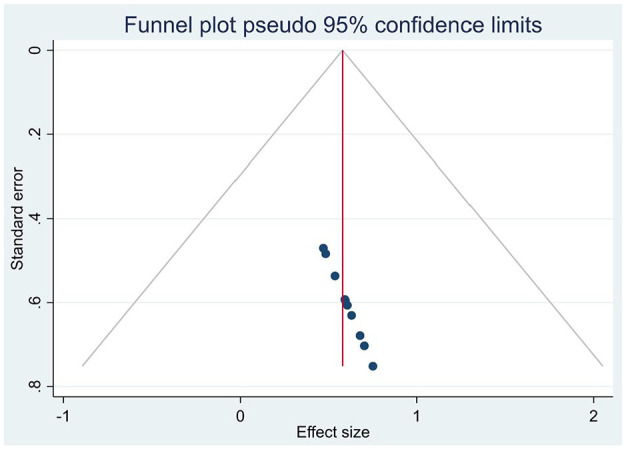
Funnel plot that shows publication bias among included study.
Multivariate meta-regression
Both univariate and multivariate meta-regression were conducted to identify the source of heterogeneity as there was a significant heterogeneity among studies observed. Accordingly, we found no significant variable which can explain the heterogeneity. There was no statistically significant study level covariate: sample size and publication year of included studies. Therefore, the heterogeneity can be explained by other factors not included in this review (Figures 7 and 8).
Figure 7.

Meta-regression analysis to check heterogeneity on preoperative anxiety among surgical patients in Ethiopia, 2024.
Figure 8.
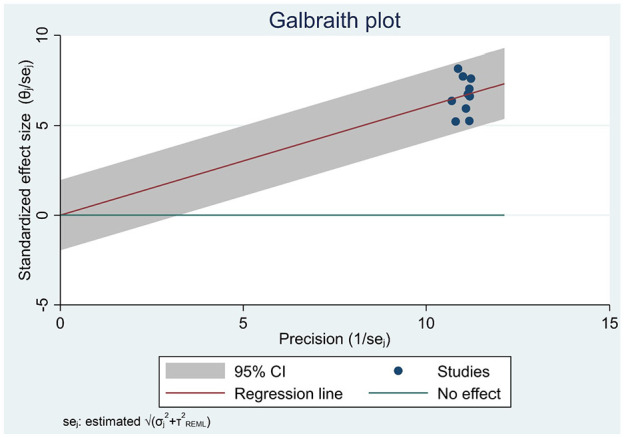
Meta-regression analysis by Galbraith plot to check heterogeneity on preoperative anxiety among surgical patients in Ethiopia, 2024.
Sensitivity analysis
Sensitivity analysis was performed, removing each study one by one, to assess the impact of each on the pooled prevalence of preoperative anxiety among surgical patients. We can conclude that this meta-analysis result is not sensitive because the omitted studies didn’t show a significant effect on the pooled estimated prevalence, according to the results (Figure 9).
Figure 9.

Sensitivity analysis of preoperative anxiety among surgical patients in Ethiopia, 2024.
Discussion
Preoperative anxiety, also known as POA, is a state of discomfort or tension that affects the patient psychologically, physiologically, and behaviorally before surgery. It is caused by a potential threat or challenge to reality that may alter hemodynamics. 31 The present study involved a systematic review and meta-analysis of 11 primary studies conducted in Ethiopia. The aim was to determine the pooled prevalence and factors associated with preoperative anxiety among surgical patients undergoing surgery.
The pooled prevalence of preoperative anxiety among surgical patients in Ethiopia was 60% with a 95% CI (55%-66%). This meta-analysis showed that fear of complication, postoperative pain, and fear of death were significantly associated with preoperative anxiety. This finding aligned with a meta-analysis conducted in low and middle-income countries (55.7%). 6 The pooled estimate in this review was higher than the global prevalence reported in another review which is 48%. 32 However, the pooled estimate in this review was lower than the pooled prevalence of preoperative anxiety in Sri Lanka at 77% 33 and in Rwanda at 72.8%. 34 Several factors, including socioeconomic conditions, healthcare infrastructure, patient experience, availability of psychosocial support, and communication effectiveness could explain this discrepancy. This implies the need for comprehensive preoperative assessment, better patient counselling to provide detailed information, and stronger psychosocial support systems to reduce anxiety.
The subgroup analysis shows variation in the prevalence of preoperative anxiety among patients undergoing different types of surgery. Subgroup analysis findings showed that the prevalence of preoperative anxiety about two-thirds of obstetric patients had anxiety which was a higher prevalence than the patients who had undergone non-obstetric surgeries indicating that obstetric surgeries induce more anxiety. Factors for these discrepancies include the nature of obstetric surgery, which results in a higher emotional and psychological burden to the risks associated with both mother and child. 35 Societal expectations and culture surrounding childbirth can increase stress and anxiety for obstetric patients.36,37 Additionally, according to the report of many studies, pregnancy by itself induces anxiety so preoperative anxiety is a double burden for obstetric patients.38,39 This implies a need for targeted interventions, psychological support, family involvement, and policy changes to address the unique emotional and psychological needs.
Further analysis was done according to the year of publication of the reviewed studies, and the pooled prevalence of preoperative anxiety in the past 4 years had been slightly increased. This could be because the study’s instruments were not all the same. Most notably, when DASS was used to measure preoperative anxiety in patients instead of the Amsterdam Preoperative Anxiety and Information Scale (APAIS), the prevalence of preoperative anxiety among surgical patients was marginally higher in those studies. The differences in those measures’ psychometric qualities could be the cause of the disparity. It also highlights the importance of selecting or developing measurement tools that balance sensitivity and specificity for preoperative anxiety, informing better-targeted interventions.
Additionally, compared to their counterparts, patients who were afraid of dying and complications had higher levels of preoperative anxiety. This could be due to perceived risk related to surgery, the perceived loss of control during surgery, and previous negative experiences with surgical outcomes, whether personal or through others’ stories, which can heighten fear and anxiety.40-43 Anticipation of potential complications or mortality can exacerbate anxiety, leading to heightened stress among patients. 44
Similarly, this study found that preoperative anxiety was higher in patients who had postoperative pain. Anxiety can lead to a heightened physiological response, including increased heart rate and blood pressure, making patients more susceptible to pain or more likely to perceive it intensely after surgery.44,45 Patients with higher levels of preoperative anxiety often experience various physiological and psychological health distortions, such as an increased need for anaesthesia and insomnia. These health issues can contribute to heightened sensitivity to pain and poor pain management postoperatively. The research reported high preoperative anxiety increased the immediate postoperative pain 15 and reduced sleep quality which lowers pain thresholds and increases pain perception, exacerbating postoperative pain.46,47 By understanding and addressing the connection between preoperative anxiety and postoperative pain, healthcare providers can develop targeted interventions to improve patient care, reduce preoperative anxiety, and facilitate better postoperative recovery and pain management.
The limitations of this study were that even though the pooled prevalence of POA among surgical patients is pertinent, it’s important to note that this systematic review and meta-analysis included studies across all types of surgery. This broad inclusion may have diluted the prevalence of POA among emergency surgery patients and inflated it for those undergoing elective procedures. Moreover, the review included all studies among surgical patients without excluding any age category, limiting a more nuanced understanding of POA across different patient groups.
Conclusion
This study revealed a high pooled prevalence of preoperative anxiety among surgical patients in Ethiopia. The findings showed that fear of complication, postoperative pain, and fear of death were significantly associated with preoperative anxiety. This implies that a multidisciplinary approach involving various healthcare professionals is essential to optimize patient care and outcomes by addressing postoperative pain through pain management, counselling on fear of death, and complications to reduce the level of preoperative anxiety.
Supplemental Material
Supplemental material, sj-docx-1-his-10.1177_11786329251316748 for Prevalence of Preoperative Anxiety and Associated Factors Among Surgical Patients: Systematic Review and Meta-Analysis in Ethiopia by Magarsa Lami, Abraham Negash, Jerman Dereje, Ahmed Hiko, Sinetibeb Mesfin, Arsema Gebreyesus, Nano Belama, Nesredin Ahmed Omer, Bikila Balis and Usmael Jibro in Health Services Insights
Supplemental material, sj-docx-2-his-10.1177_11786329251316748 for Prevalence of Preoperative Anxiety and Associated Factors Among Surgical Patients: Systematic Review and Meta-Analysis in Ethiopia by Magarsa Lami, Abraham Negash, Jerman Dereje, Ahmed Hiko, Sinetibeb Mesfin, Arsema Gebreyesus, Nano Belama, Nesredin Ahmed Omer, Bikila Balis and Usmael Jibro in Health Services Insights
Acknowledgments
Not applicable.
Footnotes
Funding: The author(s) received no financial support for the research, authorship, and/or publication of this article.
The author(s) declared no potential conflicts of interest to the research, authorship, and/or publication of this article.
Author Contributions: ML and UJ conceived and designed the review. ML, UJ, AN, JD, AG, SM, BB, and NA carried out the manuscript draft, and ML is the PI of the review. ML, UJ, and BB developed the search strings. The five reviewers (ML, NA, UJ, NB, and AH) screened and selected the studies. Also, NA, UJ, ML, SM, AH, NB, and BB extracted the data and evaluated the quality of the studies. ML, UJ, AN, and NA carried out the analysis and interpretation. All authors rigorously reviewed, read, and approved the final version of the manuscript.
Ethics Approval and Consent to Participate: Not applicable.
Consent for Publication: Not applicable.
Availability of Data and Materials: All related data has been presented within the manuscript. The dataset supporting the conclusions of this article is available from the corresponding author upon request.
ORCID iDs: Magarsa Lami  https://orcid.org/0000-0002-2871-9450
Abraham Negash
https://orcid.org/0000-0001-9406-1979
Usmael Jibro
https://orcid.org/0000-0003-2798-9392
Supplemental Material: Supplemental material for this article is available online.
References
- 1. Sadock BJ, Sadock VA, Ruiz P. Comprehensive Textbook of Psychiatry. Vol. 1. Lippincott Williams & Wilkins; 2000. [Google Scholar]
- 2. VandenBos GR. APA Dictionary of Psychology. American Psychological Association; 2007. [Google Scholar]
- 3. Aust H, Eberhart L, Sturm T, et al. A cross-sectional study on preoperative anxiety in adults. J Psychosom Res. 2018;111:133-139. [DOI] [PubMed] [Google Scholar]
- 4. Sigdel DS. Perioperative anxiety: a short review. Glob Anesth Perioper Med. 2015;1:107-108. [Google Scholar]
- 5. Friedrich S, Reis S, Meybohm P, Kranke P. Preoperative anxiety. Curr Opin Anaesthesiol. 2022;35:674-678. [DOI] [PubMed] [Google Scholar]
- 6. Bedaso A, Mekonnen N, Duko B. Prevalence and factors associated with preoperative anxiety among patients undergoing surgery in low-income and middle-income countries: a systematic review and meta-analysis. BMJ Open. 2022;12:e058187. [DOI] [PMC free article] [PubMed] [Google Scholar]
- 7. Bedaso A, Ayalew M. Preoperative anxiety among adult patients undergoing elective surgery: a prospective survey at a general hospital in Ethiopia. Patient Saf Surg. 2019;13:18. [DOI] [PMC free article] [PubMed] [Google Scholar]
- 8. Getahun AB, Endalew NS, Mersha AT, Admass BA. Magnitude and factors associated with preoperative anxiety among pediatric patients: cross-sectional study. Pediatric Health Med Ther. 2020;11:485-494. [DOI] [PMC free article] [PubMed] [Google Scholar]
- 9. Jayawardane M, Gankanda W, Gunathilake M. Prevalence of pre-operative anxiety and associated factors among a group of women undergoing gynaecological surgeries at a single unit in a tertiary care hospital in Sri Lanka. F1000Res. 2021;10:74. [DOI] [PMC free article] [PubMed] [Google Scholar]
- 10. Barker R, Kober A, Hoerauf K, et al. Out-of-hospital auricular acupressure in elder patients with hip fracture: a randomized double-blinded trial. Acad Emerg Med. 2006;13:19-23. [DOI] [PubMed] [Google Scholar]
- 11. Akinsulore A, Owojuyigbe AM, Faponle AF, Fatoye FO. Assessment of preoperative and postoperative anxiety among elective major surgery patients in a tertiary hospital in Nigeria. Middle East J Anaesthesiol. 2015;23:235-240. [PubMed] [Google Scholar]
- 12. Jones AR, Al-Naseer S, Bodger O, James ETR, Davies AP. Does pre-operative anxiety and/or depression affect patient outcome after primary knee replacement arthroplasty? Knee. 2018;25:1238-1246. [DOI] [PubMed] [Google Scholar]
- 13. Abutiheen AA, Khudhair ES, Dakhal HJ. Preoperative anxiety among adult patients subjected to elective surgery in Karbala. High Educ. 2021;20:19-12. [Google Scholar]
- 14. Eberhart L, Aust H, Schuster M, et al. Preoperative anxiety in adults-a cross-sectional study on specific fears and risk factors. BMC Psychiatry. 2020;20:140-214. [DOI] [PMC free article] [PubMed] [Google Scholar]
- 15. Tadesse M, Ahmed S, Regassa T, et al. Effect of preoperative anxiety on postoperative pain on patients undergoing elective surgery: prospective cohort study. Ann Med Surg. 2022;73:103190. [DOI] [PMC free article] [PubMed] [Google Scholar]
- 16. Woldegerima Y, Fitwi G, Yimer H, Hailekiros A. Prevalence and factors associated with preoperative anxiety among elective surgical patients at University of Gondar Hospital. Gondar, Northwest Ethiopia, 2017. A cross-sectional study. Int J Surg Open. 2018;10:21-29. [Google Scholar]
- 17. Caumo W, Schmidt AP, Schneider CN, et al. Risk factors for preoperative anxiety in adults. Acta Anaesthesiol Scand. 2001;45:298-307. [DOI] [PubMed] [Google Scholar]
- 18. Woldegerima Berhe Y, Belayneh Melkie T, Fitiwi Lema G, Getnet M, Chekol WB. The overlooked problem among surgical patients: preoperative anxiety at Ethiopian University Hospital. Front Med. 2022;9:912743. [DOI] [PMC free article] [PubMed] [Google Scholar]
- 19. Fentie Y, Yetneberk T, Gelaw M. Preoperative anxiety and its associated factors among women undergoing elective caesarean delivery: a cross-sectional study. BMC Pregnancy Childbirth. 2022;22:648-657. [DOI] [PMC free article] [PubMed] [Google Scholar]
- 20. Musa A, Movahedi R, Wang JC, et al. Assessing and reducing preoperative anxiety in adult patients: a cross-sectional study of 3661 members of the American Society of Anesthesiologists. J Clin Anesth. 2020;65:109903. [DOI] [PMC free article] [PubMed] [Google Scholar]
- 21. Garimella V, Cellini C. Postoperative pain control. Clin Colon Rectal Surg. 2013;26:191-196. [DOI] [PMC free article] [PubMed] [Google Scholar]
- 22. Page MJ, McKenzie JE, Bossuyt PM, et al. The PRISMA 2020 statement: an updated guideline for reporting systematic reviews. Int J Surg. 2021;88:105906. [DOI] [PubMed] [Google Scholar]
- 23. Stroup DF, Berlin JA, Morton SC, et al. Meta-analysis of observational studies in epidemiology: a proposal for reporting. JAMA. 2000;283:2008-2012. [DOI] [PubMed] [Google Scholar]
- 24. Porritt K, Gomersall J, Lockwood C. JBI's systematic reviews: study selection and critical appraisal. Am J Nurs. 2014;114:47-52. [DOI] [PubMed] [Google Scholar]
- 25. Salameh J-P, Bossuyt PM, McGrath TA, et al. Preferred reporting items for systematic review and meta-analysis of diagnostic test accuracy studies (PRISMA-DTA): explanation, elaboration, and checklist. BMJ. 2020;370:m2632. [DOI] [PubMed] [Google Scholar]
- 26. Mulugeta H, Ayana M, Sintayehu M, Dessie G, Zewdu T. Preoperative anxiety and associated factors among adult surgical patients in Debre Markos and Felege hiwot referral hospitals, Northwest Ethiopia. BMC Anesthesiol. 2018;18:155. [DOI] [PMC free article] [PubMed] [Google Scholar]
- 27. Nigussie S, Belachew T, Wolancho W. Predictors of preoperative anxiety among surgical patients in Jimma University specialized teaching hospital, South Western Ethiopia. BMC Surg. 2014;14:67. [DOI] [PMC free article] [PubMed] [Google Scholar]
- 28. Shewangzaw Engda A, Belay Yigzaw H, Alemnew Engdaw N, et al. Magnitude of preoperative anxiety and associated factors among adult surgical patients in Debre Berhan Comprehensive Specialized Hospital. Int J Gen Med. 2022;15:5999-6007. [DOI] [PMC free article] [PubMed] [Google Scholar]
- 29. Wondmieneh A. Preoperative anxiety and associated factors among adult elective surgery patients in North Wollo Zone, northeast Ethiopia. Open Access Surg. 2020;13:85-94. [Google Scholar]
- 30. Ferede YA, Bizuneh YB, Workie MM, Admass BA. Prevalence and associated factors of preoperative anxiety among obstetric patients who underwent cesarean section: a cross-sectional study. Ann Med Surg. 2022;74:103272. [DOI] [PMC free article] [PubMed] [Google Scholar]
- 31. Arroll B, Kendrick T. Definition of anxiety. J Prim Care Ment Health. 2018;20:125-137. [Google Scholar]
- 32. Abate SM, Chekol YA, Basu B. Global prevalence and determinants of preoperative anxiety among surgical patients: a systematic review and meta-analysis. Int J Surg Open. 2020;25:6-16. [DOI] [PMC free article] [PubMed] [Google Scholar]
- 33. Farahani MA, Sargolzaei MS, Shariatpanahi S, et al. The prevalence of anxiety and depression in patients with ostomy: a systematic review and meta-analysis. Psychooncology. 2022;31:2020-2035. [DOI] [PubMed] [Google Scholar]
- 34. Kanwal A, Asghar A, Ashraf A, Qadoos AJ. Prevalence of preoperative anxiety and its causes among surgical patients presenting in Rawalpindi medical university and allied hospitals, Rawalpindi. J Rawalpindi Med Coll. 2018;22:64-67. [Google Scholar]
- 35. Dekel S, Ein-Dor T, Berman Z, et al. Delivery mode is associated with maternal mental health following childbirth. Arch Womens Ment Health. 2019;22:817-824. [DOI] [PMC free article] [PubMed] [Google Scholar]
- 36. Albalawi FD, Faheem WA, Thabet H, Daghash H. Exploring the relationship between childbirth expectations and fear among primigravida Women in Saudi Arabia. Cureus. 2023;15:e49337. [DOI] [PMC free article] [PubMed] [Google Scholar]
- 37. McCarthy M, Houghton C, Matvienko-Sikar K. Women’s experiences and perceptions of anxiety and stress during the perinatal period: a systematic review and qualitative evidence synthesis. BMC Pregnancy Childbirth. 2021;21:811. [DOI] [PMC free article] [PubMed] [Google Scholar]
- 38. Deklava L, Lubina K, Circenis K, Sudraba V, Millere I. Causes of anxiety during pregnancy. Procedia Soc Behav Sci. 2015;205:623-626. [Google Scholar]
- 39. Silva MMDJ, Nogueira DA, Clapis MJ, Leite EPRC. Anxiety in pregnancy: prevalence and associated factors. Rev Esc Enferm USP. 2017;51:3-6. [DOI] [PubMed] [Google Scholar]
- 40. Häggström M, Brodin K. The meaning of being conscious during surgery with local or regional anesthesia–a phenomenological hermeneutic study. Int J Adv Nurs Stud. 2024;7:100224. [DOI] [PMC free article] [PubMed] [Google Scholar]
- 41. Kassahun WT, Mehdorn M, Wagner TC, et al. The effect of preoperative patient-reported anxiety on morbidity and mortality outcomes in patients undergoing major general surgery. Sci Rep. 2022;12:6312. [DOI] [PMC free article] [PubMed] [Google Scholar]
- 42. Lanini I, Amass T, Calabrisotto CS, et al. The influence of psychological interventions on surgical outcomes: a systematic review. J Anesth Analg Crit Care. 2022;2:31. [DOI] [PMC free article] [PubMed] [Google Scholar]
- 43. Pereira L, Figueiredo-Braga M, Carvalho IP. Preoperative anxiety in ambulatory surgery: the impact of an empathic patient-centered approach on psychological and clinical outcomes. Patient Educ Couns. 2016;99:733-738. [DOI] [PubMed] [Google Scholar]
- 44. Baagil H, Baagil H, Gerbershagen MU. Preoperative anxiety impact on anesthetic and analgesic use. Medicinar. 2023;59:2069. [DOI] [PMC free article] [PubMed] [Google Scholar]
- 45. Maytal G, Huffman JC, Januzzi JL, Jr, Stern T. The psychiatric management of patients with cardiac disease. In: Stern TA, Fricchione GL, Caseem NH, Jellinek MS, Rosenbaum JF, eds. Massachusetts General Hospital Handbook of General Hospital Psychiatry. Elsevier Health Sciences. 2010:303. [Google Scholar]
- 46. Gu X, Zhang Y, Wei W, Zhu J. Effects of preoperative anxiety on postoperative outcomes and sleep quality in patients undergoing laparoscopic gynecological surgery. J Clin Med. 2023;12:4-9. [DOI] [PMC free article] [PubMed] [Google Scholar]
- 47. Wang L, Qin F, Liu H, et al. Pain sensitivity and acute postoperative pain in patients undergoing abdominal surgery: the mediating roles of pain self-efficacy and pain catastrophizing. Pain Manag Nurs. 2024;25:e108-e114. [DOI] [PubMed] [Google Scholar]
Associated Data
This section collects any data citations, data availability statements, or supplementary materials included in this article.
Supplementary Materials
Supplemental material, sj-docx-1-his-10.1177_11786329251316748 for Prevalence of Preoperative Anxiety and Associated Factors Among Surgical Patients: Systematic Review and Meta-Analysis in Ethiopia by Magarsa Lami, Abraham Negash, Jerman Dereje, Ahmed Hiko, Sinetibeb Mesfin, Arsema Gebreyesus, Nano Belama, Nesredin Ahmed Omer, Bikila Balis and Usmael Jibro in Health Services Insights
Supplemental material, sj-docx-2-his-10.1177_11786329251316748 for Prevalence of Preoperative Anxiety and Associated Factors Among Surgical Patients: Systematic Review and Meta-Analysis in Ethiopia by Magarsa Lami, Abraham Negash, Jerman Dereje, Ahmed Hiko, Sinetibeb Mesfin, Arsema Gebreyesus, Nano Belama, Nesredin Ahmed Omer, Bikila Balis and Usmael Jibro in Health Services Insights