


Key Points
Question
Does an early, 8-hour restrictive oxygen strategy compared with a liberal oxygen strategy in severely injured trauma patients reduce mortality and/or major respiratory complications?
Findings
Among 1508 randomized adult trauma patients, no difference was found in death and/or major respiratory complications within 30 days among patients in the restrictive oxygen group compared with those in the liberal oxygen group (16.1% vs 16.7%, respectively).
Meaning
In severely injured trauma patients, an early restrictive oxygen strategy compared with a liberal oxygen strategy initiated in the prehospital setting or on trauma center admission did not significantly reduce mortality and/or major respiratory complications.
Abstract
Importance
Early administration of supplemental oxygen for all severely injured trauma patients is recommended, but liberal oxygen treatment has been associated with increased risk of death and respiratory complications.
Objective
To determine whether an early 8-hour restrictive oxygen strategy compared with a liberal oxygen strategy in adult trauma patients would reduce death and/or major respiratory complications.
Design, Setting, and Participants
This randomized controlled trial enrolled adult trauma patients transferred directly to hospitals, triggering a full trauma team activation with an anticipated hospital stay of a minimum of 24 hours from December 7, 2021, to September 12, 2023. This multicenter trial was conducted at 15 prehospital bases and 5 major trauma centers in Denmark, the Netherlands, and Switzerland. The 30-day follow-up period ended on October 12, 2023. The primary outcome was assessed by medical specialists in anesthesia and intensive care medicine blinded to the randomization.
Interventions
In the prehospital setting or on trauma center admission, patients were randomly assigned 1:1 to a restrictive oxygen strategy (arterial oxygen saturation target of 94%) (n = 733) or liberal oxygen strategy (12-15 L of oxygen per minute or fraction of inspired oxygen of 0.6-1.0) (n = 724) for 8 hours.
Main Outcomes and Measures
The primary outcome was a composite of death and/or major respiratory complications within 30 days. The 2 key secondary outcomes, death and major respiratory complications within 30 days, were assessed individually.
Results
Among 1979 randomized patients, 1508 completed the trial (median [IQR] age, 50 [31-65] years; 73% male; and median Injury Severity Score was 14 [9-22]). Death and/or major respiratory complications within 30 days occurred in 118 of 733 patients (16.1%) in the restrictive oxygen group and 121 of 724 patients (16.7%) in the liberal oxygen group (odds ratio, 1.01 [95% CI, 0.75 to 1.37]; P = .94; absolute difference, 0.56 percentage points [95% CI, −2.70 to 3.82]). No significant differences were found between groups for each component of the composite outcome. Adverse and serious adverse events were similar across groups, with the exception of atelectasis, which was less common in the restrictive oxygen group compared with the liberal oxygen group (27.6% vs 34.7%, respectively).
Conclusions and Relevance
In adult trauma patients, an early restrictive oxygen strategy compared with a liberal oxygen strategy initiated in the prehospital setting or on trauma center admission for 8 hours did not significantly reduce death and/or major respiratory complications within 30 days.
Trial Registration
ClinicalTrials.gov Identifier: NCT05146700
This randomized controlled trial investigates whether an early 8-hour restrictive oxygen strategy compared with a liberal oxygen strategy lowers the incidence of death and/or major respiratory complications in severely injured trauma patients.
Introduction
Early administration of supplemental oxygen is recommended for severe trauma,1 which is the leading cause of death for adults younger than 50 years.2 The Advanced Trauma Life Support (ATLS) guidelines recommend that all severely injured trauma patients must receive supplemental oxygen in the initial period, despite the supporting evidence being extremely sparse.3,4,5 Additionally, the concentration, duration, and target of the oxygen treatment is unspecified1 and, consequently, hyperoxemia in the initial phase of hospital admission is frequently observed in trauma patients.6,7,8,9
Hyperoxemia has been associated with increased risk of death and major respiratory complications in observational studies on trauma patients and other critically ill patients.10,11,12,13 Systematic reviews of oxygen therapy in acutely ill patients, including trauma patients, found increased mortality associated with liberal supplemental oxygen.14,15,16 In the intensive care unit (ICU), a Cochrane systematic review concluded that there was no difference in outcome according to oxygenation strategy.17 The impact of different oxygenation strategies for trauma patients, especially in the early phase after trauma, thus remains unclear.
The TRAUMOX2 multicenter trial was conducted to test the hypothesis that a restrictive oxygen strategy compared with a liberal oxygen strategy initiated early after trauma for 8 hours would reduce the incidence of death and/or major respiratory complications within 30 days.
Methods
Trial Design and Oversight
TRAUMOX2 was an investigator-initiated, pragmatic, international, multicenter, open-label, parallel-group, superiority, primary outcome, assessor-blinded, randomized controlled trial. The overall trial protocol and statistical analysis plan were published before enrollment of the last patient18,19 and are available in Supplement 1.
The trial was approved by all relevant research ethics committees and medical regulatory agencies, adhering to overall trial protocol and national regulations. Enrollment was approved as an emergency procedure where patients were considered temporarily incapable of providing informed consent. Initial proxy consent was obtained and granted by an independent physician upon enrollment at most participating sites. Subsequent informed consent from the patient, the patient’s relatives, or secondary proxy consent was sought at the earliest opportunity for ongoing participation and collection of data. If a patient declined consent at any point after the intervention was initiated, most sites retained use of the data up to the date of consent withdrawal.
An independent data monitoring and safety committee conducted 2 interim analyses after the enrollment of 392 (27.6%) and 764 patients (53.8%). All participating sites underwent data monitoring by external monitors according to the Good Clinical Practice guidelines by the International Council for Harmonization. A comprehensive data validation of the trial database was performed before commencing analyses.
Patients
Eligible patients were 18 years or older, including individuals of childbearing age, who experienced blunt or penetrating trauma and were transported directly to participating trauma centers, triggering a full trauma team activation. Furthermore, the enrolling physician had to anticipate a hospital stay of at least 24 hours. Enrollment was possible either in the prehospital setting or on trauma center admission. Patients with a suspicion of carbon monoxide intoxication or cardiac arrest prior to randomization were excluded. Patients with no or minor injuries after secondary survey in the trauma resuscitation room were excluded postrandomization if they were expected to be discharged within 24 hours. These were classified as secondary exclusions. Abbreviated Injury Scale (AIS) coding was performed at least 4 weeks after the trauma to ensure that all injuries had been identified following the trauma.
Randomization
Patients were randomly assigned in a 1:1 ratio to receive a restrictive oxygen strategy or a liberal oxygen strategy in variable block sizes of 4, 6, or 8, with stratification based on the site of inclusion (specific prehospital base or trauma center) as well as endotracheal intubation at randomization. The randomization table was generated electronically by a statistician not affiliated with the trial and transferred to KLIFO A/S who produced sealed randomization envelopes. These contained information on the oxygen strategy, a data collection sheet for documenting the intervention, and a study identification corresponding to the randomization table. The randomization envelopes were made available to all air ambulances, physician-staffed ambulance vehicles, and trauma centers. The use of randomization envelopes was chosen to facilitate prehospital enrollment in areas with unreliable internet or phone service. All personnel, patients, and patients’ relatives were aware of the treatment allocation. The primary outcome assessors were blinded to the treatment allocation.
Oxygen Interventions
Patients were allocated to either a restrictive oxygen strategy or liberal oxygen strategy for 8 hours as soon as possible following trauma, either in the prehospital setting or on admission to the trauma center. The restrictive oxygen group received the lowest dosage of oxygen (≥21%) that ensured an arterial oxyhemoglobin saturation measured by pulse oximetry (Spo2) of 94%, either using no supplemental oxygen, a nasal cannula, a nonrebreather mask, or mechanical ventilation for intubated patients. Therefore, only patients who could maintain an Spo2 of 94% or higher without the need for supplemental oxygen could achieve Spo2 levels exceeding 94%. The liberal oxygen group received 15 L of oxygen per minute via a nonrebreather mask for nonintubated patients and a fraction of inspired oxygen (Fio2) of 1.0 for intubated patients in the prehospital setting, in the trauma resuscitation room, and during intrahospital transportation. In the operating room, postanesthesia care unit, ICU, and ward, the oxygen flow or Fio2 could be reduced to 12 L of oxygen per minute or Fio2 of 0.6 or higher if the Spo2 was 98% or higher. A high level of oxygen for a brief duration was permitted in both groups at the discretion of the treating physician (eg, preoxygenation prior to intubation).
The TRAUMOX1 pilot trial demonstrated that a restrictive oxygen strategy, targeting an Spo2 of 94%, was feasible to maintain normoxemia in trauma patients for 24 hours.20 An observational study of intubated trauma patients revealed that liberal oxygen administration typically occurred within the first 8 to 10 hours after hospital admission and plateaued thereafter.6 Therefore, the intervention period was reduced to 8 hours in the TRAUMOX2 trial, as several randomized controlled trials in other patient groups have demonstrated significant outcome differences following short durations of oxygen exposure.21,22
The location of the patient, the supplemental oxygen dosage, Spo2 value, and type of oxygen delivery were recorded hourly on the data collection sheet from the randomization envelope. To monitor adherence to the intervention, arterial blood gases were obtained at 1 hour ± 30 minutes and 6 hours ± 2 hours postrandomization. Aside from the allocated interventions, all enrolled patients were treated according to usual standard of care.
Outcomes
The primary outcome was a composite of death and/or major respiratory complications within 30 days.
Major respiratory complications were defined as pneumonia based on the US Centers for Disease Control and Prevention criteria23 and/or acute respiratory distress syndrome based on the Berlin definition.24 This outcome was examined by 2 outcome assessors at each site (medical specialists in anesthesia or intensive care medicine) blinded to the allocation. The assessments were based on the patients’ medical records, including computed tomography scans, x-rays, and any clinical and laboratory results upon request, up to hospital discharge within 30 days. These assessments were based on data collected during the hospital stay and did not include information obtained after discharge. Additional details on the primary outcome assessment are available in the eMethods in Supplement 2. Blinding of the outcome assessors was ensured by a local investigator who concealed all information indicative of the allocation in the medical records (eg, Fio2, the partial pressure of oxygen in arterial blood [Pao2], and Spo2 during the intervention period). The assessments were performed independently by each assessor and any disagreement between the 2 assessors was resolved by discussion until agreement or, if necessary, the involvement of a third assessor to reach consensus. The 2 key secondary outcomes were death and major respiratory complications within 30 days. Exploratory outcomes included episode(s) of hypoxemia during the 8-hour intervention, ICU readmission, sepsis, surgical site infection, and pneumonia postdischarge. All outcomes are listed in the protocol and further specified in the statistical analysis plan and Supplement 2.
Two adverse events were recorded: atelectasis, identified by a radiologist, and airway mucosa irritation, noted by health care staff. Serious adverse events were defined as any medical occurrence leading to death, life-threatening conditions, extended hospital stay (including readmission), significant disability, or congenital anomaly (Supplement 2).
Statistical Analysis
With 710 patients in each intervention group, a hypothesized dropout rate of 3.5%, and total enrollment of 1420 patients, it was estimated that a 33% relative risk reduction in the incidence of the composite primary outcome could be detected using a restrictive oxygen strategy compared with a liberal oxygen strategy. This detection would be achievable with 80% power at a 5% significance level, assuming the incidence of the primary outcome was 10% in the restrictive oxygen group and 15% in the liberal oxygen group. The assumptions underlying the sample size calculation were based on findings from the pilot trial, TRAUMOX1, which observed event rates of 20% in the restrictive oxygen group and 33% in the liberal oxygen group.20 Other studies have estimated mortality rates of 6% to 12%25,26 and pneumonia or ventilator-associated pneumonia among trauma patients in the ICU to be 14% to 28%.27,28 The trial was planned to end 30 days after inclusion of 1420 evaluable patients.
Statistical analyses were performed according to the published statistical analysis plan,19 and the statistician, along with the coauthors, remained blinded to the treatment allocation throughout the analysis and the initial manuscript drafting, as intervention groups were designated as A and B. The manuscript existed in 2 versions, 1 assuming that treatment A was restrictive oxygen and treatment B was liberal oxygen and vice versa. Both versions were reviewed and approved by all authors before revealing the allocation groups. Modified intention-to-treat analyses were performed on all outcomes of the included patients. The modification relied on the secondary exclusion criterion, which specified that patients were excluded from the trial after randomization if discharge was anticipated within 24 hours due to no or minor injuries, detected at secondary survey in the trauma resuscitation room. Per-protocol analyses were performed for the primary and key secondary outcomes (Supplement 2).
The primary outcome and key secondary outcomes were compared between the 2 groups using binary logistic regression and reported as odds ratios (ORs) with 95% CIs, adjusted for the stratification variables (site of inclusion and the status of endotracheal intubation at randomization). Additional analyses were conducted, adjusting for the stratification variables, age, sex, Injury Severity Score (ISS), and the first available Glasgow Coma Scale score after trauma. Clustering by site was adjusted for using generalized estimating equations for estimation of the regression models with a covariance matrix that assumed clustering by site structure. Generalized estimating equations also provided correct inference with weighted data. Differential dropout from the study, through late withdrawal of consent or unreachable for follow-up resulting in missing data, was estimated in a logistic regression model and adjusted for through inverse probability weighting (Supplement 2).29 Exploratory outcomes were analyzed similarly to the primary and key secondary outcomes regarding adjustment, while logistic or linear regression was used according to the type of outcome.
Predefined subgroups were established according to initial intubation, ICU admission, moderate or severe traumatic brain injury (AIS score ≥3),30 known lung disease, prehospital vs in-hospital inclusion, and major trauma defined as having an ISS higher than 15.
For the primary and key secondary outcomes, we applied a significance level of 5% corresponding to 95% CIs for these effect estimates. The significance tests were 2-sided. For the exploratory outcomes, adjustments for multiple testing were made by evaluating their P values using a significance level that controlled the false discovery rate below 5%.31 All analyses were performed with R software version 4.3.1 (R Foundation).
Results
Trial Population
From December 7, 2021, to September 12, 2023, a total of 1979 patients were randomized at 15 prehospital bases and 5 major trauma centers in Denmark, the Netherlands, and Switzerland. In total, 1508 patients completed the trial, with 750 assigned to the restrictive oxygen group and 758 assigned to the liberal oxygen group (Figure 1). Primary outcome data were obtained for 1457 patients (96.6%), corresponding to 733 patients in the restrictive oxygen group and 724 patients in the liberal oxygen group. The baseline characteristics were well balanced between the 2 groups, with the exception of a higher proportion of active smokers in the liberal oxygen group (Table; eTables 1 and 2 in Supplement 2).
Figure 1. Screening, Randomization, and Follow-Up of Patients in the TRAUMOX2 Trial.
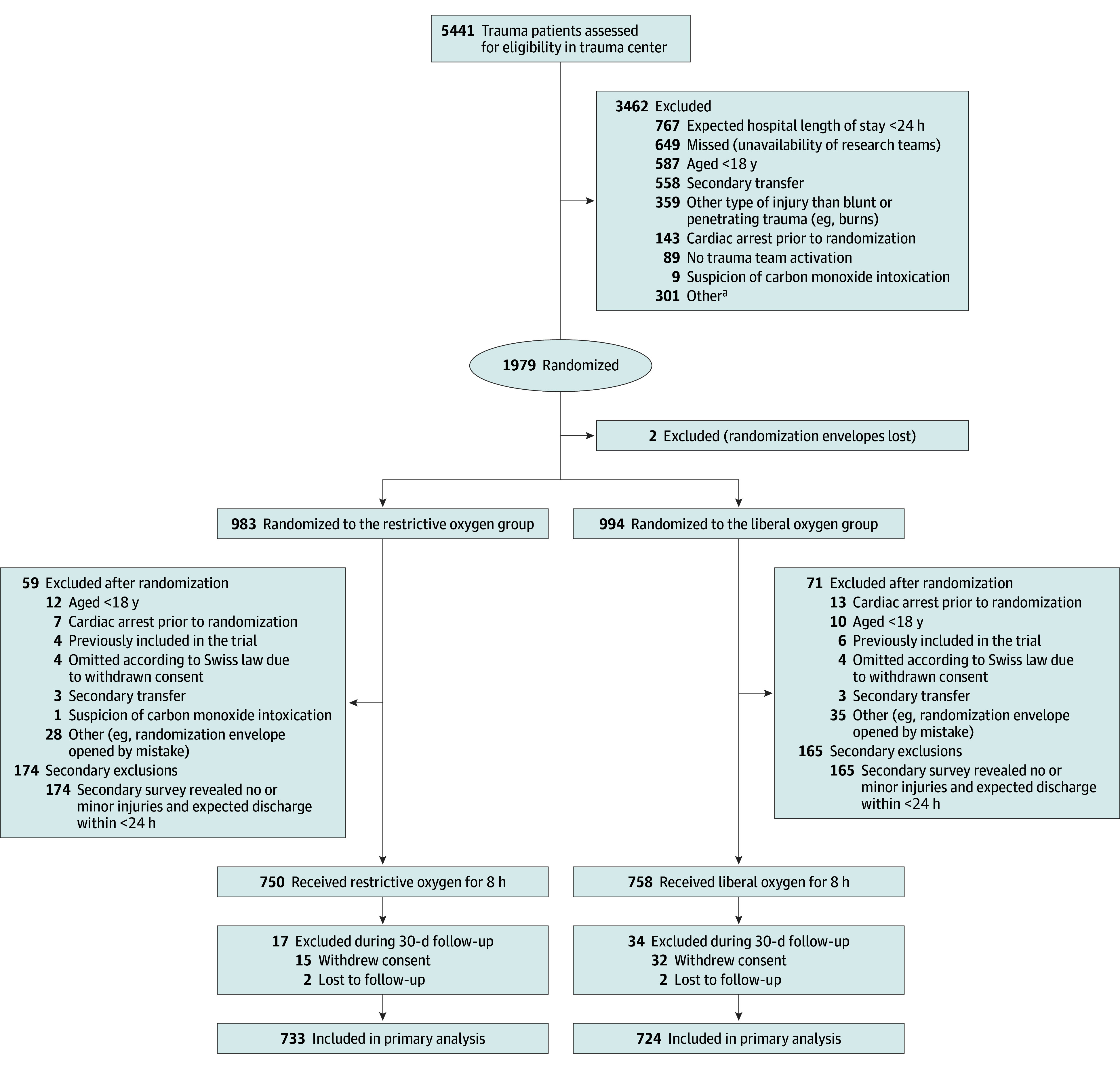
In this pragmatic trial, prehospital information on assessment for eligibility was not possible.
aIncluded in other trials that prohibited coenrollment, previously enrolled patients, acute medical calls incorrectly labeled as trauma team activation, and unknown time of trauma.
Table. Patient Characteristics.
| Characteristic | No./total No. (%) | |
|---|---|---|
| Restrictive oxygen group (n = 750) | Liberal oxygen group (n = 758) | |
| Age, median (IQR), y | 48 (29-64) | 51 (33-66) |
| No. | 749 | 757 |
| Sex | ||
| Male | 540/748 (72.2) | 555/756 (73.4) |
| Female | 208/748 (27.8) | 201/756 (26.6) |
| Active smoker | 161/590 (27.3) | 201/587 (34.2) |
| Active treatment of pneumonia on admission | 16/728 (2.2) | 10/712 (1.4) |
| Comorbidities prior to traumaa | 347/735 (47.2) | 341/725 (47.0) |
| Cardiovascular disease | 142/735 (19.3) | 137/725 (18.9) |
| Psychiatric disease | 78/735 (10.6) | 82/725 (11.3) |
| Lung disease | 60/735 (8.2) | 70/725 (9.7) |
| Other | 262/735 (35.6) | 267/725 (36.8) |
| Predominant type of injury | ||
| Blunt | 667/749 (89.1) | 678/757 (89.6) |
| Penetrating | 82/749 (10.9) | 79/757 (10.4) |
| Intubated at randomization | 177/750 (23.6) | 184/758 (24.3) |
| Site of inclusion | ||
| In-hospital | 442/750 (58.9) | 451/758 (59.4) |
| Prehospital | 308/750 (41.1) | 307/758 (40.6) |
| Prehospital information | ||
| Time from injury to arrival at trauma center, median (IQR), min | 58 (43-75) | 55 (40-77) |
| No. | 633 | 635 |
| Use of prehospital or in-hospital supplemental oxygen prior to randomization | 333/713 (46.7) | 351/718 (48.9) |
| Time with supplemental oxygen treatment before randomization, median (IQR), min | 32 (19-51) | 30 (15-53) |
| No. | 234 | 247 |
| First vital signs and injury status | ||
| Systolic blood pressure <90 mm Hg | 44/640 (6.9) | 53/646 (8.2) |
| Heart rate >110 beats/min | 95/665 (14.3) | 97/673 (14.4) |
| Respiratory rate >24 breaths/min | 93/514 (18.1) | 114/549 (20.8) |
| Spo2 <90% | 91/669 (13.6) | 108/674 (16.0) |
| GCS score <9b | 113/641 (17.6) | 125/654 (19.1) |
| Head AIS score ≥3c | 233/750 (31.1) | 202/753 (26.8) |
| Thoracic AIS score ≥3c | 265/750 (35.3) | 260/753 (34.5) |
| ISS, median (IQR)d | 14 (9-22) | 14 (9-22) |
| No. | 749 | 745 |
| Trauma center information | ||
| Type of transport to trauma center | ||
| Ground ambulance | 583/747 (78.0) | 585/743 (78.7) |
| Helicopter ambulance | 140/747 (18.7) | 141/743 (19.0) |
| Othere | 24/747 (3.2) | 17/743 (2.3) |
| Destination after trauma resuscitation room | ||
| Ward | 299/741 (40.4) | 331/739 (44.8) |
| Intensive care unit | 276/741 (37.2) | 242/739 (32.7) |
| Operating room | 166/741 (22.4) | 166/739 (22.5) |
| Arterial blood gases during the oxygen interventionf | ||
| Pao2 h 1 ± 30 min, median (IQR), mm Hg | 85 (71-109) | 280 (145-390) |
| No. | 614 | 614 |
| Pao2 h 6 ± 2 h, median (IQR), mm Hg | 86 (74-101) | 230 (128-304) |
| No. | 490 | 498 |
Abbreviations: AIS, Abbreviated Injury Scale; GCS, Glasgow Coma Scale; ISS, Injury Severity Scale; Pao2, partial pressure of oxygen in arterial blood; Spo2, arterial oxygen saturation measured by pulse oximetry.
The subsections do not sum to the total comorbidity count, as patients could be classified with multiple comorbidities. Cardiovascular disease was defined as hypertension, angina pectoris, atrial fibrillation, heart failure, coronary artery disease, and other. Lung disease was defined as chronic obstructive pulmonary disease, asthma, lung fibrosis, lung cancer, a positive COVID-19 test result on admission, and other. Psychiatric disease included substantial psychiatric diagnoses classified as systemic illness in the American Society of Anesthesiologists physical status classification system, which is used to assess surgical risk.
GCS scores range from 3 to 15 and evaluate a patient’s level of consciousness. Lower scores indicate a worsening of neurological function and a GCS score below 9 is considered a severe impairment of consciousness.
AIS scores range from 0 to 6, with scores calculated based on the severity of the traumatic lesions in the affected anatomical region of the body. A higher score reflects more severe injury and, traditionally, a score of 3 or higher is classified as a serious injury. All scores were classified by certified specialists.
ISS ranges from 0 to 75, with higher scores indicating higher trauma severity. ISS evaluates the overall injury based on anatomical regions. Severe trauma has typically been classified as an ISS above 15. All scores were calculated by certified specialists.
Defined as a combination of ground ambulance and helicopter ambulance, private vehicle, walk-in, or brought in by the police.
The first and second arterial blood gases during the oxygen intervention were obtained at hour 1 ± 30 minutes after randomization and hour 6 ± 2 hours after randomization, respectively.
Oxygenation During Intervention
During the 8-hour intervention, a median (IQR) of 0 (0-1) L of oxygen per minute was provided to nonintubated patients in the restrictive oxygen group and 12 (12-15) L of oxygen per minute in the liberal oxygen group (eFigure in Supplement 2). For intubated patients, the median (IQR) Fio2 for patients in the restrictive oxygen group was 0.28 (0.21-0.36) and 0.60 (0.60-0.80) in the liberal oxygen group. There was a considerable separation in arterial oxygen partial pressure and saturation between the 2 groups (Table) (eFigure in Supplement 2). Major protocol violations occurred in 50 patients (6.7%) in the restrictive oxygen group and 102 patients (13.7%) in the liberal oxygen group (eTable 3 in Supplement 2).
Outcomes
The primary composite outcome, death and/or major respiratory complications within 30 days, occurred in 118 of 733 patients (16.1%) in the restrictive oxygen group and 121 of 724 patients (16.7%) in the liberal oxygen group (OR, 1.01 [95% CI, 0.75 to 1.37]; P = .94; absolute difference, 0.56 percentage points [95% CI, −2.70 to 3.82]) (Figure 2; Figure 3). The subsequent adjusted analysis and per-protocol analysis showed similar results (eTables 4 and 8 in Supplement 2). The results of the predefined subgroup analyses were similar to those in the primary analysis (Figure 4).
Figure 2. Patient Outcomes.
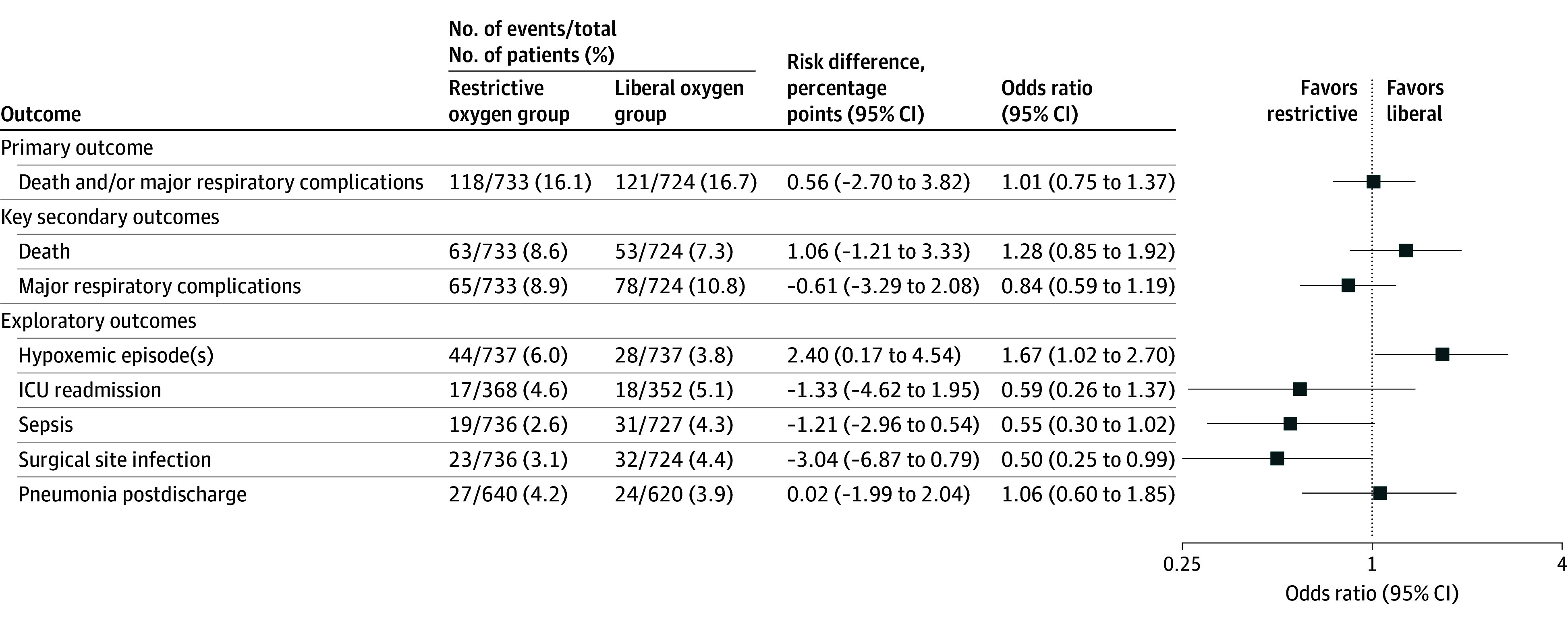
Trial outcomes for trauma patients randomized to either a restrictive oxygen strategy or liberal oxygen strategy. The odds ratios were adjusted for stratification variables. Further adjusted analyses are presented in eTables 4 and 5 in Supplement 2. Death and/or major respiratory complications, surgical site infection, and pneumonia postdischarge were evaluated within 30 days. Hypoxemic episode(s) were defined as the presence of any Spo2 less than 90% during the 8-hour intervention from the hourly collected Spo2 values. ICU readmission and sepsis were evaluated during the initial hospital admission (not at hospital readmission).
ICU indicates intensive care unit; and Spo2, arterial oxygen saturation measured by pulse oximetry.
Figure 3. Cumulative Incidence of Death and/or Major Respiratory Complications.
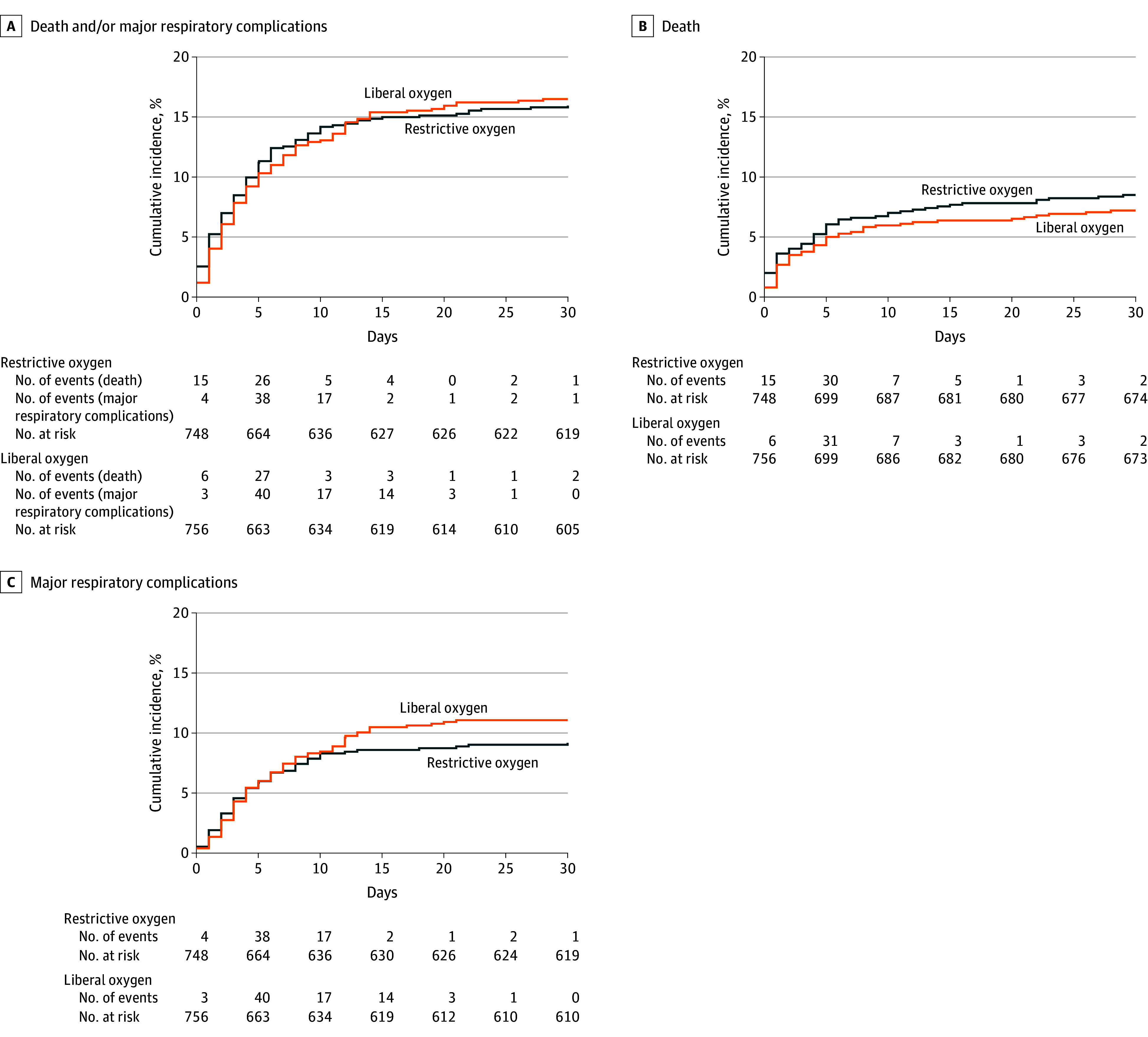
Visualization of data using Kaplan-Meier curves of the incidences of the primary outcome (A) and key secondary outcomes (B, C) during the 30-day follow-up period for trauma patients randomized to either a restrictive oxygen strategy or liberal oxygen strategy.
Figure 4. Subgroup Analysis of Death and/or Major Respiratory Complications Within 30 Days.
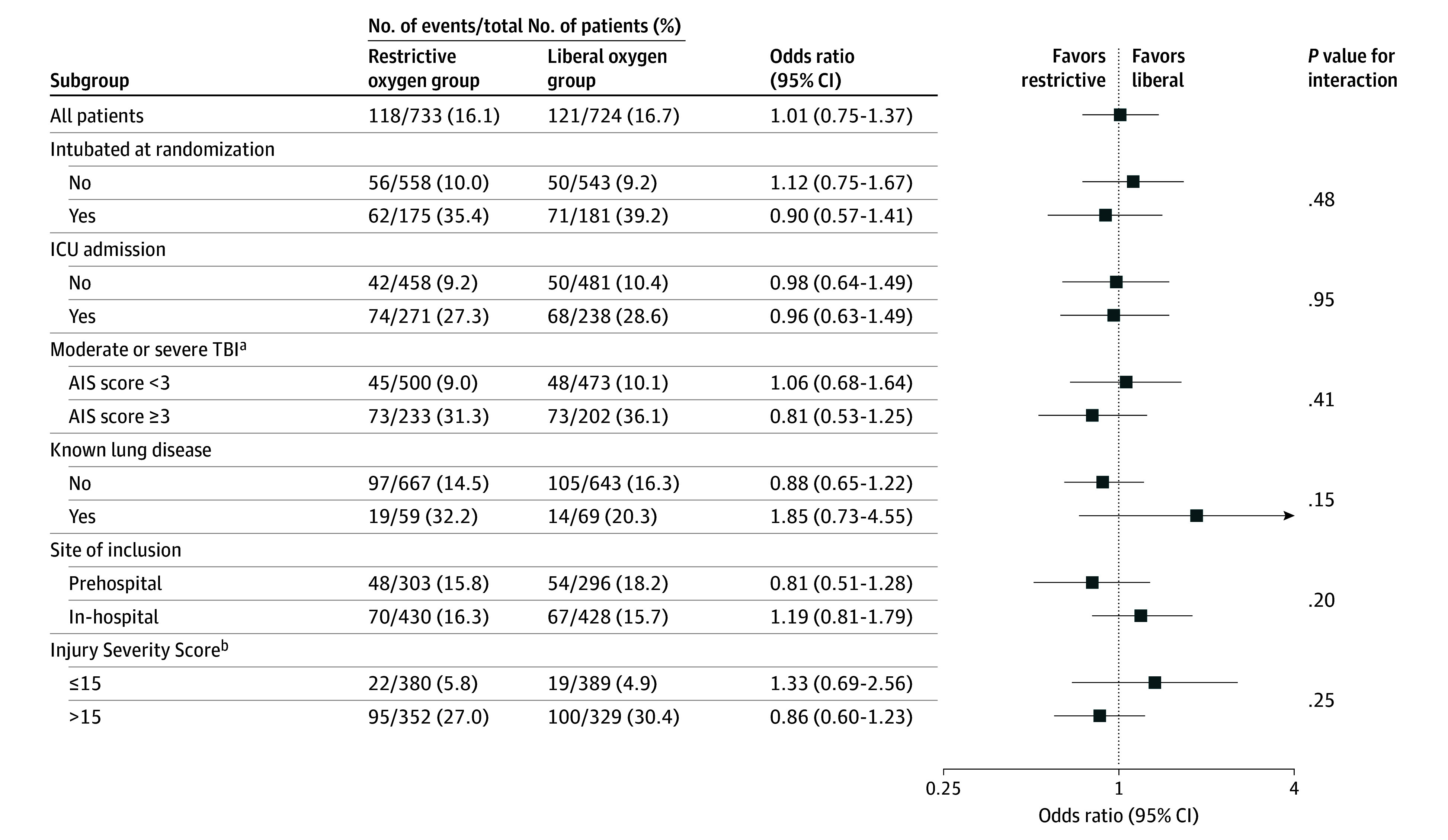
The odds ratios were adjusted for stratification variables. Further adjusted analyses are presented in eTable 7 in Supplement 2.
AIS indicates Abbreviated Injury Scale; ICU, intensive care unit; and TBI, traumatic brain injury.
aAIS scores range from 0 to 6 and are based on injuries in different anatomical regions. A head score below 3 indicates mild TBI and a score of 3 or higher indicates moderate or severe TBI. Only the AIS codes for isolated brain injury were selected, thereby excluding neck injuries.
bInjury Severity Score ranges from 0 to 75, used to assess anatomical injury severity. Scores below 15 indicate mild to moderate trauma, while scores higher than 15 are considered severe trauma.
When considered individually, death and major respiratory complications within 30 days had opposing trends, but did not differ significantly between the 2 groups (Figure 2) (eTable 4 in Supplement 2). No exploratory outcomes differed significantly between the groups after adjusting for multiple testing (eTables 5 and 6 in Supplement 2). The blinded primary outcome assessors guessed the correct allocation in 50.6% of patients in the restrictive oxygen group and 51.0% of patients in the liberal oxygen group.
Adverse and serious adverse events were comparable between the groups, except for atelectasis, which occurred less frequently in the restrictive oxygen group compared with the liberal oxygen group (27.6% vs 34.7%, respectively) (eTable 9 in Supplement 2).
Discussion
In this pragmatic, international, multicenter, randomized controlled trial of adult trauma patients, a restrictive oxygen strategy compared with a liberal oxygen strategy initiated early after injury did not significantly reduce the incidence of death and/or major respiratory complications within 30 days.
The evidence supporting the administration of supplemental oxygen to all severely injured trauma patients in the initial period is notably scarce.3 One trial including 68 intubated patients administered early-phase oxygen treatment after trauma and indicated a potential benefit of an Fio2 of 80% vs 50% on 6-month neurological outcome.32 The findings of that small trial, with an unclear risk of bias across all domains, differ from the results in the TRAUMOX2 trial.5 However, the findings in systematic reviews on critically ill patients are mixed. Some reviews report harm from a liberal oxygen approach,14,15,16 while another found no differences in outcomes based on oxygenation strategies.17 A key distinction from this trial is that the intervention lasted for 8 hours across various prehospital and in-hospital settings, whereas the studies included in the reviews typically involved nontrauma patients undergoing longer intervention in the ICU. These differences in patient characteristics, oxygen duration, and hospital location make direct comparison challenging. Additionally, trials are distinct in their interventions, as illustrated in the ICU setting, where several trials strictly defined the 2 intervention groups based on Pao2 levels,33,34,35,36 whereas only a few trials based it solely on Spo2.37,38,39,40 This creates the potential for ambiguity and challenges the comparison of studies. Adding to the complexity, the acceptable lower limit of Spo2 varies between studies, with some allowing values as low as 88%.37,38,39 In the current trial, the focus was on Spo2 rather than Pao2 because the hyperacute setting rarely allows for precise titration and obtaining a Pao2 measurement may not always be feasible. Notably, the study did not collect information on race and ethnicity, which limits the interpretation of pulse oximetry in relation to skin pigmentation.
The restrictive group in the TRAUMOX2 trial, targeting an Spo2 of 94%, was based on the TRAUMOX1 pilot trial, which demonstrated the feasibility of maintaining normoxia in trauma patients and guidelines on algorithms for traumatic brain injury patients.20,41 Furthermore, a large trial by Girardis et al showed a benefit of a conservative oxygen strategy (Spo2 between 94% and 98%).42 The liberal oxygen group was defined as the control group in the trial by interpreting the ATLS guidelines,1 which recommend providing supplemental oxygen to all severely injured trauma patients. However, they lack specific guidance regarding concentration, duration, and target of the supplemental oxygen treatment in the early phase after trauma. The oxygen concentration was chosen to clearly separate the levels of oxygenation between groups. While the TRAUMOX2 trial investigators recognize that several ICU studies have opted for a more restrictive approach for both groups,33,34,35,42,43,44 observational studies indicate that substantial hyperoxemia is common in the early phase of managing trauma patients.6,7,8 Notably, the liberal oxygen approach in the current trial was more restrictive than the one described in the World Health Organization recommendation, employing an Fio2 of 80% perioperatively for general surgical patients.45 As previously mentioned, the 8-hour intervention was selected based on an observational study to align with existing clinical practice.6 It could be argued that an 8-hour intervention period immediately after trauma would be too brief to impact clinical outcomes for severely injured patients. However, a similar duration of oxygen exposure has previously been reported to significantly impact long-term mortality in trauma and surgical populations.6,21 Although patients were randomized shortly after trauma, it is a limitation that one-quarter of patients received supplemental oxygen for more than 50 minutes before randomization (Table). Taken together, an 8-hour restrictive oxygen treatment was not significantly different from a liberal oxygen administration, and a targeted oxygen approach could be an alternative for trauma patients instead of providing supplemental oxygen to all severely injured patients regardless of the spontaneous oxygen saturation level.
This trial has several strengths. It was pragmatic, with inclusion and exclusion criteria that aimed to reflect the general adult trauma population. This aligns with ATLS guidelines, which advocate for a universal approach to oxygen strategy based on severity rather than specific trauma diagnoses.1 The trauma patients in this trial were moderately to severely injured, with similar severity to previous trials.46,47 A total of 41% of the patients were enrolled in the prehospital setting, leading to an overall short duration from trauma to randomization. Finally, to minimize bias, the treatment allocation details were concealed for the primary outcome assessors in the patients’ medical records, which proved effective, as outcome assessors correctly guessed the allocation in approximately 50% of cases.
Limitations
This trial has limitations. First, the open-label design may have influenced treatment decisions, potentially leading to variations in nonoxygen interventions due to personnel’s differing beliefs about the consequences of oxygen treatment. However, the primary outcome assessment was blinded. Second, the postrandomization exclusion of 471 patients, either after randomization or classified as secondary exclusions, with patients experiencing no or minor injuries diagnosed shortly after randomization, may have introduced bias. Importantly, patients excluded after randomization were based on predefined factors that occurred before randomization but were identified only postrandomization due to the adverse and time-critical conditions of prehospital patient inclusion. Excluding patients without injuries was considered necessary to focus on identifying patients with severe traumatic lesions, as the initial assessment upon inclusion relied solely on suspicion of major trauma. It was crucial not to introduce a detailed severity scale system in the inclusion criteria, as doing so would compromise the pragmatic design and potentially discourage physicians from including patients as early as possible after trauma in the prehospital setting. Third, the trial population was intentionally heterogeneous in terms of injury types. Consequently, when analyzing all patients together, treatment effects for specific organ injuries were not analyzed. Fourth, the composite primary outcome comprised 2 separate secondary outcomes, the results of which indicated opposite directions, although not significantly. This may be viewed as a potential contradiction and warrants attention in future studies. Fifth, the 8-hour intervention may be too brief to impact mortality and major respiratory complications when aiming to detect a 5–percentage point absolute risk reduction. However, since oxygen is an inexpensive and universally applied therapy, even a smaller difference of 1% to 2% would be clinically relevant. This effect may be detectable in the ongoing Mega-ROX trial, which will enroll 40 000 ICU patients, including a subset of trauma patients.48
Conclusions
In adult trauma patients, a restrictive oxygen strategy compared with a liberal oxygen strategy initiated in the prehospital setting or on trauma center admission for a duration of 8 hours did not significantly reduce death and/or major respiratory complications within 30 days.
Section Editor: Christopher Seymour, MD, Associate Editor, JAMA (christopher.seymour@jamanetwork.org).
Trial Protocol
eMethods
eFigure. Oxygen Intervention Characteristics
eTable 1. Additional Characteristics of Patient Enrollment Location and Receiving Trauma Center
eTable 2. Additional Characteristics of Patients
eTable 3. Oxygen Intervention Characteristics
eTable 4. Primary and Key Secondary Outcomes
eTable 5. Categorical Exploratory Outcomes
eTable 6. Continuous Exploratory Outcomes
eTable 7. Adjusted Subgroup Analyses
eTable 8. Per-Protocol Analyses of Primary and Key Secondary Outcomes
eTable 9. Adverse Events (AE) and Serious Adverse Events (SAE)
eTable 10. Distribution of Oxygen Interventions Among the Post-Randomization Excluded Patients
eTable 11. Best/Worst Case Scenario: Primary and Key Secondary Outcomes
Nonauthor Collaborators
Data Sharing Statement
References
- 1.American College of Surgeons . ATLS Student Course Manual, 10th Edition. 2018. [Google Scholar]
- 2.Abbafati C, Abbas KM, Abbasi M, et al. ; GBD 2019 Diseases and Injuries Collaborators . Global burden of 369 diseases and injuries in 204 countries and territories, 1990-2019: a systematic analysis for the Global Burden of Disease Study 2019. Lancet. 2020;396(10258):1204-1222. doi: 10.1016/S0140-6736(20)30925-9 [DOI] [PMC free article] [PubMed] [Google Scholar]
- 3.Eskesen TG, Baekgaard JS, Steinmetz J, Rasmussen LS. Initial use of supplementary oxygen for trauma patients: a systematic review. BMJ Open. 2018;8(7):e020880. doi: 10.1136/bmjopen-2017-020880 [DOI] [PMC free article] [PubMed] [Google Scholar]
- 4.Douin DJ, Schauer SG, Anderson EL, et al. Systematic review of oxygenation and clinical outcomes to inform oxygen targets in critically ill trauma patients. J Trauma Acute Care Surg. 2019;87(4):961-977. doi: 10.1097/TA.0000000000002392 [DOI] [PMC free article] [PubMed] [Google Scholar]
- 5.Hansen TE, Christensen RE, Baekgaard J, Steinmetz J, Rasmussen LS. Supplemental oxygen for traumatic brain injury: a systematic review. Acta Anaesthesiol Scand. 2022;66(3):307-316. doi: 10.1111/aas.14019 [DOI] [PubMed] [Google Scholar]
- 6.Baekgaard J, Siersma V, Christensen RE, et al. A high fraction of inspired oxygen may increase mortality in intubated trauma patients—a retrospective cohort study. Injury. 2022;53(1):190-197. doi: 10.1016/j.injury.2021.09.015 [DOI] [PubMed] [Google Scholar]
- 7.Eskesen TG, Baekgaard JS, Christensen RE, et al. Supplemental oxygen and hyperoxemia in trauma patients: a prospective, observational study. Acta Anaesthesiol Scand. 2019;63(4):531-536. doi: 10.1111/aas.13301 [DOI] [PubMed] [Google Scholar]
- 8.Leitch P, Hudson AL, Griggs JE, Stolmeijer R, Lyon RM, Ter Avest E; Air Ambulance Kent Surrey Sussex . Incidence of hyperoxia in trauma patients receiving pre-hospital emergency anaesthesia: results of a 5-year retrospective analysis. Scand J Trauma Resusc Emerg Med. 2021;29(1):134. doi: 10.1186/s13049-021-00951-w [DOI] [PMC free article] [PubMed] [Google Scholar]
- 9.Iten M, Pietsch U, Knapp J, et al. Hyperoxaemia in acute trauma is common and associated with a longer hospital stay: a multicentre retrospective cohort study. Scand J Trauma Resusc Emerg Med. 2024;32(1):75. doi: 10.1186/s13049-024-01247-5 [DOI] [PMC free article] [PubMed] [Google Scholar]
- 10.Douin DJ, Dylla L, Anderson EL, et al. Hyperoxia is associated with a greater risk for mortality in critically ill traumatic brain injury patients than in critically ill trauma patients without brain injury. Sci Prog. 2023;106(1):368504231160416. doi: 10.1177/00368504231160416 [DOI] [PMC free article] [PubMed] [Google Scholar]
- 11.Christensen MA, Steinmetz J, Velmahos G, Rasmussen LS. Supplemental oxygen therapy in trauma patients: an exploratory registry-based study. Acta Anaesthesiol Scand. 2021;65(7):967-978. doi: 10.1111/aas.13829 [DOI] [PubMed] [Google Scholar]
- 12.Six S, Jaffal K, Ledoux G, Jaillette E, Wallet F, Nseir S. Hyperoxemia as a risk factor for ventilator-associated pneumonia. Crit Care. 2016;20(1):195. doi: 10.1186/s13054-016-1368-4 [DOI] [PMC free article] [PubMed] [Google Scholar]
- 13.Nielsen FM, Klitgaard TL, Siegemund M, et al. Lower vs higher oxygenation target and days alive without life support in COVID-19: the HOT-COVID randomized clinical trial. JAMA. 2024;331(14):1185-1194. doi: 10.1001/jama.2024.2934 [DOI] [PMC free article] [PubMed] [Google Scholar]
- 14.Helmerhorst HJF, Roos-Blom MJ, van Westerloo DJ, de Jonge E. Association between arterial hyperoxia and outcome in subsets of critical illness: a systematic review, meta-analysis, and meta-regression of cohort studies. Crit Care Med. 2015;43(7):1508-1519. doi: 10.1097/CCM.0000000000000998 [DOI] [PubMed] [Google Scholar]
- 15.Chu DK, Kim LHY, Young PJ, et al. Mortality and morbidity in acutely ill adults treated with liberal versus conservative oxygen therapy (IOTA): a systematic review and meta-analysis. Lancet. 2018;391(10131):1693-1705. doi: 10.1016/S0140-6736(18)30479-3 [DOI] [PubMed] [Google Scholar]
- 16.Damiani E, Adrario E, Girardis M, et al. Arterial hyperoxia and mortality in critically ill patients: a systematic review and meta-analysis. Crit Care. 2014;18(6):711. doi: 10.1186/s13054-014-0711-x [DOI] [PMC free article] [PubMed] [Google Scholar]
- 17.Klitgaard TL, Schjørring OL, Nielsen FM, et al. Higher versus lower fractions of inspired oxygen or targets of arterial oxygenation for adults admitted to the intensive care unit. Cochrane Database Syst Rev. 2023;9(9):CD012631. doi: 10.1002/14651858.CD012631.pub3 [DOI] [PMC free article] [PubMed] [Google Scholar]
- 18.Baekgaard J, Arleth T, Siersma V, et al. Comparing restrictive versus liberal oxygen strategies for trauma patients—the TRAUMOX2 trial: protocol for a randomised clinical trial. BMJ Open. 2022;12(11):e064047. doi: 10.1136/bmjopen-2022-064047 [DOI] [PMC free article] [PubMed] [Google Scholar]
- 19.Arleth T, Baekgaard J, Siersma V, et al. ; TRAUMOX2 Study Group . Comparing restrictive versus liberal oxygen strategies for trauma patients: the TRAUMOX2 trial statistical analysis plan. Acta Anaesthesiol Scand. 2023;67(6):829-838. doi: 10.1111/aas.14230 [DOI] [PubMed] [Google Scholar]
- 20.Baekgaard JS, Isbye D, Ottosen CI, et al. Restrictive vs liberal oxygen for trauma patients—the TRAUMOX1 pilot randomised clinical trial. Acta Anaesthesiol Scand. 2019;63(7):947-955. doi: 10.1111/aas.13362 [DOI] [PubMed] [Google Scholar]
- 21.Meyhoff CS, Jorgensen LN, Wetterslev J, Christensen KB, Rasmussen LS; PROXI Trial Group . Increased long-term mortality after a high perioperative inspiratory oxygen fraction during abdominal surgery: follow-up of a randomized clinical trial. Anesth Analg. 2012;115(4):849-854. doi: 10.1213/ANE.0b013e3182652a51 [DOI] [PubMed] [Google Scholar]
- 22.Stub D, Smith K, Bernard S, et al. ; AVOID Investigators . Air versus oxygen in ST-segment-elevation myocardial infarction. Circulation. 2015;131(24):2143-2150. doi: 10.1161/CIRCULATIONAHA.114.014494 [DOI] [PubMed] [Google Scholar]
- 23.National Healthcare Safety Network . Pneumonia (ventilator-associated [VAP] and non-ventilator-associated pneumonia [PNEU]) event. January 2021. Accessed November 18, 2024. https://www.cdc.gov/nhsn/pdfs/pscmanual/6pscvapcurrent.pdf
- 24.Ranieri VM, Rubenfeld GD, Thompson BT, et al. ; ARDS Definition Task Force . Acute respiratory distress syndrome: the Berlin definition. JAMA. 2012;307(23):2526-2533. doi: 10.1001/jama.2012.5669 [DOI] [PubMed] [Google Scholar]
- 25.Hoogervorst P, Shearer DW, Miclau T. The burden of high-energy musculoskeletal trauma in high-income countries. World J Surg. 2020;44(4):1033-1038. doi: 10.1007/s00268-018-4742-3 [DOI] [PubMed] [Google Scholar]
- 26.van Breugel JMM, Niemeyer MJS, Houwert RM, Groenwold RHH, Leenen LPH, van Wessem KJP. Global changes in mortality rates in polytrauma patients admitted to the ICU—a systematic review. World J Emerg Surg. 2020;15(1):55. doi: 10.1186/s13017-020-00330-3 [DOI] [PMC free article] [PubMed] [Google Scholar]
- 27.Hyllienmark P, Brattström O, Larsson E, Martling CR, Petersson J, Oldner A. High incidence of post-injury pneumonia in intensive care-treated trauma patients. Acta Anaesthesiol Scand. 2013;57(7):848-854. doi: 10.1111/aas.12111 [DOI] [PubMed] [Google Scholar]
- 28.Robba C, Rebora P, Banzato E, et al. ; Collaborative European NeuroTrauma Effectiveness Research in Traumatic Brain Injury Participants and Investigators . Incidence, risk factors, and effects on outcome of ventilator-associated pneumonia in patients with traumatic brain injury: analysis of a large, multicenter, prospective, observational longitudinal study. Chest. 2020;158(6):2292-2303. doi: 10.1016/j.chest.2020.06.064 [DOI] [PubMed] [Google Scholar]
- 29.Dufouil C, Brayne C, Clayton D. Analysis of longitudinal studies with death and drop-out: a case study. Stat Med. 2004;23(14):2215-2226. doi: 10.1002/sim.1821 [DOI] [PubMed] [Google Scholar]
- 30.Savitsky B, Givon A, Rozenfeld M, Radomislensky I, Peleg K. Traumatic brain injury: it is all about definition. Brain Inj. 2016;30(10):1194-1200. doi: 10.1080/02699052.2016.1187290 [DOI] [PubMed] [Google Scholar]
- 31.Benjamini Y, Hochberg Y. Controlling the false discovery rate: a practical and powerful approach to multiple testing. J R Stat Soc Ser A Stat Soc. 1995;57(1):289-300. doi: 10.1111/j.2517-6161.1995.tb02031.x [DOI] [Google Scholar]
- 32.Taher A, Pilehvari Z, Poorolajal J, Aghajanloo M. Effects of normobaric hyperoxia in traumatic brain injury: a randomized controlled clinical trial. Trauma Mon. 2016;21(1):e26772. doi: 10.5812/traumamon.26772 [DOI] [PMC free article] [PubMed] [Google Scholar]
- 33.Barrot L, Asfar P, Mauny F, et al. ; LOCO2 Investigators and REVA Research Network . Liberal or conservative oxygen therapy for acute respiratory distress syndrome. N Engl J Med. 2020;382(11):999-1008. doi: 10.1056/NEJMoa1916431 [DOI] [PubMed] [Google Scholar]
- 34.Gelissen H, de Grooth HJ, Smulders Y, et al. Effect of low-normal vs high-normal oxygenation targets on organ dysfunction in critically ill patients: a randomized clinical trial. JAMA. 2021;326(10):940-948. doi: 10.1001/jama.2021.13011 [DOI] [PMC free article] [PubMed] [Google Scholar]
- 35.Schjørring OL, Klitgaard TL, Perner A, et al. ; HOT-ICU Investigators . Lower or higher oxygenation targets for acute hypoxemic respiratory failure. N Engl J Med. 2021;384(14):1301-1311. doi: 10.1056/NEJMoa2032510 [DOI] [PubMed] [Google Scholar]
- 36.Schmidt H, Kjaergaard J, Hassager C, et al. Oxygen targets in comatose survivors of cardiac arrest. N Engl J Med. 2022;387(16):1467-1476. doi: 10.1056/NEJMoa2208686 [DOI] [PubMed] [Google Scholar]
- 37.Martin DS, McNeil M, Brew-Graves C, et al. A feasibility randomised controlled trial of targeted oxygen therapy in mechanically ventilated critically ill patients. J Intensive Care Soc. 2021;22(4):280-287. doi: 10.1177/17511437211010031 [DOI] [PMC free article] [PubMed] [Google Scholar]
- 38.Panwar R, Hardie M, Bellomo R, et al. ; CLOSE Study Investigators; ANZICS Clinical Trials Group . Conservative versus liberal oxygenation targets for mechanically ventilated patients: a pilot multicenter randomized controlled trial. Am J Respir Crit Care Med. 2016;193(1):43-51. doi: 10.1164/rccm.201505-1019OC [DOI] [PubMed] [Google Scholar]
- 39.Semler MW, Casey JD, Lloyd BD, et al. ; PILOT Investigators and the Pragmatic Critical Care Research Group . Oxygen-saturation targets for critically ill adults receiving mechanical ventilation. N Engl J Med. 2022;387(19):1759-1769. doi: 10.1056/NEJMoa2208415 [DOI] [PMC free article] [PubMed] [Google Scholar]
- 40.Asfar P, Schortgen F, Boisramé-Helms J, et al. ; HYPER2S Investigators; REVA research network . Hyperoxia and hypertonic saline in patients with septic shock (HYPERS2S): a two-by-two factorial, multicentre, randomised, clinical trial. Lancet Respir Med. 2017;5(3):180-190. doi: 10.1016/S2213-2600(17)30046-2 [DOI] [PubMed] [Google Scholar]
- 41.Hawryluk GWJ, Aguilera S, Buki A, et al. A management algorithm for patients with intracranial pressure monitoring: the Seattle International Severe Traumatic Brain Injury Consensus Conference (SIBICC). Intensive Care Med. 2019;45(12):1783-1794. doi: 10.1007/s00134-019-05805-9 [DOI] [PMC free article] [PubMed] [Google Scholar]
- 42.Girardis M, Busani S, Damiani E, et al. Effect of conservative vs conventional oxygen therapy on mortality among patients in an intensive care unit: the Oxygen-ICU randomized clinical trial. JAMA. 2016;316(15):1583-1589. doi: 10.1001/jama.2016.11993 [DOI] [PubMed] [Google Scholar]
- 43.van der Wal LI, Grim CCA, Del Prado MR, et al. ; ICONIC investigators . Conservative versus Liberal Oxygenation Targets in Intensive Care Unit Patients (ICONIC): a randomized clinical trial. Am J Respir Crit Care Med. 2023;208(7):770-779. doi: 10.1164/rccm.202303-0560OC [DOI] [PMC free article] [PubMed] [Google Scholar]
- 44.Mackle D, Bellomo R, Bailey M, et al. ; ICU-ROX Investigators and the Australian and New Zealand Intensive Care Society Clinical Trials Group . Conservative oxygen therapy during mechanical ventilation in the ICU. N Engl J Med. 2020;382(11):989-998. doi: 10.1056/NEJMoa1903297 [DOI] [PubMed] [Google Scholar]
- 45.Allegranzi B, Zayed B, Bischoff P, et al. ; WHO Guidelines Development Group . New WHO recommendations on intraoperative and postoperative measures for surgical site infection prevention: an evidence-based global perspective. Lancet Infect Dis. 2016;16(12):e288-e303. doi: 10.1016/S1473-3099(16)30402-9 [DOI] [PubMed] [Google Scholar]
- 46.Mazzei M, Donohue JK, Schreiber M, et al. Prehospital tranexamic acid is associated with a survival benefit without an increase in complications: results of two harmonized randomized clinical trials. J Trauma Acute Care Surg. 2024;97(5):697-702. doi: 10.1097/TA.0000000000004315 [DOI] [PMC free article] [PubMed] [Google Scholar]
- 47.Macheel C, Farhat J, Gipson J, Lindbloom P, West MA. No benefit from the addition of low-dose ketamine infusion to standard evidence-based care of patients with multiple rib fractures. J Trauma Acute Care Surg. 2024;97(5):770-775. doi: 10.1097/TA.0000000000004398 [DOI] [PubMed] [Google Scholar]
- 48.Young PJ, Arabi YM, Bagshaw SM, et al. ; Mega-ROX Management Committee; Australian and New Zealand Intensive Care Society Clinical Trials Group; Crit Care Asia and Africa Network; Irish Critical Care Clinical Trials Group; Alberta Health Services Critical Care Strategic Clinical Network . Protocol and statistical analysis plan for the mega randomised registry trial research program comparing conservative versus liberal oxygenation targets in adults receiving unplanned invasive mechanical ventilation in the ICU (Mega-ROX). Crit Care Resusc. 2023;24(2):137-149. doi: 10.51893/2022.2.OA4 [DOI] [PMC free article] [PubMed] [Google Scholar]
Associated Data
This section collects any data citations, data availability statements, or supplementary materials included in this article.
Supplementary Materials
Trial Protocol
eMethods
eFigure. Oxygen Intervention Characteristics
eTable 1. Additional Characteristics of Patient Enrollment Location and Receiving Trauma Center
eTable 2. Additional Characteristics of Patients
eTable 3. Oxygen Intervention Characteristics
eTable 4. Primary and Key Secondary Outcomes
eTable 5. Categorical Exploratory Outcomes
eTable 6. Continuous Exploratory Outcomes
eTable 7. Adjusted Subgroup Analyses
eTable 8. Per-Protocol Analyses of Primary and Key Secondary Outcomes
eTable 9. Adverse Events (AE) and Serious Adverse Events (SAE)
eTable 10. Distribution of Oxygen Interventions Among the Post-Randomization Excluded Patients
eTable 11. Best/Worst Case Scenario: Primary and Key Secondary Outcomes
Nonauthor Collaborators
Data Sharing Statement
