



Abstract
Abstract
Introduction
Non-pharmacological interventions, including musculoskeletal manipulations (MMs), have been proven effective for musculoskeletal disorders.
Objectives
To evaluate if MMs, including osteopathic manipulation and chiropractic care, are effective to improve quality of life, pain intensity and function in older adults with musculoskeletal disorders.
Design
Systematic review.
Data sources
A systematic search was conducted on MEDLINE/PubMed, EMBASE, Scopus, Web of Science, CINAHL, Cochrane Library, from database inception up to 2 January 2025.
Eligibility criteria
Randomised controlled trials, controlled non-randomised trials and open label trials evaluating the efficacy and safety of MM such as osteopathic manipulation, chiropractic manipulation, myofascial release, craniosacral therapy, as monotherapy or adjunctive therapies in older people (age ≥65 years) with musculoskeletal disorders. The main outcomes included pain intensity, functionality and quality of life. Additionally, other related outcomes were considered, such as medical use duration, mood, mobility, motion, strength and endurance. Finally, we considered any adverse events.
Data extraction and synthesis
Selection and data extraction were performed independently by two authors. The effect estimates for each study were performed using Review Manager V.5.14. Continuous outcomes were analysed using the mean difference (95% CI). The methodological quality of the included studies was assessed using the Cochrane Risk of Bias tool 2 (RoB 2). No meta-analysis was performed.
Results
Five parallel randomised controlled trials were included, with a total sample size of 676 participants (41.6% women with a mean age of 77.3 years): 34 with chronic pain, 265 with neck pain and 377 with low back pain. MMs were not effective in patients with chronic pain, neither in pain intensity nor in functionality. For neck pain, considering the main outcomes, only in one of the two studies was there a statistically significant improvement in neck pain intensity only at week 12 for spinal manipulative treatment (SMT)+home exercise (HE) compared with HE alone (ES=–0.90 (95% CI –1.46 to –0.34); p=0.002). For low back pain, SMT+HE showed a statistically significant reduction in pain at 12 weeks compared with HE (ES=−0.79 (95% CI −1.39 to –0.19) p=0.010. For neck pain and low back pain, no statistically significant improvement in functional status and quality of life was observed with MM compared with any control group. RoB 2 showed a high risk of bias in three studies and some concerns in the others. At the domain level, the lowest risk was observed in the randomisation process (80% with some concerns). All five studies reported adverse events, none of which were serious.
Conclusions
This review provides limited and inconclusive evidence about MM to improve quality of life, pain management and functional status in older adults with musculoskeletal disorders. However, MM appears to be generally safe and well-tolerated.
PROSPERO registration number
CRD42023473203.
Keywords: Musculoskeletal disorders, COMPLEMENTARY MEDICINE, Safety, Aged, GERIATRIC MEDICINE
STRENGTHS AND LIMITATIONS OF THIS STUDY.
The systematic review involved a rigorous literature search using well-established databases, ensuring a representative assessment of musculoskeletal manipulations for older adults.
Eligibility criteria included randomised controlled trials, controlled non-randomised trials and open-label trials focusing on older adults with musculoskeletal conditions.
The quality of evidence from the included studies was evaluated using V.2 of the Cochrane Risk of Bias tool for randomised trials.
Due to the considerable heterogeneity between studies, meta-analysis was neither possible nor appropriate.
The evidence from the trials remains inconclusive regarding the benefits of musculoskeletal manipulations for older adults with musculoskeletal disorders.
Introduction
Life expectancy has increased worldwide, with most of the people expected to reach their 60s and beyond. By 2030, one in six people globally will be aged 60 or older, with this age group projected to increase from 1 billion in 2020 to 1.4 billion. By 2050, the number of individuals aged 60 and above will have doubled to 2.1 billion, while those aged 80 and older are expected to triple, reaching 426 million.1 2 Ageing is a natural biological process marked by a gradual, irreversible decline in physical function across all organ systems, resulting from the accumulation of damage caused by various stressors.3
Older adults commonly face a variety of health issues, including hearing loss, cataracts, chronic obstructive pulmonary disease, diabetes, depression and dementia, with many experiencing multiple conditions simultaneously.4 Musculoskeletal disorders are a major concern in this age group, severely affecting their quality of life and overall health. Over 50% of individuals aged 65 and older suffer from conditions such as osteoarthritis, rheumatoid arthritis and musculoskeletal pain, which lead to reduced mobility, increased disability and greater dependence on healthcare services.5,8 Musculoskeletal pain is highly prevalent among the elderly, affecting between 65% and 85%, with 36–70% of this population experiencing back pain.9 A systematic review published in 2019 found that the prevalence of low back pain among older adults ranges from 21% to 75%, with 60% of the studies indicating that this condition results in functional disability.10 Musculoskeletal disorders are the leading cause of chronic pain in this population, accounting for nearly 50% of all chronic pain cases. Furthermore, chronic pain impacts mobility and daily activities, contributing to dependence, social isolation and a higher risk of complications, such as falls.11 12 Additionally, medical treatments for pain have been estimated to cost the USA about US$300 billion annually, and this burden continues to increase.13
The growing prevalence of multiple chronic conditions among older adults is a significant concern, as these conditions are often managed with numerous medications.14 This practice of polypharmacy increases the risk of adverse drug effects and drug-disease interactions, while heightening the likelihood of falls and frailty, too.15,17 Given the risks associated with polypharmacy, non-pharmacological interventions are gaining traction to address some of the older patients’ medical needs.18
In primary care, the patient management often starts with a general practitioner’s assessment, though physiotherapists also play a key role, either conducting evaluations or providing treatment post-referral. Their approach focuses on restoring function through lifestyle guidance, ergonomics, exercise, manual therapy and non-pharmaceutical pain relief.19 Techniques like massage and soft tissue manipulation help to improve muscle function, reduce pain and enhance the parasympathetic response, alleviating anxiety and stress, both crucial in pain management.20 21 Similarly, musculoskeletal manipulations (MMs)—including chiropractic and osteopathic treatments—also include soft tissue treatments especially in the initial phase of treatment, and are effective non-pharmacological options for musculoskeletal disorders, particularly low back pain.22,25
In the older population, the use of MM shows that osteopathic manipulation is broadly applied for both musculoskeletal and systemic conditions.26 Regarding chiropractic manipulation, it has been found to be effective over the long term, with older adults reporting better quality of life and higher satisfaction with their treatment compared with those relying on long-term prescription medications for low back pain.27
As shown by Hawk et al, elderly people need an evidence-based approach for the management of their musculoskeletal problems, and spinal manipulative treatments represent a reasonable compromise in this complex population.28
Previous reviews, particularly those focusing on interventions such as MM, have primarily included studies with mixed populations, often combining subacute and chronic cases. Furthermore, many of these studies included subjects predominantly between 55 and 65 years of age, a group that may not fully represent the broader elderly population. As a result, there is a significant gap in understanding the efficacy and safety of MM in older adults. This is particularly concerning since ageing is associated with structural changes, such as osteophytes, spondylosis, cartilage degeneration and multiple comorbidities, which may influence both the risks and benefits of MM. Despite the high prevalence of musculoskeletal conditions in this population, like chronic neck pain and low back pain, the effects of MM in these cases remain insufficiently explored.
Second, other forms of spinal manipulative treatment, such as osteopathic intervention, were not included.29 By addressing these limitations, our review aims to provide a clearer assessment of the benefits and risks of MMs, including osteopathic and chiropractic treatments, whether used alone or as an adjunct. Specifically, we evaluate their effects on quality of life, pain relief, functional improvement and safety in older adults with musculoskeletal disorders, taking into account their unique physiological vulnerabilities.
Methods
A systematic review was performed in accordance with the methodological guidelines from the Cochrane Handbook for Systematic Reviews30 and reported according to the Preferred Reporting Items for Systematic Review and Meta-Analyses statement and checklist (onlinesupplemental appendices 3 4).31 32
The protocol of this review was registered in the International Prospective Register of Systematic Reviews (PROSPERO) by 02/23/25 with registration number CRD42023473203 https://www.crd.york.ac.uk/PROSPERO/view/CRD42023473203 (there were amendments to the protocol regarding name of the intervention, solely aimed at providing a more precise definition).
The systematic review considered studies that meet the following criteria. (1) Population: older people (age ≥65 years) with musculoskeletal disorders, more specifically osteoarthritis, arthritis, musculoskeletal disease, osteoporosis, back pain (neck pain, lower back pain) confirmed by validated diagnostic criteria. Primary studies with participants suffering from severe cognitive impairment, drug allergies, other psychiatric problems or other serious illnesses such as cancer, liver disease or kidney disease were excluded. (2) Intervention: MMs such as osteopathic manipulative treatment, chiropractic manipulation, myofascial release and, craniosacral therapy, as monotherapy or adjunctive therapies were included. Acupuncture, reflexology and any other complementary therapies were excluded. (3) Comparator: no intervention, routine care, usual care (UC), sham therapy, exercise, etc. Studies comparing two MMs or the same intervention with a different approach were excluded. (4) Outcomes: pain intensity, functionality and quality of life were the main outcomes considered in this systematic review, whether they were primary or secondary outcomes in the retrieved studies. Regarding the measurement, they could have been assessed with different scales, such as Visual Analogue Scale (VAS), Numerical Rating Scale (NRS) and Pain Disability Index for pain, Roland Morris Disability Questionnaire, Neck Disability Index (NDI), Oswestry Disability Index (ODI) and Berg Balance Scale for functionality, and Short Form 12-item Health Survey (SF-12) or Short Form 36-item Health Survey (SF-36) for quality of life. Additionally, other related outcomes were considered, such as medical use duration, mood measured with the Disability Anxiety or Stress Scale or the Geriatric Depression Scale, and mobility, motion, strength and endurance evaluated using the Timed Up and Go test, the step test and the four-square step test. Finally, we considered any adverse events (AEs) measured by incidence and severity of adverse effects (or side effects) such as pain or discomfort, exacerbations of the symptoms, reduction of autonomy or functionality. Studies that had evaluated cost-effectiveness and included clinical outcomes were considered for inclusion. Studies were excluded if the outcomes of interest had not been measured. (5) Study design: randomised controlled trials (RCTs), either monocentric or multicentric with a parallel, crossover or factorial design, controlled non-randomised trials, and open label trials in any setting were included. Systematic reviews, observational studies, case reports and expert opinions were excluded.
Data source
The present systematic review used a literature search of electronic databases, including MEDLINE/PubMed, EMBASE, Scopus, Web of Science, Cumulative Index to Nursing and Allied Health Literature (CINAHL), Cochrane Library, from their inception to the 28 February 2023. To identify additional studies, a search was carried out by searching the reference lists of publications eligible for full-text review and setting up email alerts for references citing the included studies. Finally, an update of the database search was performed on 2 January 2025.
Search strategy
The keywords included ‘chronic neck pain’, ‘musculoskeletal disorder’, ‘arthritis’, ‘craniosacral’, ‘spinal manipulation’, ‘osteopathic medicine’, ‘chiropractic manipulative therapy’. No limits and restrictions (eg, language and study design) and search filters were used. Full searching strategies for each database are shown in the online supplemental appendix 1 (table S1).
Data collection and analysis
Selection of studies
The records were imported from the databases into Rayyan software, and two authors (IB and FB) independently screened titles and abstracts of all the retrieved articles. Any abstract potentially eligible by at least one author was read in full text to decide on its eligibility. In case of disagreement, consensus was reached by discussion and, if necessary, a third review author (DB) was consulted to make the final decision.
Data extraction and management
Two review authors (DB and MP) independently extracted data on the characteristics of the studies using a predefined data extraction form in an Excel spreadsheet. Extracted data were compared, with any discrepancies being solved through discussion.
Study characteristics
From each study, the following data were collected: first author, year of publication, country, study design, conditions, inclusion criteria, sample size for each harm and drop-out, mean age, percentage of female, intervention, outcomes, AEs and funding. A second data extraction form was used for characteristics of the intervention (setting, type, duration, dose, timing and who delivered the intervention for each harm).
Outcome data
With regards to the outcome measures, the authors extracted the number of participants and data from the results of each outcome whether they were primary or secondary outcomes in the retrieved studies. For all the measures, the authors extracted data from the end of intervention and all the reported follow-up points. For the AEs outcomes, the number of withdrawals due to any AEs, and the number of AEs on each intervention in each treatment period (when possible) were extracted.
Assessment of risk of bias
Five review authors (DB, FB, LC, LV and MP) independently assessed the risk of bias of each included study using version 2 of the Cochrane Risk of Bias tool for randomised trials (RoB 2).33 To implement the RoB 2 assessment, the Excel tool was used.
RoB 2 was applied to each included study to assess the five domains of bias focusing on different aspects of trial design, conduct and reporting: (1) randomisation process; (2) deviations from intended interventions; (3) missing outcome data; (4) measurement of the outcome; and (5) selection of the reported result. Each domain was judged as being at low risk of bias, some concerns, high risk of bias and reported information and justifications for the judgements of the risk of bias. Any discrepancies in the judgements were solved by discussion between the five authors.
An overall risk of bias of each included study was reached according to the following criteria:
Low risk of bias: low risk of bias for all domains.
Some concerns: some concerns in at least one domain, but not at high risk of bias for any domain.
High risk of bias: high risk of bias in at least one domain or some concerns for multiple domains in a way that substantially lowers confidence in the result.
To assess the inter-rater reliability, Fleiss’ Kappa (κ) was calculated to evaluate the reliability of the ratings before any consensus was reached. The inter-rater reliability was interpreted based on the following scale: a κ>0.8 indicates an almost perfect level of agreement; κ>0.6 represents a substantial level of agreement; κ>0.4 indicates a moderate level of agreement; κ>0.2 signifies a fair level of agreement; κ>0 suggests a slight level of agreement; and κ<0 indicates no agreement. Disagreements regarding the risk of bias (RoB) assessment were resolved by consensus between the five reviewers.34
Data synthesis and effect measures
For each study—when possible—data were descriptively summarised and reported with mean and SD and mean and 95% CI for continuous variables or with percentages for categorical variables. Two authors (DB and FB) performed the effect measure for each individual study using Review Manager V.5.14 (The Nordic Cochrane Centre). Data for continuous outcomes were analysed using the mean difference (95% CI). In case of insufficient amount of data, it was planned to contact the authors. Whenever the data were still insufficient due to a lack of responses, the results were presented narratively.
According to the protocol, we would have performed a meta-analysis only when at minimum two RCTs had had similar PICO (Population, Intervention, Comparison, Outcome) parameters. When this condition could not be fulfilled—such as for this systematic review—the meta-analysis could not be run. In response to peer-reviewer requests, to improve results interpretation, we reported the minimum clinically important difference (MCID) for the main outcomes of the different studies. For pain, an MCID was considered for follow-ups <3 months and >3 months, for both chronic neck pain and chronic low back pain, using the different NRS and VAS scales. The MCID was 3.1 for <3 months and 2.5 for >3 months, on a 0–10 scale.35 For functionality in neck pain, we considered the NDI MCID score as 5.536 37 and for quality of life was considered the SF-36 MCID score as 5.1 for the physical component and 4.0 for the mental component,36 while for SF-12 was considered 3.3 for the physical component and 3.8 for the mental component.36 For functionality in low back pain, we considered the ODI MCID score as 8 and for quality of life, the SF-36 MCID score as 5.0 for the physical component and 3.6 for the mental component.36 37
Results
Study selection
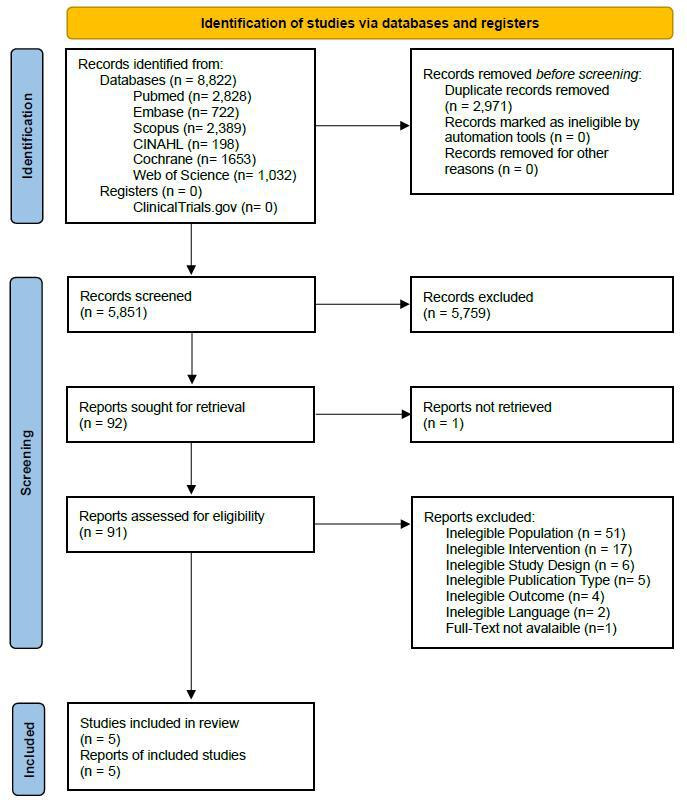
The research performed in six databases identified 8822 records, of which 2971 were duplicates. Therefore, 5851 records were screened by reading title and abstract. 5759 records were excluded, thus having 92 reports to search for retrieval. One of these was not available38 while 86 records were excluded with reasons online supplemental appendix 1 (table S2).
Finally, five studies met the eligibility criteria and were included (see figure 1).
Figure 1. Preferred Reporting Items for Systematic Reviews and Meta-Analyses flow diagram.
Study characteristics
All included studies were parallel RCTs, of which three had three arms39,41 and the remaining two arms.42 43 Among the five studies, one was a pilot RCT41 and another was a feasibility trial.42
The nature of the experimental intervention was the chiropractic treatment supported with physical exercise or advice, which varied for type of techniques, number of sessions and frequency among the studies. Kendall et al42 combined the manual therapy with an instrument-assisted manipulation called Activator II. In the other studies39,4143 the clinicians selected and delivered the therapies according to the patient’s conditions. The duration of the treatment period ranged from 4 to 12 weeks; the number of sessions varied between 4 and 20, lasting 10–20 min.
As far as the control groups, one study43 applied a detuned ultrasound (DU) and another one42 used a sham intervention. On the contrary, the other three trials39,41 conducted alone or supervised physical exercises; moreover, in addition to the exercise group, Hawk et al41 provided an extended schedule of chiropractic techniques. Among the studies, the number of sessions, frequency and duration of the control interventions are too heterogeneous to allow a global summary.
The main outcomes considered in this systematic review are self-reported pain intensity, functionality and quality of life, with the additional focus on other related outcomes and AEs.
The thorough sample size was 676 participants, including 41.6% of women with a mean age of 77.3 (6.26) years. A total of 83 dropouts occurred, with a minimum of 8.3%40 42 and the maximum of 26.5%.41 Considering the type of pain, there were 34 patients with chronic pain condition, 265 with neck pain and 377 with low back pain. For further information see tables1 2.
Table 1. Description of the studies.
| Study ID | Population | Type of intervention | Outcomes | Funding | ||||
|---|---|---|---|---|---|---|---|---|
| First author, yearCountryStudy design | Conditions | Sample size (% gender)/ drop outs (% gender) Mean age | Inclusion criteria | Experimental | Control | Main outcomes (Scale)Other related outcomes (Scale) | Adverse event | |
| Chronic pain | ||||||||
| Hawk, 2009USAPilot RCT41 | Chronic pain, impaired balance | 34/9 (62.3 F) SMT1+LA/13 (31 F) SMT2+LA/15 (73 F) LA+HE/6 (83 F)80.3 | Subjects ≥65 years old and able to attend all scheduled sessions (by self-report).Subjects able to stand steadily without assistance on one leg for an average of less than 5 s | SMT1+LA | SMT2+LA 2. LA+HE | Main outcomes (Scale)Pain (PDI)Balance (BBS)Other related outcomes (Scale) Dizziness (DHI)FallsGeriatric depression (GDS) | Three patients reported minor treatment-related effects (light-headedness, stiffness, joint popping sound), but none lasted longer than 24 hours | Foundation for Chiropractic Education and Research and by Cleveland Chiropractic College, Kansas City, Missouri, USA. |
| Neck pain | ||||||||
| Maiers, 2014USARCT39 | Mechanical neck pain | 241/34 (46.8 F) SMT+HE/80 (45 F) SRE+HE/82 (51.2F) HE/79 (44.3 F)72.3 | Subjects ≥65 years old.Independent ambulation and community dwelling, a stable pain medication plan, and a score of ≥20 points on the Folstein Mini-Mental State Examination. Individuals had to have a primary issue of weekly, mechanical NP, including stiffness or tenderness originating from the spinal joints, discs, vertebrae or soft tissue, with an average rating of ≥3 (0–10) over the previous 2 weeks | SMT+HE | SRE+HE 2. HE | Main outcomes (Scale)Neck pain (11 - box NRS)Functionality (NDI)Quality of life (SF-36)Other related outcomes (Scale) Duration of medical useGlobal improvementSatisfaction with care Biomechanical outcomes | One severe adverse event in SRE+HE groups (a participant fell and fractured his radius while performing study-related exercises). Frequently non-serious adverse events were reported in all three treatment groups (56% in the SMT+HE groups; 90% in SRE+HE group; 58% in the HE group).The most common adverse events in all three groups included an aggravation of neck symptoms, muscle soreness, lower and upper extremity joint pain, back pain, and stiffness. | N/A |
| Kendall, 2018AustraliaFeasibility RCT42 | Chronic dizziness Chronic neck pain | 24/02 (46 F) CI/13 (46 F) SI/11 (46 F)73.4 | Subjects aged between 65 and 85 years. Participants having neck pain with concomitant dizziness, at least of 3 months duration each. Pain and dizziness could be constant or intermittent within the previous 3 months | CI | SI | Main outcomes (Scale)Neck pain (NRS-11)Functionality (NDI)Quality of life (SF-12)Other related outcomes (Scale) Cognitive function (MoCA)Concerns of falling (FES-I)Dizziness (DHI)Dizziness (NRS-11) Mood (DASS-21)Physical function, mobility and balance (TUG) | Six (27%) participants reported AEs.All AEs were mild, including increased neck pain (CI n=2, SI n=1), headache(CI n=1, SI n=1) and mid-back pain(CI n=1). | Chiropractic Research and Postgraduate Education (Denmark), and scholarships RMIT University and the Chiropractors’ Association of Australia. |
| Low back pain | ||||||||
| Dougherty, 2014USARCT43 | Chronic low back pain | 136/18 (1.4 F) SMT+A/69 (98.60 M) SI+HE+ A/67 (98.50 M)77.0 | Subjects ≥65 years old.Subjects with LBP pain ≥3 months in duration, localised pain to the lumbosacral and gluteal regions and no focal radicular symptoms, pain elicited on deep palpation of the lumbar erector spinae musculature, and pain exacerbated or relieved by varying body position.No previous chiropractic careNo additional treatment for CLBP other than that provided in the treatment group for the 12-week duration of the study | SMT | DU | Main outcomes (Scale)Pain (VAS)Pain (SF-36 subscale)Functionality (ODI)Quality of life (SF-36)Other related outcomes (Scale)Physical function (TUG) | 250 AEs were reported.141 AEs (56%) reported in the SMT group, 35 associated with the intervention.109 AEs (44%) reported in the SI group, 10 associated with the intervention.Most AEs were mild-to-moderate and were related to musculoskeletal soreness.Six SAEs reported (five in the SMT group and one in the SI group).None of the SAEs were associated with the study interventions | Drs Dougherty, Dunn and Katz received no financial compensation. Dr Karuza and Ms Savino received only salary support. |
| Schulz, 2019USARCT40 | Subacute or chronic mechanical low back pain | 241/20 (51.4 F) SMT+HEP/81 (56.8 F) SEP+HEP/80 (47.5 F) HEP/80 (50 F)73.6 | Subjects ≥65 years old; independently ambulatory, community dwelling, on a stable pain medication plan, and score of ≥20 points on the Folstein Mini-Mental State Examination; primary issue of subacute or chronic mechanical low back pain (≥6 weeks duration) with no identifiable aetiology, but reproduced by movement or provocation tests; self-reported LBP baseline pain intensity rating ≥3 on a 0–10 Numerical Rating Scale; clinical presentation of LBP meeting Quebec Task Force categories of 1, 2, 3 or 4 | SMT+HEP | SEP+HEP 2. HEP | Main outcomes (Scale)Pain (11- box NRS)Functionality (MRS)Quality of life (SF-36)Other related outcomes (Scale)Improvement (9-point scale)Medication use (5-point scale)Satisfaction with care (7-point scale)Biomechanical outcomes | Six SAEs occurred during the trial, all were determined to be unrelated to study interventions.(Two in HEP group, four in SMT+HEP group, none in SEP+HEP group) | Department of Health and Human Services, Health Resources and Services Administration, Bureau of Health Professions, Division of Medicine and Dentistry under award R18HP01425, and by the National Center for Complementary and Integrative Health under award K01AT008965. |
A, advice; A, Arthritis Foundation brochure about stretching and strengthening exercises; AEs, adverse events; BBS, Berg Balance Scale; BHPr, Bureau of Health Professions; CG, control group; CI, chiropractic intervention; CLBP, chronic low back pain; DASS-21, Depression Anxiety and Stress Scale; DHI, Dizziness Handicap Inventory; DMD, Division of Medicine and Dentistry; DU, detuned ultrasound; E, exercise; F, female; GDS, Geriatric Depression Scale; HE, home exercise; HEP, home exercise programme; HHS, Department of Health and Human Services; HRSA, Health Resources and Services Administration; HVLA, high velocity low-amplitude; IG, intervention group; LA, lifestyle advice; LBP, low back pain; M, male; MoCA, Montreal Cognitive assessment; MRS, 23-item Modified Roland Scale; NDI, Neck Disability Index; NIH, National Institutes of Health; NRS, Numerical Rating Scale; ODI, Oswestry Disability Index; PDI, Pain Disability Index; RCT, randomised controlled trial; RMIT, Royal Melbourne Institute of Technology; SAEs, serious adverse events; SEP, supervised exercise programme; SF-12, Short Form 12-item Health Survey; SF-36, Short Form 36-item Health Survey; SI, sham intervention; SMT2, spinal manipulative treatment for 8 weeks with two visits per week followed by 10 months with one visit per month; SMT, spinal manipulative treatment; SMT1, spinal manipulative treatment for 8 weeks with two visits per week − 16 sessions; SRE, supervised rehabilitative exercise; TUG, Timed Up and Go; VAS, Visual Analogue Scale.
Table 2. Description of the interventions.
| First author, year, Country | Intervention setting | Description, length and duration Intervention (co-intervention) | Description, length and duration comparison | Who delivered intervention | Who delivered comparison | ||
|---|---|---|---|---|---|---|---|
| Chronic pain | |||||||
| Hawk, 200941USA | Office visit | SMT1+LA8 weeks with two visits per week (16 sessions), lasting 20 min. Techniques: extravertebral manipulation to the hip, knee, ankle and foot, and soft tissue treatment such as massage or trigger point therapy and hot packs. | SMT2+LA8 weeks with two visits per week followed by 10 months with one visit per month (extended schedule).Office visits were scheduled for 20 minTechniques: extravertebral manipulation to the hip, knee, ankle and foot and soft tissue treatment such as massage or trigger point therapy and hot packs. | LA+HEPatients received only material (EOI SCALE, Lifestyle advice) and were instructed on doing the home exercises.They only visited the clinic for assessments.Lifestyle advice. Consistent with ‘best practices’ and national guidelines for all providers. | SMT1+LA Clinician | SMT2+LAClinician | LA+HEClinician |
| Neck pain | |||||||
| Maiers, 201439USA | Patients’ home | SMT+HEVariable number and duration of sessions based on each patient (max number of sessions: 20)Treated areas determined with pain provocation and static/motion palpation. Techniques: SMT, light soft tissue massage, assisted stretching, hot and cold packs on cervical and upper thoracic area, same exercises of HE group. | RSE+HE20 sessions lasting 1 hourSame exercises of HE group+individualised exercises: high repetitions of low load exercises, exercises for neck and upper torso endurance, strength, balance, tolerance. | HEFour sessions lasting 45–60 min Individualised exercises with graded progression once 20 repetitions of an exercise could be performed with proper form: head retraction, cervical flexion and extension (either isometric or using resistance tubing), push-ups, chest press and seated upright rows with resistance tubing, full spine flexion/extension motion cycles. | SMT+HE11 chiropractors (experience: min 5 years) | RSE+HE Nine exercise therapists | HENine exercise therapists or chiropractors |
| Kendall, 201842Australia | University campus | CIFour intervention sessions over 4 weeks Duration: 15 min each sessionActivator II+one or more of joint mobilisation, massage, range of motion neck exercises or advice to apply heat at home Chiropractic techniques. | SIFour intervention sessions over 4 weeks,Duration: 15 min each sessionActivator II set at zero+gentle placement of the practitioner on cervical and thoracic spine regionsNo massage, mobilisation or home advice. | CITwo registered practicing chiropractors who each had at least 20 years of clinical experience | SITwo registered practicing chiropractors who each had at least 20 years of clinical experience | ||
| Low back pain | |||||||
| Dougherty, 201443USA | VAMCs | SMT+ATwo times per week for 4 weeks.Techniques: HVLA, spinal manipulation, and/or flexion distraction therapy and/or mobilisation used alone or in combination based on the clinician’s judgment. +Arthritis Foundation brochure that contained stretching and strengthening exercises. | DU+ATwo times per week for 4 weeks (eight sessions). Technique: ‘Detuned ultrasound’ applied over the lumbar spine for 11 min+brochure that contained stretching and strengthening exercises. | SMT+ATwo chiropractors with 7 and 17 years of experience, respectively | DU+AThe same chiropractors of the intervention group | ||
| Schulz, 201940USA | Northwestern Health Sciences University | SMT+HEPUp to 20 sessions10–20 min per sessionTwo times/week Techniques: manual treatment based on physical condition and toleranceUp to 4 min of adjunct therapies (light soft tissue massage, active and passive stretching, ischaemic compression of tender points, ice and heat) HVLA. | SEP+HEP20 sessions60 min per sessionOne time/weekSelf-care of painlight aerobic warm up on stationary equipmentInstruction, monitoring and encouragement in low load exercise with graded progressions to increase strength Stretching, strength and balance exercises as described for HEP. | HEPFour sessions45–60 min per sessionOne time/week Self-care of pain Instructions in low load exercises stretching, muscle strength, endurance and balance exercises. | SMT+HEP11 licensed chiropractors with a minimum of 5 years practice experience | SEP+HEPNine exercise therapists and two chiropractors | |
A, advice; CI, chiropractic intervention; DU, detuned ultrasound; E, exercise; EOI, Expectation of Improvement scale; HE, home exercise; HEP, home exercise programme; HVLA, high velocity low-amplitude; LA, lifestyle advice; SEP, supervised exercise programme; SI, sham intervention; SMT, spinal manipulative treatment; SRE, supervised rehabilitative exercise; VAMCs, Veterans Affairs Medical Centres.
Risk of bias in studies
In this systematic review, the RoB 2 was used for the assessment of the methodological quality of the included studies. The inter-rater reliability for the risk of bias was determined to be substantial, with a Fleiss’ Kappa of 0.67 (95% CI 0.34 to 0.99). None of them had a low risk of bias; 3 (60%) studies showed a high risk of bias40,42 while the other 40% had some concerns39 43 (see figures2 3).
Figure 2. Risk of bias assessment graph of the included studies: traffic light plot.

Figure 3. Risk of bias assessment graph of the included studies: summary plot.

Regarding bias arising from the randomisation process, 4 (80%) studies presented a low risk of bias39 40 42 43 and only Hawk et al41 (20%) was judged with a high risk because, although the randomisation method was correct, they did not provide any information about allocation concealment. Furthermore, the groups at baseline were unbalanced in terms of both the number of participants and their characteristics.
In terms of bias due to deviations from intended interventions, due to the nature of the manual interventions, it was impossible to blind those delivering the treatments; however, 3 (60%) studies showed a low risk of bias.39 41 43 Only 1 (20%) study42 could blind the participants but was judged with some concerns because the authors did not use the intention to treat analysis. Schulz et al40 (20%) used the correct analysis but had deviations from the interventions, particularly in the experimental group, so it was judged with high risk of bias. Concerning bias due to missing outcome data, all studies had dropouts, but 3 (60%) used analysis methods that corrected for bias,39 40 43 while the other 2 (40%) studies41 42 were assessed with some concerns. Regarding bias in the measurement of the outcome, all studies used participant-reported outcomes; however, only 1 (20%) study blinded the participants, thus having a low risk of bias.42 Due to the nature of the outcome measurement and the lack of blinding for the participants, the other 4 (80%) studies were considered with some concerns.39,4143
Finally, with regard to bias in the selection of reported results, 3 (60%) studies followed their prespecified analysis plan and were evaluated with low risk of bias.39 40 43 Kendall et al (20%) had a high risk of bias due to the incongruencies with its protocol, such as planning to use inferential statistical analysis but only showing descriptive statistics.42 Hawk et al (20%) did not provide any information about its protocol, so it was assessed with some concerns.41
Results of individual studies
Due to the substantial differences in PICO parameters across the included studies, a meta-analysis could not be performed. Consequently, the results and effect size estimates for the main outcomes—pain intensity, functionality and quality of life—were reported individually whenever possible. Four studies39 40 42 43 provided sufficient data for this analysis, while one study41 could only be described narratively due to limited data availability. Further details can be found in online supplemental appendix 2.
Neck pain condition
Maiers et al39 assessed neck pain intensity with NRS-11 at 12, 26 and 52 weeks, resulting in a statistically significant improvement only at week 12 for spinal manipulative treatment (SMT)+home exercise (HE) compared with HE alone (ES=–0.90 (95% CI –1.46 to –0.34); p=0.002). Among the other related outcomes, satisfaction with care at 12 and 26 weeks and global improvement at 12, 26 and 52 weeks showed statistically significant improvement. When comparing SMT+HE versus supervised rehabilitative exercise+HE statistically significant results were reported only for duration of medication use at 52 weeks.39
All the other outcomes were not statistically significant. Despite the statistically significant improvement in pain intensity observed the MCID for pain was not reached, nor was it reached for the other outcomes assessed in the study.
Also, Kendall et al42 took into consideration the neck pain condition treated with the chiropractic intervention compared with sham. The authors had not performed any inferential statistics, reporting only mean and SD, nevertheless we could use the provided data to calculate the effect estimates for pain intensity, as well as quality of life. However, none of the results were statistically significant at 5 weeks (1 week after 4-week intervention). Regarding the MCID, the results for the various outcomes do not show a clinically important difference.
Low back pain condition
Two studies recruited patients with low back pain.40 43 In Schulz et al40 statistically significant pain reduction at 12 weeks was observed only in the SMT+HEP versus HEP (ES=−0.79 (95% CI −1.39 to –0.19); p=0.010). No significant differences were found between the SMT+HEP group compared with HEP and for SMT+HEP compared with SEP+HEP group, for pain reduction at other time points or for functional status and quality of life.
Similarly, Dougherty et al43 assessed pain intensity, functional status and quality of life at 5 and 12-week follow-up with not statistically significant results for SMT compared with the DU. Consistent with the MCID assessment, the results do not demonstrate a clinically meaningful difference across each of the outcomes evaluated.
Chronic pain
Only one study41 considered patients with a condition of chronic pain associated with dizziness comparing the effect of SMT to HE. For none of the outcomes were the results statistically significant. Finally, it has not been possible to provide the effect estimate and its precision as the authors had not provided enough data in their study and did not reply when contacted. Evaluation of the MCID was not feasible owing to insufficient data.
Adverse events
The cervical area is the most investigated region in studies on serious AEs and the riskiest in high velocity low amplitude techniques.44,46 In the analysed studies and, especially in the elderly population, these types of techniques are less indicated.47 All the included studies reported information about AEs and, despite this risk, only one study40 showed six serious AEs (four in SMT group and two in HEP group) during the trial that were all determined to be unrelated to study interventions.
The other four studies reported no serious treatment-related AEs, except for Maiers et al39 that reported one patient with a fracture of the radius during supervised exercises. Other patients declared mild AEs including aggravation of neck symptoms, muscle soreness, lower and upper extremity joint pain, back pain and stiffness.
Hawk et al41 reported lightheadedness, stiffness, joint popping sound in three patients allocated in the study group, but none lasted longer than 24 hours.
Dougherty et al43 reported a higher frequency of mild to moderate AEs in the study group (56%) than the sham group (44%), all related to musculoskeletal soreness.
Kendall et al42 informed that 27% of patients reported mild AEs (four in chiropractic group and two in sham group) as increased neck pain, headache and mid-back pain. MMs are proven to be mostly safe and suitable for the elderly population. Details of the effect estimate and MCID for the main outcome of each study are reported in table 3. Forest plots of effect estimates for all outcomes (main and other related outcomes) are reported in online supplemental appendix 2.
Table 3. Results of effect estimate for primary studies.
| First author, yearCountry | Statistical methodMean difference (IV, fixed, 95% CI)Effect estimate - p valueMCID | Conclusions | ||
|---|---|---|---|---|
| Comparison - main outcomes | MCID | MCID reached? | ||
| Neck pain | ||||
| Maiers, 201439USA | SMT+HE vs HE | SMT with home exercise resulted in greater decreases in pain after 12 weeks of treatment compared with both the supervised plus home exercise and the home exercise–alone groups. Supervised exercise sessions appear to add little to home exercise alone. There were no long-term differences in pain between groups. | ||
| Neck pain (NRS) | ||||
| At 12 weeks end of intervention −0.90 (−1.46 to –0.34) p=0.002 | 3.1 | No | ||
| At 26 weeks follow-up −0.40 (−1.01 to 0.21) p=0.20 | 2.5 | No | ||
| At 52 weeks follow-up −0.10 (−0.72 to 0.52) p=0.75 | 2.5 | No | ||
| Functionality (NDI) | ||||
| At 12 weeks end of intervention −2.50 (−5.76 to 0.76) p=0.13 | 5.5 | No | ||
| At 26 weeks follow-up −2.90 (−6.51 to 0.71) p=0.12 | 5.5 | No | ||
| At 52 weeks follow-up −2.50 (−6.21 to 1.21) p=0.19 | 5.5 | No | ||
| Quality of life (SF-36) | ||||
| Physical component | ||||
| At 12 weeks end of intervention −1.70 (−0.76 to 4.16) p=0.18 | 5.1 | No | ||
| At 26 weeks follow-up −1.70 (−0.90 to 4.30) p=0.20 | 5.1 | No | ||
| At 52 weeks follow-up −1.10 (−1.74 to 3.94) p=0.45 | 5.1 | No | ||
| Mental component | ||||
| At 12 weeks end of intervention −0.30 (−2.79 to 2.19) p=0.81 | 4.0 | No | ||
| At 26 weeks follow-up 0.80 (−1.83 to 3.43) p=0.55 | 4.0 | No | ||
| At 52 weeks follow-up 0.30 (−2.28 to 2.88) p=0.82 | 4.0 | No | ||
| SMT+HE vs SRE+HE | ||||
| Neck pain (NRS) | ||||
| At 12 weeks end of intervention −0.40 (−0.96 to –0.16) p=0.16 | 3.1 | No | ||
| At 26 weeks follow-up −0.30 (−0.90 to 0.30) p=0.33 | 2.5 | No | ||
| At 52 weeks follow-up −0.10 (−0.49 to 0.69) p=0.74 | 2.5 | No | ||
| Functionality (NDI) | ||||
| At 12 weeks end of intervention −0.30 (−3.10 to 2.50) p=0.83 | 5.5 | No | ||
| At 26 weeks follow-up −2.30 (−5.80 to 1.20) p=0.20 | 5.5 | No | ||
| At 52 weeks follow-up −0.80 (−4.30 to 2.70) p=0.65 | 5.5 | No | ||
| Quality of life (SF-36) | ||||
| Physical component | ||||
| At 12 weeks end of intervention −0.40 (−1.98 to 2.78) p=0.74 | 5.1 | No | ||
| At 26 weeks follow-up −0.70 (−1.82 to 3.22) p=0.59 | 5.1 | No | ||
| At 52 weeks follow-up 0.80 (−1.97 to 3.57) p=0.57 | 5.1 | No | ||
| Mental component | ||||
| At 12 weeks end of intervention −0.80 (−3.36 to 1.76) p=0.54 | 4.0 | No | ||
| At 26 weeks follow-up 0.90 (−1.70 to 3.50) p=0.50 | 4.0 | No | ||
| At 52 weeks follow-up 0.40 (−3.06 to 2.26) p=0.77 | 4.0 | No | ||
| Kendall, 201842Australia | CI vs SI | Recruitment of participants in this setting was difficult and expensive. However, a larger trial may be feasible at a specialised dizziness clinic within a rehabilitation setting. Compliance was acceptable and the outcome measures used were well accepted and responsive. | ||
| Joint pain (NRS)Follow-up (1-week post intervention) −0.38 (−2.49 to 1.73) p=0.72 | 3.1 | No | ||
| Neck pain (NRS)Follow-up (1-week post intervention) −0.85 (−2.78 to 1.08) p=0.39 | 3.15.5 | NoNo | ||
| Functionality (NDI)Follow-up (1-week post intervention) −3.73 (−11.78 to 4.32) p=0.36 | ||||
| Quality of life (SF-12)* | ||||
| Physical componentFollow-up (1-week post intervention) 3.78 (−5.07 to 12.63) p=0.40 | 3.3 | No† | ||
| Mental componentFollow-up (1-week post intervention) 2.92 (−4.68 to 10.52) p=0.45 | 3.8 | No | ||
| Low back pain | ||||
| Dougherty, 201443USA | SMT vs DU | The SMT did not result in greater improvement in pain when compared with our sham intervention.SMT did demonstrate a slightly greater improvement in disability at 12 weeks. The fact that patients in both groups showed improvements suggests the presence of a nonspecific therapeutic effect. | ||
| Pain (VAS) | ||||
| 5 weeks follow-up −2.48 (−9.87 to 4.91) p=0.51 | 3.1 | No | ||
| 12 weeks follow-up −2.22 (−9.96 to 5.52) p=0.57 | 3.1 | No | ||
| Functionality (ODI) | ||||
| 5 weeks follow-up −0.90 (−5.41 to 3.61) p=0.70 | 8.0 | No | ||
| 12 weeks follow-up −4.10 (−8.82 to 0.62) p=0.09 | 8.0 | No | ||
| Quality of life (SF-36) | ||||
| Physical component | ||||
| 5 weeks follow-up 0.01 (−0.15 to 0.17) p=0.90 | 5.0 | No | ||
| 12 weeks follow-up −0.01 (−0.18 to 0.16) p=0.91 | 5.0 | No | ||
| Schulz, 201940USA | SMT+HEP vs HEP | Adding spinal manipulation or supervised rehabilitative exercise to home exercise alone does not appear to improve pain or disability in the short- or long-term for older adults with chronic low back pain, but did enhance satisfaction with care. | ||
| Pain (VAS) | ||||
| At 12 weeks (end of intervention) −0.79 (−1.39 to –0.19) p=0.010 | 3.1 | No | ||
| At 26 weeks follow-up 0.12 (−0.49 to 0.73) p=0.70 | 2.5 | No | ||
| At 52 weeks follow-up 0.13 (−0.46 to 0.72) p=0.67 | 2.5 | No | ||
| Functionality (MRS) | ||||
| At 12 weeks (end of intervention) −0.10 (−5.46 to 5.26) p=0.97 | NA‡ | NR | ||
| At 26 weeks follow-up −4.80 (−10.09 to 0.49) p=0.08 | NA‡ | NR | ||
| At 52 weeks follow-up 1.40 (−5.97 to 8.88) p=0.71 | NA‡ | NR | ||
| Quality of life (SF-36) | ||||
| Physical component | ||||
| At 12 weeks (end of intervention) 0.50 (−1.38 to 2.38) p=0.60 | 5.0 | No | ||
| At 26 weeks follow-up −0.30 (−2.25 to 1.65) p=0.76 | 5.0 | No | ||
| At 52 weeks follow-up −1.50 (−3.45 to 0.45) p=0.13 | 5.0 | No | ||
| Mental component | ||||
| At 12 weeks (end of intervention) 0.10 (−1.71 to 1.91) p=0.91 | 3.6 | No | ||
| At 26 weeks follow-up 1.70 (−0.18 to 3.58) p=0.08 | 3.6 | No | ||
| At 52 weeks follow-up −0.80 (−2.61 to 1.01) p=0.39 | 3.6 | No | ||
| SMT+HEP vs SEP+HEP | ||||
| Pain (VAS) | ||||
| At 12 weeks (end of intervention) −0.40 (−0.99 to 0.19) p=0.18 | 3.1 | No | ||
| At 26 weeks follow-up −0.06 (−0.54 to 0.66) p=0.84 | 2.5 | No | ||
| At 52 weeks follow-up −0.13 (−0.72 to 0.46) p=0.67 | 2.5 | No | ||
| Functionality (MRS) | ||||
| At 12 weeks (end of intervention) 4.60 (−0.69 to 9.89) p=0.09 | NA‡ | NR | ||
| At 26 weeks follow-up −1.10 (−6.46 to 4.26) p=0.69 | NA‡ | NR | ||
| At 52 weeks follow-up 0.90 (−4.46 to 6.26) p=0.74 | NA‡ | NR | ||
| Quality of life (SF-36) | ||||
| Physical component | ||||
| At 12 weeks (end of intervention) −0.80 (−2.61 to 1.01) p=0.39 | 5.0 | No | ||
| At 26 weeks follow-up −1.30 (−3.18 to 0.58) p=0.18 | 5.0 | No | ||
| At 52 weeks follow-up −1.70 (−3.65 to 0.25) p=0.09 | 5.0 | No | ||
| Mental component | ||||
| At 12 weeks (end of intervention) 0.50 (−1.31 to 2.31) p=0.59 | 3.6 | No | ||
| At 26 weeks follow-up 1.30 (−0.58 to 3.18) p=0.18 | 3.6 | No | ||
| At 52 weeks follow-up −1.70 (−3.51 to 0.11) p=0.07 | 3.6 | No | ||
| Chronic pain | ||||
| Hawk, 200941USA | Pain (PDI)At 52 weeks p=0.06Balance (BBS)At 52 weeks p>0.05 | NR§ | No difference in outcomes between patients treated with HVLA and modified force techniques, no adverse events associated with either treatment approach. The group on the extended care schedule, pain and disability decreased and remained at a lower level than for the limited care schedule, for the follow-up. The decrease in dizziness over time with both chiropractic care schedules. | |
MCID for SF-12 was considered for chronic low back pain.
No statistically significant difference in CI versus SI.
MCID was not reported for MRS.
MCID could not be reported due to lack of data.
BBS, Berg Balance Scale; CI, chiropractic intervention; DU, detuned ultrasound; HE, home exercise; HEP, home exercise programme; HVLA, high velocity low-amplitude; LBP, low back pain; MCID, minimum clinically important difference; MRS, 23-item Modified Roland Scale; NA, not applicable; NDI, Neck Disability Index; NR, not reported; NRS, Numerical Rating Scale; ODI, Oswestry Disability Index; PDI, Pain Disability Index; SEP, supervised exercise programme; SF-12, Short Form 12-item Health Survey; SF-36, Short Form 36-item Health Survey; SI, sham intervention; SMT, spinal manipulative treatment; SRE, supervised rehabilitative exercise; VAS, Visual Analogue Scale.
Discussion
This systematic review examines the controversial findings on pain and disability outcomes in older adults with musculoskeletal disorders—such as neck pain, low back pain and chronic pain—treated with chiropractic care. First, Maiers et al39 reported a statistically significant improvement in neck pain intensity at 12 weeks in patients receiving SMT combined with HE compared with HE alone. Additionally, patient satisfaction with care and global improvement were also significantly enhanced across multiple time points in this study. Second, Schulz et al40 demonstrated a statistically significant reduction in low back pain intensity at 12 weeks post-intervention in patients treated with SMT+HEP compared with HEP alone. Although two studies reported significant pain intensity improvements, statistically significant changes in functional status and quality of life were not consistently observed across all studies in any time points reported.39,41 Moreover, no clinically relevant reductions were noted in any outcomes analysed based on the MCID, though these findings should be interpreted cautiously due to patient variability and frequent comorbidities.
Non-specific musculoskeletal pain in the elderly presents challenges in managing polypharmacy.48 Literature reviews confirm that low back and neck pain significantly impact quality of life, independence and social participation,49 highlighting the need for non-pharmacological treatment options.
Systematic reviews suggest that MM and exercise are effective for chronic low back pain.50 51 Studies indicate that MM combined with HE can enhance pain reduction compared with exercise alone.39 However, other findings suggest no significant difference between MM and supervised physical exercise, implying comparable efficacy.40 One study also shows no superior pain reduction from MM compared with UC.43
These findings align with existing literature, indicating modest short-term pain and functional improvements.
Chronic pain in older adults is often linked to symptoms like dizziness and fear of falling. Some research suggests chiropractic care may help, with extended-care patients experiencing sustained pain and disability reduction.41 However, dizziness due to vestibular or neurological issues is unlikely to benefit, while dizziness linked to postural hypotension or polypharmacy may improve with MM. No significant differences in fall risk were noted between treatment and sham groups.42 The therapeutic effects of MM are likely mediated by neurophysiological mechanisms on pain and disability.52 53 Ageing alters pain perception due to weakened descending inhibition, fibre degeneration and neurotransmitter declines. MM modulates pain at the spinal level, regulates descending circuits, releases analgesic neurotransmitters and reduces inflammation, explaining its efficacy in treating musculoskeletal pain. Additionally, MM may influence sensorimotor integration, spinal excitability and autonomic function, contributing to its therapeutic effects.54,58
Beyond pain relief, MM enhances functionality by improving motor control, reducing peripheral sensitisation and promoting proprioception. It also induces biochemical and psychological benefits, such as endorphin release, inflammation reduction, sleep improvement and reduced fear of movement.59,64 These effects make MM a valuable approach to maintain independence in older adults.
Quality of life extends beyond pain management and is influenced by mobility, emotional well-being and sleep. By regulating the central nervous system, reducing stress and enhancing mood, MM may contribute to improving overall health outcomes, though individual responses vary.
This review highlights a critical gap in high-quality research about the effects of MM on quality of life, pain, function and safety in older adults. Despite limitations, integrating MM with therapeutic exercise appears promising, showing potential for pain reduction and improved lumbar function.65
The most critical methodological issues identified using the RoB 2 tool include: in Kendall et al42 a discrepancy between the statistical analysis and the study protocol, in Hawk et al41 a lack of transparency, as no protocol was mentioned, and the results section did not follow the Consolidated Standards of Reporting Trials statement66 or its earlier version, which recommends reporting the estimated effect size and its precision67 and in Dougherty et al43 a misinterpretation of placebo/sham intervention.68 They used DU as a sham comparator for spinal manipulation, which, although appearing inert, did not match the active treatment, compromising blinding. A significant discrepancy was also noted between our risk of bias assessment and that of previous reviews. In Hawk et al’s systematic review,28 Dougherty et al43 was rated as a high-quality study, whereas our assessment raised some concerns. This difference may stem from Hawk’s use of the 2011 Cochrane RoB tool,69 whereas we applied the more recent RoB 2.30 Methodological concerns remain, particularly regarding risk of bias. Issues include statistical discrepancies, lack of study protocol transparency and misinterpretation of placebo/sham interventions. Differences in bias assessments across reviews likely stem from variations in risk assessment tools, with newer methodologies revealing lower study quality ratings. To date, no study in this field has achieved a high methodological quality rating.
Given the relatively low risk of AEs of MM, it may serve as a complementary therapy to reduce medication use, enhance functionality and improve quality of life. Additionally, MM may aid in managing anxiety, depression, fatigue and sleep quality, serving as a preventive tool in elderly care. This is particularly important considering the potential adverse effects and hospitalisations associated with pharmacological treatments.70
However, a standardised dosage is not advisable. Instead, a tailored and careful approach is crucial. Experienced practitioners are essential to adapt techniques to individual needs, maximising safety and treatment efficacy. Moreover, the prevalence of comorbidities in this population, often linked to musculoskeletal disorders, requires personalised treatment strategies, making a uniform approach difficult.71 Instead, MM should be tailored to each patient’s needs, with experienced practitioners ensuring safety and effectiveness.
MM in the elderly is indicated in several conditions and in particular in skeletal muscle pain, joint and mobility problems, postural disorders and spinal column, after hospitalisation, in the prevention of falls and balance disorders, stress and quality of life.
The studies collectively suggest that MMs are generally associated with mild and transient AEs, such as soreness and symptom aggravation, which are expected reactions to these therapies. However, the occurrence of serious AEs, as seen in Schulz et al40 and Maiers et al,39 underscores the importance of individualised treatment planning and vigilance, particularly for elderly patients with complex health profiles. Authors such as Hawk et al41 and Kendall et al42 demonstrate that careful application and patient monitoring can minimise risks, while Dougherty et al43 and Maiers et al39 emphasise the need to balance therapeutic benefits with the possibility of temporary discomfort or serious events. Schulz et al’s40 findings, in particular, highlight the need for a multidisciplinary approach in the management of elderly patients, considering their susceptibility to non-treatment-related adverse health outcomes.
The main ‘red flags’ of the MM on the elderly are the risks of fractures or severe osteoporosis, cardiovascular diseases such as uncontrolled hypertension or acute conditions or cardiovascular risk or embolic risks such as deep vein thrombosis, acute neurological problems such as previous stroke, peripheral neuropathy, severe cervical spondylosis or spinal stenosis, inflammatory diseases such as active rheumatoid arthritis or bone infections, bone tumours or metastases, ligamentous or tendon lesions and acute vestibular or balance disorders.
One of the main challenges in studying AEs is the absence of standardised definitions for manual therapies in the literature, making it difficult to precisely identify the specific intervention used. Additionally, minor AEs may often go unreported, as clinicians might underestimate their significance.72 73
To ensure safety in the elderly, MMs should be performed with great care and caution, carefully considering the patient’s clinical condition. It is essential that the practitioner performing the manipulation takes into account all risk factors, customising treatment and closely monitoring the patient’s response. Collaboration between healthcare professionals is crucial to maximise benefits and reduce risks.
Limitations
Some limitations can be found in our systematic review. First, the decision to include only some MM therapies. Specifically, we have decided to evaluate the benefit and safety of manipulative therapy such as osteopathy, chiropractic, myofascial release and craniosacral therapy. We excluded all the mind-body therapies (ie, meditation, yoga, tai chi), biological-based practice (ie, vitamins, dietary supplements, botanicals), ayurvedic medicine, traditional Chinese medicine (acupuncture) and naturopathic medicine. This decision may have an impact in terms of investigating the overall effect of the complementary therapies and especially which one is more beneficial for musculoskeletal problems in elderly people. Second, our search strategy did not consider the grey literature, which could have led to the exclusion of some unpublished studies. Thus, we doubt any missed articles would have a major impact on our results.
Furthermore, due to the heterogeneity of population, outcomes measures and some relevant aspects of trial quality, pooling data was neither possible nor appropriate.
Nevertheless, despite improvements in study quality over the past decade, the studies included in this review were deemed to meet only the minimum requirements. This represents an important limitation, as three studies were classified as having an overall high risk of bias,40,42 while only two studies were assessed as having some concerns.39 43 Overall, the heterogeneity and varying methodological quality of the studies may limit the strength of the conclusions that can be drawn from these data.
Another limitation was not investigating the cost of illness of these musculoskeletal disorders. The economic burden of these conditions is enormous, second only to those of cardiovascular illness.48 The presence of comorbidities in the elderly makes the management of these conditions difficult and more challenging. As most musculoskeletal problems remain fairly common in the elderly population, there will be a further need for healthcare professionals, especially for manual practitioners, to deal with these chronic disorders.
Conclusion
In terms of MM, chiropractic therapy and manipulative therapy have been more investigated compared with osteopathy, especially in recent years. In conclusion, our systematic review highlights the need for further investigation into complementary therapies, particularly osteopathy, for chronic pain management and prevention in elderly individuals. The results of the current work emphasise that there is a need to further investigate this topic and move the focus more on the promotion of healthy and management behaviours (eg, more physical activity, self-efficacy and adaptive coping, less healthcare utilisation, medication use) and less on the pain symptoms.
The fundamental need for complementary medicine, and in particular MM such as chiropractic care and osteopathic manipulative treatment, is the development of clinical trials and RCTs to assess efficacy on quality of life, pain, functionality and general health of the elderly patient. These will help us to determine where MM can be significant.
Supplementary material
Acknowledgements
Authors wish to thank Dr Chiara Arienti for her valuable support in the statistical analysis of the primary studies results.
Footnotes
Funding: This work was supported by the Italian Ministry of Health - Ricerca Corrente.
Prepub: Prepublication history and additional supplemental material for this paper are available online. To view these files, please visit the journal online (https://doi.org/10.1136/bmjopen-2024-088655).
Provenance and peer review: Not commissioned; externally peer reviewed.
Patient consent for publication: Not applicable.
Ethics approval: Not applicable.
Patient and public involvement: Patients and/or the public were not involved in the design, or conduct, or reporting, or dissemination plans of this research.
Data availability statement
All data relevant to the study are included in the article or uploaded as supplementary information.
References
- 1.World Health Organization Ageing and Health. 2021. https://www.who.int/news-room/fact-sheets/detail/ageing-and-health Available.
- 2.World Health Organization Global health estimates: deaths, DALYs, YLL and YLD, by cause, age, sex and regional grouping. 2000. http://www.who.int/healthinfo/global_burden_disease/en Available.
- 3.American Osteopathic Association Osteopathic Medical Profession Report. 2023. https://osteopathic.org/ Available.
- 4.Noto S. Perspectives on Aging and Quality of Life. Healthcare (Basel) 2023;11:2131. doi: 10.3390/healthcare11152131. [DOI] [PMC free article] [PubMed] [Google Scholar]
- 5.Picavet HSJ, Hazes JMW. Prevalence of self reported musculoskeletal diseases is high. Ann Rheum Dis. 2003;62:644–50. doi: 10.1136/ard.62.7.644. [DOI] [PMC free article] [PubMed] [Google Scholar]
- 6.Cross M, Smith E, Hoy D, et al. The global burden of hip and knee osteoarthritis: estimates from the global burden of disease 2010 study. Ann Rheum Dis. 2014;73:1323–30. doi: 10.1136/annrheumdis-2013-204763. [DOI] [PubMed] [Google Scholar]
- 7.Woolf AD, Pfleger B. Burden of major musculoskeletal conditions. Bull World Health Organ. 2003;81:646–56. [PMC free article] [PubMed] [Google Scholar]
- 8.Neogi T. The epidemiology and impact of pain in osteoarthritis. Osteoarthr Cartil. 2013;21:1145–53. doi: 10.1016/j.joca.2013.03.018. [DOI] [PMC free article] [PubMed] [Google Scholar]
- 9.Wong AY, Karppinen J, Samartzis D. Low back pain in older adults: risk factors, management options and future directions. Scoliosis Spinal Disord. 2017;12:14. doi: 10.1186/s13013-017-0121-3. [DOI] [PMC free article] [PubMed] [Google Scholar]
- 10.de Souza IMB, Sakaguchi TF, Yuan SLK, et al. Prevalence of low back pain in the elderly population: a systematic review. Clinics (Sao Paulo) 2019;74:e789. doi: 10.6061/clinics/2019/e789. [DOI] [PMC free article] [PubMed] [Google Scholar]
- 11.Nahin RL. Estimates of pain prevalence and severity in adults: United States, 2012. J Pain. 2015;16:769–80. doi: 10.1016/j.jpain.2015.05.002. [DOI] [PMC free article] [PubMed] [Google Scholar]
- 12.Cruz-Almeida Y, Rosso A, Marcum Z, et al. Associations of Musculoskeletal Pain With Mobility in Older Adults: Potential Cerebral Mechanisms. J Gerontol A Biol Sci Med Sci. 2017;72:1270–6. doi: 10.1093/gerona/glx084. [DOI] [PMC free article] [PubMed] [Google Scholar]
- 13.Committee on Advancing Pain Research, Care, and Education; Board on Health Sciences Policy . Relieving pain in America: a blueprint for transforming prevention, care, education, and research. Washington, DC: National Academies Press; 2011. [PubMed] [Google Scholar]
- 14.Hung WW, Ross JS, Boockvar KS, et al. Recent trends in chronic disease, impairment and disability among older adults in the United States. BMC Geriatr. 2011;11:1–12. doi: 10.1186/1471-2318-11-47. [DOI] [PMC free article] [PubMed] [Google Scholar]
- 15.Salive ME. Multimorbidity in older adults. Epidemiol Rev. 2013;35:75–83. doi: 10.1093/epirev/mxs009. [DOI] [PubMed] [Google Scholar]
- 16.Qato DM, Alexander GC, Conti RM, et al. Use of prescription and over-the-counter medications and dietary supplements among older adults in the United States. JAMA. 2008;300:2867–78. doi: 10.1001/jama.2008.892. [DOI] [PMC free article] [PubMed] [Google Scholar]
- 17.Kojima T, Akishita M, Nakamura T, et al. Polypharmacy as a risk for fall occurrence in geriatric outpatients. Geriatrics Gerontology Int . 2012;12:425–30. doi: 10.1111/j.1447-0594.2011.00783.x. [DOI] [PubMed] [Google Scholar]
- 18.Persons O. Pharmacological Management of Persistent Pain in Older Persons. J Am Geriatr Soc. 2009;57:1331–46. doi: 10.1111/j.1532-5415.2009.02376.x. [DOI] [PubMed] [Google Scholar]
- 19.Moffatt F, Goodwin R, Hendrick P. Physiotherapy-as-first-point-of-contact-service for patients with musculoskeletal complaints: understanding the challenges of implementation. Prim Health Care Res Dev . 2018;19:121–30. doi: 10.1017/S1463423617000615. [DOI] [PMC free article] [PubMed] [Google Scholar]
- 20.Najafi Ghezeljeh T, Mohades Ardebili F, Rafii F. The effects of massage and music on pain, anxiety and relaxation in burn patients: Randomized controlled clinical trial. Burns. 2017;43:1034–43. doi: 10.1016/j.burns.2017.01.011. [DOI] [PubMed] [Google Scholar]
- 21.Kim D-W, Lee DW, Schreiber J, et al. Integrative Evaluation of Automated Massage Combined with Thermotherapy: Physical, Physiological, and Psychological Viewpoints. Biomed Res Int. 2016;2016:2826905. doi: 10.1155/2016/2826905. [DOI] [PMC free article] [PubMed] [Google Scholar]
- 22.Coulter ID, Crawford C, Hurwitz EL, et al. Manipulation and mobilization for treating chronic low back pain: a systematic review and meta-analysis. Spine J. 2018;18:866–79. doi: 10.1016/j.spinee.2018.01.013. [DOI] [PMC free article] [PubMed] [Google Scholar]
- 23.Rubinstein SM, de Zoete A, van Middelkoop M, et al. Benefits and harms of spinal manipulative therapy for the treatment of chronic low back pain: systematic review and meta-analysis of randomised controlled trials. BMJ. 2019;364:l689. doi: 10.1136/bmj.l689. [DOI] [PMC free article] [PubMed] [Google Scholar]
- 24.Dal Farra F, Risio RG, Vismara L, et al. Effectiveness of osteopathic interventions in chronic non-specific low back pain: A systematic review and meta-analysis. Complement Ther Med. 2021;56:S0965-2299(20)31883-5. doi: 10.1016/j.ctim.2020.102616. [DOI] [PubMed] [Google Scholar]
- 25.Bagagiolo D, Rosa D, Borrelli F. Efficacy and safety of osteopathic manipulative treatment: an overview of systematic reviews. BMJ Open. 2022;12:e053468. doi: 10.1136/bmjopen-2021-053468. [DOI] [PMC free article] [PubMed] [Google Scholar]
- 26.Channell MK, Wang Y, McLaughlin MH, et al. Osteopathic Manipulative Treatment for Older Patients: A National Survey of Osteopathic Physicians. J Am Osteopath Assoc. 2016;116:136–43. doi: 10.7556/jaoa.2016.030. [DOI] [PubMed] [Google Scholar]
- 27.Kizhakkeveettil A, Bezdjian S, Hurwitz EL, et al. Spinal Manipulation vs Prescription Drug Therapy for Chronic Low Back Pain: Beliefs, Satisfaction With Care, and Qualify of Life Among Older Medicare Beneficiaries. J Manipulative Physiol Ther. 2021;44:663–73. doi: 10.1016/j.jmpt.2021.12.007. [DOI] [PubMed] [Google Scholar]
- 28.Hawk C, Schneider M, Dougherty P, et al. Best practices recommendations for chiropractic care for older adults: results of a consensus process. J Manipulative Physiol Ther. 2010;33:464–73. doi: 10.1016/j.jmpt.2010.06.010. [DOI] [PubMed] [Google Scholar]
- 29.Jenks A, de Zoete A, van Tulder M, et al. Spinal manipulative therapy in older adults with chronic low back pain: an individual participant data meta-analysis. Eur Spine J. 2022;31:1821–45. doi: 10.1007/s00586-022-07210-1. [DOI] [PubMed] [Google Scholar]
- 30.Chandler J, Cumpston M, Li T. Cochrane handbook for systematic reviews of interventions
- 31.Page MJ, Moher D, Bossuyt PM, et al. PRISMA 2020 explanation and elaboration: updated guidance and exemplars for reporting systematic reviews. BMJ. 2021;372:n160. doi: 10.1136/bmj.n160. [DOI] [PMC free article] [PubMed] [Google Scholar]
- 32.PRISMA statement. 2024. https://www.prisma-statement.org Available.
- 33.Higgins JP, Savović J, Page MJ, et al. Cochrane handbook for systematic reviews of interventions. 2019. Assessing risk of bias in a randomized trial; pp. 205–28. [Google Scholar]
- 34.Fleiss JL. Measuring nominal scale agreement among many raters. Psychol Bull. 1971;76:378–82. doi: 10.1037/h0031619. [DOI] [Google Scholar]
- 35.Olsen MF, Bjerre E, Hansen MD, et al. Minimum clinically important differences in chronic pain vary considerably by baseline pain and methodological factors: systematic review of empirical studies. J Clin Epidemiol. 2018;101:87–106. doi: 10.1016/j.jclinepi.2018.05.007. [DOI] [PubMed] [Google Scholar]
- 36.Lee Y-S, Lee S, Lee YJ, et al. Minimum Clinically Important Difference for Nonsurgical Interventions for Spinal Diseases: Choosing the Appropriate Values for an Integrative Medical Approach. PIM . 2023;2:86–99. doi: 10.56986/pim.2023.06.003. [DOI] [Google Scholar]
- 37.Chung AS, Copay AG, Olmscheid N, et al. Minimum Clinically Important Difference: Current Trends in the Spine Literature. Spine (Phila Pa 1976) 2017;42:1096–105. doi: 10.1097/BRS.0000000000001990. [DOI] [PubMed] [Google Scholar]
- 38.Buerger A. A controlled trial of rotational manipulation in low back pain. Manual Medicine. 1980;2:17–26. [Google Scholar]
- 39.Maiers M, Bronfort G, Evans R, et al. Spinal manipulative therapy and exercise for seniors with chronic neck pain. Spine J. 2014;14:1879–89. doi: 10.1016/j.spinee.2013.10.035. [DOI] [PubMed] [Google Scholar]
- 40.Schulz C, Evans R, Maiers M, et al. Spinal manipulative therapy and exercise for older adults with chronic low back pain: a randomized clinical trial. Chiropr Man Therap. 2019;27:21. doi: 10.1186/s12998-019-0243-1. [DOI] [PMC free article] [PubMed] [Google Scholar]
- 41.Hawk C, Cambron JA, Pfefer MT. Pilot study of the effect of a limited and extended course of chiropractic care on balance, chronic pain, and dizziness in older adults. J Manipulative Physiol Ther. 2009;32:438–47. doi: 10.1016/j.jmpt.2009.06.008. [DOI] [PubMed] [Google Scholar]
- 42.Kendall JC, French SD, Hartvigsen J, et al. Chiropractic treatment including instrument-assisted manipulation for non-specific dizziness and neck pain in community-dwelling older people: a feasibility randomised sham-controlled trial. Chiropr Man Therap. 2018;26:14. doi: 10.1186/s12998-018-0183-1. [DOI] [PMC free article] [PubMed] [Google Scholar]
- 43.Dougherty PE, Karuza J, Dunn AS, et al. Spinal Manipulative Therapy for Chronic Lower Back Pain in Older Veterans: A Prospective, Randomized, Placebo-Controlled Trial. Geriatr Orthop Surg Rehabil. 2014;5:154–64. doi: 10.1177/2151458514544956. [DOI] [PMC free article] [PubMed] [Google Scholar]
- 44.Nielsen SM, Tarp S, Christensen R, et al. The risk associated with spinal manipulation: an overview of reviews. Syst Rev. 2017;6:64. doi: 10.1186/s13643-017-0458-y. [DOI] [PMC free article] [PubMed] [Google Scholar]
- 45.Bernetti A, La Russa R, de Sire A, et al. Cervical Spine Manipulations: Role of Diagnostic Procedures, Effectiveness, and Safety from a Rehabilitation and Forensic Medicine Perspective: A Systematic Review. Diagnostics (Basel) 2022;12:1056. doi: 10.3390/diagnostics12051056. [DOI] [PMC free article] [PubMed] [Google Scholar]
- 46.Funabashi M, Gorrell LM, Pohlman KA, et al. Definition and classification for adverse events following spinal and peripheral joint manipulation and mobilization: A scoping review. PLoS One. 2022;17:e0270671. doi: 10.1371/journal.pone.0270671. [DOI] [PMC free article] [PubMed] [Google Scholar]
- 47.Maiers M, Evans R, Hartvigsen J, et al. Adverse events among seniors receiving spinal manipulation and exercise in a randomized clinical trial. Man Ther. 2015;20:335–41. doi: 10.1016/j.math.2014.10.003. [DOI] [PubMed] [Google Scholar]
- 48.Dellaroza MSG, Pimenta CA de M, Matsuo T. Prevalence and characterization of chronic pain among the elderly living in the community. Cad Saude Publica. 2007;23:1151–60. doi: 10.1590/s0102-311x2007000500017. [DOI] [PubMed] [Google Scholar]
- 49.Miranda VS, Decarvalho VBF, Machado LAC, et al. Prevalence of chronic musculoskeletal disorders in elderly Brazilians: a systematic review of the literature. BMC Musculoskelet Disord. 2012;13:82. doi: 10.1186/1471-2474-13-82. [DOI] [PMC free article] [PubMed] [Google Scholar]
- 50.Chou R, Deyo R, Friedly J, et al. AHRQ comparative effectiveness reviews. Noninvasive treatments for low back pain. Rockville, MD: Agency for Healthcare Research and Quality (US); 2016. [PubMed] [Google Scholar]
- 51.Skelly AC, Chou R, Dettori JR, et al. AHRQ comparative effectiveness reviews. Noninvasive nonpharmacological treatment for chronic pain: a systematic review update. Rockville, MD: Agency for Healthcare Research and Quality (US); 2020. [PubMed] [Google Scholar]
- 52.Bicket MC, Mao J. Chronic Pain in Older Adults. Anesthesiol Clin. 2015;33:577–90. doi: 10.1016/j.anclin.2015.05.011. [DOI] [PubMed] [Google Scholar]
- 53.Paladini A, Fusco M, Coaccioli S, et al. Chronic Pain in the Elderly: The Case for New Therapeutic Strategies. Pain Physician. 2015;18:E863–76. [PubMed] [Google Scholar]
- 54.Gibson SJ, Farrell M. A review of age differences in the neurophysiology of nociception and the perceptual experience of pain. Clin J Pain. 2004;20:227–39. doi: 10.1097/00002508-200407000-00004. [DOI] [PubMed] [Google Scholar]
- 55.Pickar JG. Neurophysiological effects of spinal manipulation. Spine J. 2002;2:357–71. doi: 10.1016/s1529-9430(02)00400-x. [DOI] [PubMed] [Google Scholar]
- 56.Evans DW. Mechanisms and effects of spinal high-velocity, low-amplitude thrust manipulation: previous theories. J Manipulative Physiol Ther. 2002;25:251–62. doi: 10.1067/mmt.2002.123166. [DOI] [PubMed] [Google Scholar]
- 57.Bialosky JE, Bishop MD, Price DD, et al. The mechanisms of manual therapy in the treatment of musculoskeletal pain: a comprehensive model. Man Ther. 2009;14:531–8. doi: 10.1016/j.math.2008.09.001. [DOI] [PMC free article] [PubMed] [Google Scholar]
- 58.Haavik H, Murphy B. The role of spinal manipulation in addressing disordered sensorimotor integration and altered motor control. J Electromyogr Kinesiol. 2012;22:768–76. doi: 10.1016/j.jelekin.2012.02.012. [DOI] [PubMed] [Google Scholar]
- 59.Lelic D, Niazi IK, Holt K, et al. Manipulation of Dysfunctional Spinal Joints Affects Sensorimotor Integration in the Prefrontal Cortex: A Brain Source Localization Study. Neural Plast. 2016;2016:3704964. doi: 10.1155/2016/3704964. [DOI] [PMC free article] [PubMed] [Google Scholar]
- 60.Randoll C, Gagnon-Normandin V, Tessier J, et al. The mechanism of back pain relief by spinal manipulation relies on decreased temporal summation of pain. Neuroscience. 2017;349:220–8. doi: 10.1016/j.neuroscience.2017.03.006. [DOI] [PubMed] [Google Scholar]
- 61.Currie SJ, Myers CA, Durso C, et al. The Neuromuscular Response to Spinal Manipulation in the Presence of Pain. J Manipulative Physiol Ther. 2016;39:288–93. doi: 10.1016/j.jmpt.2016.02.011. [DOI] [PubMed] [Google Scholar]
- 62.Zafereo JA, Deschenes BK. The Role of Spinal Manipulation in Modifying Central Sensitization. J Appl Biobehavioral Res. 2015;20:84–99. doi: 10.1111/jabr.12033. [DOI] [Google Scholar]
- 63.Henley CE, Ivins D, Mills M, et al. Osteopathic manipulative treatment and its relationship to autonomic nervous system activity as demonstrated by heart rate variability: a repeated measures study. Osteopath Med Prim Care. 2008;2:1–8. doi: 10.1186/1750-4732-2-7. [DOI] [PMC free article] [PubMed] [Google Scholar]
- 64.Vismara L, Bergna A, Tarantino AG, et al. Reliability and Validity of the Variability Model Testing Procedure for Somatic Dysfunction Assessment: A Comparison with Gait Analysis Parameters in Healthy Subjects. Healthcare (Basel) 2024;12:175. doi: 10.3390/healthcare12020175. [DOI] [PMC free article] [PubMed] [Google Scholar]
- 65.Pinheiro MB, Howard K, Oliveira JS, et al. Cost-effectiveness of physical activity programs and services for older adults: a scoping review. Age Ageing. 2023;52:afad023. doi: 10.1093/ageing/afad023. [DOI] [PMC free article] [PubMed] [Google Scholar]
- 66.Eldridge SM, Chan CL, Campbell MJ, et al. CONSORT 2010 statement: extension to randomised pilot and feasibility trials. BMJ. 2016;355:i5239. doi: 10.1136/bmj.i5239. [DOI] [PMC free article] [PubMed] [Google Scholar]
- 67.Moher D, Schulz KF, Altman D, et al. The CONSORT Statement: revised recommendations for improving the quality of reports of parallel-group randomized trials 2001. Explore (NY) 2005;1:40–5. doi: 10.1016/j.explore.2004.11.001. [DOI] [PubMed] [Google Scholar]
- 68.Balthazard P, de Goumoens P, Rivier G, et al. Manual therapy followed by specific active exercises versus a placebo followed by specific active exercises on the improvement of functional disability in patients with chronic non specific low back pain: a randomized controlled trial. BMC Musculoskelet Disord. 2012;13:162. doi: 10.1186/1471-2474-13-162. [DOI] [PMC free article] [PubMed] [Google Scholar]
- 69.Higgins JPT, Altman DG, Gøtzsche PC, et al. The Cochrane Collaboration’s tool for assessing risk of bias in randomised trials. BMJ. 2011;343:d5928. doi: 10.1136/bmj.d5928. [DOI] [PMC free article] [PubMed] [Google Scholar]
- 70.Zhang M, Holman CDJ, Price SD, et al. Comorbidity and repeat admission to hospital for adverse drug reactions in older adults: retrospective cohort study. BMJ. 2009;338:a2752. doi: 10.1136/bmj.a2752. [DOI] [PMC free article] [PubMed] [Google Scholar]
- 71.Sheridan PE, Mair CA, Quiñones AR. Associations between prevalent multimorbidity combinations and prospective disability and self-rated health among older adults in Europe. BMC Geriatr. 2019;19:198.:198. doi: 10.1186/s12877-019-1214-z. [DOI] [PMC free article] [PubMed] [Google Scholar]
- 72.Carnes D, Mars TS, Mullinger B, et al. Adverse events and manual therapy: a systematic review. Man Ther. 2010;15:355–63. doi: 10.1016/j.math.2009.12.006. [DOI] [PubMed] [Google Scholar]
- 73.Carnes D, Mullinger B, Underwood M. Defining adverse events in manual therapies: a modified Delphi consensus study. Man Ther. 2010;15:2–6. doi: 10.1016/j.math.2009.02.003. [DOI] [PubMed] [Google Scholar]