



Abstract
A high intake of whole grains has been associated with a reduced risk of hypertension, however, studies have not been entirely consistent. Findings regarding refined grains and hypertension have also been inconsistent. We conducted a systematic review and meta-analysis of prospective cohort studies on whole grain and refined grain consumption and hypertension risk. PubMed and Embase databases were searched up to 25th of July 2024. Random effects models were used to estimate summary relative risks (RRs) and 95% confidence intervals (CIs) for the association between whole grain and refined grain intake and hypertension. Restricted cubic splines were used to investigate potential nonlinear associations. Nine cohort studies were included in the meta-analysis. The summary RR (95% CI) for high vs. low whole grain intake was 0.74 (0.59–0.93, I2 = 97%, pheterogeneity<0.001, n = 9) and per 90 g/d was 0.86 (0.82–0.90, I2 = 63%, pheterogeneity=0.008, n = 8). The summary RR (95% CI) for high vs. low refined grain intake was 0.94 (0.88–1.01, I2 = 7.9%, pheterogeneity=0.36, n = 5) and per 90 g/d was 0.97 (0.93–1.02, I2 = 0%, pheterogeneity=0.42, n = 4). There was no indication of publication bias in either analysis, although the number of studies was low for refined grains. There was no evidence of nonlinearity for whole grains (pnonlinearity=0.31) or refined grains (pnonlinearity=0.21), and for whole grains there was a 22% reduction in risk at 200 vs. 0 g/d. These findings provide further support for a beneficial role of whole grain consumption in relation to hypertension risk and support recommendations to increase whole grain intake in the general population. No clear association was observed between refined grains and risk of hypertension.
Supplementary Information
The online version contains supplementary material available at 10.1038/s41598-025-05197-5.
Keywords: Whole grains, Refined grains, Hypertension, Cohort, Meta-analysis
Subject terms: Hypertension, Risk factors
Introduction
Globally the number of people with hypertension doubled between 1990 and 2019 from 648 million to 1.28 billion1. Hypertension is a major risk factor for multiple cardiovascular outcomes2–7 and high systolic blood pressure is the leading and second leading risk factor for premature mortality and loss of disability-adjusted life years (DALYs) worldwide, accounting for 10.9 million deaths and 7.8% of total DALYs in 2021, respectively, according to the Global Burden of Disease Study8.
A high whole grain intake has been associated with reduced risk of cardiovascular disease9, all-cause mortality9, and other health outcomes10,11. Although studies have been quite consistent in showing cardiovascular benefits with a high whole grain intake, the underlying pathways or mechanisms that explain these benefits need clarification. Whole grains are high in fiber, which may reduce weight gain and risk of obesity12, which again is strongly associated with increased risk of hypertension13. Several studies have been published on whole grain consumption and hypertension risk14–22, and most of these suggested a high whole grain intake is associated with a lower risk of hypertension14–17,19,21, although two studies reported no clear association18,20. In the CARDIA study (4304 participants, 997 cases), the highest vs. lowest quintile of whole grain consumption (> 1.9 vs. <0.4 times/day) was associated with a 17% reduced risk of hypertension14. In the Women’s Health Study (28926 participants, 8722 cases), the highest vs. lowest quintile of whole grain consumption (3.07 vs. 0.21 servings/day) was associated with an 11% reduction in risk of hypertension15. In the Health Professionals Follow-up Study (31684 participants, 9227 cases), the highest vs. lowest quintile of whole grain intake (46.0 vs. 3.3 g/d) was associated with a 19% reduction in hypertension risk16. In the Physicians’ Health Study I (13368 participants, 7267 cases), the highest vs. lowest category (≥ 7 vs. 0 servings/week) of whole grain cereal consumption was associated with a 20% reduction in risk of hypertension. In the NutriNet-Sante study (80426 participants, 2413 cases), the highest vs. lowest category (102 vs. 0 g/d) of whole grain consumption was associated with a 16% reduction in risk of hypertension. In the Furukawa Nutrition and Health Study (944 participants, 86 cases) the highest vs. lowest category of whole grain intake (sometimes or always vs. never) was associated with a 64% reduction in the risk of hypertension and in the China Health and Nutrition Survey a 65% reduction in hypertension risk was observed for those in the highest vs. lowest quartile of whole grain consumption22. However, both the CoLaus Study (2079 participants, 370 cases) and the Atherosclerosis Risk in Communities Study (9913 participants, 1663 cases) reported no clear association between whole grain intake and hypertension risk18,20.
Studies on refined grain consumption have been less consistent and have in general shown no clear association14,15,17,18,20,23, however, a Chinese study reported an inverse association between intake of rice and risk of hypertension23, and another study reported a borderline significant inverse association with refined grains17 and two other studies reported non-significant inverse associations14,20, but may have been underpowered to detect a clear association. We conducted a systematic review and meta-analysis of prospective studies to clarify the association between whole grain and refined grain intake and hypertension risk.
Methods
Search strategy
PubMed and Embase databases were searched from inception to July 2023 for relevant studies and later updated to 25th of July 2024. The search strategy is provided in the Supplementary Text and included terms for other foods as part of a larger project. For the purposes of this review, the current analysis focused on whole grains and refined grains. We followed PRISMA criteria for reporting meta-analyses24. We also searched the reference lists of the included studies and of previous meta-analyses and reviews to identify any further and potentially relevant studies.
Inclusion criteria and study selection
Prospective cohort studies, nested case-control studies within cohort studies and case-cohort studies that reported adjusted relative risk estimates for the association between whole grain or refined grain intake and risk of hypertension or elevated blood pressure were eligible for inclusion. Studies on blood pressure as a continuous variable were excluded. Retrospective case-control studies, cross-sectional studies, conference abstracts and grey literature were not included. A list of the excluded studies can be found in Supplementary Table 1. Two reviewers (MM and IS) independently evaluated each study in duplicate for their relevance in line with the inclusion criteria. Any outstanding disagreements of selected studies were further resolved by discussion with a third reviewer (DA).
Data extraction
The following data were extracted from each study: first author’s last name, publication year, country where the study was conducted, study period, number of participants and cases, age, sex, exposure, quantity, relative risk (RR) estimates and 95% confidence intervals (CIs), and variables adjusted for in the analyses. One reviewer (MM) extracted the relevant data and it was further checked for accuracy by a second reviewer (DA).
Assessment of study quality
Two authors (MM and IS) independently assessed all included studies for their respective quality using a modified version of the Newcastle Ottowa Scale as described previously25, which categories a scoring domain into low (0–3), medium (> 3–6), and high (> 6–8) quality respectively. Any discrepancies between the two reviewers were discussed and resolved with a third reviewer (DA).
Assessment of strength of evidence
We used the grading criteria of the World Cancer Research Fund to assess the strength of evidence26,27. The grading system incorporates a range of factors including evidence from different study types, the number of studies available, heterogeneity, quality of the studies, dose-response relationship, biological plausibility, and experimental evidence. Evidence is graded as (1) substantial effect on risk unlikely, (2) limited-no conclusion, (3) limited-suggestive, (4) probable and (5) convincing evidence of a causal relationship using specific criteria26,27.
Statistical methods
We used the random effects model by DerSimonian and Laird28, which takes into account both within and between study heterogeneity, to calculate summary RRs (95% CIs) for the association between whole grain and refined grain intake and hypertension risk. The average of the natural logarithm of the RRs was estimated and the RR from each study was weighted using random effect weights. Linear dose-response analyses were conducted using the method by Greenland and Longnecker29. For studies that reported whole grain or refined grain intake by ranges of intake we estimated the midpoint for each category by calculating the average of the lower and higher cut-off points. When extreme categories were open-ended, we used the width of the adjacent interval to estimate a lower or higher cut-off point. For studies that reported intakes in servings/day or times/day, we converted the quantities to grams/day by using 30 g as a serving size (equal to one slice of whole grain bread)9, while for one study that reported on intake of breakfast cereals17 we used a serving size of 90 g. For one paper which did not report quantities of whole grain and refined grain intake per quintile18, we used the quantities reported in another paper from the same study (also categorized by quintiles)30, and for another study we obtained supplementary information on quantities of whole grain intake from the authors20. We used restricted cubic splines to investigate potential nonlinear associations, with three knots at 10%, 50% and 90% centiles of the distribution which were combined using multivariable meta-analysis31.
Heterogeneity between studies was evaluated with I2-statistics32. We conducted subgroup and meta-regression analyses to investigate potential sources of heterogeneity between studies, including sex, duration of follow-up, geographic location, study quality, use of repeated dietary assessments over the follow-up period and adjustment for confounding factors. Sensitivity analyses were conducted to investigate the robustness of the findings by excluding one study at a time from the meta-analysis to test whether the results were driven by one very large or outlying study. We used E-values to estimates the strength of an unadjusted confounder that could explain away the observed associations33. The E-value is defined as the minimum strength and unmeasured or uncontrolled confounder would have with both the exposure and the outcome to fully explain away the observed associations. Publication bias was assessed using Egger’s test34 and by inspection of the funnel plots. The statistical analyses were conducted using STATA version 17.0 (StataCorp, College Station, TX, USA).
Results
From a total of 6360 records that were screened, ten prospective cohort studies14–23 were included in the current systematic review and nine studies14–22 were included in the meta-analysis (Fig. 1). Only one study was published on intake of rice and hypertension risk and reported an inverse association, but could not be meta-analysed because of a lack of other studies23. The characteristics of the included studies are shown in Supplementary Table 2. Five of the studies were from the US, two were from Europe (Switzerland and France), and three were from Asia (one from Japan and two from China). Seven studies included both men and women, two studies included only men and one study included only women. The age range of the participants across the studies that reported this was 18-85.9 years. Information on how each study defined whole grains or refined grains is provided in Supplementary Table 3. The mean (median) study quality was 6.3 (6.8) across studies, with five studies having medium study quality and five studies having high study quality (Supplementary Table 4).
Fig. 1.
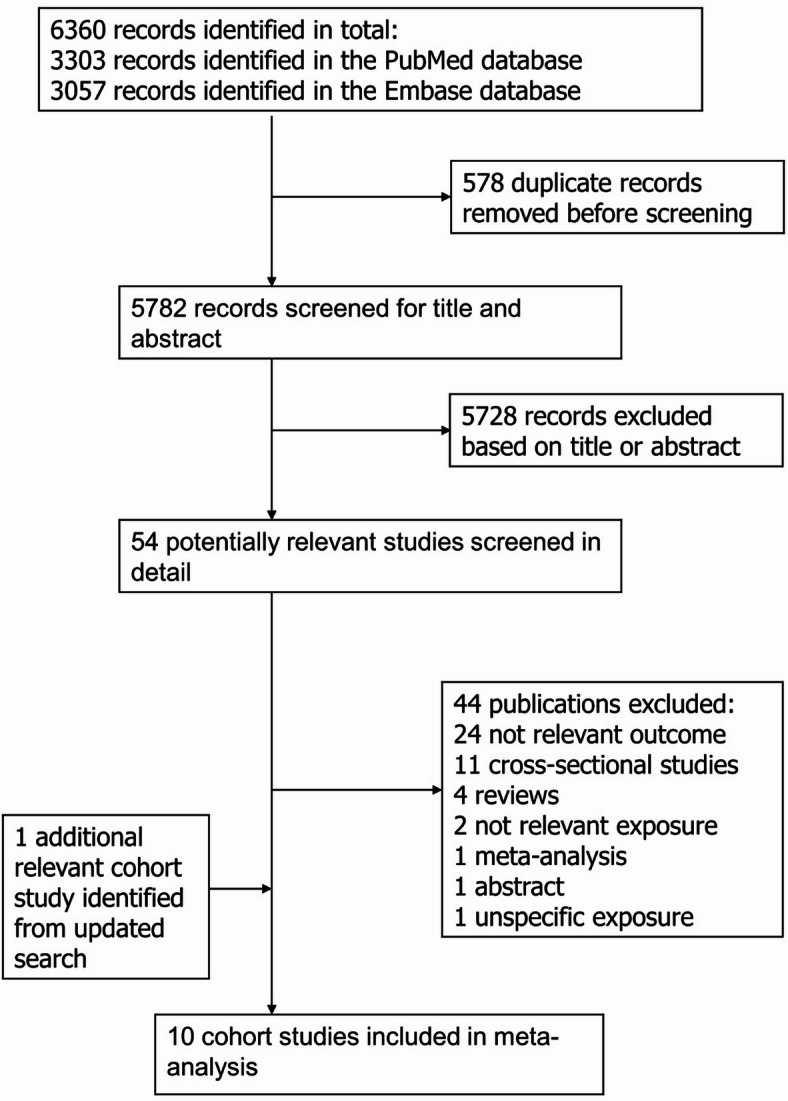
Flow-chart of study selection.
Whole grains
Nine studies (182617 participants, 33582 cases)14–22 were included in the high vs. low analysis and eight studies14–20,22were included in the dose-response analysis of whole grains and hypertension risk. The summary RR (95% CI) for high vs. low whole grain intake was 0.74 (0.59–0.93, I2 = 97%, pheterogeneity<0.001, n = 9) (Supplementary Fig. 1) and per 90 g/day was 0.86 (0.82–0.90, I2 = 63%, pheterogeneity=0.008, n = 8) (Fig. 2a). The summary RR ranged from 0.84 (0.81–0.89) when the study by Weng et al.18 was excluded to 0.87 (0.85–0.88) when the study by Flint et al.16 was excluded (Supplementary Fig. 2). There was no indication of publication bias with Egger’s test (p = 0.59), Begg’s test (p = 0.54) or by inspection of the funnel plot (Supplementary Fig. 3). There was no evidence of nonlinearity (pnonlinearity=0.31) (Fig. 2b, Supplementary Table 5).
Fig. 2.

Whole grain and refined grain consumption and hypertension, linear (A, C) and nonlinear (B, D) dose-response analyses.
Refined grains
Five studies (58590 participants, 16074 cases)14,15,17,18,20 were included in both the high vs. low and the dose-response analyses of refined grain consumption and hypertension risk. The summary RR (95% CI) for high vs. low refined grain intake was 0.94 (0.88–1.01, I2 = 7.9%, pheterogeneity=0.36, n = 5) (Supplementary Fig. 4) and per 90 g/day was 0.96 (0.92–1.01, I2 = 7.8%, pheterogeneity=0.36, n = 5) (Fig. 2c). The summary RR ranged from 0.95 (0.89–1.03) when excluding the study by Wang et al.15 to 0.99 (0.94–1.04) when excluding the study by Kochar et al.17. There was no indication of publication bias with Egger’s test (p = 0.21), Begg’s test (p = 0.46), or by inspection of the funnel plot (Supplementary Fig. 5). There was no indication of nonlinearity for refined grains and the association was null across the range of intakes (pnonlinearity=0.14) (Fig. 2d, Supplementary Table 6).
Subgroup and sensitivity analyses
The inverse association between whole grain intake and hypertension persisted across most subgroup analyses, although numbers were low in some subgroups and there was no evidence of heterogeneity between subgroups (Supplementary Table 7). The heterogeneity was lower in subgroups of studies with both men and women combined, European studies, and studies with high study quality, and additionally in studies with adjustment for education, and BMI (Supplementary Table 7). The estimated E-values (lower CI) for intakes of 100, 200 and 300 g/d were 1.63 (1.43), 1.88 (1.53), and 2.17 (1.50) (Supplementary Table 5).
Assessment of strength of evidence
When using the World Cancer Research Fund criteria for evaluating evidence, we considered the overall evidence to be supportive of a probably causal relationship between whole grain intake and reduced risk of hypertension, but for refined grains the evidence was limited and no conclusion could be made. A justification of these judgements is found in Supplementary Tables 8 and include clear inverse associations between high whole grain intake and hypertension across high vs. low, linear and nonlinear dose-response analyses, moderate to high heterogeneity which is mainly driven by differences in the size (not the direction) of the associations, and consistency of the results in subgroup and sensitivity analyses. In addition, plausible mechanisms exist and there is some evidence from randomized trials that fiber intake, which whole grains are an important source of, can reduce blood pressure. For refined grains, no clear association was observed and fewer studies were available and it was therefore graded as limited-no conclusion.
Discussion
In this meta-analysis of 9 cohort studies, we observed a 26% lower risk of hypertension for high vs. low intake of whole grains and a 14% lower risk per 90 g/day, which is equal to three slices of whole grain bread or one bowl of whole grain cereals per day. The association was dose-dependent and linear and there was a 22% reduction in risk at 200 g/day. Refined grain consumption was not clearly associated with risk of hypertension.
Our findings are consistent with a previous meta-analysis of four prospective studies on whole grain consumption and hypertension risk, which found a 14% reduction in risk for high vs. low intake and an 8% reduction in risk per 30 g/d35. The results are also consistent with studies on dietary patterns high in whole grains and changes in blood pressure or hypertension risk36–38, such as the DASH diet36, Mediterranean dietary pattern37, vegetarian diets38,39, and plant-based diets in general40, although these dietary patterns also often are characterized by other beneficial components that may lower blood pressure, such as high intake of fruits, vegetables, and nuts and less salt and red and processed meat.
Our meta-analysis has some limitations that need to be discussed. A high whole grain intake may be associated with a generally healthy lifestyle pattern that potentially could confound the observed association. However, major risk factors for hypertension, such as alcohol consumption, obesity, and physical activity, were adjusted for in the majority of the studies and the inverse association between whole grain intake and hypertension persisted in subgroups of studies that adjusted for these confounders. The estimated E-values for intakes of 100, 200, and 300 g/d of whole grains were 1.63 (1.43), 1.88 (1.53), and 2.17 (1.50), suggesting a relatively strong unadjusted confounder would be needed to fully explain away the observed association. The inverse association persisted across most subgroups with adjustment for dietary factors (e.g. fruits and vegetables, meat, dairy, energy intake), and there was no indication of between-subgroup heterogeneity. The heterogeneity in the high vs. low analysis was very high, but it was considerably lower in the dose-response analysis. However, the observed heterogeneity appears to be more due to differences in the size of the association rather than direction of the association, as all studies reported risk estimates in the direction of a reduced risk. The high heterogeneity in the high vs. low analysis seemed to be at least partly driven by a much higher whole grain intake and considerably stronger reductions in hypertension risk in a Chinese study22 than in the remaining studies, however, in the linear dose-response analysis, when intakes were standardized across studies, the study showed comparable reductions in risk to the remaining studies, and the heterogeneity was lower. In subgroup analyses, there was no indication of between-subgroup heterogeneity when analyses were stratified by sex, duration of follow-up, geographic location, number of cases, study quality, whether the dietary assessment was validated or not, and adjustment for a range of confounders, however, additional studies could clarify some of these findings further with sex-stratified analyses, and with data from other regions than North America, as the number of studies in these strata were low. Although we found no indication of publication bias with Egger’s test, it is still possible that publication bias could have affected the results because of the limited number of studies included, particularly for refined grains. Further studies are therefore warranted. Measurement errors in the assessment of whole grain and refined grain intake may have occurred, however, no studies corrected for measurement errors, while four studies used repeated dietary assessments to assess whole grain intake over the follow-up period. Although there was no significant heterogeneity between subgroups using baseline only or updated dietary data, the estimates from studies using updated dietary assessments appeared somewhat more pronounced. Additional studies are needed to investigate this further. It is also possible that we may have introduced some measurement errors by using standard serving sizes when converting data from studies only reporting on frequency of intake to grams/day, however, this is standard practice across different food groups9,41,42, and difficult to handle in any other way in dose-response meta-analyses of published studies. Strengths of the meta-analysis include the comprehensive search strategy and analyses, and the multiple subgroup and sensitivity analyses that were conducted.
Several biological mechanisms could explain a beneficial effect of whole grain consumption on risk of hypertension. Whole grains are high in dietary fiber that can improve insulin sensitivity, which is thought to play a role in endothelial dysfunction and hypertension43, and regulate blood glucose and is beneficial in reducing the development of obesity44, possibly through greater satiety45. Several randomized trials have shown dietary fiber46, and whole grains47 can improve endothelial function, while another study showed increased nitric oxide production among persons fed a beta-glucan rich oat bread, although no difference was observed in flow-mediated dilation48. A high versus low whole grain intake has been associated with a lower risk of obesity and weight gain in epidemiological studies12, and overweight and obesity is a strong risk factor for the development of hypertension13. In addition, there is evidence from a meta-analysis of randomized trials that dietary fiber can reduce systolic blood pressure44, and results for whole grains were in the same direction, but were less precise as they were based on fewer studies. Other meta-analyses have suggested oats or beta-glucan rich interventions reduces blood pressure49. Avenanthramide, an antioxidant found in oats, has been found to increase production of nitric oxide, which regulates endothelial function50. It is likely that impact of higher intakes of dietary fiber on the gut microbiome with greater production of short chain fatty acids may also be responsible for the blood pressure lowering effects of whole grains51, through receptors that regulate vascular tone and inflammation. Some whole grains such as quinoa, amaranth and oats have a higher content of potassium and magnesium which may contribute to blood pressure regulation52,53. Several randomized trials and meta-analyses have shown whole grains reduce markers of inflammation54–56, primarily in persons with cardiovascular risk factors, and there is growing evidence that inflammation plays a role in the development of hypertension57. A recent workplace intervention study from Nepal that emphasized increased intake of whole grains, unsaturated fat, fruits, vegetables, nuts and reduced intake of refined grains reported a 2 mmHg reduction systolic blood pressure and 0.1 mmHg reduction in diastolic blood pressure58. The lack of association between refined grains and hypertension risk, could be due to the much lower content of dietary fiber in refined grains than in whole grains (usually about 70–80% lower), which would reduce any of the above mentioned beneficial effects related to dietary fiber.
These findings have important public health implications as 1.28 billion people globally have hypertension1. Based on the results from the US studies that reported the distribution of cases per category, we estimated that 5.6% of cases in one study15 and between 9.6 and 10.5% of cases in three studies14,16,17 could have been prevented if the study populations moved their whole grain consumption to the highest category of intake. This suggests a sizeable proportion of cases potentially may be preventable by increasing whole grain consumption, however, this would vary based on the level of whole grain consumption in the population of interest. The current recommendations for whole grain consumption in the Nordic countries is in the range of 75–90 g/day59,60. In the current meta-analysis, some further reduction in risk was observed with higher intakes up to 400 g/day, however, only one of the included studies reported such a high whole grain intake22, thus further studies are needed to clarify the association at very high intakes. The inverse association between whole grain intake and hypertension is in line with previous meta-analyses that reported reductions in risk of cardiovascular disease with higher whole grain consumption, and suggests a potential pathway through which whole grains may reduce cardiovascular risk may be reduced risk of hypertension9,44.
In conclusion, these results provide further evidence that a high whole grain intake is associated with reduced risk of hypertension and support dietary recommendations to increase whole grain intake in the general population. There was little evidence of an association between refined grain consumption and hypertension risk.
Electronic supplementary material
Below is the link to the electronic supplementary material.
Author contributions
DA conceived and designed the study: MM and IS conducted the literature search and screening and data extraction. DA conducted the statistical analyses and wrote the first draft of the manuscript. DA, MM, IS, SK revised the manuscript.
Data availability
Data is provided within the manuscript or supplementary information files.
Declarations
Competing interests
The authors declare no competing interests.
Footnotes
Publisher’s note
Springer Nature remains neutral with regard to jurisdictional claims in published maps and institutional affiliations.
References
- 1.NCD Risk Factor Collaboration (NCD-RisC). Worldwide trends in hypertension prevalence and progress in treatment and control from 1990 to 2019: a pooled analysis of 1201 population-representative studies with 104 million participants. Lancet398, 957–980 (2021). [DOI] [PMC free article] [PubMed] [Google Scholar]
- 2.Rapsomaniki, E. et al. Blood pressure and incidence of twelve cardiovascular diseases: lifetime risks, healthy life-years lost, and age-specific associations in 1.25 million people. Lancet383, 1899–1911 (2014). [DOI] [PMC free article] [PubMed] [Google Scholar]
- 3.Hibino, M. et al. Blood pressure, hypertension, and the risk of aortic dissection incidence and mortality: results from the J-SCH study, the UK biobank study, and a Meta-Analysis of cohort studies. Circulation145, 633–644 (2022). [DOI] [PubMed] [Google Scholar]
- 4.Kobeissi, E., Hibino, M., Pan, H. & Aune, D. Blood pressure, hypertension and the risk of abdominal aortic aneurysms: a systematic review and meta-analysis of cohort studies. Eur. J. Epidemiol.34, 547–555 (2019). [DOI] [PMC free article] [PubMed] [Google Scholar]
- 5.Pan, H., Hibino, M., Kobeissi, E. & Aune, D. Blood pressure, hypertension and the risk of sudden cardiac death: a systematic review and meta-analysis of cohort studies. Eur. J. Epidemiol.35, 443–454 (2020). [DOI] [PMC free article] [PubMed] [Google Scholar]
- 6.Baffour, P. K., Jahangiry, L., Jain, S., Sen, A. & Aune, D. Blood pressure, hypertension, and the risk of heart failure: a systematic review and meta-analysis of cohort studies. Eur. J. Prev. Cardiol.31, 529–556 (2024). [DOI] [PubMed] [Google Scholar]
- 7.Aune, D. et al. Blood pressure, hypertension and the risk of atrial fibrillation: a systematic review and meta-analysis of cohort studies. Eur. J. Epidemiol.38, 145–178 (2023). [DOI] [PMC free article] [PubMed] [Google Scholar]
- 8.GBD 2017 Risk Factor Collaborators. Global, regional, and National comparative risk assessment of 84 behavioural, environmental and occupational, and metabolic risks or clusters of risks for 195 countries and territories, 1990–2017: a systematic analysis for the global burden of disease study 2017. Lancet392, 1923–1994 (2018). [DOI] [PMC free article] [PubMed] [Google Scholar]
- 9.Aune, D. et al. Whole grain consumption and risk of cardiovascular disease, cancer, and all cause and cause specific mortality: systematic review and dose-response meta-analysis of prospective studies. BMJ353, i2716 (2016). [DOI] [PMC free article] [PubMed] [Google Scholar]
- 10.Aune, D., Norat, T., Romundstad, P. & Vatten, L. J. Whole grain and refined grain consumption and the risk of type 2 diabetes: a systematic review and dose-response meta-analysis of cohort studies. Eur. J. Epidemiol.28, 845–858 (2013). [DOI] [PubMed] [Google Scholar]
- 11.Aune, D. et al. Dietary fibre, whole grains, and risk of colorectal cancer: systematic review and dose-response meta-analysis of prospective studies. BMJ343, d6617 (2011). [DOI] [PMC free article] [PubMed] [Google Scholar]
- 12.Mozaffarian, D., Hao, T., Rimm, E. B., Willett, W. C. & Hu, F. B. Changes in diet and lifestyle and long-term weight gain in women and men. N Engl. J. Med.364, 2392–2404 (2011). [DOI] [PMC free article] [PubMed] [Google Scholar]
- 13.Jayedi, A., Rashidy-Pour, A., Khorshidi, M. & Shab-Bidar, S. Body mass index, abdominal adiposity, weight gain and risk of developing hypertension: a systematic review and dose-response meta-analysis of more than 2.3 million participants. Obes. Rev.19, 654–667 (2018). [DOI] [PubMed] [Google Scholar]
- 14.Steffen, L. M. et al. Associations of plant food, dairy product, and meat intakes with 15-y incidence of elevated blood pressure in young black and white adults: the coronary artery risk development in young adults (CARDIA) study. Am. J. Clin. Nutr.82, 1169–1177 (2005). [DOI] [PubMed] [Google Scholar]
- 15.Wang, L. et al. Whole- and refined-grain intakes and the risk of hypertension in women. Am. J. Clin. Nutr.86, 472–479 (2007). [DOI] [PubMed] [Google Scholar]
- 16.Flint, A. J. et al. Whole grains and incident hypertension in men. Am. J. Clin. Nutr.90, 493–498 (2009). [DOI] [PMC free article] [PubMed] [Google Scholar]
- 17.Kochar, J., Gaziano, J. M. & Djousse, L. Breakfast cereals and risk of hypertension in the physicians’ health study I. Clin. Nutr.31, 89–92 (2012). [DOI] [PMC free article] [PubMed] [Google Scholar]
- 18.Weng, L. C. et al. A diet pattern with more dairy and nuts, but less meat is related to lower risk of developing hypertension in middle-aged adults: the atherosclerosis risk in communities (ARIC) study. Nutrients5, 1719–1733 (2013). [DOI] [PMC free article] [PubMed] [Google Scholar]
- 19.Lelong, H. et al. Individual and combined effects of dietary factors on risk of incident hypertension: prospective analysis from the NutriNet-Sante cohort. Hypertension70, 712–720 (2017). [DOI] [PubMed] [Google Scholar]
- 20.Quinteiros Fidalgo, A. S., Vollenweider, P. & Marques-Vidal, P. No association between dietary markers and incident hypertension in a population-based sample. Clin. Nutr. ESPEN. 28, 208–213 (2018). [DOI] [PubMed] [Google Scholar]
- 21.Kashino, I. et al. Prospective association between whole grain consumption and hypertension: the Furukawa nutrition and health study. Nutrients12: (2020). [DOI] [PMC free article] [PubMed]
- 22.Xu, Z. H. et al. Associations between whole grains intake and new-onset hypertension: a prospective cohort study. Eur. J. Nutr. (2024). [Epub online ahead of print]:. [DOI] [PubMed]
- 23.Shi, Z., Taylor, A. W., Hu, G., Gill, T. & Wittert, G. A. Rice intake, weight change and risk of the metabolic syndrome development among Chinese adults: the Jiangsu nutrition study (JIN). Asia Pac. J. Clin. Nutr.21, 35–43 (2012). [PubMed] [Google Scholar]
- 24.Page, M. J. et al. The PRISMA 2020 statement: an updated guideline for reporting systematic reviews. BMJ372, n71 (2021). [DOI] [PMC free article] [PubMed] [Google Scholar]
- 25.Halvorsen, R. E., Elvestad, M., Molin, M. & Aune, D. Fruit and vegetable consumption and the risk of type 2 diabetes: a systematic review and dose-response meta-analysis of prospective studies. BMJ Nutr. Prev. Health. 4, 519–531 (2021). [DOI] [PMC free article] [PubMed] [Google Scholar]
- 26.World Cancer Research Fund & American Institute for Cancer Research. Diet, Nutrition, Physical Activity and Cancer: a Global Perspective (The Third Expert Report, 2018).
- 27.Madsen, H., Sen, A. & Aune, D. Fruit and vegetable consumption and the risk of hypertension: a systematic review and meta-analysis of prospective studies. Eur. J. Nutr.62, 1941–1955 (2023). [DOI] [PMC free article] [PubMed] [Google Scholar]
- 28.DerSimonian, R. & Laird, N. Meta-analysis in clinical trials. Control Clin. Trials. 7, 177–188 (1986). [DOI] [PubMed] [Google Scholar]
- 29.Greenland, S. & Longnecker, M. P. Methods for trend Estimation from summarized dose-response data, with applications to meta-analysis. Am. J. Epidemiol.135, 1301–1309 (1992). [DOI] [PubMed] [Google Scholar]
- 30.Steffen, L. M. et al. Associations of whole-grain, refined-grain, and fruit and vegetable consumption with risks of all-cause mortality and incident coronary artery disease and ischemic stroke: the atherosclerosis risk in communities (ARIC) study. Am. J. Clin. Nutr.78, 383–390 (2003). [DOI] [PubMed] [Google Scholar]
- 31.Orsini, N., Li, R., Wolk, A., Khudyakov, P. & Spiegelman, D. Meta-analysis for linear and nonlinear dose-response relations: examples, an evaluation of approximations, and software. Am. J. Epidemiol.175, 66–73 (2012). [DOI] [PMC free article] [PubMed] [Google Scholar]
- 32.Higgins, J. P. & Thompson, S. G. Quantifying heterogeneity in a meta-analysis. Stat. Med.21, 1539–1558 (2002). [DOI] [PubMed] [Google Scholar]
- 33.VanderWeele, T. J. & Ding, P. Sensitivity analysis in observational research: introducing the E-Value. Ann. Intern. Med.167, 268–274 (2017). [DOI] [PubMed] [Google Scholar]
- 34.Egger, M., Davey, S. G., Schneider, M. & Minder, C. Bias in meta-analysis detected by a simple, graphical test. BMJ315, 629–634 (1997). [DOI] [PMC free article] [PubMed] [Google Scholar]
- 35.Schwingshackl, L. et al. Food groups and risk of hypertension: A systematic review and Dose-Response Meta-Analysis of prospective studies. Adv. Nutr.8, 793–803 (2017). [DOI] [PMC free article] [PubMed] [Google Scholar]
- 36.Filippou, C. D. et al. Dietary approaches to stop hypertension (DASH) diet and blood pressure reduction in adults with and without hypertension: A systematic review and Meta-Analysis of randomized controlled trials. Adv. Nutr.11, 1150–1160 (2020). [DOI] [PMC free article] [PubMed] [Google Scholar]
- 37.Godos, J. et al. Adherence to the mediterranean diet is inversely associated with metabolic syndrome occurrence: a meta-analysis of observational studies. Int. J. Food Sci. Nutr.68, 138–148 (2017). [DOI] [PubMed] [Google Scholar]
- 38.Yokoyama, Y. et al. Vegetarian diets and blood pressure: a meta-analysis. JAMA Intern. Med.174, 577–587 (2014). [DOI] [PubMed] [Google Scholar]
- 39.Lee, K. W., Loh, H. C., Ching, S. M., Devaraj, N. K. & Hoo, F. K. Effects of Vegetarian Diets on Blood Pressure Lowering: A Systematic Review with Meta-Analysis and Trial Sequential Analysis. Nutrients 12: (2020). [DOI] [PMC free article] [PubMed]
- 40.Gibbs, J., Gaskin, E., Ji, C., Miller, M. A. & Cappuccio, F. P. The effect of plant-based dietary patterns on blood pressure: a systematic review and meta-analysis of controlled intervention trials. J. Hypertens.39, 23–37 (2021). [DOI] [PubMed] [Google Scholar]
- 41.Aune, D. et al. Fruit and vegetable intake and the risk of cardiovascular disease, total cancer and all-cause mortality-a systematic review and dose-response meta-analysis of prospective studies. Int. J. Epidemiol.46, 1029–1056 (2017). [DOI] [PMC free article] [PubMed] [Google Scholar]
- 42.Aune, D. et al. Nut consumption and risk of cardiovascular disease, total cancer, all-cause and cause-specific mortality: a systematic review and dose-response meta-analysis of prospective studies. BMC Med.14, 207 (2016). [DOI] [PMC free article] [PubMed] [Google Scholar]
- 43.Baron, A. D. Hemodynamic actions of insulin. Am. J. Physiol.267, E187–E202 (1994). [DOI] [PubMed] [Google Scholar]
- 44.Reynolds, A. et al. Carbohydrate quality and human health: a series of systematic reviews and meta-analyses. Lancet393, 434–445 (2019). [DOI] [PubMed] [Google Scholar]
- 45.Sanders, L. M., Zhu, Y., Wilcox, M. L., Koecher, K. & Maki, K. C. Effects of whole grain intake, compared with refined grain, on appetite and energy intake: A systematic review and Meta-Analysis. Adv. Nutr.12, 1177–1195 (2021). [DOI] [PMC free article] [PubMed] [Google Scholar]
- 46.Brock, D. W. et al. A high-carbohydrate, high-fiber meal improves endothelial function in adults with the metabolic syndrome. Diabetes Care. 29, 2313–2315 (2006). [DOI] [PubMed] [Google Scholar]
- 47.Kondo, K. et al. Fiber-rich diet with brown rice improves endothelial function in type 2 diabetes mellitus: A randomized controlled trial. PLoS One. 12, e0179869 (2017). [DOI] [PMC free article] [PubMed] [Google Scholar]
- 48.Tabesh, F. et al. The effects of beta-glucan rich oat bread on serum nitric oxide and vascular endothelial function in patients with hypercholesterolemia. Biomed. Res. Int.2014, 481904 (2014). [DOI] [PMC free article] [PubMed] [Google Scholar]
- 49.Liska, D. J., Dioum, E., Chu, Y. & Mah, E. Narrative review on the effects of oat and sprouted oat components on blood pressure. Nutrients14: (2022). [DOI] [PMC free article] [PubMed]
- 50.Nie, L., Wise, M. L., Peterson, D. M. & Meydani, M. Avenanthramide, a polyphenol from oats, inhibits vascular smooth muscle cell proliferation and enhances nitric oxide production. Atherosclerosis186, 260–266 (2006). [DOI] [PubMed] [Google Scholar]
- 51.Xu, C. & Marques, F. Z. How dietary fibre, acting via the gut microbiome, lowers blood pressure. Curr. Hypertens. Rep.24, 509–521 (2022). [DOI] [PMC free article] [PubMed] [Google Scholar]
- 52.Filippini, T. et al. Potassium intake and blood pressure: A Dose-Response Meta-Analysis of randomized controlled trials. J. Am. Heart Assoc.9, e015719 (2020). [DOI] [PMC free article] [PubMed] [Google Scholar]
- 53.Han, H. et al. Dose-response relationship between dietary magnesium intake, serum magnesium concentration and risk of hypertension: a systematic review and meta-analysis of prospective cohort studies. Nutr. J.16, 26 (2017). [DOI] [PMC free article] [PubMed] [Google Scholar]
- 54.Milesi, G., Rangan, A. & Grafenauer, S. Whole grain consumption and inflammatory markers: A systematic literature review of randomized control trials. Nutrients14: (2022). [DOI] [PMC free article] [PubMed]
- 55.Cortijo-Alfonso, M. E. et al. Effect of barley and oat consumption on immune system, inflammation and gut microbiota: A systematic review of randomized controlled trials. Curr. Nutr. Rep.13, 582–597 (2024). [DOI] [PMC free article] [PubMed] [Google Scholar]
- 56.Li, C. et al. Comprehensive modulatory effects of whole grain consumption on immune-mediated inflammation in middle-aged and elderly community residents: A real-world randomized controlled trial. Redox Biol.76, 103337 (2024). [DOI] [PMC free article] [PubMed] [Google Scholar]
- 57.Zhang, Z., Zhao, L., Zhou, X., Meng, X. & Zhou, X. Role of inflammation, immunity, and oxidative stress in hypertension: new insights and potential therapeutic targets. Front. Immunol.13, 1098725 (2022). [DOI] [PMC free article] [PubMed] [Google Scholar]
- 58.Shrestha, A. et al. Effects of a dietary intervention on cardiometabolic risk and food consumption in a workplace. PLoS One. 19, e0301826 (2024). [DOI] [PMC free article] [PubMed] [Google Scholar]
- 59.Kyro, C. et al. Intake of whole grains in Scandinavia is associated with healthy lifestyle, socio-economic and dietary factors. Public. Health Nutr.14, 1787–1795 (2011). [DOI] [PubMed] [Google Scholar]
- 60.Blomhoff, R. et al. Nordic Nutrition Recommendations 2023. Copenhagen: Nordic Council of Ministers, 2023. (2023).
Associated Data
This section collects any data citations, data availability statements, or supplementary materials included in this article.
Supplementary Materials
Data Availability Statement
Data is provided within the manuscript or supplementary information files.