



Abstract
Objective:
To provide evidence-based recommendations and expert guidance for the management of patients with antineutrophil cytoplasmic antibodies (ANCA)-associated vasculitis (AAV): granulomatosis with polyangiitis (GPA), microscopic polyangiitis (MPA), and eosinophilic granulomatosis with polyangiitis (EGPA).
Methods:
Clinical questions regarding the treatment and management of AAV were developed in the Patient population, Intervention, Comparator, and Outcome (PICO) format (47 for GPA/MPA, 34 for EGPA). Systematic literature reviews were conducted for each PICO question. We used the Grading of Recommendations, Assessment, Development and Evaluation (GRADE) methodology to assess the quality of evidence and formulate recommendations. Each recommendation required consensus from at least 70% of the voting panel.
Results:
We present 26 recommendations and 5 ungraded position statements for GPA/MPA, and 15 recommendations and 5 ungraded position statements for EGPA. This guideline provides recommendations for remission induction and maintenance therapy, and adjunctive treatment strategies in GPA, MPA, and EGPA. These recommendations include the use of rituximab for remission induction and maintenance in severe GPA and MPA, and the use of mepolizumab in non-severe EGPA. All recommendations are conditional due in part to the lack of multiple randomized control trials and/or low-quality evidence supporting the recommendations
Conclusions:
This guideline presents the first recommendations endorsed by the American College of Rheumatology and Vasculitis Foundation for the management of AAV and provides guidance to health care professionals on how to treat these diseases.
Keywords: granulomatosis with polyangiitis, microscopic polyangiitis, eosinophilic granulomatosis with polyangiitis (Churg-Strauss), ANCA-associated vasculitis, guideline, treatment, management
INTRODUCTION
The anti-neutrophil cytoplasmic antibody (ANCA)-associated vasculitides (AAV) are comprised of granulomatosis with polyangiitis (GPA), microscopic polyangiitis (MPA), and eosinophilic granulomatosis with polyangiitis (EGPA, Churg-Strauss). These diseases affect small- and medium-sized vessels and are characterized by multisystem organ involvement.
GPA is characterized histologically by necrotizing granulomatous inflammation in addition to vasculitis. Common clinical manifestations include destructive sino-nasal lesions, pulmonary nodules, and pauci-immune glomerulonephritis. GPA is most commonly associated with cytoplasmic-staining ANCA and antibodies to proteinase 3. Among European populations, the prevalence ranges from 24 to 157 per million, with the highest prevalence reported in Sweden and the UK.[1]
MPA is characterized histologically by vasculitis without granulomatous inflammation. Common clinical manifestations include rapidly progressive pauci-immune glomerulonephritis and alveolar hemorrhage. MPA is most commonly associated with perinuclear staining ANCA and antibodies to myeloperoxidase. The prevalence of MPA ranges from 0 to 66 cases per million among European countries and 86 cases per million in Japan.[1, 2]
EGPA is characterized histologically by eosinophilic tissue infiltration in addition to vasculitis. Common clinical manifestations include asthma, peripheral eosinophilia, and peripheral neuropathy. Only 40% of patients produce detectable ANCA. The overall prevalence of EGPA in European populations has been estimated to range from 2 to 38 cases per million.[1, 3]
Prior to the use of alkylating agents, survival with these diseases was quite poor (e.g., median survival of patients with GPA at ~5 months).[4] Current treatment regimens have reversed this poor prognosis, but treatments are still associated with toxicity. Recent clinical trials have investigated the efficacy and toxicity of both biologic and non-biologic immunosuppressive agents for the treatment of AAV. Observational studies have provided additional insight regarding management strategies for these diseases. Therefore, this guideline was developed to provide evidence-based recommendations for the treatment and management of adults and children with GPA, MPA, and EGPA. Although this guideline may inform an international audience, these recommendations are developed for health care providers within the United States.
METHODS
This guideline follows the American College of Rheumatology (ACR) guideline development process (https://www.rheumatology.org/Practice-Quality/Clinical-Support/Clinical-Practice-Guidelines) using the Grading of Recommendations Assessment, Development and Evaluation (GRADE) methodology to rate the quality of evidence and develop recommendations[5, 6]. ACR policy guided the management of conflicts of interest and disclosures (https://www.rheumatology.org/Practice-Quality/Clinical-Support/Clinical-Practice-Guidelines/Vasculitis). Supplementary Appendix 1 presents a detailed description of the methods.
Briefly, the Literature Review team undertook systematic literature reviews for pre-specified questions addressing specific clinical populations, interventions, comparators, and outcomes (PICO). An in-person Patient Panel of 11 individuals with different types of vasculitis, moderated by a member of the Literature Review team, reviewed the evidence report (along with a summary and interpretation by the moderator) and provided patient perspectives and preferences. The patient panel included 4 patients with GPA, 1 patient with MPA, and 2 patients with EGPA. The Voting Panel, comprised of 14 physicians and 2 patients, reviewed the Literature Review team’s evidence summaries and, bearing in mind the Patient Panel’s deliberations, formulated and voted on recommendations. The voting panel was assembled for the ACR and Vasculitis Foundation’s broad effort to develop recommendations for 7 forms of systemic vasculitis: giant cell arteritis, Takayasu arteritis, polyarteritis nodosa, Kawasaki disease, and the 3 AAV presented in this manuscript. The physicians on this panel included rheumatologists who could provide insight for all of these diseases, and did not to include other subspecialists who would not have experience with many of the other vasculitides addressed in this effort (e.g., pulmonologists who would not have experience with large- or medium-vessel vasculitis). The literature review team chair was a nephrologist. The patients on the voting panel presented the views of the patient panel, which consisted of patients with different types of vasculitis.
Each recommendation required consensus from at least 70% of the voting panel.
How to interpret the recommendations:
A strong recommendation is usually supported by moderate or high-quality evidence (e.g., multiple randomized controlled trials). For a strong recommendation, the recommended course of action would apply to all or almost all patients. Only a small proportion of clinicians/patients would not want to follow the recommendation. In rare instances, a strong recommendation may be based on low or very low certainty evidence. For example, an intervention may be strongly recommended if it is considered benign, low-cost, without harms, and the consequence of not performing the intervention may be catastrophic. An intervention may be strongly recommended against if there is high certainty that the intervention leads to more harm than the comparison with low or very low certainty about its benefit [7].
A conditional recommendation is usually supported by lower quality evidence or a close balance between desirable and undesirable outcomes. For a conditional recommendation, the recommended course of action would apply to the majority of the patients, but the alternative is a reasonable consideration. Conditional recommendations always warrant a shared decision-making approach. We specify some conditions under which the alternative may be considered.
In some instances, the committee found that the evidence for a particular PICO question did not support a graded recommendation or did not favor one intervention over the other. However, the voting panel believed the PICO question addressed a commonly encountered clinical question and thus felt that providing guidance for this question was warranted. For these situations, we present ‘ungraded position statements’ which reflects general views of the voting panel.
In this evidence-based guideline, we explicitly use the best evidence available and present it for the clinician and reader[8]. In some instances, this includes randomized trials directly comparing the interventions under consideration. The GRADE system rates evidence that comes exclusively from the collective experience of the Voting Panel and patient panel members as “very-low-quality” evidence.
For each recommendation, Supplementary Appendix 2 provides details regarding the PICO questions and GRADE evidence tables.
RESULTS
For the evidence report for GPA and MPA, 729 articles were reviewed to address 47 PICO questions. For the evidence report for EGPA, 190 articles were reviewed to address 34 PICO questions.
Recommendations and Ungraded Position Statements for Granulomatosis with Polyangiitis and Microscopic Polyangiitis
GPA and MPA are recognized as different diseases for which disease-specific management approaches exist. However, many recommendations and ungraded position statements consider GPA and MPA together because pivotal trials have enrolled both groups and presented results for these diseases together. Thus, we present recommendations and ungraded position statements applicable to both GPA and MPA as well as recommendations and ungraded position statements only applicable to GPA. All recommendations for GPA/MPA are conditional, due in part to a lack of multiple randomized control trials supporting the recommendations. The complete list of studies reviewed to form the recommendations is provided in the evidence report (Supplementary Appendix 2). Given that these diseases affect multiple organ systems, collaboration between rheumatologists, nephrologists, pulmonologists, and otolaryngologists can enhance the care of patients with GPA and MPA.
Table 1 presents the definitions for disease states described in the Recommendations and Ungraded Position Statements, including definitions of severe and non-severe disease, and the dosing regimens of medications used for remission induction and maintenance. Table 2 presents the PICO questions contributing to each Recommendation and Ungraded Position Statement and subsequent discussion, along with level of evidence. Figure 1 represents a flowchart of key recommendations for the treatment of GPA and MPA.
Table 1.
Definitions for the disease states specified in the recommendations and ungraded position statements for granulomatosis with polyangiitis (GPA), microscopic polyangiitis (MPA), and eosinophilic granulomatosis with polyangiitis (EGPA).
| Term | Definition |
|---|---|
| Disease States: | |
| Severe disease | Vasculitis with life/organ-threatening manifestations (e.g., alveolar hemorrhage, glomerulonephritis, central nervous system vasculitis, mononeuritis multiplex, cardiac involvement, mesenteric ischemia, limb/digit ischemia) |
| Non-severe disease | Vasculitis with manifestations that are not life/organ-threatening (e.g., rhino-sinusitis, asthma, mild systemic symptoms, uncomplicated cutaneous disease, mild inflammatory arthritis) |
| Active disease | New, persistent, or worsening clinical signs and/or symptoms attributed to GPA, MPA, or EGPA and not related to prior damage |
| Remission | Absence of clinical signs or symptoms attributed to GPA, MPA, or EGPA, on or off of immunosuppressive therapy |
| Refractory | Persistent active disease despite an appropriate course of immunosuppressive therapy |
| Relapse | Recurrence of active disease following a period of remission |
| Treatments: | |
| Pulse intravenous glucocorticoids | Adults: methylprednisolone 500–1000 mg given intravenously for 3–5 days or equivalent Children: methylprednisolone 30 mg/kg/day (maximum 1000 mg/day) for 3–5 days or equivalent |
| High dose oral glucocorticoids | Adults: prednisone 1 mg/kg/day (generally up to 80 mg/day) or equivalent Children: prednisone 1–2 mg/kg/day (generally up to 60 mg/day) or equivalent |
| Remission induction therapy | Daily oral cyclophosphamide: up to 2 mg/kg/day for 3–6 months Intermittent intravenous cyclophosphamide: 15 mg/kg q2 weeks × 3 doses, followed by 15 mg/kg q3 weeks for at least 3 doses (adults) Rituximab: 375 mg/m2 IV weekly × 4 doses or 1000 mg IV on days 1 and 15 (adults); 375 mg/m2 IV weekly × 4 doses, 500mg/m2 days 1 and 15, or 750 mg/m2 IV days 1 and 15 (pediatric dosing) Methotrexate, azathioprine, mycophenolate mofetil: same dosing regimen as remission maintenance Mepolizumab: 300 mg subcutaneous every 4 weeks (adult) |
| Remission maintenance therapy | Azathioprine: up to 2 mg/kg/day Methotrexate: up to 25 mg/week subcutaneous or oral Rituximab: 500 mg IV q6 months, 1 gm IV q4 months, 250 mg/m2 IV q6 months (pediatric), or other doses Mycophenolate mofetil: up to 1500 mg po twice a day Mepolizumab: 300 mg subcutaneous every 4 weeks Omalizumab: 300–600 mg subcutaneous every 2–4 weeks |
Table 2.
Recommendations/Statements for the management of granulomatosis with polyangiitis (GPA) or microscopic polyangiitis (MPA).
| Recommendation/Ungraded Position Statement: | GPA/MPA PICO* informing recommendation and discussion | Level of Evidence |
|---|---|---|
| Remission induction for active, severe GPA/MPA: | ||
| Recommendation 1: In patients with active severe GPA/MPA, we conditionally recommend treatment with rituximab over cyclophosphamide for remission induction. | 4, 5, 6 | Very low-Moderate |
| Recommendation 2: In patients with GPA/MPA with active glomerulonephritis, we conditionally recommend against the routine addition of plasma exchange to remission induction therapy. | 34 | Low-High |
| Recommendation 3: In patients with active severe GPA/MPA with alveolar hemorrhage, we conditionally recommend against adding plasma exchange to remission induction therapies. | 35 | Low-High |
| Ungraded Position Statement A: In patients with active, severe GPA/MPA, either pulse intravenous or high-dose oral glucocorticoids may be prescribed as part of initial therapy. | 2 | Very low-Moderate |
| Recommendation 4: In patients with active severe GPA/MPA, we conditionally recommend a reduced-dose over a standard-dose glucocorticoid regimen for remission induction. | 3 | Very low-Moderate |
| Remission induction for active, non-severe GPA: | ||
| Recommendation 5: In patients with active non-severe GPA, we conditionally recommend initiating treatment with methotrexate over cyclophosphamide or rituximab. | 12, 13 | Very low-Moderate |
| Recommendation 6: In patients with active non-severe GPA, we conditionally recommend initiating treatment with methotrexate and glucocorticoids over glucocorticoids alone. | 14 | Low |
| Recommendation 7: For patients with active non-severe GPA, we conditionally recommend initiating treatment with methotrexate + glucocorticoids over azathioprine + glucocorticoids or mycophenolate mofetil + glucocorticoids. | 8,9,10 | Low |
| Recommendation 8: In patients with active non-severe GPA, we conditionally recommend initiating treatment with methotrexate with glucocorticoids over sulfamethoxazole/trimethoprim with glucocorticoids. | 11 | Low |
| Remission maintenance in GPA/MPA: | ||
| Recommendation 9: In patients with severe GPA or MPA who have entered remission after treatment with cyclophosphamide or rituximab, we conditionally recommend treatment with rituximab over methotrexate or azathioprine for remission maintenance. | 15, 16, 17, 18 | Very Low-Moderate |
| Recommendation 10: In patients with GPA/MPA using rituximab for remission maintenance, we conditionally recommend scheduled re-dosing over using ANCA titers or CD19 B cell counts to guide re-dosing. | 24, 25 | Very Low-Low |
| Recommendation 11: In patients with severe GPA or MPA who achieved remission after treatment with cyclophosphamide or rituximab, we conditionally recommend treatment with methotrexate or azathioprine over mycophenolate mofetil for remission maintenance. | 19 | Very Low-Moderate |
| Recommendation 12: In patients with severe GPA or MPA who entered remission after treatment with cyclophosphamide or rituximab, we conditionally recommend treatment with methotrexate or azathioprine over leflunomide for remission maintenance. | 20 | Very Low-Low |
| Recommendation 13: In patients with GPA who have entered remission, we conditionally recommend treatment with methotrexate or azathioprine over sulfamethoxazole/trimethoprim for remission maintenance. | 21, 22 | Very Low-Low |
| Recommendation 14: In patients with GPA who have entered remission, we conditionally recommend against adding sulfamethoxazole/trimethoprim to other therapies (e.g., rituximab, azathioprine, methotrexate, etc.) for the purpose of remission maintenance. | 23 | Low-Moderate |
| Recommendation 15: In patients with GPA/MPA on remission maintenance therapy with rituximab who have hypogammaglobulinemia (e.g., IgG< 3 g/L) and recurrent severe infections, we conditionally recommend immunoglobulin supplementation. | 44 | Very Low |
| Ungraded Position Statement B: The duration of non-glucocorticoid remission maintenance therapy in GPA/MPA should be guided by the patient’s clinical condition, preferences, and values. | 26 | Low-Moderate |
| Ungraded Position Statement C: The duration of glucocorticoid therapy for GPA/MPA should be guided by the patient’s clinical condition, preferences, and values. | 27, 33 | Low-Moderate |
| Treatment of Relapse: | ||
| Recommendation 16: In patients with GPA/MPA who have relapsed with severe disease manifestations and are not on rituximab for remission maintenance, we conditionally recommend treatment with rituximab over cyclophosphamide for remission induction. | 28 | Low |
| Recommendation 17: In patients with GPA/MPA who have relapsed with severe disease manifestations while on rituximab for remission maintenance, we conditionally recommend switching rituximab to cyclophosphamide over receiving additional rituximab for remission induction. | 29 | Very Low |
| Treatment of Refractory Disease: | ||
| Recommendation 18: In patients with refractory severe GPA/MPA after treatment with rituximab or cyclophosphamide for remission induction, we conditionally recommend switching treatment to the other therapy over combining the two therapies. | 30 | Very Low |
| Recommendation 19: In patients with refractory GPA/MPA, we conditionally recommend adding intravenous immunoglobulin to current therapy. | 31 | Low-Moderate |
| Treatment of sino-nasal, airway, and mass lesions: | ||
| Ungraded Position Statement D: For patients with sino-nasal involvement in GPA, nasal rinses and topical nasal therapies (antibiotics, lubricants, and glucocorticoids) may be beneficial. | 36, 37, 38, 39 | Very Low-Low |
| Recommendation 20: In patients with GPA in remission who have nasal septal defects and/or nasal bridge collapse, we conditionally recommend reconstructive surgery, if desired by the patient. | 45 | Low |
| Recommendation 21: In patients with GPA and actively inflamed subglottic and/or endobronchial tissue with stenosis, we conditionally recommend treating with immunosuppression over surgical dilation with intralesional glucocorticoid injection. | 40 | Low |
| Recommendation 22: In patients with GPA and mass lesions (e.g., orbital pseudotumor or masses of the parotid glands, brain, or lungs) we conditionally recommend treatment with immunosuppression over surgical removal of the mass lesion with immunosuppression. | 41, 42 | Very Low-Low |
| Other considerations: | ||
| Recommendation 23: In patients with GPA or MPA, we conditionally recommend against dosing immunosuppression based on ANCA titers alone. | 1 | Very Low |
| Recommendation 24: In patients with GPA receiving cyclophosphamide or rituximab, we conditionally recommend prophylaxis to prevent Pneumocystis jirovecii pneumonia. | 43 | Low |
| Recommendation 25: In patients with GPA/MPA in remission and chronic kidney disease stage V, we conditionally recommend evaluation for renal transplantation. | 46 | Low |
| Recommendation 26: In patients with active GPA/MPA unable to receive other immunomodulatory therapy, we conditionally recommend administering intravenous immunoglobulin. | 32 | Low |
| Ungraded Position Statement E: The optimal duration of anticoagulation is unknown for patients with GPA/MPA who develop venous thrombotic events. | 47 | Very Low |
PICO= Population Intervention Comparator Outcome question used in GRADE methodology. Please refer to Supplementary Appendix 2 for the PICO questions developed for GPA/MPA.
Figure 1.
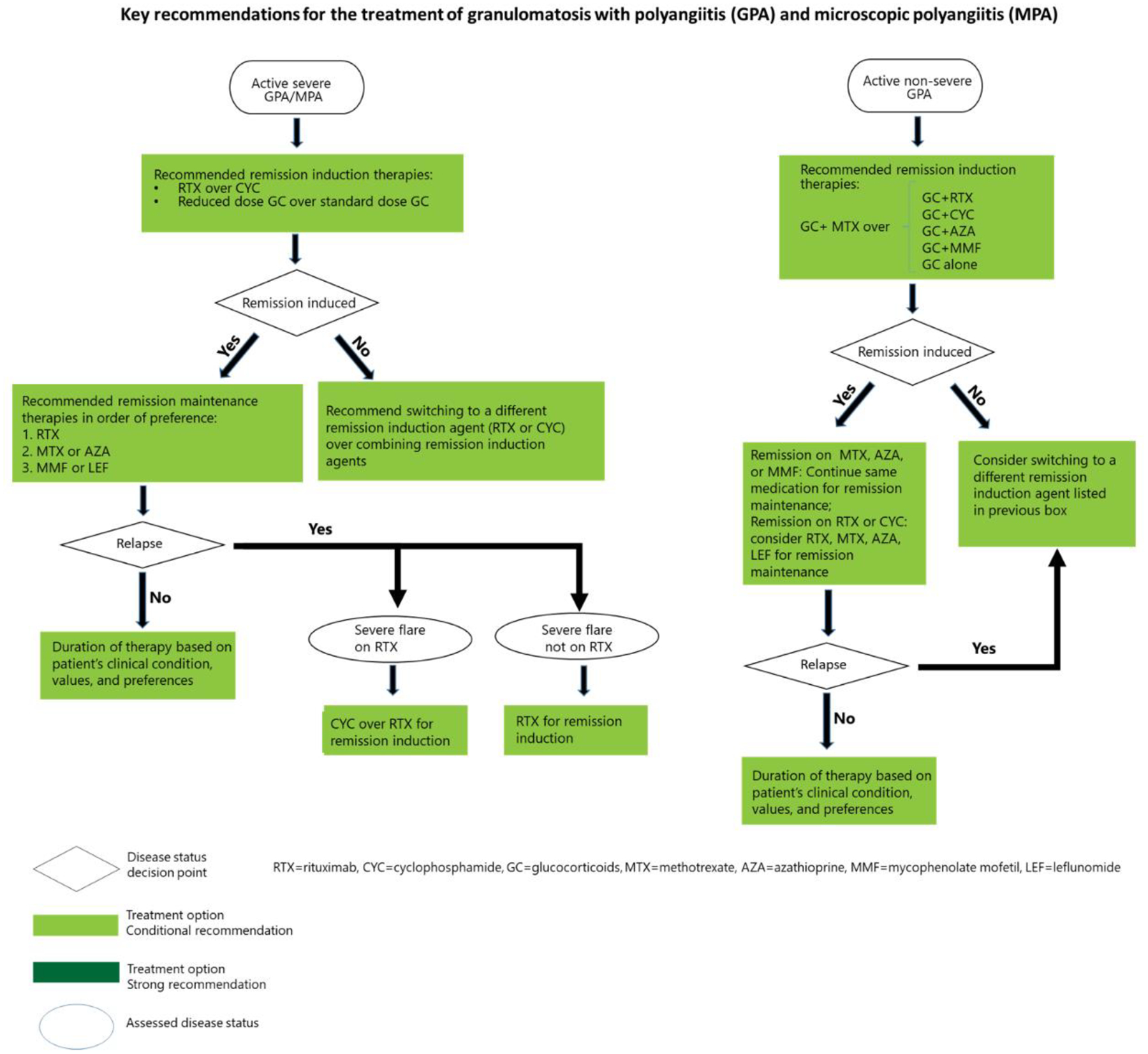
Key recommendations for the treatment of granulomatosis with polyangiitis and microscopic polyangiitis.
Remission induction for active, severe disease
Recommendation 1: In patients with active severe GPA OR MPA, we conditionally recommend treatment with rituximab over cyclophosphamide for remission induction.
Both rituximab and cyclophosphamide, in combination with glucocorticoids, have been used for remission induction for GPA and MPA. Rituximab (RTX) has been shown to provide similar benefits to cyclophosphamide (CYC) for remission induction in a randomized controlled trial [9]. Although the current cumulative doses of CYC used are less than previous regimens, resulting in less toxicity per treatment course, RTX is still preferred. since RTX is considered less toxic than CYC..A single course of CYC can carry substantial risks such as neutropenia, bladder injury, and the small but present potential for infertility which can be devastating to a young patient. Risks of malignancy and infertility increase when repeated courses of CYC are used. RTX was also preferred by the patient panel. Retrospective studies suggest that the two remission induction regimens for rituximab used in adults, 375 mg/m2 every week for 4 weeks (FDA-approved dosing schedule) and 1000 mg on days 1 and 15, are equally efficacious. The choice between these two regimens should be guided by patient preferences and values.
CYC (dosing provided in Table 1) may be used when RTX needs to be avoided or when patients have active disease despite use of RTX. It remains controversial whether CYC should be preferred for certain types of severe disease, such as acute renal failure (e.g., serum creatinine > 4.0 mg/dL). Clinicians can use either intravenous pulse or daily oral CYC [10, 11]. For adults, the decision between these two options should be based on patient and physician preferences. In children, intravenous CYC may be preferred to facilitate compliance and limit toxicity. Data regarding the efficacy of combined CYC and RTX therapy for remission induction remains limited [12], and potential toxicity of this combination remains a concern.
The combination of RTX with CYC is not widely used in the US, and its efficacy compared to RTX or CYC alone is not established. This combination remains under study (Clinicaltrials.gov NCT03942887) at this time.
Recommendation 2: In patients with active glomerulonephritis, we conditionally recommend against the routine addition of plasma exchange to remission induction therapy.
Plasma exchange should not be initiated for all patients with active glomerulonephritis but can be considered for patients at higher risk of progressing to end-stage kidney disease (ESKD) and accept a potential increased risk of infection.
The recommendation is supported from data from the two largest trials of plasma exchange for the treatment of glomerulonephritis in AAV. The first trial, which required a serum creatinine ≥ 5.8 mg/dL for entry, showed that plasma exchange decreased the risk of ESKD but did not decrease mortality[13, 14]. In a more recent randomized trial of plasma exchange in AAV [15], the addition of plasma exchange to conventional remission induction therapy did not improve the composite outcome of ESKD or death; a decrease in ESKD was observed but the result was not statistically significant (HR 0.81, 95% CI 0.57–1.13).
However, combined data from these two trials (see Supplemental Appendix 2) show that there is probably decreased ESKD in patients with glomerulonephritis who received PLEX compared to those who did not (HR 0.72 [95% CI 0.53–0.98], moderate certainty). The benefit was most pronounced in patients at the highest risk of ESKD (118 fewer cases of ESKD per 1,000 cases of active glomerulonephritis [95% CI 217 fewer to 7 fewer]), although no difference in mortality was demonstrated (RR 1.15 [95% CI 0.78, 1.70], moderate certainty). Among four trials of plasma exchange in AAV, a higher risk of severe infection was observed with plasma exchange (RR 1.19 [95% CI 0.99, 1.42], moderate certainty).
These findings suggest that for patients with a low risk of progressing to ESKD, the risk of plasma exchange may outweigh the benefit while in patients at higher risk of progression to ESKD, the decrease in risk of progressing to ESKD could outweigh the increased risk of serious infection with plasma exchange. Thus, the voting panel does not recommend plasma exchange for all patients with active glomerulonephritis but favors consideration of plasma exchange for patients at higher risk of progression to ESKD. Factors that could influence whether plasma exchange is initiated include the patient’s kidney function upon presentation, rate of loss of kidney function, response to remission induction therapies, and the patient’s ability to tolerate serious infections.
Plasma exchange remains advisable in patients with GPA or MPA who also have anti-GBM disease.
Recommendation 3: In patients with active severe GPA or MPA with alveolar hemorrhage, we conditionally recommend against adding plasma exchange to remission induction therapies.
Two trials evaluated the use of plasma exchange in patients presenting with alveolar hemorrhage, and no differences in mortality or remission rates were observed. Thus, plasma exchange does not have an established benefit for patients with alveolar hemorrhage, and is associated with an increased risk of serious infection (Recommendation 2). Plasma exchange may be considered for certain patients with active glomerulonephritis (Recommendation 2), or patients who are critically ill and whose disease is not responding to recommended remission induction therapies (i.e., plasma exchange as “salvage” or “rescue” therapy).
Plasma exchange remains advisable in patients with GPA or MPA who also have anti-GBM disease.
Ungraded Position Statement A: In patients with active, severe GPA or MPA, either pulse intravenous or high-dose oral glucocorticoids may be prescribed as part of initial therapy.
There are no trials comparing the efficacy of pulse intravenous to high dose oral glucocorticoids. Higher doses of glucocorticoids (such as pulse glucocorticoids) are generally used for patients with organ- or life-threatening disease manifestations but may be associated with an increased risk of infection[16].
Recommendation 4: In patients with active severe GPA/MPA, we conditionally recommend a reduced-dose over a standard-dose glucocorticoid regimen for remission induction.
A recent study[15] reported a reduced-dose glucocorticoid regimen provided similar benefit to a standard-dose regimen for the composite outcome of end-stage renal disease or death and was associated with a decreased risk of infection. Given the known toxicities associated with long-term glucocorticoid use, minimizing glucocorticoid exposure is critical to improving outcomes. Glucocorticoid dosing may be individualized for each patient. Of note, the reduced-dose regimen started with pulse methylprednisolone (3 daily pulses for maximum total dose of 3 g) and one week of high-dose oral glucocorticoids. The standard and reduced-dose glucocorticoid regimen used in this study is provided in Supplementary Appendix 3.
Remission induction for active non-severe disease
Recommendation 5: In patients with active non-severe GPA, we conditionally recommend initiating treatment with methotrexate over cyclophosphamide or rituximab.
Non-severe GPA is defined as GPA without life- or organ-threatening manifestations (Table 1). Methotrexate (MTX[11]), RTX and CYC are effective at inducing remission in this patient group. However, like severe GPA, non-severe GPA can be a chronic disease that requires multiple courses of therapy. Thus, the voting panel favored using therapies with potentially less toxicity before utilizing therapies with potentially more toxicity. Therefore, MTX is preferred due to the greater toxicity of CYC. MTX is currently recommended over RTX because of the larger body of evidence and clinical experience with MTX use for this group of patients; a clinical trial is needed to compare their efficacy. RTX may be preferred in specific clinical situations, including patients with hepatic or renal dysfunction, recurrent relapses on MTX, or concerns regarding compliance.
Recommendation 6: In patients with active non-severe GPA, we conditionally recommend initiating treatment with methotrexate and glucocorticoids over glucocorticoids alone.
MTX with glucocorticoids is recommended to minimize glucocorticoid exposure and toxicity. Overall, there are few clinical situations where treatment with glucocorticoids alone may be considered (e.g., arthralgias, or inability to tolerate other remission maintenance therapies), and close monitoring is needed should this treatment strategy be employed.
Recommendation 7: For patients with active non-severe GPA, we conditionally recommend initiating treatment with methotrexate + glucocorticoids over azathioprine + glucocorticoids or mycophenolate mofetil + glucocorticoids.
Use of MTX for remission induction in this patient group is supported by more data[11], but azathioprine (AZA) and mycophenolate mofetil (MMF) can be considered. Comparative effectiveness trials are needed to evaluate the efficacy of MTX, AZA, and MMF for remission induction in active non-severe GPA. Clinical factors may influence the medication selected. For example, MTX should be used with caution or avoided in patients with moderate to severe renal insufficiency. AZA is the preferred agent in pregnant patients or in patients who cannot tolerate MTX or MMF. MTX or MMF is indicated in patients with total thiopurine-S-methyltransferase deficiency or high risk TPMT and/or NUDT15 genotypes.
Recommendation 8: In patients with active non-severe GPA, we conditionally recommend initiating treatment with methotrexate with glucocorticoids over sulfamethoxazole/trimethoprim with glucocorticoids.
MTX is considered more effective than sulfamethoxazole/trimethoprim (SMX/TMP) for remission induction given previous experience suggesting MTX is more effective than SMX/TMP for remission maintenance[17]. Low-dose SMX/TMP may be given concurrently with immunosuppressive agents to prevent Pneumocystis jirovecii pneumonia (see GPA/MPA Recommendation 24).
Remission maintenance
Recommendation 9: In patients with severe GPA or MPA who have entered remission after treatment with cyclophosphamide or rituximab, we conditionally recommend treatment with rituximab over methotrexate or azathioprine for remission maintenance.
RTX is associated with a lower relapse rate than AZA when used for remission maintenance after remission induction with CYC[18] MTX and AZA have comparable efficacy for remission maintenance.[19] Thus, RTX is favored over MTX or AZA. However, more long-term safety data is available for MTX and AZA, and cost and other factors may limit RTX use.
Different doses of RTX have been used for remission maintenance, including 500 mg IV every 6 months[18] (FDA-approved), 1000 mg IV every 4 months [20], and 1000 mg IV every 6 months [21]. No comparative trials have been conducted. Thus, the optimal dose of RTX for remission maintenance remains uncertain.
If MTX or AZA is being considered for remission maintenance, the patient’s clinical situation, preferences, and values should guide selection between them, given their comparable efficacy.
Recommendation 10: In patients with GPA/MPA using rituximab for remission maintenance, we conditionally recommend scheduled re-dosing over using ANCA titers or CD19 B cell counts to guide re-dosing.
In one randomized trial, patients who received RTX for remission maintenance based on changes in CD19 B cell counts and/or ANCA titers had similar rate of relapse as those receiving RTX on a scheduled dose. However, this study was limited by the small sample size and there were wide confidence intervals for the effect size[22]. This recommendation is based on part on the experience and expertise of the voting panel, which recognizes that flares can occur when patients are CD19 B-cell depleted and/or tests for ANCA are negative. Thus, CD19 B cell counts or ANCA titers may not accurately indicate the potential for a patient’s disease to flare.
Recommendation 11: In patients with severe GPA or MPA who achieved remission after treatment with cyclophosphamide or rituximab, we conditionally recommend treatment with methotrexate or azathioprine over mycophenolate mofetil for remission maintenance.
MTX and AZA are equally efficacious for remission maintenance [19]. AZA is favored over MMF because the relapse rate for MMF was higher than AZA when studied for remission maintenance[23]. MMF may still be considered in those unable to tolerate or with contraindications to MTX, AZA, or rituximab (GPA/MPA Recommendation 9).
Recommendation 12: In patients with severe GPA or MPA who entered remission after treatment with cyclophosphamide or rituximab, we conditionally recommend treatment with methotrexate or azathioprine over leflunomide for remission maintenance.
MTX or AZA is recommended over leflunomide due to the data supporting and clinical experience using MTX and AZA for remission maintenance. The data and clinical experience with leflunomide are more limited. In the one clinical trial comparing leflunomide to MTX[24], leflunomide use had a decreased rate of relapse but a higher rate of drug withdrawal. The trial used a leflunomide dose of 30 mg/day, which may have contributed to toxicity.
Recommendation 13: In patients with GPA who have entered remission, we conditionally recommend treatment with methotrexate or azathioprine over sulfamethoxazole/trimethoprim for remission maintenance.
The voting panel strongly favored the use of MTX or AZA over SMX/TMP but this recommendation is conditional due to the lack of sufficient high-quality evidence comparing the two treatments.
Recommendation 14: In patients with GPA who have entered remission, we conditionally recommend against adding sulfamethoxazole/trimethoprim to other therapies (e.g., rituximab, azathioprine, methotrexate, etc.) for the purpose of remission maintenance.
SMX/TMP may have benefit for patients with sino-nasal involvement[25] but its use potentially increases toxicity (e.g., severe hypersensitivity reactions) and medication burden. SMX/TMP may still be indicated for prophylaxis against Pneumocystis jirovecii pneumonia (see GPA/MPA Recommendation 24). There is a potential drug interaction between MTX and SMX/TMP when SMX/TMP is dosed at 800 mg/160 mg twice a day. The SMX/TMP dose used for Pneumocystis prophylaxis is generally tolerated, but its use should be monitored when used in conjunction with methotrexate.
Recommendation 15: In patients with GPA/MPA on remission maintenance therapy with rituximab who have hypogammaglobulinemia (e.g., IgG< 3 g/L) and recurrent severe infections, we conditionally recommend immunoglobulin supplementation.
Immunoglobulin supplementation at replacement doses (e.g., 400–800 mg/kg/month) should be considered if patient has hypogammaglobulinemia and is experiencing recurrent infections. Immunoglobulin supplementation can also be considered for patients with hypogammaglobulinemia without recurrent infections but with impaired vaccine responses.[26] These considerations should be made in collaboration with an allergist/immunologist.
Ungraded Position Statement B: The duration of non-glucocorticoid remission maintenance therapy in GPA/MPA should be guided by the patient’s clinical condition, preferences, and values.
The optimal duration of remission maintenance therapy is not well-established. Although clinical trials have typically administered remission maintenance therapy for at least 18 months, patients may benefit from continuing remission maintenance therapy longer[27]. The patient panel favored remission maintenance therapy for at least 18 months, and potentially a longer duration depending on patient specific factors. Factors to be considered include previous relapse history, extent of organ involvement, and disease characteristics such as ANCA status (with PR3-ANCA positive patients more likely to relapse).[28]
Ungraded Position Statement C: The duration of glucocorticoid therapy for GPA/MPA should be guided by the patient’s clinical condition, preferences, and values.
The optimal duration of glucocorticoid therapy for GPA/MPA is not well established. The immunosuppressive effects of glucocorticoids contributing to disease control should be balanced with the toxicities associated with its use. Overall, patients expressed a desire to minimize the glucocorticoid dose as much as possible but recognize that some patients may require low dose glucocorticoid long-term. Screening for toxicities of glucocorticoid use (e.g., bone mineral density testing for osteoporosis) should be conducted.
Treatment of relapse
Recommendation 16: In patients with GPA/MPA who have relapsed with severe disease manifestations and are not on rituximab for remission maintenance, we conditionally recommend treatment with rituximab over cyclophosphamide for remission induction.
RTX is more effective than oral CYC for re-induction of remission among patients who previously received CYC and then relapsed, based on subgroup analysis of a randomized controlled trial[9]. In addition, the cumulative toxicity of CYC raises concerns for repeated use of this agent.
Recommendation 17: In patients with GPA/MPA who have relapsed with severe disease manifestations while on rituximab for remission maintenance, we conditionally recommend switching rituximab to cyclophosphamide over receiving additional rituximab for remission induction.
Multiple factors can influence whether RTX or CYC (IV or oral) is used, such as time since last RTX infusion and cumulative CYC dose. CYC is recommended if the patient recently received RTX, while a remission induction dose of RTX may be effective if an extended period has passed since the last RTX infusion. As standard for remission induction, these agents should be used in conjunction with glucocorticoids.
Treatment of refractory disease
Recommendation 18: In patients with refractory severe GPA/MPA after treatment with rituximab or cyclophosphamide for remission induction, we conditionally recommend switching treatment to the other therapy over combining the two therapies.
Disease refractory to remission induction therapy is rare, and there is little data to guide treatment recommendations. Practitioners should evaluate whether other conditions such as infection could be mimicking vasculitis. However, if a patient’s disease is refractory to one remission induction therapy, it is important to change the remission induction strategy. We recommend changing to the other remission induction agent prior to using combination therapy.
Recommendation 19: In patients with GPA/MPA refractory to remission induction therapy, we conditionally recommend adding intravenous immunoglobulin to current therapy.
Intravenous immunoglobulin (IVIg) should not be used routinely to treat GPA/MPA but can be considered at treatment doses (e.g., 2 g/kg) as adjunctive therapy for short term control while waiting for remission induction therapy (i.e., rituximab or cyclophosphamide) to become effective (per Recommendation 17)[29].
Treatment of sino-nasal, airway, and mass lesions
Ungraded Position Statement D: For patients with sino-nasal involvement in GPA, nasal rinses and topical nasal therapies (antibiotics, lubricants, and glucocorticoids) may be beneficial.
We suggest collaborating with an otolaryngologist with expertise in treating AAV to determine whether these interventions should be employed.
Recommendation 20: In patients with GPA in remission who have nasal septal defects and/or nasal bridge collapse, we conditionally recommend reconstructive surgery, if desired by the patient.
To optimize surgical outcomes, reconstructive surgery should be performed after a period of sustained remission by an otolaryngologist with expertise in treating GPA. [30, 31]
Recommendation 21: In patients with GPA and actively inflamed subglottic and/or endobronchial tissue with stenosis, we conditionally recommend treating with immunosuppression over surgical dilation with intralesional glucocorticoid injection alone.
Patients with subglottic or endobronchial stenoses should be managed with an otolaryngologist or pulmonologist, respectively, with expertise in management of these lesions. Immunosuppression is recommended for initial treatment of active inflammatory stenoses, and is usually comprised of glucocorticoids and other agents[32], and the degree of immunosuppression utilized may be based on the severity of other disease manifestations. Surgical dilation with intralesional glucocorticoid injection may be more appropriate for stenoses that are long-standing, fibrotic, or not responsive to immunosuppression. [32–34] Surgical dilation with intralesional glucocorticoid injection concurrent with medical treatment may also be considered as initial therapy for stenoses that require immediate intervention (e.g., critical narrowing).
Recommendation 22: In patients with GPA and mass lesions (e.g., orbital pseudotumor or masses of the parotid glands, brain, or lungs) we conditionally recommend treatment with immunosuppression over surgical removal of the mass lesion with immunosuppression.
Immunosuppression (with remission induction followed by remission maintenance) is almost always the initial treatment of choice for these lesions[35, 36]. While these lesions tend to respond primarily to glucocorticoids, other agents are also usually used in hopes of having a glucocorticoid sparing effect. Debulking surgery may be considered if there is an urgent need for decompression, for example acute visual loss due to optic nerve compression or other life/organ-threatening compression.
Other considerations
Recommendation 23: In patients with GPA or MPA, we conditionally recommend against dosing immunosuppression based on ANCA titers alone.
Increases in ANCA titers/levels are only modestly informative as an indicator of disease activity[37] and are not reliable predictors of disease flares for individual patients. Increasing immunosuppression based on changes in ANCA titers/levels alone can result in unnecessary immunosuppression resulting in adverse events. Persistence of ANCA positivity does not necessarily indicate that continued immunosuppression is required. Instead, treatment decisions should be based on a patient’s clinical symptoms in conjunction with diagnostic studies (e.g., laboratory, imaging, biopsy findings).
Recommendation 24: In patients with GPA or MPA receiving cyclophosphamide or rituximab, we conditionally recommend prophylaxis to prevent Pneumocystis jirovecii pneumonia.
Prophylaxis to prevent Pneumocystis jirovecii pneumonia is routinely used with CYC treatment. [38] The prescribing information for RTX recommends prophylaxis for Pneumocystis jirovecii pneumonia for at least 6 months after the last RTX dose for patients with GPA or MPA. While many on the voting panel felt strongly that patients with GPA or MPA on CYC or RTX should receive prophylaxis against Pneumocystis jirovecii pneumonia, this recommendation is conditional given the lack of moderate or high-quality evidence directly addressing this question and the potential toxicity of the medications used for prophylaxis. Prophylaxis against Pneumocystis jirovecii pneumonia should also be considered for patients taking moderate-dose glucocorticoids (e.g., > 20 mg/day) or higher in combination with MTX, AZA, or MMF[38]. Prophylaxis is less commonly used in younger children receiving RTX but should be considered.
Recommendation 25: In patients with GPA/MPA in remission and chronic kidney disease stage V, we conditionally recommend evaluation for renal transplantation.
Outcomes of kidney transplantation in patients with ANCA associated vasculitis are similar to patients receiving transplants for other reasons, with relapses in the transplanted kidney being rare[39, 40].GPA and MPA in remission should not be considered a contraindication to kidney transplantation, but these patients should be monitored for relapse after transplantation.
Recommendation 26: In patients with active GPA/MPA unable to receive other immunomodulatory therapy, we conditionally recommend administering intravenous immunoglobulin.
IVIg should not be used routinely to treat GPA/MPA (GPA/MPA Recommendation 19). However, in the rare instances where patients with active disease may not be able to receive conventional immunosuppressive therapy (e.g., sepsis or pregnancy), IVIg can be used as a short-term intervention until conventional remission induction therapies can be used.[29]
Ungraded Position Statement E: The optimal duration of anticoagulation is unknown for patients with GPA/MPA who develop venous thrombotic events.
AAV is associated with an increased risk of venous thrombotic events, including both deep vein thromboses and pulmonary emboli.[41, 42] Venous thromboembolic events that occur in a patient with active disease and no other risk factors can be considered a provoked event with a transient risk factor (assuming subsequent disease control). Thus, short-term instead of life-long anticoagulation may be considered.
Recommendations and Ungraded Position Statements for eosinophilic granulomatosis with polyangiitis (EGPA):
EGPA is characterized by diverse features, including asthma/allergic rhinitis, peripheral and tissue eosinophilia, and vasculitis. As these clinical features can potentially have differing responses to treatment, the management approach is typically based on a patient’s disease features and their severity. The recommendations presented here focus primarily on the use of immunosuppressive medications to treat the vasculitic manifestations of EGPA. However, asthma and allergic manifestations are a significant component of EGPA, and measures directed towards these, including inhaled therapies and allergen avoidance, play an important role in management. Collaboration between rheumatologists, asthma/allergy specialists, and other medical disciplines can enhance the care of patients with EGPA.
In contrast to GPA/MPA, there have been very few randomized controlled trials conducted to date in EGPA. These recommendations/statements therefore reflect reliance on lower quality (i.e., indirect) evidence, including expert opinion.
Table 1 presents the definitions for the disease states and dosing regimens for medications described in the Recommendations and Ungraded Position Statements. Table 3 presents the PICO questions contributing to each Recommendation and Ungraded Position Statement and subsequent discussion, along with the level of evidence. Figure 2 represents a flowchart of key recommendations for the treatment of EGPA.
Table 3.
Recommendations/Statements for management of eosinophilic granulomatosis with polyangiitis (EGPA).
| Recommendation/Statement: | EGPA PICO* informing recommendation and discussion | Level of Evidence |
|---|---|---|
| Remission induction for active, severe EGPA: | ||
| Ungraded Position Statement A: In patients with active, severe EGPA, either pulse intravenous or high-dose oral glucocorticoids may be prescribed as initial therapy. | 3 | Very Low |
| Ungraded Position Statement B: In patients with active, severe EGPA, either cyclophosphamide or rituximab may be prescribed for remission induction. | 4 | Very Low |
| Recommendation 1: In patients with active, severe EGPA we conditionally recommend treatment with cyclophosphamide or rituximab over mepolizumab for remission induction. | 6, 7 | Low |
| Remission induction for active, non-severe EGPA: | ||
| Recommendation 2: In patients with active, non-severe EGPA, we conditionally recommend initiating treatment with mepolizumab with glucocorticoids over methotrexate, azathioprine, or mycophenolate mofetil with glucocorticoids. | 8, 9, 10, 13 | Very Low-Low |
| Recommendation 3: In patients with active, non-severe EGPA, we conditionally recommend initiating treatment with methotrexate, azathioprine, or mycophenolate mofetil with glucocorticoids over glucocorticoids alone. | 14 | Low |
| Recommendation 4: In patients with active, non-severe EGPA, we conditionally recommend initiating treatment with methotrexate, azathioprine, or mycophenolate mofetil with glucocorticoids over cyclophosphamide or rituximab with glucocorticoids. | 11, 12 | Very Low-Low |
| Remission maintenance in EGPA: | ||
| Recommendation 5: In patients with severe EGPA who have entered remission with cyclophosphamide therapy, we conditionally recommend methotrexate, azathioprine, or mycophenolate mofetil over rituximab for remission maintenance. | 15, 16, 17,18 | Very Low |
| Recommendation 6: In patients with severe EGPA who have entered remission, we conditionally recommend treatment with methotrexate, azathioprine, or mycophenolate mofetil over mepolizumab for remission maintenance. | 20 | Very Low |
| Ungraded Position Statement C: The duration of glucocorticoid therapy in EGPA should be guided by the patient’s clinical condition, values, and preferences. | 21, 22, 23, 29, 30 | Very Low-Low |
| Treatment of Relapse: | ||
| Recommendation 7: In patients with EGPA who have relapsed with severe disease manifestations after prior successful remission induction with cyclophosphamide, we conditionally recommend using rituximab over cyclophosphamide for remission re-induction. | 25 | Very Low |
| Recommendation 8: In patients with EGPA who have relapsed with severe disease manifestations after prior successful remission induction with rituximab, we conditionally recommend using rituximab over switching to cyclophosphamide for remission re-induction. | 25 | Very Low |
| Recommendation 9: In patients with EGPA who have relapsed with non-severe disease manifestations (asthma and/or sino-nasal disease) while on methotrexate, azathioprine, or mycophenolate mofetil, we conditionally recommend adding mepolizumab over switching to another agent. | 26 | Very Low |
| Recommendation 10: In patients with EGPA who have relapsed with non-severe disease manifestations (asthma and/or sino-nasal disease) while on low-dose glucocorticoids and no other therapy, we conditionally recommend adding mepolizumab over adding methotrexate, azathioprine, or mycophenolate mofetil. | 28 | Very Low |
| Recommendation 11: In patients with EGPA and high serum IgE levels who have relapsed with non-severe disease manifestations (asthma and/or sino-nasal disease) while on methotrexate, azathioprine, or mycophenolate mofetil, we conditionally recommend adding mepolizumab over adding omalizumab. | 27 | Very Low |
| Other considerations: | ||
| Recommendation 12: In patients with newly diagnosed EGPA on leukotriene inhibitors, we conditionally recommend continuing leukotriene inhibitors over discontinuing them. | 33 | Very Low |
| Ungraded Position Statement D: Use of leukotriene inhibitors is not contraindicated with in patients with EGPA with active asthma and/or sino-nasal disease. | 34 | Very Low |
| Recommendation 13: In patients with EGPA, we conditionally recommend obtaining an echocardiogram at the time of diagnosis. | 2 | Very Low |
| Recommendation 14: In patients with EGPA, we conditionally recommend using the Five Factor Score to guide therapy. | 1 | Very Low |
| Ungraded Position Statement E: In patients with sino-nasal involvement in EGPA, treatment with nasal rinses and topical therapies (e.g., antibiotics, lubricants, and glucocorticoids) may be considered. | 31 | Very Low |
| Recommendation 15: In patients with EGPA receiving cyclophosphamide or rituximab, we conditionally recommend prescribing medications for prophylaxis to prevent Pneumocystis jirovecii pneumonia. | 32 | Low |
PICO= Population Intervention Comparator Outcome question used in GRADE methodology. Please refer to Supplementary Appendix 2 for the PICO questions developed for EGPA.
Figure 2.
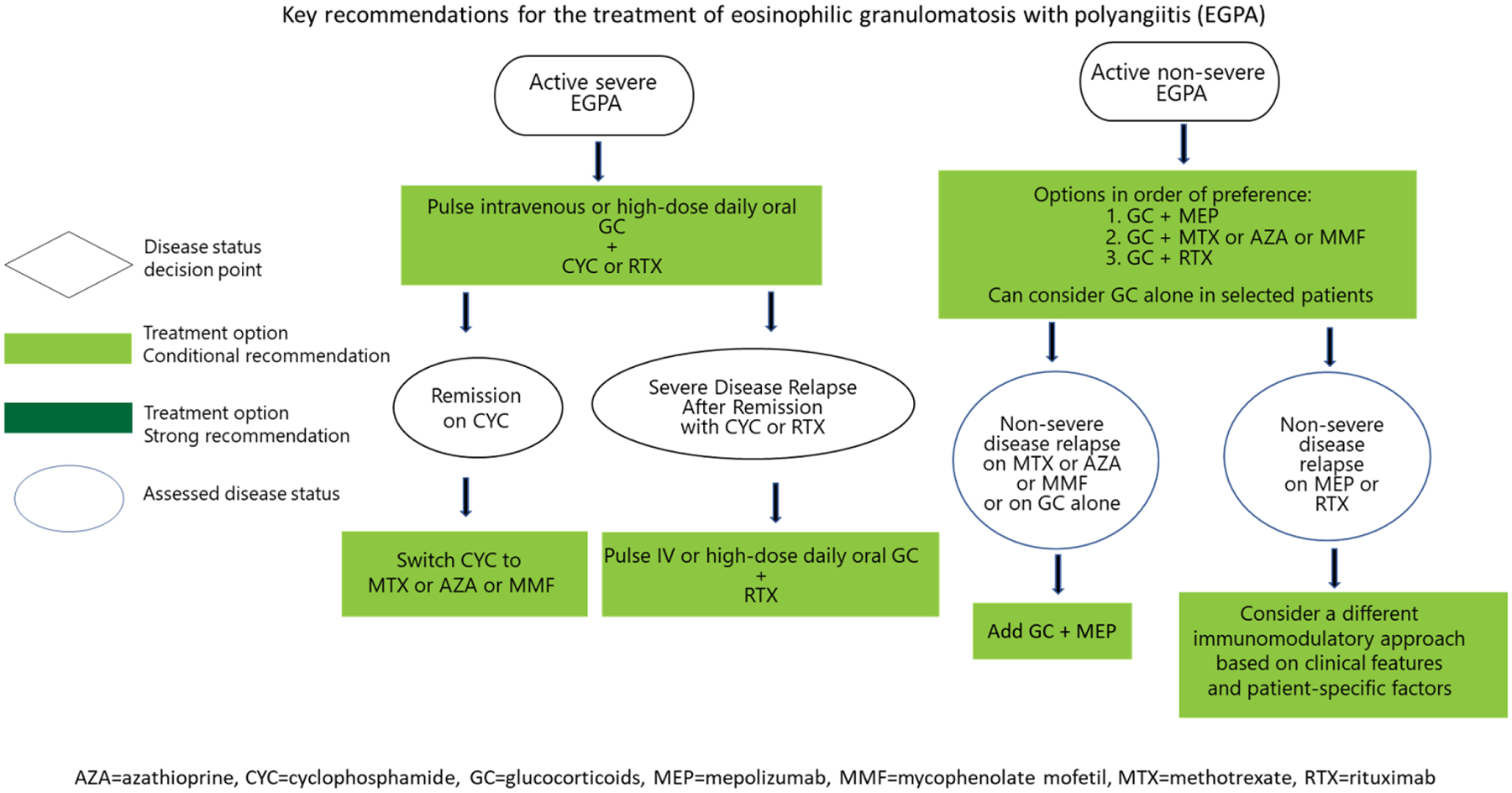
Key recommendations for the treatment of eosinophilic granulomatosis with polyangiitis.
Remission induction for active, severe EGPA
Ungraded Position Statement A: In patients with active, severe EGPA, either pulse intravenous or high-dose oral glucocorticoids may be prescribed as initial therapy.
There are no data to support favoring either pulse intravenous or high-dose oral glucocorticoids over the other option in active, severe EGPA. Which approach to use should be influenced by individual patient factors. In either instance, glucocorticoids should be combined with a non-glucocorticoid immunosuppressive agent such as cyclophosphamide or rituximab (Ungraded Position Statement B).
Ungraded Position Statement B: In patients with active, severe EGPA, either cyclophosphamide or rituximab may be prescribed for remission induction.
CYC has been more commonly used for remission induction for patient with active severe EGPA given the experience with CYC with other forms of vasculitis.[43]. Increasing experience with RTX in GPA/MPA has also led more patients with EGPA to be treated with RTX, and case-series suggest that RTX may also have efficacy for active, severe disease.[44] Given the comparative effectiveness of CYC and RTX for EGPA is unknown, the voting panel felt both CYC and RTX could be considered for remission induction with active, severe EGPA. CYC would be preferred for patient with active cardiac involvement given the increased experience with CYC as cardiomyopathy has been found to be the main independent predictor of death in EGPA (25, 26). CYCcan also be considered for patients who are ANCA negative and have severe neurologic or gastrointestinal manifestations. RTX may be considered in patients with a positive ANCA, active glomerulonephritis, prior CYC treatment, or at risk of gonadal toxicity from CYC.
Recommendation 1: In patients with active, severe EGPA we conditionally recommend treatment with cyclophosphamide or rituximab over mepolizumab for remission induction.
The efficacy of mepolizumab in severe EGPA has not been established, as patients with active severe disease were excluded from the randomized trial[45]. CYC or RTX would be recommended over mepolizumab in this setting.
Remission induction for active, non-severe EGPA
Recommendation 2: In patients with active, non-severe EGPA, we conditionally recommend initiating treatment with mepolizumab with glucocorticoids over methotrexate, azathioprine, or mycophenolate mofetil with glucocorticoids.
A range of immunosuppressive agents may be considered in the treatment of active, non-severe EGPA, all of which are used with glucocorticoids. The clinical profile of these non-severe EGPA patients includes predominantly asthma, sinus disease, and non-severe vasculitis. While there is significant clinical experience with MTX, AZA, and MMF, there is limited data regarding their efficacy and these treatments have not been assessed in randomized clinical trials. The GRADE methodology used in the guideline development process weighs clinical trials more heavily than observational studies. Thus, mepolizumab is recommended as the first choice because it has been found to be efficacious for non-severe EGPA in a randomized trial[45]. All patients in this trial had relapsing or refractory disease with 55% receiving an additional non-glucocorticoid immunosuppressive agent at the time of enrollment. A large proportion of patients in this trial had asthmatic and eosinophilic features, for which mepolizumab has also been found to be effective in non-EGPA disease settings. Although patients with non-severe vasculitic manifestations were represented in this trial, questions remain about the effectiveness of mepolizumab for all aspects of non-severe vasculitis. Individual factors, including disease manifestations, may impact the decision to use mepolizumab, in which case MTX, AZA, or MMF may be used instead. There are insufficient data to favor one of these medications (MTX, AZA, MMF) over the others; therefore, the choice should be influenced by individual patient factors.
Recommendation 3: In patients with active, non-severe EGPA, we conditionally recommend initiating treatment with methotrexate, azathioprine, or mycophenolate mofetil with glucocorticoids over glucocorticoids alone.
Patients should be treated with adjunctive MTX, AZA, or MMF rather than glucocorticoids alone to minimize glucocorticoid toxicity. One randomized trial that combined patients with EGPA, MPA, and polyarteritis nodosa without poor prognosis factors found the addition of AZA did not provide benefit beyond glucocorticoids alone.[46] Particularly in patients with asthma, this may impact the decision to use MTX, AZA, or MMF concurrently with glucocorticoids and could lead to consideration of mepolizumab. Glucocorticoid monotherapy may be appropriate for mild asthma, allergic symptoms, during pregnancy, or other individual patient situations.
Recommendation 4: In patients with active, non-severe EGPA, we conditionally recommend initiating treatment with methotrexate, azathioprine, or mycophenolate mofetil with glucocorticoids over cyclophosphamide or rituximab with glucocorticoids.
While the comparative efficacy of MTX, AZA, MMF, and RTX is not well established, MTX, AZA, or MMF is favored given the longer experience with these agents in EGPA compared to RTX. However, RTX may be considered if other agents are not effective in controlling active non-severe disease, or the patient has non-severe vasculitis (which in some series included mononeuritis multiplex) and is positive for ANCA. CYC should be avoided in treating active non-severe disease due to its toxicity and is the least preferred option in this setting.
Remission maintenance in EGPA
Recommendation 5: In patients with severe EGPA who have entered remission with cyclophosphamide therapy, we conditionally recommend methotrexate, azathioprine, or mycophenolate mofetil over rituximab for remission maintenance.
Typically, a maintenance agent would be used after remission induction of severe EGPA to reduce toxicity and the risk of relapse[47], although monophasic disease can occur[48]. AZA has been commonly used in published series of EGPA[46], but the lack of comparative evidence between AZA, MTX, or MMF in EGPA precludes recommending one agent over another.
Use of MTX, AZA, or MMF is recommended over RTX because there has been less experience with the use of RTX for remission maintenance in EGPA. RTX could be considered if remission was induced with rituximab, or if there are contraindications to other choices.
Recommendation 6: In patients with severe EGPA who have entered remission, we conditionally recommend treatment with methotrexate, azathioprine, or mycophenolate mofetil over mepolizumab for remission maintenance.
While there is limited data informing the use of remission maintenance therapy in EGPA, patients should be not continued on remission induction therapies (e.g., cyclophosphamide) indefinitely given the potential toxicity. Thus, MTX, AZA, or MMF can be considered for remission maintenance based on experience in GPA/MPA, expert opinion, and results from small studies [49]. The primary experience with mepolizumab is in refractory non-severe disease, and thus it is difficult to extrapolate its efficacy as a remission maintenance agent for severe disease.
Ungraded Position Statement C: The duration of glucocorticoid therapy in EGPA should be guided by the patient’s clinical condition, values, and preferences.
There is insufficient published evidence to support a specific duration of glucocorticoid treatment and thus, the length of glucocorticoid therapy should be determined based on each patient’s clinical circumstances. Many patients with EGPA require some amount of glucocorticoid, generally at a low-dose, to maintain control of asthma and allergic symptoms. The minimum effective dose should be prescribed to minimize glucocorticoid toxicity.
Treatment of Relapse:
Recommendation 7: In patients with EGPA who have relapsed with severe disease manifestations after prior successful remission induction with cyclophosphamide, we conditionally recommend treatment with rituximab over cyclophosphamide for remission re-induction.
RTX is favored based on the general desire to avoid retreatment with CYC if possible, as well as an observational study of RTX in relapsing or refractory EGPA[50]. CYC may be considered in instances of recurrent cardiac involvement due to its known association with mortality or with severe ANCA negative disease as discussed in Ungraded Position Statement B.
Recommendation 8: In patients with EGPA who have relapsed with severe disease manifestations after prior successful remission induction with rituximab, we conditionally recommend treatment with rituximab over switching to cyclophosphamide for remission re-induction.
Re-induction with RTX is favored over CYC to minimize toxicity. However, the duration of remission prior to the onset of relapse should be examined. CYC should be considered if a severe relapse occurred quickly after use of RTX, or if cardiac involvement is present (see Ungraded Position Statement B and Recommendation 7).
Recommendation 9: In patients with EGPA who have relapsed with non-severe disease manifestations (asthma and/or sino-nasal disease) while on methotrexate, azathioprine, or mycophenolate mofetil, we conditionally recommend adding mepolizumab over switching to another agent.
For patients with EGPA with active asthma, inhaled therapies should be maximized prior to increasing systemic immunosuppression. Although no direct comparative data is available, mepolizumab was found efficacious in a randomized trial of patients specifically described in this recommendation: those with relapsing non-severe EGPA on immunosuppressive therapy.[45] It has also been independently proven to be effective in eosinophilic asthma.[51] Based on this evidence, mepolizumab is recommended to treat non-severe relapsing disease in patients receiving MTX, AZA, or MMF rather than switching to an alternative agent of that group.
Recommendation 10: In patients with EGPA who have relapsed with non-severe disease manifestations (asthma and/or sino-nasal disease) while on low-dose glucocorticoids and no other therapy, we conditionally recommend adding mepolizumab over adding methotrexate, azathioprine, or mycophenolate mofetil.
Similar to the discussion for Recommendation 9, use of inhaled agents should be optimized in patients relapsing with asthma and/or sino-nasal disease. For patients on glucocorticoids alone, starting mepolizumab would be preferred over adding MTX, AZA, or MMF for patients with non-severe, relapsing EGPA given its proven efficacy for this population in a randomized trial.[45]
Recommendation 11: In patients with EGPA and high serum IgE levels who have relapsed with non-severe disease manifestations (asthma and/or sino-nasal disease) while on methotrexate, azathioprine, or mycophenolate mofetil, we conditionally recommend addingmepolizumab over adding omalizumab.
The published evidence with omalizumab, an anti-IgE antibody, in EGPA has been small. Thus, even in a patient with high serum IgE levels, mepolizumab is the preferred choice given the evidence from the randomized controlled trial.[45]
Other considerations in EGPA:
Recommendation 12: In patients with newly diagnosed EGPA on leukotriene inhibitors, we conditionally recommend continuing leukotriene inhibitors over discontinuing them.
Following the introduction of leukotriene inhibitors, concerns were raised about a link with the development of EGPA. Subsequent retrospective studies have not concluded that there is a causal relationship between leukotriene inhibitors and EGPA.[52] Therefore, patients with newly diagnosed with EGPA should have the option to continue a leukotriene inhibitor if it is beneficial in the management of their asthma or sino-nasal disease.
Ungraded Position Statement D: Use of leukotriene inhibitors is not contraindicated with in patients with EGPA with active asthma and/or sino-nasal disease.
Leukotriene inhibitors carry therapeutic indications for asthma and allergic rhinitis. As there has been no clear causal association with EGPA, a leukotriene inhibitor can be added to help manage asthma and sino-nasal disease. However, leukotriene inhibitors are one of many options and are not the only choice in this setting. Leukotriene inhibitors should not be used to treat manifestations aside from asthma and sino-nasal disease.
Recommendation 13: In patients with EGPA, we conditionally recommend obtaining an echocardiogram at the time of diagnosis.
Cardiac involvement is the major cause of disease-related mortality in EGPA. [48] Echocardiography has minimal risk and can identify cardiac involvement, which if present, would impact treatment decisions. Not identifying cardiac involvement could negatively impact patient outcomes. Thus, we recommend obtaining an echocardiogram in all newly diagnosed patients with EGPA, even in the absence of cardiac symptoms.
Recommendation 14: In patients with EGPA, we conditionally recommend using the Five Factor Score to guide therapy.
The Five Factor Score (FFS) first published in 1996[53] was based on 342 patients with either polyarteritis nodosa (PAN), as it was then defined, or EGPA. These five factors include proteinuria greater than > 1 gram/day, renal insufficiency with serum creatinine above 1.58 mg/dL, GI tract involvement, cardiomyopathy, and central nervous system involvement. The FFS is primarily a prognostic tool in which higher scores have been associated with a worse outcome.[53] It has been used to guide treatment[43] but its applicability to newer therapies is unknown. The FFS was revisited in 2011 in a population of 1108 patients with GPA, MPA, EGPA, or PAN.[54] The 2011 derivation included ENT parameters and age above 65. The 1996 FFS remains more commonly used and may be helpful in identifying organ-specific parameters associated with severe disease and guiding treatment. Although the definitions of severe and non-severe EGPA used in this guideline were not based on FFS, the FFS was felt to be useful to clinicians in making treatment decisions. The components of the FFS can serve as markers of severe disease that warrant more aggressive treatment.
Ungraded Position Statement E: In patients with sino-nasal involvement in EGPA, treatment with nasal rinses and topical therapies (e.g., antibiotics, lubricants, and glucocorticoids) may be considered.
Allergic rhinitis and sino-nasal disease are frequent clinical features of EGPA. Although the efficacy of nasal rinses and topical therapies in EGPA is not well-established, select patients may benefit. Where possible, consultation with an otolaryngologist who has expertise in treating AAV should be obtained to guide the use and choice of these agents. These interventions can continue to be beneficial even when symptoms have improved or resolved.
Recommendation 15: In patients with EGPA receiving cyclophosphamide or rituximab, we conditionally recommend prescribing medications for prophylaxis to prevent Pneumocystis jirovecii pneumonia.
Prophylaxis to prevent Pneumocystis jirovecii pneumonia is discussed in GPA/MPA Recommendation 24. The same considerations regarding prophylaxis to prevent Pneumocystis jirovecii for patients with GPA/MPA also apply to patients with EGPA.
Discussion
In this guideline, we present the first ACR/Vasculitis Foundation recommendations for the management of GPA, MPA, and EGPA. Although these recommendations provide a general guide for disease management, patients’ clinical condition, preferences, and values should influence their treatment. Overall, these recommendations reflect the evolving management of these diseases, including the new roles for biologic therapies and aggressive strategies to minimize glucocorticoid toxicity. The recommendations for GPA/MPA are supported by a greater number of randomized trials than are currently available in EGPA. All of the recommendations made for these three diseases are conditional, reflecting that there are settings in which the evidence is not strong or an alternative is a reasonable consideration. These recommendations should not be used by any agency to restrict access to therapy or to require that certain therapies be utilized prior to other therapies.
The physicians on the voting panel were primarily rheumatologists because the recommendations were being developed for rheumatologists in the US. Since the AAV are multi-system diseases, patients with AAV often receive care from other medical subspecialists (e.g., nephrologists, pulmonologists, and/or otolaryngologists). While the recommendations presented in this guideline are driven by the published data, other medical subspecialists may favor a different management strategy. We encourage rheumatologists to discuss treatment plans and coordinate care with other subspecialists as needed.
Recently, a clinical trial of avacopan in patients with GPA and MPA was published.[55] This guideline development effort did not include consideration of avacopan since the guidelines consider therapies that were approved by the US Food and Drug Administration (FDA) for use for any indication at the time of the last literature search. Therapies that are approved by the FDA after that date will be considered for inclusion in future updates to this guideline.
This guideline highlights gaps in our knowledge for the treatment of AVV. Most glaring is the lack of biomarkers or other non-invasive diagnostic testing with minimal toxicity that can accurately assess disease activity and predict outcomes. In addition, while we have evidence from randomized clinical trials to support recommendations regarding initial remission induction and maintenance therapy, critical questions remain unanswered, such as the optimal duration of therapy.
These gaps in knowledge reinforce the need for ongoing research in these diseases. Specific areas to investigate include:
Biomarker studies to identify more specific, reliable indicators of disease activity that can guide treatment decisions
Trials to clarify how best to use the medications currently available (e.g., dosing, duration, effective combinations, and in which population to use which drugs)
Trials to identify novel, targeted, and/or glucocorticoid-sparing agents with minimal toxicity
Long-term studies to understand the course of disease and safety of current therapies
We hope significant progress will be made in these areas such that future recommendations provide a more tailored approach to disease management, minimize treatment toxicity, and prevent organ damage in these patients.
Supplementary Material
Guidelines and recommendations developed and/or endorsed by the American College of Rheumatology (ACR) are intended to provide guidance for particular patterns of practice and not to dictate the care of a particular patient. The ACR considers adherence to the recommendations within this guideline to be voluntary, with the ultimate determination regarding their application to be made by the physician in light of each patient’s individual circumstances. Guidelines and recommendations are intended to promote beneficial or desirable outcomes but cannot guarantee any specific outcome. Guidelines and recommendations developed and endorsed by the ACR are subject to periodic revision as warranted by the evolution of medical knowledge, technology, and practice. ACR recommendations are not intended to dictate payment or insurance decisions, and drug formularies or other third-party analyses that cite ACR guidelines should state this. These recommendations cannot adequately convey all uncertainties and nuances of patient care.
The American College of Rheumatology is an independent, professional, medical and scientific society that does not guarantee, warrant, or endorse any commercial product or service.
Acknowledgments
We thank Anne M. Ferris, MBBS, Ora Gewurz-Singer, MD, Rula Hajj-Ali, MD, Eric Matteson, MD, MPH, Robert F. Spiera, MD, Linda Wagner-Weiner, MD, MS, and Kenneth J. Warrington, MD, for serving on the Expert Panel. We thank Antoine G. Sreih, MD, and Gary S. Hoffman, MD, MS, for their contributions during the early phases of this project as members of the Core Team. Dr. Hoffman’s participation ended July 2018 due to personal reasons. Dr. Sreih’s involvement ended in December 2018 when he became primarily employed by industry, which precluded his continued participation in this project. We thank Joyce Kullman with the Vasculitis Foundation for her assistance with recruitment for the Patient Panel. We thank Dr. Anisha B. Dua for leading the Patient Panel meeting, as well as the patients who participated in this meeting – Jane Ascroft, Scott A. Brunton, Dedra DeMarco, Thomas Fitzpatrick, Kathy A. Full, Jenn Gordon, Maria S. Mckay, Sandra Nye, Stephanie Sakson, Omar I. Vitobaldi and Ben Wilson. We thank Robin Arnold, Catherine E. Najem, MD, MSCE, and Amit Aakash Shah, MD, MPH, for their assistance with the literature review. We thank the ACR staff, including Ms. Regina Parker, for assistance in organizing the face-to-face meeting and coordinating the administrative aspects of the project, and Ms. Robin Lane for assistance in manuscript preparation. We thank Ms. Janet Waters for help in developing the literature search strategy and performing the initial literature search, and Ms. Janet Joyce for performing the update searches.
Grant Support:
This material is the result of a project supported by the American College of Rheumatology (ACR) and the Vasculitis Foundation (VF).
Footnotes
Financial Conflict: Forms submitted as required.
REFERENCES
- 1.Watts RA, Lane S, and Scott DG, What is known about the epidemiology of the vasculitides? Best Pract Res Clin Rheumatol, 2005. 19(2): p. 191–207. [DOI] [PubMed] [Google Scholar]
- 2.Ntatsaki E, Watts RA, and Scott DG, Epidemiology of ANCA-associated vasculitis. Rheum Dis Clin North Am, 2010. 36(3): p. 447–61. [DOI] [PubMed] [Google Scholar]
- 3.Mahr A, et al. , Prevalences of polyarteritis nodosa, microscopic polyangiitis, Wegener’s granulomatosis, and Churg-Strauss syndrome in a French urban multiethnic population in 2000: a capture-recapture estimate. Arthritis Rheum, 2004. 51(1): p. 92–9. [DOI] [PubMed] [Google Scholar]
- 4.Walton EW, Giant-cell granuloma of the respiratory tract (Wegener’s granulomatosis). Br Med J, 1958. 2(5091): p. 265–70. [DOI] [PMC free article] [PubMed] [Google Scholar]
- 5.Guyatt GH, et al. , GRADE: an emerging consensus on rating quality of evidence and strength of recommendations. BMJ, 2008. 336(7650): p. 924–6. [DOI] [PMC free article] [PubMed] [Google Scholar]
- 6.Andrews J, et al. , GRADE guidelines: 14. Going from evidence to recommendations: the significance and presentation of recommendations. J Clin Epidemiol, 2013. 66(7): p. 719–25. [DOI] [PubMed] [Google Scholar]
- 7.Alexander PE, et al. , A number of factors explain why WHO guideline developers make strong recommendations inconsistent with GRADE guidance. J Clin Epidemiol, 2016. 70: p. 111–22. [DOI] [PubMed] [Google Scholar]
- 8.Neumann I, et al. , A guide for health professionals to interpret and use recommendations in guidelines developed with the GRADE approach. J Clin Epidemiol, 2016. 72: p. 45–55. [DOI] [PubMed] [Google Scholar]
- 9.Stone JH, et al. , Rituximab versus cyclophosphamide for ANCA-associated vasculitis. N Engl J Med, 2010. 363(3): p. 221–32. [DOI] [PMC free article] [PubMed] [Google Scholar]
- 10.de Groot K, et al. , Pulse Versus Daily Oral Cyclophosphamide for Induction of Remission in Antineutrophil Cytoplasmic Antibody—Associated Vasculitis: A Randomized Trial. Annals of Internal Medicine, 2009. 150(10): p. 670–680. [DOI] [PubMed] [Google Scholar]
- 11.De Groot K, et al. , Randomized trial of cyclophosphamide versus methotrexate for induction of remission in early systemic antineutrophil cytoplasmic antibody–associated vasculitis. Arthritis & Rheumatism, 2005. 52(8): p. 2461–2469. [DOI] [PubMed] [Google Scholar]
- 12.Jones RB, et al. , Rituximab versus cyclophosphamide in ANCA-associated renal vasculitis. N Engl J Med, 2010. 363(3): p. 211–20. [DOI] [PubMed] [Google Scholar]
- 13.Jayne DRW, et al. , Randomized Trial of Plasma Exchange or High-Dosage Methylprednisolone as Adjunctive Therapy for Severe Renal Vasculitis. Journal of the American Society of Nephrology, 2007. 18(7): p. 2180–2188. [DOI] [PubMed] [Google Scholar]
- 14.Walsh M, et al. , Long-term follow-up of patients with severe ANCA-associated vasculitis comparing plasma exchange to intravenous methylprednisolone treatment is unclear. Kidney International, 2013. 84(2): p. 397–402. [DOI] [PubMed] [Google Scholar]
- 15.Walsh M, et al. , Plasma Exchange and Glucocorticoids in Severe ANCA-Associated Vasculitis. N Engl J Med, 2020. 382(7): p. 622–631. [DOI] [PMC free article] [PubMed] [Google Scholar]
- 16.Chanouzas D, et al. , Intravenous pulse methylprednisolone for induction of remission in severe ANCA associated Vasculitis: a multi-center retrospective cohort study. BMC Nephrol, 2019. 20(1): p. 58. [DOI] [PMC free article] [PubMed] [Google Scholar]
- 17.de Groot K, et al. , Therapy for the maintenance of remission in sixty-five patients with generalized Wegener’s granulomatosis. Methotrexate versus trimethoprim/sulfamethoxazole. Arthritis Rheum, 1996. 39(12): p. 2052–61. [DOI] [PubMed] [Google Scholar]
- 18.Guillevin L, et al. , Rituximab versus Azathioprine for Maintenance in ANCA-Associated Vasculitis. New England Journal of Medicine, 2014. 371(19): p. 1771–1780. [DOI] [PubMed] [Google Scholar]
- 19.Pagnoux C, et al. , Azathioprine or Methotrexate Maintenance for ANCA-Associated Vasculitis. New England Journal of Medicine, 2008. 359(26): p. 2790–2803. [DOI] [PubMed] [Google Scholar]
- 20.Smith R, Jayne D, and Merkel PA, A Randomized, Controlled Trial of Rituximab versus Azathioprine After Induction of Remission with Rituximab for Patients with ANCA-associated Vasculitis and Relapsing Disease [abstract]. Arthritis Rheumatol 2019. 71(suppl 10). [Google Scholar]
- 21.Smith RM, et al. , Rituximab for remission maintenance in relapsing antineutrophil cytoplasmic antibody–associated vasculitis. Arthritis & Rheumatism, 2012. 64(11): p. 3760–3769. [DOI] [PubMed] [Google Scholar]
- 22.Charles P, et al. , Comparison of individually tailored versus fixed-schedule rituximab regimen to maintain ANCA-associated vasculitis remission: results of a multicentre, randomised controlled, phase III trial (MAINRITSAN2). Annals of the Rheumatic Diseases, 2018. 77(8): p. 1143–1149. [DOI] [PubMed] [Google Scholar]
- 23.Hiemstra TF, et al. , Mycophenolate Mofetil vs Azathioprine for Remission Maintenance in Antineutrophil Cytoplasmic Antibody–Associated Vasculitis: A Randomized Controlled Trial. JAMA, 2010. 304(21): p. 2381–2388. [DOI] [PubMed] [Google Scholar]
- 24.Metzler C, et al. , Elevated relapse rate under oral methotrexate versus leflunomide for maintenance of remission in Wegener’s granulomatosis. Rheumatology (Oxford), 2007. 46(7): p. 1087–91. [DOI] [PubMed] [Google Scholar]
- 25.Stegeman CA, et al. , Trimethoprim–Sulfamethoxazole (Co-Trimoxazole) for the Prevention of Relapses of Wegener’s Granulomatosis. New England Journal of Medicine, 1996. 335(1): p. 16–20. [DOI] [PubMed] [Google Scholar]
- 26.Kado R, Sanders G, and McCune WJ, Diagnostic and therapeutic considerations in patients with hypogammaglobulinemia after rituximab therapy. Current Opinion in Rheumatology, 2017. 29(3). [DOI] [PubMed] [Google Scholar]
- 27.Karras A, et al. , Randomised controlled trial of prolonged treatment in the remission phase of ANCA-associated vasculitis. Ann Rheum Dis, 2017. 76(10): p. 1662–1668. [DOI] [PubMed] [Google Scholar]
- 28.Harper L, et al. , Pulse versus daily oral cyclophosphamide for induction of remission in ANCA-associated vasculitis: long-term follow-up. Ann Rheum Dis, 2012. 71(6): p. 955–60. [DOI] [PubMed] [Google Scholar]
- 29.Crickx E, et al. , Intravenous Immunoglobulin as an Immunomodulating Agent in Antineutrophil Cytoplasmic Antibody-Associated Vasculitides: A French Nationwide Study of Ninety-Two Patients. Arthritis Rheumatol, 2016. 68(3): p. 702–12. [DOI] [PubMed] [Google Scholar]
- 30.Sachse F and Stoll W, Nasal surgery in patients with systemic disorders. GMS current topics in otorhinolaryngology, head and neck surgery, 2010. 9: p. Doc02–Doc02. [DOI] [PMC free article] [PubMed] [Google Scholar]
- 31.Congdon D, et al. , Long-Term Follow-up of Repair of External Nasal Deformities in Patients With Wegener’s Granulomatosis. The Laryngoscope, 2002. 112(4): p. 731–737. [DOI] [PubMed] [Google Scholar]
- 32.Girard C, et al. , Tracheobronchial Stenoses in Granulomatosis With Polyangiitis (Wegener’s): A Report on 26 Cases. Medicine, 2015. 94(32): p. e1088–e1088. [DOI] [PMC free article] [PubMed] [Google Scholar]
- 33.Terrier B, et al. , Granulomatosis with polyangiitis: endoscopic management of tracheobronchial stenosis: results from a multicentre experience. Rheumatology, 2015. 54(10): p. 1852–1857. [DOI] [PubMed] [Google Scholar]
- 34.Martinez Del Pero M, et al. , Long-term Outcome of Airway Stenosis in Granulomatosis With Polyangiitis (Wegener Granulomatosis): An Observational Study. JAMA Otolaryngology–Head & Neck Surgery, 2014. 140(11): p. 1038–1044. [DOI] [PubMed] [Google Scholar]
- 35.Joshi L, et al. , Long-term Outcomes of Rituximab Therapy in Ocular Granulomatosis with Polyangiitis: Impact on Localized and Nonlocalized Disease. Ophthalmology, 2015. 122(6): p. 1262–1268. [DOI] [PubMed] [Google Scholar]
- 36.Durel C-A, et al. , Orbital mass in ANCA-associated vasculitides: data on clinical, biological, radiological and histological presentation, therapeutic management, and outcome from 59 patients. Rheumatology, 2019. 58(9): p. 1565–1573. [DOI] [PubMed] [Google Scholar]
- 37.Tomasson G, et al. , Value of ANCA measurements during remission to predict a relapse of ANCA-associated vasculitis--a meta-analysis. Rheumatology (Oxford, England), 2012. 51(1): p. 100–109. [DOI] [PMC free article] [PubMed] [Google Scholar]
- 38.Vernovsky I and Dellaripa PF, Pneumocystis carinii pneumonia prophylaxis in patients with rheumatic diseases undergoing immunosuppressive therapy: prealence and associated features. J Clin Rheumatol, 2000. 6(2): p. 94–101. [DOI] [PubMed] [Google Scholar]
- 39.Sagmeister MS, Grigorescu M, and Schönermarck U, Kidney transplantation in ANCA-associated vasculitis. Journal of Nephrology, 2019. 32(6): p. 919–926. [DOI] [PubMed] [Google Scholar]
- 40.Geetha D, et al. , Renal transplantation in antineutrophil cytoplasmic antibody-associated vasculitis: a multicenter experience. Transplantation, 2011. 91(12): p. 1370–1375. [DOI] [PMC free article] [PubMed] [Google Scholar]
- 41.Stassen PM, et al. , Venous thromboembolism in ANCA-associated vasculitis—incidence and risk factors. Rheumatology, 2008. 47(4): p. 530–534. [DOI] [PubMed] [Google Scholar]
- 42.Merkel PA, et al. , Brief Communication: High Incidence of Venous Thrombotic Events among Patients with Wegener Granulomatosis: The Wegener’s Clinical Occurrence of Thrombosis (WeCLOT) Study. Annals of Internal Medicine, 2005. 142(8): p. 620–626. [DOI] [PubMed] [Google Scholar]
- 43.Gayraud M, et al. , Long-term followup of polyarteritis nodosa, microscopic polyangiitis, and Churg-Strauss syndrome: Analysis of four prospective trials including 278 patients. Arthritis & Rheumatism, 2001. 44(3): p. 666–675. [DOI] [PubMed] [Google Scholar]
- 44.Mohammad AJ, et al. , Rituximab for the treatment of eosinophilic granulomatosis with polyangiitis (Churg-Strauss). Ann Rheum Dis, 2016. 75(2): p. 396–401. [DOI] [PubMed] [Google Scholar]
- 45.Wechsler ME, et al. , Mepolizumab or Placebo for Eosinophilic Granulomatosis with Polyangiitis. New England Journal of Medicine, 2017. 376(20): p. 1921–1932. [DOI] [PMC free article] [PubMed] [Google Scholar]
- 46.Puéchal X, et al. , Adding Azathioprine to Remission-Induction Glucocorticoids for Eosinophilic Granulomatosis With Polyangiitis (Churg-Strauss), Microscopic Polyangiitis, or Polyarteritis Nodosa Without Poor Prognosis Factors. Arthritis & Rheumatology, 2017. 69(11): p. 2175–2186. [DOI] [PubMed] [Google Scholar]
- 47.Durel CA, et al. , Long-Term Followup of a Multicenter Cohort of 101 Patients With Eosinophilic Granulomatosis With Polyangiitis (Churg-Strauss). Arthritis Care Res (Hoboken), 2016. 68(3): p. 374–87. [DOI] [PubMed] [Google Scholar]
- 48.Comarmond C, et al. , Eosinophilic granulomatosis with polyangiitis (Churg-Strauss): Clinical characteristics and long-term followup of the 383 patients enrolled in the French Vasculitis Study Group cohort. Arthritis & Rheumatism, 2013. 65(1): p. 270–281. [DOI] [PubMed] [Google Scholar]
- 49.Maritati F, et al. , Methotrexate versus cyclophosphamide for remission maintenance in ANCA-associated vasculitis: A randomised trial. PLoS One, 2017. 12(10): p. e0185880. [DOI] [PMC free article] [PubMed] [Google Scholar]
- 50.Teixeira V, et al. , Efficacy and safety of rituximab in the treatment of eosinophilic granulomatosis with polyangiitis. RMD Open, 2019. 5(1): p. e000905. [DOI] [PMC free article] [PubMed] [Google Scholar]
- 51.Ortega HG, et al. , Mepolizumab Treatment in Patients with Severe Eosinophilic Asthma. New England Journal of Medicine, 2014. 371(13): p. 1198–1207. [DOI] [PubMed] [Google Scholar]
- 52.Hauser T, et al. , The leucotriene receptor antagonist montelukast and the risk of Churg-Strauss syndrome: a case–crossover study. Thorax, 2008. 63(8): p. 677–682. [DOI] [PubMed] [Google Scholar]
- 53.Guillevin L, et al. , Prognostic factors in polyarteritis nodosa and Churg-Strauss syndrome. A prospective study in 342 patients. Medicine (Baltimore), 1996. 75(1): p. 17–28. [DOI] [PubMed] [Google Scholar]
- 54.Guillevin L, et al. , The Five-Factor Score Revisited: Assessment of Prognoses of Systemic Necrotizing Vasculitides Based on the French Vasculitis Study Group (FVSG) Cohort. Medicine, 2011. 90(1): p. 19–27. [DOI] [PubMed] [Google Scholar]
- 55.Jayne DRW, et al. , Avacopan for the Treatment of ANCA-Associated Vasculitis. N Engl J Med, 2021. 384(7): p. 599–609. [DOI] [PubMed] [Google Scholar]
Associated Data
This section collects any data citations, data availability statements, or supplementary materials included in this article.