


Abstract
Rationale
Falls in care facilities are common events, causing considerable morbidity and mortality for older people. This is an update of a review on interventions in care facilities and hospitals first published in 2010 and updated in 2012 and 2018 on interventions in care facilities and hospitals. This review has now been split into separate reviews for each setting.
Objectives
To assess the benefits and harms of interventions designed to reduce the incidence of falls in older people in care facilities.
Search methods
We searched the Cochrane Central Register of Controlled Trials (CENTRAL), MEDLINE, Embase, CINAHL, and two trial registers to 10 May 2024 and used reference checking, citation searching, and contact with authors to identify eligible trials and records.
Eligibility criteria
We included randomised controlled trials (RCTs) of any intervention for preventing falls in older people (aged over 65 years) in care facilities with any comparator. We excluded trials conducted in places of residence that do not provide residential health‐related care or rehabilitative services. We excluded trials where falls were recorded as adverse events of the intervention and those recruiting participants post‐stroke or living with Parkinson's disease.
Outcomes
Critical outcomes were rate of falls (number of falls per unit time) and number of fallers (risk of experiencing one or more falls). Important outcomes were risk of fracture, adverse events, and economic outcomes.
Risk of bias
We assessed risk of bias in the included studies against nine items (seven items from Cochrane's RoB 1 tool, plus method of ascertaining falls and baseline imbalance).
Synthesis methods
Two review authors independently performed study selection and data analysis. We calculated rate ratios (RaR) with 95% confidence intervals (CIs) for rate of falls and risk ratios (RRs) with 95% CIs for outcomes of risk of falling (number of people falling) and risk of fracture. We adjusted for clustering if not undertaken by trial authors. We grouped the results of trials with comparable interventions and participant characteristics, and pooled results where appropriate using the generic inverse variance method in RevMan. We conducted subgroup analyses according to intervention type, cognitive status, and informed by a qualitative comparative analysis where more than 10 trials were pooled and heterogeneity was high. Where pooling was precluded by the nature of the data, we presented trial data in tables for illustrative purposes or reported these in the text, or both. We used GRADE to assess the certainty of evidence. GRADE ratings of risk of bias were based on sensitivity analyses excluding trials at high risk of bias.
Included studies
We included 104 trials, 56 individually randomised and 48 cluster‐randomised trials, with 68,964 participants. Thirty‐three trials (27,492 participants) were added in this update. We assessed most of the included trials as at high risk of bias, often related to lack of blinding, which was rarely feasible for many intervention types. The certainty of evidence for the critical outcomes of falls ranged from high to very low. We have reported the critical outcomes for the main comparisons here. Regarding our important outcomes, adverse events were poorly reported, and the certainty of evidence was very low for all interventions; we have not reported these data here. The important outcomes of risk of fracture and cost‐effectiveness are only reported here when the certainty of the evidence was stronger than very low.
Synthesis of results
Multifactorial interventions. Overall, multifactorial interventions (i.e. two or more categories of intervention delivered based on individual risk profile) probably have little or no effect on the rate of falls (RaR 0.87, 95% CI 0.68 to 1.12; I² = 89%; 12 trials; 4843 participants; moderate‐certainty evidence), but probably reduce the risk of falling (RR 0.91, 95% CI 0.83 to 1.00; I² = 19%; 11 trials; 4557 participants; moderate‐certainty evidence). Multifactorial interventions may be cost‐effective in reducing falls (GBP 20,889 per quality‐adjusted life year, UK health and social care perspective; 1 trial; 1657 participants; low‐certainty evidence). A subgroup analysis informed by qualitative comparative analysis indicated that multifactorial interventions delivered in a tailored manner according to resident individual circumstances (e.g. living with dementia) with facility staff engagement have greater effects (P < 0.001) than those not delivered in this manner, and probably result in a large reduction in rate of falls (RaR 0.61, 95% CI 0.54 to 0.69; I² = 0%; 7 trials; 3553 participants; moderate‐certainty evidence) and risk of falling (RR 0.81, 95% CI 0.71 to 0.92; I² = 0%; 5 trials; 2993 participants; moderate‐certainty evidence). All trials included assessment of environmental and personal risk factors (including medication optimisation and assessment of need for assistive aids) and exercise interventions.
Exercise. As a single intervention, exercise was compared with usual care in 28 trials. At the end of the intervention period, active exercise probably reduces the rate of falls (RaR 0.68, 95% CI 0.51 to 0.91; I²= 84%; 14 trials; 2215 participants; moderate‐certainty evidence) and risk of falling (RR 0.86, 95% CI 0.75 to 1.00; I² = 37%; 13 trials; 2408 participants; moderate‐certainty evidence), but may have little or no effect on risk of any fracture (RR 1.01, 95% CI 0.58 to 1.78; 3 trials; 927 participants; low‐certainty evidence). After a period of post‐intervention follow‐up, if active exercise is not sustained there is no effect on rate of falls (RaR 1.02, 95% CI 0.78 to 1.32; I² = 64%; 7 trials; 1354 participants; high‐certainty evidence) and probably no effect on risk of falling (RR 1.06, 95% CI 0.92 to 1.23; I² = 17%; 7 trials; 1443 participants; moderate‐certainty evidence). Active exercise may be cost‐effective in reducing falls (AUD 18 per fall avoided, Australian health service perspective; 1 trial; 221 participants; low‐certainty evidence). A subgroup analysis based on level of cognition indicated that active exercise may reduce the risk of falling in residents with cognitive impairment (RR 0.72, 95% CI 0.57 to 0.91; 4 trials; 451 participants; low‐certainty evidence).
Medication optimisation. As a single intervention, medication optimisation interventions were diverse, but overall may make little or no difference to rate of falls (RaR 0.92, 95% CI 0.75 to 1.13; I² = 86%; 13 trials; 4314 participants; low‐certainty evidence) and probably make little or no difference to risk of falling (RR 0.96, 95% CI 0.89 to 1.03; I² = 0%; 12 trials; 6209 participants; moderate‐certainty evidence). We are uncertain of the impact of medication review/deprescribing on falls outcomes (RaR 0.94, 95% CI 0.76 to 1.18; I² = 86%; 12 trials; 4125 participants; very low‐certainty evidence; RR 0.90, 95% CI 0.80 to 1.01; I² = 0%; 9 trials; 1934 participants; very low‐certainty evidence). Medication review/deprescribing as a single intervention may not be cost‐effective (intervention had higher costs and falls, UK National Health Service and care home perspective; 1 trial; 826 participants; low‐certainty evidence).
Vitamin D supplementation. Vitamin D supplementation (with or without calcium supplementation, alone or within a multivitamin) probably reduces the rate of falls (RaR 0.63, 95% CI 0.46 to 0.86; I² = 72%; 5 trials; 4603 participants; moderate‐certainty evidence) but probably makes little or no difference to the risk of falling (RR 0.99, 95% CI 0.90 to 1.08; I² = 12%; 6 trials; 5186 participants; moderate‐certainty evidence). The population in these trials had low vitamin D levels.
Nutrition: dairy food supplementation. Increasing servings of dairy to residents through dietitian assistance with menu design to enhance protein and calcium through provision of dairy foods may decrease the risk of falling and fractures from falls (RR 0.89, 95% CI 0.79 to 1.00; RR fracture 0.67, 95% CI 0.48 to 0.93; 1 trial; 7195 participants; low‐certainty evidence).
Authors' conclusions
Multifactorial interventions implemented with facility staff engagement and tailored intervention delivery according to individual residents' circumstances probably reduce the rate of falls and risk of falling and may be cost‐effective. Regarding single interventions, exercise probably reduces the rate of falls and the risk of falling, but if exercise is not sustained it has no ongoing effect on the rate of falls and probably no effect on the risk of falling. Active exercise may reduce the risk of falling in residents with cognitive impairment and may be cost‐effective. Medication optimisation interventions were diverse overall and may make little or no difference to the rate of falls and probably little or no difference to the risk of falling. We are very uncertain of the effectiveness of medication review/deprescribing as a single intervention at reducing falls. Vitamin D supplementation probably reduces the rate of falls but probably makes little or no difference to the risk of falling. Addressing nutrition, increasing servings of dairy through dietitian assistance with menu design may decrease the risk of falling and risk of fractures.
Funding
The Australian National Health and Medical Research Council provides salary support for authors through the Centre of Research Excellence for Prevention of Falls Injuries (Dyer, Suen, and Kwok) and Medical Research Future Fund (Dyer and Suen). Dylan Kneale is supported in part by ARC North Thames and the National Institute for Health Care Research ARC North Thames.
Registration
Protocol (2023): Open Science Framework osf.io/y2nra Original review (2010): doi: 10.1002/14651858.CD005465.pub2 Review update (2012): doi: 10.1002/14651858.CD005465.pub3 Review update (2018): doi: 10.1002/14651858.CD005465.pub4
Plain language summary
How effective are interventions designed to reduce falls in older people in care facilities?
Key messages
Falls in care facilities are likely reduced by: multifactorial (made up of several parts) interventions that are put in place with the help of facility staff and delivered based on residents' individual circumstances (e.g. living with dementia); exercise; and vitamin D supplementation. The number of people falling may be reduced by: increasing servings of dairy through dietitian assistance with menu design; and exercise in residents with cognitive impairment. It is unclear if single interventions aiming to increase the appropriateness of medication delivery reduce falls.
Multifactorial and exercise interventions may be cost‐effective. However, if exercise is not continued, the effect on falls is not sustained. Increasing servings of dairy through dietitian assistance with menu design may reduce the number of people with fractures from falls.
There is now updated information on how to prevent falls in care facilities; we have mostly moderate to little confidence in the available evidence. There is still a need for further research on ways to prevent falls in people living in care facilities, particularly on the types of exercise that are most effective and on interventions to improve medication delivery.
How do we report interventions used to assess falls, and why is this important?
Falls among older people in care facilities, such as nursing homes, are common and can cause loss of independence, injuries, and sometimes death due to injury. Effective interventions to prevent falls are therefore important.
Studies of any intervention designed to reduce falls in older people compared to a group of people not receiving the intervention are grouped by type, guided by the fall prevention classification system (taxonomy) developed by the Prevention of Falls Network Europe (ProFaNE). Interventions are organised as follows:
multifactorial interventions: two or more categories of intervention such as exercise, medication review, and vitamin D supplementation are given based on a person's risk factors for falling;
single interventions: only one of the major categories of intervention is delivered to all participants in the group;
multiple interventions: the same combination of interventions is delivered to all participants in the group.
What did we want to find out?
We wanted to find out which interventions reduce falls among older people living in care facilities, in terms of number of people falling and number of falls experienced. We also looked at risk of fractures, unwanted effects of the interventions, and economic outcomes.
What did we do?
We searched for studies of interventions to reduce falls among older people living in care facilities. We compared and summarised the results of the studies and rated our confidence in the evidence based on factors such as study methods and sizes.
What did we find?
We found 104 studies (68,964 older people) with an average age of 84 years, of which 72% were women. Studies took place in 25 countries, and looked at multifactorial interventions; single interventions (exercise, medication optimisation (improving medication prescribing), vitamin D supplementation, dietitian advice and menu design to increase dairy supplementation, assistive technologies (tools to help older people function), staff training, and different ways of providing care); and multiple interventions.
Overall, multifactorial interventions probably do not lower the rate of falls (number of falls over time), but probably reduce the number of fallers. However, those multifactorial interventions put in place with the help of facility staff and delivered based on residents' individual circumstances (e.g. living with dementia) had a larger effect and probably reduce the rate of falls and number of fallers. Multifactorial interventions may also be cost‐effective in reducing falls.
Active exercise as a single intervention probably reduces the rate of falls and the number of fallers, but may have little or no effect on risk of fracture. However, if the exercise is not continued, the effect on rate of falls is not sustained, and there is probably no effect on number of fallers. Active exercise interventions may also reduce the number of fallers in residents with cognitive impairment (decline in mental abilities) and may be cost‐effective for reducing falls (looked at from an Australian health service perspective).
Overall, interventions aiming to improve medication prescribing varied, and may make little or no difference to rate of falls and probably little or no difference to number of fallers. We are uncertain of the effect of single interventions aiming to improve the appropriateness of the medications that residents take by conducting assessments and making recommendations. Such single interventions to improve medication prescribing may not be cost‐effective as a standalone intervention.
Prescription of vitamin D (with or without calcium) probably reduces rate of falls, but probably makes little or no difference to number of fallers. The residents in these studies appeared to have low vitamin D levels.
Increasing servings of dairy foods to residents through dietitian assistance with menu design may decrease the number of fallers and the risk of fractures from falling. No information was reported on rate of falls.
We are uncertain of the effect of the interventions on unwanted effects, as these were overall poorly reported in the included studies.
What are the limitations of the evidence?
We have mostly moderate to little confidence in the available evidence. Our confidence was limited because people in many of the studies were aware of which treatment they were getting, and not all studies provided information about everything that we were interested in. In addition, there were often problems with the methods used in studies to collect information.
How up‐to‐date is the evidence?
This review updates previous versions of the review published in 2010, 2012, and 2018. The evidence here is current to 10 May 2024.
Summary of findings
Summary of findings 1. Multifactorial interventions compared with usual care.
| Multifactorial interventions compared with usual care for falls prevention | ||||||
|
Population and setting: older (≥ 65 years) residents of care facilities Intervention: multifactorial interventions (2 or more categories of intervention given based on individual risk profile) Comparison: usual care (without intervention)a | ||||||
| Outcomes | Illustrative comparative risks* (95% CI) | Relative effect (95% CI) | No. of participants (trials) | Certainty of the evidence (GRADE) | Comments | |
| Assumed risk | Corresponding risk | |||||
| Usual care | Multifactorial | |||||
| Rate of falls Length of follow‐up: 6 to 12 months |
2300 per 1000 pyb | 2001 (1564 to 2576) per 1000 py | RaR 0.87 (0.68 to 1.12) |
4843 (12 trials) |
+++o MODERATEc |
1 additional trial (31 participants) reported zero falls in the intervention arm and 2 falls in the control arm over 11 weeks. |
| Risk of falling Length of follow‐up: 10 to 12 months |
500 per 1000d | 455 (415 to 500) per 1000 | RR 0.91 (0.83 to 1.00) |
4557 (11 trials) |
+++o MODERATEe |
|
| Risk of fracture Length of follow‐up: 10 to 12 months |
42 per 1000f | 340 (21 to 76) per 1000 | RR 0.95 (0.50 to 1.82) |
3817 (6 trials) |
+ooo VERY LOWg |
|
| Adverse events Length of follow‐up: 3 to 12 months |
See comment | See comment | Not estimable |
355 (3 trials) |
+ooo VERY LOWh |
2 trials reported no AEs. 1 trial reported an instance of a fall in the intervention arm. |
| Economic outcomes: cost‐effectiveness Length of follow‐up: 12 months |
See comment | See comment | Not estimable |
1657 (1 trial) |
++oo LOWi |
1 programme was cost‐effective (GBP 20,889 per QALY). UK (2017/2018) health and social care perspective: 53% to 57% probability cost‐effective based on DEMQOL; 89% to 92% probability cost‐effective based on EQ‐5D‐5L; 98.6% cost‐effective based on willingness to pay. |
| *Illustrative risks for the control group were derived from all or subgroups of trials reporting the outcome. The exact basis for the assumed risk for each outcome is provided in footnotes. The corresponding risk (and its 95% CI) is based on the assumed risk in the comparison group and the relative effect of the intervention (and its 95% CI). AE: adverse event; CI: confidence interval; DEMQOL: dementia quality of life instrument; py: person‐years; QALY: quality‐adjusted life year; QCA: qualitative comparative analysis; RaR: rate ratio; RR: risk ratio | ||||||
| GRADE Working Group grades of evidence High certainty: we are very confident that the true effect lies close to that of the estimate of the effect. Moderate certainty: we are moderately confident in the effect estimate: the true effect is likely to be close to the estimate of the effect, but there is a possibility that it is substantially different. Low certainty: our confidence in the effect estimate is limited: the true effect may be substantially different from the estimate of the effect. Very low certainty: we have very little confidence in the effect estimate: the true effect is likely to be substantially different from the estimate of effect. | ||||||
aThirteen of 15 trials described the control arm as usual care not receiving the intervention. In one trial contributing data to the risk of falling and fracture, the control arm received multidisciplinary assessment without the intervention in addition to usual care; in one trial contributing data to the rate of falls and risk of falling, the control included reminiscence therapy. bBased on the median rate of the control arm of trials included in Cameron 2018 [1]. cThe certainty of the evidence was downgraded one level for concerns about imprecision (wide CIs that include estimates of effect and no effect). Not downgraded for risk of bias, as the point estimate of effect was essentially unchanged by exclusion of trials at high risk of bias (Supplementary material 6; Analysis 1.4; Analysis 1.5). Not downgraded for inconsistency as high heterogeneity (RaR I² = 89%), but heterogeneity is explained by QCA subgroup analysis (QCA subgroup RaR I² = 0%). dModerate risk was based on the rounded mean control risk of the 20 trials reporting a moderate risk of falling, not described as high‐risk populations, trials included in Cameron 2018 [1]. eThe certainty of the evidence was downgraded one level for concerns about imprecision (CIs include the possibility of effect). Not downgraded for risk of bias, as the point estimate of effect was essentially unchanged by exclusion of trials at high risk of bias (Supplementary material 6; Analysis 1.4; Analysis 1.5). Not downgraded for inconsistency (RR I² = 15% and explained by QCA subgroup analysis, RR I² = 0%). fRisk based on the rounded median control risk of fracture of the trials reporting this outcome, trials included in Cameron 2018 [1]. gThe certainty of the evidence was downgraded one level for risk of bias (effect estimate changes with sensitivity analysis of exclusion of trials at high risk of bias) (Supplementary material 6; Analysis 1.6; RR fracture 0.48, 95% CI 0.24 to 0.98; 3 trials) and two levels for imprecision (very wide CIs that include estimates of strong effect and harm). Not downgraded for inconsistency (I² = 44%). hThe certainty of the evidence was downgraded one level for serious risk of bias (all trials at high risk of incomplete outcome data or baseline imbalance, or both), three levels for extremely serious imprecision (not powered for rare events), and two levels for other reasons (concerns that AEs were not recorded systematically and few trials reporting this outcome). iDowngraded one level for concerns about risk of bias (attrition bias) and one level for indirectness (concerns about applicability of costs and cost‐effectiveness in the UK setting compared to other countries).
Summary of findings 2. Active exercise compared with usual care.
| Active exercise compared with usual care for falls prevention | ||||||
|
Population and setting: older (≥ 65 years) residents of care facilities Intervention: exercise, outcomes measured at the end of the intervention period Comparison: usual care | ||||||
| Outcomes | Illustrative comparative risks* (95% CI) | Relative effect (95% CI) | No. of participants (trials) | Certainty of the evidence (GRADE) | Comments | |
| Assumed risk | Corresponding risk | |||||
| Usual care | Exercise | |||||
| Rate of falls Length of follow‐up: 3 to 15 months |
2300 per 1000 pya | 1564 (1173 to 2093) per 1000 py |
RaR 0.68 (0.51 to 0.91) |
2215 (14 trials) |
+++o MODERATEb |
5 additional trials (N = 170) with data not suitable for pooling reported a reduction in the rate of falls. There was considerable heterogeneity not explained by type of exercise. A subgroup analysis indicated that trials delivering moderate‐ to low‐intensity group exercise, or ambulatory residents exercise for more than 1 hour per week, may decrease falls (low‐certainty evidence). |
| Risk of falling Length of follow‐up: 3 to 12 months |
500 per 1000c | 430 (375 to 500) per 1000 |
RR 0.86 (0.75 to 1.00) |
2408 (13 trials) |
+++o MODERATEd |
1 additional trial (2 comparisons, N = 110) reported no significant difference in the risk of falling. A subgroup analysis indicated that trials delivering moderate‐ to low‐intensity group exercise, or ambulatory residents exercise for more than 1 hour per week, may decrease falls (low‐certainty evidence). |
| Risk of fracture Length of follow‐up: 4 to 12 months |
42 per 1000e | 42 (24 to 75) per 1000 |
RR 1.01 (0.58 to 1.78) |
927 (3 trials) |
++oo LOWf |
This outcome was infrequently reported. |
| Adverse events Length of follow‐up: 4 to 12 months |
See comment | See comment | Not estimable |
1731 (10 trials) |
+ooo VERY LOWg |
For all exercise trials (8 non‐serious AEs and 2 serious AEs): 4 trials reported no AEs; 2 trials reported no differences in short‐term aches and pains; 2 trials reported non‐serious AEs in the intervention arm; and 2 trials reported deaths for which an association with the intervention could not be excluded. |
| Economic outcomes: cost‐effectiveness | See comment | See comment | See comment |
221 (1 trial) |
++oo LOWh |
Cost‐effectiveness ratio of AUD 18 per fall per person avoided (95% CI AUD −380.34 to AUD 417.85; bootstrapped estimate) |
| *Illustrative risks for the control group were derived from all or subgroups of trials in care facilities reporting the outcome. The exact basis for the assumed risk for each outcome is provided in footnotes. The corresponding risk (and its 95% CI) is based on the assumed risk in the comparison group and the relative effect of the intervention (and its 95% CI). AE: adverse events; CI: confidence interval; py: person‐years; RaR: rate ratio; RR: risk ratio | ||||||
| GRADE Working Group grades of evidence High certainty: we are very confident that the true effect lies close to that of the estimate of the effect. Moderate certainty: we are moderately confident in the effect estimate: the true effect is likely to be close to the estimate of the effect, but there is a possibility that it is substantially different. Low certainty: our confidence in the effect estimate is limited: the true effect may be substantially different from the estimate of the effect. Very low certainty: we have very little confidence in the effect estimate: the true effect is likely to be substantially different from the estimate of effect. | ||||||
aBased on the median rate of the control arm of trials included in Cameron 2018 [1]. bThe certainty of the evidence was downgraded one level for inconsistency (RaR I² = 58%). Not downgraded for risk of bias, as the point estimate of effect was essentially unchanged by exclusion of trials at high risk of bias (Supplementary material 6, Analysis 6.8). cModerate risk based on the mean control risk of the 20 trials reporting a moderate risk of falling, not described as high‐risk populations, trials included in Cameron 2018 [1]. dThe certainty of the evidence was downgraded one level, as publication bias was strongly suspected due to asymmetry on funnel plot. Not downgraded for risk of bias, as the point estimate of effect was essentially unchanged by exclusion of trials at high risk of bias (Supplementary material 6, Analysis 6.9). eRisk based on the median control risk of fracture of the trials reporting this outcome, trials included in Cameron 2018 [1]. fThe certainty of the evidence was downgraded two levels for imprecision (very wide CIs and low total number of events). No trials were considered at high risk of bias. gThe certainty of the evidence was downgraded three levels for imprecision (extremely wide CIs indicating serious imprecision and low power to capture rare but serious AEs) and one level due to serious concerns about AEs not being recorded systematically. hThe certainty of the evidence was downgraded two levels for very serious concerns about indirectness (concerns about applicability of cost‐effectiveness in Australia compared to other contexts, in addition to concerns about shared equipment costs between facilities and incorporation of fall‐related healthcare expenditure only).
Summary of findings 3. Medication review/deprescribing compared with usual care.
| Medication review/deprescribing compared with usual care for falls prevention | ||||||
|
Population and setting: older (≥ 65 years) residents of care facilities Intervention: medication review/deprescribing Comparison: usual care | ||||||
| Outcomes | Illustrative comparative risks* (95% CI) | Relative effect (95% CI) | No. of participants (trials) | Certainty of the evidence (GRADE) | Comments | |
| Assumed risk | Corresponding risk | |||||
| Usual care | Medication optimisation | |||||
| Rate of falls Length of follow‐up: 3 to 12 months |
2300 per 1000 pya | 2162 (1748 to 2714) per 1000 py |
RaR 0.94 (0.76 to 1.18) |
4125 (12 trials) |
+ooo VERY LOWb |
5 additional trials (4347 participants)c with data not suitable for pooling; none reported a significant reduction in the rate of falls |
| Risk of falling Length of follow‐up: 3 to 12 months |
500 per 1000d | 450 (400 to 505) per 1000 |
RR 0.90 (0.80 to 1.01) |
1934 (9 trials) |
+ooo VERY LOWe |
4 additional trials (7236 participants) with data not suitable for pooling; none reported a significant reduction in the number of fallers |
| Risk of fracture Length of follow‐up: 3 to 12 months |
42 per 1000f | 27 (15 to 50) per 1000 |
RR 0.65 (0.36 to 1.19) |
703 (4 trials) |
+ooo VERY LOWg |
|
| Adverse events Length of follow‐up: 4 to 12 months |
See comment | See comment |
2469 (7 trials) |
+ooo VERY LOWh |
2 trials, no AEs; 2 trials no significant difference in AEs between arms; 1 trial significantly fewer severe AEs in intervention arms; 1 trial 1 serious AE in intervention arm; 1 trial 3 AEs after medication withdrawal | |
| Economic outcomes: cost‐effectiveness | See comment | See comment |
826 (1 trial) |
++oo LOWi |
Intervention had higher costs and falls (Desborough 2020). | |
| **Illustrative risks for the control group were derived from all or subgroups of trials in care facilities reporting the outcome. The exact basis for the assumed risk for each outcome is provided in footnotes. The corresponding risk (and its 95% CI) is based on the assumed risk in the comparison group and the relative effect of the intervention (and its 95% CI). AE: adverse event; CI: confidence interval; py: person‐years; RaR: rate ratio; RR: risk ratio | ||||||
| GRADE Working Group grades of evidence High certainty: we are very confident that the true effect lies close to that of the estimate of the effect. Moderate certainty: we are moderately confident in the effect estimate: the true effect is likely to be close to the estimate of the effect, but there is a possibility that it is substantially different. Low certainty: our confidence in the effect estimate is limited: the true effect may be substantially different from the estimate of the effect. Very low certainty: we have very little confidence in the effect estimate: the true effect is likely to be substantially different from the estimate of effect. | ||||||
aBased on the median rate of the control arm of trials included in Cameron 2018 [1]. bThe certainty of the evidence was downgraded two levels due to inconsistency (unexplained heterogeneity, I² = 86% and low subgroup credibility) and one level for indirectness (variation in approaches within medication review/deprescribing interventions). Not downgraded for risk of bias, as the point estimate of effect was essentially unchanged by exclusion of trials at high risk of bias (Supplementary material 6, Analysis 12.6). cTrials of medication review/deprescribing interventions (thus excluding Jordan 2015), as reported in Supplementary material 6, Analysis 12.2, using average number of beds from Cateau 2021a as an estimate of participant numbers. Tadrous 2020 does not report data on rate of falls. Cateau 2021a and Streim 2012 do not report data on number of fallers. dModerate risk, based on the mean control risk of the 20 trials reporting a moderate risk of falling, not described as high‐risk populations, trials included in Cameron 2018 [1]. eThe certainty of the evidence was downgraded one level for inconsistency (low credibility of subgroup analysis), one level due to indirectness (variation in approaches within medication review/deprescribing interventions), and one level for imprecision (the CIs include the possibility of a slight increase in falls). Not downgraded for risk of bias, as the point estimate of effect was essentially unchanged by exclusion of trials at high risk of bias (Supplementary material 6, Analysis 12.7). fRisk based on the median control risk of fracture of the trials reporting this outcome, trials included in Cameron 2018 [1]. gThe certainty of the evidence was downgraded for inconsistency (low credibility of subgroup analysis), one level due to indirectness (variation in approaches within medication optimisation interventions), and two levels for imprecision (very small number of fractures, CIs cross the range of strong effect and significant harm). Not downgraded for risk of bias, as the point estimate of effect was essentially unchanged by exclusion of trials at high risk of bias (Supplementary material 6, Analysis 12.8). hThe certainty of the evidence was downgraded one level due to indirectness (not all included trials delivered a medication review intervention directly to all participants), three levels for imprecision (small number of events, CIs cross the range of strong effect and significant harm, and infrequent reporting of the outcome among trials), and one level due to concerns that AEs were not monitored systematically in some trials. iThe certainty of the evidence was downgraded one level due to risk of bias (single trial at high risk of attrition bias and baseline imbalance) and one level for indirectness (concerns about the applicability of the implementation, intervention components, and cost‐effectiveness of a single trial to medication reviews more broadly and as implemented internationally).
Summary of findings 4. Vitamin D supplementation compared with no vitamin D supplementation.
| Vitamin D supplementation compared with no vitamin D supplementation for falls prevention | ||||||
|
Population and setting: older (≥ 65 years) residents of care facilitiesa Intervention: vitamin D supplementation (vitamin D ± calcium, ± within multivitamin supplement)b Comparison: usual care (or calcium supplementation) | ||||||
| Outcomes | Illustrative comparative risks* (95% CI) | Relative effect (95% CI) | No. of participants (trials) | Certainty of the evidence (GRADE) | Comments | |
| Assumed risk | Corresponding risk | |||||
| Usual care (or calcium supplementation) | Vitamin D | |||||
| Rate of falls Length of follow‐up: 3 to 24 months |
2300 per 1000 pyc | 1449 (1058 to 1978) per 1000 py |
RaR 0.63 (0.46 to 0.86) |
4603 (5 trials) |
+++o MODERATEd |
|
| Risk of falling Length of follow‐up: 3 to 24 months |
500 per 1000 pye | 495 (450 to 540) per 1000 |
RR 0.99 (0.90 to 1.08) |
5186 (6 trials) |
+++o MODERATEf |
|
| Risk of fracture Length of follow‐up: 3 to 24 months |
42 per 1000g | 39 (23 to 66) per 1000 |
RR 0.92 (0.54 to 1.56) |
5047 (4 trials) |
+ooo VERY LOWh |
These trials represent only a subset of trials evaluating the effect of vitamin D on fractures. |
| Adverse events Length of follow‐up: 3 to 24 months |
NDi | NDi |
RR 0.91 (0.51 to 1.61) GI events |
705 (GI events, 2 trials) (4 trials, 1365 participants any AEs) |
+ooo VERY LOWj |
No serious events reported. |
| Economic outcomes: cost‐effectiveness | No available data | |||||
| *Illustrative risks for the control group were derived from all or subgroups of trials in care facilities reporting the outcome. The exact basis for the assumed risk for each outcome is provided in footnotes. The corresponding risk (and its 95% CI) is based on the assumed risk in the comparison group and the relative effect of the intervention (and its 95% CI). AE: adverse event; CI: confidence interval; GI: gastrointestinal; ND: not done; py: person‐years; RaR: rate ratio; RR: risk ratio | ||||||
| GRADE Working Group grades of evidence High certainty: we are very confident that the true effect lies close to that of the estimate of the effect. Moderate certainty: we are moderately confident in the effect estimate: the true effect is likely to be close to the estimate of the effect, but there is a possibility that it is substantially different. Low certainty: our confidence in the effect estimate is limited: the true effect may be substantially different from the estimate of the effect. Very low certainty: we have very little confidence in the effect estimate: the true effect is likely to be substantially different from the estimate of effect. | ||||||
aTrials confirmed the participants had low or very low serum vitamin D levels at baseline. bTrials included two trials of vitamin D3 + calcium versus calcium, 2 trials of vitamin D2 versus usual care or placebo, 1 trial of 800 international units of vitamin D3 + 1200 mg calcium carbonate daily, and 1 trial of multivitamin supplementation including vitamin D and calcium. cBased on the median rate of the control arm of trials included in Cameron 2018 [1]. dThe certainty of the evidence was downgraded one level for inconsistency (I²= 72%; P = 0.003). Not downgraded for risk of bias, as the point estimate of effect was essentially unchanged by exclusion of trials at high risk of bias (Supplementary material 6, Analysis 15.7) or for other reasons; one trial with industry funding contributed to 9% of the weighting of the meta‐analysis (Grieger 2009). eModerate risk was based on the mean control risk of the 20 trials reporting a moderate risk of falling, not described as high‐risk populations, trials included in Cameron 2018 [1]. fThe certainty of the evidence was downgraded one level for inconsistency (inconsistent findings of overall analysis and sensitivity analysis excluding trials at high risk of bias, RR 0.83, 95% CI 0.68 to 1.02; I² = 0%; Supplementary material 6, Analysis 15.8). Not downgraded for other reasons; two trials contributing 24.7% of the weighting of the meta‐analysis had industry funding. gRisk based on the median control risk of fracture of the trials reporting this outcome, trials included in Cameron 2018 [1]. hThe certainty of the evidence was downgraded one level for inconsistency (I² = 66%) and two levels for imprecision (small number of fractures, CIs cross the range of strong effect and significant harm). Not downgraded for risk of bias, as the point estimate of effect was essentially unchanged by exclusion of trials at high risk of bias (Supplementary material 6, Analysis 15.9) or for other reasons; one trial contributing 29.4% to the meta‐analysis had industry funding. iNot done. Illustrative comparative risks not presented, as considered uninformative due to paucity of available data. jThe certainty of the evidence was downgraded two levels for imprecision (low event rate, inadequate power to assess rare AEs) and two levels for other reasons (concerns that AEs were not recorded systematically and likely publication bias, few trials reported the gastrointestinal AEs outcome).
Summary of findings 5. Nutrition (dairy food supplementation) compared with usual care.
| Nutrition (dairy food supplementation) compared with usual care for falls prevention | ||||||
|
Population and setting: older (≥ 65 years) residents of care facilities Intervention: increasing servings of dairy food to residents through dietitian assistance with menu design Comparison: usual care | ||||||
| Outcomes | Illustrative comparative risks* (95% CI) | Relative effect (95% CI) | No. of participants (trials) | Certainty of the evidence (GRADE) | Comments | |
| Assumed risk | Corresponding risk | |||||
| Usual care | Dairy | |||||
| Rate of falls | No data available | |||||
| Risk of falling Length of follow‐up: 10 to 12 months |
500 per 1000 pya | 445 (395 to 500) per 1000 | RR 0.89 (0.79 to 1.00) |
7195 (1 trial) |
++oo LOWb |
|
| Risk of fracture Length of follow‐up: 10 to 12 months |
42 per 1000 pyc | 28 (20 to 39) per 1000 | RR 0.67 (0.48 to 0.93) |
7195 (1 trial) |
++oo LOWb |
|
| Adverse events Length of follow‐up: 12 months |
See comment | See comment | Not estimable |
7195 (1 trial) |
+ooo VERY LOWd |
"No adverse gastrointestinal events related to the intervention were reported." |
| Economic outcomes: cost‐effectiveness | See comment |
7224 (1 trial) |
+ooo VERY LOWe |
Cost savings AUD 8719 per fracture (95% CI NR) | ||
| *Illustrative risks for the control group were derived from all or subgroups of trials in care facilities reporting the outcome. The exact basis for the assumed risk for each outcome is provided in footnotes. The corresponding risk (and its 95% CI) is based on the assumed risk in the comparison group and the relative effect of the intervention (and its 95% CI). AE: adverse event; CI: confidence interval; NR: not reported; py: person‐years; RaR: rate ratio; RR: risk ratio | ||||||
| GRADE Working Group grades of evidence High certainty: we are very confident that the true effect lies close to that of the estimate of the effect. Moderate certainty: we are moderately confident in the effect estimate: the true effect is likely to be close to the estimate of the effect, but there is a possibility that it is substantially different. Low certainty: our confidence in the effect estimate is limited: the true effect may be substantially different from the estimate of the effect. Very low certainty: we have very little confidence in the effect estimate: the true effect is likely to be substantially different from the estimate of effect. | ||||||
aModerate risk based on the rounded mean control risk of the 20 trials reporting a moderate risk of falling, not described as high‐risk populations, trials included in Cameron 2018 [1]. bThe certainty of the evidence was downgraded one level for concerns about risk of bias (attrition bias, reporting bias, and unclear risk of bias for method of ascertaining falls) and one level for indirectness (facilities enrolled based on serving ≤ 2 serves of dairy daily and adequate vitamin D supplementation, may not be applicable to all facilities). cRisk based on the rounded median control risk of fracture of the trials reporting this outcome, trials included in Cameron 2018 [1]. dThe certainty of the evidence was downgraded one level for concerns about risk of bias (attrition bias and unclear risk of bias for method of ascertaining falls), one level for indirectness (facilities enrolled based on serving ≤ 2 serves of dairy daily and adequate vitamin D supplementation, may not be applicable to all facilities), and one level for other reasons as it was unclear if AE data were collected systematically (not specified in detail in trial registration or protocol). eThe certainty of the evidence was downgraded one level for concerns about risk of bias in the trial from which data were derived (attrition bias, reporting bias, and unclear risk of bias for method of ascertaining falls), two levels for indirectness (facilities enrolled based on serving ≤ 2 serves of dairy daily and adequate vitamin D supplementation, may not be applicable to all facilities; intervention costs did not include dietitian assistance, costs of fracture are not based on trial data, and costs are those associated with falls (not fractures) in Dutch, not Australian, nursing homes), and one level as the analysis was a post hoc analysis with resource use not based on within‐trial data.
Background
Description of the setting
This review included and examined randomised controlled trials (RCTs) of fall prevention interventions conducted in care facilities for older people. We considered care facilities (nursing homes or residential aged care facilities) as those providing permanent care that includes some level of health‐related or rehabilitative care. Thus, trials conducted in facilities providing short‐term nursing/rehabilitative care or assistance for activities of daily living that do not include this type of care, for example retirement villages, were not included.
Description of the condition
Trials of falls in care facilities show considerable variation in falls incidence rates, but an indicative figure is 1.70 falls per person‐year, compared with 0.65 falls per person‐year for older people living in the community [2]. In a study conducted in 40 Canadian residential care facilities, 62% of participants fell over a one‐year period, with a falls rate of 2.51 falls per person per year [3]. However, it should be noted that routine recording of falls incidents in standard reporting systems is likely to have underestimated the incidence of falls [4, 5]. In a prospective one‐year study in 528 nursing homes in Bavaria, Germany, about 75% of falls occurred in the residents' rooms or in bathrooms, 41% occurred during transfers, and 36% when walking [6]. The fall rate was higher in men (2.80 falls per person‐year) than in women (1.49 falls per person‐year), and falls were less common in people requiring the lowest and highest levels of care. Lord and colleagues also found that fall rates were lower in frailer people who were unable to rise from a chair or stand unaided [7]. In this group, increased age, male sex, higher care classifications, incontinence, psychoactive medication use, previous falls, and slow reaction times were associated with increased falls. Systematic reviews have shown that in nursing homes, falls history, walking aid use, moderate disability, insomnia, depression, cognitive impairment, wandering, Parkinson's disease, dizziness, use of sedatives, antipsychotics, antidepressants, and total number of medications used are associated with an increased risk of falling [8, 9, 10]. In residents with dementia, age, use of psychotropic drugs, fair or poor general health, gait impairment, and trunk restraint use are associated with an increased number of falls [11].
There is considerable mortality and morbidity associated with falls in care facilities. Falls have been reported to be the most common cause of death from an external cause, and care facility residents are also more than five times more likely to be hospitalised with a hip fracture than people living in the community [12, 13].
Description of the intervention and how it might work
Most falls are caused by complex combinations of factors operating at the time of each fall event. Interventions may target risk factors in participants, or target staff and clinicians with the aim of improving clinical practice or the organisation of care, including organisational level policy and practice (e.g. staff training). In some trials, single interventions have been evaluated, while in others, interventions with more than one component have been studied. Delivery of multiple‐component interventions may be based on individual assessment of risk (a multifactorial intervention) or where the same components are provided to all participants (a multiple intervention). A taxonomy has been developed to describe and classify types of interventions [14, 15]. Key intervention categories include: exercise; medication (drug target, e.g. interventions that include interventions targeting vitamin D and medication optimisation interventions including medication reviews); fluid or nutritional therapy; environment or assistive technologies including bed/chair alarms; social environment interventions that target staff members and changes in the organisational system; knowledge interventions; and multiple or multifactorial interventions.
Many RCTs considered within this review provided a comparison with 'usual care' in the care facilities involved. Usual care typically includes standard practices for managing commonly known, potentially modifiable, risk factors for falls, and, moreover, the components of usual care will vary both over time and between settings.
Background to the methods used in this review
In this review, we aimed to synthesise the evidence for some falls prevention interventions using novel methods. Intervention component analysis (ICA) and qualitative comparative analysis (QCA) were incorporated to explore trial features as well as context and implementation [16]. As falls prevention interventions and implementation in the aged care setting is highly complex, it can be difficult to determine the causes of heterogeneity with simple uni‐dimensional subgroup analyses. These analyses can uncover the degree of overlap between a set of trials with a successful or an unsuccessful outcome and sets of trials that share features, to aid in determining causes of heterogeneity in complex interventions. The ICA and QCA approaches have previously been applied to systematic reviews exploring complex public health interventions [17, 18, 19, 20, 21].
Why it is important to do this review
This review is an update of a Cochrane review first published in 2010 [22] (which was split from an earlier version of the review for all settings [23]) and previously updated in 2012 [24] and 2018 [1]. The current review summarises evidence of the impact of purposeful interventions designed to prevent falls. Despite routine activities attempting to reduce falls, falls remain common in care facilities, resulting in considerable mortality and morbidity. Since the 2018 update, a number of significant trials addressing falls prevention in this setting have been completed, including Hewitt 2018 [25, 26, 27, 28, 29, 30, 31], Iuliano 2021 [32, 33, 34, 35, 36], and Logan 2021 [37, 38, 39, 40, 41, 42, 43, 44, 45, 46, 47, 48, 49]. As this review is regularly accessed and widely informs clinical practice guidelines, healthcare professionals, researchers, policymakers, informal caregivers, and consumers, an update was required. In 2025, this fourth iteration of the review addresses only interventions to reduce falls in care facilities. Due to the increasing number of trials reported in each setting, an update of the review addressing interventions to reduce falls in hospitals will be reported separately.
Objectives
To assess the benefits and harms of interventions designed to reduce the incidence of falls in older people in care facilities.
Methods
Latest update
The detailed methods for this review are published on Open Science Framework [50]. This review is an update of the Cochrane review 'Interventions for preventing falls in older people in care facilities and hospitals' published in 2018 [1]. The current review follows the methods of previous versions of this review, including the search strategies, study selection criteria, data extraction and synthesis methods. However, we made the following changes.
The review now only includes studies conducted in care facilities. A review updating the evidence on interventions for preventing falls in hospitals will be reported separately.
The classification of 'medication review' has been termed 'medication optimisation' to more accurately reflect the types of studies included in this category.
In the subgroup analyses by exercise type, exercise trials have been recategorised according to the primary type of exercise provided within the exercise programme.
For exercise interventions, trials of 'other' types of exercise (i.e. whole‐body vibration) are reported separately from active exercise interventions.
The effects of exercise interventions are presented according to two separate analyses. These represent the effect on outcomes as measured at the end of the intervention period and as measured after a period of post‐intervention follow‐up.
QCA has been conducted for comparisons where the meta‐analysis includes more than 10 trials and there is high heterogeneity, to incorporate qualitative information from included trials to inform subgroup analyses. This has been informed by an ICA for exercise and multifactorial interventions. We conducted subgroup analyses informed by QCA findings for multifactorial and exercise interventions.
We removed subgroup analyses by level of care.
Ratings for risk of bias within GRADE have been informed by a sensitivity analysis excluding trials at high risk of bias, to increase consistency with other Cochrane falls prevention reviews [51, 52].
Detailed differences between this version of the review and the 2018 update are reported in 'Differences between the protocol and review' (Supplementary material 8). We followed the Methodological Expectations for Cochrane Intervention Reviews (MECIR) when conducting the review [53], and PRISMA 2020 for the reporting [54].
Criteria for considering studies for this review
Types of studies
We included all RCTs, including quasi‐randomised trials (e.g. alternation), cluster‐randomised trials, and trials in which treatment allocation was inadequately concealed.
Types of participants
We included trials of interventions to prevent falls in older people, of any gender, in care facilities. We included trials if the majority of participants were over 65 years, or the mean participant age was 65 years or over, and the majority were living in care facilities providing permanent care. We excluded trials conducted in places of residence that do not provide residential health‐related care or rehabilitative services, for example retirement villages or sheltered housing. Trials including participants resident in both the community and in care facilities were included either in this review or in other Cochrane reviews of interventions for preventing falls in older people living in the community [51, 52, 55], depending on the proportion of participants in each setting. The setting where the falls occurred determined for which review the trial was considered, and was discussed between the review authors of the relevant reviews. Trials recording falls in both settings could be included in more than one review.
We excluded interventions that took place in the community, hospital, emergency department, or outpatient department settings.
We excluded trials recruiting participants post‐stroke or living with Parkinson’s disease, as interventions to prevent falls in these populations are evaluated in separate Cochrane reviews ('Interventions for preventing falls in people after stroke' [56] or 'Interventions for preventing falls in Parkinson's disease' [57]).
Types of interventions
We included trials of any intervention designed to reduce falls in older people compared with any other intervention (usual care or placebo). We grouped interventions guided by the fall prevention classification system (taxonomy) developed by the Prevention of Falls Network Europe (ProFaNE) [14, 15]. Trials have been grouped by combination as: multifactorial, multiple, or single, and then by the type of intervention (descriptors), for single interventions, as follows.
-
Exercise, including:
active exercise;
whole‐body vibration.
-
Medication (drug target), including:
medication optimisation (e.g. withdrawal, dose reduction or increase, substitution, provision, strategies such as training to improve these approaches);
vitamin D supplementation.
Nutrition: dairy food supplementation
Environment/assistive technology
-
Social environment, including:
staff training;
service model change.
Psychological interventions
Knowledge
Other single interventions
For exercise interventions, trials of 'other' types of exercise (i.e. whole‐body vibration) are reported separately from active exercise interventions.
For medication target interventions, various strategies to improve medication prescribing and use such as medication review or deprescribing, either through direct methods or by utilising alternative approaches like education to prompt medication review, were employed. These interventions were categorised most appropriately according to ProFaNE as medication review; however, not all trials performed medication review on all participants, thus this group of interventions is more appropriately described as medication optimisation interventions in this review [58].
We classified interventions according to target (e.g. Kennedy 2015 [3, 59, 60, 61, 62, 63, 64] delivering education aimed at increasing prescription for vitamin D was classified under vitamin D; Juola 2015 [65, 66, 67] examining education to increase nurse awareness of harmful medications and adverse drug reactions was classified as medication optimisation). Where trials included multiple components within the same intervention classification, the interventions were classified according to the target of the intervention rather than as multiple (e.g. Holland 2023 [68, 69, 70, 71, 72, 73, 74, 75] within medication optimisation includes staff training on medication optimisation in addition to medication review).
Full details are available in the ProFaNE taxonomy manual [14].
We excluded trials where falls were recorded as potential adverse events (AEs) of the intervention, and were not considered as likely to reduce falls by the trial authors. This review aims to synthesise the evidence for interventions intended to prevent falls. Including trials that record falls due to a concern that the intervention may increase falls as an AE of the intervention would not provide appropriate evidence and may mask the effects of interventions intended to reduce falls, if outcomes were pooled.
Outcome measures
We only included trials that reported raw data or statistics relating to rate or number of falls, or number of participants sustaining at least one fall during follow‐up (fallers). We included trials that reported only those participants who had more than one fall. We excluded trials that reported only specific types of fall (e.g. injurious falls, bedside falls). We excluded trials that focused on intermediate outcomes such as improved balance or strength, or fear of falling, and that did not report falls or falling as an outcome.
Critical outcomes
Rate of falls (falls per unit of person time that falls were monitored)
Risk of falling (number of fallers, i.e. risk of experiencing one or more falls)
Important outcomes
Risk of fracture (number of participants sustaining fall‐related fractures)
Adverse events (AEs) (complications of the interventions)
Economic outcomes
Search methods for identification of studies
Electronic searches
For this update, the search results were limited from 2017 onwards. Details of the search strategies used for previous versions of the review are provided in Cameron 2012 [24] and Cameron 2018 [1]. As this review stems from the previous review 'Interventions to reduce falls in care facilities and hospitals', the search strategies used terms for both care facilities and hospitals (i.e. search updates for both reviews were conducted simultaneously until the December 2022 search). Initial searches were run in March 2021, December 2021, and December 2022. A top‐up search using only terms for care facilities was run on 10 May 2024 (Supplementary material 1).
We searched the Cochrane Central Register of Controlled Trials (CENTRAL) via the Cochrane Register of Studies (CRS‐Web), MEDLINE (Ovid MEDLINE and Epub Ahead of Print, In‐Process, In‐Data‐Review and Other Non‐indexed Citations, Daily and Versions), Embase (Ovid), and the Cumulative Index to Nursing and Allied Health Literature (CINAHL) Plus (EBSCOhost). We also searched ongoing trial registers via the World Health Organization International Clinical Trials Registry Platform (WHO ICTRP) (trialsearch.who.int/) and ClinicalTrials.gov (clinicaltrials.gov). We did not apply any language restrictions.
In MEDLINE (OvidSP), subject‐specific search terms were combined with the sensitivity‐ and precision‐maximising version of the Cochrane Highly Sensitive Search Strategy for identifying randomised trials in MEDLINE [76]. We modified this strategy for use in CENTRAL, Embase, and CINAHL (seeSupplementary material 1 for all strategies).
Searching other resources
We also conducted citation searching (i.e. checking the reference lists of articles and relevant systematic reviews) and contacted researchers in the field to enquire about further trials.
Data collection and analysis
We carried out data collection and analyses according to the methods stated in the published protocol [50], which were based on the Cochrane Handbook for Systematic Reviews of Interventions [77]. Any deviations to this protocol are described in Supplementary material 8.
Selection of studies
From the title, abstract, or descriptors, two reviewers (at least one of the authors SD, WK, and/or JS, plus a research assistant for some records as cited in Acknowledgements) screened all records independently to identify potentially relevant trials for full review. From the full text, two review authors (SD, WK and/or JS) independently assessed potentially eligible trials for inclusion, resolving any disagreements by discussion, or by adjudication with a third review author when necessary. We undertook full‐text review using Covidence [78]. We contacted trial authors for additional information where it was necessary to assess eligibility.
Data extraction and management
Two review authors independently extracted data (for newly included studies in this update SD, WK and/or JS, plus a research assistant for some characteristics for some records as cited in Acknowledgements) using a pre‐tested data extraction form or Covidence [78]. Multiple reports from the same trial were linked as a single trial record in Covidence, and evidence from all reports was reviewed in undertaking data extraction. The number of participants randomised is reported in the 'Characteristics of included studies' tables (Supplementary material 2). Where this was not reported, we used the number of beds as an estimate of the overall number of participants in the trial. Forest plot analyses (Supplementary material 6) and reporting of estimates of effectiveness of studies refer to the number of participants contributing to the outcomes data. For trials newly identified in this update, vitamin D interventions, and whole‐body vibration trials, the funding source of the study is extracted. Where data were unclear, we contacted study authors whenever possible for clarification, and included a citation for correspondence in the study references. Any disagreements were resolved by discussion and consensus or third‐party adjudication when necessary.
Risk of bias assessment in included studies
Two review authors (for newly included studies in this update SD, WK and/or JS) independently assessed risk of bias for each included trial based on the Cochrane RoB 1 tool [79]. Assessors were not blinded to author and source institution. Review authors did not assess risk of bias for their own trials. Any disagreements were resolved by consensus or third‐party adjudication.
We assessed risk of bias for the following domains: sequence generation (selection bias), allocation concealment (selection bias), blinding of participants and personnel (performance bias), blinding of outcome assessment (detection bias), incomplete outcome data (attrition bias), selective reporting (reporting bias), and other bias not considered elsewhere. Since all outcomes evaluated in this review were susceptible to the same risk of bias, we did not assess outcomes for risk of detection bias or completeness of outcome data separately. Additionally, we assessed bias in the measurement of falls due to less reliable methods of ascertainment [80], and bias resulting from major imbalances in key baseline characteristics (e.g. age, gender, previous falls, medical status, dependency, cognitive function). We rated the risk of bias as low, high, or unclear for each domain.
We established additional criteria within currently existing domains for assessing the further risk of bias associated with cluster randomisation (Section 16.3.2; [81]). We considered 'recruitment bias' as a component of selection bias under allocation concealment; 'baseline imbalance' resulting from small numbers of clusters under bias resulting from major imbalances in key baseline characteristics; risk of bias resulting from 'loss of clusters' under incomplete outcome data; and 'incorrect analysis' that failed to take into account the effect of clustering and that could not be satisfactorily remedied under selective outcome reporting (where no protocol or trial record was identified, as a study was considered at low risk of bias if all expected falls outcomes were reported and appropriately adjusted). We did not assess risk of bias relating to the 'comparability with individually randomised trials' as a separate item, as it is impossible to establish suitable criteria for an individual trial out of context. The potential for differences in effects between cluster‐ and individually randomised trials was considered in our assessment of the certainty of the evidence and in our Discussion.
Our criteria for risk of bias assessments are provided in Supplementary material 9.
Measures of treatment effect
We have reported the treatment effect for rate of falls as a rate ratio (RaR) and 95% confidence interval (CI). For number of fallers and number of participants sustaining fall‐related fractures, we have reported a risk ratio (RR) and 95% CI.
Critical outcomes
Rate of falls
The rate of falls is the total number of falls per unit of person time that falls were monitored (e.g. falls per person‐year). The RaR compares the rate of falls in any two groups during each trial.
We used an RaR (e.g. incidence rate ratio or hazard ratio (HR) for all falls) and 95% CI if these were reported in the paper. If both adjusted and unadjusted RaR were reported, we used the unadjusted estimate, unless the adjustment was for clustering. If an RaR was not reported but appropriate raw data were available, we used Microsoft Excel [82] to calculate an RaR and 95% CI. We used the reported rate of falls (falls per person‐year) in each group and the total number of falls for participants contributing data, or we calculated the rate of falls in each group from the total number of falls and the actual total length of time falls were monitored (person‐years) for participants contributing data. In cases where data were only available for people who had completed the trial, or where the trial authors stated there were no losses to follow‐up, we assumed that these participants had been followed up for the maximum possible period. Where there were no falls in one arm of a trial, and a low total number of falls or participants, or both (e.g. Beck 2016 [83, 84, 85, 86, 87]; Cadore 2014 [88, 89]), the rate of falls cannot be determined. We therefore did not pool these data; however, we considered the omission of these data from the pooled analysis unlikely to have changed any estimate of effect. We explored the likely effect of this in sensitivity analyses.
Risk of falling
For risk of falling, a dichotomous outcome, we used an RR as the treatment effect. The RR compares the number of people who fell once or more (fallers) in the intervention and control arms of each trial.
We used a reported estimate of risk (HR for first fall, RR, or odds ratio (OR)) and 95% CI if available. If both adjusted and unadjusted estimates were reported, we used the unadjusted estimate, unless the adjustment was for clustering. If an OR was reported, or there was no effect estimate and 95% CI, and appropriate data were available, we calculated an RR and 95% CI using the 'csi' command in Stata [90] or in Review Manager 5 [91]. For the calculations, we used the number of participants contributing data in each group if this was known; if not, we used the number randomised to each group.
Important outcomes
Risk of fracture
We used an RR as described in 'Risk of falling' above for the number of participants sustaining one or more fall‐related fractures.
Adverse events (AEs)
We recorded AEs, or complications of the intervention, where these were reported.
Economic outcomes
We have noted the results from any economic evaluations (cost‐effectiveness analysis, cost‐utility analysis) incorporated in the included trials. We also extracted from each trial reporting a cost analysis, cost description or analytic model, the type of resource use reported (e.g. delivering the intervention, hospital admissions, medication use) and the cost of the items for each group.
Outcomes for ICA and QCA: defining a successful intervention
We used QCA, in some cases informed by an ICA, to determine which configurations of intervention features trigger successful outcomes. We considered falls outcomes for the trials as statistically effective (meta‐analysis point estimate of effect ≤ 0.8, 95% CI < 1, coded as 1), clinically effective (point estimate ≤ 0.8, regardless of 95% CI, coded as 0.75), no effect (point estimate > 0.8 and < 1.2, coded as 0.25), or increasing falls (point estimates ≥ 1.2, regardless of 95% CI, coded as 0) [1]. Rate of falls data were preferentially used over risk of falls data when multiple falls outcomes were available, as rate data appear to be more sensitive to change [1, 52].
Unit of analysis issues
For trials that were cluster randomised, for example by care facility or ward, we performed adjustments for clustering [92] if this was not done in the published report. We used intracluster correlation coefficients reported by Dyer 2004 [93, 94, 95] (falls per person‐year 0.100, number of residents falling 0.071, and residents sustaining a fracture 0.026) for trials included in the previous version of the review [1]. For trials added in this version of the review (i.e. since Cameron 2018 [1]), we used intracluster coefficients from the newer trial Logan 2021 for risk of falling (number of residents falling 0.03) and fracture (residents sustaining a fracture 0.010) outcomes (a coefficient was not available for the rate of falls) [42].
For trials with multiple intervention groups, we either combined the groups or included only one pair‐wise comparison (intervention versus control) in any analysis to avoid the same group of participants being included twice.
Dealing with missing data
We used only the available data in the analyses; we did not impute missing data.
Reporting bias assessment
To explore the possibility of publication and other reporting biases, we constructed funnel plots for analyses that contained 10 or more trials.
Synthesis methods
We grouped the results of trials with comparable interventions and participant characteristics, and compiled forest plots using the generic inverse variance method in RevMan Web [96]. This method enabled pooling of the adjusted and unadjusted treatment effect estimates (RaR or RR) that were reported in the paper, or that we calculated from data presented in the paper (seeMeasures of treatment effect). Where the total number of participants could not be determined, we did not pool these data with other trials (e.g. where only the number of beds per facility was known). Where the reported trial outcomes did not include falls during the intervention period, we did not pool these data with those of other trials.
Where appropriate, we pooled the results of comparable trials using either fixed‐effect or random‐effects models. We chose the model to report by careful consideration of the extent of both clinical and statistical heterogeneity and whether it could be explained by factors such as the number and size of included trials. We used 95% CIs throughout. We considered on a case‐by‐case basis not pooling data where there was considerable heterogeneity (I² statistic greater than 75%) that could not be explained by the diversity of methodological or clinical features among trials. Where pooling of data was deemed inappropriate, we still presented trial data in the analyses or tables for illustrative purposes and reported these in the text.
We assessed heterogeneity within a pooled group of trials using a combination of visual inspection of the graph along with consideration of the Chi² test (with statistical significance set at P < 0.10) and the I² statistic, as well as consideration of the clinical heterogeneity of the interventions, participants, and setting [97]. We interpreted the I² value as suggested by Higgins and colleagues [98]:
0% to 40%: might not be important;
30% to 60%: may represent moderate heterogeneity;
50% to 90%: may represent substantial heterogeneity; and
75% to 100%: considerable heterogeneity.
Where interventions were delivered over a set time frame, and the intervention effect was not expected to be sustained, we separated the time point for the outcome measurement into end of intervention or post‐intervention follow‐up. This approach to categorisation of outcomes was undertaken or considered for multifactorial interventions, exercise, environmental interventions, and lavender patch interventions.
For exercise interventions, we classified programmes on the basis of the primary exercise category and noted the presence of additional, secondary exercise categories. Based on the ProFaNE taxonomy [15], we classified exercise programmes in the included trials as primarily involving the following exercise categories: i) gait, balance, co‐ordination, and functional task training (referred to as 'balance and functional exercises' for simplicity); ii) strength/resistance training (including power training, using resistance so referred to as 'resistance exercises'); iii) flexibility; iv) three‐dimensional (3D) exercise (with separate Tai Chi and dance subcategories); v) general physical activity (e.g. walking programmes); vi) endurance; and vii) other kinds of exercises. We pooled trials of 'other' types of exercise (i.e. whole‐body vibration) separately from the 'active' exercise interventions, as there is some debate about whether this should be considered a true exercise intervention. We also formed another category for exercise programmes that included more than one of the above categories as the primary exercise category (termed 'combination of exercise categories'). We examined the descriptions of interventions used in individual trials and categorised the intervention accordingly.
Investigation of heterogeneity and subgroup analysis
We minimised heterogeneity as much as possible by grouping trials as described previously (using ProFaNE categories of interventions). We categorised broad interventions further by grouping subtypes of interventions according to ProFaNE (e.g. for exercise interventions). We explored heterogeneity by carrying out subgroup analyses, where possible and appropriate, based on type of fracture; stratification of intervention types according to ProFaNE (e.g. for exercise types, medication target interventions) and the professional delivering the intervention (medication optimisation), dose of intervention; and level of cognition at enrolment. We grouped trials by level of cognition into those that included only participants with cognitive impairment versus those with no cognitive impairment, or a mixed sample at enrolment. Subgroup analyses based on the individual components of the multifactorial interventions were precluded by the trial design and reporting. To investigate whether the finding of a significant subgroup difference according to the endpoint of the trial for multifactorial intervention may be confounded by the length of the trial (i.e. longer trials may enable additional time for an intervention to be effective, or there may be a loss of effectiveness over time), we also conducted an additional post hoc subgroup analysis according to length of the trial as greater or less than 12 months.
In addition to subgroup analyses by intervention types according to the ProFaNE fall prevention taxonomy, we conducted sensitivity analyses where funnel plots indicated the likelihood of small‐trial effects, excluding trials with 20 participants or fewer in each arm of the trial. We conducted sensitivity analyses to test the exclusion of trials with zero falls recorded in either arm of the trial.
We used the random‐effects model to pool data in all subgroup analyses testing for subgroup differences due to the high risk of false‐positive results when comparing subgroups in a fixed‐effect model [98]. We used the test for subgroup differences available in RevMan Web [96] to determine whether there was evidence of a difference in treatment effect between subgroups.
Using simple uni‐dimensional subgroup analyses to explore the many possible causes of heterogeneity in complex interventions can lead to 'data dredging' and false‐positive findings. Thus, where moderate/considerable statistical heterogeneity within a meta‐analysis for an intervention was not explained by the above subgroup analyses, and there were at least 10 trials with quantitative measures of falls outcomes, we conducted further analysis using QCA, as described below, to inform additional subgroup analyses. QCA tests a theory of a configuration of factors that are likely to be sufficient for trial effectiveness. A theory may be developed by ICA of the trials included in the review (see details below), according to an existing published theory, a theory developed by consultation with stakeholders, or by other qualitative synthesis methods [16].
Intervention Component Analysis (ICA)
We undertook ICA to develop a qualitative theory of the features and interactions of trial conditions that drive successful outcomes in trials of exercise or multifactorial interventions, in comparison to usual care, to prevent falls. The ICA uses inductive thematic analysis to collate the included trialists' experiential reflections of what led to the success or failure of a complex intervention, as well as an effectiveness synthesis to develop a theory of which features are associated with a successful outcome. This theory was then further tested and refined using QCA. The refined theory then informed subgroup analyses.
We included trials in ICA if they met the following criteria: reporting falls outcomes data to determine the ratio of the rate of falls or risk of falling or quantitative falls outcomes data providing evidence of the relative effectiveness of the intervention and control group and published in English. For exercise, we included trials enrolling at least 30 participants or more in each group. Included trials were those identified in mainstream database searches to December 2022, excluding trial record, protocol, and conference abstract searches.
We examined included research papers published in English and associated trial records (including trial registry records, protocols, letters, or implementation evaluations) for the trialist's perspectives on features that drive effectiveness. All records were imported into NVivo 12 [99] for inductive line‐by‐line coding.
The primary trial report was first coded, followed by reading all associated records to code additional information. Initial coding was conducted by one review author, with a random sample checked by a second review author for agreement. The remaining process followed the reflexive thematic analysis methods of Braun and Clarke [100]. One review author grouped similar initial codes and considered relationships between codes from different trials to determine key themes expressed by trialists. Grouping and relationships of codes were checked by a second review author to establish agreement of the themes. Key trialists' perceptions were designated as themes, while more specific views with fewer supporting codes were designated as subthemes. Themes and subthemes were discussed among all review authors and other experts in the field to consider logic and commonality of thoughts. Features examined in this indicative thematic analysis included those relating to the participant inclusion criteria, intervention components, methods and critical trial features as reported in the discussion and conclusions.
Two review authors used standardised definitions derived from the ICA to independently code trial features for presence or absence. We coded features as 'crisp' data (as a binary with a '0' to denote the absence of a particular feature or a '1' to denote its presence) or 'fuzzy' data (on a scale to capture differences in partial presence, numbers between 0 and 1, excluding 0.5) as considered appropriate.
We coded effectiveness of falls outcomes from trials based on outcomes used in the meta‐analyses (or other rigorous quantitative data) in categories determined by the spread of trial outcomes, as described in Measures of treatment effect.
The ICA themes and subthemes based on the trialists' perspectives were tested and refined for consistency with trial outcomes in a QCA. In the QCA of multifactorial interventions, where the presence of certain features was not clear from published records, we attempted to contact trialists for additional information. An assumption based on the published text was made if no response was received.
Qualitative Comparative Analysis (QCA)
QCA inclusion criteria were the same as inclusion criteria for ICA. In addition, as analyses demonstrated that exercise interventions are only effective when outcomes are measured at the end of the intervention period (Supplementary material 6, Analysis 1.1; Analysis 4.1), for exercise, only trials reporting falls data at the end of the intervention period were included.
We used a QCA to systematically test a theory and determine which features differentiate trials successful at reducing falls from unsuccessful trials. The QCA enables the examination of multiple interactions between trial factors, for example the modification of the effect of a given intervention component depending on the setting [16]. QCA is based on set‐theory logic and is well‐suited to synthesising data from a small number of trials with complex characteristics [101]. Using an ICA‐derived theory, or other existing theory, to inform the QCA avoided data dredging (i.e. exploring a multitude of possible driving factors) [19, 102, 103].
We used a QCA to identify configurations of conditions associated with successful trial outcomes for exercise, multifactorial interventions, and medication optimisation trials [16, 101]. The QCA takes a trial‐based approach (accounting for several of the trial's observed characteristics simultaneously) rather than a variable‐based approach, so that the focus is on different configurations of conditions [101, 102]. It aims to generate theories about components 'sufficient' for triggering successful outcomes; 'sufficient' relationships signify that an outcome is triggered in the presence of a sufficient condition or a sufficient condition set, but that other pathways to triggering the outcome may also exist [101]. In this review the outcome was a successful reduction of falls, and conditions were intervention and trial characteristics and implementation processes. We then followed the methods and steps as described by others [16, 101, 102, 104], listed briefly below.
A data table of the coded trial features and effectiveness was screened to determine features corresponding to the theory components considered suitable for analysis in QCA [104]. A trial feature was not considered suitable if (1) it was present among all trials, thus cannot be driving differences in trial effectiveness, (2) was only present in one or two trials, or (3) was rarely reported. Where the theory was based on an ICA, themes were considered in preference to subthemes and other trial features for initial analysis. A data table of suitable features was imported for analysis into R Project (version 4.1.2) [105].
Theories of drivers of trial effectiveness in reducing falls were examined for consistency with trial outcomes through 'truth tables', which consider the combination of features (configurations) present among the trials in relation to effectiveness. Truth tables produce inclusion scores representing the proportion of trials with a configuration associated with effectiveness. Scores closer to 1 indicate that a greater proportion of trials represented by the configuration are effective; a score of 1 indicates that all trials with the configuration were effective. Boolean minimisation was then used to determine if a theory explaining most, or all, of the included trials from the truth table could be further simplified into essential features. Minimised solutions were assessed for consistency and coverage, with coverage scores closer to 1 indicating that the solution was consistent with more trials.
Following the identification of the best theory to explain the highest number of trials, logical remainders, contradictory simplifying assumptions and the negated outcome were examined to determine if these steps could further simplify the theory or provide a better theory. A detailed description of the specific steps within the QCA has been published elsewhere [104].
Finally, we considered whether or not the solution posed by the QCA was plausible, and if the conclusions obtained were consistent with the results of known trials. Discussion with other experts in the field was also undertaken to consider the acceptability and face value of the final solution.
The findings of the QCA in terms of trial intervention, design, and implementation configurations considered sufficient for successful trial outcomes were used to inform additional subgroup analyses of the relevant meta‐analyses, to determine if these factors assisted in explaining the trial heterogeneity.
Equity‐related assessment
We undertook no equity‐related assessment in this review.
Sensitivity analysis
Where there was considered to be significant statistical heterogeneity for rate of falls but not risk of falling, we performed sensitivity analyses to determine the likely effects of using random‐effects versus fixed‐effect meta‐analyses for risk of falling (i.e. for exercise versus usual care and multifactorial interventions).
For trials that excluded the intervention period from the falls outcomes, we did not pool the outcomes data with other trials, but conducted a sensitivity analysis exploring the impact of this decision. We conducted such a sensitivity analysis for vitamin D supplementation (Imaoka 2016 [106, 107, 108]).
We conducted sensitivity analyses for active exercise, excluding trials with 20 participants or fewer in each arm of the trial. We conducted a sensitivity analysis for active exercise compared to usual care including Cadore 2014, which had zero falls in the intervention arm, using one fall in the intervention arm to examine the likely effect of omitting this trial from the analysis.
We also conducted a sensitivity analysis excluding one trial with a known non‐normal distribution of falls in the intervention arm from the analysis of general medication optimisation for the rate of falls outcomes, although this is likely to be the case in many trials but not clearly reported.
We conducted sensitivity analyses according to trial quality, excluding trials at high risk of bias for random sequence generation, allocation concealment, attrition bias, baseline imbalance, or method of ascertaining falls.
Certainty of the evidence assessment
We assessed risk of bias according to the Cochrane RoB 1 tool, plus two items relating to method of ascertaining falls and baseline imbalance, for consistency with previous versions of this review and other Cochrane falls prevention reviews [51, 52, 55].
For the main comparisons (multifactorial interventions, active exercise, medication review/deprescribing, vitamin D supplementation, and dairy food supplementation), we used the GRADE approach to assess the certainty of the body of evidence for each outcome listed in Outcome measures [109]. Two review authors independently performed the GRADE assessment, with any disagreements resolved by discussion or through adjudication with a third review author if necessary. Evidence based on RCTs was initially considered of high certainty, and could be downgraded to moderate, low, or very low based on the presence and extent of five factors: risk of bias/trial limitations, inconsistency of effect, imprecision, indirectness, or publication bias. We conducted sensitivity analyses according to trial quality, excluding trials at high risk of bias in the domains of random sequence generation, allocation concealment, attrition bias, baseline imbalance, and method of ascertaining falls, to inform the rating of risk of bias/trial limitations. These domains were considered the most likely to infer risk of bias within trials of falls prevention research, as determined by discussion between author and non‐author falls prevention senior researchers. If the point estimate changed by ≥ 25%, we downgraded the certainty of evidence for risk of bias. If the point estimate was relatively unchanged after excluding trials at high risk of bias (even if the CIs became wider), then the potential impact of the risk of bias was considered not serious.
We used the GRADE approach to assess the certainty of the evidence related to the critical and important outcomes listed in Outcome measures (rate of falls, risk of falling, risk of fracture, AEs, and economic outcomes in terms of cost‐effectiveness). Only cost‐effectiveness outcomes data were considered for the GRADE certainty of evidence for economic outcomes, as other economic outcomes do not provide information on the relative benefit of the alternative interventions.
Summary of findings tables
We prepared summary of findings tables for the following comparisons, as these were the four most common falls prevention activities considered and applied in care facility settings, plus one comparison for which there was a single trial enrolling 7195 participants:
multifactorial interventions compared with usual care;
active exercise compared with usual care;
medication review/deprescribing compared with usual care;
vitamin D supplementation compared with no vitamin D supplementation;
dairy food supplementation compared with usual care.
For multifactorial interventions, we have presented findings for the overall pooling of all trials and also from the subgroup analysis informed by the QCA (i.e. interventions implemented with facility engagement and tailored delivery) in Supplementary material 20. For exercise, we have presented the findings for two different endpoints of the trials (i.e. outcomes measured at the end of the intervention period and after a period of post‐intervention follow‐up) in Supplementary material 21. We undertook this approach because of the clinical importance of these subgroups and endpoints.
Consumer involvement
Consumers were not involved in this review update due to limited resources. Existing methods and outcomes were retained from previous versions of this review for consistency of reporting.
Results
Description of studies
Results of the search
The searches for this update covered the period of 3 August 2017 to 10 May 2024. We screened a total of 9025 records from the following databases: CENTRAL (933), MEDLINE (1464), Embase (2790), CINAHL Plus (542), the WHO ICTRP (1157), and ClinicalTrials.gov (2139), plus 82 records from other sources. Figure 1 shows the screening process for this update and the number of trials brought forward from the previous review [1]. We identified and included 33 new trials reported in 102 records, of which 24 trials provided data for the quantitative evidence synthesis.
1.
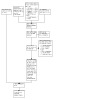
Study flow diagrams in Cochrane review updates: an adapted PRISMA flow diagram. Syst Rev3, 54 (2014). https://doi.org/10.1186/2046-4053-3-54; as recommended in https://community.cochrane.org/organizational-info/resources/resources-groups/information-specialists-portal/searching-recording-reporting
Due to the review size, not all links to references have been inserted in the text, but can be viewed in Table 6.
1. Characteristics of included studies: reference links.
| Study description | Links to references |
| Trials added in this update | Additional (N = 33): Arrieta 2019; Brett 2021; Cateau 2021a; Cateau 2021b; Colon‐Emeric 2017; Curtin 2020; Dever Fitzgerald 2016; Dhargave 2020; Etherton‐Beer 2023; Gattinger 2017; Hewitt 2018; Holland 2023; Iuliano 2021; Jahanpeyma 2021; Jordan 2015; Junius Walker 2021; Kerse 2009; Koike 2009; Kua 2021; Lauriks 2020; Logan 2021; Man 2020; Rezola‐Pardo 2022; Richter 2019; Roberts 2020; Roughead 2022; Tadrous 2020; Taylor 2024; Teresi 2018; Toots 2019; Varela 2018; Wouters 2017; Wylie 2017 |
| Design | Cluster randomised (N = 48): Beck 2016; Becker 2003; Cateau 2021a; Chenoweth 2009; Choi 2005; Colon‐Emeric 2013; Colon‐Emeric 2017; Cox 2008; Crotty 2004b; Desborough 2020; Dyer 2004; Garcia Gollarte 2014; Gattinger 2017; Hewitt 2018; Holland 2023; Iuliano 2021; Jordan 2015; Jensen 2002; Junius Walker 2021; Juola 2015; Kennedy 2015; Kerse 2004; Kerse 2008; Kua 2021; Lapane 2011; Lauriks 2020; Law 2006; Logan 2021; Man 2020; McMurdo 2000; Meyer 2009; Neyens 2009; Patterson 2010; Ray 1997; Richter 2019; Rosendahl 2008; Salvà 2016; Sambrook 2012; Tadrous 2020; Teresi 2018; Toots 2019; Van de Ven 2014; Van Gaal 2011; Walker 2016; Ward 2010; Whitney 2017; Wouters 2017; Yokoi 2015 |
| Setting (country) |
Australia (N = 16): Brett 2021; Chenoweth 2009; Crotty 2004a; Crotty 2004b; Etherton‐Beer 2023; Flicker 2005; Grieger 2009; Hewitt 2018; Iuliano 2021; Man 2020; Potter 2016; Roberts 2020; Roughead 2022; Sambrook 2012; Saravanakumar 2014; Ward 2010
Belgium (N = 1): Buckinx 2014 Brazil (N = 1): da Silva Borges 2014 Denmark (N = 1): Beck 2016 Canada (N = 4): Dever Fitzgerald 2016; Kennedy 2015; Klages 2011; Tadrous 2020 China (N = 1): Fu 2015 Finland (N = 3): Juola 2015; Sihvonen 2004; Tuunainen 2013 France (N = 3): Chapuy 2002; Peyro Saint Paul 2013; Toulotte 2003 Germany (N = 4): Becker 2003; Junius Walker 2021; Meyer 2009; Richter 2019 Hungary (N = 2): Kovacs 2012; Kovacs 2013 India (N = 1); Dhargave 2020 Ireland (N = 1): Curtin 2020 Israel (N = 1): Frankenthal 2014 Korea (N = 1): Choi 2005 Japan (N = 6): Imaoka 2016; Koike 2009; Sakamoto 2006; Sakamoto 2012; Shimada 2004; Yokoi 2015 TheNetherlands (N = 6): Faber 2006; Lauriks 2020; Neyens 2009; Van de Ven 2014; Van Gaal 2011; Wouters 2017 NewZealand (N = 4): Kerse 2004; Kerse 2008; Kerse 2009; Taylor 2024 Singapore (N = 1): Kua 2021 Spain (N = 8): Arrieta 2019; Cadore 2014; Garcia Gollarte 2014; Rezola‐Pardo 2022; Salvà 2016; Serra‐Rexach 2011; Sitja Rabert 2015; Varela 2018 Sweden (N = 3): Jensen 2002; Rosendahl 2008; Toots 2019 Switzerland (N = 5): Bischoff 2003; Cateau 2021a; Cateau 2021b; Gattinger 2017; Van het Reve 2014 Taiwan (N = 1): Huang 2016 Turkey (N = 2): Irez 2011; Jahanpeyma 2021 UnitedKingdom (N = 14): Cox 2008; Dyer 2004; Desborough 2020; Holland 2023; Jordan 2015; Law 2006; Logan 2021; McMurdo 2000; Patterson 2010; Shaw 2003; Walker 2016; Whitney 2017; Wylie 2017; Zermansky 2006 USA (N = 14): Broe 2007; Buettner 2002; Clifton 2009; Colon‐Emeric 2013; Colon‐Emeric 2017; Lapane 2011; Mulrow 1994; Nowalk 2001; Ray 1997; Rubenstein 1990; Schnelle 2003; Schoenfelder 2000; Streim 2012; Teresi 2018 |
| Key Interventiona |
Multifactorial (N = 15): Beck 2016; Becker 2003; Dyer 2004; Jensen 2002; Kerse 2004; Kerse 2009; Logan 2021; McMurdo 2000; Neyens 2009; Ray 1997; Rubenstein 1990; Salvà 2016; Shaw 2003; Walker 2016; Whitney 2017 Active exercise (N = 33): Arrieta 2019; Brett 2021; Buettner 2002; Cadore 2014; Choi 2005; da Silva Borges 2014; Dhargave 2020; Faber 2006; Fu 2015; Hewitt 2018; Imaoka 2016; Irez 2011; Jahanpeyma 2021; Kerse 2008; Kerse 2009; Kovacs 2012; Kovacs 2013; Mulrow 1994; Nowalk 2001; Rosendahl 2008; Sakamoto 2006; Saravanakumar 2014; Schoenfelder 2000; Serra‐Rexach 2011; Shimada 2004; Sihvonen 2004; Sitja Rabert 2015; Taylor 2024; Toots 2019; Toulotte 2003; Tuunainen 2013; Varela 2018; Yokoi 2015 Medication review/deprescribing (N = 23): Cateau 2021a; Cateau 2021b; Crotty 2004a; Crotty 2004b; Curtin 2020; Desborough 2020; Etherton‐Beer 2023; Frankenthal 2014; Garcia Gollarte 2014; Holland 2023; Jordan 2015; Junius Walker 2021; Juola 2015; Kua 2021; Lapane 2011; Patterson 2010; Peyro Saint Paul 2013; Potter 2016; Roughead 2022; Streim 2012;Tadrous 2020; Wouters 2017; Zermansky 2006 Vitamin D (N = 8): Bischoff 2003; Broe 2007; Chapuy 2002; Flicker 2005; Grieger 2009; Imaoka 2016; Kennedy 2015; Law 2006 Nutrition: dairy food supplementation (N = 1): Iuliano 2021 |
a Interventions represented in Summary of Findings tables
Included studies
This review includes 104 trials with 68,964 participants, of which 33 trials enrolling 27,492 participants were newly identified (seeTable 6). Details of individual trials are provided in Supplementary material 2, and are briefly outlined below.
Design
Fifty‐six trials were individually randomised, while 48 trials used a cluster‐randomised design (seeTable 6).
Settings
The included trials were carried out in 25 countries (seeTable 6).
Participants
The mean age of participants was 83.6 years, and 72.3% were women.
All participants were women in five trials (Bischoff 2003 [110]; Chapuy 2002 [111]; Irez 2011 [112]; Kovacs 2012 [113]; Sihvonen 2004 [114, 115]). Nineteen trials specifically recruited participants with cognitive impairment or reported findings for a relevant subgroup (Becker 2003 [116, 117, 118, 119, 120, 121]; Brett 2021 [122, 123, 124]; Buettner 2002 [125, 126]; Chenoweth 2009 [127, 128, 129]; Dever Fitzgerald 2016 [130, 131]; Gattinger 2017 [132, 133]; Hewitt 2018 [29]; Jensen 2002 [134, 135, 136]; Juola 2015; Klages 2011 [137]; Kovacs 2013 [138]; Lauriks 2020 [139]; Neyens 2009 [140, 141]; Roberts 2020 [142, 143]; Shaw 2003 [144, 145, 146, 147, 148]; Toots 2019 [149, 150, 151, 152, 153]; Toulotte 2003 [154, 155]; Van de Ven 2014 [156, 157, 158, 159]; Whitney 2017 [160, 161, 162]).
Interventions
Using ProFaNE taxonomy, all trials were categorised by intervention and grouped by combination (multifactorial, single, or multiple) (Supplementary material 10). The specific components of trials including 'exercise' (Supplementary material 11), 'medication (drug target)' (Supplementary material 12), and 'environment/assistive technology' (Supplementary material 13) interventions are also summarised.
Outcomes
The source of data used for calculating outcomes for each trial for generic inverse variance meta‐analysis is shown in Supplementary material 14. Twenty‐five trials met our inclusion criteria but did not report data that could be included in pooled analyses for rate or risk of falls. Twenty‐eight trials reported data on fractures suitable for use in pooled analyses. Thirty‐six trials clearly reported data on AEs (Supplementary material 15). Eighteen trials reported costs or economic analyses associated with the interventions (Supplementary material 16).
Excluded studies
Overall, a total of 108 studies were excluded (seeSupplementary material 3 for details and reasons for exclusion). Regarding the 28 newly excluded trials, the reasons for exclusion were as follows (seeFigure 1):
wrong outcomes (11 studies);
wrong setting (7 studies);
wrong population (2 studies);
wrong study design (5 studies);
unable to be retrieved (2 studies);
withdrawn (1 study).
Studies awaiting classification
Eight trials are awaiting classification (seeSupplementary material 4). One trial awaiting publication of a full report is a nutritional intervention (nutritional assessment followed by calculation of calorie or protein targets; DRKS00029656 2022 [163, 164, 165, 166], 31 participants). Seven completed trials were identified in the top‐up search and are awaiting classification to be incorporated in the next review update. This includes four small trials of exercise in comparison to usual care: one a three‐arm trial including a multicomponent and a calisthenics arm (Bays‐Moneo 2023 [167], 69 participants), two trials enrolling fewer than 30 participants (Levinger 2023 [168, 169, 170, 171], 16 participants and Sadaqa 2024 [172, 173], 24 participants), and one a standing intervention (Gallibois 2023 [174, 175], 89 participants). There are also two medication target intervention trials: one is a trial of a medication optimisation intervention (Almutairi 2023 [176], 439 participants), and the other is a trial of deprescribing antihypertensives (Bogaerts 2024 [177, 178, 179, 180, 181, 182], 205 participants). The final trial is of a virtual reality training system for rehabilitation (Zhao 2023 [183], 50 participants).
Ongoing studies
We are aware of 36 ongoing studies (seeSupplementary material 5 for details): 14 trials of exercise, six medication optimisation trials, four trials that targeted specific medications (one vitamin D, one vitamin B12, one antihypertensive, and one bone medication), three social environment (two staff training and one service model change) interventions, two trials of environment/assistive technology interventions, two multiple interventions (one multicomponent physical exercise programme with a Mediterranean diet, and the other exercise, psychological, social environment and assessment), four multifactorial intervention trials, and one management of urinary incontinence.
Risk of bias in included studies
Details of the risk of bias assessment for nine items for each trial are shown in Supplementary material 2. Summary results for these items are shown in Figure 2 and Figure 3.
2.
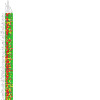
Risk of bias summary: review authors' judgements about each methodological quality item for each included study.
3.
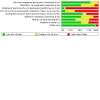
Risk of bias graph: review authors' judgements about each methodological quality item presented as percentages across all included trials.
Most of the 104 included trials were considered at high risk of bias for at least one domain. In particular, there was a high risk of performance bias for 88% (n = 92) of trials due to lack of blinding, which was rarely feasible for many intervention types. Only four trials were considered at low risk of bias for all or the majority of domains (Bischoff 2003; Broe 2007 [184]; Flicker 2005 [185, 186, 187, 188, 189]; Toots 2019): three examined vitamin D supplementation in comparison with placebo, and the fourth was an active exercise intervention with an active control and the trial hypothesis not disclosed to participants, relatives, or staff (Toots 2019). There was a high proportion of trials rated as unclear risk of bias for allocation concealment and method of ascertaining falls due to unclear reporting.
We assessed risk of bias for sequence generation as low in almost three‐quarters of trials. Approximately half of the included trials were considered at unclear or high risk of selection bias, which often reflected a lack of clarity regarding the methods of allocation concealment.
Blinding of participants and personnel was uncommon, and indeed was not feasible for many intervention types (e.g. social environment or multifactorial interventions). Related to this, the likelihood of detection bias in relation to the ascertainment of falls by outcome assessors was considered high in more than half of the included trials, as falls are usually reported by staff, or trial participants. When falls data were collated by a researcher blind to group allocation, risk of detection bias was judged as unclear, as falls events were still reported initially by staff or participants. Risk of detection bias was low most commonly in vitamin D trials, where administration of a placebo was possible (e.g. Flicker 2005).
We assessed the risk of attrition bias due to incomplete outcome data as low in just over half of all trials where there was no loss to follow‐up, or losses were balanced between groups (e.g. Cadore 2014; Kerse 2008 [190, 191, 192]). The high risk of attrition bias in some trials is likely to have been related to longer periods of follow‐up (e.g. 12 months for Juola 2015 and 16 months for Kennedy 2015).
We assessed reporting bias as unclear in approximately half of the included trials. Generally, this occurred in older trials when no protocol was identified.
We judged the method of ascertaining falls to be at low risk of bias in approximately one‐third of trials. In many trials it was unclear if a definition of falls was provided.
We considered the risk of bias relating to imbalance in baseline characteristics to be low in just over half of the included trials. Risk of baseline imbalance usually occurred in small trials (e.g. Buckinx 2014 [193, 194, 195, 196, 197, 198]) or cluster‐randomised trials (e.g. Becker 2003; Choi 2005 [199]; Van Gaal 2011 [200, 201, 202, 203, 204]; Whitney 2017).
We judged six trials to be at high risk of bias for other reasons (e.g. because the author was employed by the company producing the intervention) (Clifton 2009 [205, 206]). We assessed two trials as at unclear risk of other bias, one due to the uncertain impact of COVID‐19 lockdowns delaying intervention delivery and assessments (Taylor 2024 [207, 208, 209, 210]), and the other due to a majority of participants choosing a third, non‐randomised, 'patient preference' arm of the trial (Streim 2012 [211, 212, 213]).
Cluster‐randomised trials
Many of the included studies were cluster‐RCTs (46%, 48/104). Risk of bias particular to cluster‐RCTs was considered within other domains (seeRisk of bias assessment in included studies). It is worth noting that some of these trials contained a small number of clusters, and hence were more prone to baseline imbalance (e.g. Choi 2005; Van Gaal 2011), and, in some cases, prediction of allocation concealment (e.g. Choi 2005). Loss of whole clusters could also lead to a high risk of attrition bias (e.g. Cox 2008 [214]; Iuliano 2021).
Synthesis of results
Results are presented by combination (multifactorial, single, or multiple) and intervention type (categorised according to the ProFaNE classification [15], as described in Supplementary material 10). AEs were inconsistently reported, and there are concerns that they were frequently not monitored systematically. When reported, results could not be pooled. A description of AE data is provided under the important outcomes, according to intervention type. Where multiple studies reported this outcome and data could not be adequately reported in the text, these data are provided in Supplementary material 15. Economic outcomes are summarised in Supplementary material 16. Sensitivity analyses are reported according to intervention type in Supplementary material 17.
Multifactorial interventions
Multifactorial interventions compared with usual care
Overview of included trials
In multifactorial interventions, two or more categories of intervention are given based on an initial assessment of an individual’s risk factors for falls. Selection of the interventions provided, or recommendations or referral for further action, are based on the findings of the assessment, which is usually carried out by one or more health professionals. The components of the interventions considered for implementation within each trial are shown in Supplementary material 10, classified according to ProFaNE.
All trials included medication optimisation, environmental assessment, assessment of need for assistive aids, and exercise as a component of the intervention. Some trials also included social environment or knowledge interventions. Management of urinary incontinence, fluid or nutritional therapy, and podiatry referral were infrequently included. Logan 2021, and the feasibility trial Walker 2016 [215, 216], targeted the most comprehensive list of ProFaNE categories, including staff training on the intervention. In the included trials, the interventions were initiated either from multidisciplinary team assessment (Dyer 2004; Jensen 2002; Shaw 2003), nurse practitioner assessment (Rubenstein 1990 [217]), baseline risk assessment tool (Kerse 2004 [218]; Logan 2021; McMurdo 2000 [219, 220, 221, 222]; Neyens 2009; Salvà 2016 [223, 224]; Walker 2016; Whitney 2017), or via resident self‐selection of interventions (Becker 2003). A summary of the evidence for multifactorial interventions in comparison with usual care is provided in Table 1.
Fifteen trials (6143 randomised participants) studied multifactorial interventions (Beck 2016; Becker 2003; Dyer 2004; Jensen 2002; Kerse 2004; Kerse 2009 [225, 226]; Logan 2021; McMurdo 2000; Neyens 2009; Ray 1997 [227]; Rubenstein 1990; Salvà 2016; Shaw 2003; Walker 2016; Whitney 2017).
Twelve trials were cluster‐randomised trials (Beck 2016; Becker 2003; Dyer 2004; Jensen 2002; Kerse 2004; Logan 2021; McMurdo 2000; Neyens 2009; Ray 1997; Salvà 2016; Walker 2016; Whitney 2017; 5607 participants), and three were individually randomised trials (Kerse 2009; Rubenstein 1990; Shaw 2003; 536 participants).
Whitney 2017 was also a cross‐over trial.
Two trials did not have data suitable for use in the quantitative analysis (Beck 2016; Ray 1997; 530 participants). Four trials (3348 participants) reported data on hip fractures (Becker 2003; Jensen 2002; Logan 2021; Shaw 2003), and three reported total fractures (Logan 2021; Salvà 2016; Whitney 2017; 2178 participants). Three trials (355 participants) reported AE data (Beck 2016; McMurdo 2000; Whitney 2017).
Critical outcomes
Rate of falls
Despite the heterogeneity between trials, they were considered clinically similar enough for pooling to be meaningful. Pooled data from 12 trials (4843 participants) indicate that overall, multifactorial interventions probably have little or no effect on the rate of falls (Supplementary material 6, Analysis 1.1: RaR 0.87, 95% CI 0.68 to 1.12; I² = 89%; moderate‐certainty evidence; Figure 4). However, there was considerable statistical heterogeneity.
4.
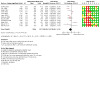
Multifactorial interventions: rate of falls.
Beck 2016 (31 participants) reported falls outcomes in a cluster‐randomised trial of an exercise programme plus nutritional support. There were zero falls in the intervention arm and two in the control arm over an 11‐week period.
Risk of falling
Pooled data for risk of falling indicated that overall, multifactorial interventions probably reduce the risk of falling (Supplementary material 6, Analysis 1.2: RR 0.91, 95% CI 0.83 to 1.00; I² = 19%; 11 trials; 4557 participants; moderate‐certainty evidence; Figure 5), but the 95% CI included the possibility of no effect.
5.
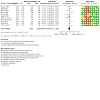
Multifactorial interventions: risk of falling.
Ray 1997 only recorded the number of people having two or more falls during follow‐up (recurrent fallers) and reported a reduction in the proportion of recurrent fallers (difference 19%, 95% CI 2% to 36%; P = 0.03; 482 participants).
Important outcomes
Risk of fracture
Pooled results reporting risk of fracture did not show strong evidence for an effect (Supplementary material 6, Analysis 1.3: RR 0.95, 95% CI 0.50 to 1.82; I² = 31%; 6 trials; 3817 participants; 76 fractures; very low‐certainty evidence). Data from three of the six trials (1695 participants) were for hip fracture (Becker 2003; Jensen 2002; Salvà 2016), and three trials (2122 participants) reported total fractures (Logan 2021; Shaw 2003; Whitney 2017). Three trials (2946 participants) included hip protectors as an intervention (Becker 2003; Logan 2021; Shaw 2003). We are uncertain of the effects of multifactorial interventions on the risk of fracture as the certainty of evidence is very low.
Adverse events
Three trials (355 participants) reported AE data. One trial reported an instance of a fall in the intervention arm (Whitney 2017), and two trials reported that there were no AEs (Beck 2016; McMurdo 2000). We are uncertain of the effects of multifactorial interventions on AEs as the certainty of evidence is very low.
Economic outcomes
Logan 2021 (1657 participants) conducted a cost‐utility analysis of their effective trial of the Guide to Action for falls prevention in Care Homes (GtACH) programme in 28 UK care homes [47]. The programme was judged by the authors to be cost‐effective, with an incremental cost of GBP 20,889 per quality‐adjusted life year (QALY) gained when QALY was derived from the Dementia Specific Quality of Life, and GBP 4543 per QALY gained when it was based on the EQ‐5D. The incremental cost per fall averted was GBP 190.62 (seeSupplementary material 16). The feasibility trial preceding this trial also reported a cost analysis (Walker 2016; Supplementary material 16). Multifactorial interventions may be cost‐effective at preventing falls (low‐certainty evidence).
Subgroup analyses exploring heterogeneity
Grouped by trial endpoint
We conducted a subgroup analysis grouping trials according to whether falls were measured at the end of the intervention period or after a period of post‐intervention follow‐up. A subgroup analysis grouping the trials that clearly reported a period of post‐intervention follow‐up versus the remainder found a difference between subgroups for the rate of falls (test for subgroup differences; Supplementary material 6, Analysis 2.1: P = 0.03), with a reduction in falls in the subgroup recording falls after a period of post‐intervention follow‐up (Supplementary material 6, Analysis 2.1.2: RaR 0.64, 95% CI 0.50 to 0.83; I² = 33%; 3 trials; 670 participants). The credibility of the subgroup analysis grouped by trial endpoint was considered low, so the implications of these findings are uncertain and possibly spurious.
An additional post hoc subgroup analysis according to the length of the trial (Analysis 3.1; Analysis 3.2; Analysis 3.3) did not demonstrate subgroup differences or a reduction in falls/fractures between the subgroups of trials continued for greater or less than 12 months (Supplementary material 17).
Grouped by level of cognition
We carried out a subgroup analysis comparing trials recruiting people with cognitive impairment versus trials with participants with no cognitive impairment (based on inclusion/exclusion criteria), or a mixed sample (see Supplementary material 18). Three trials recruited residents with cognitive impairment only (Neyens 2009; Shaw 2003; Whitney 2017; 1017 participants). In addition, two trials (Becker 2003; Jensen 2002; 1383 participants) carried out pre‐planned subgroup analyses by levels of cognition, which are reported in Rapp 2008 [228] and Jensen 2003 [229], respectively. Cognitive impairment was defined differently in all five trials (see footnotes to Analysis 4.1 and Analysis 4.2; Supplementary material 6). There was no evidence of subgroup differences between those with higher or mixed levels of cognition and those with lower cognition for rate of falls (Supplementary material 6, Analysis 4.1: test for subgroup differences P = 0.96) or risk of falling (Supplementary material 6, Analysis 4.2: test for subgroup differences P = 0.40). In addition, Salvà 2016 reported an OR adjusted for clustering and confounders for the number of people falling for the subgroup of participants with higher cognition (excluding those with dementia; OR 1.75, 95% CI 0.75 to 4.1; 173 participants); these data were not pooled.
Informed by ICA and QCA
As previous subgroup analyses were not informative, ICA and QCA were conducted to develop a theory of the drivers of effective multifactorial trials according to the trialists' views [230]. This theory suggested that trials that attempted to engage all facility staff and managers in implementation and/or education on the intervention and appropriately tailored the delivery of selected falls prevention interventions according to the residents' individual circumstances (e.g. living with dementia) were more likely to be effective at reducing falls (see Supplementary material 19). Examples of facility engagement included approaches such as inviting care home managers to training sessions (Logan 2021), offering refresher training sessions to address staff turnover (Logan 2021; Walker 2016), or offering falls prevention education, including discussion of case studies (Jensen 2002). Lack of appropriate tailoring can lead to lack of implementation of the recommended interventions, and thus a lack of success in falls reduction and waste of resources (Whitney 2017). Successful tailoring may involve allowing staff to tailor the intervention to ensure that the environmental and personal intrinsic risks targeted are modified.
A summary of the evidence for multifactorial interventions in comparison with usual care in care facilities for the subgroup of trials aligned with this ICA/QCA‐derived theory is provided in Supplementary material 20. Subgroup analyses of trials grouped according to whether or not the intervention was provided in this manner demonstrated a statistically significant difference between subgroups for rate of falls (tests for subgroup differences Supplementary material 6, Analysis 5.1: rate of falls P < 0.001; Supplementary material 6, Analysis 5.2: risk of falling P = 0.05; Supplementary material 6, Analysis 5.3: risk of fracture P = 0.95). Multifactorial interventions that are implemented with facility staff engagement and tailored intervention delivery according to resident individual circumstances (e.g. living with dementia) probably result in a moderate to large decrease in falls in care facilities (Analysis 5.1.1: RaR 0.61, 95% CI 0.54 to 0.69; I² = 0%; 7 trials; 3553 participants; Figure 6; Analysis 5.2.1: RR 0.81, 95% CI 0.71 to 0.92; I² = 0%; 5 trials; 2993 participants; moderate‐certainty evidence; Figure 7). However, multifactorial interventions that did not undertake either facility staff engagement and/or tailored intervention delivery probably do not reduce the risk of falling (Supplementary material 6, Analysis 5.2.2: RR 0.96, 95% CI 0.86 to 1.07; I² = 5%; 5 trials; 1234 participants; moderate‐certainty evidence; Figure 7). The effect on the rate of falls for interventions not undertaking these approaches is uncertain (Analysis 5.1.2: RaR 1.12, 95% CI 0.96 to 1.30; I² = 45%; 4 trials; 960 participants; Figure 6; very low‐certainty evidence). These subgroups did not differ for the risk of fracture (Supplementary material 6, Analysis 5.3: test for subgroup differences P = 0.95; with facility engagement and tailored intervention delivery (RR 0.86, 95% CI 0.36 to 2.06; I² = 33%; 3 trials; 3022 participants; very low‐certainty evidence); without facility engagement and tailored intervention delivery (RR 0.91, 95% CI 0.16 to 5.14; I² = 38%; 2 trials; 465 participants; very low‐certainty evidence)). The credibility of the subgroup analyses was considered high (Supplementary material 17) [231].
6.
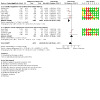
Multifactorial interventions: rate of falls grouped by alignment with QCA theory. Reproduced and updated from Suen and colleagues 2023 [230].
7.
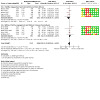
Multifactorial interventions: risk of falling grouped by alignment with QCA theory. Reproduced and updated from Suen and colleagues 2023 [230].
Funnel plots and sensitivity analyses
We conducted a funnel plot of trials of multifactorial interventions in care facilities for the outcomes rate of falls (Figure 8) and risk of falling (Figure 9). There was no obvious asymmetry on visual inspection.
8.
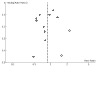
Funnel plot of multifactorial trials reporting data for rate of falls meta‐analysis.
9.
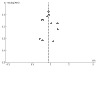
Funnel plot of multifactorial trials reporting data for risk of falling meta‐analysis.
We conducted sensitivity analyses examining the model used for the meta‐analyses and the effect of excluding trials at high risk of bias for the subgroup analysis of trials grouped according to alignment with the QCA theory of facility engagement and tailored intervention delivery (considering the participant's individual circumstances, e.g. living with dementia). These analyses did not change the interpretation of any of the findings (Supplementary material 17; Supplementary material 6, Analysis 1.4; Analysis 1.5; Analysis 1.6; Analysis 5.4; Analysis 5.5; Analysis 5.6).
Single interventions
Single interventions consist of one major category of intervention only and are delivered to all participants in the group.
Exercise
Overview of included trials
Thirty‐five trials (4313 randomised participants) investigated exercise as a single intervention (seeTable 7): six trials were cluster randomised (Choi 2005; Hewitt 2018; Kerse 2008; Rosendahl 2008 [232, 233, 234, 235, 236, 237, 238, 239]; Toots 2019; Yokoi 2015 [240, 241]), and the remaining 29 trials were individually randomised (seeTable 6). However, many of these trials were small (median 72 participants, range 16 to 682).
2. Characteristics of interventions in studies of exercise interventions.
| Trial | Intervention | Control | Comment |
| Arrieta 2019 | Supervised group resistance and balance exercise, 2 times/week, 60 minutes/session | Routine low‐intensity group activities (e.g. memory workshop, reading, singing) | |
| Brett 2021 | Supervised group exercise targeting strength, balance, endurance and flexibility, 1 time/week, 45 minutes/session; or 3 times/week 15 minutes per session (ran in two different randomised groups) | Usual care: continue to participate in usual activities | |
| Buckinx 2014 | Individually supervised whole body vibration exercise programme, 3 times/ week, roughly 3 minutes/ session | Usual care: no change to lifestyle | |
| Buettner 2002 | Supervised group exercises including balance, strength and flexibility; 3 times/week and daily walking group | Usual care | Results for interventions vs usual care as reported by study authors presented in Analysis 6.2 as data not suitable for calculation of RaR or RR |
| Cadore 2014 | Multicomponent exercises including muscle power training combined with balance and gait retraining; 2 times/week, 40 minutes/session | Usual care: "mobility" exercises (at least 4 days/ week, 30 minutes/day), small active and passive movements applied as stretches in a rhythmic fashion | Results for interventions vs usual care as reported by study authors presented in Analysis 6.2 as data not suitable for calculation of RaR or RR |
| Choi 2005 | Supervised group‐based Tai Chi exercise, 3 times/week, 35 minutes/session | Usual care: routine activities, without participation in any regular exercise classes | |
| Dhargave 2020 | Partially individually supervised exercise and education programme about awareness and prevention of falls. Recommended dose: 7 times/ week, 30 minutes/day for the exercise plus 30 minutes/day for walking | Education programme about awareness and prevention of falls | |
| da Silva Borges 2014 | Ballroom dancing; 3 times/ week, 50 minutes/ session | Usual care: agreed not to engage in any regular physical activity | Results for interventions vs usual care as reported by study authors presented in Analysis 6.2 as data not suitable for calculation of RaR or RR |
| Faber 2006 |
|
Usual care: no change in usual pattern of activity | Both comparisons of interventions vs usual care considered under exercise vs usual care. Comparisons of interventions arms considered under comparisons of different exercise categories |
| Fu 2015 | Wii balance training; 3 times per week, 60 minutes/session | Different exercise: Balance training (Otago); 3 times/week, 60 minutes/session; 1 hour, 3 times/week | Comparisons not vs usual care (i.e. presented under comparisons of different exercise categories) |
| Hewitt 2018 | Supervised individually prescribed group exercise, including resistance and balance exercise; 2 times/ week, 60 minutes/ session for first 6 months and then 2 times/week and 30 minutes/ session for another 6 months | Usual care | |
| Imaoka 2016 | Different exercise: groups plus individualised exercises (described by study authors as usual care) | Reduced exercise ‐ individualised exercise only | Analysed with groups inverted to examine additional effect of group exercise |
| Irez 2011 | Supervised group‐based Pilates exercise; 3 times/week, 60 minutes/session | Usual care: no Pilates, instructed not to change current activity levels | |
| Jahanpeyma 2021 | Individual Otago programme and walking exercise (partially supervised); Otago exercise was 3 times/week, 45 minutes/session plus 3 times/week and walking ≥ 30 minutes/day | Control: walking on level ground at normal pace | |
| Kerse 2008 | Activity programme aiming to promote independence in residential aged care; frequency and dose not reported | Usual care: social visits by researchers | |
| Kerse 2009 | UpRight exercise programme: group exercise programme including strength, balance, sensory integration and dual‐tasks exercises; 2 times/ week, 60 minutes/ session | Usual care: control seated exercise with dose matched to the intervention group | |
| Koike 2009 | Standing on whole‐body‐vibration plate (G‐Flex); 2 times/week, 3 minutes/session | Usual care: no intervention | |
| Kovacs 2012 | Group‐based multimodal exercise including strength, balance and progressive resistance based on Otago exercise programme; 2 times/week, 30 minutes/session plus control osteoporosis exercise | Different exercise: Osteoporosis exercise programme, includes balance and strengthening exercises | Comparison not vs usual care (i.e. presented under comparisons of different exercise categories) |
| Kovacs 2013 | Supervised group‐based multimodal exercise based on Otago Exercise; 2 times/week, 30 minutes/session programme | Usual care: social activities such as board games, listening to music | |
| Mulrow 1994 | Individually supervised exercises including balance, strength, gait, co‐ordination and flexibility exercises; 3 times/week, 30‐45 minutes/session | Usual care: friendly visit, usually involved reading to participant, avoided physical activity | |
| Nowalk 2001 |
Plus control (basic enhanced programme) |
Usual care: basic enhanced programme including falls prevention programme with 3 education sessions and a walking programme | Results for interventions vs usual care as reported by study authors presented in Analysis 6.2 as data not suitable for calculation of RaR or RR |
| Rosendahl 2008 | Supervised high‐intensity functional group exercise programme including balance, functional and strength exercises; 2.5 sessions/week, 45 minutes/session | Usual care: Seated activities, including watching films, reading, singing | |
| Sakamoto 2006 | Individual unsupervised single‐leg standing balance practice; 1 min/leg, 3 x daily | Usual care: without exercise | |
| Saravanakumar 2014 |
|
Different exercise: "staying active": includes games, group activities, a gym with bike and activities such as walking and gardening | Comparisons not vs usual care (i.e. presented under comparisons of different exercise categories) |
| Schoenfelder 2000 | Supervised ankle‐strengthening exercise and walking programme; 3 times/week, 30 minutes/session (20 minutes exercise and 10 minutes walking) | Usual care: little information | |
| Serra‐Rexach 2011 | Group‐based training sessions including strength, aerobic training and stretching exercises plus usual care physiotherapy; 3 times/week, 45‐50 minutes/session | Different exercise: usual care physiotherapy (40 to 45 minutes/day, 5 x weekly)‐ stretches, aerobic exercise such as walking (though low intensity) | Results for interventions vs usual care as reported by study authors presented in Analysis 6.2 as data not suitable for calculation of RaR or RR |
| Shimada 2004 | Individually supervised gait exercises on treadmill; 1‐3 times/week for a total dose of 600 minutes plus usual exercises | Usual exercise: physiotherapy for pain, stretches, low‐ and high‐intensity resistance training, gait training, stairs, lower limb function | Comparison not vs usual care (i.e. presented under comparisons of different exercise categories) |
| Sihvonen 2004 | Individualised balance training on force platform, with visual feedback; 3 times/week, 20‐30 minutes/session | Usual care: continue with their normal daily routines and not change their level of physical activity | |
| Sitja Rabert 2015 | Whole‐body vibration; 3 times/ week plus exercise (static and dynamic balance and strength exercise) | Different exercise: same exercise programme done on land | |
| Taylor 2024 | UpRight exercise programme: group exercise programme including strength, balance, sensory integration and dual‐tasks exercises; 2 times/week, 60 minutes/session | Control: group seated programmes including seated swimming, seated marching, heel and toe tapping, seated stretches and seated activities such as balloon catch and throw | |
| Toots 2019 | Supervised individualised high‐intensity functional exercise program; 2.5 sessions/week, 45 minutes/session | Control: attention control group participated in structured activities by occupational therapists | |
| Toulotte 2003 | Supervised group exercises including strength, balance, gait, co‐ordination and flexibility exercises; 2 times/week, 60 minutes/session | Usual care: continued daily routine | Results for interventions vs usual care as reported by study authors presented in Analysis 6.2 as data not suitable for calculation of RaR or RR |
| Tuunainen 2013 |
|
Different exercise: self‐administered training (1 hour, 2/week): stretching, crouching and rising administered by nurses written instructions from physiotherapist | Comparison not vs usual care (i.e. presented under comparisons of different exercise categories) |
| Varela 2018 | Self‐paced cycling; 7 sessions/week, ≥ 15 minutes/session | Usual care: usual routine activities including recreational activities of the individual's choice | |
| Yokoi 2015 | Group supervised seated stick exercises 25 minutes, 2 times weekly (included daily house‐keeping and hobbies for both exercise and control group); 2 sessions/week, 25 minutes/session | Usual care: activities of daily living and 10‐minute group stretching exercises continued; no other exercises were conducted |
RaR: rate of falls; RR: relative risk of falling
The types of exercise are shown in Table 7 and examined in subgroup analyses (Supplementary material 6, Analysis 8.1; Analysis 8.2).
Most trials examined a combination of exercise types, but eight trials primarily examined gait, balance, and functional exercises (Fu 2015 [242, 243]; Jahanpeyma 2021 [244]; Kerse 2008; Kovacs 2012; Kovacs 2013; Sakamoto 2006 [245]; Shimada 2004 [246]; Sihvonen 2004); Irez 2011 primarily included strength exercises; Choi 2005 examined Tai Chi; da Silva Borges 2014 [247] studied ballroom dancing; three trials undertook general physical activity (Schoenfelder 2000 [248, 249]; Varela 2018 [250]; Yokoi 2015); and two trials examined whole‐body vibration (Buckinx 2014; Koike 2009 [251, 252, 253]).
The control arms also varied across trials.
Four trials included three arms (Faber 2006 [254]; Nowalk 2001 [255]; Saravanakumar 2014 [256, 257]; Tuunainen 2013 [258, 259]).
Kerse 2009 was a 2 x 2 factorial feasibility trial examining both exercise and multifactorial interventions.
One study was a cross‐over trial (Toulotte 2003).
The trials are categorised below, both according to the ProFaNE exercise category (seeSupplementary material 11) and the comparator arm of the trial. A summary of the evidence for active exercise versus usual care for falls prevention in care facilities is provided in Table 2 and Supplementary material 21.
Only six trials reported the impact of exercise interventions on fractures (Hewitt 2018; Koike 2009; Rosendahl 2008, Sitja Rabert 2015 [260, 261, 262]; Taylor 2024; Toots 2019; 1448 randomised participants). Fifteen trials (2789 randomised participants, 2516 versus usual care and 273 in trials comparing different exercise programmes) reported on AEs (Supplementary material 15).
In seven trials, the reported data were incomplete and unsuitable for pooling with other trials (Buettner 2002; Cadore 2014; da Silva Borges 2014; Imaoka 2016; Nowalk 2001; Serra‐Rexach 2011 [263, 264, 265]; Toulotte 2003; seeSupplementary material 6, Analysis 6.2; Analysis 11.4). Falls data from Imaoka 2016 excluded the intervention period and are thus not presented in the forest plot.
Exercise compared with usual care
Overview of included trials
Twenty‐eight trials compared an exercise intervention with usual care, defined as no exercise, no change in previous lifestyle, or exercise type or level unlikely to change physical performance (e.g. seated flexibility exercise programme).
Twenty‐six trials examined an active exercise intervention, but two evaluated an 'other' type of exercise (i.e. whole‐body vibration) (Koike 2009; Buckinx 2014). Outcomes from these two groups of intervention types were not pooled.
Six trials were cluster randomised (Choi 2005; Hewitt 2018; Kerse 2008; Rosendahl 2008; Toots 2019; Yokoi 2015).
The results of two intervention arms were combined for Faber 2006.
Analyses were conducted separately according to the timing of recording of falls outcomes, either at the end of the intervention period or at the longest follow‐up time after the intervention. These findings were published in 2023 [266]; the current analysis includes two additional trials identified through searching trials registry records that reported outcomes for active exercise at the end of the intervention period (Kerse 2009; Taylor 2024), and one that reported outcomes for whole‐body vibration after a period of post‐intervention follow‐up (Koike 2009)
Five trials reported falls outcomes contributing to analyses for both time points (Arrieta 2019 [267, 268, 269, 270, 271, 272, 273]; Buckinx 2014; Rosendahl 2008; Schoenfelder 2000; Toots 2019).
As there was considerable clinical and statistical heterogeneity between trials, we undertook ICA and QCA analyses to explore heterogeneity and inform a subgroup analysis [274, 275].
The findings for active exercise in comparison to usual care are presented in Table 2 for outcomes measured at the end of the intervention period and Supplementary material 21 for outcomes measured after a period of post‐intervention follow‐up.
Critical outcomes
Rate of falls
Active exercise: At the end of the intervention period, active exercise probably reduces the rate of falls (Supplementary material 6, Analysis 6.1.1: RaR 0.68, 95% CI 0.51 to 0.91; 14 trials; 2215 participants; moderate‐certainty evidence; Figure 10), with considerable statistical heterogeneity (I² = 84%). However, after a period of post‐intervention follow‐up, there was no effect on the rate of falls (Supplementary material 6, Analysis 7.1.1: RaR 1.02, 95% CI 0.78 to 1.32; I² = 64%; 7 trials; 1354 participants; Figure 11; high‐certainty evidence).
10.
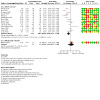
Exercise: rate of falls at the end of the intervention period.
11.
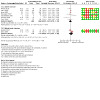
Exercise: rate of falls after post‐intervention follow‐up.
Five additional trials (170 participants) reported data on rate of falls that were not suitable for pooling (Supplementary material 6, Analysis 6.2); all of these trials reported a reduction in falls.
Whole‐body vibration: Trials of whole‐body vibration did not provide strong evidence for an effect on the rate of falls either at the end of the intervention period (Supplementary material 6; Analysis 6.1.2: RaR 1.34, 95% CI 0.73 to 2.45; 1 trial; 62 participants) or after a period of post‐intervention follow‐up (Supplementary material 6, Analysis 7.1.2: RaR 1.27, 95% CI 0.83 to 1.95; I² = 57%; 2 trials; 233 participants).
Risk of falling
Active exercise: At the end of the intervention period, data from 13 trials (2408 participants) showed that active exercise probably reduces the risk of falls (Supplementary material 6, Analysis 6.3.1: RR 0.86, 95% CI 0.75 to 1.00; I² = 37%; moderate‐certainty evidence; Figure 12). However, after a period of post‐intervention follow‐up there was probably no effect on the risk of falling (Supplementary material 6, Analysis 7.2.1: RR 1.06, 95% CI 0.92 to 1.23; I² = 17%; 7 trials; 1443 participants; moderate‐certainty evidence; Figure 13).
12.
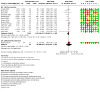
Exercise: risk of falling at the end of the intervention period.
13.
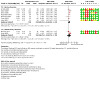
Exercise: risk of falling after post‐intervention follow‐up.
One additional trial (Nowalk 2001; 110 participants) reported data on risk of falling that were not suitable for pooling (Supplementary material 6, Analysis 6.2); there was no significant difference between trial arms.
Whole‐body vibration: Trials of whole‐body vibration did not provide strong evidence of an effect on the risk of falling either at the end of the intervention period (Supplementary material 6, Analysis 6.3.2: RR 1.00, 95% CI 0.46 to 2.19; 1 trial; 62 participants) or after a period of post‐intervention follow‐up (Supplementary material 6, Analysis 7.2.2: RR 1.14, 95% CI 0.74 to 1.76; I² = 53%; 2 trials; 233 participants).
Important outcomes
Risk of fracture
Active exercise: Pooled data from three trials (927 participants) reporting fracture outcomes at the end of the intervention period found no strong evidence for a reduction in the risk of any fracture (Supplementary material 6, Analysis 6.4.1: RR fracture 1.01, 95% CI 0.58 to 1.78; I² = 0%; low‐certainty evidence). One trial (186 participants) reported the risk of hip fracture (Supplementary material 6, Analysis 6.4.2: RR fracture 0.50, 95% CI 0.05 to 5.20). Active exercise may have little or no effect on the risk of fracture (low‐certainty evidence).
After a period of post‐intervention follow‐up, two trials (359 participants) reported outcomes of risk of any fracture and risk of hip fracture (Supplementary material 6, Analysis 7.3.1: RR fracture 0.53, 95% CI 0.24 to 1.14 I² = 0%; Supplementary material 6, Analysis 7.3.3: RR hip fracture 0.72, 95% CI 0.21 to 2.48; I² = 24%; very low‐certainty evidence).
Whole‐body vibration: No trials of whole‐body vibration reported fracture outcomes at the end of the intervention period. After a period of post‐intervention follow‐up, one trial did not provide strong evidence of an effect on the risk of fracture (Supplementary material 6, Analysis 7.3.2: RR fracture 1.40, 95% CI 0.53 to 3.74; 1 trial; 171 participants).
Adverse events
Active exercise: Ten trials (1731 participants) of active exercise compared with usual care reported on AEs (see Supplementary material 15 for details). Eight trials reported no serious AEs (Arrieta 2019; Brett 2021; Dhargave 2020 [276]; Hewitt 2018; Kerse 2008; Mulrow 1994 [277, 278]; Schoenfelder 2000; Taylor 2024); it was unclear if data had been collected systematically. Four of these trials reported no AEs, two reported no differences in the rates of minor AEs such as aches and pains (Kerse 2008; Mulrow 1994), and two reported one case of a non‐injurious fall (Hewitt 2018; Taylor 2024). Two trials reported deaths for which association with the intervention could not be definitively excluded (Rosendahl 2008; Toots 2019).
We are uncertain of the effects of active exercise on AEs, as the certainty of evidence is very low (Table 2).
Whole‐body vibration: One trial found no strong evidence for a difference in major AEs between whole‐body vibration and usual care (Supplementary material 6, Analysis 6.5.5: RR 1.51, 95% CI 0.51 to 4.43; 1 trial; 171 participants; see Supplementary material 15 for details).
Economic outcomes
Active exercise: Hewitt 2018 reported a cost‐effectiveness analysis of an exercise programme with individually prescribed progressive resistance training plus balance exercise in a group setting delivered over six months (with an additional six‐month maintenance period; N = 221) [26]. This intervention was considered cost‐effective with a (bootstrapped) cost‐effectiveness ratio of AUD 18 per fall per person avoided (95% CI AUD −380.34 to AUD 417.85; 2015 prices). The analysis included costs of equipment purchasing shared between facilities, which is likely to be more favourable than the experience of a single aged care facility implementing the programme (Supplementary material 16).
Two other trials reported cost information; however, as these are not full economic evaluations, no conclusions can be drawn on the value for money of the interventions (Buettner 2002; Mulrow 1994; Supplementary material 16).
Active exercise interventions may be cost‐effective at preventing falls (low‐certainty evidence).
Whole‐body vibration: No trials of whole‐body vibration reported economic outcomes.
Subgroup analyses exploring heterogeneity
Grouped by type of exercise
In a subgroup analysis by broad types of exercise (with outcomes measured at the end of the intervention period), there was a statistical difference between subgroups for the rate of falls (Supplementary material 6, Analysis 8.1: test for subgroup differences P = 0.01). The rate of falls was reduced in the subgroups of trials examining gait, balance, and functional exercises (Supplementary material 6, Analysis 8.1.1: RaR 0.64, 95% CI 0.39 to 1.05; I² = 68%; 3 trials; 660 participants), strength/resistance training (Supplementary material 6, Analysis 8.1.2: RaR 0.28, 95% CI 0.15 to 0.54; 1 trial; 60 participants), and a combination of exercise types (Supplementary material 6, Analysis 8.1.3: RaR 0.68, 95% CI 0.45 to 1.02; I² = 88%; 8 trials; 1440 participants), but not general physical activity (Analysis 8.1.4: RaR 1.33, 95% CI 0.32 to 5.48; I² = 86%; 2 trials; 55 participants) or whole‐body vibration (Supplementary material 6, Analysis 8.1.5: RaR 1.34, 95% CI 0.73 to 2.45; 1 trial; 62 participants). For all subgroups, there was either a small number of participants (approximately 60), or there was considerable statistical heterogeneity, with the 95% CI including the possibility of no effect, thus interpretation of the findings of this subgroup analysis remains uncertain.
There were no subgroup differences for the number of fallers between different types of exercise as measured at the end of the intervention period (Supplementary material 6, Analysis 8.2: test for subgroup differences P = 0.64).
Grouped by level of cognition
We conducted a subgroup analysis based on the cognitive status of the enrolled participants for active exercise interventions as measured at the end of the intervention period. There was no difference in the rate of falls between subgroups according to whether trials enrolled participants with cognitive impairment or not (Supplementary material 6, Analysis 9.1: test for subgroup differences P = 0.65). Four trials contributed data for participants without cognitive impairment; six trials included a mixed population; and four trials reported data for participants with cognitive impairment. We are uncertain of the impact of active exercise on the rate of falls in residents with cognitive impairment (Supplementary material 6, Analysis 9.1.3: RaR 0.58, 95% CI 0.25 to 1.32; I² = 89%; 4 trials; 451 participants; very low‐certainty evidence).
For the risk of falling, one trial contributed data to the subgroup of participants without cognitive impairment; eight trials included a mixed population; and four trials reported data for participants with cognitive impairment. The test for subgroup differences showed a statistically significant difference between subgroups (Supplementary material 6, Analysis 9.2: test for subgroup differences P = 0.04). Active exercise may reduce the risk of falling in participants with cognitive impairment (Supplementary material 6; Analysis 9.2.3: RR 0.72, 95% CI 0.57 to 0.91; I² = 25%; 4 trials; 451 participants; low‐certainty evidence; Figure 14).
14.
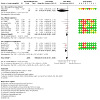
Exercise: risk of falling: grouped by level of cognitive impairment.
For the risk of fracture, two trials contributed data to the subgroup of participants with a mixed population, and one trial only enrolled participants with cognitive impairment. We are uncertain of the impact of exercise on the risk of fracture in residents with cognitive impairment (Supplementary material 6, Analysis 9.3.3: RR 1.0, 95% CI 0.26 to 3.86; 1 trial; 186 participants; very low‐certainty evidence).
The credibility of the subgroup analysis was considered low (Supplementary material 17).
Taylor 2024 reported no differences in falls for the participants with better cognition (Montreal Cognitive Assessment scores ≥ 18/30, considered as mixed population in our subgroup analysis; adjusted RaR 1.11, 95% CI 0.7 to 1.73; adjusted RR for fallers 1.11, 95% CI 0.7 to 1.77).
Grouped by alignment with QCA theory
A QCA [102, 279] informed by an ICA [19] identified two configurations of features associated with successful falls prevention programmes [274, 275]:
moderate‐ or low‐intensity group exercise; or
for independent ambulatory residents (who can mobilise with or without a walking aid), exercise for more than one hour per week (for further details, see Supplementary material 22).
A subsequent subgroup analysis (updated from [279]) found that trials of active exercise providing these types of exercise programmes may reduce the rate of falls (Supplementary material 6, Analysis 10.1.1: RaR 0.52, 95% CI 0.38 to 0.72; I² = 79%; 10 trials; 1292 participants; low‐certainty evidence), but we are uncertain about the impact on the risk of falling (Supplementary material 6, Analysis 10.2.1: RR 0.76, 95% CI 0.60 to 0.97; I² = 45%; 9 trials; 1318 participants; very low‐certainty evidence). The test for subgroup differences found a strong difference between these subgroups (rate of falls P < 0.001, I² = 91%; risk of falling P = 0.09, I² = 66%). The subgroup of exercise trials that did not conduct interventions that aligned with one of these two configurations did not reduce falls (Supplementary material 6, Analysis 10.1.2: RaR 1.24, 95% CI 0.83 to 1.86; I² = 74%; 4 trials; 923 participants; Analysis 10.2.2: RR 0.98, 95% CI 0.83 to 1.16; I² = 0%; 4 trials; 1090 participants). There was no evidence of subgroup differences for risk of fracture (Supplementary material 6, Analysis 10.3: test for subgroup differences P = 0.98, I² = 0%). The credibility of the subgroup analysis was considered moderate (Supplementary material 17).
Frailty
Faber 2006 carried out a post hoc subgroup analysis that indicated that the intervention may increase the risk of falling in frail participants (HR 2.95, 95% CI 1.64 to 5.32; 115 participants), while in the pre‐frail subgroup there was no strong evidence for a reduction in the risk of falling (HR 0.62, 95% CI 0.29 to 1.33; 105 participants) (test for subgroup difference P ≤ 0.10). Other trials did not provide data suitable for a post hoc subgroup analysis of the effectiveness of the intervention according to the frailty of participants.
Funnel plots and sensitivity analyses
A funnel plot of trials of exercise versus usual care at the end of the intervention period did not show any asymmetry for the rate of falls (Figure 15; Figure 16). The funnel plot appeared asymmetrical for the risk of falling (Figure 17; Figure 18), which may indicate publication bias or lower methodological quality leading to spuriously inflated effects in the smaller trials.
15.
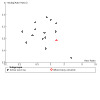
Funnel plot of exercise trials reporting data for rate of falls meta‐analysis at the end of the intervention period.
16.
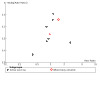
Funnel plot of exercise trials reporting data for rate of falls meta‐analysis after post‐intervention follow‐up.
17.
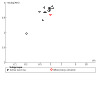
Funnel plot of exercise trials reporting data for rate of falls meta‐analysis at the end of the intervention period.
18.
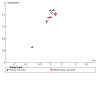
Funnel plot of exercise trials reporting data for risk of falling meta‐analysis after a period of post‐intervention follow‐up.
Sensitivity analyses conducted examining the model used for the risk of falling, including a trial with zero falls in the intervention arm, excluding trials with 40 participants or fewer from the rate of falls analysis or excluding trials at high risk of bias, did not change the interpretation of any of the results (Supplementary material 17; Supplementary material 6; Analysis 6.6; Analysis 6.7; Analysis 6.8; Analysis 6.9; Analysis 7.4; Analysis 7.5; Analysis 9.4; Analysis 9.5; Analysis 10.4; Analysis 10.5).
Comparisons of different exercise categories
Overview of included trials
Eight trials (544 randomised participants) provided 11 comparisons of two different exercise programmes (Faber 2006; Fu 2015; Imaoka 2016; Kovacs 2012; Saravanakumar 2014; Shimada 2004; Sitja Rabert 2015; Tuunainen 2013).
All trials were individually randomised.
Seven trials (nine comparisons; 505 randomised participants) had data suitable for pooling (Faber 2006; Fu 2015; Kovacs 2012; Saravanakumar 2014; Shimada 2004; Sitja Rabert 2015; Tuunainen 2013).
Six trials (346 participants) examined alternative active exercise interventions (Faber 2006; Fu 2015; Kovacs 2012; Saravanakumar 2014; Shimada 2004; Tuunainen 2013), while one trial (159 participants) examined exercise performed on a whole‐body vibration platform compared to the same land‐based exercises (Sitja Rabert 2015).
Two trials provided data on the effectiveness of additional balance exercises (Shimada 2004; Tuunainen 2013).
All other trials included only single comparisons.
Critical outcomes
Rate of falls
Active exercise: Five trials (Faber 2006; Fu 2015; Saravanakumar 2014; Shimada 2004; Tuunainen 2013; 305 participants) with data suitable for analysis reported the effect of nine comparisons of different active exercise programmes on the rate of falls (Analysis 11.1). All comparisons contained fewer than 200 participants, so the relative effectiveness of these exercise programmes in reducing the rate of falls remains uncertain.
Whole‐body vibration: No trials reported the effect of whole‐body vibration on the rate of falls in comparison to an active exercise programme.
Risk of falling
Active exercise: Five trials (Faber 2006; Imaoka 2016; Kovacs 2012; Shimada 2004; Tuunainen 2013; 168 participants) reported the effect of six comparisons of different exercise categories on the risk of falling (Supplementary material 6, Analysis 11.2). One additional trial (39 participants) reported data on the risk of falling that were not suitable for pooling (Imaoka 2016; Supplementary material 6, Analysis 11.4). All comparisons contained fewer than 200 participants, so the relative effectiveness of these exercise programmes in reducing the risk of falling remains uncertain.
Whole‐body vibration: Sitja Rabert 2015 compared exercise performed on a whole‐body vibration platform to the same land‐based exercises in 159 participants, but the effect on the risk of falling is uncertain (Supplementary material 6, Analysis 11.2.4).
Important outcomes
Risk of fracture
Active exercise: No trials reported the comparative effects of alternative active exercise programmes on the risk of fracture.
Whole‐body vibration: Sitja Rabert 2015 (159 participants) compared exercise performed on a whole‐body vibration platform to the same land‐based exercises. The findings are uncertain as the trial recorded only one fracture (Supplementary material 6, Analysis 11.3).
Adverse events
Four trials (Kovacs 2012; Saravanakumar 2014; Serra‐Rexach 2011; Sitja Rabert 2015; 269 participants) comparing different exercise programmes reported on AEs; no serious AEs were reported (see Supplementary material 15 for details).
Economic outcomes
No trials comparing different exercise categories reported economic outcomes.
Subgroup analyses exploring heterogeneity
As all comparisons of different exercise categories were represented by only one or two trials, no subgroup analyses were conducted.
Medication (drug target) interventions
Medication optimisation
Overview of included trials
Twenty‐three trials (16,367 randomised participants plus 2438 average residents per day in Cateau 2021a [280, 281, 282, 283, 284, 285]) examined medication optimisation interventions to improve the prescribing of medications in care facility residents. Although the range of intervention types and approaches was diverse, as the intent of all of these trials was clinically similar (i.e. to increase the appropriateness of prescribing to improve resident outcomes including falls), they were pooled with the differences in interventions explored in subgroup analyses (Supplementary material 6, Analysis 12.1; Analysis 12.3; Analysis 12.4 and described below).
The types of medication optimisation intervention and comparisons are shown in Table 8 and examined in subgroup analyses (Supplementary material 6, Analysis 12.1; Analysis 12.3; Analysis 12.4; Analysis 13.1; Analysis 13.2; Analysis 13.3).
Fourteen trials had medication review or deprescribing as a primary intervention component (Cateau 2021b [286, 287]; Crotty 2004a [288, 289]; Curtin 2020 [290, 291, 292]; Desborough 2020 [293, 294, 295, 296, 297, 298, 299]; Etherton‐Beer 2023 [300, 301, 302, 303]; Frankenthal 2014 [304, 305, 306, 307, 308, 309]; Holland 2023; Junius Walker 2021 [310, 311, 312, 313, 314, 315]; Kua 2021 [316, 317, 318]; Patterson 2010 [319, 320, 321, 322]; Potter 2016 [323, 324, 325, 326]; Roughead 2022 [327, 328, 329, 330, 331, 332]; Wouters 2017 [333, 334, 335]; Zermansky 2006 [336, 337]).
One trial specifically focused on deprescribing for hyponatraemia (Peyro Saint Paul 2013 [338, 339, 340]).
One trial randomised participants to deprescribing of antidepressants (Streim 2012).
One trial examined academic detailing specifically focused on deprescribing antipsychotics (Tadrous 2020 [341, 342]).
Six trials undertook different approaches, such as education or pharmacist outreach, that were not considered to contain medication review or deprescribing as the primary components (Cateau 2021a; Crotty 2004b [343, 344]; Garcia Gollarte 2014 [345]; Jordan 2015 [346, 347]; Juola 2015; Lapane 2011 [348]).
Seven trials (7615 randomised participants plus 2438 average residents per day in Cateau 2021a) did not report falls data suitable for pooling (Cateau 2021a; Garcia Gollarte 2014; Jordan 2015; Junius Walker 2021; Kua 2021; Streim 2012; Tadrous 2020).
3. Characteristics of interventions in the medication optimisation trials.
| Study | Medication optimisation | Control | Comment |
| Cateau 2021a | Interprofessional Quality Circle‐Deprescribing Module (QC‐DeMo) "focused on ways to deprescribe specific drug classes". Pharmacists of the nursing homes participated in a half‐day education session. Pharmacists selected classes based on drug use in the nursing home, organised and facilitated the session, with nurses and physician, formalised a deprescribing consensus. Two QC sessions with enacted consensus. | Usual care | Data not suitable for pooling. Total participant number unknown |
| Cateau 2021b | Individual "deprescribing‐focused medication review, performed by the pharmacists". Single treatment modification plan in collaboration with nurses and physicians. | Usual care | |
| Crotty 2004a | Pharmacist transition co‐ordinator for patients transferring from hospital to a care facility for the first time: "medication management transfer summaries from hospitals, timely coordinated medication reviews by accredited community pharmacists, and case conferences with physicians and pharmacists". | Usual care | |
| Crotty 2004b | Pharmacist outreach education intervention: intervention physicians received 2 academic detailing visits from pharmacist, audit of prescribing practice and falls rates. One nurse per facility received four 2‐hour education sessions. Pharmacist educated each facility on reducing use of psychotropic drugs. | Usual care | |
| Curtin 2020 | Medication withdrawal plan devised by the research physician was "communicated directly to one of the participant’s attending physicians and also documented in the patient’s medical record". "The attending physician judged whether or not to accept the drug withdrawal plan and implement the recommended changes." One review was conducted. | Usual care | |
| Desborough 2020 | Multiprofessional medication review. Multi‐professional medication review service (MMRS): meeting between clinical pharmacist and pharmacy technician, care home staff and GP(s). Review conducted at baseline and 6 months. | Usual care (support from the NHS) | |
| Etherton‐Beer 2023 | Deprescribing intervention. Medication review for withdrawal in accordance with structural deprescribing. "Two research pharmacists independently reviewed all medications taken regularly" or at least weekly to "generate a list of medications targeted for withdrawal" according to an algorithm. Structured plan for order of withdrawal of medications and tapering. GP given medication withdrawal plan and asked to confirm agreement prior to randomisation. Blinding by encapsulating medications targeted for deprescribing. One arm blinded by encapsulation, one arm unblinded. | Blinded control arms with encapsulation of targeted medications | |
| Frankenthal 2014 | Medication review by pharmacist with Screening Tool of Older Persons potentially inappropriate Prescriptions/Screening Tool to Alert doctors to Right Treatment (STOPP/START). Pharmacist made recommendations to chief physician who decided whether to implement changes. Review at study opening, 6 and 12 months later. | No interventional recommendations made by pharmacist to chief physician. | |
| Garcia Gollarte 2014 | Physician education on drug use in older people, plus medication review in 10%. | No intervention or information about an educational intervention | Falls data exclude the intervention period; not suitable for pooling |
| Holland 2023 | Medication review. Pharmacist independent prescribers (PIPs) "visited care homes to do medication reviews" and create pharmaceutical care plans, "provided general support for improving home processes" and staff training. | Usual care | |
| Jordan 2015 | "Nurses completed the West Wales adverse drug reactions (WWADR) Profile for Mental Health Medicines with each participant". | Usual care | Data not suitable for pooling |
| Junius Walker 2021 | Medication review. Multidisciplinary drug review consisting of "a drug review by trained pharmacists, educational sessions for general practitioners and nurses, a drug safety toolbox, and change management seminars for members of the three participating professions". | Usual care | Data not suitable for pooling |
| Juola 2015 | Nursing education to reduce medication use | Usual care | |
| Kua 2021 | Deprescribing. 5‐step deprescribing intervention, with "multidisciplinary team‐care medication review with pharmacists, physicians, and nurses". | Usual care | Data not suitable for pooling |
| Lapane 2011 | Clinical informatics tool for medication review: providing reports to pharmacists and nursing staff to assist in identifying "residents at risk for delirium and falls". Reports generated within 24 hours of admission, used during monthly medication review and at time of Minimum Data Set reporting or when falls or delirium triggered resident assessment protocols. | Usual care (includes monthly medication review by pharmacist) | |
| Patterson 2010 | Pharmacist review of psychoactive medications | Usual care | |
| Peyro Saint Paul 2013 | Ceasing medication to avoid hyponatraemia | Usual care | Unusual study, not pooled with others |
| Potter 2016 | Deprescribing by GP and geriatrician who was also a clinical pharmacologist. "Medicine withdrawal plan, amended to reflect changes requested by participant, next‐of‐kin, or GP, was implemented over several months." GP "reviewed participants weekly during deprescribing". | Medication review without deprescribing | |
| Roughead 2022 | Medication review. Pharmacists were trained, undertook medication review, met with resident and care staff, conducted assessments of cognition, movement behaviour and hand grip strength and liaised with resident's doctors every 8 weeks. | ||
| Streim 2012 | Deprescribing antidepressants. All participants in study arms included in this review were randomised to deprescribing or continuation of antidepressants, rather than management based on individual assessment. Data from a third, patient preference arm were not included in the review. |
Continue taking antidepressants | Data not suitable for pooling |
| Tadrous 2020 | Academic detailing on deprescribing antipsychotics: education outreach to clinicians. "Delivered by health professionals (e.g. nurses or pharmacists) who arranged meetings (with administrators, physicians, pharmacists, nurses, and support workers), presentations, group and 1‐on‐1 visits." | Usual care | Data not suitable for pooling |
| Wouters 2017 | Medication review. Multidisciplinary medication review carried out by the patient's treating elderly care physician and a pharmacist, with training. | Usual care, which included medication safety monitoring and ad hoc medication reviews on clinical indication that differed in quality and frequency | |
| Zermansky 2006 | Medication review by pharmacist | Usual care |
GP: general practitioner; NHS: National Health Service (UK)
A summary of the evidence for medication review/deprescribing for falls prevention in care facilities is provided in Table 3.
Critical outcomes
Rate of falls
Thirteen trials (4314 participants) reporting data on the rate of falls in trials of medication optimisation interventions were considered clinically appropriate to pool, despite considerable heterogeneity. Overall, pooled outcomes indicated that medication optimisation may have little or no effect on the rate of falls (Supplementary material 6, Analysis 12.1: RaR 0.92, 95% CI 0.75 to 1.13; I² = 86%; 13 trials; 4314 participants; low‐certainty evidence; Figure 19). We are uncertain of the effect of the group of trials including medication optimisation by medication review or deprescribing interventions (Supplementary material 6, Analysis 12.1.1: RaR 0.94, 95% CI 0.76 to 1.18; I² = 86%; 12 trials; 4125 participants; very low‐certainty evidence; Figure 19).
19.
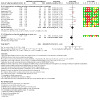
Medication optimisation: rate of falls.
A single trial that provided education to nurses on harmful medications and adverse drug events reduced the rate of falls (Supplementary material 6, Analysis 12.1.2: RaR 0.72, 95% CI 0.55 to 0.95; 1 trial; 189 participants).
The test for subgroup differences between these intervention categories was not significant (P = 0.13). The credibility of the subgroup analyses according to intervention type was considered low (Supplementary material 17) [231].
Seven additional trials (7615 randomised participants plus 2438 average residents per day in Cateau 2021a) reported data on the rate of falls that were not suitable for pooling; none reported a change in the rate of falls (Supplementary material 6, Analysis 12.2).
Risk of falling
Overall, data from 12 trials (6209 participants) reporting data on the risk of falling were considered clinically appropriate for pooling, despite considerable heterogeneity in intervention types. Medication optimisation probably does not reduce the risk of falling overall (Supplementary material 6, Analysis 12.3: RR 0.96, 95% CI 0.89 to 1.03; I² = 0%; 12 trials; 6209 participants; moderate‐certainty evidence; Figure 20). We are uncertain of the effect of the group of trials including medication optimisation by medication review or deprescribing interventions (Supplementary material 6, Analysis 12.3.1: RR 0.90, 95% CI 0.80 to 1.01; I² = 0%; 9 trials; 1934 participants; very low‐certainty evidence; Figure 20).
20.
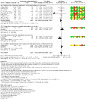
Medication optimisation: risk of falling.
A single trial that provided education to nurses on harmful medications and adverse drug events reduced the risk of falling (Supplementary material 6, Analysis 12.3.3: RR 0.71, 95% CI 0.50 to 1.00; 189 participants).
Single trials of an outreach pharmacist on hospital discharge (Supplementary material 6, Analysis 12.3.2: RR 1.17, 95% CI 0.86 to 1.61; 1 trial; 765 participants) or the additional use of medication review software (Supplementary material 6, Analysis 12.3.4: RR 1.03, 95% CI 0.92 to 1.16; 1 trial; 3321 participants) did not have any effect on the risk of falling.
The test for subgroup differences between these intervention categories was not statistically significant (P = 0.07).
Five additional trials (Garcia Gollarte 2014; Jordan 2015; Junius Walker 2021; Kua 2021; Tadrous 2020; 7277 participants) reported data on the number of fallers that were not suitable for pooling; none reported a reduction in the number of fallers (Supplementary material 6, Analysis 12.2).
Important outcomes
Risk of fracture
Four trials (703 participants) reported the effect of medication optimisation interventions that included medication review or deprescribing on the risk of fracture. There was no strong evidence for an effect, but the evidence is very uncertain (Supplementary material 6, Analysis 12.4: RR 0.65, 95% CI 0.36 to 1.19; I² = 0%; very low‐certainty evidence).
Adverse events
Seven trials (2469 participants) of medication review/deprescribing interventions reported on AEs; the remaining 15 trials did not clearly report on AEs related to the intervention (see Supplementary material 15 and Supplementary material 6, Analysis 12.5).
Two trials reported no AEs (Desborough 2020; Holland 2023); two trials reported no significant difference in AEs between trial arms (Potter 2016; Roughead 2022); one trial reported significantly fewer severe AEs in the intervention arms (Etherton‐Beer 2023); one trial reported three AEs in the intervention arm (Cateau 2021b; 1/31); and one trial reported a major gastrointestinal bleed in the intervention arm (Peyro Saint Paul 2013; 1/9).
We are uncertain of the effects of medication review/deprescribing on AEs, as the certainty of evidence is very low (Table 3).
Economic outcomes
Desborough 2020 (826 participants) undertook an economic analysis of multiprofessional medication reviews, which found that usual care was dominant over medication review, with both a higher falls rate and higher cost (Supplementary material 16). Medication optimisation interventions as a single intervention may not be cost‐effective at preventing falls (low‐certainty evidence).
Two other trials reported cost analyses from which no conclusions could be drawn (Kua 2021; Zermansky 2006).
Subgroup analyses exploring heterogeneity
Grouped by intervention type
A subgroup analysis separating the medication review/deprescribing interventions according to the primary intervention component did not show a statistical difference between subgroups for the rate of falls or risk of falling (Supplementary material 6, Analysis 13.1: test for subgroup differences P = 0.05; Analysis 13.2: test for subgroup differences P = 0.13).
We are uncertain of the effect on falls of the subgroup of interventions that included medication review (Supplementary material 6, Analysis 13.1.1: RaR 0.81, 95% CI 0.65 to 1.02; I² = 78%; 6 trials; 3229 participants; very low‐certainty evidence; Analysis 13.2.1: RR 0.90, 95% CI 0.77 to 1.05; I² = 0%; 4 trials; 1331 participants; very low‐certainty evidence).
One trial contributed to the subgroup of medication optimisation interventions that included medication review for risk of fracture; we are uncertain of the effects on risk of fracture (Supplementary material 6, Analysis 13.3.1: RR 0.76, 95% CI 0.13 to 4.45; 1 trial; 208 participants; very low‐certainty evidence).
Grouped by professional leading the intervention
A subgroup analysis grouping trials according to the professional leading the intervention found a significant difference between subgroups for the rate of falls (Supplementary material 6, Analysis 14.1: test for subgroup differences P = 0.03), but heterogeneity in the subgroups of multidisciplinary (I² = 65%) or pharmacist‐led (I² = 91%) interventions remained high, so this subgroup analysis did not provide an explanation for the statistical heterogeneity in the overall analysis. The test for subgroup differences for risk of falling was not significant (Supplementary material 6, Analysis 14.2: P = 0.26). Pooled data in the subgroup of trials with multidisciplinary‐led interventions did not show a reduction in falls (Supplementary material 6, Analysis 14.1.1: RaR 1.18, 95% CI 0.92 to 1.51; I² = 65%; 6 trials; 2539 participants; Analysis 14.2.1: RR 0.98, 95% CI 0.81 to 1.19; I² = 0%; 4 trials; 1268 participants). The subgroup that was not multidisciplinary and was pharmacist‐led also did not reduce the rate of falls (Supplementary material 6, Analysis 14.1.2: RaR 0.80, 95% CI 0.59 to 1.08; I² = 91%; 4 trials; 1478 participants) or the risk of falling (Supplementary material 6, Analysis 14.2.2: RR 0.91, 95% CI 0.80 to 1.03; I² = 0%; 4 trials; 1282 participants).
Grouped by level of cognition
No trials applied inclusion or exclusion criteria regarding participant cognitive status (i.e. all trials included participants with a range of cognitive status), thus no subgroup analysis according to cognitive status was conducted. However, Juola 2015 reported a reduction in the rate of falls for participants with a Mini Mental State Examination (MMSE) greater than 15 (RaR 0.23, 95% CI 0.12 to 0.44; 49 participants) or an MMSE of 10 to 15 (RaR 0.27, 95% CI 0.17 to 0.44; 45 participants), but not for those with the lowest cognitive ability (MMSE < 10, RaR 1.27, 95% CI 0.95 to 1.69; 95 participants) with an intervention providing education to nurses on harmful medications [65].
Informed by QCA
We undertook a QCA on the group of trials providing medication review/deprescribing interventions, based on features from the European Geriatric Medicine Society (EuGMS) position paper on polypharmacy and fall risk‐increasing drugs (FRIDs) (Supplementary material 23) [349]. This included features from the World Falls Guidelines evidence‐based recommendation on medication reviews to "Use a validated, structured screening and assessment tool to identify falls risk increasing drugs (FRIDs) when performing a regular routine medication review or medication review targeted to falls prevention in older adults" plus other key features contained within the statement such as reviews being personalised and patient‐centred, and multidisciplinary [349]. This QCA did not identify a combination of the presence or absence of features from the EuGMS position paper as conditions differentiating successful from unsuccessful trials of medication review/deprescribing for falls prevention, so a subgroup analysis based on this was not undertaken.
Funnel plots and sensitivity analyses
Funnel plots for the rate of falls (Figure 21) and risk of falling (Figure 22) did not demonstrate any obvious asymmetry on visual inspection.
21.
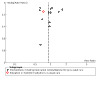
Funnel plot of medication optimisation trials reporting data for rate of falls meta‐analysis.
22.
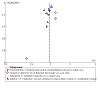
Funnel plot of medication optimisation trials reporting data for risk of falling meta‐analysis.
Sensitivity analyses examining the model used for the risk of falling for the main analysis or exclusion of a trial with a known non‐normal distribution of falls did not change the interpretation of the results (Supplementary material 17; Supplementary material 6; Analysis 12.6; Analysis 12.7; Analysis 12.8).
Vitamin D supplementation
Overview of included trials
Eight trials (10,924 randomised participants) examined vitamin D supplementation administered in some form (Bischoff 2003; Broe 2007; Chapuy 2002; Flicker 2005; Grieger 2009 [350]; Imaoka 2016; Kennedy 2015; Law 2006 [351, 352, 353]).
Two trials (9169 participants) were cluster randomised (Kennedy 2015; Law 2006).
Four trials (4656 participants) tested the effect of vitamin D supplementation on falls (Bischoff 2003; Broe 2007; Flicker 2005; Law 2006).
One trial (610 participants) tested the effect of vitamin D and calcium supplementation (Chapuy 2002).
Two trials (206 participants) tested multivitamin supplementation that included vitamin D plus calcium (Grieger 2009; Imaoka 2016).
One trial (5452 participants) tested an educational intervention for an interdisciplinary team aimed at increasing prescription of adequate levels of vitamin D, calcium, and osteoporosis medications (Kennedy 2015).
Seven of the eight trials (5472 participants) reported serum vitamin D levels at baseline (Bischoff 2003; Broe 2007; Chapuy 2002; Flicker 2005; Grieger 2009; Imaoka 2016; Law 2006). Vitamin D levels were low or very low in these trials. Baseline vitamin D levels for one trial were not reported (Kennedy 2015).
Four trials reported AE data (Supplementary material 15).
Three trials (Chapuy 2002; Grieger 2009; Imaoka 2016; 806 participants) had industry funding (see Supplementary material 2).
A summary of the evidence for vitamin D supplementation for falls prevention in care facilities is provided in Table 4.
Critical outcomes
Rate of falls
Pooled data indicated that vitamin D supplementation (with or without calcium supplementation, alone or within a multivitamin) probably reduces the rate of falls (Supplementary material 6, Analysis 15.1.1: RaR 0.63, 95% CI 0.46 to 0.86; I² = 72%; 5 trials; 4603 participants; Figure 23; moderate‐certainty evidence). The type of vitamin D administered is indicated in the footnotes of the analysis.
23.
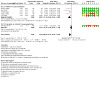
Vitamin D: rate of falls.
An education intervention aimed at increasing the prescription of vitamin D, calcium, and osteoporosis medication had no effect on the rate of falls (Supplementary material 6, Analysis 15.1.2: RaR 1.03, 95% CI 0.85 to 1.25; 1 trial; 4017 participants) (Kennedy 2015).
Risk of falling
Pooled data indicated that vitamin D supplementation (with or without calcium supplementation, alone or within a multivitamin) probably makes little or no difference to the risk of falling (Supplementary material 6, Analysis 15.2.1: RR 0.99, 95% CI 0.90 to 1.08; I² = 12%; 6 trials; 5186 participants; moderate‐certainty evidence; Figure 24).
24.
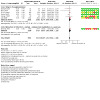
Vitamin D supplementation: risk of falling.
An education intervention aimed at increasing the prescription of vitamin D, calcium, and osteoporosis medication had no effect on the risk of falling (Supplementary material 6, Analysis 15.2.2: RR 1.05, 95% CI 0.90 to 1.23; 1 trial; 4017 participants) (Kennedy 2015).
One additional trial (34 participants) reported data on the risk of falling that were not suitable for pooling as the intervention period was excluded (Imaoka 2016; Supplementary material 6, Analysis 15.4).
Important outcomes
Risk of fracture
Pooled data from four trials of vitamin D supplementation showed little effect on the risk of fracture (Supplementary material 6, Analysis 15.3: RR 0.92, 95% CI 0.54 to 1.56; I² = 66%; 5047 participants; 226 fractures; very low‐certainty evidence), but the evidence is very uncertain. Different trials reported different types of fractures; the types of fractures are shown in the footnotes to the analysis.
An education intervention aimed at increasing the prescription of vitamin D, calcium, and osteoporosis medication (Kennedy 2015; 4017 participants) reported that 1.5% of falls in control participants and 1.6% of falls in intervention participants resulted in a fracture. The trial was not powered to detect a difference in fall‐related fractures.
Adverse events
Four trials (1365 participants) reported AE data (see Supplementary material 15 for details).
All four trials reported no AEs. Two trials were of vitamin D supplementation alone (Bischoff 2003; Flicker 2005), one was of vitamin D and calcium supplementation (800 international units (IU) of vitamin D3 + 1200 mg calcium carbonate daily; Chapuy 2002), and one was of a multivitamin supplementation including vitamin D and calcium (Grieger 2009). One trial of vitamin D and calcium supplementation reported a similar rate of gastrointestinal disorders in each study arm (Chapuy 2002; Supplementary material 6, Analysis 15.5).
We are uncertain of the effects of vitamin D supplementation (up to 1000 IU daily) on AEs, as the certainty of evidence is very low (Table 4).
Economic outcomes
No trials of vitamin D reported an economic evaluation.
Subgroup analyses exploring heterogeneity
No subgroup analyses were conducted, as the rate of falls meta‐analysis included only five trials, and the risk of falling meta‐analysis included six trials.
Funnel plots and sensitivity analyses
A sensitivity analysis of the risk of falling meta‐analysis including one additional trial that excluded falls during the intervention period (Imaoka 2016, 91 participants) did not change the interpretation of the findings of the analysis (Supplementary material 6, Analysis 15.6.1: RR 0.98, 95% CI 0.90 to 1.08; 7 trials; 5220 participants; I² = 10%).
Nutrition: dairy food supplementation
Overview of included trials
One new trial examined a nutritional intervention. Iuliano 2021 conducted a cluster‐randomised trial in 60 Australian care facilities (7195 randomised participants) examining the effect of increasing servings of dairy to residents through dietitian assistance with menu design to enhance protein and calcium through provision of dairy foods that reflect older peoples' preferences. The trial was conducted in facilities that provided no more than two dairy servings per day (i.e. dietary intake of < 1 g/kg body weight and 600 mg calcium daily) and provided residents adequate routine vitamin D supplementation. A summary of the evidence for dairy supplementation for falls prevention in care facilities is provided in Table 5.
Critical outcomes
Rate of falls
No data were reported on the rate of falls.
Risk of falling
Increased dairy may decrease the risk of falling (Supplementary material 6, Analysis 16.1: RR 0.89, 95% CI 0.79 to 1.00; low‐certainty evidence; Figure 25).
25.
Nutritional intervention: risk of falling.
Important outcomes
Risk of fracture
Increased dairy may decrease the risk of fracture (Supplementary material 6, Analysis 16.2: RR all fractures 0.67, 95% CI 0.48 to 0.93; low‐certainty evidence).
Adverse events
Iuliano 2021 (7195 participants) reported no gastrointestinal events related to the intervention with menu review and dairy supplementation. We are uncertain of the effects of the intervention on AEs (very low‐certainty evidence).
Economic outcomes
The cost‐effectiveness of the Iuliano 2021 trial of dietitian assistance with menu design to increase dairy foods over two years was reported as the cost per fracture avoided [35]. The intervention was reported to provide a cost savings of AUD 8719 per fracture avoided with an intervention cost of AUD 0.66 per resident. The intervention costs included were of dairy food distribution, but it is unclear if the food costs were included, and the cost of the dietitian assistance provided to intervention sites was not captured. The costs of fracture were based on secondary data, not within‐trial resource use, and included hospital, ambulance, rehabilitation, and increased residential aged care costs (Supplementary material 16). We are uncertain of the cost‐effectiveness of dairy supplementation with dietitian assistance in menu design as the certainty of evidence was very low.
Subgroup analyses exploring heterogeneity
No subgroup analyses were conducted, as there was only a single trial of this intervention type.
Environment/assistive technology
Overview of included trials
Two small trials (97 randomised participants) examined environment/assistive technology interventions (Clifton 2009; Lauriks 2020). Detailed descriptions of the interventions are provided in Supplementary material 2. The outcomes from these trials are presented according to intervention type.
Wireless position monitoring
Critical outcomes: falls
There was no strong evidence for a reduction in the rate of falls for a wireless position‐monitoring device (Clifton 2009; 43 participants; cross‐over trial; Supplementary material 6, Analysis 17.1: RaR 0.65, 95% CI 0.33 to 1.27; no adjustments made for cross‐over design in the analysis).
Important outcome: economic outcomes
Clifton 2009 reported findings from an analytic model; however, as this was not a full economic evaluation, no conclusions can be drawn on the value for money of the intervention (Supplementary material 16).
Assistive home technology
Critical outcomes: falls
There was no strong evidence for a reduction in the risk of falling for assistive home technology, including a focus on lighting in group homes for people with dementia (Lauriks 2020; 54 participants; Supplementary material 6, Analysis 17.2: RR 0.63, 95% CI 0.37 to 1.08).
Social environment
Overview of included trials
Thirteen trials (15,934 plus 2952 facility beds in Colon‐Emeric 2017 [354, 355, 356]) examined service change interventions. These interventions target staff or caregivers and changes in the organisational system in which an intervention is delivered, rather than targeting residents directly.
Eleven trials were cluster‐randomised (14,583 randomised participants in nine trials; Chenoweth 2009; Cox 2008; Man 2020 [357, 358, 359]; Meyer 2009 [360, 361, 362]; Richter 2019 [363, 364, 365]; Roberts 2020; Van de Ven 2014; Van Gaal 2011; Ward 2010 [366], plus 3934 facility beds in Colon‐Emeric 2013 [367, 368, 369, 370, 371, 372] and Colon‐Emeric 2017). One trial (150 participants) was individually randomised (Dever Fitzgerald 2016).
Most comparisons within this category were examined in single trials, although three of the trials included more than 1000 participants (Cox 2008; Meyer 2009; Ward 2010).
Five trials examined staff training interventions (32 care facilities from Colon‐Emeric 2013 and Colon‐Emeric 2017 and 7230 participants from Cox 2008, Van Gaal 2011, and Teresi 2018 [373, 374, 375]).
Seven trials tested a service model change (8495 participants; Chenoweth 2009; Man 2020; Meyer 2009; Richter 2019; Roberts 2020; Van de Ven 2014; Ward 2010).
Other interventions included provision of individual‐resident falls risk information to facility staff (Dever Fitzgerald 2016).
We did not pool rate of falls data for these interventions due to high clinical and statistical heterogeneity (test for subgroup differences: P < 0.001, I² = 84.5%). Only three trials (12,153 randomised participants) reported data on risk of fracture (Cox 2008; Meyer 2009; Ward 2010).
Staff training
Overview of included trials
Five trials examined staff training interventions; however, data were not suitable for pooling. The following interventions were included.
A half‐day staff education programme about fall and fracture prevention for managers, nurses, and healthcare assistants, given by specialist osteoporosis nurses (Cox 2008).
A guideline implementation programme providing education to implement a patient safety programme directed at falls, urinary tract infection, and pressure ulcers based on available guidelines (Van Gaal 2011). These data were adjusted for the rate of falls over a four‐month pre‐intervention baseline observation period, which may have been too short to provide appropriate adjustment.
Two cluster‐RCTs (one a pilot) testing a programme to improve staff connections, communication, and problem‐solving compared to usual care during implementation of a falls quality improvement programme (Colon‐Emeric 2013; Colon‐Emeric 2017).
A staff training programme (primarily targeted at Certified Nursing Assistants) on resident‐to‐resident elder mistreatment (Teresi 2018).
Critical outcomes: falls
There was no strong evidence for a reduction in the rate of falls from any of the five trials.
Cox 2008: Supplementary material 6, Analysis 18.1.1: RaR 1.19, 95% CI 0.92 to 1.53; 5637 participants.
Van Gaal 2011: Supplementary material 6, Analysis 18.1.2: RaR 0.63, 95% CI 0.34 to 1.16; 392 participants.
Colon‐Emeric 2013: change in falls rate from baseline to post‐intervention periods between study arms; RaR 0.81, 95% CI 0.55 to 1.20; 497 staff participants; 982 facility beds.
Colon‐Emeric 2017: in participants with at least one fall during an observation period, median subsequent fall rates did not differ between arms (intervention: 4.06, interquartile range (IQR) 2.03 to 8.11 versus control 4.06, IQR 2.04 to 8.11 falls per resident per year; 1545 staff participants; 2952 facility beds).
Teresi 2018: at 12 months, the falls rate was 0.180 in the intervention arm versus 0.235 in the usual care arm (units unclear, 1104 participants, P = 0.24).
No data were reported on the risk of falling.
Important outcome: risk of fracture
There was no strong evidence for a reduction in the rate of fracture (Cox 2008, rate of fracture, reported incidence rate ratio (IRR) for all fractures: IRR 0.94, 95% CI 0.71 to 1.26; for hip fractures: IRR 0.86, 95% CI 0.63 to 1.18).
Service model change
Overview of included trials
The body of evidence for service model change interventions was diverse and generally did not provide convincing evidence of a reduction in falls.
Two trials examined dementia care mapping (Chenoweth 2009; Van de Ven 2014), but falls data from Chenoweth 2009 were not suitable for pooling.
Two trials examined different interventions targeted at falls risk assessment tools (Dever Fitzgerald 2016; Meyer 2009). The interventions differed clinically, and statistical heterogeneity was high (I² = 90%), thus the trials were not pooled.
Four trials examined various other service model change interventions (Man 2020; Richter 2019; Roberts 2020; Ward 2010).
The outcomes from these trials are presented according to intervention combinations.
Dementia care mapping
Critical outcomes: falls
Chenoweth 2009 (289 participants) reported that "... at follow‐up there were fewer falls with dementia‐care mapping than in usual care (p = 0·02) and more falls in person‐centred care than in usual care (p = 0·03)".
Van de Ven 2014 (318 participants) delivered a four‐month dementia care mapping intervention twice during the 12‐month follow‐up period after baseline. The rate of falls at trial endpoint was greater in the intervention arm of the trial (Supplementary material 6, Analysis 18.1.3: RaR 1.84, 95% CI 1.40 to 2.42; 1 trial; 293 participants).
Important outcome: economic outcomes
Chenoweth 2009 conducted a full economic evaluation of dementia care mapping. However, this trial reported the cost‐effectiveness of the intervention to avoid behaviour (per Cohen‐Mansfield Agitation Inventory point), so no conclusions on the value for money to avoid falls could be drawn (Supplementary material 16).
Van de Ven 2014 reported intervention cost information; however, as this is not a full economic evaluation, no conclusions could be drawn on the value for money of the intervention (Supplementary material 16).
Falls risk assessment tools/screening
Critical outcomes: falls
Meyer 2009 (1125 participants) found that use of a brief screen of five domains of falls risk (the Downton Index, considering falls history, medication, sensory deficiency, mental state, and walking ability) in comparison to nurses' judgement alone probably makes little or no difference to the rate of falls or risk of falling (Supplementary material 6, Analysis 18.1.4: RaR 0.96, 95% CI 0.84 to 1.10; 1 trial; 1125 participants; moderate‐certainty evidence; Analysis 18.2.1: RR 0.99, 95% CI 0.85 to 1.16; moderate‐certainty evidence).
Dever Fitzgerald 2016 (150 participants) found a reduction in falls after provision of residents' falls risk assessment information, conducted by physiotherapists on specific domains, to care facility staff in a case conference (Supplementary material 6, Analysis 18.1.4: RaR 0.59, 95% CI 0.45 to 0.77; 1 trial; 150 participants).
Important outcome: risk of fracture
We are uncertain of the impact on the risk of fracture of a brief screen of five domains of falls risk (Meyer 2009; Supplementary material 6, Analysis 18.3.1: RR 0.96, 95% CI 0.57 to 1.63; 1 trial; 1125 participants; very low‐certainty evidence). There were 77 fractures in total.
Important outcome: economic outcomes
Meyer 2009 reported intervention cost information; however, as this is not a full economic evaluation, no conclusions could be drawn on the value for money of the intervention (Supplementary material 16).
Dedicated falls practice nurse
Critical outcomes: falls
Employing a practice nurse to encourage the adoption of best‐practice falls injury prevention strategies over a 17‐month intervention period provided no strong evidence of an effect on the rate of falls (Ward 2010; "0.13 fewer falls per 100 beds per month; 95% CI, −0.36 to 0.10; P=0.259"; 5391 participants).
Important outcome: risk of fracture
There was no strong evidence of an effect on the risk of hip fracture (Supplementary material 6, Analysis 18.3.2: RR 0.95, 95% CI 0.63 to 1.44; 5391 participants). The trial recorded 215 hip fractures.
Model of ocular care
Critical outcomes: falls
A model of ocular care including a tailored and comprehensive within‐site eye examination and care rehabilitation pathway in comparison to referral to an eye care provider had no strong effect on the rate of falls (Man 2020; Supplementary material 6, Analysis 18.1.5: RaR 0.90, 95% CI 0.39 to 2.04; 1 trial; 110 participants).
Staff rounding
Critical outcomes: falls
A 20‐minute rounding of staff including ensuring resident safety and asking if anything is needed found an increase in falls in comparison to usual care in one small trial, but the effects of 20‐minute rounding on falls remain uncertain (Roberts 2020; Supplementary material 6, Analysis 18.1.6: RaR 1.52, 95% CI 1.05 to 2.21; Analysis 18.2.3: RR 0.98, 95% CI 0.66 to 1.45; 1 trial; 41 participants). The trial participants were at a high risk of falls, with some cognitive impairment and a history of falling in the previous 12 months.
Important outcome: adverse events
Roberts 2020 (41 participants) reported that there were no intervention‐related AEs.
Person‐centred care
Critical outcomes: falls
One trial examining person‐centred care comprising nursing home staff training and placement of a nurse specialising in dementia care (in addition to antipsychotic medication review and staff education) in comparison to antipsychotic medication review and staff education alone did not show any evidence of an effect on the risk of falling (Richter 2019; Supplementary material 6, Analysis 18.2.2: RR 1.02, 95% CI 0.73 to 1.42; 861 participants).
Important outcome: economic outcomes
Richter 2019 planned a cost‐effectiveness analysis; however, as the intervention was not shown to be effective, a full evaluation was not conducted (Supplementary material 16).
Psychological interventions
Overview of included trials
Three trials (347 randomised participants) examined the impact of psychological interventions on falls (Huang 2016 [376]; Rezola‐Pardo 2022 [377, 378, 379, 380, 381]; Van het Reve 2014 [382, 383]).
Two trials examined the impact of psychological interventions by providing cognitive training in addition to multicomponent exercise training (dual‐task training) in comparison to exercise alone (Rezola‐Pardo 2022; Van het Reve 2014). Van het Reve 2014 examined a computer‐based cognitive training programme focused on improving attention combined with strength and balance training, compared with strength and balance training alone. Rezola‐Pardo 2022 examined cognitive training (relying on attention, executive function, and semantic memory) simultaneously with multicomponent exercise (dual‐task training) in comparison to multicomponent exercise training alone.
Huang 2016 was a three‐arm trial; the data considered here were for a cognitive‐behavioural intervention adapted for a fear‐of‐falling management model, conducted by a trained facilitator in comparison with usual care; additional findings are also discussed below under 'Multiple interventions'.
All trials were individually randomised.
Data were not suitable for pooling. In Rezola‐Pardo 2022, the number of participants included in the falls analysis per arm was unclear; in Huang 2016, falls were excluded during the intervention period.
Critical outcomes
Rate of falls
Two trials of dual‐task training reported the rate of falls. One trial reported no change in the rate of falls (Van het Reve 2014; Supplementary material 6, Analysis 19.1.1: RaR 1.22, 95% CI 0.78 to 1.92; 1 trial; 114 participants), while the other trial reported higher falls in the dual‐task arm (cognitive training plus multicomponent exercise) than in an exercise‐only arm (Rezola‐Pardo 2022; Supplementary material 6, Analysis 19.2: 3‐month RaR 3.79, 95% CI 1.12 to 12.84; 12‐month RaR 2.59, 95% CI 1.27 to 4.56; 1 trial; 85 participants; P < 0.05).
Huang 2016 (49 participants) reported that over the three months following the intervention there were no falls in the cognitive‐behavioural intervention arm in comparison to 1.67 falls per person‐year in the usual care arm of the trial (10 falls in seven fallers) (Analysis 19.2).
Risk of falling
Van het Reve 2014 reported no effect on the risk of falling during the intervention period (Supplementary material 6, Analysis 19.3: RR 1.35, 95% CI 0.23 to 7.88; 1 trial; 114 participants; risk of falls over 12 months post‐intervention RR 1.38, 95% CI 0.76 to 2.51; data not shown).
Rezola‐Pardo 2022 reported that analysis of risk of the time to first fall indicated a non‐statistically significant higher risk of falling at 12 months in the dual‐task group (Kaplan‐Meier analysis at 3 months P = 0.13, 12 months P = 0.053).
Important outcomes
Risk of fracture
No trials of psychological interventions reported data on the risk of fracture.
Adverse events
Rezola‐Pardo 2022 stated that "no intervention related adverse effects were reported" (seeSupplementary material 15). Huang 2016 and Van het Reve 2014 did not report on AEs.
Economic outcomes
No trials of psychological interventions reported economic outcomes.
Knowledge
There were no trials of knowledge (education of residents on falls prevention) as a single intervention.
Other single interventions
Overview of included trials
Four trials (814 randomised participants) examined other single interventions. The interventions were as follows.
Lavender olfactory stimulation (Sakamoto 2012 [384, 385, 386, 387, 388]).
Sunlight exposure (Sambrook 2012 [389, 390, 391, 392, 393, 394, 395, 396, 397, 398]).
Multisensory stimulation in a Snoezelen room (Klages 2011).
Three trials (771 participants) were individually randomised (Klages 2011; Sakamoto 2012; Wylie 2017), and one trial (Sambrook 2012; 602 participants) was cluster randomised.
The outcomes from these trials are presented according to intervention combinations.
Lavender olfactory stimulation
Critical outcomes: falls
For one year, Sakamoto 2012 (145 participants) tested the effect of lavender olfactory stimulation by applying lavender patches or placebo patches to clothing near the neck daily. This intervention did not show strong evidence for a reduction in the rate of falls (Supplementary material 6, Analysis 20.1.1: RaR 0.57, 95% CI 0.32 to 1.01) or risk of falling (Analysis 20.2.1: RR 0.67, 95% CI 0.40 to 1.12).
Important outcome: adverse events
The authors reported that there were no AEs.
Sunlight exposure
Critical outcomes: falls
Sambrook 2012 (395 participants), an Australian trial of increased sunlight exposure, had low adherence to the sunlight intervention and no effect on falls (Supplementary material 6, Analysis 20.1.2: RaR 1.05, 95% CI 0.71 to 1.56; 395 participants; Analysis 20.2.2: RR 1.09, 95% CI 0.88 to 1.36; 395 participants) [401].
Important outcome: risk of fracture
There was no strong evidence for an effect on the risk of fracture. There were a total of 32 fractures in the trial (Supplementary material 6, Analysis 20.3: risk of fracture: RR 1.07, 95% CI 0.53 to 2.17; 395 participants).
Important outcome: adverse events
The authors reported no difference in the incidence rates of new skin cancers between arms of the trial and one fall on the way to a sunlight session (seeSupplementary material 15). Adverse event data for this three‐arm trial are also reported under 'Multiple interventions' below.
Multisensory stimulation
Critical outcomes: falls
Klages 2011 (24 participants) compared the effect of multisensory stimulation in a Snoezelen room with control activities in people with dementia, and reported, without providing data, that "group membership did not alter falls frequency".
Podiatry
Critical outcomes: falls
Wylie 2017 (43 participants) examined the impact of core podiatry plus additional podiatry in the form of footwear assessment and foot and ankle exercises, including care staff training on the exercises, in comparison to core podiatry alone (routine nail and callus maintenance) in an RCT conducted in six care homes. There was no strong evidence of an effect on the rate of falls (Supplementary material 6, Analysis 20.1.3: RaR 0.61, 95% CI 0.25 to 1.49), risk of falling (Supplementary material 6, Analysis 20.2.3: RR 0.67, 95% CI 0.39 to 1.16), or risk of fracture (Supplementary material 6, Analysis 20.3.2: RR 0.81, 95% CI 0.05 to 12.54).
Important outcome: risk of fracture
There was no strong evidence of an effect on the risk of fracture (Supplementary material 6, Analysis 20.3.2: RR 0.81, 95% CI 0.05 to 12.54).
Important outcome: adverse events
The authors reported that there were no AEs related to the intervention.
Important outcome: economic outcomes
Wylie 2017 reported the cost of the podiatry intervention (Supplementary material 16); however, as this is not a full economic evaluation, no conclusions could be drawn on the value for money of the intervention.
Multiple interventions
Overview of included trials
In multiple (or multicomponent) interventions, the same combination of single categories of intervention was delivered to all participants in the group.
Four trials (924 randomised participants) examined multiple interventions (Gattinger 2017; Huang 2016; Sambrook 2012; Schnelle 2003 [402, 403, 404]).
Two trials (654 participants) were cluster randomised (Gattinger 2017; Sambrook 2012), while the other two trials (270 participants) were individually randomised (Huang 2016; Schnelle 2003).
The outcomes from these trials are presented according to intervention combinations.
Exercise, management of urinary incontinence, and fluid therapy
Critical outcomes: falls
In Schnelle 2003, 190 participants engaged in supervised exercises and were offered fluids and regular toileting. There was some reduction in rate of falls and risk of falling, but the CIs included the possibility of an increase in falls (Supplementary material 6, Analysis 21.1.1: RaR 0.62, 95% CI 0.38 to 1.01; Analysis 21.2.1: RR 0.62, 95% CI 0.36 to 1.05).
Important outcome: risk of fracture
There was no strong evidence for an effect on the risk of fracture. There were a total of five fractures (Supplementary material 6, Analysis 21.3.1: RR 4.26, 95% CI 0.48 to 37.55).
Sunlight exposure plus calcium supplementation
Critical outcomes: falls
One intervention group in Sambrook 2012 (412 participants), which was based in Australia, tested the effect of increased sunlight exposure plus calcium supplementation, with low adherence to the sunlight intervention [401]. We are uncertain of the effects on falls (Supplementary material 6, Analysis 21.1.2: RaR 1.03, 95% CI 0.85 to 1.25; Analysis 21.2.2: RR 0.96, 95% CI 0.77 to 1.19).
Important outcome: risk of fracture
There was no strong evidence for an effect on the risk of fracture. There were a total of 31 fractures (Supplementary material 6, Analysis 21.3.2: RR 0.78, 95% CI 0.36 to 1.67).
Important outcome: adverse events
One intervention group in Sambrook 2012 (412 participants) tested the effect of increased sunlight exposure plus calcium supplementation. The authors reported no significant difference in the incidence rates of new skin cancers between study arms (18 new cancers total) and an increase in adjusted all‐cause mortality in the calcium‐treated group compared with the sunlight‐alone group (Supplementary material 15).
Exercise plus cognitive‐behavioural therapy
Critical outcomes: falls
In a three‐arm trial, Huang 2016 (50 participants) studied an intervention combining cognitive‐behavioural therapy to address fear of falling with an exercise programme in comparison to usual care. In the three months following the eight‐week intervention, the authors reported a reduction in falls in both the combined intervention and the cognitive‐behavioural intervention arm alone (reported Kruskal‐Wallis P < 0.001, presented above under 'Psychological interventions') in comparison to usual care. There were 1.67 falls per person‐year in the usual care arm of the trial (10 falls in seven fallers) and no falls in the cognitive‐behavioural plus exercise intervention (combined intervention) arm; data were not pooled, as falls excluded the intervention period.
Mobility monitoring plus staff training on dementia and sleep
Critical outcomes: falls
Gattinger 2017 (52 participants) examined a mobility monitoring system, staff training on dementia and sleep and dementia‐compromised behaviour, and case conferences in comparison to usual care in a cluster‐RCT. A 10‐week period of intensive use of the monitoring system was followed by three months of less intensive use. The study reported that no significant effect was observed on falls during the previous 30 days (Supplementary material 6, Analysis 21.4).
Important outcome: economic outcomes
Gattinger 2017 reported a cost analysis of the mobility monitoring system, staff training, and case conference intervention; however, as this is not a full economic evaluation, no conclusions could be drawn on the value for money of the intervention (Supplementary material 16).
Studies in participants with cognitive impairment
Nineteen trials reported findings specifically for residents with dementia or cognitive impairment (details reported in Supplementary material 18). Two trials reported costs associated with the interventions (Chenoweth 2009; Gattinger 2017), and another trial reported healthcare utilisation costs associated with falls; however, as these are not full economic evaluations, no conclusions could be drawn on the value for money of the interventions (Buettner 2002; Chenoweth 2009; Gattinger 2017; Supplementary material 16).
There was generally a lack of strong evidence of interventions to reduce falls in this population, although a subgroup meta‐analysis and two individual trials demonstrated some reduction in falls. These data are reported above under the specific intervention categories, but also summarised here for clarity.
A subgroup analysis by level of cognitive impairment suggests that exercise interventions may reduce the risk of falling (Supplementary material 6, Analysis 9.2.3: RR 0.72, 95% CI 0.57 to 0.91; I² = 25%; 4 trials; 451 participants; low‐certainty evidence).
Juola 2015 showed a reduction in the rate of falls in participants with an MMSE score of 10 or greater with nurse education on harmful medications (94 participants).
Dever Fitzgerald 2016 (150 participants) found reduced falls with an intervention where physiotherapists provided falls risk information to staff in case conferences.
Equity assessment
No equity assessment was conducted in this review.
Reporting biases
The trials reporting the risk of falling at the end of the intervention period for exercise interventions demonstrated asymmetry on a funnel plot that may be indicative of publication bias (Figure 17).
The majority of trials included in this review were conducted in high‐income countries. Only three trials (3%) were conducted in middle‐income countries (Brazil, India, and Turkey). No trials were conducted in low‐income countries (see Table 6; [405]).
Discussion
Summary of main results
This review now includes 104 trials (68,964 participants) conducted in care facilities, with 33 new trials (27,492 participants) added in the current update. This version of the review retains the previous recommendation for vitamin D supplementation in this population, but adds new conclusions for multifactorial, exercise, and nutritional interventions in this setting. The current update includes many more trials of medication optimisation as a single intervention, making this now one of the main intervention categories (23 trials included in this update compared to 12 trials included in 2018 [1]). However, the evidence for medication review/deprescribing interventions (14 trials) as a single intervention remains uncertain.
Although 29 trials reported data on fractures suitable for use in the analyses, this was only a portion of all trials. Fractures are relatively infrequent, so when fracture data were reported there were generally very few events. We are thus uncertain of the effects of any interventions other than dairy food supplementation (for which there was low‐certainty evidence) on the risk of fracture.
Thirty‐six trials clearly reported data on AEs, although in many trials it was to report an absence of AEs. There were very few serious AEs and minor complications, and where reported, these were usually similar between intervention and control groups. Overall, we are uncertain of the effects on AEs due to infrequent and possibly non‐systematic recording of AEs.
Multifactorial interventions
This review included 15 trials of multifactorial interventions. A summary of the evidence in comparison with usual care is provided in Table 1. Overall, multifactorial interventions probably reduce the risk of falling, and subgroup analyses based on ICA and QCA found that multifactorial interventions implemented with care staff and manager engagement (including approaches such as manager support for intervention delivery and providing training and refreshers for all staff) and tailored intervention delivery probably reduce rate of falls and risk of falling [230].
The analyses did not identify particular components of the multifactorial interventions that should be included. However, all trials included in the QCA incorporated assessment of environmental hazards and personal risk factors, including medication optimisation plus assessment of the need for assistive aids and exercise interventions.
All trials compared a multifactorial intervention with 'usual care', which in many cases included some falls prevention activities. These standard care practices may have changed over time. However, the degree to which the comparator arm did or did not include components of the intervention activities is not clear enough to base any additional analysis on.
We judged the certainty of evidence as very low for the impact of multifactorial interventions on risk of fracture or AEs, which were not frequently reported in the included trials.
One trial demonstrated that multifactorial interventions may be cost‐effective (low‐certainty evidence).
Single interventions
Exercise
Thirty‐five trials examined exercise as a single intervention, and 28 trials compared an exercise intervention with usual care. Of these, 26 trials were of active exercise interventions and two were of whole‐body vibration. Despite the relatively large number of trials, many were small (fewer than 100 randomised participants). A summary of the evidence for active exercise in comparison with usual care is provided in Table 2.
The evidence indicates that active exercise probably reduces the rate of falls and risk of falling (moderate‐certainty evidence). However, if active exercise is not sustained, after a period of post‐intervention follow‐up the rate of falls is not reduced (high‐certainty evidence), and the risk of falling is probably unchanged (moderate‐certainty evidence) [266]. Active exercise may reduce the risk of falling in residents with cognitive impairment (low‐certainty evidence).
There was considerable heterogeneity in the effectiveness of trials for the rate of falls, which was explained in part by a subgroup analysis grouping trials according to a qualitatively derived theory of the drivers of trials that were effective at reducing falls [230, 274, 279]. The types of active exercise programmes that may particularly reduce the rate of falls in the included trials (low‐certainty evidence) appear to be those that provide exercise that is:
moderate‐ or low‐intensity group exercise; or
for independent ambulatory residents (who can mobilise with or without a walking aid), exercise for more than one hour per week.
As most exercise programmes within this analysis were supervised and tailored, taking account of residents’ functional abilities and considering the frailty of participants in this setting, it is likely that any exercise programme implemented will require tailoring by a professional with training in falls prevention and supervision.
Active exercise may have little or no effect on the risk of fracture (low‐certainty evidence). We are uncertain of the impact of exercise on the risk of AEs, as this outcome was less commonly reported (very low‐certainty evidence).
The current update includes a number of new trials, plus separation of trial analyses according to the trial endpoint and additional subgroup analyses, which has informed clearer conclusions about exercise than the previous version of this review. Funnel plots of the pooled trials for the risk of falling at the end of the intervention period (14 trials) indicated potential publication bias, or small‐trial effects, for this comparison.
Eight trials provided 11 comparisons of two different exercise programmes. Comparisons of different types of exercise only included small numbers of participants, so no definitive conclusions could be drawn from these data.
One trial demonstrated that active exercise interventions may be cost‐effective (low‐certainty evidence).
Medication (drug target)
Medication optimisation
Twenty‐three trials examined interventions that aimed to increase the appropriateness of medication delivery in care facility residents (medication optimisation interventions). This is a considerable increase in the number of trials included and previously categorised as medication review interventions in the 2018 version of this review [1]. There were a range of types of interventions included in this category, with most considered as medication review/deprescribing trials, but also including interventions such as education of nurses on harmful medications, pharmacist outreach on hospital discharge, and use of additional digital technologies. While medication review and deprescribing interventions are not the same (as comprehensive medication review includes considerations of commencement as well as cessation of medications), it was difficult to accurately differentiate these intervention approaches within the trials included in this review. A summary of the evidence for medication review/deprescribing interventions is provided in Table 3.
Overall, medication optimisation interventions may make little or no difference to the rate of falls (low‐certainty evidence) and probably make little or no difference to the risk of falling (moderate‐certainty evidence). The evidence for the effects of medication review/deprescribing interventions as a single intervention on falls is very uncertain (very low‐certainty evidence).
Clinically, it is considered possible that a lack of observed effect in reducing falls following medication optimisation interventions in trials may be due to a temporary increase in agitation and mobility in residents with dementia following cessation or tapering of hypnotics and antipsychotics [406, 407]. It is also possible that in some trials, following medication review, some medications are deprescribed or re‐prescribed [408, 409]. However, there was considerable statistical heterogeneity in the analysis for rate of falls that has not been clearly explained. Further successful trials and additional analyses on the complexity of the implementation and context of these medication target interventions are required to more clearly inform the effectiveness of these interventions for falls prevention.
Four trials reported on the risk of fracture, and seven reported on AEs of medication review/deprescribing interventions. We are uncertain of the effects of medication review/deprescribing interventions on these outcomes as the certainty of evidence is very low.
Vitamin D supplementation
Eight trials examined vitamin D interventions. The effect of vitamin D supplementation was examined in five trials; daily multivitamin supplementation, which included vitamin D and calcium, in two trials; and an education intervention aimed at increasing prescription of adequate levels of vitamin D, calcium, and osteoporosis medications in one trial. Only four trials reported data on the risk of fracture, and four reported data on AEs.
A summary of the evidence for vitamin D supplementation is provided in Table 4. Vitamin D supplementation probably reduces the rate of falls (moderate‐certainty evidence), but probably makes little or no difference to the risk of falling (moderate‐certainty evidence). The 37% reduction in falls rate observed (RaR 0.63, 95% CI 0.46 to 0.86) is substantial. Average serum vitamin D levels at baseline were reported to be low or very low in seven of the eight trials, indicating that these results are applicable to residents of care facilities with low vitamin D levels. Notably, most residents in care facilities have low vitamin D levels [410]. Based on other trials, the reduction in the rate of falls may be related to improvement in muscle function [411].
We are uncertain of the effect of vitamin D supplementation (up to 1000 IU daily) on the risk of fall‐related fractures or AEs as the certainty of evidence is very low. These trials represent only a subset of the trials evaluating the effect of vitamin D on fractures.
One trial of an education intervention aimed at increasing the prescription of vitamin D, calcium, and osteoporosis medications provided no strong evidence of an effect on falls.
Nutrition: dairy food supplementation
A large Australian cluster‐randomised trial of 7195 enrolled participants examined the effect of increasing servings of dairy to residents through dietitian assistance with menu design. Facilities enrolled were those providing vitamin D supplementation but no more than two dairy servings per day. A summary of the evidence for dairy food supplementation in comparison with usual care is provided in Table 5.
Dairy food supplementation may reduce the risk of falling and fractures in older people living in care facilities (low‐certainty evidence). No data were reported on the effect of dairy food supplementation on rate of falls. We are uncertain of the cost‐effectiveness or the impact on AEs of dairy food supplementation, as the certainty of evidence is very low.
Environment/assistive technology
There were no large trials of this type. We are uncertain of the effect on falls of wireless position monitoring and assistive home technology with a focus on lighting for people with dementia.
Social environment
Thirteen trials targeted staff training or implemented service model changes. Three trials reported the risk of fracture, and one trial reported AE data. None of the interventions provided strong evidence for a reduction in falls. Interventions included staff education on fall and fracture prevention, a project nurse facilitating best‐practice falls injury prevention strategies; guideline implementation (falls, urinary tract infection, and pressure ulcers); two trials of dementia care mapping; two trials of falls risk assessment; two trials of a programme to improve staff connections, communication, and problem‐solving; a staff training programme focused on resident‐to‐residence elder mistreatment; a model of ocular care in comparison to referral to an eye care provider; staff (20‐minute) rounding; and person‐centred care.
Considering the two trials examining falls risk assessment, one large trial specifically assessed the benefit of using a validated falls risk assessment tool (a brief screen of five domains of falls risk, the Downton tool) in comparison with nurses' judgement in a care facility and found that it likely made little or no difference to falls outcomes (moderate‐certainty evidence) (Meyer 2009). In contrast, providing information on falls risk assessment by a physiotherapist in case conferences in a trial of 150 participants decreased falls (Dever Fitzgerald 2016). This calls into question the value of using brief scored risk assessments to identify residents at risk of falls, as all residents should be considered at high risk, in line with the World Falls Prevention Guidelines [412]. Instead, the emphasis should be on the use of a comprehensive multifactorial assessment to inform implementation of appropriate interventions [412].
Knowledge
There were no trials of knowledge (education of residents on falls prevention) interventions.
Psychological interventions
Three trials (analysing 49 to 112 participants) evaluated the effect of psychological interventions on falls. None of the trials provided strong evidence of an effect on falls.
One trial examined a cognitive‐behavioural intervention with a focus on falls risk reduction. Another trial examined a computer‐based cognitive training programme focused on improving attention combined with strength and balance training, compared with strength and balance training alone. The third trial examined cognitive training in combination with multicomponent exercise in comparison to exercise alone.
Other single interventions
Four trials (607 participants) examined other single interventions, including lavender olfactory stimulation, multisensory stimulation in a Snoezelen room, sunlight exposure, and additional podiatry. None provided strong evidence of a reduction in falls.
Multiple interventions
None of the four included trials examining multiple interventions provided strong evidence for a reduction in falls.
An intervention for incontinent residents in high‐level nursing care facilities that included exercise, management of urinary incontinence, and fluid therapy, including offering regular fluids and toileting, showed no strong evidence for an effect (Schnelle 2003).
Increased sunlight exposure plus calcium supplementation had low adherence to sunlight exposure and no effect on falls (Sambrook 2012).
The combination of cognitive‐behavioural therapy to address fear of falling with an exercise programme did not report falls for the entire intervention period in a three‐arm trial of 50 participants (Huang 2016).
There was no significant effect on falls in a trial of a mobility monitoring system, staff training on dementia and sleep and dementia‐compromised behaviour, and case conferences, although falls were not reported for the entire trial period (Gattinger 2017).
Studies in participants with cognitive impairment
There is some evidence that exercise may reduce the risk of falling in residents with cognitive impairment (low‐certainty evidence). Overall, there is limited evidence for interventions to reduce falls in people with cognitive impairment where this is a clearly defined group. Although only 19 trials reported findings specifically for residents with dementia or cognitive impairment, many participants in the other trials included in this review, including those testing interventions that probably or may reduce falls (e.g. vitamin D supplementation), had cognitive impairment.
Economic evaluations
Two cost‐effectiveness analyses of successful falls prevention interventions were reported (Hewitt 2018; Logan 2021). These were a multifactorial intervention in the UK (Logan 2021), and an evaluation of a multicomponent exercise intervention in Australia (Hewitt 2018). Both evaluations demonstrated the effectiveness and cost‐effectiveness of these interventions. Three other economic evaluations were conducted of interventions that were not more effective than usual care, but were more costly. These included a medication optimisation trial including medication review (Desborough 2020), a standardised brief risk assessment tool (Meyer 2009), and a person‐centred care intervention including staff training and in‐house support with a nurse specialising in dementia (Richter 2019). We assessed the evidence for a cost‐effectiveness evaluation of an effective trial of dairy supplementation as of very low certainty [35] (Iuliano 2021). Details are reported in Supplementary material 16 and under the specific intervention types listed above.
No conclusions on the value for money of other interventions could be drawn from the other 11 trials reporting economic outcomes, as they were not full economic evaluations.
Limitations of the evidence included in the review
The current review, including 104 trials (68,964 participants), indicates that multifactorial interventions and the single interventions of exercise, vitamin D, and dairy food supplementation can be effective in reducing falls in care facilities. However, the body of evidence for most other types of interventions was both diverse and limited in terms of number of participants (e.g. social environment interventions) or unexplained heterogeneity between trials (e.g. medication review/deprescribing interventions).
Study design
There is a potential for differences between individually and cluster‐randomised trials. This review included a large proportion of cluster‐randomised trials (46%), and within the review, trials were generally more likely to be cluster randomised or not depending on the intervention being investigated. Thus, while 80% (12 of 15) of trials of multifactorial interventions were cluster randomised, 83% (29 of 35) of trials of exercise were individually randomised. Although it has been reported that contamination, or 'herd effects', in individually randomised trials conducted in facilities may decrease the estimate of effect [413], this is considered unlikely to have had a major impact on the estimates of effect or conclusions in this review. The reasons for this for exercise and vitamin D are described below.
For trials of exercise, the estimates of effect of the five cluster‐randomised trials (Hewitt 2018; Kerse 2008; Rosendahl 2008; Toots 2019; Yokoi 2015) that contributed to pooling did not appear to differ from the range of estimates for the individually randomised trials (seeSupplementary material 6, Analysis 6.1; Analysis 6.3; Analysis 7.1). For vitamin D, the single cluster‐randomised trial contributing to the pooled result (Law 2006) had a smaller estimate of effect compared to the individually randomised trials, indicating that contamination of the control group of individually randomised trials was unlikely to have played a role in the estimate of effect, thereby increasing the confidence in the effect estimate (see Analysis 15.1).
GRADE considerations used to assess the certainty of evidence
We assessed the certainty of the evidence using the GRADE approach, which considers risk of bias, inconsistency, indirectness, imprecision, and other biases (including publication bias) for the evidence for each outcome of the main comparisons. The GRADE assessments are reported in Table 1; Table 2; Table 3; Table 4; Table 5 and Supplementary material 20; Supplementary material 21. The GRADE certainty of evidence for fractures and AEs was low or very low for all comparisons presented. This largely reflects the poor reporting of these outcomes.
Risk of bias
Trials in this review varied widely in their risk of bias (seeFigure 2; Figure 3). Most of the included trials were at high risk of bias for one or more domains. The included trials illustrated the wider problems of variation in the methods of ascertaining, recording, analysing, and reporting falls described by Hauer and Lamb [414]. Many trials used a single approach for ascertaining the number of falls, the limitations of which have been demonstrated in a trial of falls data derived from a large hospital‐based RCT [4]. For some aspects of trial design, minimisation of bias is difficult. For example, it is not possible to blind participants and treatment providers for most types of interventions. Falls were generally recorded by care facility staff who were frequently not blinded to the intervention. In addition, not all trials met the contemporary standards of the extended CONSORT statement [415], including the extensions for cluster‐RCTs [416], non‐pharmacological trials [417], and pragmatic randomised trials [418], so reporting was unclear in many instances, particularly for allocation concealment or selective outcome reporting when no protocol could be identified.
Inconsistency
There remains significant unexplained heterogeneity in the findings for the rate of falls for medication review/deprescribing interventions, which limits our confidence in the results (seeTable 3). A QCA of intervention components aligned with the European Geriatric Medicine Society (EuGMS) position statement on polypharmacy and fall risk‐increasing drugs (FRIDs) did not identify a combination of trial features that explained the differences in trial outcomes. Further exploration of the implementation and context of the intervention is required in an attempt to explain this variation. The addition of further effective trials in future updates is also likely to clarify the drivers of effective trials.
Indirectness
The trials within some ProFaNE categories of interventions contained a degree of indirectness, where the intervention was a recommendation for, or education on, use of the intervention, rather than implementing the intervention for all participants. This is considered in the GRADE evaluations where such trials form a significant component of the intervention category.
QCA informed subgroup analyses
The conclusions on the types of exercise likely to be effective and the circumstances of successful implementation of multifactorial interventions are based upon qualitative analyses. Although strongly supported by the subgroup analyses they inform, the findings require further confirmation. For exercise interventions, this should be in the form of additional trials. For multifactorial interventions, this should be in the form of evaluation of ongoing implementation, using established translational frameworks such as RE‐AIM [419].
Imprecision
There was also imprecision in some estimates, where the number and size of trials were small, particularly for the risk of fracture, where events are infrequent, and few trials reported the outcome and events (e.g. vitamin D; seeTable 4).
Publication bias
There was some evidence for likely publication bias, or small‐trial effects, for trials of exercise, where the included trials appeared to have a disproportionate number of small trials with positive findings for the outcome of risk of falling at the end of the intervention period (seeFigure 17).
There may be the possibility of publication bias in trials of whole‐body vibration, although this cannot be confirmed. We included two trials of whole‐body vibration, both of which had negative findings and no industry funding (Buckinx 2014; Koike 2009). The larger of the two trials (171 participants) was identified from a trials registry, and the data were previously unpublished; data for inclusion were provided through author correspondence (Koike 2009). A third trial of whole‐body vibration (154 participants) identified through a conference abstract could not be retrieved despite multiple attempts at author contact (Tallon 2013 [420, 421, 422, 423, 424, 425]), and a fourth trial only reported falls requiring medical attention, although "falls incidence" was recorded as an outcome in the trials registry (Lam 2017 [426, 427]; [427]). Due to the paucity of data available, no conclusions could be drawn on the effectiveness of whole‐body vibration to prevent falls.
There were no concerns raised on the basis of funding in the included trials of whole‐body vibration or vitamin D.
In addition, some other trials (e.g. Çatıker 2021 [428, 429, 430]; Rezola Pardo 2020 [431, 432, 433]) did not report falls outcomes despite indicating falls as an outcome in the trials registry [429][432].
Generalisability
Careful consideration of the context of effective interventions is required. The type of care provided in care facilities differs between countries and healthcare systems [434]. In some cases (e.g. for diary food supplementation in Iuliano 2021), the facilities enrolled are based on specific inclusion criteria. Also, cultural and organisational contexts need to be considered when generalising the results of this review. Unfortunately, the level of care and case mix in each facility in this review was often not clearly defined. In addition, there was striking variability in type, targeting, intensity, and duration of the falls prevention programmes under study.
ProFaNE intervention categories
Although 104 trials were included in this review, a wide variety of interventions were evaluated, sometimes with comparators other than control or usual care, in various types of facilities in different countries.
Multifactorial interventions
The interpretation of the trials of multifactorial interventions is complex because of the variation in components, duration, and intensity of the intervention, and how the interventions were implemented. The trial design does not allow evaluation of individual components of the interventions. Some multifactorial trials used validated falls risk assessment tools to determine the application of appropriate interventions, but the effects of the falls risk assessment tool cannot be separated from that of the interventions. Meyer 2009 and trials in hospital settings [435, 436] have demonstrated that removal of the scoring elements of risk assessment tools can occur without a negative impact on falls. There is scope for realigning clinical practice with less emphasis on use of scales to assess falls risk (because there is no convincing research evidence of their effectiveness) and educating and encouraging clinical staff to focus on implementing the appropriate interventions following a non‐scored multifactorial risk assessment in an individually tailored manner [412].
Exercise
We included 35 trials of exercise, 28 of which tested exercise compared with usual care. However, many of these trials were small (median 72 participants), and while there were a number of trials examining a combination of exercise types or balance, gait, or functional training exercise programmes, there were few trials on flexibility, strength/resistance training, and 3D exercise (including Tai Chi). Two trials examined whole‐body vibration, the outcomes of which were not pooled with the other, active exercise interventions due to the difference in the intervention types. There were several comparisons of different exercise programmes; however, there was generally only one small trial for each comparison, so the data were too few to be informative.
Medication optimisation
Medication optimisation trials are generally aimed at reducing psychoactive medications and, more recently, other FRIDs [349]. We considered the identified trials to be clinically similar enough in their intent to justify pooling; however, they include a mix of intervention approaches, including medication review, deprescribing, and educational interventions. It is important to note that medication review and deprescribing are not considered as clinically equivalent interventions, but this review was not able to differentiate these approaches based on the intervention descriptions in the included trials, thus they were pooled in the main analysis. We assessed the evidence as of very low certainty for these interventions. The large degree of statistical inconsistency in the trial findings was not clearly explained by subgroup analyses on intervention type or the professional leading the intervention. A QCA of the elements of the EuGMS position paper on polypharmacy and FRIDs did not identify a combination of trial features that explained the heterogeneity in outcomes either [349].
Vitamin D
The certainty of evidence for vitamin D supplementation was reasonable (moderate‐certainty evidence). However, there were few trials of vitamin D supplementation taken in the form of a multivitamin.
Nutrition: dairy food supplementation
This update of the review included the first trial of a nutritional intervention (Iuliano 2021). This was a large trial that successfully reduced the risk of falling and fractures. The trial was conducted in Australian residential aged care facilities, and the applicability to care facilities in other countries must be carefully considered. We are uncertain of the effects on AEs and of cost‐effectiveness, as the certainty of evidence was very low.
Environment/assistive technology and social environment
Trials of environment/assistive technologies and social environment (e.g. staff training, service model changes) generally studied clinically different interventions, precluding the pooling of trial results.
The findings of this review have called into question the value of using brief scored risk assessments to identify residents at higher risk of falls. There may, however, be some value in the use of validated tools that have been shown to predict those at greatest risk of hip fracture or injurious falls in this setting, but evaluation of the effectiveness of these tools in improving resident outcomes is beyond the scope of this review [437, 438].
Other
Few trials incorporated interventions relating to the circumstances of falls (e.g. assistance with toileting) rather than targeting individual risk factors, as in the continuous quality improvement model used to develop a falls prevention programme in Lohse 2012 [439].
The comparator in many trials was 'usual care'. Frequently, the falls prevention activities included as a component of usual care are not clearly reported. This hinders interpretation of how usual care may change over time and any potentially useful subgroup analyses based on this.
Outcomes
In terms of outcomes, useable data were not reported in 37 trials for calculating the rate of falls and in 43 trials for calculating the risk of falling (seeSupplementary material 14). Many trials for which data were suitable for pooling reported data for one, but not both of these outcomes. This may explain some inconsistency between findings. Even fewer trials reported the impact of the interventions on fractures or AEs. Within those trials that did report on AEs, it was often unclear if these data were recorded systematically. Trials that reported data on fractures reported outcomes for different types of fractures (e.g. hip fractures only versus total fractures). Other trials not eligible for inclusion in this review may provide additional evidence for the impact of the interventions on fractures. In particular, while a larger proportion of included trials reported data on the risk of fracture following vitamin D supplementation, it is important to consider that these trials represent only a subset of the available studies evaluating the effect of vitamin D on fractures. In addition, some trials of interventions that may increase falls during the intervention period only reported falls during the post‐intervention period (Garcia Gollarte 2014; Imaoka 2016). Others reported only a subset of falls (e.g. complete cases only in Bergh 2012 [440]) and therefore did not meet the inclusion criteria for this review. Many cluster‐RCTs did not adjust for clustering, which was therefore performed post hoc by the review authors (as indicated by a "c" in Supplementary material 14). For details, see Unit of analysis issues.
Effects on the rate of falls and risk of falling differed. Although the pooled data for multifactorial interventions delivered in a tailored manner according to resident individual circumstances and for exercise demonstrated a reduction in falls for both outcomes, the magnitude of the reduction is greater for the rate of falls than for the risk of falling. Vitamin D supplementation reduced the rate of falls but not the risk of falling. This discrepancy is likely to be explained by differential effects on multiple fallers (i.e. those falling more than once over the study period). However, too few of these trials reported data on multiple fallers to enable meaningful analysis of this outcome. It is important for individuals to aim to reduce both the rate of falls and risk of falling outcomes. Every fall has the potential to cause serious injury, or to modify behaviour (e.g. necessitating using a wheelchair instead of walking), so reducing the number of falls in multiple fallers reduces the risk of these negative impacts, even if an individual continues to have some (though fewer) falls. Clinically, the implications are that while there is now some evidence demonstrating interventions that can reduce the number of falls, the success of trials at decreasing the number of people falling is lower, and further research is still required.
This update of the review includes cost‐effectiveness analyses for four of the five main comparisons. However, these were conducted in single trials for each intervention type (multifactorial interventions, exercise, medication review/deprescribing, and dairy food supplementation), so the certainty of evidence was low or very low in all cases.
Subgroup analyses
We conducted a large number of subgroup analyses in this review, some of which directly influence the conclusions. However, these are spread across intervention categories, and there are a limited number (three or four) within each intervention type. This was considered necessary to explore the substantial heterogeneity observed between trials in some categories of interventions. The findings from subgroup analyses can be misleading, and the likelihood of false‐positive and false‐negative findings increases with the conduct of increasing numbers of subgroup analyses. We undertook the adherence to predefined subgroup analysis of cognitive status and intervention characteristics according to the ProFaNE taxonomy plus subgroup analyses informed by a qualitatively derived theory from the trialists' views to reduce this bias.
In addition, we conducted GRADE ratings of the credibility of subgroup analyses, which were considered in the GRADE ratings for inconsistency (downgrading where the credibility of the subgroup analysis was considered low) and thus the overall certainty of the evidence rating [231]. Nevertheless, it remains possible that conclusions informed by subgroup analyses are spurious [231].
Implementation
Many of the interventions studied would be difficult to sustain in usual clinical practice due to competing factors in the clinical environment.
In care facility settings, vitamin D supplementation is relatively cheap, and once it commences as part of a person’s regular medication regimen it can be continued indefinitely.
While some of the exercise interventions in this review were relatively resource‐intensive (e.g. Hewitt 2018, with equipment purchase costs of AUD 60,000 shared between facilities), other, smaller exercise trials successfully reduced falls and utilised less resource‐intensive interventions (e.g. Jahanpeyma 2021 using ankle weights, or Irez 2011 using resistance bands, mats, and exercise balls). Individual preferences of residents are likely to play a role in acceptability. Acceptability may increase adherence and thereby the effectiveness of any programme.
The current analysis found that implementing multifactorial interventions by engaging with aged care staff and managers, and tailoring the intervention delivery to individual residents' circumstances, is likely important to the successful delivery of a falls reduction programme. A recent trial that undertook this approach has been conducted in the UK (Logan 2021). Resources that are freely available from this trial include educational videos and a training booklet that includes falls risk assessment and action guides on medical history and health, environment and equipment, activity, communication and understanding, and toileting (available from www.reactto.co.uk/react‐to‐falls) [43, 49].
Limitations of the review processes
Search methods for identification of studies
We attempted to minimise publication bias in this review by searching multiple databases. We also attempted to contact authors of trials identified in trials registers that were completed, but for which full reports had not been identified, studies where only conference abstracts were identified, and many studies where eligibility was unclear. We placed no language restrictions on our search strategy. Data were obtained for one unpublished trial of whole‐body vibration and included in the review (Koike 2009). However, our attempts at correspondence were not always successful, so some risk of publication bias (i.e. a higher chance of successful trials being published and included in the review) remains. To examine the possible impact of this, we examined funnel plots for meta‐analyses of critical outcomes including more than 10 trials. We explored the possibility of publication bias or small‐trial effects by constructing funnel plots of trials of exercise, medication optimisation, and multifactorial interventions (Figure 9; Figure 15; Figure 16; Figure 17; Figure 18; Figure 21; Figure 22). For most intervention categories and critical outcomes, there was no clear evidence of publication bias (or small‐study effects). However, there was some asymmetry in the risk of falling outcome at the end of the intervention period for trials of exercise versus usual care, indicating potential bias (see Figure 17). This may inflate the estimate of effectiveness in reducing falls for this comparison and outcome, but this has been taken into account by downgrading the certainty of evidence for this outcome (Table 2).
All citations in this update were screened in duplicate by two reviewers, with two review authors screening all retrieved trials at the full‐text stage, and a third review author resolving any conflicts in study selection as necessary. One thesis from 2001 (previously listed as awaiting classification; MacRitchie 2001 [441, 442]) and one conference abstract from 2013 (also previously listed as awaiting classification; Tallon 2013) were excluded as they could not be retrieved. The thesis was a small study (N = 88) of an exercise (standing) intervention; there are already 35 trials with 4313 randomised participants contributing to exercise interventions in the review, so exclusion of this study is unlikely to have impacted the findings. The conference abstract was of a trial of whole‐body vibration (N = 154) that reported no strong evidence for a reduction in falls (Tallon 2013), the inclusion of which would be unlikely to have impacted the review findings.
The studies incorporated into the analyses in this review were identified from searches to December 2022, longer than the standard 12‐month time frame for a systematic review. Seven additional trials eligible for inclusion as identified in a top‐up search to May 2024 are listed in Supplementary material 4 as studies awaiting classification, and results have not been incorporated into this review as they are not considered likely to impact the review findings. Due to the size and scope of this review, incorporation of results of all trials published within 12 months of the search dates is extremely difficult. We do not believe that this will add bias to the review conclusions, as the likely impact of each of these trials on the review has been considered carefully.
Criteria for considering studies for this review
While we strictly applied a priori inclusion and exclusion criteria to the selection of trials, which should minimise bias, this does result in the inclusion of a subset of the available evidence, applying in particular to the risk of fracture outcome. All included trials were required to present data on the overall rate of falls or risk of falling. Those reporting only a subset of falls (e.g. injurious falls, bedside falls) were excluded. We also excluded studies reporting falls as AEs, where trial authors indicated concerns that falls may increase as a result of the intervention, although in some instances, the intervention might plausibly have reduced falls. The impact of the exclusion of such studies is uncertain, but inclusion of studies reporting falls as AEs may reduce the estimates of effectiveness at preventing falls. For a more comprehensive systematic review of the effect of vitamin D supplementation on fractures, see Avenell and colleagues' 2014 review [443].
This review only includes RCT evidence. Observational studies conducted in middle‐ and lower‐income countries that could provide insights into successful implementation approaches for some of the effective falls prevention interventions examined within this review may exist. However, identification of these studies was beyond the scope of this review.
Data extraction and management
We have not made any assumptions to account for missing falls outcomes data. Where the number of participants contributing outcomes was not clearly reported, it was assumed that the number of randomised participants contributed data, and for the rate of falls, we assumed that they contributed data for the full follow‐up period. The impact of this approach on the estimates of outcome effects is uncertain.
We have not extracted data on the source of funding for trials included in previous versions of this review, except for vitamin D and whole‐body vibration studies. We considered this unlikely to have added bias to the review, as the intervention types other than vitamin D and whole‐body vibration are not likely to have significant commercial funding distorting the evidence, and funding is also less likely to be reported in older studies.
While we collected AE data, AEs were generally poorly reported and, where reported, the evidence was of very low certainty. Consequently, we are uncertain of the AE estimates for all interventions. In addition, only including RCT evidence means that the included studies are underpowered to allow for detection of serious and rare AEs, so this review could not accurately report on these outcomes. This has been taken into account in the ratings of the certainty of the evidence.
Risk of bias assessment
We did not undertake risk of bias assessment blind to trial authorship, which could potentially lead to bias, although we consider the risk of this to be low given that the assessment was done in duplicate with resolution of discrepancies.
Synthesis methods
Using the generic inverse variance method in this review enabled us to pool data as reported by trial authors with our own, calculated from raw data, and results adjusted for clustering. The use of different intraclass correlation coefficients (ICCs) to adjust for clustering for risk of falling and risk of fracture outcomes (where not undertaken by trial authors) in this update compared to older trials included in this review prior to this update is a source of potential bias. However, it is considered appropriate, as the included trials span many decades, and standard practice in care facilities is likely to have changed over this period. We did not have access to a newer ICC for the rate of falls.
The ProFaNE falls prevention taxonomy enabled us to pool similar interventions in the analyses using a systematic approach. However, the classification of some interventions according to this taxonomy was unclear and required judgement in some cases. Interventions intended to improve the appropriateness of medication prescribing (including medication review and deprescribing interventions) were described as medication optimisation, rather than medication review, as this more appropriately described the range of interventions included in this category. In some cases there was uncertainty in the classification of interventions according to ProFaNE categories. This applied in particular to medication review/deprescribing trials. In this case, bias was minimised by pooling these interventions in the main analysis (Analysis 12.1; Analysis 12.3), examining these separate intervention categories in a further subgroup analysis (Analysis 13.1; Analysis 13.2), and downgrading the certainty of the evidence for indirectness due to variation in approaches within intervention category.
Investigation of heterogeneity and subgroup analysis
The classification of trials for subgroup analyses based on cognitive status (i.e. as participants with no cognitive impairment, a mixed sample, or with cognitive impairment, in Analysis 4.1 and Analysis 4.2 for multifactorial interventions versus usual care and Analysis 9.1 and Analysis 9.2 for active exercise interventions versus usual care) was based upon the inclusion/exclusion criteria of the trials, or baseline characteristics, rather than within‐trial analyses. The impact of this is uncertain, but the effect on the confidence of any findings has been taken into account in the ratings of subgroup credibility (Supplementary material 17) and in the GRADE ratings of the certainty of the evidence.
Scoring of trial features for the QCA data table (for multifactoriaI interventions in Supplementary material 19, exercise in Supplementary material 22, and medication review/deprescribing in Supplementary material 23) was not undertaken blind to trial outcomes, but was undertaken in duplicate. This approach was necessary to undertake the qualitative, iterative process for refinement of the theory of drivers of effectiveness within the included trials. Where data were missing for scoring of the features of included trials in ICA and QCA analyses, we undertook author correspondence for multifactorial intervention trials, or assumed that the scored component was absent. This could indicate some risk of bias; however, we considered this to be low, as authors are likely to report elements of their trials where included. Nevertheless, we downgraded the certainty of the evidence for findings from subgroup analyses informed by QCA (Analysis 5.1; Analysis 5.2; Analysis 10.1; Analysis 10.2) for indirectness because the subgroup analysis was based upon a qualitative theory, derived using ratings of trial features that were not always clearly reported (seeSupplementary material 20; Supplementary material 21). We did not undertake correspondence with authors of exercise trials to inform the ICA/QCA analyses, as the components of the interventions were generally more clearly reported than within multifactorial trials, and the ICA indicated more intervention components as features of the theory rather than implementation features.
The ICA and QCA analyses do not include the complete or same set of trials as those included in the entire review (Supplementary material 22; Supplementary material 19; Supplementary material 23); however, this is not considered a bias, as the ICA/QCA approach was undertaken only to develop a theory of drivers of successful trials, utilising a set of both successful and unsuccessful trials. The findings of a QCA are considered at low risk of being outdated, and instead addition of extra studies is likely to add nuances or further support for the final theory [444]. The theory was then used to inform subgroup analyses, which included all meta‐analysed trials in the review.
Certainty of the evidence assessment
We undertook GRADE assessments for comparisons presented in the summary of findings tables, which were conducted independently by two review authors. There are potential biases within the data included in the review in terms of non‐normal distribution of falls rates in the included trials (as seen in Potter 2016), missing data including the loss of clusters within some trials (e.g. Iuliano 2021), selective outcome reporting, decisions regarding pooling of trials where there is high heterogeneity, and selection of models used for meta‐analyses where there is high heterogeneity for one falls outcome but not another (e.g. high heterogeneity for rate of falls but not risk of falling). The potential biases due to these factors are captured by the GRADE assessment of the overall certainty of evidence (Table 1; Table 2; Table 3; Table 4; Table 5). There are also potential biases in decisions to conduct post hoc subgroup and sensitivity analyses (e.g. Analysis 3.1; Analysis 3.2; Analysis 3.3; seeInvestigation of heterogeneity and subgroup analysis and Sensitivity analysis). We took this into account in conducting the GRADE assessments, interpreting the findings cautiously (i.e. downgrading the certainty of evidence for indirectness for findings based on subgroup analyses informed by QCA features scoring, which includes a qualitative component, for exercise and multifactorial interventions) and transparently reporting these analyses under Subgroup analyses headings.
Agreements and disagreements with other studies or reviews
We searched for other systematic reviews of falls prevention initiatives in care facilities published since 2018 within our search described in Supplementary material 1. We compared our review results with the Cochrane reviews 'Exercise for preventing falls in older people living in the community' [52], 'Multifactorial and multiple component interventions for preventing falls in older people living in the community' [55], 'Environmental interventions for preventing falls in older people living in the community' [51], and 10 other systematic reviews incorporating meta‐analyses.
Comparison with trials in community‐living older people
There is now clear evidence that exercise can prevent falls in older people living both in the community and in care facilities [52]. The effectiveness of exercises that primarily involve balance and functional exercises, or multiple exercise categories (typically balance and functional exercises plus resistance exercises) is well established in the community. Tai Chi may also prevent falls in the community [52]. The current review provides low‐certainty evidence that moderate‐/low‐intensity exercise in a group setting, or exercises delivered for at least one hour per week in ambulatory residents, may reduce the rate of falls in care facility residents. However, there is still uncertainty about the most effective types of exercise in this setting.
A systematic review of fall prevention exercise programmes found moderate‐certainty evidence that fall prevention exercise programmes for older people living in the community are likely to be cost‐effective, and that evidence for the cost‐effectiveness of falls prevention programmes for older adults living in care facilities is more limited but promising [445]. The current review also identified low‐certainty evidence suggesting that exercise for falls prevention in care facilities may be cost‐effective (Table 2).
Home fall hazard interventions are effective in reducing falls in older people at higher risk of falling living in the community [51]. However, there is insufficient evidence on the effectiveness of these types of interventions conducted as single interventions in care facilities.
In the community, multifactorial interventions may reduce the rate of falls [55]. The current review has shown that multifactorial interventions probably also decrease falls in care facilities. However, in this setting, effective fall prevention is probably dependent upon implementation with facility staff engagement and tailored intervention delivery according to the circumstances of the individual residents (e.g. living with dementia).
Comparison to other systematic reviews to prevent falls in care facilities
All interventions
Gulka and colleagues [446] conducted a systematic review and meta‐analysis of any fall prevention interventions and included 36 trials, all of which are included in this review. Interventions were categorised according to ProFaNE, but the classification of some interventions differed from this review [15]. The review reported meta‐analyses for the risk of falling and concluded that exercise as a single intervention and as multifactorial interventions reduced falls, consistent with this review. Based on one trial included in this review as a medication optimisation intervention (Juola 2015 [65]), it was also concluded that staff education reduced falls. Pooling outcomes from three trials of multiple interventions of exercise combined with vitamin D (Imaoka 2016 [106]), incontinence care and fluid therapy (Schnelle 2003 [402]), or podiatry (Wylie 2017 [399]) also led to the conclusion that multiple interventions reduce falls.
Exercise
Wang and Tian [447] conducted a systematic review of exercise interventions in "nursing homes" including 14 trials. They also found a significant reduction in the risk of falls and rate of falling. However, that review included some trials conducted in assisted‐living facilities [448] and the community [449, 450], which were not considered care facility settings in this review. Wang and Tian also included one trial that only recorded falls requiring medical attention, which was excluded from the current review [426].
De Souto Barreto and colleagues conducted an individual patient data meta‐analysis examining the effects of exercise on falls and other outcomes in people living with dementia [451]. Three of five included trials with falls data were conducted in care facilities. One of these was excluded from the current review, as falls were monitored as AEs (de Souto 2017 [452]). They reported that exercise reduced the risk of falls in this population (OR 0.75, 95% CI 0.57 to 0.99), which concurs with the subgroup analysis conducted for participants with cognitive impairment in the current review (low‐certainty evidence).
Cao and colleagues conducted a systematic review and meta‐analysis examining exercise to prevent falls in "nursing home" residents [453]. Pooled falls outcomes from seven trials showed no effect on falls (OR 0.88, 95% CI 0.48 to 1.59).
Sherrington and colleagues conducted a systematic review and meta‐analysis of exercise interventions to prevent falls in older adults [454]. That review included 14 RCTs (15 comparisons) of exercise interventions in care settings and found no significant effect on the rate of falls. The authors observed possible asymmetry in the funnel plot, which was not statistically significant on Egger's test. Three of the included trials were excluded from this review (DeSure 2013 [455]; Resnick 2002 [456]; Rolland 2007 [457]; Supplementary material 3). Two of the trials included in the pooled estimate were considered as multiple interventions under the ProFaNE classification system in the current review (Huang 2016 [376]; Schnelle 2003 [402]; Supplementary material 10), and data reported for one trial were considered not suitable for pooling in the current review (Toulotte 2003 [154]). All other trials were included.
The current review findings of a reduction in falls from exercise is consistent with the conclusions of the most recent review by Wang and Tian [447], but contrasts with the findings of Cao and colleagues [453] and the older review by Sherrington and colleagues [454]. The qualitative findings in this review regarding the types of exercise programmes most consistent with effective falls prevention, using the novel methodology of applying ICA and QCA, are unique.
Medication optimisation
Seppala and colleagues conducted a systematic review and meta‐analysis examining medication review as a single intervention to prevent falls [458], identifying 23 trials conducted in care facilities. A meta‐analysis of five trials of medication review or medication withdrawal plans reporting the risk of falling found an RR of 0.86 (95% CI 0.72 to 1.02; I² = 0%). Seven trials were pooled to give an RaR of 0.95 (95% CI 0.64 to 1.35; I² = 92%). All of these trials were included in the current review. The authors concluded that heterogeneity prevented any conclusions regarding the benefit of medication review as a single intervention.
Lee and colleagues examined deprescribing of FRIDs for the prevention of falls [459]. Their systematic review and meta‐analysis included five trials, one of which was conducted in a care facility setting [319] and was included in the current review. The meta‐analysis did not find any effect of deprescribing on the rate or risk of falls.
A systematic review and meta‐analysis of medication optimisation in care facilities including 25 RCTs also found no reduction in the risk of falling (RR 1.06, 95% CI 0.89 to 1.26; 8 trials; 9382 participants) [58]. One included trial was excluded from the current review, as falls were reported as AEs [460]; all other trials were included.
The conclusions of these three systematic reviews were consistent with those of the current review.
Vitamin D supplementation
We have previously published a comparison of the findings of this review (unchanged from 2018 [1]) to a systematic review and meta‐analysis of vitamin D supplementation published in The Lancet Diabetes and Endocrinology in 2018 [461, 462]. Bolland and colleagues pooled seven trials conducted in residential care in a subgroup analysis and reported that vitamin D was not effective at reducing falls [462]. However, their analysis included three trials that were excluded from our meta‐analysis due to the setting [463], not being a valid RCT [464], or comparing high‐dose to low‐dose vitamin D [465]. Regardless, the current review also found a lack of effect of vitamin D on the risk of falling, but Bolland and colleagues did not conduct a meta‐analysis of the rate of falls.
A 2022 systematic review and meta‐analysis examining vitamin D supplementation for fall prevention in all settings reported a subgroup analysis in institutionalised patients (pooling data from participants in both hospital and care facility settings) [466]. The two trials conducted in care facilities were also included in this review. The meta‐analysis found a reduction in the risk of falling for six pooled trials in institutional settings (RR 0.74, 95% CI 0.58 to 0.94).
Authors' conclusions
Implications for practice
The addition of new trials and the application of new methods to inform subgroup analyses where intervention categories had high heterogeneity between trials has informed a number of new and clearer conclusions in this update of the review of interventions to prevent falls in care facilities, which are summarised below. However, many interventions were investigated in single trials or only a few small trials, thus conclusions cannot be drawn for many intervention categories.
For all interventions, we are uncertain of their effects on adverse events, as the certainty of evidence was assessed as very low. This was also the case for the effects on the risk of fracture for many interventions. There was a lack of evidence on knowledge/education interventions, management of urinary incontinence, and surgery (e.g. cataract surgery).
-
Multifactorial
Multifactorial interventions deliver different interventions based on an individual risk assessment. Those that are implemented with facility staff engagement and tailored intervention delivery according to residents' individual circumstances (e.g. living with dementia) probably result in a large decrease in falls (moderate‐certainty evidence; Table 1).
Effective multifactorial interventions target both personal and environmental risk factors, including environmental hazards and medication optimisation, assessment of the need for assistive aids, and exercise.
-
Exercise
-
Active exercise as a single intervention probably reduces the rate of falls and risk of falling (moderate‐certainty evidence), but after the end of a programme, active exercise has little or no lasting effect on the rate of falls (high‐certainty evidence) and probably has little or no effect on the risk of falling (moderate‐certainty evidence; Table 2).
Types of exercise programmes that may particularly reduce the rate of falls are likely to be those that are moderate‐ or low‐intensity group exercise, or that involve exercise for more than one hour per week for independent ambulatory residents (who can mobilise with or without a walking aid; low‐certainty evidence).
Most successful interventions involve supervision and tailoring of exercise programmes.
Exercise may reduce the risk of falling in residents with cognitive impairment (low‐certainty evidence).
-
-
Medication optimisation
Overall, medication optimisation interventions may make little or no difference to the rate of falls (low‐certainty evidence) and probably make little or no difference to the risk of falling (moderate‐certainty evidence).
We are uncertain of the effect on falls of medication review/deprescribing as a single intervention (very low‐certainty evidence; Table 3).
-
Vitamin D supplementation
The prescription of vitamin D probably reduces the rate of falls (moderate‐certainty evidence), but prescription of vitamin D (with or without calcium) probably makes little or no difference to the risk of falling (moderate‐certainty evidence; Table 4).
-
Nutrition: dairy food supplementation
Increasing servings of dairy to residents through dietitian assistance with menu design to enhance protein and calcium through the provision of dairy foods may decrease the risk of falling and risk of fracture from falls (low‐certainty evidence; Table 5).
-
Environment/assistive technology
There is a general lack of evidence on these interventions.
The effects on falls of a wireless position‐monitoring device and assistive home technology with a focus on lighting did not provide strong evidence for a reduction in falls.
-
Social environment
Use of a brief, five‐item scored falls risk assessment tool probably makes little or no difference to the rate of falls or risk of falling compared to nurses' judgement alone (moderate‐certainty evidence).
One trial of 150 residents found that provision of resident falls risk assessment information by a physiotherapist to care facility staff in a case conference reduced the rate of falls.
Nine other single interventions targeting staff and the organisation of care on falls, including staff education on fall and fracture prevention; a project nurse facilitating best‐practice falls injury prevention strategies; guideline implementation (falls, urinary tract infection, and pressure ulcers); dementia care mapping; a programme to improve staff connections, communication, and problem‐solving; a staff training programme focused on resident‐to‐resident elder mistreatment; a model of ocular care in comparison to referral to eye care providers; staff 20‐minute rounding; and person‐centred care were represented by one or two trials and did not provide strong evidence for an effect on falls.
-
Psychological interventions
We are uncertain of the effects on falls of psychological interventions, including a cognitive‐behavioural intervention with a focus on falls risk reduction, a computer‐based cognitive training programme focused on improving attention, and cognitive training provided in addition to multicomponent exercise.
-
Other single interventions
We are uncertain whether lavender olfactory stimulation, multisensory stimulation in a Snoezelen room, sunlight exposure, or additional podiatry (footwear assessment and foot and ankle exercises) reduces falls.
-
Multiple interventions
-
We are uncertain about the effect on falls of multiple interventions including:
exercise, offering regular fluids, and toileting for incontinent residents;
increased sunlight exposure plus calcium supplementation;
cognitive‐behavioural therapy plus exercise;
a mobility monitoring system, staff training on dementia, and case conferences.
-
Equity‐related implications for practice
While exercise and multifactorial interventions have been shown to be cost‐effective in high‐income countries (Australia and the UK) [445], the applicability of these findings to middle‐ and low‐income countries is uncertain. Suggestions for less resource‐intensive interventions to prevent falls are included in Limitations of the evidence included in the review, under the 'Implementation' subheading.
Implications for research
Further research, primarily randomised controlled trials (RCTs), is warranted to help inform decisions in this key area. We suggest the following guide to help discussions on future priorities.
Further research into supervised exercise programmes should focus on the specific type of exercise that prevents falls in this population and examine exercise interventions for less mobile residents and those with cognitive impairment.
Evaluation of ongoing implementation of multifactorial interventions that engage facility management and staff with tailored intervention delivery, using established translational frameworks such as RE‐AIM [419].
Further trials of patient‐directed interventions, especially in care facilities, for example with a psychological and educational focus.
Further trials of nutritional interventions, particularly outside Australia.
Trials with interventions incorporating approaches based on the circumstances of falls in addition to individual risk factors, e.g. regular assisted toileting (Schnelle 2003).
Further trials testing the routine use of validated falls risk assessment tools to guide tailored fall prevention implementation plans.
Further research on the provision of falls risk assessment information to care facility staff in case conferences.
Further research is required testing interventions targeting staff, and changes to the organisational system in which an intervention is delivered or the introduction of new healthcare models.
Additional trials on medication optimisation, vitamin D plus calcium supplementation, environmental/assistive technologies, and social environment interventions are required. There should be an emphasis on large trials.
Further analyses of the context and implementation of the interventions of medication optimisation trials to determine drivers of effective trials.
Further research focusing on participants with dementia.
Further research conducted in low‐ and middle‐income country settings.
Further research examining exercise and nutrition as multiple interventions, in settings where resources are limited, due to their possible effectiveness in frailty and sarcopenia.
Other aspects, including research methods, that need to be adopted in all future studies are as follows.
Classification of the components of fall prevention intervention using the taxonomy developed by the Prevention of Falls Network Europe (ProFaNE) [14, 15]. This will produce consistency between trials, allowing for more effective pooling of data.
Consideration is needed of the nature of 'usual care' and its potential interaction with the intervention group.
For single, multiple, and multifactorial intervention trials, clear descriptions are needed of the components and the proportion of the participants receiving the different interventions, in addition to implementation factors such as engagement with staff, success of implementation of recommended interventions, and modification of recommended interventions following initial assessment. Based on trials included in the 2010 version of this review [22], it was estimated that by 12 months, only a third of care facility residents are likely to be adhering to falls prevention interventions [467].
Falls data should be collated by a researcher blind to group allocation.
Fall events should be reported by group as total number of falls, fallers, and people sustaining a fall‐related fracture or brain injury; rate of falls (falls per person‐year or per 1000 patient days); multiple fallers and number in each analysis.
Results should be analysed using appropriate, prespecified methodology (e.g. negative binomial regression, survival analysis) [468]. Group comparisons should be expressed as incidence rate ratios and risk ratios with 95% confidence intervals.
Authors of trials not excluding people with cognitive impairment or frailty should plan to report the results by level of cognitive impairment or frailty to indicate whether degree of impairment is an effect modifier.
Design and reporting of trials should meet the contemporary standards of the extended CONSORT statement, including those relating to random sequence generation and allocation concealment prior to randomisation [415]. Intervention components should be reported according to Template for Intervention Description and Replication (TIDieR) guidelines, including the degree of implementation and fidelity [469]. Pragmatic trials and those testing non‐pharmacological interventions should incorporate the requirements defined in the most recent CONSORT extension statements [417, 418].
A clear description of usual care in the control arms of trials and discussion of the interaction of the intervention with this is needed.
Design and reporting of cluster‐RCTs should follow contemporary guidance [416] including the reporting of intraclass correlation coefficients.
Where factorial designs are employed, data for each treatment cell should be reported to allow interpretation of possible interactions between different intervention components [470].
Clear reporting on the cognitive status of the included participants and including those with cognitive impairment.
Economic evaluations should be conducted alongside RCTs to establish the cost‐effectiveness of each intervention being tested. This involves measuring health‐related quality of life as an outcome (for cost‐utility analyses), defining the perspective and time horizon, collecting and clearly reporting intervention costs, collecting data on healthcare use, costing healthcare resources, calculating cost‐effectiveness ratios (if the intervention is effective in reducing falls), and evaluating uncertainty. Studies should also report total costs per allocation group, incremental costs, and incremental outcomes, as well as incremental cost‐effectiveness ratios plus uncertainty intervals and acceptability curves. Guidelines for carrying out and reporting economic evaluations in falls prevention trials have been published [471].
Equity‐related implications for research
Only 5% of trials were conducted in middle‐income countries, and none in low‐income countries. Resources may thus not be available to implement some of the falls prevention approaches supported by the evidence in this review, and any cost‐effectiveness analyses may have limited applicability in such settings. Further research into falls prevention approaches in low‐ and middle‐income countries should be a priority.
Supporting Information
Supplementary materials are available with the online version of this article: 10.1002/14651858.CD016064.
Supplementary materials are published alongside the article and contain additional data and information that support or enhance the article. Supplementary materials may not be subject to the same editorial scrutiny as the content of the article and Cochrane has not copyedited, typeset or proofread these materials. The material in these sections has been supplied by the author(s) for publication under a Licence for Publication and the author(s) are solely responsible for the material. Cochrane accordingly gives no representations or warranties of any kind in relation to, and accepts no liability for any reliance on or use of, such material.
Supplementary material 1 Search strategies
Supplementary material 2 Characteristics of included studies
Supplementary material 3 Characteristics of excluded studies
Supplementary material 4 Characteristics of studies awaiting classification
Supplementary material 5 Characteristics of ongoing studies
Supplementary material 6 Analyses
Supplementary material 7 Data package
Supplementary material 8 Differences between the protocol and review
Supplementary material 9 'Risk of bias' assessment criteria
Supplementary material 10 Study characteristics: Combinations and categories of interventions (ProFaNE) for each included study
Supplementary material 11 Study characteristics: Categories of primary type of exercise (ProFaNE) by combination
Supplementary material 12 Study characteristics: Categories of medication (drug target, ProFaNE) interventions by combination
Supplementary material 13 Study characteristics: Categories of environment/assistive technology interventions (ProFaNE) by combination
Supplementary material 14 Study characteristics: Source of data for generic inverse variance analysis (see footnotes for explanation of codes)
Supplementary material 15 Adverse events: additional data according to intervention type
Supplementary material 16 Studies reporting cost‐effectiveness or costs of the intervention and/or healthcare resource use
Supplementary material 17 Sensitivity analyses & subgroup credibility according to intervention type
Supplementary material 18 Studies in participants with cognitive impairment
Supplementary material 19 Intervention Component Analysis (ICA) and Qualitative Comparative Analysis (QCA) of multifactorial interventions vs usual care
Supplementary material 20 Summary of findings table: Multifactorial interventions compared with usual care for falls prevention: Subgroup informed by ICA/QCA, interventions implemented with facility engagement and tailored delivery
Supplementary material 21 Summary of findings: Active exercise compared with usual care: outcomes measured at post‐intervention follow‐up
Supplementary material 22 Intervention Component Analysis (ICA) and Qualitative Comparative Analysis (QCA) of exercise vs usual care
Supplementary material 23 Qualitative Comparative Analysis (QCA) of medication review/deprescribing interventions versus usual care
Supplementary material 24 Contribution of authors for previous versions of this review
New
Additional information
Acknowledgements
The authors would like to acknowledge research and administrative assistance provided by Tania Marin, Charlotte McLennan, Polyana Moura Ferreira, Dr Ruby Chan, and Dr Jesmin Rupa in contributing to reference retrieval, trial record or abstract screening, duplicate extraction of study characteristics, editing of supplementary materials, data checking and/or editorial assistance. We acknowledge the contributions of Prof Maria Crotty to the QCA of multifactorial interventions and Dr Sjuita Narayan to scoring trial elements for the QCA of medication review/deprescribing. We are grateful for the constructive input and advice of Dr Marina de Barros Pinheiro on drafts of economic aspects of the review. We also acknowledge the helpful support provided by Roses Parker from the Cochrane Central Executive Team and Lindsay Robertson from Cochrane's Evidence and Production Methods Directorate. We acknowledge the support of Joanne Elliott and the assistance of Maria Clarke from the previous Cochrane Bone, Joint and Muscle Trauma Editorial Group in running search updates. We acknowledge the assistance of Charlene Bridges from the Cochrane Central Executive Team in adjusting the search strategy and running searches for the 2024 top‐up search.
The following people conducted the editorial process for this article:
Sign‐off Editor (final editorial decision): Michael C Ferraro 1,2: 1. Centre for Pain IMPACT, Neuroscience Research Australia, Australia. 2. School of Health Sciences, Faculty of Medicine and Health, University of New South Wales Sydney, Australia;
Managing Editor (selected peer reviewers, provided editorial guidance to authors, edited the article): Jessica R Thomas, Cochrane Central Editorial Service;
Editorial Assistant (conducted editorial policy checks, collated peer‐reviewer comments, and supported the editorial team): Jacob Hester, Cochrane Central Editorial Service;
Copy Editor (copy editing and production): Lisa Winer, Cochrane Central Production Service;
Peer reviewers (provided comments and recommended an editorial decision): Jieo Okochi, Department of Home Care Medicine, Graduate School of Medicine, The Tokyo University and Tatsumanosato Geriatric Health Services Facility (clinical/content review), Brian Duncan (consumer review), Nuala Livingstone, Cochrane Evidence Production and Methods Directorate (methods review), Steve McDonald, Cochrane Australia (search review). One additional peer reviewer chose not to be publicly acknowledged.
For earlier versions of this review, the authors would like to acknowledge the considerable contributions of Leslie Gillespie and Clare Robertson, including Clare Robertson's support on data management and statistical calculations in the 2018 update; Prof Robert Cumming and Dr Claire Panagoda's contributions as co‐authors on previous versions of this review; and Lindsey Elstub and Joanne Elliott for their support at the editorial base. We thank the following individuals for their useful and constructive comments on earlier versions of the protocol or review, or both: Dr Joanne Elliott, Dr Helen Handoll, Prof Finbarr Martin, Prof Cameron Swift, Assoc Prof Jacqueline Close, Dr Simon Gates, Dr Helen Handoll, Prof Peter Herbison, Prof Finbarr Martin, Prof Cathie Sherrington, and Dr Janet Wale. We thank Dr Mohit Arora and Geraldine Wallbank of the George Institute for Global Health, Sydney for research assistance.
Contributions of authors
SM Dyer co‐ordinated the 2018 version of the review, which provided the foundation for this review. For the current version, SM Dyer co‐ordinated the review, screened search results, screened retrieved papers against inclusion criteria and adjudicated screening conflicts, carried out risk of bias assessment, data extraction, and GRADE assessment of the certainty of evidence, managed data and carried out statistical calculations, entered data into RevMan, conceived and managed ICA and QCA analyses, and drafted the protocol and review.
WS Kwok screened search results, screened retrieved papers against inclusion criteria, adjudicated conflicts in screening by other authors, carried out risk of bias assessment, data extraction, and GRADE assessment of the certainty of evidence, managed data and carried out statistical calculations and entered data into RevMan, contributed to QCA analyses of exercise interventions and conducted data checking and commented on drafts of the protocol and review.
J Suen screened search results, screened retrieved papers against inclusion criteria, managed study screening reporting, conducted ICA and QCA analyses, contributed to data extraction, risk of bias assessment, and data extraction, some GRADE assessments of the certainty of evidence, drafting of the protocol, and commented on drafts of the protocol and review.
R Dawson contributed to data extraction of exercise trials, provided critical input on conduct and interpretation of exercise analyses, conducted the ICA of exercise interventions, and commented on drafts of the protocol and review.
D Kneale provided guidance and critical input on ICA and QCA analyses and commented on drafts of the protocol and review.
K Sutcliffe provided guidance and critical input on ICA and QCA analyses and commented on drafts of the protocol and review.
L Seppala contributed to data extraction, categorisation, QCA analysis and interpretation of meta‐analyses of medication review/deprescribing trials and commented on drafts of the review.
KD Hill contributed to previous versions of the review that provided the foundation of the current review. For the current version, KD Hill provided critical input on interpretation of exercise analyses, ICA and QCA findings, and commented on drafts of the protocol and review.
N Kerse contributed to previous versions of the review that provided the foundation of the current review. For the current version, N Kerse provided critical input on interpretation of multifactorial ICA and QCA findings and commented on drafts of the protocol and review.
GR Murray contributed to previous versions of the review that provided the foundation of the current review. For the current version, GR Murray provided a clinical perspective and commented on drafts of the protocol and review.
N van der Velde provided guidance on categorisation and interpretation of analyses of medication optimisation trials, including the QCA of medication review/deprescribing trials, provided a clinical perspective, and commented on drafts of the review.
C Sherrington, the guarantor of the review, provided critical input on interpretation of meta‐analyses, ICA and QCA findings, guidance on categorisation of exercise trials, contributed to adjudication of study screening conflicts, provided guidance on the design of the review, and commented on drafts of the protocol and review.
ID Cameron conceived and designed the review, led previous versions of the review that provided the foundation of the current review, and for this version of the review provided a clinical perspective and guidance on the design of the review, contributed to interpretation of ICA and QCA analyses and adjudication of study screening conflicts, and commented on drafts of the protocol and review.
Contributions of authors for previous versions of the review are provided in Supplementary material 24.
Declarations of interest
SM Dyer has interests in the Australian and New Zealand Falls Prevention Society, Flinders University, The Hospital Research Foundation, NHMRC Centre for Research Excellence Prevention of Falls Injuries, and the Medical Research Future Fund.
WS Kwok has no relevant interests to disclose.
J Suen has interests in the NHMRC Centre for Research Excellence Prevention of Falls Injuries and the Medical Research Future Fund.
R Dawson has no relevant interests to disclose.
D Kneale has no relevant interests to disclose.
K Sutcliffe has no relevant interests to disclose.
L Seppala has no relevant interests to disclose.
KD Hill has no relevant interests to disclose.
N Kerse is an investigator in four included studies (Kerse 2004; Kerse 2008; Kerse 2009; Taylor 2024) and has interests in New Zealand Retirement Villages Association, Health Research Council of New Zealand, Health Research Council of New Zealand, Cook Family.
GR Murray has no relevant interests to disclose.
N van der Velde has no relevant interests to disclose.
C Sherrington has no relevant interests to disclose.
ID Cameron is an investigator on an included study (Sambrook 2012).
Authors did not assess risk of bias in their own trials.
Sources of support
Internal sources
-
University of Auckland, New Zealand
Salary, administration, computing and library services (NK)
-
Monash University, Melbourne, Australia
Salary, administration, computing, and library services (KDH)
-
Illawarra Shoalhaven Local Health Network, Warrawong, Australia
Computing and library services (GM)
-
John Walsh Centre for Rehabilitation Research, Kolling Institute, The University of Sydney, Australia
Salary, administration, computing, and library services (IDC, RGC)
-
Flinders University, Adelaide, Australia
Administration, computing, and library services (SMD and JS)
External sources
-
Medical Research Future Fund (funded by the Australian National Health and Medical Research Council), Australia
Salary support (SMD and JS)
-
Centre of Research Excellence for Prevention of Falls Injuries (funded by the Australian National Health and Medical Research Council), Australia
Salary support (SMD and JS)
-
National Health and Medical Research Council, Practitioner Fellowship, Australia
Salary contribution (IDC)
Registration and protocol
The detailed methods for this review are published on Open Science Framework [50].
Data, code and other materials
As part of the published Cochrane Review, the following are made available for download for users of the Cochrane Library: full search strategies for each database (Supplementary material 1); full citations of each unique report for all studies included (Supplementary material 2), ongoing (Supplementary material 5) or awaiting classification (Supplementary material 4), or selected excluded studies at the full‐text screen (Supplementary material 3), in the final review; study data, including study information (Supplementary material 2), study arms (Supplementary material 2), and study results (Supplementary material 6); consensus risk of bias assessments (Figure 2); and analysis data, including overall estimates, subgroup estimates, and individual data rows (Supplementary material 6 and Supplementary material 7). Appropriate permissions have been obtained for such use. Analyses and data management were conducted within Cochrane’s authoring tool, Review Manager Web, using the inbuilt computation methods. Outcomes data rate ratio calculations and adjustments for clustering were conducted in excel and risk ratio calculations in ReviewManager 5.4 and an online MedCalc's relative risk calculator [472]. Template data extraction forms are available from the authors on reasonable request.
References
- 1.Cameron ID, Dyer SM, Panagoda CE, Murray GR, Hill KD, Cumming RG, et al. Interventions for preventing falls in older people in care facilities and hospitals. Cochrane Database of Systematic Reviews 2018, Issue 9. Art. No: CD005465. [DOI: 10.1002/14651858.CD005465.pub4] [DOI] [PMC free article] [PubMed] [Google Scholar]
- 2.Rubenstein LZ. Falls in older people: epidemiology, risk factors and strategies for prevention. Age and Ageing 2006;35 Suppl 2:ii37-41. [PMID: ] [DOI] [PubMed] [Google Scholar]
- 3.Kennedy CC, Ioannidis G, Thabane L, Adachi JD, Marr S, Giangregorio LM, et al. Successful knowledge translation intervention in long-term care: final results from the vitamin D and osteoporosis study (ViDOS) pilot cluster randomized controlled trial. Trials [electronic resource] 2015;16:214. [DOI] [PMC free article] [PubMed] [Google Scholar]
- 4.Hill AM, Hoffmann T, Hill K, Oliver D, Beer C, McPhail S, et al. Measuring falls events in acute hospitals-a comparison of three reporting methods to identify missing data in the hospital reporting system. Journal of the American Geriatrics Society 2010;58(7):1347-52. [PMID: ] [DOI] [PubMed] [Google Scholar]
- 5.Sutton JC, Standen PJ, Wallace WA. Patient accidents in hospital: incidence, documentation and significance. British Journal of Clinical Practice 1994;48(2):63-6. [PMID: ] [PubMed] [Google Scholar]
- 6.Rapp K, Becker C, Cameron ID, Konig HH, Buchele G. Epidemiology of falls in residential aged care: analysis of more than 70,000 falls from residents of Bavarian nursing homes. Journal of the American Medical Directors Association 2012;13(2):187.e1-6. [DOI] [PubMed] [Google Scholar]
- 7.Lord SR, March LM, Cameron ID, Cumming RG, Schwarz J, Zochling J, et al. Differing risk factors for falls in nursing home and intermediate-care residents who can and cannot stand unaided. Journal of the American Geriatrics Society 2003;51(11):1645-50. [DOI] [PubMed] [Google Scholar]
- 8.Deandrea S, Bravi F, Turati F, Lucenteforte E, La Vecchia C, Negri E. Risk factors for falls in older people in nursing homes and hospitals. A systematic review and meta-analysis. Archives of Gerontology and Geriatrics 2013;56(3):407-15. [PMID: ] [DOI] [PubMed] [Google Scholar]
- 9.Muir SW, Gopaul K, Montero Odasso MM. The role of cognitive impairment in fall risk among older adults: a systematic review and meta-analysis. Age and Ageing 2012;41(3):299-308. [PMID: ] [DOI] [PubMed] [Google Scholar]
- 10.Shao L, Shi Y, Xie XY, Wang Z, Wang ZA, Zhang JE. Incidence and risk factors of falls among older people in nursing homes: systematic review and meta-analysis. Journal of the American Medical Directors Association 2023;11:1708-17. [DOI: 10.1016/j.jamda.2023.06.002] [DOI] [PubMed] [Google Scholar]
- 11.Kropelin TF, Neyens JC, Halfens RJ, Kempen GI, Hamers JP. Fall determinants in older long-term care residents with dementia: a systematic review. International Psychogeriatrics 2013;25(4):549-63. [PMID: ] [DOI] [PubMed] [Google Scholar]
- 12.Ibrahim JE, Murphy BJ, Bugeja L, Ranson D. Nature and extent of external-cause deaths of nursing home residents in Victoria, Australia. Journal of the American Geriatrics Society 2015;63(5):954-62. [PMID: ] [DOI] [PubMed] [Google Scholar]
- 13.Mitchell R, Draper B, Harvey L, Wadolowski M, Brodaty H, Close J. Comparison of hospitalised trends, treatment cost and health outcomes of fall-related hip fracture for people aged ≥ 65 years living in residential aged care and the community. Osteoporosis International 2019;30(2):311-21. [DOI: 10.1007/s00198-018-4800-6] [DOI] [PubMed] [Google Scholar]
- 14.Lamb SE, Becker C, Gillespie L, Smith J, Finnegan S, Potter R, Pfeiffer K on behalf of Taxonomy Investigators and the ProFaNE Group. Taxonomy to describe and conceptualise fall prevention interventions (Manual). https://trialsjournal.biomedcentral.com/articles/10.1186/1745-6215-12-125#Sec8 (accessed 14 February 2024).
- 15.Lamb SE, Becker C, Gillespie LD, Smith JL, Finnegan S, Potter R, et al. Reporting of complex interventions in clinical trials: development of a taxonomy to classify and describe fall-prevention interventions. Trials [electronic resource] 2011;12:125. [DOI] [PMC free article] [PubMed] [Google Scholar]
- 16.Sutcliffe KD, Chandler J, Thomas J. Using qualitative comparative analysis (QCA) to understand intervention complexity. Draft version (August 2023) for inclusion in: Noyes J, Harden A, editor(s). Cochrane-Campbell Handbook for Qualitative Evidence Synthesis, Version 1. London: Cochrane.
- 17.Batho A, Kneale D, Sutcliffe K, Williams AC. Sufficient conditions for effective psychological treatment of chronic pain: a qualitative comparative analysis. Pain 2021;162(10):2472-85. [DOI: 10.1097/j.pain.0000000000002242] [DOI] [PubMed] [Google Scholar]
- 18.Hanckel B, Petticrew M, Thomas J, Green J. The use of Qualitative Comparative Analysis (QCA) to address causality in complex systems: a systematic review of research on public health interventions. BMC Public Health 2021;21:877. [DOI: 10.1186/s12889-021-10926-2] [DOI] [PMC free article] [PubMed] [Google Scholar]
- 19.Sutcliffe K, Thomas J, Stokes G, Hinds K, Bangpan M. Intervention Component Analysis (ICA): a pragmatic approach for identifying the critical features of complex interventions. BMC Systematic Reviews 2015;4(1):140. [DOI: 10.1186/s13643-015-0126-z] [DOI] [PMC free article] [PubMed] [Google Scholar]
- 20.Sutcliffe K, Kneale D, Thomas J. 'Leading from the front' implementation increases the success of influenza vaccination drives among healthcare workers: a reanalysis of systematic review evidence using Intervention Component Analysis (ICA) and Qualitative Comparative Analysis (QCA). BMC Health Services Research 2022;22(1):653. [DOI: 10.1186/s12913-022-08001-6] [DOI] [PMC free article] [PubMed] [Google Scholar]
- 21.Underwood NL, Kane H, Cance J, Emery K, Elek E, Zule W, et al. Achieving reductions in opioid dispensing: a qualitative comparative analysis of state-level efforts to improve prescribing. Journal of Public Health Management and Practice 2023;29(2):262-70. [DOI: 10.1097/PHH.0000000000001583] [DOI] [PMC free article] [PubMed] [Google Scholar]
- 22.Cameron ID, Murray GR, Gillespie LD, Robertson MC, Hill KD, Cumming RG, et al. Interventions for preventing falls in older people in nursing care facilities and hospitals. Cochrane Database of Systematic Reviews 2010, Issue 1. Art. No: CD005465. [DOI: 10.1002/14651858.CD005465.pub2] [DOI] [PubMed] [Google Scholar]
- 23.Gillespie LD, Gillespie WJ, Robertson MC, Lamb SE, Cumming RG, Rowe BH. Interventions for preventing falls in elderly people. Cochrane Database of Systematic Reviews 2003, Issue 4. Art. No: CD000340. [DOI: 10.1002/14651858.CD000340.pub2] [DOI] [PubMed] [Google Scholar]
- 24.Cameron ID, Gillespie LD, Robertson MC, Murray GR, Hill KD, Cumming RG, et al. Interventions for preventing falls in older people in care facilities and hospitals. Cochrane Database of Systematic Reviews 2012, Issue 12. Art. No: CD005465. [DOI: 10.1002/14651858.CD005465.pub3] [DOI] [PubMed] [Google Scholar]
- 25.Hewitt J, Goodall S, Clemson L, Henwood T, Refshauge KM. Progressive resistance and balance training for falls prevention in long-term residential aged care: a cluster randomized trial of the SUNBEAM program. Journal of the American Medical Directors Association 2018;19(4):361-9. [DOI] [PubMed] [Google Scholar]
- 26.Hewitt J, Saing S, Goodall S, Henwood T, Clemson L, Refshauge KM. An economic evaluation of the SUNBEAM programme: a falls-prevention randomized controlled trial in residential aged care. Clinical Rehabilitation 2019;33(3):524-34. [DOI] [PubMed] [Google Scholar]
- 27.Hewitt J, Refshauge KM, Goodall S, Henwood T, Clemson L. Does progressive resistance and balance exercise reduce falls in residential aged care? Randomized controlled trial protocol for the SUNBEAM program. Clinical Interventions in Aging 2014;21(9):369-76. [DOI] [PMC free article] [PubMed] [Google Scholar]
- 28.ACTRN12613000179730. Resistance and balance exercise in residential aged care for falls prevention. https://anzctr.org.au/Trial/Registration/TrialReview.aspx?id=363590&isReview=true 2013.
- 29.Mak A, Delbaere K, Refshauge K, Henwood T, Goodall S, Clemson L, et al. Sunbeam program reduces rate of falls in long-term care residents with mild to moderate cognitive impairment or dementia: subgroup analysis of a cluster randomized controlled trial. Journal of the American Medical Directors Association 2022;23(5):743-749.e1. [DOI: 10.1016/j.jamda.2022.01.064] [DOI] [PubMed] [Google Scholar]
- 30.Hewitt J. Re: SUNBEAM - additional clarifications [personal communication]. Email To: S Dyer 6 April 2022.
- 31.Hewitt J. SUNBEAM injurious falls data [personal communication]. Email To: S Dyer 24 August 2021.
- 32.Iuliano S, Poon S, Robbins J, Bui M, Wang X, De Groot L, et al. Effect of dietary sources of calcium and protein on hip fractures and falls in older adults in residential care: cluster randomised controlled trial. BMJ 2021;375 Suppl2:n2364. [DOI] [PMC free article] [PubMed] [Google Scholar]
- 33.Iuliano S. Dairy on the menu for fracture-free ageing. Proceedings of the Nutrition Society 2023;82(OCE2):E50. [DOI: 10.1017/S0029665123000599] [DOI] [Google Scholar]
- 34.ACTRN12613000228785. Preventing falls and fractures in low-level aged-care residents by increasing dairy food intake by two serves per day. www.anzctr.org.au/ACTRN12613000228785.aspx (first received 20 February 2013).
- 35.Baek Y, Iuliano S, Robbins J, Poon S, Seeman Ego; Ademi Z. Reducing hip and non-vertebral fractures in institutionalised older adults by restoring inadequate intakes of protein and calcium is cost-saving. Age and Ageing 2023;52(6):1-7. [DOI: 10.1093/ageing/afad114] [DOI] [PMC free article] [PubMed] [Google Scholar]
- 36.Iuliano S, Poon S, Robbins J, Bui M, Wang X, De Groot L, et al. Dairy supplementation reduces fractures and falls in institutionalized older adults: a cluster-randomized placebo-controlled trial. Journal of Bone and Mineral Research 2020;35 Suppl 1:1-337. [Google Scholar]
- 37.Logan, PA, Horne, JC, Gladman, JRF, et al. Multifactorial falls prevention programme compared with usual care in UK care homes for older people: multicentre cluster randomised controlled trial with economic evaluation. BMJ 2021;375:e066991. [DOI: 10.1136/bmj-2021-066991] [DOI] [PMC free article] [PubMed] [Google Scholar]
- 38.Logan P, McCartney K, Armstrong S, Clarke A, Conroy S, Darby J, et al. Evaluation of the Guide to Action Care Home fall prevention programme in care homes for older people: protocol for a multi-centre, single blinded, cluster randomised controlled trial (FinCH). National Institute for Health Research 2019;ISSN 1366-5278.
- 39.Sims EJ, Williams J, Bion V, Guillard MC, Stirling S, Clark A, et al. Achieving high recruitment and data completion rates for a large cluster randomised controlled trial evaluating a falls prevention intervention in care homes (NIHR HTA funded FinCH Trial: 13/115/ 29). Trials 2019;20(Supplement 1):P-305. [DOI: 10.1186/s13063-019-3688-6] [DOI] [Google Scholar]
- 40.Robinson K, Horne J, Sims E, Logan P; FinCH Trial Management Group. Supporting effective recruitment in a large rehabilitation trial through a research assistant network. Age and Ageing 2018;47:iii9–12. [DOI: 10.1093/ageing/afy124.05] [DOI] [Google Scholar]
- 41.ISRCTN79131660. Exploring how to enable care homes in the UK to use the Action Falls Programme (formerly GtACH) in day-to-day care. https://doi.org/10.1186/ISRCTN79131660 2022.
- 42.Stirling S, Clark A. GtACH - ICCs [personal communication]. Email To: S Dyer 20 October 2023.
- 43.Vale of York Clinical Commissioning Group. React to falls prevention. https://www.valeofyorkccg.nhs.uk/rss/referral-support-service/supporting-our-partners-in-care-our-quality-team/quality-improvement-programmes/react-to-falls-prevention/.
- 44.Robertson K, Logan P, Ward M, Pollard J, Gordon A, Williams W, et al. Thinking falls-taking action: a falls prevention tool for care homes. British Journal of Community Nursing 2012;17:5. [DOI: 10.12968/bjcn.2012.17.5.206] [DOI] [PubMed] [Google Scholar]
- 45.ISRCTN34353836. Finch: Falls in care homes study. http://www.isrctn.com/ISRCTN34353836 (first received 22 March 2016).
- 46.Robinson K, Allen F, Darby J, Fox C, Gordon AL, Horne JC, et al. Contamination in complex healthcare trials: the falls in care homes (FinCH) study experience. BMC Medical Research Methodology 2020;20(1):46. [DOI: 10.1186/s12874-020-00925-z] [DOI] [PMC free article] [PubMed] [Google Scholar]
- 47.Logan PA, Horne JC, Allen F, Armstrong SJ, Clark AB, Conroy S, et al. A multidomain decision support tool to prevent falls in older people: the FinCH cluster RCT. Health Technology Assessment 2022;26(9):1-136. [DOI] [PMC free article] [PubMed] [Google Scholar]
- 48.Allen F, Darby J, Cook M, Evley R, Godfrey M, Horne J, et al. Learning from a successful process evaluation in care homes. Age and Ageing 2021;50(5):1850-3. [DOI] [PubMed] [Google Scholar]
- 49.NIHR Applied Research Collaboration East Midlands. Action falls toolkit. https://arc-em.nihr.ac.uk/arc-store-resources/action-falls-toolkit 2024.
- 50.Dyer S, Suen J, Kwok WS, Cameron I, Dawson R, Hill K, et al. Protocol: interventions for preventing falls in older people in care facilities. Open Science Framework.
- 51.Clemson L, Stark S, Pighills AC, Fairhall NJ, Lamb SE, Ali J, et al. Environmental interventions for preventing falls in older people living in the community. Cochrane Database of Systematic Reviews 2023, Issue 7. Art. No: CD012221. [DOI: 10.1002/14651858.CD012221] [DOI] [PMC free article] [PubMed] [Google Scholar]
- 52.Sherrington C, Fairhall NJ, Wallbank GK, Tiedemann A, Michaleff ZA, Howard K, et al. Exercise for preventing falls in older people living in the community. Cochrane Database of Systematic Reviews 2019, Issue 1. Art. No: CD012424. [DOI: 10.1002/14651858.CD012424.pub2] [DOI] [PMC free article] [PubMed] [Google Scholar]
- 53.Higgins J, Lasserson T, Thomas J, Flemyng E, Churchill R. Methodological Expectations of Cochrane Intervention Reviews (MECIR). Standards for the conduct of new Cochrane Intervention Reviews, and the planning and conduct of updates. https://community.cochrane.org/mecir-manual 2023.
- 54.Page MJ, McKenzie JE, Bossuyt PM, Boutron I, Hoffmann TC, Mulrow CD, et al. The PRISMA 2020 statement: an updated guideline for reporting systematic reviews. BMJ 2021;372:n71. [DOI: 10.1136/bmj.n71] [DOI] [PMC free article] [PubMed] [Google Scholar]
- 55.Hopewell S, Adedire O, Copsey BJ, Boniface GJ, Sherrington C, Clemson L, et al. Multifactorial and multiple component interventions for preventing falls in older people living in the community. Cochrane Database of Systematic Reviews 2018, Issue 7. Art. No: CD012221. [DOI: 10.1002/14651858.CD012221] [DOI] [PMC free article] [PubMed] [Google Scholar]
- 56.Verheyden GS, Weerdesteyn V, Pickering RM, Kunkel D, Lennon S, Geurts AC, et al. Interventions for preventing falls in people after stroke. Cochrane Database of Systematic Reviews 2013, Issue 5. Art. No: CD008728. [DOI: 10.1002/14651858.CD008728.pub2] [DOI] [PMC free article] [PubMed] [Google Scholar]
- 57.Allen NE, Canning CG, Almeida LR, Bloem BR, Keus SH, Löfgren N, et al. Interventions for preventing falls in Parkinson's disease. Cochrane Database of Systematic Reviews 2022, Issue 6. Art. No: CD011574. [DOI: 10.1002/14651858.CD011574.pub2] [DOI] [PMC free article] [PubMed] [Google Scholar]
- 58.Almutairi H, Stafford A, Etherton-Beer C, Flicker L. Optimisation of medications used in residential aged care facilities: a systematic review and meta-analysis of randomised controlled trials. BMC Geriatrics 2020;20(1):236. [DOI] [PMC free article] [PubMed] [Google Scholar]
- 59.Kennedy C, Papaioannou A, Ioannidis G, Giangregorio L, Pickard L, Johnson J, et al. The vitamin D in osteoporosis study (VIDOS): a novel knowledge translation initiative in Canadian long-term care homes. Journal of Bone and Mineral Research 2010;25:S1. [Google Scholar]
- 60.Papaioannou A, Marr S, Ioannidis G, Kennedy C, Giangregorio L, Pickard L, et al. Bisphosphonate use in women and men who are at high risk for new fractures and living in long-term care homes: the vitamin D osteoporosis study (ViDOS). Journal of Bone and Mineral Research 2010;25:S1. [Google Scholar]
- 61.Papaioannou A, Kennedy C, Ioannidis G, Giangregorio L, Thabane L, Morin S, et al. A successful knowledge translation intervention in long-term care: results from the vitamin D and osteoporosis (ViDOS) cluster randomized trial. Journal of Bone and Mineral Research 2013;28:Suppl 1. [Google Scholar]
- 62.Ioannidis G, Papaioannou A, Kennedy C, Giangregorio L, Pickard L, Johnson J, et al. Vitamin D and calcium supplementation in women and men living in long term care (LTC) homes: the vitamin D osteoporosis study (VIDOS). Journal of Bone and Mineral Research 2010;25:S1. [Google Scholar]
- 63.Borhan S, Kennedy C, Ioannidis G, Papaioannou A, Adachi J, Thabane L. An empirical comparison of methods for analyzing over-dispersed zero-inflated count data from stratified cluster randomized trials. Contemporary Clinical Trials Communications 2020;17:100539-9. [DOI] [PMC free article] [PubMed] [Google Scholar]
- 64.Kennedy CC, Ioannidis G, Giangregorio LM, Adachi JD, Thabane L, Morin SN, et al. An interdisciplinary knowledge translation intervention in long-term care: study protocol for the vitamin D and osteoporosis study (ViDOS) pilot cluster randomized controlled trial. Implementation Science 2012;7(1):48. [DOI] [PMC free article] [PubMed] [Google Scholar]
- 65.Juola AL, Bjorkman MP, Pylkkanen S, Finne-Soveri H, Soini H, Kautiainen H, et al. Nurse education to reduce harmful medication use in assisted living facilities: effects of a randomized controlled trial on falls and cognition. Drugs & Aging 2015;32(11):947-55. [DOI] [PubMed] [Google Scholar]
- 66.Pitkälä KH, Juola AL, Kautiainen H, Soini H, Finne-Soveri UH, Bell JS, et al. Education to reduce potentially harmful medication use among residents of assisted living facilities: a randomized controlled trial. Journal of the American Medical Directors Association 2014;15(12):892-8. [DOI: 10.1016/j.jamda.2014.04.002] [DOI] [PubMed] [Google Scholar]
- 67.Juola AL, Bjorkman MP, Kautiainen H, Pylkkanen S, Finne-Soveri UH, Soini H, et al. Nursing staff education to reduce potentially harmful medication use among older people in assisted living facilities: effects of randomized controlled trial on cognition and falls. In: 10th International Congress of the European Union Geriatric Medicine Society - Geriatric Medicine Crossing Borders, EUGMS14; Rotterdam, Netherlands. 2014.
- 68.Holland R, Bond C, Alldred D, Arthur A, Barton G, Birt L, et al. Evaluation of effectiveness and safety of pharmacist independent prescribers in care homes: cluster randomised controlled trial. BMJ 2023;380:e071883. [DOI: 10.1136/bmj-2022-071883] [DOI] [PMC free article] [PubMed] [Google Scholar]
- 69.Wright DJ. RE: Denominator for adjusted falls rate ratio outcome in your PIPs RCT [personal communication]. Email To: S Dyer Sunday, 7 January 2024.
- 70.ISRCTN17847169. A cluster randomised controlled trial to determine effectiveness and cost-effectiveness of a care home independent pharmacists prescribing service. https://www.isrctn.com/ISRCTN17847169 2017.
- 71.Inch J, Notman F, Bond CM, Alldred DP, Arthur A, Blyth A, et al. The Care Home Independent Prescribing Pharmacist Study (CHIPPS)-a non-randomised feasibility study of independent pharmacist prescribing in care homes. Pilot and Feasibility Studies 2019;5(1):89. [DOI: 10.1186/s40814-019-0465-y] [DOI] [PMC free article] [PubMed] [Google Scholar]
- 72.Birt L, Dalgarno L, Wright DJ, Alharthi M, Inch J, Spargo M, et al. Process evaluation for the care homes independent pharmacist prescriber study (CHIPPS). BMC Health Services Research 2021;21(1):1041. [DOI: 10.1186/s12913-021-07062-3] [DOI] [PMC free article] [PubMed] [Google Scholar]
- 73.Bond CM, Holland R, Alldred DP, Arthur A, Barton G, Birth L, et al. Protocol for the process evaluation of a cluster randomised controlled trial to determine the effectiveness and cost-effectiveness of independent pharmacist prescribing in care home: the CHIPPS study. Trials 2020;21(1):439. [DOI: 10.1186/s13063-020-04264-8] [DOI] [PMC free article] [PubMed] [Google Scholar]
- 74.Holland RC, Wright DW, Bond CM, Hughes C, Alldred D, Poland F, et al. The CHIPPS study: a cluster randomised controlled trial to determine the effectiveness and cost-effectiveness of independent pharmacist prescribing in care homes. Journal of Epidemiology and Community Health 2020;74:A62. [DOI] [PMC free article] [PubMed] [Google Scholar]
- 75.Bond C, Holland R, Allred D, Arthur A, Barton G, Blyth A, et al. Protocol for a cluster randomised controlled trial to determine the effectiveness and cost-effectiveness of independent pharmacist prescribing in care homes: the CHIPPS study. Trials 2020;21:103. [DOI: 10.1186/s13063-019-3827-0] [DOI] [PMC free article] [PubMed] [Google Scholar]
- 76.Lefebvre C, Glanville J, Briscoe S, Littlewood A, Marshall C, Metzendorf MI, et al. Chapter 4: Searching for and selecting studies. In: Higgins JPT, Thomas J, Chandler J, Cumpston M, Li T, Page MJ, Welch VA (editors). Cochrane Handbook for Systematic Reviews of Interventions version 6.0 (updated July 2019). Cochrane, 2019. Available from https://www.cochrane.org/authors/handbooks-and-manuals/handbook/archive/v6.0.
- 77.Higgins JP, Thomas J, Chandler J, Cumpston M, Li T, Page MJ, Welch VA, editor(s). Cochrane Handbook for Systematic Reviews of Interventions Version 6.3 (updated August 2022). Cochrane, 2022. Available from https://www.cochrane.org/authors/handbooks-and-manuals/handbook/archive/v6.3. [DOI] [PMC free article] [PubMed]
- 78.Covidence. Version accessed 3 March 2016. Melbourne, Australia: Veritas Health Innovation, 2016. Available at www.covidence.org.
- 79.Higgins JP, Altman DG, Sterne JAC (editors). Chapter 8: Assessing risk of bias in included studies. In: Higgins JPT, Churchill R, Chandler J, Cumpston MS (editors), Cochrane Handbook for Systematic Reviews of Interventions Version 5.2.0 (updated June 2017). Cochrane, 2017. Available from https://www.cochrane.org/authors/handbooks-and-manuals/handbook/archive/v5.2.0.
- 80.Hannan MT, Gagnon MM, Aneja J, Jones RN, Cupples LA, Lipsitz LA, et al. Optimizing the tracking of falls in studies of older participants: comparison of quarterly telephone recall with monthly falls calendars in the MOBILIZE Boston Study. American Journal of Epidemiology 2010;171(9):1031-6. [PMID: ] [DOI] [PMC free article] [PubMed] [Google Scholar]
- 81.Higgins JP, Deeks JJ, Altman DG (editors). Chapter 16: Special topics in statistics. In: Higgins JPT, Green S (editors). Cochrane Handbook for Systematic Reviews of Interventions. Version 5.1.0 [updated March 2011]. The Cochrane Collaboration, 2011. Available from https://www.cochrane.org/authors/handbooks-and-manuals/handbook/archive/v5.1.0.
- 82.Excel X for Mac. Version 8. Microsoft, 2001.
- 83.Beck AM, Christensen AG, Hansen BS, Damsbo-Svendsen S, Kreinfeldt Skovgaard Moller T. Multidisciplinary nutritional support for undernutrition in nursing home and home-care: a cluster randomized controlled trial. Nutrition (Burbank, Los Angeles County, Calif.) 2016;32(2):199-205. [DOI: 10.1016/j.nut.2015.08.009] [DOI] [PubMed] [Google Scholar]
- 84.Beck AM. Re: NCT01873456: trial of multidisciplinary nutrition in nursing home and home-care [personal communication]. Email To: S Dyer 4 July 2016.
- 85.Beck Docent AM, Christensen AG, Hansen BS, Damsbo-Svendsen S, Moller TK. Author response re. "Rehabilitation nutrition for undernourished participants in nursing home and home care: cluster randomized controlled study". Nutrition (Burbank, Los Angeles County, Calif.) 2016;32(4):504. [PMID: ] [DOI] [PubMed] [Google Scholar]
- 86.Nishioka S, Wakabayashi H, Maeda K. Rehabilitation nutrition for undernourished participants in nursing home and home care: cluster randomized controlled study. Nutrition (Burbank, Los Angeles County, Calif.) 2016;32(4):503. [PMID: ] [DOI] [PubMed] [Google Scholar]
- 87.Beck AM, Gogsig CA, Stenbaek HB, Damsbo-Svendsen S, Kreinfeldt SM, Boll HE, et al. Study protocol: cost-effectiveness of multidisciplinary nutritional support for undernutrition in older adults in nursing home and home-care: cluster randomized controlled trial. Nutrition Journal 2014;13(1):86. [DOI] [PMC free article] [PubMed] [Google Scholar]
- 88.Cadore EL, Casas-Herrero A, Zambom-Ferraresi F, Idoate F, Millor N, Gomez M, et al. Multicomponent exercises including muscle power training enhance muscle mass, power output, and functional outcomes in institutionalized frail nonagenarians. Age 2014;36(2):773-85. [DOI] [PMC free article] [PubMed] [Google Scholar]
- 89.Izquierdo M. Re: your trial of multicomponent exercises in institutionalised frail elderly [personal communication]. Email To: S Dyer. 5 October 2016.
- 90.Stata Statistical Software. Version 8. StataCorp LP, 2003.
- 91.Review Manager 5 (RevMan 5). Version 5.4. Copenhagen: The Cochrane Collaboration, 2020.
- 92.Higgins JPT, Deeks JJ, Altman DG (editors). Chapter 16.3.4: Approximate analyses of cluster-randomized trials for meta-analysis: effective sample sizes. In: Higgins JPT, Green S (editors). Cochrane Handbook of Systematic Reviews of Interventions Version 5.1.0 (updated March 2011). The Cochrane Collaboration, 2011. Available from https://www.cochrane.org/authors/handbooks-and-manuals/handbook/archive/v5.1.0.
- 93.Dyer CA, Taylor GJ, Reed M, Dyer CA, Robertson DR, Harrington R. Falls prevention in residential care homes: a randomised controlled trial. Age and Ageing 2004;33(6):596-602. [DOI] [PubMed] [Google Scholar]
- 94.N0037081503. Preventing falls in residential homes: a multi-agency pilot study. www.nihr.ac.uk/Profiles/NRR.aspx?Publication_ID=N0037081503 (accessed 04 March 2012).
- 95.Dyer CA, Taylor GJ, Halpin M, Dyer CA, Robertson DR, Harrington R. Falls prevention in residential homes: a randomised controlled trial (abstract). Age and Ageing 2003;32(Suppl 1):16. [DOI] [PubMed] [Google Scholar]
- 96.Review Manager (RevMan). Version 7.6.0. The Cochrane Collaboration, 2024. Available at revman.cochrane.org.
- 97.Higgins JP, Thompson SG, Deeks JJ, Altman DG. Measuring inconsistency in meta-analyses. BMJ 2003;327(7414):557-60. [DOI] [PMC free article] [PubMed] [Google Scholar]
- 98.Deeks JJ, Higgins JPT, Altman DG (editors). Chapter 9.6.3.1: Is the effect different in different subgroups? In: Higgins JPT, Green S (editors). Cochrane Handbook of Systematic Reviews of Interventions Version 5.1.0 (updated March 2011). The Cochrane Collaboration, 2011. Available from https://www.cochrane.org/authors/handbooks-and-manuals/handbook/archive/v5.1.0.
- 99.NVivo. Version Vol. 12. QSR International Pty Ltd, 2018. Available from https://lumivero.com/shop/.
- 100.Byrne D. A worked example of Braun and Clarke’s approach to reflexive thematic analysis. Quality & Quantity 2022;56:1391-412. [DOI: 10.1007/s11135-021-01182-y] [DOI] [Google Scholar]
- 101.Harris K, Kneale D, Lasserson TJ, et al. School based self management interventions for asthma in children and adolescents: a mixed methods systematic review. Cochrane Database of Systematic Reviews 2019, Issue 1. Art. No: CD011651. [DOI: 10.1002/14651858.CD011651.pub2] [DOI] [PMC free article] [PubMed] [Google Scholar]
- 102.Thomas J, O'Mara-Eves A, Brunton G. Using qualitative comparative analysis (QCA) in systematic reviews of complex interventions: a worked example. BMC Systematic Reviews 2014;20(3):67. [DOI: 10.1186/2046-4053-3-67] [DOI] [PMC free article] [PubMed] [Google Scholar]
- 103.Sutcliffe K, Kneale D, Thomas J. Exploiting insights and harnessing heterogeneity: combining intervention component analysis (ICA) and qualitative comparative analysis (QCA) to explore context and implementation in systematic reviews of complex interventions. Journal of Epidemiology and Community Health 2022;76(Suppl 1):a76-7. [Google Scholar]
- 104.Dusa A. QCA with R: A Comprehensive Resource. 1st edition. Springer Cham, 2019. [DOI: 10.1007/978-3-319-75668-4] [DOI] [Google Scholar]
- 105.The R project for statistical computing (version 4.1.2). R Core Team. Vienna, Austria: R Foundation for Statistical Computing, November 2021. Available at https://www.r-project.org/.
- 106.Imaoka M, Higuchi Y, Todu E, Kitagwa T, Ueda T. Low-frequency exercise and vitamin D supplementation reduce falls among institutionalized frail elderly. International Journal of Gerontology 2016;10(4):202-6. [Google Scholar]
- 107.Imaoka M, Higuchi Y, Todo E, Hirasima K, Kitagawa T, Ueda T, et al. Intervention for falls: reduced exercise and vitamin D supplementation among the institutionalized frail elderly. Physiotherapy (United Kingdom) 2015;101(Suppl 1):e641. [Google Scholar]
- 108.Imaoka M. RE: "Intervention for falls: Reduced exercise and vitamin D supplementation among the institutionalized frail elderly" [personal communication]. Email To: S Dyer 12 September 2016.
- 109.Schünemann HJ, Oxman AD, Higgins JPT, Vist GE, Glasziou P, Guyatt GH. Chapter 11: Presenting results and 'Summary of findings' tables. In: Higgins JPT, Green S (editors), Cochrane Handbook for Systematic Reviews of Interventions Version 5.1.0 (updated March 2011). The Cochrane Collaboration, 2011. Available from https://www.cochrane.org/authors/handbooks-and-manuals/handbook/archive/v5.1.0.
- 110.Bischoff HA, Hannes BS, Dick W, Akos R, Knecht M, Salis C, et al. Effects of vitamin D supplementation on falls: a randomized controlled trial. Journal of Bone and Mineral Research 2003;18(2):343-51. [DOI] [PubMed] [Google Scholar]
- 111.Chapuy MC, Pamphile R, Paris E, Kempf C, Schlichting M, Arnaud S, et al. Combined calcium and vitamin D3 supplementation in elderly women: confirmation of reversal of secondary hyperparathyroidism and hip fracture risk: the Decalyos II study. Osteoporosis International 2002;13(3):257-64. [DOI] [PubMed] [Google Scholar]
- 112.Irez GB, Ozdemir RA, Evin R, Irez SG, Korkusuz F. Integrating pilates exercise into an exercise program for 65+ year-old women to reduce falls. Journal of Sports Science & Medicine 2011;10(1):105-11. [PMC free article] [PubMed] [Google Scholar]
- 113.Kovacs E, Toth K, Denes L, Valasek T, Hazafi K, Molnar G, et al. Effects of exercise programs on balance in older women with age-related visual problems: a pilot study. Archives of Gerontology and Geriatrics 2012;55(2):446-52. [DOI] [PubMed] [Google Scholar]
- 114.Sihvonen S, Sipila S, Taskinen S, Era P. Fall incidence in frail older women after individualized visual feedback-based balance training. Gerontology 2004;50(6):411-6. [DOI] [PubMed] [Google Scholar]
- 115.Sihvonen SE, Sipila S, Era PA. Changes in postural balance in frail elderly women during a 4-week visual feedback training: a randomized controlled trial. Gerontology 2004;50(2):87-95. [DOI] [PubMed] [Google Scholar]
- 116.Becker C, Kron M, Lindemann U, Sturm E, Eichner B, Walter-Jung B, et al. Effectiveness of a multifaceted intervention on falls in nursing home residents. Journal of the American Geriatrics Society 2003;51(3):306-13. [DOI] [PubMed] [Google Scholar]
- 117.Rapp K, Lamb SE, Buchele G, Lall R, Lindemann U, Becker C. Prevention of falls in nursing homes: subgroup analyses of a randomized fall prevention trial. Journal of the American Geriatrics Society 2008;56(6):1092-7. [DOI] [PubMed] [Google Scholar]
- 118.Becker C, Walter-Jung B, Scapan K, Kron M, Nikolaus T. Effectiveness of multi-factorial intervention for reducing falls with proximal femoral fractures in homes for the aged and nursing homes. Goals and study design of a population-based study [Effektivitat einer multifaktoriellen Intervention zur Reduktion von Sturzen mit proximalen Femurfrakturen in Alten- und Pflegeheimen. Ziele und Studiendesign einer populationsbasierten Untersuchung]. Zeitschrift fur Gerontologie und Geriatrie 1997;30(4):293-7. [PubMed] [Google Scholar]
- 119.Becker C, Walter-Jung B, Nikolaus T. The other side of hip protectors [letter]. Age and Ageing 2000;29(2):186. [DOI] [PubMed] [Google Scholar]
- 120.Becker C, Lindemann U, Nikolaus T. Multifactorial intervention on falls and fractures in nursing homes (abstract). Age and Ageing 2000;29(Suppl 2):18. [Google Scholar]
- 121.Becker C. Enquiry about your 2003 trial [personal communication]. Email To: I Cameron 20 August 2022.
- 122.Brett L, Stapley P, Meedya S, Traynor V. Effect of physical exercise on physical performance and fall incidents of individuals living with dementia in nursing homes: a randomized controlled trial. Physiotherapy Theory and Practice 2021;37(1):38-51. [DOI] [PubMed] [Google Scholar]
- 123.Brett L, Traynor V, Stapley P, Meedya S. Effects and feasibility of an exercise intervention for individuals living with dementia in nursing homes: study protocol. International Psychogeriatrics 2017;29(9):1565-77. [DOI] [PubMed] [Google Scholar]
- 124.Brett L. Data from effect of physical exercise on physical performance and fall incidents of individuals living with dementia in nursing homes: a randomized controlled trial [personal communication]. Email To: S Dyer 26 May 2022. [DOI] [PubMed]
- 125.Buettner LL. Focus on caregiving. Falls prevention in dementia populations. Provider (Washington, D.C.) 2002;28(2):41-3. [PubMed] [Google Scholar]
- 126.Buettner LL. Efficacy of Prescribed Therapeutic Recreation Protocols on Falls and Injuries in Nursing Home Residents with Dementia (research Monograph). Fort Myers (FL): Florida Gulf Coast University, 2001. [Google Scholar]
- 127.Chenoweth L, King MT, Jeon YH, Brodaty H, Stein-Parbury J, Norman R, et al. Caring for Aged Dementia Care Resident Study (CADRES) of person-centred care, dementia-care mapping, and usual care in dementia: a cluster-randomised trial. [Erratum appears in Lancet Neurology 09;8(5):419]. Lancet Neurology 2009;8(4):317-25. [DOI] [PubMed] [Google Scholar]
- 128.Norman R, Haas M, Chenoweth L, Jeon Y-H, King M, Brodaty H, et al. Dementia Care Mapping and Patient-Centred Care in Australian Residential Homes: An Economic Evaluation of the CARE Study. Sydney: Centre for Health Economics Research and Evaluation, 2008. [Google Scholar]
- 129.ACTRN12608000084381. Dementia care mapping in residential aged care. www.anzctr.org.au/trial_view.aspx?ID=82599 (first received 14 February 2008).
- 130.Dever Fitzgerald T, Hadjistavropoulos T, Williams J, Lix L, Zahir S, Alfano D, et al. The impact of fall risk assessment on nurse fears, patient falls, and functional ability in long-term care. Disability and Rehabilitation 2016;38(11):1041-52. [DOI] [PubMed] [Google Scholar]
- 131.Hadjistavropoulos T. Re: Clarification of falls data in your trial of a falls risk assessment tool in LTC [personal communication]. Email To: S Dyer 17 August 2022.
- 132.Gattinger H, Hantikainen V, Ott S, Stark M. Effectiveness of a mobility monitoring system included in the nursing care process in order to enhance the sleep quality of nursing home residents with cognitive impairment. Health and Technology 2017;7(2-3):161-71. [DOI: 10.1007/s12553-016-0168-9] [DOI] [Google Scholar]
- 133.Stark M, Tietz R, Gattinger H, Hantikainen V, Ott S. Effects of a mobility monitoring system on the cost of care in relation to reimbursement at Swiss nursing homes: learnings from a randomized controlled trial. Health Economics Review 2017;7(1):43. [DOI: 10.1186/s13561-017-0178-y] [DOI] [PMC free article] [PubMed] [Google Scholar]
- 134.Jensen J, Lundin-Olsson L, Nyberg L, Gustafson Y. Falls and injury prevention in older people living in residential care facilities. A cluster randomized trial. Annals of Internal Medicine 2002;136(10):733-41. [DOI] [PubMed] [Google Scholar]
- 135.Jensen J, Nyberg L, Rosendahl E, Gustafson Y, Lundin-Olsson L. Effects of a fall prevention program including exercise on mobility and falls in frail older people living in residential care facilities. Aging Clinical and Experimental Research 2004;16(4):283-92. [DOI] [PubMed] [Google Scholar]
- 136.Jensen J, Nyberg L, Gustafson Y, Lundin-Olsson L. Fall and injury prevention in residential care-effects in residents with higher and lower levels of cognition. Journal of the American Geriatrics Society 2003;51(5):627-35. [DOI] [PubMed] [Google Scholar]
- 137.Klages K, Zecevic A, Orange JB, Hobson S. Potential of Snoezelen room multisensory stimulation to improve balance in individuals with dementia: a feasibility randomized controlled trial. Clinical Rehabilitation 2011;25(7):607-16. [DOI] [PubMed] [Google Scholar]
- 138.Kovacs E, Sztruhar JI, Karoczi CK, Korpos A, Gondos T. Effects of a multimodal exercise program on balance, functional mobility and fall risk in older adults with cognitive impairment: a randomized controlled single-blind study. European Journal of Physical and Rehabilitation Medicine 2013;49(5):639-48. [PubMed] [Google Scholar]
- 139.Lauriks S, Meiland F, Osté JP, Hertogh C, Dröes RM. Effects of assistive home technology on quality of life and falls of people with dementia and job satisfaction of caregivers: results from a pilot randomized controlled trial. Assistive Technology 2020;32(5):243-50. [DOI] [PubMed] [Google Scholar]
- 140.Neyens JC, Dijcks BP, Twisk J, Schols JM, Van Haastregt JC, Van Den Heuvel WJ, et al. A multifactorial intervention for the prevention of falls in psychogeriatric nursing home patients, a randomised controlled trial (RCT). Age and Ageing 2009;38(2):194-9. [DOI] [PubMed] [Google Scholar]
- 141.Neyens JC, Schols JM, Dijcks BP, Van Haastregt JC, Van den Heuvel WJ, Crebolder HF, et al. Development and implementation of a multifactorial intervention for psychogeriatric nursing home patients targeted on the prevention of falls and fall-related injuries [Ontwikkeling en implementatie van een multifactoriele interventie gericht op de preventie van valincidenten en de gevolgen daarvan bij psychogeriatrische verpleeghuispatienten]. Tijdschrift voor Verpleeghuisgeneeskunde 2002;26(Special Issue):24-8. [Google Scholar]
- 142.Roberts B, Holloway-Kew K, Pretorius T, Hosking S, Kennedy A, Armstrong K. Does 20-min rounding reduce falls in an aged-care setting? A pilot intervention study. Geriatric Nursing (New York, NY) 2020;41(5):579-84. [DOI] [PubMed] [Google Scholar]
- 143.Roberts B. Clarification of falls data in pilot study of 20-minute rounding in aged care. Email to S Dyer 6 February 2023.
- 144.Shaw FE, Bond J, Richardson DA, Dawson P, Steen IN, McKeith IG, et al. Multifactorial intervention after a fall in older people with cognitive impairment and dementia presenting to the accident and emergency department: randomised controlled trial. BMJ 2003;326(7380):73-5. [DOI] [PMC free article] [PubMed] [Google Scholar]
- 145.Shaw FE. Risk Modification of Falls in Older Patients with Cognitive Impaired and Dementia Attending a Casualty Department [thesis]. Newcastle upon Tyne (UK): University of Newcastle upon Tyne, 2001. [Google Scholar]
- 146.Chapman KL, Dawson P, Shaw FE, Kenny RA. Physiotherapy intervention for cognitively impaired elderly fallers attending casualty [abstract]. Age and Ageing 1997;26(Suppl 1):13. [Google Scholar]
- 147.Shaw FE, Richardson DA, Dawson P, Steen IN, McKeith IG, Bond J, et al. Can multidisciplinary intervention prevent falls in patients with cognitive impairment and dementia attending a casualty department (abstract). Age and Ageing 2000;29(Suppl 1):47. [Google Scholar]
- 148.Dawson P, Chapman KL, Shaw FE, Kenny RA. Measuring the outcome of physiotherapy in cognitively impaired elderly patients who fall. Physiotherapy 1997;83(7):352. [Google Scholar]
- 149.Toots A, Wiklund R, Littbrand H, Nordin E, Nordström P, Lundin-Olsson L, et al. The effects of exercise on falls in older people with dementia living in nursing homes: a randomized controlled trial. Journal of the American Medical Directors Association 2019;20(7):835-42. [DOI] [PubMed] [Google Scholar]
- 150.Toots A. RE: Query re: fractures data in Umeå Dementia and Exercise study [personal communication]. Email To: S Dyer 22 August 2022.
- 151.ISRCTN31767087. A high-intensity functional exercise program for older people with dementia and living in residential care facilities (The Umeå Dementia and Exercise Study) The UMDEX Study. https://www.isrctn.com/ISRCTN31767087 (first received 27 October 2011).
- 152.Toots A, Littbrand H, Lindelöf N, Wiklund R, Holmberg H, Nordström P, et al. Effects of a high-intensity functional exercise program on dependence in activities of daily living and balance in older adults with dementia. Journal of the American Geriatrics Society 2016;64(1):55-64. [DOI] [PMC free article] [PubMed] [Google Scholar]
- 153.Toots A, Littbrand H, Boström G, Hörnsten C, Holmberg H, Lundin-Olsson L, et al. Effects of exercise on cognitive function in older people with dementia: a randomized controlled trial. Journal of Alzheimer's Disease 2017;60(1):323-32. [DOI] [PMC free article] [PubMed] [Google Scholar]
- 154.Toulotte C, Fabre C, Dangremont B, Lensel G, Thevenon A. Effects of physical training on the physical capacity of frail, demented patients with a history of falling: a randomised controlled trial. Age and Ageing 2003;32(1):67-73. [DOI] [PubMed] [Google Scholar]
- 155.Toulotte C, Fabre C, Dangremont B, Thevenon A. Prevention of falls by physical training in frail demented and faller elderly subjects [Prevention des chutes par l'entrainement chez des seniors dements et chuteurs]. Revue de Geriatrie 2003;28(3):221-6. [Google Scholar]
- 156.de Ven G, Draskovic I, Herpen E, Koopmans RT, Donders R, Zuidema SU, et al. The economics of dementia-care mapping in nursing homes: a cluster-randomised controlled trial. PloS One 2014;9(1):e86662. [DOI] [PMC free article] [PubMed] [Google Scholar]
- 157.Van de Ven G. RE: NTR 2314: Dementia-care mapping in nursing homes: a cluster-randomised controlled trial [personal communication]. Email To: S Dyer 7 March 2017.
- 158.de Ven G, Draskovic I, Adang EM, Donders R, Zuidema SU, Koopmans RT, et al. Effects of dementia-care mapping on residents and staff of care homes: a pragmatic cluster-randomised controlled trial. PloS One 2013;8(7):e67325. [PMID: ] [DOI] [PMC free article] [PubMed] [Google Scholar]
- 159.de Ven G, Draskovic I, Adang EM, Donders RA, Post A, Zuidema SU, et al. Improving person-centred care in nursing homes through dementia-care mapping: design of a cluster-randomised controlled trial. BMC Geriatrics 2012;12:1. [DOI: 10.1186/1471-2318-12-1] [DOI] [PMC free article] [PubMed] [Google Scholar]
- 160.Whitney J, Jackson SH, Martin FC. Feasibility and efficacy of a multi-factorial intervention to prevent falls in older adults with cognitive impairment living in residential care (ProF-Cog). A feasibility and pilot cluster randomised controlled trial. BMC Geriatrics 2017;17(1):115. [PMID: ] [DOI] [PMC free article] [PubMed] [Google Scholar]
- 161.Whitney J. PROF-COG trial ISRCTN00695885 [personal communication]. Email To: Dyer S 10 October 2016.
- 162.ISRCTN00695885. PROF-COG prevention of falls in older people with cognitive impairment. isrctn.com/ISRCTN00695885 (first received 26 March 2013).
- 163.DRKS00029656 2022. Effect of a standardized individual nutrition therapy on the comorbidity of geriatrics-typical comorbidity of seniors in need of care as well as the cost-effectiveness of the nursing process in a full inpatient care facility - The geriKom study. https://drks.de/search/en/trial/DRKS00029656 (first received 29 July 2022).
- 164.Lychatz K. DRKS00029656 - the geriKom study: falls data; Availability of Unpublished Manuscript [personal communication]. Email To: T Marin 20 November 2024.
- 165.Marin T. DRKS00029656 - the geriKom study: falls data [personal communication]. Email To: D Rubin 10 October 2024.
- 166.Dyer S. Your gerimedrisk (ISRCTN17219647) trial. Email To: Ho J 27 October 2024.
- 167.Bays-Moneo AB, Izquierdo M, Anton MM, Cadore EL. Cost-consequences analysis following different exercise interventions in institutionalized oldest old: a pilot study of a randomized clinical trial. Journal of Nutrition, Health & Aging 2023;27(11):1091-9. [DOI: 10.1007/s12603-023-2002-1] [DOI] [PMC free article] [PubMed] [Google Scholar]
- 168.Levinger P, Goh AM, Dunn J, Katite J, Paudel R, Onofrio A, et al. Exercise interveNtion outdoor proJect in the cOmmunitY - results from the ENJOY program for independence in dementia: a feasibility pilot randomised controlled trial. BMC Geriatrics 2023;23(1):426. [DOI: 10.1186/s12877-023-04132-5] [DOI] [PMC free article] [PubMed] [Google Scholar]
- 169.ACTRN12620000733976. Exercise interveNtion outdoor proJect in the cOmmunitY (ENJOY) - ENJOY program for independence in dementia. https://www.anzctr.org.au/Trial/Registration/TrialReview.aspx?id=379659 2020.
- 170.Levinger P, Goh AM, Dunn J, Katite J, Paudel R, Onofrio A, et al. Exercise interveNtion outdoor proJect in the cOmmunitY-ENJOY program for independence in dementia: a feasibility pilot randomised controlled trial study protocol. Pilot and Feasibility Studies 2022;8:66. [DOI] [PMC free article] [PubMed] [Google Scholar]
- 171.Levinger P, Goh AM, Dunn J, Katite J, Paudel R, Onofrio A, et al. The ENJOY MAP for HEALTH: Exercise interveNtion outdoor proJect in the cOmmunitY for older people-More Active People for HEALTHier communities: a study protocol. BMC Public Health 2022;22:1027. [DOI: 10.1186/s12889-022-13335-1] [DOI] [PMC free article] [PubMed] [Google Scholar]
- 172.Sadaqa M, Debes WA, Nemeth Z, Bera-Baka Z, Vachtler-Szepesi M, Naczine Foldes L, et al. Multicomponent exercise intervention for preventing falls and improving physical functioning in older nursing home residents: a single-blinded pilot randomised controlled trial. Journal of Clinical Medicine 2024;13(6):1577. [DOI: 10.3390/jcm13061577] [DOI] [PMC free article] [PubMed] [Google Scholar]
- 173.NCT05835297 2023. Effect of specifically developed exercise intervention on falls among older adults in nursing homes. https://clinicaltrials.gov/study/NCT05835297?tab=history&a=6 2023.
- 174.Gallibois M, Handrigan G, Caissie L, Cooling K, Hebert J, Jarrett P, et al. The effect of a standing intervention on falls in long term care: a secondary analysis of a randomized controlled trial. Canadian Geriatrics Journal 2023;26(2):247-52. [DOI: 10.5770/cgj.26.656] [DOI] [PMC free article] [PubMed] [Google Scholar]
- 175.NCT03796039. Stand if You Can: a standing intervention in long term care. https://clinicaltrials.gov/study/NCT03796039 2018.
- 176.Almutairi H, Stafford A, Etherton-Beer C, Fitzgerald P, Flicker L. Impact of a multifaceted, pharmacist-led intervention on psychotropic medication use for residents of aged care facilities: a parallel cluster randomized controlled trial. Journal of the American Medical Directors Association 2023;24(9):1311.e1-8. [DOI: 10.1016/j.jamda.2023.06.037] [DOI] [PubMed] [Google Scholar]
- 177.Bogaerts JM, Gussekloo J, Jong-Schmit BE, Le Cessie S, Mooijaart SP, Mast RC, et al. Effects of the discontinuation of antihypertensive treatment on neuropsychiatric symptoms and quality of life in nursing home residents with dementia (DANTON): a multicentre, open-label, blinded-outcome, randomised controlled trial. Age and Ageing 2024;53(7):afae133. [DOI: 10.1093/ageing/afae133] [DOI] [PMC free article] [PubMed] [Google Scholar]
- 178.Bogaerts J, Gussekloo J, De Jong-Schmit B, Le Cessie S, Achterberg W, Poortvliet R. The DANTON study: discontinuation of antihypertensive treatment in older people with dementia living in a nursing home-results of a randomized controlled trial. European Geriatric Medicine 2022;13:S27. [Google Scholar]
- 179.Bogaerts J. The DANTON Study - Discontinuation of antihypertensive treatment in older people with dementia living in a nuring home: results of a randonmized controlled trial [personal communication]. Email To: S Dyer 28 December 2023.
- 180.Bogaerts J. Effects of stopping antihypertensive treatment on neuropsychiatric symptoms in nursing home residents with dementia. Netherlands Trial Register: NL7365 (NTR7573) https://www.trialregister.nl/trial/7365.
- 181.Bogaerts J, Jacobijn G, Jong Schmit B, Achterberg W, Poortvliet R. The DANTON Study - discontinuation of antihypertensive treatment in older people with dementia living in a nuring home: results of a randomized controlled trial. Journal of Hypertension 2022;40:e1. [Google Scholar]
- 182.Suen J. Results from your VIVIFRAIL Study? [Personal communication]. Email To: J Bogaerts 5 January 2024.
- 183.Zhao R, Zhao X, Guan J, Zhang C, Zhu K. The effect of virtual reality technology on anti-fall ability and bone mineral density of the elderly with osteoporosis in an elderly care institution. European Journal of Medical Research 2023;28(1):204. [DOI: 10.1186/s40001-023-01165-9] [DOI] [PMC free article] [PubMed] [Google Scholar]
- 184.Broe KE, Chen TC, Weinberg J, Bischoff-Ferrari HA, Holick MF, Kiel DP. A higher dose of vitamin D reduces the risk of falls in nursing home residents: a randomized, multiple-dose study. Journal of the American Geriatrics Society 2007;55(2):234-9. [DOI] [PubMed] [Google Scholar]
- 185.Flicker L, MacInnis R, Stein M, Scherer S, Mead K, Nowson C, et al. Should older people in residential care receive Vitamin D to prevent falls? Results of a randomized trial. Journal of the American Geriatrics Society 2005;53(11):1881-8. [DOI] [PubMed] [Google Scholar]
- 186.Flicker L, MacInnis R, Stein M, Scherer S, Mead K, Nowson C, et al. Should all older people in residential care be supplemented with vitamin D to prevent falls? Results of a randomised trial [abstract]. In: 14th National Conference on Falls and Postural Instability 2003 Sept 8; London. 2003.
- 187.Flicker L, MacInnis R, Stein M, Scherer S, Mead K, Nowson C, et al. Vitamin D to prevent falls in older people in residential care. Asia Pacific Journal of Clinical Nutrition 2005;14 Suppl:S18. [Google Scholar]
- 188.Flicker L, MacInnis R, Stein M, Scherer S, Mead K, Nowson C, et al. Should all older people in residential care receive vitamin D to prevent falls? Results of a randomised trial [abstract]. Journal of Bone and Mineral Research 2004;19(Suppl 1):S99. [DOI] [PubMed] [Google Scholar]
- 189.Flicker L, MacInnis R, Stein M, Scherer S, Mead K, Nowson C, et al. Erratum: Should older people in residential care receive vitamin D to prevent falls? Results of a randomized trial (Journal of the American Geriatrics Society (2005) 53 (1881-1888)). Journal of the American Geriatrics Society 2012;60(8):1599. [DOI] [PubMed] [Google Scholar]
- 190.Kerse N, Peri K, Robinson E, Wilkinson T, Randow M, Kiata L, et al. Does a functional activity programme improve function, quality of life, and falls for residents in long term care? Cluster randomised controlled trial. BMJ 2008;337(7675):a1445. [DOI] [PMC free article] [PubMed] [Google Scholar]
- 191.Peri K, Kerse N, Kiata L, Wilkinson T, Robinson E, Parsons J, et al. Promoting independence in residential care: successful recruitment for a randomized controlled trial. Journal of the American Medical Directors Association 2008;9(4):251-6. [DOI] [PubMed] [Google Scholar]
- 192.ACTRN12605000667617. Promoting Independence in residential care. www.anzctr.org.au/trial_view.aspx?id=735 (first received 20 October 2005).
- 193.Buckinx F, Beaudart C, Maquet D, Demonceau M, Crielaard JM, Reginster JY, et al. Evaluation of the impact of 6-month training by whole body vibration on the risk of falls among nursing home residents, observed over a 12-month period: a single blind, randomized controlled trial. Aging-Clinical & Experimental Research 2014;26(4):369-76. [DOI] [PubMed] [Google Scholar]
- 194.Buckinx F. Re: Trial NCT01759680: 6 month whole body vibration training in nursing home residents [personal communication]. Email To: S Dyer 14 July 2016.
- 195.Buckinx F, Beaudart C, Demonceau M, Maquet D, Crielaard JM, Reginster JY, et al. Impact of a 6-month training by whole body vibration on functional and motor abilities among nursing home residents observed over a 12-months period. In: 9th Congress of the European Union Geriatric Medicine Society, EUGMS13; 2013; Venice, Italy. 2013:S55.
- 196.Beaudart C, Maquet D, Mannarino M, Buckinx F, Demonceau M, Crielaard JM, et al. Effects of 3 months of short sessions of controlled whole body vibrations on the risk of falls among nursing home residents. BMC Geriatrics 2013;13:42. [DOI] [PMC free article] [PubMed] [Google Scholar]
- 197.Beaudart C, Buckinx F, Maquet D, Crielaard JM, Reginster JY, Bruyere O. What are the clinical characteristics of patients improving their gait and body balance with whole body vibration? Results of a 3-month randomized controlled trial. In: 9th Congress of the European Union Geriatric Medicine Society, EUGMS13; 2013; Venice, Italy. 2013.
- 198.Beaudart C, Buckinx F, Demonceau M, Maquet D, Crielaard JM, Reginster JY, et al. Evaluation of the impact of a 6-month training by whole body vibration on the risk of falls among nursing home residents. Osteoporosis International 2013;24(1 Suppl):S243. [DOI] [PubMed] [Google Scholar]
- 199.Choi JH, Moon JS, Song R. Effects of Sun-style Tai Chi exercise on physical fitness and fall prevention in fall-prone older adults. Journal of Advanced Nursing 2005;51(2):150-7. [DOI] [PubMed] [Google Scholar]
- 200.Gaal BG, Schoonhoven L, Mintjes JA, Borm GF, Hulscher ME, Defloor T, et al. Fewer adverse events as a result of the SAFE or SORRY? Programme in hospitals and nursing homes. Part I: primary outcome of a cluster randomised trial. International Journal of Nursing Studies 2011;48(9):1040-8. [DOI] [PubMed] [Google Scholar]
- 201.Gaal BG, Schoonhoven L, Vloet LC, Mintjes JA, Borm GF, Koopmans RT, et al. The effect of the SAFE or SORRY? Programme on patient safety knowledge of nurses in hospitals and nursing homes: a cluster randomised trial. International Journal of Nursing Studies 2010;47(9):1117-25. [DOI] [PubMed] [Google Scholar]
- 202.Gaal BG, Schoonhoven L, Hulscher ME, Mintjes JA, Borm GF, Koopmans RT, et al. The design of the SAFE or SORRY? Study: a cluster randomised trial on the development and testing of an evidence based inpatient safety program for the prevention of adverse events. BMC Health Services Research 2009;9:58. [DOI] [PMC free article] [PubMed] [Google Scholar]
- 203.Gaal BG, Schoonhoven L, Mintjes JA, Borm GF, Koopmans RT, Achterberg T. The SAFE or SORRY? Programme. Part II: effect on preventive care. International Journal of Nursing Studies 2011;48(9):1049-57. [DOI] [PubMed] [Google Scholar]
- 204.NCT00365430. SAFE or SORRY? Patient safety study of the prevention of adverse patient outcomes. clinicaltrials.gov/ct/show/NCT00365430 (accessed 11 March 2012).
- 205.Clifton GD, Shonkwiler JS, Kelly KE. Report of a randomized, controlled trial to assess reduction in falls and related injuries using the FallSaver™ position monitor. Unpublished report 2009.
- 206.NCT00249743. Clinical evaluation of a wireless monitoring device to reduce falls in the elderly and others at high risk of falling. clinicaltrials.gov/ct2/show/NCT00249743 (first received 03 November 2005).
- 207.Taylor LM, Parsons J, Moyes SA, Binns E, Cavadino A, Taylor D, et al. Effects of an exercise program to reduce falls in older people living in long-term care: a randomized controlled trial. Journal of the American Medical Directors Association 2024;25(2):201-8. [DOI] [PubMed] [Google Scholar]
- 208.Binns E, Bright F, Parsons J, Peri K, Taylor L, Kerse N, et al. "It's all about the money": an interpretive description of embedding physical therapy-led falls prevention group exercise in long-term care. BMC Geriatrics 2023;23(1):14. [DOI: 10.1186/s12877-022-03722-z] [DOI] [PMC free article] [PubMed] [Google Scholar]
- 209.ACTRN12618001827224. Staying UpRight in residential care: an exercise program for older people living in residential care designed to reduce rates of falls. https://anzctr.org.au/Trial/Registration/TrialReview.aspx?id=376298&isReview=true 2018.
- 210.Taylor L, Parsons J, Taylor D, Binns E, Lord S, Edlin R. Evaluating the effects of an exercise program (Staying UpRight) for older adults in long-term care on rates of falls: study protocol for a randomised controlled trial. Trials 2020;21:46. [DOI] [PMC free article] [PubMed] [Google Scholar]
- 211.Streim JE, Di Filippo S, Ten Have T, Mavandadi S, Weintraub D, Oslin D. Antidepressant discontinuation associated with cognitive decline in older adult residents of long-term care facilities. American Journal of Geriatric Psychiatry 2012;20(Suppl 1):S148-9. [Google Scholar]
- 212.Streim 2016. NCT00076622 - Trial of antidepressant discontinuation in older residents of long term care facilities [personal communication]. Email To: S Dyer 3 November 2016.
- 213.NCT00076622. Medication treatment for depression in nursing home residents. https://clinicaltrials.gov/ct2/show/NCT00076622 (first received 28 January 2004).
- 214.Cox H, Puffer S, Morton V, Cooper C, Hodson J, Masud T, et al. Educating nursing home staff on fracture prevention: a cluster randomised trial. Age and Ageing 2008;37(2):167-72. [DOI] [PubMed] [Google Scholar]
- 215.Walker GM, Armstrong S, Gordon AL, Gladman J, Robertson K, Ward M, et al. The Falls In Care Home study: a feasibility randomized controlled trial of the use of a risk assessment and decision support tool to prevent falls in care homes. Clinical Rehabilitation 2016;30(10):972-83. [DOI: 10.1177/0269215515604672] [DOI] [PMC free article] [PubMed] [Google Scholar]
- 216.Logan PA, Walker G, Gladman JR, Robertson K, Ward M, Armstrong S, et al. A feasibility study of a cluster randomised controlled trial to evaluate a falls prevention intervention in care homes for older people. European Geriatric Medicine 2014;5(Suppl 1):s240. [Google Scholar]
- 217.Rubenstein LZ, Robbins AS, Josephson KR, Schulman BL, Osterweil D. The value of assessing falls in an elderly population. A randomized clinical trial. Annals of Internal Medicine 1990;113(4):308-16. [DOI] [PubMed] [Google Scholar]
- 218.Kerse N, Butler M, Robinson E, Todd M. Fall prevention in residential care: a cluster, randomized, controlled trial. Journal of the American Geriatrics Society 2004;52(4):524-31. [DOI] [PubMed] [Google Scholar]
- 219.McMurdo ME, Millar AM, Daly F. A randomized controlled trial of fall prevention strategies in old peoples' homes. Gerontology 2000;46(2):83-7. [DOI] [PubMed] [Google Scholar]
- 220.McMurdo M. Re: Regarding your 2000 trial [personal communication]. Email To: I Cameron 8 August 2022.
- 221.N0405062690. Preventing falls in residents of old peoples homes. www.nihr.ac.uk/Profiles/NRR.aspx?Publication_ID=N0405062690 (accessed 13 March 2012).
- 222.Millar AM, McMurdo ME. A trial of falls prevention [abstract]. Age and Ageing 1999;28(Suppl 1):15. [Google Scholar]
- 223.Salvà A, Rojano X, Coll-Planas L, Domenèch S, Roqué I Figuls M. Randomized clinical trial of a fall-prevention strategy for institutionalized elderly based on the Mini Falls Assessment Instrument. Revista Espanola de Geriatria y Gerontologia 2016;51(1):18-24. [DOI] [PubMed] [Google Scholar]
- 224.Figuls MR. Randomized clinical trial of a fall-prevention strategy for institutionalized elderly based on the Mini Falls Assessment Instrument [personal communication]. Email To: S Dyer. 11 October 2016. [DOI] [PubMed]
- 225.Kerse N, Shaw L, Walker D. Staying upright in rest home care trial. Final report. Data on file 2009.
- 226.ACTRN12619000430134. Staying upright in rest home care trial. https://www.anzctr.org.au/Trial/Registration/TrialReview.aspx?id=377028&isReview=true 2008.
- 227.Ray WA, Taylor JA, Meador KG, Thapa PB, Brown AK, Kajihara HK, et al. A randomized trial of a consultation service to reduce falls in nursing homes. JAMA 1997;278(7):557-62. [PubMed] [Google Scholar]
- 228.Rapp K, Lamb SE, Buchele G, Lall R, Lindemann U, Becker C. Prevention of falls in nursing homes: subgroup analyses of a randomized fall prevention trial. Journal of the American Geriatrics Society 2008;56(6):1092-7. [DOI] [PubMed] [Google Scholar]
- 229.Jensen J, Nyberg L, Gustafson Y, Lundin-Olsson L. Fall and injury prevention in residential care-effects in residents with higher and lower levels of cognition. Journal of the American Geriatrics Society 2003;51(5):627-35. [DOI] [PubMed] [Google Scholar]
- 230.Suen J, Kneale D, Sutcliffe K, Kwok W, Cameron ID, Crotty M, et al. Critical features of multifactorial interventions for effective falls reduction in residential aged care: a systematic review, intervention component analysis and qualitative comparative analysis. Age and Ageing 2023;52(11):afad185. [DOI] [PMC free article] [PubMed] [Google Scholar]
- 231.Guyatt GH, Oxman AD, Kunz R, Woodcock J, Brozek J, Helfand M, et al. GRADE guidelines: 7. Rating the quality of evidence-inconsistency. Journal of Clinical Epidemiology 2011;64(12):1294-302. [DOI: 10.1016/j.jclinepi.2011.03.017] [DOI] [PubMed] [Google Scholar]
- 232.Rosendahl E, Gustafson Y, Nordin E, Lundin-Olsson L, Nyberg L. A randomized controlled trial of fall prevention by a high-intensity functional exercise program for older people living in residential care facilities. Aging Clinical and Experimental Research 2008;20(1):67-75. [DOI] [PubMed] [Google Scholar]
- 233.Rosendahl E. Fall Prediction and a High-Intensity Functional Exercise Programme to Improve Physical Functions and to Prevent Falls among Older People Living in Residential Care Facilities [thesis]. Umeå, Sweden: Umeå University, 2009. [Google Scholar]
- 234.Littbrand H, Lundin Olsson L, Gustafson Y, Rosendahl E. The effect of a high-intensity functional exercise program on activities of daily living: a randomized controlled trial in residential care facilities. Journal of the American Geriatrics Society 2009;57(10):1741-9. [DOI] [PubMed] [Google Scholar]
- 235.Rosendahl E, Lindelof N, Littbrand H, Yifter-Lindgren E, Lundin-Olsson L, Haglin L, et al. High-intensity functional exercise program and protein-enriched energy supplement for older persons dependent in activities of daily living: a randomised controlled trial. Australian Journal of Physiotherapy 2006;52(2):105-13. [DOI] [PubMed] [Google Scholar]
- 236.Rosendahl E, Lindelof N, Littbrand H, Yifter Lindgren E, Nordin E, Lundin Olssen L, et al. High-intensity functional exercise program for older people dependent in ADL: an RCT evaluating the effects on physical functions and falls [abstract]. Physiotherapy 2007;93(Suppl 1):S377. [Google Scholar]
- 237.Littbrand H, Rosendahl E, Lindelof N, Lundin-Olsson L, Gustafson Y, Nyberg L. A high-intensity functional weight-bearing exercise program for older people dependent in activities of daily living and living in residential care facilities: evaluation of the applicability with focus on cognitive function. Physical Therapy 2006;86(4):489-98. [PubMed] [Google Scholar]
- 238.Littbrand H, Carlsson M, Lundin Olsson L, Lindelöf N, Håglin L, Gustafson Y, et al. Effect of a high-intensity functional exercise program on functional balance: preplanned subgroup analyses of a randomized controlled trial in residential care facilities. Journal of the American Geriatrics Society 2011;59(7):1274-82. [DOI] [PubMed] [Google Scholar]
- 239.ISRCTN31631302. The Frail Older People-Activity and Nutrition [FOPANU] study in Umeå: a cluster-randomised controlled trial. controlled-trials.com/ISRCTN31631302 (accessed 09 March 2012).
- 240.Yokoi K, Yoshimasu K, Takemura S, Fukumoto J, Kurasawa S, Miyashita K. Short stick exercises for fall prevention among older adults: a cluster randomized trial. Disability and Rehabilitation 2015;37(14):1268-76. [DOI] [PubMed] [Google Scholar]
- 241.Yokoi H. Re: short stick exercises for fall prevention among older adults: a cluster randomised trial [personal communication]. Email To: C Panagoda 19 July 2016. [DOI] [PubMed]
- 242.Fu AS, Gao KL, Tung AK, Tsang WW, Kwan MM. Effectiveness of exergaming training in reducing risk and incidence of falls in frail older adults with a history of falls. Archives of Physical Medicine and Rehabilitation 2015;96(12):2096-102. [DOI] [PubMed] [Google Scholar]
- 243.Tsang WW, Fong SS, Tung KK, Fu AS. Is virtual reality exercise effective in reducing falls among older adults with a history of falls? Physiotherapy (United Kingdom). World Confederation for Physical Therapy Congress 2015;101:Suppl 1. [Google Scholar]
- 244.Jahanpeyma P, Kayhan Koçak FÖ, Yıldırım Y, Şahin S, Şenuzun Aykar F. Effects of the Otago exercise program on falls, balance, and physical performance in older nursing home residents with high fall risk: a randomized controlled trial. European Geriatric Medicine 2021;12(1):107-15. [DOI] [PubMed] [Google Scholar]
- 245.Sakamoto K, Nakamura T, Hagino H, Endo N, Mori S, Muto Y, et al. Effects of unipedal standing balance exercise on the prevention of falls and hip fracture among clinically defined high-risk elderly individuals: a randomized controlled trial. Journal of Orthopaedic Science 2006;11(5):467-72. [DOI] [PubMed] [Google Scholar]
- 246.Shimada H, Obuchi S, Furuna T, Suzuki T. New intervention program for preventing falls among frail elderly people: the effects of perturbed walking exercise using a bilateral separated treadmill. American Journal of Physical Medicine & Rehabilitation 2004;83(7):493-9. [DOI] [PubMed] [Google Scholar]
- 247.Da Silva Borges E, Souza Vale RG, Cader SA, Leal S, Miguel F, Pernambuco CS, et al. Postural balance and falls in elderly nursing home residents enrolled in a ballroom dancing program. Archives of Gerontology and Geriatrics 2014;59(2):312-6. [DOI] [PubMed] [Google Scholar]
- 248.Schoenfelder DP. A fall prevention program for elderly individuals. Exercise in long-term care settings. Journal of Gerontological Nursing 2000;26(3):43-51. [DOI] [PubMed] [Google Scholar]
- 249.Schoenfelder DP, Rubenstein LM. An exercise program to improve fall-related outcomes in elderly nursing home residents. Applied Nursing Research 2004;17(1):21-31. [DOI] [PubMed] [Google Scholar]
- 250.Varela S, Cancela JM, Seijo-Martinez M, Ayan C. Self-paced cycling improves cognition on institutionalized older adults without known cognitive impairment: a 15-month randomized controlled trial. Journal of Aging and Physical Activity 2018;26(4):614-23. [DOI] [PubMed] [Google Scholar]
- 251.JPRN-UMIN000000555. The effects of whole body vibration for the prevention of falls in elderly. http://apps.who.int/trialsearch/Trial2.aspx?TrialID=JPRN-UMIN000000555 (first received 25 December 2006).
- 252.Marin T. Falls data from your trial JPRN-UMIN000000555 [personal communication]. Email To: Koike T 15 October 2024.
- 253.Koike T. Re: Falls data from your trial JPRN-UMIN000000555 [personal communication]. Email To: Marin T 15 October 2024.
- 254.Faber MJ, Bosscher RJ, Chin A, Paw MJ, Wieringen PC. Effects of exercise programs on falls and mobility in frail and pre-frail older adults: a multicenter randomized controlled trial. Archives of Physical Medicine and Rehabilitation 2006;87(7):885-96. [DOI] [PubMed] [Google Scholar]
- 255.Nowalk MP, Prendergast JM, Bayles CM, D'Amico FJ, Colvin GC. A randomized trial of exercise programs among older individuals living in two long-term care facilities: the FallsFREE program. Journal of the American Geriatrics Society 2001;49(7):859-65. [DOI] [PubMed] [Google Scholar]
- 256.Saravanakumar P, Higgins IJ, Riet PJ, Marquez J, Sibbritt D. The influence of Tai Chi and yoga on balance and falls in a residential care setting: a randomised controlled trial. Contemporary Nurse 2014;48(1):76-87. [DOI] [PubMed] [Google Scholar]
- 257.ACTRN12612000103864; University of Newcastle. Preventing falls in older people in residential care settings: improving balance through Tai Chi and yoga - a randomised controlled study. www.anzctr.org.au/ACTRN12612000103864.aspx (first received 8 January 2012).
- 258.Tuunainen E, Rasku J, Jantti P, Moisio-Vilenius P, Makinen E, Toppila E, et al. Postural stability and quality of life after guided and self-training among older adults residing in an institutional setting. Clinical Interventions in Aging 2013;8:1237-46. [DOI] [PMC free article] [PubMed] [Google Scholar]
- 259.Tuunainen E, Jantti P, Pyykko I, Rasku J, Moisio-Vilenius P, Makinen E, et al. Intervention to prevent falls in elderly adults living in a residential home. Journal of the American Geriatrics Society 2013;61(8):1426-7. [DOI] [PubMed] [Google Scholar]
- 260.Sitja-Rabert M, Martinez-Zapata MJ, Vanmeerhaeghe AF, Abella FR, Romero-Rodriguez D, Bonfill X. Effects of a whole body vibration (WBV) exercise intervention for institutionalized older people: a randomized, multicentre, parallel, clinical trial. Journal of the American Medical Directors Association 2015;16(2):125-31. [DOI] [PubMed] [Google Scholar]
- 261.Sitja-Rabert M, Martinez-Zapata MJ, Fort-Vanmeerhaeghe A, Rey-Abella F, Romero-Rodriguez D, Bonfill X. Whole body vibration for older persons: an open randomized, multicentre, parallel, clinical trial. BMC Geriatrics 2011;11:89. [DOI] [PMC free article] [PubMed] [Google Scholar]
- 262.NCT01375790. Whole-body vibration training in older people (GERIAPLAT). clinicaltrials.gov/ct2/show/NCT01375790 (first received 16 June 2011).
- 263.Serra-Rexach JA, Bustamante-Ara N, Hierro Villaran M, Gonzalez Gil P, Sanz Ibanez M, Blanco Sanz N, et al. Short-term, light- to moderate-intensity exercise training improves leg muscle strength in the oldest old: a randomized controlled trial. Journal of the American Geriatrics Society 2011;59(4):594-602. [DOI] [PubMed] [Google Scholar]
- 264.Serra Rexach JA, Ruiz JR, Bustamante-Ara N, Villaran MH, Gil PG, Sanz Ibanez MJ, et al. Health enhancing strength training in nonagenarians (STRONG): rationale, design and methods. BMC Public Health 2009;9:152. [DOI] [PMC free article] [PubMed] [Google Scholar]
- 265.NCT00848978. Strength training in nonagenarians (STRONG). clinicaltrials.gov/ct2/show/NCT00848978 (accessed 04 June 2012).
- 266.Dyer SM, Suen J, Kwok WS, Dawson R, McLennan C, Cameron ID, et al. Exercise for falls prevention in aged care: systematic review and trial endpoint meta-analyses. Age and Ageing 2023;52(12):1-13. [DOI] [PMC free article] [PubMed] [Google Scholar]
- 267.Arrieta H, Rezola-Pardo C, Gil SM, Virgala J, Iturburu M, Antón I, et al. Effects of multicomponent exercise on frailty in long-term nursing homes: a randomized controlled trial. Journal of the American Geriatrics Society 2019;67(6):1145-51. [DOI] [PubMed] [Google Scholar]
- 268.Sanz B, Arrieta H, Rezola-Pardo C, Fernandez-Atutxa A, Garin-Balerdi J, Arizaga N, et al. Low serum klotho concentration is associated with worse cognition, psychological components of frailty, dependence, and falls in nursing home residents. Scientific Reports 2021;11(1):9098. [DOI: 10.1038/s41598-021-88455-6] [DOI] [PMC free article] [PubMed] [Google Scholar]
- 269.Rodriguez-Larrad A, Arrieta H, Rezola C, Kortajarena M, Yanguas JJ, Iturburu M, et al. Effectiveness of a multicomponent exercise program in the attenuation of frailty in long-term nursing home residents: study protocol for a randomized clinical controlled trial. BMC Geriatrics 2017;17(1):60. [DOI] [PMC free article] [PubMed] [Google Scholar]
- 270.Arrieta H, Rezola-Pardo C, Zarrazquin I, Echeverria I, Yanguas JJ, Iturburu M, et al. A multicomponent exercise program improves physical function in long-term nursing home residents: a randomized controlled trial. Experimental Gerontology 2018;103:94-100. [DOI] [PubMed] [Google Scholar]
- 271.ACTRN12616001044415. Effectiveness of a multicomponent exercise program in the attenuation of frailty in long-term nursing frail elders: a randomised clinical controlled trial. https://www.anzctr.org.au/Trial/Registration/TrialReview.aspx?id=371139. [DOI] [PMC free article] [PubMed]
- 272.Arrieta H, Hervás G, Rezola-Pardo C, Ruiz-Litago F, Iturburu M, Yanguas JJ, et al. Serum myostatin levels are higher in fitter, more active, and non-frail long-term nursing home residents and increase after a physical exercise intervention. Gerontology 2019;65(3):229-39. [DOI] [PubMed] [Google Scholar]
- 273.Arrieta H. Re: Clarification of falls data in Your Multicomponent exercise RCT published JAGS 2019 [personal communication]. Email To: S Dyer 19 September 2022.
- 274.Dawson R, Suen J, Sherrington C, Oliveira J, Cameron ID, Kwok W, et al. Trial characteristics and intervention component analysis of exercise in residential aged care. In: 55th Australian Association of Gerontology Conference; 2022 Nov 22-25; Adelaide (SA). Adelaide, Australia, 2022.
- 275.Suen J, Dawson R, Kneale D, Kwok W, Sherrington C, Sutcliffe K, et al. Qualitative comparative analysis of exercise for fall prevention in residential aged care. In: Australia and New Zealand Falls Prevention Society & World Falls Congress, 2023 Nov 26-28, Perth, Australia. 2023.
- 276.Dhargave P, Sendhilkumar R, James TT. Effect of a structured exercise program in reducing falls and improving balance and gait in the elderly population living in long-term care homes-a randomized controlled trial. Aging Medicine and Healthcare 2020;11(2):53-9. [Google Scholar]
- 277.Mulrow CD, Meghan BG, Kanten D, Cornell JE, DeNino LA, Chioda L, et al. A randomized trial of physical rehabilitation for very frail nursing home residents. JAMA 1994;271(7):519-24. [PubMed] [Google Scholar]
- 278.Mulrow CD, Gerety MB, Kanten DN. Effects of physical therapy on functional status of nursing home residents. Journal of the American Geriatrics Society 1993;41(3):326-8. [DOI] [PubMed] [Google Scholar]
- 279.Suen J, Dawson R, Kneale D, Kwok WS, Sherrington C, Sutcliffe K, et al. Qualitative comparative analysis of exercise interventions for fall prevention in residential aged care facilities. BMC Geriatrics 2024;24:728. [DOI: 10.1186/s12877-024-05246-0] [DOI] [PMC free article] [PubMed] [Google Scholar]
- 280.Cateau D, Ballabeni P, Niquille A. Effects of an interprofessional quality circle-deprescribing module (QC-DeMo) in Swiss nursing homes: a randomised controlled trial. BMC Geriatrics 2021;21:289. [DOI: 10.1186/s12877-021-02220-y] [DOI] [PMC free article] [PubMed] [Google Scholar]
- 281.Cateau D, Bugnon O, Niquille A. Evolution of potentially inappropriate medication use in nursing homes: Retrospective analysis of drug consumption data. Research in Social and Administrative Pharmacy 2021;17(4):701-6. [DOI] [PubMed] [Google Scholar]
- 282.Cateau D, Ballabeni P, Mena S, Bugnon P, Niquille A. Deprescribing in nursing homes: protocol for nested, randomised controlled hybrid trials of deprescribing interventions. Research in Social and Administrative Pharmacy 2021;17(4):786-94. [DOI: 10.1016/j.sapharm.2020.05.026] [DOI] [PubMed] [Google Scholar]
- 283.NCT03688542. Opportunities and limits to deprescribing in nursing homes: quality circle deprescribing module (OLD-NH-QC-DeMo). https://clinicaltrials.gov/study/NCT03688542 (first received 26 September 2018).
- 284.Cateau D. Re: Query re: falls data in your QC-DeMo RCT in nursing homes [personal communication]. Email To: S Dyer 18 August 2022.
- 285.Mena S, Moullin JC, Schneider M, Niquille A. Implementation of interprofessional quality circles on deprescribing in Swiss nursing homes: an observational study. BMC Geriatrics 2023;23:620. [DOI] [PMC free article] [PubMed] [Google Scholar]
- 286.Cateau D, Ballabeni P, Niquille A. Effects of an interprofessional deprescribing intervention in Swiss nursing homes: the Individual Deprescribing Intervention (IDeI) randomised controlled trial. BMC Geriatrics 2021;21(1):655. [DOI] [PMC free article] [PubMed] [Google Scholar]
- 287.Cateau D, Ballabeni P, Mena S, Bugnon P, Niquille A. Deprescribing in nursing homes: protocol for nested, randomised controlled hybrid trials of deprescribing interventions. Research in Social and Administrative Pharmacy 2021;17(4):786–794. [DOI: 10.1016/j.sapharm.2020.05.026] [DOI] [PubMed] [Google Scholar]
- 288.Crotty M, Rowett D, Spurling L, Giles LC, Phillips PA. Does the addition of a pharmacist transition coordinator improve evidence-based medication management and health outcomes in older adults moving from the hospital to a long-term care facility? Results of a randomized, controlled trial. American Journal of Geriatric Pharmacotherapy 2004;2(4):257-64. [DOI] [PubMed] [Google Scholar]
- 289.Dyer S. 2004 Crotty RCTs of medication interventions for older adults transitioning to resi care [personal communication]. Email To: D Rowett 17 January 2024.
- 290.Curtin D, Jennings E, Daunt R, Curtin S, Randles M, Gallagher P, et al. Deprescribing in older people approaching end of life: a randomized controlled trial using STOPPFrail criteria. Journal of the American Geriatrics Society 2020;68(4):762-9. [DOI] [PubMed] [Google Scholar]
- 291.Curtin D, Jennings E, Daunt R, Randles M, Gallagher P, O'Mahony D. Deprescribing in frail older people transitioning to long-term care: a randomized controlled trial using STOPPFrail criteria. Age and Ageing 2019;48(Supplement_3):iii17–iii65. [DOI: 10.1093/ageing/afz103.124] [DOI] [Google Scholar]
- 292.NCT03501108. Discontinuation of long-term medications in older people entering nursing home care (STOPPFrail). https://classic.clinicaltrials.gov/ct2/show/NCT03501108 (first received 18 April 2018).
- 293.Desborough JA, Clark A, Houghton J, Sach T, Shaw V, Kirthisingha V, et al. Clinical and cost effectiveness of a multi-professional medication reviews in care homes (CAREMED). International Journal of Pharmacy Practice 2020;28(6):626-34. [DOI: 10.1111/ijpp.12656] [DOI] [PubMed] [Google Scholar]
- 294.Houghton J, Kirthisinga V, Desborough JA. Multi-professional medication reviews in care homes for older people: results from the CAREMED randomised controlled trial. Age and Ageing 2014;43(suppl 2):ii19-20. [DOI: 10.1093/ageing/afu131.5] [DOI] [Google Scholar]
- 295.Desborough J, Somally D. Multi-professional medication reviews in care homes for older people: what were the interventions in the CAREMED study? International Journal of Pharmacy Practice 2014;22(Suppl S2):10. [Google Scholar]
- 296.Sach TH, Desborough J, Houghton J, Holland R, CAREMED study team. Applying micro-costing methods to estimate the costs of pharmacy interventions: an illustration using multi-professional clinical medication reviews in care homes for older people. International Journal of Pharmacy Practice 2015;23:237-47. [DOI: 10.1111/ijpp.12162] [DOI] [PubMed] [Google Scholar]
- 297.ISRCTN90761620. Multi-professional clinical medication reviews in care homes for the elderly. controlled-trials.com/ISRCTN90761620 (first received 21 October 2010).
- 298.Desborough J, Houghton J, Wood J, Wright D, Holland R, Sach T, et al. Multi-professional clinical medication reviews in care homes for the elderly: study protocol for a randomised controlled trial with cost effectiveness analysis. Trials 2011;12:218. [DOI] [PMC free article] [PubMed] [Google Scholar]
- 299.Desborough J. Re: Multi-professional clinical medication reviews in care homes for the elderly: study protocol for a randomised controlled trial with cost effectiveness analysis [personal communication]. Email To: S. Dyer. 26 July 2016. [DOI] [PMC free article] [PubMed]
- 300.Etherton-Beer C, Page A, Naganathan V, Potter K, Comans T, Hilmer SN, et al. Deprescribing to optimise health outcomes for frail older people: a double-blind placebo-contolled randomised controlled trial-outcomes of the Opti-med study. Age and Ageing 2023;52:1-10. [DOI] [PMC free article] [PubMed] [Google Scholar]
- 301.Quek HW, Etherton-Beer C, Page A, McLachlan AJ, Lo SY, Naganathan V, et al. Deprescribing for older people living in residential aged care facilities: pharmacist recommendations, doctor acceptance and implementation. Archives of Gerontology and Geriatrics 2023;107:104910. [DOI: 10.1016/j.archger.2022.104910] [DOI] [PubMed] [Google Scholar]
- 302.Etherton-Beer C. RE: Your Opti-med study - query re: falls outcomes [Email to: S Dyer]. [personal correspondence] 8 March 2024.
- 303.ACTRN12613001204730. A randomised double-blind placebo-controlled trial (with an additional open intervention arm) to determine whether deprescribing is safe and optimises health outcomes among frail older adults living in residential aged care facilities (RACF) in WA and NSW (Opti-Med). https://anzctr.org.au/Trial/Registration/TrialReview.aspx?id=365059&isReview=true 2013.
- 304.Frankenthal D, Lerman Y, Kalendaryev E, Lerman Y. Intervention with the screening tool of older persons potentially inappropriate prescriptions/screening tool to alert doctors to right treatment criteria in elderly residents of a chronic geriatric facility: a randomized clinical trial. Journal of the American Geriatrics Society 2014;62(9):1658-65. [DOI] [PubMed] [Google Scholar]
- 305.Frankenthal D, Kalendaryev E, Lerman Y. Intervention with the STOPP/START criteria among elderly residents of a chronic geriatric facility: a randomized clinical trial. In: 10th International Congress of the European Union Geriatric Medicine Society - Geriatric Medicine Crossing Borders, EUGMS14; 2014; Rotterdam, Netherlands. 2014:S69.
- 306.Frankenthal D, Lerman Y, Lerman Y, Kalendaryev E. Response to Lavan and colleagues. Journal of the American Geriatrics Society 2015;63(5):1044-5. [PMID: ] [DOI] [PubMed]
- 307.NCT01602744 Wolfson Medical Center. The use of STOPP/START criteria for medication intervention among elderly population living in a geriatric hospital. ClinicalTrials.gov/show/NCT01602744 (first received 1 May 2012).
- 308.Lavan AH, O'Mahony D, Gallagher P. Comments on "intervention with the screening tool of older persons potentially inappropriate prescriptions/screening tool to alert doctors to right treatment criteria in elderly residents of a chronic geriatric facility: a randomized clinical trial". Journal of the American Geriatrics Society 2015;63(5):1043-4. [PMID: ] [DOI] [PubMed]
- 309.Frankenthal D, Israeli A, Caraco Y, Kalendaryev E, Zandman-Goddard G, Lerman Y. Long-term outcomes of medication intervention using the screening tool of older persons potentially inappropriate prescriptions screening tool to alert doctors to right treatment criteria. Journal of the American Geriatrics Society 2017;65(2):e33-8. [DOI] [PubMed] [Google Scholar]
- 310.Junius-Walker U, Krause O, Thurmann P, Bernhard S, Fuchs A, Sparenberg L, et al. Drug safety for nursing-home residents - findings of a pragmatic, cluster-randomized, controlled intervention trial in 44 nursing homes. Deutsches Arzteblatt International 2021;118:705-12. [DOI: 10.3238/arztebl.m2021.0297] [DOI] [PMC free article] [PubMed] [Google Scholar]
- 311.DRKS00013588. HIOPP-3-iTBX: appropriate and safe medication for nursing home residents using an interdisciplinary toolbox (AMTS-Toolbox). drks.de/drks_web/navigate.do?navigationId=trial.HTML&TRIAL_ID=DRKS00013588 (first received 25 January 2018).
- 312.Dyer S. Falls data in your HIOPP-3-iTBX Trial for Cochrane Collaboration review [personal communication]. Email To: Drs Olaf and Junius-Walker 31 August 2023.
- 313.Krause O, Wiese B, Doyle IM, Kirsch C, Thurmann P, Wilm S, et al. Multidisciplinary intervention to improve medication safety in nursing home residents: protocol of a cluster randomised controlled trial (HIOPP-3-iTBX study). BMC Geriatrics 2019;19(1):24. [DOI: 10.1186/s12877-019-1027-0] [DOI] [PMC free article] [PubMed] [Google Scholar]
- 314.Stolz R, Krause O, Junius-Walker U, Thürmann P, Fuchs A, Wilm S, et al. The role of qualification and quality management in the prescription of antipsychotics and potentially inappropriate medication (PIM) in nursing home residents in Germany: results of the HIOPP-3-iTBX study. Aging Clinical and Experimental Research 2023;35(10):2227-35. [DOI: 10.1007/s40520-023-02513-9] [DOI] [PMC free article] [PubMed] [Google Scholar]
- 315.Dyer S. Re: falls data in your HIOPP-3-itbx trial for Cochrane Collaboration review. Email To: Drs Olaf and Junius-Walker 11 December 2023.
- 316.Kua CH, Yeo CY, Tan PC, Char CW, Tan CW, Mak V, et al. Association of deprescribing with reduction in mortality and hospitalization: a pragmatic stepped-wedge cluster-randomized controlled trial. Journal of the American Medical Directors Association 2021;22(1):82-9. [DOI: 10.1016/j.jamda.2020.03.012] [DOI] [PubMed] [Google Scholar]
- 317.Kua C-H, Yeo CY, Char CW, Tan CW, Tan PC, Mak VS, et al. Nursing home team-care deprescribing study: a stepped-wedge randomised controlled trial protocol. BMJ Open 2017;7(5):e015293. [DOI: 10.1136/ bmjopen-2016-015293] [DOI] [PMC free article] [PubMed] [Google Scholar]
- 318.NCT02863341. Nursing home team-care deprescribing study. https://clinicaltrials.gov/study/NCT02863341 (first received 31 July 2016).
- 319.Patterson SM, Hughes CM, Crealey G, Cardwell C, Lapane KL. An evaluation of an adapted U.S. model of pharmaceutical care to improve psychoactive prescribing for nursing home residents in Northern Ireland (Fleetwood Northern Ireland study). Journal of the American Geriatrics Society 2010;58(1):44-53. [DOI] [PubMed] [Google Scholar]
- 320.Patterson SM, Hughes CM, Lapane KL. Assessment of a United States pharmaceutical care model for nursing homes in the United Kingdom. Pharmacy World and Science 2007;29(5):517-25. [DOI] [PubMed] [Google Scholar]
- 321.Patterson SM, Hughes CM, Cardwell C, Lapane KL, Murray AM, Crealey GE. A cluster randomized controlled trial of an adapted U.S. model of pharmaceutical care for nursing home residents in Northern Ireland (Fleetwood Northern Ireland study): a cost-effectiveness analysis. Journal of the American Geriatrics Society 2011;59(4):586-93. [DOI] [PubMed] [Google Scholar]
- 322.ISRCTN18113807. An evaluation of an adapted United States model of pharmaceutical care to improve psychoactive prescribing for nursing home residents in Northern Ireland. controlled-trials.com/ISRCTN18113807 (accessed 07 March 2012).
- 323.Potter K, Flicker L, Page A, Etherton-Beer C. Deprescribing in frail older people: a randomised controlled trial. PloS One 2016;11(3):e0149984. [DOI: 10.1371/journal.pone.0149984] [DOI] [PMC free article] [PubMed] [Google Scholar]
- 324.Potter K. Re: Falls data from deprescribing study [personal communication]. Email To: S Dyer. 4 March 2017.
- 325.ACTRN12611000370909. Deprescribing in frail older people: a randomised controlled trial [A randomised controlled trial in frail older people living in residential aged care facilities in Western Australia designed to test the effect of deprescribing on medication burden at one year]. www.anzctr.org.au/Trial/Registration/TrialReview.aspx?id=336757&isReview=true (first received 4 April 2011).
- 326.Potter KB, Flicker L, Beer C. Deprescribing in frail older people: protocol for a randomised controlled trial. Basic & Clinical Pharmacology & Toxicology 2011;109(Suppl s1):1-176. [Google Scholar]
- 327.Roughead EE, Pratt NL, Parfitt G, Rowett D, Kalisch-Ellett LM, Bereznicki L, et al. Effect of an ongoing pharmacist service to reduce medicine-induced deterioration and adverse reactions in aged-care facilities (nursing homes): a multicentre, randomised controlled trial (the ReMInDAR trial). Age and Ageing 2022;51(4):afac092. [DOI: 10.1093/ageing/afac092] [DOI] [PMC free article] [PubMed] [Google Scholar]
- 328.Kalisch Ellett LM, Dorj G, Andrade AQ, Bilton RL, Rowett D, Whitehouse J, et al. Prevalence and preventability of adverse medicine events in a sample of Australian aged-care residents: a secondary analysis of data from the ReMInDAR trial. Drug Safety 2023;46(5):493-500. [DOI: 10.1007/s40264-023-01299-z] [DOI] [PMC free article] [PubMed] [Google Scholar]
- 329.ACTRN12618000766213. Pharmacist-led service to reduce medicine-induced deterioration and adverse reactions in older people living in residential aged care facilities (ReMInDAR Trial). https://anzctr.org.au/Trial/Registration/TrialReview.aspx?id=374151&isReview=true 2018.
- 330.Dorj G, Nair NP, Bereznicki L, Thu-Kelly L, Pratt N, Ellet L, et al. Risk factors predictive of adverse drug events and drug-related falls in aged care residents: secondary analysis from the ReMInDAR trial. Drugs & Aging 2023;40(1):49–58. [DOI: 10.1007/s40266-022-00983-6] [DOI] [PMC free article] [PubMed] [Google Scholar]
- 331.Lim R, Kelly T-L, Andrade AQ, Kalisch Ellett LM, Bilton R, Dorj G, et al. Frailty trajectory over one year among residential aged care (nursing home) residents. Frontiers in Medicine 2022;9:e1010444. [DOI: 10.3389/fmed.2022.1010444] [DOI] [PMC free article] [PubMed] [Google Scholar]
- 332.Lim R. RE: Falls data in ReMInDAR trial? [Personal communication]. Email To: S Dyer 18 January 2024.
- 333.Wouters H, Scheper J, Koning H, Brouwer C, Twisk JW, Van Der Meer H, et al. Discontinuing inappropriate medication use in nursing home residents: a cluster randomized controlled trial. Annals of Internal Medicine 2017;167(9):609-17. [DOI: 10.7326/M16-2729] [DOI] [PubMed] [Google Scholar]
- 334.NCT01876095. Discontinuing inappropriate medication in nursing home residents. ClinicalTrials.gov/show/NCT01876095 (first received 10 June 2013).
- 335.Wouters H, Quik EH, Boersma F, Nygard P, Bosman J, Bottger WM, et al. Discontinuing inappropriate medication in nursing home residents (DIM-NHR Study): protocol of a cluster randomised controlled trial. BMJ Open 2014;4(10):e006082. [DOI] [PMC free article] [PubMed] [Google Scholar]
- 336.Zermansky AG, Alldred DP, Petty DR, Raynor DK, Freemantle NE, Eastaugh J, et al. Clinical medication review by a pharmacist of elderly people living in care homes-randomised controlled trial. Age and Ageing 2006;35(6):586-91. [DOI] [PubMed] [Google Scholar]
- 337.ISRCTN45416155. Can a review of the medication of elderly nursing and residential home patients improve the quality of prescribing and residents' outcomes? controlled-trials.com/ISRCTN45416155 (accessed 04 April 2012).
- 338.Peyro Saint Paul L, Martin J, Gaillard C, Mosquet B, Coquerel A, la Gastine B. Moderate potentially drug-induced hyponatremia in older adults: benefit in drug reduction [L'hyponatrémie modérée potentiellement médicamenteuse du sujet âgé: bénéfice de la réduction des medicaments]. Therapie 2013;68(6):341-6. [DOI] [PubMed] [Google Scholar]
- 339.Peyro Saint Paul L, Martin J, Mosquet B, Gaillard C, De La Gastine B. Benefit of pharmacological intervention on drug-induced mild hyponatremia in elderly: a prospective randomised trial. Fundamental & Clinical Pharmacology 2012;26(Suppl s1):74. [Google Scholar]
- 340.Peyro Saint Paul L, Martin J, Gaillard C, Mosquet B, Coquerel A, la Gastine B, et al. Moderate, potentially drug-induced hyponatremia in older adults: is there a benefit in drug reduction? Journal of the American Geriatrics Society 2012;60(10):1991-3. [DOI: 10.1111/j.1532-5415.2012.04186.x] [DOI] [PubMed] [Google Scholar]
- 341.Tadrous M, Fung K, Desveaux L, Gomes T, Taljaard M, Grimshaw J, et al. Effect of academic detailing on promoting appropriate prescribing of antipsychotic medication in nursing homes: a cluster randomized clinical trial. JAMA Network Open 2020;3(5):e205724. [DOI: 10.1001/jamanetworkopen.2020.5724] [DOI] [PMC free article] [PubMed] [Google Scholar]
- 342.NCT02604056. Pragmatic cluster trial for nursing home antipsychotic prescribing. ClinicalTrials.gov/show/NCT02604056 (first received 5 November 2015).
- 343.Crotty M, Whitehead C, Rowett D, Halbert J, Weller D, Finucane P, et al. An outreach intervention to implement evidence based practice in residential care: a randomized controlled trial [ISRCTN67855475]. BMC Health Services Research 2004;4(1):6. [DOI] [PMC free article] [PubMed] [Google Scholar]
- 344.Dyer S. 2004 Crotty RCTs of medication interventions for older adults transitioning to resi care [personal communication]. Email To: D Rowett 17 January 2024.
- 345.Garcia-Gollarte F, Baleriola-Julvez J, Ferrero-Lopez I, Cuenllas-Diaz A, Cruz-Jentoft AJ. An educational intervention on drug use in nursing homes improves health outcomes resource utilization and reduces inappropriate drug prescription. Journal of the American Medical Directors Association 2014;15(12):885-91. [DOI] [PubMed] [Google Scholar]
- 346.Jordan S, Gabe-Walters ME, Watkins A, Humphreys I, Newson L, Snelgrove S, et al. Nurse-led medicines' monitoring for patients with dementia in care homes: a pragmatic cohort stepped wedge cluster randomised trial. PloS One 2015;10(10):e0140203. [DOI: 10.1371/journal.pone.0140203] [DOI] [PMC free article] [PubMed] [Google Scholar]
- 347.ISRCTN48133332. Nurse-led medication monitoring for patients with dementia and adverse events. https://www.isrctn.com/ISRCTN48133332. [DOI: 10.1186/ISRCTN48133332] [DOI]
- 348.Lapane KL, Hughes CM, Daiello LA, Cameron KA, Feinberg J. Effect of a pharmacist-led multicomponent intervention focusing on the medication monitoring phase to prevent potential adverse drug events in nursing homes. Journal of the American Geriatrics Society 2011;59(7):1238-45. [DOI] [PMC free article] [PubMed] [Google Scholar]
- 349.Velde N, Seppala LJ, Hartikainen S, Kamkar N, Mallet L, Masud T, et al. European position paper on polypharmacy and fall-risk-increasing drugs recommendations in the World Guidelines for Falls Prevention and Management: implications and implementation. European Geriatric Medicine 2023;14(4):649-58. [DOI: 10.1007/s41999-023-00824-8] [DOI] [PMC free article] [PubMed] [Google Scholar]
- 350.Grieger JA, Nowson CA, Jarman HF, Malon R, Ackland LM. Multivitamin supplementation improves nutritional status and bone quality in aged care residents. European Journal of Clinical Nutrition 2009;63(4):558-65. [DOI] [PubMed] [Google Scholar]
- 351.Law M, Withers H, Morris J, Anderson F. Vitamin D supplementation and the prevention of fractures and falls: results of a randomised trial in elderly people in residential accommodation. Age and Ageing 2006;35(5):482-6. [DOI] [PubMed] [Google Scholar]
- 352.Law M, Withers H, Morris J. Vitamin D supplementation and the prevention of fractures and falls [reply]. Age and Ageing 2007;36(2):233. [DOI: 10.1093/ageing/afl176] [DOI] [PubMed] [Google Scholar]
- 353.ISRCTN47348080. A trial of vitamin D in preventing hip fracture. controlled-trials.com/ISRCTN47348080 (first received 19 December 2002).
- 354.Colón-Emeric CS, Corazzini K, McConnell ES, Pan W, Toles M, Hall R. Effect of promoting high-quality staff interactions on fall prevention in nursing homes: a cluster-randomized trial. JAMA Internal Medicine 2017;177(11):1634-41. [DOI] [PMC free article] [PubMed] [Google Scholar]
- 355.Anderson RA, Corazzini K, Porter K, Daily K, McDaniel RR, Colón-Emeric C. CONNECT for quality: protocol of a cluster randomized controlled trial to improve fall prevention in nursing homes. Implementation Science 2012;7(1):11. [DOI: 10.1186/1748-5908-7-11] [DOI] [PMC free article] [PubMed] [Google Scholar]
- 356.NCT00636675. CONNECT for quality: a study to reduce falls in nursing homes (CONNECT). https://www.clinicaltrials.gov/study/NCT00636675 (first received 9 March 2008).
- 357.Man RE, Gan AT, Constantinou M, Fenwick EK, Holloway E, Finkelstein EA, et al. Effectiveness of an innovative and comprehensive eye care model for individuals in residential care facilities: results of the residential ocular care (ROC) multicentred randomised controlled trial. British Journal of Ophthalmology 2020;104(11):1585-90. [DOI] [PubMed] [Google Scholar]
- 358.ACTRN12615000587505. The Residential Ocular Care Study: a multi-centered, randomized controlled clinical trial comparing the effectiveness of an innovative and comprehensive new eye care model with usual care for individuals in residential aged care facilities. https://www.australianclinicaltrials.gov.au/anzctr/trial/ACTRN12615000587505 (first received 15 May 2015).
- 359.Holloway EE, Constantinou M, Xie J, Fenwick EK, Finkelstein EA, Man RE, et al. Improving eye care in residential aged care facilities using the Residential Ocular Care (ROC) model: study protocol for a multicentered, prospective, customized, and cluster randomized controlled trial in Australia. Trials 2018;19(1):650. [DOI] [PMC free article] [PubMed] [Google Scholar]
- 360.Meyer G, Kopke S, Haastert B, Muhlhauser I. Comparison of a fall risk assessment tool with nurses' judgement alone: a cluster-randomised controlled trial. Age and Ageing 2009;38(4):417-23. [DOI] [PubMed] [Google Scholar]
- 361.Meyer G, Kopke S, Bender R, Muhlhauser I. Predicting the risk of falling-efficacy of a risk assessment tool compared to nurses' judgement: a cluster-randomised controlled trial [ISRCTN37794278]. BMC Geriatrics 2005;5:14. [DOI] [PMC free article] [PubMed] [Google Scholar]
- 362.ISRCTN37794278. Predicting the risk of falling - efficacy of a risk assessment tool compared to nurses' judgement: a cluster-randomised controlled trial. www.controlled-trials.com/ISRCTN37794278 (first received 11 August 2005). [DOI] [PMC free article] [PubMed]
- 363.Richter C, Berg A, Langner H, Meyer G, Kopke S, Balzer K, et al. Effect of person-centred care on antipsychotic drug use in nursing homes (EPCentCare): a cluster-randomised controlled trial. Age and Ageing 2019;48(3):419-25. [DOI] [PMC free article] [PubMed] [Google Scholar]
- 364.NCT02295462. Effect of person-centred-care on antipsychotic drug use in nursing homes: a cluster-randomised trial. ClinicalTrials.gov/show/NCT02295462 (first received 12 November 2014).
- 365.Richter C, Berg A, Fleischer S, Köpke S, Balzer K, Fick EM, et al. Effect of person-centred care on antipsychotic drug use in nursing homes (EPCentCare): study protocol for a cluster-randomised controlled trial. Implementation Science 2015;10:82. [DOI: 10.1186/s13012-015-0268-3] [DOI] [PMC free article] [PubMed] [Google Scholar]
- 366.Ward JA, Harden M, Gibson RE, Byles JE. A cluster randomised controlled trial to prevent injury due to falls in a residential aged care population. Medical Journal of Australia 2010;192(6):319-22. [DOI] [PubMed] [Google Scholar]
- 367.Colon-Emeric CS, McConnell E, Pinheiro SO, Corazzini K, Porter K, Earp KM, et al. CONNECT for better fall prevention in nursing homes: results from a pilot intervention study. Journal of the American Geriatrics Society 2013;61(12):2150-9. [DOI] [PMC free article] [PubMed] [Google Scholar]
- 368.Colon-Emeric C. RE: CONNECT for better fall prevention in nursing homes: results from a pilot intervention study. Email To: C Panagoda. 12 July 2016. [DOI] [PMC free article] [PubMed]
- 369.NCT00836433. CONNECT for better falls prevention in VA community living centers. clinicaltrials.gov/show/NCT00836433 (first received 02 February 2009).
- 370.Colon-Emeric C, Pinheiro SM, Simpson K, Porter K, Corazzini K, Anderson RA. Improving uptake of a falls educational program by focusing on staff interactions. In: Journal of the American Geriatrics Society Conference 2012 May 3-5; Seattle (WA). Vol. 60. 2012:S157.
- 371.Colon-Emeric CS, Pinheiro SO, Anderson RA, Porter K, McConnell E, Corazzini K, et al. Connecting the learners: improving uptake of a nursing home educational program by focusing on staff interactions. Gerontologist 2014;54(3):446-59. [DOI] [PMC free article] [PubMed] [Google Scholar]
- 372.Colon-Emeric CS, McConnell E, Pinheiro S, Corazzini K, Porter K, Anderson R. CONNECT for fall prevention: a randomized controlled pilot study. Journal of the American Geriatrics Society Conference 2013 May 3-5; Grapevine (TX) 2013;61(Suppl s1):S1. [DOI] [PMC free article] [PubMed] [Google Scholar]
- 373.Teresi JA, Ramirez M, Fulmer T, Ellis J, Silver S, Kong J, et al. Resident-to-resident mistreatment: evaluation of a staff training program in the reduction of falls and injuries. Journal of Gerontological Nursing 2018;44(6):15-23. [DOI: 10.3928/00989134-20180326-01] [DOI] [PMC free article] [PubMed] [Google Scholar]
- 374.Dyer S. Data enquiry for Review on Interventions for preventing falls in older people in care facilities: R-REM trial [personal communication]. Email To: M Ramirez 6 April 2022.
- 375.Dyer S. RE: Data enquiry for Review on Interventions for preventing falls in older people in care facilities: R-REMtrial [personal communication]. Email To: M Ramirez 12 July 2022.
- 376.Huang TT, Chung ML, Chen FR, Chin YF, Wang BH. Evaluation of a combined cognitive-behavioural and exercise intervention to manage fear of falling among elderly residents in nursing homes. Aging & Mental Health 2016;20(1):2-12. [DOI: 10.1080/13607863.2015.1020411] [DOI] [PubMed] [Google Scholar]
- 377.Rezola-Pardo C, Irazusta J, Mugica-Errazquin I, Gamio I, Sarquis-Adamson Y, Gil SM, et al. Effects of multicomponent and dual-task exercise on falls in nursing homes: the AgeingOn Dual-Task study. Maturitas 2022;164:15-22. [DOI] [PubMed] [Google Scholar]
- 378.Dyer S. Your AgeingOn Dual_task study - denominator for falls IRR [personal communication]. Email To: Dr Rezola-Pardo 13 January 2024.
- 379.ACTRN12618000536268. Effectiveness of a dual-task multicomponent exercise program on frailty in long-term nursing home residents: the Aging-OnDT project. https://anzctr.org.au/Trial/Registration/TrialReview.aspx?id=373802&isReview=true 2018.
- 380.Rezola-Pardo C, Arrieta H, Gil SM, Yanguas JJ, Iturburu M, Irazusta J, et al. A randomized controlled trial protocol to test the efficacy of a dual-task multicomponent exercise program in the attenuation of frailty in long-term nursing home residents: Aging-ONDUAL-TASK study. BMC Geriatrics 2019;19(1):6. [DOI: 10.1186/s12877-018-1020-z] [DOI] [PMC free article] [PubMed] [Google Scholar]
- 381.Rezola-Pardo C, Arrieta H, Gil SM, Zarrazquin I, Yanguas JJ, López MA, et al. Comparison between multicomponent and simultaneous dual-task exercise interventions in long-term nursing home residents: the Ageing-ONDUAL-TASK randomized controlled study. Age and Ageing 2019;48(6):817-23. [DOI: 10.1093/ageing/afz105] [PMID: ] [DOI] [PubMed] [Google Scholar]
- 382.Van het Reve E, Bruin ED. Strength-balance supplemented with computerized cognitive training to improve dual task gait and divided attention in older adults: a multicenter randomized-controlled trial. BMC Geriatrics 2014;14:134. [DOI] [PMC free article] [PubMed] [Google Scholar]
- 383.Van het Reve E. AW: Strength-balance supplemented with computerized cognitive training to improve dual task gait and divided attention in older adults: a multicenter randomized-controlled trial [personal communication]. Email To: C Panagoda 11 September 2016. [DOI] [PMC free article] [PubMed]
- 384.Sakamoto Y, Ebihara S, Ebihara T, Tomita N, Toba K, Freeman S, et al. Fall prevention using olfactory stimulation with lavender odor in elderly nursing home residents: a randomized controlled trial. Journal of the American Geriatrics Society 2012;60(6):1005-11. [DOI] [PubMed] [Google Scholar]
- 385.Ebihara S, Shannon F, Sakamoto Y, Ebihara T, Kohzuki M. Response letter to lakin and doe...lakin JR, doe EW. Something just doesn’t smell quite right. J am geriatr soc. 2013;61:313. Journal of the American Geriatrics Society 2013;61(2):313-4. [DOI] [PubMed]
- 386.Sakamoto Y, Ebihara S, Ebihara T, Tomita N, Toba K, Freeman S, et al. Erratum. Fall prevention using olfactory stimulation with lavender odor in elderly nursing home residents: a randomized controlled trial. Journal of the American Geriatrics Society 2012;60(11):2193. [DOI] [PubMed] [Google Scholar]
- 387.JPRN-UMIN000004222. Prevention of fall by lavender oil olfactory stimulation. apps.who.int/trialsearch/trial.aspx?trialid=JPRN-UMIN000004222 (accessed 12 June 2012).
- 388.Lakin JR, Doe EW. Something just doesn't smell quite right. Journal of the American Geriatrics Society 2013;61(2):313. [DOI: 10.1111/jgs.12096] [DOI] [PubMed] [Google Scholar]
- 389.Sambrook PN, Cameron ID, Chen JS, Cumming RG, Durvasula S, Herrmann M, et al. Does increased sunlight exposure work as a strategy to improve vitamin D status in the elderly: a cluster randomised controlled trial. Osteoporosis International 2012;23(2):615-24. [DOI] [PubMed] [Google Scholar]
- 390.ACTRN12607000089437. A randomised controlled trial on the effect of sunlight and calcium to reduce vitamin D deficiency in older people in residential care. https://anzctr.org.au/Trial/Registration/TrialReview.aspx?id=81811&isReview=true 2007.
- 391.Wilson NM, Hilmer SN, March LM, Cameron ID, Lord SR, Seibel MJ, et al. Associations between drug burden index and falls in older people in residential aged care. Journal of the American Geriatrics Society 2011;59(5):875-80. [DOI] [PubMed] [Google Scholar]
- 392.Wilson NM, Hilmer SN, March LM, Cameron ID, Lord SR, Seibel MJ, et al. Associations between drug burden index and physical function in older people in residential aged care facilities. Age and Ageing 2010;39(4):503-7. [DOI] [PubMed] [Google Scholar]
- 393.Wilson N, Hilmer S, March L, Cameron I, Lord S, Mason R, et al. Physical functioning measures and risk of falling in older people living in residential aged care facilities. Therapeutic Advances in Musculoskeletal Disease 2011;3(1):9-15. [DOI] [PMC free article] [PubMed] [Google Scholar]
- 394.NCT00322166. The FREEDOM study: a randomised controlled trial of sunlight and calcium in older people. clinicaltrials.gov/ct2/show/NCT00322166 (first received 4 May 2006).
- 395.March LM, Seibell MJ, Simpson JM, Sambrook P, Cameron ID, Durvasula S, et al. A randomised controlled trial of increased sunlight exposure to reduce vitamin D deficiency and falls risk in the elderly [abstract]. Journal of Bone and Mineral Research 2009;24(Suppl 1):S73. [Google Scholar]
- 396.Durvasula S, Kok C, Sambrook PN, Cumming RG, Lord SR, March LM, et al. Sunlight and health: attitudes of older people living in intermediate care facilities in southern Australia. Archives of Gerontology and Geriatrics 2010;51(3):e94-9. [DOI] [PubMed] [Google Scholar]
- 397.Durvasula S, Gies P, Mason RS, Chen JS, Henderson S, Seibel MJ, et al. Vitamin D response of older people in residential aged care to sunlight-derived ultraviolet radiation. Archives of Osteoporosis 2014;9(1):1-7. [DOI] [PubMed] [Google Scholar]
- 398.Durvasula S, Sambrook PN, Cameron ID. Factors influencing adherence with therapeutic sunlight exposure in older people in intermediate care facilities. Archives of Gerontology and Geriatrics 2012;54(2):e234-41. [DOI] [PubMed] [Google Scholar]
- 399.Wylie G, Menz HB, McFarlane S, Ogston S, Sullivan F, Williams B, et al. Podiatry intervention versus usual care to prevent falls in care homes: pilot randomised controlled trial (the PIRFECT study). BMC Geriatrics 2017;17(1):143. [DOI] [PMC free article] [PubMed]
- 400.NCT02178527. Podiatry intervention to reduce falls in elderly care trial (PIRFECT). ClinicalTrials.gov/show/NCT02178527 (first received 17 June 2014).
- 401.Durvasula S, Sambrook PN, Cameron ID. Factors influencing adherence with therapeutic sunlight exposure in older people in intermediate care facilities. Archives of Gerontology and Geriatrics 2012;54(2):e234-41. [DOI] [PubMed] [Google Scholar]
- 402.Schnelle JF, Kanika K, Alessi C, Osterweil D, Beck JG, Al-Samarrai N, et al. Does an exercise and incontinence intervention save healthcare costs in a nursing home population? Journal of the American Geriatrics Society 2003;51(2):161-8. [DOI] [PubMed] [Google Scholar]
- 403.Schnelle JF, Alessi CA, Simmons SF. Translating clinical records into practice. A randomized controlled trial of exercise and incontinence care with nursing home residents. Journal of the American Geriatrics Society 2002;50(9):1476-83. [DOI] [PubMed] [Google Scholar]
- 404.Bates-Jensen BM, Alessi CA, Al-Samarrai NR, Schnelle JF. The effects of an exercise and incontinence intervention on skin health outcomes in nursing home residents. Journal of the American Geriatrics Society 2003;51(3):348-55. [DOI] [PubMed] [Google Scholar]
- 405.The Organisation for Economic Co-operation and Development (OECD). A list of countries with low-income or middle-income economies. https://wellcome.org/research-funding/guidance/prepare-to-apply/low-and-middle-income-countries (accessed 16 August 2024).
- 406.Pan YJ, Wu CS, Gau SS, Chan HY, Banerjee S. Antipsychotic discontinuation in patients with dementia: a systematic review and meta-analysis of published randomized controlled studies. Dementia and Geriatric Cognitive Disorders 2013;37(3-4):125-40. [DOI: 10.1159/000355418] [DOI] [PubMed] [Google Scholar]
- 407.Declercq T, Petrovic M, Azermai M, Vander Stichele R, De Sutter AI, Driel ML, et al. Withdrawal versus continuation of chronic antipsychotic drugs for behavioural and psychological symptoms in older people with dementia. Cochrane Database of Systematic Reviews 2013, Issue 3. Art. No: CD007726. [DOI: 10.1002/14651858.CD007726] [DOI] [PubMed] [Google Scholar]
- 408.Blum MR, Sallevelt B, Spinewine A, O’Mahony D, Moutzouri E, Feller M, et al. Optimizing therapy to prevent avoidable hospital admissions in multimorbid older adults (OPERAM): cluster randomised controlled trial. BMJ 2021;374:n1585. [DOI: 10.1136/bmj.n1585] [DOI] [PMC free article] [PubMed] [Google Scholar]
- 409.Huibers CJ, Sallevelt B, Heij JM, O’Mahony D, Rodondi N, Dalleur O, et al. Hospital physicians’ and older patients’ agreement with individualised STOPP/START-based medication optimisation recommendations in a clinical trial setting. European Geriatric Medicine 2022;13(3):552-41. [DOI: 10.1007/s41999-022-00633-5] [DOI] [PMC free article] [PubMed] [Google Scholar]
- 410.Pilz S, Dobnig H, Tomaschitz A, Kienreich K, Meinitzer A, Friedl C, et al. Low 25-hydroxyvitamin D is associated with increased mortality in female nursing home residents. Journal of Clinical Endocrinology and Metabolism 2012;97(4):e653–7. [DOI] [PubMed] [Google Scholar]
- 411.De Spiegeleer A, Beckwée D, Bautmans I, Petrovic M. Pharmacological interventions to improve muscle mass, muscle strength and physical performance in older people: an umbrella review of systematic reviews and meta-analyses. Drugs & Aging 2018;35(8):719-34. [DOI] [PubMed] [Google Scholar]
- 412.Montero-Odasso M, Tan MP, Ryg J, Blain H, Bourke R, Cameron ID, et al. World guidelines for falls prevention and management for older adults: a global initiative. Age and Ageing 2022;51(9):1-36. [DOI: 10.1093/ageing/afac205] [DOI] [PMC free article] [PubMed] [Google Scholar]
- 413.Hahn S, Puffer S, Torgerson DJ, Watson J. Methodological bias in cluster randomised trials. BMC Medical Research Methodology 2005;5:10. [PMID: ] [DOI] [PMC free article] [PubMed] [Google Scholar]
- 414.Hauer K, Lamb SE, Jorstad EC, Todd C, Becker C; ProFaNE-Group. Systematic review of definitions and methods of measuring falls in randomised controlled fall prevention trials. Age and Ageing 2006;35(1):5-10. [DOI] [PubMed] [Google Scholar]
- 415.Schulz KF, Altman DG, Moher D. CONSORT 2010 Statement: updated guidelines for reporting parallel group randomised trials. Journal of Clinical Epidemiology 2010;63(8):834-40. [PMID: ] [DOI] [PubMed] [Google Scholar]
- 416.Campbell MK, Piaggio G, Elbourne DR, Altman DG. CONSORT 2010 statement: extension to cluster randomised trials. BMJ 2012;345:e5661. [DOI: 10.1136/bmj.e5661] [DOI] [PubMed] [Google Scholar]
- 417.Boutron I, Altman DG, Moher D, Schulz KF, Ravaud P. CONSORT statement for randomized trials of nonpharmacologic treatments: a 2017 update and a CONSORT extension for nonpharmacologic trial abstracts. Annals of Internal Medicine 2017;167(1):40-7. [DOI: 10.7326/M17-0046] [DOI] [PubMed] [Google Scholar]
- 418.Zwarenstein M, Treweek S, Gagnier JJ, Altman DG, Tunis S, Haynes B, et al. Improving the reporting of pragmatic trials: an extension of the CONSORT statement. BMJ 2008;337:a2390. [DOI] [PMC free article] [PubMed] [Google Scholar]
- 419.Glasgow RE, Harden SM, Gaglio B, Rabin B, Smith ML, Porter GC, et al. RE-AIM planning and evaluation framework: adapting to new science and practice with a 20-year review. Frontiers in Public Health 2019;7:64. [DOI: 10.3389/fpubh.2019.00064] [DOI] [PMC free article] [PubMed] [Google Scholar]
- 420.Tallon G, Ramdani S, Jaussent A, Decker L, Bernard PL, Blain H. Effect of whole-body-vibration training in institutionalized older adults. European Geriatric Medicine 2013;4(Suppl 1):S55. [Google Scholar]
- 421.Panagoda C. Effect of whole-body-vibration training in institutionalized older adults [personal communication]. Email To: H Blain 11 July 2016.
- 422.Dyer S. Effect of whole-body-vibration training in institutionalized older adults [personal communication]. Email To: H Blain 18 October 2024.
- 423.Dyer S. Re: "Effect of whole-body-vibration training in institutionalized older adults" [personal communication]. Email To: H Blain 13 January 2017.
- 424.Blain H. Re: "Effect of whole-body-vibration training in institutionalized older adults" [personal communication]. Email To: C Panagoda 11 July 2016.
- 425.Dyer S. Effect of whole-body-vibration training in institionalized older adults [personalised communication]. Research Gate Message To: G Tallon 23 August 2023.
- 426.Lam FM, Chan PF, Liao LR, Woo J, Hui E, Lai CW, et al. Effects of whole-body vibration on balance and mobility in institutionalized older adults: a randomized controlled trial. Clinical Rehabilitation 2017;32(4):462-72. [DOI] [PubMed] [Google Scholar]
- 427.NCT01735682. The effects of whole body vibration exercise training on physical functioning and falls in institutionalized elderly: a randomized controlled trial. http://clinicaltrials.gov/show/NCT01735682 (first received 20 November 2012).
- 428.Çatıker A, Zincir H, Seviğ EÜ. The effect of foot care protocol applied to older people on foot health problems and foot care behaviours: a randomised controlled trial in a nursing home. Scandinavian Journal of Caring Sciences 2021;35(4):1278-89. [DOI: 10.1111/scs.12949] [DOI] [PubMed] [Google Scholar]
- 429.NCT03837002. Effect of the foot care protocol applied to elderly people. https://clinicaltrials.gov/study/NCT03837002 2017.
- 430.S Dyer. Your Foot care trial NCT03837002 [personal communication]. Email To: Catiker a 27 December 2023.
- 431.Rezola-Pardo C, Rodriguez-Larrad A, Gomez-Diaz J, Lozana-Real G, Mugica-Errazquin I, Patino MJ, et al. Comparison between multicomponent exercise and walking interventions in long-term nursing homes: a randomized controlled trial. Gerontologist 2020;60(7):1364-73. [DOI] [PubMed] [Google Scholar]
- 432.NCT03996083. Multicomponent exercise vs walking intervention in nursing home residents (mcvsw). https://clinicaltrials.gov/study/NCT03996083?term=NCT03996083&rank=1 2019.
- 433.Dyer S. Falls outcomes for your trial of multicomponent vs walking interventions in nursing homes [personal communication]. Email to S Dyer 2 January 2024.
- 434.Becker C, Rapp K. Fall prevention in nursing homes. Clinics in Geriatric Medicine 2010;26(4):693-704. [DOI] [PubMed] [Google Scholar]
- 435.Jellett J, Williams C, Clayton D, Plummer V, Haines T. Falls risk score removal does not impact inpatient falls: a stepped-wedge, cluster-randomised trial. Journal of Clinical Nursing 2020;29(23-24):4505-13. [DOI: 10.1111/jocn.15471] [DOI] [PubMed] [Google Scholar]
- 436.Morris ME, Haines T, Hill AM, Cameron ID, Jones C, Jazayeri D, et al. Divesting from a scored hospital fall risk assessment tool (FRAT): a cluster randomized non-inferiority rial. Journal of the American Geriatrics Society 2021;69(9):2598-604. [DOI: 10.1111/jgs.17125] [DOI] [PMC free article] [PubMed] [Google Scholar]
- 437.Berry SD, Zullo AR, Lee Y, Mor V, McConeghy KW, Banerjee G, et al. Fracture risk assessment in long-term care (frail): development and validation of a prediction model. Journals of Gerontology - Series A Biological Sciences and Medical Sciences 2018;73(6):763-9. [DOI: 10.1093/gerona/glx147] [DOI] [PMC free article] [PubMed] [Google Scholar]
- 438.Duprey MS, Zullo AR, Gouskova NA, Lee Y, Capuano A, Kiel DP, et al. Development and validation of the fall-related injury risk in nursing homes (INJURE-NH) prediction tool. Journal of the American Geriatric Society 2023;71(6):1851-60. [DOI: 10.1111/jgs.18277] [DOI] [PMC free article] [PubMed] [Google Scholar]
- 439.Lohse GR, Leopold SS, Theiler S, Sayre C, Cizik A, Lee MJ. Systems-based safety intervention: reducing falls with injury and total falls on an orthopaedic ward. Journal of Bone and Joint Surgery. American Volume 2012;94(13):1212-22. [DOI] [PubMed] [Google Scholar]
- 440.Sverre B, Geir S, Knut E. Discontinuation of antidepressants in people with dementia and neuropsychiatric symptoms (DESEP study): double blind, randomised, parallel group, placebo controlled trial. British Medical Journal 2012;344(7851):21. [DOI: 10.1136/bmj.e1566] [DOI] [PubMed] [Google Scholar]
- 441.MacRitchie RF. Reducing the Incidence of Falls among Elderly Nursing Home Residents: An Evaluation of an Ameliorative Pilot Program [thesis]. Dublin, USA: Southern Connecticut State University, 2001. [CENTRAL: CN-00691333] [Google Scholar]
- 442.Hyatt T. RE: Reducing the incidence of falls among elderly nursing home residents: An evaluation of an ameliorative pilot program [thesis] [personal communication]. Email To: S Dyer 30 August 2024.
- 443.Avenell A, Mak JC, O'Connell D. Vitamin D and vitamin D analogues for preventing fractures in post-menopausal women and older men. Cochrane Database of Systematic Reviews 2014, Issue 4. Art. No: CD000227. [DOI: 10.1002/14651858.CD000227.pub4] [DOI] [PMC free article] [PubMed] [Google Scholar]
- 444.Stokes G, Sutcliffe Katy; Thomas J. Is a one-size-fits-all ‘12-month rule’ appropriate when it comes to the last search date in systematic reviews? BMJ EBM 2023;28(6):359. [DOI: 10.1136/bmjebm-2022-112060] [DOI] [PMC free article] [PubMed] [Google Scholar]
- 445.Pinheiro MB, Sherrington C, Howard K, Caldwell P, Tiedemann A, Wang BS, et al. Economic evaluations of fall prevention exercise programs: a systematic review. British Journal of Sports Medicine 2022;56(23):1353-65. [DOI] [PMC free article] [PubMed] [Google Scholar]
- 446.Gulka HJ, Patel V, Arora T, McArthur C, Iaboni A. Efficacy and generalizability of falls prevention interventions in nursing homes: a systematic review and meta-analysis. Journal of the American Medical Directors Association 2020;21(8):e4-1024-35. [DOI: 10.1016/j.jamda.2019.11.012] [DOI] [PubMed] [Google Scholar]
- 447.Wang F, Tian B. The effectiveness of physical exercise type and length to prevent falls in nursing homes: a systematic review and meta-analysis. Journal of Clinical Nursing 2022;31(1-2):32-42. [DOI] [PubMed] [Google Scholar]
- 448.Stanmore EK, Mavroeidi A, Jong LD, Skelton DA, Sutton CJ, Benedetto V, et al. The effectiveness and cost-effectiveness of strength and balance Exergames to reduce falls risk for people aged 55 years and older in UK assisted living facilities: a multi-centre, cluster randomised controlled trial. BMC Medicine 2019;17(1):49. [DOI] [PMC free article] [PubMed] [Google Scholar]
- 449.Clemson L, Fiatarone Singh MA, Bundy A, Cumming RG, Manollaras K, O'Loughlin P et al. Integration of balance and strength training into daily life activity to reduce rate of falls in older people (the LiFE study): randomised parallel trial. BMJ 2012;345:e4547. [DOI] [PMC free article] [PubMed] [Google Scholar]
- 450.Ohtake M, Morikagi Y, Suzuki I, Kanoya Y, Sato C. Effects of exercise on the prevention of conditions leading to the need for long-term care. Aging Clinical and Experimental Research 2013;25(1):49-57. [DOI] [PubMed] [Google Scholar]
- 451.Souto Barreto P, Maltais M, Rosendahl E, Vellas B, Bourdel-Marchasson I, Lamb SE, et al. Exercise effects on falls, fractures, hospitalizations, and mortality in older adults with dementia: an individual-level patient data meta-analysis. Journals of Gerontology. Series A, Biological Sciences and Medical Sciences 2021;76(9):e203-12. [DOI] [PubMed] [Google Scholar]
- 452.Souto Barreto P, Cesari M, Denormandie P, Armaingaud D, Vellas B, Rolland Y. Exercise or social intervention for nursing home residents with dementia: a pilot randomized, controlled trial. Journal of the American Geriatrics Society 2017;65(9):e123-9. [DOI: 10.1111/jgs.14947] [DOI] [PubMed]
- 453.Cao PY, Zhao QH, Xiao MZ, Kong LN, Xiao L. The effectiveness of exercise for fall prevention in nursing home residents: a systematic review meta-analysis. Journal of Advanced Nursing 2018;74(11):2511-22. [DOI] [PubMed] [Google Scholar]
- 454.Sherrington C, Michaleff ZA, Fairhall N, Paul SS, Tiedemann A, Whitney J, et al. Exercise to prevent falls in older adults: an updated systematic review and meta-analysis. British Journal of Sports Medicine 2017;51(24):1750-8. [DOI: 10.1136/bjsports-2016-096547] [DOI] [PubMed] [Google Scholar]
- 455.DeSure AR, Peterson K, Gianan FV, Pang L. An exercise program to prevent falls in institutionalized elderly with cognitive deficits: a crossover pilot study. Hawaii Journal of Medicine and Public Health 2013;72(11):391-5. [PMC free article] [PubMed] [Google Scholar]
- 456.Resnick B. Testing the effect of the WALC intervention on exercise adherence in older adults. Journal of Gerontological Nursing 2002;28(6):40-9. [DOI] [PubMed] [Google Scholar]
- 457.Rolland Y, Pillard F, Klapouszczak A, Reynish E, Thomas D, Andrieu S, et al. Exercise program for nursing home residents with Alzheimer's disease: a 1-year randomized, controlled trial. Journal of the American Geriatrics Society 2007;55(2):158-65. [DOI] [PubMed] [Google Scholar]
- 458.Seppala LJ, Kamkar N, Poelgeest EP, Thomsen K, Daams JG, Ryg J, et al. Medication reviews and deprescribing as a single intervention in falls prevention: a systematic review and meta-analysis. Age and Ageing 2022;51(9):1-12. [DOI] [PMC free article] [PubMed] [Google Scholar]
- 459.Lee J, Negm A, Peters R, Wong EK, Holbrook A. Deprescribing fall-risk increasing drugs (FRIDs) for the prevention of falls and fall-related complications: a systematic review and meta-analysis. BMJ Open 2021;11(2):e035978. [DOI] [PMC free article] [PubMed] [Google Scholar]
- 460.Fossey J, Ballard C, Juszczak E, James I, Alder N, Jacoby R, et al. Effect of enhanced psychosocial care on antipsychotic use in nursing home residents with severe dementia: cluster randomised trial. British Medical Journal 2006;332(7554):756-61. [DOI] [PMC free article] [PubMed] [Google Scholar]
- 461.Dyer SM, Cumming RG, Hill KD, Kerse N, Cameron ID. Benefits of vitamin D supplementation in older people living in nursing care facilities. Age and Ageing 2019;48(5):761-2. [DOI: 10.1093/ageing/afz081] [DOI] [PubMed] [Google Scholar]
- 462.Bolland MJ, Grey A, Avenell A. Effects of vitamin D supplementation on musculoskeletal health: a systematic review, meta-analysis, and trial sequential analysis. Lancet Diabetes & Endocrinology 2018;6(11):847-58. [DOI] [PubMed] [Google Scholar]
- 463.Burleigh E, McColl J, Potter J. Does vitamin D stop inpatients falling? A randomised controlled trial. Age and Ageing 2007;36(5):507-13. [DOI: 10.1093/ageing/afm087] [DOI] [PubMed] [Google Scholar]
- 464.Graafmans WC, Ooms ME, Hofstee HM, Bezemer PD, Bouter LM, Lips P. Falls in the elderly: a prospective study of risk factors and risk profiles. American Journal of Epidemiology 1996;143(11):1129-36. [DOI: 10.1093/oxfordjournals.aje.a008690] [DOI] [PubMed] [Google Scholar]
- 465.Ginde AA, Blatchford P, Breese K, Zarrabi L, Linnebur SA, Wallace JI, et al. High-dose monthly vitamin D for prevention of acute respiratory infection in older long-term care residents: a randomized clinical trial. Journal of the American Geriatrics Society 2017;65(3):496-503. [DOI: 10.1111/jgs.14679] [DOI] [PMC free article] [PubMed] [Google Scholar]
- 466.Wei FL, Li T, Gao QY, Huang Y, Zhou CP, Wang W, et al. Association between vitamin D supplementation and fall prevention. Frontiers in Endocrinology 2022;13:1-12. [DOI] [PMC free article] [PubMed] [Google Scholar]
- 467.Nyman SR, Victor CR. Older people's recruitment, sustained participation, and adherence to falls prevention interventions in institutional settings: a supplement to the Cochrane systematic review. [Review]. Age and Ageing 2011;40(4):430-6. [DOI: 10.1093/ageing/afr016.pub2] [DOI] [PubMed] [Google Scholar]
- 468.Robertson MC, Campbell AJ, Herbison P. Statistical analysis of efficacy in falls prevention trials. Journals of Gerontology Series A-Biological Sciences and Medical Sciences 2005;60(4):530-4. [DOI] [PubMed] [Google Scholar]
- 469.Hoffmann TC, Glasziou PP, Boutron I, Milne R, Perera R, Moher D, et al. Better reporting of interventions: template for intervention description and replication (TIDieR) checklist and guide. BMJ 2014;348:g1687. [DOI: 10.1136/bmj.g1687] [DOI] [PubMed] [Google Scholar]
- 470.McAlister FA, Straus SE, Sackett DL, Altman DG. Analysis and reporting of factorial trials: a systematic review. JAMA 2003;289(19):2545-53. [DOI] [PubMed] [Google Scholar]
- 471.Davis JC, Robertson MC, Comans T, Scuffham PA. Guidelines for conducting and reporting economic evaluation of fall prevention strategies. Osteoporosis International 2011;22(9):2449-59. [DOI] [PubMed] [Google Scholar]
- 472.Relative risk calculator. MedCalc Software Ltd, 2025. Available from https://www.medcalc.org/calc/relative_risk.php.
Associated Data
This section collects any data citations, data availability statements, or supplementary materials included in this article.
Supplementary Materials
Supplementary material 1 Search strategies
Supplementary material 2 Characteristics of included studies
Supplementary material 3 Characteristics of excluded studies
Supplementary material 4 Characteristics of studies awaiting classification
Supplementary material 5 Characteristics of ongoing studies
Supplementary material 6 Analyses
Supplementary material 7 Data package
Supplementary material 8 Differences between the protocol and review
Supplementary material 9 'Risk of bias' assessment criteria
Supplementary material 10 Study characteristics: Combinations and categories of interventions (ProFaNE) for each included study
Supplementary material 11 Study characteristics: Categories of primary type of exercise (ProFaNE) by combination
Supplementary material 12 Study characteristics: Categories of medication (drug target, ProFaNE) interventions by combination
Supplementary material 13 Study characteristics: Categories of environment/assistive technology interventions (ProFaNE) by combination
Supplementary material 14 Study characteristics: Source of data for generic inverse variance analysis (see footnotes for explanation of codes)
Supplementary material 15 Adverse events: additional data according to intervention type
Supplementary material 16 Studies reporting cost‐effectiveness or costs of the intervention and/or healthcare resource use
Supplementary material 17 Sensitivity analyses & subgroup credibility according to intervention type
Supplementary material 18 Studies in participants with cognitive impairment
Supplementary material 19 Intervention Component Analysis (ICA) and Qualitative Comparative Analysis (QCA) of multifactorial interventions vs usual care
Supplementary material 20 Summary of findings table: Multifactorial interventions compared with usual care for falls prevention: Subgroup informed by ICA/QCA, interventions implemented with facility engagement and tailored delivery
Supplementary material 21 Summary of findings: Active exercise compared with usual care: outcomes measured at post‐intervention follow‐up
Supplementary material 22 Intervention Component Analysis (ICA) and Qualitative Comparative Analysis (QCA) of exercise vs usual care
Supplementary material 23 Qualitative Comparative Analysis (QCA) of medication review/deprescribing interventions versus usual care
Supplementary material 24 Contribution of authors for previous versions of this review
Data Availability Statement
As part of the published Cochrane Review, the following are made available for download for users of the Cochrane Library: full search strategies for each database (Supplementary material 1); full citations of each unique report for all studies included (Supplementary material 2), ongoing (Supplementary material 5) or awaiting classification (Supplementary material 4), or selected excluded studies at the full‐text screen (Supplementary material 3), in the final review; study data, including study information (Supplementary material 2), study arms (Supplementary material 2), and study results (Supplementary material 6); consensus risk of bias assessments (Figure 2); and analysis data, including overall estimates, subgroup estimates, and individual data rows (Supplementary material 6 and Supplementary material 7). Appropriate permissions have been obtained for such use. Analyses and data management were conducted within Cochrane’s authoring tool, Review Manager Web, using the inbuilt computation methods. Outcomes data rate ratio calculations and adjustments for clustering were conducted in excel and risk ratio calculations in ReviewManager 5.4 and an online MedCalc's relative risk calculator [472]. Template data extraction forms are available from the authors on reasonable request.