


Figure 2. Effects of dietary zinc deficiency during pregnancy on embryonic growth and morphogenesis in triple-knock and wild-type mice.
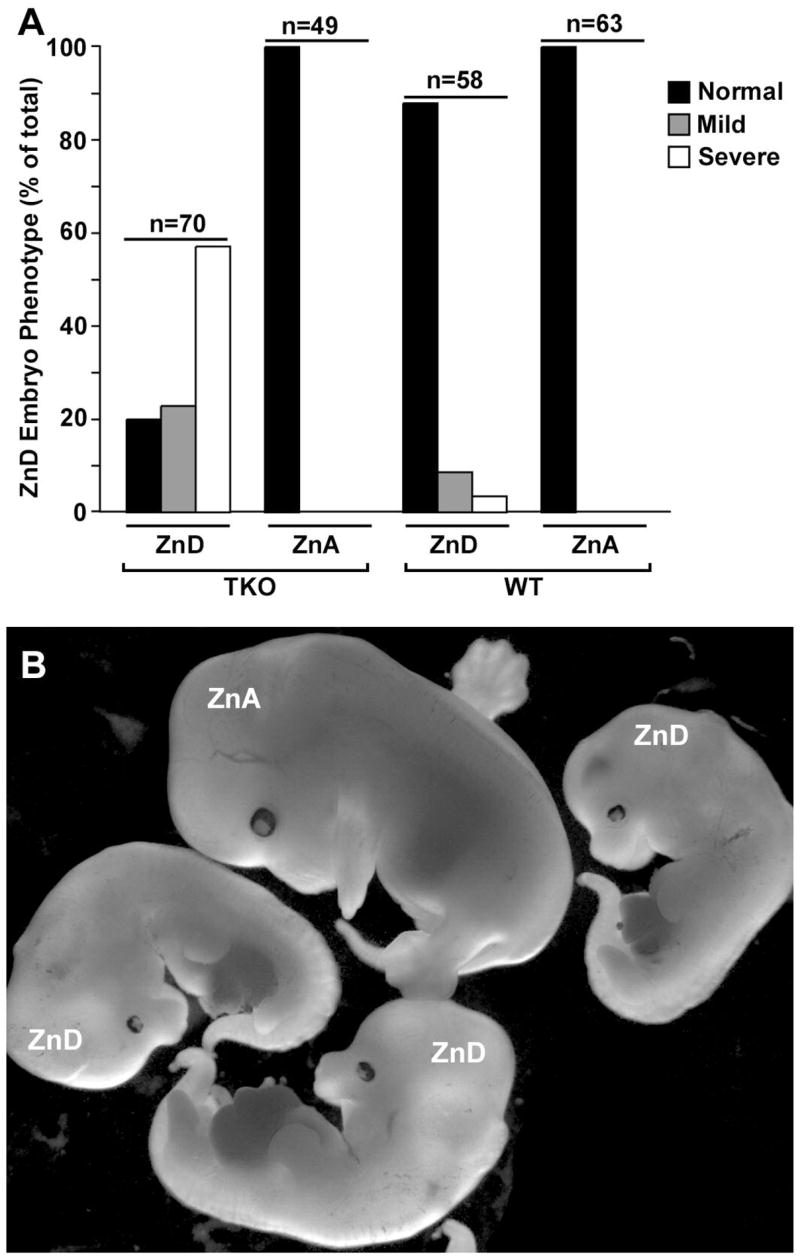
Mice were fed a zinc-adequate (ZnA) or zinc-deficient (ZnD) diet beginning on day 8 of pregnancy and the morphology of embryos was examined on day 14. Part A: Embryos were divided into three groups based on morphology; normal, mildly affected and severely affected. Embryos of normal size, with well-formed forelimb digits and normal gross features were called Normal. Embryos that were smaller and had delayed formation of the forelimb digits but were otherwise apparently normal were called Mild, whereas those that were very small, had abnormal forelimbs and hind limbs as well as craniofacial abnormalities were called Severe. An example of a normal zinc-adequate triple-knockout embryo (ZnA) and several severely zinc-deficient (ZnD) triple-knockout embryos are shown in Part B.