


Figure 11.
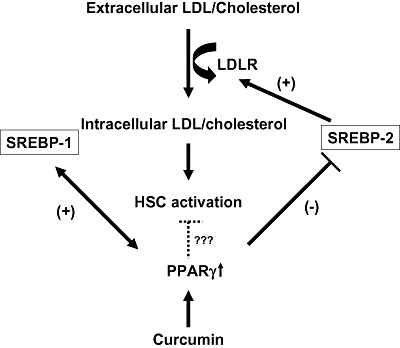
A simplified model for curcumin to inhibit low-density lipoprotein (LDL)-induced hepatic stellate cell (HSC) activation. Extracellular LDL is transported into HSC by LDL receptor (LDLR)-mediated endocytosis, leading to the stimulation of HSC activation. Curcumin induces gene expression of peroxisome proliferator-activated receptor-γ (PPARγ), resulting in the distinct regulation of gene expression of sterol regulatory element-binding proteins (SREBPs), that is, up-regulating srebp-1 expression and down-regulating srebp-2 expression. The down-regulation of SREBP-2 suppresses gene expression of LDLR, leading to the reduction in endocytosis of plasma LDL and in the level of cellular cholesterol in HSC. The up-regulation of SREBP-1 provides a positive feedback loop and facilitates, in turn, gene expression of PPARγ. These actions of curcumin collectively attenuate the stimulatory effects of LDL on the activation of HSC.