


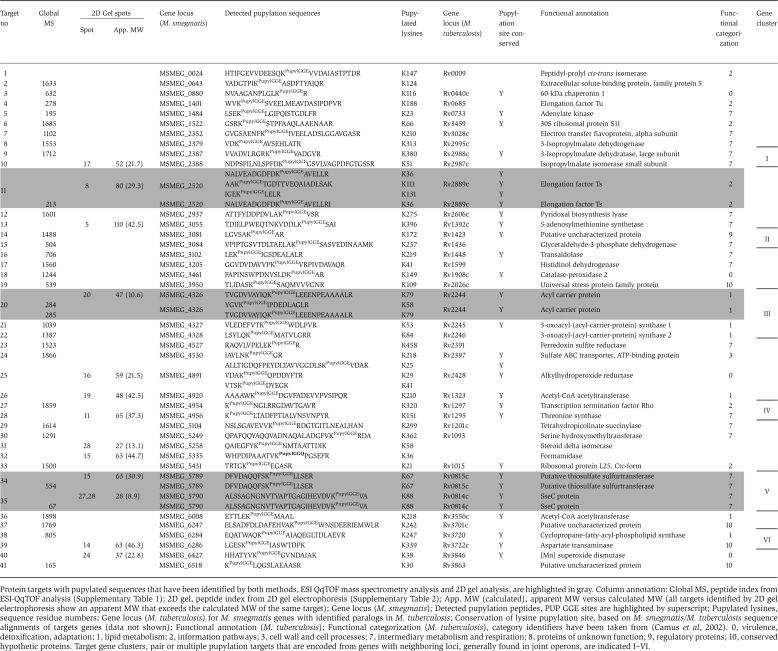
Table 1. Protein targets from M. smegmatis with one or more confirmed PUP modifications.
| Protein targets with pupylated sequences that have been identified by both methods, ESI QqTOF mass spectrometry analysis and 2D gel analysis, are highlighted in gray. Column annotation: Global MS, peptide index from ESI-QqTOF analysis (Supplementary Table 1); 2D gel, peptide index from 2D gel electrophoresis (Supplementary Table 2); App. MW (calculated), apparent MW versus calculated MW (all targets identified by 2D gel electrophoresis show an apparent MW that exceeds the calculated MW of the same target); Gene locus (M. smegmatis); Detected pupylation peptides, PUP GGE sites are highlighted by superscript; Pupylated lysines, sequence residue numbers; Gene locus (M. tuberculosis) for M. smegmatis genes with identified paralogs in M. tuberculosis; Conservation of lysine pupylation site, based on M. smegmatis/M. tuberculosis sequence alignments of targets genes (data not shown); Functional annotation (M. tuberculosis); Functional categorization (M. tuberculosis), category identifiers have been taken from (Camus et al, 2002). 0, virulence, detoxification, adaptation; 1, lipid metabolism; 2, information pathways; 3, cell wall and cell processes; 7, intermediary metabolism and respiration; 8, proteins of unknown function; 9, regulatory proteins; 10, conserved hypothetic proteins. Target gene clusters, pair or multiple pupylation targets that are encoded from genes with neighboring loci, generally found in joint operons, are indicated I–VI. |
|---|
 |