


Figure 1.
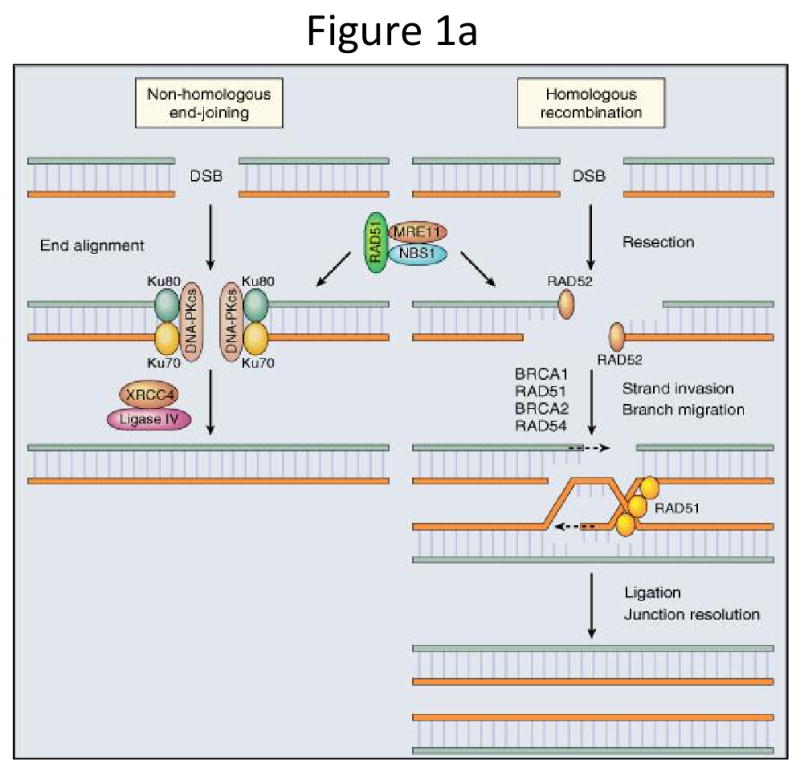
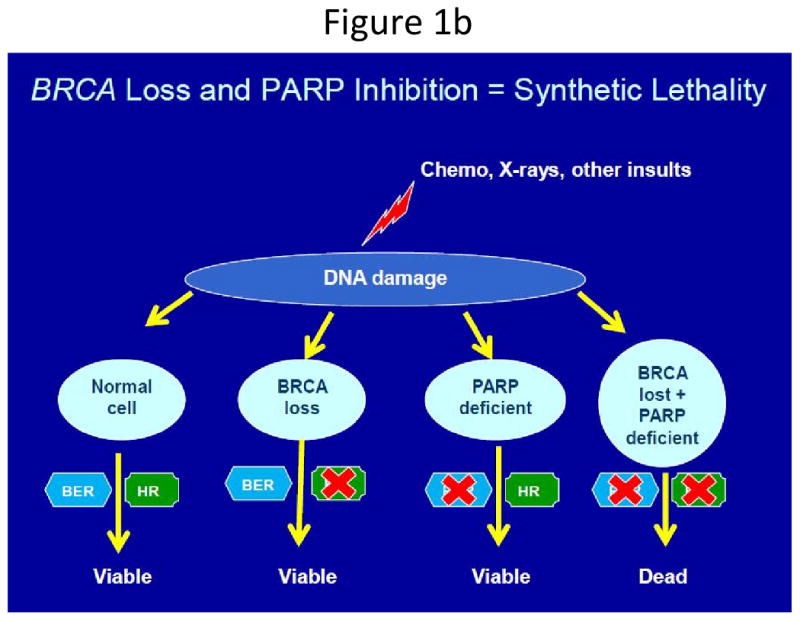
Figure 1a: Two main pathways which contribute to repair of DNA double strand breaks: non-homologous end joining (NHEJ) and homologous recombination (HR). This figure was published in Abeloff's Clinical Oncology, 4th Edition. JM Ford and MB Kastan, Chapter 10: DNA damage response pathways and cancer. p. 149. (Reprinted with permission, Copyright 2008, Churchill Livingstone, an Imprint of Elsevier) (5).
Figure 1b: ‘Synthetic lethality’ and subsequent cell death due to loss of parallel DNA repair pathways. In the presence of one (or both) functional BRCA- or PARP-dependent DNA repair pathways, cells survive. In the absence of both, cell death ensues (Reprinted with permission, from EA Comen and M Robson: ONCOLOGY 24(1):55-68, 2010) (52).