


Fig. 8.
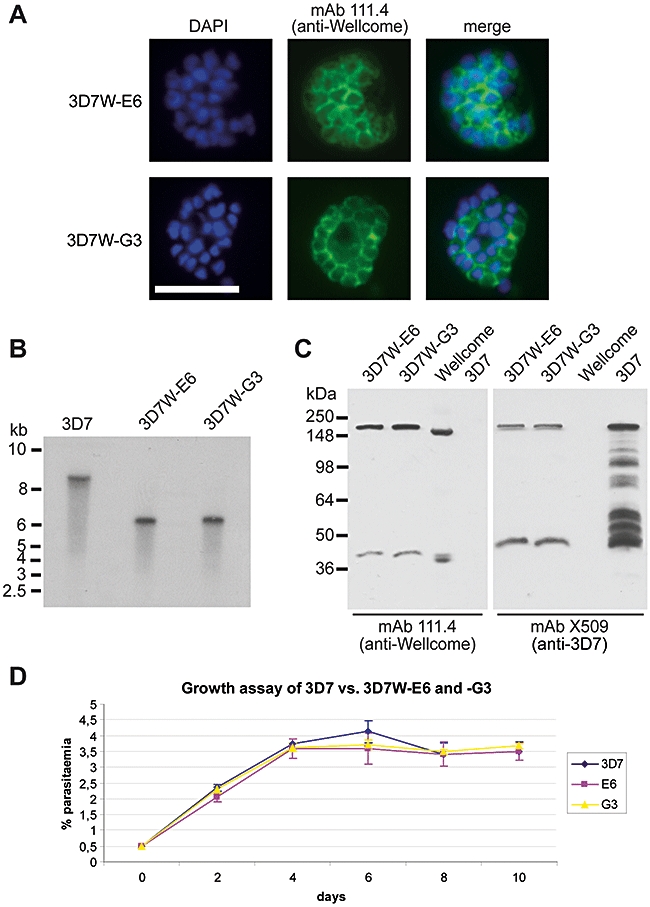
Transgenic P. falciparum clones stably expressing a chimeric MSP1 with an unmodified secondary processing site are phenotypically normal.A. IFA examination of transgenic clones 3D7W-E6 and 3D7W-G3 shows reactivity with the Wellcome-specific mAb 111.4, confirming stable expression of a chimeric form of MSP1. Nuclei were counterstained with DAPI. Scale bar, 5 µm.B. Southern blot analysis. Genomic DNA from parental wild-type 3D7 parasites, and clones 3D7W-E6 and 3D7W-G3, was digested with ClaI and EcoNI and analysed by Southern blot using a 480 bp PCR product amplified from the 3′ region of the 3D7 msp1 gene (see Fig. 6). The endogenous locus band is visible at 8.6 kb in the parental 3D7 digest, whereas its replacement with a 6.2 kb signal in the clone DNA digests is consistent with modification of the msp1 locus as predicted (see Fig. 6).C. Western blot confirms expression of chimeric MSP1 in the transgenic clones. Schizont extracts from clones 3D7W-E6 and 3D7W-G3, as well as from parental 3D7 and T9/94 (Wellcome-type) parasites, were fractionated on 10% SDS-PAGE gels and probed with either mAb 111.4 or mAb X509. In contrast to the parental extracts, the full-length MSP1 and MSP142 species from the transgenic clones were recognized by both mAbs. Note that mAb 111.4 recognizes a reduction-sensitive epitope, so the left-hand blot was from a gel run under non-reducing conditions, whereas the right-hand blot was from a gel run under reducing conditions.D. Growth assay comparing in vitro replication rates of parental 3D7 and transgenic clones 3D7W-E6 and 3D7W-G3. All three clones were co-synchronized to a 2 h window following 8 days (four intraerythrocytic cycles) of culture in the absence of drug pressure). Initial parasitaemias, measured by FACS, were adjusted to 0.5%, then subsequently assessed at 48 h intervals and cultures diluted as described in Experimental procedures. Individual points represent mean values from triplicate samples for all three lines and error bars represent the standard deviations of these values. There was no significant difference in growth rates of the clones.