


Table 1.
Representative activity-based probes and their application to cancer research
| Structure* | Enzyme class | Applications in cancer |
|---|---|---|
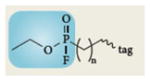 |
Serine hydrolases | Identified increased KIAA1363 (REFS 49,52,53) and MAGL11 activities in aggressive human cancer lines11,52 and primary tumours11,49. Identified increased uPA and tPA serine protease activities in secreted proteomes of aggressive cancer cells51,52. Identified increased RBBP9 activity in pancreatic carcinomas54 |
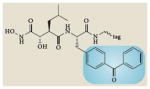 |
Metalloproteinases | Identified increased neprilysin activity in aggressive melanoma cell lines31 |
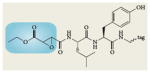 |
Cysteine proteases | Identified increased cathepsin cysteine protease activities in pancreatic islet tumours57. Used for in vivo imaging of tumour cathepsin activity57,60 |
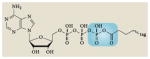 |
Kinases | Inhibitor selectivity profiling of kinase inhibitors35,71 |
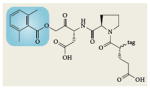 |
Caspases | In vivo and ex vivo visualization of apoptosis in colon tumour-bearing mice treated with Apomab62 |
 |
Deubiquitylases | Identified increased carboxy-terminal hydrolase UCHL3 and UCH37 activity in HPV cervical carcinomas58 |
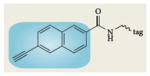 |
Cytochrome P450s | Identified the aromatase inhibitor anastrazole as an inducer of CYP1A2 activity68 |
HPV, human papilloma virus; tPA, tissue plasminogen activator; uPA, urinary plasminogen activator.
*
Blue boxes around structures represent the portion of the activity-based probes that react with the active sites of enzymes.