


Figure 3. Blockade of T cell coinhibition as an emerging therapeutic approach for prostate cancer.
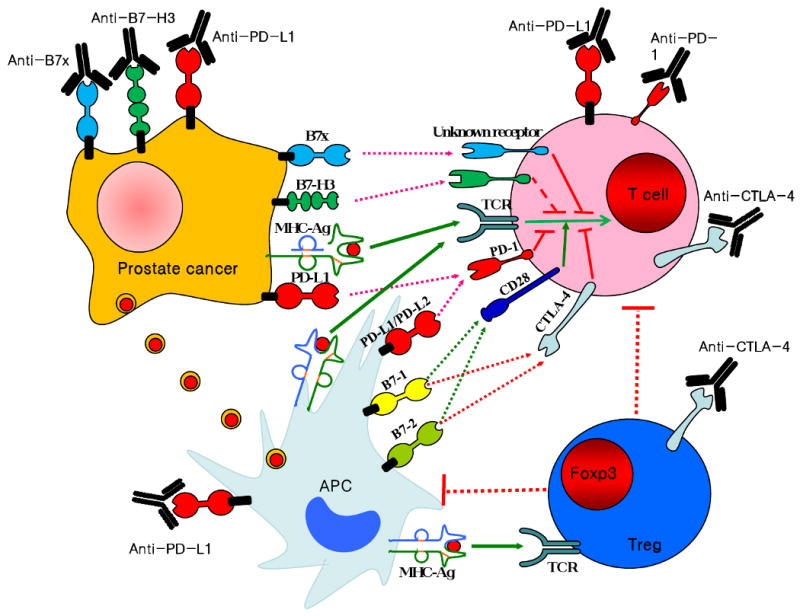
APCs (light blue) take up antigens (red circles) released from tumor cells and present them to T cells (pink) in the context of B7-1 and B7-2 costimulation. Tumor cells (orange) can also present tumor antigens to T cells in the absence of costimulation. Upon T cell activation, CTLA-4 and PD-1 are expressed and inhibit immune responses. Therefore, specific blockade of CTLA-4, leaving TCR and CD28 signaling intact, enhances antitumor immunity. Blockade of CTLA-4 on Tregs (blue) might also reduce Treg-mediated immunosuppression. Immune cells infiltrating prostate cancer have enhanced expression of PD-L1 and PD-1. Therefore immunotherapies blocking the PD-1/PD-L1 pathway are being tested. Finally, both B7x and B7-H3 inhibit T cell functions and are overexpressed by many human cancers including prostate cancer. Consequently, blockade of tumor associated B7-H3 and B7x could be another attractive approach in tumor immunotherapy.