


Figure 2. NG1427 undergoes RecA-mediated autoproteolysis in vitro, but limited in vivo autoproteolysis following oxidative treatment.
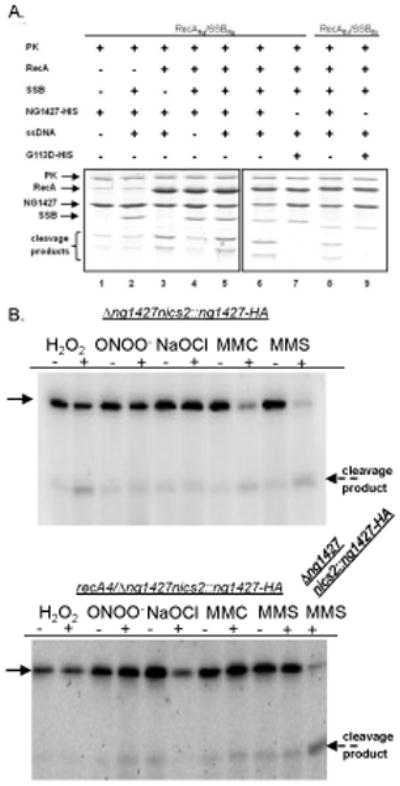
A: Examination of RecA-facilitated autoproteolysis of NG1427 in vitro. Purified NG1427-HIS or NG1427-G113D-HIS protein was incubated with either RecANg or RecAEc protein in the presence of the appropriate matched SSB protein, ssDNA, and an ATP regeneration system for 45 min. When a protein component (e.g. RecA or SSB) (lanes 2 and 3, respectively) was omitted as a control, the reaction was mock-treated with the storage buffer for the protein in question; when ssDNA was omitted, the reaction was mock-treated with TE storage buffer. Reactions were stopped and visualized on a 17% SDS-PAGE stained with Coomassie Brilliant Blue. The two NG1427 cleavage products are visible at the bottom of the gel. Gels are boxed to indicate that they were run on separate days. PK indicates pyruvate kinase.B: Examination of NG1427-HA turnover in vivo following treatment with oxidative and non-oxidative DNA damaging agents. Gc expressing NG1427-HA were treated with H2O2, ONOO−, NaOCl, MMC, or MMS, and cell lysates were immunoblotted for the HA tag. Thick arrow points to full-length NG1427-HA protein, dotted arrow denotes NG1427-HA C-terminal cleavage product with HA tag. Upper blot is NG1427-HA turnover in RecA+ cells, lower blot is NG1427-HA turnover in RecA−cells.