


Figure 5. Effects of striatal 5-HT1AR stimulation on local glutamate and AIMs in 6-OHDA, L-DOPA-treated rats.
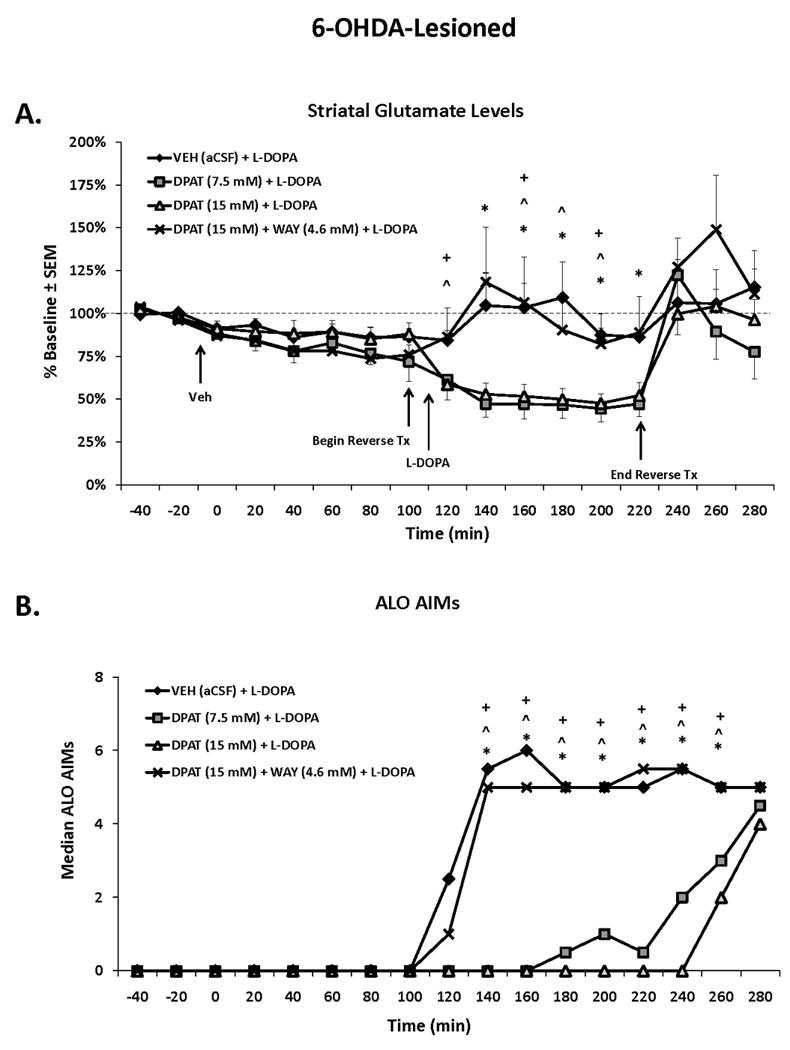
Rats in the third experiment received unilateral 6-OHDA of the MFB and 3 weeks later were primed with L-DOPA (12 mg/kg + benserazide, 15 mg/kg, sc) once daily for 7 d. Dyskinetic rats (n=18) underwent a microdialysis procedure including: 40 min baseline, 120 min vehicle treatment, 120 min drug treatment, and 60 min post-drug treatment sampling (dialysate collected every 20 min and expressed as percent baseline). Intrastriatal drug infusion included: Vehicle (VEH; aCSF), the full 5-HT1AR agonist ±8-OH-DPAT (DPAT; 7.5 or 15 mM), or combined DPAT (15 mM) + WAY100635 (WAY; 4.6 mM), followed 10 min later by systemic treatment injections of L-DOPA (12 mg/kg, + benserazide, 15 mg/kg, sc). AIMs were observed during this time. Lines depict the means ± SEM of striatal glutamate (A) and AIMs (B) for VEH (n=6), DPAT (7.5 mM; n=6), DPAT (15 mM; n=7), and DPAT (15 mM) + WAY (4.6 mM; n=6) groups. Effects over time were determined by a two-way mixed design ANOVA for striatal glutamate. Treatment effects for AIMs (expressed as medians) were analyzed by employing non-parametric Kruskal-Wallis tests. Significant differences between treatments were determined by Mann-Whitney post hoc comparisons for AIMs and planned comparison tests for striatal glutamate.
* p < 0.05 for VEH vs DPAT (7.5 mM)
^ p < 0.05 for VEH vs DPAT (15 mM)
+ p < 0.05 for DPAT (15 mm) vs DPAT (15 mM) + WAY (4.6 mM)