


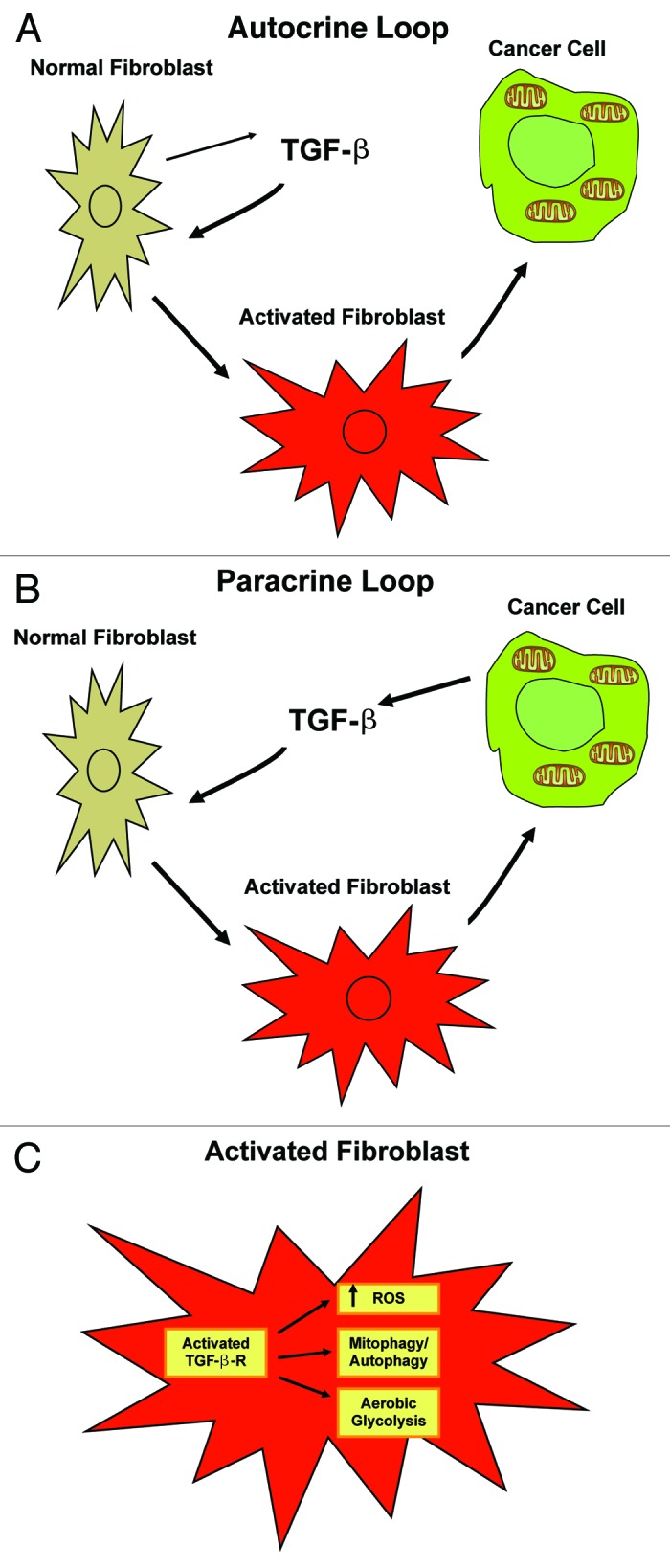
Figure 13. Autocrine and paracrine TGF-β signaling in cancer-associated fibroblasts fuels the anabolic growth of adjacent breast cancer cells. (A) Autocrine Loop. Stromal-derived TGF-β activates signaling in stromal cells in an autocrine fashion, leading to fibroblast activation. Activated catabolic fibroblasts then promote the mitochondrial activity and anabolic growth of adjacent epithelial cancer cells. (B) Paracrine Loop. Cancer cell-derived-TGF-β ligands affect stromal cells in a paracrine fashion, leading to fibroblast activation (catabolism) and enhanced tumor growth. However, activation of the TGF-β pathway in cancer cells does not influence tumor growth. (C) Fibroblast Activation. Ligand-dependent or cell-autonomous activation of the TGF-β pathway in stromal cells induces fibroblast activation. Features of activated fibroblasts include increased expression of myofibroblast markers, and metabolic reprogramming toward catabolic metabolism. Thus, TGF-β-activated fibroblasts show increased oxidative stress, autophagy/mitophagy and glycolysis, and downregulation of Cav-1. These metabolic alterations can also spread to neighboring “normal” fibroblasts in a paracrine fashion and greatly sustain the anabolic growth of breast cancer cells.