



Abstract
The concurrent use of opioids, benzodiazepines (BZDs), and/or alcohol poses a formidable challenge for clinicians who manage chronic pain. While the escalating use of opioid analgesics for the treatment of chronic pain and the concomitant rise in opioid-related abuse and misuse are widely recognized trends, the contribution of combination use of BZDs, alcohol, and/or other sedative agents to opioid-related morbidity and mortality is underappreciated, even when these agents are used appropriately. Patients with chronic pain who use opioid analgesics along with BZDs and/or alcohol are at higher risk for fatal/nonfatal overdose and have more aberrant behaviors. Few practice guidelines for BZD treatment are readily available, especially when they are combined clinically with opioid analgesics and other central nervous system–depressant agents. However, coadministration of these agents produces a defined increase in rates of adverse events, overdose, and death, warranting close monitoring and consideration when treating patients with pain. To improve patient outcomes, ongoing screening for aberrant behavior, monitoring of treatment compliance, documentation of medical necessity, and the adjustment of treatment to clinical changes are essential. In this article, we review the prevalence and pharmacologic consequences of BZDs and/or alcohol use among patients with pain on chronic opioid therapy, as well as the importance of urine drug testing, an indispensable tool for therapeutic drug monitoring, which helps to ensure the continued safety of patients. Regardless of risk or known aberrant drug-related behaviors, patients on chronic opioid therapy should periodically undergo urine drug testing to confirm adherence to the treatment plan.
Keywords: urine drug testing, opioid, benzodiazepine, alcohol, respiratory depression, chronic pain
Prevalence and Risk Factors
Co-Abuse of Opioids, Benzodiazepines, and/or Alcohol: Consequences for General Health and Overdose Lethality
The escalating use of opioid analgesics to treat chronic pain and the concomitant rise in opioid-related abuse and misuse are widely recognized trends. In 2011, the US Institute of Medicine declared pain a public health challenge and identified a number of barriers to adequate pain care. These include regulatory, legal, educational, and cultural barriers that inhibit the medically appropriate use of opioid analgesics.1 Also, in 2011, the US Food and Drug Administration introduced mandatory safety measures for opioid prescribing, such as Risk Evaluation and Mitigation Strategies.2 Various organizations, including the American Pain Society, the American Academy of Pain Medicine, and the American Society of Interventional Pain Physicians, among others, have since developed clinical guidelines for responsible opioid prescribing.3–7
Perhaps somewhat underappreciated is the contribution of concurrent use of alcohol and other sedative agents to the mounting incidence of opioid-related morbidity and mortality, even when used appropriately. The literature suggests that benzodiazepine (BZD) users are more likely to receive prescription opioids than non-BZD users.8,9 Although the World Health Organization described the rational use of BZDs in 1996,10 few practice guidelines for BZD treatment are readily available, especially when BZDs are used clinically along with opioid analgesics and other central nervous system (CNS)–depressant agents.
Recent guidelines for opioid prescribing merely recommend considering concomitant BZD use when evaluating contraindications to opioid use in patients with chronic noncancer pain.5 Canadian guidelines refer to BZD tapering when used in chronic noncancer pain populations who are elderly and may exhibit greater sensitivity to the respiratory effects of opioids.11 Yet, the use of BZDs in combination with other substances can have severe, and even fatal, consequences.12 Furthermore, the rates of BZD abuse are increasing. Substance abuse treatment admissions for BZD abuse nearly tripled from 22 400 in 1998 to 60 200 in 2008, with the concurrent abuse of opiates accounting for the majority of admissions, followed by alcohol (Figure 1).12 In fact, treatment admissions due to co-abuse of BZDs and narcotic pain relievers increased by 569.7% from 2000 to 2010, while those related to all other substance abuse decreased by 9.6% in the same time period.13
Figure 1.

Primary substance of abuse among treatment admissions reporting secondary benzodiazepine abuse: 2008.12
Benzodiazepines were reported as a drug of abuse by approximately 60 200 treatment admissions. The majority of patients indicated that they initiated benzodiazepine use after the abuse of another substance. The primary substance of abuse was opioids in the group aged 18 to 44 years, opioids as well as alcohol in the group aged ≥ 45 years, and marijuana in the group aged 12 to 17 years. Percentages may sum to < 100% because a small number of admissions did not report a primary substance of abuse.
Emergency department (ED) visits resulting from the misuse or abuse of prescription drugs in general increased by 76% between 2005 to 2010 (Figure 2).14,15 Even when medications were taken as prescribed, adverse reactions (ie, side effects, drug–drug interactions, and drug–alcohol interactions) caused an 86% increase in ED visits during the same time period.14 Specifically, accidental opioid-related fatalities increased by 4-fold from 1999 to 2009.16 An analysis by investigators at the Centers for Disease Control and Prevention in Atlanta, GA, showed that 75.2% of deaths from pharmaceutical agents involved opioids, followed by BZDs (29.4%), antidepressants (17.6%), and antiepileptic and antiparkinsonism agents (7.8%), either alone or combined with other drugs. Of these overdose deaths, 74.3% (16 451) were unintentional, 17.1% (3780) were suicides, and 8.4% (1868) were of undetermined intent.17
Figure 2.
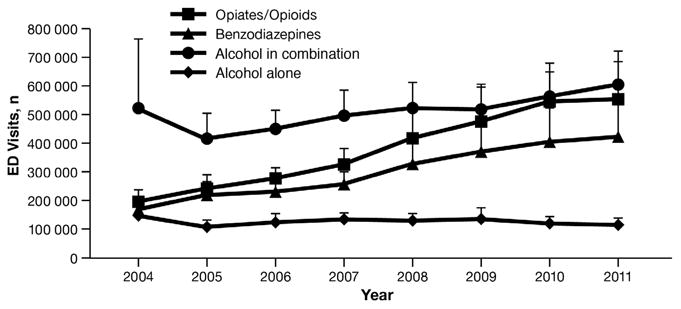
Number of ED visits involving misused or abused drugs according to major substance of abuse: 2004–2011.15
The Drug Abuse Warning Network collects demographic and visit-level information on ED visits resulting from substance misuse or abuse, adverse reactions to drugs taken as prescribed, accidental ingestion of drugs, drug-related suicide attempt, and other drug-related medical emergencies. Only those data for visits involving misused or abused drugs are shown. Curves represent data obtained for the major substance of abuse; however, multiple drugs may be involved in each visit. Data from illicit drugs have been omitted. Alcohol combined with other drugs is recorded for all ages and alcohol only for patients aged ≤ 20 years.
Abbreviation: ED, emergency department.
The Utah Medical Examiner's office also investigated the rise in unexpected deaths from prescription drug overdose between October 2008 and 2009, and found similar results.18 Among the 278 opioid-related overdose deaths, 86% did not involve any illicit drugs and 83% of decedents experienced chronic pain.16 Oxycodone was the drug most frequently mentioned as a contributing cause of death, followed by methadone and hydrocodone. Calcaterra et al16 found that prescription opioid–related deaths commonly involve additional substances, including alcohol, sedatives, and/or illicit drugs (as identified from death certificates). The most common cause of polysubstance overdose fatality was the combined use of opioids and BZDs.16 Several studies19–24 suggest that BZDs may play a role in as much as 80% of unintentional overdose deaths involving opioids, primarily due to respiratory depression.8,25
Respiration is controlled at medullary respiratory centers with input from peripheral chemoreceptors. Glutamate and gamma-aminobutyric acid (GABA) are the major excitatory and inhibitory neurotransmitters, respectively, mediating the control of respiration. Opioids produce inhibition both in the medulla and at peripheral chemoreceptors, while BZDs and alcohol facilitate inhibitory effects of GABA at the GABAA receptor. Alcohol also decreases the excitatory effect of glutamate at N-methyl-D-aspartate receptors. Therefore, while the respiratory-depressant effects of alcohol and BZDs are mild, the concurrent use of these drugs with opioids has the potential to increase and/or prolong the respiratory-depressant effects of opioids. In addition, tolerance to respiratory depression is incomplete, and may be slower than tolerance to euphoria and other effects. One often underappreciated consequence of this phenomenon may be a relatively high risk of overdose among experienced opioid users.25
Risk factors for respiratory depression due to opioids may include age > 55 years, preexisting chronic obstructive pulmonary disease, known or suspected sleep-disordered breathing problems, anatomic oral or airway abnormalities, and comorbidities (eg, advanced systemic disease, renal or hepatic impairment).26
Pharmacologic Consequences of Combination Opioid and BZD Use
Benzodiazepines are reported to enhance the positive subjective effects of opioids (ie, euphoria) but it is unclear whether the reinforcing effects are additive or supra-additive (ie, synergistic). The reasons for combination use and misuse vary, but it appears likely that the motivation for clinicians may be different from that of patients. Clinicians may combine BZDs with opioids to take advantage of the anxiolytic and skeletal muscle–relaxant properties of BZDs. Patients may experience a pharmacodynamic interaction between the opioid and BZD that enhances the CNS effects and potential feelings of euphoria, especially if the drugs are misused or not taken as directed. Among patients on long-term opioid treatment, ≥ 25% said that they initiated BZD use out of curiosity, or to relax, relieve tension/anxiety, feel good, or get high.27 Subjective ratings of high, euphoria, good, like, and strong increase with combination use of BZDs and opioids.28–30 In a study of opioid-dependent patients with histories of BZD abuse, Preston et al31 found that diazepam coadministered with methadone increased the positive subjective effects of opioids and induced greater constriction of the pupil than either drug alone. (Pupil constriction is an opioid effect; the level of decrease in pupil diameter is proportional to the sedative-hypnotic effect of the drug.32) Multiple BZDs, including diazepam, have significant abuse liability, producing increased positive subjective ratings and functional impairment when used along with opioids (Figure 3).28–30
Figure 3.

Diazepam coadministered with buprenorphine increases subjective drug effects and impairs cognitive performance.
Diazepam (0 or 40 mg) was administered to patients maintained on buprenorphine therapy (n = 7) being treated with 100% of their normal buprenorphine dose (mean 11.1 ± 2.8 mg). A) Subjective drug effects were determined using visual analog scales of “strength of drug effect,” “sedation,” and “liking of drug effect” at 0, 0.5, 1, 1.5, 2, 3, 4, 5, and 6 hours after dosing. B) Functional impairment was determined by increases in visual reaction time, a measure of sensory-motor performance, and cancellation time, a measure of focused attention, as well as a decrease in coding skills using the DSST. Data are expressed as mean plus standard error of the mean. P values denote significant paired differences versus the diazepam 0 mg condition.
Reprinted from Drug and Alcohol Dependence, Volume 91, Edition 2–3, Lintzeris N, Mitchell TB, Bond AJ, Nestor L, Strang J. Pharmacodynamics of diazepam co-administered with methadone or buprenorphine under high dose conditions in opioid dependent patients. Pages 187–194, Copyright 2007, with permission from Elsevier.30
Abbreviation: DSST, Digit Symbol Substitution Test.
Respiratory depression is the primary mechanism contributing to fatal opioid overdose, which, as discussed, may be exacerbated by concomitant BZD use.25 Among patients undergoing various medical and surgical procedures, > 80 deaths have occurred after using midazolam, often combined with opioids.33 Bailey et al33 reported that coadministration of midazolam and fentanyl increased the incidence of hypoxemia and apnea among healthy study volunteers. In another study by Faroqui et al,34 of the 64 patients who underwent anesthesia and received both buprenorphine and diazepam, 11 experienced sudden respiratory depression requiring manual ventilation.
It is now well established that the cytochrome P450 (CYP) enzyme system plays an important role in the metabolism of a large number of medications in many therapeutic classes, including opioids.35–37 Although some BZDs, such as oxazepam, lorazepam, and temazepam, are directly conjugated via glucuronyl transferase, others, such as alprazolam and diazepam, are first metabolized by the CYP isozyme 3A4 and/or 3A5.36 Thus, when certain BZDs are coadministered with inhibitors of the CYP system, one would expect a decrease in BZD clearance associated with potentially increased somnolence and respiratory depression, especially when combined with opioids.35,36
Pharmacologic Consequences of Combination Opioid and Alcohol Use
One of the major concerns when combining alcohol with opioid analgesics is the pharmacokinetic consequence of “dose dumping.” Dose dumping is defined as the unintended, rapid release (over a short period of time) of the entire amount or a significant fraction of the drug contained in a modified-release dosage form. Alcohol is linked to dose-dumping effects across specific long-acting opioid (LAO) formulations, and significantly increases their dangers, as well as their abuse liability. In the most pronounced case, co-ingestion of the previously available analgesic Palladone™ (Purdue Pharma; hydromorphone hydrochloride extended-release capsules) with alcohol produced significantly higher plasma levels of hydromorphone (up to 16-fold greater), especially in the fasted state. This finding prompted its discontinuation and withdrawal from the market.38 In vitro studies of another LAO, Avinza® (Pfizer Inc; morphine sulfate extended-release capsules), displayed accelerated release of morphine that was alcohol concentration dependent (Figure 4).39 Box warnings for Avinza®, as well as other extended-release/long-acting opioids,40 advise patients not to drink alcoholic beverages or use prescription or nonprescription medications containing alcohol during therapy, as it may result in the rapid release and absorption of a potentially fatal dose of opioid.
Figure 4.

In vitro dissolution of Avinza® (Pfizer Inc; morphine sulfate extended-release capsules) increases in an alcohol concentration–dependent manner.39
Avinza® (30 mg) was dissolved in 900 mL of buffer solutions containing ethanol (0%, 4%, 20%, and 40%). The dissolution without ethanol shows a controlled rate of release over a 24-hour period, which is similar to that of 4% ethanol. Dissolution of Avinza® in 20% and 40% ethanol is accelerated, with 80% of drug released in < 1 hour.
The mechanisms by which alcohol alters the pharmacokinetic properties of LAOs are poorly understood. Several studies have shown that concurrent use of alcohol increases the maximum plasma concentration (Cmax) of certain opioids and decreases the time to Cmax (tmax), despite no evidence of dose dumping.41–43 The clinical significance of the additive effects in Cmax and tmax from combination alcohol and opioid use has not been characterized directly. However, coadministration of ethanol and opioids may increase the related dangers as well as enhance positive subjective effects that contribute to abuse liability while adversely affecting physical function and cognition. These responses stress the importance of instructing patients not to consume alcoholic beverages or use prescription or nonprescription products containing alcohol while on LAO therapies.
Fatal poisonings involving prescription opioids are frequently associated with alcohol use and are likely due to combined CNS- and respiratory-depressant effects.5,44,45 In a study by Ali et al,46 opioids significantly decreased the ventilatory response to hypercapnia when administered along with ethanol. No pharmacokinetic interaction was observed for either drug. Increases in positive subjective effects (eg, “drug liking,” “take again,” “pleasant body sensations”) have been reported by healthy volunteers administered a combination of oxycodone (10 mg) and ethanol (0.3 or 0.6 g/kg) compared with when they received either substance alone (Figure 5).47 Psychomotor and cognitive performances were not affected by any of the active drug scenarios.
Figure 5.

Oxycodone combined with ethanol increases several abuse liability–related subjective effects.47
During separate sessions, 14 healthy volunteers received placebo capsule with placebo beverage, placebo capsule with ethanol 0.3 g/kg beverage, oxycodone 10 mg with placebo beverage, and oxycodone 10 mg with ethanol 0.3 g/kg beverage. The ethanol 0.3 g/kg dose is roughly equivalent to 1.5 standard-sized drinks. Oxycodone (or placebo) was administered 45 minutes before the ethanol (or placebo) drinking period so that both would peak at approximately the same time. Participants were asked to complete assessment forms 24 hours following each session. Data are expressed as mean plus standard error of the mean. P values represent significant differences from placebo. *P < 0.05.
Combination Use of Opioids, BZDs, and/or Alcohol Among Patients With Chronic Pain
Concurrent use of opioids, BZDs, and/or alcohol poses a formidable challenge for clinicians who manage patients with chronic pain. In recent reviews of outpatient pharmacy and clinical databases, patients with chronic pain who concurrently used opioid analgesics and BZDs had more pain-related and behavioral management problems, and were at higher risk for fatal/nonfatal overdose.48,49 Among patients with noncancer pain, in particular, concomitant use of BZD was associated with more total months of prescribed opioid, higher mean daily doses, and a greater risk of a psychogenic chronic pain diagnosis and alcohol abuse/dependence.48 Similarly, Bachs et al50 found that users who were dispensed the highest doses of codeine (according to prescription records) were significantly more likely to use high doses of BZDs as well. In fact, BZD use was a stronger predictor of future prescription opioid use than musculoskeletal or chronic pain.9 Furthermore, patients with chronic pain who were diagnosed with alcohol abuse/dependence independently exhibited a trend toward longer oxycodone/acetaminophen use (Figure 6), suggesting additional treatment challenges among that comorbid population as well.48
Figure 6.

Alcohol abuse/dependence correlates with long-term opioid analgesic use.48
Outpatient pharmacy and clinical databases from the New England Veterans Integrated Service Network between January 1, 1998 and June 30, 2001 were analyzed for duration, dose, and dose changes of oxycodone/acetaminophen prescriptions. Diagnosis of alcohol abuse/dependence was defined by the International Classification of Diseases, Ninth Revision, Clinical Modification and determined from the medical records.
Despite adverse consequences, many patients continue to use an opioid concurrently with a BZD and/or alcohol. Approximately 40% of patients with pain who are on chronic opioid therapy are also prescribed BZDs.49,51–53 In one study of patients with chronic pain, 5.8% reported using alcohol ≥ 10 times in the past 30 days, and 2.4% were intoxicated > 6 times.54 Saunders et al52 recently reported concurrent use of opioids and alcohol or sedatives in 12% and 32% of patients with chronic noncancer pain, respectively (Figure 7). Approximately 3% of patients used all 3. As with any drug use/misuse, patients commonly underreport their consumption. Objective screening measures that assess recent alcohol use have been inadequate in the clinical setting. With advances in toxicology and the recognition of screening biomarkers, such as ethyl glucuronide (EtG) and ethyl sulfate (EtS), a more accurate reflection of the true incidence of alcohol use along with pharmaceutically controlled substances is now possible.
Figure 7.

Concurrent use of alcohol and/or sedatives among patients with chronic noncancer pain on long-term opioid therapy.52
Telephone surveys and electronic health care data of 1848 patients prescribed long-term opioid therapy for chronic noncancer pain were assessed. Concurrent alcohol use was based on self-report of ≥ 2 drinks within 2 hours before or after taking opiates within the past 2 weeks. Concurrent sedative use was defined as receiving sedatives for ≥ 45 days of the 90 days preceding interview according to pharmacy data.
Opioid-Related Morbidity and Mortality: Associations With Abuse, Misuse, and Addiction
The risks for opioid-related morbidity and mortality are not limited to patients with pain who have aberrant drug-related behavior or comorbid substance use disorders (SUDs). Even when patients are adherent to treatment and medications are taken as prescribed, adverse reactions, including drug–drug and drug–alcohol interactions, can occur. In 2010 alone, there were > 2 million drug-related ED visits due to adverse reactions from medications taken as prescribed.14 Patients undergoing chronic opioid therapy may underestimate the dangers of alcohol use and the quantities that they ingest. A recent study by the UK Department of Health found that moderate drinkers in England underestimate the amount of alcohol they drink by as much as 40%.55 Whether patients will combine these 3 agents has little to do with preexisting SUDs. Figure 8 illustrates how rates of concurrent alcohol and/or sedative use are surprisingly similar among patients with pain who are on chronic opioid therapy with or without an SUD.52
Figure 8.

Rates of concurrent alcohol and/or sedative use among patients with pain on chronic opioid therapy with and without an SUD.52
Telephone surveys and electronic health care data of 1848 patients prescribed long-term opioid therapy for chronic noncancer pain were assessed. Concurrent alcohol use was based on self-report of ≥ 2 drinks within 2 hours before or after taking opiates within the past 2 weeks. Concurrent sedative use was defined as receiving sedatives for ≥ 45 days of the 90 days preceding interview according to pharmacy data. Substance use disorders were classified by either a diagnosis of drug or alcohol abuse or dependence according to electronic data in the 3 years before the survey, patient self-report, or a score of ≥ 7 on the Alcohol Use Disorders Identification Test–Consumption.
Abbreviation: SUD, substance abuse disorder.
Given the comorbidity of chronic pain and psychiatric disorders, patients may be prescribed both opioid therapy and BZD treatment by different physicians. Patients receiving chronic opioid therapy may self-medicate with their BZDs because of inadequate control of chronic pain and/or the symptoms of impaired mood and anxiety. Although the majority of patients report initiating BZD use after the onset of pain, these agents provide little analgesic benefit for patients with most chronic pain conditions.51 Simply screening patients for risk of aberrant drug-related behavior or SUDs may not be sufficient for identifying all patients who are at risk for combination use. Because distinguishing motives among patients abusing their medications may be difficult, clinicians must use risk-stratification tools as part of every patient's assessment. Management should be tailored based on whether patients are using their medications safely and appropriately or to address reasons for misuse.
Clinical Management
Assessing Risk for Co-Abuse and Opioid-Related Morbidity and Mortality
There is an urgent need to develop validated assessment tools to evaluate the initial and ongoing risk of concomitant opioid, BZD, and/or alcohol use.8,52,56 Clinicians should conduct multidimensional assessments of patient medical and psychiatric comorbidities, as well as consider patients' current medications and their respective effects on the risk of respiratory depression and other related morbidities. Psychiatrists, as well as primary care and pain management clinicians, should join forces to develop strategies for safe and effective opioid and BZD use, while employing methods to limit alcohol consumption.
Table 1 lists predictors of concurrent alcohol and sedative use identified in patients with pain who are on long-term opioid treatment.52 Compared with opioid abusers, concurrent users of BZDs and opioids take higher doses of the drugs for longer periods of time, are more likely to abuse additional substances (eg, alcohol), and are more likely to have a psychiatric comorbidity.57–60
Table 1. Predictors of Concurrent Alcohol and/or Sedative Use in Patients on Long-term Opioid Therapy for Pain27,52.
| Predictors of Concurrent Alcohol Use | Predictors of Concurrent Sedative Use |
|---|---|
|
Alcohol use disorder and risky drinking behavior were defined by the Alcohol Use Disorders Identification Test–Consumption.
High opioid doses were defined as daily doses ≥ 120 mg.
Screening instruments, such as the Cut Down, Annoyed, Guilty, Eye-Opener (CAGE)61 or the Alcohol Use Disorders Identification Test–Consumption (AUDIT-C)62 (Figure 9), among others, may help to structure assessment of risks related to alcohol. Although the utility of these tools is limited because they rely on patient self-report, the sensitivity and specificity of the tests in detecting problematic alcohol use are generally ≥ 80%.56 Even a single-item test asking “How many times in the past year have you had 5 [4 for women] or more drinks in a day?” is 82% sensitive and 79% specific for identifying unhealthy alcohol use.63 Screening instruments to assess risks related to BZD use are not readily available. In the next section, we discuss more objective screening and monitoring tools for alcohol, opioid, and BZD use.
Figure 9.

Alcohol Use Disorders Identification Test–Consumption questions.62
A score of ≥ 4 for men or ≥ 3 for women is considered positive and optimal for identifying hazardous drinking or active alcohol use disorders.
Monitoring Treatment Adherence
Treatment adherence monitoring has been shown to increase compliance rates and reduce rates of drug abuse among patients with chronic pain.64 Risk stratification, behavioral assessment, prescription monitoring programs (PMPs), and baseline and unscheduled drug testing are currently the best available tools for tracking treatment adherence.65 Most guidelines also recommend an opioid treatment agreement, which may facilitate patient–provider communication, improve adherence rates, and reduce opioid misuse.66 Educating patients about the consequences and dangers of combined alcohol and BZD use as part of the opioid treatment agreement may be particularly useful for encouraging patients to remain abstinent from these substances.
Prescription monitoring programs provide data on patterns of prescription use and reduce rates of prescription drug abuse and “doctor shopping.”5,67–69 Most states have PMPs in place and monitor controlled substances that are classified as schedule II–V, which include opioids and BZDs.70 Clinicians are advised to use PMPs when monitoring patients for compliance.5 While there is good evidence that PMPs provide data on patterns of prescription drug use, the programs do not report drugs obtained illegally (ie, from friends or other outside sources), nor do most yet allow for monitoring across states. As these programs have only recently become available in many states, there is limited evidence to date to indicate that PMPs reduce rates of ED visits and drug overdose.6
Urine drug testing (UDT) has been advocated by many state, policy, and society guidelines.3–7 It is impossible to determine beforehand with any certainty who will become a problematic user of prescription medications. Patient demographics (excluding age) and prescribed opioid dose were found to be poor predictors of aberrant behavior.71 Urine drug testing provides a more objective way to monitor treatment adherence and detect polysubstance use (Figure 10).71 The percentage of patients with pain who are treated with opioids and have aberrant UDT results is surprisingly high—in some studies > 50%—reinforcing the need to test and the drawback of relying on self-report alone.65
Figure 10.

UDT results among patients with chronic pain (N = 470).71
Urine drug testing was performed using gas chromatography/mass spectrometry technology. Abnormal UDT results were defined as the absence of a prescribed opioid, the presence of an additional nonprescribed controlled substance, the detection of an illicit substance, or an adulterated urine sample.
Abbreviation: UDT, urine drug testing.
Best Practices in Opioid, BZD, and Alcohol Testing
Urine drug testing and PMPs can inhibit prescription drug abuse or doctor shopping by identifying patients who are nonadherent or abusing prescription and/or illicit drugs.6 When initiating and maintaining chronic opioid therapy, drug testing can be used to establish a baseline measure of risk or to monitor adherence.5
Regardless of risk or known aberrant drug-related behaviors, patients on chronic opioid therapy should periodically undergo UDT to confirm adherence to the treatment plan.3 Implementing a universal and consistent UDT policy for all patients can help to “de-stigmatize” drug testing and maintain patient–provider relationships.5 At the same time, comprehensive risk assessment must be individualized for each patient according to medical necessity, as risk is a dynamic phenomenon.66 Practice guidelines4,5,72 recommend stratifying patients into 1 of 3 risk categories—low, moderate, or high risk—for aberrant drug-related behavior. Therapeutic drug monitoring is reasonable and medically necessary for patients with chronic pain in whom there is a probability of nonadherence to the prescribed drug regimen, that is, a suspected history of substance abuse or dependence. Drug screening is also indicated for patients with unexplained delirium or coma, suspected drug overdose, or suspected drug misuse.73
Drugs or drug classes for which screening is to be performed must be indicated in a written order and should reflect only those likely to be present based on the patient's medical history or current clinical presentation.73 In some instances, qualitative screening by point-of-care (POC) test methods may not be sufficient to identify all drugs indicated. Laboratory gas or liquid chromatography (GC or LC) followed by mass spectrometry (MS) testing is necessary for detecting drugs or drug classes that cannot be screened with POC devices. Point-of-care testing does not screen for or often does not detect alcohol, certain BZDs (eg, alprazolam, clonazepam, lorazepam), recently ingested medications, and low levels of illicit drugs (eg, marijuana, cocaine). Moreover, urine or saliva samples tested with POC methods should be sent to outside laboratories for confirmation when the result of the drug test is different from that suggested by the patient's medical history, clinical presentation, or own statement.73
Opioid Testing
When screening for treatment compliance, clinicians should follow published guidelines on responsible opioid prescribing and drug testing practices.3–7 There is limited guidance on how to tailor monitoring in patients who are at risk for opioid-related morbidity and mortality. An expert opinion statement presented at the 2012 American Academy of Pain Medicine meeting suggested that all patients prescribed opioid therapy for > 3 months should be subjected to random UDT every 3 to 6 months, depending on their risk for abuse.74
Knowledge of opioid metabolism (Table 2)75 and the detection window (Table 3)76,77 is also important in selecting test methods and interpreting results. For example, depending on when the drug was last taken, the route of administration, and interpatient variability, a urine specimen can contain the parent drug (eg, oxycodone), an active metabolite (eg, oxymorphone), and/or an end metabolite (eg, noroxycodone) (Table 2). Furthermore, detection limits of POC test devices may be too high, particularly for opioid testing, and therefore may return false-negative results.68
Table 2. Metabolites of Opioids75.
| Opioid | Metabolites |
|---|---|
| Buprenorphine | Norbuprenorphine |
| Norbuprenorphine-3-glucuronide | |
| Buprenorphine-3-glucuronide | |
| Codeine | Hydrocodone (minor) |
| Norcodeine | |
| Morphine | |
| Fentanyl | Norfentanyl |
| Heroin | Morphine |
| Codeine (contaminant) | |
| 6-Monoacetylmorphine | |
| Hydrocodone | Hydromorphone |
| Dihydrocodeine | |
| Normorphine | |
| Norhydrocodone | |
| Hydrocodol | |
| Hydromorphol | |
| Hydromorphone | Dihydromorphine |
| Hydromorphone-3-glucuronide | |
| Methadone | 2-Ethylidene-1,5-dimethyl-3,3-diphenylpyrrolidine |
| 2-Ethyl-5-methyl-3,3-diphenylpyrrolidine | |
| Morphine | Hydromorphone (minor) |
| Morphine-3-glucuronide | |
| Morphine-6-glucuronide | |
| Normorphine | |
| Oxycodone | Oxymorphone |
| Noroxycodone | |
| Oxycodols and their respective oxide | |
| Oxymorphone | Oxymorphone-3-glucuronide |
| Oxymorphol | |
| Tapentadol | Tapentadol-O-glucuronide |
| Desmethyl tapentadol | |
| Hydroxy tapentadol | |
| Tramadol | O-Desmethyltramadol |
| Nortramadol |
Table 3. Windows of Detection for Alcohol, Benzodiazepines, and Opioids in Urine76,77.
| Substance | Estimated Window of Detection |
|---|---|
| Alcohol | ≤ 24 h |
| Ethyl glucuronide | 3–4 d |
| Ethyl sulfate | 3–4 d |
| Benzodiazepines | |
| Short acting (eg, triazolam) | ≤ 24 h |
| Intermediate acting (eg, alprazolam, clonazepam, lorazepam, temazepam) | 1–12.5 d |
| Long acting (eg, diazepam) | 5–24 d |
| Chronic abuse | ≤ 30 d after last dose |
| Opioids | |
| Buprenorphine | Up to 4 d |
| Codeine | 1–2 d |
| Heroin (metabolite 6-monoacetylmorphine) | 1–3 d |
| Hydrocodone, hydromorphone | 1–2 d |
| Methadone | 3–11 d |
| Morphine | 1–2 d |
| Oxycodone, oxymorphone | 1–4 d |
Different cutoff concentrations, cross-reacting substances, and metabolism of opioids should be considered when ordering drug tests and interpreting results. Patients are not usually discharged from treatment based on a single POC or laboratory test result. The detection of morphine in urine and oral fluid can be explained by ≥ 4 different scenarios. Morphine can be present because of 1) morphine use, 2) codeine use, as a metabolite of codeine, 3) heroin (diacetylmorphine) use, as a metabolite of 6-monoacetylmorphine, and 4) ingestion of poppy seeds containing morphine (Table 2). A fifth postulated scenario is that a very small percentage of morphine may be present as a process impurity from the manufacture of other semisynthetic opiates. Communication with the laboratory's staff toxicologist can be essential to the interpretation and understanding of drug monitoring results.
BZD Testing
Approximately 40% of patients with pain who are undergoing opioid therapy also take BZDs.49,51–53 Recognizing the risks for adverse events when these agents are used in combination, patients on chronic opioid therapy should be screened for BZD use before and throughout the course of treatment. Clinicians should be especially attentive to patient populations who are more likely to concurrently use sedatives (Table 1). Testing is complicated by the many classes of BZDs available and their varying pharmacokinetic parameters. Benzodiazepines are divided into groups based on their metabolism and half-life (Figure 11, Table 3).76 Clinicians should be familiar with the metabolism of the BZD in question and the sensitivity and specificity of the test for each class of BZDs for which they wish to screen. No individual immunoassay kit can recognize all BZDs at clinically relevant concentrations.78 Point-of-care immunoassays are designed to detect a specific metabolite and may produce false-negative results if a non–cross-reacting BZD is present. Point-of-care tests for BZDs are usually optimized to detect oxazepam and often yield false-negative results for BZDs of other classes, particularly lorazepam and clonazepam (Figure 11). This stresses the need to send the sample to a laboratory for more advanced qualitative or quantitative screening.
Figure 11.

Benzodiazepine classes according to metabolism.
A) The majority of BZDs are metabolized to oxazepam. B) Nitrobenzodiazepines and C) triazolobenzodiazepines are metabolized to their corresponding amino or hydroxyl compounds without being converted to oxazepam. D) Other BZDs have unique metabolic pathways.
Abbreviation: BZD, benzodiazepines.
Source: Data on file. Alere Toxicology, Waltham, MA.
Alcohol Testing
The National Institute of Alcohol Abuse and Alcoholism and the US Preventive Services Task Force recommend that adults be screened with a validated self-report tool for alcohol use annually in primary care settings.56 Because alcohol can increase the risk of adverse reactions, patients should be assessed for alcohol use before initiating treatment and monitored on an ongoing basis.
Use of breathalyzer tests is an affordable option for objectively assessing recent alcohol use. Another method of assessing alcohol use is via UDT. Alcohol in urine can be detected by assaying ethanol as well as alcohol metabolites, specifically EtG and EtS (Figure 12).76,79 An advantage of EtG/EtS testing over traditional ethanol testing is its extended window of detection (Table 3), which better allows identification of recent alcohol use and relapse. Even after complete elimination of alcohol from the body, EtG and EtS are still detectable for up to 4 days.77 Wurst et al80 compared self-report, breath and urinary ethanol testing, and urinary EtG testing among 35 inpatients over a 12-month period. Of 146 urine samples examined, 14 were positive for EtG, but only 1 was positive for urinary and breath ethanol. In all positive EtG urine sample results, patients had admitted consumption of alcohol 12 to 60 hours before testing.
Figure 12.

Alcohol metabolism.79
False-positive results for EtS may arise from direct ingestion of nonalcoholic beverages, whereas false-positive or false-negative results for EtG may occur because of in vitro production or degradation from bacterial contamination of the urine sample.81–83 Therefore, to minimize false-positive or false-negative results, simultaneous testing of EtS and EtG is advised because samples positive for both EtS and EtG definitely represent alcohol consumption.84 As with all drug testing procedures, querying patients for substance use before testing may determine necessity for the test and help with interpreting results.
Interpreting Test Results
Drug test results should be interpreted with the patient history and risk factors taken into consideration. To best understand and minimize false-positive findings, a thorough history of any potentially cross-reacting substance use should be documented.5,85 Tables for cross-reacting substances are readily available in the literature. In addition, patients should be encouraged to avoid using substances that may interfere with drug testing. False-negative results may occur because of high cutoff concentrations or (rapid) metabolism of the parent drug.68,85,86 Interpatient variability in metabolism, as well as protein binding, nutritional status, absorption, duration of drug use, dosage, genetic differences, drug interactions, age, body composition, and many other parameters can affect UDT results.86 When questions arise and before taking any action, confirmatory testing must be performed.68,85 As discussed, laboratory GC/MS or LC/MS methods remain the gold standard for drug testing.85,86 Toxicologists at most laboratories are available to help explain unexpected results.
Adjusting Treatment Based on Test Results
Treating individuals who are abusing BZDs, opioids, and/or alcohol presents a special challenge owing to additive risk and physical dependence. When concomitant use of BZDs and/or alcohol with opioid treatment is detected, a discussion with the patient to reinforce abstinence should be pursued. Brief interventions have been shown to improve treatment outcomes in patients with aberrant alcohol or drug use behaviors.87,88 Increasing frequency of office visits combined with contingency prescribing is a useful strategy for helping patients cease misuse. An example of contingency prescribing may include requiring the patient to produce clean test results or a negative UDT result for the substance in question before receiving a new prescription.5 Frequent clinic visits can increase the impact of brief interventions in reducing risky alcohol or drug use.87,88 Communication with the patient's other health care providers may be required if the patient is obtaining prescriptions from multiple sources.
Therapy for opioid-using patients on BZDs should be restructured to incorporate the use of non-CNS depressants, including lower-toxicity antidepressants, atypical antipsychotics, or buspirone instead of BZDs.24,89 Cognitive behavioral therapy is the mainstay in psychotherapeutic treatment if the patient has an underlying anxiety disorder.90 Nonpharmacotherapeutic approaches to consider are imagery, distraction, relaxation, meditation, and desensitization for initial or adjunctive management of psychiatric disorders.89,91 Should the clinical benefits of combination opioid and BZD use outweigh the risks, we recommend that both agents be used at the lowest possible effective doses. Patients and their caregivers should be educated with written documentations (informed consent) outlining the precautions and risks associated with combination use.
When prescribing controlled substances and employing therapeutic drug monitoring, meticulous documentation in the medical record is recommended. Clinicians should document test results, interventions, and any other changes in the patient's clinical presentation. Because few evidence-based studies are available, clinicians should adopt an N-of-1 trial when evaluating and mitigating risk and individualizing assessment of treatment adherence, patient function, and results from routine therapeutic drug monitoring and PMP data.
Screening, Brief Intervention, Referral to Treatment
The American Society of Addiction Medicine consensus panel recommends assessing patients for an array of biopsychosocial needs beyond controlled substance use and addiction.92 Patients should be treated and/or referred to programs that will help them meet their medical and psychiatric needs, as well as provide social assistance. The Screening, Brief Intervention, and Referral to Treatment (SBIRT) model (Figure 13) is designed to routinely assess and treat patients at risk for aberrant substance use.93 Recently the SBIRT model was highlighted in a clinical practice feature on management of alcohol use.56
Figure 13.

Flow chart for the Screening, Brief Intervention, and Referral to Treatment process.93
A comprehensive SBIRT model should be brief, include universal screening, target ≥ 1 specific behavior related to risky alcohol and/or drug use, and be comprehensive.93 Screening should be accomplished within 10 minutes and can be repeated at various intervals as needed to determine changes in a patient's progress over time. The goals of brief intervention are to educate patients and increase their motivation to reduce risky behavior.93 In patients with moderate to high risk of problematic behavior, brief treatment of 5 to 12 sessions lasting up to 60 minutes is indicated. If the patient meets diagnostic criteria for substance dependence or other mental illness as categorized by the Diagnostic Statistical Manual of Mental Disorders, Fifth Edition or does not cease problematic behaviors, he or she should be referred to specialty treatment.93 While the SBIRT model has not been extensively studied in patients with chronic pain who are undergoing opioid therapy, screening and brief interventions may prove effective in educating and encouraging patients to remain abstinent from alcohol and BZD use, or at least motivate them to change.
Summary
The use of opioids, BZDs, and/or alcohol occurs at high rates among patients with chronic pain despite the negative consequences on morbidity and mortality. There is a defined increase in rates of adverse events, overdose, and death when these agents are used in combination. Understanding comorbid psychiatric diagnoses and recognizing the prevalence of alcohol and/or BZD use among patients on long-term opioid therapy pose significant challenges to clinicians who manage patients with chronic pain. Clinicians, especially those in primary care and pain management, should consider routine toxicology testing. It is imperative for health care professionals to have objective evidence about the recent substance use of a patient. Urine drug testing and PMPs are 2 indispensible tools that can identify patients who are nonadherent to treatment, have filled multiple prescriptions at multiple pharmacies, and/or are abusing prescription drugs and/or illicit drugs. Whether UDTs and PMPs will affect overdose death rates remains to be seen. Ongoing screening for aberrant behavior, monitoring treatment compliance, documentation of medical necessity, and adjusting treatment to clinical changes are essential for improved patient outcomes. Many offices have adopted POC immunoassay testing for prescribed and illicit agents. Although POC tests offer rapid results, clinicians need to understand the limitations (ie, regarding sensitivity/specificity) of these tests and the clinical utility of laboratory confirmations with GC/MS or LC/MS. Recent advances in testing for alcohol use with biomarkers, such as EtG and EtS, have extended the detection window, allowing for improved/extended monitoring of alcohol use. Clinicians should routinely counsel patients about the dangers of combining opioids with BZDs and/or alcohol and discuss compliance testing as part of a safety monitoring program.
Acknowledgments
This monograph was prepared with the support of Alere Toxicology. Writing and editorial assistance was provided by Bomina Yu, PhD.
Footnotes
Conflict of Interest Statement: Jeffrey A. Gudin, MD, discloses that he is on the speakers bureau of Purdue Pharma, Covidien, Alere Toxicology, Salix Pharmaceuticals, and Johnson & Johnson. Jermaine D. Jones, PhD, discloses that he has received research grant/funding from Reckitt-Benckiser. Sandra D. Comer, PhD, discloses that she is a consultant to Pfizer Inc and Salix Pharmaceuticals, and has received research grant/funding from Reckitt-Benckiser. Shanthi Mogali, MD, discloses no conflict of interest.
References
- 1.Institute of Medicine (IOM) Relieving Pain in America: A Blueprint for Transforming Prevention, Care, Education, and Research. Washington, DC: The National Academies Press; 2011. [PubMed] [Google Scholar]
- 2.US Food and Drug Administration (FDA) FDA acts to reduce harm from opioid drugs. [Accessed April 29, 2013];2011 http://www.fda.gov/ForConsumers/ConsumerUpdates/ucm251830.htm. Updated April 2013.
- 3.Chou R, Fanciullo GJ, Fine PG, et al. American Pain Society–American Academy of Pain Medicine Opioids Guideline Panel. Clinical guidelines for the use of chronic opioid therapy in chronic noncancer pain. J Pain. 2009;10(2):113–130. doi: 10.1016/j.jpain.2008.10.008. [DOI] [PMC free article] [PubMed] [Google Scholar]
- 4.The Management of Opioid Therapy for Chronic Pain Working Group. VA/DOD Clinical Practice Guideline for Management of Opioid Therapy for Chronic Pain. Washington, DC: Department of Veterans Affairs, Department of Defense; 2010. [Google Scholar]
- 5.Manchikanti L, Abdi S, Atluri S, et al. American Society of Interventional Pain Physicians. American Society of Interventional Pain Physicians (ASIPP) guidelines for responsible opioid prescribing in chronic non-cancer pain: Part 2—guidance. Pain Physician. 2012;15(3 suppl):S67–S116. [PubMed] [Google Scholar]
- 6.Manchikanti L, Abdi S, Atluri S, et al. American Society of Interventional Pain Physicians. American Society of Interventional Pain Physicians (ASIPP) guidelines for responsible opioid prescribing in chronic non-cancer pain: Part I—evidence assessment. Pain Physician. 2012;15(3 suppl):S1–S65. [PubMed] [Google Scholar]
- 7.Utah Department of Health. Utah Clinical Guidelines on Prescribing Opioids for Treatment of Pain. Salt Lake City, UT: Utah Department of Health; 2009. [Google Scholar]
- 8.Webster LR. Considering the risks of benzodiazepines and opioids together. Pain Med. 2010;11(6):801–802. doi: 10.1111/j.1526-4637.2010.00873.x. [DOI] [PubMed] [Google Scholar]
- 9.Skurtveit S, Furu K, Bramness J, Selmer R, Tverdal A. Benzodiazepines predict use of opioids—a follow-up study of 17,074 men and women. Pain Med. 2010;11(6):805–814. doi: 10.1111/j.1526-4637.2010.00870.x. [DOI] [PubMed] [Google Scholar]
- 10.World Health Organization (WHO) Programme on Substance Abuse. Rational Use of Benzodiazepines. Geneva, Switzerland: WHO; 1996. [Accessed April 30, 2013]. http://www.who.int/iris/handle/10665/65947. [Google Scholar]
- 11.National Opioid Use Guideline Group (NOUGG) Canadian guideline for safe and effective use of opioids for chronic non-cancer pain. Part B: Recommendations for practice. [Accessed April 30, 2013];Version 5.6. 2010. http://nationalpaincentre.mcmaster.ca/opioid/. Published April 30, 2010.
- 12.The TEDS Report: Substance Abuse Treatment Admissions for Abuse of Benzodiazepines. Rockville, MD: Center for Behavioral Health Statistics and Quality; 2011. Substance Abuse and Mental Health Services Administration (SAMHSA) [Google Scholar]
- 13.The TEDS Report: Admissions Reporting Benzodiazepine and Narcotic Pain Reliever Abuse at Treatment Entry. Rockville, MD: Center for Behavioral Health Statistics and Quality; 2012. Substance Abuse and Mental Health Services Administration (SAMHSA) [Google Scholar]
- 14.Highlights of the 2010 Drug Abuse Warning Network (DAWN) Findings on Drug-Related Emergency Department Visits. Rockville, MD: SAMHSA; 2012. Substance Abuse and Mental Health Services Administration (SAMHSA) [PubMed] [Google Scholar]
- 15.Drug Abuse Warning Network, 2011: Selected Tables of National Estimates of Drug-Related Emergency Department Visits. Rockville, MD: Center for Behavioral Health Statistics and Quality, SAMHSA; 2012. Substance Abuse and Mental Health Services Administration (SAMHSA) [Google Scholar]
- 16.Calcaterra S, Glanz J, Binswanger IA. National trends in pharmaceutical opioid related overdose deaths compared to other substance related overdose deaths: 1999–2009 [published online ahead of print January 4, 2013] Drug Alcohol Depend. doi: 10.1016/j.drugalcdep.2012.11.018. [DOI] [PMC free article] [PubMed] [Google Scholar]
- 17.Jones CM, Mack KA, Paulozzi LJ. Pharmaceutical overdose deaths, United States, 2010. JAMA. 2013;309(7):657–659. doi: 10.1001/jama.2013.272. [DOI] [PubMed] [Google Scholar]
- 18.Johnson E. Utah Drug Overdose Mortality: Findings From Interview With Family and Friends of Utah Residents Aged 13 and Older Who Died of a Drug Overdose Between October 26, 2008 and October 25, 2009. Salt Lake City, UT: Utah Department of Health; 2009. [Google Scholar]
- 19.Kintz P. Deaths involving buprenorphine: a compendium of French cases. Forensic Sci Int. 2001;121(1–2):65–69. doi: 10.1016/s0379-0738(01)00454-6. [DOI] [PubMed] [Google Scholar]
- 20.Pirnay S, Borron SW, Giudicelli CP, Tourneau J, Baud FJ, Ricordel I. A critical review of the causes of death among post-mortem toxicological investigations: analysis of 34 buprenorphine-associated and 35 methadone-associated deaths. Addiction. 2004;99(8):978–988. doi: 10.1111/j.1360-0443.2004.00790.x. [DOI] [PubMed] [Google Scholar]
- 21.Ernst E, Bartu A, Popescu A, Ileutt KF, Hansson R, Plumley N. Methadone-related deaths in Western Australia 1993–99. Aust N Z J Public Health. 2002;26(4):364–370. doi: 10.1111/j.1467-842x.2002.tb00188.x. [DOI] [PubMed] [Google Scholar]
- 22.Wolf BC, Lavezzi WA, Sullivan LM, Flannagan LM. Methadone-related deaths in Palm Beach County. J Forensic Sci. 2004;49(2):375–378. [PubMed] [Google Scholar]
- 23.Oliver P, Keen J. Concomitant drugs of misuse and drug using behaviours associated with fatal opiate-related poisonings in Sheffield, UK, 1997–2000. Addiction. 2003;98(2):191–197. doi: 10.1046/j.1360-0443.2003.00303.x. [DOI] [PubMed] [Google Scholar]
- 24.Jones JD, Mogali S, Comer SD. Polydrug abuse: a review of opioid and benzodiazepine combination use. Drug Alcohol Depend. 2012;125(1–2):8–18. doi: 10.1016/j.drugalcdep.2012.07.004. [DOI] [PMC free article] [PubMed] [Google Scholar]
- 25.White JM, Irvine RJ. Mechanisms of fatal opioid overdose. Addiction. 1999;94(7):961–972. [PubMed] [Google Scholar]
- 26.Jarzyna D, Jungquist CR, Pasero C, et al. American Society for Pain Management Nursing guidelines on monitoring for opioid-induced sedation and respiratory depression. Pain Manag Nurs. 2011;12(3):118–145. doi: 10.1016/j.pmn.2011.06.008. e10. [DOI] [PubMed] [Google Scholar]
- 27.Chen KW, Berger CC, Forde DP, D'Adamo C, Weintraub E, Gandhi D. Benzodiazepine use and misuse among patients in a methadone program. BMC Psychiatry. 2011;11:90. doi: 10.1186/1471-244X-11-90. [DOI] [PMC free article] [PubMed] [Google Scholar]
- 28.Farre M, Teran MT, Roset PN, Mas M, Torrens M, Cami J. Abuse liability of flunitrazepam among methadone-maintained patients. Psychopharmacology (Berl) 1998;140(4):486–495. doi: 10.1007/s002130050793. [DOI] [PubMed] [Google Scholar]
- 29.Spiga R, Huang DB, Meisch RA, Grabowski J. Human methadone self-administration: effects of diazepam pretreatment. Exp Clin Psychopharmacol. 2001;9(1):40–46. doi: 10.1037/1064-1297.9.1.40. [DOI] [PubMed] [Google Scholar]
- 30.Lintzeris N, Mitchell TB, Bond AJ, Nestor L, Strang J. Pharmacodynamics of diazepam co-administered with methadone or buprenorphine under high dose conditions in opioid dependent patients. Drug Alcohol Depend. 2007;91(2–3):187–194. doi: 10.1016/j.drugalcdep.2007.05.019. [DOI] [PubMed] [Google Scholar]
- 31.Preston KL, Griffiths RR, Stitzer ML, Bigelow GE, Liebson IA. Diazepam and methadone interactions in methadone maintenance. Clin Pharmacol Ther. 1984;36(4):534–541. doi: 10.1038/clpt.1984.215. [DOI] [PubMed] [Google Scholar]
- 32.Hou RH, Scaife J, Freeman C, Langley RW, Szabadi E, Bradshaw CM. Relationship between sedation and pupillary function: comparison of diazepam and diphenhydramine. Br J Clin Pharmacol. 2006;61(6):752–760. doi: 10.1111/j.1365-2125.2006.02632.x. [DOI] [PMC free article] [PubMed] [Google Scholar]
- 33.Bailey PL, Pace NL, Ashburn MA, Moll JW, East KA, Stanley TH. Frequent hypoxemia and apnea after sedation with midazolam and fentanyl. Anesthesiology. 1990;73(5):826–830. doi: 10.1097/00000542-199011000-00005. [DOI] [PubMed] [Google Scholar]
- 34.Faroqui MH, Cole M, Curran J. Buprenorphine, benzodiazepines and respiratory depression. Anaesthesia. 1983;38(10):1002–1003. doi: 10.1111/j.1365-2044.1983.tb12045.x. [DOI] [PubMed] [Google Scholar]
- 35.Nemeroff CB, DeVane CL, Pollock BG. Newer antidepressants and the cytochrome P450 system. Am J Psychiatry. 1996;153(3):311–320. doi: 10.1176/ajp.153.3.311. [DOI] [PubMed] [Google Scholar]
- 36.Altamura AC, Moliterno D, Paletta S, Maffini M, Mauri MC, Bareggi S. Understanding the pharmacokinetics of anxiolytic drugs. Expert Opin Drug Metab Toxicol. 2013;9(4):423–440. doi: 10.1517/17425255.2013.759209. [DOI] [PubMed] [Google Scholar]
- 37.Smith HS. Opioid metabolism. Mayo Clin Proc. 2009;84(7):613–624. doi: 10.1016/S0025-6196(11)60750-7. [DOI] [PMC free article] [PubMed] [Google Scholar]
- 38.US Food and Drug Administration (FDA) Safety information for Palladone (hydromorphone hydrochloride) [Accessed March 18, 2013];2005 http://www.fda.gov/Safety/MedWatch/SafetyInformation/SafetyAlertsforHumanMedicalProducts/ucm152047.htm. Updated June 19, 2009.
- 39.Fields E. History of Modified-Release Morphine and Opioid/Antagonist Combinations. [Accessed May 8, 2013];2008 http://www.fda.gov/ohrms/dockets/ac/08/slides/2008-4395s2-00-index.htm. Updated November 21, 2008.
- 40.Carson S, Thakurta S, Low A, Smith B, Chou R. Drug Class Review: Long-Acting Opioid Analgesics Final Update 6 Report. Portland, OR: Oregon Health and Science University; 2011. [Accessed June 27, 2013]. http://www.ncbi.nlm.nih.gov/books/NBK62335/ [PubMed] [Google Scholar]
- 41.Fiske WD, Jobes J, Xiang Q, Chang SC, Benedek IH. The effects of ethanol on the bioavailability of oxymorphone extended-release tablets and oxymorphone crush-resistant extended-release tablets. J Pain. 2012;13(1):90–99. doi: 10.1016/j.jpain.2011.10.011. [DOI] [PubMed] [Google Scholar]
- 42.Sathyan G, Sivakumar K, Thipphawong J. Pharmacokinetic profile of a 24-hour controlled-release OROS formulation of hydromorphone in the presence of alcohol. Curr Med Res Opin. 2008;24(1):297–305. doi: 10.1185/030079908x253861. [DOI] [PubMed] [Google Scholar]
- 43.Johnson FK, Ciric S, Boudriau S, Kisicki J, Stauffer J. Effects of alcohol on the pharmacokinetics of morphine sulfate and naltrexone hydrochloride extended release capsules. J Clin Pharmacol. 2012;52(5):747–756. doi: 10.1177/0091270011403740. [DOI] [PubMed] [Google Scholar]
- 44.Hakkinen M, Launiainen T, Vuori E, Ojanpera I. Comparison of fatal poisonings by prescription opioids. Forensic Sci Int. 2012;222(1–3):327–331. doi: 10.1016/j.forsciint.2012.07.011. [DOI] [PubMed] [Google Scholar]
- 45.Webster LR, Cochella S, Dasgupta N, et al. An analysis of the root causes for opioid-related overdose deaths in the United States. Pain Med. 2011;12(suppl 2):S26–S35. doi: 10.1111/j.1526-4637.2011.01134.x. [DOI] [PubMed] [Google Scholar]
- 46.Ali NA, Marshall RW, Allen EM, Graham DF, Richens A. Comparison of the effects of therapeutic doses of meptazinol and a dextropropoxyphene/paracetamol mixture alone and in combination with ethanol on ventilatory function and saccadic eye movements. Br J Clin Pharmacol. 1985;20(6):631–637. doi: 10.1111/j.1365-2125.1985.tb05121.x. [DOI] [PMC free article] [PubMed] [Google Scholar]
- 47.Zacny JP, Gutierrez S. Subjective, psychomotor, and physiological effects of oxycodone alone and in combination with ethanol in healthy volunteers. Psychopharmacology (Berl) 2011;218(3):471–481. doi: 10.1007/s00213-011-2349-6. [DOI] [PubMed] [Google Scholar]
- 48.Hermos JA, Young MM, Gagnon DR, Fiore LD. Characterizations of long-term oxycodone/acetaminophen prescriptions in veteran patients. Arch Intern Med. 2004;164(21):2361–2366. doi: 10.1001/archinte.164.21.2361. [DOI] [PubMed] [Google Scholar]
- 49.Dunn KM, Saunders KW, Rutter CM, et al. Opioid prescriptions for chronic pain and overdose: a cohort study. Ann Intern Med. 2010;152(2):85–92. doi: 10.1059/0003-4819-152-2-201001190-00006. [DOI] [PMC free article] [PubMed] [Google Scholar]
- 50.Bachs LC, Bramness JG, Engeland A, Skurtveit S. Repeated dispensing of codeine is associated with high consumption of benzodiazepines. Norsk Epidemiologi. 2008;18(2):185–190. [Google Scholar]
- 51.King SA, Strain JJ. Benzodiazepine use by chronic pain patients. Clin J Pain. 1990;6(2):143–147. doi: 10.1097/00002508-199006000-00013. [DOI] [PubMed] [Google Scholar]
- 52.Saunders KW, Von Korff M, Campbell CI, et al. Concurrent use of alcohol and sedatives among persons prescribed chronic opioid therapy: prevalence and risk factors. J Pain. 2012;13(3):266–275. doi: 10.1016/j.jpain.2011.11.004. [DOI] [PMC free article] [PubMed] [Google Scholar]
- 53.Fleming MF, Balousek SL, Klessig CL, Mundt MP, Brown DD. Substance use disorders in a primary care sample receiving daily opioid therapy. J Pain. 2007;8(7):573–582. doi: 10.1016/j.jpain.2007.02.432. [DOI] [PMC free article] [PubMed] [Google Scholar]
- 54.Saffier K, Colombo C, Brown D, Mundt MP, Fleming MF. Addiction Severity Index in a chronic pain sample receiving opioid therapy. J Subst Abuse Treat. 2007;33(3):303–311. doi: 10.1016/j.jsat.2006.12.011. [DOI] [PMC free article] [PubMed] [Google Scholar]
- 55.UK Department of Health. Drinkers can underestimate alcohol habits [press release] [Accessed April 27, 2013];2013 https://www.gov.uk/government/news/drinkers-can-underestimate-alcohol-habits. Published February 7, 2013.
- 56.Friedmann PD. Clinical practice. Alcohol use in adults. N Engl J Med. 2013;368(4):365–373. doi: 10.1056/NEJMcp1204714. [DOI] [PubMed] [Google Scholar]
- 57.Meiler A, Mino A, Chatton A, Broers B. Benzodiazepine use in a methadone maintenance programme: patient characteristics and the physician's dilemma. Schweiz Arch Neurol Psychiatr. 2005;156:310–317. [Google Scholar]
- 58.Rooney S, Kelly G, Bamford L, Sloan D, O'Connor JJ. Co-abuse of opiates and benzodiazepines. Ir J Med Sci. 1999;168(1):36–41. doi: 10.1007/BF02939579. [DOI] [PubMed] [Google Scholar]
- 59.Ross J, Darke S. The nature of benzodiazepine dependence among heroin users in Sydney, Australia. Addiction. 2000;95(12):1785–1793. doi: 10.1046/j.1360-0443.2000.951217858.x. [DOI] [PubMed] [Google Scholar]
- 60.Eiroa-Orosa FJ, Haasen C, Verthein U, Dilg C, Schafer I, Reimer J. Benzodiazepine use among patients in heroin-assisted vs. methadone maintenance treatment: findings of the German randomized controlled trial. Drug Alcohol Depend. 2010;112(3):226–233. doi: 10.1016/j.drugalcdep.2010.06.013. [DOI] [PubMed] [Google Scholar]
- 61.Dhalla S, Kopec JA. The CAGE questionnaire for alcohol misuse: a review of reliability and validity studies. Clin Invest Med. 2007;30(1):33–41. doi: 10.25011/cim.v30i1.447. [DOI] [PubMed] [Google Scholar]
- 62.Bush K, Kivlahan DR, McDonell MB, Fihn SD, Bradley KA. The AUDIT alcohol consumption questions (AUDIT-C): an effective brief screening test for problem drinking. Ambulatory Care Quality Improvement Project (ACQUIP). Alcohol Use Disorders Identification Test. Arch Intern Med. 1998;158(16):1789–1795. doi: 10.1001/archinte.158.16.1789. [DOI] [PubMed] [Google Scholar]
- 63.Smith PC, Schmidt SM, Allensworth-Davies D, Saitz R. Primary care validation of a single-question alcohol screening test. J Gen Intern Med. 2009;24(7):783–788. doi: 10.1007/s11606-009-0928-6. [DOI] [PMC free article] [PubMed] [Google Scholar]
- 64.Manchikanti L, Manchukonda R, Pampati V, et al. Does random urine drug testing reduce illicit drug use in chronic pain patients receiving opioids? Pain Physician. 2006;9(2):123–129. [PubMed] [Google Scholar]
- 65.Owen GT, Burton AW, Schade CM, Passik S. Urine drug testing: current recommendations and best practices. Pain Physician. 2012;15(3 suppl):ES119–ES133. [PubMed] [Google Scholar]
- 66.Sehgal N, Manchikanti L, Smith HS. Prescription opioid abuse in chronic pain: a review of opioid abuse predictors and strategies to curb opioid abuse. Pain Physician. 2012;15(3 suppl):ES67–ES92. [PubMed] [Google Scholar]
- 67.Fishman SM, Papazian JS, Gonzalez S, Riches PS, Gilson A. Regulating opioid prescribing through prescription monitoring programs: balancing drug diversion and treatment of pain. Pain Med. 2004;5(3):309–324. doi: 10.1111/j.1526-4637.2004.04049.x. [DOI] [PubMed] [Google Scholar]
- 68.Trescot AM, Helm S, Hansen H, et al. Opioids in the management of chronic non-cancer pain: an update of American Society of the Interventional Pain Physicians' (ASIPP) Guidelines. Pain Physician. 2008;11(2 suppl):S5–S62. [PubMed] [Google Scholar]
- 69.Wang J, Christo PJ. The influence of prescription monitoring programs on chronic pain management. Pain Physician. 2009;12(3):507–515. [PubMed] [Google Scholar]
- 70.Alliance of States with Prescription Monitoring Programs (ASPMP) Web site. [Accessed March 27, 2013]; http://www.pmpalliance.org/
- 71.Michna E, Jamison RN, Pham LD, et al. Urine toxicology screening among chronic pain patients on opioid therapy: frequency and predictability of 24 abnormal findings. Clin J Pain. 2007;23(2):173–179. doi: 10.1097/AJP.0b013e31802b4f95. [DOI] [PubMed] [Google Scholar]
- 72.Gourlay DL, Heit HA. Universal precautions revisited: managing the inherited pain patient. Pain Med. 2009;10(suppl 2):S115–S123. doi: 10.1111/j.1526-4637.2009.00671.x. [DOI] [PubMed] [Google Scholar]
- 73.Centers for Medicare and Medicaid Services (CMS) Medicare Coverage Database. CMS Web site. [Accessed April 30, 2013]; http://www.cms.gov/medicare-coverage-database.
- 74.Peppin JF, Passik SD, Couto JE, et al. Recommendations for urine drug monitoring as a component of opioid therapy in the treatment of chronic pain. Pain Med. 2012;13(7):886–896. doi: 10.1111/j.1526-4637.2012.01414.x. [DOI] [PubMed] [Google Scholar]
- 75.Christo PJ, Manchikanti L, Ruan X, et al. Urine drug testing in chronic pain. Pain Physician. 2011;14(2):123–143. [PubMed] [Google Scholar]
- 76.Clinical Drug Testing in Primary Care. Rockville, MD: SAMHSA; 2012. Substance Abuse and Mental Health Services Administration (SAMHSA) Technical Assistance Publication (TAP) 32. HHS publication (SMA) 12–4668. [Google Scholar]
- 77.Helander A, Bottcher M, Fehr C, Dahmen N, Beck O. Detection times for urinary ethyl glucuronide and ethyl sulfate in heavy drinkers during alcohol detoxification. Alcohol Alcohol. 2009;44(1):55–61. doi: 10.1093/alcalc/agn084. [DOI] [PubMed] [Google Scholar]
- 78.Glover SJ, Allen KR. Measurement of benzodiazepines in urine by liquid chromatography-tandem mass spectrometry: confirmation of samples screened by immunoassay. Ann Clin Biochem. 2010;47(pt 2):111–117. doi: 10.1258/acb.2009.009172. [DOI] [PubMed] [Google Scholar]
- 79.Walsham NE, Sherwood RA. Ethyl glucuronide. Ann Clin Biochem. 2012;49(pt 2):110–117. doi: 10.1258/acb.2011.011115. [DOI] [PubMed] [Google Scholar]
- 80.Wurst FM, Vogel R, Jachau K, et al. Ethyl glucuronide discloses recent covert alcohol use not detected by standard testing in forensic psychiatric inpatients. Alcohol Clin Exp Res. 2003;27(3):471–476. doi: 10.1097/01.ALC.0000057942.57330.E2. [DOI] [PubMed] [Google Scholar]
- 81.Hoiseth G, Yttredal B, Karinen R, Gjerde H, Christophersen A. Levels of ethyl glucuronide and ethyl sulfate in oral fluid, blood, and urine after use of mouthwash and ingestion of nonalcoholic wine. J Anal Toxicol. 2010;34(2):84–88. doi: 10.1093/jat/34.2.84. [DOI] [PubMed] [Google Scholar]
- 82.Helander A, Olsson I, Dahl H. Postcollection synthesis of ethyl glucuronide by bacteria in urine may cause false identification of alcohol consumption. Clin Chem. 2007;53(10):1855–1857. doi: 10.1373/clinchem.2007.089482. [DOI] [PubMed] [Google Scholar]
- 83.Schloegl H, Dresen S, Spaczynski K, Stoertzel M, Wurst FM, Weinmann W. Stability of ethyl glucuronide in urine, post-mortem tissue and blood samples. Int J Legal Med. 2006;120(2):83–88. doi: 10.1007/s00414-005-0012-7. [DOI] [PubMed] [Google Scholar]
- 84.Kelly AT, Mozayani A. An overview of alcohol testing and interpretation in the 21st century. J Pharm Pract. 2012;25(1):30–36. doi: 10.1177/0897190011431149. [DOI] [PubMed] [Google Scholar]
- 85.Moeller KE, Lee KC, Kissack JC. Urine drug screening: practical guide for clinicians. Mayo Clin Proc. 2008;83(1):66–76. doi: 10.4065/83.1.66. [DOI] [PubMed] [Google Scholar]
- 86.Katz N, Fanciullo GJ. Role of urine toxicology testing in the management of chronic opioid therapy. Clin J Pain. 2002;18(4 suppl):S76–S82. doi: 10.1097/00002508-200207001-00009. [DOI] [PubMed] [Google Scholar]
- 87.Madras BK, Compton WM, Avula D, Stegbauer T, Stein JB, Clark HW. Screening, brief interventions, referral to treatment (SBIRT) for illicit drug and alcohol use at multiple healthcare sites: comparison at intake and 6 months later. Drug Alcohol Depend. 2009;99(1–3):280–295. doi: 10.1016/j.drugalcdep.2008.08.003. [DOI] [PMC free article] [PubMed] [Google Scholar]
- 88.Jonas DE, Garbutt JC, Amick HR, et al. Behavioral counseling after screening for alcohol misuse in primary care: a systematic review and meta-analysis for the U.S. Preventive Services Task Force. Ann Intern Med. 2012;157(9):645–654. doi: 10.7326/0003-4819-157-9-201211060-00544. [DOI] [PubMed] [Google Scholar]
- 89.Khong E, Sim MG, Hulse G. Benzodiazepine dependence. Aust Fam Physician. 2004;33(11):923–926. [PubMed] [Google Scholar]
- 90.Otte C. Cognitive behavioral therapy in anxiety disorders: current state of the evidence. Dialogues Clin Neurosci. 2011;13(4):413–421. doi: 10.31887/DCNS.2011.13.4/cotte. [DOI] [PMC free article] [PubMed] [Google Scholar]
- 91.Cottraux J. Nonpharmacological treatments for anxiety disorders. Dialogues Clin Neurosci. 2002;4(3):305–319. doi: 10.31887/DCNS.2002.4.3/jcottraux. [DOI] [PMC free article] [PubMed] [Google Scholar]
- 92.Kraus ML, Alford DP, Kotz MM, et al. American Society of Addiction Medicine. Statement of the American Society of Addiction Medicine Consensus Panel on the use of buprenorphine in office-based treatment of opioid addiction. J Addict Med. 2011;5(4):254–263. doi: 10.1097/ADM.0b013e3182312983. [DOI] [PubMed] [Google Scholar]
- 93.Substance Abuse and Mental Health Services Administration (SAMHSA) Screening, Brief Intervention, and Referral to Treatment (SBIRT) in behavioral healthcare. [Accessed April 30, 2013];2011 http://www.samhsa.gov/prevention/sbirt/. Published April 1, 2011.