


Figure 2. Nonhuman primate (NHP) model representing a comprehensive phenomic approach.
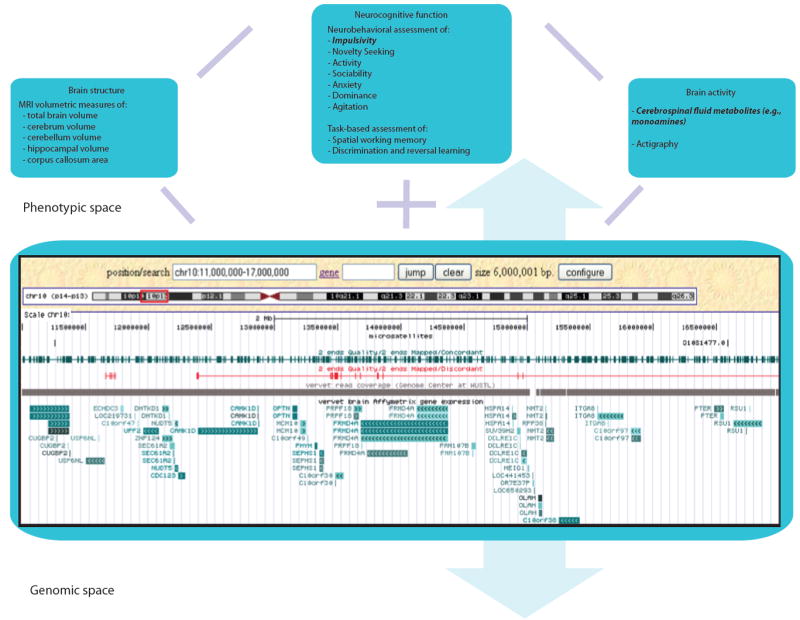
The assessment of multi-level sets of measures in extended NHP multigenerational pedigrees provides complete coverage of the phenotypic space and sufficient power for linkage and association analysis with comprehensive genome-level genetic variation data. Examples are shown here from the Integrated Vervet/African Green Monkey Research and Resources Consortium (http://www.genomequebec.mcgill.ca/compgen/vervet_research/). An illustration of the multi-level analysis of neurocognitive traits in this model system (see highlighted text) is illustrated by the genetic mapping of a QTL for the dopamine catabolite homovanillic acid (HVA) in an extended vervet pedigree (Freimer et al., 2007). Other neurocognitive phenotypes assessed in this pedigree that are hypothesized to be influenced by dopaminergic function include measures of impulsivity and reversal learning and are therefore candidates for inclusion in multivariate phenotype-genotype analyses along with HVA levels and relevant gene expression variation. The genomic resources available for such analyses (illustrated here through by a screenshot of a customized Genome Browser track) include genome wide sequence, genetic variation, and gene expression data. Details of the Genome Browser screenshot include nucleotide position; microsatellites; concordantly and discordantly mapped BAC clone ends; 454 short sequence read coverage from Genome Center at WUSTL; and vervet brain gene expression using Human Genome U133 Plus 2.0 Array from Affymetrix. (Note: MRI, magnetic resonance imaging; Actigraphy is the measurement of body movement patterns to infer sleep/wake and rest/activity cycles.)