


Table.1.
Table showing the different chemical compounds, drugs and their targets in mitochndria. These drugs and chemical compounds targeting the oxidative stress pathways, neuroinflammatory pathways, some of targeting electron transport chain. These drugs and compounds are widely used for the study of neurodegenerative disease.
| S. No. |
Compounds | Mechanism | Structure | Trade name |
References |
|---|---|---|---|---|---|
| 1 | CDDO-Ethyl amide | Target Nrf2/ARE (NF-E2-related factor 2/antioxidant response element) signaling pathway | 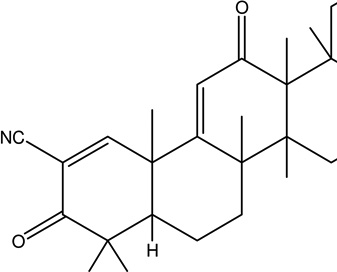 |
Not assigned | [102, 103] |
| 2 | CDDO-Trifluroethylamide | Target Nrf2/ARE (NF-E2-related factor 2/antioxidant response element) signaling pathway, attenuates mitochondria l dysfunction | 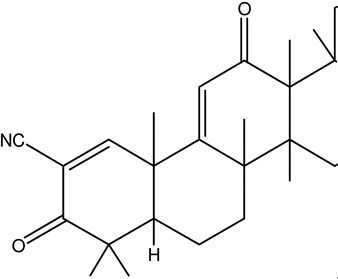 |
Not assigned | [102, 103] |
| 3 | Pioglitazone | Activate peroxisome proliferator-activated receptors (PPARs), provide neuroprotection, attenuates mitochondria l dysfunction by improving mitochondria l DNA (mtDNA) content, levels of mtDNA and nuclearencoded electron transport chain subunit proteins, increased oxygen consumption, and elevated complex I and complex IV V max activities | 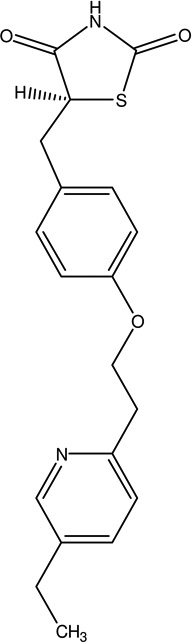 |
Actos Piomed Pioneer | [104, 105] |
| 4 | Rosiglitazone | Activate PPAR gamma activators, attenuates mitochondria l dysfunction. | 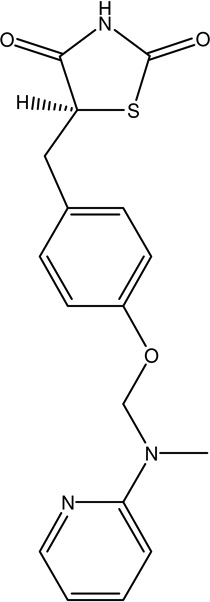 |
NA | [106] |
| 5. | Resveratrol | Antioxidant, anti-inflammatory, and metalchelating effects, prevent mitochondria l dysfunction | 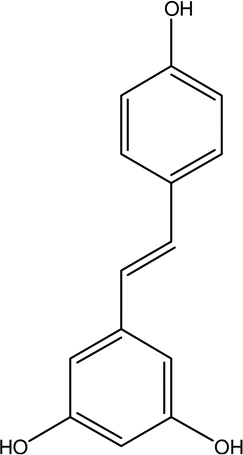 |
Not assigned | [107]. |
| 6. | 5-aminoimidazo le-4-carboxamide ribonucleoside (AICAR) | Block proinflammatory cytokines, inhibit ROS generation, deplete glutathione, prevent oxidative stress | 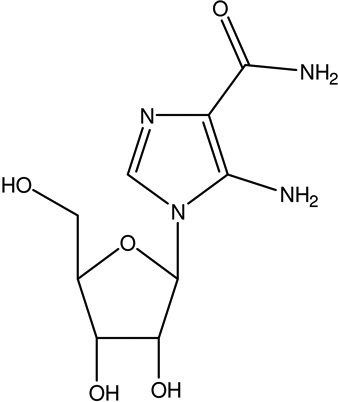 |
Huapin | [108]. |
| 7 | Coenzyme Q10 | Improve respiratory chain dysfunction, oxidative stress and neurodegeneration | 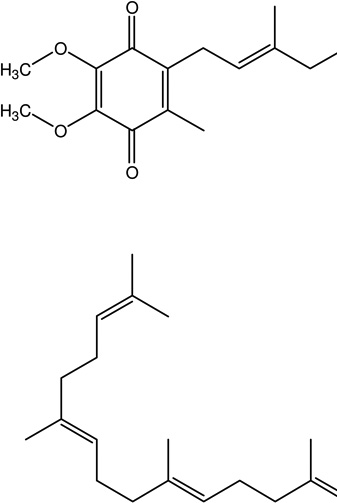 |
Rite Aid Coenzyme Q-10 | [109, 110] |
| 8. | Bezafibrate | Anti-inflammatory, neuroprotective role, attenuate astrogliosis, improve peroxisome proliferator-activated receptor (PPAR)-γ- | 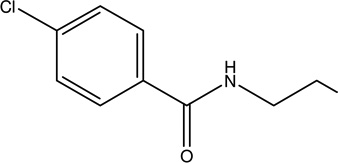 |
Bezalip Beza–XL Fenolip Globez | [111, 112] |