


Figure 1.
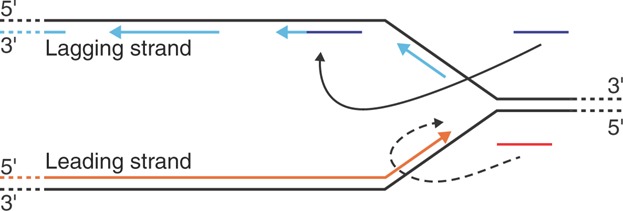
Short DNA integration at replication forks. During DNA uptake both gram-negative and gram-positive bacteria degrade one strand of the DNA helix and release single-stranded DNA into the cell. Subsequently, during genome replication, single-stranded DNA fragments can bind the open chromosome near the replication fork and function as primers of new DNA. In this way DNA can be incorporated in the genome of one of the daughter cells. Because of more open, accessible, chromosomal DNA in the lagging strand, DNA fragments have a better chance of binding there rather than at the leading strand.