


Figure 6. Survival impact of gene expression in MDS and proposed model of implications of innate immunity signaling in MDS.
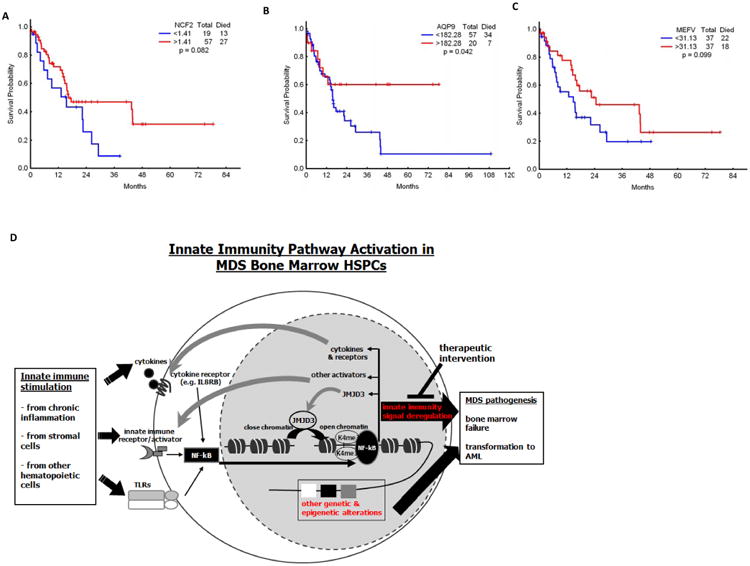
(a-c) Effect of mRNA expression of NCF2, AQP9 and MEFV on survival of patients with MDS. (d) Innate immunity stimulation derived from stroma, chronic inflammation or hematopoietic cells either in a para or autocrine fashion result in NF-kB activation in MDS CD34+ cells. NF-kB activation then triggers expression of multiple other effectors such as cytokines and importantly JMJD3. JMJD3 is a histone demethylase that contributes to the perpetuation of innate immunity signal and NF-kB activation. Signaling via this pathway probably cooperates with other known genetic and epigenetic lesions known to occur in MDS cells and contribute to bone marrow failure and transformation to AML that characterized MDS. Further analysis of this pathway could result in the development of inhibitors with therapeutic potential.