



Abstract
Objective
To describe the effects of six interventions for menopausal vasomotor symptoms relative to control in a pooled analysis, facilitating translation of the results for clinicians and symptomatic women. The MsFLASH (Menopause Strategies: Finding Lasting Answers for Symptoms and Health) network tested these interventions in three randomized clinical trials (RCTs).
Methods
An analysis of pooled individual-level data from three RCTs is presented. Participants were 899 peri- and postmenopausal women with at least 14 bothersome vasomotor symptoms/week. Interventions included escitalopram 10–20 mg/day, non-aerobic yoga, aerobic exercise, 1.8 g/day omega-3 fatty acid supplementation, low-dose oral 17-beta-estradiol 0.5-mg/day, and low-dose venlafaxine XR 75-mg/day. The main outcome measures were changes from baseline in mean daily vasomotor symptoms frequency and bother during 8–12 weeks of treatment. Linear regression models estimated differences in outcomes between each intervention and corresponding control group, adjusted for baseline characteristics. Models included trial-specific intercepts, effects of the baseline outcome measure, and time.
Results
The 8-week reduction in vasomotor symptoms frequency from baseline relative to placebo was similar for escitalopram at −1.4/day (95% CI: −2.7 to −0.2), low-dose estradiol at −2.4 (95% CI: −3.4 to −1.3), and venlafaxine at −1.8 (95% CI: −2.8 to −0.8); vasomotor symptoms bother reduction was minimal and did not vary across these three pharmacologic interventions (means −0.2 to −0.3 relative to placebo). No effects on vasomotor symptoms frequency or bother were seen with aerobic exercise, yoga or omega-3 supplements.
Conclusions
These analyses suggest that escitalopram, low-dose estradiol, and venlafaxine provide comparable, modest reductions in vasomotor symptoms frequency and bother among women with moderate hot flushes.
Clinical Trial Registration
ClinicalTrials.gov, www.clinicaltrials.gov, NCT00894543 (MsFLASH 01), NCT01178892 (MsFLASH 02), and NCT01418209 (MsFLASH 03).
INTRODUCTION
The National Institutes of Health 2005 State-of-the-Science Conference on Management of Menopause-Related Symptoms concluded that while hormone therapy is effective, demonstration of treatment-related adverse events in the Women’s Health Initiative trials warranted the conduct of rigorous trials to evaluate safety and effectiveness of alternative therapies for vasomotor and other menopausal symptoms (1, 2). Increased testing of non-hormonal treatments for vasomotor symptoms (3–6) has followed the publication of WHI results, and the FDA recently approved one selective serotonin reuptake inhibitor for vasomotor symptom treatment (6, 7).
The MsFLASH (Menopausal Strategies: Finding Lasting Answers to Symptoms and Health) Network, created in response to the State-of-the-Science conference, has conducted three large randomized clinical trials for treatment of menopausal vasomotor symptoms. The trials tested six interventions in nearly 900 women, including a selective serotonin reuptake inhibitor (SSRI), a serotonin norepinephrine reuptake inhibitor (SNRI), oral low-dose estrogen, yoga, aerobic exercise and omega-3 fatty acid supplementation (8–12). Before the first trial was launched, MsFLASH investigators developed network standards for study design, eligibility/exclusion criteria, and study measures (13).
Even with standardized MsFLASH trial methodology, there were design differences across trials that raise questions regarding direct comparisons of these intervention effects. This article addresses that issue with a novel comparative effectiveness analysis that pools each trial’s individual-level data and adjusts for differences between studies. Our primary objective was to describe the magnitude of treatment effects for all six interventions relative to control within the same analysis, to facilitate translation of our findings into clinical recommendations.
MATERIALS AND METHODS
Descriptions of our standardized trial methods are published (13, 14). The studies were approved by the Institutional Review Boards of each clinical site and the Data Coordinating Center (DCC). All participants provided written informed consent. The analyses presented here were not pre-specified in study protocols, although MsFLASH trials were designed to permit eventual pooled analysis.
MsFLASH 01 was a randomized, placebo-controlled, double-blind clinical trial that aimed to recruit approximately equal numbers of African American and white women to the study population. Eligible women were randomized in a 1:1 ratio to receive escitalopram 10 mg/day or a matching placebo capsule for 8 weeks. If a woman did not report a reduction in vasomotor symptom frequency of ≥ 50% or a decrease in vasomotor symptom severity after 4 treatment weeks, her study medication dose was increased to 20 mg/day (or matched placebo) without unblinding the randomization.
MsFLASH 02 was a 3×2 factorial, randomized controlled trial. Eligible women were randomized in a 3:3:4 ratio to 12 weeks of yoga, exercise, or usual activity, and simultaneously randomized in a 1:1 ratio to 1.8 g/day of omega-3 fish oil capsules or identical-looking placebo capsules. The yoga intervention emphasized a practice of “cooling” breathing exercises, 11–13 poses (Asanas) previously suggested for vasomotor symptom relief, and guided meditation (Yoga Nidra). Instruction was provided during 12 weekly, 90-minute classes. Daily home practice was expected for 20 minutes on the other six days of the week. The exercise intervention consisted of 12 weeks of three individualized, cardiovascular conditioning training sessions per week at local fitness facilities, supervised by trained, certified exercise trainers. The target training heart rate was 50–60% of the heart rate reserve for the first month and 60–70% for the remainder of the intervention, with 40–60 minutes per session to achieve the energy expenditure goal of 16 kcal/kg. Women in the usual activity group were asked not to engage in yoga or to change their exercise routines; at study end they were offered their choice of a 3-hour yoga workshop or a 1-month gym membership. The 1.8 gm/day omega-3 fatty acids supplements were taken three times a day for 12 weeks, and contained 425 mg ethyl eicosapentaenoic acid, 100 mg docosahexaenoic acid and 90 mg of other omega-3s. Data collection was performed by research assistants blinded to behavioral intervention assignment. The omega-3 component of the trial was double-blinded.
MsFLASH 03 was a randomized, placebo-controlled, double-blind, 8-week trial of low-dose oral 17-beta-estradiol 0.5 mg/day, venlafaxine XR (37.5 mg/day for first week, then 75 mg/day), or placebo in a 2:2:3 ratio.
Randomization was accomplished through a secure Web-based database, maintained by the DCC, utilizing a dynamic randomization algorithm (15). The randomization was stratified by clinical site and race for MsFLASH 01, and by clinical site only for MsFLASH 02 and 03. Design differences between trials are described in Table 1. Common to all studies was a 6-week outcome assessment and a minimum eligibility criterion of 14 hot flushes per week.
Table 1.
Menopause Strategies: Finding Lasting Answers for Symptoms and Health Trial Designs
| Trial | Total Enrollment | Design | Vasomotor Symptom* Eligibility | Trial-Specific Exclusion Criteria | Intervention Length | Vasomotor Symptom Assessment | References† |
|---|---|---|---|---|---|---|---|
| 01 | 205 | 2-arm: Escitalopram vs. placebo | ≥28 VMS/week |
|
8 weeks | weekly | 9 |
| 02 | 355 | 3×2 factorial: Aerobic exercise and yoga vs. usual activity, plus omega-3 supplementation vs. placebo | ≥14 VMS/week |
|
12 weeks | week 6 week 12 |
10–12 |
| 03 | 339 | 3-arm: Low dose oral estradiol and venlafaxine vs. placebo | ≥14 VMS/week |
|
8 weeks | weekly | 13 |
VMS = vasomotor symptoms
See Appendix 3, available online at http://links.lww.com/xxx, for reproductions of published primary results tables.
Participants were recruited from July 2009 to October 2012 by mass mailings to age-eligible women using purchased mailing lists and health-plan enrollment files. There were five MsFLASH network sites. All sites participated in at least two trials and each trial was implemented at three or four sites (Table 2). Eligibility criteria common to all trials included: women aged 40–62 years; in the menopause transition (amenorrhea >=60 days in the past year), or postmenopausal (>=12 months since last menstrual period or bi-lateral oophorectomy), or had a hysterectomy with one or both ovaries remaining and FSH >20 mIU/mL and estradiol <=50 pg/mL; and in general good health as determined by medical history, a brief physical exam and standard blood tests. In addition to the screening vasomotor symptom frequency requirement (Table 1), vasomotor symptoms had to be rated as bothersome or severe on at least 4 days or nights per week, and the frequency in screening week 3 could not decrease >50% from the mean weekly levels in screening weeks 1 and 2.
Table 2.
Baseline Demographic and Clinical Characteristics by Trial
| Baseline Characteristic | MsFLASH 01 (N=205) | MsFLASH 02 (N=355) | MsFLASH 03 (N=339) | p-value |
|---|---|---|---|---|
|
| ||||
| n (%) | n (%) | n (%) | ||
|
| ||||
| Age at screening (years), mean (SD*) | 53.9 (4.1) | 54.7 (3.7) | 54.6 (3.8) | 0.19 |
| < 50 | 24 (12) | 19 (5) | 30 (9) | |
| 50 – 54 | 95 (46) | 162 (46) | 147 (43) | |
| 55 – 59 | 66 (32) | 130 (37) | 123 (36) | |
| ≥ 60 | 20 (10) | 44 (12) | 39 (12) | |
|
| ||||
| Race | <0.001 | |||
| African American | 95 (46) | 93 (26) | 116 (34) | |
| White | 102 (50) | 228 (64) | 203 (60) | |
| Other† | 8 (4) | 34 (10) | 20 (6) | |
|
| ||||
| Hispanic | 0 | 6 (2) | 1 (<1) | |
| American Indian | 1 (<1) | 8 (2) | 2 (1) | |
| Asian/Pacific Islander | 3 (1) | 12 (3) | 5 (1) | |
| Undisclosed | 4 (2) | 8 (2) | 12 (4) | |
|
| ||||
| Education | <0.001 | |||
| ≤ High school diploma or high school equivalency certificate | 38 (19) | 21 (6) | 55 (16) | |
| Post-high school | 87 (42) | 112 (32) | 111 (33) | |
| College graduate | 80 (39) | 221 (62) | 172 (51) | |
|
| ||||
| Smoking | <0.001 | |||
| Never | 99 (48) | 232 (66) | 174 (52) | |
| Past | 59 (29) | 89 (25) | 107 (32) | |
| Current | 47 (23) | 32 (9) | 55 (16) | |
|
| ||||
| Body Mass Index (m/kg2), mean (SD) | 29.1 (6.5) | 27.0 (4.4) | 28.3 (6.8) | 0.005 |
| < 25 | 54 (26) | 123 (35) | 118 (36) | |
| 25 – < 30 | 72 (35) | 144 (41) | 107 (32) | |
| ≥ 30 | 78 (38) | 88 (25) | 107 (32) | |
|
| ||||
| Menopause status | 0.27 | |||
| Postmenopausal | 142 (69) | 266 (75) | 256 (76) | |
| Perimenopausal | 41 (20) | 65 (18) | 52 (15) | |
| Indeterminate | 22 (11) | 24 (7) | 31 (9) | |
|
| ||||
| Site | – | |||
| Boston | 43 (21) | 0 | 100 (29) | |
| Indianapolis | 35 (17) | 118 (33) | 0 | |
| Oakland | 57 (28) | 110 (31) | 0 | |
| Philadelphia | 70 (34) | 0 | 121 (36) | |
| Seattle | 0 | 127 (36) | 118 (35) | |
|
| ||||
| VMS* per day, mean (SD) | ||||
| Frequency | 9.8 (5.6) | 7.6 (3.8) | 8.1 (5.3) | <0.001 |
| Bother | 3.1 (0.5) | 3.0 (0.5) | 3.0 (0.5) | <0.001 |
MsFLASH, Menopause Strategies: Finding Lasting Answers for Symptoms and Health; SD, standard deviation; VMS, vasomotor symptoms.
Test for heterogeneity based on collapsed race categories (African American, White and Other).
Exclusion criteria common to all trials included: use of prescription or over-the-counter treatments for hot flushes (past 30 days); use of exogenous sex steroid hormones or hormonal contraceptives (past 2 months); pregnancy or breastfeeding; any current severe or unstable medical conditions; drug or alcohol abuse (past year); history of myocardial infarction, angina or cerebrovascular events; or a major depressive episode (past 3 months). Additional trial-specific exclusion criteria are described in Table 1.
After telephone screening, women completed a 2-week vasomotor symptoms diary and a questionnaire. Women who remained eligible attended an in-person visit that included a blood draw, physical measures, and another questionnaire. Following that visit, women completed the week-3 vasomotor symptoms diary and then returned to the clinic for determination of eligibility and randomization. Telephone contacts to encourage study compliance and assess adverse events were made one or two weeks after randomization, and then again midway through the intervention. Follow-up clinic visits were conducted at 4 and 8 weeks (MsFLASH 01 and 03) or 6 and 12 weeks (MsFLASH 02) post-randomization.
Vasomotor symptoms counts were collected on the diary two times per day, as daytime hot flushes recorded in the evening and night sweats recorded in the morning. Vasomotor symptom bother corresponding to these counts was rated in the daily diaries from 1 to 4 (none, a little, moderately, a lot). The outcomes of interest for the pooled analysis were differences between the 7-day means of vasomotor symptom frequency and bother at weeks 4, 6, 8 and/or 12, and the 14-day baseline means. Adverse events were assessed at each contact using a self-administered questionnaire listing specific expected side effects for the intervention(s), as well as open-ended questions.
The intent-to-treat analysis included all randomized participants who provided follow-up vasomotor symptom diary data, regardless of adherence to treatment assignment (see the figure in Appendix 1, available at http://links.lww.com/xxx). Baseline demographic and clinical characteristics as shown in Table 2 were summarized in combined treatment arms and compared across trials, with homogeneity assessed using chi-squared or F-test.
Linear regression models were applied to estimate differences between each intervention and its corresponding control group in changes from baseline in vasomotor symptom frequency or bother at weeks 4, 6, 8 and 12, with adjustment for clinical site and baseline age, race, education, smoking and BMI. The models included trial as a covariate to allow trial-specific intercepts, and incorporated trial-specific effects of the baseline outcome measure and time. Robust standard errors were calculated via generalized estimating equations (GEE).
The planned sample size of each trial was determined by the primary trial endpoints (8–12); our pooled sample size provided at least 80% power to detect a 0.45 standard deviation unit effect size for each intervention based on a t-test with 2-sided 0.001 level of significance. Analyses were conducted using SAS Version 9.3 (SAS Institute, Inc., Cary, NC).
RESULTS
The 899 MsFLASH trial participants were randomized as follows: 104 to escitalopram and 101 to placebo (MsFLASH 01); 106 to exercise, 107 to yoga, and 142 to usual activity, and simultaneously, 177 to omega-3 and 178 to placebo (MsFLASH 02); 97 to estradiol, 96 to venlafaxine, and 146 to placebo (MsFLASH 03). Follow-up data collection retention was high in all trials: 201 (98%) of 205 women randomized provided week 4, week 8, or week 4 and week 8 vasomotor symptom diary data in MsFLASH 01; 346 (97%) of 355 women randomized provided vasomotor symptom diary data at week 6, week 12, or week 6 and week 12 in MsFLASH 02; and 330 (97%) of 339 women randomized provided follow-up vasomotor symptom diary data at week 4, week 8, or week 4 and week 8 in MsFLASH 03 (Appendix 1, http://links.lww.com/xxx). Data completeness was comparable across study arms in all trials.
Age was similar across trials, with an overall mean age of 54.5 (SD 3.8, range 42–62) years (Table 2). The distributions of race, education levels, and smoking prevalence varied across studies, corresponding to the clinical site locations and goals of the trials, although more than 35% of the women in each trial were non-white. Mean BMI was lower in MsFLASH 02 compared to the other trials in large part because enrollment in that trial was restricted to women who were physically able and willing to exercise or practice yoga. The distribution of menopausal status was similar across trials. Mean baseline vasomotor symptom frequency and bother were higher in MsFLASH 01 than in the later trials due to more stringent vasomotor symptom eligibility criteria (Table 1) (13).
Vasomotor symptom frequency and bother responses in the control arms were fairly similar across trials. Mean relative percentage reductions from baseline in the control groups ranged from 14% to 34% for vasomotor symptom frequency and 12% to 30% for vasomotor symptom bother (Table 3). The control group responses for vasomotor symptom bother (in units of mean relative percentage change from baseline) were generally smaller in magnitude than the corresponding vasomotor symptom frequency responses, except in the MsFLASH 02 trial.
Table 3.
Changes from Baseline in Daily Mean Vasomotor Symptom Frequency and Bother in the Menopause Strategies: Finding Lasting Answers for Symptoms and Health Trial Control Groups
| Week 4 – baseline | Week 6 – baseline | Week 8 – baseline | Week 12 – baseline | |||||
|---|---|---|---|---|---|---|---|---|
| Outcome | Mean (95% CI*) | Percent change | Mean (95% CI) | Percent change | Mean (95% CI) | Percent change | Mean (95% CI) | Percent change |
| Number of VMS per day | ||||||||
| Trial 01 | −2.5 (−3.3, −1.7) | −29% | −3.0 (−3.9, −2.1) | −32% | −3.2 (−4.2, −2.2) | −34% | – | – |
| Trial 02 | – | – | −1.8 (−2.6, −1.1) | −14% | – | – | −2.5 (−3.3, −1.8) | −26% |
| Trial 03 | −1.9 (−2.5, −1.3) | −25% | −2.0 (−2.5, −1.4) | −27% | −2.2 (−2.8, −1.6) | −29% | – | – |
| VMS Bother (1–4) | ||||||||
| Trial 01 | −0.3 (−0.4, −0.2) | −12% | −0.4 (−0.5, −0.2) | −17% | −0.4 (−0.5, −0.2) | −16% | – | – |
| Trial 02 | – | – | −0.4 (−0.6, −0.3) | −20% | – | – | −0.6 (−0.7, −0.4) | −30% |
| Trial 03 | −0.3 (−0.4, −0.2) | −12% | −0.3 (−0.4, −0.2) | −14% | −0.4 (−0.5, −0.2) | −16% | – | – |
VMS = vasomotor symptoms; CI = confidence interval
Reductions in vasomotor symptom frequency from baseline of similar size and statistical significance were observed in the escitalopram, estradiol, and venlafaxine groups, relative to control (Figure 1, Table 4). Although most of the benefit was gained by week 4 for escitalopram and venlafaxine, participants in the estradiol group continued to improve over the intervention period, yielding comparable week 8 intervention effect estimates for these three medications. Decreases ranged from 1.4 to 2.4 fewer vasomotor symptoms per day, or 18% to 37% lower vasomotor symptom daily frequency, relative to control (Table 4) (Appendix 2, available at http://links.lww.com/xxx). While low-dose estradiol appeared to produce slightly greater reductions in the number of hot flushes than escitalopram or venlafaxine, the confidence intervals for the estimated effects of these three medications overlapped substantially. The patterns of vasomotor symptom bother change from baseline in the medication treatment groups relative to control were more varied than for vasomotor symptom frequency (Figure 2). But again, the intervention effects were quite similar at week 8, ranging from 0.2 to 0.3 point lower bother scores, or 11% to 15% lower vasomotor symptom daily bother, relative control (Table 4) (Appendix 2, at http://links.lww.com/xxx). The MsFLASH 02 interventions of yoga, exercise and omega-3 showed little effect in reducing vasomotor symptom frequency or bother relative to control, findings unchanged from the original published analyses (9–11).
Figure 1.

Effect of each intervention on changes from baseline in daily mean vasomotor symptom frequency, relative to control.
Table 4.
Effect of Each Intervention on Changes from Baseline in Daily Mean Vasomotor Symptom Frequency and Bother, Relative to Control
| Week 4 – baseline | Week 6 – baseline | Week 8 – baseline | Week 12 – baseline | ||
|---|---|---|---|---|---|
| Outcome | Intervention | Mean (95% CI*) | Mean (95% CI) | Mean (95% CI) | Mean (95% CI) |
| Number of VMS* per day | |||||
| Trial 01 | Escitalopram | −1.9 (−3.1, −0.7) | −1.4 (−2.7, −0.2) | −1.4 (−2.7, −0.2) | – |
| Trial 02 | Exercise | – | −0.4 (−1.1, 0.3) | – | −0.1 (−0.9, 0.7) |
| Yoga | – | −0.6 (−1.3, 0.1) | – | −0.6 (−1.3, 0.2) | |
| Omega-3 | – | 0.2 (−0.4, 0.8) | – | 0.2 (−0.4, 0.9) | |
| Trial 03 | Estradiol | −1.2 (−2.2, −0.3) | −1.9 (−2.9, −0.9) | −2.4 (−3.4, −1.3) | – |
| Venlafaxine | −1.3 (−2.2, −0.4) | −1.3 (−2.3, −0.3) | −1.8 (−2.8, −0.8) | – | |
| VMS Bother (1–4) | |||||
| Trial 01 | Escitalopram | −0.3 (−0.5, −0.1) | −0.2 (−0.4, 0) | −0.3 (−0.5, −0.1) | – |
| Trial 02 | Exercise | – | −0.1 (−0.2, 0.1) | – | 0.0 (−0.2, 0.1) |
| Yoga | – | 0.0 (−0.2, 0.1) | – | −0.1 (−0.2, 0) | |
| Omega-3 | – | 0.0 (−0.1, 0.1) | – | 0.1 (−0.1, 0.2) | |
| Trial 03 | Estradiol | −0.2 (−0.4, 0) | −0.2 (−0.5, 0) | −0.3 (−0.5, −0.1) | – |
| Venlafaxine | −0.1 (−0.3, 0.1) | −0.1 (−0.3, 0.1) | −0.2 (−0.4, 0) | – |
VMS = vasomotor symptoms; CI = confidence interval
Figure 2.
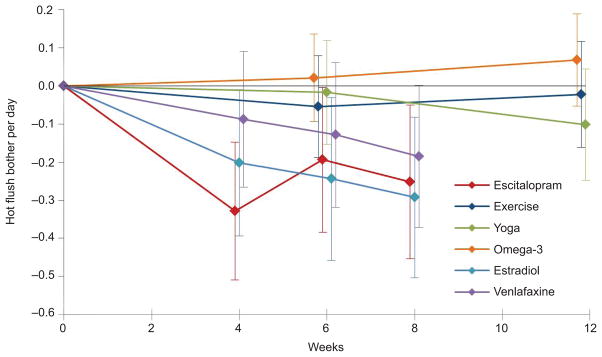
Effect of each intervention on changes from baseline in daily mean vasomotor symptom bother, relative to control.
No serious adverse events due to study interventions were reported during the three trials (9–13). All study medications were well-tolerated: 7 (6.7%) escitalopram, 1 (0.6%) omega-3, 4 (4.1%) estradiol, 5 (5.2%) venlafaxine, and 4 (1.3% of n=318) placebo participants stopped treatment due to adverse events. No participants stopped treatment due to side effects from behavioral interventions or usual activity. Notable adverse events on the MsFLASH 03 trial included the following: 3 participants reported suicidal ideation while on study medication (2.1% on estradiol; 0.7% on placebo; none on venlafaxine); 12 women developed systolic blood pressure (SBP) >165 mmHg or diastolic blood pressure (DBP) >95 mmHg (2.1% on estradiol, 10.4% on venlafaxine, 0 on placebo), all of whom had baseline SBP or DBP above the study population mean; and among women with a uterus, 6/73 (8.2%) on estradiol, 2/124 (1.6%) on placebo, and none on venlafaxine developed abnormal vaginal bleeding (any bleeding in postmenopausal women; 2+ cycles <21 days in perimenopausal women) on treatment, which was evaluated with a transvaginal ultrasound. Three of 6 estradiol-treated participants with abnormal bleeding had an endometrial echo complex >5 mm and underwent an endometrial biopsy, all of which revealed no evidence of hyperplasia or malignancy (12).
DISCUSSION
In analyses of pooled individual-level data from three MsFLASH clinical trials, the reduction in vasomotor symptom frequency and bother in midlife women was similar for escitalopram, oral low-dose estradiol, and low-dose venlafaxine. These interventions conveyed between 18–37% improvement in daily frequency relative to the placebo group (Appendix 2, http://links.lww.com/xxx) and had minimal effect on bother. Intervention effect estimates in these pooled analyses did not qualitatively diverge from the results of each individual trial (8–12), implying that between-trial differences did not substantially impact the trials’ comparability.
Strengths of this pooled analysis include the use of standardized methods for measurement of vasomotor symptoms and participant characteristics, similar inclusion/exclusion criteria, and the enrollment of many minority women. The MsFLASH trials were designed to be comparable, though not identical, making this multivariable analysis an important step in comparing effectiveness of the six interventions. A single trial designed to provide direct head to head comparisons of all six interventions would have required considerably larger samples sizes that were not possible within time and cost constraints. Further, intervention-specific exclusion criteria and women’s preferences would have made recruitment to a single trial testing all interventions impractical. The analyses presented here bridge the gap between the feasible, individual trials and an idealistic trial providing direct comparisons.
A strong placebo response is common in vasomotor symptom trials, with reductions varying from 20% to 60% from baseline (16–20), with possible causes including regression to the mean, natural resolution of symptoms, a true physiologic response to the placebo interventions, and fatigue with symptom recording over time. We sought to minimize the placebo response by excluding women whose vasomotor symptom frequency decreased more than 50% over the 3-week screening period. The success of this approach is reflected in the fact that the vasomotor symptom frequency reductions from baseline in our placebo groups (14–34%) were at the low end of the range compared to other vasomotor symptom trials.
The magnitude of each pharmacologic agent’s effect is consistent with the benefits observed for oral low-dose estradiol (21–23), venlafaxine (24, 25), escitalopram and other SSRIs (6) on vasomotor symptom frequency in prior randomized trials. We studied low-dose estradiol because the United States Food and Drug Administration recommends use of the lowest dose possible (26). Previous studies have highlighted that oral estradiol efficacy is dose-dependent, for both 17-beta-estradiol and conjugated equine estradiol (21–23, 27, 28). Although more rapid onset is achieved with 1 and 2 mg doses, lower doses still will have significant effects and have been shown to have lower risks (26). Our findings for estradiol may be specific to the selection of 17-beta estradiol, the oral route of administration, and the use of unopposed estrogen rather than estrogen progestin combined, which may produce greater reductions in vasomotor symptoms (21).
To minimize potential side effects, venlafaxine was also studied at the lowest dose previously shown to be effective in randomized controlled trials (24, 25, 29). Escitalopram had undergone limited pilot investigation (30, 31) prior to MsFLASH 01, so the magnitude of benefit and expected therapeutic dose was not previously known. Thus, we used the FDA-approved dose range for treatment of depression and anxiety (10–20 mg/day). Although the maximum escitalopram and venlafaxine treatment responses appeared to be achieved at 4 weeks in our analysis, whereas vasomotor symptom frequency showed continued improvement between 4 and 8 weeks with low-dose estradiol, most hormonal studies show little additional benefit beyond 8 weeks (22, 27, 32–34). SSRI and SNRI trials show sustained benefit beyond 8 weeks (6, 35).
Findings from these pooled analyses allow for a more informed discussion between women and their health care providers about their treatment options. These data suggest use of either escitalopram, oral low-dose estradiol, or low-dose venlafaxine, based on individual risk profiles and side effect concerns, is a reasonable starting point for treating women with bothersome hot flushes. In fact, the 8-week reductions in vasomotor symptom frequency from baseline relative to placebo with the medications in MsFLASH 01 and 03 trials (−1.4/day with escitalopram, −2.4 with low-dose estradiol, and −1.8 with venlafaxine) were comparable to recent data on intervention effects with gabapentin (−1.7/day at week 4 and −1.1 at week 12)(36) and larger than the effects of paroxetine 7.5 mg (−1.4/day at week 4 and −0.9 at week 12)(6). Behavioral interventions and nutritional supplements studied to date cannot compete with low dose estradiol or serotonergic medications for relief of moderate vasomotor symptom frequency or bother (9–11, 34, 37). These recommendations are based on the short term exposures studied here. Longer-term studies evaluating the risks and benefits of these treatments are warranted.
Supplementary Material
Appendix 1. Participant Flow Diagram for MsFLASH Trials 01 – 03, with Total Number of Participants Available for Pooled Analysis Shown in Final Row
Acknowledgments
The MsFLASH studies were supported by a cooperative agreement issued by the National Institute of Aging (NIA), in collaboration with the Eunice Kennedy Shriver National Institute of Child Health and Development (NICHD), the National Center for Complementary and Alternative Medicine (NCCAM) and the Office of Research and Women’s Health (ORWH), and NIA grants U01AG032659, U01AG032669, U01AG032682, U01AG032699, and U01AG032700. In Indiana, the project was supported by the Indiana Clinical and Translational Sciences Institute, funded in part by grant UL1 RR025761 from the National Institutes of Health, National Center for Research Resources, Clinical and Translational Sciences Award. Escitalopram and matching placebo pills for the MsFLASH 01 trial were provided by Forest Research Institute. Omega-3 supplements and matching placebo pills for the MsFLASH 02 trial were provided by Nordic Naturals, Watsonville, CA.
Footnotes
Presented at the 2013 North American Menopause Society Annual Meeting, October 9–13, 2013, in Dallas, TX.
Financial Disclosure: Kristine E. Ensrud serves as a consultant on a Data Monitoring Committee for Merck Sharpe & Dohme. Hadine Joffe has received grant funding from Cephalon/Teva, has been a consultant for Noven Pharmaceuticals and Merck, and has served on an advisory board for Merck. Susan D. Reed has received research funding from Bayer Pharmaceuticals. Lee S. Cohen has received research support from AstraZeneca, Bristol-Myers Squibb/Otsuka, Cephalon, Inc., Ortho-McNeil Janssen, Sunovion Pharmaceuticals, Inc., and Takeda/Lundbeck. Ellen W. Freeman has received grants paid to the University of Pennsylvania by Forest Laboratories, Inc., and Bionovo. The other authors did not report any potential conflicts of interest.
References
- 1.NIH State-of-the-Science Panel, National Institutes of Health State-of-the-Science Conference Statement. Management of Menopause-Related Symptoms. Ann Intern Med. 2005;142:1003–13. [PubMed] [Google Scholar]
- 2.Rossouw JE, Anderson GL, Prentice RL, LaCroix AZ, Kooperberg C, Stefanick ML, et al. Risks and benefits of estrogen plus progestin in healthy postmenopausal women: principal results from the Women’s Health Initiative randomized controlled trial. JAMA. 2002;288:321–33. doi: 10.1001/jama.288.3.321. [DOI] [PubMed] [Google Scholar]
- 3.Grady D, Cohen B, Tice J, Kristof M, Olyaie A, Sawaya GF. Ineffectiveness of sertraline for treatment of menopausal hot flushes: a randomized controlled trial. Obstet Gynecol. 2007;109:823–30. doi: 10.1097/01.AOG.0000258278.73505.fa. [DOI] [PubMed] [Google Scholar]
- 4.Speroff L, Gass M, Constantine G, Olivier S. Efficacy and tolerability of desvenlafaxine succinate treatment for menopausal vasomotor symptoms. Obstet Gynecol. 2008;111:77–87. doi: 10.1097/01.AOG.0000297371.89129.b3. [DOI] [PubMed] [Google Scholar]
- 5.Butt DA, Lock M, Lewis JE, Ross S, Moineddin R. Gabapentin for the treatment of menopausal hot flashes: a randomized controlled trial. Menopause. 2008;15:310–8. doi: 10.1097/gme.0b013e3180dca175. [DOI] [PubMed] [Google Scholar]
- 6.Simon JA, Portman DJ, Kaunitz AM, Mekonnen H, Kazempour K, Bhaskar S, et al. Low-dose paroxetine 7. 5 mg for menopausal vasomotor symptoms: two randomized controlled trials. Menopause. 2013;20:1027–35. doi: 10.1097/GME.0b013e3182a66aa7. [DOI] [PubMed] [Google Scholar]
- 7.FDA approves the first non-hormonal treatment for hot flashes associated with menopause. [Accessed June 28, 2013];2013 at http://www.fda.gov/newsevents/newsroom/pressannouncements/ucm359030.htm.
- 8.Freeman EW, Guthrie KA, Caan B, Sternfeld B, Cohen LS, Joffe H, et al. Efficacy of escitalopram for hot flashes in healthy menopausal women: a randomized controlled trial. JAMA. 2011;305:267–74. doi: 10.1001/jama.2010.2016. [DOI] [PMC free article] [PubMed] [Google Scholar]
- 9.Sternfeld BS, Guthrie KA, Ensrud KE, LaCroix AZ, Larson JC, Dunn AL, et al. Efficacy of exercise for menopausal symptoms: a randomized controlled trial. Menopause. 2014;21:330–8. doi: 10.1097/GME.0b013e31829e4089. [DOI] [PMC free article] [PubMed] [Google Scholar]
- 10.Newton KM, Reed SD, Guthrie KA, Sherman KJ, Booth-LaForce C, Caan B, et al. Efficacy of yoga for vasomotor symptoms: a randomized controlled trial. Menopause. 2014;21:339–46. doi: 10.1097/GME.0b013e31829e4baa. [DOI] [PMC free article] [PubMed] [Google Scholar]
- 11.Cohen LS, Joffe H, Guthrie KA, Ensrud KE, Freeman MP, Carpenter JS, et al. Efficacy of Omega-3 treatment for vasomotor symptoms: a randomized controlled trial. Menopause. 2014;21:347–54. doi: 10.1097/GME.0b013e31829e40b8. [DOI] [PMC free article] [PubMed] [Google Scholar]
- 12.Joffe H, Guthrie KA, LaCroix AZ, Reed SD, Ensrud KE, Manson JE, et al. Randomized controlled trial of low-dose estradiol and the SNRI venlafaxine for vasomotor symptoms. JAMA Intern Med. 2014;174:1058–66. doi: 10.1001/jamainternmed.2014.1891. [DOI] [PMC free article] [PubMed] [Google Scholar]
- 13.Newton KM, Carpenter JS, Guthrie KA, Anderson GL, Caan B, Cohen LS, et al. Methods for the design of vasomotor symptom trials: the MsFLASH network. Menopause. 2014;21:45–58. doi: 10.1097/GME.0b013e31829337a4. [DOI] [PMC free article] [PubMed] [Google Scholar]
- 14.Sternfeld B, LaCroix A, Caan BJ, Dunn AL, Newton KM, Reed SD, et al. Design and methods of a multi-site, multi-behavioral treatment trial for menopausal symptoms: the MsFLASH experience. Contemp Clin Trials. 2013;35:25–34. doi: 10.1016/j.cct.2013.02.009. [DOI] [PMC free article] [PubMed] [Google Scholar]
- 15.Pocock SJ, Simon R. Sequential treatment assignment with balancing for prognostic factors in the controlled clinical trial. Biometrics. 1975;31:103–15. [PubMed] [Google Scholar]
- 16.Sloan JA, Loprinzi CL, Novotny PJ, Barton DL, Lavasseur BI, Windschitl H. Methodologic lessons learned from hot flash studies. J Clin Oncol. 2001;19:4280–90. doi: 10.1200/JCO.2001.19.23.4280. [DOI] [PubMed] [Google Scholar]
- 17.Suvanto-Luukkonen E, Koivunen R, Sundstrom H, Bloiqu R, Karjalainen E, Haiva-Mallinen L, et al. Citalopram and fluoxetine in the treatment of postmenopausal symptoms: a prospective, randomized, 9-month, placebo-controlled, double-blind study. Menopause. 2005;12:18–26. doi: 10.1097/00042192-200512010-00006. [DOI] [PubMed] [Google Scholar]
- 18.Loprinzi CL, Sloan JA, Perez EA, Quella SK, Stella PJ, Mailliard JA, et al. Phase III evaluation of fluoxetine for treatment of hot flashes. J Clin Oncol. 2002;20:1578–83. doi: 10.1200/JCO.2002.20.6.1578. [DOI] [PubMed] [Google Scholar]
- 19.Pruthi S, Qin R, Terstreip SA, Liu H, Loprinzi DL, Shah TR, et al. A phase III, randomized, placebo-controlled, double-blind trial of flaxseed for the treatment of hot flashes: North Central Cancer Treatment Group N08C7. Menopause. 2012;19:48–53. doi: 10.1097/gme.0b013e318223b021. [DOI] [PMC free article] [PubMed] [Google Scholar]
- 20.MacLennan AH, Broadbent JL, Lester S, Moore V. Oral oestrogen and combined estrogen/progestogen therapy versus placebo for hot flashes. The Cochrane Library. 2009;(1):CD002973. doi: 10.1002/14651858.CD002978.pub2. [DOI] [PMC free article] [PubMed] [Google Scholar]
- 21.Nelson HD. Commonly used types of postmenopausal estrogen for treatment of hot flashes: scientific review. JAMA. 2004;291:1610–20. doi: 10.1001/jama.291.13.1610. [DOI] [PubMed] [Google Scholar]
- 22.Notelovitz M, Lenihan JP, McDermott M, Kerber IJ, Nanavati N, Arce J. Initial 17beta-estradiol dose for treating vasomotor symptoms. Obstet Gynecol. 2000;95:726–31. doi: 10.1016/s0029-7844(99)00643-2. [DOI] [PubMed] [Google Scholar]
- 23.Notelovitz M, Mattox JH. Suppression of vasomotor and vulvovaginal symptoms with continuous oral 17beta-estradiol. Menopause. 2000;7:310–17. doi: 10.1097/00042192-200007050-00005. [DOI] [PubMed] [Google Scholar]
- 24.Evans ML, Pritts E, Vittinghoff E, McClish K, Morgan KS, Jaffe RB. Management of postmenopausal hot flushes with venlafaxine hydrochloride: a randomized, controlled trial. Obstet Gynecol. 2005;105:161–6. doi: 10.1097/01.AOG.0000147840.06947.46. [DOI] [PubMed] [Google Scholar]
- 25.Loprinzi CL, Kugler JW, Sloan JA, Mailliard JA, LaVasseur BI, Barton DL, Novotny PJ, Dakhil SR, Rodger K, Rummans TA, Christensen BJ. Venlafaxine in management of hot flashes in survivors of breast cancer: a randomised controlled trial. Lancet. 2000;356:2059–63. doi: 10.1016/S0140-6736(00)03403-6. [DOI] [PubMed] [Google Scholar]
- 26.Position Statement: The 2012 Hormone Therapy Position Statement of The North American Menopause Society. Menopause. 2012;19:257–71. doi: 10.1097/gme.0b013e31824b970a. [DOI] [PMC free article] [PubMed] [Google Scholar]
- 27.Utian WH, Shoupe D, Bachmann G, Pinkerton JV, Pickar JH. Relief of vasomotor symptoms and vaginal atrophy with lower doses of conjugated equine estrogens and medroxyprogesterone acetate. Fertil Steril. 2001;75:1065–79. doi: 10.1016/s0015-0282(01)01791-5. [DOI] [PubMed] [Google Scholar]
- 28.Ettinger B. Vasomotor symptom relief versus unwanted effects: role of estrogen dosage. Am J Med. 2005;118(Suppl 12B):74–8. doi: 10.1016/j.amjmed.2005.09.035. [DOI] [PubMed] [Google Scholar]
- 29.Carpenter JS, Storniolo AM, Johns S, Monahan PO, Azzouz F, Elam JL, et al. Randomized, double-blind, placebo-controlled crossover trials of venlafaxine for hot flashes after breast cancer. Oncologist. 2007;12:124–35. doi: 10.1634/theoncologist.12-1-124. [DOI] [PubMed] [Google Scholar]
- 30.Soares CN, Arsenio H, Joffe H, Bankier B, Cassano P, Petrillo LF, et al. Escitalopram versus ethinyl estradiol and norethindrone acetate for symptomatic peri- and postmenopausal women: impact on depression, vasomotor symptoms, sleep, and quality of life. Menopause. 2006;13:780–6. doi: 10.1097/01.gme.0000240633.46300.fa. [DOI] [PubMed] [Google Scholar]
- 31.Defronzo Dobkin R, Menza M, Allen LA, Marin H, Bienfait KL, Tiu J, et al. Escitalopram reduces hot flashes in nondepressed menopausal women: A pilot study. Ann Clin Psychiatry. 2009;21:70–6. [PMC free article] [PubMed] [Google Scholar]
- 32.Simon JA, Bouchard C, Waldbaum A, Utian W, Zborowski J, Snabes MC. Low dose of transdermal estradiol gel for treatment of symptomatic postmenopausal women: A randomized clinical trial. Obstet Gynecol. 2007;109:588–96. doi: 10.1097/01.AOG.0000254160.62588.41. [DOI] [PubMed] [Google Scholar]
- 33.Buster JE, Koltun WD, Pascual MLG, Day WW, Peterson C. Low-dose estradiol spray to treat vasomotor symptoms. Obstet Gynecol. 2008;111:1343–51. doi: 10.1097/AOG.0b013e318175d162. [DOI] [PubMed] [Google Scholar]
- 34.Practice Bulletin No. 141: Management of Menopausal Symptoms. Obstet Gynecol. 2014;123:202–16. doi: 10.1097/01.AOG.0000441353.20693.78. [DOI] [PubMed] [Google Scholar]
- 35.Pinkerton JV, Archer DF, Guico-Pabia CJ, Hwang E, Cheng RF. Maintenance of the efficacy of desvenlafaxine in menopausal vasomotor symptoms: a 1-year randomized controlled trial. Menopause. 2013;20:38–46. doi: 10.1097/GME.0b013e318274699f. [DOI] [PubMed] [Google Scholar]
- 36.Pinkerton JV, Kagan R, Portman D, Sathyanarayana R, Sweeney M. Phase 3 randomized controlled study of gastroretentive gabapentin for the treatment of moderate-to-severe hot flashes in menopause. Menopause. 2014;21:567–73. doi: 10.1097/GME.0b013e3182a7c073. [DOI] [PubMed] [Google Scholar]
- 37.Newton KM, Reed SD, LaCroix AZ, Grothaus LC, Ehrlich K, Guiltinan J. Treatment of vasomotor symptoms of menopause with black cohosh, multibotanicals, soy, hormone therapy, or placebo: a randomized trial. Ann Intern Med. 2006;145:869–79. doi: 10.7326/0003-4819-145-12-200612190-00003. [DOI] [PubMed] [Google Scholar]
Associated Data
This section collects any data citations, data availability statements, or supplementary materials included in this article.
Supplementary Materials
Appendix 1. Participant Flow Diagram for MsFLASH Trials 01 – 03, with Total Number of Participants Available for Pooled Analysis Shown in Final Row