


Figure 2.
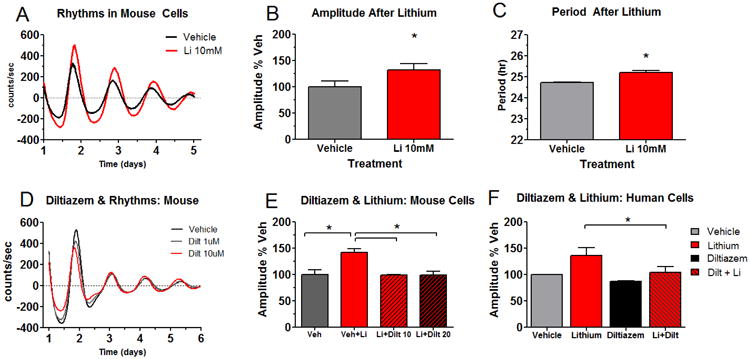
Blocking Ca2+ channels attenuates lithium's amplification of circadian rhythms. Circadian rhythms of mouse NIH3T3P2L fibroblasts (A) respond to lithium in a manner similar to human cells: increasing amplitude (B), and lengthening period (C). The Ca2+ channel antagonist diltiazem decreases rhythm amplitude in NIH3T3P2L cells (D) and blocks the rhythm amplifying effect of lithium (E). Similar effects of diltiazem on rhythm amplitude are observed in parallel cell cultures from human controls (n=4 / group). Because BD patients had more variable amplitude responses to lithium, they were not considered for this experiment (F). Values are means ± SEM; *p < 0.05 using ANOVA with post-hoc T-tests.