


Figure 1.
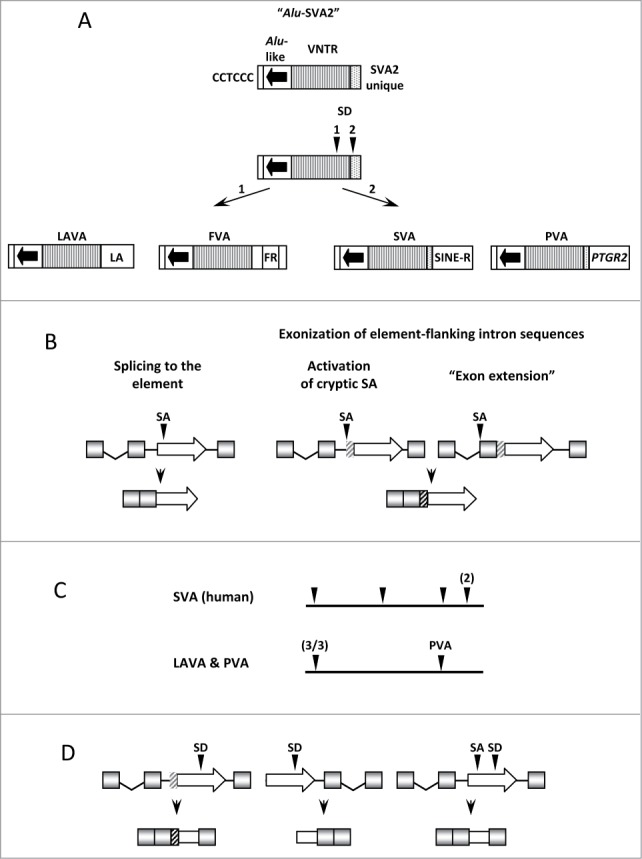
VNTR-containing retrotransposons and splicing. (A) The variant 3′ ends of VNTR composites have been acquired by splicing to either the VNTR (1 - in LAVA and FVA) or the SVA2 unique 3′ sequence (2 - in SVA and PVA) of an extinct “Alu-SVA2” SD–splice donor. (B) VNTR composites function as exon traps and generate new exons through splicing. Elements integrated in introns in sense use acceptor sites in the element, in introns and acceptor sites of the upstream exons. (C) Positions of splice acceptor sites (arrowheads) in the Alu-like regions of human SVA elements7 and gibbon LAVA11 and PVA4 elements. (D) SVAs can be exonized through splice donor sites located in the elements. Three different scenarios are shown: the splice donor is complemented by an intronic acceptor upstream of the element (left panel; the SVA constitutes the first exon (middle panel) and the element provides both splice acceptor and donor–parts of the element are exonized (right panel, all based on Kwon et al.13). Intronic sequences that become exonized are shown as gray and black hatched boxes, respectively.