



Abstract
Background
Troops deployed in high altitude areas of Ladakh face nasal problems in the form of obstructive nasal symptoms and recurrent epistaxis. This study analyses the changes in the nasal mucociliary transit times (NMTT) and deterioration in quality of life of troops on first high altitude induction.
Methods
A prospective study on 100 healthy volunteers was done. Mucociliary transit time was measured and a standardized quality of life questionnaire (RQLQ) administered at onset and after a period of three months in high altitude. Thereafter the subjects were divided into two groups and the study group was administered normal saline nasal drops. The observations were taken and results were statistically analysed after a period of three months.
Result
The mucociliary transit time was prolonged after a three month stay in high altitude (p< 0.005). Normal saline nasal drops were successful in improving the nasal mucociliary transit times (p < 0.05). There was a statistically significant derangement in the quality of life which was improved by administering normal saline nasal drops (p<0.05).
Conclusion
An increased muco-cilliary transport time after exposure to high altitude denotes a deranged physiology of the nasal mucosa. This leads to a statistically significant adverse impact on the quality of life of the troops deployed. The use of normal saline nasal drops is a simple and effective method of reversing some of these changes.
Key Words: High altitude, Nasal mucosa, Military medicine
Introduction
A large number of our troops are positioned in the high altitude areas of Ladakh. The peculiarities of this terrain include a very low partial pressure of oxygen and low temperatures. A stuffy nose and bleeding from the nose are common well known problems amongst people posted here. Apart from adversely affecting the health, these conditions also have negative impact on the quality of life (QOL) of these soldiers. The factors that contribute to these problems are not clearly understood. Most of the knowledge in this field is anecdotal. Studies by Barry et al [1] on an Everest expedition suggests that nasal mucociliary transport times (NMTT) are increased and nasal obstruction may impede breathing, adversely affecting performance at high altitude. However the long-term effects were not studied due to the nature of the expedition. A clue into the causative factor can be inferred from a separate study by Salah B et al [2] who demonstrated that breathing dry air at sea level reduces NMTT in healthy subjects. It is with this background in mind that we undertook a study to investigate the effects of high altitude on the nasal mucosa and its effect on the quality of life of otherwise healthy soldiers.
Material and Methods
The present study was carried out at a peripheral hospital in Ladakh. A longitudinal study was designed and implemented as part of an AFMRC project. One hundred healthy serving soldiers in the age group of 21-36 years, freshly inducted into high altitude were studied. They were first seen within 48 hours of their arrival into high-altitude by aircraft. A prior ENT disease / history suggestive of chronic rhinitis / allergic rhinitis formed an exclusion criterion. Any subject having significant deviated nasal septum was also excluded from the study. All subjects were counselled about the nature of the study and informed consent taken.
After history taking and systemic examination a thorough ENT examination was done. An eligible subject was then subjected to nasal endoscopy and NMTT. A Rhinoconjunctivitis Quality of Life Questionnaire (RQLQ) was administered. This was repeated after three months stay at high altitude. At the three month review, the subjects who reported back for follow up were divided into two subgroups. Group A1 was administered normal saline nasal drops while the other served as control (Group A2). Both the groups were reviewed again after further three months stay in high altitude. All subjects stayed in altitudes ranging from 10,000 – 13,000 feet. The final protocol and follow up of these subjects is depicted in Table 1. The exercise of randomization was done after three months stay and not initially as no intervention was planned in the initial three months and an expected high dropout rate in such studies were likely to make the two randomized groups unequal.
Table 1.
Final Study Protocol
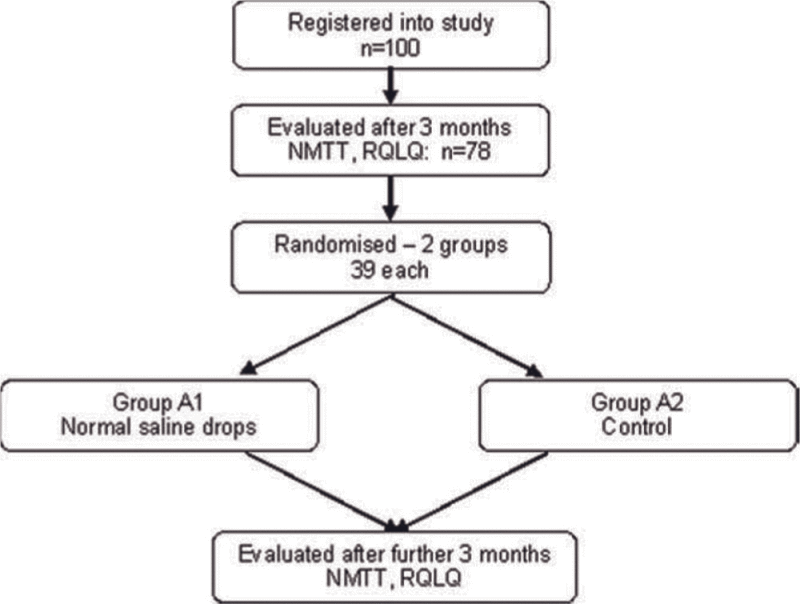 |
The NMTT or the saccharin test was done in all subjects with a particle of commercially available medical grade saccharin sweetener. It was placed approximately one cm behind the anterior end of the inferior turbinate on the nasal floor. The average time for sweet taste noticed was noted on each side separately and average time was noted.
RQLQ is a standardized QOL questionaire developed by Professor Elizabeth Juniper of McMaster University, Canada and is used extensively throughout the world. The English version of the instrument was used after seeking permission. It measures the problems that adults with rhinoconjunctivitis experience in their day to day living [3]. It has 28 questions (items) in seven domains namely activity limitations, sleep impairment, non-nasal / eye symptoms, practical problems, nasal symptoms, eye symptoms and emotional problems. The subjects are asked to recall impairments during the previous week and rate the degree on a seven point scale ranging from 0 (not troubled at all; none of the time) to six (extremely troublesome; all the time). The overall averaged score is the main efficacy parameter.
Results
After three months stay in high altitude, 78 subjects out of the initial 100 reported and were available for evaluation. The frequency of nasal symptoms suffered by our subjects as gauged by history taking is depicted in Fig. 1. Of the 55 symptomatic patients, majority had multiple symptoms (Fig. 2). The presence of nasal crusts was the commonest finding on nasal endoscopy in 28 (36%) subjects (Fig. 3).
Fig. 1.

Frequency of nasal symptoms in subjects after three months at high altitude (HA)
Fig. 2.

Symptom profile after three months of stay at HA
Fig. 3.

Endoscopic findings after three months of stay at HA
To demonstrate the derangement of NMTT, mean transit time of subjects who reported at the three months follow up was compared with the baseline. The mean NMTT of these subjects on induction was 8.3 minutes (SD = 2.28) which had increased to 15.3 minutes (SD = 3.05) after a stay of three months. The paired t test was applied and the increase in NMTT was found to be statistically significant (p < 0.005). The 95% confidence intervals of the difference of the two mean values was 6.2 to 7.8, suggesting a cause-effect relationship.
Similarly, the mean RQLQ scores of subjects who reported at the three months follow up interval were compared with their baseline values (n=78). There was a significant deterioration (p<0.005) in the mean RQLQ score after three months of stay at high altitude as compared to baseline. This implies deterioration in the quality of life after a continuous three month stay in high altitude due to nasal symptoms.
The observations were repeated after dividing the remaining subjects into two groups at three months time. In Group A1 (administered normal saline nasal drops), the mean NMTT improved to 11.31 minutes (SD = 1.59) whereas the mean NMTT in the control group A2 (n=25) improved to 13.8 minutes (SD = 2.44). The mean decrease in the transit time was 4.2 minutes in the study group whereas in the control group it reduced by 1.5 minutes (Fig. 4). On applying t test, the reduction in transit times in Group A1 was statistically significant (p< 0.005), (95% confidence limit 3.2 – 5.3 min) after regular administration of normal saline nasal drops.
Fig. 4.

Nasal mucociliary transit times in group A1 and A2 after six months in high altitude. (Mean ± SEM)
To study the effect of normal saline administration on RQLQ and compare with other readings of the same subject, ANOVA (Analysis of Variance) was administered to the mean scores and the data studied further using Tukey's post hoc tests. The RQLQ scores of subjects who remained till the end of the study were only taken for purposes of ANOVA.
The analysis revealed that there was significant change in RQLQ scores (p<0.005) between baseline and scores after three months of stay at high altitude. In group A1 (Test group), the mean score reduced after normal saline administration to 1.34 (p < 0.05). Though there was significant improvement in the scores, it did not revert to baseline values and the scores were still altered at six months as compared to baseline values. In the control group (A2), the mean RQLQ score dropped to 2.10 at six months. There was no statistically significant improvement in the RQLQ scores between three months and six months of stay at high altitude (p>0.05) implying that the deterioration remained (Fig. 5).
Fig. 5.

Mean RQLQ scores in control and test groups. Intervention (normal saline drops) given at three months.
Discussion
In the present study, a simple, reliable clinical test has been used to judge the efficacy of the nasal mucociliary mechanism. Nasal mucociliary transit time (NMTT) assessment has been done using different materials including radioactive markers, insoluble charcoal and micro alluminum discs. In a study comparing three of the common methods, Puchelle et al [5], validated the suitability of using saccharin as a simple screening test for nasal mucociliary clearance times. As a consequence, commercially available medical grade saccharin sweetener was used which is both easily available and inexpensive.
In the present study, there was a statistically significant deterioration in the nasal mucociliary clearance as measured by NMTT after three months continuous stay in high altitude. A similar study by Barry et al [1], on an expedition to Mount Everest, found significant prolongation of NMTT in 33 subjects. In their series the prolongation however was much more severe with the median time increasing from 11 minutes to 60 minutes. They carried out the study at an altitude of 5300 m and reported that the prolongation persisted for two weeks. It is likely that the severity of the prolongation of NMTT was more in the Everest study as the environmental conditions would be harsher at 5300 m whereas in our case the subjects stayed at a height of 3300 m to 3700 m. Also the duration of stay may have a stabilizing role in our subjects with a gradual adaptation to the environment conditions after three months.
What exactly causes the prolongation of NMTT remains to be identified. The most plausible reason is the peculiar environmental condition of high altitude with low temperature and dry air. The nasal cilia are sensitive to low temperatures and the ciliary beat frequency is known to reduce at lower temperatures [6]. In a study by Salah et al [2], it was demonstrated that breathing dry air at sea level significantly reduces NMTT in healthy subjects. Another factor contributing to the derangement of NMTT is presence of nasal crusts and nasal obstruction due to it. Nasal obstruction in itself is known to alter the mucociliary transit times. Deitmer et al [7], suggested a decoupling of the mucociliary transport leading to prolongation of NMTT following nasal obstruction.
It is tempting to implicate hypoxia as responsible for alteration in the mucociliary system though direct evidence is lacking. Contrary to this, hyperbaric oxygen has demonstrated an increase in the mucociliary transport by 26% probably owing to increased oxygenation of blood plasma and enhancement of metabolism in ciliated epithelium [8].
Given that the pathogenesis of altered nasal physiology is eventually a breakdown in the mucociliary transport mechanism, a restoration of the system should reverse the symptoms. Normal saline nasal drops are commonly available and frequently used in chronic rhinosinusitis [9]. The isotonic saline solution in high altitude showed appreciable benefit in our subjects. It probably serves to restore the sol phase of the dehydrated mucociliary blanket and dampens the crust formation. However, saline does not counter the factors of cold and hypoxia which could lead to delayed transit times.
The RQLQ is a very sensitive and reproducible internationally accepted marker for judging the QOL in people suffering from rhino-conjunctivitis. This questionnaire has been used to judge the alteration in QOL due to nasal symptoms in high altitude though the instrument is designed for allergic rhino-conjunctivitis. In the strict sense, the two conditions are unrelated in many aspects but similarity in some of the symptoms, chronic nature of the rhinitis and the statistical superiority of using a well validated questionnaire prompted us to use the same. Understandably, the RQLQ scores of all subjects on induction (0.67) were normal / near normal and served only as a baseline for further comparisons.
The first comparison which could be done was a study of the scores at the end of three month stay in high altitude, which showed a statistically significant deterioration after stay at high altitude for three months. On evaluation of the scores in the two randomized groups after a further period of three months, the RQLQ scores remained high in the control group while the study group showed a statistically significant improvement (Fig. 5).
Another way to assess the clinical importance of the scores is by calculating the MID (minimal important difference) which is the smallest difference in score which would mandate, in the absence of troublesome side effects or excessive cost, a change in the patient's management. Mean changes in score from the RQLQ of greater than approximately 0.5 have been considered of clinical importance [4]. In the present study, all of them had a change of more than 0.5 at three months as compared to baseline. In the control group this deterioration persisted at six months and the score did not change significantly. However in the study group, the mean scores had decreased by a minimum of 0.5 in all subjects (implying clinical improvement).
In the present study, we could achieve a statistically significant reduction in the RQLQ scores with the subjects using normal saline nasal drops. As the mucociliary clearance improves, the problems of nasal blockage, emotional problems etc. resolve and the person feels better. However this reversal in the RQLQ scores was partial and did not revert back to baseline values. The nasal saline only addresses the problem of dryness, but it is likely that other factors responsible for pathogenesis like hypoxia and cold persist.
To summarise, nasal symptoms are common amongst troops deployed in Ladakh. There is an increased muco-cilliary transport time after exposure to high altitude denoting a deranged physiology of the nasal mucosa. This leads to a statistically significant adverse impact on the quality of life of the troops deployed at high altitude. The use of normal saline nasal drops is a simple and effective method of reversing some of the nasal physiological changes and the quality of life in these areas.
Conflicts of Interest
This study has been funded by research grants from the O/o DGAFMS.
Intellectual Contribution of Authors
Study Concept : Lt Col R Datta
Drafting & Manuscript Revision : Lt Col R Datta,
Brig SS Panwar, sm
Statistical Analysis : Lt Col R Datta, Brig SS Panwar, SM
Study Supervision : Lt Col R Datta, Brig SS Panwar, sm
References
- 1.Barry PW, Mason NP, O'Callaghan C. Nasal mucociliary transport is impaired at altitude. Eur Respir J. 1997;10:35–37. doi: 10.1183/09031936.97.10010035. [DOI] [PubMed] [Google Scholar]
- 2.Salah B, Dinh Xuan AT, Fouilladieu JL, Lockhart A, Regnard J. Nasal mucociliary transport in healthy subjects is slower when breathing dry air. Eur Respir J. 1998;1:852–855. [PubMed] [Google Scholar]
- 3.Juniper EF, Guyatt GH. Development and testing of a new measure of health status for clinical trials in rhinoconjunctivitis. Clin Exp Allergy. 1991;21:77–83. doi: 10.1111/j.1365-2222.1991.tb00807.x. [DOI] [PubMed] [Google Scholar]
- 4.Juniper EF, Guyatt GH, Griffith LE, Ferrie PJ. Interpretation of rhinoconjunctivitis quality of life questionnaire data. J Allergy Clin Immunol. 1996;98:843–845. doi: 10.1016/s0091-6749(96)70135-5. [DOI] [PubMed] [Google Scholar]
- 5.Puchelle E, Aug F, Pham QT, Bertrand A. Comparison of three methods for measuring nasal mucociliary clearance in man. Acta Otolaryngol. 1981;91:297–303. doi: 10.3109/00016488109138511. [DOI] [PubMed] [Google Scholar]
- 6.Green A, Smallman LA, Logan AC, Drake-Lee AB. The effect of temperature on nasal ciliary beat frequency. Clin Otolaryngol. 1995;20:178–180. doi: 10.1111/j.1365-2273.1995.tb00040.x. [DOI] [PubMed] [Google Scholar]
- 7.Deitmer T, Erwig H. The influence of nasal obstruction on mucociliary transport. Rhinology. 1986;24:159–162. [PubMed] [Google Scholar]
- 8.Narozny W, Sicko Z, Stankiewicz CZ, Przewozny T, Pegiel-Sicko E. The effect of hyperbaric oxygen on nasal mucociliary transport. Clin Otolaryngol. 2002;27:140–146. doi: 10.1046/j.1365-2273.2002.00548.x. [DOI] [PubMed] [Google Scholar]
- 9.Aukema AA, Fokkens WJ. Chronic rhinosinusitis: management for optimal outcomes. Treat Respir Med. 2004;3:97–105. doi: 10.2165/00151829-200403020-00004. [DOI] [PubMed] [Google Scholar]