



Abstract
Introduction
Rotavirus remains the leading cause of severe diarrhea in children under 5 years worldwide. In the US, Rotarix® (RV1) and RotaTeq® (RV5), have been associated with reductions in and severity of rotavirus disease. Studies have evaluated the impact of RV1 or RV5 but little is known about the impact of incomplete or mixed vaccination upon vaccine effectiveness.
Methods
Case control study to examine association of combined RV1 and RV5 and rotavirus acute gastroenteritis, factoring severity of diarrheal disease. Children born after March 1, 2009 with acute gastroenteritis from three pediatric hospitals in Atlanta, Georgia were approached for enrollment. Survey was administered, stool specimen was collected, and vaccination records were obtained.
Results
891 of 1127 children with acute gastroenteritis were enrolled. Stool specimens were collected from 708 for rotavirus testing; 215 stool samples tested positively for rotavirus. Children >12 months of age were more likely to have rotavirus. Children categorized with Vesikari score of >11 were almost twice as likely to be rotavirus positive. Prior rotavirus vaccination decreased the mean Vesikari score, p < 0.0001. Children with complete single type vaccination were protected against rotavirus (OR 0.21, 95% CI: 0.14–0.31, p < 0.0001).
Conclusion
Complete rotavirus vaccination with a single vaccine type resulted in protection against rotavirus diarrhea and decrease in severity of rotavirus gastroenteritis. Incomplete rotavirus vaccination either with a single vaccine or mixed vaccination types also provided some protection.
Keywords: Rotavirus, Rotavirus vaccination, Acute gastroenteritis, Pediatric
1. Introduction
Rotavirus remains the leading cause of severe diarrhea world-wide in children under the age of 5 years [1]. Recent estimates at 450 million deaths and approximately 2.4 million hospitalizations worldwide due to diarrhea [2,3]. Introduction of rotavirus vaccines has been associated with reductions in gastroenteritis mortality and rotavirus related hospitalizations in middle and high income countries [7]. In the US., there are currently two rotavirus vaccines: Rotarix® (GlaxoSmithKline Biologicals; RV1), a live-attenuated, oral, two dose rotavirus vaccine and RotaTeq® (Merck & Co., Inc.; RV5), a live-reassortant, oral, three dose rotavirus vaccine. In 2006, RV5 was licensed and recommended for US infants by the Advisory Committee on Immunization Practices (ACIP), and in 2008, RV1 was licensed and recommended for routine vaccination among infants [4]. US studies have demonstrated a 73% mean annual reduction in the number of rotavirus-positive test results after the introduction of rotavirus vaccines [5–10]. In 2008–2009, rotavirus vaccines prevented an estimated 30,000–40,000 hospitalizations [11] and 170,000 emergency department visits in the US [12]. In developed countries, rotavirus vaccines have demonstrated high efficacy against severe rotavirus disease [13] and a decrease in disease severity [14–16]. Rates of rotavirus related hospitalizations and emergency department visits were similarly reduced between children who received 2 doses of RV5 (incomplete) compared to those who had received 3 doses of RV5 (complete) [17].
Although ACIP does not indicate a preference for RV1 or RV5, it does recommend completing the vaccine series with the same vaccine type [4]. Since vaccination should not be deferred because the product used for a previous dose(s) is unavailable or unknown, ACIP recommends that if any dose in the series was RV5 or the vaccine product was unknown for any dose in the series, a total of three doses of rotavirus vaccine should be administered and all doses should be administered by age 8 months and 0 days [4]. Very little has been reported on the effectiveness of mixed vaccine doses [11]. Given differences in strain composition between the two vaccine types and seasonal variation in wild-type circulating strains, understanding the impact on rotavirus disease burden and severity in children who are administered a mixed schedule of RV1 and RV5 is important. Studies have demonstrated that RV1 and RV5 exert similar effectiveness against not only most commonly circulating strains but homotypic and heterotypic strains which may have seasonal variations. The impact of complete or incomplete vaccinations of single type or mixed incomplete on the persistence of this immunity is unknown.
We describe the association between a mixed vaccine (complete or incomplete) regimen of RV1 and RV5 and a complete regimen with a single vaccine type and protection against rotavirus infection. We also examined the relationship between incomplete and complete rotavirus single or mixed vaccine regimens on severity of disease. To our knowledge, this is the first study to explicitly address the relationship of rotavirus vaccines when administered in mixed vaccine type on rotavirus acute gastroenteritis (AGE).
2. Materials and methods
This was a secondary analysis of a large case control study to examine the association between combined dosing of RV1 and RV5 and rotavirus acute gastroenteritis, factoring severity of diarrheal disease. Active surveillance was conducted on all children presenting to any of the three freestanding pediatric hospitals’ Emergency Departments in Atlanta, Georgia. All children who met the following inclusion criteria were approached for enrollment: Children whose date of birth was after March 1, 2009 and who were evaluated in the emergency department or admitted for hospitalization presenting with symptoms of AGE, as defined by having >3 looser than normal stools in a 24 h period but less than 10 overall days of diarrhea (Only children born after March 1, 2009 were old enough to have had the opportunity to receive either rotavirus vaccine when it became available for routine infant use in the US). Patients were excluded if they did not speak English or Spanish, were immunocompromised, did not meet the study definition for AGE, did not have stool samples collected within 14 days of enrollment, and had no vaccination record based on documentation from the state immunization registry or provider medical records. A twin would be excluded if the other twin had been enrolled and had a stool sample collected. Determination of case or control status is based on rotavirus results from stool specimens collected on eligible study participants. Cases and controls were not matched by any criteria, e.g., age, gender, or race.
The surveillance was conducted from January through June of 2010, 2011, and 2013 at three separate dedicated pediatric hospitals in Atlanta, Georgia as previously described. Time periods are based on seasonality of rotavirus infections, and since prevalence of rotavirus disease alternates between high and low rates with each season, enrollment did not occur in 2012 as it was projected to be a low rotavirus prevalence year [16].
2.1. Ethical considerations
Once informed consent was obtained by legal guardian, a standardized questionnaire was administered as a personal interview by study staff and instructions were provided on how to collect the stool specimen. This study was reviewed and approved by institutional review boards at the local hospitals, academic institutions, and the Centers for Disease Control and Prevention (CDC).
2.2. Survey of study participant characteristics
A questionnaire was administered at the time of enrollment, and a stool sample was collected within 14 days of onset of illness. The questionnaire surveyed for demographic information, insurance status, signs/symptoms of clinical illness (duration of diarrhea and vomiting, maximum number of vomiting and diarrheal episodes in a 24-h period, evidence of fever or dehydration, and treatment administered). Fig. 1 outlines the process for determining how study participants were included.
Fig. 1.
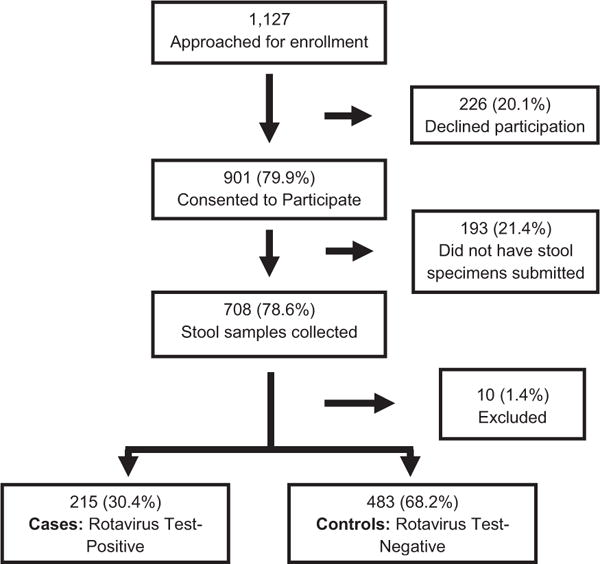
Diagram of Patients Approached and Enrolled. From the 708 patients whose stool samples were collected, 10 individuals were excluded analysis due to not meeting enrollment criteria: one patient was younger than 55 days, three individuals had stool samples that were collected more than 14 days after enrollment, two patients had previously been enrolled in the study, and one patient was a twin whose twin sibling had been previously enrolled; three additional patients were excluded for not being in the state immunization registry and no provider vaccine record was provided. The majority of the legally authorized representatives who declined participation did so because they did not want to participate in research or for their child to submit a stool specimen.
2.3. Laboratory determination of rotavirus status
Rotavirus testing on stool specimens was conducted at the CDC using commercial enzyme immunoassay kit, Rotaclone® (Meridian Life Science, Inc., Cincinnati, Ohio) to determine whether patients were rotavirus test-positive (cases) or rotavirus test-negative (controls).
2.4. Vaccination status
Immunization status of participants at the time of enrollment was verified by two separate mechanisms: queries to the Georgia Registry of Immunization Transactions and written documentation provided by each participant’s named healthcare providers. Vaccine information was collected for rotavirus and diphtheria-tetanus-acellular pertussis (DTaP). Information on vaccination manufacturer, dates of rotavirus vaccine administration, and vaccine lot numbers were entered into the relational database [11]. DTaP was selected as a proxy for timely receipt of vaccines since the dosing schedule follows rotavirus vaccination schedules for the first 3 doses and is widely accepted by parents who might avoid other vaccines [18,19].
2.5. Definition for complete rotavirus vaccination
Participants were categorized as complete for RV5 rotavirus vaccination if he/she received three doses of RV5 at the time of enrollment, or for those younger than 8 months 0 days of age, ACIP recommended number of doses for that particular age at time of enrollment. Complete RV1 included those who received two doses of vaccine or two doses of RV1 and one dose of RV5 prior to diarrheal onset, or for those younger than 8 months 0 days of age, complete vaccination status was assigned if the child received the ACIP recommended number of doses for that age at the time of enrollment. Complete mixed dose was defined as receiving one dose of RV1 and two doses of RV5 by 8 months 0 days of age or one dose of RV1 and one dose of RV5 before 8 months 0 days of age.
2.6. Definition for incomplete rotavirus vaccination
Participants were categorized as having incomplete mixed doses of rotavirus vaccination if he/she received only one dose of RV5 and one dose of RV1 after 8 months 0 days of age. Incomplete RV5 were those who received one or two doses of RV5 vaccine and no doses of RV1 after 8 months 0 days of age. Incomplete RV1 were those who received only one dose of RV1 vaccine after 4 months 0 days of age. Definitions used to categorize ‘complete’ and ‘incomplete’ DTaP vaccination were based on the ACIP recommended vaccination schedules for routine and ‘catch-up’ vaccine administration for persons aged 4 months through 18 years [20].
2.7. Gastroenteritis severity score
Severity of diarrheal disease was determined using a modified Vesikari scale [21], whereby >11 score was categorized as severe [17,22]. Assessment of severity was prospectively obtained from health records and survey questionnaire responses given at the time of enrollment. Severe and non-severe patients were further stratified based on whether they received RV1, RV5, or a mixed vaccine regimen. The original Vesikari scale accounts for duration of illness. However, for the purposes of this study, duration of illness was calculated based on the number of days a patient had symptoms on the day of their enrollment, rather than following up with patients to determine how long their illness persisted after enrollment.
2.8. Statistical analysis
The frequency distributions of study participant demographics, vaccine type and the number of doses, and the age at the time of vaccination were determined between cases and controls, and significant differences were determined by Chi Square or Fisher’s exact test, whichever was appropriate. Bivariate logistic regression analysis was also applied for factors a priori considered associated with risk of rotavirus disease. Multivariate logistic regression analysis was performed to assess the association between rotavirus disease adjusted for those risk factors. Odds ratios and a corresponding 95% CI were calculated for each vaccine group complete RV1/RV5, complete mixed, incomplete RV1/RV5, and incomplete mixed. The probability density function of rotavirus disease by disease severity was estimated using kernel densities [23] and comparison of these densities were performed using bootstrapping methods [24]. To compare Vesikari scores between cases and controls, analysis was done with two sample t-tests. Wilcoxon rank sum tests were also used comparing Vesikari scores by complete mixed and complete single groups. Analyses were performed by using a statistical software package (SAS version 9.2 and R version 3.0).
3. Results
During three separate rotavirus seasons (January through June of 2010, 2011, and 2013), 1127 children who presented with AGE symptoms and met age requirements for enrollment were approached for participation. Two hundred and twenty-six (20.1%) legal caregivers or parents declined participation leaving 901 (79.9%) who were enrolled. Stool samples were successfully obtained from 708 (78.6%) of enrolled participants. Ten subjects were excluded from the study after stool was collected for failing to meet study requirements, leaving 698 subjects for analyses (Fig. 1). Two hundred and fifteen (30.4%) samples tested positively for rotavirus and served as the cases. Epidemic curves during the three rotavirus seasons are shown in Fig. 2. The majority of cases occurred during February through April of each year.
Fig. 2.
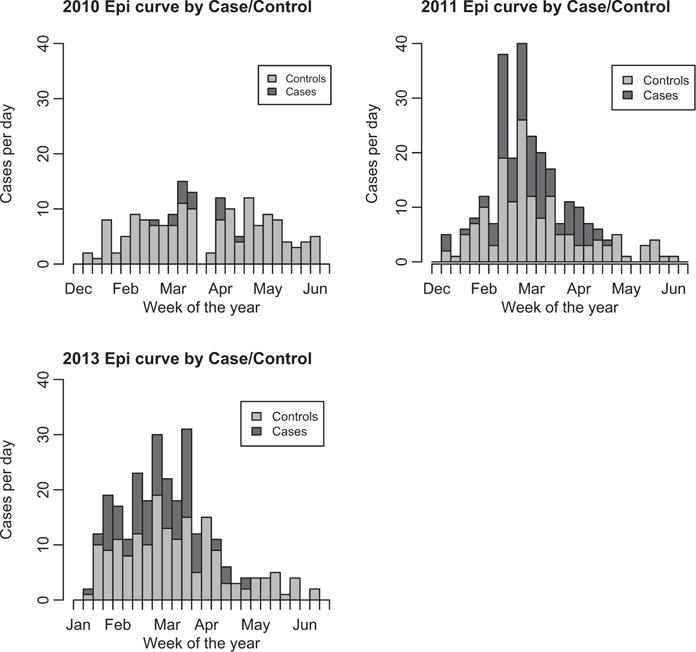
Epidemic curves for cases and controls for each year of rotavirus season. Cases were defined as test-positive rotavirus patients, and controls were defined as test-negative rotavirus patients.
3.1. Population characteristics
The majority of participants enrolled in the study were Black (403, 57.7%) and had public insurance (538, 77.1%). Rates of rotavirus test-positive stools were lower in Hispanic children compared to White children (p = 0.0035). The distribution of ages was significantly different between rotavirus test-positive cases and rotavirus test-negative controls (p < 0.0005), with rotavirus test-positive AGE children being older on average (>12 months) than rotavirus test-negative children. Twenty-seven percent of children with rotavirus test-positive were >2 years of age in comparison to 13.5% of those who were rotavirus test-negative. More than half of all study participants (381, 54.6%) had Vesikari score >11 or severe AGE (Table 1). Half of the rotavirus test-positive children had not received a prior dose of rotavirus vaccine. No difference was found in complete DTaP vaccination rates between cases and controls (p = 0.11).
Table 1.
Population characteristics.
| Variables | All n = 698 (%) | Rotavirus positive n = 215 (%) | Rotavirus negative n = 483 (%) | p value |
|---|---|---|---|---|
| Age | ||||
| <3 months | 25 (3.6) | 6 (2.8) | 19 (3.9) | <0.0005 |
| 3 to <6 months | 93 (13.3) | 14 (6.5) | 79 (16.4) | |
| 6 to <9 months | 125 (17.9) | 23 (10.7) | 102 (21.1) | |
| 9 to <12 months | 100 (14.3) | 21 (9.8) | 79 (16.4) | |
| 12 to <24 months | 232 (33.2) | 93 (43.3) | 139 (28.8) | |
| >24 months | 123 (17.6) | 58 (27.0) | 65 (13.5) | |
| Gender | ||||
| Male | 408 (58.5) | 131 (61.0) | 277 (57.4) | 0.38 |
| Female | 290 (41.5) | 84 (39.1) | 206 (42.7) | |
| Race* | ||||
| White | 174 (24.9) | 49 (22.8) | 125 (25.9) | 0.3981 |
| Black | 403 (57.7) | 129 (60.0) | 274 (56.7) | |
| Other | 80 (11.5) | 28 (13.0) | 52 (10.8) | |
| Unknown | 29 (4.2) | 7 (3.3) | 22 (4.6) | |
| None | 12 (1.7) | 2 (0.9) | 10 (2.1) | |
| Ethnicity | ||||
| Hispanic or Latino | 134 (19.3) | 27 (12.7) | 107 (22.3) | 0.0035 |
| Not Hispanic or Latino | 559 (80.7) | 185 (87.3) | 374 (77.8) | |
| Insurance*** | ||||
| Private | 86 (12.3) | 39 (18.1) | 47 (9.7) | 0.01 |
| Public | 538 (77.1) | 152 (70.7) | 386 (80.0) | |
| None | 55 (7.9) | 17 (7.9) | 38 (7.9) | |
| Other/Unknown | 19 (2.4) | 7 (3.3) | 12 (2.5) | |
| DTaP vaccine | ||||
| No vaccine | 29 (4.2) | 14 (6.5) | 15 (3.1) | 0.11 |
| Complete | 600 (86.0) | 180 (83.7) | 420 (87.0) | |
| Incomplete | 69 (9.9) | 21 (9.8) | 48 (10.0) | |
| Rotavirus vaccine type** | ||||
| No vaccine | 196 (29.3) | 107 (50.7) | 89 (19.4) | 0.01 |
| Complete RV5 or RV1 | 331 (49.0) | 67 (31.8) | 264 (57.5) | |
| Complete mixed | 27 (4.0) | 7 (3.8) | 20 (4.4) | |
| Incomplete RV5 or RV1 | 86 (12.8) | 25 (11.9) | 61 (13.3) | |
| Incomplete mixed | 30 (4.5) | 5 (2.4) | 25 (5.5) | |
| Severity of acute gastroenteritis (Vesikari score) | ||||
| Not severe (<11) | 317 (45.4) | 73 (34.0) | 244 (49.5) | <0.01 |
| Severe (≥11) | 381 (54.6) | 142 (66.0) | 239 (50.5) | |
For race, there were 80 categorized as ‘other’, which reflects Asian, American Indian/Alaskan Native, Native Hawaiian/Pacific Islander, or unknown. Forty-one (5.8%) participants had an unknown race, and five (0.7%) participants had an unknown ethnicity. The other category was reflective of 52 rotavirus negative controls and 28 rotavirus positive cases.
For vaccine types, there were 28 who had unknown vaccine types (4 were rotavirus positive cases and 22 were rotavirus negative controls).
For insurance, we combined the 17 participants with ‘other’ and ‘unknown’ status together: There were 0 ‘other’ and 7 ‘unknown’ among the rotavirus positive cases, and 2 ‘other’ and 8 ‘unknown’ among the rotavirus negative controls.
3.2. Rotavirus disease and vaccination status
Children with Vesikari score >11 were more likely to be rotavirus test-positive (OR 1.99, 95% CI: 1.42–2.77) (Table 2). Distribution of Vesikari scores was significantly different with rotavirus test-positive cases having higher Vesikari scores than controls (p < 0.0001, Fig. 3). Children with complete rotavirus vaccination were protected against rotavirus, regardless of whether or not the vaccination was from a single type of vaccine or mixed types (complete mixed: OR 0.29, 95% CI: 0.12–0.72, p = 0.0076; complete RV5 and RV1: OR 0.21 95% CI: 0.14–0.31, p < 0.0001) (Table 2). There was no increased risk of rotavirus disease, based on incomplete DTaP vaccine regimen (p = 0.9405). Children who had not received DTaP vaccination, however, were significantly at higher risk for rotavirus test-positive disease (OR 2.18, 95% CI: 1.03–4.61, p = 0.0417). Although there was no increased risk for rotavirus test-positive disease among incomplete DTaP vaccines, the distribution of the RV vaccination status for complete and incomplete was significantly different between those who were complete for DTaP compared to those who were incomplete for DTaP (p < 0.001): Among the 572 of 668 enrolled who had complete DTaP, 56.3% also were complete for RV vaccination by single vaccine type. In contrast, among the 67 with incomplete DTaP vaccination, over half (52.2%) received no RV vaccines, 37.3% had incomplete RV vaccines, and only 10.5% had received complete RV vaccines. We found similar significant differences in the distribution of RV vaccination status for race (p = 0.004), ethnicity (p < 0.001) insurance (p = 0.0021), age categories (p = 0.0080), and AGE severity (p < 0.01) (Data not shown).
Table 2.
Risk factors associated with rotavirus test-positive disease.
| Variables | Disease status: rotavirus positive
|
||
|---|---|---|---|
| OR | 95% CI | p value | |
| Age | |||
| <3 months | 1.00 | Referent | |
| 3 to <6 months | 0.56 | 0.19–1.65 | 0.2942 |
| 6 to <9 months | 0.71 | 0.26–1.99 | 0.5189 |
| 9 to <12 months | 0.84 | 0.30–2.37 | 0.7446 |
| 12 to <24 months | 2.12 | 0.82–5.50 | 0.1232 |
| >24 months | 2.83 | 1.06–7.56 | 0.0385 |
| Race | |||
| White | 1.00 | Referent | |
| Black | 1.20 | 0.81–1.78 | 0.3586 |
| Other | 1.37 | 0.78–2.42 | 0.2715 |
| None/Unknown | 0.72 | 0.32–1.61 | 0.4220 |
| Ethnicity | |||
| Hispanic or Latino | 1.00 | Referent | |
| Not Hispanic or Latino | 1.96 | 1.24–3.10 | 0.0039 |
| Insurance | |||
| Private | 1.00 | Referent | |
| Public | 0.47 | 0.30–0.75 | 0.0015 |
| None | 0.54 | 0.26–1.10 | 0.0891 |
| Other/Unknown | 0.84 | 0.29–2.42 | 0.7520 |
| DTaP vaccine | |||
| Complete | 1.00 | Referent | |
| Incomplete | 1.02 | 0.60–1.76 | 0.9405 |
| None | 2.18 | 1.03–4.61 | 0.0417 |
| Rotavirus vaccine type | |||
| No vaccine | 1.00 | Referent | |
| Complete RV5 or RV1 | 0.21 | 0.14–0.31 | <0.0001 |
| Complete mixed | 0.29 | 0.12–0.72 | 0.0076 |
| Incomplete mixed | 0.17 | 0.06–0.45 | 0.0004 |
| Incomplete RV5 or RV1 | 0.34 | 0.20–0.59 | 0.0001 |
| Acute gastroenteritis severity | |||
| Not severe | 1.00 | Referent | |
| Severe | 1.99 | 1.42–2.77 | <0.0001 |
Fig. 3.
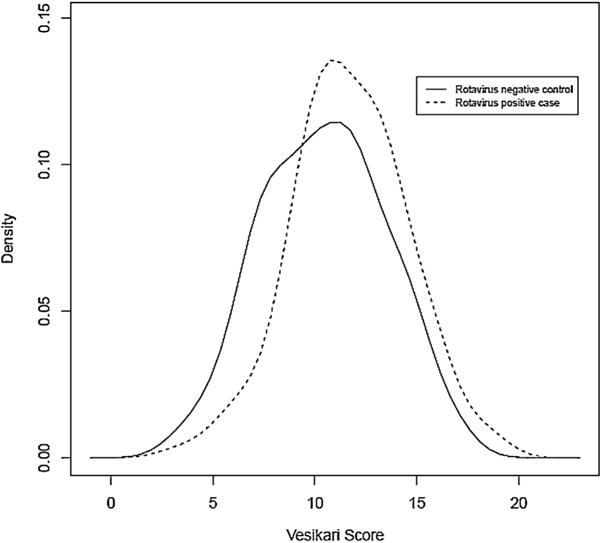
Density function of Vesikari scores. A score of 11 or higher on the Vesikari scale indicates severe disease.
When controlling for age, race, ethnicity, insurance status, and disease severity, children who received a complete mixed types of rotavirus vaccines were no longer significantly more protected against rotavirus test-positive disease when compared to children with no vaccine (OR 0.46; 95% CI: 0.17–1.21, p = 0.1130). In contrast, receiving a complete rotavirus vaccine regimen of a single type (RV1 or RV5) was protective against rotavirus when compared to children with no vaccine (OR 0.22; 95% CI: 0.0.15–0.34, p < 0.0001). Similarly, receiving an incomplete vaccine regimen of a single or mixed types of rotavirus vaccine was also protective against rotavirus test-positive AGE (incomplete mixed vaccine types: OR 0.13; 95% CI: 0.04–0.35, p < 0.0001; incomplete RV1 or RV5: OR 0.32; 95% CI: 0.18–0.56, p = 0.0001) (Table 3).
Table 3.
Multivariate analysis – controlling for disease severity, age, and insurance.
| Variables | Disease status: rotavirus positive
|
||
|---|---|---|---|
| OR | 95% CI | p value | |
| Vaccine type | |||
| None | 1.00 | Referent | |
| Complete RV5 or RV1 | 0.22 | 0.15–0.34 | <0.0001 |
| Complete Mixed | 0.46 | 0.17–1.21 | 0.1130 |
| Incomplete Mixed | 0.13 | 0.04–0.35 | <0.0001 |
| Incomplete RV5 or RV1 | 0.32 | 0.17–0.56 | <0.0001 |
Participants in the complete RV5 category received three doses of vaccine. Those in the complete RV1 group received two doses of RV1 or two doses of RV1 and one dose of RV5. A complete mixed dose was defined as receiving one dose of RV1 and two doses of RV5. An incomplete mixed dose referred to participants who received only one dose of RV5 one dose of RV1. Participants in the incomplete RV5 group received either one or two doses of vaccine. Those in the incomplete RV1 group received only one dose of vaccine. There were 35 (5.0%) participants who received at least one rotavirus vaccine of an unknown type, and were, therefore, not included in the analysis.
3.3. Severity of acute gastroenteritis disease
Density curves among cases for diarrheal severity were not different overall among those who received complete vaccination by mixed types or single type of rotavirus vaccines (Fig. 4). Moreover, the density curves for severity for cases were also similar to controls, regardless of the classification of vaccination status. Average Vesikari scores for complete mixed or single vaccine type for cases did not show significant differences (Fig. 4). Average Vesikari score was 10 for cases (complete mixed, n = 7) and 9.75 for controls (complete mixed, n = 20, p = 0.8438). There was no significant difference in the average Vesikari score between complete mixed versus complete single vaccine type (p = 0.5397).
Fig. 4.
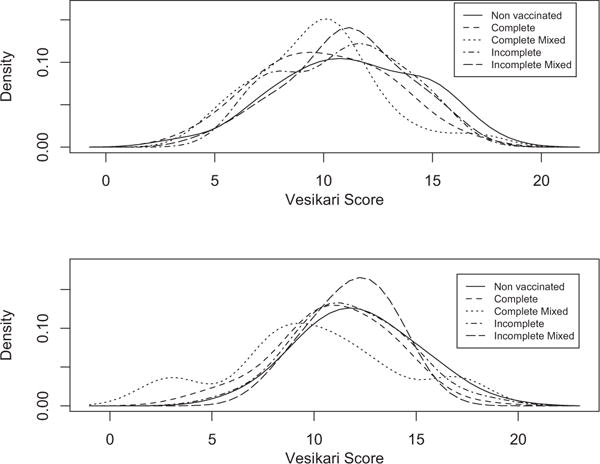
Density function of Vesikari scores of cases (Panel A) and controls (Panel B). A score of 11 or higher on the Vesikari scale indicates severe disease. Participants in the complete single vaccine type group received either two doses of the RV1 vaccine or three doses of the RV5 vaccine. Those in the complete mixed type vaccine group received two doses of the RV5 vaccine and one dose of the RV1 vaccine.
4. Discussion
In 2008, the ACIP recommended that children for whom the same type of rotavirus vaccine was unavailable at follow-up rotavirus vaccine visits receive a total of three doses of mixed type vaccine [4]. This recommendation was put in place to address potential issues that might exist with changes in provider supply, changes in the physician practice vaccination policies or patients’ access to provider practices. Data has been lacking about the vaccine effectiveness in situations which require mixed vaccine type usage. We found similar protective effect from rotavirus test-positive disease between complete mixed or combined dosing, and complete RV5 or RV1. Even with adjusting for age, race, ethnicity, insurance status, and disease severity, this protective effect persisted among those with complete single vaccine type or incomplete single or incomplete mixed type vaccination. Our observation suggests rotavirus vaccine regimens using complete mixed vaccine types also provided protection, but the numbers were too small to achieve statistical significance.
We also found that children who received incomplete doses of a single RV vaccine were protected against rotavirus AGE, similar to children who received complete RV vaccine doses. Our study is consistent with others who have reported that incomplete vaccination with rotavirus does protect against disease [25]. Furthermore, incomplete vaccination seems to confer sufficient immunity, and hence, protective effect from developing rotavirus AGE.
Although our sample size is too small to determine the impact of ‘complete mixed’ rotavirus vaccine on disease severity, we did find that the average disease severity score was less among those children who received any vaccination, regardless of whether it was complete mixed or single vaccine types. This suggests that some degree of protection in severe illness is afforded through vaccination using mixed vaccine types. This finding would support the completion of the rotavirus vaccine series with either RV5 or RV1 if the original vaccine could not be easily continued.
We saw similar rates of complete DTaP vaccination, regardless of the rotavirus vaccine type, suggesting that practitioners are more likely to adhere to this schedule with rotavirus vaccination, since it parallels the schedule for DTaP vaccination [26,27]. Panozzo et al. demonstrated in their study that the strongest predictor of rotavirus vaccine initiation was receipt of DTaP [27]. Other studies have shown similar findings with DTaP [28]. Although Panozzo et al. focused on infants who had private insurance, our study, which reflects a majority of infants who are receiving public insurance, found similar associations; this finding persisted even when we controlled for this co-variate. Similarly, it also appears that wide acceptance of rotavirus vaccination improves timeliness of other concomitantly scheduled routine vaccines [29]. Together, this suggests that intervention measures to increase vaccination rates of any one vaccine would result in the increase of vaccination rates for all vaccines.
We observed the same racial disparities in rotavirus vaccination and rotavirus related infection rates that have been previously reported [4,11,17,19–21,30,31]. However, our disparities were not limited to just those with rotavirus AGE, but also, we noted disparities among those who had diarrhea from other causes despite cases and controls being enrolled from the same source population. We found that Hispanic participants were less likely to develop rotavirus disease compared to non-Hispanic participants. This has not been reported previously, and whether or not this finding is tied to cultural, geographic, or other confounding co-variates is not well understood and needs further investigation.
In the pre-rotavirus vaccination era, the majority of rotavirus disease requiring hospitalization occurred among children 6–24 months of age [32,33]. Rotavirus AGE was most prevalent among those who were older than 12 months of age in our study, which is consistent with predictions from a spatiotemporal model proposed by Pitzer et al. [10]. Despite the reported high rates of vaccine effectiveness demonstrated through the second year of life [11], we and others have observed an increasing age of rotavirus-related hospitalization [34]. The indirect benefits of rotavirus vaccination have been reported among the older unvaccinated children (>5 years) and adults [35–37]. Additional benefits worth exploring include the individual costs associated with shorter courses of vaccination compared to current vaccination schedules. The cost effectiveness from the societal perspective associated with such shortened rotavirus vaccination courses, which includes costs of vaccine delivery, cost savings from fewer provider visits, and fewer days lost from work by care givers is also likely to be favorable.
Important limitations include the geographic constraints of this study to children who live in urban, southeastern US. Our estimates for DTaP completion status may be underestimated as we applied the same criteria for complete vaccination status as was applied for rotavirus vaccination. Our analysis included only a small number of children who met the definition of complete mixed rotavirus vaccine type. Additional studies are needed to evaluate the effectiveness of mixed rotavirus vaccine regimens in parts of the country where circulating rotavirus genotypes vary. The number of individuals who had received incomplete vaccination and complete mixed schedules were small resulting in wide confidence intervals in the vaccine effectiveness estimates. Small sample sizes in these groups likely occurred as a result of manufacturer availability of the RV1 and RV5 vaccines. Because our study was a secondary analysis, we were limited by variables (age, race, ethnicity, insurance), postulated a priori to be associated with exposure (RV vaccination status), with too few participants in specific categories. This consequently limited our assessment of the impact these variables’ had on incomplete/complete RV vaccination status.
Few pediatricians administer mixed rotavirus vaccine regimens because it goes against ACIP guidelines. As such, there are currently no plans to extend this study. We did not factor in children <8 months of age who may not have had sufficient time to be fully vaccinated. We also did not exclude children who had previously had a rotavirus infection from the cases and control groups. This could have possibly presented bias into the study, particularly regarding disease severity. Possible selection bias could have occurred through the use of hospital controls instead of community controls. Similarly, legally authorized representatives of patients who declined participation in the study could also present selection bias. Additional studies are forthcoming from our NIH sponsored study (NCT01266850 examines the immunogenicity of different regimens: http://clinicaltrials.gov/ct2/show/NCT01266850?term=rotavirus+and+vaccine+and+emory&rank=1.
5. Conclusions
Because of the age restrictions in rotavirus vaccine administration guidelines, we observed that many of the rotavirus test-positive participants were not infants (>12 months), and approximately half of them had not previously received any rotavirus vaccines. This finding suggests that completion of rotavirus vaccination by administering a mixed rotavirus vaccine regimen to children does not compromise the effectiveness in preventing rotavirus-related diarrhea or increase the severity of disease. Incomplete rotavirus vaccines regimens also had similar effectiveness as complete vaccine regimens in preventing rotavirus disease. Physicians should work to ensure their patients receive their rotavirus vaccine according to the recommended schedule; however, a mixed vaccine type panel also appears to confer protection from disease. Incomplete and complete single-vaccine dosing provided protection against rotavirus test-positive AGE and also decreased the severity of rotavirus-related disease. Further research should be conducted to examine the effectiveness of mixed complete vaccine in protecting against rotavirus related conditions.
Acknowledgments
We would like to thank Dr. Margaret Cortese for her comments and feedback. We would like to thank Dr. Monica Farley and staff of Georgia’s Emerging Infections Program. We would like to also thank Ms. Slavica Mijatovic-Rustemapasic, Dr. Jacqueline Tate, and Dr. Michael D. Bowen at the Centers for Disease Control and Prevention. We would like to thank Dr. Amy Baxter, Dr. Philip Spandorfer, Ms. Shelley Mays, Ms. Elham Laghaie, and Mr. Kevin Thornton, Emergency Department staff at Scottish Rite Children’s Hospital, Egleston Children’s Hospital, and Hughes Spalding Children’s Hospital, and the Clinical Microbiology staff of Children’s Healthcare of Atlanta (especially, Mr. Charles Ash and Ms. Theresa Stanley).
Funding
This work was funded through Centers for Disease Control and Prevention-Emerging Infections Program grants U01CI0000307-05 and U0I000312B; Georgia Emerging Infections Program Cooperative Agreement U50CK000196; PHS Grant UL1 RR025008 from the Clinical and Translational Science Award program, National Institute of Health, as part of the Atlanta Clinical & Translational Science Institute; Grant Number 2R25RR017694-06A1; and Grant Number G12-RR03034, a component of the National Institutes of Health.
References
- 1.Bernstein DI. Rotavirus overview. Pediatr Infect Dis J. 2009;28:S50–3. doi: 10.1097/INF.0b013e3181967bee. [DOI] [PubMed] [Google Scholar]
- 2.Tate JE, Burton AH, Boschi-Pinto C, Steele AD, Duque J, Parashar UD. 2008 estimate of worldwide rotavirus-associated mortality in children younger than 5 years before the introduction of universal rotavirus vaccination programmes: a systematic review and meta-analysis. Lancet Infect Dis. 2012;12:136–41. doi: 10.1016/S1473-3099(11)70253-5. [DOI] [PubMed] [Google Scholar]
- 3.Glass RI, Parashar UD, Bresee JS, Turcios R, Fischer TK, Widdowson MA, et al. Rotavirus vaccines: current prospects and future challenges. Lancet. 2006;368:323–32. doi: 10.1016/S0140-6736(06)68815-6. [DOI] [PubMed] [Google Scholar]
- 4.Cortese M, Parashar U, Centers for Disease Control and Prevention (CDC) Prevention of rotavirus gastroenteritis among infants and children: recommendations of the Advisory Committee on Immunization Practices (ACIP) MMWR Recomm Rep. 2009;58:1–25. [PubMed] [Google Scholar]
- 5.Wang FT, Mast TC, Glass RJ, Loughlin J, Seeger JD. Effectiveness of the pen-tavalent rotavirus vaccine in preventing gastroenteritis in the United States. Pediatrics. 2010;125:e208–13. doi: 10.1542/peds.2009-1246. [DOI] [PubMed] [Google Scholar]
- 6.Dennehy PH. Effects of vaccine on rotavirus disease in the pediatric population. Curr Opin Pediatr. 2012;24:76–84. doi: 10.1097/MOP.0b013e32834ee594. [DOI] [PubMed] [Google Scholar]
- 7.Dennehy PH, Vesikari T, Matson DO, Itzler RF, Dallas MJ, Goveia MG, et al. Effi-cacy of the pentavalent rotavirus vaccine, RotaTeq® (RV5), between doses of a 3-dose series and with less than 3 doses (incomplete regimen) Hum Vaccine. 2011;7:563–8. doi: 10.4161/hv.7.5.15406. [DOI] [PubMed] [Google Scholar]
- 8.Goldman R. Effectiveness of rotavirus vaccine in preventing severe acute gastroenteritis in children. Can Fam Phys. 2012;58:270–1. [PMC free article] [PubMed] [Google Scholar]
- 9.Lopman BA, Payne DC, Tate JE, Patel MM, Cortese MM, Parashar UD. Post-licensure experience with rotavirus vaccination in high and middle income countries; 2006 to 2011. Curr Opin Virol. 2012;2:434–42. doi: 10.1016/j.coviro.2012.05.002. [DOI] [PubMed] [Google Scholar]
- 10.Pitzer VE, Viboud C, Simonsen L, Steiner C, Panozzo CA, Alonso WJ, et al. Demographic variability, vaccination, and the spatiotemporal dynamics of rotavirus epidemics. Science. 2009;325:290–4. doi: 10.1126/science.1172330. [DOI] [PMC free article] [PubMed] [Google Scholar]
- 11.Cortese MM, Immergluck LC, Held M, Jain S, Chan T, Grizas AP, et al. Effectiveness of monovalent and pentavalent rotavirus vaccine. Pediatrics. 2013;132:2012–3804. doi: 10.1542/peds.2012-3804. [DOI] [PMC free article] [PubMed] [Google Scholar]
- 12.Cortese M. Estimates of benefits and potential risks of rotavirus vaccination in the US. Presented at the Advisory Committee on Immunization Practices Meeting; June 20.Centers for Disease Control and Prevention; 2013. [Google Scholar]
- 13.Jiang V, Jiang B, Tate J, Parashar UD, Patel MM. Performance of rotavirus vaccines in developed and developing countries. Hum Vaccine. 2010;6:532–42. doi: 10.4161/hv.6.7.11278. [DOI] [PMC free article] [PubMed] [Google Scholar]
- 14.Adlhoch C, Hoehne M, Littmann M, Marques AM, Lerche A, Dehnert M, et al. Rotavirus vaccine effectiveness and case-control study on risk factors for breakthrough infections in Germany, 2010–2011. Pediatr Infect Dis J. 2013;32 doi: 10.1097/INF.0b013e3182720b71. [DOI] [PubMed] [Google Scholar]
- 15.Cardellino A, Khawaja S, Sanchez Cruz E, Mast TC. Effectiveness of vaccination with the pentavalent rotavirus vaccine in Nicaragua as determined using the screening method. Hum Vac Immunother. 2013;9:1449–53. doi: 10.4161/hv.24338. [DOI] [PubMed] [Google Scholar]
- 16.Ma L, El Khoury AC, Itzler RF. The burden of rotavirus hospitalizations among medicaid and non-medicaid children younger than 5 years old. J Inform. 2009;99 doi: 10.2105/AJPH.2008.148494. [DOI] [PMC free article] [PubMed] [Google Scholar]
- 17.Donauer S, Payne DC, Edwards KM, Szilagyi PG, Hornung RW, Weinberg GA, et al. Determining the effectiveness of the pentavalent rotavirus vaccine against rotavirus hospitalizations and emergency department visits using two study designs. Vaccine. 2013;31:2692–7. doi: 10.1016/j.vaccine.2013.03.072. [DOI] [PMC free article] [PubMed] [Google Scholar]
- 18.Robison SG, Groom H, Young C. Frequency of alternative immunization schedule use in a metropolitan area. Pediatrics. 2012;130:32–8. doi: 10.1542/peds.2011-3154. [DOI] [PubMed] [Google Scholar]
- 19.Robison SG. Sick-visit immunizations and delayed well-baby visits. Pediatrics. 2013;132:44–8. doi: 10.1542/peds.2012-3866. [DOI] [PubMed] [Google Scholar]
- 20.Centers for Disease Control Prevention Immunization of health-care personnel: recommendations of the Advisory Committee on Immunization Practices (ACIP) MMWR Recomm Rep. 2011;60:1–45. [PubMed] [Google Scholar]
- 21.Ruuska T, Vesikari T. Rotavirus disease in Finnish children: use of numerical scores for clinical severity of diarrhoeal episodes. Scan J Infect Dis. 1990;22:259–67. doi: 10.3109/00365549009027046. [DOI] [PubMed] [Google Scholar]
- 22.Cortese MM, LeBlanc J, White KE, Jerris RC, Stinchfield P, Preston KL, et al. Leveraging state immunization information systems to measure the effectiveness of rotavirus vaccine. Pediatrics. 2011;128:e1474–81. doi: 10.1542/peds.2011-1006. [DOI] [PMC free article] [PubMed] [Google Scholar]
- 23.Bowman AW, Azzalini A. Applied smoothing techniques for data analysis: the Kernel approach with S-Plus illustrations. Oxford; Oxford University Press; 1997. [Google Scholar]
- 24.Team RDC. R: a language and environment for statistical computing. Vienna, Austria: R Foundation for Statistical Computing; 2008. [Google Scholar]
- 25.Wang F, Mast TC, Glass R, Loughlin J, Seeger J. Effectiveness of an incomplete RotaTeq (RV5) vaccination regimen in preventing rotavirus gastroenteritis in the United States. Pediatr Infect Dis J. 2013;32:278–83. doi: 10.1097/INF.0b013e318275328f. [DOI] [PubMed] [Google Scholar]
- 26.Panozzo CA, Becker-Dreps S, Pate V, Weber DJ, Jonsson Funk M, Sturmer T, et al. Direct, indirect, total, and overall effectiveness of the rotavirus vaccines for the prevention of gastroenteritis hospitalizations in privately insured US children, 2007–2010. Am J Epidemiol. 2014;179:895–909. doi: 10.1093/aje/kwu001. [DOI] [PMC free article] [PubMed] [Google Scholar]
- 27.Panozzo CA, Becker-Dreps S, Pate V, Jonsson Funk M, Sturmer T, Weber DJ, et al. Patterns of rotavirus vaccine uptake and use in privately-insured US infants, 2006–2010. PLOS ONE. 2013;8:e73825. doi: 10.1371/journal.pone.0073825. [DOI] [PMC free article] [PubMed] [Google Scholar]
- 28.Wendy B. Vaccination with 3-dose paediatric rotavirus vaccine (RotaTeq(R)): impact on the timeliness of uptake of the primary course of DTPa vaccine. Vaccine. 2012;30:5293–7. doi: 10.1016/j.vaccine.2012.04.071. [DOI] [PubMed] [Google Scholar]
- 29.Hull BP, Menzies R, Macartney K, McIntyre PB. Impact of the introduction of rotavirus vaccine on the timeliness of other scheduled vaccines: the Australian experience. Vaccine. 2013;31:1964–9. doi: 10.1016/j.vaccine.2013.02.007. [DOI] [PubMed] [Google Scholar]
- 30.Hull J, Teel E, Kerin T, Freeman MM, Esona MD, Gentsch JR, et al. United States Rotavirus strain surveillance from 2005 to 2008. Pediatr Infect Dis J. 2011;30:S42. doi: 10.1097/INF.0b013e3181fefd78. [DOI] [PubMed] [Google Scholar]
- 31.Robison JA, Ahmad ZP, Nosek CA, Durand C, Namathanga A, Milazi R, et al. Decreased pediatric hospital mortality after an intervention to improve emergency care in Lilongwe, Malawi. Pediatrics. 2012;130:e676–82. doi: 10.1542/peds.2012-0026. [DOI] [PubMed] [Google Scholar]
- 32.Staat MA, Rice MA, Donauer S, Payne DC, Bresee JS, Mast TC, et al. Estimating the rotavirus hospitalization disease burden and trends, using capture-recapture methods. Pediatr Infect Dis J. 2010;29:1083–6. doi: 10.1097/inf.0b013e3181fb8f7b. [DOI] [PubMed] [Google Scholar]
- 33.Payne DC, Staat M, Edwards K, Szilagyi PG, Gentsch JR, Stockman LJ, et al. Active, population-based surveillance for severe rotavirus gastroenteritis in children in the United States. Pediatrics. 2008;1226:1235–43. doi: 10.1542/peds.2007-3378. [DOI] [PubMed] [Google Scholar]
- 34.Payne DC, Staat MA, Edwards KM, Szilagyi PG, Weinberg GA, Hal CB, et al. Direct and indirect effects of rotavirus vaccination upon childhood hospitalizations in 3 US Counties, 2006–2009. Clin Infect Dis. 2011;53:245–53. doi: 10.1093/cid/cir307. [DOI] [PubMed] [Google Scholar]
- 35.Anderson EJ, Shippee DB, Weinrobe MH, Davila MD, Katz BZ, Reddy S, et al. Indirect protection of adults from rotavirus by pediatric rotavirus vaccination. Clin Infect Dis. 2013;56:755–60. doi: 10.1093/cid/cis1010. [DOI] [PubMed] [Google Scholar]
- 36.Lopman BA, Curns AT, Yen C, Parashar UD. Infant rotavirus vaccination may provide indirect protection to older children and adults in the United States. J Infect Dis. 2011;204:980–6. doi: 10.1093/infdis/jir492. [DOI] [PubMed] [Google Scholar]
- 37.Gastanaduy P, Curns A, Parashar U, Lopman B. Gastroenteritis hospitalizations in older children and adults in the United States before and after implementation of infant rotavirus vaccination. JAMA. 2013;8:851–3. doi: 10.1001/jama.2013.170800. [DOI] [PubMed] [Google Scholar]