


Figure 2.
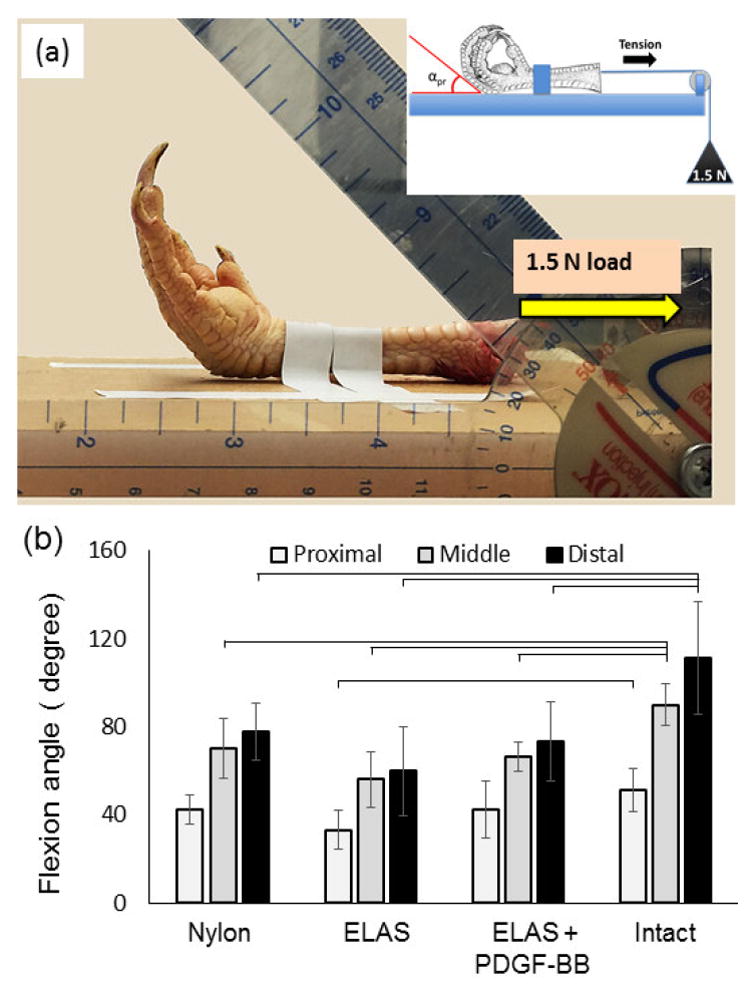
Flexion angle measurement. (a) Chicken claw is fixed on a flat surface and the tendon is pulled at a constant load of 1.5 N applied via a dead-weight. Flexion angles of proximal, middle and distal phalanxes were measured with image processing. (b) All treatment groups (nylon, ELAs and ELAS incorporated PDGF-BB) showed no significant differences (p > 0.05) in flexion angles at 12 weeks following the repair. Flexion angle of intact tendon was found to be significantly higher than all treated groups.