


Figure 5.
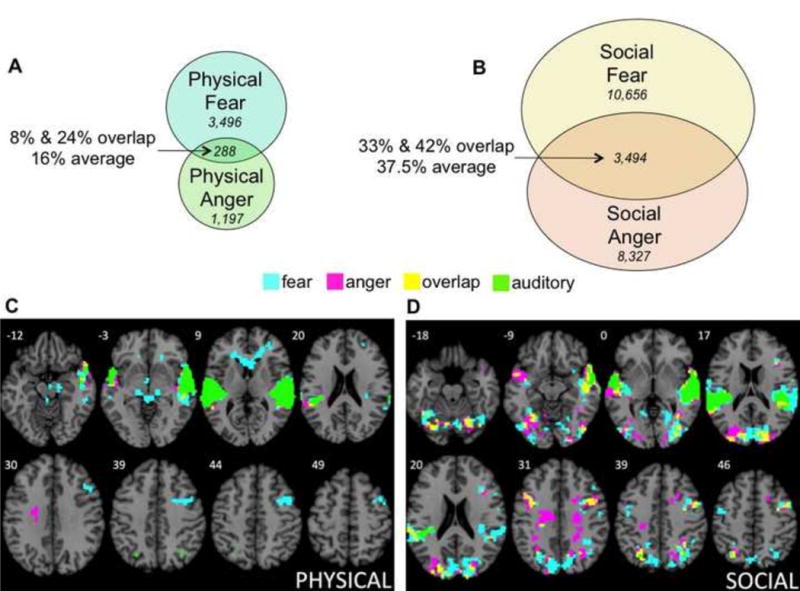
Percentages of shared voxels for fear and anger in the physical learning group (A) and in the social learning group (B) from a conjunction analysis (voxel frequencies are shown in italics). Unique fear activations (turquoise), unique anger activations (purple), shared activations across both emotions (yellow), and activations for auditory processing (green) are shown for the physical learning group (C) and for the social learning group (D). Voxel percentages and frequencies in Panels A and B do not include shared voxels for auditory processing. Supplemental Tables S4, S5, and S6 provide full listings of activations and voxel counts. The two activation maps entered into each conjunction analysis were obtained in random effects analyses of the 3 sec mental state phase (excluding activations from the subsequent situation phase), using an independent voxel threshold of p<.005 and cluster extent threshold of 221 voxels (corrected significance, p<.05).