



Abstract
Although research has shown that place attachment may promote socially responsible behaviors, it has not been studied from the perspective of youth civic engagement. This study explored the meanings of community-based place attachment among civically-engaged Puerto Rican youth within an ethnic enclave. Photovoice methods were employed using a phenomenological design to enhance our understanding of the participants’ lived experiences. Findings suggest that community-based place attachment was characterized as multidimensional, identity-affirming, and embedded in participants’ narratives about personal involvement in local engagement. Implications for initiatives that actively engage youth in community change efforts and future research are presented.
Keywords: Civic engagement, Photovoice, place attachment, youth
Place attachment describes a bond or connection to a geographic area (e.g., community, city, or country) that develops over time through ongoing interactions (Scannell, Cox, Fletcher, & Heykoop, 2016). There is growing interest in exploring the role of attachment as a determinant of adult civic engagement, including participation in proenvironmental activities and a sense of commitment toward improving places of significance (De Dominicis, Fornara, Ganucci Cancellieri, Twigger-Ross, & Bonaiuto, 2015). Little attention, however, has been given to community-based place attachment among youth (aged 16–24) and its relationship to civic engagement. Youth place attachment may foster local engagement efforts that aim to promote community health and well-being (i.e., advocating for safe spaces to exercise, leading community gardening programs, or supporting affordable housing options).
To our knowledge, no empirical research exists on the meanings of place attachment among Hispanic/Latino youth. This study focuses on community-based place attachment among Puerto Rican youth who are engaged in activities that seek to improve the overall conditions of an ethnic enclave in Chicago, Illinois. Puerto Ricans, citizens of the United States by birth, are a Hispanic/Latino diasporic group that faces unique political, socio-cultural, and economic circumstances. Circular migration patterns between the mainland and the island promote ongoing interactions that influence identity development while creating ambiguity (e.g., belonging neither here nor there), nostalgia for places that no longer exist, and a struggle to find a place (Guzzardo, Todorova, Adams, & Falcón, 2016). As such, Puerto Rican youth challenge traditional frameworks of assimilation and acculturation through multiculturalism and transnationalism (Van Oudenhoven & Ward, 2013). In this study, we conceptualize Chicago’s Puerto Rican community as a place of cultural creation and socio-political resistance that connects generations of new and established immigrants across geographic boundaries. A nuanced understanding of Puerto Rican youth’s place attachment, and its role in fostering local civic engagement efforts, could be vital for engaging the collective assets of this growing Hispanic/Latino group (Alvarez, 2015).
This qualitative study aimed to explore the socially-constructed meanings of place attachment among Puerto Rican youth activists in Humboldt Park, an ethnic enclave located in Chicago, Illinois. We also examined the potential role place attachment plays in promoting civic engagement among Puerto Rican youth activists. Guided by participatory approaches and an assets-based perspective, this study frames youth as agents of positive change in their communities and as active contributors to the research process (Jacquez, Vaughn, & Wagner, 2013).
Background
Community-based place attachment
Building on previous research, this study defines place as a geographic community that holds special meanings due to individual, group, and/or cultural experiences (Fang et al., 2016). In contrast, space is generally considered an abstract, immeasurable idea that becomes place only when meaning is present. In the past decades, diverse fields (e.g., community psychology, environmental health, and sociology) have studied place attachment (Lewicka, 2011). Thus, numerous definitions and dimensions (with great variations and possible applications) have been proposed. To organize the multiple dimensions in the literature into a coherent framework, a tripartite place attachment model was proposed (Scannell & Gifford, 2010).
Comprised of person, place, and process dimensions, this model is now widely accepted as a tool to guide place attachment research studies. According to its proponents, the person dimension refers to feelings of attachment defined at the individual and collective levels (or subdimensions). The individual subdimension includes personal meanings or connections that are shaped by the meaningful experiences individuals have to a place (e.g., safety, history, or familiarity). The collective subdimension explores shared group meanings of places, as informed by culture, religion, gender, and others. The place dimension encompasses feelings of attachment toward the physical (e.g., parks, buildings, or symbols) and social (e.g., cohesion, networks, or norms) sub-dimensions of a place. Finally, the process dimension focuses on the psychological nature of having formed an attachment toward a place, including the affective (e.g., feelings of love, pride, or happiness), cognitive (e.g., memory, knowledge, or belief), and behavioral (e.g., maintaining contact, restoring community spaces, or participating socially) sub-dimensions.
Community-based place attachment among youth
A main weakness of place attachment literature is that it focuses on adults; therefore, research about youth place attachment has been recognized as an important gap (Lewicka, 2011). The available literature on youth and their environments has largely examined the associations of disadvantaged community conditions (e.g., high crime, social disorganization, or low socioeconomic status) and adverse health behaviors and outcomes (Crespi, Wang, Seto, Mare, & Gee, 2015). Such emphasis has largely disregarded resiliency factors, including the role that community resources (e.g., social capital, social cohesion, or place attachment) can have in promoting pro-social and health-enhancing behaviors. Research suggests that community resources can buffer the negative effects of neighborhood disadvantage on youth’s well-being (broadly defined; Lenzi, Vieno, Pastore, & Santinello, 2013). Although few studies have explored place-attachment dimensions in youth, research is available on its related constructs (such as sense of community, sense of belonging, or place identity). The following paragraphs summarize the relevant research on place-attachment dimensions and related constructs among young people.
Research on the person dimension among youth suggests that the social construction of place attachment varies by age and sex, and is influenced by individual and collective experiences. Given that locations with important meanings can inform the construction of one’s identity, adolescence is considered an important period for establishing and maintaining place attachment (Jack, 2008). Compared with children who spend significant amounts of time at home, young people tend to widen their exploration of public places (e.g., movie theaters, youth centers, or communities; Whitlock, 2007). Also, during adolescence, individuals start building personal memories that are embedded in places, such as cities, schools, and communities (Scannell et al., 2016). There are inconsistent findings in the literature regarding potential sex-related differences in personal perceptions of communities. For instance, in a study of Australian youth (ages 12–18 years), social relationships embedded in the community were more important to girls, yet opportunities to engage in community-based activities were more important to boys (Pretty, Chipuer, & Bramston, 2003). Whereas, in a survey of Italian youth (ages 14–19 years), researchers found that sense of community, which refers to feelings of membership in a community, did not vary by gender (Albanesi, Cicognani, & Zani, 2007).
Research on the place dimension among young people has largely focused on exploring the social characteristics of places (i.e., the social subdimension) toward which youth feel an attachment, particularly communities. Scholars have found that social environments characterized by positive relationships with adults nurtures place attachment among young people (Zeldin, Christens, & Powers, 2013). Place attachment among youth has been related to a social environment where youth feel valued and respected by adults from the community (Whitlock, 2007). Moreover, youth feel more inclined to build positive bonds to places where adults respect and care for them, as compared to places where they feel disrespected (Whitlock, 2007). The place dimension is sometimes compared with a sense of community or a sense of belonging because it describes places that promote social interactions and bonds (Scannell & Gifford, 2010).
Less research has been focused on the physical subdimension of youth’s community-based place attachment. The available research has centered on understanding the meanings that the physical characteristics of a place represent to young people. For example, Knez (2005) suggested that climate, an objective characteristic of a setting, subjectively influences attachment to places that represent one’s childhood. In a qualitative study in seven urban communities, researchers explored the meanings of the community’s physical conditions among youth and adults (Nowell, Berkowitz, Deacon, & Foster-Fishman, 2006). Findings suggested that physical attributes, such as monuments and signs, represented personal meanings and informed a sense of belonging and self-identity. Further, the authors found that these physical characteristics also influence outsiders’ perception of a community’s members.
The literature on the process dimension suggests that place attachment promotes self-esteem in youth and enhances their trust toward peers and adults (Scannell & Gifford, 2010). As such, attachment has been found to inspire a sense of community among youth (Nowell et al., 2006). Some researchers believe that sense of belonging is a resiliency factor because it can foster self-esteem, social competencies, and pride (Boyce, Davies, Gallupe, & Shelley, 2008). Also, it has been proposed that visiting natural environments (i.e., public parks or green spaces) can offer restorative experiences to youth that can help reduce fatigue and psychological stress (Korpela, Ylén, Tyrväinen, & Silvennoinen, 2008). In a qualitative study with recently arrived refugee youth in Australia, it was found that participants sought places that supported their emotional recovery as a form of coping with difficult circumstances (Sampson & Gifford, 2010). In migration-related research, place identity (referring to identity developed in relation to the environment) has been recognized as a manifestation of the process dimension of place attachment through feelings of nationalism based on identifying with a place that represents one’s cultural group (Mendoza & Moren-Alegret, 2013).
Community-based place attachment as a determinant of youth civic engagement
Although it has received less attention, community-based place attachment can have political implications that are most commonly illustrated in efforts to address social injustices through civic engagement. Civic engagement can be defined as individual and/or collective actions that seek to solve social, health, or economic problems in a community and to improve the well-being of its members (Richards-Schuster & Pritzker, 2015). Through civic engagement, for instance, young people can make important contributions to issues that are significant in their lives by advocating for change, promoting social justice, and bringing their perspectives from the margins to the center (Checkoway & Aldana, 2013; Checkoway & Gutierrez, 2008). Community-based place attachment may be an important determinant of youth civic engagement because when young people are connected to a place, they are more likely to act for its betterment (Flanagan, Cumsille, Gill, & Gallay, 2007; Lenzi et al., 2013). Although the relationship has been suggested, much research is still needed to better understand the meanings of place attachment among young people and the ways in which it may influence civic-related behaviors. The available literature is further limited in that it has not included the perspectives of Hispanic/Latino youth. In this article, we begin this work by presenting a participatory, photography-based research strategy that explores the locally relevant meanings of community-based place attachment among civically-engaged Puerto Rican youth.
Youth participation in research through photovoice
Photovoice is a qualitative, participatory research strategy that seeks to engage participants in photo-elicitation activities through a process of dialogue, reflection, and action (Wang, 2008). It is based on critical consciousness, feminist theory, and visual ethnographic approaches (Pritzker, LaChapelle, & Tatum, 2012; Strack, Magill, & McDonagh, 2004). The main goals of Photovoice are to document and disseminate participants’ experiences of everyday life while building local capacity and skills for action (Strack et al., 2004). Photovoice has been successfully employed with youth participants across several sociodemographic and racial/ethnic groups (Plunkett, Leipert, & Ray, 2013). Thus, it has been increasingly used in participatory or action research with youth because it can showcase their voices while building their social, artistic, and professional competencies. Through Photovoice activities, youth are encouraged to develop a deeper understanding of themselves in relation to their peers and community.
Methods
Setting
This study was conducted in collaboration with a community-based organization (CBO) located in a Puerto Rican diasporic community and ethnic enclave of Chicago, Illinois, known as Humboldt Park. The CBO was founded in 1972 in response to the complex socio-economic challenges and discrimination faced by newly arrived Puerto Ricans in Chicago (Rinaldo, 2002). Nationally renowned for its social-justice work, the CBO’s mission is centered on promoting community health and well-being, fostering youth leadership and critical consciousness, and facilitating advocacy campaigns. Led by the CBO staff, Puerto Rican youth act as positive change agents in organizing efforts that seek to improve community conditions (Flores-Gonzalez, 2001). For example, youth have been engaged in antiunderage drinking campaigns, community gardening and farmers market initiatives, affordable housing efforts, and sexual health promotion programs (Flores-Gonzalez, Rodriguez, & Rodriguez-Muniz, 2006).
Positionality of the researchers
As social scientists, it is important to critically reflect on the role of positionality and contextualize our subjectivity in the qualitative research process. The topic of this study was defined, in part, through our ongoing participation and observation of community organizing activities of young people in Humboldt Park. We approached this study as equal partners in the research process and cocreators of knowledge (Wallerstein & Duran, 2010). The first author was born and raised in Puerto Rico, moving to Chicago to pursue doctoral studies, and was introduced to the setting by the second author. The second author has collaborated with the community for more than 15 years in a variety of public health topics, all with the common goal of promoting social justice and advancing health equity. We constantly reflected on our role as dual insiders and outsiders, as well as our identities as academic researchers in a position of privilege who were conducting research in an urban, ethnic enclave (Muhammad et al., 2015). Further, we made a conscious effort to equally involve our community partner and the youth participants in the conceptualization, data collection and analysis, and dissemination of this study.
Eligibility criteria
Based on purposive sampling, a technique where study participants are chosen based on a set of predetermined characteristics, the eligibility criteria for participation was the following: aged 16–21; regularly engaged in the CBO for at least 6 months and/or recognized as a core group member of the local youth programs; self-identified as Puerto Rican; and, available to participate in the data collection sessions. The eligibility criteria were designed to find information-rich participants who were likely able to elaborate on their place attachment (Creswell, Hanson, Clark Plano, & Morales, 2007). The eligibility criteria did not require youth to live in Humboldt Park because it is not conceptualized as a necessary condition for having feelings of place attachment.
Recruitment
Recruitment activities were cofacilitated by an experienced local, a Puerto Rican youth organizer who worked in the CBO. He helped us to identify potentially eligible participants by distributing flyers in community locations that youth frequented (e.g., schools, businesses, and organizations). In addition, we met with representatives from local schools to inform them about this study. Interested youth were asked to contact the cofacilitator, who briefly screened them for eligibility and invited potential participants to attend an informational meeting. The purpose of the meeting was to verify eligibility and explain more details about this study. Eligible youth were invited to participate in the study, comprised of 10 Photovoice sessions, which lasted about 3 hr each and were mostly scheduled during Friday evenings. The interview process concluded once the available spaces were filled. A sample size of 12 youth was obtained to allow for in-depth group discussion, while implementing the oversight necessary to conduct Photovoice activities.
IRB approval
The Institutional Review Board (IRB) of our academic institution approved this study, recognizing minimal risk for the participants. Youth under the age of 18 (two participants) provided assent, and their parental/legal guardians provided passive consent. Passive consent requires parents/legal guardians to sign and return a form should they refuse to allow their child to participate in this research study. If a parent/legal guardian did not return the signed form, then their children were allowed to enter the study. Passive consent was used because there was no more than minimal risk associated with the youth’s participation in this study, and the Photovoice sessions were integrated into the CBO youth center’s after-school curriculum. The IRB considered this consent procedure appropriate. Adult participants (ages 18 years and older) provided consent. All IRB forms were available in English and Spanish. Translations were conducted by the first author, who is bilingual and bicultural.
During the recruitment and consent process, we provided clear and developmentally appropriate explanations of the study’s purpose. As an incentive for their time and work, participants received a laptop computer at the end of the project. We decided on this particular incentive in collaboration with our community partner since youth participants were in need of increased access to technology.
Study design and photovoice sessions
We employed qualitative research methods with an interpretive phenomenological lens to explore participants’ lived experiences of place attachment (Lopez & Willis, 2004). The use of qualitative methods was appropriate to gain an in-depth, emic understanding of place attachment among young people in the study’s setting. Feedback from the community partner, including the youth cofacilitator, was incorporated to adapt the content of the Photovoice sessions to the interests of the participants. Data collection lasted about 12 months. Healthy snacks (e.g., fruits, smoothies, and low-sugar energy bars) were provided to the participants at the beginning of each session. Table 1 summarizes the 10 Photovoice sessions that were implemented to collect data. The following is a summary of the key steps followed to conduct the 10 data collection sessions, which were adapted from the Photovoice methodology (Wang, 2008; Wang, Yi, Tao, & Carovano, 1998).
Table 1.
Description of photovoice sessions.
| • Session 1: Introduction to the Project |
| • Ice-breaker exercise. |
| • Overview of the study and discussion about place attachment. |
| • Session 2: Photography Workshop |
| • Workshop on how to use digital cameras by Puerto Rican photographer from the community. |
| • Brainstorm ideas for photographs. |
| • Discussion of ethical issues related to taking photos. |
| • Practiced approaching people to ask for consent to take their photo. |
| • Sessions 3 and 4: Taking Photos in the Community |
| • Participants took photos of places in the community that evoked feelings of attachment or belonging. |
| • Field trips to take photos in the community (in two small groups). |
| • Session 5: Selection of Photos |
| • Participants selected their four favorite photos. |
| • Photographs are presented (by screening photos through a projector) and participants discussed them. |
| • Session 6: Adapted SHOWeD Questions1 & Flyer for Final Event |
| • Participants answered a revised version of the SHOWeD questions: |
| • What do you See in this photograph? |
| • What’s really Happening here? |
| • Describe how your photo relates to a sense of belonging to the community? Do you feel a sense of Orgullo (pride)? |
| • Why do you think the subject of the photo might be important to this community? |
| • In looking at the photo, Describe how you might be inspired or motivated to take positive action? What might that action(s) look like? |
| • Participants created a flyer for the photography exhibit. |
| • Session 7: Photography Exhibit—Opening Event |
| • Display of large format poster with the photos and narratives of each participant. |
| • Event was held in a museum located in the community. |
| • Participants received certificate of participation. |
| • Elected officials, university representatives, teachers, students, and community members attended. |
| • Session 8: Photography Exhibit—Closing Event |
| • Closing event of the photo exhibit. |
| • Event is also well-attended by diverse stakeholders. |
| • Sessions 9 and 10: Group Discussions and Debriefing |
| • Participants collectively reflected on Photovoice activities and further discussed study concepts. |
| • Group debriefing on experiences related to their participation in this study. |
The SHOWeD method was adapted for this project, i.e., orgullo (pride) was substituted for “our lives.”
The first Photovoice session focused on creating a safe space where youth would feel comfortable sharing their personal experiences and discussing their attachment to the community. In an ice-breaker exercise, all those present shared what they found interesting about themselves. It was followed by our first group discussion that explored the assets and needs of the community, including youth’s educational experiences, community-based relationships with friends and family, cultural traditions, and social identities. The second Photovoice session was focused on enhancing youth’s photography skills while exploring ethical issues related to taking photos. A local Puerto Rican photographer provided a workshop on photography as a form of artistic expression. This was followed by a discussion of ethical issues and a practice session for approaching strangers to ask for permission when taking their photos. In the third and fourth sessions, participants were asked to take photos that evoked their feelings of community-based place attachment. We did not define place attachment for the youth. Rather, they defined the concept themselves, according to their views and experiences. The group discussions conducted in the first and second sections prompted participants’ thinking about these terms. The photos were taken within the stretch of the community known as Paseo Boricua, the main street of Humboldt Park, and its adjacent park. To ensure that youth had enough time to take photos, we divided into two groups, each with appropriate research personnel supervision. The goal of the fifth session was for youth to select four photos that best captured their place attachment, as well as to promote dialogue and critical reflection about the photos.
In the sixth session, youth were asked to write short reflections about each photo based on answering a modified version of the mnemonic SHOWeD (which refers to the following questions: What do you See here? What is really Happening? How does this relate to Our lives? Why does this problem or strength exist? What can we Do about it?) (Wang, 2008; see Table 1). In preparation for the culminating photography exhibit event, a key step in the Photovoice process, youth participants created a flyer using one of their photos. The culminating photography event (seventh session) was held in a national museum of Puerto Rican arts located in the community. A large-format poster with the photos and SHOWeD narratives of each participant was displayed. The event showcased participants’ photos as a way of promoting dialogue about their narratives on their community-based place attachment and civic engagement efforts. At the event, guests could see the posters and talk with the youth participants. Elected officials, university representatives, teachers, students, and community members attended. Guests discussed the significance of youth to the community’s overall health and well-being. Youth were recognized for their participation in this project with a certificate of completion. We had only planned for an opening event, but, due to high attendance, we created a closing event (eight session) with a similar format. Finally, in the next two Photovoice sessions, youth commented on our preliminary major themes (findings) and reflected on their participation in the study.
Data analysis and rigor of research
The data sources for this study consisted of participants’ photos and their accompanying narratives (44 in total). A document was created with the data and imported into ATLAS.ti version 7 for analysis. In the first cycle of analysis, we began with deductive codes or sensitizing concepts (Charmaz, 2003) identified from the tripartite model of place attachment. In the second cycle, we created inductive codes as the data analysis progressed (Macfarlane & O’Reilly-de Brún, 2012). Based on our fieldwork and Photovoice sessions, we also kept memos to note nuanced ways in which youth talked about place attachment in addition to their input on the major study themes (Birks, Chapman, & Francis, 2008). To address rigor, we used verification strategies by systematically coding the data, checking, and confirming the coding decisions among authors (Morse, 2015). Our prolonged immersion in the field and continuous contact (also known as member checking) with youth participants during the data collection and analysis phases also contributed to the rigor of this study (Morse, 2015).
Findings
Description of youth participants
Although the study began with 12 participants, a total of 11 youth completed all the Photovoice activities. One youth (female, 18 years of age) was not able to complete the Photovoice sessions due to conflicts in her personal life, including her family relying largely on her to care for her siblings. Participants ranged from 16 to 20 years of age (mean age: 19 years), and 10 participants were girls (only one boy). All the participants were students; six participants (ages 16–20 years) were in high school (including two high schools located in the community) and five participants (ages 19 and 20 years) were enrolled in universities (both public and private institutions). Two of the participants in high school were mothers. Most of the youth already knew each other through their community organizing work within the CBO’s youth center. Additionally, all of the participants were connected to the community, either through residence (previous or current) and/or by family members who lived there. In regards to language—a commonly used proxy for acculturation levels—all of the participants felt more comfortable speaking English. Most were born and/or raised in Chicago; only one was born in Puerto Rico. She was the only participant fluent in Spanish.
Place attachment dimensions
In this section, we present our findings, elaborating on photos and narratives that represent each dimension of place attachment: person, place, and process. To guide our analysis, the tripartite place attachment model was used, because other scholars have recognized it as a coherent and comprehensive theoretical model. Further, this framework will facilitate comparison with other research studies. Although youth were not aware or prompted to address particular dimensions of place attachment when taking the photos, we found that participants’ photos and narratives reflected all aspects of place attachment reported in the tripartite model. Table 2 summarizes the place attachment dimensions and its subdimensions with an illustrative photograph, brief description of the photo, and selected text from the accompanying SHOWeD narratives. We selected these photos and narratives because they best exemplified the themes youth participants discussed during the data collection process. For instance, similar photos representing the community’s park, Puerto Rican owned businesses, and the large, metal Puerto Rican flag are only shown once in the Table 2. The first photo appears because the participants selected it for the opening exhibition flyer, considering it representative of the study as a whole. Additionally, the group discussions (i.e., Photovoice sessions 1, 2, 9, and 10) largely influenced the findings and analysis presented here. The dimensions of place attachment were not at all discreet but overlapped, which is likely how individuals experience their social world in a given place. These co-occurrences of similar place attachment sub-dimensions are also discussed below.
Table 2.
Place attachment dimensions, selected photos with description, and youths’ written narratives.
| Dimensions and Subdimensions |
Photos | Description of Photos | Selected Text From Youth Written Narratives |
|---|---|---|---|
Person dimension
|

|
A community garden and small house (known as “la casita”) with a statue dedicated to a historic figure of Puerto Rican culture (Dr. Pedro Albizu Campos). | I really wanted to capture the statue within the star of the Puerto Rican flag, mainly because of his importance to the struggle for Puerto Rico’s freedom. In a way he symbolizes our fight and really was the one leader that “stuck out” among many. La casita was built in order to give the community a sense of pride of our past and in a way secure Paseo Boricua as a Puerto Rican neighborhood. The statue itself really does give me a sense of belonging, because of the statue’s past and Albizu Campos himself. Unfortunately, many Puerto Ricans are completely ignorant of who Dr. Pedro Albizu Campos was and what he fought for. |
Person dimension
|

|
The boathouse and lagoon located in the well-recognized community’s 207-acre park. | I believe this communicates, for the viewer, a setting of a calm and relaxed community. The boathouse in Humboldt Park is a place where anyone can go to and find a peace of mind. When there is a lot of craziness happening in people’s lives, they go to the boathouse to get away from that. People also go to the boathouse to fish and spend time with their families, especially Puerto Ricans, who are very family-oriented. In my experience, some members of the Humboldt Park community at times feel that they have to leave the area to get away from the drama. |
Place dimension
|

|
A youth group rapping in front of a “taíno” (indigenous group from Puerto Rico) mural at one of the local high schools. | I see three men trying to inspire that anything is possible if you just keep going forward with it and not give up. I see my culture behind in the picture. Three men are rapping about struggles, life, and trying to send a message out with their music. This picture relates to the people in the community like the teenage kids who see everything that happens around them and use that to motivate themselves and to make them strong. It might be important to the community because they are making a difference and motivating people around them. This picture motivates and could motivate a lot of people because our youth in this community is on the same level as other youth. |
Place dimension
|

|
Batey Urbano is a counter-space for local youth. Programs include after-school, and artistic expression through journalism, community organizing, and radio. | I am lucky to have been able to work with the Batey and my club at school, an organization of young, empowered Puerto Ricans, which has been able to work and support the Batey. I feel proud to be a part of such a powerful and positive space in Humboldt Park. I think the Batey is important to this community because it is a positive youth space that allows high school students to keep on a straight path out of trouble, provides help with school, information on higher education, and ultimately a positive outlet to express feelings about issues pertaining to their community. Looking at this photo I am inspired to continue working with the Batey. |
Process dimension
|
|
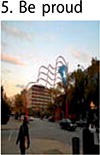
Steel Puerto Rican flags are a gateway for Paseo Boricua, the community’s main strip. | The school is for the community children by the community and gives pride because it keeps children off the streets by all the activities surrounded by them and the flag is there to see every day. It is important to the community because it’s the school where everyone in the community goes to and it is surrounded by the culture. The flag is there to remind you to be proud. It inspires and motivates people to go to school and be proud of their nationality and learn more and go beyond. Positive actions can be to go to school every day and be a part of the community. |
Process dimension
|

|
A tree in Humboldt Park with a swing made from a garden hose. | In my opinion, children try to make something out of what they have to be able to come together in a place that is theirs. Despite the fact that here the kids, who are a very important part of this community and its future, have it harder than most, they still come together. Accordingly, they should be given a safe place to be able to enjoy themselves. It also reveals that if you give children the necessary tools that they really could take care of the rest. This photo also inspires me to persuade the children of the community to go to places like the Batey Urbano or other safe places to have fun and play. |
Process dimension
|

|
A building located in Paseo Boricua with architecture elements of a 16th century castle located in Old San Juan, Puerto Rico. | This building is used for housing, organizations, and schools and attached to it there’s a diabetes center. The free diabetes clinic allows us to get tested for diabetes, and having such a huge rate of diabetes in the community, it is extremely important. On the first floor there are classrooms for Dr. Pedro Albizu Campos High School and on the floors on top are homes for many residents. Whether you’re living in their building, taking class, or visiting the center, you are participating in the community’s improvement. La Estancia is a big part of the community, because on the inside of the building there is a huge resource for the community and outside there are images that represent our Puerto Rican culture. |
Person dimension
|

|
A young woman imitates artwork about Puerto Rican gestures at a local museum. | I see here the ways in which many of Puerto Rican women look. The picture shows that it is important to have confidence in your body. It feels like I belong in this community because this is how I look and how women over here look. It makes me feel proud of who I am and how I look. This promotes that Puerto Rican women do not feel self-conscious about looking different than the way mainstream media wants women to look like. It shows that it is okay to look like this. We should have pride in the way we look. I should and every woman should see herself as beautiful and walk with her head up. |
The person dimension of place attachment is represented in the first and second photos. The first photo (“Our Beauty”) depicts the collective subdimension because its meaning is embedded in the culture of the community. It overlaps with built environment subdimension of the place dimension because it refers to a statue of an important historical figure, as well as to a Puerto Rican architectural style. Other photos that represented the person dimension included reflections about the significance of Puerto Rican culture and history in the community, as depicted in the local restaurants, retailers, and street names. Youth also reflected on their personal memories growing up in the community with their family and friends.
The third and fourth photos depict the place dimension and its subdimensions. In the third photo (“Anything is Possible”), two young men represent the social subdimension, and the mural behind them exemplifies the built environment subdimension. In the narrative, the participant described the ways that youth from the community challenged negative stereotypes. Through similar stories, participants conveyed positive relationships with Puerto Rican youth, as well as with community programs that provided support and indicated solidarity. Such group perceptions were important to the participants because they communicated to both insiders and outsiders that youth in the community are valuable. Moreover, participants discussed relational social norms, particularly acts of caring among adults and youth in the community, as important in fostering their attachment. Finally, the place dimension was commonly discussed with the other two dimensions (i.e., person and process). Generally, the social and built environments of the community (i.e., place dimension) were important for shaping participants’ personal experiences (i.e., person dimension) and the physiological processes (i.e., process dimension) of attachment development.
The process dimension is depicted in photos five through seven. In the fifth photo (“Be Proud”), a participant reflected on feeling pride in being a member of the community. Again, there is an overlap with the place dimension because this photo also captures the social (e.g., caring adults) and physical subdimensions (e.g., flags of steel). The process dimension was found in participants’ reflections on the reconstruction of place and memories of Puerto Rico with photos of community buildings and sidewalks that recalled the island’s architecture and efforts to beautify the community. Many of the participants took photos of the community park (representing the process subdimension of cognition), describing it as a peaceful place that exemplifies beauty and promotes physical activity, socialization, and stress reduction. Moreover, in the first of these photos, a participant reflected on having a sense of belonging to the community that was informed by cultural symbols. In the second, a participant described the park as a sanctuary, where community members go to “find a peace of mind.”
Finally, we identified a nuanced aspect of the process dimension that was not explicitly included in the tripartite model. This was the identity development and affirmation subdimension, which appears to be particularly important for Puerto Rican youth’s feelings of place attachment to a diasporic community. This subdimension is represented in the eighth photograph (“Life as Curvy”) with a young woman imitating artwork about symbolic gestures by a renowned Puerto Rican artist at a local art museum. The identity development and affirmation subdimension was also discussed in respect to sexual orientation (photo and narrative not shown). Likewise, participants discussed the significance of respect for diversity in the community and how the community accepts everyone, regardless of their physical characteristics, hair texture, or body type. Collectively challenging mainstream media expectations of how women should look was particularly important for the participants.
Community-based place attachment and youth civic engagement
In this section, we present our findings on the secondary aim of this study. In their SHOWeD narratives, youth participants reflected on the role of community-based place attachment in fostering and informing their involvement in civic engagement activities. Place attachment seemed to facilitate participants’ involvement to improve the health and conditions of the community. Personal memories (person dimension) of the community prompted youth to protect and improve it; collective memories of Puerto Rican culture reflected throughout the community’s architecture also informed their civic engagement. Youth reflected on their personal and collective meanings (person dimension) of the community as represented through images of the Puerto Rican flag in Humboldt Park (place dimension) and their desire to stay civically engaged:
The [Puerto Rican] flag is there to remind you to be proud. It inspires and motivates people to go to school and be proud of their nationality and learn more and go beyond. Positive actions can be to go to school every day and be a part of the community.
The social environment of the community (place dimension), particularly other young people or participants’ peers, was another important factor in fostering civic engagement. In the narratives, it was apparent that participants were inspired to continue taking action to help their community through involvement in the CBO’s youth center (“the Batey”). For instance, in the fourth photo, a participant reflected on the youth center’s influence in fostering actions to promote its ongoing work:
I think the Batey is important to this community because it is a positive youth space that allows high school students to keep on a straight path, out of trouble; provides help with school, information on higher education; and ultimately a positive outlet to express feelings about issues pertaining to their community. Looking at this photo, I am inspired to continue working with the Batey.
In regards to the process dimension, additional examples (such as photos 6 and 7) indicated that participants were inspired to engage others in civic life for community betterment and to protect resources (e.g., the park) through ongoing utilization. Finally, the representations of place attachment allowed participants to critically reflect on their social concerns, such as preserving cultural history (photo 1) and the importance of having access to green spaces for meditation and increased well-being (photo 2).
Discussion
In this qualitative study, we critically examined the locally relevant community-based place attachment meanings among civically engaged Puerto Rican youth. Overall, the tripartite model was useful for organizing our findings about the participants’ socially constructed place attachment meanings. After the data collection phase had ended, we applied the tripartite model of place attachment to sensitize, inform, and build upon the literature during our qualitative analyses (Charmaz, 2003). Surprisingly, we identified all the dimensions and subdimensions of place attachment in our findings. The data reveals rich youth perspectives on community-based place attachment informed by the lifeworld or subjectivity of everyday life. The person dimension was mainly depicted through personal place-based memories and collective memories of Puerto Rico. The place dimension findings reflected the person–environment interaction; both the social environment of the community and the historical and cultural cues of the built environment evoked feelings of attachment. The process dimension was manifested through feelings of acceptance and an enhanced sense of future and pride, and the community’s park represented a restorative place. The findings presented illustrate the ways in which the place attachment dimensions connect and support one another through place–environment interactions. Additionally, we identified development and affirmation as an important subdimension of the person dimension among civically engaged Puerto Rican youth. Finally, in the findings related to our secondary aim, the three dimensions of place attachment were relevant to youth civic engagement mainly through a heightened sense of belonging, ethnic identity, and social responsibility.
Based on these findings, it is possible to draw some conclusions that are consistent with previous studies on the person dimension of place attachment. Attachment to the Humboldt Park community seemed to be highly relevant to the participants’ lives, which is consistent with the scarce literature on place attachment in adolescence (Jack, 2008). Participants spent a significant amount of time in the Humboldt Park community. They were in a life stage where socializing and creating connections outside of their families is important (Whitlock, 2007). Participants discussed various personal memories that were embedded in the community (Scannell & Gifford, 2010). Their feelings of attachment were largely informed by childhood memories of growing up or spending time with friends and/or family in the community. Although it is not discussed in the available place attachment literature, participants’ personal connection to the community was largely informed by their memories of Puerto Rico (or their “homeland”), including its history and culture. Their connections to the island largely informed their personal memories and, in turn, their attachment. The person–environment interaction process (Mendoza & Moren-Alegret, 2013) was evident in the narratives, as participants embraced their identities as Puerto Rican community activists (person dimension), while discussing how they were inspired by their community (process dimension), in part through their place attachment.
In regards to the place dimension, the Humboldt Park’s social environment was salient for youth’s community-based place attachment. Participants described a community’s social environment where youth are respected, feel valued, and have an opportunity to contribute to the common good. Participants discussed a similar construct, known as sense of belonging, as informing their place attachment (Scannell et al., 2016). A setting within the community, the CBO’s youth center, represented a physical place where youth interacted with their peers. Similarly, Ginwright and Cammarota (2007) discussed the importance of local, culturally-rooted organizations in fostering critical reflection among marginalized youth. One element that has not received much attention in the place attachment literature was the importance of the homeland’s culture and history. We found that these aspects deeply mattered to the participants, as manifested in both the social and physical subdimensions, and might be the driving mechanism of young people’s place attachment to the diasporic community.
We identified the affective, cognitive, and behavioral aspects of the subdimension process in our findings. The youth expressed feeling pride in being part of the community, shared their beliefs about other youth in the community, and discussed positive personal actions. Attachment to the community inspired a sense of belonging and acceptance among the youth (Nowell et al., 2006). The community park represented a restorative green-place in an urban setting for the youth participants (Mathers, Dempsey, & Frøik Molin, 2015). This was similar to the findings of Sampson and Gifford (2010) in a study of recently arrived refugee youth in Australia who were seeking restorative places. Finally, our findings on the process subdimension suggest that feelings of place attachment among Puerto Rican youth should be potentially considered as a resiliency factor because it could inform a sense of personal self-worth, positive ethnic identity, and positive sense of future (Boyce et al., 2008).
Another important conclusion we can derive from the findings is that place attachment to a community seems to be an important determinant of civic engagement. In this study, participants discussed potential ways in which youth can collectively improve, protect, and promote the community’s history, assets, and pride. They also emphasized the need to foster civic engagement, positive ethnic identity, and social responsibility among Puerto Rican youth. This finding is consistent with other studies that have examined the role of place attachment in promoting proenvironmental behaviors among adults (Anton & Lawrence, 2016). In this study, we discussed the ways each of the place attachment dimensions informs civic engagement among study participants. Therefore, we contribute to the extant youth place attachment literature by drawing attention to this concept as a potential determinant of civic engagement among ethnic minority youth within a diasporic context.
Finally, we can also draw some conclusions on the use of Photovoice as a research strategy in engaging youth. As in other Photovoice projects, the Puerto Rican youth in this study were able to identify characteristics of the community that were important to them (Chonody, Ferman, Amitrani-Welsh, & Martin, 2013; Johansen & Le, 2014; Madrigal et al., 2014). The use of Photovoice was effective in engaging participants in the research process, encouraging critical reflection, and promoting youth participation in public discussions. The exhibitions (described in Table 1) were critical opportunities for participants to discuss place attachment and youth civic engagement with elected officials, university representatives, teachers, and the community at-large. The larger community’s interest in the culminating events may reflect some of the positive social and cultural norms toward youth in the community. Further, Photovoice was a particularly useful tool to inform our understanding of youth’s lived experiences of place attachment to a community. The long duration of data collection, flexibility in the study’s timeline, and commitment of the partner organization contributed to the successful completion of this study. It was evident from our conversations with the CBO’s leadership that they were interested in using Photovoice in other initiatives. This project seemed to have built internal capacity for future photography-based projects with youth. Finally, youth expressed interest in applying the skills they had learned, through participation in this study, in other aspects of their lives.
Study limitations
This qualitative study has several limitations, mostly related to its design. First, during the last two group discussions, some of the participants enthusiastically expressed that they felt empowered by their involvement in the study. However, we did not formally evaluate the potential impact of this study on youth participants’ developmental outcomes. Second, the content of the photos was somewhat restricted by the IRB requirements: Youth took the photos with the researchers during the data collection sessions as opposed to taking the cameras with them for an extended period of time. Third, the vast majority of the participants were young women, yet the personal meanings and experiences of place attachment could be different in young males as some empirical research suggests. Also, the question arises of whether the community is the most important setting for the participants as opposed to, for example, their home or the city. Fourth, place attachment may manifest differently among youth who are not civically engaged or not connected to an ethnic enclave. In this study, we are unable to discern possible reciprocal effects of place attachment and civic engagement, as engagement activities could increase attachment. Further CBOs, like the community partner in this study, could simultaneously encourage place attachment through community development and preservation initiatives (Morsillo & Fisher, 2007), although we did not address such questions here.
Implications and conclusion
This study highlights the role of place attachment in promoting civic engagement among Puerto Rican youth. To our knowledge, this is the first qualitative study that examines community-based place attachment in a group of civically engaged Hispanic/Latino youth. Our study builds on a larger body of empirical work on the meanings of place attachment and its potential role in pro-social behaviors, particularly civic engagement. Overall, our findings provide preliminary evidence suggesting community-based place attachment as an intervention strategy to promote pro-social civic behaviors and, consequently, positive development among underserved youth. The importance of youth’s place attachment draws attention to the specific community characteristics that are more appealing to young people (or youth-friendly) in relation to their participation in civic engagement efforts. For example, scholars have suggested that place attachment, social relationships, and community members’ engagement in local matters could be promoted through planning initiatives and comprehensive design strategies that incorporate multi-purpose spaces, cultural-aesthetic aspects, and artistic elements (Firouzmakan & Daneshpour, 2015). More recently, the concept of choice architecture, referring to designs that seek to improve the environment in which people make decisions, has been applied to “nudge” people toward healthy behaviors (Wong et al., 2015, p. 6). Those working with youth can similarly create, maintain, and/or improve a community’s social and physical environment in an attempt to foster place attachment among young people and, in turn, promote pro-social civic behaviors. Likewise, young people can be actively involved in collective actions that improve community conditions or place-making activities through afterschool programs and participatory community-mapping projects (Campbell, Glover, & Laryea, 2016; Fang et al., 2016).
Research on place attachment among youth is scarce, and available studies are limited due to their lack of attention to the experiences of ethnic minorities. Therefore, our findings raise questions for future research that employs qualitative and quantitative methodologies to explore the role of place attachment in fostering civic engagement among youth: Under what conditions does place attachment promote youth civic engagement? Does place attachment differentiate the quality of civic engagement among youth, such as critical versus non-critical engagement? What role do organizations play in fostering youth place attachment? Is community-based place attachment significantly associated to youth civic engagement? Does critical consciousness, acculturation, or community quality moderate this relationship? Does positive ethnic identity and a sense of future mediate this relationship?
In general, the Puerto Rican youth in this study shared feeling that they are not valued by the larger society. In contrast, the diasporic community represented a place of belonging, affirmation, and resistance. Through participation in civic engagement efforts they were able to cope with their personal challenges and find a sense of purpose in their lives. A positive focus on Puerto Rican youth as active contributors to the community through civic engagement efforts presents an opportunity for practitioners to decrease the focus on deficit models of underserved, minority youth. Overall, our findings challenge negative stereotypes about urban Puerto Rican youth, suggesting that they have complex understandings of, and attachment to, a community and strive to maintain connections with the community for a range of purposes. Social workers and community organizers working with Puerto Rican youth should consider the role of place attachment and its implications for participation in civic engagement. In light of the new wave of Puerto Rican migration to the United States that is underway due to the island’s economic and fiscal crisis (Alvarez, 2015), the role of place attachment may be particularly important in engaging Puerto Rican youth in their new communities.
Acknowledgments
We thank the youth participants for the contribution to this study, as well as Puerto Rican Cultural Center (Chicago, IL) for their tremendous support and enthusiasm toward this project. Funding was provided by the Institute for Policy and Civic Engagement at the University of Illinois at Chicago. Dr. Estrella’s work on this manuscript was supported, in part, by the NIH/NHLBI Grant T-32-HL-125-294-01A1.
References
- Albanesi C, Cicognani E, Zani B. Sense of community, civic engagement and social well-being in Italian adolescents. Journal of Community & Applied Social Psychology. 2007;17(5):387–406. doi: 10.1002/casp.903. [DOI] [Google Scholar]
- Alvarez L. Puerto Ricans seeking new lives put stamp on Central Florida. New York Times. 2015 Retrieved from http://www.nytimes.com/2015/08/25/us/central-florida-emerges-as-mainland-magnet-for-puerto-ricans.html?_r=0.
- Anton CE, Lawrence C. The relationship between place attachment, the theory of planned behaviour and residents’ response to place change. Journal of Environmental Psychology. 2016;47:145–154. doi: 10.1016/j.jenvp.2016.05.010. [DOI] [Google Scholar]
- Birks M, Chapman Y, Francis K. Memoing in qualitative research: Probing data and processes. Journal of Research in Nursing. 2008;13(1):68–75. [Google Scholar]
- Boyce WF, Davies D, Gallupe O, Shelley D. Adolescent risk taking, neighborhood social capital, and health. Journal of Adolescent Health. 2008;43(3):246–252. doi: 10.1016/j.jadohealth.2008.01.014. [DOI] [PubMed] [Google Scholar]
- Campbell G, Glover TD, Laryea E. Recreation, settlement, and the welcoming community: Mapping community with African-Canadian youth newcomers. Leisure Sciences. 2016;38(3):215–231. doi: 10.1080/01490400.2015.1087896. [DOI] [Google Scholar]
- Charmaz K. Grounded theory: Objectivist and constructivist methods. In: Denzin NK, Lincoln YS, editors. Strategies for qualitative inquiry. 2. Thousand Oaks, CA: Sage; 2003. pp. 249–291. [Google Scholar]
- Checkoway B, Aldana A. Four forms of youth civic engagement for diverse democracy. Children and Youth Services Review. 2013;35(11):1894–1899. doi: 10.1016/j.childyouth.2013.09.005. [DOI] [Google Scholar]
- Checkoway BN, Gutierrez LM. Youth participation and community change. Journal of Community Practice. 2008;14(1–2):1–9. doi: 10.1300/J125v14n01_01. [DOI] [Google Scholar]
- Chonody J, Ferman B, Amitrani-Welsh J, Martin T. Violence through the eyes of youth: A Photovoice exploration. Journal of Community Psychology. 2013;41(1):84–101. doi: 10.1002/jcop.21515. [DOI] [Google Scholar]
- Crespi CM, Wang MC, Seto E, Mare R, Gee G. Associations of family and neighborhood socioeconomic characteristics with longitudinal adiposity patterns in a biracial cohort of adolescent girls. Biodemography and Social Biology. 2015;61(1):81–97. doi: 10.1080/19485565.2014.981794. [DOI] [PMC free article] [PubMed] [Google Scholar]
- Creswell JW, Hanson WE, Clark Plano VL, Morales A. Qualitative research designs: Selection and implementation. Counseling Psychologist. 2007;35(2):236–264. doi: 10.1177/0011000006287390. [DOI] [Google Scholar]
- De Dominicis S, Fornara F, Ganucci Cancellieri U, Twigger-Ross C, Bonaiuto M. We are at risk, and so what? Place attachment, environmental risk perceptions and preventive coping behaviours. Journal of Environmental Psychology. 2015;43:66–78. doi: 10.1016/j.jenvp.2015.05.010. [DOI] [Google Scholar]
- Fang ML, Woolrych R, Sixsmith J, Canham S, Battersby L, Sixsmith A. Place-making with older persons: Establishing sense-of-place through participatory community mapping workshops. Social Science & Medicine. 2016 doi: 10.1016/j.socscimed.2016.07.007. [DOI] [PubMed] [Google Scholar]
- Firouzmakan S, Daneshpour SA. Promotion quality of life by increasing place attachment in public places. Social and Behavioral Sciences. 2015;201:418–428. doi: 10.1016/j.sbspro.2015.08.197. [DOI] [Google Scholar]
- Flanagan CA, Cumsille P, Gill S, Gallay LS. School and community climates and civic commitments: Patterns for ethnic minority and majority students. Journal of Environmental Psychology. 2007;99(2):421–431. [Google Scholar]
- Flores-Gonzalez N. Paseo boricua: Claiming a Puerto Rican space in Chicago. Centro Journal. 2001;13(2):7–23. Retrieved from http://www.redalyc.org/pdf/377/37711308002.pdf. [Google Scholar]
- Flores-Gonzalez N, Rodriguez M, Rodriguez-Muniz M. From hip-hop to humanization: Batey Urbano as a space for Latino youth culture and community action. In: Ginwright S, Noguera P, Cammarota J, editors. Beyond resistance! Youth activism and community change: New democratic possibilities for practice and policy for America’s youth. New York, NY: Routledge; 2006. pp. 175–196. [Google Scholar]
- Ginwright S, Cammarota J. Youth activism in the urban community: Learning critical civic praxis within community organizations. International Journal of Qualitative Studies in Education. 2007;20(6):693–710. doi: 10.1080/09518390701630833. [DOI] [Google Scholar]
- Guzzardo MT, Todorova ILG, Adams WE, Falcón LM. “Half here, half there”: Dialogical selves among older Puerto Ricans of the diaspora. Journal of Constructivist Psychology. 2016;29(1):51–65. doi: 10.1080/10720537.2015.1016640. [DOI] [Google Scholar]
- Jack G. Place matters: The significance of place attachments for children’s well-being. British Journal of Social Work. 2008;40(3):755–771. doi: 10.1093/bjsw/bcn142. [DOI] [Google Scholar]
- Jacquez F, Vaughn LM, Wagner E. Youth as partners, participants or passive recipients: A review of children and adolescents in community-based participatory research (CBPR) American Journal of Community Psychology. 2013;51(1–2):176–189. doi: 10.1007/s10464-012-9533-7. [DOI] [PubMed] [Google Scholar]
- Johansen S, Le TN. Youth perspective on multiculturalism using Photovoice methodology. Youth & Society. 2014;46(4):548–565. doi: 10.1177/0044118X12443841. [DOI] [Google Scholar]
- Knez I. Attachment and identity as related to a place and its perceived climate. Journal of Environmental Psychology. 2005;25(2):207–218. doi: 10.1016/j.jenvp.2005.03.003. [DOI] [Google Scholar]
- Korpela KM, Ylén M, Tyrväinen L, Silvennoinen H. Determinants of restorative experiences in everyday favorite places. Health & Place. 2008;14(4):636–652. doi: 10.1016/j.healthplace.2007.10.008. [DOI] [PubMed] [Google Scholar]
- Lenzi M, Vieno A, Pastore M, Santinello M. Neighborhood social connectedness and adolescent civic engagement: An integrative model. Journal of Environmental Psychology. 2013;34:45–54. doi: 10.1016/j.jenvp.2012.12.003. [DOI] [Google Scholar]
- Lewicka M. Place attachment: How far have we come in the last 40 years? Journal of Environmental Psychology. 2011;31(3):207–230. doi: 10.1016/j.jenvp.2010.10.001. [DOI] [Google Scholar]
- Lopez KA, Willis DG. Descriptive versus interpretive phenomenology: Their contributions to nursing knowledge. Qualitative Health Research. 2004;14(5):726–735. doi: 10.1177/1049732304263638. [DOI] [PubMed] [Google Scholar]
- Macfarlane A, O’Reilly-de Brún M. Using a theory-driven conceptual framework in qualitative health research. Qualitative Health Research. 2012;22(5):607–618. doi: 10.1177/1049732311431898. [DOI] [PubMed] [Google Scholar]
- Madrigal DS, Salvatore A, Casillas G, Casillas C, Vera I, Eskenazi B, Minkler M. Health in my community: Conducting and evaluating Photovoice as a tool to promote environmental health and leadership among Latino/a youth. Progress in Community Health Partnerships: Research, Education, and Action. 2014;8(3):317–329. doi: 10.1353/cpr.2014.0034. [DOI] [PMC free article] [PubMed] [Google Scholar]
- Mathers A, Dempsey N, Frøik Molin J. Place-keeping in action: Evaluating the capacity of green space partnerships in England. Landscape and Urban Planning. 2015;139:126–136. doi: 10.1016/j.landurbplan.2015.03.004. [DOI] [Google Scholar]
- Mendoza C, Moren-Alegret R. Exploring methods and techniques for the analysis of senses of place and migration. Progress in Human Geography. 2013;37(6):762–785. doi: 10.1177/0309132512473867. [DOI] [Google Scholar]
- Morse JM. Critical analysis of strategies for determining rigor in qualitative inquiry. Qualitative Health Research. 2015;25(9):1212–1222. doi: 10.1177/1049732315588501. [DOI] [PubMed] [Google Scholar]
- Morsillo J, Fisher A. Appreciative inquiry with youth to create meaningful community projects. Australian Community Psychologist. 2007 Retrieved from https://groups.psychology.org.au/Assets/Files/Morsillo_19(1).pdf.
- Muhammad M, Wallerstein N, Sussman AL, Avila M, Belone L, Duran B. Reflections on researcher identity and power: The impact of positionality on community based participatory research (CBPR) processes and outcomes. Critical Sociology. 2015;41(7–8):1045–1063. doi: 10.1177/0896920513516025. [DOI] [PMC free article] [PubMed] [Google Scholar]
- Nowell BL, Berkowitz SL, Deacon Z, Foster-Fishman P. Revealing the cues within community places: Stories of identity, history, and possibility. American Journal of Community Psychology. 2006;37(1–2):29–46. doi: 10.1007/s10464-005-9006-3. [DOI] [PubMed] [Google Scholar]
- Plunkett R, Leipert BD, Ray SL. Unspoken phenomena: Using the Photovoice method to enrich phenomenological inquiry. Nursing Inquiry. 2013;20(2):156–164. doi: 10.1111/j.1440-1800.2012.00594.x. [DOI] [PubMed] [Google Scholar]
- Pretty GH, Chipuer HM, Bramston P. Sense of place amongst adolescents and adults in two rural Australian towns: The discriminating features of place attachment, sense of community and place dependence in relation to place identity. Journal of Environmental Psychology. 2003;23(3):273–287. doi: 10.1016/S0272-4944(02)00079-8. [DOI] [Google Scholar]
- Pritzker S, LaChapelle A, Tatum J. “We need their help”: Encouraging and discouraging adolescent civic engagement through Photovoice. Children and Youth Services Review. 2012;34(11):2247–2254. doi: 10.1016/j.childyouth.2012.07.015. [DOI] [Google Scholar]
- Richards-Schuster K, Pritzker S. Strengthening youth participation in civic engagement: Applying the Convention on the Rights of the Child to social work practice. Children and Youth Services Review. 2015;57:90–97. doi: 10.1016/j.childyouth.2015.07.013. [DOI] [Google Scholar]
- Rinaldo R. Space of resistance: The Puerto Rican Cultural Center and Humboldt Park. Cultural Critique. 2002;50(1):135–174. doi: 10.1353/cul.2002.0010. [DOI] [Google Scholar]
- Sampson R, Gifford SM. Place-making, settlement and well-being: The therapeutic landscapes of recently arrived youth with refugee backgrounds. Health & Place. 2010;16(1):116–131. doi: 10.1016/j.healthplace.2009.09.004. [DOI] [PubMed] [Google Scholar]
- Scannell L, Cox RS, Fletcher S, Heykoop C. “That was the last time I saw my house”: The importance of place attachment among children and youth in disaster contexts. American Journal of Community Psychology. 2016 doi: 10.1002/ajcp.12069. [DOI] [PubMed] [Google Scholar]
- Scannell L, Gifford R. Defining place attachment: A tripartite organizing framework. Journal of Environmental Psychology. 2010;30(1):1–10. doi: 10.1016/j.jenvp.2009.09.006. [DOI] [Google Scholar]
- Strack RW, Magill C, McDonagh K. Engaging youth through Photovoice. Health Promotion Practice. 2004;5(1):49–58. doi: 10.1177/1524839903258015. [DOI] [PubMed] [Google Scholar]
- Van Oudenhoven JP, Ward C. Fading majority cultures: The implications of transnationalism and demographic changes for immigrant acculturation. Journal of Community & Applied Social Psychology. 2013;23(2):81–97. doi: 10.1002/casp.2132. [DOI] [Google Scholar]
- Wallerstein N, Duran B. Community-based participatory research contributions to intervention research: The intersection of science and practice to improve health equity. American Journal of Public Health. 2010;100(Suppl):S40–6. doi: 10.2105/AJPH.2009.184036. [DOI] [PMC free article] [PubMed] [Google Scholar]
- Wang C. Youth participation in Photovoice as a strategy for community change. Journal of Community Practice. 2008 doi: 10.1300/J125v14n01_09. [DOI] [Google Scholar]
- Wang CC, Yi WK, Tao ZW, Carovano K. Photovoice as a participatory health promotion strategy. Health Promotion International. 1998;13(1):75–86. doi: 10.1093/heapro/13.1.75. [DOI] [Google Scholar]
- Whitlock J. The role of adults, public space, and power in adolescent community connectedness. Journal of Community Psychology. 2007;35(4):499–518. doi: 10.1002/jcop.20161. [DOI] [Google Scholar]
- Wong MS, Nau C, Kharmats AY, Vedovato GM, Cheskin LJ, Gittelsohn J, Oehlhof M. Using a computational model to quantify the potential impact of changing the placement of healthy beverages in stores as an intervention to “nudge” adolescent behavior choice. BMC Public Health. 2015;15(1):1284. doi: 10.1186/s12889-015-2626-0. [DOI] [PMC free article] [PubMed] [Google Scholar]
- Zeldin S, Christens BD, Powers JL. The psychology and practice of youth-adult partnership: Bridging generations for youth development and community change. American Journal of Community Psychology. 2013;51(3–4):385–397. doi: 10.1007/s10464-012-9558-y. [DOI] [PubMed] [Google Scholar]