


Figure 1. Vitamin D-hormone metabolism, carriers and distribution.
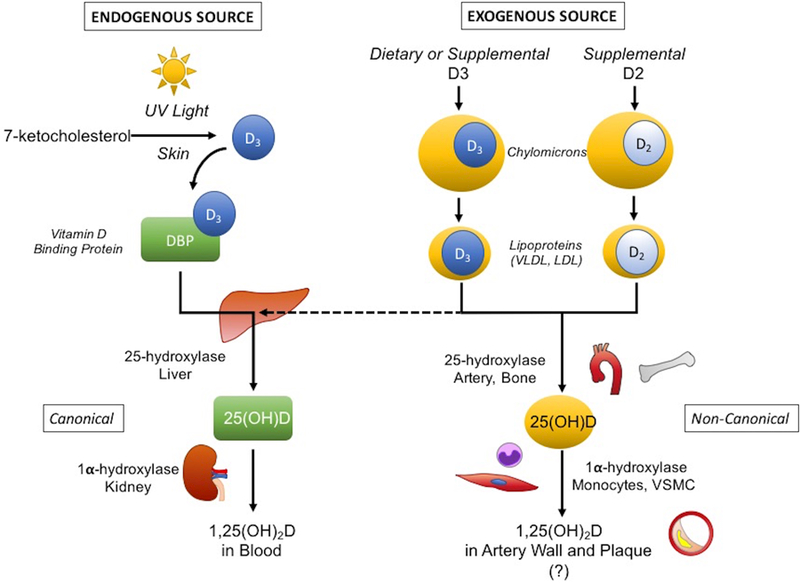
Due to its lipophilic nature, endogenously produced D3 is carried in the aqueous environment of blood by D-binding protein (DBP), whereas exogenous (dietary and supplemental) D3 and D2, absorbed from the intestines, are transported within chylomicrons, which are further processed to lipoproteins (e.g., VLDL and LDL), many of which continue to carry the exogenous D. The conventional sites of vitamin D-hormone metabolism are the liver and proximal tubules of the kidney, where hydroxylases convert it to its active form. But hydroxylase activity is also found in parenchymal and immune cells, including VSMC and monocytes, in other tissues. This raises the potential for accumulation of vitamin D-hormone within LDL in the subendothelial space, where it may undergo activation in atherosclerotic plaque and possibly influence ectopic differentiation and calcification. Abbreviations: LDL, low-density lipoprotein; VLDL, very low-density lipoprotein; VSMC, vascular smooth muscle cells; UV, ultraviolet.