



Abstract
Context:
Infections are common in contact sports. This review aims to describe the epidemiology, presenting signs and symptoms, treatment guidelines, and regulations for several common infections seen in contact sport athletes. The conditions discussed include bacterial skin infections, herpes simplex virus, molluscum contagiosum, common warts, tinea, scabies, head lice, conjunctivitis, human immunodeficiency virus, hepatitis C virus, and vaccine-preventable illnesses.
Evidence Acquisition:
Searches were performed across PubMed and MEDLINE research databases. In addition, general internet search engine results and reviews of reference lists of relevant papers were used to identify additional sources of evidence.
Study Design:
Clinical review.
Level of Evidence:
Level 4.
Results:
The most common infections seen in contact sport athletes include bacterial skin infections, herpes simplex virus, molluscum contagiosum, common warts, tinea, scabies, head lice, conjunctivitis, and vaccine-preventable illnesses. Other infections, including human immunodeficiency virus and hepatitis C, are uncommon but potentially life threatening.
Conclusion:
Infections are common in contact sport athletes. The provider who cares for these athletes should be aware of the most common infections and their appropriate management. Early diagnosis and appropriate clinical management are important for treating the infected athlete, minimizing risk of transmission, minimizing time lost from competition, and preventing large outbreaks.
Keywords: infectious disease, skin infection, contact sports, wrestling
This review aims to summarize the clinical presentation, management, and guidelines/regulations related to common infectious diseases seen in contact sport athletes. It focuses primarily on infections in wrestlers because skin and soft tissue infections are common in wrestlers and because the infectious issues encountered in wrestling are generalizable to other contact sports and can serve as a model for thinking about these problems in other types of athletes. Also, the burden of disease is much higher in wrestling than in other sports, with 20% of wresters losing practice or competition time due to cutaneous infections each year.4,104
The National Collegiate Athletic Association (NCAA) and National Federation of High School Associations (NFHS) have guidelines for the treatment of many common skin infections before an athlete is allowed to return to wrestling (Table 1).79,80 Previously, the NCAA has published these guidelines in the yearly NCAA Sports Medicine Handbook, but they are now updated intermittently on the NCAA Sport Science Institute website. The NFHS guidelines are recommendations to high school sport associations. Regional and state associations may or may not choose to adopt these guidelines or may make their own. Clinicians should be aware of their local state and regional rules and regulations. Furthermore, treatment of infections in contact sport athletes must often be individualized to address specific issues of treatment duration, timing in the competitive season, local resistance patterns, and athlete factors such as desire for prophylaxis, allergies, and potential side effects of medications. Preferred treatment regimens are listed in Table 2, but there are other effective alternative treatment approaches.
Table 1.
| Condition | NCAA | NFHS |
|---|---|---|
| Bacterial infections | • No new lesions for 48 hours • 72+ hours of antibiotic therapy • No moist, exudative, or draining lesions • May not cover active infections to allow participation • May gram stain questionable lesions |
• No new lesions for 48 hours • 72+ hours of antibiotic therapy • No moist, exudative, or draining lesions |
| Primary herpes infection (includes zoster and gladiatorum) | • Must have firm, adherent crust at time of participation • No evidence of secondary bacterial infection • No new blisters for 72+ hours • 120+ hours of antiviral therapy • No systemic symptoms • May not cover active infections to allow participation |
• All lesions scabbed over • No new lesions for 48+ hours • 10+ days of antiviral therapy for cutaneous lesions only • 14+ days of antiviral therapy if systemic symptoms |
| Secondary herpes infection (includes zoster and gladiatorum) | • Must have firm, adherent crust at time of participation • No evidence of secondary bacterial infection • No new blisters for 72+ hours • 120+ hours of antiviral therapy • May not cover active infections to allow participation |
• All lesions scabbed over • No new lesions for 48+ hours • 120+ hours of antiviral therapy |
| Tinea | • Oral or topical treatment for 72+ hours on skin and 14 days on scalp • May cover active infections to allow participation |
• Oral or topical treatment for 72+ hours on skin and 14+ days on scalp |
| Molluscum | • Curette and cover | • Curette and cover |
| Verrucae | • Curette and/or cover • Multiple lesions on the face that cannot be covered result in disqualification |
• Cover if prone to bleeding |
| Hidradenitis suppurativa | • Disqualified if extensive drainage • May not cover active lesions to allow participation |
|
| Pediculosis | • Must be completely treated before wrestling • No evidence of active infestation |
• 24+ hours after treatment |
| Scabies | • Negative scabies prep at time of competition | • 24+ hours after treatment |
| Conjunctivitis | • 24+ hours after treatment |
NCAA, National Collegiate Athletic Association; NFHS, National Federation of High School Associations.
Table 2.
Preferred treatment regimens for common infections in contact sport athletes
| Skin and soft tissue infection1,45,61,65,83,87,92,104,106 | |
| Impetigo | Clindamycin 400 mg PO 3× daily for 7-14 days or Cephalexin 250 mg PO 4× daily for 7-14 days or Dicloxacillin 250 mg PO 4× daily for 7-14 days plus Mupirocin 2% ointment 3× daily |
| Nonpurulent MSSA infections (erysipelas, cellulitis, folliculitis, etc) | Cephalexin 250 mg PO 4× daily for 7-14 days or Dicloxacillin 250 mg PO 4× daily for 7-14 days |
| Purulent MSSA infections (furuncle, carbuncle, abscess, etc) | Incision and drainage plus (unless well encapsulated with no surrounding erythema and warmth) Cephalexin 250 mg PO 4× daily for 7-14 days or Dicloxacillin 250 mg PO 4× daily for 7-14 days |
| Nonpurulent MRSA infections | Trimethoprim-sulfamethoxazole DS (160 mg/800 mg); 2 tablets PO 2× daily for 7-14 days or Clindamycin 400 mg PO 3× daily for 7-14 days or Linezolid 600 mg PO 2× daily (for trimethoprim-sulfamethoxazole– and clindamycin-resistant organisms) for 7-14 days plus Mupirocin 2% ointment 3× daily |
| Purulent MRSA infections | Incision and drainage plus Trimethoprim-sulfamethoxazole DS (160 mg/800 mg); 2 tablets PO 2× daily for 7-14 days or Clindamycin 400 mg PO 3× daily for 7-14 days or Linezolid 600 mg PO 2× daily (for trimethoprim-sulfamethoxazole– and clindamycin-resistant organisms) for 7-14 days plus Mupirocin 2% ointment 3× daily |
| Herpes gladiatorum6,8-10,34,40,55,67,104,106 | |
| Primary infection | Valacyclovir 1 g PO 2× daily for 10-14 days |
| Recurrent infection | Valacyclovir 1 g PO 2× daily for 5-7 days |
| Prophylaxis | Valacyclovir 500 mg PO daily if most recent infection >2 years ago Valacyclovir 1 g PO daily if most recent infection <2 years ago |
| Varicella zoster23,49 | |
| Treatment | Valacyclovir 1 g 3× daily for 7 days or Acyclovir 800 mg PO 5× daily for 7 days |
| Prophylaxis | Ensure vaccination or history of VZV infection |
| Tinea1,2,11,18,28,48,50,62-64,67,86,104-106 | |
| Tinea capitis, barbae, or diffuse/severe tinea corporis | Terbinafine 250 mg PO daily for 2-4 weeks or Itraconazole 200 mg PO daily for 3-4 weeks or Ketoconazole 200 mg PO daily for 2-4 weeks plus Ketoconazole 2% shampoo daily (for tinea capitis only) Children: Griseofulvin 20 mg/kg daily for 8 weeks or Terbinafine for 6 weeks (dosing varies by weight) • <25 kg: 125 mg PO daily • 25-35 kg: 187.5 mg PO daily • >35 kg: 250 mg PO daily |
| Tinea corporis (including adjuvant treatment of severe tinea corporis) | Any of the following creams applied to the lesion and at least 2 cm surrounding the lesion 2x daily: • Terbinafine cream • Clotrimazole cream • Miconazole cream • Ketoconazole cream |
| Prophylaxis | Fluconazole 100 mg PO 1× weekly or Fluconazole 100 mg daily for 3 days at start of season and then again in 6 weeks or Itraconazole 400 mg 1x every other week or Terbinafine 250 mg PO 1× weekly (anecdotal) |
| Molluscum contagiosum101,104 | Curettage |
| Verrucae33,104 | Curettage |
| Pediculosis32,41,56,104 | Permethrin 1% shampoo once Repeat 3-7 days later if lice persist |
| Scabies96,104 | Permetherin 5% cream once |
| Conjunctivitis54,80 | Polymyxin B/trimethoprim ophthalmic 1 drop both eyes 6× daily for 7-10 days |
| Influenza23 | |
| Treatment | Oseltamivir 75 mg 2× daily for 5 days |
| Prophylaxis | Seasonal influenza vaccine Oseltamivir 75 mg daily for 10 days after close contact with influenza-infected person |
| Mumps prophylaxis21,23 | Ensure adequate vaccination Consider third dose of MMR vaccine in the setting of mumps outbreak |
| Other vaccine-preventable illnesses23 | Strongly encourage compliance with the recommended CDC vaccination schedule |
CDC, Centers for Disease Control and Prevention; DS, double strength; MMR, measles, mumps, rubella; MRSA, methicillin-resistant Staphylococcus aureus; MSSA, methicillin-susceptible Staphylococcus aureus; PO, per os (by mouth); VZV, varicella zoster virus.
Bacterial Skin Infections
Staphylococcus and Streptococcus species infections are among the most common skin and soft tissue infections in humans. Clinical syndromes caused by these bacterial skin infections include impetigo, erysipelas, cellulitis, folliculitis, furuncles, carbuncles, and abscesses. Impetigo, a superficial bacterial infection of the skin that results in blisters, open lesions, and/or honey-colored crusting, is by far the most common. While most of these infections are easily treated with oral and/or topical antibiotics, the rise of community-acquired methicillin-resistant Staphylococcus aureus (CA-MRSA) has made empiric treatment of bacterial skin infections more complicated in recent decades.20,69,75,76 No specific signs or symptoms can be used to distinguish CA-MRSA from methicillin-sensitive Staphylococcus aureus.17,74
In 2016, it was reported that 0.6% of high school football players and 0.9% of high school wrestlers contract a CA-MRSA infection each season.16 As many as 76% of college wrestlers are carriers of CA-MRSA, which is much higher than seen in other sports.26 Athletes colonized with CA-MRSA are 7 times more likely to suffer a bacterial skin infection than those who are not colonized.58 Recurrent CA-MRSA infections are also common. Although this has not been studied rigorously in athletes, 51% of nonathletes who suffer a CA-MRSA skin infection had a second CA-MRSA infection within 6 months of their initial presentation.77 The major source of these infections in athletes seems to be direct contact with colonized or infected athletes.57,89
It is common for high schools, colleges, and clubs to use antistaphylococcal cleaning supplies and devices to limit CA-MRSA exposure, but there is little evidence that these procedures affect rates of CA-MRSA skin infections. However, there is some evidence that having a written policy outlining procedures for equipment cleaning and identification and early treatment of skin infections might limit CA-MRSA skin infections.43,90
Decolonization of individuals with multiple CA-MRSA infections, or in the setting of a CA-MRSA outbreak, remains controversial. When decolonization is undertaken, the combination of chlorhexidine washes plus 2% mupirocin ointment is preferred. There is limited evidence that mupirocin-based decolonization, without body washes or systemic antibiotics, may decrease the prevalence of skin infections in other populations.78 However, the practice has not been rigorously studied in athletes, and the overall evidence for the utility of this practice is limited.5,17,38,68,70,102 However, it may be reasonable to attempt decolonization in the setting of a CA-MRSA outbreak.44,80
Empiric treatment of bacterial skin infections in athletes should include both topical and systemic treatment tailored to local resistance patterns. For most contact sport athletes, trimethoprim-sulfamethoxazole or clindamycin combined with topical mupirocin is an effective initial treatment regimen. Whenever possible, skin infections should be cultured so that antibiotic sensitivity–directed treatment regimens can be used.17,95 Purulent bacterial skin infections should be treated with incision and drainage.44,74 For localized purulent skin infections, antibiotic therapy may not be necessary after adequate incision and drainage.17,44,74 Severe infections with diffuse skin involvement or systemic symptoms should be treated with intravenous antibiotics, typically in the hospital setting.17,44,104 A summary of treatment recommendations for bacterial skin infections is provided in Table 2.
Herpes Gladiatorum
Herpes simplex virus (HSV) types I and 2 are common infectious agents in humans. Originally termed herpes gladiatorum (HG) by Selling and Kibrick in 1964, the term HG became widely used after a report in 1989 when a 28-day wrestling camp had 60 wrestlers out of 175 who contracted the virus, forcing the Public Health Department to close the camp.14 Similar outbreaks in 1999 and 2001 also caused the camp to shut down. In 2007, the Minnesota State High School League mandated an 8-day hiatus in wrestling activities when 24 wrestlers, across multiple teams, developed HG. By the end of the quarantine, 56 wrestlers had been diagnosed. Several other outbreaks have been documented in recent years, most notably 2014 in Arizona and 2016 in California. It has been suggested that 20% to 40% of collegiate wrestlers will suffer an outbreak of HG each year.4,55,104
In wrestling, 94% to 97% of HSV infections are caused by type 1 infection.7,14,35,55,83,86,99,104 Transmission is almost exclusively from direct skin-to-skin contact. Multiple studies have indicated that training mats and other fomites do not significantly contribute to the spread of infection.7,10,55,83 A total of 29% to 30% of high school wrestlers are infected or colonized with HSV, but only 3% are aware they carry the virus.8 This discrepancy is the primary reason that large outbreaks seem to occur for unknown reasons and leads to the lack of proper suspicion when such outbreaks do develop. When health care providers encounter a wrestler with HG, the diagnosis is often missed. One study determined that the correct diagnosis was made at initial presentation in less than 10% of cases.35 When outbreaks occur, the popular media tend to focus on issues of hygiene or sanitation rather than the ubiquity and ease of transmission of the virus. There is extensive education from the NCAA, NFHS, and USA Wrestling about prevention, recognition, and treatment of herpes.79,80 Furthermore, within the same community, nonwrestlers and wrestlers have the same rates of HSV seropositivity. In fact, females from the same school and age group are more likely to be seropositive for HSV than male wrestlers.91
The face is involved in more than 70% of herpes outbreaks in wrestling.7 Infection of the fingers or thumb (herpetic whitlow) and of other commonly abraded areas of the body account for most of the remaining 30%.7 Underlying skin conditions, such as eczema, can increase the risk of HSV skin infection. Occasionally, ocular involvement can occur. Herpes keratitis (corneal involvement) can lead to scarring and, with repeated outbreaks, may result in permanent clouding of the cornea, requiring corneal transplantation to preserve proper vision. Rarely, but more seriously, retinal necrosis can occur and lead to blindness.52,99 Herpes-induced retinal necrosis is the most common source of blindness from an infectious source in the United States.6,99
In wrestling, the conspiring problems of misdiagnosis and inconvenient timing can lead to postseason confusion and controversy. Infections contracted during regional or sectional competition typically become symptomatic 8 to 10 days later, just prior to the start of state championship competitions. This can result in athletes being withheld from the most important competition of their season. The Centers for Disease Control and Prevention’s report on the 2014 Arizona outbreak concluded that “lack of proper suspicion and culturing” probably accounted for overdiagnosis of bacterial infections and underdiagnosis of HG.103
Primary HG outbreaks typically present with systemic symptoms, including malaise, low-grade fever, sore throat, and swollen/tender anterior and posterior cervical adenopathy.83,106 One to 2 days later, 1- to 2-mm-diameter diffuse patches of 3 to 10 vesicles will coalesce with a minimally reddened base (Figure 1). The majority (90%-93%) of infections will occur within 8 days of exposure.7 The virus is transmitted via viral replication in ganglia and spread along sensory nerve tissue. Multiple dermatomes and both sides of the face, head, and neck may be involved. Occasionally this may extend to the upper extremities as well.7,55,83,106 Distribution of lesions commonly reflects the wrestler’s dominant hand, and lesions are more likely to occur on the side of the head of the wrestler’s preferred tie position.7,55,106
Figure 1.
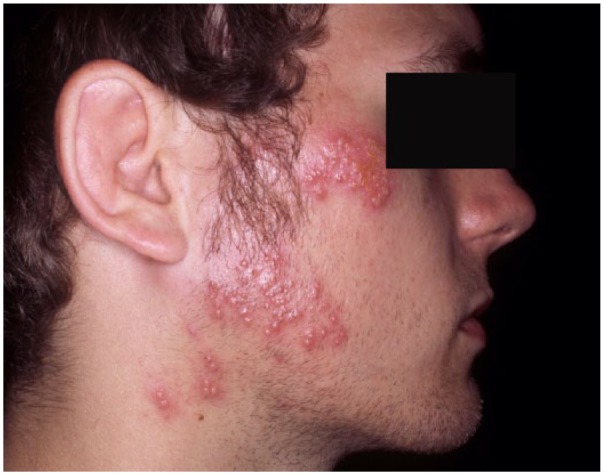
Primary herpes gladiatorum. Note multiple areas of involvement and regional adenopathy.
Recurrent HG typically involves fewer vesicles, and outbreaks are shorter in duration. Reactivation of dormant virus in ganglia leads to new outbreaks that occur, and will reoccur, in the same dermatomal or peripheral nerve pattern (Figure 2).7,55,67,83,99,104 Systemic symptoms are much less common in recurrent HG, and symptoms typically last only 7 to 10 days. Treatment with oral antiviral medications can shorten the duration of illness by 2 to 5 days, allowing the athlete to return to play sooner.9,99
Figure 2.
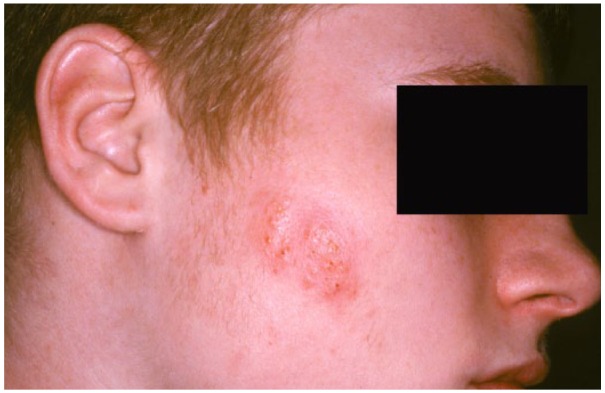
Recurrent herpes gladiatorum. Smaller area of involvement and fewer systemic symptoms.
Microbiological testing for HSV-1 and -2 is strongly recommended because HG is commonly confused with other skin infections in wrestlers.6,67,99 Up to 90% of HG infections are misdiagnosed by physicians at first presentation.35 In addition, microbiological testing can help distinguish herpes gingivostomatitis and sycosis from other causes of pharyngitis and folliculitis.99,104 Because of the high rates of seropositivity and low rates of active disease in seropositive individuals, serologic testing for HSV has limited clinical value. HSV seropositivity commonly lags behind clinical infection. A negative test does not rule out active HSV infection, and a positive test has a high likelihood of false-positivity when attempting to differentiate active disease. For these reasons, direct microbiologic testing of active lesions is preferred over serologic testing. Rarely, varicella zoster virus infection can be confused with primary HG, but it presents with a more pronounced prodrome of pruritus and hypersensitivity and forms along dermatomal patterns.49,71
Viral culture and HSV polymerase chain reaction both have good sensitivity and near perfect specificity. Depending on the clinical context, either is a reasonable diagnostic test. Culture is much less expensive, but polymerase chain reaction generally provides more rapid results.47,93,99 A Tzank smear is no longer favored due to poor sensitivity and specificity.47,99 Fluid obtained from rupturing 5 to 7 vesicles is the best source for maximum viral content.7 This fluid should be collected using a swab/media that does not contain alginate (which inhibits HSV growth) and has a plastic or metal shaft (wood may be toxic to HSV in culture).22,34,93
Oral antiviral treatment should be initiated based on clinical suspicion, and all infected athletes should be withheld from contact with other athletes and equipment until the infection is cleared. Medication expedites the clearance of an outbreak but may take as long as 10 to 14 days. Treatment not only speeds resolution of symptoms in the infected athlete but also prevents transmission to an exposed opponent.9,55,104
As with all HSV infections, prevention of HG transmission is difficult. Up to 87.4% of HSV outbreaks are subclinical and go unnoticed.22 A large number of potentially infected but asymptomatic athletes can lead to large outbreaks at inopportune times, including during camps and postseason competition. Oral valacyclovir has been shown to decrease risk of HSV acquisition and prevent recurrence of previous HG.10 A recent 10-year study of wrestlers at a 28-day wrestling camp demonstrated that daily oral valacyclovir decreased recurrent HG outbreaks by 89.5% and prevented contraction of the virus in HSV-naive wrestlers.10 Overall, there is strong evidence that the use of oral valacyclovir dramatically decreases risk of both acquiring HSV and having an HG outbreak in both HSV-seropositive wrestlers and those that are HSV-naive.6-10,79,80 For those considering anti-viral prophylaxis of HG, it is generally best to start the medication at least 5 days before the season, camp, or tournament begins to ensure adequate drug levels in the ganglia.10 Complete recommendations for treatment and prophylaxis of HG are presented in Table 2.
Tinea Corporis Gladiatorum
The dermatophyte Trichophyton tonsurans causes most of the fungal infections seen in cutaneous tissues and is responsible for 90% of tinea capitis.62,104,105 Considered a nuisance infection, tinea corporis gladiatorum (TCG) or “ringworm” affects 60% of collegiate and 52% of high school wrestlers each season.104-106 Multiple epidemics have been reported.13,29,37,39,43,53,85
Ringworm spreads primarily via direct skin-to-skin contact with an infected individual. Colonized fomites (inanimate surfaces and equipment) may serve as a source of infection, but this is relatively rare.2,42,62 Open sores and abrasions increase the risk of transmission.2,3 Symptoms typically appear 3 to 5 days after exposure and start as a small red spot that grows and progresses to an annular lesion up to 5 to 8 cm in diameter (Figure 3). The peripheral border is usually slightly reddened and flaky. The central area may be clear but have a slight red to brown coloration. The scalp, face, upper thorax, and upper extremities are most commonly affected.2
Figure 3.
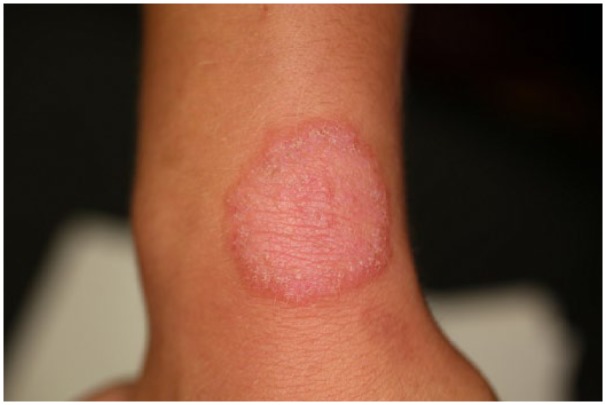
Tinea corporis gladiatorum. Note the circular perimeter with flakiness and central clearing.
It is likely that asymptomatic wrestlers act as a reservoir for the pathogen.2,3,51,85 Notably, asymptomatic transmission has been documented in sumo wrestlers, where the scalp served as the reservoir.62 This is likely common in other types of wrestling as well but has not been rigorously studied. Tinea is common on the scalp due to the predilection of the dermatophyte to its lipid-rich tissue. Deeper seeded scalp infections can occur and are usually associated with granulomatous formation, alopecia, and kerion formation (Figure 4). Pustular drainage is common and, if left untreated, can lead to permanent hair loss.12
Figure 4.
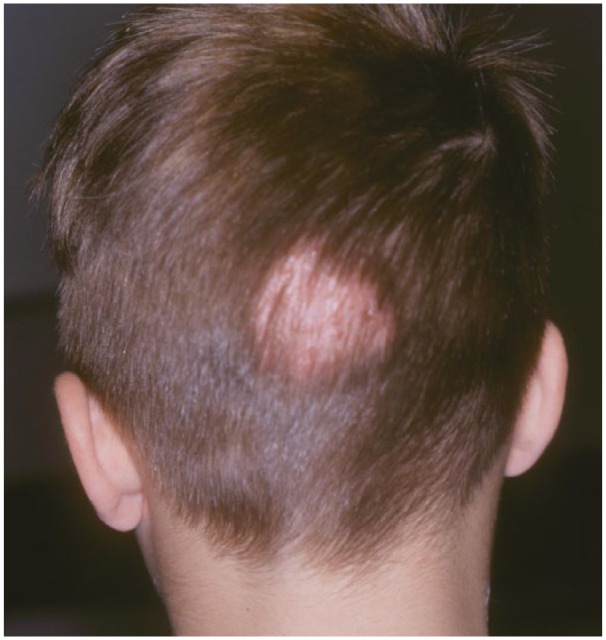
Kerion. Raised central area with purulent drainage. Also, hair loss over the central area.
Diagnosis of TCG is usually clinical but sometimes can be difficult. Experience, suspicion, and knowing the athlete’s history are all important factors that the clinician or certified athletic trainer must use to help accurately diagnose TCG. Application of potassium hydroxide (KOH) 10% solution to a scraping of the lesion will dissolve human cells, allow hyphae to be visible under low-power microscopy, and confirm the diagnosis. KOH-prepared skin scrapings are highly sensitive and specific when performed correctly.62 However, many experienced wrestlers will start using topical antifungal creams prior to the lesion’s being scraped for analysis, which may lead to false-negative KOH testing. In these situations, fungal culture can be useful. For skin lesions, a scraping of the skin generally provides sufficient sample for culture. For scalp lesions, several hair follicles should be removed for KOH testing on their roots. If negative for hyphae, additional fungal culture on the hair follicle roots may improve diagnostic yield. Fungal culture can take up to 3 weeks before results are available, so presumptive treatment with empiric topical (skin) or oral (hair) antifungal agents is advisable.
Treatment focuses on a balance of infection control, risk of transmission, and the interests of the athletes. Previous studies have demonstrated that it takes as many as 21 days of oral antifungal medication to eradicate a superficial tinea outbreak,18 and kerion could take much longer. However, keeping a wrestler out for much of the competitive season to treat a nuisance infection seems unreasonable. NCAA and NHFS treatment guidelines (see Table 1) focus on a balance for the athlete to return to competition versus the need to treat long enough to eradicate the fungus. It should be noted that all systemic antifungal medications carry a risk for substantial side effects. It is prudent to monitor for hepatotoxicity and/or bone marrow failure during treatment.63
Preventative measures focus on proper hygiene and daily skin checks to keep fungal infections under control. However, recurrent TCG sometimes may develop when no visible source is found. For individuals with recurrent outbreaks, preventative treatment with oral antifungal medications has been shown to help reduce recurrent infections.18,48,64 Ketoconazole 2% shampoo may help decrease transmission, but this has not been rigorously studied. Topical skin barriers have been purported to decrease TCG infections in wrestlers. However, there are no data on their effectiveness, and 1 study found that daily skin checks were as effective as topical skin barriers.48 It is common for TCG infections to become a bigger issue toward the end of the competitive season during postseason tournament competition. Some wrestlers may seek prophylactic treatment with oral antifungal medications despite the known hepatotoxicity issues.
Molluscum Contagiosum
Considered a nuisance viral infection from the Poxviridae family, molluscum contagiosum appears as a small papule 2 to 10 mm in diameter, usually with no surrounding erythema and no regional adenopathy.86,101,106 A small dimple appears on the top of its domed surface early in the course of the infection (Figure 5). Rupturing the papule produces a caseous material with high viral content. This material is the vector for spread of the rash or transmission to other susceptible individuals. Molluscum contagiosum tends to appear in clusters of individuals with frequent close physical contact. Athletes in contact sports tend to contract lesions on areas of exposed skin, and sexually active individuals tend to contract them in the genital regions.31,101 The infection can spread rapidly and often presents as several dozen lesions at initial diagnosis.
Figure 5.

Molluscum contagiosum. Two- to 10-mm-diameter dome-shaped lesions with a slight dimple on the surface with no surrounding erythema.
Treatment focuses on removal of the lesion and prevention of further spread to susceptible competitors. The infection can be definitively treated by either curetting the lesions or by expressing the material and lightly burning the base of each papule with a hyfrecator. After removal of the lesions, athletes can immediately return to play with the treated sites covered by a bio-occlusive dressing.101 Cryotherapy can be considered as an alternative treatment, although it takes much longer and is just as painful.101
Verruca Vulgaris
Verruca vulgaris, the common wart, is a cutaneous infection by one of the human papillomaviruses. Warts present as scaly nodules and can appear anywhere on the body, although the hands and feet are most commonly affected. Warts are typically painless but can become painful if there is sufficient local trauma or abrasion to the region. Many treatments are effective, including topical acid preparations, cantharidin, podophyllin, tretinoin, duct tape, cryotherapy, and curettage. For most athletes, curettage and covering of the lesion is the preferred treatment because of the speed and simplicity of the method.33,86,104
Scabies And Head Lice
Pediculosis (head, body, and pubic hair lice) and scabies are caused by ectoparasites. These infestations are easy to treat but sometimes difficult to diagnose. They are easily transmitted by direct skin-to-skin contact, but symptoms may not arise for 3 to 4 weeks, making early detection and treatment challenging.105
The most common presenting symptom of lice is pruritus in hair-covered parts of the body.41 Diagnosis requires visualization of living lice or viable nits (unhatched eggs). The presence of nit shells alone indicates a recent history of infestation but does not confirm active disease. Medicated shampoo with permethrin, phenothrin, or carbaryl is an effective treatment measure.41,56
Scabies presents with a pruritic, papular rash that may include vesicles, pustules, or nodules.41 These lesions are often found in the interdigital webspaces of the fingers and toes, but the most reliable dermatologic sign of scabies infestation is the presence of burrowing tracks in the skin. However, this finding is often absent. Definitive diagnosis can be made by viewing larvae in skin scrapings under low-power microscopy. The treatment of choice is topical permethrin cream.104,105
In addition to eradication of the infestation on the athlete, cleaning of bedding, towels, and other infested fomites is also important. These materials should be washed in hot water with regular laundry detergent to decrease the risk of reinfestation. The Centers for Disease Control and Prevention recommends using a water temperature over 122°F. This temperature is sometimes unattainable in home washing machines, so commercial laundromats can be necessary to eradicate the infestation from certain fomites.25
Conjunctivitis
Viral and bacterial infections of the conjunctiva are common in athletes and nonathletes alike. Fortunately, most of these infections are benign and self-limited; however, they can be very easily transmitted between contact sport athletes. In a single large outbreak of Streptococcus pneumoniae conjunctivitis on a college campus, athletes were at higher risk of contracting the infection than nonathletes.72 However, methods of controlling such outbreaks are controversial and poorly studied. The NCAA does not require treatment or demonstration of resolution prior to practice or competition. Topical ophthalmic antibiotics shorten duration of illness for bacterial conjunctivitis and may reduce transmission.54,94
Human Immunodeficiency Virus
Human immunodeficiency virus (HIV) is a rare blood-borne viral pathogen that causes a life-threatening syndrome called acquired immunodeficiency syndrome or AIDS. There has been 1 reported case of HIV transmission in contact sports.98 The risk of HIV transmission in American football has been estimated at less than 1 in 85 million game contacts19; however, this model was completed before the wide availability of effective antiretroviral agents and has not been replicated in other sports.
The risk of HIV exposure in contact sports is very low, but use of universal blood-borne pathogen precautions is still important. Bleeding wounds should be covered. Blood on uniforms, mats, or other fomites should be cleaned with soap and water, bleach, hydrogen peroxide, or other agents with antiviral properties. Health care workers should wear gloves whenever making contact with bodily fluids. The NCAA does not restrict sport participation for athletes with HIV.79
Hepatitis B and C Viruses
Hepatitis C virus (HCV) is a viral pathogen that can cause life-threatening liver disease. There have been no documented cases of HCV transmission from athletic contact. Estimated risk of transmission in wrestling is very low,66 but it has been reported that athletes in contact sports may be at increased risk of acquiring the infection.59 Interestingly, 1 survey suggested that athletes who use injectable drugs are at very high risk of acquiring the infection.82
Similarly, hepatitis B virus (HBV) is a blood-borne viral pathogen that can cause life-threatening liver disease. However, it is much more transmissible than HIV or HCV. Because of the higher concentration of this virus in the blood and better stability on environmental surfaces, risk of transmission of HBV has been estimated to be 50 to 100 times greater than transmission of HIV.66,73 In health care workers, the risk of transmission after percutaneous exposure is 0.2% to 0.5% for HIV, 1.8% to 10% for HCV, and 2% to 40% for HBV.15,46 Unlike HIV and HCV, there have been several reports of HBV transmission in sport.60,73,88,97
Much like HIV, prevention of HCV infection is best achieved through use of universal blood-borne pathogen precautions, and athletes with HCV are not restricted from sport participation by any major governing body or association.80,82
HBV is a vaccine-preventable illness. Universal precautions are important to prevent the spread of the virus to susceptible individuals, but high rates of vaccination and resultant herd immunity have made HBV infection increasingly uncommon.100
Vaccine-Preventable Illnesses
The close physical contact experienced by athletes may increase their risk of acquiring vaccine-preventable illnesses. While no studies have evaluated vaccination status and risk of outbreaks of measles or mumps in athletes, there is some evidence to suggest that improved yearly influenza vaccine uptake decreases the number of influenza cases in a football team.84 There have also been several outbreaks of measles and mumps associated with contact sport participation or attendance at sporting events.24,27,36 In general, high rates of vaccination and the resultant herd immunity are very effective for preventing these serious infections, and encouraging vaccination among people who have close contact with others is an effective public health measure.
Body Grooming and Infection
Shaving, clipping, and waxing pubic hair has been associated with increased risk of sexually transmitted infections.30,31,81 Anecdotally, such practices are common among young athletes. However, no studies have evaluated the effects of body grooming on infection risk in athletes.
Distinguishing Common Benign Skin Lesions From Infections
It is sometimes difficult to distinguish between skin infections and other dermatologic conditions. Eczema, psoriasis, and abrasions are common in athletes and should not be confused with skin infections. Other, less common skin conditions, such as hidradenitis suppurativa, may also mimic skin infections. Athletes with such noninfectious skin lesions may be at increased risk for secondary infections. When there is uncertainty regarding the cause of a skin lesion, culture or biopsy can help differentiate infection from these benign conditions. It is often prudent to treat for suspected infections while awaiting results of confirmatory testing. Open skin wounds should be covered during practice and competition but do not preclude sport participation.
Conclusion
Infectious diseases, especially infections of the skin, are common in contact sport athletes. Close monitoring and high levels of suspicion are important for early diagnosis. Infection control is achieved primarily through early and aggressive treatment and by removal of infected athletes from play until they are no longer contagious. Most infections are transmitted through direct human-to-human contact. Mats and other fomites serve as only minor vectors.

Footnotes
The following authors declared potential conflicts of interest: Andrew R. Peterson, MD, MSPH, has a research grant from University of Iowa Injury Prevention Research Center and receives textbook royalties from McGraw-Hill and B.J. Anderson, MD, received payment for lectures and clinical research from GlaxoSmithKline, provided expert testimony for the states of New York and Arizona, and is the CEO of The Mat Doc, LLC.
References
- 1. Adams BB. Skin infections in athletes. Dermatol Nurs. 2008;20:39-44. [PubMed] [Google Scholar]
- 2. Adams BB. Tinea corporis gladiatorum. J Am Acad Dermatol. 2002;47:286-290. [DOI] [PubMed] [Google Scholar]
- 3. Adams BB. Tinea corporis gladiatorum: a cross-sectional study. J Am Acad Dermatol. 2000;43:1039-1041. [DOI] [PubMed] [Google Scholar]
- 4. Agel J, Ransone J, Dick R, Oppliger R, Marshall SW. Descriptive epidemiology of collegiate men’s wrestling injuries: National Collegiate Athletic Association Injury Surveillance System, 1988-1989 through 2003-2004. J Athl Train. 2007;42:303-310. [PMC free article] [PubMed] [Google Scholar]
- 5. Ammerlaan HS, Kluytmans JA, Berkhout H, et al. Eradication of carriage with methicillin-resistant Staphylococcus aureus: effectiveness of a national guideline. J Antimicrob Chemother. 2011;66:2409-2417. [DOI] [PubMed] [Google Scholar]
- 6. Anderson BJ. The effectiveness of valacyclovir in preventing reactivation of herpes gladiatorum in wrestlers. Clin J Sport Med. 1999;9:86-90. [DOI] [PubMed] [Google Scholar]
- 7. Anderson BJ. The epidemiology and clinical analysis of several outbreaks of herpes gladiatorum. Med Sci Sports Exerc. 2003;35:1809-1814. [DOI] [PubMed] [Google Scholar]
- 8. Anderson BJ. Prophylactic valacyclovir to prevent outbreaks of primary herpes gladiatorum at a 28-day wrestling camp. Jpn J Infect Dis. 2006;59:6-9. [PubMed] [Google Scholar]
- 9. Anderson BJ. Valacyclovir to expedite the clearance of recurrent herpes gladiatorum. Clin J Sport Med. 2005;15:364-366. [DOI] [PubMed] [Google Scholar]
- 10. Anderson BJ, McGuire DP, Reed M, Foster M, Ortiz D. Prophylactic valacyclovir to prevent outbreaks of primary herpes gladiatorum at a 28-day wrestling camp: a 10-year review. Clin J Sport Med. 2016;26:272-278. [DOI] [PubMed] [Google Scholar]
- 11. Andrews MD, Burns M. Common tinea infections in children. Am Fam Physician. 2008;77:1415-1420. [PubMed] [Google Scholar]
- 12. Auchus IC, Ward KM, Brodell RT, Brents MJ, Jackson JD. Tinea capitis in adults. Dermatol Online J. 2016;22(3):13030/qt4dm9s3fh. [PubMed] [Google Scholar]
- 13. Beller M, Gessner BD. An outbreak of tinea corporis gladiatorum on a high school wrestling team. J Am Acad Dermatol. 1994;31(2 pt 1):197-201. [DOI] [PubMed] [Google Scholar]
- 14. Belongia EA, Goodman JL, Holland EJ, et al. An outbreak of herpes gladiatorum at a high-school wrestling camp. N Engl J Med. 1991;325:906-910. [DOI] [PubMed] [Google Scholar]
- 15. Beltrami EM, Williams IT, Shapiro CN, Chamberland ME. Risk and management of blood-borne infections in health care workers. Clin Microbiol Rev. 2000;13:385-407. [DOI] [PMC free article] [PubMed] [Google Scholar]
- 16. Braun T, Kahanov L, Dannelly K, Lauber C. CA-MRSA infection incidence and care in high school and intercollegiate athletics. Med Sci Sports Exerc. 2016;48:1530-1538. [DOI] [PubMed] [Google Scholar]
- 17. Breen JO. Skin and soft tissue infections in immunocompetent patients. Am Fam Physician. 2010;81:893-899. [PubMed] [Google Scholar]
- 18. Brickman K, Einstein E, Sinha S, Ryno J, Guiness M. Fluconazole as a prophylactic measure for tinea gladiatorum in high school wrestlers. Clin J Sport Med. 2009;19:412-414. [DOI] [PubMed] [Google Scholar]
- 19. Brown LS, Jr, Drotman DP, Chu A, Brown CL, Jr, Knowlan D. Bleeding injuries in professional football: estimating the risk for HIV transmission. Ann Intern Med. 1995;122:273-274. [DOI] [PubMed] [Google Scholar]
- 20. Buss BF, Mueller SW, Theis M, Keyser A, Safranek TJ. Population-based estimates of methicillin-resistant Staphylococcus aureus (MRSA) infections among high school athletes—Nebraska, 2006-2008. J Sch Nurs. 2009;25:282-291. [DOI] [PubMed] [Google Scholar]
- 21. Cardemil CV, Dahl RM, James L, et al. Effectiveness of a third dose of MMR vaccine for mumps outbreak control. N Engl J Med. 2017;377:947-956. [DOI] [PMC free article] [PubMed] [Google Scholar]
- 22. Centers for Disease Control and Prevention. Genital herpes—CDC fact sheet. 2017. http://www.cdc.gov/std/herpes/stdfact-herpes-detailed.htm. Accessed September 12, 2017.
- 23. Centers for Disease Control and Prevention. Immunization schedules, 2017. https://www.cdc.gov/vaccines/schedules/index.html. Accessed December 10, 2017.
- 24. Centers for Disease Control and Prevention. Multistate measles outbreak associated with an international youth sporting event—Pennsylvania, Michigan, and Texas, August-September 2007. MMWR Morb Mortal Wkly Rep. 2008;57:169-173. [PubMed] [Google Scholar]
- 25. Centers for Disease Control and Prevention. Scabies frequently asked questions (FAQs), 2018. https://www.cdc.gov/parasites/scabies/gen_info/faqs.html. Accessed March 25, 2018.
- 26. Champion AE, Goodwin TA, Brolinson PG, Werre SR, Prater MR, Inzana TJ. Prevalence and characterization of methicillin-resistant Staphylococcus aureus isolates from healthy university student athletes. Ann Clin Microbiol Antimicrob. 2014;13:33. [DOI] [PMC free article] [PubMed] [Google Scholar]
- 27. Chen TH, Kutty P, Lowe LE, et al. Measles outbreak associated with an international youth sporting event in the United States, 2007. Pediatr Infect Dis J. 2010;29:794-800. [DOI] [PubMed] [Google Scholar]
- 28. Chen X, Jiang X, Yang M, et al. Systemic antifungal therapy for tinea capitis in children: an abridged Cochrane Review. J Am Acad Dermatol. 2017;76:368-374. [DOI] [PubMed] [Google Scholar]
- 29. Cohen BA, Schmidt C. Tinea gladiatorum. N Engl J Med. 1992;327:820. [DOI] [PubMed] [Google Scholar]
- 30. DeMaria AL, Flores M, Hirth JM, Berenson AB. Complications related to pubic hair removal. Am J Obstet Gynecol. 2014;210:528.e1-5. [DOI] [PMC free article] [PubMed] [Google Scholar]
- 31. Desruelles F, Cunningham SA, Dubois D. Pubic hair removal: a risk factor for “minor” STI such as molluscum contagiosum? Sex Transm Infect. 2013;89:216. [DOI] [PubMed] [Google Scholar]
- 32. Dodd CS. Interventions for treating head lice. Cochrane Database Syst Rev. 2001;(2):CD001165. [DOI] [PubMed] [Google Scholar]
- 33. Drake LA, Ceilley RI, Cornelison RL, et al. Guidelines of care for warts: human papillomavirus. Committee on Guidelines of Care. J Am Acad Dermatol. 1995;32:98-103. [DOI] [PubMed] [Google Scholar]
- 34. Drugge JM, Allen PJ. A nurse practitioner’s guide to the management of herpes simplex virus-1 in children. Pediatr Nurs. 2008;34:310-318. [PubMed] [Google Scholar]
- 35. Dworkin MS, Shoemaker PC, Spitters C, et al. Endemic spread of herpes simplex virus type 1 among adolescent wrestlers and their coaches. Pediatr Infect Dis J. 1999;18:1108-1109. [DOI] [PubMed] [Google Scholar]
- 36. Ehresmann KR, Hedberg CW, Grimm MB, Norton CA, MacDonald KL, Osterholm MT. An outbreak of measles at an international sporting event with airborne transmission in a domed stadium. J Infect Dis. 1995;171:679-683. [DOI] [PubMed] [Google Scholar]
- 37. el Fari M, Graser Y, Presber W, Tietz HJ. An epidemic of tinea corporis caused by Trichophyton tonsurans among children (wrestlers) in Germany. Mycoses. 2000;43:191-196. [DOI] [PubMed] [Google Scholar]
- 38. Ellis MW, Griffith ME, Dooley DP, et al. Targeted intranasal mupirocin to prevent colonization and infection by community-associated methicillin-resistant Staphylococcus aureus strains in soldiers: a cluster randomized controlled trial. Antimicrob Agents Chemother. 2007;51:3591-3598. [DOI] [PMC free article] [PubMed] [Google Scholar]
- 39. Ergin S, Ergin C, Erdogan BS, Kaleli I, Evliyaoglu D. An experience from an outbreak of tinea capitis gladiatorum due to Trichophyton tonsurans. Clin Exp Dermatol. 2006;31:212-214. [DOI] [PubMed] [Google Scholar]
- 40. Fife KH, Warren TJ, Justus SE, Heitman CK. An international, randomized, double-blind, placebo-controlled, study of valacyclovir for the suppression of herpes simplex virus type 2 genital herpes in newly diagnosed patients. Sex Transm Dis. 2008;35:668-673. [DOI] [PubMed] [Google Scholar]
- 41. Flinders DC, De Schweinitz P. Pediculosis and scabies. Am Fam Physician. 2004;69:341-348. [PubMed] [Google Scholar]
- 42. Frisk A, Heilborn H, Melen B. Epidemic occurrence of trichophytosis among wrestlers. Acta Derm Venereol. 1966;46:453-456. [PubMed] [Google Scholar]
- 43. Fritz SA, Long M, Gaebelein CJ, Martin MS, Hogan PG, Yetter J. Practices and procedures to prevent the transmission of skin and soft tissue infections in high school athletes. J Sch Nurs. 2012;28:389-396. [DOI] [PMC free article] [PubMed] [Google Scholar]
- 44. Gemmell CG, Edwards DI, Fraise AP, et al. Guidelines for the prophylaxis and treatment of methicillin-resistant Staphylococcus aureus (MRSA) infections in the UK. J Antimicrob Chemother. 2006;57:589-608. [DOI] [PubMed] [Google Scholar]
- 45. George A, Rubin G. A systematic review and meta-analysis of treatments for impetigo. Br J Gen Pract. 2003;53:480-487. [PMC free article] [PubMed] [Google Scholar]
- 46. Gerberding JL. Management of occupational exposures to blood-borne viruses. N Engl J Med. 1995;332:444-451. [DOI] [PubMed] [Google Scholar]
- 47. Geretti AM. Genital herpes. Sex Transm Infect. 2006;82(suppl 4):iv31-iv34. [DOI] [PMC free article] [PubMed] [Google Scholar]
- 48. Hand JW, Wroble RR. Prevention of tinea corporis in collegiate wrestlers. J Athl Train. 1999;34:350-352. [PMC free article] [PubMed] [Google Scholar]
- 49. Harpaz R, Ortega-Sanchez IR, Seward JF. Prevention of herpes zoster: recommendations of the Advisory Committee on Immunization Practices (ACIP). MMWR Recomm Rep. 2008;57(RR-5):1-30. [PubMed] [Google Scholar]
- 50. Hazen PG, Weil ML. Itraconazole in the prevention and management of dermatophytosis in competitive wrestlers. J Am Acad Dermatol. 1997;36(3 pt 1): 481-482. [DOI] [PubMed] [Google Scholar]
- 51. Hedayati MT, Afshar P, Shokohi T, Aghili R. A study on tinea gladiatorum in young wrestlers and dermatophyte contamination of wrestling mats from Sari, Iran. Br J Sports Med. 2007;41:332-334. [DOI] [PMC free article] [PubMed] [Google Scholar]
- 52. Holland EJ, Mahanti RL, Belongia EA, et al. Ocular involvement in an outbreak of herpes gladiatorum. Am J Ophthalmol. 1992;114:680-684. [DOI] [PubMed] [Google Scholar]
- 53. Ilkit M, Ali Saracli M, Kurdak H, et al. Clonal outbreak of Trichophyton tonsurans tinea capitis gladiatorum among wrestlers in Adana, Turkey. Med Mycol. 2010;48:480-485. [DOI] [PubMed] [Google Scholar]
- 54. Jefferis J, Perera R, Everitt H, et al. Acute infective conjunctivitis in primary care: who needs antibiotics? An individual patient data meta-analysis. Br J Gen Pract. 2011;61:e542-e548. [DOI] [PMC free article] [PubMed] [Google Scholar]
- 55. Johnson R. Herpes gladiatorum and other skin diseases. Clin Sports Med. 2004;23:473-484. [DOI] [PubMed] [Google Scholar]
- 56. Jolley JH, Kennedy JP, Miller AJ. A comparison of two insecticidal shampoos in the treatment of head louse infection. J R Soc Health. 1991;111:90-91. [DOI] [PubMed] [Google Scholar]
- 57. Kahanov L, Kim YK, Eberman L, Dannelly K, Kaur H, Ramalinga A. Staphylococcus aureus and community-associated methicillin-resistant Staphylococcus aureus (CA-MRSA) in and around therapeutic whirlpools in college athletic training rooms. J Athl Train. 2015;50:432-437. [DOI] [PMC free article] [PubMed] [Google Scholar]
- 58. Karanika S, Kinamon T, Grigoras C, Mylonakis E. Colonization with methicillin-resistant Staphylococcus aureus and risk for infection among asymptomatic athletes: a systematic review and metaanalysis. Clin Infect Dis. 2016;63:195-204. [DOI] [PubMed] [Google Scholar]
- 59. Karmochkine M, Carrat F, Dos Santos O, Cacoub P, Raguin G. A case-control study of risk factors for hepatitis C infection in patients with unexplained routes of infection. J Viral Hepat. 2006;13:775-782. [DOI] [PubMed] [Google Scholar]
- 60. Kashiwagi S, Hayashi J, Ikematsu H, Nishigori S, Ishihara K, Kaji M. An outbreak of hepatitis B in members of a high school sumo wrestling club. JAMA. 1982;248:213-214. [PubMed] [Google Scholar]
- 61. Kilburn SA, Featherstone P, Higgins B, Brindle R. Interventions for cellulitis and erysipelas. Cochrane Database Syst Rev. 2010;(6):CD004299. [DOI] [PMC free article] [PubMed] [Google Scholar]
- 62. Kohl TD, Lisney M. Tinea gladiatorum: wrestling’s emerging foe. Sports Med. 2000;29:439-447. [DOI] [PubMed] [Google Scholar]
- 63. Kohl TD, Martin DC, Berger MS. Comparison of topical and oral treatments for tinea gladiatorum. Clin J Sport Med. 1999;9:161-166. [DOI] [PubMed] [Google Scholar]
- 64. Kohl TD, Martin DC, Nemeth R, Hill T, Evans D. Fluconazole for the prevention and treatment of tinea gladiatorum. Pediatr Infect Dis J. 2000;19:717-722. [DOI] [PubMed] [Google Scholar]
- 65. Koning S, van der Sande R, Verhagen AP, et al. Interventions for impetigo. Cochrane Database Syst Rev. 2012;1:CD003261. [DOI] [PMC free article] [PubMed] [Google Scholar]
- 66. Kordi R, Neal K, Pourfathollah AA, Mansournia MA, Wallace WA. Risk of hepatitis B and C infections in Tehranian wrestlers. J Athl Train. 2011;46:445-450. [DOI] [PMC free article] [PubMed] [Google Scholar]
- 67. Landry GL, Chang CJ. Herpes and tinea in wrestling: managing outbreaks, knowing when to disqualify. Phys Sportsmed. 2004;32(10):34-41. [DOI] [PubMed] [Google Scholar]
- 68. Lee AS, Macedo-Vinas M, Francois P, et al. Impact of combined low-level mupirocin and genotypic chlorhexidine resistance on persistent methicillin-resistant Staphylococcus aureus carriage after decolonization therapy: a case-control study. Clin Infect Dis. 2011;52:1422-1430. [DOI] [PubMed] [Google Scholar]
- 69. Lindenmayer JM, Schoenfeld S, O’Grady R, Carney JK. Methicillin-resistant Staphylococcus aureus in a high school wrestling team and the surrounding community. Arch Intern Med. 1998;158:895-899. [DOI] [PubMed] [Google Scholar]
- 70. Loeb MB, Main C, Eady A, Walker-Dilks C. Antimicrobial drugs for treating methicillin-resistant Staphylococcus aureus colonization. Cochrane Database Syst Rev. 2003;(4):CD003340. [DOI] [PMC free article] [PubMed] [Google Scholar]
- 71. Marin M, Güris D, Chaves SS, Schmid S, Seward JF; Advisory Committee on Immunization Practices, Centers for Disease Control and Prevention. Prevention of varicella: recommendations of the Advisory Committee on Immunization Practices (ACIP). MMWR Recomm Rep. 2007;56(RR-4):1-40. [PubMed] [Google Scholar]
- 72. Martin M, Turco JH, Zegans ME, et al. An outbreak of conjunctivitis due to atypical Streptococcus pneumoniae. N Engl J Med. 2003;348:1112-1121. [DOI] [PubMed] [Google Scholar]
- 73. Mast EE, Goodman RA, Bond WW, Favero MS, Drotman DP. Transmission of blood-borne pathogens during sports: risk and prevention. Ann Intern Med. 1995;122:283-285. [DOI] [PubMed] [Google Scholar]
- 74. May TJ, Safranek S. Clinical inquiries. When should you suspect community-acquired MRSA? How should you treat it? J Fam Pract. 2009;58:276, 278. [PubMed] [Google Scholar]
- 75.Methicillin-resistant Staphylococcus aureus among players on a high school football team. MMWR Morb Mortal Wkly Rep. 2009;58:52-55. [PubMed] [Google Scholar]
- 76.Methicillin-resistant Staphylococcus aureus infections among competitive sports participants—Colorado, Indiana, Pennsylvania, and Los Angeles County, 2000-2003. MMWR Morb Mortal Wkly Rep. 2003;52:793-795. [PubMed] [Google Scholar]
- 77. Miller LG, Eells SJ, David MZ, et al. Staphylococcus aureus skin infection recurrences among household members: an examination of host, behavioral, and pathogen-level predictors. Clin Infect Dis. 2015;60:753-763. [DOI] [PMC free article] [PubMed] [Google Scholar]
- 78. Mody L, Kauffman CA, McNeil SA, Galecki AT, Bradley SF. Mupirocin-based decolonization of Staphylococcus aureus carriers in residents of 2 long-term care facilities: a randomized, double-blind, placebo-controlled trial. Clin Infect Dis. 2003;37:1467-1474. [DOI] [PMC free article] [PubMed] [Google Scholar]
- 79. National Collegiate Athletic Association. Sport Science Institute. 2017. http://www.ncaa.org/sport-science-institute. Accessed October 10, 2017.
- 80. National Federation of High School Associations. Sports Medicine Advisory Committee. https://www.nfhs.org/sports-resource-content/nfhs-sports-medicine-position-statements-and-guidelines/. Accessed October 10, 2017.
- 81. Osterberg EC, Gaither TW, Awad MA, et al. Correlation between pubic hair grooming and STIs: results from a nationally representative probability sample. Sex Transm Infect. 2017;93:162-166. [DOI] [PubMed] [Google Scholar]
- 82. Passos AD, Figueiredo JF, Martinelli Ade L, Villanova M, Nascimento MM, Secaf M. Hepatitis C among former athletes: association with the use of injectable stimulants in the past. Mem Inst Oswaldo Cruz. 2008;103:809-812. [DOI] [PubMed] [Google Scholar]
- 83. Pecci M, Comeau D, Chawla V. Skin conditions in the athlete. Am J Sports Med. 2009;37:406-418. [DOI] [PubMed] [Google Scholar]
- 84. Peterson AR, Rajasekaran Thomsen T. Influenza vaccine uptake in Division 1 football athletes: a quality improvement project. American Academy of Pediatrics National Conference and Exhibition 2017; Chicago, IL Pediatrics. 2018;142(1):Meeting Abstracts. [Google Scholar]
- 85. Pique E, Copado R, Cabrera A, et al. An outbreak of tinea gladiatorum in Lanzarote. Clin Exp Dermatol. 1999;24:7-9. [PubMed] [Google Scholar]
- 86. Pleacher MD, Dexter WW. Cutaneous fungal and viral infections in athletes. Clin Sports Med. 2007;26:397-411. [DOI] [PubMed] [Google Scholar]
- 87. Rajendran PM, Young D, Maurer T, et al. Randomized, double-blind, placebo-controlled trial of cephalexin for treatment of uncomplicated skin abscesses in a population at risk for community-acquired methicillin-resistant Staphylococcus aureus infection. Antimicrob Agents Chemother. 2007;51:4044-4048. [DOI] [PMC free article] [PubMed] [Google Scholar]
- 88. Ringertz O, Zetterberg B. Serum hepatitis among Swedish track finders. An epidemiologic study. N Engl J Med. 1967;276:540-546. [DOI] [PubMed] [Google Scholar]
- 89. Ryan KA, Ifantides C, Bucciarelli C, et al. Are gymnasium equipment surfaces a source of staphylococcal infections in the community? Am J Infect Control. 2011;39:148-150. [DOI] [PubMed] [Google Scholar]
- 90. Sanders JC. Reducing MRSA infections in college student athletes: implementation of a prevention program. J Community Health Nurs. 2009;26:161-172. [DOI] [PubMed] [Google Scholar]
- 91. Schillinger JA, Xu F, Sternberg MR, et al. National seroprevalence and trends in herpes simplex virus type 1 in the United States, 1976-1994. Sex Transm Dis. 2004;31:753-760. [DOI] [PubMed] [Google Scholar]
- 92. Schmitz GR, Bruner D, Pitotti R, et al. Randomized controlled trial of trimethoprim-sulfamethoxazole for uncomplicated skin abscesses in patients at risk for community-associated methicillin-resistant Staphylococcus aureus infection. Ann Emerg Med. 2010;56:283-287. [DOI] [PubMed] [Google Scholar]
- 93. Schmutzhard J, Merete Riedel H, Zweygberg Wirgart B, Grillner L. Detection of herpes simplex virus type 1, herpes simplex virus type 2 and varicella-zoster virus in skin lesions. Comparison of real-time PCR, nested PCR and virus isolation. J Clin Virol. 2004;29:120-126. [DOI] [PubMed] [Google Scholar]
- 94. Sheikh A, Hurwitz B, van Schayck CP, McLean S, Nurmatov U. Antibiotics versus placebo for acute bacterial conjunctivitis. Cochrane Database Syst Rev. 2012;(9):CD001211. [DOI] [PubMed] [Google Scholar]
- 95. Stevens DL, Bisno AL, Chambers HF, et al. Practice guidelines for the diagnosis and management of skin and soft-tissue infections. Clin Infect Dis. 2005;41:1373-1406. [DOI] [PubMed] [Google Scholar]
- 96. Strong M, Johnstone P. Interventions for treating scabies. Cochrane Database Syst Rev. 2007;(3):CD000320. [DOI] [PMC free article] [PubMed] [Google Scholar]
- 97. Tobe K, Matsuura K, Ogura T, et al. Horizontal transmission of hepatitis B virus among players of an American football team. Arch Intern Med. 2000;160:2541-2545. [DOI] [PubMed] [Google Scholar]
- 98. Torre D, Sampietro C, Ferraro G, Zeroli C, Speranza F. Transmission of HIV-1 infection via sports injury. Lancet. 1990;335:1105. [DOI] [PubMed] [Google Scholar]
- 99. Usatine RP, Tinitigan R. Nongenital herpes simplex virus. Am Fam Physician. 2010;82:1075-1082. [PubMed] [Google Scholar]
- 100. Van Damme P, Van Herck K. A review of the long-term protection after hepatitis A and B vaccination. Travel Med Infect Dis. 2007;5:79-84. [DOI] [PubMed] [Google Scholar]
- 101. van der Wouden JC, van der Sande R, van Suijlekom-Smit LW, Berger M, Butler CC, Koning S. Interventions for cutaneous molluscum contagiosum. Cochrane Database Syst Rev. 2009;(4):CD004767. [DOI] [PubMed] [Google Scholar]
- 102. Weber K. Community-associated methicillin-resistant Staphylococcus aureus infections in the athlete. Sports Health. 2009;1:405-410. [DOI] [PMC free article] [PubMed] [Google Scholar]
- 103. Williams C, Wells J, Klein R, Sylvester T, Sunenshine R; Centers for Disease Control and Prevention. Notes from the field: outbreak of skin lesions among high school wrestlers—Arizona, 2014. MMWR Morb Mortal Wkly Rep. 2015;64:559-560. [PMC free article] [PubMed] [Google Scholar]
- 104. Wilson EK, Deweber K, Berry JW, Wilckens JH. Cutaneous infections in wrestlers. Sports Health. 2013;5:423-437. [DOI] [PMC free article] [PubMed] [Google Scholar]
- 105. Winokur RC, Dexter WW. Fungal infections and parasitic infestations in sports: expedient identification and treatment. Phys Sportsmed. 2004;32(10):23-33. [DOI] [PubMed] [Google Scholar]
- 106. Zinder SM, Basler RS, Foley J, Scarlata C, Vasily DB. National Athletic Trainers’ Association position statement: skin diseases. J Athl Train. 2010;45:411-428. [DOI] [PMC free article] [PubMed] [Google Scholar]