


Figure 2.
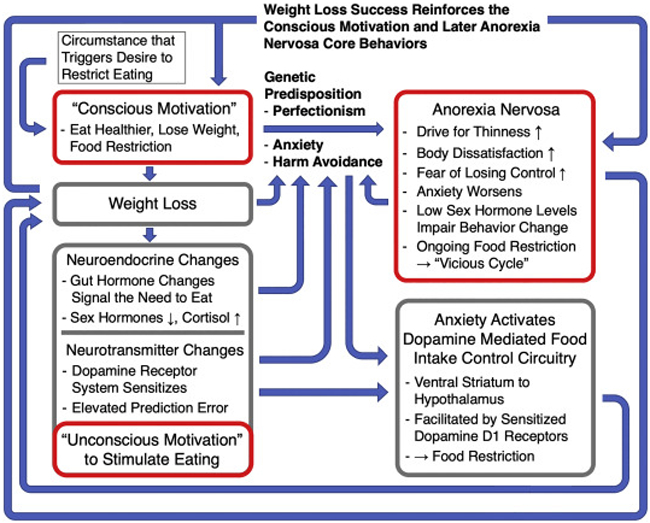
A schematic model that integrates the empiric findings from Figure 1. with previous research on neuroendocrine function in human studies and animal models for the effects of food restriction. After deciding to change eating behavior and lose weight, endocrine changes occur that signal the need to eat; the dopamine system gets activated to support the motivation to seek out food; perfectionism and high anxiety mediate the transition to developing AN core behaviors while the original conscious motivation is sustained. Weight loss briefly alleviates anxiety and reinforces food restriction. However, gut hormones and dopamine that stimulate food seeking, elevate anxiety and subsequently elevate AN core behaviors. Anxiety triggers a food-control circuitry from ventral striatum to hypothalamus that depends on dopamine D1 receptors, which have been sensitized in the context of food restriction. Anxiety gets further elevated in the illness process due to the possibility of loss of control and weight gain, and this becomes a self-reinforcing process. Ongoing food restriction and weight loss perpetuate the cycle.