


Figure 4.
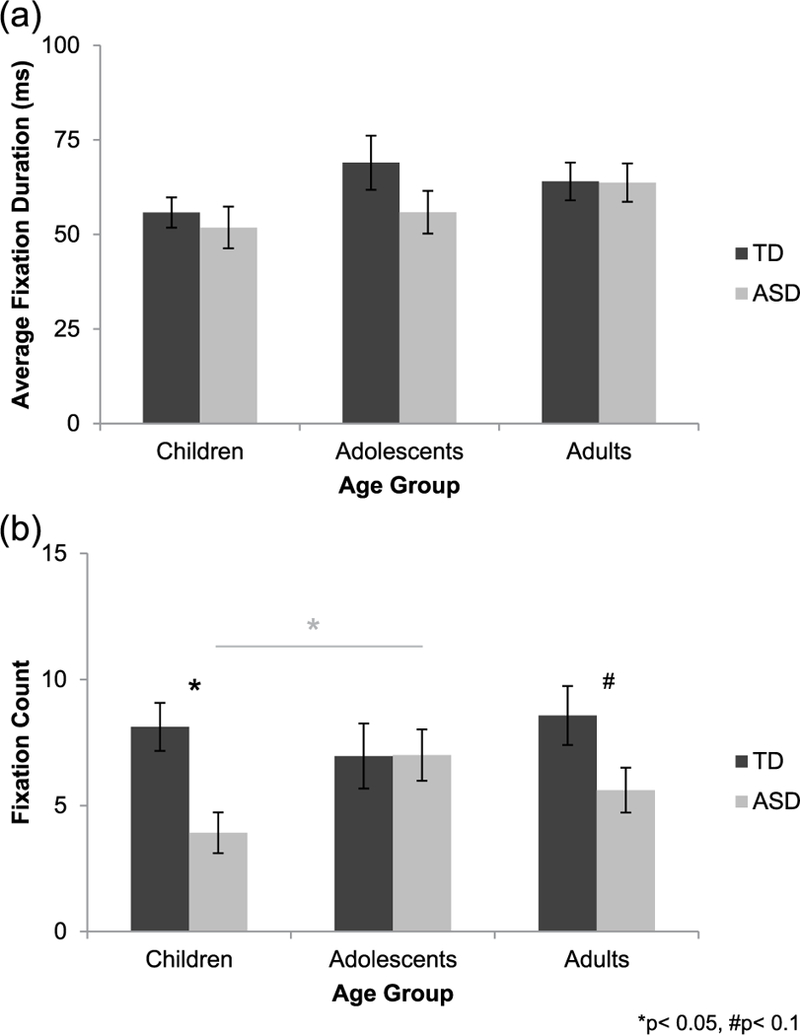
(a) During the delayed recognition memory trial, average fixation duration for the eyes was similar across groups and age groups. (b) Fixation count for the eyes during the delayed recognition memory trial was higher in typically developing (TD, dark gray bars) children and adults as compared to their peers with autism (ASD, light gray bars). However, groups did not differ in adolescence. Fixation count for the eyes increased from childhood to adolescence in autism, but did not change with age typically.