


Figure 2.
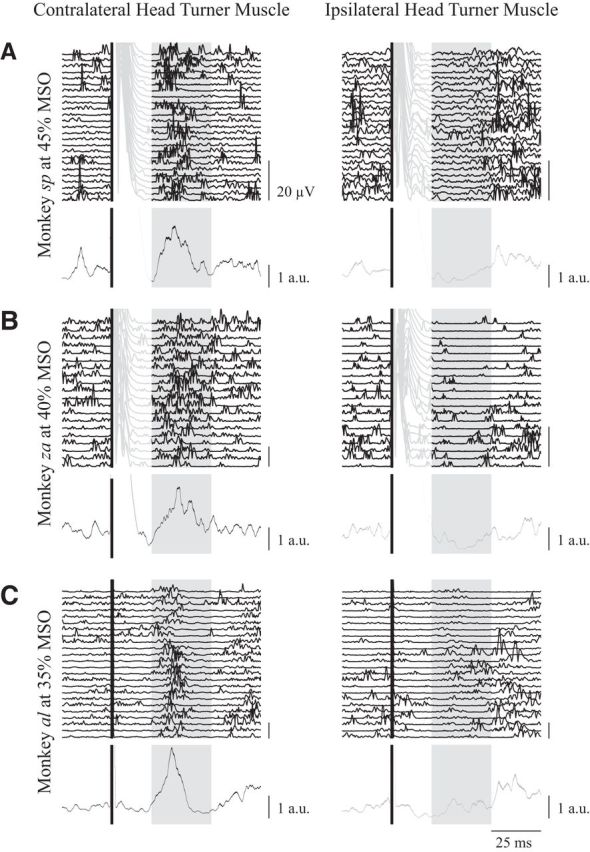
Representative examples from monkey sp (A), monkey zn (B), and monkey al (C) of the contralateral head-turning synergy evoked by single pulses of TMS over the superior arm of the arcuate. Rectified EMG activity aligned to TMS onset (solid black line) is shown for ∼25 trials for contralateral and ipsilateral neck muscles (left and right columns respectively, the last trial is the topmost trace), as well as the session average (bottom lines showing mean ± SE; black or gray traces for contralateral or ipsilateral muscles, respectively), which is normalized to the baseline EMG activity averaged from the 50 ms before TMS onset. In all monkeys, TMS evoked a simultaneous increase or decrease in activity for contralateral or ipsilateral neck muscles ∼20–50 ms after TMS (shaded box). TMS evoked a substantial artifact in monkeys sp and zn, and is shown as recorded in the individual traces in the lighter portions of the lines. Note that this artifact did not contaminate the response window. Scale bar for mean traces show the average baseline activity 50 ms before TMS.