



Abstract
Purpose of Review:
The goal of this paper is to review recent data on biomedical, behavioral and structural HIV prevention interventions for adolescents and young adults.
Recent Findings:
While it is accepted that HIV prevention interventions must take an integrated approach to achieve maximum effectiveness, to date, there have been limited, rigorously evaluated combination prevention interventions for adolescents. There are currently a range of effective biomedical, behavioral and structural approaches that can be integrated into prevention packages to address the prevention needs of adolescents, including oral PrEP, male circumcision, rapid HIV testing, numerous behavioral interventions and structural interventions such as cash transfers and community mobilization to address gender-based violence.
Summary:
There is still a need for rigorously evaluated, innovative combination prevention packages for adolescents. Prevention approaches must take into account the context of young people’s lives and address the multiple levels of influence on their lives including parents, partners and communities.
Keywords: HIV/AIDS, Adolescents, Young Adults, Prevention
INTRODUCTION
Overview of Adolescent HIV Epidemic
According to the World Health Organization, AIDS is the leading cause of death among adolescents in sub-Saharan Africa and second leading cause for adolescents worldwide [1]. In 2016 alone, 610,000 young people between the ages of 15 to 24 were newly infected with HIV [2]. In sub-Saharan Africa, girls 15 −19 years of age are four to five times more likely to be infected than their male counterparts with HIV incidence rates as high as 5–6% among young women <21 years of age [3]. Without an increase in coverage of effective prevention and care interventions for adolescents, it is projected that new adolescent infections will increase 13 percent annually leading to 3.5 million new infections by 2030 [4].
Currently access to prevention and care for adolescents lags behind what is needed to prevent these pessimistic projections for adolescent HIV. Most recent data indicate that only 15 percent of adolescent girls and 10 percent of adolescent boys aged 15–19 in sub-Saharan Africa – the region most affected by HIV – have been tested for HIV in the past 12 months and received the result of the last test [2]. In the United States, the most recent Youth Risk Behavior Survey data shows that only 10% of high school students had ever been tested for HIV, yet 30% were currently sexually active and 43% did not use a condom during last sexual intercourse [39].
Adolescents are at increased risk for HIV due in part to the multiple co-occurring transitions (i.e., biological, psychological) and developmental tasks (e.g., establishing identity) in this period of the lifespan [5–7], in addition to age and power imbalances [8–9], gender inequality and interpersonal violence in sexual relationships [10–13]. Among youth, there are key populations who bear disproportionate burdens of HIV and are the most vulnerable, including young men who have sex with men (MSM), transgender youth, those who inject drugs, and adolescent girls and young women in Africa. Among young men who have sex with men (YMSM) in the United States, psychosocial and structural factors substantially contribute to age-associated HIV incidence disparities, including depression, substance use, STI infections, poverty, decreased health care access and early sexual debut [14]. For adolescent girls and young women (AGYW), many of the same drivers of increased risk for young MSM are also relevant, including poverty, lack of access to school and health care, depression, and gender power imbalances and sexual violence.
Definition of Adolescence
Both the World Health Organization and the United Nations identify adolescence as the period in human growth and development that occurs after childhood and before adulthood, from ages 10 to 19. However, substantial brain development including the capacity for complex, conceptual thinking continues into the early 20s [91]. Late adolescence and/or early adulthood is also marked by social transitions such as finishing school, finding employment, independent living, pregnancies and marriage. For the purposes of this paper, we use the term “adolescent” to refer those under the age of majority (i.e. the age at which a child becomes a legal adult) for the country or state within which they live, and “young adult” for those over the age of majority due to the distinct legal and ethical HIV prevention challenges for youth under age. That said, the developmental similarities between those under the age of majority and those just over the age of majority are extensive.
Integrating Prevention Strategies for Maximal Impact
In order to adequately address the HIV epidemic among adolescents and young adults, strategies that integrate biomedical prevention technologies with behavioral and structural interventions will be required [15–17]. Behavioral interventions alone have demonstrated limited efficacy in reducing HIV incidence among adolescents and young adults, and few tested interventions have integrated behavioral, structural, and biomedical components. In contrast to either a purely biomedical or behavioral model, a biopsychosocial approach posits that health is best understood in terms of a combination of biological, psychological, and social factors [18–19]. In this paper, we review recent data on biomedical, behavioral and structural HIV prevention interventions that may be beneficial to youth (Table 1).
Table 1.
Overview of HIV Prevention Interventions Discussed
| Biomedical | Behavioral | Structural |
|---|---|---|
| • HIV Testing • Oral PrEP • Injectable PrEP • Microbicides • Medical Male Circumcision |
• CDC Evidence-Based • Targeted interventions for key populations • Integrated Interventions |
• Cash transfers • Cash + support • Gender-based violence • Community mobilization |
Biomedical HIV Prevention Interventions
The Centers for Disease Control and Prevention (CDC) defines biomedical HIV interventions as medical, clinical, and public health approaches that moderate biological and physiological factors to prevent HIV infection, reduce susceptibility to HIV and/or decrease HIV infectiousness [20]. Tremendous scientific and technological advances in biomedical HIV prevention have occurred over the past five years.
HIV testing
HIV testing is the gateway to accessing biomedical prevention. While access to rapid and affordable HIV testing has increased in recent years, adolescents are still one of the populations with the lowest testing rates and many vulnerable adolescent key populations have even lower rates [85–86]. It is clear that testing modalities must reach outside of the traditional clinic setting to reach those at highest risk, including mobile testing, household testing and venue-based testing. Given that the majority of adolescents are often not sexually active, mass testing of all adolescents may not be a cost-effective strategy to reach more youth but rather targeted and innovative testing strategies to reach adolescents in need of testing are needed. HIV self-testing is another modality that has been found to be highly acceptable in a number of settings and offers adolescents a private and convenient way to access HIV testing [87–88].
Oral PrEP
In 2012, the U.S. Food and Drug Administration (FDA) approved the use of once daily emtricitabine and tenofovir (TDF/FTC; Truvada®) as oral PrEP for HIV prevention in adults based on two randomized clinical trials [21–22]. Subsequent open-label studies have demonstrated that PrEP reduces the risk of HIV by over 90% when taken consistently [23–24].
In these PrEP trials, it has been demonstrated that adherence to PrEP is crucial for protection against HIV infection and many young participants struggled to use product daily. Young MSM ages 18–24 in the iPrEx trial demonstrated lower PrEP efficacy (28%) compared to older participants (56%), and young MSM were over 3 times less likely to have drug detected in plasma than were older participants [21]. In two trials that enrolled a high proportion of young African women, overall adherence was too low to demonstrate efficacy with tenofovir detected in less than 30% of plasma samples and PrEP adherence extremely poor in those under age 25 [25–26].
Two adolescent-focused safety studies of oral PrEP have recently been completed – Adolescent Trials Network for HIV/AIDS Interventions 113 (ATN 113) and PlusPills. In the ATN 113 trial, PrEP was found to be safe and well tolerated among a cohort of racially/ethnically diverse YMSM ages 15–17. The majority of participants had adherence levels commensurate with HIV protection over the first 12 weeks of the study, but adherence began to decrease at week 24 and continued to decline for the remainder of the study. The most common reasons for missing PrEP doses included being away from home, being too busy, and forgetting. Furthermore, participants who were worried that PrEP use would make others think they had HIV were less adherent [27]. The Pluspills study was conducted in South Africa among adolescent boys and girls, ages 15–19. In this study, PrEP use was also found to be safe, acceptable, and tolerable for the Pluspills participants, but adherence dropped in the second half of the study in a very similar pattern to ATN 113 [28]. Thus, oral PrEP is safe to use among adolescent populations and appears to be of interest to young people, but inattention to adherence or inability to adhere may adversely impact effectiveness, particularly among those who may be most vulnerable to HIV infection. Several international groups, including the CDC and the World Health Organization have distributed recommendations that include special considerations for young adults and adolescents under the age of 18 [29–30]. Additionally, on May 15th, 2018, the US Food and Drug Administration approved the use of oral TDF/FTC for adolescents at risk for HIV infection [31].
The ability of adolescents to persist in their use of PrEP during times of HIV risk is an important consideration as well. In a recent study in Kenya, 693 AGYW ages 15–29 were enrolled into a PrEP demonstration study. At the end of 10 months only 5% of young women were still using PrEP [32]. Important lessons learned included that such programs must address other actors in young women’s lives including partners, parents, family members and the community. Lack of community support for PrEP use and continued Stigma around use of PrEP were major barriers to use and must be addressed in future studies [32]. In a US cohort study following YMSM, about a third of those who had tried PrEP discontinued and 79% of those who discontinued never spoke to a doctor about doing so. The primary reasons for discontinuation included: Trouble getting to doctor’s appointments (21.5%), issues related to insurance coverage or loss (20.0%) and not feeling at risk for HIV (18.5%) [33].
Nonetheless, daily oral TDF/FTC is the only currently approved PrEP regimen available at this time, thus efforts are needed to maximize wide-spread availability and uptake along with optimization of adherence among youth. In addition, it needs to be acknowledged that adolescent sexual activity in often in flux thus lack of use of PrEP over a 12-month period may as much be about lack of sexual activity or partners as it is about not wanting to use the drug.
Long Acting Injectable PrEP
In order to address the adherence concerns that plague daily oral medication regimens, significant resources are being invested in the discovery and testing of other PrEP technologies. One approach that aims to provide a more adherence-friendly schedule is that of long-acting injections. Currently, only one compound, cabotegravir, has reached efficacy trials. Cabotegravir is an investigational HIV integrase strand transfer inhibitor that has attributes favorable for both HIV treatment and prevention indications based on its potential for a high genetic barrier to resistance and a pharmacokinetic profile that allows low-dose, once-daily oral dosing or monthly to quarterly parenteral dosing using a nanosuspension formulation. Two parallel phase 2b/3 trials of long-acting cabotegravir are ongoing through the HIV Prevention Trials Network (HPTN) in 2018 and aim to compare the safety and efficacy of injectable cabotegravir to oral PrEP (TDF/FTC) among MSM and transgender women (HPTN 083) and women in sub-Saharan Africa (HPTN 084). Both studies will investigate dosing every 8 weeks and participation is limited to those over the age of 18 [34–35].
While approval of such a product, if shown to be efficacious, is many years away, a few studies have begun to investigate the potential acceptability of injectable PrEP among youth. A qualitative study of YMSM and transgender women in the US found that participants were generally split on preference for injectable versus oral PrEP, but they agreed that injections may be more manageable and better for those who have adherence difficulties and for those who engage in sex more frequently [36]. Preferences for product type were also explored in a randomized, cross-over trial of three placebo prevention products (i.e., daily oral tablet, monthly injections and monthly vaginal ring) for young women in sub-Saharan Africa. Participant ratings were significantly higher for the injections compared to both the daily tablet and the vaginal ring [37], indicating that expanded options in HIV prevention modalities are important for youth.
Microbicides
Microbicides, also considered topical PrEP, are products applied inside the vagina or rectum (e.g., gels, lubricants, rings) that are intended to prevent the sexual transmission of HIV, while avoiding the potential toxicities of oral or long acting systemic PrEP. Pericoital use of vaginal 1% tenofovir (TFV) gel provided overall 39% protection against HIV in participants of the CAPRISA 004 study, a randomized controlled trial of tenofovir gel versus placebo in young African women [38]. However, gel efficacy varied significantly with adherence (54% reduction in HIV acquisition with >80% adherence but 28% efficacy in those with <50% adherence). Women younger than 25 years of age had the greatest HIV acquisition risk and the lowest plasma TFV levels, which could reflect poor adherence as well as variability in drug uptake and metabolism [26].
Intravaginal rings (IVRs) are marketed for contraception in adolescents, and a ring designed to deliver the antiretrovial drug dapivirine has been tested in two concurrent Phase 3 trials and found to be modestly efficacious at reducing HIV risk (27% in ASPIRE trial; 31% in The Ring Study) [40–41]. In the ASPIRE trial, age disparities in efficacy were found. Women ages 22–45 using the dapivirine ring had 56% fewer infections than those in the placebo arm. However, the ring actually showed no protection among younger women ages 18–21, who used the ring least regularly. Interestingly, in the TRIO study described earlier, the ring was the product that young women were least familiar with [37].
Finally, those at high risk of HIV-acquisition through anal sex could benefit from availability of a rectal microbicide. Research with MSM and transgender women has demonstrated safety and acceptability of rectal use of TFV gel [43, however adherence was higher in event driven use than daily use suggesting the need for convenient dosing regimens [44].
Male Circumcision
Male Circumcision has been proven to significantly reduce the risk of HIV acquisition. Three RCTs showed an HIV protection effect of 60% for men who are circumcised which is equivalent to what a reasonable vaccine would offer in terms of both efficacy and sustainability of protection coverage and the circumcision procedure is inexpensive and quick to perform [45–47]. VMMC has been a recommended component of HIV prevention packages by the WHO since 2007 with the goal of increasing coverage among males ages 10–29 to 90% by 2021 [48]. Indeed, an impressive scale up of VMMC has occurred among priority countries in Eastern and Southern Africa, with the majority of clients aged 15 years or older [89]. Unfortunately, a recent modeling paper highlights that the WHO goal of 90% coverage will only be reached with significant increases in the number of circumcisions provided to adolescents ages 10–14 [49]. Furthermore, significant age differences have been found in the HIV prevention counseling content that is received by adolescents regarding VMMC, with older adolescents (15–19 years old) receiving more comprehensive information than those ages 10–14, largely due to the discomfort that counselors, providers and parents have with adolescent sexuality [50].
Behavioral HIV Prevention Interventions
The 2018 CDC Compendium of Evidence-Based Interventions and Best Practices for HIV Prevention recognizes 61 behavioral interventions in the HIV Risk Reduction chapter [51]. Of those that are were specifically designed for and tested among adolescents (n=15), just 8 were classified as “best evidence” (i.e., rigorously evaluated and shown to have significant evidence of efficacy to eliminate or HIV risk behaviors, reduce the rate of new HIV/STD infections, or increase HIV-protective behaviors).
Several recent systematic literature reviews also highlight the paucity of rigorously evaluated behavioral interventions for youth as well as the relative absence of interventions exclusively designed for adolescents. Hergenrather and colleagues [52] reviewed behavioral interventions for young MSM and found 15 interventions targeting YMSM in the age range of 13–24. Of note, none of interventions focused on adolescents alone and several included young people up through the age of 29. A recent review of behavioral HIV prevention interventions for adolescents in sub-Saharan Africa yielded a total of 8 with significant outcomes in both knowledge and sexual behavior [53]. Finally, a review of rigorously tested (e.g. randomized controlled trial), technology-based, behavioral HIV prevention interventions for Black and Latino youth identified only 2 studies [54]. Thus, the quantity, and perhaps the quality, of HIV prevention interventions targeting adolescents in general are limited.
Promising new behavioral interventions continue to be developed and tested among youth at greatest risk for HIV infection. Garofalo and colleagues [55] recently published data from a randomized controlled trial of a group delivered HIV prevention intervention for transgender young women. The intervention, LifeSkills, demonstrated a 40% larger reduction in condomless sex acts compared to an attention matched control group at the 12 month follow-up point. This success makes LifeSkills the first behavioral HIV prevention intervention specifically designed for trangender youth to show efficacy. For young Black MSM, the newly tested healthMpowerment intervention reported promising results [56]. Participants assigned to healthMpowerment, a mobile phone optimized, internet-based intervention, demonstrated a 38% reduction in condomless anal intercourse compared to the control group. Furthermore, intervention participants reported decreases in perceived HIV stigma over time [90].
While there remains a paucity of HIV prevention interventions for adolescents, newer and more cost-effective approaches to testing and implementing behavioral interventions are needed. Just as we know that trials designed for one particular group don’t necessarily translate to other groups, we also need to recognize that not every individual within a population needs the same intervention. In order to study varied approaches to intervention implementation, adaptive clinical trial designs can be used that prospectively plan opportunities for modification of one or more specified aspects of the study design and hypotheses based on analysis of data (usually interim data) from participants in the study [57]. Adaptive trial designs can also improve trial efficiency by potentially decreasing the duration of the trial and enrolling fewer participants [58].
Finally, the most impactful and scalable implementation approaches for behavioral interventions may well be to use them in conjunction with biomedical interventions. As described above, behavioral interventions for young people have been proven to reduce HIV/sexually transmitted infection (STI) risk by increasing condom use, reducing or delaying frequencies of sex, and increasing safer sex negotiation skills. However, many behavioral interventions have limitations including only moderate levels of efficacy and few available resources to bring multi-session approaches to scale [59]. The series of Adolescent Trials Network (ATN) PrEP studies incorporated evidence-based behavioral HIV prevention interventions, which may have lead to the declines in sexual risk behavior seen among participants [60–62,27]. However, the most impactful type of behavioral intervention needed for participants may have been one focused on improving PrEP adherence and persistence. Thus finding the right mix of behavioral and biomedical to produce the greatest prevention impact is still critical.
Structural HIV Prevention Interventions
It is increasingly clear that structural drivers of HIV infection play an important role in increasing HIV risk for adolescents. Factors such as poverty, limited education, unemployment, food insecurity, violence, stigma and discrimination not only increase the risk of HIV acquisition but also limit access to prevention and care interventions. While there is still a great need for a larger evidence base of effective structural interventions for HIV prevention, there has been some progress made in the areas of social protection and gender based violence.
A number of recent trials have been conducted examining the role of cash transfers in reducing HIV risk for young women in sub-Saharan Africa. The first study, HPTN 068, provided monthly cash transfers to South African adolescent girls and young women (AGYW) and their parent/guardian conditional on 80% school attendance. The trial found no impact of the cash on HIV incidence or school attendance which was very high in both arms over the three years of the trials (95%), however, there were significant reductions in physical violence from a partner and reductions in unprotected sex and partner number [63]. Additionally, the study found that AGYWs who did drop out of school or have low attendance were at substantially increased risk of acquiring HIV infections (HR 3.25 95% CI 95% CI: 1.67, 6.32) [64]. Another cash transfer trial among high school girls and boys in South Africa also found no effect on HIV incidence [42]. While these studies looking at HIV incidence have found no impact, a trial conducted in Malawi did find that a small cash transfer provided to AGYW and their parent/guardian resulted in lower HIV prevalence in the intervention arm compared to those not getting the cash and were less likely to have an older partner and to have had frequent sex [65]. Additionally, observational studies looking at the effect of large, government cash transfer programs on adolescent HIV risk behavior have found that adolescents living in homes receiving the transfer were less likely to report engaging in transactional sex and having an older partner [66] and were more likely to delay coital debut [67]. Research by Cluver and colleagues on the South African social protection program has found that for adolescents living in homes receiving social protection plus additional forms of care the HIV prevention effects seem much stronger [68]. Given this finding, and the null effects on HIV acquisition, there is current consensus that social protection, in particular cash transfers, should be combined with other interventions for maximal impact on HIV prevention. In a model developed by Roelen and colleagues [69], they posit that forms of cash plus could include psychosocial support, additional social benefits, information and behavior change interventions as well as provision or linkage to services, including health services. As of July 2018 there are a number of cash plus trials in the field examining the impact of combining cash with other programs for HIV prevention among AGYW. The DREAMS program which is a large PEPFAR prevention program to reduce HIV among AGYW in 10 countries in Africa has cash transfer programs active as part of a larger combination prevention program in some of the countries [70]. In Cape Town South Africa, the Global Fund is providing funding for a cash plus intervention trial (Women of Worth) to reduce HIV risk among AGYW [71] and UNICEF is conducting an evaluation of cash plus intervention among adolescents in Tanzania [72].
The mechanisms whereby cash transfers may reduce HIV risk are primarily thought to be through increased resources which improve access to school, improve mental health/hope for the future, and reduce reliance on partners/transactional sex. To date there is some evidence to support all of these pathways, however, for the transactional sex pathways it is important to note that transactional sex is a complex behavior which is not always driven solely by poverty [73]. Qualitative research with AGYW about transactional sex in Southern Africa has found that AGYW often engage in transactional sex as a means to obtain social status among peers and luxury items to gain self-esteem and worth, particularly in settings where employment opportunities for young women are extremely limited [74–75]. Small cash transfers will likely not be able to overcome these needs and desires and thus prevent transactional sex and thus programs to build self-esteem, improve access to HIV prevention services and other life skills are likely necessary to for impact.
Interventions to reduce gender based violence are also critical for prevention. Intimate Partner Violence (IPV) rates among adolescents in many settings where HIV prevalence is endemic are very high. Among adolescent girls in South Africa 24–40% of adolescent girls report having experienced physical violence from a partner and 8–15% sexual violence [76–77]. Recent PrEP trials have found that violence from partners was associated with low adherence to the drug [84]. While the evidence base for interventions to reduce IPV among adolescents as part of HIV prevention are somewhat limited, there are a number of trials that have included individuals 15 and older and have been successful in reducing IPV perpetration and victimization in Southern Africa [78–79]. Recently community mobilization has been employed as a tool to change community norms around gender-based violence with the goal of reducing IPV, both the SASA community mobilization intervention trial in Uganda [80–81] and the SHARE trial in Uganda [82] found significant reductions in the acceptability of IPV among men and women and lower levels of women reporting physical and sexual violence victimization, although the results in the SASSA trial were not statistically significant.
The Inclusion of Adolescent Minors in Clinical Trials
Historically, medical treatments applied to children were often based upon testing done only in adults, rendering evidence-based treatments less available to children due to their exclusion from studies. Since 1996, one goal of the National Institutes of Health as well as the US FDA has been to increase the participation of children in research so that adequate data can be developed to support treatment (and prevention) modalities for disorders and conditions that affect adults as well as children. In order for adolescents to access safe and effective new biomedical HIV prevention products at the same time that these products are approved and marketed for adults, the scientific development and testing of these products for adolescents must proceed concurrently [92]. Similarly, adolescents are often excluded from behavioral and structural intervention trials due to concerns from regulatory or ethics boards as well as investigator concerns around the complexity of recruitment/retention and/or fear that adolescent difficulties will adversely impact the primary outcomes of the trial [93–94]. Unfortunately, exclusion from larger trials as well as hesitancy to launch youth-focused trials only exacerbates the gaps in HIV prevention intervention availability and access, which continues to fuel the HIV epidemic among vulnerable young people.
CONCLUSION
As adolescents transition to adulthood, there are numerous changes occurring in their lives that make context a critical consideration for prevention interventions. An 18 year old student who is living at home with their parents may have very different prevention needs than an 18 year old who has a child and is living with a partner. Prevention programs must acknowledge that adolescents are influenced by peers, family and community. Recent failures to reduce HIV incidence in AGYW or to increase uptake of new prevention technologies among key populations can be partly attributed to the influential role that partners, family and communities play in the lives of youth [32,83–84]. We must also acknowledge that as adolescents learn to use prevention interventions, they will make mistakes and will need support. This is not a failure of prevention programs per se, but an acknowledgement for the field that behavior change takes time, depends on context, and is a process.
Ultimately, young people will benefit from a range of prevention interventions. Currently there is a need to increase access and adherence to existing efficacious prevention interventions but there is also great need for an increase in the number of biologic, behavioral and structural intervention options that are appropriate for adolescents and young people. Importantly, we must truly embrace the message that adolescent and young people are not a homogenous population and will need tailored approaches to meet their needs.
Figure 1.
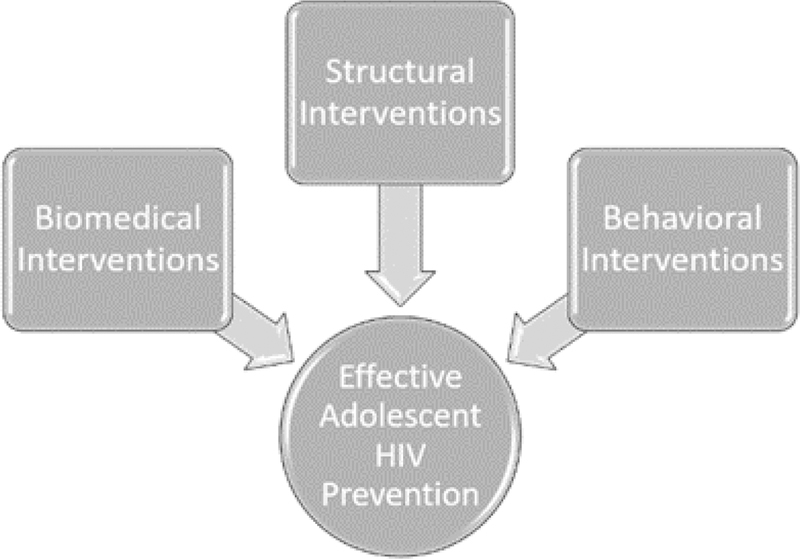
Combination Prevention for Adolescents
Footnotes
Human and Animal Rights: All reported studies with human subjects performed by the authors have been previously published and complied with all applicable ethical standards.
Conflicts of Interest: None to report
Contributor Information
Sybil Hosek, Department of Psychiatry, John Stroger Hospital of Cook County, Chicago, IL.
Audrey Pettifor, Department of Epidemiology, Gillings School of Public Health, University of North Carolina, Chapel Hill, Chapel Hill, NC.
REFERENCES
- 1.WHO, Health for the World’s Adolescents: A second chance in the second decade, World Health Organization, Geneva, 2014. [Google Scholar]
- 2. https://data.unicef.org/topic/hivaids/adolescents-young-people/
- 3.Dellar RC, Dlamini S, Karim QA. Adolescent girls and young women: key populations for HIV epidemic control. J Int AIDS Soc. 2015;19408, doi: 10.7448/IAS.18.2.19408 [DOI] [PMC free article] [PubMed] [Google Scholar]
- 4.Children and AIDS. Statistical Update. UNICEF; December 2017 [Google Scholar]
- 5.Geier CF. Adolescent cognitive control and reward processing: implications for risk taking and substance use. Hormones and behavior. 2013. July 31;64(2):333–42 [DOI] [PubMed] [Google Scholar]
- 6.Smith AR, Chein J, Steinberg L . Impact of socio-emotional context, brain development, and pubertal maturation on adolescent risk-taking. Hormones and behavior. 2013. July 31;64(2):323–32 [DOI] [PMC free article] [PubMed] [Google Scholar]
- 7.Romer D Adolescent risk taking, impulsivity, and brain development: Implications for prevention. Developmental psychobiology. 2010. April 1;52(3):263–76. [DOI] [PMC free article] [PubMed] [Google Scholar]
- 8.Hawkins K, Price N, Mussa F. Milking the cow: Young women's construction of identity and risk in age-disparate transactional sexual relationships in Maputo, Mozambique. Glob Public Health. 2009;4(2):169–82. doi: 10.1080/17441690701589813. [DOI] [PubMed] [Google Scholar]
- 9.Hallett TB, Gregson S, Lewis JJ, Lopman BA, Garnett GP. Behaviour change in generalised HIV epidemics: impact of reducing cross-generational sex and delaying age at sexual debut. Sex Transm Infect. 2007;83 Suppl 1:i50–4. [DOI] [PubMed] [Google Scholar]
- 10.Lane T, Osmand T, Marr A, Shade SB, Dunkle K, Sandfort T, Struthers H, Kegeles S, McIntyre JA. The Mpumalanga Men’s Study (MPMS): Results of a Baseline Biological and Behavioral HIV Surveillance Survey in Two MSM Communities in South Africa. PloS one. 2014. November 17;9(11):e111063 [DOI] [PMC free article] [PubMed] [Google Scholar]
- 11.Kubicek K, McNeeley M, Collins S. “Same-Sex Relationship in a Straight World” Individual and Societal Influences on Power and Control in Young Men’s Relationships. Journal of interpersonal violence. 2014. May 8:0886260514532527 [DOI] [PubMed] [Google Scholar]
- 12.Jewkes RK, Dunkle K, Nduna M, Shai N. Intimate partner violence, relationship power inequity, and incidence of HIV infection in young women in South Africa: a cohort study. Lancet. 2010;376(9734):41–8. Epub 2010/06/19. doi: 10.1016/S0140-6736(10)60548-X. [DOI] [PubMed] [Google Scholar]
- 13.Campbell JC, Baty ML, Ghandour RM, Stockman JK, Francisco L, Wagman J. The intersection of intimate partner violence against women and HIV/AIDS: a review. International journal of injury control and safety promotion. 2008;15(4):221–31. Epub 2008/12/04. doi: 10.1080/17457300802423224. [DOI] [PMC free article] [PubMed] [Google Scholar]
- 14.Jeffries WL, Greene KM, Paz-Bailey G, McCree DH, Scales L, Dunville R, Whitmore S. Determinants of HIV Incidence Disparities Among Young and Older Men Who Have Sex with Men in the United States. AIDS and Behavior. 2018. April 9:1–5. [DOI] [PubMed] [Google Scholar]
- 15.Walensky RP. Combination HIV prevention: the value and interpretation of mathematical models. Current HIV/AIDS Reports. 2013. September 1;10(3):195–8. [DOI] [PMC free article] [PubMed] [Google Scholar]
- 16.Pettifor A, Nguyen NL, Celum C, Cowan FM, Go V, Hightow‐Weidman L. Tailored combination prevention packages and PrEP for young key populations. Journal of the International AIDS Society. 2015. February 1;18(2S1). [DOI] [PMC free article] [PubMed] [Google Scholar]
- 17.Celum C, Baeten JM, Hughes JP, Barnabas R, Liu A, Van Rooyen H, Buchbinder S. Integrated strategies for combination HIV prevention: principles and examples for men who have sex with men in the Americas and heterosexual African populations. Journal of acquired immune deficiency syndromes (1999). 2013. July;63(0 2):S213. [DOI] [PMC free article] [PubMed] [Google Scholar]
- 18.DiClemente RJ, Jackson JM. Towards an integrated framework for accelerating the end of the global HIV epidemic among young people. Sex education. 2014. September 3;14(5):609–21. [DOI] [PMC free article] [PubMed] [Google Scholar]
- 19.Bekker LG, Johnson L, Wallace M, Hosek S. Building our youth for the future. Journal of the International AIDS Society. 2015. February 1;18(2S1). [DOI] [PMC free article] [PubMed] [Google Scholar]
- 20. https://effectiveinterventions.cdc.gov/en/HighImpactPrevention/BiomedicalInterventions.aspx.
- 21.Grant RM, Lama JR, Anderson PL, et al. Preexposure chemoprophylaxis for HIV prevention in men who have sex with men. The New England journal of medicine. 2010;363(27):2587–2599. [DOI] [PMC free article] [PubMed] [Google Scholar]
- 22.Baeten JM, Donnell D, Ndase P, et al. Antiretroviral prophylaxis for HIV prevention in heterosexual men and women. The New England journal of medicine. 2012;367(5):399–410. [DOI] [PMC free article] [PubMed] [Google Scholar]
- 23.Thigpen MC, Kebaabetswe PM, Paxton LA, et al. Antiretroviral preexposure prophylaxis for heterosexual HIV transmission in Botswana. The New England journal of medicine. 2012;367(5):423–434. [DOI] [PubMed] [Google Scholar]
- 24.McCormack S, Dunn DT, Desai M, Dolling DI, Gafos M, Gilson R, Sullivan AK, Clarke A, Reeves I, Schembri G, Mackie N. Pre-exposure prophylaxis to prevent the acquisition of HIV-1 infection (PROUD): effectiveness results from the pilot phase of a pragmatic open-label randomised trial. The Lancet. 2016. January 2;387(10013):53–60. [DOI] [PMC free article] [PubMed] [Google Scholar]
- 25.Van Damme L, Corneli A, Ahmed K, et al. Preexposure prophylaxis for HIV infection among African women. The New England journal of medicine. 2012;367(5):411–422. [DOI] [PMC free article] [PubMed] [Google Scholar]
- 26.Marrazzo JM, Ramjee G, Richardson BA, Gomez K, Mgodi N, Nair G, Palanee T, Nakabiito C, Van Der Straten A, Noguchi L, Hendrix CW. Tenofovir-based preexposure prophylaxis for HIV infection among African women. New England Journal of Medicine. 2015. February 5;372(6):509–18. [DOI] [PMC free article] [PubMed] [Google Scholar]
- 27.Hosek SG, Landovitz RJ, Kapogiannis B, Siberry GK, Rudy B, Rutledge B, Liu N, Harris DR, Mulligan K, Zimet G, Mayer KH. Safety and feasibility of antiretroviral preexposure prophylaxis for adolescent men who have sex with men aged 15 to 17 years in the United States. JAMA Pediatr. 2017. November 1;171(11):1063–71. [DOI] [PMC free article] [PubMed] [Google Scholar]
- 28.Gill K, Dietrich J, Gray G, Pidwell T, Kayamba F, Bennie T, Myer L, Johnson L, Spiegel H, Slack C, Elharrar V, Strode A, Rooney J, Bekker L-G. Pluspills: an open label, safety and feasibility study of oral pre-exposure prophylaxis (PrEP) in 15–19 year old adolescents in two sites in South Africa. Paper presented at IAS; 2017; Paris, France. [Google Scholar]
- 29.Centers for Disease Control and Prevention (2014). Clinical guidelines for the use of pre-exposure prophylaxis to prevent HIV. [Google Scholar]
- 30.WHO (2015). Guideline on when to start antiretroviral therapy and on pre-exposure prophylaxis for HIV. [PubMed] [Google Scholar]
- 31.Cite FDA approval of PrEP for adolescents
- 32.Digolo L, Ochieng C, Ngunjiri A, Kiragu M, Kyongo J, Otioso L, Mukoma W. Uptake of and Retention on HIV Pre Exposure Prophylaxis among adolescent girls and young women in Kenya. 8th International Workshop on Women and HIV, Boston, March 2–3 2018. [Google Scholar]
- 33.Morgan E, Ryan DT, Newcomb ME, Mustanski B. High Rate of Discontinuation May Diminish PrEP Coverage Among Young Men Who Have Sex with Men. AIDS and Behavior. 2018. May 4:1–4. [DOI] [PMC free article] [PubMed] [Google Scholar]
- 34.HPTN 083: https://www.hptn.org/research/studies/hptn083
- 35.HPTN 084: https://www.hptn.org/research/studies/hptn084
- 36.Biello KB, Hosek S, Drucker MT, Belzer M, Mimiaga MJ, Marrow E, Coffey-Esquivel J, Brothers J, Mayer KH. Preferences for injectable PrEP among young US cisgender men and transgender women and men who have sex with men. Archives of sexual behavior. 2017. September 19:1–7. [DOI] [PubMed] [Google Scholar]
- 37.Minnis AM, Roberts ST, Agot K, Weinrib R, Ahmed K, Manenzhe K, Owino F, van der Straten A, TRIO Study Team. Young Women’s Ratings of Three Placebo Multipurpose Prevention Technologies for HIV and Pregnancy Prevention in a Randomized, Cross-Over Study in Kenya and South Africa. AIDS and Behavior. 2018. March 20:1–2. [DOI] [PMC free article] [PubMed] [Google Scholar]
- 38.Abdool Karim Q Abdool Karim SS Frohlich JA Grobler AC Baxter C Mansoor LE et al. Taylor D. Effectiveness and safety of tenofovir gel, an antiretroviral microbicide, for the prevention of HIV infection in women. Science. 2010:1168–1174. [DOI] [PMC free article] [PubMed] [Google Scholar]
- 39.Youth Risk Behavior Surveillance Survey. 2015. https://www.cdc.gov/healthyyouth/data/yrbs/index.htm
- 40.Baeten JM, Palanee-Phillips T, Brown ER, Schwartz K, Soto-Torres LE, Govender V, Mgodi NM, Matovu Kiweewa F, Nair G, Mhlanga F, Siva S. Use of a Vaginal Ring Containing Dapivirine for HIV-1 Prevention in Women. New England Journal of Medicine. 2016. February 22. [DOI] [PMC free article] [PubMed] [Google Scholar]
- 41.Nel A, van Niekerk N, Kapiga S, Bekker LG, Gama C, Gill K, Kamali A, Kotze P, Louw C, Mabude Z, Miti N. Safety and efficacy of a dapivirine vaginal ring for HIV prevention in women. New England Journal of Medicine. 2016. December 1;375(22):2133–43. [DOI] [PubMed] [Google Scholar]
- 42.Abdool Karim Q, Leask K, Kharsany A, et al. Impact of conditional cash incentives on HSV-2 and HIV prevention in rural South African high school students: results of CAPRISA 007 cluster randomized trial; International AIDS Conference; Vancouver, Canada July 19–22, 2015; TUAC0101LB. [Google Scholar]
- 43.McGowan I, Hoesley C, Cranston RD, Andrew P, Janocko L, Dai JY, Carballo-Diequez A, Ayundhya RK, Piper J, Hladik F, Mayer K. A Phase 1 randomised, double blind, placebo controlled rectal safety and acceptability study of tenofovir 1% gel (MTN-007). PLoS One. 2013; 8(4):e60147. [DOI] [PMC free article] [PubMed] [Google Scholar]
- 44.Cranston RD, Lama JR, Richardson BA, Carballo-Diéguez A, Ayudhya RP, Liu K, Patterson KB, Leu CS, Galaska B, Jacobson CE, Parikh UM. MTN-017: A Rectal Phase 2 Extended Safety and Acceptability Study of Tenofovir Reduced-Glycerin 1% Gel. Clinical Infectious Diseases. 2016. December 16:ciw832. [DOI] [PMC free article] [PubMed] [Google Scholar]
- 45.Auvert B, Tajaard D, Lagarde E, Sobngwi-Tambekou J, Sitta R, Puren A. Randomised, controlled intervention of male circumcision for reduced HIV infection risk: the ANRS 1265 trial. PLoS Med. 2005; 3(5):e226. [DOI] [PMC free article] [PubMed] [Google Scholar]
- 46.Bailey RC, Moses S, Parker CB, Agot K, Maclean I, et al. (2007) Male circumcision for HIV prevention in young men in Kisumu, Kenya: A randomised controlled trial. Lancet 369: 643–656. [DOI] [PubMed] [Google Scholar]
- 47.Gray RH, Kigozi G, Serwadda D, Makumbi F, Watya S, et al. (2007) Male circumcision for HIV prevention in men in Rakai, Uganda: A randomised trial. Lancet 369: 657–666. [DOI] [PubMed] [Google Scholar]
- 48.World Health Organization/Joint United Nations Programme on HIV/AIDS. Joint strategic action framework to accelerate the scale-up of voluntary medical male circumcision for HIV prevention in Eastern and Southern Africa, 2012– 2016. Geneva, Switzerland: WHO/UNAIDS, 2011 [Google Scholar]
- 49.Njeuhmeli E, Opuni M, Schnure M, Tchuenche M, Stegman P, Gold E, Kiggundu V, Parks N, Seifert Ahanda K, Carrasco M, Kripke K. Scaling Up Voluntary Medical Male Circumcision for Human Immunodeficiency Virus Prevention for Adolescents and Young Adult Men: A Modeling Analysis of Implementation and Impact in Selected Countries. Clinical Infectious Diseases. 2018. April 3;66(suppl_3):S166–72. [DOI] [PubMed] [Google Scholar]
- 50.Kaufman MR, Patel EU, Dam KH, Packman ZR, Van Lith LM, Hatzold K, Marcell AV, Mavhu W, Kahabuka C, Mahlasela L, Njeuhmeli E. Counseling received by adolescents undergoing voluntary medical male circumcision: moving toward age-equitable comprehensive human immunodeficiency virus prevention measures. Clinical Infectious Diseases. 2018. April 3;66(suppl_3):S213–20. [DOI] [PMC free article] [PubMed] [Google Scholar]
- 51. https://www.cdc.gov/hiv/research/interventionresearch/compendium/rr/index.html.
- 52.Hergenrather KC, Emmanuel D, Durant S, Rhodes SD. Enhancing HIV prevention among young men who have sex with men: A systematic review of HIV behavioral interventions for young gay and bisexual men. AIDS Education and Prevention. 2016. June;28(3):252–71. [DOI] [PubMed] [Google Scholar]
- 53.Mwale M, Muula AS. Systematic review: a review of adolescent behavior change interventions [BCI] and their effectiveness in HIV and AIDS prevention in sub-Saharan Africa. BMC public health. 2017. December;17(1):718. [DOI] [PMC free article] [PubMed] [Google Scholar]
- 54.Córdova D, Lua FM, Ovadje L, Hong E, Castillo B, Salas-Wright CP. Randomized Controlled Trials of Technology-Based HIV/STI and Drug Abuse Preventive Interventions for African American and Hispanic Youth: Systematic Review. JMIR public health and surveillance. 2017. October;3(4). [DOI] [PMC free article] [PubMed] [Google Scholar]
- 55.Garofalo R, Kuhns LM, Reisner SL, Biello K, Mimiaga MJ. Efficacy of an empowerment-based, group-delivered HIV prevention intervention for young transgender women: the Project LifeSkills randomized clinical trial. JAMA Pediatrics. 2018. August 13. [DOI] [PMC free article] [PubMed] [Google Scholar]
- 56.Hightow-Weidman L, LeGrand S, Simmons R, Egger K, Choi SK, and Muessig HealthMpowerment: Effects of a mobile phone-optimized, internet-based intervention on condomless anal intercourse among young black men who have sex with men and transgender women. Presented at IAS; 2017; Paris, France. [Google Scholar]
- 57.Bretz F, Koenig F, Brannath W, Glimm E, Posch M. Adaptive designs for confirmatory clinical trials. Statistics in medicine. 2009. April 15;28(8):1181–217. [DOI] [PubMed] [Google Scholar]
- 58.Fitts DA. Improved stopping rules for the design of efficient small-sample experiments in biomedical and biobehavioral research. Behavior research methods. 2010. February 1;42(1):3–22. [DOI] [PubMed] [Google Scholar]
- 59.Sullivan PS, Carballo-Diéguez A, Coates T, Goodreau SM, McGowan I, Sanders EJ, Smith A, Goswami P, Sanchez J. Successes and challenges of HIV prevention in men who have sex with men. The Lancet. 2012. July 28;380(9839):388–99. [DOI] [PMC free article] [PubMed] [Google Scholar]
- 60.Hosek S, Siberry G, Bell M, Lally M, Kapogiannis B, Green K, Fernandez MI, Rutledge B, Martinez J, Garofalo R, Wilson C. Project PrEPare (ATN082): The acceptability and feasibility of an HIV pre-exposure prophylaxis (PrEP) trial with young men who have sex with men (YMSM). Journal of acquired immune deficiency syndromes. 2013. April 1;62(4). [DOI] [PMC free article] [PubMed] [Google Scholar]
- 61.Hosek SG, Green KR, Siberry G, Lally M, Balthazar C, Serrano PA, Kapogiannis B, Adolescent Medicine Trials Network for HIV/AIDS Interventions. Integrating Behavioral HIV Interventions Into Biomedical Prevention Trials With Youth: Lessons From Chicago’s Project PrEPare. Journal of HIV/AIDS & social services. 2013. July 1;12(3–4):333–48. [DOI] [PMC free article] [PubMed] [Google Scholar]
- 62.Hosek SG, Rudy B, Landovitz R, Kapogiannis B, Siberry G, Rutledge B, Liu N, Brothers J, Mulligan K, Zimet G, Lally M. An HIV preexposure prophylaxis demonstration project and safety study for young MSM. Journal of acquired immune deficiency syndromes (1999). 2017. January;74(1):21–9. [DOI] [PMC free article] [PubMed] [Google Scholar]
- 63.Pettifor A, MacPhail C, Hughes JP, Selin A, Wang J, Gómez-Olivé FX, Eshleman SH, Wagner RG, Mabuza W, Khoza N, Suchindran C. The effect of a conditional cash transfer on HIV incidence in young women in rural South Africa (HPTN 068): a phase 3, randomised controlled trial. The Lancet Global Health. 2016. December 1;4(12):e978–88. [DOI] [PMC free article] [PubMed] [Google Scholar]
- 64.Stoner MC, Pettifor A, Edwards JK, Aiello AE, Halpern CT, Julien A, Selin A, Twine R, Hughes JP, Wang J, Agyei Y. The effect of school attendance and school dropout on incident HIV and HSV-2 among young women in rural South Africa enrolled in HPTN 068. Aids. 2017. September 24;31(15):2127–34. [DOI] [PMC free article] [PubMed] [Google Scholar]
- 65.Baird SJ, Garfein RS, McIntosh CT, Özler B. Effect of a cash transfer programme for schooling on prevalence of HIV and herpes simplex type 2 in Malawi: a cluster randomised trial. The Lancet. 2012. April 7;379(9823):1320–9. [DOI] [PubMed] [Google Scholar]
- 66.Cluver L, Boyes M, Orkin M, Pantelic M, Molwena T, Sherr L. Child-focused state cash transfers and adolescent risk of HIV infection in South Africa: a propensity-score-matched case-control study. The Lancet Global Health. 2013. December 1;1(6):e362–70. [DOI] [PubMed] [Google Scholar]
- 67.Handa S, Halpern CT, Pettifor A, Thirumurthy H. The government of Kenya’s cash transfer program reduces the risk of sexual debut among young people age 15–25. PloS one. 2014. January 15;9(1):e85473. [DOI] [PMC free article] [PubMed] [Google Scholar]
- 68.Cluver LD, Orkin FM, Boyes ME, Sherr L. Cash plus care: social protection cumulatively mitigates HIV-risk behaviour among adolescents in South Africa. Aids. 2014. July 1;28:S389–97. [DOI] [PubMed] [Google Scholar]
- 69.Roelen K, Devereux S, Abdulai A, Martorano B, Palermo T, and Ragno LP (2017). How to Make ‘Cash Plus’ Work: Linking Cash Transfers to Services and Sectors, Innocenti Working Paper 2017–10, UNICEF Office of Research, Florence. [Google Scholar]
- 70. http://www.dreamspartnership.org/
- 71. http://desmondtutuhivfoundation.org.za/zimele/
- 72. https://www.unicef-irc.org/article/1792-when-cash-alone-is-not-enough-the-transformative-power-of-cash-plus-programmes.html.
- 73.Stoebenau K, Heise L, Wamoyi J, Bobrova N. Revisiting the understanding of “transactional sex” in sub-Saharan Africa: A review and synthesis of the literature. Social Science & Medicine. 2016. November 1;168:186–97. [DOI] [PubMed] [Google Scholar]
- 74.Ranganathan M, MacPhail C, Pettifor A, Kahn K, Khoza N, Twine R, Watts C, Heise L. Young women’s perceptions of transactional sex and sexual agency: a qualitative study in the context of rural South Africa. BMC public health. 2017. December;17(1):666. [DOI] [PMC free article] [PubMed] [Google Scholar]
- 75.Mojola SA. Material girls and Material love: Consuming femininity and the contradictions of post-girl power among Kenyan schoolgirls. Continuum. 2015. March 4;29(2):218–29. [DOI] [PMC free article] [PubMed] [Google Scholar]
- 76.Shamu S, Gevers A, Mahlangu BP, Shai PNJ, Chirwa ED, Jewkes RK. Prevalence and risk factors for intimate partner violence among grade 8 learners in urban South Africa: Baseline analysis from the Skhokho supporting success cluster randomised controlled trial. Int Health. 2016;8(1):18–26. doi: 10.1093/inthealth/ihv068. [DOI] [PubMed] [Google Scholar]
- 77.Russell M, Cupp PK, Jwkes RK, Gevers A, Mathews C, LeFleur-Bellerose C, Small J Intimate Partner Violence among Adolescents in Cape Town, South Africa. 2014;15(3):283–295. doi: 10.1002/ar.20849.3D. [DOI] [PMC free article] [PubMed] [Google Scholar]
- 78.Jewkes R, Nduna M, Levin J, Jama N, Dunkle K, Puren A, Duvvury N. Impact of stepping stones on incidence of HIV and HSV-2 and sexual behaviour in rural South Africa: cluster randomised controlled trial. Bmj. 2008. August 7;337:a506. [DOI] [PMC free article] [PubMed] [Google Scholar]
- 79.Pronyk PM, Hargreaves JR, Kim JC, Morison LA, Phetla G, Watts C, Busza J, Porter JD. Effect of a structural intervention for the prevention of intimate-partner violence and HIV in rural South Africa: a cluster randomised trial. The lancet. 2006. December 2;368(9551):1973–83. [DOI] [PubMed] [Google Scholar]
- 80.Abramsky T, Devries K, Kiss L, Nakuti J, Kyegombe N, Starmann E, et al. Findings from the SASA! Study: a cluster randomized controlled trial to assess the impact of a community mobilization intervention to prevent violence against women and reduce HIV risk in Kampala, Uganda. BMC medicine. 2014;12(1):122. [DOI] [PMC free article] [PubMed] [Google Scholar]
- 81.Abramsky T, Devries KM, Michau L, Nakuti J, Musuya T, Kiss L, et al. Ecological pathways to prevention: How does the SASA! community mobilisation model work to prevent physical intimate partner violence against women? BMC Public Health. 2016;16(1):339. [DOI] [PMC free article] [PubMed] [Google Scholar]
- 82.Wagman JA, Gray RH, Campbell JC, Thoma M, Ndyanabo A, Ssekasanvu J, et al. Effectiveness of an integrated intimate partner violence and HIV prevention intervention in Rakai, Uganda: analysis of an intervention in an existing cluster randomised cohort. The Lancet Global Health. 2015;3(1):e23–e33. [DOI] [PMC free article] [PubMed] [Google Scholar]
- 83.Austrian Karen, Hewett Paul C., Erica SolerHampejsek, Fiammetta Bozzani, Behrman Jere R., and Digitale Jean. 2016. Adolescent Girls Empowerment Programme: Research and Evaluation Mid-Term Technical Report. Lusaka: Zambia: Population Council. [Google Scholar]
- 84.Roberts ST, Haberer J, Celum C, Mugo N, Ware NC, Cohen CR, Tappero JW, Kiarie J, Ronald A, Mujugira A, Tumwesigye E. Intimate partner violence and adherence to HIV pre-exposure prophylaxis (PrEP) in African women in HIV serodiscordant relationships: A prospective cohort study. JAIDS, 2016. November 1;73(3):313. [DOI] [PMC free article] [PubMed] [Google Scholar]
- 85.Wong V, Murray KR, Phelps BR, Vermund SH, and McCarraherb DR. Adolescents, young people, and the 90–90–90 goals: a call to improve HIV testing and linkage to treatment. AIDS. 2017. July 1; 31(Suppl 3): S191–S194. Published online 2017 July 1. doi: 10.1097/QAD.0000000000001539. [DOI] [PMC free article] [PubMed] [Google Scholar]
- 86.Brown K, Williams DB, Kinchen S, et al. Status of HIV Epidemic Control Among Adolescent Girls and Young Women Aged 15–24 Years — Seven African Countries, 2015–2017. MMWR Morb Mortal Wkly Rep 2018;67:29–32. DOI: 10.15585/mmwr.mm6701a6. [DOI] [PMC free article] [PubMed] [Google Scholar]
- 87.Johnson CC, Kennedy C, Fonner V, Siegfried N, Figueroa C, Dalal S, Sands A, Baggaley R. Examining the effects of HIV self-testing compared to standard HIV testing services: a systematic review and meta-analysis. J Int AIDS Soc. 2017. May 15;20(1):21594. doi: 10.7448/IAS.20.1.21594. [DOI] [PMC free article] [PubMed] [Google Scholar]
- 88.Zanolini A, Chipungu J, Vinikoor MJ, Bosomprah S, Mafwenko M, Holmes CB, Thirumurthy H. HIV Self-Testing in Lusaka Province, Zambia: Acceptability, Comprehension of Testing Instructions, and Individual Preferences for Self-Test Kit Distribution in a Population-Based Sample of Adolescents and Adults. AIDS Res Hum Retroviruses. 2018. March;34(3):254–260. doi: 10.1089/AID.2017.0156 Epub 2017 Nov 17. [DOI] [PMC free article] [PubMed] [Google Scholar]
- 89.World Health Organization. Progress Brief: Voluntary Medical Male Circumcision for HIV Prevention in 14 Priority Countries in Eastern and Southern Africa. Geneva, July 2017. [Google Scholar]
- 90.Bauermeister JA, Muessig KE, LeGrand S, Flores DD, Choi SK, Dong W, Sallabank G, Hightow-Weidman LB. HIV and Sexuality Stigma Reduction Through Engagement in Online Forums: Results from the HealthMPowerment Intervention. AIDS and behavior. 2018. August 18:1–1. [DOI] [PMC free article] [PubMed] [Google Scholar]
- 91.Casey BJ, Jones RM, Hare TA. The adolescent brain. Annals of the New York Academy of Sciences. 2008; 1124: 111–26 [DOI] [PMC free article] [PubMed] [Google Scholar]
- 92.Hume M, Lewis LL, Nelson RM. Meeting the goal of concurrent adolescent and adult licensure of HIV prevention and treatment strategies. Journal of medical ethics. 2017. May 15. [DOI] [PMC free article] [PubMed] [Google Scholar]
- 93.Bekker LG, Slack C, Lee S, Shah S, Kapogiannis B. Ethical issues in adolescent HIV research in resource-limited countries. JAIDS Journal of Acquired Immune Deficiency Syndromes. 2014. January 1;65:S24–8. [DOI] [PubMed] [Google Scholar]
- 94.Shah SK, Allison SM, Kapogiannis BG, Black R, Dawson L, Erbelding E. Advancing independent adolescent consent for participation in HIV prevention research. J Medical Ethics. 2018. July 44;7;431–433. [DOI] [PubMed] [Google Scholar]