



Abstract
Neurodegenerative diseases, characterized by a progressive loss of brain function, affect the lives of millions of individuals worldwide. The complexity of the brain poses a challenge for scientists trying to map the biochemical and physiological pathways to identify areas of pathological errors. Brain samples of patients with neurodegenerative diseases have been shown to contain large amounts of misfolded and abnormally aggregated proteins, resulting in dysfunction in certain brain centers. Removal of these abnormal molecules is essential in maintaining protein homeostasis and overall neuronal health. Macroautophagy is a major route by which cells achieve this. Administration of certain autophagy-enhancing compounds has been shown to provide therapeutic effects for individuals with neurodegenerative conditions. SQSTM1/p62 is a scaffold protein closely involved in the macroautophagy process. p62 functions to anchor the ubiquitinated proteins to the autophagosome membrane, promoting degradation of unwanted molecules. Modulators targeting p62 to induce autophagy and promote its protective pathways for aggregate protein clearance have high potential in the treatment of these conditions. Additionally, causal relationships have been found between errors in regulation of SQSTM1/p62 and the development of a variety of neurodegenerative disorders, including Alzheimer’s, Parkinson’s, Huntington’s, amyotrophic lateral sclerosis, and frontotemporal lobar degeneration. Furthermore, SQSTM1/p62 also serves as a signaling hub for multiple pathways associated with neurodegeneration, providing a potential therapeutic target in the treatment of neurodegenerative diseases. However, rational design of a p62-oriented autophagy modulator that can balance the negative and positive functions of multiple domains in p62 requires further efforts in the exploration of the protein structure and pathological basis.
Keywords: SQSTM1/p62, neurodegenerative diseases, autophagy
Graphical Abstract
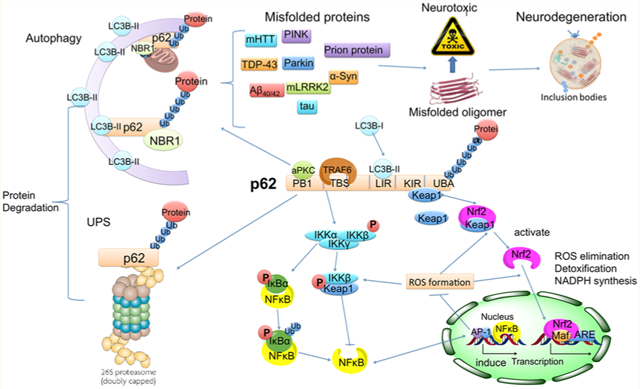
1. INTRODUCTION
Neurodegenerative diseases result from the progressive loss of function and eventual death of neurons in the central and peripheral nervous systems. Common neurodegenerative conditions include Alzheimer’s disease (AD), Parkinson’s disease (PD), Huntington’s disease (HD), amyotrophic lateral sclerosis (ALS), motor neuron disease, prion diseases, spinocerebellar ataxia, and spinal muscular atrophy.1 Millions of people worldwide suffer from neurodegenerative disease, among which at least 500 000 Americans are affected by AD and even more by PD.
These disorders primarily affect neurons. Unlike other cells in the body, neurons lack regenerative capabilities: once damaged or injured, they cannot be repaired, renewed, or replaced. Onset of these conditions results in inevitable progressive neuron dysfunction leading to neuron death, resulting in loss of brain function with corresponding physical or mental symptoms. Current pharmacological treatments are only able to reduce the symptoms associated with neuro-degenerative diseases in an effort to improve the comfort and well-being of the patient. But current methods are unable to prevent, stop, or reverse disease progression.
Researchers are working to understand the genetic and biochemical etiological components, in addition to studying the pathogenesis of common neurodegenerative diseases. Studies show these conditions are likely caused by complex interactions of several factors including genetic, epigenetic, pathogenic, environmental, and other unknown ones. The complexity of these disorders makes it challenging to map the biochemical and physiological pathways in order to better identify areas of potential treatment.
The SQSTM1 gene codes for p62 and was first identified by Jaekyoon Shin and his colleagues.2 Also known as seques-tosome-1, p62 is a scaffold protein, crucial in modulating enzyme function through several domain interactions. For example, p62 promotes autophagy degradation by directly binding to an autophagy biomarker, the microtubule light chain 3 (LC3) through a LC3 interacting region (LIR).3,4 Combined with its ability to bind ubiquitinated proteins at the C-terminal ubiquitin-binding domain,5 p62 serves as an autophagy receptor in the clearance of unwanted protein molecules and aggregates. In addition to ubiquitin binding domain (UBA) and LIR, which play critical roles in autophagy uptake, other protein-interaction motifs, including an N- terminal Phox-BEM1 domain (PB1), a ZZ-type zinc finger domain,6 and tumor necrosis factor receptor-associated factor 6 (TRAF6) binding (TBS) domain, are functional domains influential in the regulation of inflammation, oxidative stress, osteoclast genesis, and apoptosis.7,8 In the past decade, studies have shown that p62 is associated with several diseases including Paget’s disease of bone (PDB), PD, AD,9 HD,10 liver cancer,8 breast cancer,11 obesity, and diabetes.12 In this review, we will focus on the physiological role of p62 in neuro-degenerative diseases.
2. NEURODEGENERATIVE DISEASES AND MISFOLDED PROTEIN AGGREGATION AND CLEARANCE
The maintenance of protein homeostasis is essential in sustaining a viable neuronal microenvironment to support neuron health and adequate function, especially under metabolic stress.13 Protein misfolding and aggregation are hallmark signs for the most common forms of neuro-degenerative diseases.14 For this reason, these conditions are often referred to as “proteinopathies”. As shown in Figure 1, under normal conditions, misfolded malfunctioning proteins are removed by protective mechanisms. However, impairment of these mechanisms can lead to accumulation of misfolded peptides, disrupting protein homeostasis and causing neuronal toxicity.15 Evidence suggests that polypeptide conformational changes can lead to instability of the misfolded intermediates due to interactions between hydrophobic regions and the surrounding aqueous solution. Consequently, the polypeptide forms β-sheets to shield the hydrophobic regions. Aggregation of the β-sheet oligomers can seriously disrupt the neuronal environment, as in the case of β-amyloid buildup into plaques associated with Alzheimer’s disease.14 The conversion of misfolded protein oligomers into insoluble fibrillary species can be directly linked to cell death.15 The most cytotoxic molecule is considered to be the oligomeric soluble protein, an intermediate in the production of the final amyloid fibril.
Figure 1.
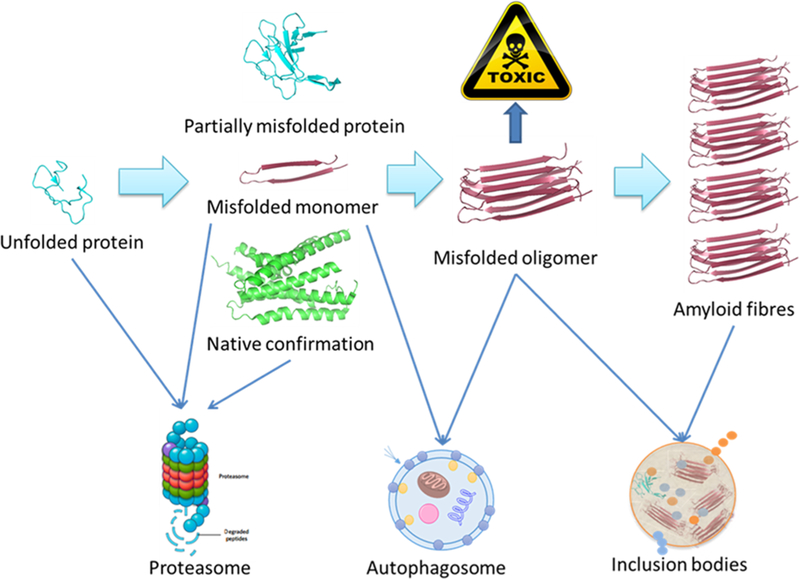
Schematic representation of misfolded protein degradation processes, using amyloid fibers as an example. As seen above, misfolded and aggregated protein molecules are eliminated by different mechanisms based on molecule size. In the case of neurodegenerative conditions, mutations or alterations lead to protein misfolding. When these misfolded proteins evade degradation, they are then processed into small-misfolded oligomers, at which point they are toxic to the neuronal environment. Examples of these include α-synuclein, β-amyloid, and poly-Q proteins, oligomers known for their pathological roles in Parkinson’s, Alzheimer’s, and Huntington’s diseases, respectively. Cells have three protective mechanisms by which they can remove misfolded and aggregated proteins from the cellular environment: proteolysis, autophagy, and inclusion body formation. Unfolded peptides and misfolded monomers are eliminated via proteasomal degradation. The majority of misfolded oligomers, in addition to some misfolded monomers, are removed via autophagic clearance. Ubiquitin plays a critical role in all three pathways, as it marks proteins for proteolytic and autophagic degradation and is found in abundance in inclusion bodies.
As seen in Figure 1, misfolded and aggregated protein molecules are eliminated by three different protective mechanisms, primarily based on molecule size: proteolysis, autophagy, and inclusion body formation. Unfolded peptides and misfolded monomers are eliminated via proteasomal degradation. The majority of misfolded oligomers, in addition to some misfolded monomers, are removed via autophagic clearance. Larger oligomers and insoluble fibrils, which can typically be visualized in cells, will form inclusion bodies. Ubiquitin plays a critical role in all three pathways, as it marks proteins for proteolytic and autophagic degradation and is found in abundance in inclusion bodies. p62 has a ubiquitin binding domain, which can associate with ubiquitin-modified proteins and shuttle them to the autophagosomal or proteasomal pathways for degradation.
In the case of neurodegenerative conditions, mutations or post-translational alterations lead to protein misfolding. When these misfolded proteins evade degradation, they are then processed into small-misfolded oligomers, at which point they become toxic to the neuronal environment. Examples of these include α-synuclein, β-amyloid, and poly-Qproteins, oligomers known for their pathological roles in Parkinson’s, Alzheimer’s, and Huntington’s diseases, respectively. The toxic oligomeric aggregates are primarily cleared via macroautophagy. Therefore, one of the attractive therapeutic strategies to treat proteinopathies, including those found in neurodegenerative diseases, is to induce the removal of toxic oligomeric molecules by promoting macroautophagy and the ubiquitin proteasome system (UPS) (Figure 1).
As shown in Figure 2, many neurodegenerative diseases share several of the hallmark misfolded protein aggregates, highlighting a common underlying mechanism for neuron dysfunction.13 AD is characterized by amyloid plaques comprised of Aβ and intracellular neurofibrillary tangles formed by the accumulation of phosphorylated tau protein. The mutations in β-amyloid precursor protein (APP) and presenilin 1, two proteins in Aβ metabolism signaling, are identified as disease related gene changes. Hereditary cystatin C amyloid angiopathy (HCCAA) is a rare but fatal amyloid disease observed in young people in Iceland and caused by a mutation in the cystatin C gene. Cystatin C is colocalized with amyloid-β in AD and CAA. Familial amyloidotic polyneuropathy (FAP) is typically caused by the aggregation of mutant transthyretin16 but is sometimes due to aggregation of the wild-type protein. Familial British disease (FBD) and familial Danish dementias (FDD) are associated with mutations in the BRI2 gene, which are characterized by cerebral deposition of the 34-mer British amyloid (ABri) and Danish amyloid (ADan) peptides, and are accompanied by the observation of neurofibrillary tangles and neuroinflammation.17,18 The presence of protein deposits called Lewy bodies, formed by aggregated α-synuclein and polyubiquitinated proteins, is the central pathological feature of PD. Lewy bodies have also been linked to the pathological outcomes of multiple system atrophy (MSA) and other Lewy body diseases (LBD). Poly-Q expanded huntingtin, one of the various mutations of the poly-Q protein, is known to cause HD.10 Other disease-associated mutations of the poly-Q protein have been identified in other neurodegenerative diseases, including dentatorubral-pallidoluysian atrophy (DRPLA), spinal and bulbar muscle atrophy (SBMA), and spinocerebellar ataxia (SCA). TAR DNA-binding protein 43 (TDP-43) was noted as the disease-causing protein for both frontotemporal dementia (FTLD) and ALS. Mutations in TDP-43 cause familial ALS, while cytoplasmic and nuclear inclusions of TDP-43 are found in glial cells and neurons for nearly all anatomical studies of sporadic ALS and FTLD. Prion diseases are a family of rare progressive neurodegenerative disorders characterized by the spongiform changes associated with neuronal loss and failed response to inflammation. Prion disease is caused by a “prion”, which refers to a transmissible, pathogenic agent that can trigger misfolding of cellular proteins called prion proteins, most of which are located in the brain. The common types of prion diseases affecting humans include Creutzfeldt–Jakob disease (CJD), variant Creutzfeldt–Jakob disease (vCJD), Gerstmann–Straussler–Scheinker syndrome,19 fatal familial insomnia,20 and Kuru disease. In summary, since many of the misfolded protein aggregates overlap the most commonly known neurodegenerative diseases, it is reasonable to predict that treatment targeting the degradation of these misfolded or aggregated proteins might have therapeutic effects. Macro-autophagy is of importance then, as it is the major cellular clearance mechanism for these toxic protein aggregates.21
Figure 2.
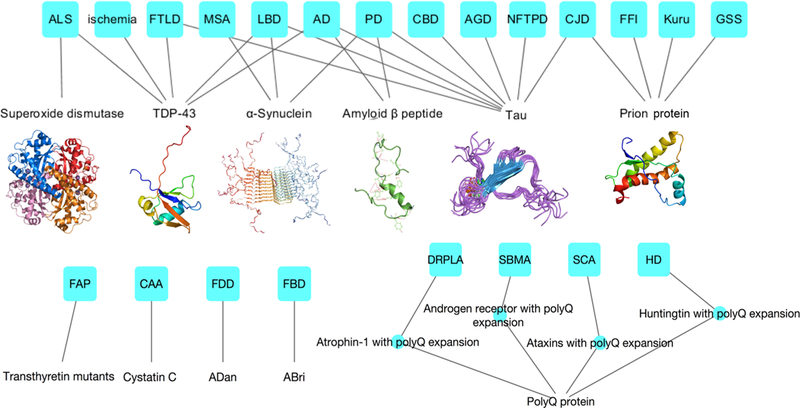
Misfolded and aggregated proteins related to neurodegenerative diseases. Abbreviations: AGD, amoebic gill disease, CBD, corticobasal degeneration, NFTPD, neurofibrillary tangle predominant dementia.
3. AUTOPHAGY IN NEURODEGENERATIVE DISEASES
Autophagy plays a crucial physiological and pathological role in the regulation of cell growth, survival, and death, as well as macromolecule catabolic signaling, aging, inflammation, and immunity. Either a deficiency or overactivation of autophagy will cause neuronal dysfunction, an underlying condition for several brain pathologies.22 The process of autophagy can be divided into several sequential steps: induction, initiation/vesicle nucleation, autophagosome elongation and completion, maturation and fusion, and degradation (Figure 3). Genetic and pharmacological regulations of many key players in the autophagy process are associated with neurodegeneration, indicating a strong relationship between autophagy and neurodegenerative diseases.22,23
Figure 3.
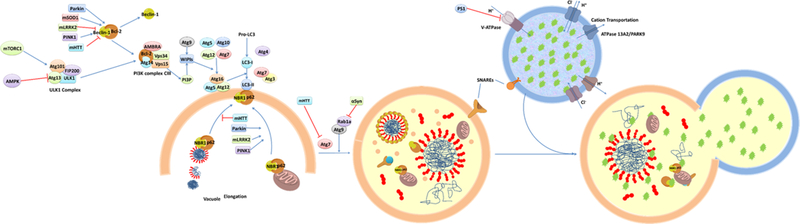
Key components of the autophagy process. Defective regulation and induction of the autophagy process have been associated with many neurodegenerative diseases. Abnormal interactions of mutant superoxide dismutase 1 (mSODl), LRRK2, Parkin, PINK1, and mutant Huntington (mHTT) with Beclin 1 could alter the initiation steps of autophagy. PINK and Parkin play a key role in the elimination of damaged mitochondria and mutations in these proteins, as seen in Parkinson’s disease (PD), and could interfere with overall mitophagy, the selective degradation of mitochondria by autophagy. mHTT expression leads to altered cargo recognition and autophagy failure. α-Synuclein (α-syn) can interfere with autophagy through interaction with Rab1a. Presenilin-1 (PS1) mutations cause impairment in lysosomal acidification and autophagy impairment. In PD, mutations in ATP13A2 could alter the function of lysosomes.
3.1. Autophagosome Formation and Autophagic Flux.
As indicated in Figure 3, the autophagosome formation can be induced by inhibition of mammalian target of rapamycin complex 1 (mTORC1) and activation of AMP-activated protein kinase (AMPK), thus suggesting two independent ways that autophagy premature induction could be resolved therapeutically. This will lead to the phosphorylation of serine/threonine-protein kinase ULK1 and the subsequent phosphorylation of all the components in ULK1–Atg1 (autophagy related 1) complex, including Atg13, Atg101, FIP200 (FAK family interacting protein of 200 kDa), ULK1, and ULK2.23 Phosphorylated serine/threonine-protein kinase ULK1 can also phosphorylate AMBRA in class III phosphatidylinositol 3-kinase (PI3K) CIII complex I, which is composed of phosphatidylinositol 3-kinase Vps34, Vps15, Atg14, and BCL-2-interacting protein (beclin-1), enabling the complex to relocate from the cytoskeleton to the isolation membrane in the preautophagosome structure. In the PI3K CIII complex I, beclin-1 is negatively regulated by Bcl-2 and Bcl-X, which are related to ER (endoplasmic reticulum) stress.22,23 Then, Vps34 in PI3K CIII complex will generate PI3K, which selectively interacts with the PI3P effector WD repeat domain phosphoinositide-interacting 1 and 2 (WIPIs), catalyzing two reactions that mediate the isolation membrane elongation.23 The first reaction is a covalent conjunction of Atg5 and Atg12 in the presence of Atg7 and Atg10, followed by Atg5–Atg12–Atg16 complex formation.23 This complex will translocate to the membrane of early autophagosomes and promote the covalent interaction of microtubule-associated proteins 1A/1B light chain (LC3)-I with phosphatidylethanol-amine (PE). In the process, Atg4 helps pro-LC3 translocate from the cell membrane to the early autophagosomal membrane, thus conjugating with PE and becoming LC3-II. LC3-II can interact with p62 bodies (p62/Next to BRCA1 gene 1 protein (NBR1) complex with ubiquitinated proteins and organelles) and thereby facilitate the elongation and closure of autophagosomal membrane (shown in Figure 3).
Finally, the autophagosome will fuse with the lysosome and its hydrolytic activity, forming an autolysosome where the ubiquitinated proteins and organelle complexes are degraded. Autolysosomes move along microtubule tracks to fuse with the lysosome. Microtubule acetylation, regulated by histone deacetylase 6 (HDAC6), is essential for fusion. Autolysosome formation requires late endosome proteins, such as Ras-related protein Rab-7 (Rab7), several soluble NSF attachment protein receptors (SNAREs), and lysosome-associated membrane glycoproteins (LAMPs).23 For lysosomal degradation of cargos, lysosomal acidification relies on vATPase, a proton channel on the lysosome membrane. The electrical gradient created is counterbalanced by parallel influx of anions mediated by chloride proton antiporters. Cations, including calcium, can efflux through distinct channels or transporters, including two pore calcium channel protein 2 (TPC2) and transient receptor potential cation channel mucolipin-like protein (TRPML, mucolipin), which may also influence pH.23 The cargo will be degraded in the autolysosome, and the signaling factors and organelle debris will be removed from the autolysosome (Figure 3).23
3.2. Neurodegeneration Caused by Abnormal Gene Regulation of Components in Autophagy.
Many studies have reported that the beclin-1 level is closely associated with neurodegeneration. Reduced beclin-1 level was detected in early stage AD9 and HD24. Impaired beclin-1 expression will increase Aβ accumulation and mutant huntingtin accumulation in AD9 mice and HD patients.24 Upregulation of beclin-1 expression can be used to increase the clearance of aggregated proteins and improve neuron functions, thus providing protection against neurodegeneration and prolonging the life span in AD,9,25 HD,26,27 PD,28 and Machado–Joseph disease, a disease characterized by polyglutamine protein accumulation.24 Interestingly, an enhanced beclin-1 level has been reported in ALS,20 but reduced beclin-1 expression in ALS patients has been found to increase neural protective activity against the disease.22,29 It has been reported that heterozygous deletion of beclin-1 caused earlier SOD1 aggregation, onset of symptoms, and motor neuron loss and a markedly shortened survival in ALS mouse models.30
Several research studies have indicated that regulating beclin-1 through its interaction with other proteins can also alter the initiation step in autophagy and modulate aggregated protein clearance in neurodegenerative disease models22. In PD, both parkin and PTEN induced putative kinase 1 (PINK1) can interact with beclin-1 to alter autophagy function.31,32 Parkin, PINK1, and mutant leucine-rich repeat kinase 2 (LRRK2) can also regulate the elimination of damaged ubiquitinated mitochondria, thus affecting the mitophagic pathway.33 For ALS, the mutant SOD1 will interfere with the interaction between beclin-1 and BCL-X, thus influencing the autophagy level.29 VPS35, a rare mutation observed in PD patients, can also contribute to autophagy dysfunction due to impaired vesicle sequestering.22,34
In the autophagosome elongation step, several mutations of the autophagy adaptor protein p62 have been identified in both familial and sporadic ALS patients. Gene expressions of p62 are also related to many neurodegenerative diseases as mentioned above.35 Mutant huntingtin (mHTT) expression leads to altered cargo recognition and autophagy failure. It is also reported that α-synuclein can bind to Rab1a and inhibit the interaction between Rab1a and the Atg9 complex, thus hampering the trafficking of autophagy vesicles.36 The genetic inactivation of Atg5 and Atg7 in the central nervous system of mice will induce autophagy dysfunction and spontaneous neurodegeneration, causing accumulation of aggregated proteins, extensive neuron loss, and death of the mice.37,38 Metzger et al. reported that the age of onset in HD could be modified by a polymorphism in Atg7.39
In the fusion and degradation step, the proteolytic ability of the lysosome depends on the luminal pH in the lysosome.22 The pH in the lysosome is regulated by ion channels on the lysosomal membrane, including vATPase proton channels, chloride proton antiporters, calcium transporters, and so on. In AD, presenilin-1 can interact with the vATPase subunit, regulating its maturation and function to control the pH level in the lysosome, thereby influencing lysosome function.40 Other studies showed restored lysosome function can alleviate AD-related symptoms and improve neural function, which is in accordance with the above findings.41 Mutations in ATPase ATP13A2 in the lysosomal membrane was observed in familial PD,42 accompanied by impaired lysosome function, altered proteolytic activity, and abnormal accumulation of autophagosome and α-synuclein, indicating that lysosome dysfunction also influences the occurrence of PD.43
All these studies indicate a critical role of autophagy in neurodegenerative pathologies in clearing toxic protein aggregates, protecting neurons against degeneration, and prolonging neuronal survival.
3.3. Autophagy-Enhancing Compounds As Therapeutic Agents for Neurodegenerative Diseases.
Since autophagy serves as an efficient approach to selectively degrade abnormal disease-related proteins and damaged organelles in neurodegenerative diseases, several compounds were screened and identified to enhance autophagy in specific steps and have potential therapeutic efficacy to treat different neurodegenerative diseases. Here, we have summarized some of the studies with compounds that can induce autophagy, promote autophagic degradation of disease related protein aggregates, and improve neuron function in cell and animal models (Table 1). Some of the compounds have shown therapeutic efficacy in clinical trials. We will use the mTOR inhibitor rapamycin, an agent widely tested in preclinical models in different neurodegenerative diseases, as an example to illustrate the pharmacological effect of targeting autophagy in neuro-degenerative diseases.
Table 1.
| Autophag y step |
Target | Compound | Structure | Disease | References | Effect |
|---|---|---|---|---|---|---|
| Induction | mTOR ihibition | Rapamycin | 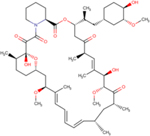 |
AD, PD, HD, ALS, FTLD-U |
Caccamo et al. 2010, J. Biol. Chem., 285(17), 13107–13120.; Caccamo et al. 2011, J. Biol. Chem. 286(11), 8924–8932. Spilman et al. 2010, PloS one, 5(4), e9979. Malagelada et al. 2010, Journal of Neuroscience, 30(3), 1166–1175. Ravikumar et al. 2004, Nature genetics, 36(6), 585–595; Zhang et al. 2011, Autophagy, 7(4), 412–425. Cortes et al. 2012, Journal of Neuroscience, 32(36), 12396–12405. |
|
| CCI-779 | 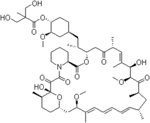 |
PD, HD | Ravikumar et al., 2004, Nature genetics, 36(6), 585–595. | |||
| Metformin | 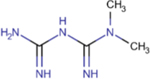 |
AD | Kickstein et al., 2010, Proceedings of the National Academy of Sciences, 107(50), 21830–21835. | Clinical trial phase II | ||
| Latrepirdine | 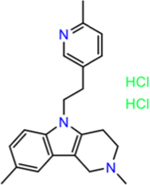 |
AD, HD | Steele and Gandy, 2013, Autophagy, 9(4), 617–618. | Clinical trial phase III | ||
| Resveratrol | 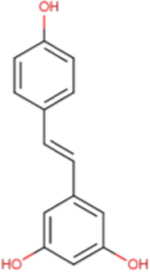 |
AD | Vingtdeux et al., 2010, Journal of Biological Chemistry, 285(12), 9100–9113. | Clinical trial phase III | ||
| Kaempferol | 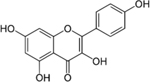 |
PD | Filomenin et al., 2012, Neurobiology of aging, 33(4), 767–785. | |||
| Celastrol | 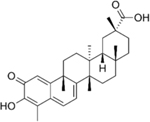 |
PD | Deng et al., 2013, Neurochemistry international, 63(1), 1–9. | |||
| Curcumin | 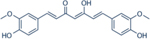 |
PD | Jiang et al., 2013, Journal of Neurolmmune Pharmacology, 8(1), 356–369. | |||
| Tamoxifen | 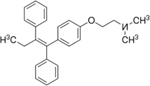 |
FTLD-U | ||||
| AMPK activation | Lithium | Li | AD, ALS | Forlenza et al., 2012, Drugs & aging, 29(5), 335–342; Fornai et al., 2008, Autophagy, 4(4), 527–530. | Clinical trial phase II inositol monophosphatase (IMPase) inhibitors |
|
| Trehalose | 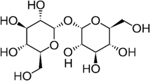 |
FTLD-U, ALS, HD | Zhang et al., 2014, Autophagy, 10(4), 588–602. Tanaka et al., 2004, Nature medicine, 10(2), 148–154 |
|||
| Rilmenidine |  |
HD | Rose et al., 2010, Human molecular genetics, 19(11), 2144–2153. | Imidazoline-1 receptors (11R) agonists | ||
| 10-NCP | 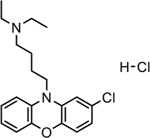 |
HD | Tsvetkov et al., 2010, Proceedings of the National Academy of Sciences, 107(39), 16982–16987. | AKT inhibitor | ||
| Resveratrol | 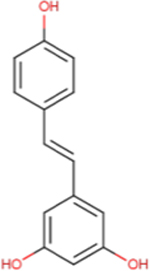 |
PD | Khan, et al., 2010, Brain research, 1328, 139–151; Chen, et al., 2009, Proceedings of the National Academy of Sciences, 106(10), 3907–3912; Jin et al., 2008, European journal of pharmacology, 600(1), 78–82. | |||
| Berberine | 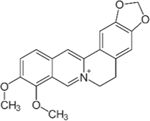 |
Krabbe’s disease |
Arzamastsev et al., 2013, US patent, US8440683B2, US20130226133A1 | |||
| RSVA314 | 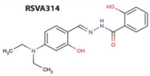 |
AD | Vingtdeux et al., 2011, Journal of Biological Chemistry, 285(12), 9100–9113. | |||
| RSVA405 | 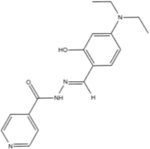 |
AD | Vingtdeux et al., 2011, Journal of Biological Chemistry, 285(12), 9100–9113. | |||
| Metformin |  |
HD,AD | Ma et al., 2007, Neuroscience letters, 411(2), 98–103. Gupta et al., 2011, Neuropharmacology, 60(6), 910–920. |
|||
| Initiation | BECN1 | Beclin-1 expression regulation | PD | Spencer et al., 2009, J Neurosci. 28; 29(43): 13578–13588. | ||
| Beclin-1 biomimetics | AD | Shoji-Kawata et al., 2013, Nature, 494(7436), 201–206. | ||||
| IP3 level and inositol level regulation | Carbamazepine | 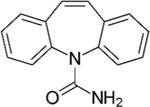 |
FTLD-U, ALS | Sarkar, et al., 2006, Autophagy, 2(2), 132–134. | ||
| Valproic Acid | 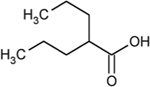 |
FTLD-U, ALS | Sarkar et al., 2006, Autophagy, 2(2), 132–134; Duarte-Silva et al., 2014, The Cerebellum, 13(6), 713–727. | |||
| inositol monophosphatase (IMPase) inhibitors | L-690,330 | 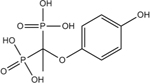 |
FTLD-U, ALS | Sarkar, et al., 2006, Autophagy, 2(2), 132–134. | ||
| Fusion and degradation | Histone Acetyl-Transferase | Spermidine |  |
FTLD-U | Yamashima et al., 2012, The Journal of clinical investigation, 118(8), 2796–2807. | |
| lysosomal function | Nicotinamide | 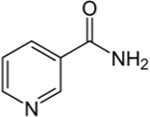 |
AD | Liu et al., 2013, Neurobiology of aging, 34(6), 1564–1580. | Clinical trial phase I | |
| TFEB | TFEB expression regulation | PD | Decressac et al., 2013, Proceedings of the National Academy of Sciences, 110(19), El817-El826. | |||
| calpain inhibitors | calpastatin | protein | AD | Trínchese et al., 2008, The Journal of clinical investigation, 118(8), 2796–2807. | ||
| Hsp 90 inhibitor | 17-DMAG | 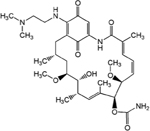 |
SCA3 | Silva-Fernandes et al., 2014, Neurotherapeutics, 11(2), 433–449 | clear Mutant ataxin-3 | |
| Nitric oxide synthase, brain (NOSI), Guanylate cyclase soluble subunit alpha-2 (GUCY1A2) | Methylthionini um chloride | 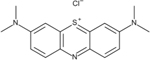 |
AD | Congdon et al., 2012, Autophagy, 8(4), 609–622. | clear Tau | |
| glycosylation of newly synthesized insulin receptor | Tunicamycin | 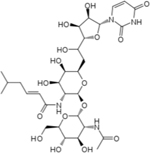 |
PD | Fouillet et al., 2012, Autophagy, 8(6), 915–926 | Protects dopaminergic neuron on a toxicological model | |
Inhibition of mTOR by rapamycin enhances autophagy in the early stage of AD, improving cognitive function, correlating with reduced levels of amyloid-β and tau phosphorylation as well as delayed formations of plaques and tangles.44–46 Rubinsztein et al. reported that rapamycin has a protective function against neurodegeneration in fly and mouse HD models, inducing the clearance of mHTT associated with motor activity.47,48 Rapamycin administration also protects neurons against degeneration and death in both in vitro and in vivo HD models, accompanied by an ameliorated amount of Lewy bodies and α-synuclein in the brain.49 Rapamycin increases autophagy in both FTLD-U50 and SOD mutated mouse models.51 The rapamycin-induced autophagy alleviated the FTLD symptoms in the mouse models50 but augmented the motor degeneration in ALS models.51 It was indicated that rapamycin might exacerbate the ALS pathology via apoptosis, oxidative stress, and other mechanisms in SOD1G93A mice, according to the severe mitochondrial impairment, higher apoptosis regulator Bax levels, and greater caspase-3 activation.51
4. ROLE AND BIOMARKER OF p62/SQSTM1 IN AUTOPHAGY AND DEGRADATION OF UBIQUITINATED PROTEINS
Ubiquitin-enriched misfolded protein inclusions represent an invariant characteristic for almost all the neurodegenerative diseases.14 p62 serves as a protein adaptor for ubiquitinated substrates and selective macroautophagy.52 As shown in Figure 4, three domains contribute to the role of p62 to shuttle ubiquitinated proteins to the autophagosome for degradation, including C-terminal UBA domain, LC3B-interaction region domain, and N-terminal Phox-BEM1 (PB1) domain.52 Misfolded proteins first self-aggregate, are bound to chaperone proteins, and are then ubiquitinated by UPS enzymes. The mono- or polyubiquitinated proteins then recruit p62 via its C-terminal ubiquitin-associated53 domain, leading to p62-promoted protein aggregation. The UBA domain binds to both mono- and polyubiquitinated proteins, with a preference for the K63 ubiquitinated proteins. Tanji et al. reported that K63-linked polyubiquitin is the most stable enhancer for protein inclusion formation by increasing the protein accumulation and facilitating the formation of intracellular inclusion bodies under normal conditions. Under pathological conditions, cocultured with tau and SOD1 mutations, K63 promotes the accumulation of tau and the formation of SOD1-containing inclusion bodies. K63-linked polyubiquitin acts as a partner with p62 to enhance autophagic clearance of protein inclusions linked to common neurodegenerative diseases.54 p62 may regulate K63-linked polyubiquitination via interaction with K63 ubiquitinating E3 ligases (TRAF6).55–57
Figure 4.
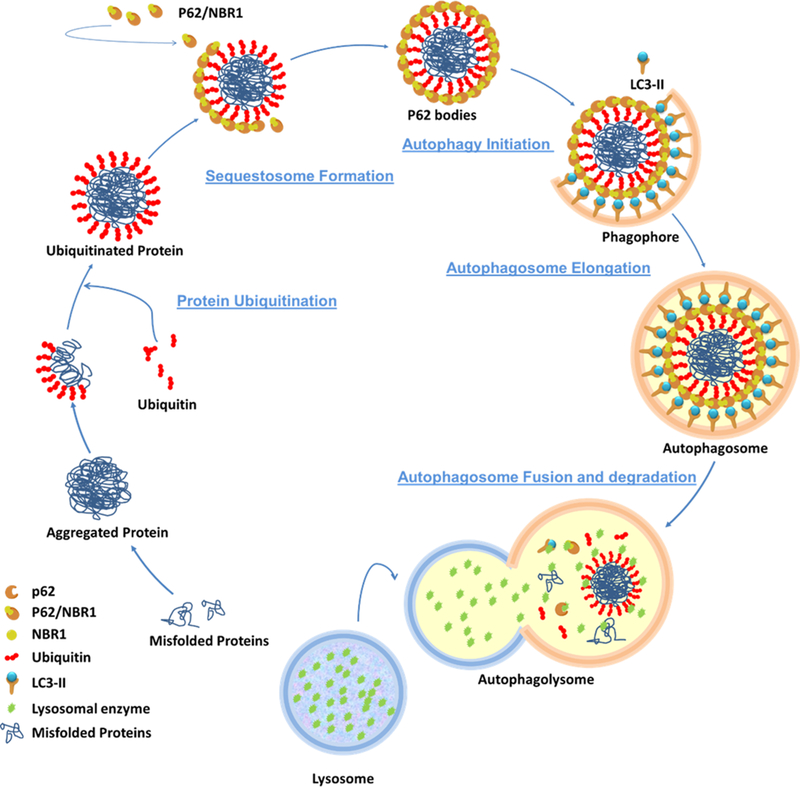
Trafficking role of p62 in selective macroautophagy.
As shown in Figure 4, ubiquitinated protein/p62 aggregates continue growing larger and become p62 bodies, which are then transported to a phagophore-forming location to form an autophagosome. The formation, growth, and transportation of p62 bodies cannot be achieved without the assistance of the N-terminal PB1 domain in p62. The formation of p62 bodies relies on p62 dimerization and further oligomerization. PB1 domain is indispensable and responsible for p62 dimerization; any mutation or variants in this domain will hamper the p62 dimerization. Both p62 homodimerization and heterodimerization with NBR1, both of which are important for the formation of p62 bodies, are regulated by the PB1 domain. Although the underlying mechanism is still unknown, the transportation of p62 bodies to the autophagosome formation location is also dependent on the p62-PB1-mediated homodimerization and heterodimerization.21,52,56,57
There are several biological processes related to p62. These processes could be measured by their correlated biomarkers, such as LC3B and beclin-1, biomarkers for macroautophagy. These autophagy biomarkers might also be used as clinical prognostic biomarkers, which can provide information on the likely outcome of diseases in patients and help identify patients for a specific treatment group. For instance, LC3B is one of the best and most commonly used autophagy markers in multiple in vitro assays. The expression levels of LC3B protein have also been examined as a useful biomarker by immunohistochemistry (IHC) for the selection of many cancer patients treated with chloroquine (CQ) and other lysosomal inhibitors. The treatment with lysosomal inhibitors causes the accumulation of p62 due to the blockage of p62 degradation in autolysosomes. In addition to LC3B, other proteins, such as LC3A, beclin-1, ULK1, and VPS34 are also used as autophagy biomarkers to monitor the autophagosome formation and autophagy flux. They might be applied as potential clinical prognostic biomarkers for many cancers as well. The beclin-1–VPS34 complex is a central coordinator for autophagy downstream.58 Beclin-1 was identified as a potential prognostic biomarker with favorable outcomes for patients with lung cancer, breast cancer, lymphoma, and gastric cancer.59 Additionally, p62 itself has long served as a biomarker for autophagy flux. Accumulation of p62 protein measured by immunofluorescence and Western blot is usually considered an indication of autophagy inhibition.58
The LC3 interaction region is another critical domain in p62 that plays a role in autophagy. The LC3 protein is a key component in autophagy that is necessary for autophagosome elongation and closure as depicted in Figure 4. LC3 protein is cleaved by Atg4 protease to expose its C terminal Gly residue and then conjugates to a phosphatidylethanolamine (PE) group to produce its active form LC3-II. LC3-II directly binds to the autophagosomal membrane and p62 and links them together to form an autophagosome with ubiquitinated protein–p62 aggregates. p62 interacts with LC3-II via its LIR domain (AA332–343). It has been suggested that the LIR domain also binds to key mitophagy components BCL2 interacting protein 3 (BNIP3) and BCL2/adenovirus E1B 19 kDa protein-interacting protein 3-like,23,60,61 as well as the autophagy-dependent cell death mediator tumor protein p53-inducible nuclear protein 1 (TP53INP1).62 The LIR domain is a short oligomer consisting of about 11 amino acids shared by 10 proteins, including p62. The interaction between p62 and LC3-II anchors the p62 bodies onto the LC3-II-containing autophagosomal membrane, which then continues its maturation and elongation in the autophagy process. Based on the selective interaction between LC3-II and p62, the autophagosome will only contain the ubiquitinated protein aggregates with p62/NBR1, and go through a selective autophagic degradation with lysosome fusion. Therefore, p62 and LC3-II are indispensable regulators for misfolded protein clearance through selective autophagy. Knocking down of LC3 proteins has been shown to induce the accumulation of p62/NBR1-ubiquitinated proteins in the cell plasma. Other studies have shown that ubiquitinated unfolded proteins or organelles could interact with p62/NBR1 and then attach to LC3-II in the autophagosomal membrane, to trigger specific autophagic elimination.57,63 All these studies demonstrated that p62 is a cargo protein that shuttles the ubiquitinated proteins to autophagic degradation.56
5. ROLE OF P62 IN UPS IN NEURODEGENERATIVE DISEASES
The UPS is responsible for the degradation of misfolded proteins via the 26S proteasome and serves as a cellular quality control system. UPS protein clearance has two steps, covalent linkage of polyubiquitin chains to target proteins and degradation of the ubiquitinated proteins by the 26S proteasome complex, releasing free and reusable ubiquitin. Three enzymes take part in ubiquitination of substrates and formation of a bond between the C-terminus of ubiquitin and substrate lysine residues (K6, K11, K27, K33, K29, K48, and K63). “Ubiquitin-activating enzyme (E1) forms a thiol ester with the carboxyl group of Gly76, activating the C terminus of ubiquitin. The activated ubiquitin molecule is carried by ubiquitin-conjugating enzyme (E2) and transferred to the substrate lysine residue by ubiquitin-ligases (E3).”63
As discussed above, the UBA domain in p62 can bind to ubiquitinated proteins, especially those possessing K63-linked polyubiquitin chains. The N-terminus of p62 can directly interact with the 26S proteasome subunit components Rpn10 and Rpt1.64 Therefore, p62 can shuttle the polyubiquitinated protein via the UBA domain to 26S proteasome via its N-terminus for degradation. In addition, as mentioned above, the PB1 domain of p62 can regulate p62 self-interaction and heterointeraction with PB1 domains of other proteins. It has also been reported that the PB1 domain can assume a ubiquitin fold, which might be favorable for p62 N-terminal interaction with the proteasomal subunit.64 It has also been reported that p62 associates with polyubiquitinated tau and targets it for proteasomal degradation, supporting the shuttling role of p62 in proteasome-mediated protein degradation.65 A similar role for p62 has also been reported for TrkA shuttling to the proteasome.66
Proteasome inhibitor epoxomicin treatment can enhance levels of ubiquitinated protein and p62 in SK-N-SH cells.67 p62 overexpression does not affect proteasome catalytic activity but delays UPS substrate delivery to the proteasome’s proteases, leading to their accumulation.68 Moreover, p62 overexpression along with pharmacological inhibition of UPS or autophagy does not further increase ubiquitin aggregates. It was also observed that soluble p62 colocalized with proteasomes and p62 aggregates contained inactive protea-somes, ubiquitinated proteins, and autophagosomes with epoxomicin treatment.67 These studies further suggest that p62 plays a critical role in shuttling ubiquitinated proteins for proteasome degradation.
Similar to macroautophagy, UPS, as another intracellular protein clearance system, is also involved in the pathology of neurodegenerative diseases. One possible assessment of UPS function in neurodegenerative diseases is to measure the end point proteolytic activity of the proteasome. Many studies have measured proteasome activities with purified proteasome, different cell lines, animal models, and brain tissues. The results have not been consistent. Some studies have shown reduced proteasome activities in neurodegenerative diseases, including Parkinson’s disease,40,69–72 Alzheimer’s disease,73–77 ALS,78 Huntington’s disease,79,80 and prion diseases.81 Some studies reported an unchanged or even increased proteasome activity in neurodegenerative disease models.81–85 This increase might be due to an induction of immunoproteasomes in inflammatory response86 or could be an adaptive response to the augmented load of misfolded proteins that occurs in neurodegeneration.87
Given the tremendous amount of proteins that are involved in UPS, they might be also associated with neurodegenerative diseases. For example, mutations in the vcp gene, which encodes valsolin-containing protein (a ubiquitin binding protein involved in UPS trafficking), were reported to be related to FTLD. A genetic study implied that certain variants in the ubiquilin 1 gene (UBQLN1), which encodes another shuttling protein that delivers ubiquitinated protein to the proteasome, increase the risk of AD. The deubiquitinating enzyme ubiquitin carboxyl-terminal hydrolase isozyme L1 (UCHL1) removes ubiquitin from proteins and is known to stabilize monomer ubiquitin and facilitate E3 ligase in UPS. A certain mutation in the UCHL1 gene has been reported to inhibit the proteasomal degradation of α-synuclein, which makes individuals more susceptible to PD.88 On the other hand, UCHL1 overexpression is found to improve memory and restore synaptic functions in AD mouse models.89
Parkin, an E3 ligase involved in UPS, is associated with the pathology of both AD and PD and is one of the major components found in Lewy bodies and Lewy neurites, the major pathological features of PD.90 Parkin overexpression has also been reported to decrease Aβ and restore impaired long-term potentiation (LTP) and behavioral abnormalities in APP/PS1 mouse model.91–93 The C-terminus of Hsp70-interacting protein (CHIP) is another important E3 ligase in UPS and has been implicated in AD, HD, and PD pathogenesis. CHIP and heat shock protein 70 (Hsp70) are upregulated in the brains of AD model mice.94 CHIP and Hsp70 can induce the ubiquitination and degradation of p-tau. In addition, over-expression of CHIP or Hsp70 reduces steady-state Aβ levels and promotes Aβ degradation in AD models.95 Moreover, CHIP can ubiquitinate LRRK296 and α-synuclein,97 promote their degradation, and improve the ligase activity of parkin in PD models.98 Furthermore, CHIP can suppress the aggregation of polyglutamate proteins and reduce their neuronal toxicity in HD models; while knockdown of CHIP exacerbates the HD process in a transgenic model.93,99
6. SEQUESTOSOME 1/P62: A MULTIDOMAIN PROTEIN FUNCTIONING AS A SIGNALING HUB
As shown in Figure 5, sequestosome 1/p62, originally identified in 1996 by Joung, functions as an intracellular signal modulator in multiple signaling pathways. p62 is a multifunctional protein rich in protein-interaction domains, including an N-terminal PB1 domain, ZZ-type zinc finger domain, nuclear localization signal (NLS), TRAF6 binding domain (TBS), export motif (NES), LC3-interacting region, Kelch-like ECH-associated protein 1 (Keapl)-interacting region (KIR), and a C-terminal UBA domain, consistent with its role as a signaling hub.100 p62 protein acts as a signaling hub for different signaling pathways related to neuronal disease, as shown in Figure 6.13,101
Figure 5.
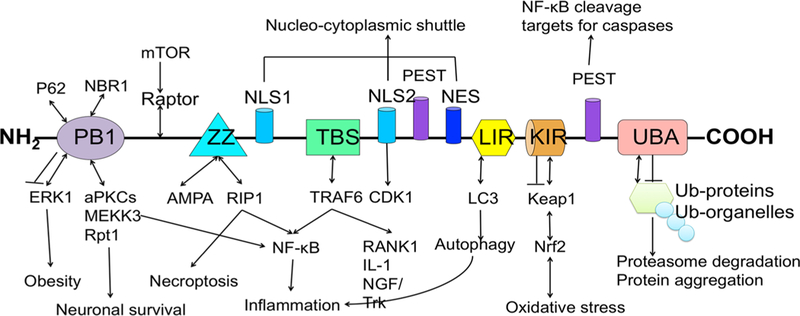
Functional domains in p62 with their interacting proteins and related pathways.
Figure 6.
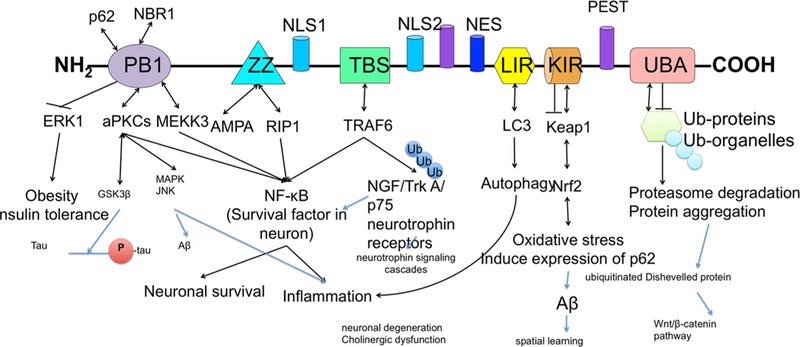
Multiple domains of p62 and its functions related to neurodegenerative diseases.
Among its multiple motifs, p62 has an N-terminal PB1 domain, which is a protein–protein interaction module present in many other signaling molecules, such as atypical protein kinases Cs (αPKCs) and mitogen-activated protein kinase kinase kinase 3 (MEKK3). These proteins and p62 can bind to each other and themselves through their PB1 domains.7,102 First, p62 interacts with itself and aggregates via the PB1 domain, facilitating its homo-oligomerization and cellular function.103 Additionally, hetero-oligomerization can also occur with p62 and other PB1 domain-containing proteins, including αPKCs, dual specificity mitogen-activated protein kinase kinase 5 (MEK5), mitogen-activated protein kinase 3 (MAPK3), MEKK3, and Rpt1, which have critical roles in different signaling pathways that modulate adipogenesis, angiogenesis, neuron survival, cardiovascular pathogenesis, and osteoclastogenesis.104
Among them, the interaction between p62 and αPKCs is associated with the activation of the nuclear factor κ-B (NF-κB), which is downstream of cell stimulation by interleukin 1 (IL-1),105 tumor necrosis factor receptor superfamily member 11A (RANK) ligand,106 or nerve growth factor (NGF), to promote neuron survival and to trigger inflammation.107,108 The downstream signaling cascades will be elevated or suppressed based on the up- or down-regulation of p62 protein expression level. It was reported that knocking out p62 would reduce the αPKC activity, thus increasing MAPK, RAC-α serine/threonine-protein kinase (AKT), and mitogen-activated protein kinase 8–10 (JNK) signaling,102 which have detrimental effects leading to Aβ pathology and inflammation in neurodegenerative disease. The p62 PB1 domain also binds to MEKK3, thus activating NF-κB signaling.109 In addition, glycogen synthase kinase-3 β (GSK3β) activity was also enhanced in the p62 knock out mice, leading to tau hyperphosphorylation.110,111 Normally, p62 will suppress the activity of MAPK, knocking out p62 protein activated MAPK signaling, leading to insulin resistance, impaired plasma glucose levels, and obesity.112 Insulin resistance has been observed in AD brain samples.113 It is also reported that the interaction between p62 and MAPK3 will promote adipogenesis.114
Next, p62 has a zinc finger106 domain, which interacts with receptor interaction protein (RIP) to regulate NF-κB signaling and inflammation and necroptosis pathways in conjunction with atypical PIKC.5,115–117 In addition, p62 possesses a newly reported region located between the ZZ and TB domains that interacts with mTOR regulator Raptor,118 which makes p62 an integral component for mTORC1 complex. p62 is necessary for mTORC1 activation in response to the uptake of amino acids and the subsequent mTORC1 recruitment to lysosomes.118 The Xie lab and their collaborators have discovered P62 ZZ domain specific inhibitors and identified them as potential treatments for multiple myeloma and Huntington’s disease.3,119–122 These inhibitors have shown effect to modulate autophagy and proteolysis.123–125
Moreover, p62 interacts with TRAF6, a lysine 63 E3 ubiquitin ligase, via its central the TRAF6 binding site (TBS) to regulate several signaling pathways related to neuro-degenerative diseases.101,105,126 The interaction of p62 and TRAF6 induces p62–TRAF6 oligomerization, followed by K63 polyubiquitination of TRAF6, which leads to the activation of NF-κB.101,105,107 In 2000, Sanz et al. reported that p62 can interact selectively with TRAF6, thereby activating the NF-κB activation in response to IL-1.105 NGF interacts with both p75 and tropomyosin receptor kinase A (TrkA), leading to NF-κB activation.127 In 2001, Wooten and colleagues showed that p62 binds to TrkA but not p75, whereas TRAF6 binds to p75 but not TrkA. They demonstrated that an interaction between p62 and TRAF6 could act as a bridge to link p75 and TrkA signaling and a high affinity-binding site for NGF. They also suggested that p62 serves as a scaffold protein for the activation of NF-κB signaling by NGF, which mediates neuron survival and differentiation responses.127 Geetha and co-workers found that NGF stimulated TrkA polyubiquitination and this polyubiquitination of TrkA was reduced in p75 knock out mice. Both mutations in ubiquitin (K63R) and an absence of TRAF6 will abolish the polyubiquitination.128 Moreover, blocking the TBS domain in p62 and mutating the K485 in Trk A with arginine will also eliminate the polyubiquitination of TrkA, and the following NGF activated NF-κB signaling. This work indicated that polyubiquitination serves a role as a common signaling platform for the complex formation and receptor internalization.128
In 2005, Wooten showed that p62 facilitated the polyubiquitination of TRAF6.129 This polyubiquitination will be inhibited or blocked by mutation or deletion of the PB1, UBA, or TBS domain in p62. NGF stimulates the TRAF5 polyubiquitination and p62–TRAF6–IKK–PKC complex formation, which are suppressed by the blocker of p62–TRAF6 interaction.129 Zheng et al. reported that in PC12 cells, Aβ impaired the TrkA phosphorylation, ubiquitination, and complex formation with TRAF6–p62–p75.130 They also observed similar impairment of TrkA tyrosine phosphorylation, ubiquitination, and downstream signaling in AD patient brain hippocampus samples compared with the control. A possible explanation is that the nitrotyrosylation of TrkA is increased in the AD hippocampus, which might in turn reduce the TrkA that undergoes ubiquitination and phosphorylation.55,130 Additionally, they reported a reduced production of matrix metalloproteinase-7 (MMP-7) in AD hippocampus samples, which cleaves proNGF, resulting in an accumulation of proNGF and an attenuated level of active NGF.130 The accumulated proNGF will activate the p75 (not with TrkA), thereby inducing apoptosis and neuron death. Further analysis showed Aβ and AD lessened not only the ubiquitination and phosphorylation of TrkA but also TrkA regulated downstream signaling, such as NF-κB, p38–MAPK, and PI3K–AKT pathways.55,101,130 Furthermore, studies showed that deregulation of TrkA/p75 induced neurotrophin signaling caused by lack of p62 or p75 have been linked to cholinergic dysfunction in AD.131
Furthermore, the LIR domain and C-terminal UBA domain enable p62 to function as an adaptor between autophagy and ubiquitinated proteins. p62 binds to ubiquitin and ubiquitinated proteins via its UBA domain and then traffics the ubiquitinated protein complex to the autophagosome through LIR interaction with LC3. The detailed description was discussed in the macroautophagy section (section 3).
Additionally, p62 has a KIR domain that directly binds to Keap1 and interferes with the Keap-nuclear factor erythroid 2-related factor 2 (Nrf2) interaction, activating the Nrf2 mediated reactive oxygen species (ROS) elimination. Keap1 is an adaptor for Cullin-3 ubiquitin ligase that senses oxidative stress and binds to Nrf2. Nrf2, a basic leucine zipper protein, is responsible for a series of antioxidant proteins and detoxifying enzymes, which protect cells against oxidative damage triggered by injury and inflammation.132 Keap1 binds to KIR at the same binding site for Keap1–Nrf2 interaction, thus inhibiting the interaction between Keap1 and Nrf2, leading to the stabilization of Nrf2 and transcriptional hyperactivation of the Nrf2 target gene.132,133 Given that p62 is closely involved in selective autophagy, the p62–Keap1–Nrf2 axis is also linked to selective autophagy by some post-translational modifications like phosphorylation and ubiquitination.134 Moreover, since p62 is degraded through autophagy, the lack or deficiency of autophagy in hepatocellular carcinoma cells or liver disease patients will result in p62 accumulation, thereby evoking persistent activation of Nrf2.135,136 On the other hand, Nrf2 stimulates p62 protein expression, which then produces a positive feedback loop between Nrf2 activation and p62 protein expression. These studies showed that p62 served as a bridge to link the selective autophagy and ubiquitination system to the oxidative stress response system and redox regulation.137 Maintenance of homeostasis of p62 protein levels is crucial for neuron health. Kanninen et al. showed that the AD symptoms in transgenic AD mice would be improved by elevated Nrf2 expression.138–140
In addition to signaling pathways mentioned above, p62 protein also interacts with other proteins and regulates other signaling pathways influential to brain function. For instance, p62 binds to ubiquitinated Dishevelled protein (Dvl2) and mediates its autophagic clearance, so that p62 can inhibit Wnt signaling, which is known to play a role in AD pathogenesis by its ability to control neuron development and maintain synaptic function in the brain.141 Moreover, two nuclear localization systems (NLS1 and NLS2) and one nuclear export system (NES) were identified in the structure of p62 protein. They are involved in the nucleo-cytoplasmic shuttling for p62 and other scaffold proteins. p62 contains two PEST regions rich in proline (P), glutamic acid (E), serine (S), and threonine (T), which serve as proteolytic signals for rapid degradation.142 Furthermore, scientists reported that p62 could induce the intracellular aggregation and autophagic clearance of cyclic AMP phosphodiesterase-4A4 (PDE4A4), eliminating the PDE4A4 from its functional sites and thereby augmenting cyclic adenosine monophosphate (cAMP) signaling. So the reduced p62 protein expression will attenuate the cAMP signaling, which plays an important role in the mediation of memory and synaptic plasticity.143–146
7. GENETIC REGULATION OF P62/SQSTM1 IN NEURODEGENERATIVE DISEASES
Dysregulation of p62 levels and functions was observed in several neurodegenerative diseases. For example, studies in p62 knockout mice have clearly demonstrated that the lack of p62 protein could result in neuropathological lesions including to the increase of hyperphosphorylated tau and neurofibrillary tangles, anxiety, depression, loss of working memory, and reduced serum brain-derived neurotrophic factor levels and neurodegeneration.105,147,148 Wooten et al. reported a detectable increase in accumulation of insoluble Lys63 ubiquitinated proteins in the neurons of p62 knockout mice.149
7.1. Regulation of p62 in ALS, FTLD, and ALS/FTLD.
Amyotrophic lateral sclerosis is a progressive, invariable fatal neurological disease, which is characterized by the gradual degeneration and depletion of motor neurons in both the brain and spinal cord that are responsible for controlling voluntary muscle movement. Eventually, all voluntary muscles will be affected, and the patient will lose control of muscle movement and strength. Fatality in ALS patients is due to the loss of function of the respiratory muscles. The formations of ubiquitin-immunoreactive inclusions are widely detected in the brains of ALS patients. In 1991, Okamoto et al. examined the brains of 27 amyotrophic lateral sclerosis patients and 50 controls.150 They found new ubiquitin-positive intraneuronal inclusions in the hippocampal granular cell layer and entorhinal cortex in seven of the ALS patients. Then in 2004, Nakano and colleagues tested p62 immunoreactivity in ubiquitin-positive inclusions in five ALS-D patients and confirmed that the ubiquitin-immunoreactive inclusions are also p62 positive.151 This suggested that p62 and ubiquitin could play a common role in formation of inclusions and in preventing neuronal death in the ALS degenerative disease process.
Concurrently, mutations in SQSTM1 encoding p62 protein were screened in a large cohort of both familial and sporadic ALS patients. Fecto et al. examined SQSTM1 mutations in a cohort of 546 patients.152 They identified 10 novel SQSTM1 mutations in 15 patients. Teyssou and colleagues sequenced SQSTM1 in 74 sporadic ALS cases and 90 familial ALS French patients.153 They confirmed two mutations in the UBA domain that were previously reported in ALS and Paget’s disease patients. They also identified two new missense mutations in sporadic ALS cases, which were not identified in the control group. Further analysis revealed increased p62 levels in the spinal cord and large p62 inclusions in motor neurons. A study from the UK confirmed the presence of the p(Pro392Leu) SQSTM1 mutation in the UBA region in both familial ALS and PDB, indicating a common pathogenic pathway that converges on protein homeostasis.154 Gal et al. reported that accumulation of p62 can increase formation of polyubiquitinated protein and mutant SOD1 aggregates in G93A mouse spinal cord affected cells.155 They found that p62 can recognize and bind to an ALS associated SOD1 isoform through its SOD1 mutant interaction region (SMIR), indicating that p62 could link mutant SOD1 to autophagy and proteasome pathways in both ubiquitin-dependent and independent mechanisms.156 Their findings suggested a direct genetic role for p62 in ALS pathogenesis and a potential therapeutic use for ALS.
The absence of SQSTM1/p62 was found in childhood-onset neurodegenerative disease patients’ fibroblasts and has been linked to defects in mitophagy owing to compromised autophagosome formation following mitochondrial depolarization.19 The effect of SQSTM1/p62 loss-of-fUnction has been evaluated in zebrafish model of ALS/FTLD, where p62 knockdown led to abnormal motor behavior and shortening of motor neurons, which can be rescued by rapamycin administration.157,158
Frontotemporal degeneration (FTD) is the most common cause of dementia under the age of 65 years and the third most common cause of neurodegenerative dementia, after AD and PD.159,160 The syndrome is also called frontotemporal lobar degeneration (FTLD). However, FTLD refers to a larger group of disorders, FTD being one of its subgroups. The other subgroups of FTLD are progressive nonfluent aphasia (PFNA), and semantic dementia.61,161 Neuronal cytoplasmic inclusions are pathological hallmarks in several neurodegenerative diseases.162 For FTLD, cytoplasmic inclusions composed of either the 43-kDa transactive response-DNA-binding protein (TDP-43) or tau are characterized in almost 90% of FTLD.54 Tanji and colleagues immunoprecipitated p62 in the cerebral cortex from FTLD patients with TDP-43 and found that p62 co-immunoprecipitated several proteins, including TDP-43.54 p62 can be involved in the degradation of 35 kDa TDP-43, a truncated isoform of TDP-43.54 The degradation and dysregulation of TDP-43 might play a causative role in ALS and FTLD.160 Mutations distributed throughout p62 might affect the interaction between p62 and TDP-43 and may participate in the pathogenesis of TDP-43 proteinopathy.54,56
In the last two decades, increasing evidence implied that ALS and FTLD share some clinical, neuropathological, and genetic features. A subtype of disease with both ALS and FTLD features is classified as ALS-FTLD. Therefore, we mentioned the regulation of p62 in these two diseases together in one section. FTLD signs can be seen in patients primarily diagnosed with ALS, implying clinical overlap among these two disorders. It is reported that up to 40–50% of ALS patients have FTLD dysfunctions, accessed as frontal dysfunctions or language impairment.163,164 Additionally, some reports claimed ~50% of FTLD cases developed with ALS signs,164,165 as subclinical motor neuron degeneration, while others reported about 10% FTD cases with ALS syndromes. Probably these discrepancies are caused by different disease classifications as well as statistical evaluation methods.166 In the past decade, pathological investigations and genetic screening have contributed tremendously to elucidating the pathology and genetic variability associated with FTD and ALS. Evidence of shared molecular pathological features was also reported to explain the clinical overlaps between FTD and ALS, such as the ubiquitin-positive neuronal inclusions, its associated TDP-43 aggregate proteinopathy,166–170 and tau pathology.
Some papers have uncovered the genetic overlap between FTLD and ALS. The most common one is the C9orf72 repeat hexanucleotide expansion coding, which occurs in 10% of all patients. Al-Sarraj et al. identified a new distinctive pathological subtype of C9orf72-ALS/FTLD, which is characterized by p62 positive, phosphorylated TDP-43 (p-TDP-43) negative cytoplasmic and nuclear inclusions.160 They found that p62 bound to an unknown ubiquitinated protein in a distinctive inclusion, other than p-TDP-43 inclusion, which is the core disease inclusion.160 Then, Mori et al. found that most of these core inclusions contain poly(Gly-Ala), poly(Gly-Pro), and poly(Gly-Arg) repeat proteins translated from the GGGGCC repeat expansion gene.171 The genetic mutations in ALS/FTLD and the dominant pathology in C9orf72-ALS/FTLD patients are connected directly by this finding.171 Later, King et al. also reported a FTLD patient with mixed p62, TDP-43, and tau pathology.56,172
P62 is an excellent label to detect the ubiquitinated cytoplasmic inclusion bodies that are important factors in neurodegenerative disease.162 ALS-FTLD associated L341V mutation in LIR of p62 lead to defective recognition and reductive binding to LC3 and failure in autophagosome formation and aggregated protein degradation. This phenotype was also ameliorated by rapamycin administration, implicating a potential pathogenic role for autophagy in SQSTM1-ALS.173 Two ALS-FTLD associated KIR mutations of SQSTM1/p62, P348L and G351A, disrupt Keap1 binding, leaving Keap1 to interact with Nrf2, which inactivates the Nrf2 signaling related to oxidative stress response. This suggests that SQSTM1 mutations in KIR reduce Nrf2 signaling activation and partially contribute to etiology of ALS-FTLD through a mechanism of regulation of oxidative response genes.174
p62-mediated degradation of SOD1 isoform and TDP-43 via autophagy may provide a therapeutic option to treat a subtype of ALS, FTLD, and ALS/FTLD patients. The mTOR kinase inhibitor rapamycin enhances the autophagy in both FTLD-U50 and SOD1 mutated mouse models.51 The rapamycin-induced autophagy alleviates the FTLD symptoms in the mouse models50 but augments the motor degeneration in ALS models.51 Wang et al. observed improvement in cognition and memory as well as decreased motor and neuronal function loss in FTLD model mice treated with rapamycin and three additional autophagy enhancers (spermidine, carbamazepine, and tamoxifen).50 However, autophagy enhancer rapamycin accelerated the motor neuron degeneration, shortening the life span of ALS mice accompanied by severe mitochondrial impairment, higher Bax levels, and greater caspase-3 activation.51 It is suggested that rapamycin might exacerbate the ALS pathology via apoptosis, oxidative stress, and other mechanisms in SOD1G93A mice.51 Additionally, other re-searchers suggested that the mTOR-independent autophagy enhancer trehalose could also delay the motor degeneration process and prolong the neuron survival via the activation of autophagy.175,176
7.2. Regulation of p62 in Parkinson’s Disease (PD).
Parkinson’s disease (PD) is the second most common neurodegenerative disorder, following Alzheimer’s disease, and the most common neurodegenerative motion disease. It is a progressive disorder in the central nervous system (CNS) that affects movement. Tremors are the most well documented sign of early stage PD; then progressive development of shaking, muscle rigidity, slowed movements, and difficulty walking occurs. Cognitive and mental problems are common in the advanced stages of PD. The cause of the disease is still unknown, but it is suggested to be associated with a combination of genetic, epigenetic, and environmental factors. Intracellular accumulation of Lewy bodies and Lewy neurites, consisting of aggregated proteins, such as α-synuclein, parkin, and ubiquitinated proteins, is one of the major pathological factors of PD.93 Variants in the gene encoding α-synclein177,178 are present in autosomal dominant familial PD, while mutations in genes encoding parkin,179,180 PINK1,181 UCHL1,182 and LRRK2183 result in autosomal recessive familial PD.93 Among them, PINK1 and parkin are the most common disease-causing genes identified for familial PD. Parkin is an E3 ubiquitin ligase, and PINK1 is a mitochondria-targeted serine-threonine kinase. PINK1 and parkin work together to maintain mitochondrial integrity.102 PINK1 and parkin mediate mitophagy, the selective degradation of mitochondria by autophagy. Scientists reported that p62/SQSTM1 is indispensable for parkin-induced mitochondrial clustering184 and plays a role in PINKl/parkin-mediated mitophagy.185 Parkin and p62 also have an important role in autophagy, loss of which in dopaminergic neurons was recently demonstrated to cause Lewy pathology and motor dysfunction in aged mice.186 It is also implicated that the dysregulation of parkin/p62 axis may be involved in proteasomal degradation and selective vulnerability of neuronal cells during the onset of PD pathogenesis.187
It is reported that the interaction between p62 and LRRK2 regulates LRRK2 toxic biology in PD models.188 Mutations in LRRK2 lead to autosomal recessive familial PD. p62 physically interacts with LRRK2 as a selective autophagic receptor and modulates antophagic clearance of LRRK2. In turn, LRRK2 indirectly regulates the phosphorylation of p62 and the subsequent interaction between phosphorylated p62 and Keap1.189 A p62-immunoreactive profile was found in the hypothalamic paraventricular nucleus and the paraventricular nucleus in patients with PD and Lewy body disease.190 The phosphorylated α-synuclein positive Lewy body was colocalized with p62, but the p62 bodies did not necessarily colocalize with phosphorylated α-synuclein. The average size of p62 bodies was larger in PD patients compared to control (p < 0.05), implicating the accumulation of p62 or impairment of autophagy in PD being linked to Lewy body formation.191
In addition to parkin/PINK1, p62 was found to colocalize with neuronal and glial ubiquitin-containing inclusions in PD, AD, FTLD, and MSA.192 The interaction between ubiquitin and p62 participates in the formation of paired helical filament (PHF)-tau and α-synuclein inclusions.192,193 Moreover, Nakaso suggested that p62 might protect neuronal cells from the toxicity caused by misfolding protein via promoting the aggrege formation under stressful conditions, according to the results of Lewy body formation.194
7.3. Regulation of p62 in Huntington’s Disease (HD).
Huntington’s disease (HD) is a fatal genetic disorder that causes the progressive breakdown of nerve cells in the brain. Today, there are approximately 30 000 symptomatic Americans and more than 200 000 at-risk of inheriting the disease. HD is characterized by progressive neuron dysfunction, which will lead to progressive neuron death in the brain. So far available treatments can only help to alleviate some of the physical or mental symptoms associated with HD but cannot cure the disease. HD is associated with a CAG repeat expansion in the gene encoding huntingtin.195 Dysfunction of macroautophagy has been proposed to contribute to pathogenesis of Huntington’s disease. Inability of autophagic vacuoles to recognize cytosolic cargo was identified in HD cells and could be responsible for the insufficient macro-autophagy in HD cells.196 It is reported that ULK1 phosphorylates Atg14 and regulates Atg14–Vps34 kinase activity to control macroautophagy level. Atg14 phosphorylation, Vps34 activity, and macroautophagy are reduced in HD mouse models. This reduction of the specific phosphorylation of Atg14 is mediated, in part, by p62-induced sequestration of ULK1 to an insoluble cellular fraction. Increased ULK1 levels and ULK-mediated Atg14 phosphorylation facilitate the clearance of polyQ mutant in cells.197
p62 is demonstrated to be associated with HD via mediating autophagy and clearance of aggregated mutant huntingtin often under stress in many reports. In mouse R6/1 Huntington model, p62 level was reduced in all brain regions at an early stage of the disease, it remained reduced as the disease progressed, and accumulated in striatal and hippocampal neurons in the late stage of the disease.198 SQSTM1/p62 and LC3 form shell proteins surrounding aggregates of mutant huntingtin that are degraded by autophagy to protect neurons. Reduction of p62 protein levels or dysfunction of p62 significantly increased cell death induced by mutant huntingtin in Huntington’s disease.199 The genetic ablation of p62 in three HD model mice (R6/2, HD190QG, and HD120QG) was found to increase cytoplasmic inclusion formation by interrupting autophagic clearance of polyQ inclusions, which decreases polyQ nuclear influx and paradoxically ameliorates disease phenotypes by reducing toxic nuclear inclusions.200 Ectodermal-neural cortex 1 (ENC1) was reported to bind with p62 in C terminal Kelch domain, which is needed for p62 to interact with ubiquitinated mutant HTT aggregates, thus blocking p62 cargo recognition in macroautophagy. The interaction between p62 and ENC1 is enhanced under ER stress, which inhibits p62 cargo recognition and macro-autophagy, leading to accumulation of neurotoxic mHTT. On the other hand, knockdown of ENC1 will relieve ER-stress induced death of neurons that express mHTT.201 HD cells are more vulnerable to cell death under proteotoxic stress and during stress recovery. SQSTM1/p62 is upregulated in response to proteotoxic stress, and distinctive subcellular localization of p62 is observed in normal cells and HD cells. The upregulated and abbreviated subcellular localization of p62 might contribute to enhanced vulnerability to proteotoxic stress and its recovery in Huntington’s disease.202
7.4. Regulation of p62 in Alzheimer’s Disease (AD).
p62 plays a role in AD pathology. AD is the most common neurodegenerative disease and most common cause of dementia. It is a progressive disorder that slowly destroys memory and cognitive functions. The pathological mechanism of AD is still unknown. Although no direct mutations in p62 have been detected in AD patients, low expression of p62 has been shown in some AD patients.35 Genetic inactivation of p62 results in Aβ accumulation, tau hyperphosphorylation, and neurodegeneration.35 Du et al. observed that the p62 cytosolic level was significantly lower in the frontal cortex of AD patients compared to the control group. They also claimed a lower expression of p62 protein in transgenic (APP-tau-presenilin 1/PS 1) AD mice models due to oxidative stress. The promoter of the p62 gene is in a rich GC repeat region, which is vulnerable to oxidative stress and other environmental factors that might play a role in AD pathology.102 However, no clear evidence has proven this yet. In addition to GC regions, the p62 gene promoter involves several binding sites for Ets-1 transcription factor family members,203 which can mediate multiple neuronal functions in the brain, including cognitive development, neuron proliferation, and neuron survival. For example, Ets can regulate PSEN1 gene promoter expression, thus controlling the encoding of presenilin-1 protein, which is an integral part for γ-secretase complex.204 γ-Secretase is responsible for the cleavage of amyloid protein precursor (APP) to produce amyloid-β (Aβ) peptide. One of the major pathological characteristics of AD is Aβ accumulation that forms amyloid plaques in the brain.104 It was reported that overexpression of p62 rescues cognitive deficit in APP/PS1 mice, with Aβ level and plaque load decreased and autophagy increased. This reduction in amyloid-β is prevented by administration of an autophagy inhibitor, indicating that p62 regulates Aβ turnover via autophagy.205
The PB1 domain in p62 can interact with αPKC and regulate its downstream signaling cascade. Knocking down of p62 will reduce the activity of PKCl/λ, therefore increasing the activities of GSK3β, JNK, MAPK, and AKT signaling,102 which subsequently leads to tau phosphorylation and detrimental effects on Aβ and inflammation pathology in AD.110,111 NF-κB signaling, which supports the survival of neurons, can be triggered by p62–TRAF6–TrkA complex129 via induction by NGF or αPKC activation via interaction with p62.127 Additionally, lack of p62 results in dysfunction of TrkA/p75-induced neurotrophin signaling, which has been associated with cholinergic dysfunction in AD.131 p62 also binds to Keap1 by its KIR to interrupt Keap1–Nrf2 mediated antioxidative response. Phosphorylation of S349 in KIR of p62 can be induced by both disruption of the protein degradation system and activation of oxidative stress in AD. The ratio of pS349 p62 to total p62 was significantly increased in the brains of AD patients compared with controls, indicating the occurrence of both sustained activation of Keap1–Nrf2 system and disruption of protein degradation system in the AD brain.206 Antioxidative capacity of Keap1–Nrf2 oxidative stress response system was reduced along with decrease in p62 level and enhanced autophagy in AD rat brain. This might result in tau hyperphosphorylation and subsequent structural and functional damage to neurons.207
8. SUMMARY
p62 is a multidomain signaling scaffold protein that integrates multiple signaling pathways through its functional domains, including PB1, ZZ, TBS, LIR, and KIR. These domains interact with different signaling proteins, involving PKC, RIP1, TRAF6, LC3, and Keap1, to regulate apoptosis, autophagy, oxidative stress response, inflammation, and so on. Additionally, p62 acts in trafficking cargo in the initiation and elongation step of the macroautophagy process to help remove the abnormal protein aggregates and destroyed organelles from cells and protect neurons against neurodegeneration and death. Additionally, several studies have reported that gene expression regulation and mutations in p62 are correlated with the occurrence of some common neurodegenerative diseases. Pharmacological modulators enhancing autophagy, which is also regulated by p62, showed therapeutic efficacy to treat several neurodegenerative diseases in preclinical models as well as in some clinical trials. All of these studies suggested that p62 played a crucial role in the pathology of neurodegenerative disease. p62, itself, can be identified as a potential therapeutic target against neurodegenerative diseases. However, how to balance the positive and negative effects of p62 modulators for neurodegenerative diseases based on the protein structure remains to be defined.
ACKNOWLEDGMENTS
The authors thank Dr. Liyong Zhang and Dr. Terence Francis McGuire for their kind help in revising the article.
Funding
Authors acknowledge the funding support to the X.X. laboratory from the DOD (Grant W81XWH-16-1-0490) and NIH NIDA (Grant P30 DA035778A1).
Footnotes
The authors declare the following competing financial interest(s): Xiangqun Xie is the Founder of ID4Pharma.
REFERENCES
- (1).Choonara YE, Pillay V, du Toit LC, Modi G, Naidoo D, Ndesendo VM, and Sibambo SR (2009) Trends in the molecular pathogenesis and clinical therapeutics of common neurodegenerative disorders. Int. J. Mol. Sci. 10, 2510–2557. [DOI] [PMC free article] [PubMed] [Google Scholar]
- (2).Vadlamudi RK, and Shin J (1998) Genomic structure and promoter analysis of the p62 gene encoding a non-proteasomal multiubiquitin chain binding protein. FEBS Lett. 435, 138–142. [DOI] [PubMed] [Google Scholar]
- (3).Zhao W, Eiseman JL, Beumer JH, Xie X-Q, Yang P, Myint K-Z, Wang L, Feng Z, Windle JJ, Roodman GD, and Kurihara N (2013) A Novel Sequestosome-1/p62 ZZ Domain Inhibitor Induces New Bone Formation In The Presence Of Myeloma In Vivo. Blood 122, 684.23801635 [Google Scholar]
- (4).Pankiv S, Clausen TH, Lamark T, Brech A, Bruun JA, Outzen H, Overvatn A, Bjorkoy G, and Johansen T (2007) p62/SQSTM1 binds directly to Atg8/LC3 to facilitate degradation of ubiquitinated protein aggregates by autophagy. J. Biol. Chem. 282, 24131–24145. [DOI] [PubMed] [Google Scholar]
- (5).Puissant A, Fenouille N, and Auberger P (2012) When autophagy meets cancer through p62/SQSTM1. American journal of cancer research 2, 397–413. [PMC free article] [PubMed] [Google Scholar]
- (6).Nezis IP, and Stenmark H (2012) p62 at the interface of autophagy, oxidative stress signaling, and cancer. Antioxid. Redox Signaling 17, 786–793. [DOI] [PubMed] [Google Scholar]
- (7).Moscat J, Diaz-Meco MT, and Wooten MW (2007) Signal integration and diversification through the p62 scaffold protein. Trends Biochem. Sci. 32, 95–100. [DOI] [PubMed] [Google Scholar]
- (8).Manley S, Williams JA, and Ding W-X (2013) Role of p62/SQSTM1 in liver physiology and pathogenesis. Exp. Biol. Med. 238, 525–538. [DOI] [PMC free article] [PubMed] [Google Scholar]
- (9).Pickford F, Masliah E, Britschgi M, Lucin K, Narasimhan R, Jaeger PA, Small S, Spencer B, Rockenstein E, Levine B, and Wyss-Coray T (2008) The autophagy-related protein beclin 1 shows reduced expression in early Alzheimer disease and regulates amyloid β accumulation in mice. J. Clin. Invest. 118, 2190–2199. [DOI] [PMC free article] [PubMed] [Google Scholar]
- (10).Bjørkøy G, Lamark T, Brech A, Outzen H, Perander M, Øvervatn A, Stenmark H, and Johansen T (2005) p62/SQSTM1 forms protein aggregates degraded by autophagy and has a protective effect on huntingtin-induced cell death. J. Cell Biol. 171, 603–614. [DOI] [PMC free article] [PubMed] [Google Scholar]
- (11).Mathew R, Karp CM, Beaudoin B, Vuong N, Chen G, Chen H-Y, Bray K, Reddy A, Bhanot G, Gelinas C, et al. (2009) Autophagy suppresses tumorigenesis through elimination of p62. Cell 137, 1062–1075. [DOI] [PMC free article] [PubMed] [Google Scholar]
- (12).Moscat J, and Diaz-Meco MT (2012) p62: a versatile multitasker takes on cancer. Trends Biochem. Sci. 37, 230–236. [DOI] [PMC free article] [PubMed] [Google Scholar]
- (13).Ebrahimi-Fakhari D, Wahlster L, Hoffmann GF, and Kölker S (2014) Emerging role of autophagy in pediatric neurodegenerative and neurometabolic diseases. Pediatr. Res. 75, 217–226. [DOI] [PubMed] [Google Scholar]
- (14).Soto C (2003) Unfolding the role of protein misfolding in neurodegenerative diseases. Nat. Rev. Neurosci. 4, 49–60. [DOI] [PubMed] [Google Scholar]
- (15).Zheng Q, Li J, and Wang X (2009) Interplay between the ubiquitin-proteasome system and autophagy in proteinopathies. International journal of physiology, pathophysiology and pharmacology 1, 127. [PMC free article] [PubMed] [Google Scholar]
- (16).Ihse E, Ybo A, Suhr O, Lindqvist P, Backman C, and Westermark P (2008) Amyloid fibril composition is related to the phenotype of hereditary transthyretin V30M amyloidosis. J. Pathol. 216, 253–261. [DOI] [PubMed] [Google Scholar]
- (17).Vidal R, Revesz T, Rostagno A, Kim E, Holton JL, Bek T, Bojsen-Moller M, Braendgaard H, Plant G, Ghiso J, and Frangione B (2000) A decamer duplication in the 3′ region of the BRI gene originates an amyloid peptide that is associated with dementia in a Danish kindred. Proc. Natl. Acad. Sci. U. S. A. 97, 4920–4925. [DOI] [PMC free article] [PubMed] [Google Scholar]
- (18).Marcora MS, Fernandez-Gamba AC, Avendano LA, Rotondaro C, Podhajcer OL, Vidal R, Morelli L, Ceriani MF, and Castano EM (2014) Amyloid peptides ABri and ADan show differential neurotoxicity in transgenic Drosophila models of familial British and Danish dementia. Mol. Neurodegener. 9, 5. [DOI] [PMC free article] [PubMed] [Google Scholar]
- (19).Haack TB, Ignatius E, Calvo-Garrido J, Iuso A, Isohanni P, Maffezzini C, Lönnqvist T, Suomalainen A, Gorza M, Kremer LS, Graf E, Hartig M, Berutti R, Paucar M, Svenningsson P, Stranneheim H, Brandberg G, Wedell A, Kurian MA, Hayflick SA, Venco P, Tiranti V, Strom TM, Dichgans M, Horvath R, Holinski-Feder E, Freyer C, Meitinger T, Prokisch H, Senderek J, Wredenberg A, Carroll CJ, and Klopstock T (2016) Absence of the Autophagy Adaptor SQSTM1/p62 Causes Childhood-Onset Neurodegeneration with Ataxia, Dystonia, and Gaze Palsy. Am. J. Hum. Genet. 99, 735–743. [DOI] [PMC free article] [PubMed] [Google Scholar]
- (20).Hetz C, Thielen P, Matus S, Nassif M, Kiffin R, Martinez G, Cuervo AM, Brown RH, Glimcher LH, and Court F (2009) XBP-1 deficiency in the nervous system protects against amyotrophic lateral sclerosis by increasing autophagy. Genes Dev. 23, 2294–2306. [DOI] [PMC free article] [PubMed] [Google Scholar]
- (21).Frake RA, Ricketts T, Menzies FM, and Rubinsztein DC (2015) Autophagy and neurodegeneration. J. Clin. Invest. 125, 65–74. [DOI] [PMC free article] [PubMed] [Google Scholar]
- (22).Vidal RL, Matus S, Bargsted L, and Hetz C (2014) Targeting autophagy in neurodegenerative diseases. Trends Pharmacol. Sci. 35, 583–591. [DOI] [PubMed] [Google Scholar]
- (23).Nixon RA (2013) The role of autophagy in neuro-degenerative disease. Nat. Med. 19, 983–997. [DOI] [PubMed] [Google Scholar]
- (24).Nascimento-Ferreira I, Santos-Ferreira T, Sousa-Ferreira L, Auregan G, Onofre I, Alves S, Dufour N, Colomer Gould VF, Koeppen A, Déglon N, and Pereira de Almeida L (2011) Overexpression of the autophagic beclin-1 protein clears mutant ataxin-3 and alleviates Machado–Joseph disease. Brain 134, 1400–1415. [DOI] [PubMed] [Google Scholar]
- (25).Wills J, Credle J, Oaks AW, Duka V, Lee J-H, Jones J, and Sidhu A (2012) Paraquat, but not maneb, induces synuclein-opathy and tauopathy in striata of mice through inhibition of proteasomal and autophagic pathways. PLoS One 7, No. e30745. [DOI] [PMC free article] [PubMed] [Google Scholar]
- (26).Shibata M, Lu T, Furuya T, Degterev A, Mizushima N, Yoshimori T, MacDonald M, Yankner B, and Yuan J (2006) Regulation of intracellular accumulation of mutant Huntingtin by Beclin 1. J. Biol. Chem. 281, 14474–14485. [DOI] [PubMed] [Google Scholar]
- (27).Wu J. c., Qi L, Wang Y, Kegel KB, Yoder J, Difiglia M, Qin Z. h., and Lin F (2012) The regulation of N-terminal Huntingtin (Htt552) accumulation by Beclin1. Acta Pharmacol. Sin. 33, 743–751. [DOI] [PMC free article] [PubMed] [Google Scholar]
- (28).Spencer B, Potkar R, Trejo M, Rockenstein E, Patrick C, Gindi R, Adame A, Wyss-Coray T, and Masliah E (2009) Beclin 1 gene transfer activates autophagy and ameliorates the neuro-degenerative pathology in α-synuclein models of Parkinson’s and Lewy body diseases. J. Neurosci. 29, 13578–13588. [DOI] [PMC free article] [PubMed] [Google Scholar]
- (29).Nassif M, Valenzuela V, Rojas-Rivera D, Vidal R, Matus S, Castillo K, Fuentealba Y, Kroemer G, Levine B, and Hetz C (2014) Pathogenic role of BECN1/Beclin 1 in the development of amyotrophic lateral sclerosis. Autophagy 10, 1256–1271. [DOI] [PMC free article] [PubMed] [Google Scholar]
- (30).Tokuda E, Brannstrom T, Andersen PM, and Marklund SL (2016) Low autophagy capacity implicated in motor system vulnerability to mutant superoxide dismutase. Acta Neuropathologica Communications 4, 6. [DOI] [PMC free article] [PubMed] [Google Scholar]
- (31).Mealer RG, Murray AJ, Shahani N, Subramaniam S, and Snyder SH (2014) Rhes, a striatal-selective protein implicated in Huntington disease, binds beclin-1 and activates autophagy. J. Biol. Chem. 289, 3547–3554. [DOI] [PMC free article] [PubMed] [Google Scholar]
- (32).Lonskaya I, Hebron ML, Desforges NM, Franjie A, and Moussa CEH (2013) Tyrosine kinase inhibition increases functional parkin Beclin 1 interaction and enhances amyloid clearance and cognitive performance. EMBO molecular medicine 5, 1247–1262. [DOI] [PMC free article] [PubMed] [Google Scholar]
- (33).Arena G, Gelmetti V, Torosantucci L, Vignone D, Lamorte G, De Rosa P, Cilia E, Jonas E, and Valente EM (2013) PINK1 protects against cell death induced by mitochondrial depolarization, by phosphorylating Bcl-xL and impairing its pro-apoptotic cleavage. Cell Death Differ. 20, 920–930. [DOI] [PMC free article] [PubMed] [Google Scholar]
- (34).Zavodszky E, Seaman MN, Moreau K, Jimenez-Sanchez M, Breusegem SY, Harbour ME, and Rubinsztein DC (2014) Mutation in VPS35 associated with Parkinson’s disease impairs WASH complex association and inhibits autophagy. Nat. Commun. 5, 3828. [DOI] [PMC free article] [PubMed] [Google Scholar]
- (35).Ramesh Babu J, Lamar Seibenhener M, Peng J, Strom AL, Kemppainen R, Cox N, Zhu H, Wooten MC, Diaz Meco MT, Moscat J, and Wooten MW (2008) Genetic inactivation of p62 leads to accumulation of hyperphosphorylated tau and neuro-degeneration. J. Neurochem. 106, 107–120. [DOI] [PubMed] [Google Scholar]
- (36).Winslow AR, Chen C-W, Corrochano S, Acevedo-Arozena A, Gordon DE, Peden AA, Lichtenberg M, Menzies FM, Ravikumar B, Imarisio S, et al. (2010) α-Synuclein impairs macroautophagy: implications for Parkinson’s disease. J. Cell Biol. 190, 1023–1037. [DOI] [PMC free article] [PubMed] [Google Scholar]
- (37).Komatsu M, Waguri S, Chiba T, Murata S, Iwata J. i., Tanida I, Ueno T, Koike M, Uchiyama Y, Kominami E, and Tanaka K (2006) Loss of autophagy in the central nervous system causes neurodegeneration in mice. Nature 441, 880–884. [DOI] [PubMed] [Google Scholar]
- (38).Hara T, Nakamura K, Matsui M, Yamamoto A, Nakahara Y, Suzuki-Migishima R, Yokoyama M, Mishima K, Saito I, Okano H, and Mizushima N (2006) Suppression of basal autophagy in neural cells causes neurodegenerative disease in mice. Nature 441, 885–889. [DOI] [PubMed] [Google Scholar]
- (39).Metzger S, Saukko M, Van Che H, Tong L, Puder Y, Riess O, and Nguyen HP (2010) Age at onset in Huntington’s disease is modified by the autophagy pathway: implication of the V471A polymorphism in Atg7. Hum. Genet. 128, 453–459. [DOI] [PubMed] [Google Scholar]
- (40).Lee J-H, Yu WH, Kumar A, Lee S, Mohan PS, Peterhoff CM, Wolfe DM, Martinez-Vicente M, Massey AC, Sovak G, et al. (2010) Lysosomal proteolysis and autophagy require presenilin 1 and are disrupted by Alzheimer-related PS1 mutations. Cell 141, 1146–1158. [DOI] [PMC free article] [PubMed] [Google Scholar]
- (41).Yang D-S, Stavrides P, Mohan PS, Kaushik S, Kumar A, Ohno M, Schmidt SD, Wesson D, Bandyopadhyay U, Jiang Y, et al. (2011) Reversal of autophagy dysfunction in the TgCRND8 mouse model of Alzheimer’s disease ameliorates amyloid pathologies and memory deficits. Brain 134, 258–277. [DOI] [PMC free article] [PubMed] [Google Scholar]
- (42).Dehay B, Ramirez A, Martinez-Vicente M, Perier C, Canron M-H, Doudnikoff E, Vital A, Vila M, Klein C, and Bezard E (2012) Loss of P-type ATPase ATP13A2/PARK9 function induces general lysosomal deficiency and leads to Parkinson disease neurodegeneration. Proc. Natl. Acad. Sci. U. S. A. 109, 9611–9616. [DOI] [PMC free article] [PubMed] [Google Scholar]
- (43).Dehay B,Bové J, Rodríguez-Muela N, Perier C, Recasens A, Boya P, and Vila M (2010) Pathogenic lysosomal depletion in Parkinson’s disease. J. Neurosci. 30, 12535–12544. [DOI] [PMC free article] [PubMed] [Google Scholar]
- (44).Caccamo A, Majumder S, Richardson A, Strong R, and Oddo S (2010) Molecular interplay between mammalian target of rapamycin (mTOR), amyloid-β, and tau effects on cognitive impairments. J. Biol. Chem. 285, 13107–13120. [DOI] [PMC free article] [PubMed] [Google Scholar]
- (45).Majumder S, Richardson A, Strong R, and Oddo S (2011) Inducing autophagy by rapamycin before, but not after, the formation of plaques and tangles ameliorates cognitive deficits. PLoS One 6, No. e25416. [DOI] [PMC free article] [PubMed] [Google Scholar]
- (46).Spilman P, Podlutskaya N, Hart MJ, Debnath J, Gorostiza O, Bredesen D, Richardson A, Strong R, and Galvan V (2010) Inhibition of mTOR by rapamycin abolishes cognitive deficits and reduces amyloid-β levels in a mouse model of Alzheimer’s disease. PLoS One 5, No. e9979. [DOI] [PMC free article] [PubMed] [Google Scholar]
- (47).Pavel M, Imarisio S, Menzies FM, Jimenez-Sanchez M, Siddiqi FH, Wu X, Renna M, O’Kane CJ, Crowther DC, and Rubinsztein DC (2016) CCT complex restricts neuropathogenic protein aggregation via autophagy. Nat. Commun. 7, 13821. [DOI] [PMC free article] [PubMed] [Google Scholar]
- (48).Ravikumar B, Vacher C, Berger Z, Davies JE, Luo S, Oroz LG, Scaravilli F, Easton DF, Duden R, O’Kane CJ, and Rubinsztein DC (2004) Inhibition of mTOR induces autophagy and reduces toxicity of polyglutamine expansions in fly and mouse models of Huntington disease. Nat. Genet. 36, 585–595. [DOI] [PubMed] [Google Scholar]
- (49).Malagelada C, Jin ZH, Jackson-Lewis V, Przedborski S, and Greene LA (2010) Rapamycin Protects against Neuron Death in In Vitro andIn Vivo Models of Parkinson’s Disease. J. Neurosci. 30, 1166–1175. [DOI] [PMC free article] [PubMed] [Google Scholar]
- (50).Wang IF, Guo B-S, Liu Y-C, Wu C-C, Yang C-H, Tsai K-J, and Shen C-KJ (2012) Autophagy activators rescue and alleviate pathogenesis of a mouse model with proteinopathies of the TAR DNA-binding protein 43. Proc. Natl. Acad. Sci. U. S. A. 109, 15024–15029. [DOI] [PMC free article] [PubMed] [Google Scholar]
- (51).Zhang X, Li L, Chen S, Yang D, Wang Y, Zhang X, Wang Z, and Le W (2011) Rapamycin treatment augments motor neuron degeneration in SOD1G93A mouse model of amyotrophic lateral sclerosis. Autophagy 7, 412–425. [DOI] [PubMed] [Google Scholar]
- (52).Liu WJ, Ye L, Huang WF, Guo LJ, Xu ZG, Wu HL, Yang C, and Liu HF (2016) p62 links the autophagy pathway and the ubiqutin–proteasome system upon ubiquitinated protein degradation. Cell. Mol Biol. Lett. 21, 29. [DOI] [PMC free article] [PubMed] [Google Scholar]
- (53).van de Donk NWCJ, Moreau P, Plesner T, Palumbo A, Gay F, Laubach JP, Malavasi F, Avet-Loiseau H, Mateos M-V, and Sonneveld P (2016) Clinical efficacy and management of monoclonal antibodies targeting CD38 and SLAMF7 in multiple myeloma. Blood 127, 681. [DOI] [PubMed] [Google Scholar]
- (54).Tanji K, Zhang HX, Mori F, Kakita A, Takahashi H, and Wakabayashi K (2012) p62/sequestosome 1 binds to TDP 43 in brains with frontotemporal lobar degeneration with TDP 43 inclusions. J. Neurosci. Res. 90, 2034–2042. [DOI] [PubMed] [Google Scholar]
- (55).Geetha T, Zheng C, McGregor WC, White BD, Diaz-Meco MT, Moscat J, and Babu JR (2012) TRAF6 and p62 inhibit amyloid β-induced neuronal death through p75 neurotrophin receptor. Neurochem. Int. 61, 1289–1293. [DOI] [PMC free article] [PubMed] [Google Scholar]
- (56).Seneci P (2014) Molecular Targets in Protein Misfolding and Neurodegenerative Disease, Academic Press. [Google Scholar]
- (57).Puissant A, Fenouille N, and Auberger P (2012) When autophagy meets cancer through p62/SQSTM1. Am. J. Cancer Res. 2, 397–413. [PMC free article] [PubMed] [Google Scholar]
- (58).Bortnik S, and Gorski SM (2017) Clinical Applications of Autophagy Proteins in Cancer: From Potential Targets to Biomarkers. Int. J. Mol. Sci. 18, 1496. [DOI] [PMC free article] [PubMed] [Google Scholar]
- (59).He Y, Zhao X, Subahan NR, Fan L, Gao J, and Chen H (2014) The prognostic value of autophagy-related markers beclin-1 and microtubule-associated protein light chain 3B in cancers: a systematic review and meta-analysis. Tumor Biol. 35, 7317–7326. [DOI] [PubMed] [Google Scholar]
- (60).Zhang J, and Ney PA (2009) Role of BNIP3 and NIX in cell death, autophagy, and mitophagy. Cell Death Differ. 16, 939. [DOI] [PMC free article] [PubMed] [Google Scholar]
- (61).Birgisdottir ÅB, Lamark T, and Johansen T (2013) The LIR motif – crucial for selective autophagy. Journal of Cell Science 126, 3237–3247. [DOI] [PubMed] [Google Scholar]
- (62).Seillier M, Peuget S, Gayet O, Gauthier C, N’Guessan P, Monte M, Carrier A, Iovanna JL, and Dusetti NJ (2012) TP53INP1, a tumor suppressor, interacts with LC3 and ATG8-family proteins through the LC3-interacting region (LIR) and promotes autophagy-dependent cell death. Cell Death Differ. 19, 1525. [DOI] [PMC free article] [PubMed] [Google Scholar]
- (63).Wooten MW, Hu X, Babu JR, Seibenhener ML, Geetha T, Paine MG, and Wooten MC (2006) Signaling, polyubiquitination, trafficking, and inclusions: sequestosome 1/p62’s role in neurodegenerative disease. J. Biomed. Biotechnol. 2006, 62079. [DOI] [PMC free article] [PubMed] [Google Scholar]
- (64).Seibenhener ML, Babu JR, Geetha T, Wong HC, Krishna NR, and Wooten MW (2004) Sequestosome 1/p62 is a polyubiquitin chain binding protein involved in ubiquitin proteasome degradation. Molecular and cellular biology 24, 8055–8068. [DOI] [PMC free article] [PubMed] [Google Scholar]
- (65).Babu JR, Geetha T, and Wooten MW (2005) Sequestosome 1/p62 shuttles polyubiquitinated tau for proteasomal degradation. J. Neurochem. 94, 192–203. [DOI] [PubMed] [Google Scholar]
- (66).Geetha T, Seibenhener ML, Chen L, Madura K, and Wooten MW (2008) p62 serves as a shuttling factor for TrkA interaction with the proteasome. Biochem. Biophys. Res. Commun. 374, 33–37. [DOI] [PMC free article] [PubMed] [Google Scholar]
- (67).Myeku N, and Figueiredo-Pereira ME (2011) Dynamics of the degradation of ubiquitinated proteins by proteasomes and autophagy: association with sequestosome 1/p62. J. Biol. Chem. 286, 22426–22440. [DOI] [PMC free article] [PubMed] [Google Scholar]
- (68).Korolchuk VI, Mansilla A, Menzies FM, and Rubinsztein DC (2009) Autophagy inhibition compromises degradation of ubiquitin-proteasome pathway substrates. Mol. Cell 33, 517–527. [DOI] [PMC free article] [PubMed] [Google Scholar]
- (69).P. McNaught KS St, Belizaire R, Isacson O, Jenner P, and Olanow CW. (2003) Altered proteasomal function in sporadic Parkinson’s disease. Exp. Neurol. 179, 38–46. [DOI] [PubMed] [Google Scholar]
- (70).McNaught KS, and Jenner P (2001) Proteasomal function is impaired in substantia nigra in Parkinson’s disease. Neurosci. Lett. 297, 191–194. [DOI] [PubMed] [Google Scholar]
- (71).Chen L, Thiruchelvam MJ, Madura K, and Richfield EK (2006) Proteasome dysfunction in aged human alpha-synuclein transgenic mice. Neurobiol. Dis. 23, 120–126. [DOI] [PubMed] [Google Scholar]
- (72).Snyder H, Mensah K, Theisler C, Lee J, Matouschek A, and Wolozin B (2003) Aggregated and monomeric alpha-synuclein bind to the S6’ proteasomal protein and inhibit proteasomal function. J. Biol. Chem. 278, 11753–11759. [DOI] [PubMed] [Google Scholar]
- (73).Tseng BP, Green KN, Chan JL, Blurton-Jones M, and LaFerla FM (2008) Abeta inhibits the proteasome and enhances amyloid and tau accumulation. Neurobiol. Aging 29, 1607–1618. [DOI] [PMC free article] [PubMed] [Google Scholar]
- (74).Lopez Salon M, Pasquini L, Besio Moreno M, Pasquini JM, and Soto E (2003) Relationship between beta-amyloid degradation and the 26S proteasome in neural cells. Exp. Neurol. 180, 131–143. [DOI] [PubMed] [Google Scholar]
- (75).Song S, Kim SY, Hong YM, Jo DG, Lee JY, Shim SM, Chung CW, Seo SJ, Yoo YJ, Koh JY, Lee MC, Yates AJ, Ichijo H, and Jung YK (2003) Essential role of E2–25K/Hip-2 in mediating amyloid-beta neurotoxicity. Mol. Cell 12, 553–563. [DOI] [PubMed] [Google Scholar]
- (76).Oh S, Hong HS, Hwang E, Sim HJ, Lee W, Shin SJ, and Mook-Jung I (2005) Amyloid peptide attenuates the proteasome activity in neuronal cells. Mech. Ageing Dev. 126, 1292–1299. [DOI] [PubMed] [Google Scholar]
- (77).Keller JN, Hanni KB, and Markesbery WR (2000) Impaired proteasome function in Alzheimer’s disease. J. Neurochem. 75, 436–439. [DOI] [PubMed] [Google Scholar]
- (78).Urushitani M, Kurisu J, Tsukita K, and Takahashi R (2002) Proteasomal inhibition by misfolded mutant superoxide dismutase 1 induces selective motor neuron death in familial amyotrophic lateral sclerosis. J. Neurochem. 83, 1030–1042. [DOI] [PubMed] [Google Scholar]
- (79).Seo H, Sonntag KC, and Isacson O (2004) Generalized brain and skin proteasome inhibition in Huntington’s disease. Ann. Neurol. 56, 319–328. [DOI] [PubMed] [Google Scholar]
- (80).Seo H, Sonntag KC, Kim W, Cattaneo E, and Isacson O (2007) Proteasome activator enhances survival of Huntington’s disease neuronal model cells. PLoS One 2, No. e238. [DOI] [PMC free article] [PubMed] [Google Scholar]
- (81).Kristiansen M, Deriziotis P, Dimcheff DE, Jackson GS, Ovaa H, Naumann H, Clarke AR, van Leeuwen FW, Menendez-Benito V, Dantuma NP, Portis JL, Collinge J, and Tabrizi SJ (2007) Disease-associated prion protein oligomers inhibit the 26S proteasome. Mol. Cell 26, 175–188. [DOI] [PubMed] [Google Scholar]
- (82).Lobanova ES, Finkelstein S, Skiba NP, and Arshavsky VY (2013) Proteasome overload is a common stress factor in multiple forms of inherited retinal degeneration. Proc. Natl. Acad. Sci. U. S. A. 110, 9986–9991. [DOI] [PMC free article] [PubMed] [Google Scholar]
- (83).Orre M, Kamphuis W, Dooves S, Kooijman L, Chan ET, Kirk CJ, Dimayuga Smith V, Koot S, Mamber C, Jansen AH, Ovaa H, and Hol EM (2013) Reactive glia show increased immunoproteasome activity in Alzheimer’s disease. Brain 136, 1415–1431. [DOI] [PubMed] [Google Scholar]
- (84).Bett JS, Goellner GM, Woodman B, Pratt G, Rechsteiner M, and Bates GP (2006) Proteasome impairment does not contribute to pathogenesis in R6/2 Huntington’s disease mice: exclusion of proteasome activator REGgamma as a therapeutic target. Hum. Mol Genet. 15, 33–44. [DOI] [PubMed] [Google Scholar]
- (85).Ding Q, Lewis JJ, Strum KM, Dimayuga E, Bruce-Keller AJ, Dunn JC, and Keller JN (2002) Polyglutamine expansion, protein aggregation, proteasome activity, and neural survival. J. Biol. Chem. 277, 13935–13942. [DOI] [PubMed] [Google Scholar]
- (86).Czirr E, and Wyss-Coray T (2012) The immunology of neurodegeneration. J. Clin. Invest. 122, 1156–1163. [DOI] [PMC free article] [PubMed] [Google Scholar]
- (87).Dantuma NP, and Bott LC (2014) The ubiquitin-proteasome system in neurodegenerative diseases: precipitating factor, yet part of the solution. Front. Mol. Neurosci. 7, 70. [DOI] [PMC free article] [PubMed] [Google Scholar]
- (88).Liu Y, Fallon L, Lashuel HA, Liu Z, and Lansbury PT Jr. (2002) The UCH-L1 gene encodes two opposing enzymatic activities that affect alpha-synuclein degradation and Parkinson’s disease susceptibility. Cell 111, 209–218. [DOI] [PubMed] [Google Scholar]
- (89).Gong B, Cao Z, Zheng P, Vitolo OV, Liu S, Staniszewski A, Moolman D, Zhang H, Shelanski M, and Arancio O (2006) Ubiquitin hydrolase Uch-L1 rescues beta-amyloid-induced decreases in synaptic function and contextual memory. Cell 126, 775–788. [DOI] [PubMed] [Google Scholar]
- (90).Chung JY, Park HR, Lee SJ, Lee SH, Kim JS, Jung YS, Hwang SH, Ha NC, Seol WG, Lee J, and Park BJ (2013) Elevated TRAF2/6 expression in Parkinson’s disease is caused by the loss of Parkin E3 ligase activity. Lab. Invest. 93, 663–676. [DOI] [PubMed] [Google Scholar]
- (91).Rosen KM, Moussa CE, Lee HK, Kumar P, Kitada T, Qin G, Fu Q, and Querfurth HW (2010) Parkin reverses intracellular beta-amyloid accumulation and its negative effects on proteasome function. J. Neurosci. Res. 88, 167–178. [DOI] [PMC free article] [PubMed] [Google Scholar]
- (92).Hong X, Liu J, Zhu G, Zhuang Y, Suo H, Wang P, Huang D, Xu J, Huang Y, Yu M, Bian M, Sheng Z, Fei J, Song H, Behnisch T, and Huang F (2014) Parkin overexpression ameliorates hippocampal long-term potentiation and beta-amyloid load in an Alzheimer’s disease mouse model. Hum. Mol. Genet. 23, 1056–1072. [DOI] [PubMed] [Google Scholar]
- (93).Zheng Q, Huang T, Zhang L, Zhou Y, Luo H, Xu H, and Wang X (2016) Dysregulation of Ubiquitin-Proteasome System in Neurodegenerative Diseases. Front. Aging Neurosci. 8, 303. [DOI] [PMC free article] [PubMed] [Google Scholar]
- (94).Sahara N, Murayama M, Mizoroki T, Urushitani M, Imai Y, Takahashi R, Murata S, Tanaka K, and Takashima A (2005) In vivo evidence of CHIP up-regulation attenuating tau aggregation. J. Neurochem. 94, 1254–1263. [DOI] [PubMed] [Google Scholar]
- (95).Kumar P, Ambasta RK, Veereshwarayya V, Rosen KM, Kosik KS, Band H, Mestril R, Patterson C, and Querfurth HW (2007) CHIP and HSPs interact with beta-APP in a proteasome-dependent manner and influence Abeta metabolism. Hum. Mol. Genet. 16, 848–864. [DOI] [PubMed] [Google Scholar]
- (96).Ko HS, Bailey R, Smith WW, Liu Z, Shin JH, Lee YI, Zhang YJ, Jiang H, Ross CA, Moore DJ, Patterson C, Petrucelli L, Dawson TM, and Dawson VL (2009) CHIP regulates leucine-rich repeat kinase-2 ubiquitination, degradation, and toxicity. Proc. Natl. Acad. Sci. U. S. A. 106, 2897–2902. [DOI] [PMC free article] [PubMed] [Google Scholar]
- (97).Kalia LV, Kalia SK, Chau H, Lozano AM, Hyman BT, and McLean PJ (2011) Ubiquitinylation of alpha-synuclein by carboxyl terminus Hsp70-interacting protein (CHIP) is regulated by Bcl-2-associated athanogene 5 (BAG5). PLoS One 6, No. e14695. [DOI] [PMC free article] [PubMed] [Google Scholar]
- (98).Imai Y, Soda M, Hatakeyama S, Akagi T, Hashikawa T, Nakayama KI, and Takahashi R (2002) CHIP is associated with Parkin, a gene responsible for familial Parkinson’s disease, and enhances its ubiquitin ligase activity. Mol. Cell 10, 55–67. [DOI] [PubMed] [Google Scholar]
- (99).Miller VM, Nelson RF, Gouvion CM, Williams A, Rodriguez-Lebron E, Harper SQ, Davidson BL, Rebagliati MR, and Paulson HL. (2005) CHIP suppresses polyglutamine aggregation and toxicity in vitro and in vivo. J. Neurosci. 25, 9152–9161. [DOI] [PMC free article] [PubMed] [Google Scholar]
- (100).Komatsu M, Kageyama S, and Ichimura Y (2012) p62/SQSTM1/A170: physiology and pathology. Pharmacol. Res. 66, 457–462. [DOI] [PubMed] [Google Scholar]
- (101).Moscat J, Diaz-Meco MT, Albert A, and Campuzano S (2006) Cell signaling and function organized by PB1 domain interactions. Mol. Cell 23, 631–640. [DOI] [PubMed] [Google Scholar]
- (102).Du Y, Wooten MC, and Wooten MW (2009) Oxidative damage to the promoter region of SQSTM1/p62 is common to neurodegenerative disease. Neurobiol Dis. 35, 302–310. [DOI] [PMC free article] [PubMed] [Google Scholar]
- (103).Kuusisto E (2004) Role of the p62 protein in the formation of neuropathological cytoplasmic inclusions, Doctoral Dissertation, University of Kuopio. [Google Scholar]
- (104).Salminen A, Kaarniranta K, Haapasalo A, Hiltunen M, Soininen H, and Alafuzoff I (2012) Emerging role of p62/sequestosome-1 in the pathogenesis of Alzheimer’s disease. Prog. Neurobiol. 96, 87–95. [DOI] [PubMed] [Google Scholar]
- (105).Sanz L, Diaz Meco MT, Nakano H, and Moscat J (2000) The atypical PKC interacting protein p62 channels NF κB activation by the IL 1–TRAF6 pathway. EMBO journal 19, 1576–1586. [DOI] [PMC free article] [PubMed] [Google Scholar]
- (106).Swat MJ, Moodie S, Wimalaratne SM, Kristensen NR, Lavielle M, Mari A, Magni P, Smith MK, Bizzotto R, Pasotti L, Mezzalana E, Comets E, Sarr C, Terranova N, Blaudez E, Chan P, Chard J, Chatel K, Chenel M, Edwards D, Franklin C, Giorgino T, Glont M, Girard P, Grenon P, Harling K, Hooker AC, Kaye R, Keizer R, Kloft C, Kok JN, Kokash N, Laibe C, Laveille C, Lestini G, Mentre F, Munafo A, Nordgren R, Nyberg H,B, Parra-Guillen ZP, Plan E, Ribba B, Smith G, Troconiz IF, Yvon F, Milligan PA, Harnisch L, Karlsson M, Hermjakob H, and Le Novere N. (2015) Pharmacometrics Markup Language (PharmML): Opening New Perspectives for Model Exchange in Drug Development. CPT: Pharmacometrics Syst. Pharmacol. 4, 316–319. [DOI] [PMC free article] [PubMed] [Google Scholar]
- (107).Moscat J, and Diaz-Meco MT (2009) p62 at the crossroads of autophagy, apoptosis, and cancer. Cell 137, 1001–1004. [DOI] [PMC free article] [PubMed] [Google Scholar]
- (108).Kaltschmidt B, and Kaltschmidt C (2009) NF-κB in the Nervous System. Cold Spring Harbor Perspect. Biol. 1, a001271. [DOI] [PMC free article] [PubMed] [Google Scholar]
- (109).Nakamura K, Kimple AJ, Siderovski DP, and Johnson GL (2010) PB1 Domain Interaction of p62/Sequestosome 1 and MEKK3 Regulates NF-κB Activation. J. Biol. Chem. 285, 2077–2089. [DOI] [PMC free article] [PubMed] [Google Scholar]
- (110).Ramesh Babu J, Lamar Seibenhener M, Peng J, Strom A-L, Kemppainen R, Cox N, Zhu H, Wooten MC, Diaz-Meco MT, Moscat J, and Wooten MW (2008) Genetic inactivation ofp62 leads to accumulation of hyperphosphorylated tau and neuro-degeneration. J. Neurochem. 106, 107–120. [DOI] [PubMed] [Google Scholar]
- (111).Puri R, Suzuki T, Yamakawa K, and Ganesh S (2009) Hyperphosphorylation and Aggregation of Tau in Laforin-deficient Mice, an Animal Model for Lafora Disease. J. Biol. Chem. 284, 22657–22663. [DOI] [PMC free article] [PubMed] [Google Scholar]
- (112).Rodriguez A, Durán A, Selloum M, Champy M-F, Diez-Guerra FJ, Flores JM, Serrano M, Auwerx J, Diaz-Meco MT, and Moscat J (2006) Mature-onset obesity and insulin resistance in mice deficient in the signaling adapter p62. Cell Metab. 3, 211–222. [DOI] [PubMed] [Google Scholar]
- (113).Hadi TMA (2014) The role of p62 in osteoclastogenesis and paget’s disease of bone, Doctoral dissertation, Virginia Commonwealth University. Retrieved from: https://scholarscompass.vcu.edu/etd/3312. [Google Scholar]
- (114).Lee SJ, Pfluger PT, Kim JY, Nogueiras R, Duran A, Pagès G, Pouysségur J, Tschöp MH, Diaz-Meco MT, and Moscat J (2010) A functional role for the p62–ERK1 axis in the control of energy homeostasis and adipogenesis. EMBO Rep. 11, 226–232. [DOI] [PMC free article] [PubMed] [Google Scholar]
- (115).Diaz-Meco MT, and Moscat J (2012) The atypical PKCs in inflammation: NF-κB and beyond. Immunological reviews 246, 154–167. [DOI] [PMC free article] [PubMed] [Google Scholar]
- (116).Yan XY, Zhang Y, Zhang JJ, Zhang LC, Liu YN, Wu Y, Xue YN, Lu SY, Su J, and Sun LK (2017) p62/SQSTM1 as an oncotarget mediates cisplatin resistance through activating RIP1 NF κB pathway in human ovarian cancer cells. Cancer Science 108, 1405–1413. [DOI] [PMC free article] [PubMed] [Google Scholar]
- (117).Ofengeim D, and Yuan J (2013) Regulation of RIP1 kinase signaling at the crossrods of inflammation and cell death. Nat. Rev. Mol. Cell Biol. 14, 727. [DOI] [PubMed] [Google Scholar]
- (118).Duran A, Amanchy R, Linares JF, Joshi J, Abu-Baker S, Porollo A, Hansen M, Moscat J, and Diaz-Meco MT (2011) p62 Is a Key Regulator of Nutrient Sensing in the mTORC1 Pathway. Mol. Cell 44, 134–146. [DOI] [PMC free article] [PubMed] [Google Scholar]
- (119).Adamik J, Silbermann R, Marino S, Sun Q, Anderson JL, Zhou D, Xie X-Q, Roodman GD, and Galson DL (2018) XRK3F2 Inhibition of p62-ZZ Domain Signaling Rescues Myeloma-Induced GFI1-Driven Epigenetic Repression of the Runx2 Gene in Pre-osteoblasts to Overcome Differentiation Suppression. Front. Endocrinol. 9, 344. [DOI] [PMC free article] [PubMed] [Google Scholar]
- (120).Teramachi J, Silbermann R, Yang P, Zhao W, Mohammad KS, Guo J, Anderson JL, Zhou D, Feng R, Myint KZ, Maertz N, Beumer JH, Eiseman JL, Windle JJ, Xie XQ, Roodman GD, and Kurihara N (2016) Blocking the ZZ domain of sequestosome1/p62 suppresses myeloma growth and osteoclast formation in vitro and induces dramatic bone formation in myeloma-bearing bones in vivo. Leukemia 30, 390. [DOI] [PMC free article] [PubMed] [Google Scholar]
- (121).Silbermann R, Zhou D, Teramachi J, Xie X-Q Roodman GD, and Kurihara N. (2014) The p62-ZZ Domain Inhibitor XRK3F2 Alters Myeloma-Induced Suppression of Osteoblast Differentiation and Is Highly Cytotoxic to Myeloma Cells in Combination with Bortezomib. Blood 124, 2083. [Google Scholar]
- (122).Silbermann R, Adamik J, Zhou D, Xie X-Q, Kurihara N, Roodman GD, and Galson DL (2016) p62-ZZ Domain Signaling Inhibition Rescues MM-Induced Epigenetic Repression at the Runx2 promoter and Allows Osteoblast Differentiation of MM Patient Pre-Osteoblasts In Vitro. Blood 128, 4410. [Google Scholar]
- (123).Yoo YD, Mun SR, Ji CH, Sung KW, Kang KY, Heo AJ, Lee SH, An JY, Hwang J, Xie X-Q, Ciechanover A, Kim BY, and Kwon YT (2018) N-terminal arginylation generates a bimodal degron that modulates autophagic proteolysis. Proc. Natl. Acad. Sci. U. S. A. 115, E2716–E2724. [DOI] [PMC free article] [PubMed] [Google Scholar]
- (124).Cha-Molstad H, Lee SH, Kim JG, Sung KW, Hwang J, Shim SM, Ganipisetti S, McGuire T, Mook-Jung I, Ciechanover A, Xie X-Q, Kim BY, and Kwon YT (2018) Regulation of autophagic proteolysis by the N-recognin SQSTM1/p62 of the N-end rule pathway. Autophagy 14, 359–361. [DOI] [PMC free article] [PubMed] [Google Scholar]
- (125).Cha-Molstad H, Yu JE, Feng Z, Lee SH, Kim JG, Yang P, Han B, Sung KW, Yoo YD, Hwang J, McGuire T, Shim SM, Song HD, Ganipisetti S, Wang N, Jang JM, Lee MJ, Kim SJ, Lee KH, Hong JT, Ciechanover A, Mook-Jung I, Kim KP, Xie X-Q, Kwon YT, and Kim BY (2017) p62/SQSTM1/Sequestosome-1 is an N-recognin of the N-end rule pathway which modulates autophagosome biogenesis. Nat. Commun. 8, 102. [DOI] [PMC free article] [PubMed] [Google Scholar]
- (126).Jin Z, Li Y, Pitti R, Lawrence D, Pham VC, Lill JR, and Ashkenazi A (2009) Cullin3-based polyubiquitination and p62-dependent aggregation of caspase-8 mediate extrinsic apoptosis signaling. Cell 137, 721–735. [DOI] [PubMed] [Google Scholar]
- (127).Wooten MW, Seibenhener ML, Mamidipudi V, Diaz-Meco MT, Barker PA, and Moscat J (2001) The atypical protein kinase C-interacting protein p62 is a scaffold for NF-κB activation by nerve growth factor. J. Biol. Chem. 276, 7709–7712. [DOI] [PubMed] [Google Scholar]
- (128).Geetha T, Jiang J, and Wooten MW (2005) Lysine 63 polyubiquitination of the nerve growth factor receptor TrkA directs internalization and signaling. Mol. Cell 20, 301–312. [DOI] [PubMed] [Google Scholar]
- (129).Wooten MW, Geetha T, Seibenhener ML, Babu JR, Diaz-Meco MT, and Moscat J (2005) The p62 scaffold regulates nerve growth factor-induced NF-κB activation by influencing TRAF6 polyubiquitination. J. Biol. Chem. 280, 35625–35629. [DOI] [PubMed] [Google Scholar]
- (130).Zheng C, Geetha T, Gearing M, and Ramesh Babu J (2015) Amyloid β abrogated TrkA ubiquitination in PC12 cells analogous to Alzheimer’s disease. J. Neurochem. 133, 919–925. [DOI] [PubMed] [Google Scholar]
- (131).Coulson E, May L, Sykes A, and Hamlin A (2009) The role of the p75 neurotrophin receptor in cholinergic dysfunction in Alzheimer’s disease. Neuroscientist 15, 317. [DOI] [PubMed] [Google Scholar]
- (132).Katsuragi Y, Ichimura Y, and Komatsu M (2016) Regulation of the Keap1–Nrf2 pathway by p62/SQSTM1. Current Opinion in Toxicology 1, 54–61. [Google Scholar]
- (133).Komatsu M, Kurokawa H, Waguri S, Taguchi K, Kobayashi A, Ichimura Y, Sou Y-S, Ueno I, Sakamoto A, Tong KI, Kim M, Nishito Y, Iemura S. i., Natsume T, Ueno T, Kominami E, Motohashi H, Tanaka K, and Yamamoto M (2010) The selective autophagy substrate p62 activates the stress responsive transcription factor Nrf2 through inactivation of Keap1. Nat. Cell Biol. 12, 213. [DOI] [PubMed] [Google Scholar]
- (134).Jiang T, Harder B, Rojo de la Vega M, Wong PK, Chapman E, and Zhang DD (2015) p62 links autophagy and Nrf2 signaling. Free Radical Biol. Med. 88, 199–204. [DOI] [PMC free article] [PubMed] [Google Scholar]
- (135).Ichimura Y, and Komatsu M (2018) Activation of p62/SQSTM1–Keap1–Nuclear Factor Erythroid 2-Related Factor 2 Pathway in Cancer. Front. Oncol. 8, 210. [DOI] [PMC free article] [PubMed] [Google Scholar]
- (136).Inami Y, Waguri S, Sakamoto A, Kouno T, Nakada K, Hino O, Watanabe S, Ando J, Iwadate M, Yamamoto M, Lee M-S, Tanaka K, and Komatsu M (2011) Persistent activation of Nrf2 through p62 in hepatocellular carcinoma cells. J. Cell Biol. 193, 275. [DOI] [PMC free article] [PubMed] [Google Scholar]
- (137).Lippai M, and Low P (2014) The Role of the Selective Adaptor p62 and Ubiquitin-Like Proteins in Autophagy. BioMed Res. Int. 2014, 11. [DOI] [PMC free article] [PubMed] [Google Scholar]
- (138).Kanninen K, Heikkinen R, Malm T, Rolova T, Kuhmonen S, Leinonen H, Ylä-Herttuala S, Tanila H, Levonen A-L, Koistinaho M, and Koistinaho J (2009) Intrahippocampal injection of a lentiviral vector expressing Nrf2 improves spatial learning in a mouse model of Alzheimer’s disease. Proc. Natl. Acad. Sci. U. S.A. 106, 16505–16510. [DOI] [PMC free article] [PubMed] [Google Scholar]
- (139).Liddell J (2017) Are Astrocytes the Predominant Cell Type for Activation of Nrf2 in Aging and Neurodegeneration? Antioxidants 6, 65. [DOI] [PMC free article] [PubMed] [Google Scholar]
- (140).Rusten TE, and Stenmark H (2010) p62, an autophagy hero or culprit? Nat. Cell Biol. 12, 207. [DOI] [PubMed] [Google Scholar]
- (141).Wei W, Li M, Wang J, Nie F, and Li L (2012) The E3 Ubiquitin Ligase ITCH Negatively Regulates Canonical Wnt Signaling by Targeting Dishevelled Protein. Mol. Cell. Biol. 32, 3903–3912. [DOI] [PMC free article] [PubMed] [Google Scholar]
- (142).Rechsteiner M, and Rogers SW (1996) PEST sequences and regulation by proteolysis. Trends Biochem. Sci. 21, 267–271. [PubMed] [Google Scholar]
- (143).Rosenberg T, Gal-Ben-Ari S, Dieterich DC, Kreutz MR, Ziv NE, Gundelfinger ED, and Rosenblum K (2014) The roles of protein expression in synaptic plasticity and memory consolidation. Front. Mol. Neurosci. 7, 86. [DOI] [PMC free article] [PubMed] [Google Scholar]
- (144).Liu WJ, Ye L, Huang WF, Guo LJ, Xu ZG, Wu HL, Yang C, and Liu HF (2016) p62 links the autophagy pathway and the ubiqutin–proteasome system upon ubiquitinated protein degradation. Cell. Mol. Biol. Lett. 21 , 29. [DOI] [PMC free article] [PubMed] [Google Scholar]
- (145).Lippai M, and Lőw P (2014) The Role of the Selective Adaptor p62 and Ubiquitin-Like Proteins in Autophagy. BioMed Res. Int. 2014, 832704. [DOI] [PMC free article] [PubMed] [Google Scholar]
- (146).Nezis IP, and Stenmark H (2012) p62 at the Interface of Autophagy, Oxidative Stress Signaling, and Cancer. Antioxid. Redox Signaling 17, 786–793. [DOI] [PubMed] [Google Scholar]
- (147).Geetha T, Vishwaprakash N, Sycheva M, and Babu JR (2012) Sequestosome 1/p62: across diseases. Biomarkers 17, 99–103. [DOI] [PubMed] [Google Scholar]
- (148).Riley BE, Kaiser SE, Shaler TA, Ng ACY, Hara T, Hipp MS, Lage K, Xavier RJ, Ryu K-Y, Taguchi K, Yamamoto M, Tanaka K, Mizushima N, Komatsu M, and Kopito RR (2010) Ubiquitin accumulation in autophagy-deficient mice is dependent on the Nrf2-mediated stress response pathway: a potential role for protein aggregation in autophagic substrate selection. J. Cell Biol. 191, 537–552. [DOI] [PMC free article] [PubMed] [Google Scholar]
- (149).Wooten MW, Geetha T, Babu JR, Seibenhener ML, Peng J, Cox N, Diaz-Meco M-T, and Moscat J (2008) Essential role of sequestosome 1/p62 in regulating accumulation of Lys63-ubiquitinated proteins. J. Biol. Chem. 283, 6783–6789. [DOI] [PubMed] [Google Scholar]
- (150).Okamoto K, Hirai S, Yamazaki T, Sun X, and Nakazato Y (1991) New ubiquitin-positive intraneuronal inclusions in the extra-motor cortices in patients with amyotrophic lateral sclerosis. Neurosci. Lett. 129, 233–236. [DOI] [PubMed] [Google Scholar]
- (151).Nakano T, Nakaso K, Nakashima K, and Ohama E (2004) Expression of ubiquitin-binding protein p62 in ubiquitin-immunoreactive intraneuronal inclusions in amyotrophic lateral sclerosis with dementia: analysis of five autopsy cases with broad clinicopathological spectrum. Acta Neuropathol. 107, 359–364. [DOI] [PubMed] [Google Scholar]
- (152).Fecto F, Yan J, Vemula SP, Liu E, Yang Y, Chen W, Zheng JG, Shi Y, Siddique N, and Arrat H (2011) SQSTM1 mutations in familial and sporadic amyotrophic lateral sclerosis. Arch. Neurol. 68, 1440–1446. [DOI] [PubMed] [Google Scholar]
- (153).Teyssou E, Takeda T, Lebon V, Boillée S, Doukouré B, Bataillon G, Sazdovitch V, Cazeneuve C, Meininger V, LeGuern E, Salachas F, Seilhean D, and Millecamps S (2013) Mutations in SQSTM1 encoding p62 in amyotrophic lateral sclerosis: genetics and neuropathology. Acta Neuropathol. 125, 511–522. [DOI] [PubMed] [Google Scholar]
- (154).Kwok CT, Morris A, and de Belleroche JS (2014) Sequestosome-1 (SQSTM1) sequence variants in ALS cases in the UK: prevalence and coexistence of SQSTM1 mutations in ALS kindred with PDB. Eur. J. Hum. Genet. 22, 492. [DOI] [PMC free article] [PubMed] [Google Scholar]
- (155).Gal J, Strom AL, Kilty R, Zhang F, and Zhu H (2007) p62 accumulates and enhances aggregate formation in model systems of familial amyotrophic lateral sclerosis. J. Biol. Chem. 282, 11068–11077. [DOI] [PubMed] [Google Scholar]
- (156).Gal J, Ström AL, Kwinter DM, Kilty R, Zhang J, Shi P, Fu W, Wooten MW, and Zhu H (2009) Sequestosome 1/p62 links familial ALS mutant SOD1 to LC3 via an ubiquitin independent mechanism. J. Neurochem. 111, 1062–1073. [DOI] [PMC free article] [PubMed] [Google Scholar]
- (157).Lattante S, de Calbiac H, Le Ber I, Brice A, Ciura S, and Kabashi E (2015) Sqstm1 knock-down causes a locomotor phenotype ameliorated by rapamycin in a zebrafish model of ALS/FTLD. Hum. Mol. Genet. 24, 1682–1690. [DOI] [PubMed] [Google Scholar]
- (158).Ramesh N, and Pandey UB (2017) Autophagy Dysregulation in ALS: When Protein Aggregates Get Out of Hand. Front. Mol. Neurosci. 10, 263. [DOI] [PMC free article] [PubMed] [Google Scholar]
- (159).Panegyres PK, and Frencham K (2007) Course and Causes of Suspected Dementia in Young Adults: A Longitudinal Study. American Journal of Alzheimer’s Disease Other Dementias 22, 48–56. [DOI] [PMC free article] [PubMed] [Google Scholar]
- (160).Al-Sarraj S, King A, Troakes C, Smith B, Maekawa S, Bodi I, Rogelj B, Al-Chalabi A, Hortobagyi T, and Shaw CE (2011) p62 positive, TDP-43 negative, neuronal cytoplasmic and intranuclear inclusions in the cerebellum and hippocampus define the pathology of C9orf72-linked FTLD and MND/ALS. Acta Neuropathol. 122, 691–702. [DOI] [PubMed] [Google Scholar]
- (161).Mohandas E, and Rajmohan V (2009) Frontotemporal dementia: An updated overview. Indian journal of psychiatry 51, S65–S69. [PMC free article] [PubMed] [Google Scholar]
- (162).Pikkarainen M, Hartikainen P, and Alafuzoff I (2008) Neuropathologic features of frontotemporal lobar degeneration with ubiquitin-positive inclusions visualized with ubiquitin-binding protein p62 immunohistochemistry. J. Neuropathol. Exp. Neurol. 67, 280–298. [DOI] [PubMed] [Google Scholar]
- (163).Abrahams S, Goldstein LH, Simmons A, Brammer M, Williams SC, Giampietro V, and Leigh PN (2004) Word retrieval in amyotrophic lateral sclerosis: a functional magnetic resonance imaging study. Brain 127, 1507–1517. [DOI] [PubMed] [Google Scholar]
- (164).Mackenzie IR, and Feldman HH (2005) Ubiquitin immunohistochemistry suggests classic motor neuron disease, motor neuron disease with dementia, and frontotemporal dementia of the motor neuron disease type represent a clinicopathologic spectrum. J. Neuropathol. Exp. Neurol. 64, 730–739. [DOI] [PubMed] [Google Scholar]
- (165).Lipton AM, White CL 3rd, and Bigio EH (2004) Frontotemporal lobar degeneration with motor neuron disease-type inclusions predominates in 76 cases of frontotemporal degeneration. Acta Neuropathol. 108, 379–385. [DOI] [PubMed] [Google Scholar]
- (166).Ferrari R, Kapogiannis D, Huey ED, and Momeni P (2011) FTD and ALS: a tale of two diseases. Curr. Alzheimer Res. 8, 273–294. [DOI] [PMC free article] [PubMed] [Google Scholar]
- (167).Liscic RM, Grinberg LT, Zidar J, Gitcho MA, and Cairns NJ (2008) ALS and FTLD: two faces of TDP-43 proteinopathy. European Journal of Neurology 15, 772–780. [DOI] [PMC free article] [PubMed] [Google Scholar]
- (168).Geser F, Lee VM, and Trojanowski JQ (2010) Amyotrophic lateral sclerosis and frontotemporal lobar degeneration: a spectrum of TDP-43 proteinopathies. Neuropathology 30, 103–112. [DOI] [PMC free article] [PubMed] [Google Scholar]
- (169).Neumann M, Sampathu DM, Kwong LK, Truax AC, Micsenyi MC, Chou TT, Bruce J, Schuck T, Grossman M, Clark CM, McCluskey LF, Miller BL, Masliah E, Mackenzie IR, Feldman H, Feiden W, Kretzschmar HA, Trojanowski JQ, and Lee VM (2006) Ubiquitinated TDP-43 in frontotemporal lobar degeneration and amyotrophic lateral sclerosis. Science (Washington, DC, U. S.) 314, 130–133. [DOI] [PubMed] [Google Scholar]
- (170).Geser F, Martinez-Lage M, Robinson J, et al. (2009) Clinical and pathological continuum of multisystem tdp-43 proteinopathies. Arch. Neurol. 66, 180–189. [DOI] [PMC free article] [PubMed] [Google Scholar]
- (171).Mori K, Weng S-M, Arzberger T, May S, Rentzsch K, Kremmer E, Schmid B, Kretzschmar HA, Cruts M, Van Broeckhoven C, et al. (2013) The C9orf72 GGGGCC repeat is translated into aggregating dipeptide-repeat proteins in FTLD/ALS. Science (Washington, DCU. S.) 339, 1335–1338. [DOI] [PubMed] [Google Scholar]
- (172).King A, Al-Sarraj S, Troakes C, Smith BN, Maekawa S, Iovino M, Spillantini MG, and Shaw CE (2013) Mixed tau, TDP-43 and p62 pathology in FTLD associated with a C9ORF72 repeat expansion and p. Ala239Thr MAPT (tau) variant. Acta Neuropathol. 125, 303–310. [DOI] [PubMed] [Google Scholar]
- (173).Goode A, Butler K, Long J, Cavey J, Scott D, Shaw B, Sollenberger J, Gell C, Johansen T, Oldham NJ, Searle MS, and Layfield R (2016) Defective recognition of LC3B by mutant SQSTM1/p62 implicates impairment of autophagy as a pathogenic mechanism in ALS-FTLD. Autophagy 12, 1094–1104. [DOI] [PMC free article] [PubMed] [Google Scholar]
- (174).Goode A, Rea S, Sultana M, Shaw B, Searle MS, and Layfield R (2016) ALS-FTLD associated mutations of SQSTM1 impact on Keap1-Nrf2 signalling. Mol. Cell. Neurosci. 76, 52–58. [DOI] [PMC free article] [PubMed] [Google Scholar]
- (175).Castillo K, Nassif M, Valenzuela V, Rojas F, Matus S, Mercado G, Court FA, van Zundert B, and Hetz C (2013) Trehalose delays the progression of amyotrophic lateral sclerosis by enhancing autophagy in motoneurons. Autophagy 9, 1308–1320. [DOI] [PubMed] [Google Scholar]
- (176).Zhang X, Chen S, Song L, Tang Y, Shen Y, Jia L, and Le W (2014) MTOR-independent, autophagic enhancer trehalose prolongs motor neuron survival and ameliorates the autophagic flux defect in a mouse model of amyotrophic lateral sclerosis. Autophagy 10, 588–602. [DOI] [PMC free article] [PubMed] [Google Scholar]
- (177).Helferich AM, Ruf WP, Grozdanov V, Freischmidt A, Feiler MS, Zondler L, Ludolph AC, McLean PJ, Weishaupt JH, and Danzer KM (2015) alpha-synuclein interacts with SOD1 and promotes its oligomerization. Mol. Neurodegener. 10, 66. [DOI] [PMC free article] [PubMed] [Google Scholar]
- (178).Majbour NK, Vaikath NN, van Dijk KD, Ardah MT, Varghese S, Vesterager LB, Montezinho LP, Poole S, Safieh-Garabedian B, Tokuda T, Teunissen CE, Berendse HW, van de Berg WD, and El-Agnaf OM (2016) Oligomeric and phosphorylated alpha-synuclein as potential CSF biomarkers for Parkinson’s disease. Mol. Neurodegener. 11, 7. [DOI] [PMC free article] [PubMed] [Google Scholar]
- (179).Cha SH, Choi YR, Heo CH, Kang SJ, Joe EH, Jou I, Kim HM, and Park SM (2015) Loss of parkin promotes lipid rafts-dependent endocytosis through accumulating caveolin-1 : implications for Parkinson’s disease. Mol. Neurodegener. 10, 63. [DOI] [PMC free article] [PubMed] [Google Scholar]
- (180).Kitada T, Asakawa S, Hattori N, Matsumine H, Yamamura Y, Minoshima S, Yokochi M, Mizuno Y, and Shimizu N (1998) Mutations in the parkin gene cause autosomal recessive juvenile parkinsonism. Nature 392, 605–608. [DOI] [PubMed] [Google Scholar]
- (181).Valente EM, Abou-Sleiman PM, Caputo V, Muqit MM, Harvey K, Gispert S, Ali Z, Del Turco D, Bentivoglio AR, Healy DG, Albanese A, Nussbaum R, Gonzalez-Maldonado R, Deller T, Salvi S, Cortelli P, Gilks WP, Latchman DS, Harvey RJ, Dallapiccola B, Auburger G, and Wood NW (2004) Hereditary early-onset Parkinson’s disease caused by mutations in PINK1. Science (Washington, DC, U. S.) 304, 1158–1160. [DOI] [PubMed] [Google Scholar]
- (182).Leroy E, Boyer R, Auburger G, Leube B, Ulm G, Mezey E, Harta G, Brownstein MJ, Jonnalagada S, Chernova T, Dehejia A, Lavedan C, Gasser T, Steinbach PJ, Wilkinson KD, and Polymeropoulos MH (1998) The ubiquitin pathway in Parkinson’s disease. Nature 395, 451–452. [DOI] [PubMed] [Google Scholar]
- (183).Saha S, Ash PE, Gowda V, Liu L, Shirihai O, and Wolozin B (2015) Mutations in LRRK2 potentiate age-related impairment of autophagic flux. Mol. Neurodegener. 10, 26. [DOI] [PMC free article] [PubMed] [Google Scholar]
- (184).Narendra D, Kane LA, Hauser DN, Fearnley IM, and Youle RJ (2010) p62/SQSTM1 is required for Parkin-induced mitochondrial clustering but not mitophagy; VDAC1 is dispensable for both. Autophagy 6, 1090–1106. [DOI] [PMC free article] [PubMed] [Google Scholar]
- (185).Geisler S, Holmstrom KM, Skujat D, Fiesel FC, Rothfuss OC, Kahle PJ, and Springer W (2010) PINK1/Parkin-mediated mitophagy is dependent on VDAC1 and p62/SQSTM1. Nat. Cell Biol. 12, 119–131. [DOI] [PubMed] [Google Scholar]
- (186).Sato S, Uchihara T, Fukuda T, Noda S, Kondo H, Saiki S, Komatsu M, Uchiyama Y, Tanaka K, and Hattori N (2018) Loss of autophagy in dopaminergic neurons causes Lewy pathology and motor dysfunction in aged mice. Sci. Rep. 8, 2813. [DOI] [PMC free article] [PubMed] [Google Scholar]
- (187).Song P, Li S, Wu H, Gao R, Rao G, Wang D, Chen Z, Ma B, Wang H, Sui N, Deng H, Zhang Z, Tang T, Tan Z, Han Z, Lu T, Zhu Y, and Chen Q (2016) Parkin promotes proteasomal degradation of p62: implication of selective vulnerability of neuronal cells in the pathogenesis of Parkinson’s disease. Protein Cell 7, 114–129. [DOI] [PMC free article] [PubMed] [Google Scholar]
- (188).Kalogeropulou AF, Zhao J, Bolliger MF, Memou A, Narasimha S, Molitor TP, Wilson WH, Rideout HJ, and Nichols RJ (2018) p62/SQSTM1 is a novel Leucine Rich Repeat Kinase 2(LRRK2) substrate that enhances neuronal toxicity. Biochem. J. 475, 1271. [DOI] [PubMed] [Google Scholar]
- (189).Park S, Han S, Choi I, Kim B, Park SP, Joe E-H, and Suh YH (2016) Interplay between Leucine-Rich Repeat Kinase 2 (LRRK2) and p62/SQSTM-1 in Selective Autophagy. PLoS One 11 , No. e0163029. [DOI] [PMC free article] [PubMed] [Google Scholar]
- (190).Braak H, Thal DR, and Del Tredici K (2011) Nerve cells immunoreactive for p62 in select hypothalamic and brainstem nuclei of controls and Parkinson’s disease cases. J. Neural Transm (Vienna) 118, 809–819. [DOI] [PubMed] [Google Scholar]
- (191).Yang P, Min X, Mohammadi M, Faull R, Turner C, Waldvogel H, Dragunow M, and Guan J (2017) Endothelial degeneration of Parkinson disease is related to alpha-synuclein aggregation. J. Alzheimers Dis Parkinsonism 7, 2161. [Google Scholar]
- (192).Kuusisto E, Salminen A, and Alafuzoff I (2001) Ubiquitin-binding protein p62 is present in neuronal and glial inclusions in human tauopathies and synucleinopathies. NeuroReport 12, 2085–2090. [DOI] [PubMed] [Google Scholar]
- (193).Kuusisto E, Parkkinen L, and Alafuzoff I (2003) Morphogenesis of Lewy Bodies: Dissimilar Incorporation of α-Synuclein, Ubiquitin, and p62. J. Neuropathol. Exp. Neurol. 62, 1241–1253. [DOI] [PubMed] [Google Scholar]
- (194).Nakaso K, Yoshimoto Y, Nakano T, Takeshima T, Fukuhara Y, Yasui K, Araga S, Yanagawa T, Ishii T, and Nakashima K (2004) Transcriptional activation of p62/A170/ZIP during the formation of the aggregates: possible mechanisms and the role in Lewy body formation in Parkinson’s disease. Brain Res. 1012, 42–51. [DOI] [PubMed] [Google Scholar]
- (195).Kremer B, Goldberg P, Andrew SE, Theilmann J, Telenius H, Zeisler J, Squitieri F, Lin B, Bassett A, Almqvist E, Bird TD, and Hayden MR (1994) A Worldwide Study of the Huntington’s Disease Mutation: The Sensitivity and Specificity of Measuring CAG Repeats. N. Engl J. Med. 330, 1401–1406. [DOI] [PubMed] [Google Scholar]
- (196).Martinez-Vicente M, Talloczy Z, Wong E, Tang G, Koga H, Kaushik S, de Vries R, Arias E, Harris S, Sulzer D, and Cuervo AM (2010) Cargo recognition failure is responsible for inefficient autophagy in Huntington's disease. Nat. Neurosci. 13, 567. [DOI] [PMC free article] [PubMed] [Google Scholar]
- (197).Wold MS, Lim J, Lachance V, Deng Z, and Yue Z (2016) ULK1-mediated phosphorylation of ATG14 promotes autophagy and is impaired in Huntington’s disease models. Mol. Neurodegener. 11 , 76. [DOI] [PMC free article] [PubMed] [Google Scholar]
- (198).Rué L, López-Soop G, Gelpi E, Martínez-Vicente M, Alberch J, and Pérez-Navarro E (2013) Brain region- and age-dependent dysregulation of p62 and NBR1 in a mouse model of Huntington’s disease. Neurobiol Dis. 52, 219–228. [DOI] [PubMed] [Google Scholar]
- (199).Bjørkøy G, Lamark T, Brech A, Outzen H, Perander M, Overvatn A, Stenmark H, and Johansen T (2005) p62/SQSTM1 forms protein aggregates degraded by autophagy and has a protective effect on huntingtin-induced cell death. J. Cell Biol. 171, 603–614. [DOI] [PMC free article] [PubMed] [Google Scholar]
- (200).Kurosawa M, Matsumoto G, Kino Y, Okuno M, Kurosawa-Yamada M, Washizu C, Taniguchi H, Nakaso K, Yanagawa T, Warabi E, Shimogori T, Sakurai T, Hattori N, and Nukina N (2015) Depletion of p62 reduces nuclear inclusions and paradoxically ameliorates disease phenotypes in Huntington’s model mice. Hum. Mol. Genet. 24, 1092–1105. [DOI] [PubMed] [Google Scholar]
- (201).Lee H, Ahn H-H, Lee W, Oh Y, Choi H, Shim SM, Shin J, and Jung Y-K (2016) ENC1Modulates the Aggregation and Neurotoxicity of Mutant Huntingtin Through p62 Under ER Stress. Mol. Neurobiol. 53, 6620–6634. [DOI] [PubMed] [Google Scholar]
- (202).Huang N, Erie C, Lu ML, and Wei J (2018) Aberrant subcellular localization of SQSTM1/p62 contributes to increased vulnerability to proteotoxic stress recovery in Huntington’s disease. Mol. Cell. Neurosci. 88, 43–52. [DOI] [PMC free article] [PubMed] [Google Scholar]
- (203).Vadlamudi RK, and Shin J (1998) Genomic structure and promoter analysis of the p62 gene encoding a non-proteasomal multiubiquitin chain binding protein. FEBS Lett. 435, 138–142. [DOI] [PubMed] [Google Scholar]
- (204).Pastorcic M, and Das HK (2003) Ets transcription factors ER81 and Elk1 regulate the transcription of the human presenilin 1 gene promoter. Mol. Brain Res. 113, 57–66. [DOI] [PubMed] [Google Scholar]
- (205).Caccamo A, Ferreira E, Branca C, and Oddo S (2017) p62 improves AD-like pathology by increasing autophagy. Mol. Psychiatry 22, 865–873. [DOI] [PMC free article] [PubMed] [Google Scholar] [Retracted]
- (206).Tanji K, Miki Y, Ozaki T, Maruyama A, Yoshida H, Mimura J, Matsumiya T, Mori F, Imaizumi T, Itoh K, et al. (2014) Phosphorylation of serine 349 of p62 in Alzheimer’s disease brain. Acta neuropathologica communications 2, 1. [DOI] [PMC free article] [PubMed] [Google Scholar]
- (207).Zheng X, Wang W, Liu R, Huang H, Zhang R, and Sun L (2012) Effect ofp62 on tau hyperphosphorylation in a rat model of Alzheimer’s disease. Neural Regeneration Research 7, 1304–1311. [DOI] [PMC free article] [PubMed] [Google Scholar]