


Figure 4.
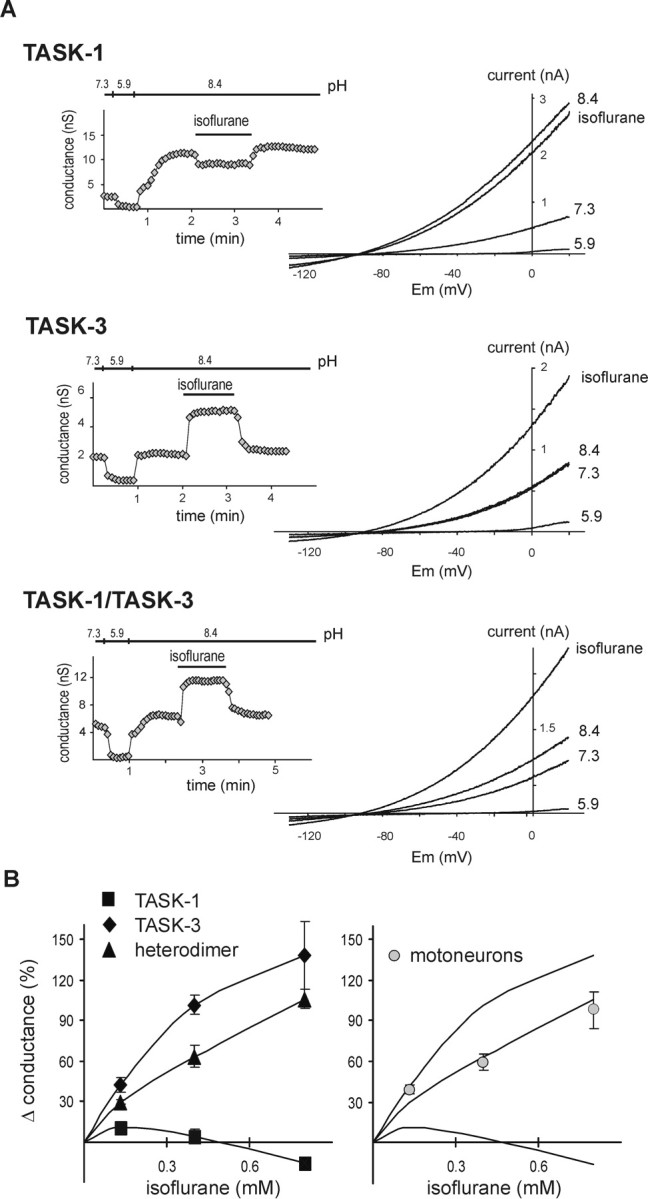
The isoflurane sensitivity of the TASK-like current in motoneurons resembles that of TASK-1/TASK-3 tandem heterodimeric channels. HEK 293 cells were transfected with rat TASK channel constructs and exposed to isoflurane at concentrations of 0.13, 0.4, and 0.8 mm. A, Whole-cell current was measured from cells expressing TASK-1 (top), TASK-3 (middle), and TASK-1/TASK-3 (bottom) during depolarizing ramps (-130 to 20mV; 0.2 V/sec) and plotted against membrane potential (Em) under control conditions, pH 7.3, and during bath acidification, pH 5.9, bath alkalization, pH 8.4, and exposure to isoflurane in an alkalized bath (0.8 mm isoflurane). Insets, Time series illustrating effects on whole-cell conductance of changing bath pH and of 0.8 mm isoflurane for each cell represented in the corresponding I-V plots. B, Left, Dose-response curves illustrating effects of isoflurane on rat TASK-1 (squares), TASK-3 (diamonds), or the tandem heterodimeric TASK-1/TASK-3 construct (triangles). Slope conductance at each isoflurane concentration was normalized to the total pH-sensitive conductance in individual cells and averaged; data points (mean ± SEM) were fitted with logistic equations (solid lines). Differences in effects of isoflurane on the TASK constructs were highly significant (F(2,37) = 90; p < 0.0001, ANOVA); at the highest concentration, isoflurane increased TASK-3 and TASK-1/TASK-3 channel currents (both p < 0.05; n = 5; n = 8), whereas it inhibited TASK-1 current (p < 0.05; n = 5). Right, Effects of isoflurane on the native TASK-like conductance were determined in rat hypoglossal motoneurons, normalized to total pH-sensitive conductance, and averaged (±SEM; circles); the isoflurane sensitivity of the motoneuronal conductance overlays most closely that of the TASK channel heterodimer.