


Figure 3.
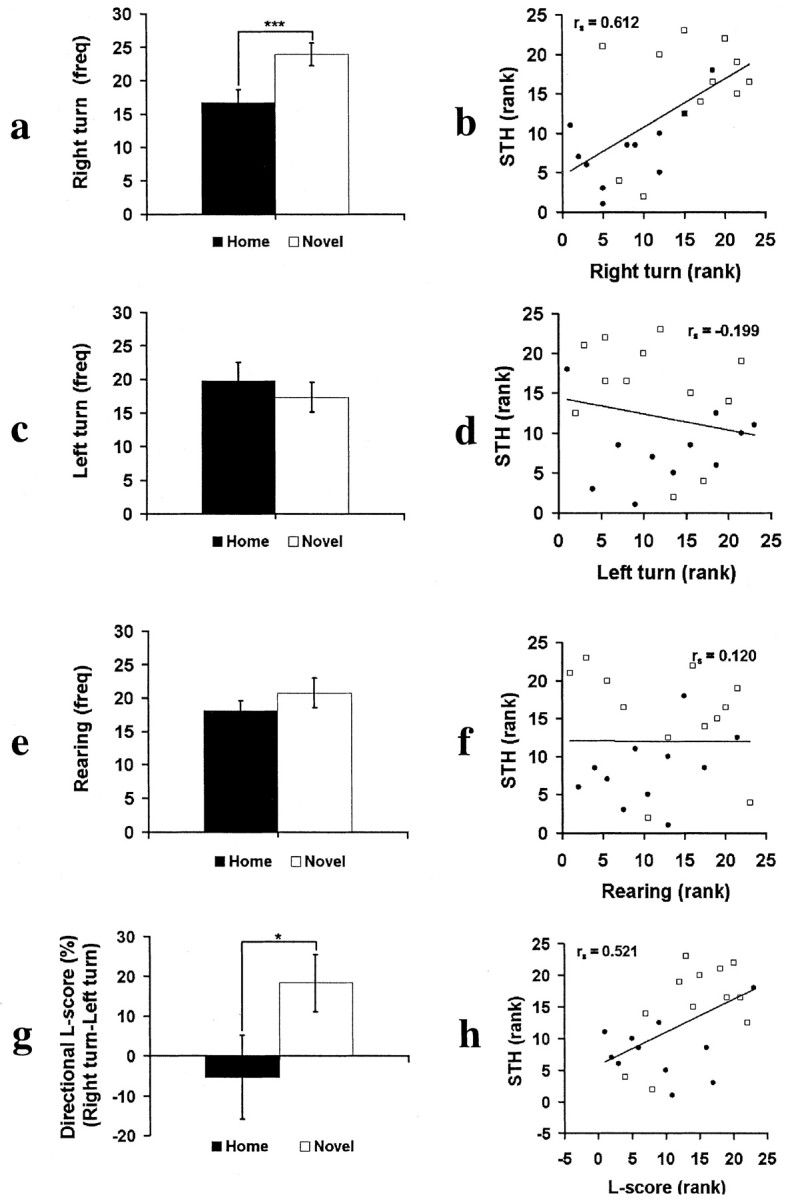
Brain asymmetric activation in a novel environment (testing cage) contributes to individual differences in STH. Open squares, Novel rats; filled circles, Home rats. a, Novel rats made significantly more right turns than Home rats. b, The right-turn frequency positively correlates with STH. c, Novel and Home rats did not differ in their frequency of left turns. d, The left-turn frequency did not predict STH. e, Novel and Home rats did not differ in their frequency of rearing. f, Rearing did not predict STH. g, Novel rats display a significantly greater right-turn bias (L-score) than Home rats. h, The right-turn bias positively correlates with STH. *p < 0.05; ***p < 0.01.