


Fig. 5.
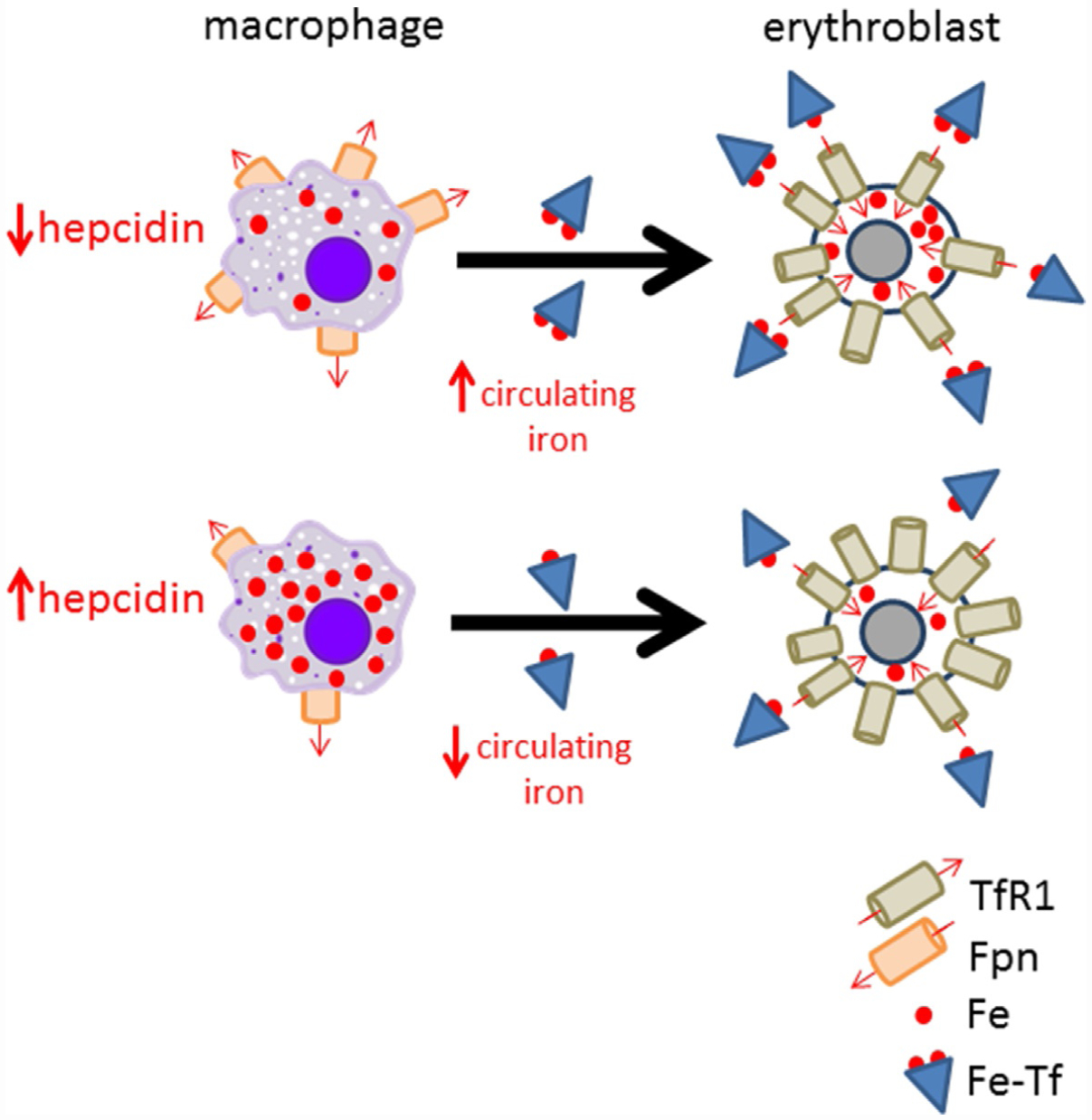
Model of hepcidin’s effect on iron availability for erythropoiesis. Decreased hepcidin, as in systemic iron deficiency, leads to more ferroportin and consequently more iron efflux into circulation where it is available for uptake by erythroblasts via Fe-Tf binding to TfRl. Alternatively, hepcidin elevation, as in anemia of chronic disease, leads to hepcidin:Fpn binding, preventing iron egress, resulting in iron sequestration within macrophages (e.g., splenic macrophages, involved in iron recycling from senescent red blood cells), and leads to iron restricted erythropoiesis. Fe, iron; Fe-Tf, Fe loaded transferrin; Fpn, ferroportin; TfRl, transferrin receptor 1.