


Figure 1.
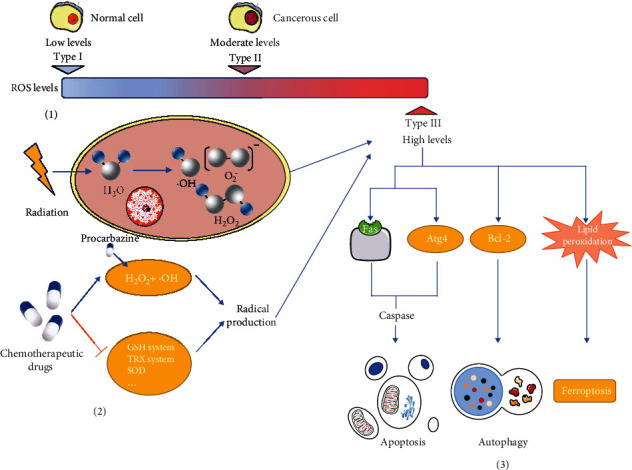
ROS are responsible for triggering cell death and the mechanisms of cancer treatment to trigger cell death. (1) ROS levels can be divided into three types according to their effects on cells. Type I is a low ROS level, wherein ROS only participate in normal cell physiological activities. Type II is a moderate ROS level, wherein ROS induce cell deformation within cancerous cells. Type III is a high ROS level, wherein ROS lead to cell death. (2) Radiotherapy and chemotherapy both increase the production of ROS. Radiotherapy causes the redox reaction of water and produces a large number of free radicals and free electrons. In chemotherapy, many drugs directly produce ROS in cancer cells to increase the level of ROS. (3) Radiotherapy and chemotherapy can cause indirect cellular effects by raising ROS levels to type III. High levels of ROS induce different types of regulated cell death. They regulate the expression of the death receptors such as Fas and Bcl-2 family proteins to induce apoptosis, target the oxidation of Atg4 to promote the formation of autophagosomes, which cause autophagic death, and directly promote ferroptosis by inducing lipid peroxidation.