


FIGURE 4.
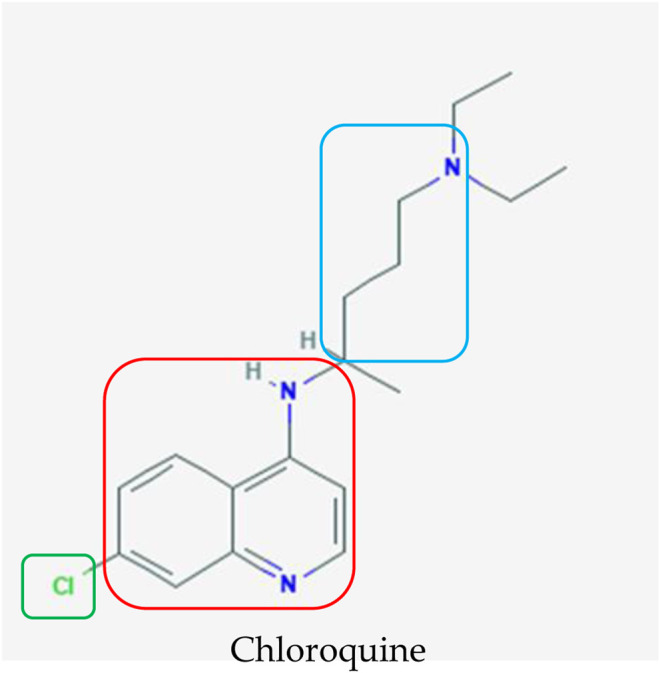
Chemical structure of chloroquine, which was initially used as an antimalarial agent (Kim et al., 2019). The terminal nitrogens and spacer (blue box) were designed to impart parasite resistance whereas the 4-amino quinolone nucleus (red box) and small electron withdrawing group (green box) are pivotal for binding to hematin and halting the formation of hemozoin, respectively, when chloroquine is administered to treat malaria.