


Fig 2.
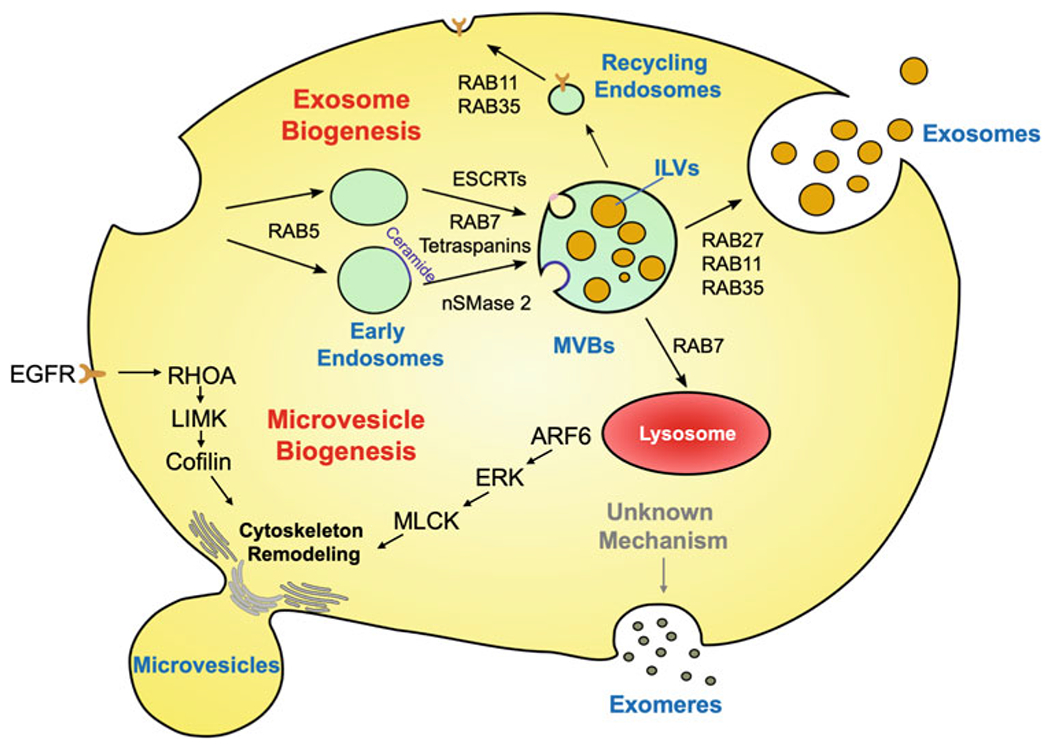
Scheme depicting the biogenesis of different classes of EVs. Exosomes originate from the endolysosomal pathway. The plasma membrane invaginates to form early endosomes in a RAB5-dependent manner. The endosomes are further trafficked and processed by ESCRTs, RAB7, tetraspanins, and nSMase 2 to generate multivesicular bodies (MVBs) containing intraluminal vesicles (ILVs). The MVBs are either trafficked by RAB7 to lysosomes and degraded, or directed to the plasma membrane by RAB27, RAB11, or RAB35. The MVBs then fuse with the plasma membrane and their contents are released. Microvesicles are formed as an outcome of an outward budding and fission from the plasma membrane. This process is mediated by RHOA or ARF6 signaling events that regulate cytoskeletal remodeling. Exomeres and nonvesicle fractions are considered as unique forms of non-membrane enclosed structures that are copurified with exosomes. The mechanisms underlying their formation are still unknown