


Fig 3.
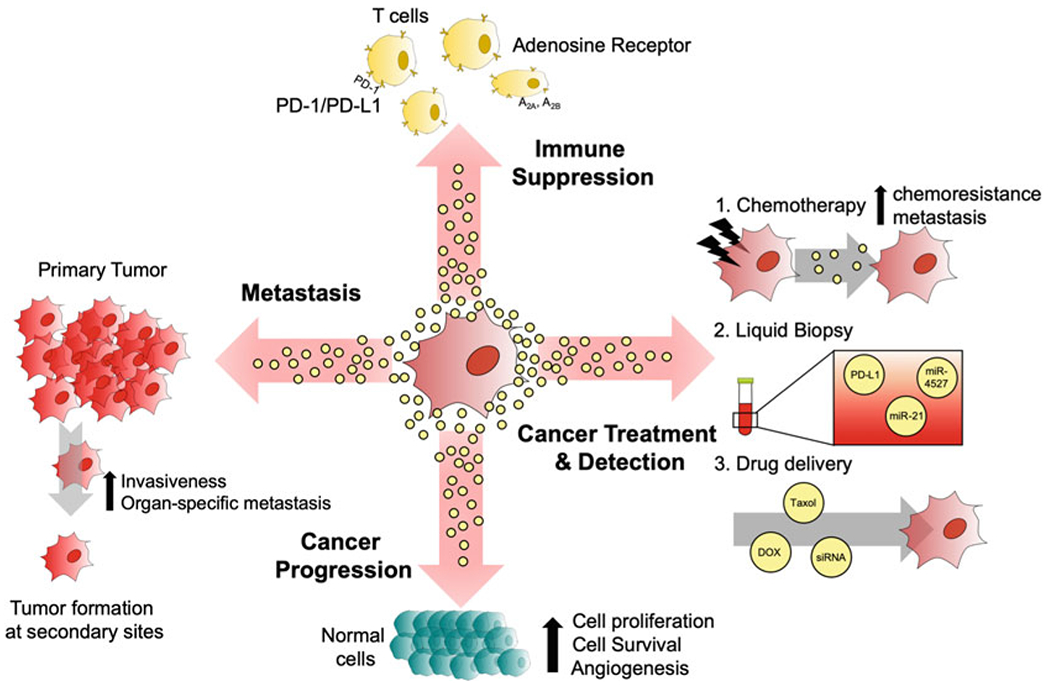
Illustration showing some of the major roles and potential clinical applications for cancer cell-derived EVs. The EVs generated by cancer cells have the ability to suppress the immune system of the host by activating PD-1/PD-L1 or adenosine receptor signaling pathways. EVs have also been shown to promote several other aspects of cancer progression, including cell growth, survival, and angiogenesis through a variety of mechanisms. EVs also play an important role in metastasis, as they have been shown to increase the rates of organ-specific metastatic spread and the overall invasiveness of tumors. Clinically, it has been shown that cancer cells treated with chemotherapy generate EVs that can promote chemoresistance. The contents of EVs can be used for diagnostic purposes, and EVs can serve as therapeutic vehicles to deliver drugs or siRNA into cancer cells